
Mek
917 Жариялаулар

Mek
Хабарлау
Пайдаланушыны блоктау
Trader Institutional & Analyst since 2018 · Binance KOL & BNBChain Martian. Building at Web3 and Sovereign Infrastructure.
Жиі сауда жасайтын трейдер
5.3 жыл
41 Жазылым
2.8K+ Жазылушылар
1.7K+ лайк басылған
Жазбалар
Барлығы
Баға ұсыныстары
Видеолар
Тікелей эфир
PINNED
·
--
Мақала
I Gave Claude One Job: Read the Order Book Like an InstitutionThe five-tab problem every serious trader knows
Before I size a position, I run the same routine every time. Binance for the order book and open interest. A second tab for funding rate history. A third for long/short positioning. A fourth for ETF flow data, because that never lives on an exchange. A fifth if a filing from a company like Strategy dropped that week and moved the tape.
None of this is complicated. It is just scattered. And scattered means slow, sizing a position on a five-minute-old picture instead of a live one.
Binance Agent OS made a specific claim: connect an AI agent directly to Binance's trading and market data, under permissions you control, from inside the tools you already use. I wanted to know if it could actually collapse my five-tab routine into one conversation, with no loss of precision on the numbers that decide position size.
I tested it live, on my own account, this week. What I found is the closest thing to a genuine unlock I have seen in this space in a while — and I think most traders reading this should be setting it up today, not eventually.
Setup took less time than my coffee
The documentation points you toward Claude Code. I tried that first and hit a wall, no active paid setup configured, and I was not going to spin one up just to test a data connection.
The real path was faster than the documented one. Claude.ai supports custom connectors on the free plan, no terminal required. Settings → Connectors → Add custom connector, paste Binance's MCP endpoint into the URL field, authenticate through Binance's own OAuth screen. Two minutes, from a browser tab, done.
Two things on Binance's side, separate from the Claude connection: I opened and manually funded the Agentic sub-account (Profile → Dashboard → Sub-account → Asset Management → Transfer. The agent cannot pull funds there by itself), then set permissions deliberately conservative for the first run: market data plus account read, no trade execution yet. I wanted to see what it could show me before I let it touch anything.
If you have ever configured an API key manually, this is dramatically less friction than that.
What happened when I actually asked it something
Close to the literal prompt I ran:
"Pull the BTCUSDT order book, current open interest and its trend over the last six hours, recent funding rate history, and long/short account ratio. Then check my account balance so I can see live exposure alongside the market read."
The order book came back live, not delayed: a bid of $78,411.10 with 14.464 BTC sitting right at the top of the book, ask at $78,411.20, a genuinely tight spread with real size resting at the touch. That alone replaced a tab I open a dozen times a day.
Open interest sat at 107,141 BTC, roughly $8.4B notional. Pulling the trailing six-hour series showed it actually declining, from about 108,987 BTC down to 107,362, while funding rate over the same window climbed modestly, from roughly 0.00003 to 0.00009, and the long/short account ratio held at 1.28–1.32, around 56–57% net long.
That is a more precise read than the headline "everyone is long" story: leverage building modestly on funding while some positions were quietly closing on the open interest side. I would not have caught that nuance glancing at one number. The agent pulled the full set in one pass.
Then I asked it to check my balance. It came back empty. My first thought was that something had broken. It had not, the Agentic sub-account starts genuinely isolated, no access to my main holdings, until I move funds in myself. The agent cannot see or touch capital I have not explicitly placed within its reach.
That is the detail that sold me on the security model. Not the permissions page copy, watching it actually enforced, in real time, on my own account.
Where it already earns its place - and where it is about to get even better
Binance's MCP server currently covers trading and market data, which is exactly the half of my routine that used to eat the most clicks. For the macro side, I ran a live search alongside it: U.S. spot Bitcoin ETFs had just logged +$986.9M for the week, BlackRock's IBIT leading with roughly $691.5M, September 3 alone bringing in $730.9M, the strongest single day since mid-January. Strategy had just ended a ten-week pause with a $370M purchase in late August.
Laid next to the live exchange data, the picture sharpens fast: fresh institutional demand arriving through ETFs while exchange-side leverage stayed comparatively restrained. Two data sets, one conversation, a few seconds apart.
Binance has already flagged on-chain and payment capabilities as next on the MCP roadmap. If institutional flow data lands on that same roadmap, this stops being "one strong half of my workflow" and becomes the whole thing, in one place. I would rather be early to that than catch up later.
Why I am recommending this today, not eventually
Here is my honest verdict after actually running it: the exchange-side leg, order book, open interest, funding, long/short, is faster and more precise than clicking through Binance's own UI for the same four numbers, live and under your own permissions, set up in less time than it takes to make coffee. The sub-account isolation is real security, not a marketing line, and I watched it work against my own account before I trusted it.
If you trade on Binance and you are still checking these numbers one tab at a time, you are working harder than you need to. This is the first AI integration I have tested this year that actually removed steps from my routine instead of adding a new dashboard to check.
Set it up, connect your own account, and go find your own use case, this is exactly the kind of product that gets better the more people push on it in public.
Access Binance Agent OS: [https://www.binance.com/en/agent-os](https://www.binance.com/en/agent-os)
#Binance #AgentOS
I Gave Claude One Job: Read the Order Book Like an Institution
The five-tab problem every serious trader knows
Before I size a position, I run the same routine every time. Binance for the order book and open interest. A second tab for funding rate history. A third for long/short positioning. A fourth for ETF flow data, because that never lives on an exchange. A fifth if a filing from a company like Strategy dropped that week and moved the tape.
None of this is complicated. It is just scattered. And scattered means slow, sizing a position on a five-minute-old picture instead of a live one.
Binance Agent OS made a specific claim: connect an AI agent directly to Binance's trading and market data, under permissions you control, from inside the tools you already use. I wanted to know if it could actually collapse my five-tab routine into one conversation, with no loss of precision on the numbers that decide position size.
I tested it live, on my own account, this week. What I found is the closest thing to a genuine unlock I have seen in this space in a while — and I think most traders reading this should be setting it up today, not eventually.
Setup took less time than my coffee
The documentation points you toward Claude Code. I tried that first and hit a wall, no active paid setup configured, and I was not going to spin one up just to test a data connection.
The real path was faster than the documented one. Claude.ai supports custom connectors on the free plan, no terminal required. Settings → Connectors → Add custom connector, paste Binance's MCP endpoint into the URL field, authenticate through Binance's own OAuth screen. Two minutes, from a browser tab, done.
Two things on Binance's side, separate from the Claude connection: I opened and manually funded the Agentic sub-account (Profile → Dashboard → Sub-account → Asset Management → Transfer. The agent cannot pull funds there by itself), then set permissions deliberately conservative for the first run: market data plus account read, no trade execution yet. I wanted to see what it could show me before I let it touch anything.
If you have ever configured an API key manually, this is dramatically less friction than that.
What happened when I actually asked it something
Close to the literal prompt I ran:
"Pull the BTCUSDT order book, current open interest and its trend over the last six hours, recent funding rate history, and long/short account ratio. Then check my account balance so I can see live exposure alongside the market read."
The order book came back live, not delayed: a bid of $78,411.10 with 14.464 BTC sitting right at the top of the book, ask at $78,411.20, a genuinely tight spread with real size resting at the touch. That alone replaced a tab I open a dozen times a day.
Open interest sat at 107,141 BTC, roughly $8.4B notional. Pulling the trailing six-hour series showed it actually declining, from about 108,987 BTC down to 107,362, while funding rate over the same window climbed modestly, from roughly 0.00003 to 0.00009, and the long/short account ratio held at 1.28–1.32, around 56–57% net long.
That is a more precise read than the headline "everyone is long" story: leverage building modestly on funding while some positions were quietly closing on the open interest side. I would not have caught that nuance glancing at one number. The agent pulled the full set in one pass.
Then I asked it to check my balance. It came back empty. My first thought was that something had broken. It had not, the Agentic sub-account starts genuinely isolated, no access to my main holdings, until I move funds in myself. The agent cannot see or touch capital I have not explicitly placed within its reach.
That is the detail that sold me on the security model. Not the permissions page copy, watching it actually enforced, in real time, on my own account.
Where it already earns its place - and where it is about to get even better
Binance's MCP server currently covers trading and market data, which is exactly the half of my routine that used to eat the most clicks. For the macro side, I ran a live search alongside it: U.S. spot Bitcoin ETFs had just logged +$986.9M for the week, BlackRock's IBIT leading with roughly $691.5M, September 3 alone bringing in $730.9M, the strongest single day since mid-January. Strategy had just ended a ten-week pause with a $370M purchase in late August.
Laid next to the live exchange data, the picture sharpens fast: fresh institutional demand arriving through ETFs while exchange-side leverage stayed comparatively restrained. Two data sets, one conversation, a few seconds apart.
Binance has already flagged on-chain and payment capabilities as next on the MCP roadmap. If institutional flow data lands on that same roadmap, this stops being "one strong half of my workflow" and becomes the whole thing, in one place. I would rather be early to that than catch up later.
Why I am recommending this today, not eventually
Here is my honest verdict after actually running it: the exchange-side leg, order book, open interest, funding, long/short, is faster and more precise than clicking through Binance's own UI for the same four numbers, live and under your own permissions, set up in less time than it takes to make coffee. The sub-account isolation is real security, not a marketing line, and I watched it work against my own account before I trusted it.
If you trade on Binance and you are still checking these numbers one tab at a time, you are working harder than you need to. This is the first AI integration I have tested this year that actually removed steps from my routine instead of adding a new dashboard to check.
Set it up, connect your own account, and go find your own use case, this is exactly the kind of product that gets better the more people push on it in public.
Access Binance Agent OS: https://www.binance.com/en/agent-os
#Binance #AgentOS
Before I size a position, I run the same routine every time. Binance for the order book and open interest. A second tab for funding rate history. A third for long/short positioning. A fourth for ETF flow data, because that never lives on an exchange. A fifth if a filing from a company like Strategy dropped that week and moved the tape.
None of this is complicated. It is just scattered. And scattered means slow, sizing a position on a five-minute-old picture instead of a live one.
Binance Agent OS made a specific claim: connect an AI agent directly to Binance's trading and market data, under permissions you control, from inside the tools you already use. I wanted to know if it could actually collapse my five-tab routine into one conversation, with no loss of precision on the numbers that decide position size.
I tested it live, on my own account, this week. What I found is the closest thing to a genuine unlock I have seen in this space in a while — and I think most traders reading this should be setting it up today, not eventually.
Setup took less time than my coffee
The documentation points you toward Claude Code. I tried that first and hit a wall, no active paid setup configured, and I was not going to spin one up just to test a data connection.
The real path was faster than the documented one. Claude.ai supports custom connectors on the free plan, no terminal required. Settings → Connectors → Add custom connector, paste Binance's MCP endpoint into the URL field, authenticate through Binance's own OAuth screen. Two minutes, from a browser tab, done.
Two things on Binance's side, separate from the Claude connection: I opened and manually funded the Agentic sub-account (Profile → Dashboard → Sub-account → Asset Management → Transfer. The agent cannot pull funds there by itself), then set permissions deliberately conservative for the first run: market data plus account read, no trade execution yet. I wanted to see what it could show me before I let it touch anything.
If you have ever configured an API key manually, this is dramatically less friction than that.
What happened when I actually asked it something
Close to the literal prompt I ran:
"Pull the BTCUSDT order book, current open interest and its trend over the last six hours, recent funding rate history, and long/short account ratio. Then check my account balance so I can see live exposure alongside the market read."
The order book came back live, not delayed: a bid of $78,411.10 with 14.464 BTC sitting right at the top of the book, ask at $78,411.20, a genuinely tight spread with real size resting at the touch. That alone replaced a tab I open a dozen times a day.
Open interest sat at 107,141 BTC, roughly $8.4B notional. Pulling the trailing six-hour series showed it actually declining, from about 108,987 BTC down to 107,362, while funding rate over the same window climbed modestly, from roughly 0.00003 to 0.00009, and the long/short account ratio held at 1.28–1.32, around 56–57% net long.
That is a more precise read than the headline "everyone is long" story: leverage building modestly on funding while some positions were quietly closing on the open interest side. I would not have caught that nuance glancing at one number. The agent pulled the full set in one pass.
Then I asked it to check my balance. It came back empty. My first thought was that something had broken. It had not, the Agentic sub-account starts genuinely isolated, no access to my main holdings, until I move funds in myself. The agent cannot see or touch capital I have not explicitly placed within its reach.
That is the detail that sold me on the security model. Not the permissions page copy, watching it actually enforced, in real time, on my own account.
Where it already earns its place - and where it is about to get even better
Binance's MCP server currently covers trading and market data, which is exactly the half of my routine that used to eat the most clicks. For the macro side, I ran a live search alongside it: U.S. spot Bitcoin ETFs had just logged +$986.9M for the week, BlackRock's IBIT leading with roughly $691.5M, September 3 alone bringing in $730.9M, the strongest single day since mid-January. Strategy had just ended a ten-week pause with a $370M purchase in late August.
Laid next to the live exchange data, the picture sharpens fast: fresh institutional demand arriving through ETFs while exchange-side leverage stayed comparatively restrained. Two data sets, one conversation, a few seconds apart.
Binance has already flagged on-chain and payment capabilities as next on the MCP roadmap. If institutional flow data lands on that same roadmap, this stops being "one strong half of my workflow" and becomes the whole thing, in one place. I would rather be early to that than catch up later.
Why I am recommending this today, not eventually
Here is my honest verdict after actually running it: the exchange-side leg, order book, open interest, funding, long/short, is faster and more precise than clicking through Binance's own UI for the same four numbers, live and under your own permissions, set up in less time than it takes to make coffee. The sub-account isolation is real security, not a marketing line, and I watched it work against my own account before I trusted it.
If you trade on Binance and you are still checking these numbers one tab at a time, you are working harder than you need to. This is the first AI integration I have tested this year that actually removed steps from my routine instead of adding a new dashboard to check.
Set it up, connect your own account, and go find your own use case, this is exactly the kind of product that gets better the more people push on it in public.
Access Binance Agent OS: https://www.binance.com/en/agent-os
#Binance #AgentOS
BTC-0,62%
IBITETF+0,36%
1
197
·
--
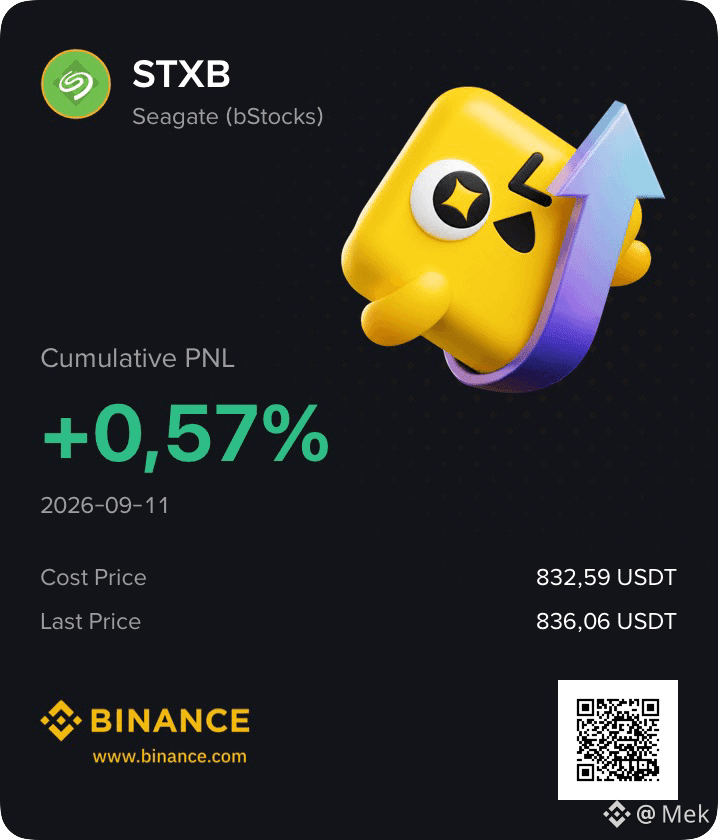
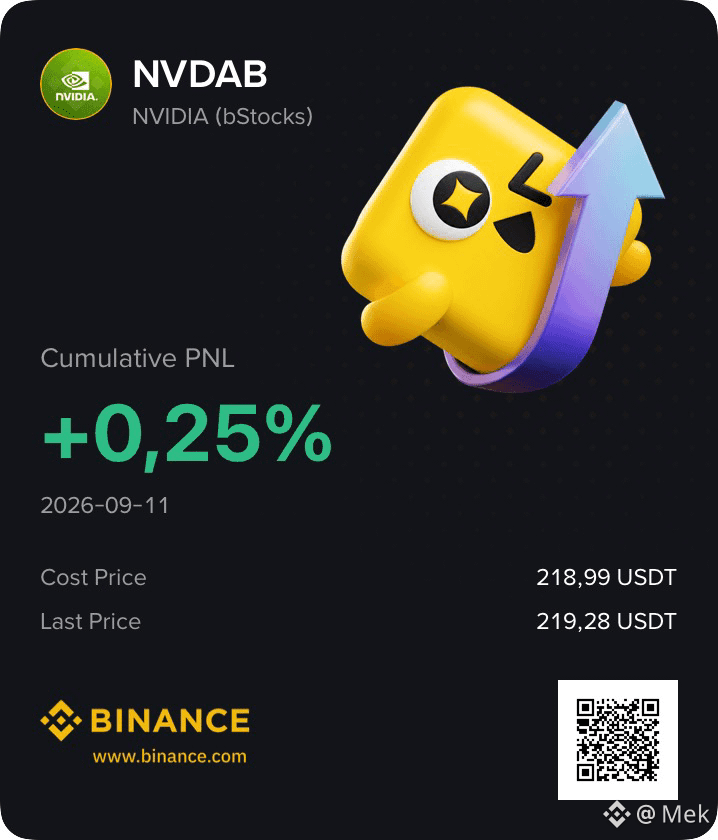
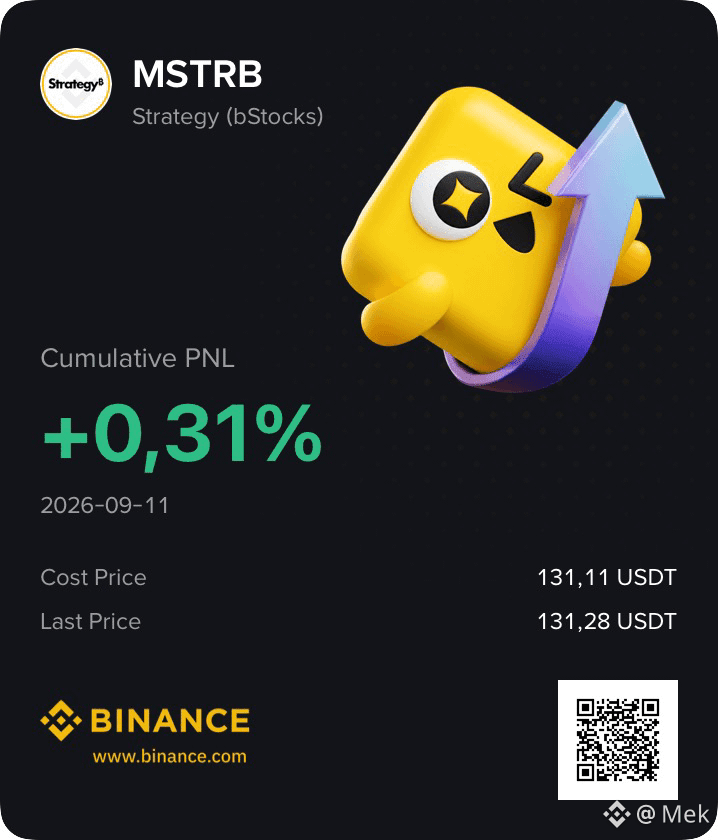
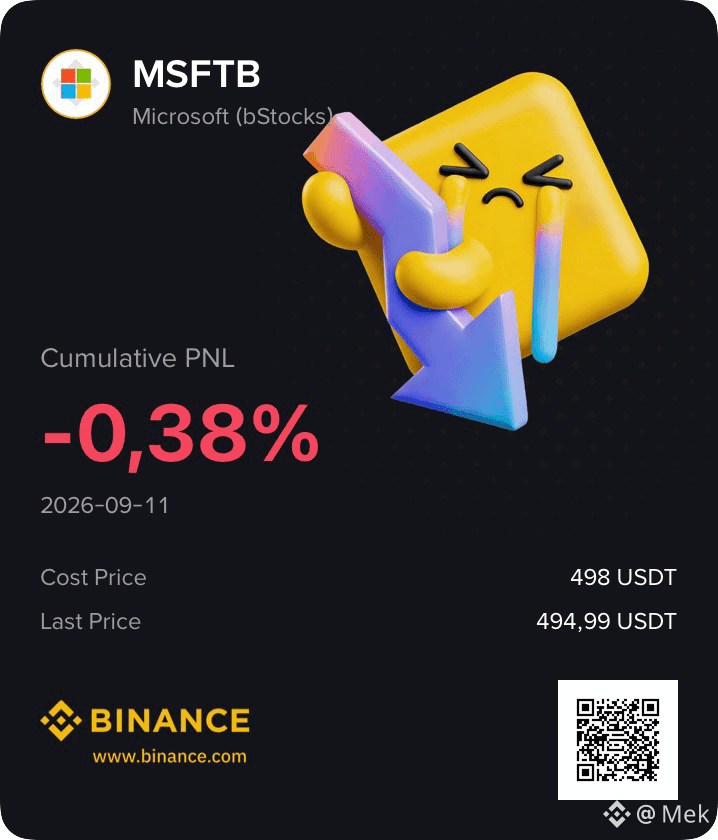
Meus investimentos da semana em DCA em bStocks, a Binance realmente vem facilitando esse investimento na palma da nossa mão.
HODL, não é uma recomendação financeira.
{spot}(NVDABUSDT)
{spot}(STXBUSDT)
{spot}(MSTRBUSDT)
Meus investimentos da semana em DCA em bStocks, a Binance realmente vem facilitando esse investimento na palma da nossa mão.
HODL, não é uma recomendação financeira.
HODL, não é uma recomendação financeira.
1
18
·
--

Мақала
US equities just closed at record highs. Bitcoin is still working its way back from October's peak.Same macro backdrop. Two completely different stories.
I built a three-asset [bStocks](https://www.binance.com/en/bstocks-landing) portfolio that trades both sides of that divergence.
The allocation:
40% NVDAB (Nvidia)35% MSTRB (Strategy)25% CRCLB (Circle)
Not a diversified basket. A thesis on where capital is actually moving this cycle.
1. NVDAB, 40%.
Nvidia just moved to acquire Hugging Face for roughly $13 billion. Data center capex keeps compounding, not slowing. This is the infrastructure position, the closest thing to owning the AI buildout itself.
2. MSTRB, 35%.
Strategy is the closest thing traditional markets offer to leveraged Bitcoin exposure inside an equity wrapper. I already hold BTC directly. This is the bridge position, same conviction, different rail, tradable 24/7 alongside the rest of my book.
3. CRCLB, 25%.
Circle sits at the center of stablecoin infrastructure. That capital pool is sitting near record size, waiting on the sidelines. Owning the rails that move that liquidity is a different bet than owning what it eventually buys.
Why bStocks and not the underlying shares.
Fractional access from around $5. On-chain settlement in under a second. Self-custody to a BNB Chain wallet if I want it. Same portfolio logic I already apply to crypto, extended to equities. No separate broker, no market hours.
Over half of bStocks volume already happens while U.S. markets are closed, according to Binance Research. The 24/7 structure isn't a gimmick. It's the point.
100% to allocate. Three bStocks. That's the challenge.
Mine leans into AI infrastructure, Bitcoin's equity bridge, and stablecoin rails.
What's yours. Build it, post it, reply below.
My allocation, not financial advice.
{spot}(NVDABUSDT)
{spot}(MSTRBUSDT)
{spot}(CRCLBUSDT)
US equities just closed at record highs. Bitcoin is still working its way back from October's peak.
Same macro backdrop. Two completely different stories.
I built a three-asset bStocks portfolio that trades both sides of that divergence.
The allocation:
40% NVDAB (Nvidia)35% MSTRB (Strategy)25% CRCLB (Circle)
Not a diversified basket. A thesis on where capital is actually moving this cycle.
1. NVDAB, 40%.
Nvidia just moved to acquire Hugging Face for roughly $13 billion. Data center capex keeps compounding, not slowing. This is the infrastructure position, the closest thing to owning the AI buildout itself.
2. MSTRB, 35%.
Strategy is the closest thing traditional markets offer to leveraged Bitcoin exposure inside an equity wrapper. I already hold BTC directly. This is the bridge position, same conviction, different rail, tradable 24/7 alongside the rest of my book.
3. CRCLB, 25%.
Circle sits at the center of stablecoin infrastructure. That capital pool is sitting near record size, waiting on the sidelines. Owning the rails that move that liquidity is a different bet than owning what it eventually buys.
Why bStocks and not the underlying shares.
Fractional access from around $5. On-chain settlement in under a second. Self-custody to a BNB Chain wallet if I want it. Same portfolio logic I already apply to crypto, extended to equities. No separate broker, no market hours.
Over half of bStocks volume already happens while U.S. markets are closed, according to Binance Research. The 24/7 structure isn't a gimmick. It's the point.
100% to allocate. Three bStocks. That's the challenge.
Mine leans into AI infrastructure, Bitcoin's equity bridge, and stablecoin rails.
What's yours. Build it, post it, reply below.
My allocation, not financial advice.
I built a three-asset bStocks portfolio that trades both sides of that divergence.
The allocation:
40% NVDAB (Nvidia)35% MSTRB (Strategy)25% CRCLB (Circle)
Not a diversified basket. A thesis on where capital is actually moving this cycle.
1. NVDAB, 40%.
Nvidia just moved to acquire Hugging Face for roughly $13 billion. Data center capex keeps compounding, not slowing. This is the infrastructure position, the closest thing to owning the AI buildout itself.
2. MSTRB, 35%.
Strategy is the closest thing traditional markets offer to leveraged Bitcoin exposure inside an equity wrapper. I already hold BTC directly. This is the bridge position, same conviction, different rail, tradable 24/7 alongside the rest of my book.
3. CRCLB, 25%.
Circle sits at the center of stablecoin infrastructure. That capital pool is sitting near record size, waiting on the sidelines. Owning the rails that move that liquidity is a different bet than owning what it eventually buys.
Why bStocks and not the underlying shares.
Fractional access from around $5. On-chain settlement in under a second. Self-custody to a BNB Chain wallet if I want it. Same portfolio logic I already apply to crypto, extended to equities. No separate broker, no market hours.
Over half of bStocks volume already happens while U.S. markets are closed, according to Binance Research. The 24/7 structure isn't a gimmick. It's the point.
100% to allocate. Three bStocks. That's the challenge.
Mine leans into AI infrastructure, Bitcoin's equity bridge, and stablecoin rails.
What's yours. Build it, post it, reply below.
My allocation, not financial advice.
1
50
·
--
Ішінара рас

Мақала
Aqui vai um artigo sobre inflação americana e minha visão sobre o próximo FOMC.O dado de inflação que fez o mercado voltar a precificar alta de juros em setembro foi, em boa parte, a sua conta de celular.
Não estou sendo irônico. O núcleo do CPI americano subiu 0,29% em agosto.
Telefonia móvel e hotelaria responderam por 14 desses 29 pontos-base.
Todo o resto da economia americana, somado, deu cerca de 15.
Duas das categorias mais ruidosas do índice fizeram metade do trabalho sozinhas.
No supercore foi pior. Alta de 0,51% no mês, com 29 pontos-base vindos só de telefonia. Mais da metade de um único item.
No headline, que subiu 0,40%, a energia sozinha entregou 15 pontos-base. Quase 40% da alta.
E é aqui que a conversa deixa de ser sobre política monetária.
Energia não está subindo porque a economia americana está fervendo. Está subindo porque o Estreito de Hormuz segue estrangulado.
O fluxo pelo estreito está em torno de 6 milhões de barris por dia, cerca de 30% do nível pré-conflito. O Brent fechou acima de US$ 101 essa semana, o maior nível desde maio.
Então a pergunta que ninguém está fazendo em voz alta:
Quantos pontos de juro o Fed precisa subir pra reabrir Hormuz?
Nenhum. Juro não move navio.
Aperto monetário funciona contra inflação de demanda. Contra choque de oferta, ele entrega recessão sem devolver um barril ao mercado.
E mesmo que quisesse insistir, o espaço é estreito.
Com dívida bruta acima de US$ 40 trilhões, cada ponto de juro adicional vira conta de serviço da dívida que o Tesouro paga no ano seguinte.
O próprio aperto que o Fed precisaria fazer está sendo feito pelo mercado de treasuries, principalmente na ponta longa. Encarecendo custo de capital de longo prazo.
Do outro lado, com headline em 3,4%, cortar também não está na mesa.
O Fed está preso no meio. E banco central preso é banco central que para de fazer preço. Agora suavize o ruído do dado.
A média de 3 meses do núcleo está em 0,16% ao mês. A de 6 meses, em 0,21%.
Anualizado, 1,9% e 2,5%. Um print barulhento não cria tendência nova.
O mercado ainda vai operar narrativa hawkish por algumas semanas. Isso é inércia de posicionamento.
Depois vai descobrir quem realmente está no comando da liquidez marginal.
O Tesouro.
Composição de emissão, recompra de dívida longa, gestão de duration. É daí que sai o dinheiro que chega no preço dos ativos, não da taxa de juros.
E quando a liquidez volta a se expandir num mundo onde o lado da oferta está quebrado, o capital migra pra escassez antes de migrar pra rendimento.
O ouro já entendeu isso em agosto, com US$ 17,9 bilhões entrando em ETFs num mês só.
Bitcoin é a mesma tese com oferta ainda mais inelástica. #CPIWatch
Aqui vai um artigo sobre inflação americana e minha visão sobre o próximo FOMC.
O dado de inflação que fez o mercado voltar a precificar alta de juros em setembro foi, em boa parte, a sua conta de celular.
Não estou sendo irônico. O núcleo do CPI americano subiu 0,29% em agosto.
Telefonia móvel e hotelaria responderam por 14 desses 29 pontos-base.
Todo o resto da economia americana, somado, deu cerca de 15.
Duas das categorias mais ruidosas do índice fizeram metade do trabalho sozinhas.
No supercore foi pior. Alta de 0,51% no mês, com 29 pontos-base vindos só de telefonia. Mais da metade de um único item.
No headline, que subiu 0,40%, a energia sozinha entregou 15 pontos-base. Quase 40% da alta.
E é aqui que a conversa deixa de ser sobre política monetária.
Energia não está subindo porque a economia americana está fervendo. Está subindo porque o Estreito de Hormuz segue estrangulado.
O fluxo pelo estreito está em torno de 6 milhões de barris por dia, cerca de 30% do nível pré-conflito. O Brent fechou acima de US$ 101 essa semana, o maior nível desde maio.
Então a pergunta que ninguém está fazendo em voz alta:
Quantos pontos de juro o Fed precisa subir pra reabrir Hormuz?
Nenhum. Juro não move navio.
Aperto monetário funciona contra inflação de demanda. Contra choque de oferta, ele entrega recessão sem devolver um barril ao mercado.
E mesmo que quisesse insistir, o espaço é estreito.
Com dívida bruta acima de US$ 40 trilhões, cada ponto de juro adicional vira conta de serviço da dívida que o Tesouro paga no ano seguinte.
O próprio aperto que o Fed precisaria fazer está sendo feito pelo mercado de treasuries, principalmente na ponta longa. Encarecendo custo de capital de longo prazo.
Do outro lado, com headline em 3,4%, cortar também não está na mesa.
O Fed está preso no meio. E banco central preso é banco central que para de fazer preço. Agora suavize o ruído do dado.
A média de 3 meses do núcleo está em 0,16% ao mês. A de 6 meses, em 0,21%.
Anualizado, 1,9% e 2,5%. Um print barulhento não cria tendência nova.
O mercado ainda vai operar narrativa hawkish por algumas semanas. Isso é inércia de posicionamento.
Depois vai descobrir quem realmente está no comando da liquidez marginal.
O Tesouro.
Composição de emissão, recompra de dívida longa, gestão de duration. É daí que sai o dinheiro que chega no preço dos ativos, não da taxa de juros.
E quando a liquidez volta a se expandir num mundo onde o lado da oferta está quebrado, o capital migra pra escassez antes de migrar pra rendimento.
O ouro já entendeu isso em agosto, com US$ 17,9 bilhões entrando em ETFs num mês só.
Bitcoin é a mesma tese com oferta ainda mais inelástica. #CPIWatch
Não estou sendo irônico. O núcleo do CPI americano subiu 0,29% em agosto.
Telefonia móvel e hotelaria responderam por 14 desses 29 pontos-base.
Todo o resto da economia americana, somado, deu cerca de 15.
Duas das categorias mais ruidosas do índice fizeram metade do trabalho sozinhas.
No supercore foi pior. Alta de 0,51% no mês, com 29 pontos-base vindos só de telefonia. Mais da metade de um único item.
No headline, que subiu 0,40%, a energia sozinha entregou 15 pontos-base. Quase 40% da alta.
E é aqui que a conversa deixa de ser sobre política monetária.
Energia não está subindo porque a economia americana está fervendo. Está subindo porque o Estreito de Hormuz segue estrangulado.
O fluxo pelo estreito está em torno de 6 milhões de barris por dia, cerca de 30% do nível pré-conflito. O Brent fechou acima de US$ 101 essa semana, o maior nível desde maio.
Então a pergunta que ninguém está fazendo em voz alta:
Quantos pontos de juro o Fed precisa subir pra reabrir Hormuz?
Nenhum. Juro não move navio.
Aperto monetário funciona contra inflação de demanda. Contra choque de oferta, ele entrega recessão sem devolver um barril ao mercado.
E mesmo que quisesse insistir, o espaço é estreito.
Com dívida bruta acima de US$ 40 trilhões, cada ponto de juro adicional vira conta de serviço da dívida que o Tesouro paga no ano seguinte.
O próprio aperto que o Fed precisaria fazer está sendo feito pelo mercado de treasuries, principalmente na ponta longa. Encarecendo custo de capital de longo prazo.
Do outro lado, com headline em 3,4%, cortar também não está na mesa.
O Fed está preso no meio. E banco central preso é banco central que para de fazer preço. Agora suavize o ruído do dado.
A média de 3 meses do núcleo está em 0,16% ao mês. A de 6 meses, em 0,21%.
Anualizado, 1,9% e 2,5%. Um print barulhento não cria tendência nova.
O mercado ainda vai operar narrativa hawkish por algumas semanas. Isso é inércia de posicionamento.
Depois vai descobrir quem realmente está no comando da liquidez marginal.
O Tesouro.
Composição de emissão, recompra de dívida longa, gestão de duration. É daí que sai o dinheiro que chega no preço dos ativos, não da taxa de juros.
E quando a liquidez volta a se expandir num mundo onde o lado da oferta está quebrado, o capital migra pra escassez antes de migrar pra rendimento.
O ouro já entendeu isso em agosto, com US$ 17,9 bilhões entrando em ETFs num mês só.
Bitcoin é a mesma tese com oferta ainda mais inelástica. #CPIWatch
1
829
·
--
🎙️ 📈 Trading & Coffee - Institutional Analysis (Pt-BR)

Соңы
01 сағ 11 а 34 с
44
ETHUSDT
Тұрақты
Нарық/Ұзақ
3
0
·
--
Расталды
O CPI dos EUA de agosto saiu em 3,4% no acumulado de 12 meses, em linha com o esperado e igual ao mês anterior. 🚨
O núcleo caiu pra 2,4%, também em linha, vindo de 2,5%.
Na variação mensal, o CPI cheio subiu 0,4%. Maior alta mensal desde maio de 2026.
Note que o padrão do núcleo continua sendo DESACELERAÇÃO.
Mesmo com os doomers dizendo que agora viria uma nova puxada inflacionária. Lembre sempre de entender os dados, não apenas narrativas de twitter.
Em linhas gerais, valores bem neutros. Deve subir a indecisão do mercado sobre juros e o efeito real será o caminho do meio.
Ou seja, taxas inalteradas. Vou trazer uma analise sobre isso mais tarde. #CPIWatch
O CPI dos EUA de agosto saiu em 3,4% no acumulado de 12 meses, em linha com o esperado e igual ao mês anterior. 🚨
O núcleo caiu pra 2,4%, também em linha, vindo de 2,5%.
Na variação mensal, o CPI cheio subiu 0,4%. Maior alta mensal desde maio de 2026.
Note que o padrão do núcleo continua sendo DESACELERAÇÃO.
Mesmo com os doomers dizendo que agora viria uma nova puxada inflacionária. Lembre sempre de entender os dados, não apenas narrativas de twitter.
Em linhas gerais, valores bem neutros. Deve subir a indecisão do mercado sobre juros e o efeito real será o caminho do meio.
Ou seja, taxas inalteradas. Vou trazer uma analise sobre isso mais tarde. #CPIWatch
O núcleo caiu pra 2,4%, também em linha, vindo de 2,5%.
Na variação mensal, o CPI cheio subiu 0,4%. Maior alta mensal desde maio de 2026.
Note que o padrão do núcleo continua sendo DESACELERAÇÃO.
Mesmo com os doomers dizendo que agora viria uma nova puxada inflacionária. Lembre sempre de entender os dados, não apenas narrativas de twitter.
Em linhas gerais, valores bem neutros. Deve subir a indecisão do mercado sobre juros e o efeito real será o caminho do meio.
Ou seja, taxas inalteradas. Vou trazer uma analise sobre isso mais tarde. #CPIWatch

2
2
1.4k
·
--
Жоғары (өспелі)
O varejo vendeu cedo em 2023. E parece fazer exatamente a mesma coisa agora. 🔥
O momentum de lucro realizado dos investidores de curto prazo disparou pro maior pico desde o começo de 2024.
Quem comprou bitcoin nos últimos meses correu pra vender quando o preço se aproximou de ~US$ 79 mil.
Isso já aconteceu antes, e do mesmo jeito.
Janeiro de 2023. O bitcoin saindo dos US$ 16 mil, com o cadáver da FTX ainda no chão.
O mesmo indicador explodiu. O varejo entregou moeda na primeira alta decente, convencido de que era repique de bear market.
Pouco mais de dois anos depois, o preço estava em US$ 120 mil.
Será que teremos algo parecido também agora?
{future}(BTCUSDT)
O varejo vendeu cedo em 2023. E parece fazer exatamente a mesma coisa agora. 🔥
O momentum de lucro realizado dos investidores de curto prazo disparou pro maior pico desde o começo de 2024.
Quem comprou bitcoin nos últimos meses correu pra vender quando o preço se aproximou de ~US$ 79 mil.
Isso já aconteceu antes, e do mesmo jeito.
Janeiro de 2023. O bitcoin saindo dos US$ 16 mil, com o cadáver da FTX ainda no chão.
O mesmo indicador explodiu. O varejo entregou moeda na primeira alta decente, convencido de que era repique de bear market.
Pouco mais de dois anos depois, o preço estava em US$ 120 mil.
Será que teremos algo parecido também agora?
O momentum de lucro realizado dos investidores de curto prazo disparou pro maior pico desde o começo de 2024.
Quem comprou bitcoin nos últimos meses correu pra vender quando o preço se aproximou de ~US$ 79 mil.
Isso já aconteceu antes, e do mesmo jeito.
Janeiro de 2023. O bitcoin saindo dos US$ 16 mil, com o cadáver da FTX ainda no chão.
O mesmo indicador explodiu. O varejo entregou moeda na primeira alta decente, convencido de que era repique de bear market.
Pouco mais de dois anos depois, o preço estava em US$ 120 mil.
Será que teremos algo parecido também agora?

1
780
·
--
Расталды
O índice global de commodities subiu 30% desde o fim de fevereiro e está no maior nível em 18 anos.🚨
Está apenas 10% abaixo do recorde de 2008. E não é só energia.
O petróleo internacional está mais de 30% acima do nível pré-guerra do Irã.
O gás natural europeu e asiático mais que dobrou. O cobre bateu máxima de 7 meses.
A leitura fácil aqui seria dizer que isso força o Fed a subir juro. Mas juro não conserta cadeia logística quebrada por guerra.
Choque de oferta não responde a política monetária, ele só aparece no índice e vai embora quando a oferta normaliza.
E tem um detalhe que quase ninguém está considerando.
O custo de capital já está alto por conta própria, com o yield de 30 anos perto da máxima desde 2007.
A curva longa já está fazendo o aperto que o Fed teria que fazer.
Juros não vão cair agora, mas o espaço para subir é cada vez mais limitado. Higher for longer.
O índice global de commodities subiu 30% desde o fim de fevereiro e está no maior nível em 18 anos.🚨
Está apenas 10% abaixo do recorde de 2008. E não é só energia.
O petróleo internacional está mais de 30% acima do nível pré-guerra do Irã.
O gás natural europeu e asiático mais que dobrou. O cobre bateu máxima de 7 meses.
A leitura fácil aqui seria dizer que isso força o Fed a subir juro. Mas juro não conserta cadeia logística quebrada por guerra.
Choque de oferta não responde a política monetária, ele só aparece no índice e vai embora quando a oferta normaliza.
E tem um detalhe que quase ninguém está considerando.
O custo de capital já está alto por conta própria, com o yield de 30 anos perto da máxima desde 2007.
A curva longa já está fazendo o aperto que o Fed teria que fazer.
Juros não vão cair agora, mas o espaço para subir é cada vez mais limitado. Higher for longer.
Está apenas 10% abaixo do recorde de 2008. E não é só energia.
O petróleo internacional está mais de 30% acima do nível pré-guerra do Irã.
O gás natural europeu e asiático mais que dobrou. O cobre bateu máxima de 7 meses.
A leitura fácil aqui seria dizer que isso força o Fed a subir juro. Mas juro não conserta cadeia logística quebrada por guerra.
Choque de oferta não responde a política monetária, ele só aparece no índice e vai embora quando a oferta normaliza.
E tem um detalhe que quase ninguém está considerando.
O custo de capital já está alto por conta própria, com o yield de 30 anos perto da máxima desde 2007.
A curva longa já está fazendo o aperto que o Fed teria que fazer.
Juros não vão cair agora, mas o espaço para subir é cada vez mais limitado. Higher for longer.

1
1.3k
·
--
Төмен (кемімелі)
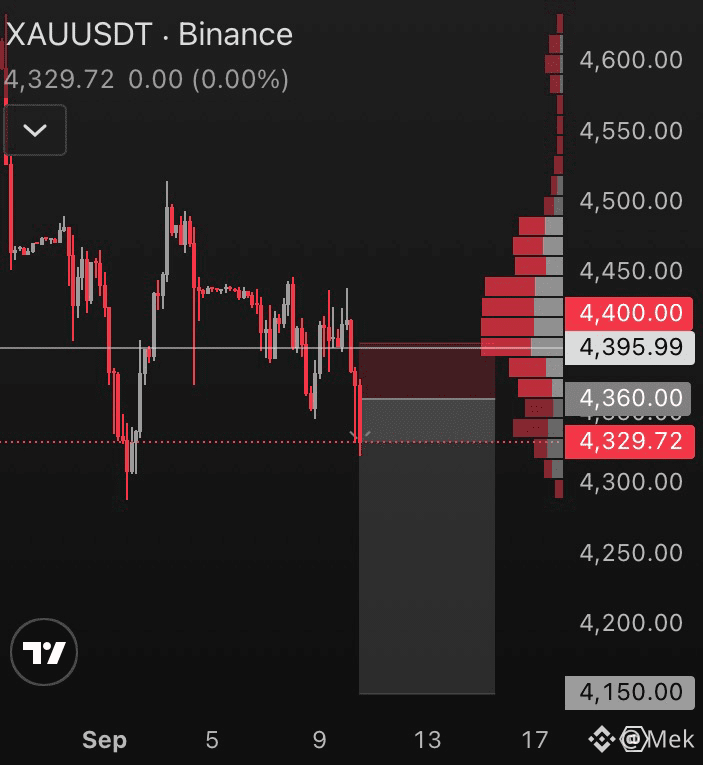
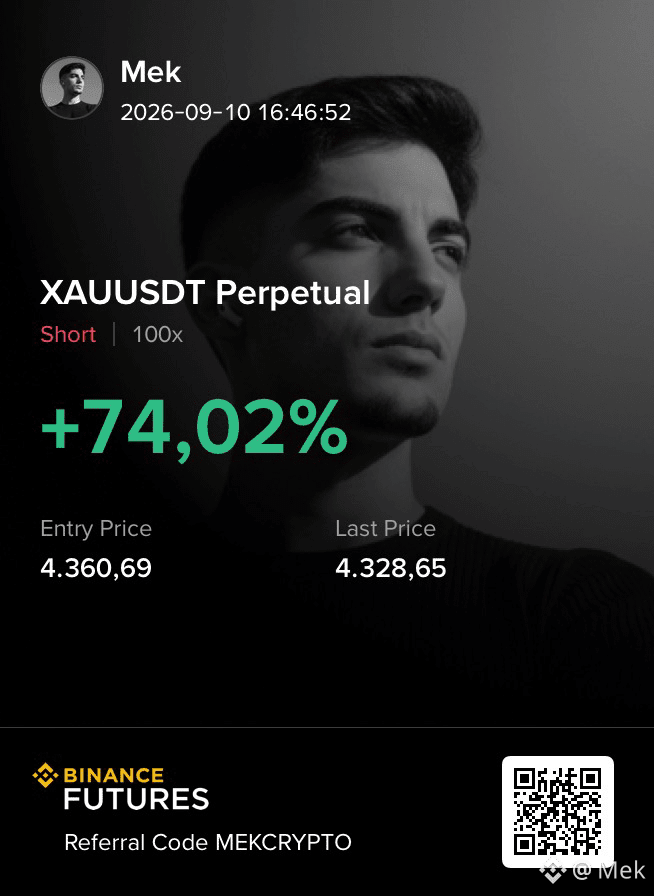
Eu notifiquei sobre a queda do $XAU no momento em que abri a operação.
+ 74% de lucro em algumas horas ..
Agora seguindo o gerenciamento que passei no outro post, estou posicionando meu SL em lucro, na região de US$ 4350.0. É o famoso break-even!
Sendo assim essa operação é lucro ou lucro, continuarei surfando e movendo meu stop mais pra baixo conforme o ouro cair.
{future}(XAUUSDT)
Eu notifiquei sobre a queda do $XAU no momento em que abri a operação.
+ 74% de lucro em algumas horas ..
Agora seguindo o gerenciamento que passei no outro post, estou posicionando meu SL em lucro, na região de US$ 4350.0. É o famoso break-even!
Sendo assim essa operação é lucro ou lucro, continuarei surfando e movendo meu stop mais pra baixo conforme o ouro cair.
+ 74% de lucro em algumas horas ..
Agora seguindo o gerenciamento que passei no outro post, estou posicionando meu SL em lucro, na região de US$ 4350.0. É o famoso break-even!
Sendo assim essa operação é lucro ou lucro, continuarei surfando e movendo meu stop mais pra baixo conforme o ouro cair.
Mek
·
--
Minha estratégia pra esse short no $XAU ..
Abri a operaçao em US$ 4360.0, posicionei um stop de baixo risco em US$ 4400.0 e tenho como take profit a liquidez de US$ 4150.0.
Já surfando + 17% de lucro neste momento, quando chegar em + 50% irei fazer o break-even e proteger meu stop do $XAU no ponto de entrada / lucro 10%.
Assim eliminando meu risco, se o mercado voltar eu saio com pequeno lucro, se continuar eu capturo um lucro maior no meu take.
Abri a operaçao em US$ 4360.0, posicionei um stop de baixo risco em US$ 4400.0 e tenho como take profit a liquidez de US$ 4150.0.
Já surfando + 17% de lucro neste momento, quando chegar em + 50% irei fazer o break-even e proteger meu stop do $XAU no ponto de entrada / lucro 10%.
Assim eliminando meu risco, se o mercado voltar eu saio com pequeno lucro, se continuar eu capturo um lucro maior no meu take.
1
23
·
--
Расталды
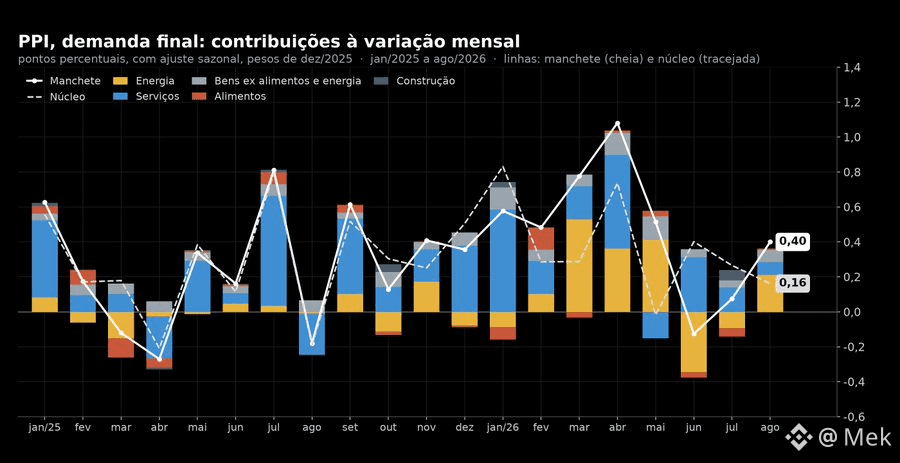
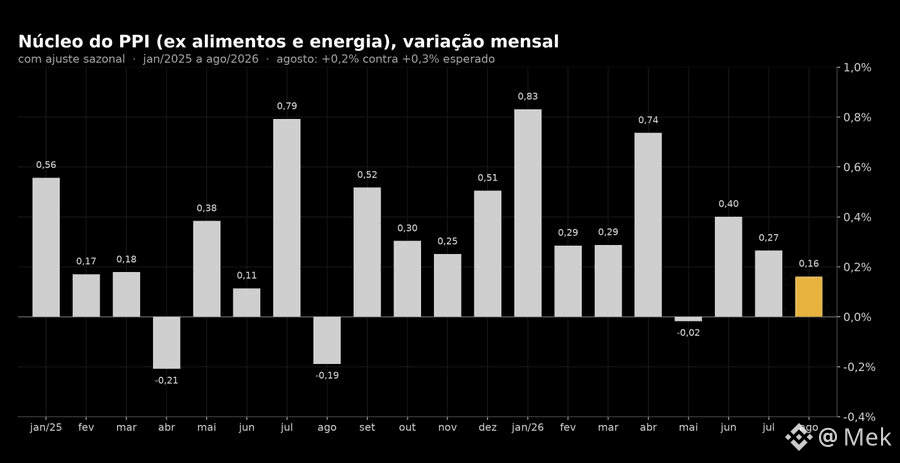
O PPI tem três leituras. O PPI cheio é o índice de demanda final, o 5,4% das manchetes. O PPI core exclui alimentos e energia; é o que aparece nas telas como "Core PPI" e o que o consenso mira. O PPI core ex margens exclui, além de alimentos e energia, as margens de atacado e varejo; o nome oficial é "final demand less foods, energy, and trade services", e é a linha que o próprio BLS destaca no release, porque margem de comércio é o componente mais volátil do índice. Vou considerar "core" o segundo e "core ex margens", o terceiro.
Em agosto, core e core ex margens não contaram a mesma história no mês. O core subiu 0,16% contra 0,3% esperado, no terceiro mês seguido de desaceleração: 0,40 em junho, 0,27 em julho, 0,16 agora. O core ex margens subiu 0,27%, em linha com o consenso de 0,3%, depois de 0,4% em julho. A diferença entre os dois está na margem de comércio, que caiu 0,2% no mês e tirou cerca de 0,04 ponto do core. A margem do varejo de combustível desabou 11,3%, e isso é mecânico: quando o combustível sobe no atacado, o varejo demora a repassar e a margem encolhe antes de se recompor. Em doze meses, 4,6% no core, como esperado, e 4,7% no core ex margens, igual a julho. O 4,6% veio de 4,3% por aritmética de base: saiu da janela o −0,2% de agosto de 2025 e entrou o +0,16% de agosto de 2026. O pico foi 4,9% em abril.
O mesmo vale para a manchete de aceleração que o PPI cheio ganhou hoje. Em doze meses ele foi de 4,8% para 5,4%, mas agosto de 2025 tinha sido −0,2% e agosto de 2026 foi +0,4%; a troca de um mês negativo por um positivo responde pelos 0,6 ponto inteiros. O ritmo mensal de 0,4% ficou em linha/abaixo da média mensal do último ano (0,44%).
Ou seja, a leitura de hoje não trouxe aceleração (apenas energia, por motivos óbvios). O core desacelera há três meses, o core ex margens veio no consenso e o 5,4% do PPI cheio é troca de base, um −0,2 que saiu e um +0,4 que entrou.
O PPI tem três leituras. O PPI cheio é o índice de demanda final, o 5,4% das manchetes. O PPI core exclui alimentos e energia; é o que aparece nas telas como "Core PPI" e o que o consenso mira. O PPI core ex margens exclui, além de alimentos e energia, as margens de atacado e varejo; o nome oficial é "final demand less foods, energy, and trade services", e é a linha que o próprio BLS destaca no release, porque margem de comércio é o componente mais volátil do índice. Vou considerar "core" o segundo e "core ex margens", o terceiro.
Em agosto, core e core ex margens não contaram a mesma história no mês. O core subiu 0,16% contra 0,3% esperado, no terceiro mês seguido de desaceleração: 0,40 em junho, 0,27 em julho, 0,16 agora. O core ex margens subiu 0,27%, em linha com o consenso de 0,3%, depois de 0,4% em julho. A diferença entre os dois está na margem de comércio, que caiu 0,2% no mês e tirou cerca de 0,04 ponto do core. A margem do varejo de combustível desabou 11,3%, e isso é mecânico: quando o combustível sobe no atacado, o varejo demora a repassar e a margem encolhe antes de se recompor. Em doze meses, 4,6% no core, como esperado, e 4,7% no core ex margens, igual a julho. O 4,6% veio de 4,3% por aritmética de base: saiu da janela o −0,2% de agosto de 2025 e entrou o +0,16% de agosto de 2026. O pico foi 4,9% em abril.
O mesmo vale para a manchete de aceleração que o PPI cheio ganhou hoje. Em doze meses ele foi de 4,8% para 5,4%, mas agosto de 2025 tinha sido −0,2% e agosto de 2026 foi +0,4%; a troca de um mês negativo por um positivo responde pelos 0,6 ponto inteiros. O ritmo mensal de 0,4% ficou em linha/abaixo da média mensal do último ano (0,44%).
Ou seja, a leitura de hoje não trouxe aceleração (apenas energia, por motivos óbvios). O core desacelera há três meses, o core ex margens veio no consenso e o 5,4% do PPI cheio é troca de base, um −0,2 que saiu e um +0,4 que entrou.
Em agosto, core e core ex margens não contaram a mesma história no mês. O core subiu 0,16% contra 0,3% esperado, no terceiro mês seguido de desaceleração: 0,40 em junho, 0,27 em julho, 0,16 agora. O core ex margens subiu 0,27%, em linha com o consenso de 0,3%, depois de 0,4% em julho. A diferença entre os dois está na margem de comércio, que caiu 0,2% no mês e tirou cerca de 0,04 ponto do core. A margem do varejo de combustível desabou 11,3%, e isso é mecânico: quando o combustível sobe no atacado, o varejo demora a repassar e a margem encolhe antes de se recompor. Em doze meses, 4,6% no core, como esperado, e 4,7% no core ex margens, igual a julho. O 4,6% veio de 4,3% por aritmética de base: saiu da janela o −0,2% de agosto de 2025 e entrou o +0,16% de agosto de 2026. O pico foi 4,9% em abril.
O mesmo vale para a manchete de aceleração que o PPI cheio ganhou hoje. Em doze meses ele foi de 4,8% para 5,4%, mas agosto de 2025 tinha sido −0,2% e agosto de 2026 foi +0,4%; a troca de um mês negativo por um positivo responde pelos 0,6 ponto inteiros. O ritmo mensal de 0,4% ficou em linha/abaixo da média mensal do último ano (0,44%).
Ou seja, a leitura de hoje não trouxe aceleração (apenas energia, por motivos óbvios). O core desacelera há três meses, o core ex margens veio no consenso e o 5,4% do PPI cheio é troca de base, um −0,2 que saiu e um +0,4 que entrou.
1
828
·
--
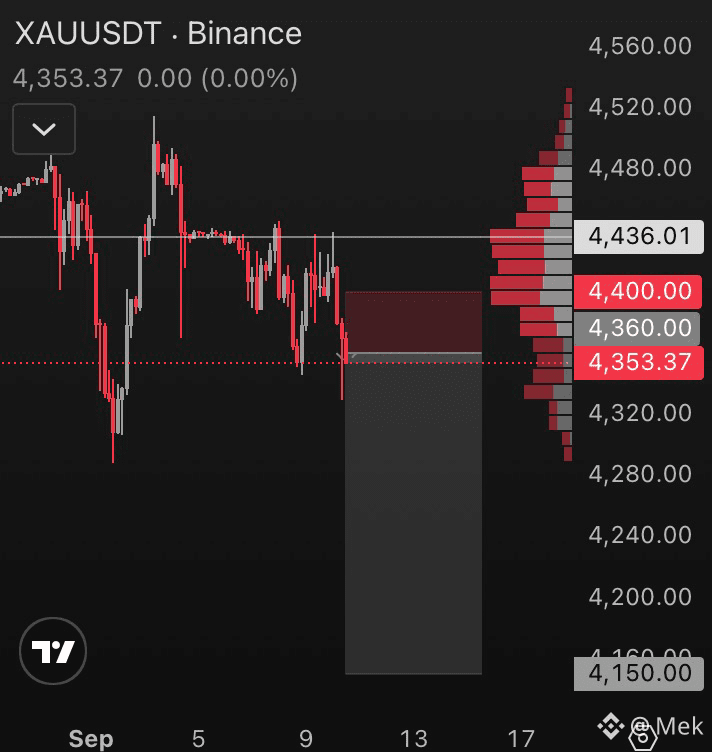
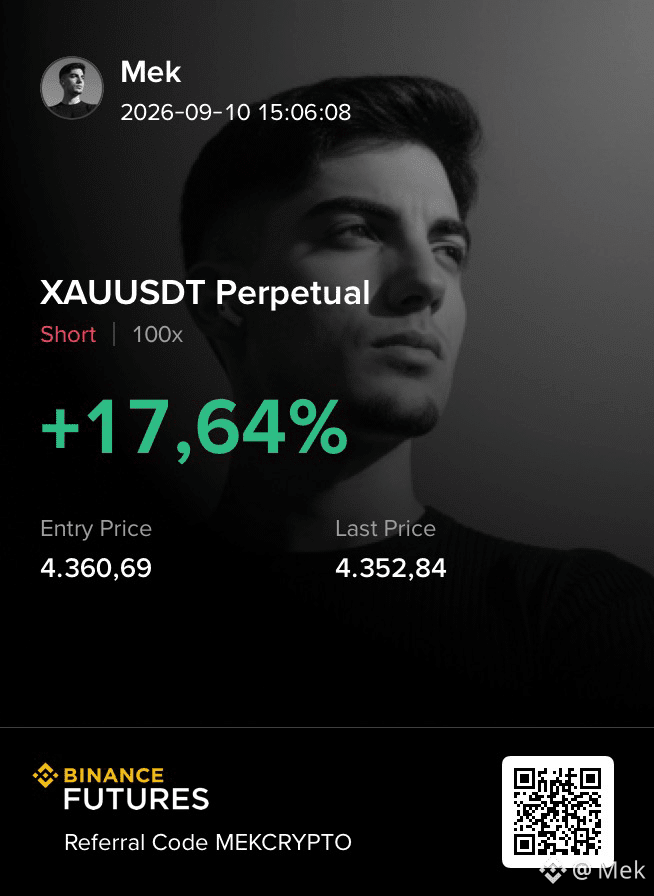
Minha estratégia pra esse short no $XAU ..
Abri a operaçao em US$ 4360.0, posicionei um stop de baixo risco em US$ 4400.0 e tenho como take profit a liquidez de US$ 4150.0.
Já surfando + 17% de lucro neste momento, quando chegar em + 50% irei fazer o break-even e proteger meu stop do $XAU no ponto de entrada / lucro 10%.
Assim eliminando meu risco, se o mercado voltar eu saio com pequeno lucro, se continuar eu capturo um lucro maior no meu take.
{future}(XAUUSDT)
Minha estratégia pra esse short no $XAU ..
Abri a operaçao em US$ 4360.0, posicionei um stop de baixo risco em US$ 4400.0 e tenho como take profit a liquidez de US$ 4150.0.
Já surfando + 17% de lucro neste momento, quando chegar em + 50% irei fazer o break-even e proteger meu stop do $XAU no ponto de entrada / lucro 10%.
Assim eliminando meu risco, se o mercado voltar eu saio com pequeno lucro, se continuar eu capturo um lucro maior no meu take.
Abri a operaçao em US$ 4360.0, posicionei um stop de baixo risco em US$ 4400.0 e tenho como take profit a liquidez de US$ 4150.0.
Já surfando + 17% de lucro neste momento, quando chegar em + 50% irei fazer o break-even e proteger meu stop do $XAU no ponto de entrada / lucro 10%.
Assim eliminando meu risco, se o mercado voltar eu saio com pequeno lucro, se continuar eu capturo um lucro maior no meu take.
1
1
26
·
--
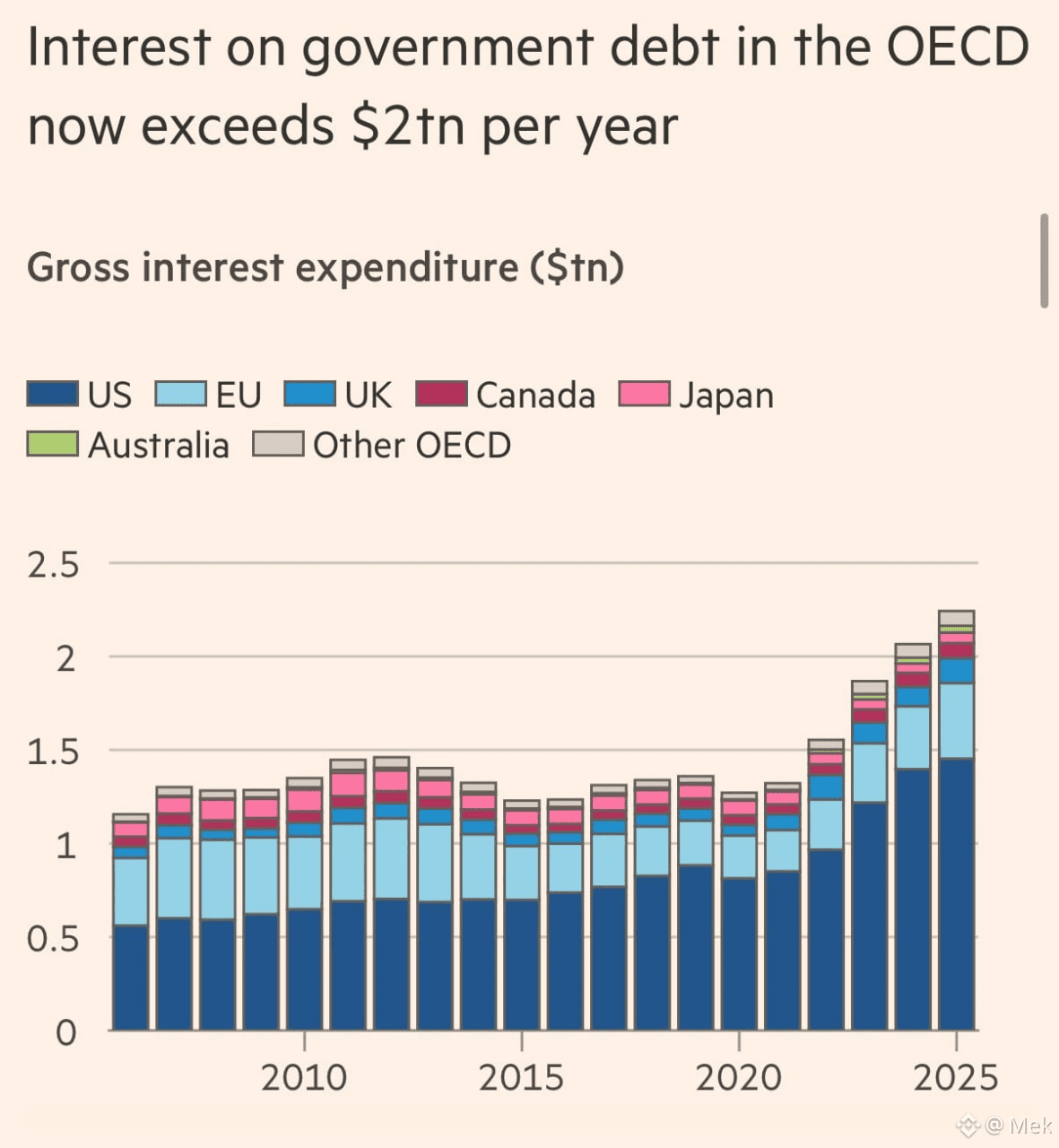
📊 Os países da OCDE agora pagam mais de US$ 2 trilhões por ano só de JUROS DA DÍVIDA pública.
Esse número ficou parado perto de US$ 1,2 trilhão por mais de uma década.
Dobrou em cerca de 4 anos.
E os EUA sozinhos respondem por US$ 1,5 trilhão desse total.
O que chama atenção não é o nível, mas a curva.
Cada ano de déficit vira estoque de dívida nova, que precisa ser rolada na taxa de hoje, não na de 2015.
Enquanto o yield de 30 anos americano estiver perto da máxima desde 2007, essa barra só tem uma direção possível.
Foi exatamente por isso que o Tesouro dobrou as recompras de dívida longa no mês passado.
Você tem uma janela de tempo pequena, e que está encurtando, para entender o que isso realmente significa.
A corrida por ativos escassos vai se intensificar!
📊 Os países da OCDE agora pagam mais de US$ 2 trilhões por ano só de JUROS DA DÍVIDA pública.
Esse número ficou parado perto de US$ 1,2 trilhão por mais de uma década.
Dobrou em cerca de 4 anos.
E os EUA sozinhos respondem por US$ 1,5 trilhão desse total.
O que chama atenção não é o nível, mas a curva.
Cada ano de déficit vira estoque de dívida nova, que precisa ser rolada na taxa de hoje, não na de 2015.
Enquanto o yield de 30 anos americano estiver perto da máxima desde 2007, essa barra só tem uma direção possível.
Foi exatamente por isso que o Tesouro dobrou as recompras de dívida longa no mês passado.
Você tem uma janela de tempo pequena, e que está encurtando, para entender o que isso realmente significa.
A corrida por ativos escassos vai se intensificar!
Esse número ficou parado perto de US$ 1,2 trilhão por mais de uma década.
Dobrou em cerca de 4 anos.
E os EUA sozinhos respondem por US$ 1,5 trilhão desse total.
O que chama atenção não é o nível, mas a curva.
Cada ano de déficit vira estoque de dívida nova, que precisa ser rolada na taxa de hoje, não na de 2015.
Enquanto o yield de 30 anos americano estiver perto da máxima desde 2007, essa barra só tem uma direção possível.
Foi exatamente por isso que o Tesouro dobrou as recompras de dívida longa no mês passado.
Você tem uma janela de tempo pequena, e que está encurtando, para entender o que isso realmente significa.
A corrida por ativos escassos vai se intensificar!
1
241
·
--
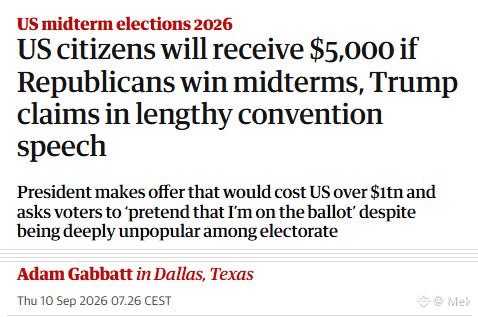
Trump prometeu US$ 5.000 para cada cidadão adulto americano se os republicanos mantiverem a Câmara e o Senado.🤡
Ele chamou de "dividendo Trump".
A conta passa de US$ 1 trilhão, segundo estimativas com base no censo. Não foi dito de onde sai o dinheiro.
Agora coloque isso em contexto.
Os EUA já têm US$ 40 trilhões em dívida bruta, cerca de 123% do PIB.
O gasto anual só com juros bateu US$ 1,25 trilhão.
E o Tesouro precisou dobrar as recompras de dívida longa no mês passado justamente pra segurar o custo de financiamento.
Ou seja: um cheque de US$ 1 trilhão custaria praticamente o mesmo que os EUA já pagam de juros em um ano inteiro.
Independente de quem esteja no poder, a direção é a mesma que eu venho mostrando aqui.
Mais gasto, mais dívida, mais emissão.
Tem certeza que você possui ativos escassos suficientes?
Trump prometeu US$ 5.000 para cada cidadão adulto americano se os republicanos mantiverem a Câmara e o Senado.🤡
Ele chamou de "dividendo Trump".
A conta passa de US$ 1 trilhão, segundo estimativas com base no censo. Não foi dito de onde sai o dinheiro.
Agora coloque isso em contexto.
Os EUA já têm US$ 40 trilhões em dívida bruta, cerca de 123% do PIB.
O gasto anual só com juros bateu US$ 1,25 trilhão.
E o Tesouro precisou dobrar as recompras de dívida longa no mês passado justamente pra segurar o custo de financiamento.
Ou seja: um cheque de US$ 1 trilhão custaria praticamente o mesmo que os EUA já pagam de juros em um ano inteiro.
Independente de quem esteja no poder, a direção é a mesma que eu venho mostrando aqui.
Mais gasto, mais dívida, mais emissão.
Tem certeza que você possui ativos escassos suficientes?
Ele chamou de "dividendo Trump".
A conta passa de US$ 1 trilhão, segundo estimativas com base no censo. Não foi dito de onde sai o dinheiro.
Agora coloque isso em contexto.
Os EUA já têm US$ 40 trilhões em dívida bruta, cerca de 123% do PIB.
O gasto anual só com juros bateu US$ 1,25 trilhão.
E o Tesouro precisou dobrar as recompras de dívida longa no mês passado justamente pra segurar o custo de financiamento.
Ou seja: um cheque de US$ 1 trilhão custaria praticamente o mesmo que os EUA já pagam de juros em um ano inteiro.
Independente de quem esteja no poder, a direção é a mesma que eu venho mostrando aqui.
Mais gasto, mais dívida, mais emissão.
Tem certeza que você possui ativos escassos suficientes?
1
254
·
--
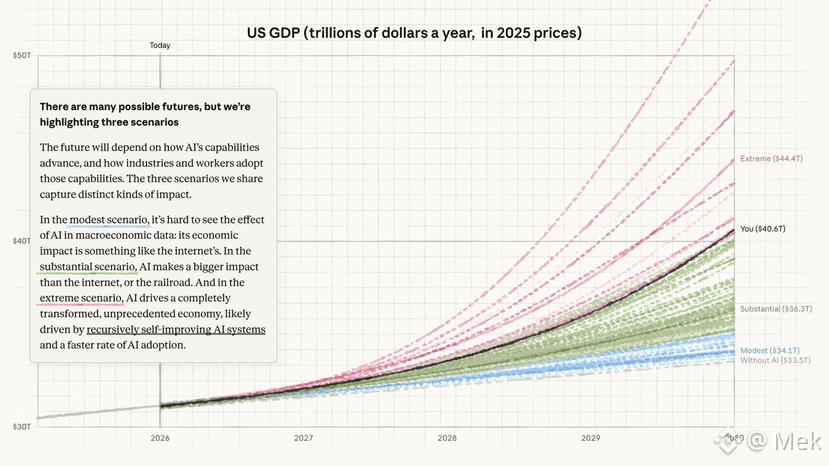
🚨 A Anthropic publicou uma projeção do impacto da IA na economia americana até 2030.
E a diferença entre os cenários é absurda.
No cenário sem IA, o PIB americano chega a US$ 33,5 trilhões em 2030.
No cenário extremo, chega a US$ 44,4 trilhões.
Quase US$ 11 trilhões de diferença. Uma economia inteira do Japão dependendo de qual curva se realizar.
Mas o detalhe mais importante é outro.
No cenário modesto, o PIB chega a US$ 34,1 trilhões.
Ou seja, praticamente nada acima do cenário sem IA nenhuma.
Nesse caso, o impacto da IA seria invisível no dado macro. Parecido com o que a internet fez.
Agora conecte isso com dívida.
Os EUA têm US$ 40 trilhões em dívida bruta hoje. Cerca de 123% do PIB.
No cenário extremo, o PIB cresce 32% em quatro anos e o problema fiscal se dilui sozinho.
No cenário modesto, ele continua exatamente igual.
E é aqui que está a aposta silenciosa do mercado.
Bond investor exigindo yield alto e bolsa precificando produtividade recorde não podem estar certos ao mesmo tempo.
Se o cenário modesto vencer, sobra imposto, corte de gasto ou inflação.
Nenhuma das três é boa pra quem guarda patrimônio em moeda fiduciária.
🚨 A Anthropic publicou uma projeção do impacto da IA na economia americana até 2030.
E a diferença entre os cenários é absurda.
No cenário sem IA, o PIB americano chega a US$ 33,5 trilhões em 2030.
No cenário extremo, chega a US$ 44,4 trilhões.
Quase US$ 11 trilhões de diferença. Uma economia inteira do Japão dependendo de qual curva se realizar.
Mas o detalhe mais importante é outro.
No cenário modesto, o PIB chega a US$ 34,1 trilhões.
Ou seja, praticamente nada acima do cenário sem IA nenhuma.
Nesse caso, o impacto da IA seria invisível no dado macro. Parecido com o que a internet fez.
Agora conecte isso com dívida.
Os EUA têm US$ 40 trilhões em dívida bruta hoje. Cerca de 123% do PIB.
No cenário extremo, o PIB cresce 32% em quatro anos e o problema fiscal se dilui sozinho.
No cenário modesto, ele continua exatamente igual.
E é aqui que está a aposta silenciosa do mercado.
Bond investor exigindo yield alto e bolsa precificando produtividade recorde não podem estar certos ao mesmo tempo.
Se o cenário modesto vencer, sobra imposto, corte de gasto ou inflação.
Nenhuma das três é boa pra quem guarda patrimônio em moeda fiduciária.
E a diferença entre os cenários é absurda.
No cenário sem IA, o PIB americano chega a US$ 33,5 trilhões em 2030.
No cenário extremo, chega a US$ 44,4 trilhões.
Quase US$ 11 trilhões de diferença. Uma economia inteira do Japão dependendo de qual curva se realizar.
Mas o detalhe mais importante é outro.
No cenário modesto, o PIB chega a US$ 34,1 trilhões.
Ou seja, praticamente nada acima do cenário sem IA nenhuma.
Nesse caso, o impacto da IA seria invisível no dado macro. Parecido com o que a internet fez.
Agora conecte isso com dívida.
Os EUA têm US$ 40 trilhões em dívida bruta hoje. Cerca de 123% do PIB.
No cenário extremo, o PIB cresce 32% em quatro anos e o problema fiscal se dilui sozinho.
No cenário modesto, ele continua exatamente igual.
E é aqui que está a aposta silenciosa do mercado.
Bond investor exigindo yield alto e bolsa precificando produtividade recorde não podem estar certos ao mesmo tempo.
Se o cenário modesto vencer, sobra imposto, corte de gasto ou inflação.
Nenhuma das três é boa pra quem guarda patrimônio em moeda fiduciária.
1
195
·
--
Расталды
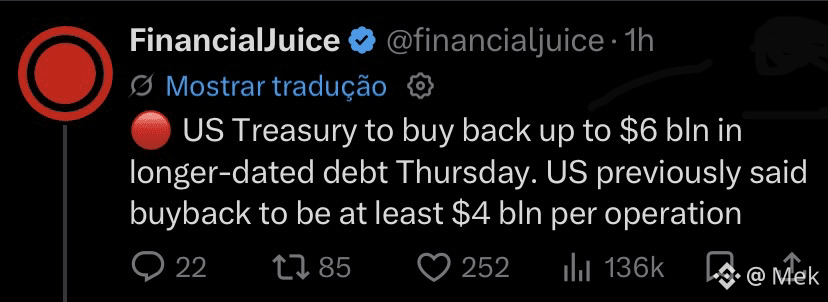
🚨 TESOURO ANUNCIA RECOMPRAS DE $6 BILHÕES NESTA QUINTA-FEIRA
Isso só arranha a superfície dessa dívida atual de longo prazo. O volume vai continuar subindo até realmente fazer algum efeito na ponta longa.
Espero que nessa altura você já saiba o que isso significa.
🚨 TESOURO ANUNCIA RECOMPRAS DE $6 BILHÕES NESTA QUINTA-FEIRA
Isso só arranha a superfície dessa dívida atual de longo prazo. O volume vai continuar subindo até realmente fazer algum efeito na ponta longa.
Espero que nessa altura você já saiba o que isso significa.
Isso só arranha a superfície dessa dívida atual de longo prazo. O volume vai continuar subindo até realmente fazer algum efeito na ponta longa.
Espero que nessa altura você já saiba o que isso significa.
2
1
308
·
--
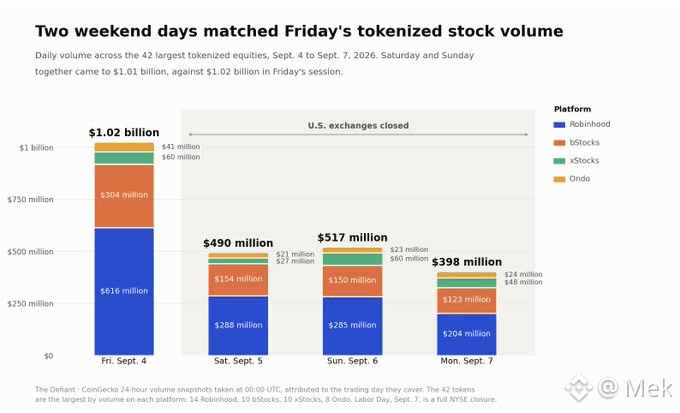
Ações tokenizadas negociaram US$ 1,01 bilhão no sábado e domingo, cerca de o mesmo volume da sessão completa de sexta-feira.
As bolsas dos EUA ficaram fechadas por 89 horas durante o fim de semana do Dia do Trabalho.
O ativo mais negociado foi o token da Nasdaq-100 na BNB Chain: US$ 180,5 milhões.
#BNBChain #bStocks
Ações tokenizadas negociaram US$ 1,01 bilhão no sábado e domingo, cerca de o mesmo volume da sessão completa de sexta-feira.
As bolsas dos EUA ficaram fechadas por 89 horas durante o fim de semana do Dia do Trabalho.
O ativo mais negociado foi o token da Nasdaq-100 na BNB Chain: US$ 180,5 milhões.
#BNBChain #bStocks
As bolsas dos EUA ficaram fechadas por 89 horas durante o fim de semana do Dia do Trabalho.
O ativo mais negociado foi o token da Nasdaq-100 na BNB Chain: US$ 180,5 milhões.
#BNBChain #bStocks
1
180
·
--
Расталды
E mesmo assim ainda tem muito investidor olhando apenas para taxa de juros do FED para entender mercado.
Não poderiam estar mais deslocados. Visão de túnel, talvez.
O nome do jogo agora é duration.
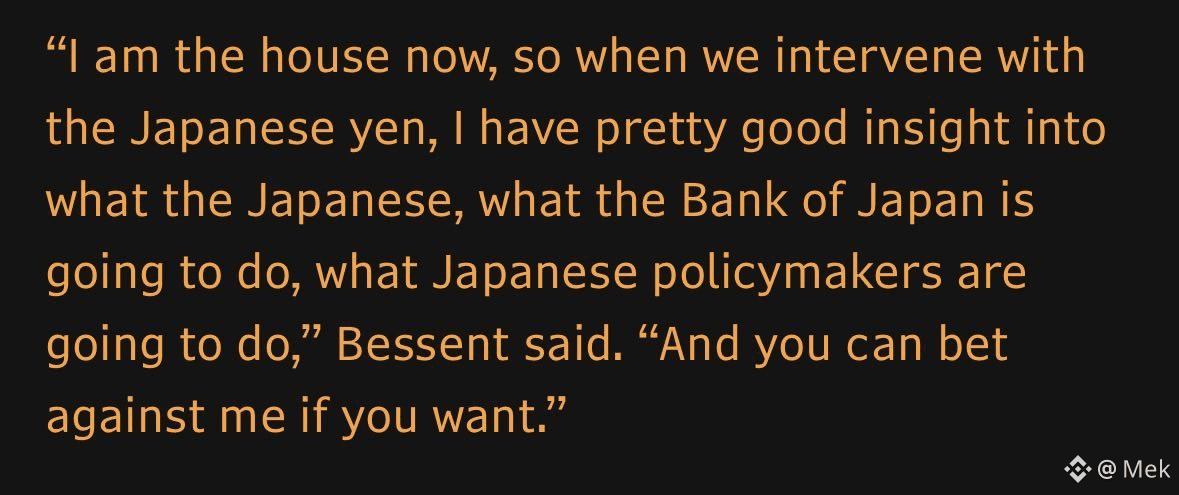
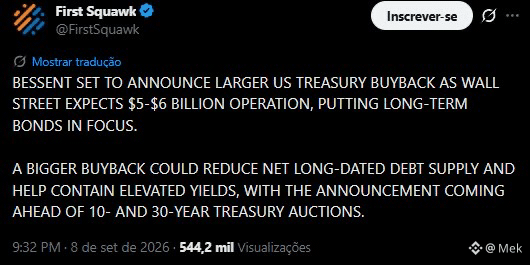
A intervenção que o Bessent está fazendo na ponta longa ocorre justamente quando BCs, como o Japão, continuam se desfazendo de treasuries.
Os $4 BILHÕES anunciados são apenas a ponta do icerberg. Vai ser preciso muito mais emissão de t-bills (talvez o triplo, quadruplo?).
E quando t-bills são emitidas para comprar títulos longos, isso é uma troca de duration no colateral.
Principalmente em MMF e shadow bankings vão sentir esse efeito. Papéis que funcionam "quase como dinheiro".
Tá seguindo analista tentando descobrir apenas o que o FED vai fazer com juros na próxima reunião? Então já saiba que está olhando apenas meio-mercado.
E mesmo assim ainda tem muito investidor olhando apenas para taxa de juros do FED para entender mercado.
Não poderiam estar mais deslocados. Visão de túnel, talvez.
O nome do jogo agora é duration.
A intervenção que o Bessent está fazendo na ponta longa ocorre justamente quando BCs, como o Japão, continuam se desfazendo de treasuries.
Os $4 BILHÕES anunciados são apenas a ponta do icerberg. Vai ser preciso muito mais emissão de t-bills (talvez o triplo, quadruplo?).
E quando t-bills são emitidas para comprar títulos longos, isso é uma troca de duration no colateral.
Principalmente em MMF e shadow bankings vão sentir esse efeito. Papéis que funcionam "quase como dinheiro".
Tá seguindo analista tentando descobrir apenas o que o FED vai fazer com juros na próxima reunião? Então já saiba que está olhando apenas meio-mercado.
Não poderiam estar mais deslocados. Visão de túnel, talvez.
O nome do jogo agora é duration.
A intervenção que o Bessent está fazendo na ponta longa ocorre justamente quando BCs, como o Japão, continuam se desfazendo de treasuries.
Os $4 BILHÕES anunciados são apenas a ponta do icerberg. Vai ser preciso muito mais emissão de t-bills (talvez o triplo, quadruplo?).
E quando t-bills são emitidas para comprar títulos longos, isso é uma troca de duration no colateral.
Principalmente em MMF e shadow bankings vão sentir esse efeito. Papéis que funcionam "quase como dinheiro".
Tá seguindo analista tentando descobrir apenas o que o FED vai fazer com juros na próxima reunião? Então já saiba que está olhando apenas meio-mercado.
1
573
·
--
Расталды
A China já comprou mais ouro em 8 meses de 2026 do que em todo o ano de 2025.🚨
Foram 80 toneladas contra 29 do ano inteiro passado.
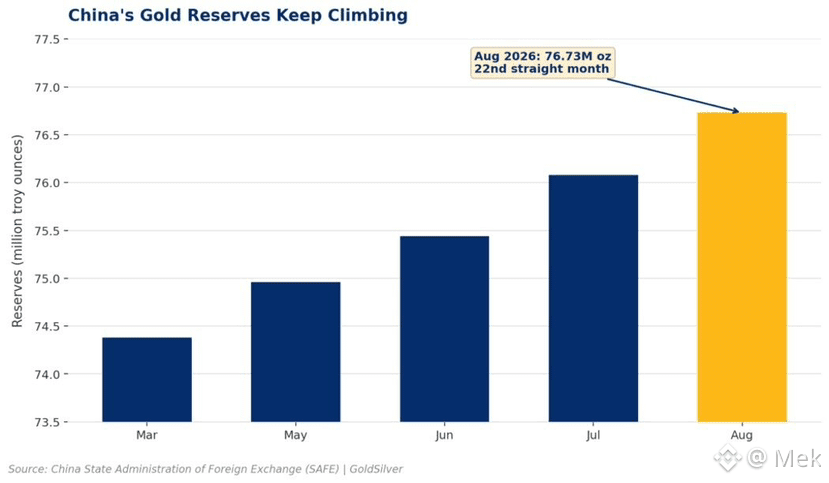
Só em agosto foram 20 toneladas, igualando a maior compra mensal desde outubro de 2023, e marcando o 22º mês consecutivo de compra.
A reserva total bateu recorde em 2.387 toneladas, ou 76,73 milhões de onças troy.
E esse é apenas o número oficial.
Estimativas do Goldman Sachs via mercado OTC de Londres apontam que a compra real chega a mais que o dobro do declarado em alguns meses.
A corrida por ativos escassos continua se intensificando.
A China já comprou mais ouro em 8 meses de 2026 do que em todo o ano de 2025.🚨
Foram 80 toneladas contra 29 do ano inteiro passado.
Só em agosto foram 20 toneladas, igualando a maior compra mensal desde outubro de 2023, e marcando o 22º mês consecutivo de compra.
A reserva total bateu recorde em 2.387 toneladas, ou 76,73 milhões de onças troy.
E esse é apenas o número oficial.
Estimativas do Goldman Sachs via mercado OTC de Londres apontam que a compra real chega a mais que o dobro do declarado em alguns meses.
A corrida por ativos escassos continua se intensificando.
Foram 80 toneladas contra 29 do ano inteiro passado.
Só em agosto foram 20 toneladas, igualando a maior compra mensal desde outubro de 2023, e marcando o 22º mês consecutivo de compra.
A reserva total bateu recorde em 2.387 toneladas, ou 76,73 milhões de onças troy.
E esse é apenas o número oficial.
Estimativas do Goldman Sachs via mercado OTC de Londres apontam que a compra real chega a mais que o dobro do declarado em alguns meses.
A corrida por ativos escassos continua se intensificando.
2
1.2k
·
--
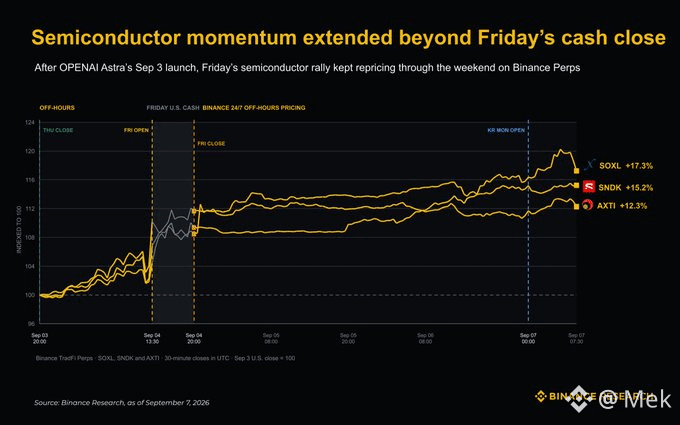
Astra não puxou o pregão inteiro. Puxou o pedaço que estava mais apertado.
O launch da OpenAI em 3 de setembro deslocou o discurso de modelo que gera token pra agente que fecha tarefa. Isso amplia a conta: compute, memória, storage, rede, equipment.
Sexta o tape mostrou onde o dinheiro foi de verdade. Liderança em memória, equipment e interconnect. GPU ficou pra trás. Não é narrativa de agente. É NAND e DRAM curtos, HBM4 sem folga de capacidade, yield aliviando e posição que estava achatada voltando.
$SOXL +9,6% e $SNDK +11,7% no cash de sexta. Quando a Coreia abriu na segunda, os Perps da Binance ainda meteram +5,9% e +2,8%. O preço não esperou o sino.
O dado útil não é o percentual. É o relógio. Sessão americana fecha. O livro 24h continua marcando o mesmo movimento o fim de semana inteiro.
Quem lê só o cash de sexta está atrasado um pregão.
Astra não puxou o pregão inteiro. Puxou o pedaço que estava mais apertado.
O launch da OpenAI em 3 de setembro deslocou o discurso de modelo que gera token pra agente que fecha tarefa. Isso amplia a conta: compute, memória, storage, rede, equipment.
Sexta o tape mostrou onde o dinheiro foi de verdade. Liderança em memória, equipment e interconnect. GPU ficou pra trás. Não é narrativa de agente. É NAND e DRAM curtos, HBM4 sem folga de capacidade, yield aliviando e posição que estava achatada voltando.
$SOXL +9,6% e $SNDK +11,7% no cash de sexta. Quando a Coreia abriu na segunda, os Perps da Binance ainda meteram +5,9% e +2,8%. O preço não esperou o sino.
O dado útil não é o percentual. É o relógio. Sessão americana fecha. O livro 24h continua marcando o mesmo movimento o fim de semana inteiro.
Quem lê só o cash de sexta está atrasado um pregão.
O launch da OpenAI em 3 de setembro deslocou o discurso de modelo que gera token pra agente que fecha tarefa. Isso amplia a conta: compute, memória, storage, rede, equipment.
Sexta o tape mostrou onde o dinheiro foi de verdade. Liderança em memória, equipment e interconnect. GPU ficou pra trás. Não é narrativa de agente. É NAND e DRAM curtos, HBM4 sem folga de capacidade, yield aliviando e posição que estava achatada voltando.
$SOXL +9,6% e $SNDK +11,7% no cash de sexta. Quando a Coreia abriu na segunda, os Perps da Binance ainda meteram +5,9% e +2,8%. O preço não esperou o sino.
O dado útil não é o percentual. É o relógio. Sessão americana fecha. O livro 24h continua marcando o mesmo movimento o fim de semana inteiro.
Quem lê só o cash de sexta está atrasado um pregão.
1
230
Көбірек контент көру үшін кіріңіз
Binance Square платформасында әлемдік криптоқоғамдастыққа қосылыңыз
⚡️ Криптовалюта туралы ең соңғы және пайдалы ақпаратты алыңыз.
💬 Әлемдегі ең ірі криптобиржаның сеніміне ие.
👍 Расталған авторлардың нақты пікірлерін табыңыз.
Электрондық пошта/телефон нөмірі
Трендтегі тақырыптар
ClarityActFacesProceduralVoteSept15
6,589 рет көрілді
158 адам талқылап жатыр
🏦 Alerte Régulation : Le vote crucial de la semaine prochaine aux États-Unis
C'est l'actualité réglementaire majeure qui secoue l'écosystème crypto en cette mi-septembre : le CLARITY Act fait face à un vote de clôture décisif au Sénat américain dès ce mardi 15 septembre.
Ce projet de loi vise à donner un cadre réglementaire strict et une structure de marché claire aux actifs numériques aux États-Unis. Pour beaucoup d'experts, l'issue de ce vote va dicter la tendance du marché pour la fin de l'année.
Pourquoi c'est capital à suivre :
🟩 Le scénario haussier : Si le vote passe, cela ouvrira officiellement la voie à l'examen de la loi par le Sénat avant les élections de mi-mandat. Les modèles prédictifs des IA estiment qu'un signal positif combiné à un assouplissement de la Fed pourrait propulser le Bitcoin bien au-delà de la barre des 100 000 $.
🟥 Le scénario baissier : En cas d'échec ou de blocage du texte, les prévisions à court terme craignent un retour de la volatilité et une correction technique qui pourrait ramener le cours du Bitcoin autour des 68 000 $.
Le lobby crypto américain s'active d'ailleurs en coulisses avec le lancement de campagnes publicitaires télévisées d'envergure pour pousser le Congrès à agir.
La clarté réglementaire est-elle la clé pour une adoption de masse, ou craignez-vous qu'elle ne bride l'innovation ? Partagez votre avis en commentaire ! 👇
#Crypto #Clari #ClarityActFacesProceduralVoteSept15 Tact #RegulatoryOverreach tion #Bitcoin #Finance #Blockchain #Web3
#ClarityActFacesProceduralVoteSept15
Djambario
·0 лайк
·93 рет көрілді
US2YearYieldRisesTo4.61%
12,566 рет көрілді
287 адам талқылап жатыр
US10YearTreasuryYieldNears5%
6,465 рет көрілді
158 адам талқылап жатыр