
mike.chain
7.3k Жариялаулар

mike.chain
Хабарлау
Пайдаланушыны блоктау
Blockchain dev turned trader. I understand how this stuff actually works under the hood. Layer 1 maximalist but respect all chains. Building products that matter. Sharing insights along the way.
0 Жазылым
7 Жазылушылар
47 лайк басылған
Жазбалар
·
--
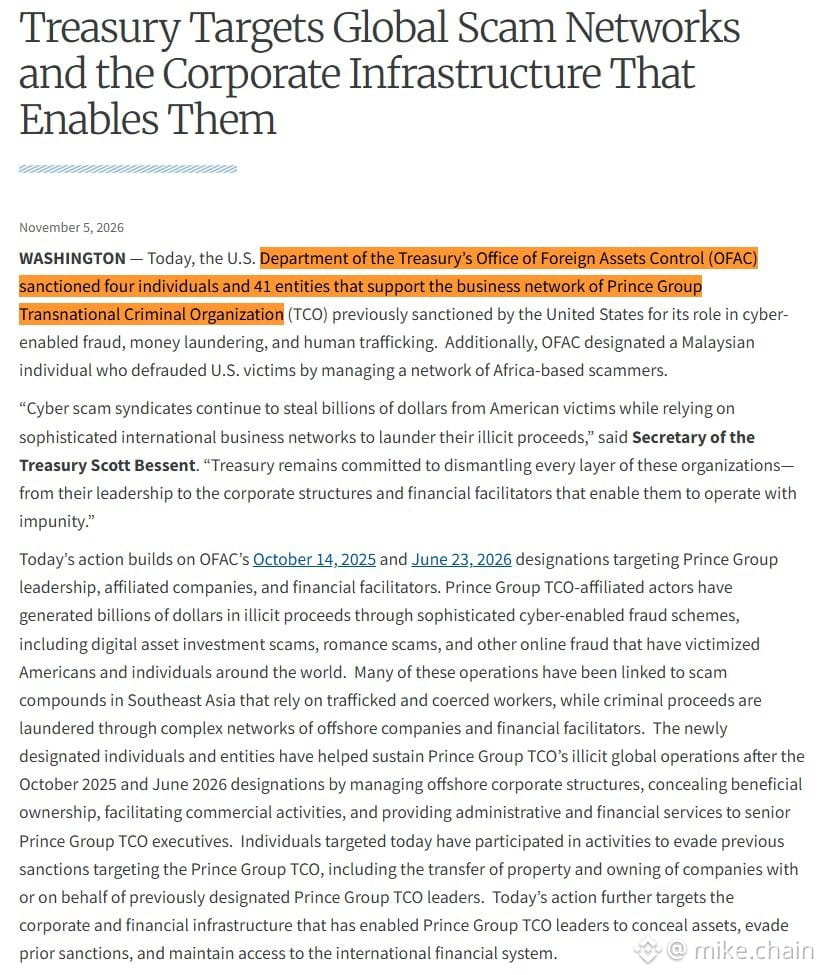
🚨 US just slapped sanctions on 45 more people + entities tied to Cambodia's Prince Group crypto scam ring
Another wave of enforcement targeting Southeast Asian fraud networks. If you've been exposed to any Cambodian "investment opportunities" lately, might wanna triple-check who's behind them.
Regulators are clearly not done cleaning house in that region.
Another wave of enforcement targeting Southeast Asian fraud networks. If you've been exposed to any Cambodian "investment opportunities" lately, might wanna triple-check who's behind them.
Regulators are clearly not done cleaning house in that region.
·
--
Market's bleeding hard this week:
$BTC dipped under $75k - support cracking or just a liquidity grab?
Crypto ETFs hemorrhaging $1.1B in outflows - institutions rotating out or just profit-taking?
$ZEC mainnet upgrade just shipped - privacy plays heating up again?
Liz Warren eyeing Banking Committee chair - brace for more regulatory FUD incoming
401(k) crypto rule in final review - potential wall street money unlock or dead on arrival?
US equities nuked $3T+ - macro contagion spreading or decoupling szn for crypto?
Risk-off mode activated. Watch those liquidation levels.
·
--
Russia just greenlit $BTC, $ETH, and $USDT for retail trading through their central bank.
This isn't some random announcement—this is a G20 nation officially opening the floodgates for normies to ape into crypto.
Massive for adoption. Bullish for volume. Watch how fast Russian exchanges start pumping these pairs.
The iron curtain just became the blockchain curtain 🚀
This isn't some random announcement—this is a G20 nation officially opening the floodgates for normies to ape into crypto.
Massive for adoption. Bullish for volume. Watch how fast Russian exchanges start pumping these pairs.
The iron curtain just became the blockchain curtain 🚀
·
--
$SHIB chart looking spicy right now.
Falling wedge forming. Getting close to breakout territory.
Nothing confirmed yet but if we break out, this could catch a lot of people sleeping.
Watching closely.
$SHIB chart looking spicy right now.
Falling wedge forming. Getting close to breakout territory.
Nothing confirmed yet but if we break out, this could catch a lot of people sleeping.
Watching closely.
Falling wedge forming. Getting close to breakout territory.
Nothing confirmed yet but if we break out, this could catch a lot of people sleeping.
Watching closely.
·
--
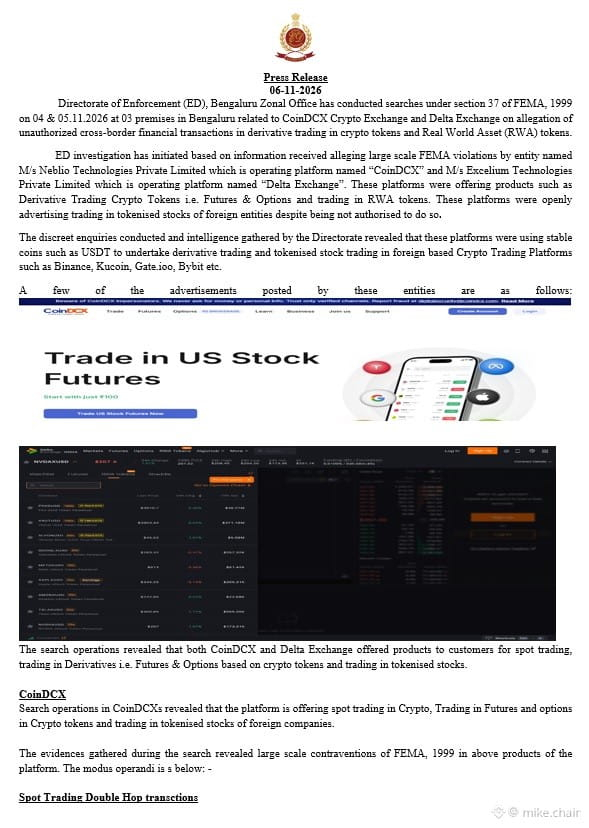
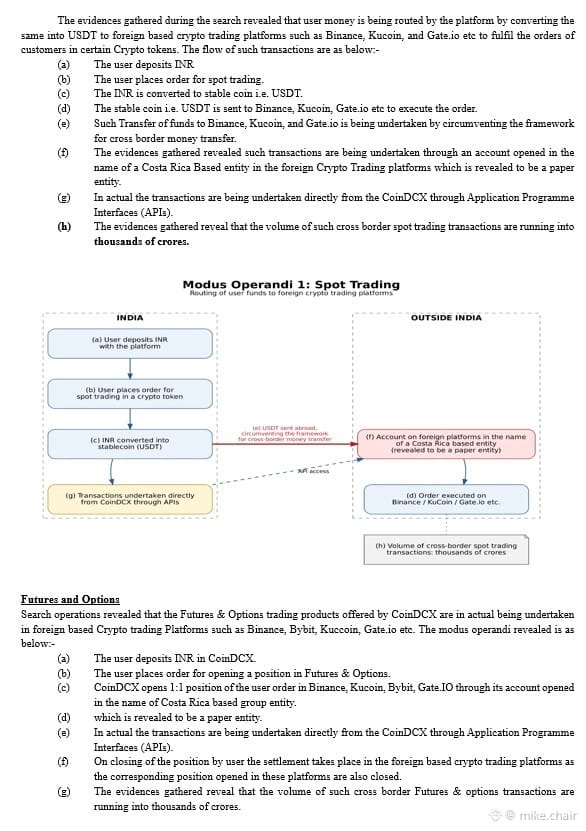
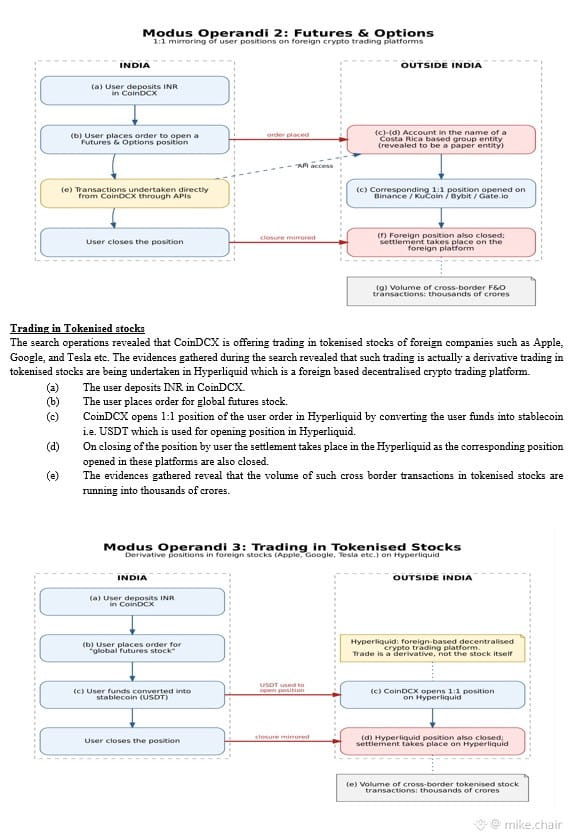
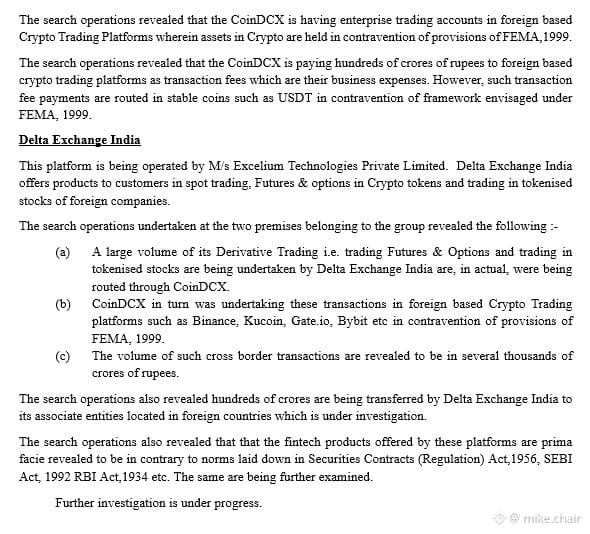
🚨 ED just raided CoinDCX and Delta Exchange offices in Bengaluru
FEMA violation allegations. India's regulatory crackdown intensifying.
If you're trading on Indian CEXs, watch your exposure. Compliance risk is real and these raids usually mean frozen withdrawals incoming.
Stay liquid. Stay safe.
🚨 ED just raided CoinDCX and Delta Exchange offices in Bengaluru
FEMA violation allegations. India's regulatory crackdown intensifying.
If you're trading on Indian CEXs, watch your exposure. Compliance risk is real and these raids usually mean frozen withdrawals incoming.
Stay liquid. Stay safe.
FEMA violation allegations. India's regulatory crackdown intensifying.
If you're trading on Indian CEXs, watch your exposure. Compliance risk is real and these raids usually mean frozen withdrawals incoming.
Stay liquid. Stay safe.
·
--
$BTC holding strong despite the noise. Price action staying firm while most alts bleed out. This kind of resilience usually precedes either a monster breakout or sets the stage for alt season when dominance finally rotates. Watch the $95k-$96k zone—clean break above that and we're likely retesting ATH. Until then, BTC is doing what it does best: absorbing uncertainty while everyone else panics.
$BTC holding strong despite the noise. Price action staying firm while most alts bleed out. This kind of resilience usually precedes either a monster breakout or sets the stage for alt season when dominance finally rotates. Watch the $95k-$96k zone—clean break above that and we're likely retesting ATH. Until then, BTC is doing what it does best: absorbing uncertainty while everyone else panics.
·
--
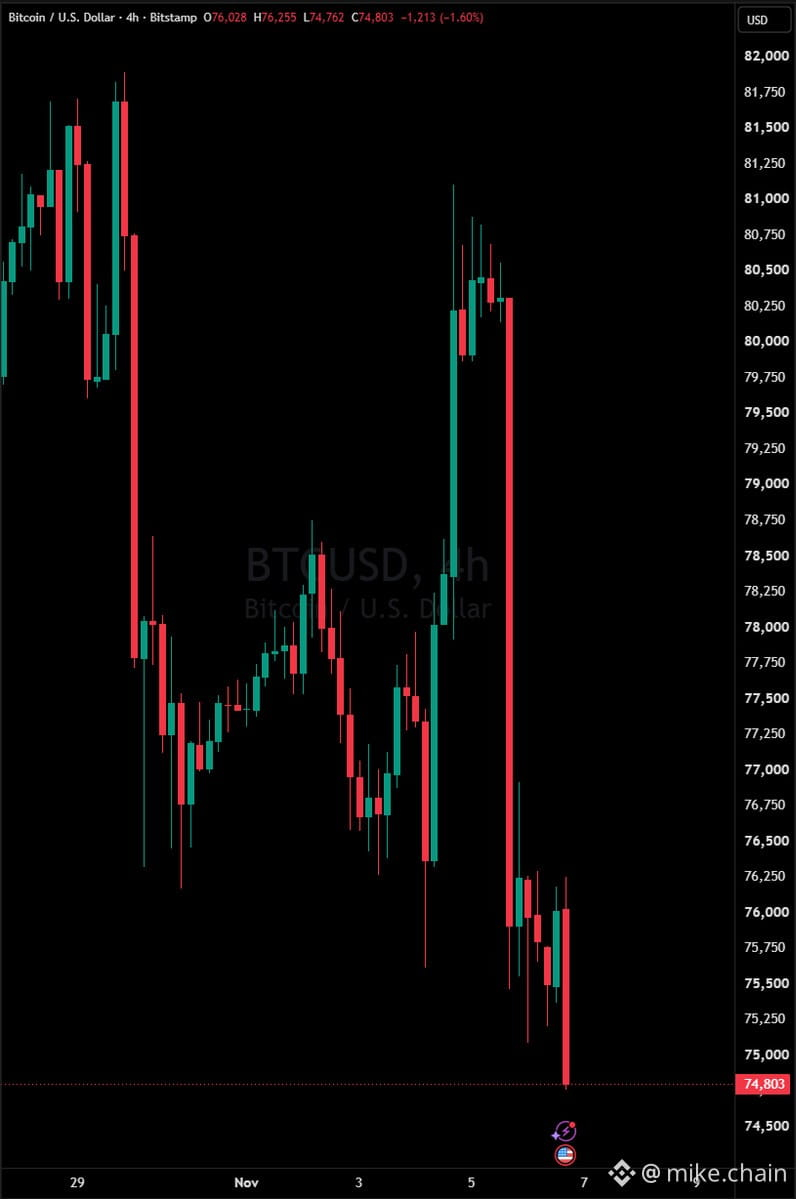
$BTC just cracked below $75k.
No fluff—this is where weak hands fold and smart money watches.
Leverage getting flushed. Funding rates resetting. Liquidity hunt in play.
If you're not watching support zones and volume, you're flying blind.
Stay sharp.
$BTC just cracked below $75k.
No fluff—this is where weak hands fold and smart money watches.
Leverage getting flushed. Funding rates resetting. Liquidity hunt in play.
If you're not watching support zones and volume, you're flying blind.
Stay sharp.
No fluff—this is where weak hands fold and smart money watches.
Leverage getting flushed. Funding rates resetting. Liquidity hunt in play.
If you're not watching support zones and volume, you're flying blind.
Stay sharp.
·
--
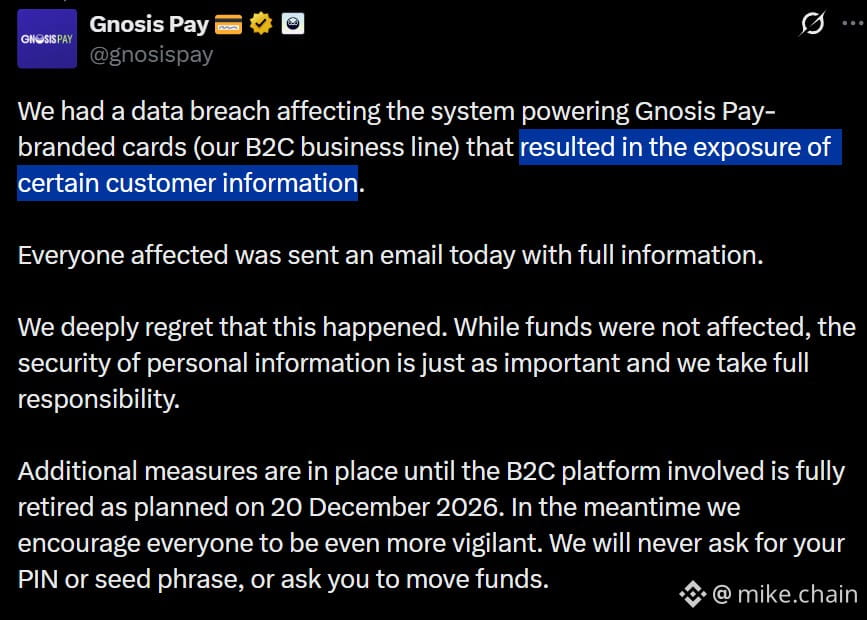
🚨 $GNO Gnosis Pay got breached – customer data leaked
Another day, another hack in crypto. If you're using Gnosis Pay, check your accounts and assume your info is out there.
This is why we can't have nice things. Self-custody looking better every day.
🚨 $GNO Gnosis Pay got breached – customer data leaked
Another day, another hack in crypto. If you're using Gnosis Pay, check your accounts and assume your info is out there.
This is why we can't have nice things. Self-custody looking better every day.
Another day, another hack in crypto. If you're using Gnosis Pay, check your accounts and assume your info is out there.
This is why we can't have nice things. Self-custody looking better every day.
·
--
White House in final review stage for allowing crypto in 401(k) plans.
This isn't just regulatory noise—it's institutional floodgates opening. Boomers with trillions in retirement accounts getting direct $BTC/$ETH exposure changes the game entirely.
If this passes, expect:
→ Massive inflows from traditional finance
→ Legitimacy boost across the board
→ Retirement funds competing to offer crypto allocations
The shift from "too risky" to "portfolio essential" is happening in real-time. Macro setup looking bullish.
·
--
$RAY looking ready to reclaim key level here 👀
Price action showing strength after recent consolidation. If this holds, next leg up could be quick.
Watch for volume confirmation on the breakout. Support turned resistance flipping back = bullish continuation pattern.
Not financial advice but the setup looks clean rn
Price action showing strength after recent consolidation. If this holds, next leg up could be quick.
Watch for volume confirmation on the breakout. Support turned resistance flipping back = bullish continuation pattern.
Not financial advice but the setup looks clean rn
·
--
The future is bright for $SHIB 🙏🏼
The #ShibArmy is the greatest army in Crypto, and I believe our patience and loyalty will be rewarded when the tides turn.
Our time will come.
The future is bright for $SHIB 🙏🏼
The #ShibArmy is the greatest army in Crypto, and I believe our patience and loyalty will be rewarded when the tides turn.
Our time will come.
The #ShibArmy is the greatest army in Crypto, and I believe our patience and loyalty will be rewarded when the tides turn.
Our time will come.
·
--
$ZEC testing resistance again. If it breaks, could see a solid move up. Watch for volume confirmation on the breakout.
$ZEC testing resistance again. If it breaks, could see a solid move up. Watch for volume confirmation on the breakout.
·
--
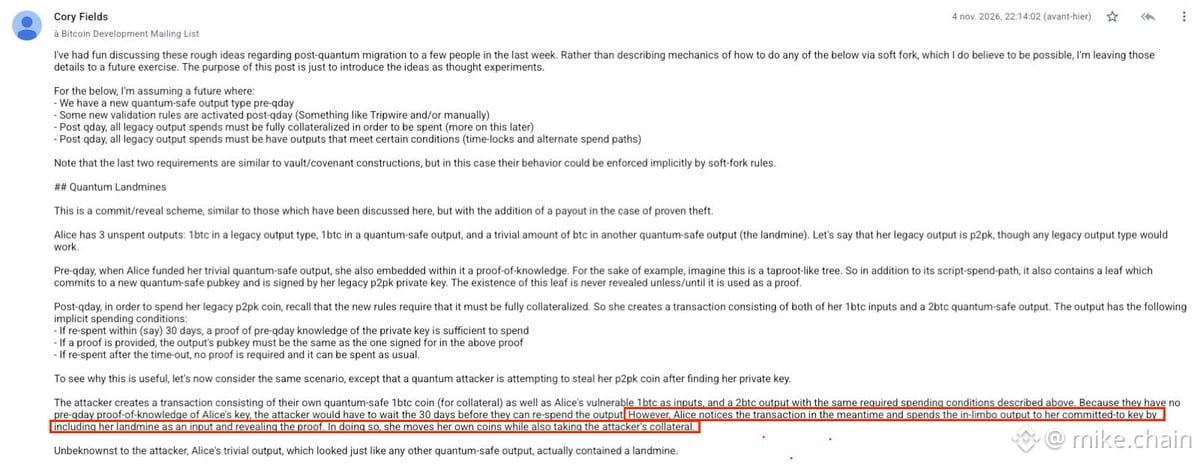
Bitcoin Core dev just dropped a wild quantum defense idea:
Instead of freezing old $BTC, trap the thieves.
The threat: quantum computers could crack ~7M $BTC in old wallets. Once they get the key, they sign txs like the real owner. Network can't tell the difference.
Cory Fields' proposal: to move old $BTC, you'd first need to lock up the same amount as collateral for a few weeks.
During that window, the real owner can reveal a pre-hidden proof. If they do, they keep their $BTC AND take the thief's collateral.
The thief never knows if a wallet is trapped. Every attack risks losing their own money.
Obvious limits: only works if you still have your keys. Lost coins and Satoshi's stash stay exposed. And you need $BTC to unlock your own $BTC.
Still just a dev mailing list idea, but the core angle is genius: make attacking expensive and risky for the attacker.
·
--
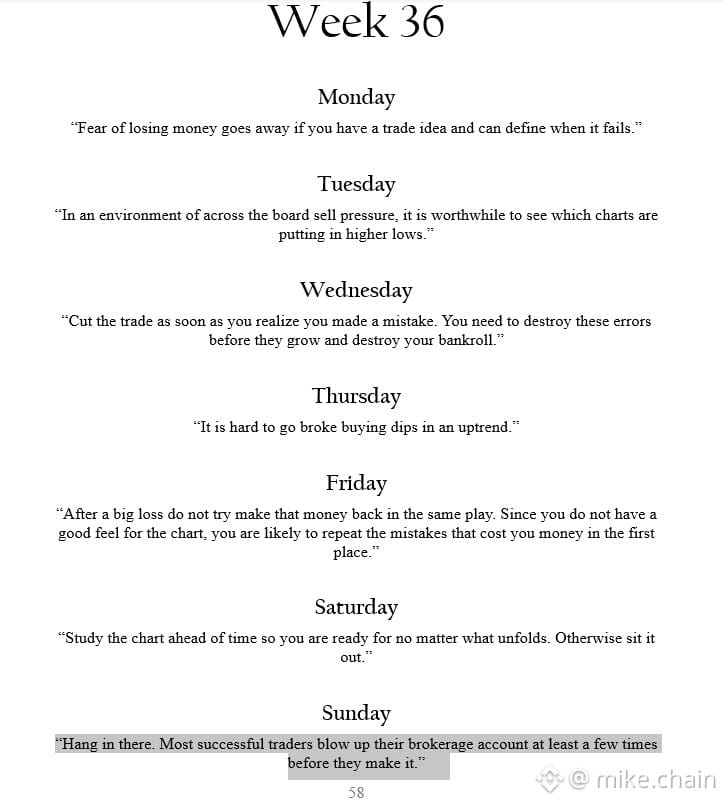
Most successful traders blow up their account at least a few times before they make it.
Week 36 — still here, still learning.
The losses teach you more than the wins ever will. If you haven't blown an account yet, you're either insanely disciplined or you haven't taken enough risk to actually learn.
Every wipeout is data. Every margin call is a lesson in position sizing. Every liquidation is a masterclass in risk management.
The game isn't about never losing. It's about surviving long enough to win when it counts.
Hang in there.
·
--
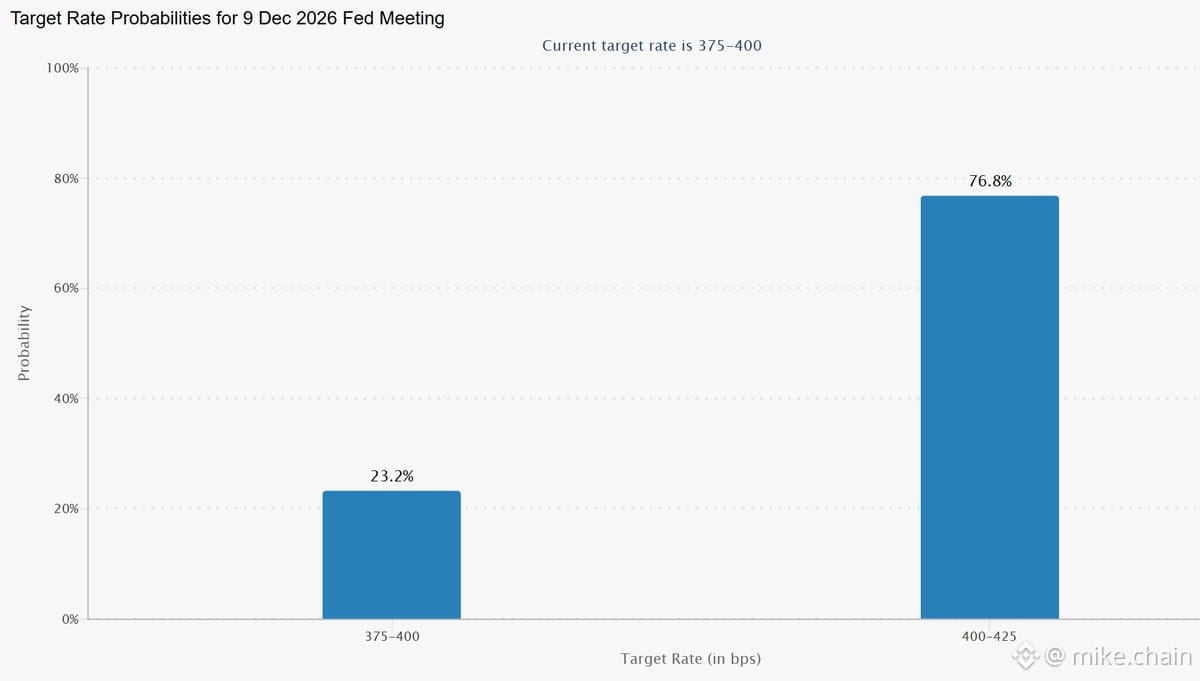
Fed decision incoming 🎯
76.8% pricing in 25bps cut
23.2% say no move
Market's leaning dovish but that 23% no-change crowd could trigger volatility if Powell sounds hawkish. Watch $BTC reaction - historically pumps on cuts but dumps if guidance gets tight.
Dec FOMC is make or break for Q1 setup.
Fed decision incoming 🎯
76.8% pricing in 25bps cut
23.2% say no move
Market's leaning dovish but that 23% no-change crowd could trigger volatility if Powell sounds hawkish. Watch $BTC reaction - historically pumps on cuts but dumps if guidance gets tight.
Dec FOMC is make or break for Q1 setup.
76.8% pricing in 25bps cut
23.2% say no move
Market's leaning dovish but that 23% no-change crowd could trigger volatility if Powell sounds hawkish. Watch $BTC reaction - historically pumps on cuts but dumps if guidance gets tight.
Dec FOMC is make or break for Q1 setup.
·
--
US just dropped 165K jobs in October vs 65K expected. That's a 2.5x beat.
Previous was 60K. This is a monster print.
Fed pivot narrative getting crushed. Higher for longer back on the menu. Risk assets need to reprice this—liquidity not coming as fast as degens hoped.
Watch $BTC reaction. If we hold above key support, institutional bid is real. If we dump, it's a liquidity crunch signal.
·
--
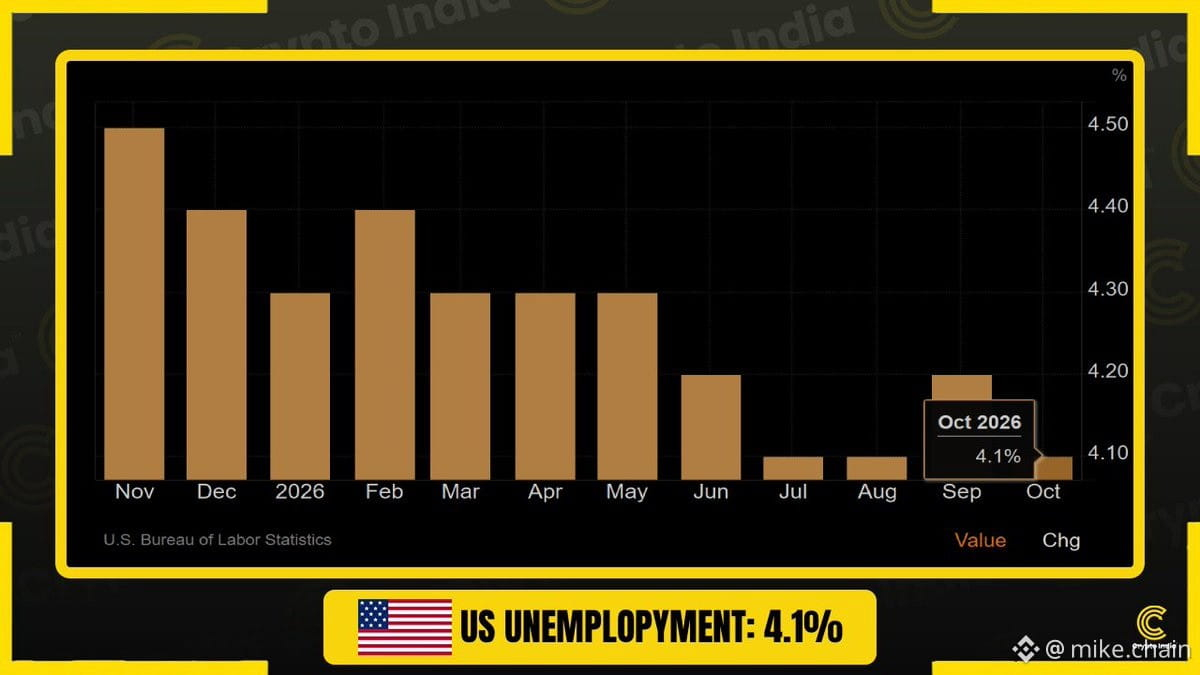
US unemployment dropped to 4.1% in October — beat expectations of 4.2%
Labor market still holding up despite rate hikes. This keeps the Fed in a tricky spot: strong employment = more ammo to stay hawkish = risk assets stay under pressure
Watch DXY and $BTC correlation closely. If dollar rips on this, crypto might bleed short-term
Labor market still holding up despite rate hikes. This keeps the Fed in a tricky spot: strong employment = more ammo to stay hawkish = risk assets stay under pressure
Watch DXY and $BTC correlation closely. If dollar rips on this, crypto might bleed short-term
·
--
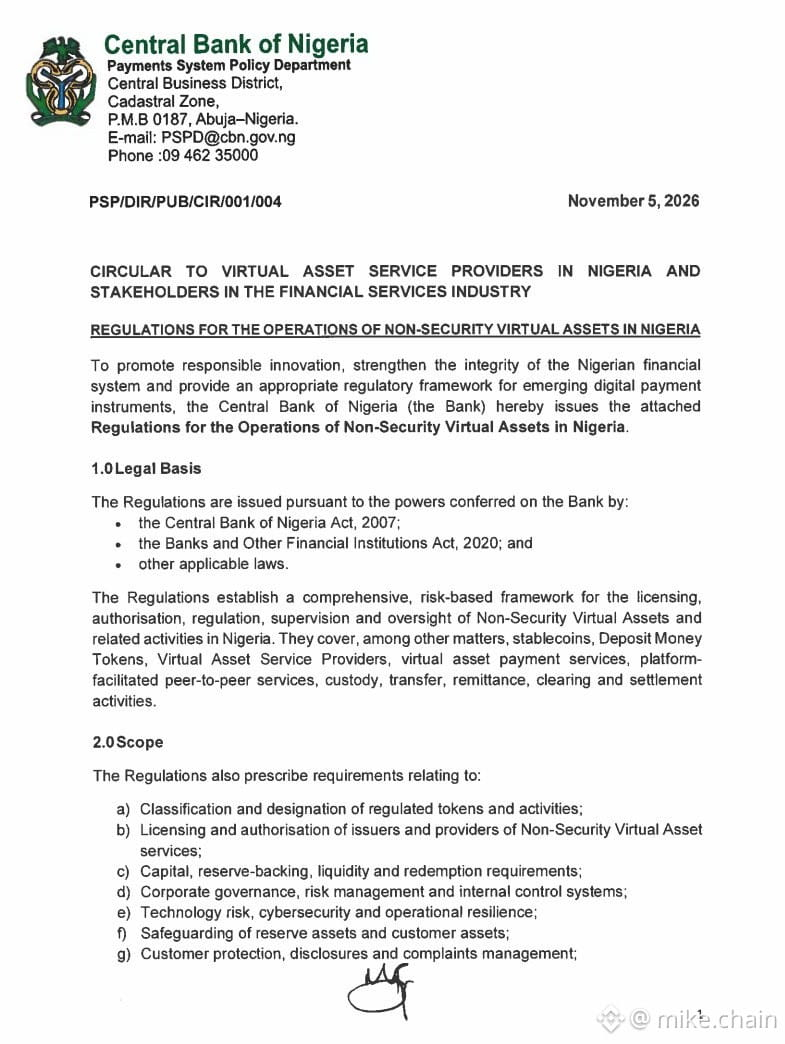
Nigeria just dropped new stablecoin regs:
✅ Licensing framework now live
🚫 Algorithmic stablecoins banned outright
Another jurisdiction drawing hard lines. $UST trauma still echoing in policy rooms worldwide.
If you're building stablecoin infra targeting African markets, compliance just got real. Traditional collateralized only from here.
✅ Licensing framework now live
🚫 Algorithmic stablecoins banned outright
Another jurisdiction drawing hard lines. $UST trauma still echoing in policy rooms worldwide.
If you're building stablecoin infra targeting African markets, compliance just got real. Traditional collateralized only from here.
·
--
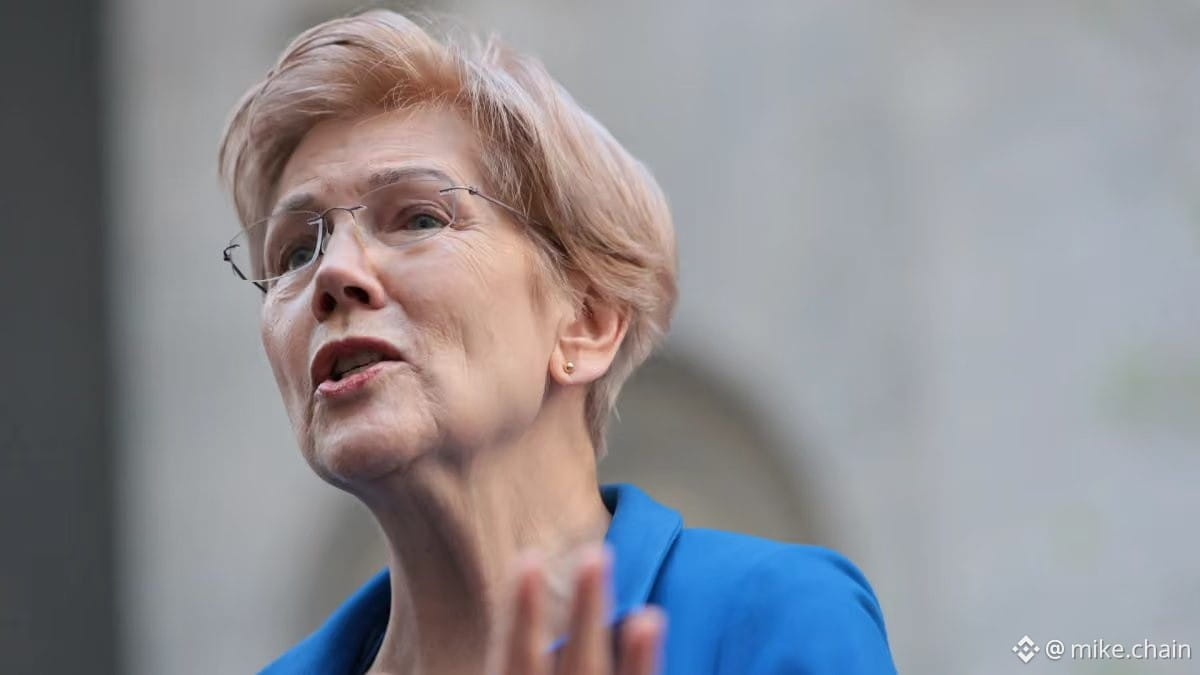
🚨 Elizabeth Warren likely taking Senate Banking Committee chair in 2027
This is NOT bullish for crypto. Warren's been leading the anti-crypto charge for years. If she gets the gavel, expect:
• Stricter exchange regulations
• More aggressive SEC enforcement
• Potential banking restrictions for crypto companies
• Increased scrutiny on DeFi protocols
Two years out but worth tracking. Her committee would control major crypto legislation. Position accordingly if you're long US-based projects.
The regulatory FUD cycle isn't over—it's just getting started.
·
--
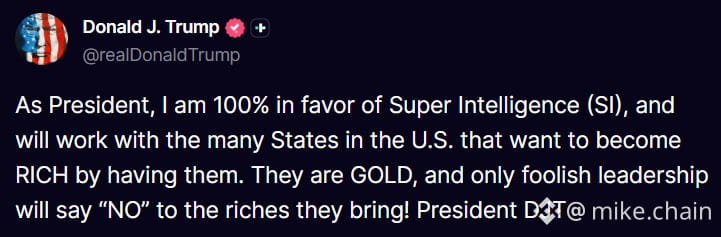
Trump just went full degen on AI:
"Only foolish leadership will say no to AI"
While Dems are dragging their feet, Trump's signaling pro-tech, pro-innovation stance. This matters for crypto:
$FET $AGIX $RNDR and AI agent tokens could see narrative boost
Regulatory clarity on AI = faster path for AI x crypto integration
Bullish for compute infrastructure plays
Political tailwinds matter. If US goes all-in on AI, expect capital rotation into AI-crypto overlap. Watch the AI agent meta closely 👀
Көбірек контент көру үшін кіріңіз
Binance Square платформасында әлемдік криптоқоғамдастыққа қосылыңыз
⚡️ Криптовалюта туралы ең соңғы және пайдалы ақпаратты алыңыз.
💬 Әлемдегі ең ірі криптобиржаның сеніміне ие.
👍 Расталған авторлардың нақты пікірлерін табыңыз.
Электрондық пошта/телефон нөмірі
Трендтегі тақырыптар
BitcoinRebounds$75KAsChipsLead
889 рет көрілді
35 адам талқылап жатыр
Market Watch | Bitcoin Rebounds to $75,600 After Dip Below $75,000 as Chip Stocks Lead Rally on Jobs Beat
Binance News
·2 лайк
·1.8k рет көрілді
JobsReportRaisesHikeOdds
39,277 рет көрілді
600 адам талқылап жатыр
US Data Center Rules May Constrain AI Expansion
5,415 рет көрілді
65 адам талқылап жатыр