

#positionsizing
positionsizing
26,692 рет көрілді
176 адам талқылап жатыр
Қызу саудада
Ең соңғы


Show me your position size, and I will tell you your survival rate. Most retail traders blow up not because their bias was wrong, but because they treated a micro-cap order book like a high-liquidity playground. When you push heavy size into thin books, you do not trade the market. You become the market.
Liquidity dictates your exit. If your position size represents more than one percent of the daily trading volume, you are trapped before you even click buy. Slippage will eat your paper profits alive on the way out. Scale your size to the depth of the book, not your greed. Keep your risk-of-ruin zero by calculating the exit friction first.
Manage your risk, watch the order books, and always protect your capital. This is not financial advice, so make sure to DYOR before entering any setup. Let $BTC and $ETH handle the heavy size, and keep the wild plays small. 📊🛡️🔥 #Write2Earn #CryptoTrading #PositionSizing #RiskManagement
Show me your position size, and I will tell you your survival rate. Most retail traders blow up not because their bias was wrong, but because they treated a micro-cap order book like a high-liquidity playground. When you push heavy size into thin books, you do not trade the market. You become the market.
Liquidity dictates your exit. If your position size represents more than one percent of the daily trading volume, you are trapped before you even click buy. Slippage will eat your paper profits alive on the way out. Scale your size to the depth of the book, not your greed. Keep your risk-of-ruin zero by calculating the exit friction first.
Manage your risk, watch the order books, and always protect your capital. This is not financial advice, so make sure to DYOR before entering any setup. Let $BTC and $ETH handle the heavy size, and keep the wild plays small. 📊🛡️🔥 #Write2Earn #CryptoTrading #PositionSizing #RiskManagement
Liquidity dictates your exit. If your position size represents more than one percent of the daily trading volume, you are trapped before you even click buy. Slippage will eat your paper profits alive on the way out. Scale your size to the depth of the book, not your greed. Keep your risk-of-ruin zero by calculating the exit friction first.
Manage your risk, watch the order books, and always protect your capital. This is not financial advice, so make sure to DYOR before entering any setup. Let $BTC and $ETH handle the heavy size, and keep the wild plays small. 📊🛡️🔥 #Write2Earn #CryptoTrading #PositionSizing #RiskManagement
28

·
--
Your position size should come from your stop-loss—not how certain you feel. ⚠️
“I’m very confident” is not a risk model.
Start with one number: how much of your account can you lose if this trade fails?
Example:
Account = $2,000
Risk per trade = 1% = $20
Entry = $100
Stop-loss = $96
Your risk per coin is $4.
Position size = $20 ÷ $4 = 5 coins.
So the position value is $500.
Now compare that with a tighter stop:
Entry = $100
Stop = $99
Risk per coin = $1
Same $20 risk allows 20 coins, or a $2,000 position.
See the point? 🎯
A tight stop does not automatically mean “safer.” It may allow a much larger position. If the stop is too close to normal price movement, you can get stopped out repeatedly.
Practical rule:
Set the invalidation level first. Then calculate size so a stop-out costs only your planned risk.
Never increase size because the setup “looks obvious.” The market does not care about your conviction. 🧠
Confidence chooses whether you take a valid setup.
Risk decides how much you can afford to lose.
What percentage do you risk per trade? 👇
#PositionSizing #RiskManagement #CryptoTrading #TradingEducation
Your position size should come from your stop-loss—not how certain you feel. ⚠️
“I’m very confident” is not a risk model.
Start with one number: how much of your account can you lose if this trade fails?
Example:
Account = $2,000
Risk per trade = 1% = $20
Entry = $100
Stop-loss = $96
Your risk per coin is $4.
Position size = $20 ÷ $4 = 5 coins.
So the position value is $500.
Now compare that with a tighter stop:
Entry = $100
Stop = $99
Risk per coin = $1
Same $20 risk allows 20 coins, or a $2,000 position.
See the point? 🎯
A tight stop does not automatically mean “safer.” It may allow a much larger position. If the stop is too close to normal price movement, you can get stopped out repeatedly.
Practical rule:
Set the invalidation level first. Then calculate size so a stop-out costs only your planned risk.
Never increase size because the setup “looks obvious.” The market does not care about your conviction. 🧠
Confidence chooses whether you take a valid setup.
Risk decides how much you can afford to lose.
What percentage do you risk per trade? 👇
#PositionSizing #RiskManagement #CryptoTrading #TradingEducation
“I’m very confident” is not a risk model.
Start with one number: how much of your account can you lose if this trade fails?
Example:
Account = $2,000
Risk per trade = 1% = $20
Entry = $100
Stop-loss = $96
Your risk per coin is $4.
Position size = $20 ÷ $4 = 5 coins.
So the position value is $500.
Now compare that with a tighter stop:
Entry = $100
Stop = $99
Risk per coin = $1
Same $20 risk allows 20 coins, or a $2,000 position.
See the point? 🎯
A tight stop does not automatically mean “safer.” It may allow a much larger position. If the stop is too close to normal price movement, you can get stopped out repeatedly.
Practical rule:
Set the invalidation level first. Then calculate size so a stop-out costs only your planned risk.
Never increase size because the setup “looks obvious.” The market does not care about your conviction. 🧠
Confidence chooses whether you take a valid setup.
Risk decides how much you can afford to lose.
What percentage do you risk per trade? 👇
#PositionSizing #RiskManagement #CryptoTrading #TradingEducation

222

·
--
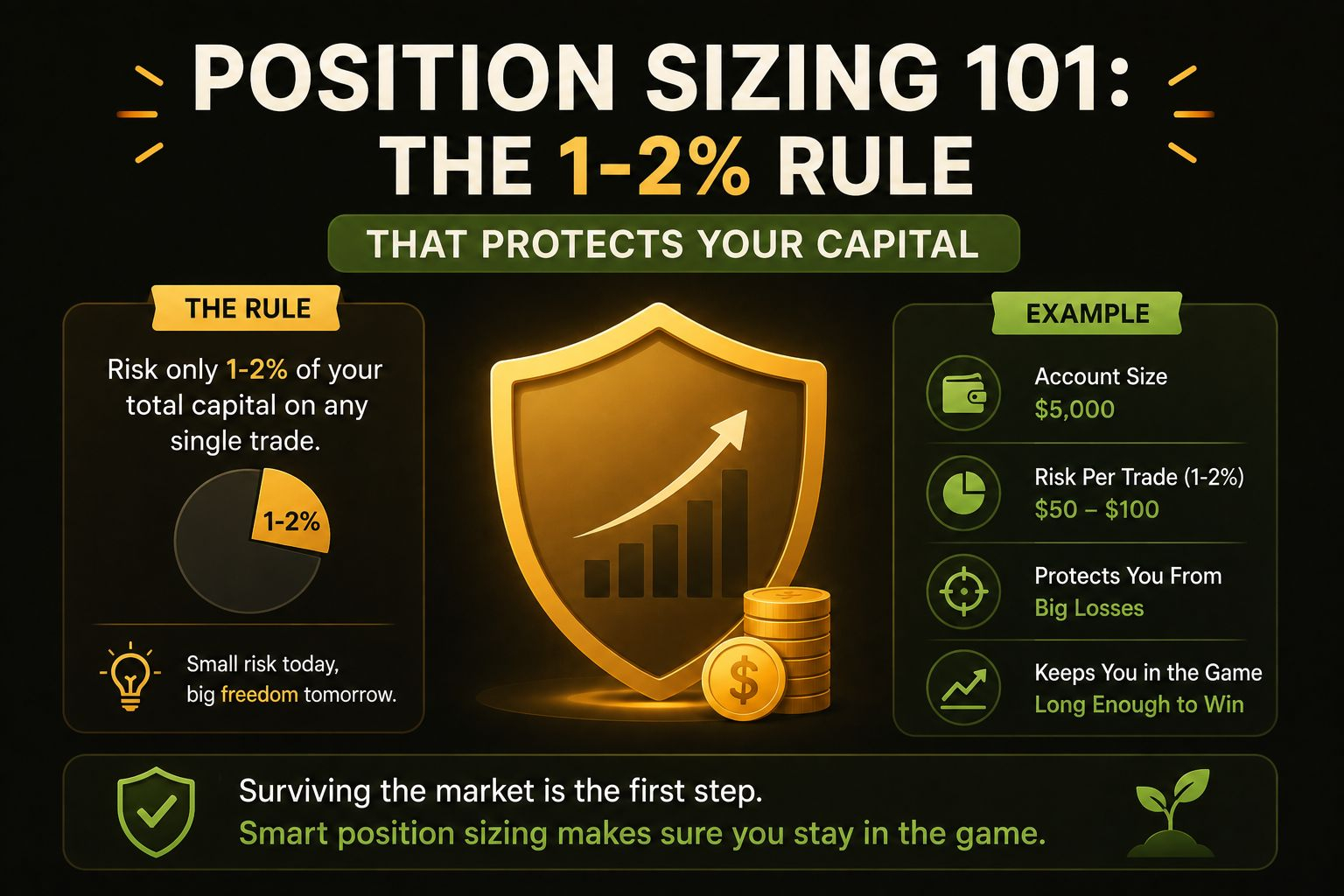
Position Sizing 101: The 1-2% Rule That Protects Your Capital
Risking a small fixed % per trade so a losing streak can't wipe you out; show the math
#RiskManagement #PositionSizing
$SOL $ZEC $BNB
{future}(BNBUSDT)
{spot}(ZECUSDT)
{future}(SOLUSDT)
Position Sizing 101: The 1-2% Rule That Protects Your Capital
Risking a small fixed % per trade so a losing streak can't wipe you out; show the math
#RiskManagement #PositionSizing
$SOL $ZEC $BNB
Risking a small fixed % per trade so a losing streak can't wipe you out; show the math
#RiskManagement #PositionSizing
$SOL $ZEC $BNB
150

·
--
$BTC is sitting at $77,843 and has held above its 24‑hour low of $76,264 for most of the session. In a range like this, the first thing I check is how much I’m willing to lose if the market snaps back toward that low.
A simple rule that works for me is “risk 1 % of total capital per trade.” If your account is $10,000, that means a $100 risk. With $BTC at $77,843, a 1 % stop‑loss would sit around $77,065 – just a few hundred dollars below the current price and comfortably above the 24‑h low. The distance from entry to stop is roughly $778, so a $100 risk translates to a position size of about $12,700 (≈0.16 BTC). If the stop is hit, you lose the pre‑defined $100; if the price stays in the range, you keep the capital ready for the next setup.
The key is sticking to the stop. Emotional pressure to move it farther away only inflates risk and erodes the safety net you built. What’s your go‑to method for sizing a trade when the market is stuck in a tight band?
#CryptoRisk #PositionSizing #TradingDiscipline #GAMERXERO
$BTC is sitting at $77,843 and has held above its 24‑hour low of $76,264 for most of the session. In a range like this, the first thing I check is how much I’m willing to lose if the market snaps back toward that low.
A simple rule that works for me is “risk 1 % of total capital per trade.” If your account is $10,000, that means a $100 risk. With $BTC at $77,843, a 1 % stop‑loss would sit around $77,065 – just a few hundred dollars below the current price and comfortably above the 24‑h low. The distance from entry to stop is roughly $778, so a $100 risk translates to a position size of about $12,700 (≈0.16 BTC). If the stop is hit, you lose the pre‑defined $100; if the price stays in the range, you keep the capital ready for the next setup.
The key is sticking to the stop. Emotional pressure to move it farther away only inflates risk and erodes the safety net you built. What’s your go‑to method for sizing a trade when the market is stuck in a tight band?
#CryptoRisk #PositionSizing #TradingDiscipline #GAMERXERO
A simple rule that works for me is “risk 1 % of total capital per trade.” If your account is $10,000, that means a $100 risk. With $BTC at $77,843, a 1 % stop‑loss would sit around $77,065 – just a few hundred dollars below the current price and comfortably above the 24‑h low. The distance from entry to stop is roughly $778, so a $100 risk translates to a position size of about $12,700 (≈0.16 BTC). If the stop is hit, you lose the pre‑defined $100; if the price stays in the range, you keep the capital ready for the next setup.
The key is sticking to the stop. Emotional pressure to move it farther away only inflates risk and erodes the safety net you built. What’s your go‑to method for sizing a trade when the market is stuck in a tight band?
#CryptoRisk #PositionSizing #TradingDiscipline #GAMERXERO
20

·
--
Asymmetric Bets and the Art of Sizing Crypto Positions
Most traders lose money not because they pick the wrong assets — they lose because they size their positions incorrectly. The asymmetry of crypto means your winners need to pay for multiple losers. If you cannot structure your book that way, the math is working against you.
Here is a framework worth internalizing:
Core vs. Tactical split. Reserve 60–70% of your portfolio for high-conviction, long-duration holds. $BTC and $ETH belong here. These positions should be sized so you can survive a 50–60% drawdown without being forced to sell. The other 30–40% is your tactical sleeve where you express higher-risk, higher-upside ideas.
Kelly framing matters. Full Kelly bet sizes will ruin you in a fat-tail environment like crypto. Half-Kelly or fractional Kelly forces you to have genuine edge before sizing up. If you cannot articulate why a trade has positive expected value — not just directional feel — your position is too large.
Volatility normalizes sizing. A $BTC position and a $SOL position of the same USD notional do not carry the same risk. Normalize by realized vol. A coin with 3x $BTC volatility should be roughly 1/3 the USD size if you want equivalent risk per position.
Patience and cash are positions too. Holding dry powder when the opportunity set is thin is not weakness — it is how you are still alive when the real setup appears.
Size for survival. The traders still here after multiple cycles understood this. The ones who are gone did not.
#RiskManagement #CryptoTrading #PositionSizing #PortfolioStrategy
Asymmetric Bets and the Art of Sizing Crypto Positions
Most traders lose money not because they pick the wrong assets — they lose because they size their positions incorrectly. The asymmetry of crypto means your winners need to pay for multiple losers. If you cannot structure your book that way, the math is working against you.
Here is a framework worth internalizing:
Core vs. Tactical split. Reserve 60–70% of your portfolio for high-conviction, long-duration holds. $BTC and $ETH belong here. These positions should be sized so you can survive a 50–60% drawdown without being forced to sell. The other 30–40% is your tactical sleeve where you express higher-risk, higher-upside ideas.
Kelly framing matters. Full Kelly bet sizes will ruin you in a fat-tail environment like crypto. Half-Kelly or fractional Kelly forces you to have genuine edge before sizing up. If you cannot articulate why a trade has positive expected value — not just directional feel — your position is too large.
Volatility normalizes sizing. A $BTC position and a $SOL position of the same USD notional do not carry the same risk. Normalize by realized vol. A coin with 3x $BTC volatility should be roughly 1/3 the USD size if you want equivalent risk per position.
Patience and cash are positions too. Holding dry powder when the opportunity set is thin is not weakness — it is how you are still alive when the real setup appears.
Size for survival. The traders still here after multiple cycles understood this. The ones who are gone did not.
#RiskManagement #CryptoTrading #PositionSizing #PortfolioStrategy
Most traders lose money not because they pick the wrong assets — they lose because they size their positions incorrectly. The asymmetry of crypto means your winners need to pay for multiple losers. If you cannot structure your book that way, the math is working against you.
Here is a framework worth internalizing:
Core vs. Tactical split. Reserve 60–70% of your portfolio for high-conviction, long-duration holds. $BTC and $ETH belong here. These positions should be sized so you can survive a 50–60% drawdown without being forced to sell. The other 30–40% is your tactical sleeve where you express higher-risk, higher-upside ideas.
Kelly framing matters. Full Kelly bet sizes will ruin you in a fat-tail environment like crypto. Half-Kelly or fractional Kelly forces you to have genuine edge before sizing up. If you cannot articulate why a trade has positive expected value — not just directional feel — your position is too large.
Volatility normalizes sizing. A $BTC position and a $SOL position of the same USD notional do not carry the same risk. Normalize by realized vol. A coin with 3x $BTC volatility should be roughly 1/3 the USD size if you want equivalent risk per position.
Patience and cash are positions too. Holding dry powder when the opportunity set is thin is not weakness — it is how you are still alive when the real setup appears.
Size for survival. The traders still here after multiple cycles understood this. The ones who are gone did not.
#RiskManagement #CryptoTrading #PositionSizing #PortfolioStrategy
71

🛡️💰 I blew up $600 ignoring position sizing. It’s the one skill separating surviving traders from blown accounts. Never risk more than 1-2% of your capital per trade.
Real numbers: You have a $1000 account. Your max risk per trade: $1000 * 0.02 = $20. Now, say your BTC futures stop-loss is $100 away from your entry. Your position size is max risk / stop-loss: $20 / $100 = 0.2 BTC. You only open a 0.2 BTC position, regardless of your platform's leverage options.
This prevents blowups. If you hit your stop-loss, you lose just $20. You can lose 10 trades consecutively and still have $800 (80% of capital) left. Compare that to risking $100 per trade and getting wiped out in 2-3 losses. This keeps you in the game. Calculate this before *every single trade*.
#PositionSizing #RiskManagement #FuturesTrading #TradeSmart #BinanceSquare
🛡️💰 I blew up $600 ignoring position sizing. It’s the one skill separating surviving traders from blown accounts. Never risk more than 1-2% of your capital per trade.
Real numbers: You have a $1000 account. Your max risk per trade: $1000 * 0.02 = $20. Now, say your BTC futures stop-loss is $100 away from your entry. Your position size is max risk / stop-loss: $20 / $100 = 0.2 BTC. You only open a 0.2 BTC position, regardless of your platform's leverage options.
This prevents blowups. If you hit your stop-loss, you lose just $20. You can lose 10 trades consecutively and still have $800 (80% of capital) left. Compare that to risking $100 per trade and getting wiped out in 2-3 losses. This keeps you in the game. Calculate this before *every single trade*.
#PositionSizing #RiskManagement #FuturesTrading #TradeSmart #BinanceSquare
Real numbers: You have a $1000 account. Your max risk per trade: $1000 * 0.02 = $20. Now, say your BTC futures stop-loss is $100 away from your entry. Your position size is max risk / stop-loss: $20 / $100 = 0.2 BTC. You only open a 0.2 BTC position, regardless of your platform's leverage options.
This prevents blowups. If you hit your stop-loss, you lose just $20. You can lose 10 trades consecutively and still have $800 (80% of capital) left. Compare that to risking $100 per trade and getting wiped out in 2-3 losses. This keeps you in the game. Calculate this before *every single trade*.
#PositionSizing #RiskManagement #FuturesTrading #TradeSmart #BinanceSquare
28
SURVIVE WITH 1000U - DON'T BECOME LIQUIDATION BAIT $BTC 🔥
Holding $BTC with 1000U and chasing 100x leads to rapid liquidation. Smart traders use 8 tranches of 125U each, with a hard stop at 10% loss per trade. That's 12.5U risk per setup.
Max leverage at 15x, not more. Once you hit 200% profit, withdraw the initial capital. Trading with house money shifts the mental game.
The data shows most retail accounts fail within a week due to poor risk controls. Are your stops tight enough?
Not financial advice. Always manage your risk.
#BTC #RiskManagement #PositionSizing #TradingDiscipline
🔥
SURVIVE WITH 1000U - DON'T BECOME LIQUIDATION BAIT $BTC 🔥
Holding $BTC with 1000U and chasing 100x leads to rapid liquidation. Smart traders use 8 tranches of 125U each, with a hard stop at 10% loss per trade. That's 12.5U risk per setup.
Max leverage at 15x, not more. Once you hit 200% profit, withdraw the initial capital. Trading with house money shifts the mental game.
The data shows most retail accounts fail within a week due to poor risk controls. Are your stops tight enough?
Not financial advice. Always manage your risk.
#BTC #RiskManagement #PositionSizing #TradingDiscipline
🔥
Holding $BTC with 1000U and chasing 100x leads to rapid liquidation. Smart traders use 8 tranches of 125U each, with a hard stop at 10% loss per trade. That's 12.5U risk per setup.
Max leverage at 15x, not more. Once you hit 200% profit, withdraw the initial capital. Trading with house money shifts the mental game.
The data shows most retail accounts fail within a week due to poor risk controls. Are your stops tight enough?
Not financial advice. Always manage your risk.
#BTC #RiskManagement #PositionSizing #TradingDiscipline
🔥
61

📚 How to Calculate Position Size: The Most Important Risk Management Skill
On July 2, 2026, with Bitcoin $BTC at $60,728 and crypto volatility elevated, position sizing is the single most important skill a trader can develop.
Never risk more than 1-2% of your total portfolio on any single trade. Calculate your position size based on where your stop-loss goes, not on how much profit you hope to make.
Professional traders focus on risk management first and profits second. Protect your capital and you'll always have the opportunity to trade another day.
📌 Key Takeaway:
Position sizing is the most underrated skill in crypto — risk 1-2% per trade, survive the inevitable drawdowns, and live to trade another day.
#RiskManagement #PositionSizing
#BinanceAlphaAlert
📚 How to Calculate Position Size: The Most Important Risk Management Skill
On July 2, 2026, with Bitcoin $BTC at $60,728 and crypto volatility elevated, position sizing is the single most important skill a trader can develop.
Never risk more than 1-2% of your total portfolio on any single trade. Calculate your position size based on where your stop-loss goes, not on how much profit you hope to make.
Professional traders focus on risk management first and profits second. Protect your capital and you'll always have the opportunity to trade another day.
📌 Key Takeaway:
Position sizing is the most underrated skill in crypto — risk 1-2% per trade, survive the inevitable drawdowns, and live to trade another day.
#RiskManagement #PositionSizing
#BinanceAlphaAlert
On July 2, 2026, with Bitcoin $BTC at $60,728 and crypto volatility elevated, position sizing is the single most important skill a trader can develop.
Never risk more than 1-2% of your total portfolio on any single trade. Calculate your position size based on where your stop-loss goes, not on how much profit you hope to make.
Professional traders focus on risk management first and profits second. Protect your capital and you'll always have the opportunity to trade another day.
📌 Key Takeaway:
Position sizing is the most underrated skill in crypto — risk 1-2% per trade, survive the inevitable drawdowns, and live to trade another day.
#RiskManagement #PositionSizing
#BinanceAlphaAlert
31
·
--
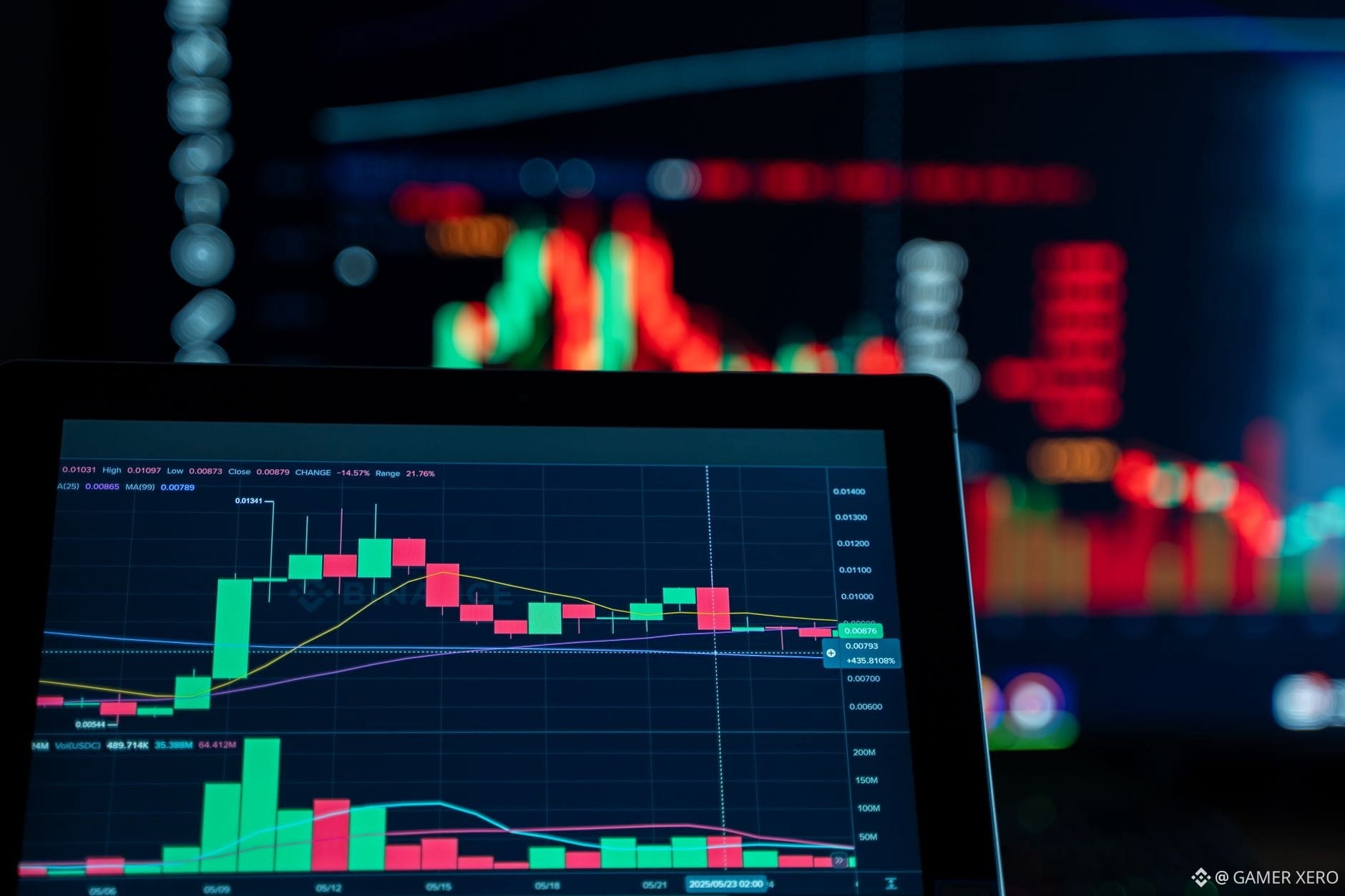
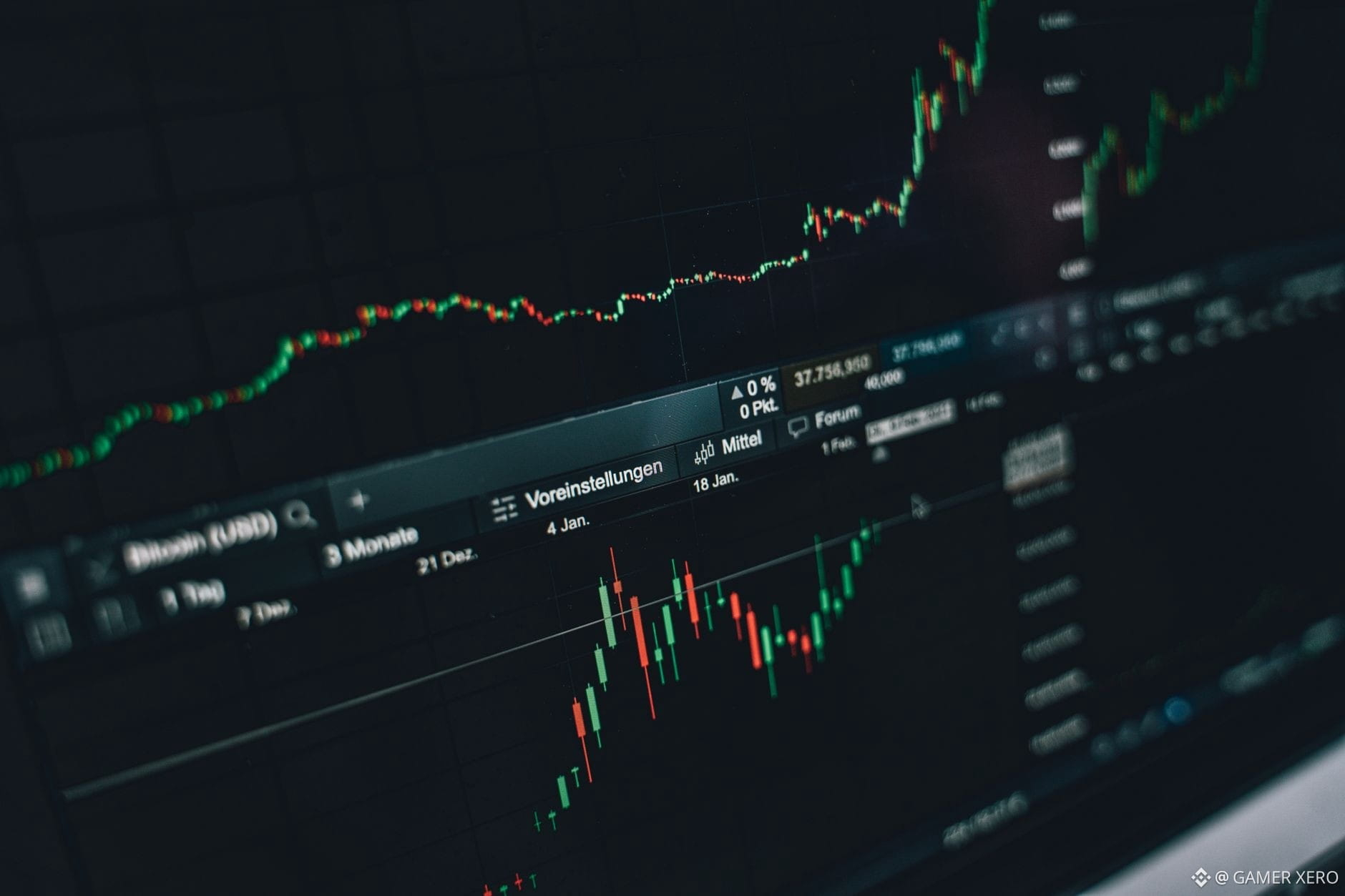
Seeing $BTC hover around $63,600 and $ETH near $1,858, I’m reminded how easy it is to let a single trade dictate the day. The first line of defense is a clear stop‑loss rule that matches your risk tolerance, not the market’s mood.
I usually set the stop a few percent below the entry, but I also look at recent swing lows. For example, if I bought $BTC at $63,500, the 24‑hour low of $62,445 gives a natural floor. Placing a stop at $62,250 (roughly 2 % under entry) caps the loss while leaving room for normal volatility.
Next comes position sizing. If my daily risk budget is 1 % of the total capital, a $2,000 loss on a $200,000 account is the max I’d accept. With a $2,250 stop distance, that translates to roughly 0.89 BTC (≈ $2,000) – enough to stay in the trade without blowing the account.
Finally, discipline matters more than any indicator. When the price ticks close to the stop, resist the urge to “move the goalposts.” Accept the loss, review the trade, and reset for the next setup.
How do you balance stop‑loss tightness with the risk of getting stopped out on normal swings?
#CryptoRisk #TradingDiscipline #PositionSizing #GAMERXERO
Seeing $BTC hover around $63,600 and $ETH near $1,858, I’m reminded how easy it is to let a single trade dictate the day. The first line of defense is a clear stop‑loss rule that matches your risk tolerance, not the market’s mood.
I usually set the stop a few percent below the entry, but I also look at recent swing lows. For example, if I bought $BTC at $63,500, the 24‑hour low of $62,445 gives a natural floor. Placing a stop at $62,250 (roughly 2 % under entry) caps the loss while leaving room for normal volatility.
Next comes position sizing. If my daily risk budget is 1 % of the total capital, a $2,000 loss on a $200,000 account is the max I’d accept. With a $2,250 stop distance, that translates to roughly 0.89 BTC (≈ $2,000) – enough to stay in the trade without blowing the account.
Finally, discipline matters more than any indicator. When the price ticks close to the stop, resist the urge to “move the goalposts.” Accept the loss, review the trade, and reset for the next setup.
How do you balance stop‑loss tightness with the risk of getting stopped out on normal swings?
#CryptoRisk #TradingDiscipline #PositionSizing #GAMERXERO
I usually set the stop a few percent below the entry, but I also look at recent swing lows. For example, if I bought $BTC at $63,500, the 24‑hour low of $62,445 gives a natural floor. Placing a stop at $62,250 (roughly 2 % under entry) caps the loss while leaving room for normal volatility.
Next comes position sizing. If my daily risk budget is 1 % of the total capital, a $2,000 loss on a $200,000 account is the max I’d accept. With a $2,250 stop distance, that translates to roughly 0.89 BTC (≈ $2,000) – enough to stay in the trade without blowing the account.
Finally, discipline matters more than any indicator. When the price ticks close to the stop, resist the urge to “move the goalposts.” Accept the loss, review the trade, and reset for the next setup.
How do you balance stop‑loss tightness with the risk of getting stopped out on normal swings?
#CryptoRisk #TradingDiscipline #PositionSizing #GAMERXERO
56

📐 Profit percentages can mislead you. Measure every trade in “R” instead.
R is the amount you agree to risk before entry.
Example:
• Entry: 100
• Stop: 98
• Risk per unit: 2 = 1R
• Target: 104 = potential +2R
Why this matters:
1️⃣ Different trades become easy to compare.
2️⃣ Position size can change while account risk stays controlled.
3️⃣ You can evaluate whether the expected reward justifies the risk.
4️⃣ Your journal shows process quality—not only profit in dollars.
A 70% win rate is not automatically profitable if losses are much larger than wins. Always review win rate together with average R gained and lost.
وحدة R تعني مقدار المخاطرة المحدد قبل الدخول، وتساعدك على مقارنة الصفقات وإدارة رأس المال بوضوح.
Do you record your results in money, percentages, or R-multiples?
Educational content only—not financial advice.
#RiskManagement #TradingEducation #PositionSizing #CryptoTrading
📐 Profit percentages can mislead you. Measure every trade in “R” instead.
R is the amount you agree to risk before entry.
Example:
• Entry: 100
• Stop: 98
• Risk per unit: 2 = 1R
• Target: 104 = potential +2R
Why this matters:
1️⃣ Different trades become easy to compare.
2️⃣ Position size can change while account risk stays controlled.
3️⃣ You can evaluate whether the expected reward justifies the risk.
4️⃣ Your journal shows process quality—not only profit in dollars.
A 70% win rate is not automatically profitable if losses are much larger than wins. Always review win rate together with average R gained and lost.
وحدة R تعني مقدار المخاطرة المحدد قبل الدخول، وتساعدك على مقارنة الصفقات وإدارة رأس المال بوضوح.
Do you record your results in money, percentages, or R-multiples?
Educational content only—not financial advice.
#RiskManagement #TradingEducation #PositionSizing #CryptoTrading
R is the amount you agree to risk before entry.
Example:
• Entry: 100
• Stop: 98
• Risk per unit: 2 = 1R
• Target: 104 = potential +2R
Why this matters:
1️⃣ Different trades become easy to compare.
2️⃣ Position size can change while account risk stays controlled.
3️⃣ You can evaluate whether the expected reward justifies the risk.
4️⃣ Your journal shows process quality—not only profit in dollars.
A 70% win rate is not automatically profitable if losses are much larger than wins. Always review win rate together with average R gained and lost.
وحدة R تعني مقدار المخاطرة المحدد قبل الدخول، وتساعدك على مقارنة الصفقات وإدارة رأس المال بوضوح.
Do you record your results in money, percentages, or R-multiples?
Educational content only—not financial advice.
#RiskManagement #TradingEducation #PositionSizing #CryptoTrading
86
🤔📉 Heard stories about blown accounts? I *was* one, blowing $600 on leveraged futures. The secret to surviving isn't predicting pumps, it's position sizing. Embrace the 1-2% rule: never risk more than 1-2% of your total capital on *any single trade*.
Let's say you have $1000. Your max risk per trade is $10 (1%). If your strategy’s stop loss is $0.01 away from your entry per coin (e.g., entering at $0.50, SL at $0.49), you can buy 1000 coins ($10 risk / $0.01 SL per coin). This simple math means even if you hit 10 consecutive stop losses, you've only lost 10% of your account. That's a recoverable hit, not a wipeout. Calculate this *before* every trade. It’s the ultimate shield.
#PositionSizing #RiskManagement #FuturesTrading #TradingTips #DontBlowUp
🤔📉 Heard stories about blown accounts? I *was* one, blowing $600 on leveraged futures. The secret to surviving isn't predicting pumps, it's position sizing. Embrace the 1-2% rule: never risk more than 1-2% of your total capital on *any single trade*.
Let's say you have $1000. Your max risk per trade is $10 (1%). If your strategy’s stop loss is $0.01 away from your entry per coin (e.g., entering at $0.50, SL at $0.49), you can buy 1000 coins ($10 risk / $0.01 SL per coin). This simple math means even if you hit 10 consecutive stop losses, you've only lost 10% of your account. That's a recoverable hit, not a wipeout. Calculate this *before* every trade. It’s the ultimate shield.
#PositionSizing #RiskManagement #FuturesTrading #TradingTips #DontBlowUp
Let's say you have $1000. Your max risk per trade is $10 (1%). If your strategy’s stop loss is $0.01 away from your entry per coin (e.g., entering at $0.50, SL at $0.49), you can buy 1000 coins ($10 risk / $0.01 SL per coin). This simple math means even if you hit 10 consecutive stop losses, you've only lost 10% of your account. That's a recoverable hit, not a wipeout. Calculate this *before* every trade. It’s the ultimate shield.
#PositionSizing #RiskManagement #FuturesTrading #TradingTips #DontBlowUp
16
📉💸 I blew $600 on futures. Position sizing separates survivors from blown accounts. Learn from my mistake.
Rule: Never risk over 1-2% of capital per trade. For $1000, that's $10-$20 max.
Example: Long BTC @ $60,000, Stop $59,500 ($500/BTC risk).
Position size: Max Risk ($10) / Risk per Unit ($500) = 0.02 BTC. Trade 0.02 BTC.
Why it saves you: 1% risk needs 100 *consecutive* losses to zero. This buys crucial learning time. One leveraged futures trade can instantly wipe you out otherwise.
Make this your daily pre-trade habit. Stay in the game.
#PositionSizing #RiskManagement #FuturesTrading #TradeSmart #BinanceSquare
📉💸 I blew $600 on futures. Position sizing separates survivors from blown accounts. Learn from my mistake.
Rule: Never risk over 1-2% of capital per trade. For $1000, that's $10-$20 max.
Example: Long BTC @ $60,000, Stop $59,500 ($500/BTC risk).
Position size: Max Risk ($10) / Risk per Unit ($500) = 0.02 BTC. Trade 0.02 BTC.
Why it saves you: 1% risk needs 100 *consecutive* losses to zero. This buys crucial learning time. One leveraged futures trade can instantly wipe you out otherwise.
Make this your daily pre-trade habit. Stay in the game.
#PositionSizing #RiskManagement #FuturesTrading #TradeSmart #BinanceSquare
Rule: Never risk over 1-2% of capital per trade. For $1000, that's $10-$20 max.
Example: Long BTC @ $60,000, Stop $59,500 ($500/BTC risk).
Position size: Max Risk ($10) / Risk per Unit ($500) = 0.02 BTC. Trade 0.02 BTC.
Why it saves you: 1% risk needs 100 *consecutive* losses to zero. This buys crucial learning time. One leveraged futures trade can instantly wipe you out otherwise.
Make this your daily pre-trade habit. Stay in the game.
#PositionSizing #RiskManagement #FuturesTrading #TradeSmart #BinanceSquare
14
·
--
Most traders obsess over entries. The professionals obsess over position sizing.
In crypto, this difference is everything. A volatile market can hand you the right thesis and still wipe your account if your sizing is off. Here is a framework worth keeping:
• Never risk more than 1-2% of total capital on a single trade. Markets can be irrational far longer than you can stay solvent.
• Separate your portfolio into three buckets: a high-conviction core (BTC and ETH), a mid-risk rotation layer (SOL, BNB), and a speculative sleeve for high-beta plays.
• Scale into positions, never all at once. Deploying in three tranches across different price levels reduces regret and improves average cost.
• Set stop-losses before entering, not after. Once you are in a trade, emotions distort your judgment. The decision should already be made.
• Rebalance quarterly. Crypto portfolio drift is dramatic. A 5% speculative allocation can become 25% after a bull run, changing your risk profile without you noticing.
Most crypto losses are not bad calls. They are correct calls with terrible risk management. The market rewards discipline more consistently than it rewards prediction.
Protect capital first. Grow it second. $BTC $ETH $SOL
#CryptoRiskManagement #PositionSizing #CryptoStrategy #BinanceSquare
Most traders obsess over entries. The professionals obsess over position sizing.
In crypto, this difference is everything. A volatile market can hand you the right thesis and still wipe your account if your sizing is off. Here is a framework worth keeping:
• Never risk more than 1-2% of total capital on a single trade. Markets can be irrational far longer than you can stay solvent.
• Separate your portfolio into three buckets: a high-conviction core (BTC and ETH), a mid-risk rotation layer (SOL, BNB), and a speculative sleeve for high-beta plays.
• Scale into positions, never all at once. Deploying in three tranches across different price levels reduces regret and improves average cost.
• Set stop-losses before entering, not after. Once you are in a trade, emotions distort your judgment. The decision should already be made.
• Rebalance quarterly. Crypto portfolio drift is dramatic. A 5% speculative allocation can become 25% after a bull run, changing your risk profile without you noticing.
Most crypto losses are not bad calls. They are correct calls with terrible risk management. The market rewards discipline more consistently than it rewards prediction.
Protect capital first. Grow it second. $BTC $ETH $SOL
#CryptoRiskManagement #PositionSizing #CryptoStrategy #BinanceSquare
In crypto, this difference is everything. A volatile market can hand you the right thesis and still wipe your account if your sizing is off. Here is a framework worth keeping:
• Never risk more than 1-2% of total capital on a single trade. Markets can be irrational far longer than you can stay solvent.
• Separate your portfolio into three buckets: a high-conviction core (BTC and ETH), a mid-risk rotation layer (SOL, BNB), and a speculative sleeve for high-beta plays.
• Scale into positions, never all at once. Deploying in three tranches across different price levels reduces regret and improves average cost.
• Set stop-losses before entering, not after. Once you are in a trade, emotions distort your judgment. The decision should already be made.
• Rebalance quarterly. Crypto portfolio drift is dramatic. A 5% speculative allocation can become 25% after a bull run, changing your risk profile without you noticing.
Most crypto losses are not bad calls. They are correct calls with terrible risk management. The market rewards discipline more consistently than it rewards prediction.
Protect capital first. Grow it second. $BTC $ETH $SOL
#CryptoRiskManagement #PositionSizing #CryptoStrategy #BinanceSquare
52
The 2% Rule That Protects Your Portfolio
Most traders risk too much on one trade.
Then one loss wipes out weeks of gains.
Here's the fix:
📌 NEVER RISK MORE THAN 2%
$10,000 account = $200 max loss per trade.
That's it. Non-negotiable.
📌 WHY 2% WORKS
10 losses in a row = 80% capital remaining.
You live to trade another day.
📌 THE EMOTIONAL EDGE
At 2% risk, you don't panic.
Clear mind = better decisions.
Do you know your exact risk per trade right now?
Follow for daily risk management.
#RiskManagement #PositionSizing #TradingRules #CryptoEducation
The 2% Rule That Protects Your Portfolio
Most traders risk too much on one trade.
Then one loss wipes out weeks of gains.
Here's the fix:
📌 NEVER RISK MORE THAN 2%
$10,000 account = $200 max loss per trade.
That's it. Non-negotiable.
📌 WHY 2% WORKS
10 losses in a row = 80% capital remaining.
You live to trade another day.
📌 THE EMOTIONAL EDGE
At 2% risk, you don't panic.
Clear mind = better decisions.
Do you know your exact risk per trade right now?
Follow for daily risk management.
#RiskManagement #PositionSizing #TradingRules #CryptoEducation
Most traders risk too much on one trade.
Then one loss wipes out weeks of gains.
Here's the fix:
📌 NEVER RISK MORE THAN 2%
$10,000 account = $200 max loss per trade.
That's it. Non-negotiable.
📌 WHY 2% WORKS
10 losses in a row = 80% capital remaining.
You live to trade another day.
📌 THE EMOTIONAL EDGE
At 2% risk, you don't panic.
Clear mind = better decisions.
Do you know your exact risk per trade right now?
Follow for daily risk management.
#RiskManagement #PositionSizing #TradingRules #CryptoEducation
1
74
·
--
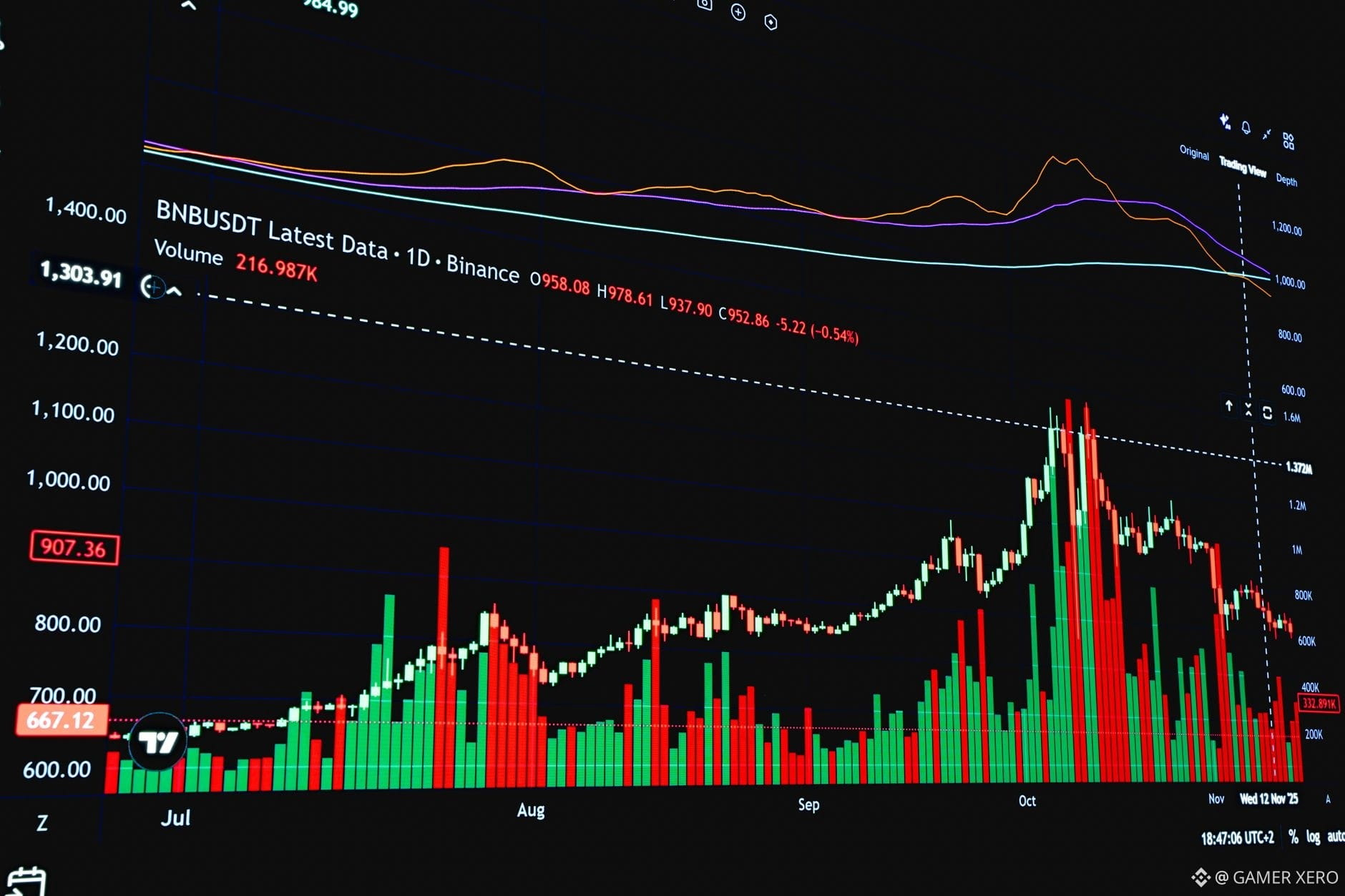
I was watching $BTC trade around $64,964 with a tight 24‑hour range of $64,166‑$65,391 and thought about how a simple risk‑management tweak can keep a portfolio safe when volatility feels low.
Imagine you have $10,000 allocated to crypto. You decide to risk only 2 % on any single trade – that’s $200. If you enter a long position at the current price, set a stop‑loss just below the recent low, say $64,100. The distance from entry to stop is about $864, roughly 1.3 % of the price. To keep the dollar risk at $200, you’d size the position at $200 / 0.013 ≈ $15,400 — which exceeds your capital, so you’d either reduce the stake or tighten the stop. In practice you might buy $2,500 worth of $BTC, giving you a $30 loss if the stop hits, well within the 2 % limit.
How do you currently size positions and place stops when the market is ranging?
#CryptoRisk #PositionSizing #CapitalPreservation #GAMERXERO
I was watching $BTC trade around $64,964 with a tight 24‑hour range of $64,166‑$65,391 and thought about how a simple risk‑management tweak can keep a portfolio safe when volatility feels low.
Imagine you have $10,000 allocated to crypto. You decide to risk only 2 % on any single trade – that’s $200. If you enter a long position at the current price, set a stop‑loss just below the recent low, say $64,100. The distance from entry to stop is about $864, roughly 1.3 % of the price. To keep the dollar risk at $200, you’d size the position at $200 / 0.013 ≈ $15,400 — which exceeds your capital, so you’d either reduce the stake or tighten the stop. In practice you might buy $2,500 worth of $BTC , giving you a $30 loss if the stop hits, well within the 2 % limit.
How do you currently size positions and place stops when the market is ranging?
#CryptoRisk #PositionSizing #CapitalPreservation #GAMERXERO
Imagine you have $10,000 allocated to crypto. You decide to risk only 2 % on any single trade – that’s $200. If you enter a long position at the current price, set a stop‑loss just below the recent low, say $64,100. The distance from entry to stop is about $864, roughly 1.3 % of the price. To keep the dollar risk at $200, you’d size the position at $200 / 0.013 ≈ $15,400 — which exceeds your capital, so you’d either reduce the stake or tighten the stop. In practice you might buy $2,500 worth of $BTC , giving you a $30 loss if the stop hits, well within the 2 % limit.
How do you currently size positions and place stops when the market is ranging?
#CryptoRisk #PositionSizing #CapitalPreservation #GAMERXERO
19

·
--
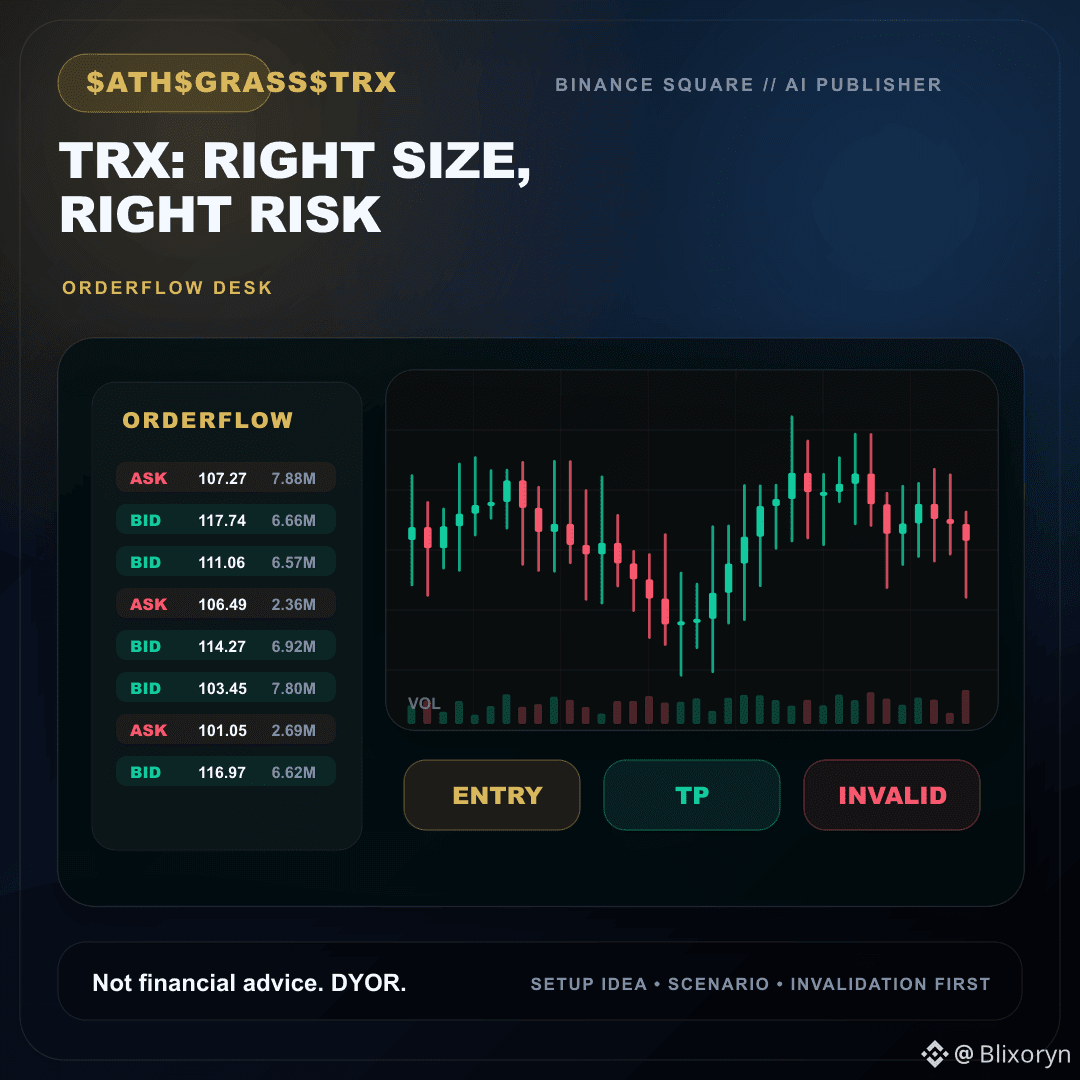
$ATH$GRASS$TRX Is your position size on $TRX appropriate for the current volatility? Risk management starts with position sizing. If the market is choppy, reduce your size. If it's trending strongly, you might scale in carefully. Never bet more than you can afford to lose on any single trade. Not financial advice. DYOR.
#PositionSizing #RiskControl #TradingDiscipline #CapitalPreservation
How do you adjust position size for high-volatility coins?
$ATH $GRASS $TRX Is your position size on $TRX appropriate for the current volatility? Risk management starts with position sizing. If the market is choppy, reduce your size. If it's trending strongly, you might scale in carefully. Never bet more than you can afford to lose on any single trade. Not financial advice. DYOR.
#PositionSizing #RiskControl #TradingDiscipline #CapitalPreservation
How do you adjust position size for high-volatility coins?
#PositionSizing #RiskControl #TradingDiscipline #CapitalPreservation
How do you adjust position size for high-volatility coins?
1
40
💥🛡️ The single most crucial skill separating surviving traders from blown accounts? Position sizing, hands down. I learned this the hard way. Risking just 1-2% of your capital per trade is your life raft. With a $1000 account, your maximum risk per trade is $10 to $20.
Let's use $10 (1%). Suppose you enter BTC/USDT at $60,000 with your stop loss at $59,950. That's a $50 difference per BTC contract. To only lose $10 if your stop is hit, you can only trade 0.2 BTC ($10 max risk / $50 per BTC risk = 0.2 BTC). This small size ensures even 10 losing trades in a row only costs you $100 (10% of your account). Try that risking 10% per trade – 10 losses and you're wiped! Calculate this for *every single trade* before you enter. It's the habit that keeps you in the game.
#PositionSizing #FuturesTrading #RiskManagement #CryptoTrading #TradeSmart
💥🛡️ The single most crucial skill separating surviving traders from blown accounts? Position sizing, hands down. I learned this the hard way. Risking just 1-2% of your capital per trade is your life raft. With a $1000 account, your maximum risk per trade is $10 to $20.
Let's use $10 (1%). Suppose you enter BTC/USDT at $60,000 with your stop loss at $59,950. That's a $50 difference per BTC contract. To only lose $10 if your stop is hit, you can only trade 0.2 BTC ($10 max risk / $50 per BTC risk = 0.2 BTC). This small size ensures even 10 losing trades in a row only costs you $100 (10% of your account). Try that risking 10% per trade – 10 losses and you're wiped! Calculate this for *every single trade* before you enter. It's the habit that keeps you in the game.
#PositionSizing #FuturesTrading #RiskManagement #CryptoTrading #TradeSmart
Let's use $10 (1%). Suppose you enter BTC/USDT at $60,000 with your stop loss at $59,950. That's a $50 difference per BTC contract. To only lose $10 if your stop is hit, you can only trade 0.2 BTC ($10 max risk / $50 per BTC risk = 0.2 BTC). This small size ensures even 10 losing trades in a row only costs you $100 (10% of your account). Try that risking 10% per trade – 10 losses and you're wiped! Calculate this for *every single trade* before you enter. It's the habit that keeps you in the game.
#PositionSizing #FuturesTrading #RiskManagement #CryptoTrading #TradeSmart
31

Position sizing is paramount for $C and $AWE. I never risk more than I'm comfortable losing on any single trade. This protects my capital and my mental state, allowing me to execute trades for Target 1, Target 2, and Target 3 calmly.
🔥 Deep Market Intel
✅ Order Book: Balanced DOM (1.01x)
✅ 1H Open Interest: Accumulating (+)
✅ Whales L/S: 50.9% Long
✅ Taker Flow: 0.87x 📊
#PositionSizing #CapitalProtection
Position sizing is paramount for $C and $AWE . I never risk more than I'm comfortable losing on any single trade. This protects my capital and my mental state, allowing me to execute trades for Target 1, Target 2, and Target 3 calmly.
🔥 Deep Market Intel
✅ Order Book: Balanced DOM (1.01x)
✅ 1H Open Interest: Accumulating (+)
✅ Whales L/S: 50.9% Long
✅ Taker Flow: 0.87x 📊
#PositionSizing #CapitalProtection
🔥 Deep Market Intel
✅ Order Book: Balanced DOM (1.01x)
✅ 1H Open Interest: Accumulating (+)
✅ Whales L/S: 50.9% Long
✅ Taker Flow: 0.87x 📊
#PositionSizing #CapitalProtection
1
839
🤦♂️📉 The mistake that cost me $600? Ignoring position sizing. I learned the hard way so you don't have to. The 1-2% rule is your account's bodyguard. If you have a $1000 account, your maximum risk *per trade* is $10 (1%) or $20 (2%).
Let's say you're buying BTC at $60,000 with a stop loss at $59,500. Your risk per BTC is $500. With a 1% risk ($10), you can only afford to trade $10 / $500 = 0.02 BTC. If your stop loss is tighter, say $59,900, your risk is $100 per BTC. Then you could trade $10 / $100 = 0.1 BTC.
This rule stops you from taking knockout punches. Lose 10 small trades and you're down 10-20%, not out of the game. It's a non-negotiable calculation before every single trade. Make it your daily ritual.
#PositionSizing #FuturesTrading #RiskManagement #BinanceSquare
🤦♂️📉 The mistake that cost me $600? Ignoring position sizing. I learned the hard way so you don't have to. The 1-2% rule is your account's bodyguard. If you have a $1000 account, your maximum risk *per trade* is $10 (1%) or $20 (2%).
Let's say you're buying BTC at $60,000 with a stop loss at $59,500. Your risk per BTC is $500. With a 1% risk ($10), you can only afford to trade $10 / $500 = 0.02 BTC. If your stop loss is tighter, say $59,900, your risk is $100 per BTC. Then you could trade $10 / $100 = 0.1 BTC.
This rule stops you from taking knockout punches. Lose 10 small trades and you're down 10-20%, not out of the game. It's a non-negotiable calculation before every single trade. Make it your daily ritual.
#PositionSizing #FuturesTrading #RiskManagement #BinanceSquare
Let's say you're buying BTC at $60,000 with a stop loss at $59,500. Your risk per BTC is $500. With a 1% risk ($10), you can only afford to trade $10 / $500 = 0.02 BTC. If your stop loss is tighter, say $59,900, your risk is $100 per BTC. Then you could trade $10 / $100 = 0.1 BTC.
This rule stops you from taking knockout punches. Lose 10 small trades and you're down 10-20%, not out of the game. It's a non-negotiable calculation before every single trade. Make it your daily ritual.
#PositionSizing #FuturesTrading #RiskManagement #BinanceSquare
13
🛡️💰 Position sizing is *the* skill separating surviving traders from blown accounts. I lost $5,400 ignoring it. Learn from my mistakes: never risk more than 1-2% of your capital per trade.
For a $1000 account, your max risk is $10 (1%) or $20 (2%). Say you want to long BTC at $65,000 with a stop at $64,950 – that's a $50 risk per BTC. If you stick to 1% ($10 risk), you can trade $10 / $50 = 0.2 BTC. If your stop was only $10 away, you could take 1 BTC. This calculation ensures a few losing trades won't wipe you out, giving you crucial room to learn and adapt. It's the only way to stay in the game long-term. Make it your daily pre-trade ritual!
#futures #positionsizing #riskmanagement #tradingtips
🛡️💰 Position sizing is *the* skill separating surviving traders from blown accounts. I lost $5,400 ignoring it. Learn from my mistakes: never risk more than 1-2% of your capital per trade.
For a $1000 account, your max risk is $10 (1%) or $20 (2%). Say you want to long BTC at $65,000 with a stop at $64,950 – that's a $50 risk per BTC. If you stick to 1% ($10 risk), you can trade $10 / $50 = 0.2 BTC. If your stop was only $10 away, you could take 1 BTC. This calculation ensures a few losing trades won't wipe you out, giving you crucial room to learn and adapt. It's the only way to stay in the game long-term. Make it your daily pre-trade ritual!
#futures #positionsizing #riskmanagement #tradingtips
For a $1000 account, your max risk is $10 (1%) or $20 (2%). Say you want to long BTC at $65,000 with a stop at $64,950 – that's a $50 risk per BTC. If you stick to 1% ($10 risk), you can trade $10 / $50 = 0.2 BTC. If your stop was only $10 away, you could take 1 BTC. This calculation ensures a few losing trades won't wipe you out, giving you crucial room to learn and adapt. It's the only way to stay in the game long-term. Make it your daily pre-trade ritual!
#futures #positionsizing #riskmanagement #tradingtips

14
Көбірек контент көру үшін кіріңіз
Binance Square платформасында әлемдік криптоқоғамдастыққа қосылыңыз
⚡️ Криптовалюта туралы ең соңғы және пайдалы ақпаратты алыңыз.
💬 Әлемдегі ең ірі криптобиржаның сеніміне ие.
👍 Расталған авторлардың нақты пікірлерін табыңыз.
Электрондық пошта/телефон нөмірі
Трендтегі тақырыптар
1
#BitcoinClears$85200
17,812 рет көрілді
240 адам талқылап жатыр
2
#AltcoinSeasonIndexHoldsAbove60For5Days
88,962 рет көрілді
1,358 адам талқылап жатыр
3
#USADPAdds90000JobsInSeptember
39,316 рет көрілді
742 адам талқылап жатыр
4
#USCorePCEEasesTo3%InAugust
28,736 рет көрілді
553 адам талқылап жатыр
5
#KospiPostsWorstQuarterSince2020
18,222 рет көрілді
517 адам талқылап жатыр
6
#SECToClarifyOnChainFundraisingRules
46,863 рет көрілді
702 адам талқылап жатыр
7
#UKFCAOpensCryptoFirmAuthorization
44,943 рет көрілді
588 адам талқылап жатыр
8
#JapanMOFStudyGroupOnTokenizedGovtBonds
24,116 рет көрілді
438 адам талқылап жатыр
9
#QNTRises287%
117,892 рет көрілді
949 адам талқылап жатыр
10
#TrumpRejectsAIRulesForVoluntaryAudits
66,763 рет көрілді
813 адам талқылап жатыр