

#nvidia
nvidia
3.2M рет көрілді
6,149 адам талқылап жатыр
Қызу саудада
Ең соңғы

Расталды
#nvidiahitsrecordhighup2.4%
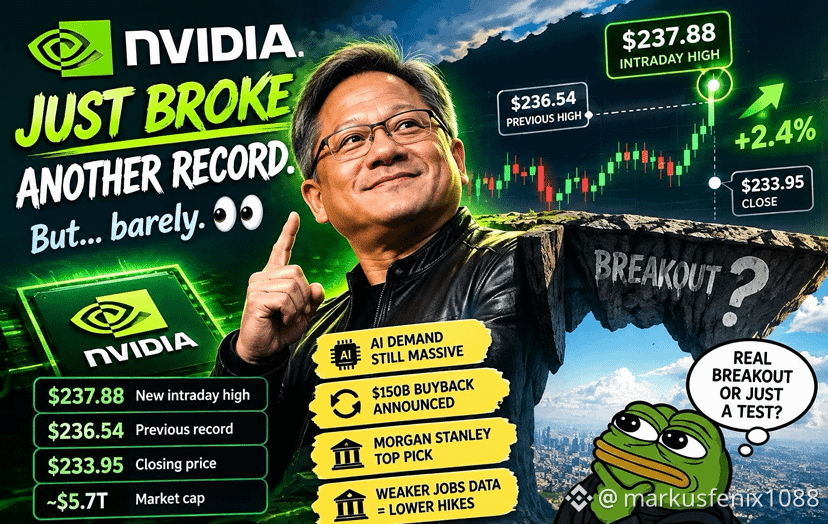
😂 نجحت NVDA في كسر رقم قياسي آخر.
لكن… بالكاد. 👀
سجلت نيفيديا قمة داخلية خلال اليوم عند 237.88$، ما يدفع قيمتها السوقية نحو 5.7 تريليون دولار.
يبدو وكأنه اختراق ضخم، أليس كذلك؟
🚨 لكن هذه هي المشكلة.
📊 237.88$ — القمة الجديدة داخل الجلسة
📊 236.54$ — الرقم القياسي السابق
📊 233.95$ — سعر الإغلاق
📊 ~5.7T — القيمة السوقية
هذا يعني أن “السجل” كان أعلى بنحو 0.6% فقط من القمة القديمة.
وكان العنوان يقول +2.4%.
لكن NVDA أغلق عند +1.34% فقط.
فما الذي يدفع فعلاً هذه الحركة؟
🎬 لا يزال الطلب على الذكاء الاصطناعي هائلًا.
أعلنت نيفيديا أيضًا عن برنامج إعادة شراء آخر بقيمة 150 مليار دولار، بينما أعادت مورغان ستانلي تصنيف NVDA كأفضل اختيار.
كما أن بيانات الوظائف الأضعف ساعدت في خفض توقعات رفع الاحتياطي الفيدرالي، ما وفر لريط Nasdaq دفعة إضافية.
لكن إليك المفاجأة. 👀
إن تحقيق قمة جديدة داخل اليوم ليس هو الشيء نفسه كاختراق مؤكد.
الاختبار الحقيقي هو ما إذا كانت NVDA تستطيع الثبات فوق منطقة ~234 بدلًا من مجرد لمس رقم قياسي جديد ثم التراجع.
🧠 خلاصة ساحة Square Insight: القمة الجديدة تثبت الزخم. والإغلاق القوي يثبت وجود طلب.
إذًا… هل نيفيديا تخترق حقًا — أم أنها تختبر السقف فقط؟
متابعة من فضلكم
#Nvidia #Aİ #StockMarket $NVDAB
#nvidiahitsrecordhighup2.4%
😂 نجحت NVDA في كسر رقم قياسي آخر.
لكن… بالكاد. 👀
سجلت نيفيديا قمة داخلية خلال اليوم عند 237.88$، ما يدفع قيمتها السوقية نحو 5.7 تريليون دولار.
يبدو وكأنه اختراق ضخم، أليس كذلك؟
🚨 لكن هذه هي المشكلة.
📊 237.88$ — القمة الجديدة داخل الجلسة
📊 236.54$ — الرقم القياسي السابق
📊 233.95$ — سعر الإغلاق
📊 ~5.7T — القيمة السوقية
هذا يعني أن “السجل” كان أعلى بنحو 0.6% فقط من القمة القديمة.
وكان العنوان يقول +2.4%.
لكن NVDA أغلق عند +1.34% فقط.
فما الذي يدفع فعلاً هذه الحركة؟
🎬 لا يزال الطلب على الذكاء الاصطناعي هائلًا.
أعلنت نيفيديا أيضًا عن برنامج إعادة شراء آخر بقيمة 150 مليار دولار، بينما أعادت مورغان ستانلي تصنيف NVDA كأفضل اختيار.
كما أن بيانات الوظائف الأضعف ساعدت في خفض توقعات رفع الاحتياطي الفيدرالي، ما وفر لريط Nasdaq دفعة إضافية.
لكن إليك المفاجأة. 👀
إن تحقيق قمة جديدة داخل اليوم ليس هو الشيء نفسه كاختراق مؤكد.
الاختبار الحقيقي هو ما إذا كانت NVDA تستطيع الثبات فوق منطقة ~234 بدلًا من مجرد لمس رقم قياسي جديد ثم التراجع.
🧠 خلاصة ساحة Square Insight: القمة الجديدة تثبت الزخم. والإغلاق القوي يثبت وجود طلب.
إذًا… هل نيفيديا تخترق حقًا — أم أنها تختبر السقف فقط؟
متابعة من فضلكم
#Nvidia #Aİ #StockMarket $NVDAB
😂 نجحت NVDA في كسر رقم قياسي آخر.
لكن… بالكاد. 👀
سجلت نيفيديا قمة داخلية خلال اليوم عند 237.88$، ما يدفع قيمتها السوقية نحو 5.7 تريليون دولار.
يبدو وكأنه اختراق ضخم، أليس كذلك؟
🚨 لكن هذه هي المشكلة.
📊 237.88$ — القمة الجديدة داخل الجلسة
📊 236.54$ — الرقم القياسي السابق
📊 233.95$ — سعر الإغلاق
📊 ~5.7T — القيمة السوقية
هذا يعني أن “السجل” كان أعلى بنحو 0.6% فقط من القمة القديمة.
وكان العنوان يقول +2.4%.
لكن NVDA أغلق عند +1.34% فقط.
فما الذي يدفع فعلاً هذه الحركة؟
🎬 لا يزال الطلب على الذكاء الاصطناعي هائلًا.
أعلنت نيفيديا أيضًا عن برنامج إعادة شراء آخر بقيمة 150 مليار دولار، بينما أعادت مورغان ستانلي تصنيف NVDA كأفضل اختيار.
كما أن بيانات الوظائف الأضعف ساعدت في خفض توقعات رفع الاحتياطي الفيدرالي، ما وفر لريط Nasdaq دفعة إضافية.
لكن إليك المفاجأة. 👀
إن تحقيق قمة جديدة داخل اليوم ليس هو الشيء نفسه كاختراق مؤكد.
الاختبار الحقيقي هو ما إذا كانت NVDA تستطيع الثبات فوق منطقة ~234 بدلًا من مجرد لمس رقم قياسي جديد ثم التراجع.
🧠 خلاصة ساحة Square Insight: القمة الجديدة تثبت الزخم. والإغلاق القوي يثبت وجود طلب.
إذًا… هل نيفيديا تخترق حقًا — أم أنها تختبر السقف فقط؟
متابعة من فضلكم
#Nvidia #Aİ #StockMarket $NVDAB
5
3.8k

Расталды
$NVDAB активін ұстау: 5.5 USDT
NVDA 💸💸💸💸💸💸💸💸acaba de batir otro récord.
Pero… apenas. 👀
Nvidia alcanzó un máximo intradía de $237.88, impulsando su capitalización bursátil hacia $5.7T.
¿Suena a una gran ruptura, cierto?
🚨 Aquí está el detalle.
📊 $237.88 — nuevo máximo intradía
📊 $236.54 — récord anterior
📊 $233.95 — precio de cierre
📊 ~$5.7T — capitalización bursátil
Eso significa que el “récord” estuvo solo ~0.6% por encima del máximo anterior.
Y el titular decía +2.4%.
Pero NVDA cerró con solo +1.34%.
Entonces, ¿qué está impulsando realmente el movimiento?
🎬 La demanda de IA sigue siendo enorme.
Nvidia también anunció otra recompra de $150B, mientras Morgan Stanley volvió a colocar NVDA como una de sus principales apuestas.
Y los datos más débiles de empleo ayudaron a empujar las expectativas de subidas de la Fed hacia abajo, dándole otro viento de cola al Nasdaq.
Pero aquí viene el giro. 👀
Un nuevo máximo intradía NO es lo mismo que una ruptura confirmada.
La verdadera prueba es si NVDA puede mantenerse por encima de la zona de ~$234 en lugar de solo tocar un nuevo récord y luego retroceder.
🧠 Insight de Square: Un nuevo máximo demuestra impulso. Un cierre fuerte demuestra demanda.
Entonces… ¿Nvidia está rompiendo hacia arriba, o solo probando el techo?
#Nvidia #Aİ #stockmarketupdate $NVDAB
{spot}(NVDABUSDT)
NVDA 💸💸💸💸💸💸💸💸acaba de batir otro récord.
Pero… apenas. 👀
Nvidia alcanzó un máximo intradía de $237.88, impulsando su capitalización bursátil hacia $5.7T.
¿Suena a una gran ruptura, cierto?
🚨 Aquí está el detalle.
📊 $237.88 — nuevo máximo intradía
📊 $236.54 — récord anterior
📊 $233.95 — precio de cierre
📊 ~$5.7T — capitalización bursátil
Eso significa que el “récord” estuvo solo ~0.6% por encima del máximo anterior.
Y el titular decía +2.4%.
Pero NVDA cerró con solo +1.34%.
Entonces, ¿qué está impulsando realmente el movimiento?
🎬 La demanda de IA sigue siendo enorme.
Nvidia también anunció otra recompra de $150B, mientras Morgan Stanley volvió a colocar NVDA como una de sus principales apuestas.
Y los datos más débiles de empleo ayudaron a empujar las expectativas de subidas de la Fed hacia abajo, dándole otro viento de cola al Nasdaq.
Pero aquí viene el giro. 👀
Un nuevo máximo intradía NO es lo mismo que una ruptura confirmada.
La verdadera prueba es si NVDA puede mantenerse por encima de la zona de ~$234 en lugar de solo tocar un nuevo récord y luego retroceder.
🧠 Insight de Square: Un nuevo máximo demuestra impulso. Un cierre fuerte demuestra demanda.
Entonces… ¿Nvidia está rompiendo hacia arriba, o solo probando el techo?
#Nvidia #Aİ #stockmarketupdate $NVDAB
Pero… apenas. 👀
Nvidia alcanzó un máximo intradía de $237.88, impulsando su capitalización bursátil hacia $5.7T.
¿Suena a una gran ruptura, cierto?
🚨 Aquí está el detalle.
📊 $237.88 — nuevo máximo intradía
📊 $236.54 — récord anterior
📊 $233.95 — precio de cierre
📊 ~$5.7T — capitalización bursátil
Eso significa que el “récord” estuvo solo ~0.6% por encima del máximo anterior.
Y el titular decía +2.4%.
Pero NVDA cerró con solo +1.34%.
Entonces, ¿qué está impulsando realmente el movimiento?
🎬 La demanda de IA sigue siendo enorme.
Nvidia también anunció otra recompra de $150B, mientras Morgan Stanley volvió a colocar NVDA como una de sus principales apuestas.
Y los datos más débiles de empleo ayudaron a empujar las expectativas de subidas de la Fed hacia abajo, dándole otro viento de cola al Nasdaq.
Pero aquí viene el giro. 👀
Un nuevo máximo intradía NO es lo mismo que una ruptura confirmada.
La verdadera prueba es si NVDA puede mantenerse por encima de la zona de ~$234 en lugar de solo tocar un nuevo récord y luego retroceder.
🧠 Insight de Square: Un nuevo máximo demuestra impulso. Un cierre fuerte demuestra demanda.
Entonces… ¿Nvidia está rompiendo hacia arriba, o solo probando el techo?
#Nvidia #Aİ #stockmarketupdate $NVDAB
2
830
·
--
Жоғары (өспелі)
Расталды
#nvidiahitsrecordhighup2.4%
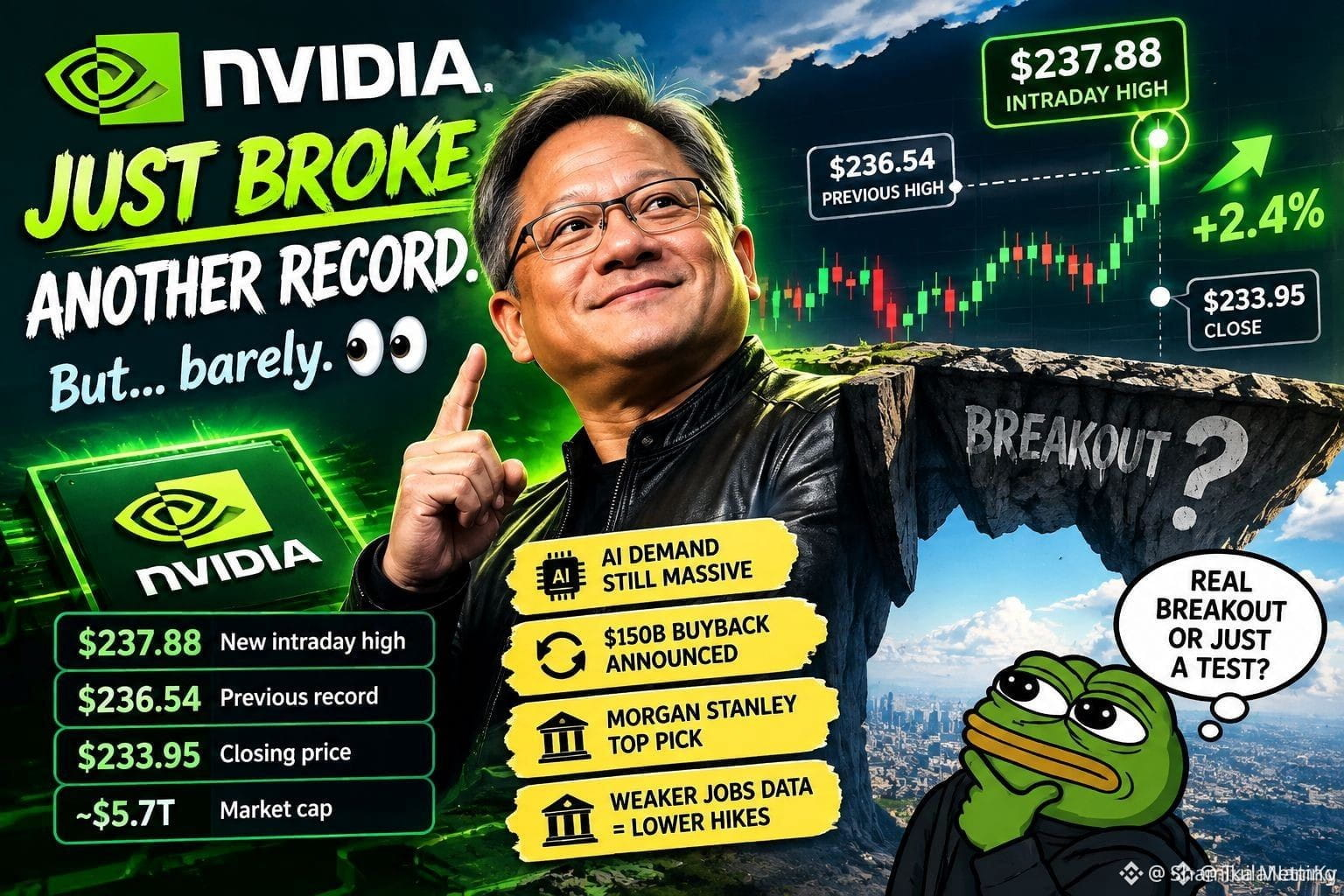
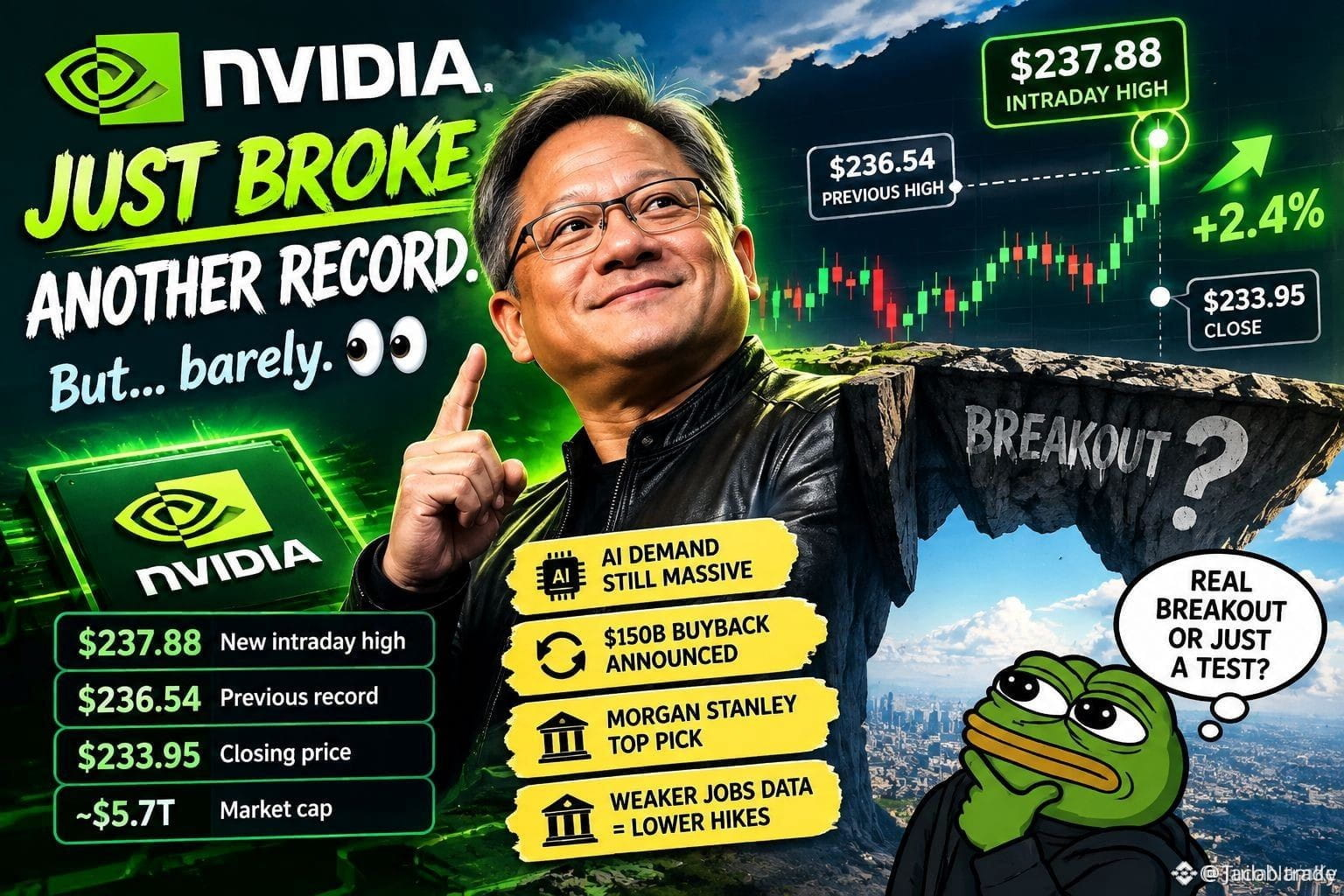
😂 NVDA just broke another record.
But… barely. 👀
Nvidia hit an intraday high of $237.88, pushing its market cap toward $5.7T.
Sounds like a massive breakout, right?
🚨 Here’s the catch.
📊 $237.88 — new intraday high
📊 $236.54 — previous record
📊 $233.95 — closing price
📊 ~$5.7T — market cap
That means the “record” was only about 0.6% above the old high.
And the headline said +2.4%.
But NVDA closed at just +1.34%.
So what’s actually driving the move?
🎬 AI demand remains massive.
Nvidia also announced another $150B buyback, while Morgan Stanley restored NVDA as a top pick.
And weaker jobs data helped push Fed hike expectations lower, giving Nasdaq another tailwind.
But here’s the twist. 👀
A new intraday high is NOT the same thing as a confirmed breakout.
The real test is whether NVDA can hold above the ~$234 area instead of simply touching a new record and fading.
🧠 Square Insight: A new high proves momentum. A strong close proves demand.
So… is Nvidia breaking out — or just testing the ceiling?
#Nvidia #Aİ #StockMarket $NVDAB
{spot}(NVDABUSDT)
#nvidiahitsrecordhighup2.4%
😂 NVDA just broke another record.
But… barely. 👀
Nvidia hit an intraday high of $237.88, pushing its market cap toward $5.7T.
Sounds like a massive breakout, right?
🚨 Here’s the catch.
📊 $237.88 — new intraday high
📊 $236.54 — previous record
📊 $233.95 — closing price
📊 ~$5.7T — market cap
That means the “record” was only about 0.6% above the old high.
And the headline said +2.4%.
But NVDA closed at just +1.34%.
So what’s actually driving the move?
🎬 AI demand remains massive.
Nvidia also announced another $150B buyback, while Morgan Stanley restored NVDA as a top pick.
And weaker jobs data helped push Fed hike expectations lower, giving Nasdaq another tailwind.
But here’s the twist. 👀
A new intraday high is NOT the same thing as a confirmed breakout.
The real test is whether NVDA can hold above the ~$234 area instead of simply touching a new record and fading.
🧠 Square Insight: A new high proves momentum. A strong close proves demand.
So… is Nvidia breaking out — or just testing the ceiling?
#Nvidia #Aİ #StockMarket $NVDAB
😂 NVDA just broke another record.
But… barely. 👀
Nvidia hit an intraday high of $237.88, pushing its market cap toward $5.7T.
Sounds like a massive breakout, right?
🚨 Here’s the catch.
📊 $237.88 — new intraday high
📊 $236.54 — previous record
📊 $233.95 — closing price
📊 ~$5.7T — market cap
That means the “record” was only about 0.6% above the old high.
And the headline said +2.4%.
But NVDA closed at just +1.34%.
So what’s actually driving the move?
🎬 AI demand remains massive.
Nvidia also announced another $150B buyback, while Morgan Stanley restored NVDA as a top pick.
And weaker jobs data helped push Fed hike expectations lower, giving Nasdaq another tailwind.
But here’s the twist. 👀
A new intraday high is NOT the same thing as a confirmed breakout.
The real test is whether NVDA can hold above the ~$234 area instead of simply touching a new record and fading.
🧠 Square Insight: A new high proves momentum. A strong close proves demand.
So… is Nvidia breaking out — or just testing the ceiling?
#Nvidia #Aİ #StockMarket $NVDAB
MATRİX 1:
#binace hesabı kapat BOYKOT ediyoruz eylem yapılacak
9
13
24.9k

·
--
Жоғары (өспелі)
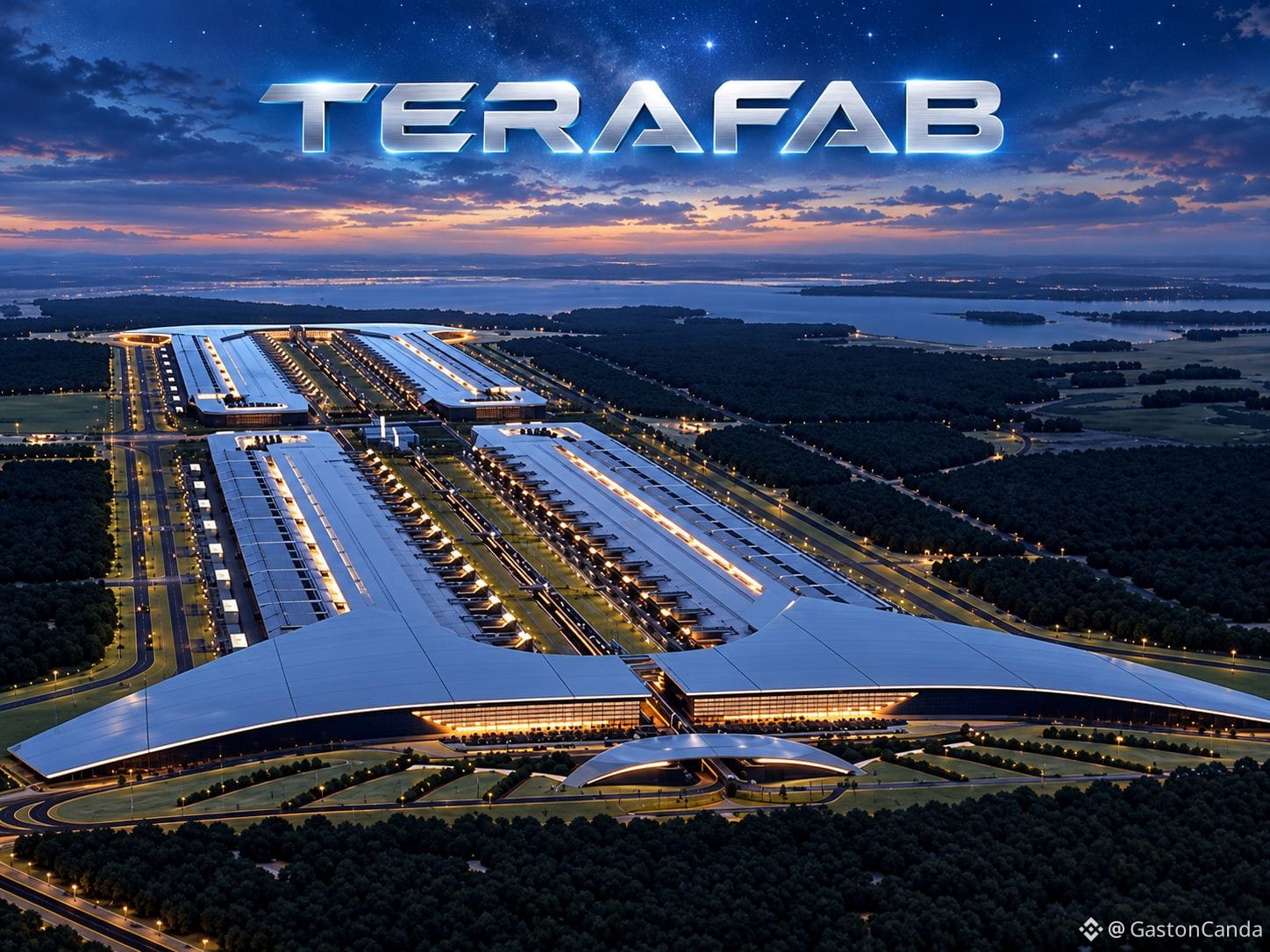
☕ TERAFAB: could Musk’s push for chip independence become a problem for NVIDIA?
Here’s the question on my Sunday watchlist:
If Musk’s companies can produce competitive AI chips themselves, how much future spending could move away from NVIDIA?
What’s confirmed
Tesla and SpaceX’s Terafab project aims to combine chip manufacturing, memory and advanced packaging. Its planned applications include robotics, autonomous vehicles and space-based AI computing. These are development goals, not proof of competitive production.
Why NVIDIA investors should pay attention
Purpose-built chips could eventually handle some workloads that would otherwise require externally purchased processors.
My interpretation: if those chips deliver competitive performance and cost at scale, Musk’s ecosystem could capture more of its own computing spend.
That would create a potential competitive threat.
But building a factory is only part of the challenge.
NVIDIA designs its chips and relies on foundries such as TSMC and Samsung for manufacturing. Its offering also includes CUDA, networking and complete computing systems.
A chip running inside a robot does not automatically replace the GPUs used to train its AI.
And SpaceX’s announcement explicitly encourages existing suppliers to expand production. Terafab could add capacity alongside them.
The milestones I’m watching:
• Working chips with credible performance comparisons.
• Reliable production at competitive cost.
• Evidence that internal chips actually replace external purchases.
For NVIDIA, successful substitution would raise competitive pressure.
For Tesla, greater supply control could help—but the investment and execution risks matter too.
Open $NVDAB and compare it with $TSLAB as you research this thesis. A factory announcement alone cannot tell us where either price goes next.
What would change your view first: competitive benchmarks, or proof of production at scale?
Follow for updates as the evidence develops.
#NVIDIA #Tesla #AI
$NVDAB $TSLA
{future}(TSLAUSDT)
{spot}(NVDABUSDT)
☕ TERAFAB: could Musk’s push for chip independence become a problem for NVIDIA?
Here’s the question on my Sunday watchlist:
If Musk’s companies can produce competitive AI chips themselves, how much future spending could move away from NVIDIA?
What’s confirmed
Tesla and SpaceX’s Terafab project aims to combine chip manufacturing, memory and advanced packaging. Its planned applications include robotics, autonomous vehicles and space-based AI computing. These are development goals, not proof of competitive production.
Why NVIDIA investors should pay attention
Purpose-built chips could eventually handle some workloads that would otherwise require externally purchased processors.
My interpretation: if those chips deliver competitive performance and cost at scale, Musk’s ecosystem could capture more of its own computing spend.
That would create a potential competitive threat.
But building a factory is only part of the challenge.
NVIDIA designs its chips and relies on foundries such as TSMC and Samsung for manufacturing. Its offering also includes CUDA, networking and complete computing systems.
A chip running inside a robot does not automatically replace the GPUs used to train its AI.
And SpaceX’s announcement explicitly encourages existing suppliers to expand production. Terafab could add capacity alongside them.
The milestones I’m watching:
• Working chips with credible performance comparisons.
• Reliable production at competitive cost.
• Evidence that internal chips actually replace external purchases.
For NVIDIA, successful substitution would raise competitive pressure.
For Tesla, greater supply control could help—but the investment and execution risks matter too.
Open $NVDAB and compare it with $TSLAB as you research this thesis. A factory announcement alone cannot tell us where either price goes next.
What would change your view first: competitive benchmarks, or proof of production at scale?
Follow for updates as the evidence develops.
#NVIDIA #Tesla #AI
$NVDAB $TSLA
Here’s the question on my Sunday watchlist:
If Musk’s companies can produce competitive AI chips themselves, how much future spending could move away from NVIDIA?
What’s confirmed
Tesla and SpaceX’s Terafab project aims to combine chip manufacturing, memory and advanced packaging. Its planned applications include robotics, autonomous vehicles and space-based AI computing. These are development goals, not proof of competitive production.
Why NVIDIA investors should pay attention
Purpose-built chips could eventually handle some workloads that would otherwise require externally purchased processors.
My interpretation: if those chips deliver competitive performance and cost at scale, Musk’s ecosystem could capture more of its own computing spend.
That would create a potential competitive threat.
But building a factory is only part of the challenge.
NVIDIA designs its chips and relies on foundries such as TSMC and Samsung for manufacturing. Its offering also includes CUDA, networking and complete computing systems.
A chip running inside a robot does not automatically replace the GPUs used to train its AI.
And SpaceX’s announcement explicitly encourages existing suppliers to expand production. Terafab could add capacity alongside them.
The milestones I’m watching:
• Working chips with credible performance comparisons.
• Reliable production at competitive cost.
• Evidence that internal chips actually replace external purchases.
For NVIDIA, successful substitution would raise competitive pressure.
For Tesla, greater supply control could help—but the investment and execution risks matter too.
Open $NVDAB and compare it with $TSLAB as you research this thesis. A factory announcement alone cannot tell us where either price goes next.
What would change your view first: competitive benchmarks, or proof of production at scale?
Follow for updates as the evidence develops.
#NVIDIA #Tesla #AI
$NVDAB $TSLA

1
185

·
--
💰 A $1 BILLION mistake?
A former $NVDA advisor claims a 1993 stock-option error may have cost him a fortune. His disputed 9,375 options would be worth around $1.01 BILLION today but Nvidia argues the decades-old claim was filed too late.#NVIDIA
💰 A $1 BILLION mistake?
A former $NVDA advisor claims a 1993 stock-option error may have cost him a fortune. His disputed 9,375 options would be worth around $1.01 BILLION today but Nvidia argues the decades-old claim was filed too late.#NVIDIA
A former $NVDA advisor claims a 1993 stock-option error may have cost him a fortune. His disputed 9,375 options would be worth around $1.01 BILLION today but Nvidia argues the decades-old claim was filed too late.#NVIDIA

Binance BiBi:
I see! The post says a former Nvidia (NVDA) advisor claims a 1993 stock-option paperwork/administrative error deprived him of 9,375 options that would be worth about $1.01 billion today, while Nvidia disputes the claim and argues it was filed too late.
2
2
129
·
--
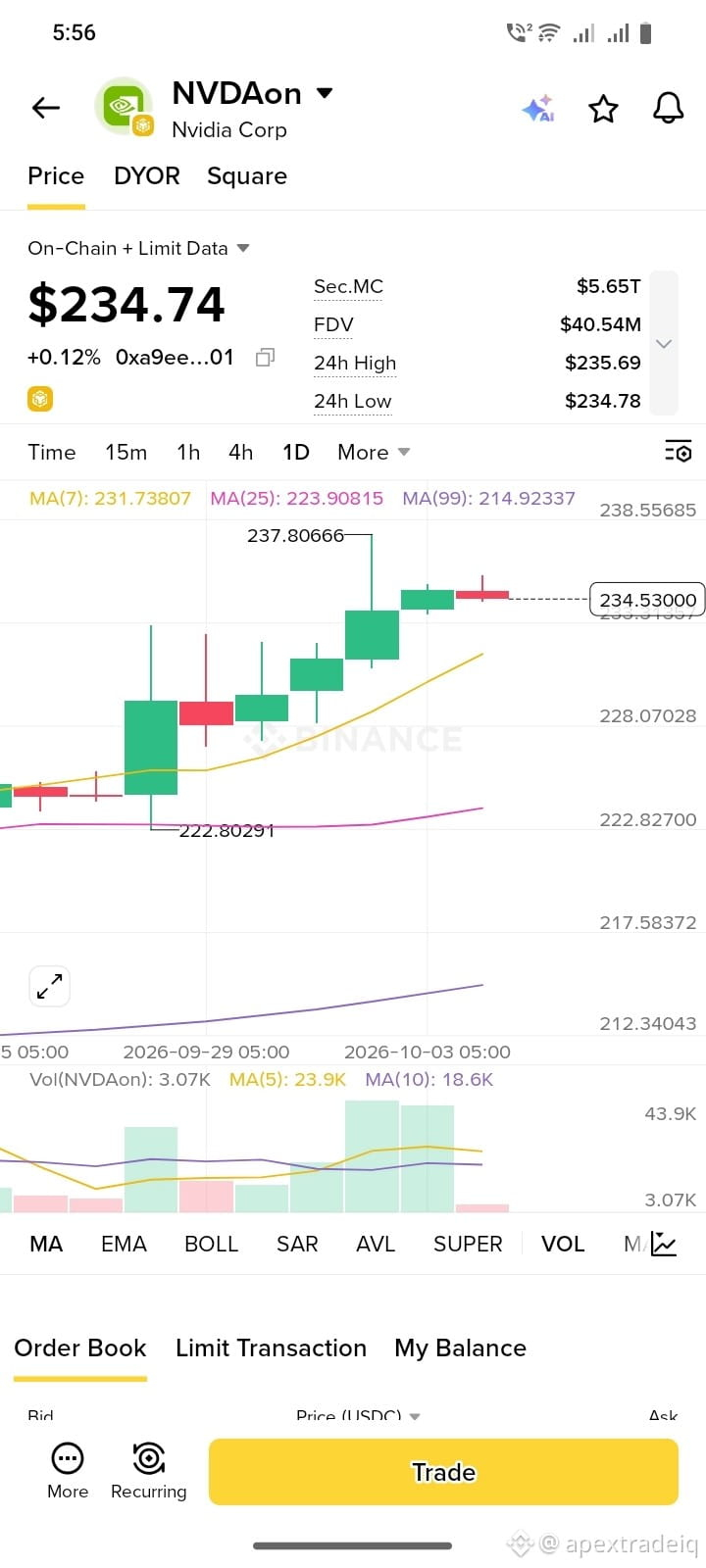
🚀 $NVDAon Holding Strong Near Local Highs! 📈
Tokenized Nvidia ($NVDAon ) is currently trading at $234.74 (+0.12%), hovering just below its recent high of $237.80. The 1-day chart shows a strong steady uptrend sitting above the key moving averages MA(7) at $231.73 and MA(25) at $223.90. With momentum slowing slightly near resistance, do you think $NVDAon is gearing up for a breakout toward $240+, or are we due for a minor pullback first? Let us know your thoughts below! 👇🔥
#NVDA #BinanceSquare #CryptoTrading #NVIDIA #Web3
🚀 $NVDAon Holding Strong Near Local Highs! 📈
Tokenized Nvidia ($NVDAon ) is currently trading at $234.74 (+0.12%), hovering just below its recent high of $237.80. The 1-day chart shows a strong steady uptrend sitting above the key moving averages MA(7) at $231.73 and MA(25) at $223.90. With momentum slowing slightly near resistance, do you think $NVDAon is gearing up for a breakout toward $240+, or are we due for a minor pullback first? Let us know your thoughts below! 👇🔥
#NVDA #BinanceSquare #CryptoTrading #NVIDIA #Web3
Tokenized Nvidia ($NVDAon ) is currently trading at $234.74 (+0.12%), hovering just below its recent high of $237.80. The 1-day chart shows a strong steady uptrend sitting above the key moving averages MA(7) at $231.73 and MA(25) at $223.90. With momentum slowing slightly near resistance, do you think $NVDAon is gearing up for a breakout toward $240+, or are we due for a minor pullback first? Let us know your thoughts below! 👇🔥
#NVDA #BinanceSquare #CryptoTrading #NVIDIA #Web3
18

·
--
Расталды
#nvidiahitsrecordhighup2.4%
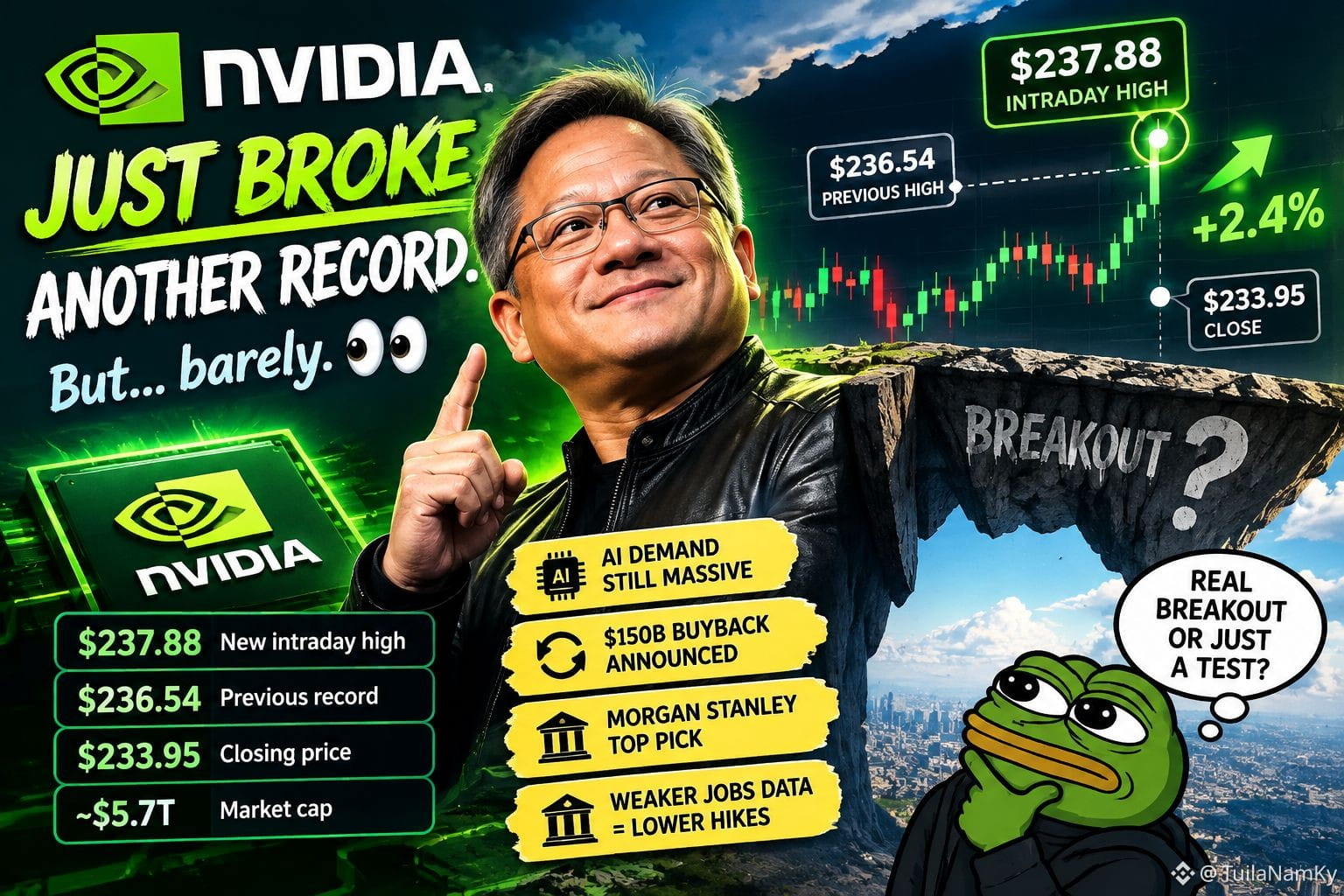
😂 NVDA vient de battre un autre record.
Mais… de peu. 👀
Nvidia a atteint un plus haut intrajournalier de 237,88 $ , ce qui a fait grimper sa capitalisation boursière vers 5,7 T$.
Ça ressemble à une énorme cassure, non ?
🚨 Voilà le hic.
📊 237,88 $ — nouveau plus haut intrajournalier
📊 236,54 $ — précédent record
📊 233,95 $ — cours de clôture
📊 ~5,7 T$ — capitalisation boursière
Cela signifie que le « record » n’était qu’environ 0,6 % au-dessus de l’ancien plus haut.
Et le titre annonçait +2,4 %.
Mais NVDA a clôturé à seulement +1,34 %.
Donc, qu’est-ce qui fait vraiment bouger le titre ?
🎬 La demande liée à l’IA reste énorme.
Nvidia a aussi annoncé un nouveau rachat de 150 milliards de dollars, tandis que Morgan Stanley a rétabli NVDA comme valeur préférée.
Et des données sur l’emploi plus faibles ont contribué à faire baisser les anticipations de hausses de taux de la Fed, donnant un nouveau coup de pouce au Nasdaq.
Mais voici la torsion. 👀
Un nouveau plus haut intrajournalier n’est PAS la même chose qu’une cassure confirmée.
Le vrai test : est-ce que NVDA peut tenir au-dessus de la zone ~234 $, au lieu de simplement toucher un nouveau record puis redescendre.
🧠 Insight Square : Un nouveau sommet confirme l’élan. Une clôture solide prouve la demande.
Alors… Nvidia est-elle en train de casser — ou ne fait-elle que tester le plafond ?
#Nvidia #Aİ #BinanceSquare
$NVDA
{future}(NVDAUSDT)
$AIN
{future}(AINUSDT)
$SPORTFUN
{future}(SPORTFUNUSDT)
#nvidiahitsrecordhighup2.4%
😂 NVDA vient de battre un autre record.
Mais… de peu. 👀
Nvidia a atteint un plus haut intrajournalier de 237,88 $ , ce qui a fait grimper sa capitalisation boursière vers 5,7 T$.
Ça ressemble à une énorme cassure, non ?
🚨 Voilà le hic.
📊 237,88 $ — nouveau plus haut intrajournalier
📊 236,54 $ — précédent record
📊 233,95 $ — cours de clôture
📊 ~5,7 T$ — capitalisation boursière
Cela signifie que le « record » n’était qu’environ 0,6 % au-dessus de l’ancien plus haut.
Et le titre annonçait +2,4 %.
Mais NVDA a clôturé à seulement +1,34 %.
Donc, qu’est-ce qui fait vraiment bouger le titre ?
🎬 La demande liée à l’IA reste énorme.
Nvidia a aussi annoncé un nouveau rachat de 150 milliards de dollars, tandis que Morgan Stanley a rétabli NVDA comme valeur préférée.
Et des données sur l’emploi plus faibles ont contribué à faire baisser les anticipations de hausses de taux de la Fed, donnant un nouveau coup de pouce au Nasdaq.
Mais voici la torsion. 👀
Un nouveau plus haut intrajournalier n’est PAS la même chose qu’une cassure confirmée.
Le vrai test : est-ce que NVDA peut tenir au-dessus de la zone ~234 $, au lieu de simplement toucher un nouveau record puis redescendre.
🧠 Insight Square : Un nouveau sommet confirme l’élan. Une clôture solide prouve la demande.
Alors… Nvidia est-elle en train de casser — ou ne fait-elle que tester le plafond ?
#Nvidia #Aİ #BinanceSquare
$NVDA
$AIN
$SPORTFUN
😂 NVDA vient de battre un autre record.
Mais… de peu. 👀
Nvidia a atteint un plus haut intrajournalier de 237,88 $ , ce qui a fait grimper sa capitalisation boursière vers 5,7 T$.
Ça ressemble à une énorme cassure, non ?
🚨 Voilà le hic.
📊 237,88 $ — nouveau plus haut intrajournalier
📊 236,54 $ — précédent record
📊 233,95 $ — cours de clôture
📊 ~5,7 T$ — capitalisation boursière
Cela signifie que le « record » n’était qu’environ 0,6 % au-dessus de l’ancien plus haut.
Et le titre annonçait +2,4 %.
Mais NVDA a clôturé à seulement +1,34 %.
Donc, qu’est-ce qui fait vraiment bouger le titre ?
🎬 La demande liée à l’IA reste énorme.
Nvidia a aussi annoncé un nouveau rachat de 150 milliards de dollars, tandis que Morgan Stanley a rétabli NVDA comme valeur préférée.
Et des données sur l’emploi plus faibles ont contribué à faire baisser les anticipations de hausses de taux de la Fed, donnant un nouveau coup de pouce au Nasdaq.
Mais voici la torsion. 👀
Un nouveau plus haut intrajournalier n’est PAS la même chose qu’une cassure confirmée.
Le vrai test : est-ce que NVDA peut tenir au-dessus de la zone ~234 $, au lieu de simplement toucher un nouveau record puis redescendre.
🧠 Insight Square : Un nouveau sommet confirme l’élan. Une clôture solide prouve la demande.
Alors… Nvidia est-elle en train de casser — ou ne fait-elle que tester le plafond ?
#Nvidia #Aİ #BinanceSquare
$NVDA
$AIN
$SPORTFUN
176
·
--
Мақала
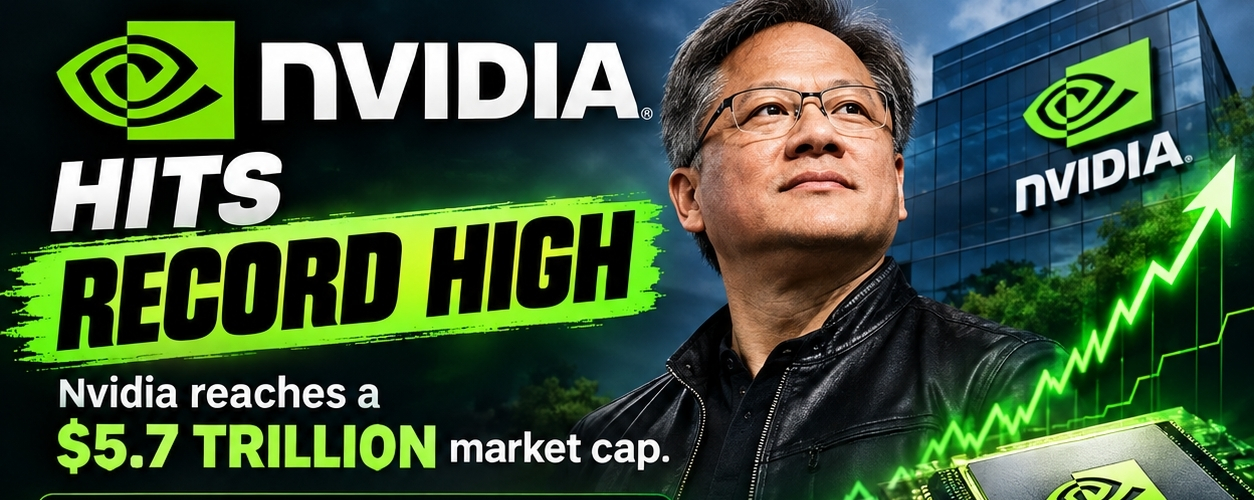
🚀 NVIDIA $NVDA HITS A RECORD HIGH!$Nvidia continues to prove why it has become one of the biggest winners of the AI revolution. 🤖📈
The company has now reached an astonishing $5.7 TRILLION market cap, marking another major milestone for the semiconductor giant.
But the most eye-catching number is the long-term return:
💰 A $10,000 investment in NVIDIA 10 years ago would be worth roughly $1.58 MILLION today.
That’s not just growth — that’s a reminder of what can happen when a company dominates a transformational technology trend for years.
AI infrastructure, data centers, advanced GPUs and the growing demand for computing power have turned NVIDIA into one of the most valuable companies in the world.
The bigger question now is:
Can $NVDA continue breaking records, or is the market getting too stretched? 👀
What do you think — $NVDA higher from here? 🚀
#NVIDIA #NVDA #Aİ #Technology #Investing
🚀 NVIDIA $NVDA HITS A RECORD HIGH!
$Nvidia continues to prove why it has become one of the biggest winners of the AI revolution. 🤖📈
The company has now reached an astonishing $5.7 TRILLION market cap, marking another major milestone for the semiconductor giant.
But the most eye-catching number is the long-term return:
💰 A $10,000 investment in NVIDIA 10 years ago would be worth roughly $1.58 MILLION today.
That’s not just growth — that’s a reminder of what can happen when a company dominates a transformational technology trend for years.
AI infrastructure, data centers, advanced GPUs and the growing demand for computing power have turned NVIDIA into one of the most valuable companies in the world.
The bigger question now is:
Can $NVDA continue breaking records, or is the market getting too stretched? 👀
What do you think — $NVDA higher from here? 🚀
#NVIDIA #NVDA #Aİ #Technology #Investing
The company has now reached an astonishing $5.7 TRILLION market cap, marking another major milestone for the semiconductor giant.
But the most eye-catching number is the long-term return:
💰 A $10,000 investment in NVIDIA 10 years ago would be worth roughly $1.58 MILLION today.
That’s not just growth — that’s a reminder of what can happen when a company dominates a transformational technology trend for years.
AI infrastructure, data centers, advanced GPUs and the growing demand for computing power have turned NVIDIA into one of the most valuable companies in the world.
The bigger question now is:
Can $NVDA continue breaking records, or is the market getting too stretched? 👀
What do you think — $NVDA higher from here? 🚀
#NVIDIA #NVDA #Aİ #Technology #Investing
204

·
--
#NvidiaHitsRecordHighUp2.4% 🚨
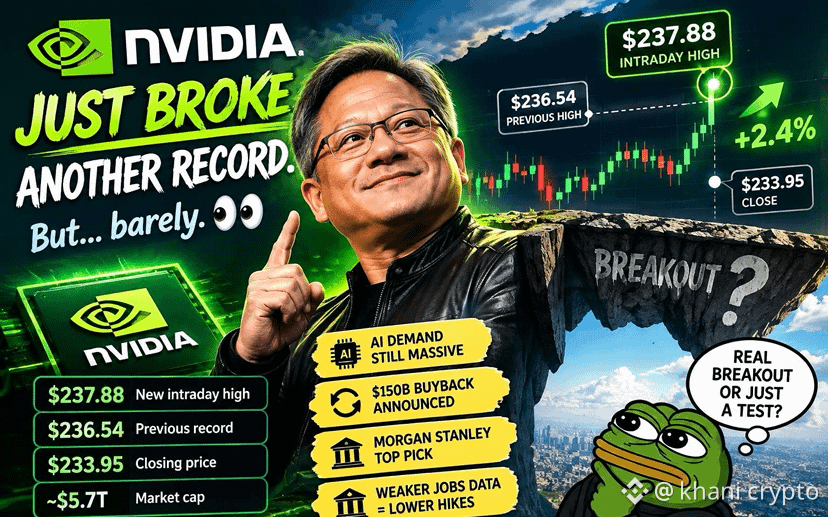
😂 $NVDA يسجل رقمًا قياسيًا جديدًا… لكن بفارق بسيط جدًا. 👀
وصلت Nvidia إلى أعلى مستوى خلال الجلسة عند $237.88، ليرتفع تقييمها السوقي إلى نحو $5.7 تريليون.
يبدو الأمر كاختراق ضخم، أليس كذلك؟
🚨 لكن هناك تفصيل مهم:
📊 $237.88 — أعلى مستوى جديد خلال الجلسة
📊 $236.54 — الرقم القياسي السابق
📊 $233.95 — سعر الإغلاق
📊 ~$5.7T — القيمة السوقية
هذا يعني أن الرقم القياسي الجديد كان أعلى من القمة السابقة بنحو 0.6% فقط.
والعنوان أشار إلى ارتفاع بنسبة +2.4%، لكن $NVDA أنهى الجلسة عند ارتفاع يقارب +1.34% فقط.
🔥 فما الذي يدفع هذه الحركة؟
🎬 الطلب على الذكاء الاصطناعي لا يزال ضخمًا.
كما أعلنت Nvidia عن برنامج إعادة شراء أسهم بقيمة $150 مليار، بينما أعادت Morgan Stanley تصنيف NVDA كأحد اختياراتها المفضلة.
وفي الوقت نفسه، ساعدت بيانات الوظائف الأمريكية الأضعف على خفض توقعات رفع الفائدة، مما منح مؤشر Nasdaq دفعة إضافية.
👀 لكن هنا النقطة المهمة:
تسجيل قمة جديدة خلال الجلسة لا يعني بالضرورة حدوث اختراق مؤكد.
الاختبار الحقيقي هو ما إذا كانت NVDA ستتمكن من الحفاظ على التداول فوق منطقة ~$234 بدلًا من مجرد تسجيل قمة جديدة ثم التراجع.
🧠 رؤية Square:
القمة الجديدة تثبت وجود الزخم، لكن الإغلاق القوي هو الذي يؤكد قوة الطلب.
فهل Nvidia في بداية اختراق حقيقي، السقف مرة أخرى؟ 👀
#Nvidia #AI #StockMarket #NVDAB
{future}(NVDAUSDT)
#NvidiaHitsRecordHighUp2.4% 🚨
😂 $NVDA يسجل رقمًا قياسيًا جديدًا… لكن بفارق بسيط جدًا. 👀
وصلت Nvidia إلى أعلى مستوى خلال الجلسة عند $237.88، ليرتفع تقييمها السوقي إلى نحو $5.7 تريليون.
يبدو الأمر كاختراق ضخم، أليس كذلك؟
🚨 لكن هناك تفصيل مهم:
📊 $237.88 — أعلى مستوى جديد خلال الجلسة
📊 $236.54 — الرقم القياسي السابق
📊 $233.95 — سعر الإغلاق
📊 ~$5.7T — القيمة السوقية
هذا يعني أن الرقم القياسي الجديد كان أعلى من القمة السابقة بنحو 0.6% فقط.
والعنوان أشار إلى ارتفاع بنسبة +2.4%، لكن $NVDA أنهى الجلسة عند ارتفاع يقارب +1.34% فقط.
🔥 فما الذي يدفع هذه الحركة؟
🎬 الطلب على الذكاء الاصطناعي لا يزال ضخمًا.
كما أعلنت Nvidia عن برنامج إعادة شراء أسهم بقيمة $150 مليار، بينما أعادت Morgan Stanley تصنيف NVDA كأحد اختياراتها المفضلة.
وفي الوقت نفسه، ساعدت بيانات الوظائف الأمريكية الأضعف على خفض توقعات رفع الفائدة، مما منح مؤشر Nasdaq دفعة إضافية.
👀 لكن هنا النقطة المهمة:
تسجيل قمة جديدة خلال الجلسة لا يعني بالضرورة حدوث اختراق مؤكد.
الاختبار الحقيقي هو ما إذا كانت NVDA ستتمكن من الحفاظ على التداول فوق منطقة ~$234 بدلًا من مجرد تسجيل قمة جديدة ثم التراجع.
🧠 رؤية Square:
القمة الجديدة تثبت وجود الزخم، لكن الإغلاق القوي هو الذي يؤكد قوة الطلب.
فهل Nvidia في بداية اختراق حقيقي، السقف مرة أخرى؟ 👀
#Nvidia #AI #StockMarket #NVDAB
😂 $NVDA يسجل رقمًا قياسيًا جديدًا… لكن بفارق بسيط جدًا. 👀
وصلت Nvidia إلى أعلى مستوى خلال الجلسة عند $237.88، ليرتفع تقييمها السوقي إلى نحو $5.7 تريليون.
يبدو الأمر كاختراق ضخم، أليس كذلك؟
🚨 لكن هناك تفصيل مهم:
📊 $237.88 — أعلى مستوى جديد خلال الجلسة
📊 $236.54 — الرقم القياسي السابق
📊 $233.95 — سعر الإغلاق
📊 ~$5.7T — القيمة السوقية
هذا يعني أن الرقم القياسي الجديد كان أعلى من القمة السابقة بنحو 0.6% فقط.
والعنوان أشار إلى ارتفاع بنسبة +2.4%، لكن $NVDA أنهى الجلسة عند ارتفاع يقارب +1.34% فقط.
🔥 فما الذي يدفع هذه الحركة؟
🎬 الطلب على الذكاء الاصطناعي لا يزال ضخمًا.
كما أعلنت Nvidia عن برنامج إعادة شراء أسهم بقيمة $150 مليار، بينما أعادت Morgan Stanley تصنيف NVDA كأحد اختياراتها المفضلة.
وفي الوقت نفسه، ساعدت بيانات الوظائف الأمريكية الأضعف على خفض توقعات رفع الفائدة، مما منح مؤشر Nasdaq دفعة إضافية.
👀 لكن هنا النقطة المهمة:
تسجيل قمة جديدة خلال الجلسة لا يعني بالضرورة حدوث اختراق مؤكد.
الاختبار الحقيقي هو ما إذا كانت NVDA ستتمكن من الحفاظ على التداول فوق منطقة ~$234 بدلًا من مجرد تسجيل قمة جديدة ثم التراجع.
🧠 رؤية Square:
القمة الجديدة تثبت وجود الزخم، لكن الإغلاق القوي هو الذي يؤكد قوة الطلب.
فهل Nvidia في بداية اختراق حقيقي، السقف مرة أخرى؟ 👀
#Nvidia #AI #StockMarket #NVDAB
34

·
--
Жоғары (өспелі)
#nvidiahitsrecordhighup2.4%
⚠️ NVDA’S "RECORD" SURGE: A True Breakout or a Fakeout?
Mainstream headlines are screaming about Nvidia’s massive surge, but the tape tells a completely different story. If you are trading the news, you might be walking into a trap.
Here is the exact data behind the latest move:
The Headline Illusion: NVDA tagged a new intraday high of $237.88, pushing its market cap toward a staggering $5.7T.
The Reality Check: That peak was a mere 0.6% above the previous $236.54 record.
The Weak Close: Despite headlines touting a +2.4% jump, the stock actually faded to close at just $233.95, locking in only a +1.34% gain.
What is actually fueling the volatility?
The pump wasn't just retail hype. Nvidia is backed by massive AI demand, a newly announced $150B buyback, and Morgan Stanley reinstating it as a top pick. Furthermore, weaker jobs data has cooled Fed rate hike fears, creating a massive tailwind for the entire Nasdaq.
The Square Insight:
An intraday high simply proves short-term momentum, but a strong daily close proves actual, sustained demand. Right now, NVDA is just scraping the ceiling, not shattering it. The ultimate test for bulls is whether the stock can flip the ~$234 level into rock-solid support instead of just touching a record and immediately fading.
👇 WHAT IS YOUR NEXT MOVE?
Are we consolidating for a violent push to $250+, or is this the top before a correction?
Drop a 🐂 for BULLISH or 🐻 for BEARISH in the comments below!
(DYOR — Not Financial Advice)
#Nvidia #AI #StockMarket $NVDAB
{spot}(NVDABUSDT)
#nvidiahitsrecordhighup2.4%
⚠️ NVDA’S "RECORD" SURGE: A True Breakout or a Fakeout?
Mainstream headlines are screaming about Nvidia’s massive surge, but the tape tells a completely different story. If you are trading the news, you might be walking into a trap.
Here is the exact data behind the latest move:
The Headline Illusion: NVDA tagged a new intraday high of $237.88, pushing its market cap toward a staggering $5.7T.
The Reality Check: That peak was a mere 0.6% above the previous $236.54 record.
The Weak Close: Despite headlines touting a +2.4% jump, the stock actually faded to close at just $233.95, locking in only a +1.34% gain.
What is actually fueling the volatility?
The pump wasn't just retail hype. Nvidia is backed by massive AI demand, a newly announced $150B buyback, and Morgan Stanley reinstating it as a top pick. Furthermore, weaker jobs data has cooled Fed rate hike fears, creating a massive tailwind for the entire Nasdaq.
The Square Insight:
An intraday high simply proves short-term momentum, but a strong daily close proves actual, sustained demand. Right now, NVDA is just scraping the ceiling, not shattering it. The ultimate test for bulls is whether the stock can flip the ~$234 level into rock-solid support instead of just touching a record and immediately fading.
👇 WHAT IS YOUR NEXT MOVE?
Are we consolidating for a violent push to $250+, or is this the top before a correction?
Drop a 🐂 for BULLISH or 🐻 for BEARISH in the comments below!
(DYOR — Not Financial Advice)
#Nvidia #AI #StockMarket $NVDAB
⚠️ NVDA’S "RECORD" SURGE: A True Breakout or a Fakeout?
Mainstream headlines are screaming about Nvidia’s massive surge, but the tape tells a completely different story. If you are trading the news, you might be walking into a trap.
Here is the exact data behind the latest move:
The Headline Illusion: NVDA tagged a new intraday high of $237.88, pushing its market cap toward a staggering $5.7T.
The Reality Check: That peak was a mere 0.6% above the previous $236.54 record.
The Weak Close: Despite headlines touting a +2.4% jump, the stock actually faded to close at just $233.95, locking in only a +1.34% gain.
What is actually fueling the volatility?
The pump wasn't just retail hype. Nvidia is backed by massive AI demand, a newly announced $150B buyback, and Morgan Stanley reinstating it as a top pick. Furthermore, weaker jobs data has cooled Fed rate hike fears, creating a massive tailwind for the entire Nasdaq.
The Square Insight:
An intraday high simply proves short-term momentum, but a strong daily close proves actual, sustained demand. Right now, NVDA is just scraping the ceiling, not shattering it. The ultimate test for bulls is whether the stock can flip the ~$234 level into rock-solid support instead of just touching a record and immediately fading.
👇 WHAT IS YOUR NEXT MOVE?
Are we consolidating for a violent push to $250+, or is this the top before a correction?
Drop a 🐂 for BULLISH or 🐻 for BEARISH in the comments below!
(DYOR — Not Financial Advice)
#Nvidia #AI #StockMarket $NVDAB
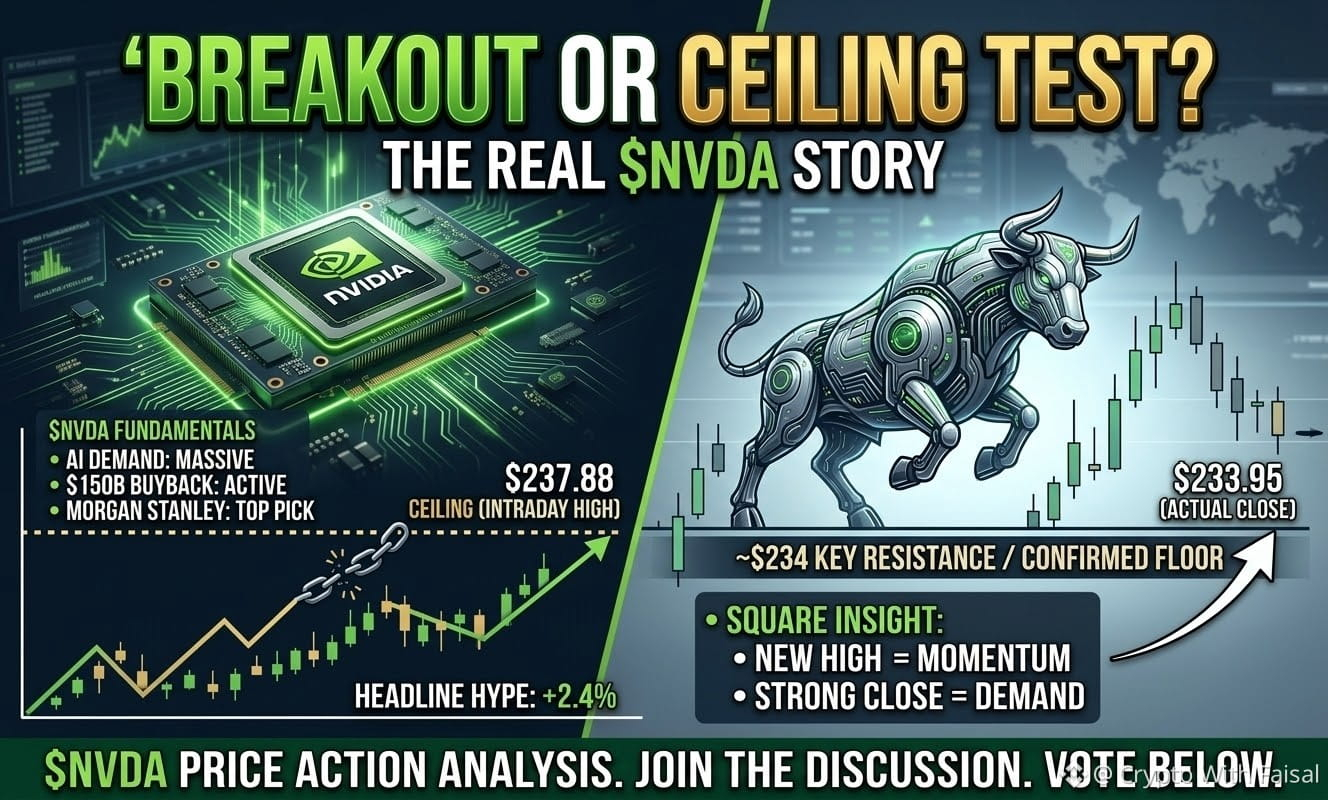
70

·
--
Расталды
#nvidiahitsrecordhighup2.4% The AI chip battle is heating up. The real test isn't just who’s leading in market hype-its who’s making the most money and at what cost.
Let’s break it down.
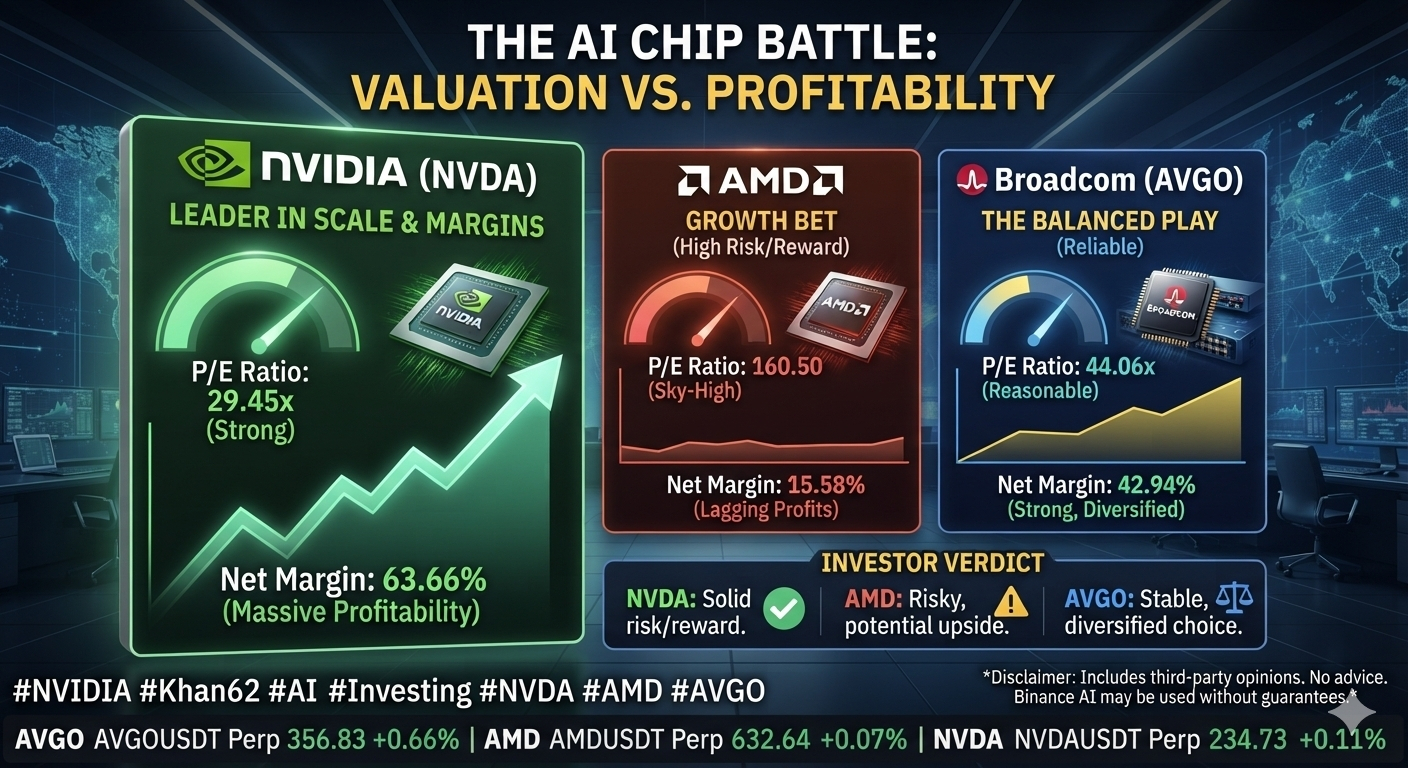
NVIDIA or NVDA stands out with a 29.45x P/E ratio and a net margin that hits 63.66%. That’s strong. It shows the company is not growing fast but also converting sales into profit at a high rate. The scale is massive. The profit margin is even more impressive.
🌞Then there’s AMD. Its P/E is sky-high at 160.50 with a margin of just 15.58%. That’s a gap. The high P/E means investors are betting heavily on growth—maybe even too heavily. The margin tells us that while AMD is growing it’s not pulling in profits like NVIDIA's
🌞Broadcom, AVGO sits in the middle. It has a 44.06x P/E and a net margin of 42.94%. That’s better than AMD’s margin and the P/E is reasonable compared to AMD’s number. Broadcom’s strength? It’s building custom AI chips. Has a big edge in networking—key parts of the AI infrastructure.
🌞 So what does this mean for investors?
NVDA has the combination of scale and profitability right now. It’s the leader in AI chips. It’s making strong margins. That makes it a solid bet for risk- traders.
AMD is risky. High P/E, margins—this stock is all about future potential. If AMD delivers on its roadmap it could outperform.. If not the stock could drop fast.
AVGO offers a balance. It’s not the flashiest. It’s reliable. The margin is strong. The business is diversified. It might not be the story but it’s a stable play in the AI space.
For traders who care about valuation and earnings not market cap NVDA feels like the best risk/reward today.
That doesn’t mean AMD or AVGO are bad. They all have their place. The key is knowing what you’re buying into.
So, which AI stock wins? It depends on your risk tolerance.
#NVIDIA #Khan62 #AI #Investing $NVDA $AMD $AVGO
{future}(AVGOUSDT)
{future}(AMDUSDT)
{future}(NVDAUSDT)
#nvidiahitsrecordhighup2.4% The AI chip battle is heating up. The real test isn't just who’s leading in market hype-its who’s making the most money and at what cost.
Let’s break it down.
NVIDIA or NVDA stands out with a 29.45x P/E ratio and a net margin that hits 63.66%. That’s strong. It shows the company is not growing fast but also converting sales into profit at a high rate. The scale is massive. The profit margin is even more impressive.
🌞Then there’s AMD. Its P/E is sky-high at 160.50 with a margin of just 15.58%. That’s a gap. The high P/E means investors are betting heavily on growth—maybe even too heavily. The margin tells us that while AMD is growing it’s not pulling in profits like NVIDIA's
🌞Broadcom, AVGO sits in the middle. It has a 44.06x P/E and a net margin of 42.94%. That’s better than AMD’s margin and the P/E is reasonable compared to AMD’s number. Broadcom’s strength? It’s building custom AI chips. Has a big edge in networking—key parts of the AI infrastructure.
🌞 So what does this mean for investors?
NVDA has the combination of scale and profitability right now. It’s the leader in AI chips. It’s making strong margins. That makes it a solid bet for risk- traders.
AMD is risky. High P/E, margins—this stock is all about future potential. If AMD delivers on its roadmap it could outperform.. If not the stock could drop fast.
AVGO offers a balance. It’s not the flashiest. It’s reliable. The margin is strong. The business is diversified. It might not be the story but it’s a stable play in the AI space.
For traders who care about valuation and earnings not market cap NVDA feels like the best risk/reward today.
That doesn’t mean AMD or AVGO are bad. They all have their place. The key is knowing what you’re buying into.
So, which AI stock wins? It depends on your risk tolerance.
#NVIDIA #Khan62 #AI #Investing $NVDA $AMD $AVGO
Let’s break it down.
NVIDIA or NVDA stands out with a 29.45x P/E ratio and a net margin that hits 63.66%. That’s strong. It shows the company is not growing fast but also converting sales into profit at a high rate. The scale is massive. The profit margin is even more impressive.
🌞Then there’s AMD. Its P/E is sky-high at 160.50 with a margin of just 15.58%. That’s a gap. The high P/E means investors are betting heavily on growth—maybe even too heavily. The margin tells us that while AMD is growing it’s not pulling in profits like NVIDIA's
🌞Broadcom, AVGO sits in the middle. It has a 44.06x P/E and a net margin of 42.94%. That’s better than AMD’s margin and the P/E is reasonable compared to AMD’s number. Broadcom’s strength? It’s building custom AI chips. Has a big edge in networking—key parts of the AI infrastructure.
🌞 So what does this mean for investors?
NVDA has the combination of scale and profitability right now. It’s the leader in AI chips. It’s making strong margins. That makes it a solid bet for risk- traders.
AMD is risky. High P/E, margins—this stock is all about future potential. If AMD delivers on its roadmap it could outperform.. If not the stock could drop fast.
AVGO offers a balance. It’s not the flashiest. It’s reliable. The margin is strong. The business is diversified. It might not be the story but it’s a stable play in the AI space.
For traders who care about valuation and earnings not market cap NVDA feels like the best risk/reward today.
That doesn’t mean AMD or AVGO are bad. They all have their place. The key is knowing what you’re buying into.
So, which AI stock wins? It depends on your risk tolerance.
#NVIDIA #Khan62 #AI #Investing $NVDA $AMD $AVGO
138

Мақала
Nvidia Hits a New Record — But Is This a Real Breakout?Nvidia Just Hit Another Record — But There’s a Catch 👀
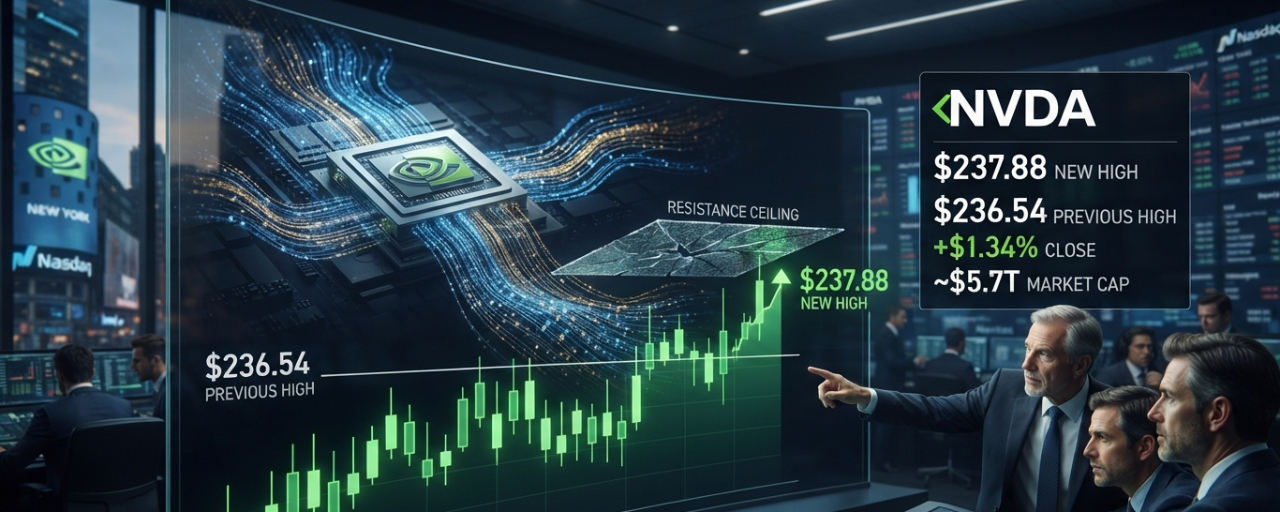
Nvidia ($NVDA) printed a fresh intraday high of $237.88, pushing its market cap toward the massive $5.7T area.
At first glance, that sounds like a major breakout.
But the actual move was much smaller than the headline makes it look.
The previous intraday high was around $236.54, meaning the new record was only about 0.6% higher. NVDA ultimately closed near $233.95, up roughly 1.34% on the session.
So the bigger question isn't simply whether Nvidia made a new high.
It's whether buyers can actually hold the breakout area.
There are still plenty of catalysts supporting the stock. AI demand remains strong, Nvidia announced a new $150B buyback, and Morgan Stanley reinstated NVDA as a top pick. Softer jobs data also helped improve expectations around Fed policy, giving tech stocks another tailwind.
But a new intraday high and a confirmed breakout aren't the same thing.
For me, the $234 area becomes important to watch. Holding above it would show stronger acceptance, while slipping back below could mean the market was simply testing the previous ceiling.
New highs show momentum. Strong closes show conviction.
$NVDAB
{spot}(NVDABUSDT)
#Nvidia #AI #StockMarket
Nvidia Hits a New Record — But Is This a Real Breakout?
Nvidia Just Hit Another Record — But There’s a Catch 👀
Nvidia ($NVDA) printed a fresh intraday high of $237.88, pushing its market cap toward the massive $5.7T area.
At first glance, that sounds like a major breakout.
But the actual move was much smaller than the headline makes it look.
The previous intraday high was around $236.54, meaning the new record was only about 0.6% higher. NVDA ultimately closed near $233.95, up roughly 1.34% on the session.
So the bigger question isn't simply whether Nvidia made a new high.
It's whether buyers can actually hold the breakout area.
There are still plenty of catalysts supporting the stock. AI demand remains strong, Nvidia announced a new $150B buyback, and Morgan Stanley reinstated NVDA as a top pick. Softer jobs data also helped improve expectations around Fed policy, giving tech stocks another tailwind.
But a new intraday high and a confirmed breakout aren't the same thing.
For me, the $234 area becomes important to watch. Holding above it would show stronger acceptance, while slipping back below could mean the market was simply testing the previous ceiling.
New highs show momentum. Strong closes show conviction.
$NVDAB
#Nvidia #AI #StockMarket
Nvidia ($NVDA) printed a fresh intraday high of $237.88, pushing its market cap toward the massive $5.7T area.
At first glance, that sounds like a major breakout.
But the actual move was much smaller than the headline makes it look.
The previous intraday high was around $236.54, meaning the new record was only about 0.6% higher. NVDA ultimately closed near $233.95, up roughly 1.34% on the session.
So the bigger question isn't simply whether Nvidia made a new high.
It's whether buyers can actually hold the breakout area.
There are still plenty of catalysts supporting the stock. AI demand remains strong, Nvidia announced a new $150B buyback, and Morgan Stanley reinstated NVDA as a top pick. Softer jobs data also helped improve expectations around Fed policy, giving tech stocks another tailwind.
But a new intraday high and a confirmed breakout aren't the same thing.
For me, the $234 area becomes important to watch. Holding above it would show stronger acceptance, while slipping back below could mean the market was simply testing the previous ceiling.
New highs show momentum. Strong closes show conviction.
$NVDAB
#Nvidia #AI #StockMarket
36

·
--
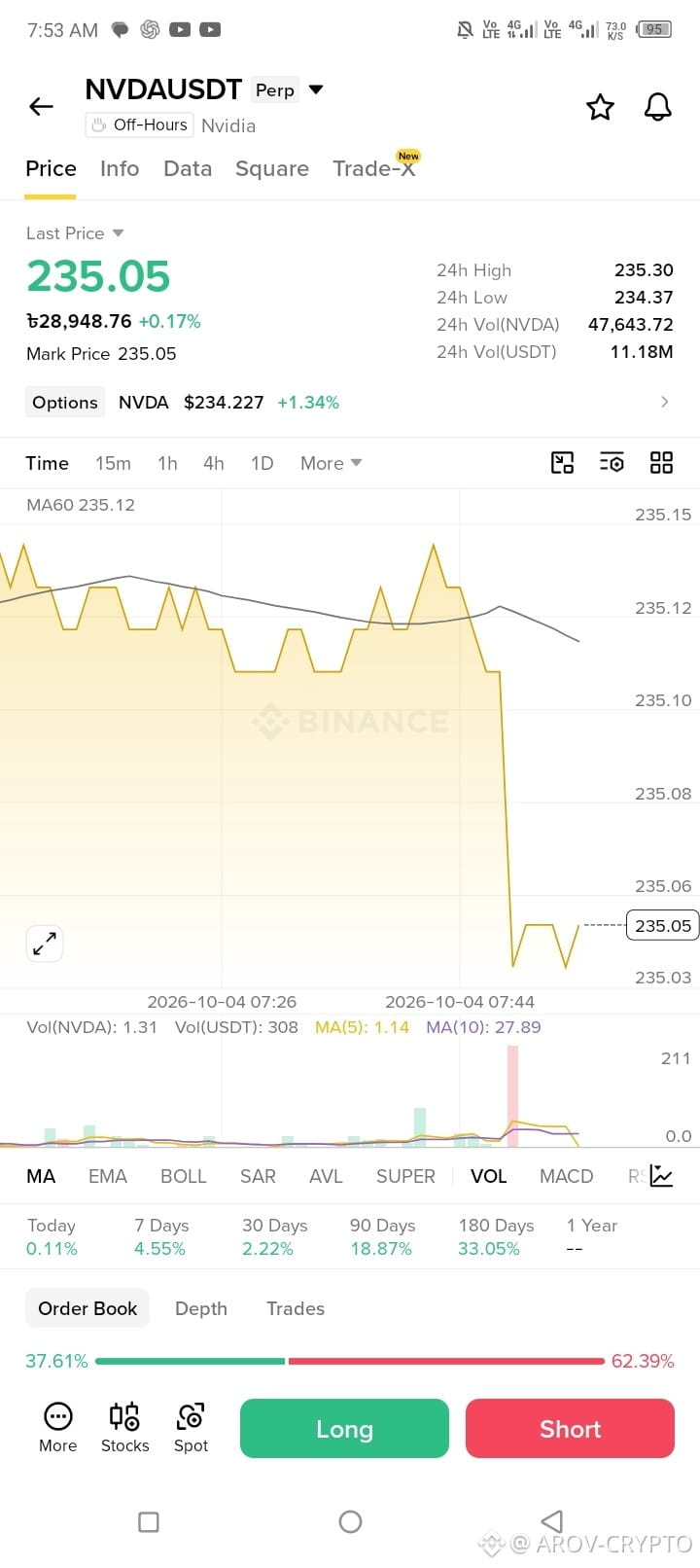
⚡ NVDA/USDT — The battle is heating up! 🔥
Price is sitting around 235.05, but the order book is showing 62.39% on the sell side. 👀
Is NVDA about to break lower… or are buyers preparing a comeback? 📉📈
LONG 🟢 or SHORT 🔴?
Drop your prediction before the next move! 👇
$NVDA.US $NVDA.US
{stock_us}(NVDA.US)
#NVDAUSDT #BinanceSquare #CryptoTrading #Trading #NVIDIA
⚡ NVDA/USDT — The battle is heating up! 🔥
Price is sitting around 235.05, but the order book is showing 62.39% on the sell side. 👀
Is NVDA about to break lower… or are buyers preparing a comeback? 📉📈
LONG 🟢 or SHORT 🔴?
Drop your prediction before the next move! 👇
$NVDA.US $NVDA.US
#NVDAUSDT #BinanceSquare #CryptoTrading #Trading #NVIDIA
Price is sitting around 235.05, but the order book is showing 62.39% on the sell side. 👀
Is NVDA about to break lower… or are buyers preparing a comeback? 📉📈
LONG 🟢 or SHORT 🔴?
Drop your prediction before the next move! 👇
$NVDA.US $NVDA.US
#NVDAUSDT #BinanceSquare #CryptoTrading #Trading #NVIDIA
NVDAUS+1,45%
69

NVIDIA $NVDA HITS NEW RECORD HIGH
NVIDIA is now approaching a massive $5.7T market cap. 🤯
💰 $10,000 invested 10 years ago → roughly $1.58M today.
AI continues to drive NVIDIA’s incredible growth. 🚀
🔥 Can NVDA become the first $6T company?
#Nvidia #Ai #CryptoPatience
NVIDIA $NVDA HITS NEW RECORD HIGH
NVIDIA is now approaching a massive $5.7T market cap. 🤯
💰 $10,000 invested 10 years ago → roughly $1.58M today.
AI continues to drive NVIDIA’s incredible growth. 🚀
🔥 Can NVDA become the first $6T company?
#Nvidia #Ai #CryptoPatience
NVIDIA is now approaching a massive $5.7T market cap. 🤯
💰 $10,000 invested 10 years ago → roughly $1.58M today.
AI continues to drive NVIDIA’s incredible growth. 🚀
🔥 Can NVDA become the first $6T company?
#Nvidia #Ai #CryptoPatience
240

💸 Nvidia vale más que todo el mercado de criptomonedas. Dos veces más.
Con 5.7 billones de dólares, Nvidia acaba de establecer un récord histórico para sí misma y para cualquier empresa. Bitcoin y todo el mercado de criptomonedas juntos ascienden a poco más de 3 billones de dólares. Un solo fabricante de chips supera a todo.
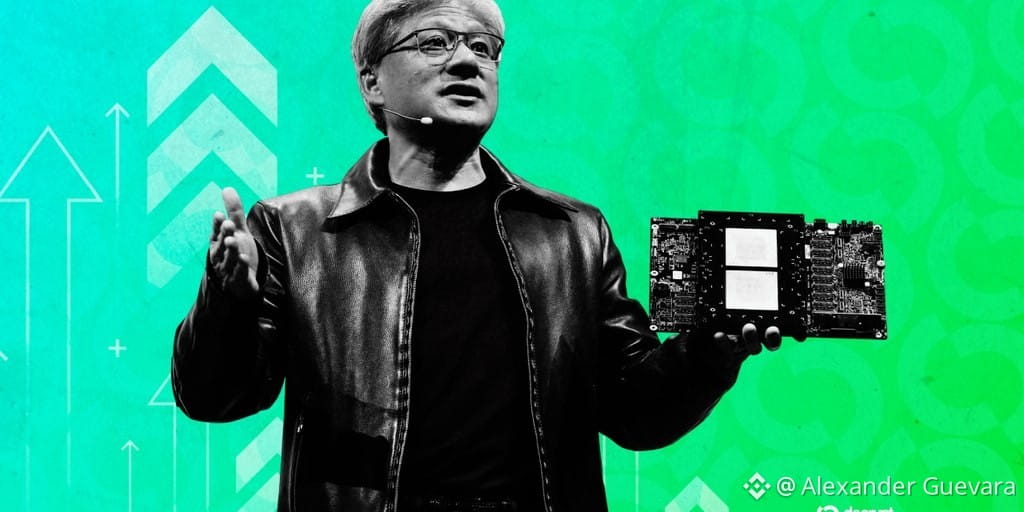
Las acciones alcanzaron los 237,88 dólares el viernes, su primer récord desde mayo. Tres cosas convergieron: una adición de 150 mil millones de dólares para la recuperación del mercado (un total de 235 mil millones de dólares hasta 2028, el mayor en la historia), los racks de servidores basados en Supermicro Vera Rubin que contienen cada uno 72 GPU y un informe sobre empleos débiles que enfriaron las apuestas por aumentos de tasas de Fed. Esto perjudica más a los rivales de Nvidia que a Nvidia misma.
Último trimestre: 96.200 millones de dólares en ingresos, un aumento del 106% interanual. Orientación para el trimestre actual: 108 mil millones de dólares. Como lo expresó Jensen Huang: "Ahora, el cálculo es un ingreso"
Descifrar
#BTC #NVIDIA #NVIDIAConference #Nvidia's #bitcoin $BTC $NVDA $NVDAB
💸 Nvidia vale más que todo el mercado de criptomonedas. Dos veces más.
Con 5.7 billones de dólares, Nvidia acaba de establecer un récord histórico para sí misma y para cualquier empresa. Bitcoin y todo el mercado de criptomonedas juntos ascienden a poco más de 3 billones de dólares. Un solo fabricante de chips supera a todo.
Las acciones alcanzaron los 237,88 dólares el viernes, su primer récord desde mayo. Tres cosas convergieron: una adición de 150 mil millones de dólares para la recuperación del mercado (un total de 235 mil millones de dólares hasta 2028, el mayor en la historia), los racks de servidores basados en Supermicro Vera Rubin que contienen cada uno 72 GPU y un informe sobre empleos débiles que enfriaron las apuestas por aumentos de tasas de Fed. Esto perjudica más a los rivales de Nvidia que a Nvidia misma.
Último trimestre: 96.200 millones de dólares en ingresos, un aumento del 106% interanual. Orientación para el trimestre actual: 108 mil millones de dólares. Como lo expresó Jensen Huang: "Ahora, el cálculo es un ingreso"
Descifrar
#BTC #NVIDIA #NVIDIAConference #Nvidia's #bitcoin $BTC $NVDA $NVDAB
Con 5.7 billones de dólares, Nvidia acaba de establecer un récord histórico para sí misma y para cualquier empresa. Bitcoin y todo el mercado de criptomonedas juntos ascienden a poco más de 3 billones de dólares. Un solo fabricante de chips supera a todo.
Las acciones alcanzaron los 237,88 dólares el viernes, su primer récord desde mayo. Tres cosas convergieron: una adición de 150 mil millones de dólares para la recuperación del mercado (un total de 235 mil millones de dólares hasta 2028, el mayor en la historia), los racks de servidores basados en Supermicro Vera Rubin que contienen cada uno 72 GPU y un informe sobre empleos débiles que enfriaron las apuestas por aumentos de tasas de Fed. Esto perjudica más a los rivales de Nvidia que a Nvidia misma.
Último trimestre: 96.200 millones de dólares en ingresos, un aumento del 106% interanual. Orientación para el trimestre actual: 108 mil millones de dólares. Como lo expresó Jensen Huang: "Ahora, el cálculo es un ingreso"
Descifrar
#BTC #NVIDIA #NVIDIAConference #Nvidia's #bitcoin $BTC $NVDA $NVDAB
48

🚨 NVIDIA's $1B STOCK CLAIM! 🚨
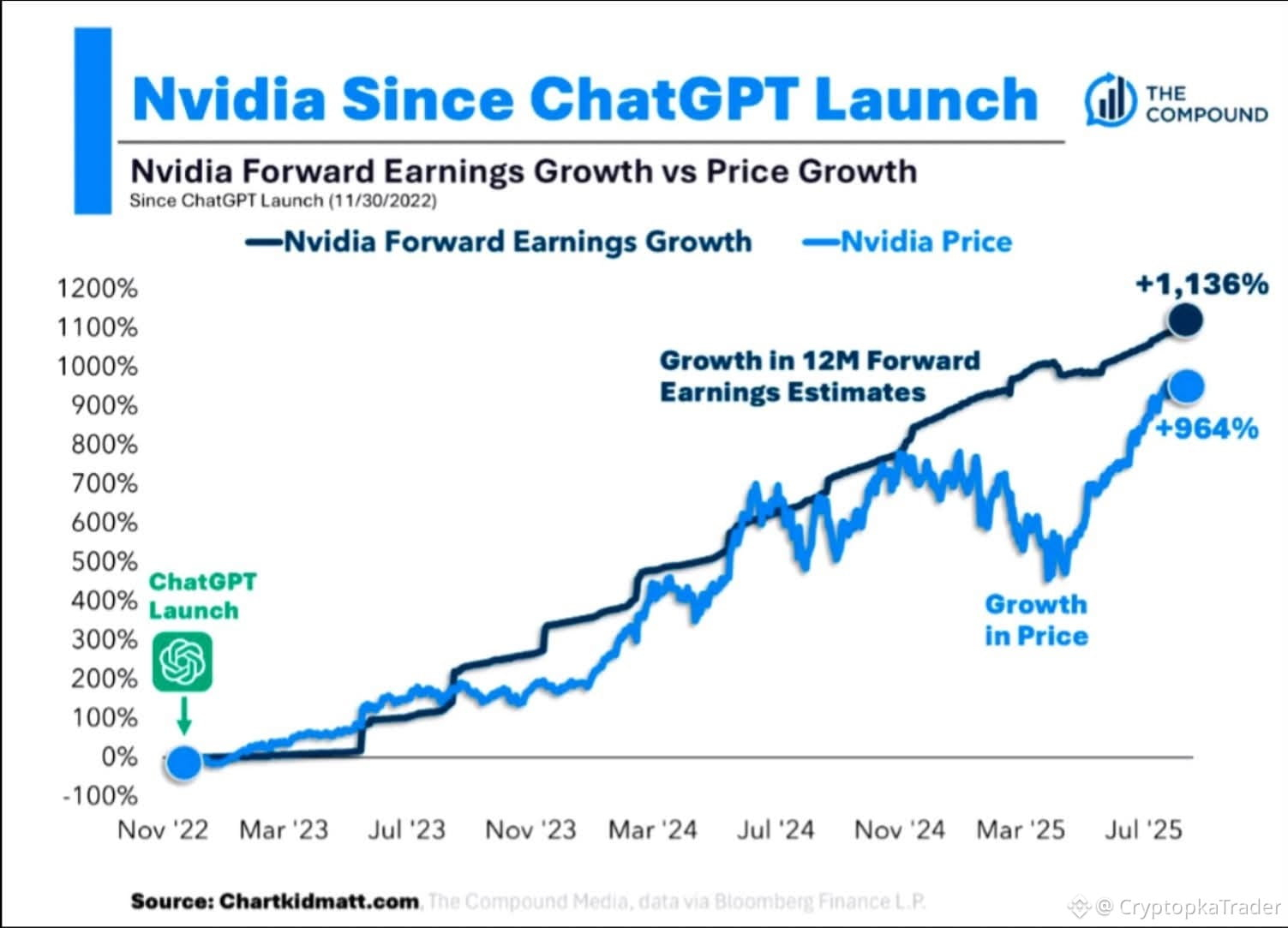
Former NVIDIA advisor Eric Gullichsen claims a 1993 vesting error left 9,375 options missing.
After stock splits, that could equal ~4.5M shares worth ~$1.01B at Sept. 25 prices. 💰
But NVIDIA reportedly says the claim is time-barred — and no court ruling has confirmed a $1B debt.
Wild 30-year-old stock story! 👀
$NVDA #Nvidia #AI #Stocks #Breakingnews
🚨 NVIDIA's $1B STOCK CLAIM! 🚨
Former NVIDIA advisor Eric Gullichsen claims a 1993 vesting error left 9,375 options missing.
After stock splits, that could equal ~4.5M shares worth ~$1.01B at Sept. 25 prices. 💰
But NVIDIA reportedly says the claim is time-barred — and no court ruling has confirmed a $1B debt.
Wild 30-year-old stock story! 👀
$NVDA #Nvidia #AI #Stocks #Breakingnews
Former NVIDIA advisor Eric Gullichsen claims a 1993 vesting error left 9,375 options missing.
After stock splits, that could equal ~4.5M shares worth ~$1.01B at Sept. 25 prices. 💰
But NVIDIA reportedly says the claim is time-barred — and no court ruling has confirmed a $1B debt.
Wild 30-year-old stock story! 👀
$NVDA #Nvidia #AI #Stocks #Breakingnews
2
105

$NVDA is in a compression zone 👀
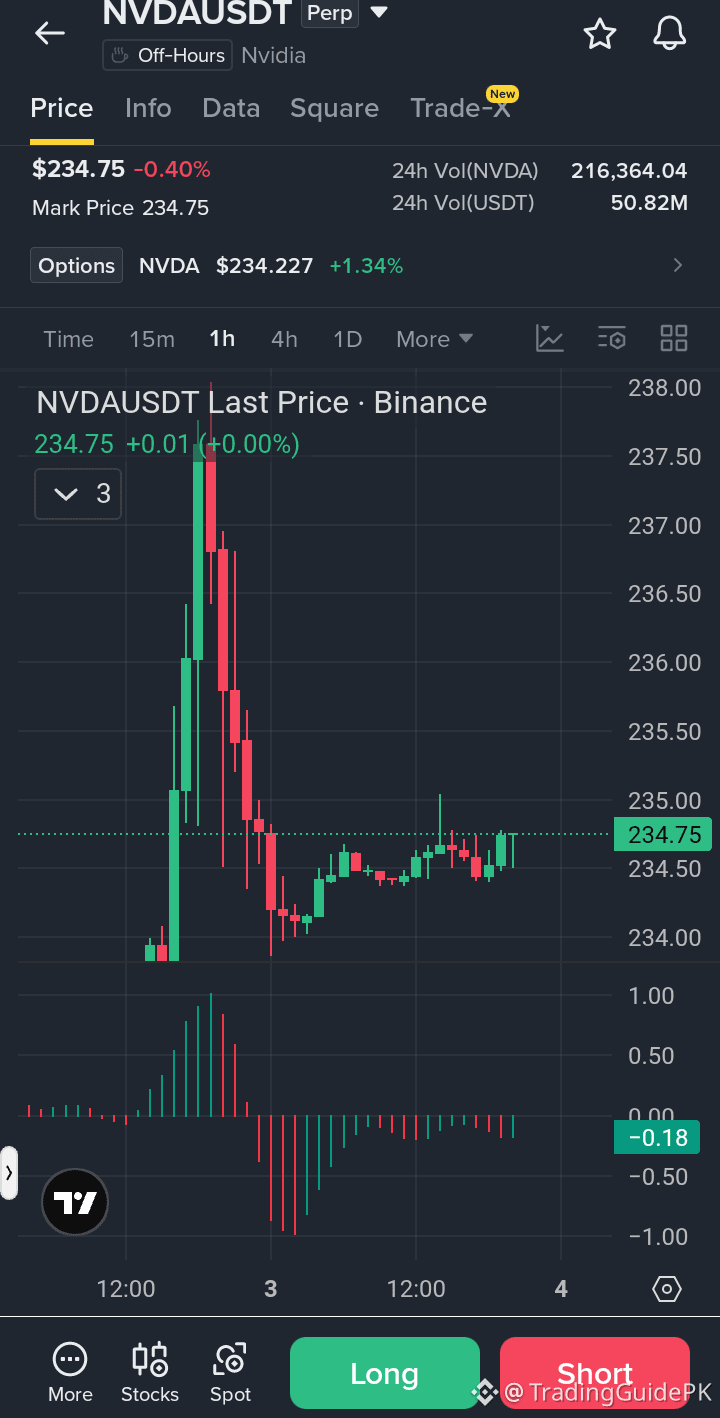
The chart had a sharp push toward $237.8, followed by a strong rejection. Since then, price has been slowly rebuilding around $234.4–$234.8. Selling pressure has cooled, but buyers still need to prove themselves.
The levels I’m watching: 📌 $235.00 → breakout trigger
📌 $236.0–$237.0 → next resistance area
📌 $234.0 → key short-term support
If NVDA reclaims $235 with volume, the chart could start looking interesting again. But if $234 breaks, I’d expect another test of lower support.
Right now, it feels like the calm before the next move. 👀📊
#NVDA #Nvidia #Crypto #BinanceSquare
$NVDA is in a compression zone 👀
The chart had a sharp push toward $237.8, followed by a strong rejection. Since then, price has been slowly rebuilding around $234.4–$234.8. Selling pressure has cooled, but buyers still need to prove themselves.
The levels I’m watching: 📌 $235.00 → breakout trigger
📌 $236.0–$237.0 → next resistance area
📌 $234.0 → key short-term support
If NVDA reclaims $235 with volume, the chart could start looking interesting again. But if $234 breaks, I’d expect another test of lower support.
Right now, it feels like the calm before the next move. 👀📊
#NVDA #Nvidia #Crypto #BinanceSquare
The chart had a sharp push toward $237.8, followed by a strong rejection. Since then, price has been slowly rebuilding around $234.4–$234.8. Selling pressure has cooled, but buyers still need to prove themselves.
The levels I’m watching: 📌 $235.00 → breakout trigger
📌 $236.0–$237.0 → next resistance area
📌 $234.0 → key short-term support
If NVDA reclaims $235 with volume, the chart could start looking interesting again. But if $234 breaks, I’d expect another test of lower support.
Right now, it feels like the calm before the next move. 👀📊
#NVDA #Nvidia #Crypto #BinanceSquare
54

·
--
#NVIDIA #NVDA #AI #Stocks #Investing #BinanceSquare🚨 NVIDIA ($NVDA) HITS A RECORD HIGH! 📈
🤖 The AI boom continues to put NVIDIA in the spotlight, with its market cap reportedly reaching $5.7 trillion.
💰 Imagine investing $10,000 in NVIDIA 10 years ago — that investment would be worth approximately $1.58 million today!
🔥 From a small investment to a life-changing fortune — NVIDIA’s journey highlights the massive potential of long-term investing.
📊 Would you have held NVDA for 10 years?
👇 Share your thoughts in the comments!
#NVIDIA #NVDA #AI #Stocks #Investing #BinanceSquare
#NVIDIA #NVDA #AI #Stocks #Investing #BinanceSquare🚨 NVIDIA ($NVDA) HITS A RECORD HIGH! 📈
🤖 The AI boom continues to put NVIDIA in the spotlight, with its market cap reportedly reaching $5.7 trillion.
💰 Imagine investing $10,000 in NVIDIA 10 years ago — that investment would be worth approximately $1.58 million today!
🔥 From a small investment to a life-changing fortune — NVIDIA’s journey highlights the massive potential of long-term investing.
📊 Would you have held NVDA for 10 years?
👇 Share your thoughts in the comments!
#NVIDIA #NVDA #AI #Stocks #Investing #BinanceSquare
🤖 The AI boom continues to put NVIDIA in the spotlight, with its market cap reportedly reaching $5.7 trillion.
💰 Imagine investing $10,000 in NVIDIA 10 years ago — that investment would be worth approximately $1.58 million today!
🔥 From a small investment to a life-changing fortune — NVIDIA’s journey highlights the massive potential of long-term investing.
📊 Would you have held NVDA for 10 years?
👇 Share your thoughts in the comments!
#NVIDIA #NVDA #AI #Stocks #Investing #BinanceSquare
140



·
--
🚨 NVIDIA YENƏ TARİX YAZIR! 🔥
$NVDA bu gün 2.4%+ yüksələrək yeni rekord səviyyəyə çatdı! 📈
Səhmlər intraday olaraq təxminən $237.5 ətrafını gördü və şirkətin bazar dəyəri $5.7 trilyona yaxınlaşdı.
🤖 Əsas katalizatorlar: • AI infrastruktura tələbin davam etməsi
• NVIDIA-nın əlavə $150 milyardlıq buyback proqramı
• Çip sektorunda güclü momentum
📌 Ən maraqlısı: NVDA artıq əvvəlki ATH-ni yenilədi.
Səncə növbəti dayanacaq $250, yoxsa əvvəlcə geri çəkilmə gələcək? 👇
#NVDA #Nvidia #TradFi #FedOctoberRateHikeOddsFallTo17%
🚨 NVIDIA YENƏ TARİX YAZIR! 🔥
$NVDA bu gün 2.4%+ yüksələrək yeni rekord səviyyəyə çatdı! 📈
Səhmlər intraday olaraq təxminən $237.5 ətrafını gördü və şirkətin bazar dəyəri $5.7 trilyona yaxınlaşdı.
🤖 Əsas katalizatorlar: • AI infrastruktura tələbin davam etməsi
• NVIDIA-nın əlavə $150 milyardlıq buyback proqramı
• Çip sektorunda güclü momentum
📌 Ən maraqlısı: NVDA artıq əvvəlki ATH-ni yenilədi.
Səncə növbəti dayanacaq $250, yoxsa əvvəlcə geri çəkilmə gələcək? 👇
#NVDA #Nvidia #TradFi #FedOctoberRateHikeOddsFallTo17%
$NVDA bu gün 2.4%+ yüksələrək yeni rekord səviyyəyə çatdı! 📈
Səhmlər intraday olaraq təxminən $237.5 ətrafını gördü və şirkətin bazar dəyəri $5.7 trilyona yaxınlaşdı.
🤖 Əsas katalizatorlar: • AI infrastruktura tələbin davam etməsi
• NVIDIA-nın əlavə $150 milyardlıq buyback proqramı
• Çip sektorunda güclü momentum
📌 Ən maraqlısı: NVDA artıq əvvəlki ATH-ni yenilədi.
Səncə növbəti dayanacaq $250, yoxsa əvvəlcə geri çəkilmə gələcək? 👇
#NVDA #Nvidia #TradFi #FedOctoberRateHikeOddsFallTo17%
2
199
Көбірек контент көру үшін кіріңіз
Binance Square платформасында әлемдік криптоқоғамдастыққа қосылыңыз
⚡️ Криптовалюта туралы ең соңғы және пайдалы ақпаратты алыңыз.
💬 Әлемдегі ең ірі криптобиржаның сеніміне ие.
👍 Расталған авторлардың нақты пікірлерін табыңыз.
Электрондық пошта/телефон нөмірі
Трендтегі тақырыптар
1
#BNBSurpasses$790
10,375 рет көрілді
84 адам талқылап жатыр
2
#ZamaRises15.99%ToIntradayHigh$0.09
4,858 рет көрілді
72 адам талқылап жатыр
3
#BitcoinSpotETFsDraw$6.34BInflowsInQ3
3,609 рет көрілді
60 адам талқылап жатыр
4
#EthereumValidatorExitQueueJumps392%
56,284 рет көрілді
688 адам талқылап жатыр
5
#IMFApprovesElSalvador$138MWithBitcoinWaiver
7,467 рет көрілді
40 адам талқылап жатыр
6
#SECHaltsCryptoETFReviewsAmidFundingLapse
209,207 рет көрілді
1,582 адам талқылап жатыр
7
#ZcashETFPostsFirstWeeklyOutflow$93.6M
88,465 рет көрілді
245 адам талқылап жатыр
8
#GreekPoliceBustCryptoScamRingArrest17
335,904 рет көрілді
2,249 адам талқылап жатыр
9
#BitcoinRejectedAt$87K
205,301 рет көрілді
304 адам талқылап жатыр
10
#FedOctoberRateHikeOddsFallTo17%
333,827 рет көрілді
2,370 адам талқылап жатыр