
#hyperliquid
hyperliquid
6.7M рет көрілді
18,600 адам талқылап жатыр
Қызу саудада
Ең соңғы

·
--
Расталды
🔥 $HYPE : $3.37 BILLION IN BUYBACKS — BUT MARKET PRESSURE REMAINS!
Hyperliquid is showing strong protocol activity despite recent volatility:
- $3.37B burned: Reported cumulative HYPE buyback-and-burn activity.
- $75.72B volume: Perpetual trading volume over the latest reported week.
- USDC reserves down: Reserves on Hyperliquid fell 7.76% to $6.02B.
- Fresh development: Elysium launched its public mainnet on November 9, using HYPE for transaction fees.
Can protocol growth overcome the current market pressure?
$HYPE
{future}(HYPEUSDT)
.
.
.
#hype #Hyperliquid #crypto
Not financial advice. DYOR.
🔥 $HYPE : $3.37 BILLION IN BUYBACKS — BUT MARKET PRESSURE REMAINS!
Hyperliquid is showing strong protocol activity despite recent volatility:
- $3.37B burned: Reported cumulative HYPE buyback-and-burn activity.
- $75.72B volume: Perpetual trading volume over the latest reported week.
- USDC reserves down: Reserves on Hyperliquid fell 7.76% to $6.02B.
- Fresh development: Elysium launched its public mainnet on November 9, using HYPE for transaction fees.
Can protocol growth overcome the current market pressure?
$HYPE
.
.
.
#hype #Hyperliquid #crypto
Not financial advice. DYOR.

3
2.4k


·
--
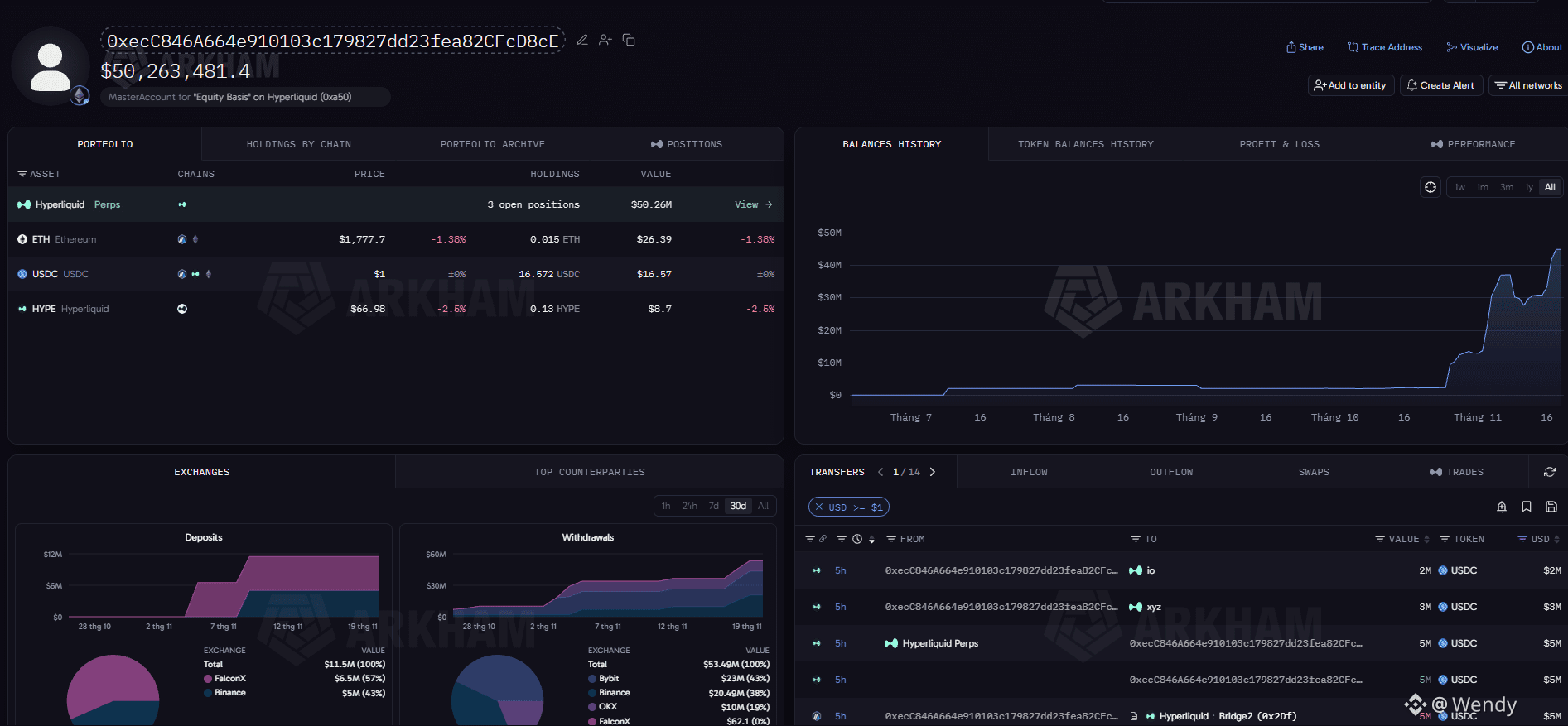
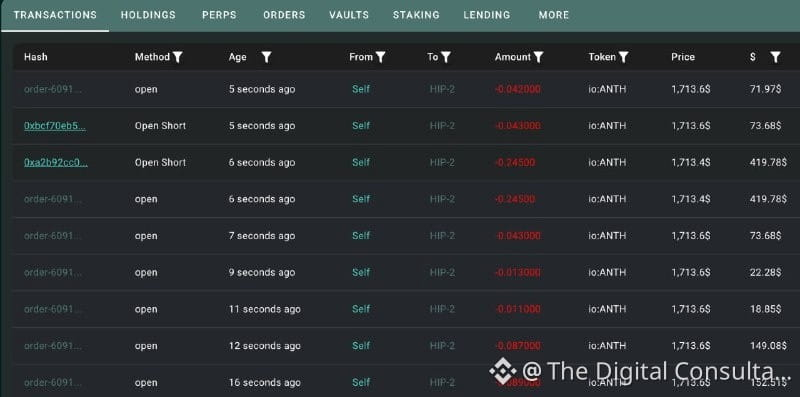
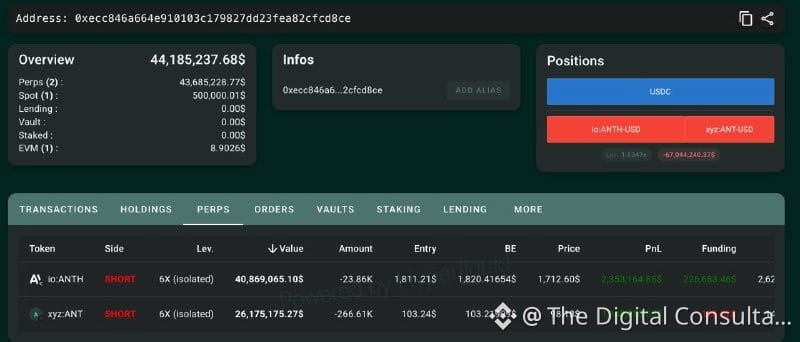
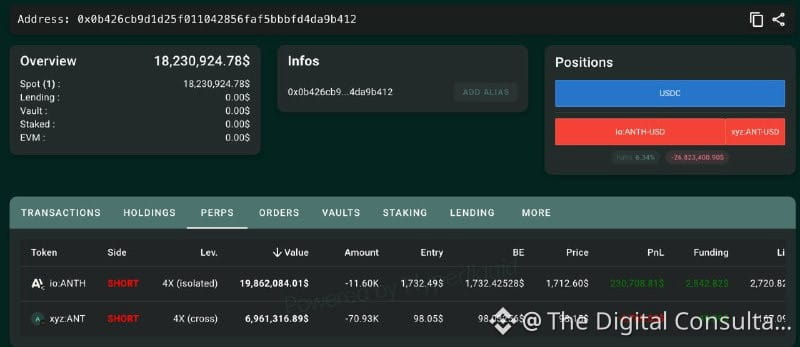
MEGA WHALE HOLDS $96.34M IN HYPERLIQUID SHORTS!
Two wallets suspected to belong to the same whale are betting heavily against $ANTHROPIC and $ANT premarket contracts.
• Total short exposure: $96.34M
• Margin used: $54.93M
• Unrealized profit: $4.05M
• Combined lifetime PnL: $5.75M
Both wallets are currently profitable, with leveraged short positions ranging from 4x to 6x.
The biggest position alone is a $42.65M ANTH short, currently up $2.41M.
Is this whale expecting a major correction in premarket prices? 👀
#Hyperliquid #Onchain
371
·
--
Расталды
🔥 $HYPE : $75.7B WEEKLY VOLUME — BUT BUYBACKS FACE A NEW TEST!
Hyperliquid is showing strong activity alongside some concerns:
- $75.7B volume: Weekly trading volume reportedly rose nearly 16%.
- $3.37B burned: Reported cumulative HYPE burns reached this milestone.
- USDC reserves fell: Holdings dropped 7.8% to $6.02B.
- Buyback question: Lower reserves could reduce one source of funding for HYPE purchases.
- Market activity: Hyperliquid continues expanding beyond crypto-focused markets.
Can Hyperliquid maintain growth while keeping buyback funding strong?
$HYPE
{future}(HYPEUSDT)
.
.
.
#HYPE #Hyperliquid #crypto
Not financial advice. DYOR.
🔥 $HYPE : $75.7B WEEKLY VOLUME — BUT BUYBACKS FACE A NEW TEST!
Hyperliquid is showing strong activity alongside some concerns:
- $75.7B volume: Weekly trading volume reportedly rose nearly 16%.
- $3.37B burned: Reported cumulative HYPE burns reached this milestone.
- USDC reserves fell: Holdings dropped 7.8% to $6.02B.
- Buyback question: Lower reserves could reduce one source of funding for HYPE purchases.
- Market activity: Hyperliquid continues expanding beyond crypto-focused markets.
Can Hyperliquid maintain growth while keeping buyback funding strong?
$HYPE
.
.
.
#HYPE #Hyperliquid #crypto
Not financial advice. DYOR.

1
780

Khởi nghiệp crypto 1,5 tỷ USD đối đầu Hyperliquid theo mô hình Wall Street
- Khởi nghiệp crypto Variational trị giá 1,5 tỷ USD.
- Mục tiêu đối đầu trực tiếp với Hyperliquid trong giao dịch onchain.
- Áp dụng mô hình sàn chứng khoán truyền thống (Wall Street playbook).
- Đầu tư viên đánh giá tương lai onchain giống sàn chứng khoán hơn sàn crypto.
- Nguồn RSS chưa cung cấp chi tiết thêm về sản phẩm, ngày ra mắt hoặc mã token.
#BinanceSquare #CryptoNews #Hyperliquid #Variational
$btc $eth
#vlikevn Titanbot
Nguồn: CoinDesk
113

·
--
Мақала
Hyperliquid (HYPE): Building the Future of Decentralized Trading — What's Coming in 2027?Hyperliquid (HYPE) is becoming one of the most interesting projects in the decentralized finance industry.
Unlike traditional cryptocurrency platforms, Hyperliquid is building a fully on-chain financial ecosystem designed to combine the performance of centralized exchanges with the transparency and self-custody principles of decentralized finance.
Its ecosystem is expanding beyond cryptocurrency trading into real-world assets, institutional markets, prediction markets, and decentralized financial applications.
With the development of HIP-3, HIP-4, and HyperEVM, Hyperliquid is positioning itself as a potential foundation for the next generation of on-chain financial markets.
So, what makes Hyperliquid different, and what could happen next in 2027?
1. Understanding Hyperliquid (HYPE)
Hyperliquid is a decentralized financial ecosystem built around an advanced on-chain trading infrastructure.
Its native token, HYPE, plays an important role in the ecosystem.
HYPE is used for:
Network staking and validator security.Protocol governance.Collateral for permissionless market deployments.Gas fees on HyperEVM.Participation in the broader Hyperliquid ecosystem.
The project is particularly known for its decentralized perpetual futures exchange, where users can trade digital assets without relying on a traditional centralized exchange.
Its infrastructure is designed to provide fast execution, transparent order books, and on-chain settlement.
2. HyperCore: The Engine Behind Hyperliquid
One of the most important components of the ecosystem is HyperCore.
HyperCore is the native execution environment responsible for Hyperliquid's spot and perpetual futures markets.
It processes orders, cancellations, trades, and liquidations directly on-chain.
Unlike many traditional DeFi protocols that depend on external infrastructure for order matching, HyperCore is designed around an integrated on-chain order book.
According to a September 2026 SEC filing:
Hyperliquid had processed more than $5.4 trillion in cumulative perpetual futures trading volume.The network accounted for approximately 40.1% of global on-chain perpetual futures trading volume.It represented approximately 62.5% of on-chain perpetual futures open interest.
These figures demonstrate how significant Hyperliquid has become in the decentralized derivatives market.
3. HyperEVM: Expanding Beyond Trading
Another important component is HyperEVM.
HyperEVM is an Ethereum-compatible smart contract environment that allows developers to build decentralized applications within the Hyperliquid ecosystem.
Its purpose is to connect smart contracts with Hyperliquid's native trading infrastructure.
Potential applications include:
Decentralized lending.Borrowing and collateral management.Stablecoin issuance.Yield strategies.Structured financial products.DeFi applications connected to on-chain trading liquidity.
This development is important because it expands Hyperliquid beyond being a trading platform.
The long-term vision is to create an interconnected financial ecosystem where trading, lending, liquidity, and smart contracts can operate together.
4. HIP-3: Bringing Real-World Assets to Hyperliquid
One of the most significant developments is HIP-3, introduced in October 2025.
HIP-3 allows independent market deployers to create permissionless perpetual futures markets on Hyperliquid.
These markets are not limited to cryptocurrencies.
They can reference:
Stocks.Commodities.Market indices.Other real-world assets.
To deploy a HIP-3 market, participants must bond 500,000 HYPE tokens.
This creates a direct connection between HYPE utility and the expansion of new trading markets.
According to a September 2026 SEC filing, HIP-3 markets had generated more than $548.1 billion in cumulative trading volume since launch.
They also represented approximately 30% of Hyperliquid's trailing 30-day trading volume at the reporting date.
This is a major development because it demonstrates growing demand for on-chain exposure to traditional financial markets.
5. HIP-4: The Expansion Into Prediction and Outcome Markets
Another important development is HIP-4.
HIP-4 introduces fully collateralized, expiry-based event contracts that settle according to predefined outcomes.
These contracts can support applications such as:
Prediction markets.Event-based trading.Binary outcome contracts.Options-like financial products.Other structured financial instruments.
HIP-4 initially launched on Hyperliquid Mainnet in May 2026.
Following testing, a network upgrade on August 29, 2026 enabled permissionless third-party market deployment.
The system also introduces a requirement for market deployers to bond HYPE tokens.
This creates another potential source of utility for HYPE as the ecosystem expands into new financial products.
6. Hyperliquid's Institutional Expansion
Institutional participation is becoming an increasingly important part of Hyperliquid's story.
One notable development came on September 16, 2026, when Payward, the parent company of Kraken, announced plans to introduce perpetual futures markets for eligible US customers using Hyperliquid infrastructure.
The proposed structure involves regulated market and clearing infrastructure through Bitnomial.
On October 26, Hyperliquid announced that Payward intends to become its first CFTC-regulated HIP-3 market deployer.
Another major development occurred on October 29, 2026, when Intercontinental Exchange (ICE), the parent company of the New York Stock Exchange, announced a strategic agreement involving trade[XYZ].
The initiative aims to introduce regulated markets using Hyperliquid's infrastructure.
These developments could represent an important bridge between decentralized financial technology and traditional financial institutions.
However, the proposed US market integrations remain subject to regulatory approvals and implementation requirements.
7. HYPE Tokenomics: Understanding Its Economic Model
HYPE has a maximum supply of 1 billion tokens.
One of its most important mechanisms is the Assistance Fund.
The fund receives 99% of protocol fees and uses those funds to acquire HYPE from the open market.
Some acquired tokens can subsequently be permanently removed from circulation through burning.
According to an August 2026 SEC filing, approximately 46.7 million HYPE tokens had been acquired and permanently removed from circulation through this mechanism as of August 23, 2026.
HYPE also has utility through staking, market deployment collateral, governance, and HyperEVM gas payments.
This creates an economic connection between protocol activity and the HYPE token.
However, token purchases and burns do not guarantee price appreciation. Market demand, supply dynamics, liquidity, and investor sentiment remain important.
8. What Could Hyperliquid Develop in 2027?
Looking toward 2027, several important development areas could shape the future of Hyperliquid.
A. Expansion of HIP-3 Markets
More independent market deployers could introduce additional perpetual futures markets covering equities, commodities, indices, and other assets.
B. Growth of HIP-4
The ecosystem could expand event-based contracts and prediction markets, creating additional financial applications.
C. HyperEVM Development
Further improvements to smart contract infrastructure could attract more developers and DeFi applications.
D. Institutional Market Integration
Regulated financial infrastructure could create new opportunities for institutions to access on-chain trading.
E. Validator and Network Decentralization
Continued infrastructure development and broader validator participation could strengthen the network's resilience.
These are development opportunities rather than guaranteed future milestones.
9. Challenges Hyperliquid Must Overcome
Despite its rapid growth, Hyperliquid faces several challenges.
Regulatory Uncertainty: Perpetual futures and event-based financial products face different regulatory requirements across jurisdictions.
Competition: Other decentralized exchanges and derivatives platforms are competing for liquidity and users.
Market Risk: Leveraged trading creates substantial liquidation and volatility risks.
Network Security: The ecosystem must continue strengthening validator infrastructure and smart contract security.
Liquidity Sustainability: High trading volume does not always translate into sustainable long-term user adoption.
How Hyperliquid addresses these challenges will be important for its future.
Final Thoughts: Is Hyperliquid Building the Next Generation of Financial Markets?
Hyperliquid is attempting to redefine how financial markets operate on blockchain infrastructure.
Its development goes beyond cryptocurrency trading, with HIP-3 introducing real-world asset markets, HIP-4 expanding event-based trading, and HyperEVM creating opportunities for a broader DeFi ecosystem.
Institutional interest from companies such as Kraken's parent Payward and ICE also highlights the potential for traditional financial markets to interact with decentralized infrastructure.
Looking toward 2027, the most important developments to watch will be institutional integration, new market creation, HyperEVM adoption, and the continued evolution of the HYPE token economy.
If Hyperliquid successfully delivers on these ambitions, it could become one of the most important platforms in the future of on-chain finance.
However, long-term success will depend on liquidity, security, regulatory compliance, and sustainable adoption.
HYPE — Powering the Future of On-Chain Finance.
AMCx | Exploring the Future of Crypto.
#Hyperliquid #HYPE #DeFi #Blockchain #Crypto #HIP3 #HIP4 #HyperEVM #RWA #BinanceSquare #AMCx $HYPE
{spot}(HYPEUSDT)
Hyperliquid (HYPE): Building the Future of Decentralized Trading — What's Coming in 2027?
Hyperliquid (HYPE) is becoming one of the most interesting projects in the decentralized finance industry.
Unlike traditional cryptocurrency platforms, Hyperliquid is building a fully on-chain financial ecosystem designed to combine the performance of centralized exchanges with the transparency and self-custody principles of decentralized finance.
Its ecosystem is expanding beyond cryptocurrency trading into real-world assets, institutional markets, prediction markets, and decentralized financial applications.
With the development of HIP-3, HIP-4, and HyperEVM, Hyperliquid is positioning itself as a potential foundation for the next generation of on-chain financial markets.
So, what makes Hyperliquid different, and what could happen next in 2027?
1. Understanding Hyperliquid (HYPE)
Hyperliquid is a decentralized financial ecosystem built around an advanced on-chain trading infrastructure.
Its native token, HYPE, plays an important role in the ecosystem.
HYPE is used for:
Network staking and validator security.Protocol governance.Collateral for permissionless market deployments.Gas fees on HyperEVM.Participation in the broader Hyperliquid ecosystem.
The project is particularly known for its decentralized perpetual futures exchange, where users can trade digital assets without relying on a traditional centralized exchange.
Its infrastructure is designed to provide fast execution, transparent order books, and on-chain settlement.
2. HyperCore: The Engine Behind Hyperliquid
One of the most important components of the ecosystem is HyperCore.
HyperCore is the native execution environment responsible for Hyperliquid's spot and perpetual futures markets.
It processes orders, cancellations, trades, and liquidations directly on-chain.
Unlike many traditional DeFi protocols that depend on external infrastructure for order matching, HyperCore is designed around an integrated on-chain order book.
According to a September 2026 SEC filing:
Hyperliquid had processed more than $5.4 trillion in cumulative perpetual futures trading volume.The network accounted for approximately 40.1% of global on-chain perpetual futures trading volume.It represented approximately 62.5% of on-chain perpetual futures open interest.
These figures demonstrate how significant Hyperliquid has become in the decentralized derivatives market.
3. HyperEVM: Expanding Beyond Trading
Another important component is HyperEVM.
HyperEVM is an Ethereum-compatible smart contract environment that allows developers to build decentralized applications within the Hyperliquid ecosystem.
Its purpose is to connect smart contracts with Hyperliquid's native trading infrastructure.
Potential applications include:
Decentralized lending.Borrowing and collateral management.Stablecoin issuance.Yield strategies.Structured financial products.DeFi applications connected to on-chain trading liquidity.
This development is important because it expands Hyperliquid beyond being a trading platform.
The long-term vision is to create an interconnected financial ecosystem where trading, lending, liquidity, and smart contracts can operate together.
4. HIP-3: Bringing Real-World Assets to Hyperliquid
One of the most significant developments is HIP-3, introduced in October 2025.
HIP-3 allows independent market deployers to create permissionless perpetual futures markets on Hyperliquid.
These markets are not limited to cryptocurrencies.
They can reference:
Stocks.Commodities.Market indices.Other real-world assets.
To deploy a HIP-3 market, participants must bond 500,000 HYPE tokens.
This creates a direct connection between HYPE utility and the expansion of new trading markets.
According to a September 2026 SEC filing, HIP-3 markets had generated more than $548.1 billion in cumulative trading volume since launch.
They also represented approximately 30% of Hyperliquid's trailing 30-day trading volume at the reporting date.
This is a major development because it demonstrates growing demand for on-chain exposure to traditional financial markets.
5. HIP-4: The Expansion Into Prediction and Outcome Markets
Another important development is HIP-4.
HIP-4 introduces fully collateralized, expiry-based event contracts that settle according to predefined outcomes.
These contracts can support applications such as:
Prediction markets.Event-based trading.Binary outcome contracts.Options-like financial products.Other structured financial instruments.
HIP-4 initially launched on Hyperliquid Mainnet in May 2026.
Following testing, a network upgrade on August 29, 2026 enabled permissionless third-party market deployment.
The system also introduces a requirement for market deployers to bond HYPE tokens.
This creates another potential source of utility for HYPE as the ecosystem expands into new financial products.
6. Hyperliquid's Institutional Expansion
Institutional participation is becoming an increasingly important part of Hyperliquid's story.
One notable development came on September 16, 2026, when Payward, the parent company of Kraken, announced plans to introduce perpetual futures markets for eligible US customers using Hyperliquid infrastructure.
The proposed structure involves regulated market and clearing infrastructure through Bitnomial.
On October 26, Hyperliquid announced that Payward intends to become its first CFTC-regulated HIP-3 market deployer.
Another major development occurred on October 29, 2026, when Intercontinental Exchange (ICE), the parent company of the New York Stock Exchange, announced a strategic agreement involving trade[XYZ].
The initiative aims to introduce regulated markets using Hyperliquid's infrastructure.
These developments could represent an important bridge between decentralized financial technology and traditional financial institutions.
However, the proposed US market integrations remain subject to regulatory approvals and implementation requirements.
7. HYPE Tokenomics: Understanding Its Economic Model
HYPE has a maximum supply of 1 billion tokens.
One of its most important mechanisms is the Assistance Fund.
The fund receives 99% of protocol fees and uses those funds to acquire HYPE from the open market.
Some acquired tokens can subsequently be permanently removed from circulation through burning.
According to an August 2026 SEC filing, approximately 46.7 million HYPE tokens had been acquired and permanently removed from circulation through this mechanism as of August 23, 2026.
HYPE also has utility through staking, market deployment collateral, governance, and HyperEVM gas payments.
This creates an economic connection between protocol activity and the HYPE token.
However, token purchases and burns do not guarantee price appreciation. Market demand, supply dynamics, liquidity, and investor sentiment remain important.
8. What Could Hyperliquid Develop in 2027?
Looking toward 2027, several important development areas could shape the future of Hyperliquid.
A. Expansion of HIP-3 Markets
More independent market deployers could introduce additional perpetual futures markets covering equities, commodities, indices, and other assets.
B. Growth of HIP-4
The ecosystem could expand event-based contracts and prediction markets, creating additional financial applications.
C. HyperEVM Development
Further improvements to smart contract infrastructure could attract more developers and DeFi applications.
D. Institutional Market Integration
Regulated financial infrastructure could create new opportunities for institutions to access on-chain trading.
E. Validator and Network Decentralization
Continued infrastructure development and broader validator participation could strengthen the network's resilience.
These are development opportunities rather than guaranteed future milestones.
9. Challenges Hyperliquid Must Overcome
Despite its rapid growth, Hyperliquid faces several challenges.
Regulatory Uncertainty: Perpetual futures and event-based financial products face different regulatory requirements across jurisdictions.
Competition: Other decentralized exchanges and derivatives platforms are competing for liquidity and users.
Market Risk: Leveraged trading creates substantial liquidation and volatility risks.
Network Security: The ecosystem must continue strengthening validator infrastructure and smart contract security.
Liquidity Sustainability: High trading volume does not always translate into sustainable long-term user adoption.
How Hyperliquid addresses these challenges will be important for its future.
Final Thoughts: Is Hyperliquid Building the Next Generation of Financial Markets?
Hyperliquid is attempting to redefine how financial markets operate on blockchain infrastructure.
Its development goes beyond cryptocurrency trading, with HIP-3 introducing real-world asset markets, HIP-4 expanding event-based trading, and HyperEVM creating opportunities for a broader DeFi ecosystem.
Institutional interest from companies such as Kraken's parent Payward and ICE also highlights the potential for traditional financial markets to interact with decentralized infrastructure.
Looking toward 2027, the most important developments to watch will be institutional integration, new market creation, HyperEVM adoption, and the continued evolution of the HYPE token economy.
If Hyperliquid successfully delivers on these ambitions, it could become one of the most important platforms in the future of on-chain finance.
However, long-term success will depend on liquidity, security, regulatory compliance, and sustainable adoption.
HYPE — Powering the Future of On-Chain Finance.
AMCx | Exploring the Future of Crypto.
#Hyperliquid #HYPE #DeFi #Blockchain #Crypto #HIP3 #HIP4 #HyperEVM #RWA #BinanceSquare #AMCx $HYPE
HYPE-1,23%
ICEUS+0,40%
133

·
--
🚨 Insider Trading on Hyperliquid: Former Robinhood Engineer Pleads Guilty!
A former Robinhood software engineer, Huaisong “Jerry” Xiang, has pleaded guilty to wire fraud after using confidential crypto listing information to trade on Hyperliquid.
📌 Key Facts: • Illegally earned $125,523. • Traded ahead of Robinhood's crypto listing announcements. • Agreed to forfeit all illicit profits. • Faces a maximum of 20 years in prison. • Sentencing is scheduled for February 25, 2027.
Key Takeaway: Even decentralized platforms are not a safe haven for insider trading. Market integrity and transparency matter!
#Hyperliquid #HYPE #Robinhood #CryptoNews #InsiderTrading

259

·
--
🧠 $HYPE slides to $66.63 — down 3.05% today
$66.63 $HYPE down 3.05% as $PEARL and $LINK show muted moves
The signal: a 3% dip with zero buying pressure in extreme fear means the rally is dead—enter shorts now.
Watch for $63.30 support — hold here or deeper correction.
Fed minutes hint at a "close call" on rates, adding pressure to risk assets.
Are you shorting $HYPE as it tests $63.30?
#Write2Earn #MarketUpdate #Hyperliquid
151

·
--
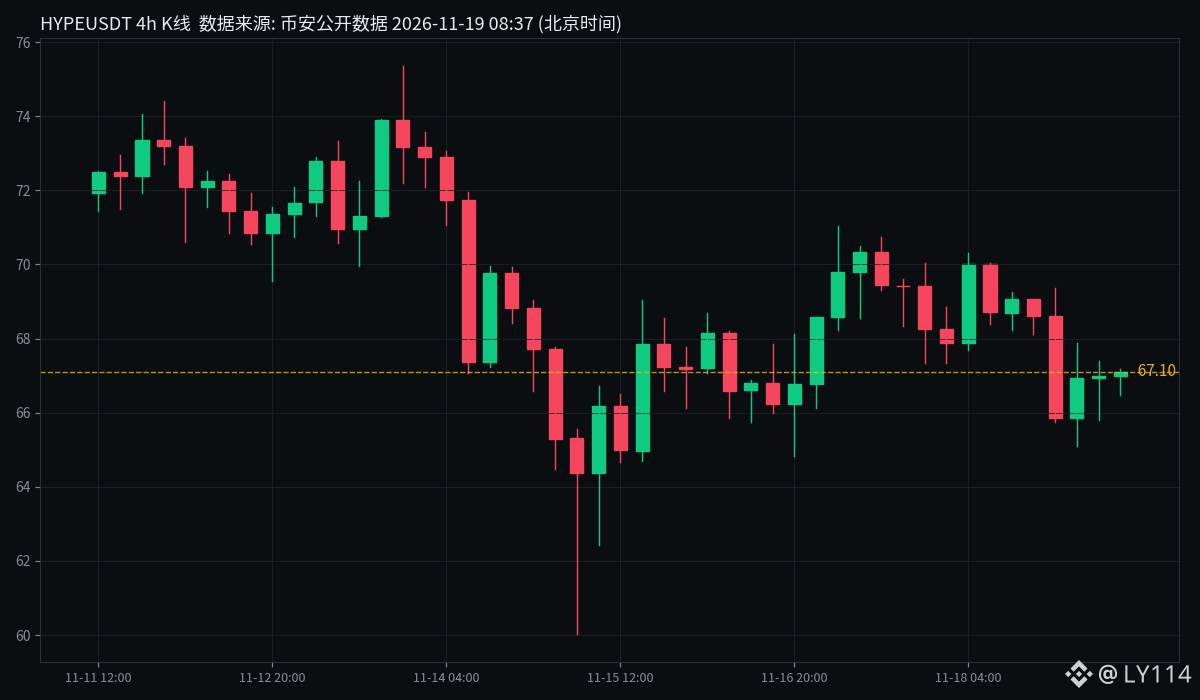
60.03 美元是 $HYPE 这 7 天的低点,现在 67.08 美元上下,离它还有 11.7% 的距离。过去 24 小时,$HYPE 走在 65.10 到 69.63 美元之间,跌了约 3.6%,7 天累计跌了约 6.5%。
币安现货数据:24 小时成交额约 3,238 万美元,成交笔数 16.3 万笔。放回大盘里看,BTC 过去 24 小时跌了约 2.7%、ETH 跌了约 2.1%,HYPE 这 3.6% 比它俩都深一点;但拉长到 7 天,HYPE 跌 6.5%,反而比 BTC 跌 7.6%、ETH 跌 7.7% 浅一些。
今天能盯的位置很清楚:上方先看 69.63 美元,站稳它,上面再看 7 天高点 75.35 美元;下方先看 65.10 美元,跌破它,下面再看 7 天低点 60.03 美元。
风险分开写——
第一,大盘还在跌,BTC 过去 24 小时一度探到 62,063 美元,离 7 天低点 62,006 美元只差一点,单币的位置扛不住大盘再往下走。
第二,HYPE 9 月 24 日才上币安现货,K 线历史不到两个月,7 天高低点之外的更长区间参考有限。
第三,波动大的时候别用高杠杆去接,仓位先顾好再说别的。
今天你先盯 65.10 美元守不守得住,还是先看 69.63 美元能不能站回去?
$HYPE #行情观察 #Hyperliquid
306

·
--
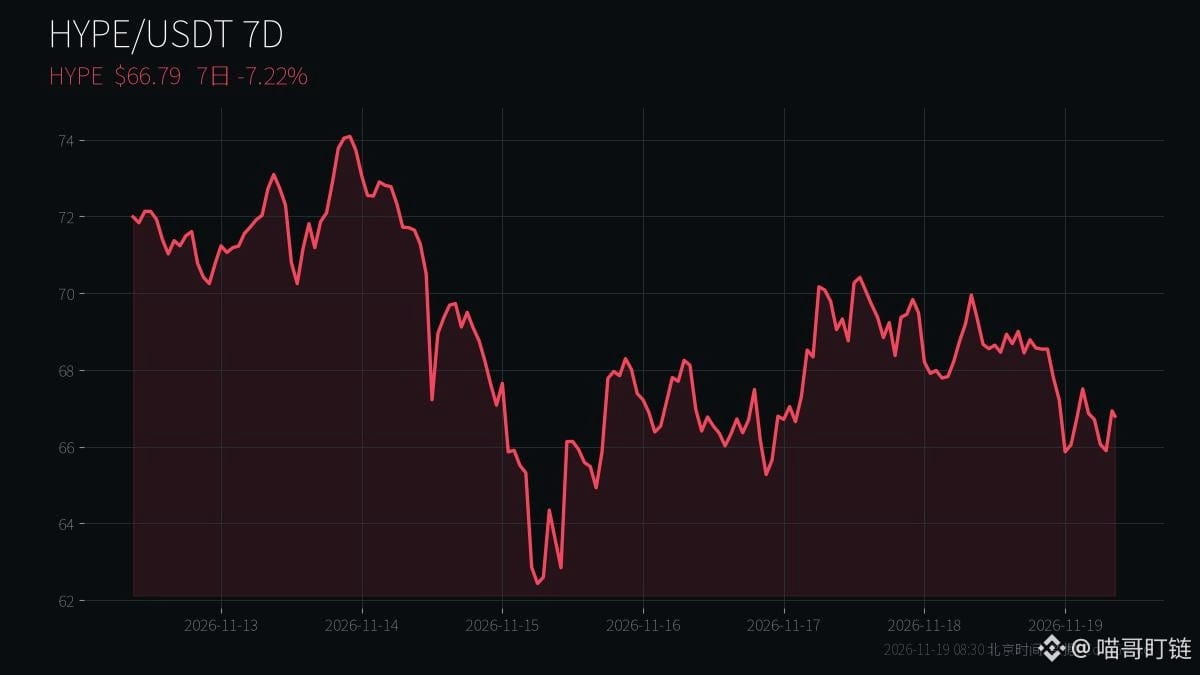
喵哥盯了一眼热搜榜:HYPE 24h -4.1%,在 $HYPE 里跌得比大盘狠,但市值排名仍稳在第10 🐱
📉 数据:HYPE 约 66.7 美元,同期 BTC 约 -0.9%,ETH 约 -1.8%,HYPE 明显更弱。
📊 恐慌贪婪指数 10,极度恐慌。
🔍 我的看法:恐慌里资金先抽离高弹性的平台币,再回头看谁抗跌。凌晨4:30那条里鲸鱼空单集中,若合约资金费率再转负,反弹时空头也容易被挤。
👉 盯两个位置:成交放量站稳前期高点,才算转强;否则继续跟着大盘磨。
你觉得极恐里,HYPE 这类平台币是先跌的还是先涨的?评论区聊聊。
#Hyperliquid #链上数据 #合约
$HYPE $BTC
仅为个人观点,不构成投资建议
📉 数据:HYPE 约 66.7 美元,同期 BTC 约 -0.9%,ETH 约 -1.8%,HYPE 明显更弱。
📊 恐慌贪婪指数 10,极度恐慌。
🔍 我的看法:恐慌里资金先抽离高弹性的平台币,再回头看谁抗跌。凌晨4:30那条里鲸鱼空单集中,若合约资金费率再转负,反弹时空头也容易被挤。
👉 盯两个位置:成交放量站稳前期高点,才算转强;否则继续跟着大盘磨。
你觉得极恐里,HYPE 这类平台币是先跌的还是先涨的?评论区聊聊。
#Hyperliquid #链上数据 #合约
$HYPE $BTC
仅为个人观点,不构成投资建议
65

الطرح المنتظر عادة يدفع للشراء، لكن حوتاً على Hyperliquid بنى مركز بيع بـ93.87 مليون دولار قبل انطلاقه. $HYPE
المركز على Anthropic وصل إلى 93.87 مليون دولار، وفيه ربح غير محقق يتجاوز 4 ملايين دولار.
إذا استمر هذا الاتجاه، قد يزيد الحذر قبل الطرح ويضغط على المعنويات. لكن مركز واحد لا يؤكد مسار السعر.
ما يهمك: راقب حجم المركز بعد الطرح، فقد يكون أكبر من مجرد رقم في محفظة.
هل تتوقع أن يغلق الحوت مركزه بعد الطرح أم يزيده؟
#Anthropic #Hyperliquid
المحتوى للمعلومات فقط وليس نصيحة مالية.
اضغط $HYPE للتداول
$HYPE
غيرك سبقك وتابع. ادخل بروفايلي وخلك مع اللي يقرأ قبل ما ينتشر الخبر.
46

·
--
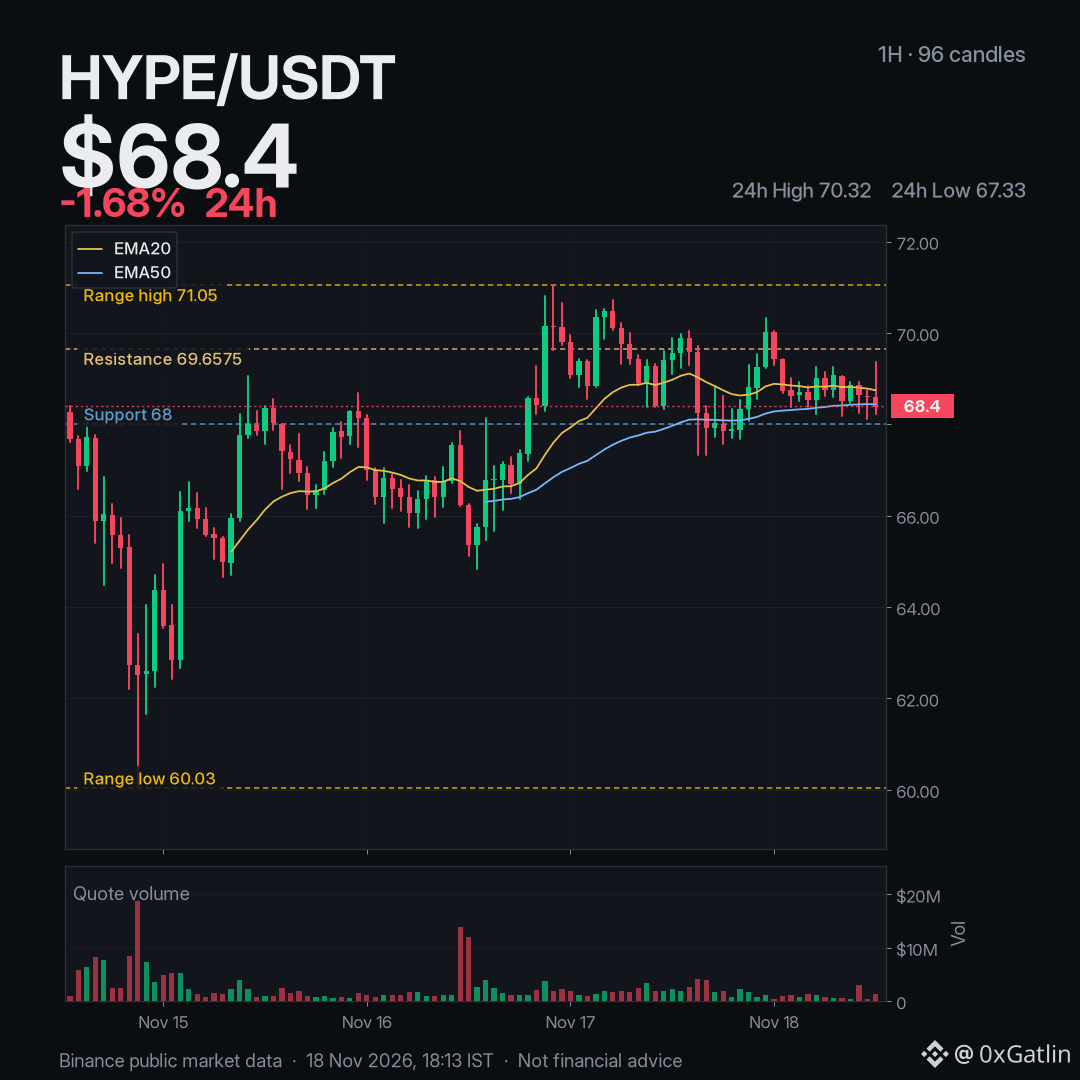
$HYPE setup I'm watching 👇
Price is -1.7% today while Hyperliquid burned ~296K HYPE from $20.4M of weekly revenue.
Zone: 67.3–68.0 (24h low + support)
Invalidation: hourly close below 67.3
Levels above: 69.66 resistance, then 71.05 range high
Burns vs chart — who wins this week?
Tap $HYPE to check the live chart and drop your read 👇
#Hyperliquid #HYPE #CryptoMarket
Not financial advice, DYOR.
2

Comments close today on the rule that decides whether Hyperliquid's prediction markets are exchanges or gambling — and $HYPE is sitting on the line that decides its own next move.
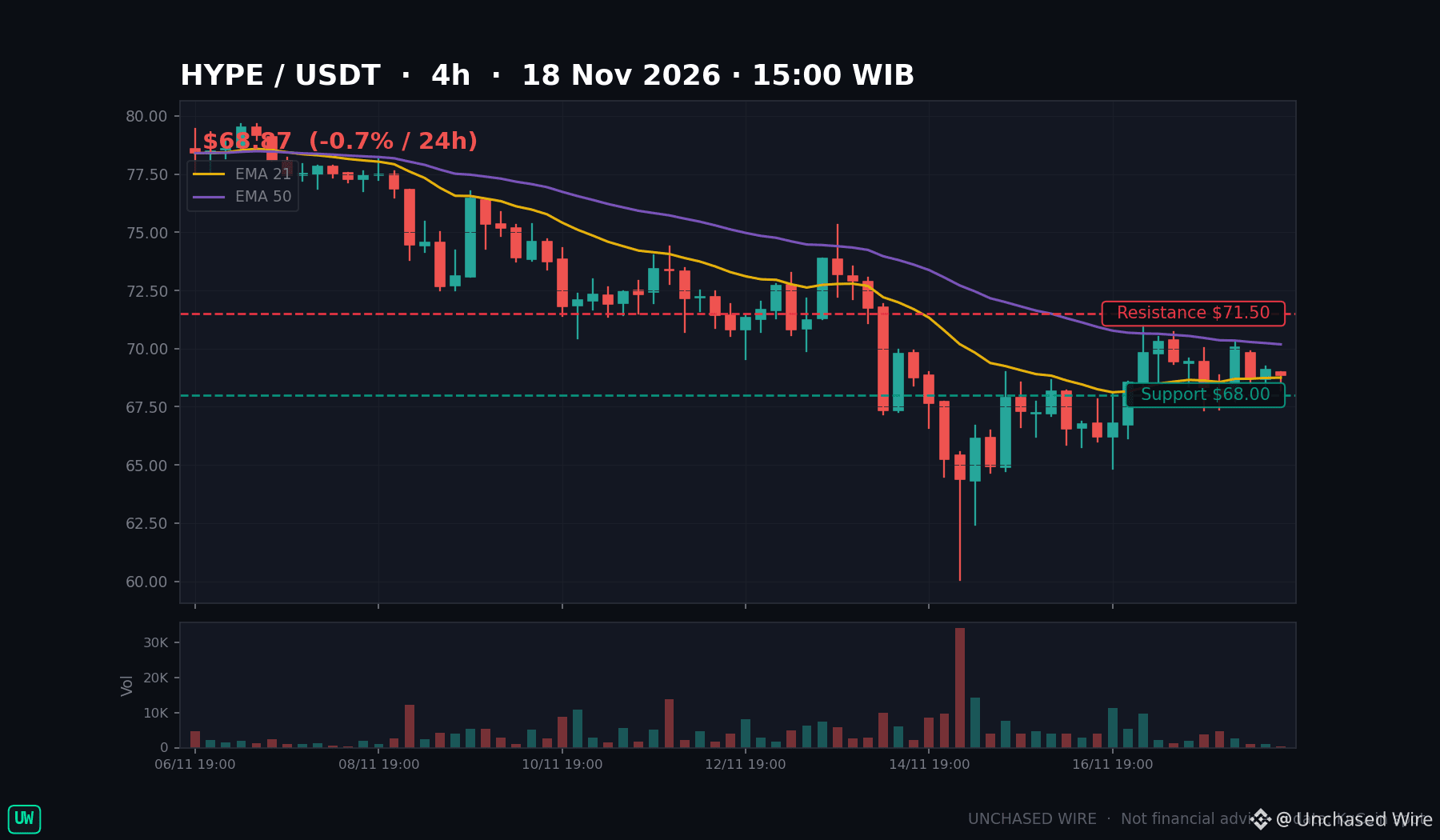
I'm watching $HYPE near $69, flat on the day after a month that took about 12% off it. The protocol bought back $71.7 million of its own token in the last 30 days — the most of any protocol tracked — and burned 47,700 HYPE in a single day this week.
So why isn't this free money? Because buybacks meet the tape, they don't set it. $HYPE sits just under its 200-day average near $69.60 and well under the 50-day near $78, and a core-contributor unlock lands within weeks. A Hyperliquid entity filed to register as a futures merchant on November 15, and policy letters went to the regulator November 16 — real filings, but none of it has turned the chart yet.
My lines: support $68, resistance $71.50, then $74.50. A daily close under $68 reopens $60.
$60, $71.50, or $74.50 — which print comes first?
NFA, DYOR.
$HYPE #Hyperliquid #DeFi #CFTC #CryptoMarkets #Buybacks
48

·
--
🚨 $HYPE THE COMEBACK OR ANOTHER BIG DROP? 👀🔥
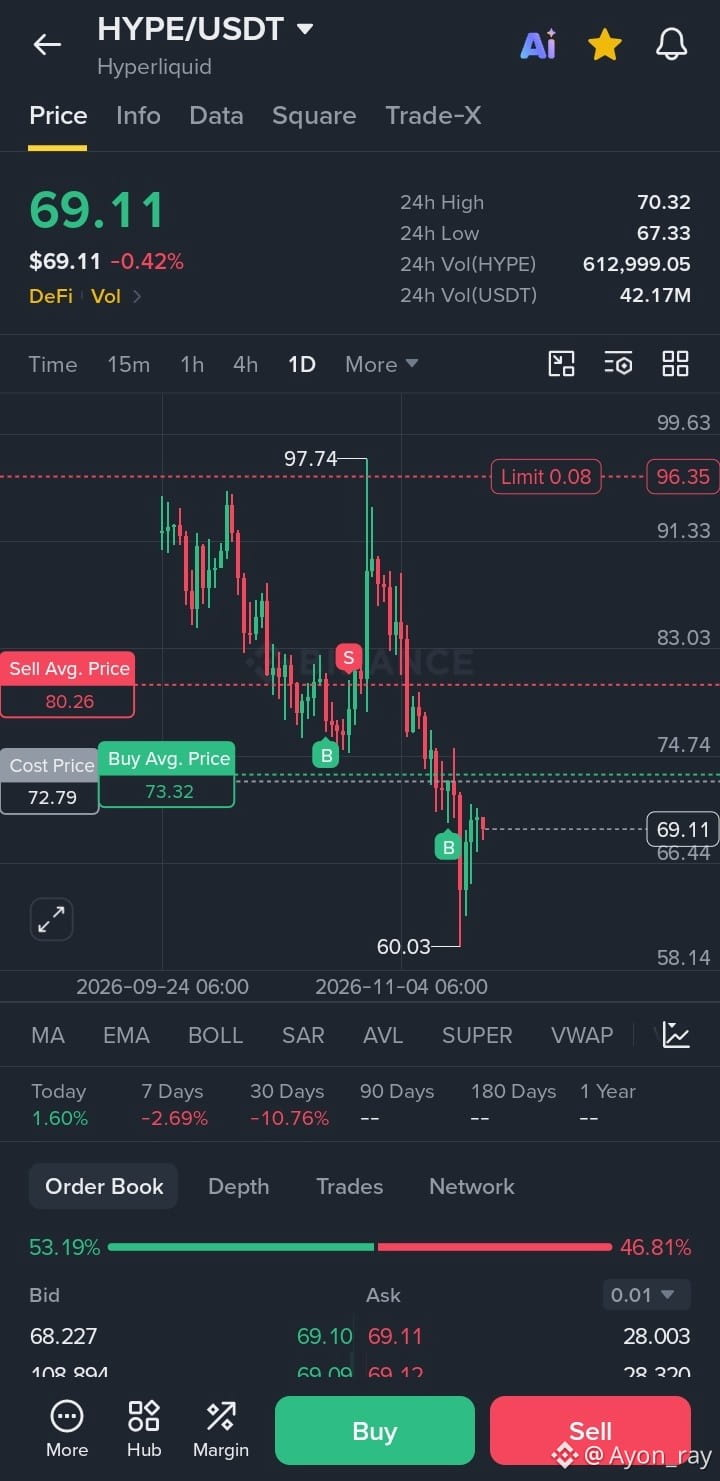
$HYPE has taken a serious hit, dropping from $97.74 to nearly $60.03. Now it's trading around $69.11.
But here's the big question… 👇
Is this the beginning of a strong recovery, or just a temporary bounce before another drop? 📉📈
I'm watching this chart closely. The next move could be interesting!
💬 What's your prediction?
🚀 Bullish — Back to $80+
🐻 Bearish — More downside ahead
Let's see who gets it right! 🔥
#hype #Hyperliquid #crypto #Binance #trading
{spot}(HYPEUSDT)
🚨 $HYPE THE COMEBACK OR ANOTHER BIG DROP? 👀🔥
$HYPE has taken a serious hit, dropping from $97.74 to nearly $60.03. Now it's trading around $69.11.
But here's the big question… 👇
Is this the beginning of a strong recovery, or just a temporary bounce before another drop? 📉📈
I'm watching this chart closely. The next move could be interesting!
💬 What's your prediction?
🚀 Bullish — Back to $80+
🐻 Bearish — More downside ahead
Let's see who gets it right! 🔥
#hype #Hyperliquid #crypto #Binance #trading
1
184

HYPE交易量上涨,但有一个数据值得注意。
最近看到Hyperliquid的一组数据,过去7天交易量上涨了将近16%,但链上的USDC供应量却下降了约7.8%。
两个数据的变化方向刚好相反。
以前研究HYPE,我主要关注交易量、协议收入和实际回购。
但现在Hyperliquid的回购资金来源已经不只是交易手续费,还包括部分USDC储备收益。
这意味着交易量上涨,不一定代表整体回购能力同步增强。
当然,USDC减少也不代表回购收入已经下降,还需要看实际储备收益和手续费收入的变化。
我觉得研究DeFi项目,不能只看业务规模增长,还要看增长最终转化成了多少真实收入,以及这些收入有多少流向代币。
这才是我持续跟踪HYPE的核心原因。
#hype #Hyperliquid #DeFi
139


🔥 Hyperliquid ($HYPE ) Near $68: $3.3B Buybacks vs. Nov 29 Unlock
While the broader market faces fear, $HYPE is holding steady around $67–$69.
Two major forces are driving the price right now:
1️⃣ Massive Buybacks (Bullish). The Assistance Fund has accumulated/burned over $3.3B worth of HYPE from protocol fees. Upbit listings and U.S. expansion plans with ICE add strong fundamental support.
2️⃣ Nov 29 Unlock (Risk). A large token unlock approaches at month-end, causing some whales to de-risk early.
📊 Key Levels:
• Support: $64–$65 (losing this opens the door to $60).
• Resistance: $72–$75 (reclaiming this targets $80+).
💡 For Beginners: $HYPE moves fast. Avoid high leverage ahead of the Nov 29 unlock and consider spot DCA after the market absorbs the new supply.
Holding HYPE or waiting for a dip? Comment below 👇
If this quick update helped you, feel free to leave a tip for coffee! ☕️
#HYPE #Hyperliquid #Altcoins #BinanceSquare
{future}(HYPEUSDT)
🔥 Hyperliquid ($HYPE ) Near $68: $3.3B Buybacks vs. Nov 29 Unlock
While the broader market faces fear, $HYPE is holding steady around $67–$69.
Two major forces are driving the price right now:
1️⃣ Massive Buybacks (Bullish). The Assistance Fund has accumulated/burned over $3.3B worth of HYPE from protocol fees. Upbit listings and U.S. expansion plans with ICE add strong fundamental support.
2️⃣ Nov 29 Unlock (Risk). A large token unlock approaches at month-end, causing some whales to de-risk early.
📊 Key Levels:
• Support: $64–$65 (losing this opens the door to $60).
• Resistance: $72–$75 (reclaiming this targets $80+).
💡 For Beginners: $HYPE moves fast. Avoid high leverage ahead of the Nov 29 unlock and consider spot DCA after the market absorbs the new supply.
Holding HYPE or waiting for a dip? Comment below 👇
If this quick update helped you, feel free to leave a tip for coffee! ☕️
#HYPE #Hyperliquid #Altcoins #BinanceSquare
89

·
--
🚨 $HYPE BACK NEAR $70 AFTER ABRAXAS PULLED THE PLUG
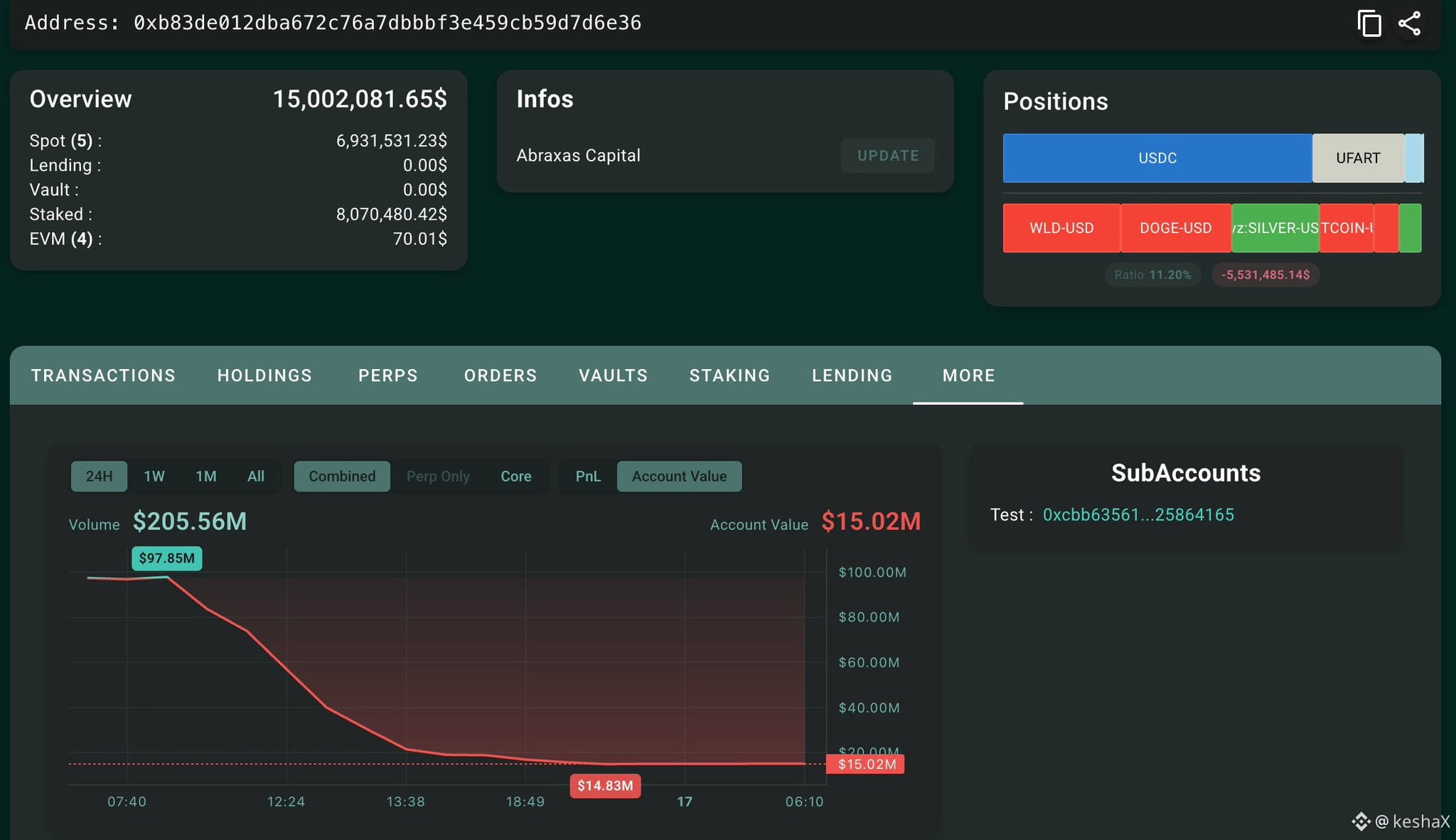
One leaked API key on Lighter, and a famous hedge-fund whale unwinds on Hyperliquid.
→ $10.4M traced out of Lighter, up to ~$15.5M across two market-maker accounts
→ On-chain sleuths tie one of them to Abraxas Capital (no comment from the firm yet)
→ Abraxas closed almost all its Hyperliquid shorts, only $11.6M still open
→ Account value down $161M in 24h, to $22.4M
→ ~$60.6M of HYPE sold in 70 minutes
HYPE dipped to $65.11 and bounced.
Still trading through API keys after this: yes or no?
#Hyperliquid #HYPE #CryptoSelloffTriggersMultipleWhaleLiquidations #CryptoNews
306

·
--
Жоғары (өспелі)
🚨 A HYPE tá chegando à B3.
A Hashdex anunciou o HYPH11, primeiro ETF brasileiro dedicado à Hyperliquid. A estreia está prevista para 24 de novembro — ou seja, vai dar pra ter exposição ao HYPE pela bolsa, usando a corretora de sempre.
Isso coloca a Hyperliquid numa vitrine bem maior. Agora o mercado vai ficar de olho em quanto interesse esse ETF consegue puxar.
$HYPE #Hyperliquid

1
522
🔥 Hyperliquid ($HYPE ) біля $68: викупи на $3.3 млрд проти розлоку 29 листопада
Поки ринок у страху, токен $HYPE тримається в зоні $67–$69.
На ціну зараз тиснуть два головні фактори:
1️⃣ Потужні викупи (Плюс). Фонд проєкту викупив та спалив токенів уже на понад $3.3 млрд за рахунок комісій біржі. Додатковий позитив дають лістинг на Upbit та партнерство з ICE для виходу на ринок США.
2️⃣ Розлок 29 листопада (Ризик). Наприкінці місяця на ринок вийде нова партія монет, тому великі гравці частково фіксують прибуток заздалегідь.
📊 Ключові рівні:
• Підтримка: $64–$65 (пробій вниз відкриє шлях до $60).
• Опір: $72–$75 (закріплення вище поверне імпульс до $80+).
💡 Новачкам: $HYPE дуже волатильний. Не беріть великі плечі перед розлоком 29 листопада — краще набирайте на споті частинами після реакції ринку.
Тримаєте HYPE чи чекаєте нижче? Пишіть у коментарях 👇
Якщо розбір був корисним — буду вдячний за чайові на каву! ☕️
#HYPE #Hyperliquid #CryptoNews #BinanceSquare
{future}(HYPEUSDT)
🔥 Hyperliquid ($HYPE ) біля $68: викупи на $3.3 млрд проти розлоку 29 листопада
Поки ринок у страху, токен $HYPE тримається в зоні $67–$69.
На ціну зараз тиснуть два головні фактори:
1️⃣ Потужні викупи (Плюс). Фонд проєкту викупив та спалив токенів уже на понад $3.3 млрд за рахунок комісій біржі. Додатковий позитив дають лістинг на Upbit та партнерство з ICE для виходу на ринок США.
2️⃣ Розлок 29 листопада (Ризик). Наприкінці місяця на ринок вийде нова партія монет, тому великі гравці частково фіксують прибуток заздалегідь.
📊 Ключові рівні:
• Підтримка: $64–$65 (пробій вниз відкриє шлях до $60).
• Опір: $72–$75 (закріплення вище поверне імпульс до $80+).
💡 Новачкам: $HYPE дуже волатильний. Не беріть великі плечі перед розлоком 29 листопада — краще набирайте на споті частинами після реакції ринку.
Тримаєте HYPE чи чекаєте нижче? Пишіть у коментарях 👇
Якщо розбір був корисним — буду вдячний за чайові на каву! ☕️
#HYPE #Hyperliquid #CryptoNews #BinanceSquare
1
55

🔥 Análisis Rápido $HYPE: Fuerza relativa frente al mercado en rojo 📈
Mientras gran parte del mercado retrocede hoy, $HYPE destaca manteniendo tracción alcista tras el reciente lanzamiento de su contrato perpetuo con margen en USDS en Binance Futures.
🔹 Soporte clave: Zona de acumulación intradía donde los compradores absorben retrocesos.
🔹 Resistencia a vencer: Máximos locales recientes; romperlos con volumen confirmaría continuación.
🔹 Plan (DYOR): Evita entrar por FOMO en velas verdes extendidas; espera retrocesos a soportes de 1H/4H para buscar mejores entradas.
💬 ¿Sigues operando $HYPE esta semana o prefieres esperar corrección? ¡Comenta abajo! 👇
#hype #Hyperliquid #DeFi: #TechnicalAnalysis #Write2Earn
{spot}(HYPEUSDT)
🔥 Análisis Rápido $HYPE: Fuerza relativa frente al mercado en rojo 📈
Mientras gran parte del mercado retrocede hoy, $HYPE destaca manteniendo tracción alcista tras el reciente lanzamiento de su contrato perpetuo con margen en USDS en Binance Futures.
🔹 Soporte clave: Zona de acumulación intradía donde los compradores absorben retrocesos.
🔹 Resistencia a vencer: Máximos locales recientes; romperlos con volumen confirmaría continuación.
🔹 Plan (DYOR): Evita entrar por FOMO en velas verdes extendidas; espera retrocesos a soportes de 1H/4H para buscar mejores entradas.
💬 ¿Sigues operando $HYPE esta semana o prefieres esperar corrección? ¡Comenta abajo! 👇
#hype #Hyperliquid #DeFi: #TechnicalAnalysis #Write2Earn
9
Көбірек контент көру үшін кіріңіз
Binance Square платформасында әлемдік криптоқоғамдастыққа қосылыңыз
⚡️ Криптовалюта туралы ең соңғы және пайдалы ақпаратты алыңыз.
💬 Әлемдегі ең ірі криптобиржаның сеніміне ие.
👍 Расталған авторлардың нақты пікірлерін табыңыз.
Электрондық пошта/телефон нөмірі
Трендтегі тақырыптар
1
#BTCRemainsUnderPressureAfterHawkishFOMCMinutes
43,302 рет көрілді
589 адам талқылап жатыр
2
#AnthropicToDebutAfter$83IPOPricing
11,349 рет көрілді
64 адам талқылап жатыр
3
#NvidiaBoardReportedlySplitOverHuang’sReturn
14,430 рет көрілді
241 адам талқылап жатыр
4
#CanGTA6'sLaunchLiftTTWOShares?
7,608 рет көрілді
169 адам талқылап жатыр
5
#FOMCMinutesHighlightAIDebtRisks
14,916 рет көрілді
221 адам талқылап жатыр
6
#SouthKoreaPlansToLet3500ListedFirmsBuyBitcoin
15,798 рет көрілді
263 адам талқылап жатыр
7
#AnthropicGrayMarketSharesPointTo22%To26%Gains
1,759 рет көрілді
43 адам талқылап жатыр
8
#BitcoinSpotETFsSee$306MNetOutflows
1 рет көрілді
2 адам талқылап жатыр
9
#TrumpAdministrationLaunchesProjectToCombatCybercrime
24 рет көрілді
5 адам талқылап жатыр
10
#FedMinutesShowAlmostAllOfficialsExpectMoreHikes
4,528 рет көрілді
61 адам талқылап жатыр