
黃健強
6.2k 投稿

黃健強
取引を発注
高頻度トレーダー
2年
2.3K+ フォロー
315 フォロワー
61 いいね
投稿
ポートフォリオ
すべて
引用
翻訳参照
"Let’s grow together! Like, Comment, and Repost.
黃健強
·
--
あなたの暗号をBinanceで最大化&保護する 🚀
1. Binance Earnでのパッシブインカム
資産を放置するのはやめましょう。今日から報酬を得始めましょう:
フレキシブルプロダクト:いつでも引き出せる自由で毎日利息を得る。
ロックされたプロダクト:より高いAPRを得るために、資金を固定期間にセキュアにする。
自動投資:収益を自動的に再投資することで複利の力を活用する。
2. Binance P2Pで安全に取引する
以下のルールに従って、地域の支払い方法を使用しながら資金を保護する:
バッジを信頼する:認証された商人(黄色のチェックマークを探す)とのみ取引する。
アプリ内に留まる:公式のBinanceチャット内ですべてのコミュニケーションを維持する。
最初に確認する:現金が銀行口座に入金されていることを手動で確認するまで暗号をリリースしない—スクリーンショットは無視する。
安全な注意事項:アカウントのフラグを避けるために、銀行振込のメモに暗号関連の言葉(例:USDT、BTC)を使用しないでください。 @Binance Burmese
#NewYearWithBinance
#BinanceEarn #BinanceP2P #CryptoSafety
1. Binance Earnでのパッシブインカム
資産を放置するのはやめましょう。今日から報酬を得始めましょう:
フレキシブルプロダクト:いつでも引き出せる自由で毎日利息を得る。
ロックされたプロダクト:より高いAPRを得るために、資金を固定期間にセキュアにする。
自動投資:収益を自動的に再投資することで複利の力を活用する。
2. Binance P2Pで安全に取引する
以下のルールに従って、地域の支払い方法を使用しながら資金を保護する:
バッジを信頼する:認証された商人(黄色のチェックマークを探す)とのみ取引する。
アプリ内に留まる:公式のBinanceチャット内ですべてのコミュニケーションを維持する。
最初に確認する:現金が銀行口座に入金されていることを手動で確認するまで暗号をリリースしない—スクリーンショットは無視する。
安全な注意事項:アカウントのフラグを避けるために、銀行振込のメモに暗号関連の言葉(例:USDT、BTC)を使用しないでください。 @Binance Burmese
#NewYearWithBinance
#BinanceEarn #BinanceP2P #CryptoSafety
翻訳参照
@Mira - Trust Layer of AI ( $MIRA
) is the native utility token of the Mira network, a decentralized "Trust Layer" for AI. Its primary goal is to eliminate AI hallucinations by verifying model outputs through a distributed network of nodes.
The token serves three main purposes: Staking, where validators lock $MIRA to secure the network; Payment, where developers use it to access verified AI data; and Rewards, distributed to honest participants. By incentivizing accuracy, Mira creates a transparent, auditable ecosystem. It is essential for high-stakes industries like finance and healthcare that require 100% factual AI responses.
Would you like me to summarize the key benefits of $MIRA in a bulleted list instead?
#Mira
) is the native utility token of the Mira network, a decentralized "Trust Layer" for AI. Its primary goal is to eliminate AI hallucinations by verifying model outputs through a distributed network of nodes.
The token serves three main purposes: Staking, where validators lock $MIRA to secure the network; Payment, where developers use it to access verified AI data; and Rewards, distributed to honest participants. By incentivizing accuracy, Mira creates a transparent, auditable ecosystem. It is essential for high-stakes industries like finance and healthcare that require 100% factual AI responses.
Would you like me to summarize the key benefits of $MIRA in a bulleted list instead?
#Mira
おやすみなさい 💤

翻訳参照
What is FOMO?
FOMO stands for Fear of Missing Out. It is a social anxiety stemming from the belief that others might be having rewarding experiences from which one is absent. This feeling is often characterized by a desire to stay continually connected with what others are doing.
Key Aspects of FOMO:
Social Media Influence: Platforms like Facebook, Instagram, and TikTok often trigger FOMO. Seeing friends' vacation photos or party updates can make you feel like your life is "boring" in comparison.
The Feeling of Exclusion: It’s the uneasy and sometimes pervasive feeling that you’re missing out on a big opportunity, a trend, or a social event.
Compulsive Behavior: It often leads to the constant checking of notifications and social media feeds to ensure you are "in the loop."
Common Effects:
Increased Stress: Constantly worrying about what others are doing can lead to burnout.
Lack of Focus: Trying to be everywhere at once makes it hard to focus on the present moment.
Life Dissatisfaction: Comparing your "behind-the-scenes" with everyone else's "highlight reel" can lower self-esteem.
The Antidote: JOMO
Recently, a new concept called JOMO (Joy of Missing Out) has emerged. It encourages people to enjoy the present moment and be content with staying in, without worrying about what the rest of the world is doing.
#FOMO
#WhaleDeRiskETH
$ETH
$BNB
FOMO stands for Fear of Missing Out. It is a social anxiety stemming from the belief that others might be having rewarding experiences from which one is absent. This feeling is often characterized by a desire to stay continually connected with what others are doing.
Key Aspects of FOMO:
Social Media Influence: Platforms like Facebook, Instagram, and TikTok often trigger FOMO. Seeing friends' vacation photos or party updates can make you feel like your life is "boring" in comparison.
The Feeling of Exclusion: It’s the uneasy and sometimes pervasive feeling that you’re missing out on a big opportunity, a trend, or a social event.
Compulsive Behavior: It often leads to the constant checking of notifications and social media feeds to ensure you are "in the loop."
Common Effects:
Increased Stress: Constantly worrying about what others are doing can lead to burnout.
Lack of Focus: Trying to be everywhere at once makes it hard to focus on the present moment.
Life Dissatisfaction: Comparing your "behind-the-scenes" with everyone else's "highlight reel" can lower self-esteem.
The Antidote: JOMO
Recently, a new concept called JOMO (Joy of Missing Out) has emerged. It encourages people to enjoy the present moment and be content with staying in, without worrying about what the rest of the world is doing.
#FOMO
#WhaleDeRiskETH
$ETH
$BNB
翻訳参照
📈 Dollar-Cost Averaging (DCA) in Crypto
DCA stands for Dollar-Cost Averaging, an investment strategy widely used in the cryptocurrency market.
What is DCA?
DCA is a strategy where an investor:
Purchases a fixed dollar amount of a specific asset (like Bitcoin or Ethereum).
On a regular schedule (e.g., weekly or monthly).
Regardless of the asset's price at the time of purchase.
The fundamental idea is to consistently invest smaller amounts over time, rather than investing one large lump sum all at once.
Key Benefits of Using DCA
DCA is particularly popular in the volatile crypto market because it offers several advantages:
Benefit Explanation
Mitigates Volatility Risk By spreading purchases over time, you avoid the high risk of buying at a market peak (the highest price). This helps to lower your average purchase cost over the long run.
Removes Emotional Decisions DCA encourages a disciplined approach, removing the need to constantly monitor the market or make impulsive decisions driven by Fear (FUD) or Fear of Missing Out (FOMO).
Eliminates Market Timing You don't have to stress about finding the "perfect" entry point. The focus shifts from "timing the market" to maximizing "time in the market."
Easy to Implement It is a straightforward strategy that is easy for both beginners and experienced investors to set up and follow consistently.
How to Start a DCA Strategy
Select Your Asset: Choose a cryptocurrency you believe will have long-term success (e.g., Bitcoin or Ethereum).
Determine Amount & Frequency: Decide on a fixed amount you can afford to invest regularly (e.g., $50 every two weeks) from your "cold money" (money you don't need immediately).
Automate the Process: Many crypto exchanges offer an Auto-Invest or Recurring Buy feature, allowing you to automatically execute your plan.
Stay Consistent: Stick to your schedule, whether the price is going up or down. Consistency is the key to DCA's success.
#KITEBinanceLaunchpool
$BNB
DCA stands for Dollar-Cost Averaging, an investment strategy widely used in the cryptocurrency market.
What is DCA?
DCA is a strategy where an investor:
Purchases a fixed dollar amount of a specific asset (like Bitcoin or Ethereum).
On a regular schedule (e.g., weekly or monthly).
Regardless of the asset's price at the time of purchase.
The fundamental idea is to consistently invest smaller amounts over time, rather than investing one large lump sum all at once.
Key Benefits of Using DCA
DCA is particularly popular in the volatile crypto market because it offers several advantages:
Benefit Explanation
Mitigates Volatility Risk By spreading purchases over time, you avoid the high risk of buying at a market peak (the highest price). This helps to lower your average purchase cost over the long run.
Removes Emotional Decisions DCA encourages a disciplined approach, removing the need to constantly monitor the market or make impulsive decisions driven by Fear (FUD) or Fear of Missing Out (FOMO).
Eliminates Market Timing You don't have to stress about finding the "perfect" entry point. The focus shifts from "timing the market" to maximizing "time in the market."
Easy to Implement It is a straightforward strategy that is easy for both beginners and experienced investors to set up and follow consistently.
How to Start a DCA Strategy
Select Your Asset: Choose a cryptocurrency you believe will have long-term success (e.g., Bitcoin or Ethereum).
Determine Amount & Frequency: Decide on a fixed amount you can afford to invest regularly (e.g., $50 every two weeks) from your "cold money" (money you don't need immediately).
Automate the Process: Many crypto exchanges offer an Auto-Invest or Recurring Buy feature, allowing you to automatically execute your plan.
Stay Consistent: Stick to your schedule, whether the price is going up or down. Consistency is the key to DCA's success.
#KITEBinanceLaunchpool
$BNB
翻訳参照
@Linea.eth Linea is a type of Layer 2 (L2) network built on top of Ethereum. It is developed by Consensys, the company behind MetaMask. Its goal is to provide a cheaper and faster environment for decentralized applications (dApps) while maintaining full Ethereum equivalence.
The LINEA token itself is likely used within this ecosystem for various purposes, such as gas fees, governance, or rewards, though specifics can vary and should be confirmed with the official Linea documentation.
#Linea
$LINEA
The LINEA token itself is likely used within this ecosystem for various purposes, such as gas fees, governance, or rewards, though specifics can vary and should be confirmed with the official Linea documentation.
#Linea
$LINEA
翻訳参照
The @Morpho Labs 🦋 token is the native governance token of the Morpho protocol, a decentralized, non-custodial lending and borrowing platform on Ethereum and Base.
It aims to enhance DeFi lending efficiency by offering better yields, lower costs, and greater flexibility than traditional protocols.
Key functions of the MORPHO token:
Governance: Holders can participate in the platform's decision-making.
Staking: Holders can stake MORPHO to earn rewards.
Utility: It can be used for fees on the platform (though primarily a governance token).
In essence, MORPHO is the mechanism for decentralized ownership and control over a capital-efficient lending network.
#Morpho
$MORPHO
It aims to enhance DeFi lending efficiency by offering better yields, lower costs, and greater flexibility than traditional protocols.
Key functions of the MORPHO token:
Governance: Holders can participate in the platform's decision-making.
Staking: Holders can stake MORPHO to earn rewards.
Utility: It can be used for fees on the platform (though primarily a governance token).
In essence, MORPHO is the mechanism for decentralized ownership and control over a capital-efficient lending network.
#Morpho
$MORPHO
翻訳参照
AltLayer (ALT) is the native utility and governance token for the AltLayer protocol, a Rollup-as-a-Service (RaaS) platform.
AltLayer's core technology is the Restaked Rollup, which combines Layer 2 scaling solutions (rollups) with EigenLayer's restaking mechanism to significantly enhance security, decentralization, and transaction finality.
Key Functions of the ALT Token:
Staking and Security: Used as an economic bond alongside restaked assets. Stakers earn rewards but can have their tokens slashed for malicious behavior.
Protocol Fees: Used to pay for transaction fees and services within the AltLayer ecosystem.
Governance: Holders can vote on key protocol upgrades and decisions.
In short, the ALT token is the financial and operational backbone that drives AltLayer's mission to provide scalable and highly secure Layer 2 infrastructure.
@rumour.app
#Traderumour
AltLayer's core technology is the Restaked Rollup, which combines Layer 2 scaling solutions (rollups) with EigenLayer's restaking mechanism to significantly enhance security, decentralization, and transaction finality.
Key Functions of the ALT Token:
Staking and Security: Used as an economic bond alongside restaked assets. Stakers earn rewards but can have their tokens slashed for malicious behavior.
Protocol Fees: Used to pay for transaction fees and services within the AltLayer ecosystem.
Governance: Holders can vote on key protocol upgrades and decisions.
In short, the ALT token is the financial and operational backbone that drives AltLayer's mission to provide scalable and highly secure Layer 2 infrastructure.
@rumour.app
#Traderumour
翻訳参照
Polygon (formerly known as Matic Network) is a Layer 2 scaling solution that runs alongside the Ethereum blockchain.
@0xPolygon
Its main purpose is to provide faster transactions and significantly lower fees for Ethereum-based applications.
The network's native cryptocurrency is MATIC (or POL after a recent upgrade), which is used for:
Paying transaction fees
Staking to secure the network
Governance (voting on changes)
In short, Polygon helps scale Ethereum and make decentralized applications (DApps) more usable.
#Polygon
$POL
@0xPolygon
Its main purpose is to provide faster transactions and significantly lower fees for Ethereum-based applications.
The network's native cryptocurrency is MATIC (or POL after a recent upgrade), which is used for:
Paying transaction fees
Staking to secure the network
Governance (voting on changes)
In short, Polygon helps scale Ethereum and make decentralized applications (DApps) more usable.
#Polygon
$POL
翻訳参照
The MITO token is the native cryptocurrency for the Mitosis protocol.
Project Focus: Mitosis is a new protocol that is gaining attention in the decentralized finance (DeFi) space.
Recent Activity: It has been actively promoting its airdrop, which is a distribution of its token to certain users, often to incentivize early adoption and participation in the network.
Utility: The exact utility of the MITO token within the Mitosis ecosystem will likely involve governance, staking, and potentially accessing certain platform features, although specific details would need to be confirmed from official project documentation.
@Mitosis Official
#Mitosis
$MITO
Project Focus: Mitosis is a new protocol that is gaining attention in the decentralized finance (DeFi) space.
Recent Activity: It has been actively promoting its airdrop, which is a distribution of its token to certain users, often to incentivize early adoption and participation in the network.
Utility: The exact utility of the MITO token within the Mitosis ecosystem will likely involve governance, staking, and potentially accessing certain platform features, although specific details would need to be confirmed from official project documentation.
@Mitosis Official
#Mitosis
$MITO
翻訳参照
Somnia is a high-performance, EVM-compatible Layer 1 blockchain designed to power real-time, mass-consumer applications like fully on-chain gaming, social media platforms, and metaverse environments.
Its native token is SOMI.
Key Points:
Function: SOMI is the utility token for the Somnia network. It is used to pay transaction fees (gas), for staking to secure the network, and for governance participation (voting on proposals).
Technology: Somnia achieves high speeds (over a million transactions per second in testing) and low finality through innovations like MultiStream Consensus (parallel transaction processing) and a fast custom database called IceDB.
Goal: The project aims to bridge the gap between traditional Web2 performance and the core principles of Web3 (decentralization and user ownership) by making blockchain infrastructure "invisible" for seamless user experiences.
Tokenomics: SOMI has a fixed maximum supply of 1 billion tokens. It has deflationary tokenomics as 50% of transaction fees are burned.@Somnia Official
#Somnia
$SOMI
Its native token is SOMI.
Key Points:
Function: SOMI is the utility token for the Somnia network. It is used to pay transaction fees (gas), for staking to secure the network, and for governance participation (voting on proposals).
Technology: Somnia achieves high speeds (over a million transactions per second in testing) and low finality through innovations like MultiStream Consensus (parallel transaction processing) and a fast custom database called IceDB.
Goal: The project aims to bridge the gap between traditional Web2 performance and the core principles of Web3 (decentralization and user ownership) by making blockchain infrastructure "invisible" for seamless user experiences.
Tokenomics: SOMI has a fixed maximum supply of 1 billion tokens. It has deflationary tokenomics as 50% of transaction fees are burned.@Somnia Official
#Somnia
$SOMI
翻訳参照
Here is a brief overview of the @HoloworldAI (HOLO) token:
The HOLO token is the native cryptocurrency for Holoworld AI, a decentralized platform (primarily built on Solana) that allows users to create, own, and monetize intelligent AI virtual agents (characters).
HOLO Token's Main Uses
Utility: It's used for transactions, in-app purchases, and accessing premium features within the Holoworld AI ecosystem (e.g., generating content with Ava Studio).
Governance: Token holders can vote on key platform upgrades and future directions.
Incentives/Staking: It is used to reward creators whose AI agents are frequently used. It is also required for staking to participate in HoloLaunch, a launchpad for new AI-native projects.
In simple terms, HOLO is the fuel and governance tool for an "AI agent app store" where virtual characters are treated as verifiable, tradable digital assets.
#HoloworldAI
$HOLO
The HOLO token is the native cryptocurrency for Holoworld AI, a decentralized platform (primarily built on Solana) that allows users to create, own, and monetize intelligent AI virtual agents (characters).
HOLO Token's Main Uses
Utility: It's used for transactions, in-app purchases, and accessing premium features within the Holoworld AI ecosystem (e.g., generating content with Ava Studio).
Governance: Token holders can vote on key platform upgrades and future directions.
Incentives/Staking: It is used to reward creators whose AI agents are frequently used. It is also required for staking to participate in HoloLaunch, a launchpad for new AI-native projects.
In simple terms, HOLO is the fuel and governance tool for an "AI agent app store" where virtual characters are treated as verifiable, tradable digital assets.
#HoloworldAI
$HOLO
翻訳参照
The @PythNetwork is a decentralized oracle network that supplies real-time, institutional-grade financial data to smart contracts across over 40 blockchains.
Function: It is a vital piece of infrastructure that securely brings high-quality price feeds (for crypto, stocks, commodities, etc.) from major exchanges and trading firms to the DeFi world.
PYTH Token Utility: The PYTH token is the network's governance token. Holders can stake their tokens to participate in voting on key decisions and proposals for the network's development and policy changes. It also serves to reward data providers for submitting accurate, timely price feeds.
Supply: It has a fixed maximum supply of 10 billion tokens.
#PythRoadmap
$PYTH
Function: It is a vital piece of infrastructure that securely brings high-quality price feeds (for crypto, stocks, commodities, etc.) from major exchanges and trading firms to the DeFi world.
PYTH Token Utility: The PYTH token is the network's governance token. Holders can stake their tokens to participate in voting on key decisions and proposals for the network's development and policy changes. It also serves to reward data providers for submitting accurate, timely price feeds.
Supply: It has a fixed maximum supply of 10 billion tokens.
#PythRoadmap
$PYTH
翻訳参照
Boundless (ZKC) is a protocol that uses zero-knowledge proofs (ZKPs) to provide scalable, verifiable computation on blockchain networks. It introduces a Proof of Verifiable Work (PoVW) system, rewarding provers for useful computations while slashing dishonest ones.
Token: ZKC
Total Supply: 1,000,000,000 ZKC
Circulating Supply: ~200.9M ZKC
Inflation Rate: ~7% in year one, decreasing to ~3% by year eight
Use Cases: staking, governance, collateral for provers, payment for proof requests
Market: Priced around $0.6–$0.7 with ~$130M market cap (Sept 2025)
Launch: Included Binance airdrops and early distribution
Risks: High initial sell-off from airdrops, inflation pressure, adoption challenges.
@boundless_network
#Boundless
$ZKC
Token: ZKC
Total Supply: 1,000,000,000 ZKC
Circulating Supply: ~200.9M ZKC
Inflation Rate: ~7% in year one, decreasing to ~3% by year eight
Use Cases: staking, governance, collateral for provers, payment for proof requests
Market: Priced around $0.6–$0.7 with ~$130M market cap (Sept 2025)
Launch: Included Binance airdrops and early distribution
Risks: High initial sell-off from airdrops, inflation pressure, adoption challenges.
@boundless_network
#Boundless
$ZKC

翻訳参照
OpenLedger is a blockchain platform designed specifically for artificial intelligence (AI) applications. It aims to solve the problem of centralized control and lack of transparency in the AI industry. @OpenLedger
In traditional systems, large companies often own and control the data and models used to build AI. This can mean that the people who contribute data or help train the models don't get proper credit or compensation. OpenLedger changes this by putting the entire process on the blockchain.
Every contribution—from a dataset to a small tweak on a model—is recorded and verified on-chain. This ensures that every participant is recognized for their work and rewarded based on the value they add.
The OPEN Token
The OPEN token is the native utility token of the OpenLedger ecosystem. It plays several key roles:
Rewards: Contributors who provide valuable data, train models, or participate in the network are rewarded with OPEN tokens.
Fees: The token is used to pay for transactions and for using the AI models on the platform.
Governance: Token holders can vote on important decisions, such as protocol upgrades and quality standards for AI models.
In short, the token is the "lifeblood" of the network, powering a decentralized AI economy where contributions are transparent, tracked, and fairly compensated.
Core Components
The OpenLedger platform is built on several core components:
Datanets: These are decentralized repositories where users can upload and curate specialized datasets for training AI models.
ModelFactory: This provides a user-friendly interface for building and fine-tuning AI models directly on the blockchain.
Proof of Attribution: This is a unique system that tracks and rewards creators when their data or models are used, ensuring fair compensation.
By combining these elements, OpenLedger is creating a system where AI development can be more open, auditable, and accessible to everyone, not just a few large corporations.
#OpenLedger
$OPEN
In traditional systems, large companies often own and control the data and models used to build AI. This can mean that the people who contribute data or help train the models don't get proper credit or compensation. OpenLedger changes this by putting the entire process on the blockchain.
Every contribution—from a dataset to a small tweak on a model—is recorded and verified on-chain. This ensures that every participant is recognized for their work and rewarded based on the value they add.
The OPEN Token
The OPEN token is the native utility token of the OpenLedger ecosystem. It plays several key roles:
Rewards: Contributors who provide valuable data, train models, or participate in the network are rewarded with OPEN tokens.
Fees: The token is used to pay for transactions and for using the AI models on the platform.
Governance: Token holders can vote on important decisions, such as protocol upgrades and quality standards for AI models.
In short, the token is the "lifeblood" of the network, powering a decentralized AI economy where contributions are transparent, tracked, and fairly compensated.
Core Components
The OpenLedger platform is built on several core components:
Datanets: These are decentralized repositories where users can upload and curate specialized datasets for training AI models.
ModelFactory: This provides a user-friendly interface for building and fine-tuning AI models directly on the blockchain.
Proof of Attribution: This is a unique system that tracks and rewards creators when their data or models are used, ensuring fair compensation.
By combining these elements, OpenLedger is creating a system where AI development can be more open, auditable, and accessible to everyone, not just a few large corporations.
#OpenLedger
$OPEN
翻訳参照
The Kava token ($KAVA ) is the native cryptocurrency of the Kava blockchain. Kava is a decentralized platform that combines the speed and interoperability of the Cosmos SDK with the developer support of the Ethereum Virtual Machine (EVM). This unique architecture allows Kava to provide a fast and scalable network for decentralized finance (DeFi) applications.@kava
The primary use cases for the KAVA token are:
Security: KAVA is used for staking to secure the network and validate transactions.
Governance: KAVA holders can vote on key decisions for the platform's future, such as protocol upgrades and new features.
Utility: It can be used as collateral to borrow assets and participate in various DeFi activities on the Kava network.
Overall, the KAVA token is central to the network's security, governance, and functionality, supporting a growing ecosystem of DeFi applications.
#KavaBNBChainSummer
$KAVA
The primary use cases for the KAVA token are:
Security: KAVA is used for staking to secure the network and validate transactions.
Governance: KAVA holders can vote on key decisions for the platform's future, such as protocol upgrades and new features.
Utility: It can be used as collateral to borrow assets and participate in various DeFi activities on the Kava network.
Overall, the KAVA token is central to the network's security, governance, and functionality, supporting a growing ecosystem of DeFi applications.
#KavaBNBChainSummer
$KAVA

翻訳参照
Usdt


إيهاب الحسني - Ehab Hosni
·
--
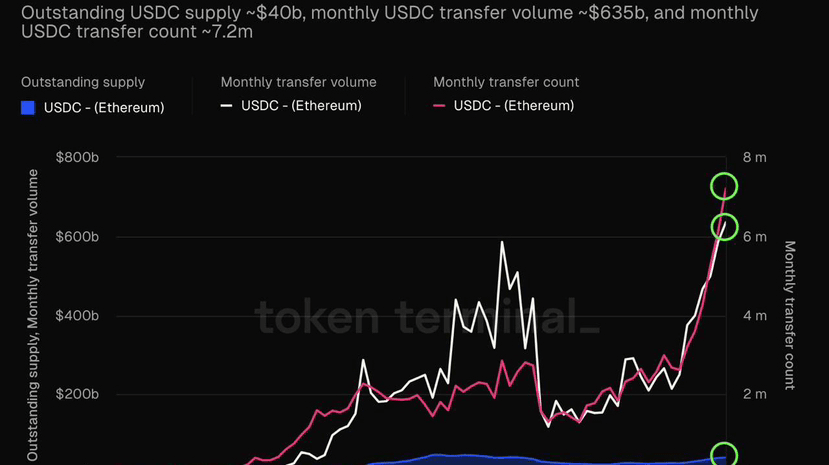
EthereumネットワークにおけるUSDCの使用の記録的な増加
EthereumネットワークにおけるUSDCの使用は前例のない高まりを見せ、今月5月に最高水準に達しました。
最近のデータによると:
• USDCの流通供給量:約400億ドル
• 月間送金額:6350億ドルを超えました
• 月間送金数:720万件以上
---------
この顕著な成長は、USDCを安定した決済手段および送金手段として使用することへの信頼の高まりを反映しています。これは分散型金融(DeFi)システムおよびブロックチェーンネットワーク上でのことです。
最近のデータによると:
• USDCの流通供給量:約400億ドル
• 月間送金額:6350億ドルを超えました
• 月間送金数:720万件以上
---------
この顕著な成長は、USDCを安定した決済手段および送金手段として使用することへの信頼の高まりを反映しています。これは分散型金融(DeFi)システムおよびブロックチェーンネットワーク上でのことです。
翻訳参照
Rebound

Shayaan15815
·
--
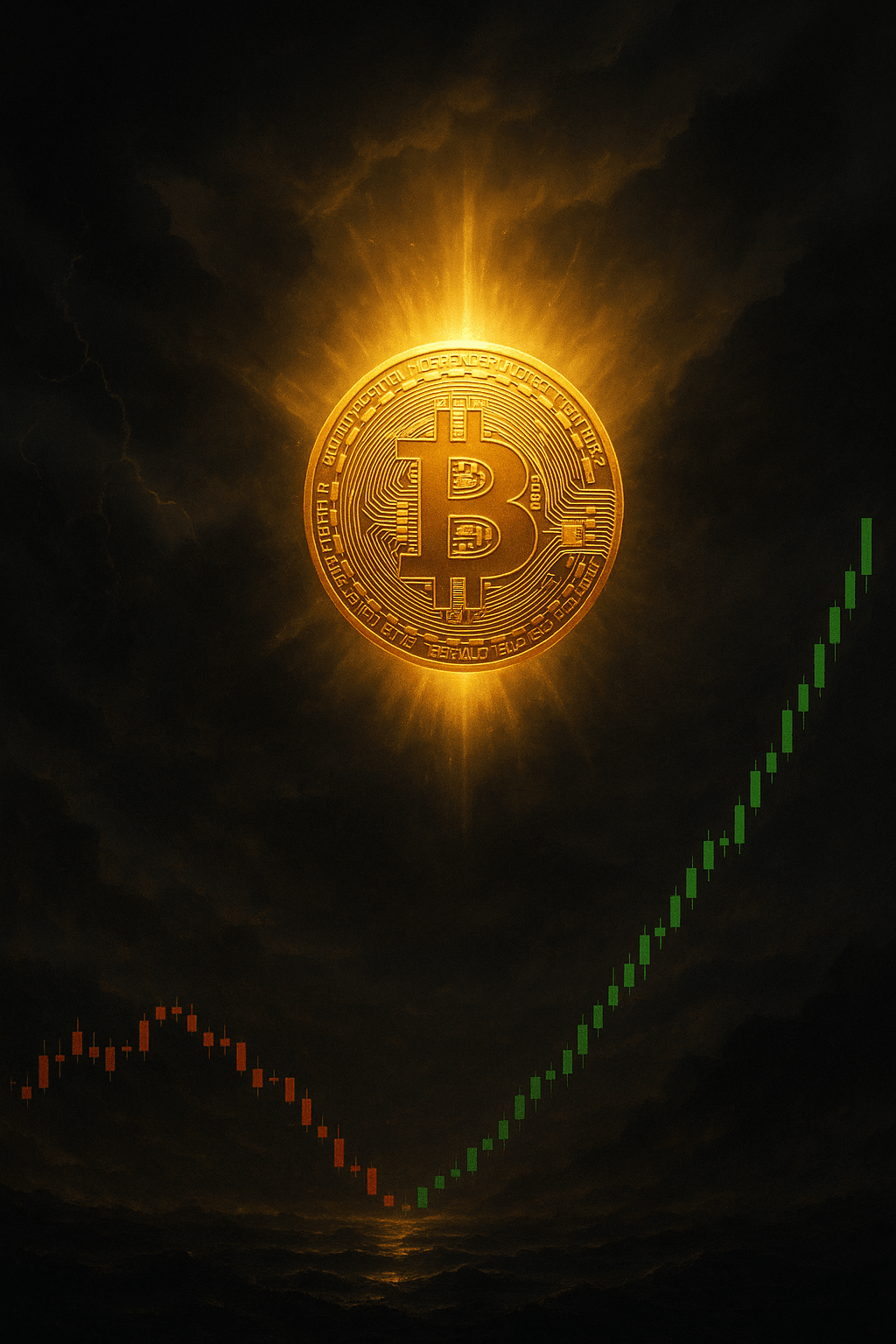
#MarketRebound これは単なる下落ですか、それとも次の surge の準備ですか?
市場は呼吸し、今は息を吐いています。
しかし、すべての修正には、耳を傾けるのに十分な忍耐を持つ人々への機会のささやきが含まれています。
パニックはありません。急ぐ必要もありません。
ただポジショニング。計画を立てるだけ。
賢いトレーダーはキャンドルを追いかけません。彼らは重要なレベルを見守り、確認を待ち、確信を積み上げています。
反発が来るとき、そしてそれは常に来ます。落ち着いている者だけが波をキャッチします。
底を計るな。
反発に備えよ。
#CryptoMindset #BuyTheDip #TradeSmart #CryptoComeback
$BTC
$ETH
$BNB
市場は呼吸し、今は息を吐いています。
しかし、すべての修正には、耳を傾けるのに十分な忍耐を持つ人々への機会のささやきが含まれています。
パニックはありません。急ぐ必要もありません。
ただポジショニング。計画を立てるだけ。
賢いトレーダーはキャンドルを追いかけません。彼らは重要なレベルを見守り、確認を待ち、確信を積み上げています。
反発が来るとき、そしてそれは常に来ます。落ち着いている者だけが波をキャッチします。
底を計るな。
反発に備えよ。
#CryptoMindset #BuyTheDip #TradeSmart #CryptoComeback
$BTC
$ETH
$BNB
翻訳参照
1

Simey闪电
·
--
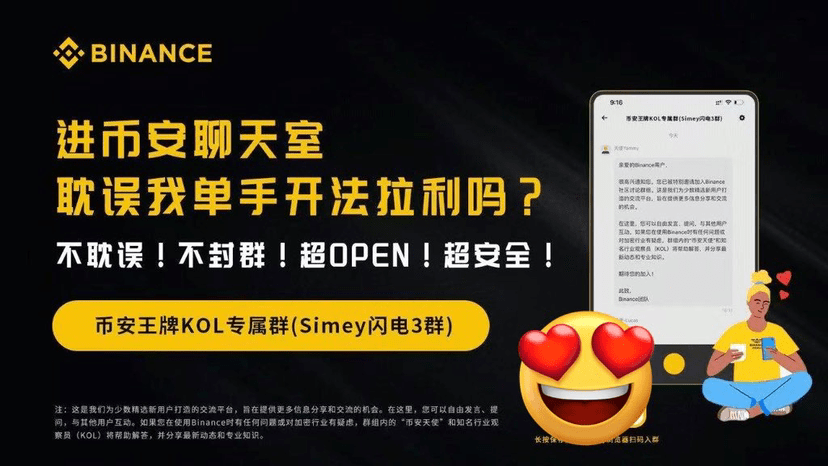
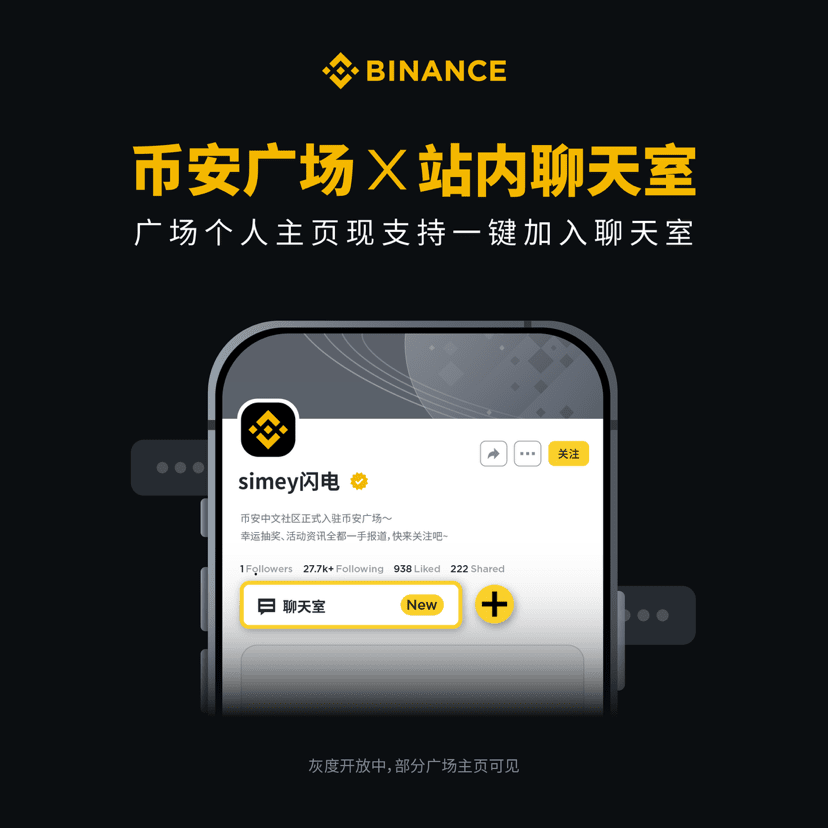
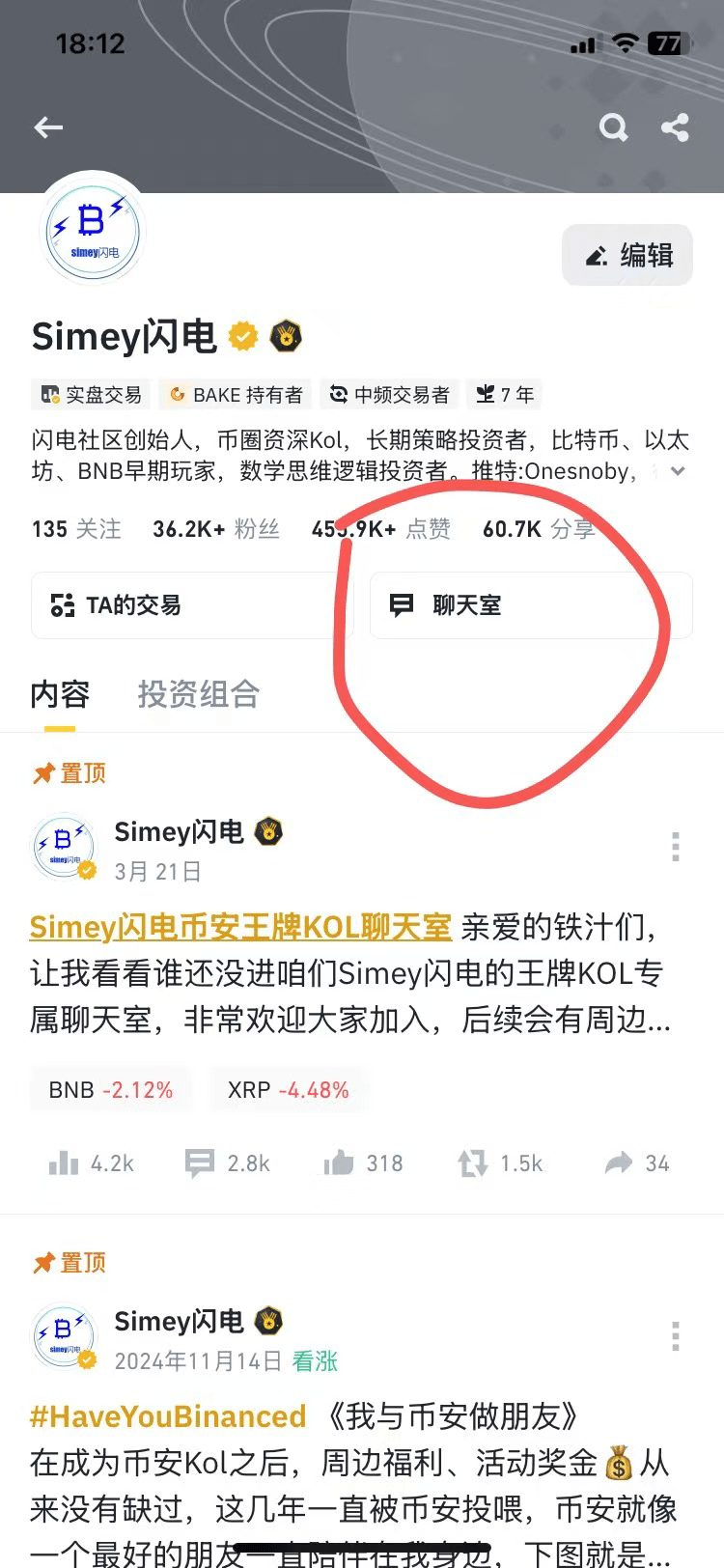
友達よ、まだ私たちのSimey閃電のエースKOL専用チャットルームに入っていない人を見せてください。Alphaエアドロップ、TGEイベント、現物二次市場戦略、Web3ウォレット一次市場追跡、ウォレット資産管理、私たちのチャットルームではみんなで研究しています。最近、誰がバイナンスのAlphaエアドロップを受け取っていないのか、急いでチャットルームに参加しましょう👇
Simey闪电币安王牌KOL聊天室
仲間たちはとても活発で、みんな楽しく遊んでいます。あなたの参加を楽しみにしています!
Simey闪电币安王牌KOL聊天室
仲間たちはとても活発で、みんな楽しく遊んでいます。あなたの参加を楽しみにしています!
ログインして、さらにコンテンツを読む