Binance Square
Tokenist
2.6k 投稿

Tokenist

image
認証済みクリエイター
The Tokenist is your trusted home for the latest finance news on stocks, crypto, forex, and more. Join us.
0 フォロー
11.6K+ フォロワー
44.5K+ いいね
投稿
·
--

記事
翻訳参照
MetaMask Expands Crypto Card to 17 Latin American Markets: What’s Next?MetaMask has expanded its Mastercard-backed crypto debit card to 13 new Latin American countries, bringing its total LATAM footprint to 17 markets and pushing global coverage past 50 countries. The June 11 announcement adds Chile, Costa Rica, Dominican Republic, El Salvador, Guatemala, Honduras, Guyana, Nicaragua, Panama, Paraguay, Peru, Suriname, and Uruguay to a regional program that was already live in Argentina, Brazil, Colombia, and Mexico. MetaMask Card has just expanded across Latin America. 13 new countries can now spend crypto directly from their wallet. Anywhere @Mastercard is accepted. pic.twitter.com/FIFY1P00Zj — MetaMask (@MetaMask) June 11, 2026 The timing is deliberate. According to Utexo data, crypto card transactions have grown 2.7-fold, with no correlation to the BTC price. This is a signal that the sector is graduating from speculative novelty into daily-use infrastructure. LATAM, with its structural dollar demand and high adoption of stablecoins, is where that transition is moving fastest. SOURCE: TradingView MetaMask Card: Self-Custody Mechanics, mUSD Cashback, and How It Differs From Exchange-Issued Cards The MetaMask crypto card allows users to spend directly from their self-custody wallets, converting tokens to local fiat at Mastercard points of sale via smart contracts; no pre-loaded balance is needed. Supported assets include USDC, USDT, WETH, and Linea tokens, with no FX markup on conversions. KYC for LATAM users is managed by Crypto Life, while Baanx handles card issuance with Mastercard. The base tier offers 1% cashback in mUSD, MetaMask’s dollar-pegged stablecoin. The Metal tier, costing $199 annually, offers 3% cashback on the first $10K spent each month, a $30K daily limit, $5K in fee-free ATM withdrawals, and hotel discounts of up to 60%. Alex Oblakevich from Utexo observed a shift in deposit patterns from large loads to regular top-ups, indicating broader appeal beyond power users. SOURCE: MetaMask MetaMask LATAM Expansion: 17-Market Coverage, Crypto Life as Regional Manager, and Competitive Positioning Against Binance Card and Visa/Bridge MetaMask has expanded its program to cover 17 LATAM markets, addressing major economies and smaller Central American and Caribbean regions that competitors have overlooked. Unlike the Binance Card, which faces regulatory challenges in several LATAM jurisdictions, MetaMask’s decentralized approach is better positioned against such friction. While Visa’s Bridge initiative is scaling globally, it relies on custodial systems that necessitate transferring assets from users’ wallets. MetaMask’s 100 million global wallet users offer a unique advantage for card adoption in the region by leveraging existing relationships rather than starting from scratch. Gal Eldar, Product Lead at MetaMask, emphasized the goal of integrating crypto seamlessly into daily life, especially in a region where on-chain dollar holdings serve as a currency hedge. RELATED: MetaMask and OTL: From DeFi Wallet to Institutional Brokerage Interface Why LATAM: Currency Volatility, Stablecoin Adoption, and Structural Dollar Demand The case for LATAM card infrastructure is clear: ongoing inflation in Argentina, Venezuela, and parts of Central America is driving users toward dollar-denominated stablecoins for savings. A card that allows users to spend their USDC or USDT directly at Mastercard merchants offers a significant improvement over the current method of converting assets through brokers. Brazil’s Pix crypto ecosystem and Mexico’s remittance corridor further fuel demand, with over $145Bn in remittance flows already partially settling in stablecoins. The MetaMask card facilitates instant spending of these balances, eliminating the need for off-ramp intermediaries. Tether’s recent wallet launch for similar use cases highlights a shared recognition of this demand by various infrastructure players. Tether is leading a landmark Series C financing round of up to $1.4 billion for NEURA Robotics, @NEURARobotics , representing one of the largest private investment rounds in humanoid robotics history. As robotics moves into true autonomy, payment and compute systems must evolve.… pic.twitter.com/NF3hO5hnke — Tether (@tether) June 10, 2026 Self-Custody Model vs. Custodial Alternatives: What the Architectural Difference Means for Regulatory Resilience and User Risk The key difference lies in control at settlement. With custodial exchange cards like the Binance Card, assets remain on the issuer’s balance sheet until spent, which can freeze access during regulatory actions or platform issues. In contrast, MetaMask allows users to retain their private keys, while Baanx and Mastercard handle transactions without asset custody. This model has regulatory implications: while self-custody minimizes issuer liability, it complicates AML monitoring because wallet histories are pseudonymous until KYC is completed. MetaMask’s partnership with Crypto Life in LATAM indicates a tailored compliance approach that adapts to local regulations rather than relying on a global KYC framework as LATAM moves towards formal digital asset licensing. The author does not hold or have a position in any securities discussed in the article. All prices were quoted at the time of writing. The post MetaMask Expands Crypto Card to 17 Latin American Markets: What’s Next? appeared first on Tokenist.

MetaMask Expands Crypto Card to 17 Latin American Markets: What’s Next?

MetaMask has expanded its Mastercard-backed crypto debit card to 13 new Latin American countries, bringing its total LATAM footprint to 17 markets and pushing global coverage past 50 countries.
The June 11 announcement adds Chile, Costa Rica, Dominican Republic, El Salvador, Guatemala, Honduras, Guyana, Nicaragua, Panama, Paraguay, Peru, Suriname, and Uruguay to a regional program that was already live in Argentina, Brazil, Colombia, and Mexico.
MetaMask Card has just expanded across Latin America. 13 new countries can now spend crypto directly from their wallet. Anywhere @Mastercard is accepted. pic.twitter.com/FIFY1P00Zj
— MetaMask (@MetaMask) June 11, 2026
The timing is deliberate. According to Utexo data, crypto card transactions have grown 2.7-fold, with no correlation to the BTC price.
This is a signal that the sector is graduating from speculative novelty into daily-use infrastructure. LATAM, with its structural dollar demand and high adoption of stablecoins, is where that transition is moving fastest.
SOURCE: TradingView MetaMask Card: Self-Custody Mechanics, mUSD Cashback, and How It Differs From Exchange-Issued Cards
The MetaMask crypto card allows users to spend directly from their self-custody wallets, converting tokens to local fiat at Mastercard points of sale via smart contracts; no pre-loaded balance is needed.
Supported assets include USDC, USDT, WETH, and Linea tokens, with no FX markup on conversions. KYC for LATAM users is managed by Crypto Life, while Baanx handles card issuance with Mastercard.
The base tier offers 1% cashback in mUSD, MetaMask’s dollar-pegged stablecoin. The Metal tier, costing $199 annually, offers 3% cashback on the first $10K spent each month, a $30K daily limit, $5K in fee-free ATM withdrawals, and hotel discounts of up to 60%.
Alex Oblakevich from Utexo observed a shift in deposit patterns from large loads to regular top-ups, indicating broader appeal beyond power users.
SOURCE: MetaMask MetaMask LATAM Expansion: 17-Market Coverage, Crypto Life as Regional Manager, and Competitive Positioning Against Binance Card and Visa/Bridge
MetaMask has expanded its program to cover 17 LATAM markets, addressing major economies and smaller Central American and Caribbean regions that competitors have overlooked.
Unlike the Binance Card, which faces regulatory challenges in several LATAM jurisdictions, MetaMask’s decentralized approach is better positioned against such friction.
While Visa’s Bridge initiative is scaling globally, it relies on custodial systems that necessitate transferring assets from users’ wallets.
MetaMask’s 100 million global wallet users offer a unique advantage for card adoption in the region by leveraging existing relationships rather than starting from scratch.
Gal Eldar, Product Lead at MetaMask, emphasized the goal of integrating crypto seamlessly into daily life, especially in a region where on-chain dollar holdings serve as a currency hedge.
RELATED: MetaMask and OTL: From DeFi Wallet to Institutional Brokerage Interface
Why LATAM: Currency Volatility, Stablecoin Adoption, and Structural Dollar Demand
The case for LATAM card infrastructure is clear: ongoing inflation in Argentina, Venezuela, and parts of Central America is driving users toward dollar-denominated stablecoins for savings.
A card that allows users to spend their USDC or USDT directly at Mastercard merchants offers a significant improvement over the current method of converting assets through brokers.
Brazil’s Pix crypto ecosystem and Mexico’s remittance corridor further fuel demand, with over $145Bn in remittance flows already partially settling in stablecoins.
The MetaMask card facilitates instant spending of these balances, eliminating the need for off-ramp intermediaries. Tether’s recent wallet launch for similar use cases highlights a shared recognition of this demand by various infrastructure players.
Tether is leading a landmark Series C financing round of up to $1.4 billion for NEURA Robotics, @NEURARobotics , representing one of the largest private investment rounds in humanoid robotics history. As robotics moves into true autonomy, payment and compute systems must evolve.… pic.twitter.com/NF3hO5hnke
— Tether (@tether) June 10, 2026
Self-Custody Model vs. Custodial Alternatives: What the Architectural Difference Means for Regulatory Resilience and User Risk
The key difference lies in control at settlement. With custodial exchange cards like the Binance Card, assets remain on the issuer’s balance sheet until spent, which can freeze access during regulatory actions or platform issues.
In contrast, MetaMask allows users to retain their private keys, while Baanx and Mastercard handle transactions without asset custody.
This model has regulatory implications: while self-custody minimizes issuer liability, it complicates AML monitoring because wallet histories are pseudonymous until KYC is completed.
MetaMask’s partnership with Crypto Life in LATAM indicates a tailored compliance approach that adapts to local regulations rather than relying on a global KYC framework as LATAM moves towards formal digital asset licensing.
The author does not hold or have a position in any securities discussed in the article. All prices were quoted at the time of writing.
The post MetaMask Expands Crypto Card to 17 Latin American Markets: What’s Next? appeared first on Tokenist.
確認済み
翻訳参照
Why the Bank of Japan Rate Decision Could Trigger Bitcoin’s Fifth CrashThe Bank of Japan’s two-day policy meeting ending June 16, 2026, has an 80–97% market-implied probability of a 25-basis-point BOJ rate hike, raising Japan’s benchmark rate from 0.75% to 1.0%, the highest since 1995. Historically, every BOJ rate hike since March 2024 has led to Bitcoin price drawdowns of 18% to 32%, with an average of 27%. Currently, BTC is down over 50% from its October 2025 highs, and yen short positions are at a nine-year high, with $1.5Bn in liquidations on the long side in a 24-hour period earlier this month. BOJ Governor Kazuo Ueda hinted at this hike in a June 3 speech, citing energy price pressures. A Reuters poll showed 65% of economists expected a hike, which has since strengthened to around 98% odds, with three BOJ board members advocating for it at the April meeting. Excellent! $BTC just confirmed a weekly bullish divergence on oversold RSI. Love to see it Solid weekly candle just before close, RSI printing a clean V-flex along with it, which gives high confidence on confirmation If you've been waiting for a meaningful bullish signal all… https://t.co/SMpqIMK01h pic.twitter.com/v1Td6zBd4f — Kriesz (@_Kriesz_) June 15, 2026 The Yen Carry Trade Transmission Channel: How a BOJ Rate Decision Reaches Bitcoin’s Order Book The connection between BOJ rate decisions and BTC price action involves the yen carry trade. Investors have been borrowing in yen at low rates, converting the proceeds to USD or stablecoins, and investing in higher-yield assets such as Bitcoin. This trade is profitable as long as interest rate differentials and a weak yen persist. When the BOJ raises rates and the yen strengthens, conditions worsen, leading to forced selling of risk assets, including Bitcoin, which is liquidated quickly due to its 24/7 trading. In August 2024, a surprise BOJ policy change triggered a rapid unwind of this carry trade, impacting Asian equities and global markets, with Bitcoin seeing significant sell-offs. With net speculative short positions on the yen at a nine-year high, the potential for forced yen buying and risk-asset selling is greater than in previous episodes. Additionally, a stronger yen and rising domestic yields divert local capital towards Japanese bonds and cash, further reducing demand for crypto. EXPLORE: BlackRock IBIT’s Record $2.43Bn Outflow and What Institutional Redemptions Reveal About Bitcoin’s Current Market Structure The Four Prior Rate Hikes: What Each Rate Decision Has Done to Bitcoin Since March 2024 Japan has triggered 4 market selloffs since 2024. Tomorrow could be the fifth. Tomorrow, June 16. The Bank of Japan announces its rate decision. 49 of 51 economists surveyed by Bloomberg expect a hike from 0.75% to 1%. Market probability is above 90%. If confirmed, it marks… pic.twitter.com/Q24gvm97FS — Bull Theory (@BullTheoryio) June 15, 2026 The empirical record is clear: following the Bank of Japan’s (BOJ) first interest rate hike in 17 years in March 2024, Bitcoin (BTC) declined 18%. Subsequent BOJ rate hikes in July 2024, January 2025, and December 2025 saw drawdowns of 30%, 31%, and 32%, respectively. At the same time, BTC fell below $60,000 for the first time since 2024. The average decline across these episodes is around 27%, highlighting a consistent pattern: no post-hike BTC rallies and an increasing drawdown magnitude with each hike. As of June 16, the market is under pressure, with BTC more than 50% below its October 2025 highs. This sets a precarious stage for any future rate increase, as there is no prior bull trend to provide support, making the market vulnerable to a carry unwind at critical support levels. The author does not hold or have a position in any securities discussed in the article. The post Why the Bank of Japan Rate Decision Could Trigger Bitcoin’s Fifth Crash appeared first on Tokenist.

Why the Bank of Japan Rate Decision Could Trigger Bitcoin’s Fifth Crash

The Bank of Japan’s two-day policy meeting ending June 16, 2026, has an 80–97% market-implied probability of a 25-basis-point BOJ rate hike, raising Japan’s benchmark rate from 0.75% to 1.0%, the highest since 1995.
Historically, every BOJ rate hike since March 2024 has led to Bitcoin price drawdowns of 18% to 32%, with an average of 27%.
Currently, BTC is down over 50% from its October 2025 highs, and yen short positions are at a nine-year high, with $1.5Bn in liquidations on the long side in a 24-hour period earlier this month.
BOJ Governor Kazuo Ueda hinted at this hike in a June 3 speech, citing energy price pressures. A Reuters poll showed 65% of economists expected a hike, which has since strengthened to around 98% odds, with three BOJ board members advocating for it at the April meeting.
Excellent! $BTC just confirmed a weekly bullish divergence on oversold RSI. Love to see it Solid weekly candle just before close, RSI printing a clean V-flex along with it, which gives high confidence on confirmation If you've been waiting for a meaningful bullish signal all… https://t.co/SMpqIMK01h pic.twitter.com/v1Td6zBd4f
— Kriesz (@_Kriesz_) June 15, 2026
The Yen Carry Trade Transmission Channel: How a BOJ Rate Decision Reaches Bitcoin’s Order Book
The connection between BOJ rate decisions and BTC price action involves the yen carry trade. Investors have been borrowing in yen at low rates, converting the proceeds to USD or stablecoins, and investing in higher-yield assets such as Bitcoin.
This trade is profitable as long as interest rate differentials and a weak yen persist. When the BOJ raises rates and the yen strengthens, conditions worsen, leading to forced selling of risk assets, including Bitcoin, which is liquidated quickly due to its 24/7 trading.
In August 2024, a surprise BOJ policy change triggered a rapid unwind of this carry trade, impacting Asian equities and global markets, with Bitcoin seeing significant sell-offs.
With net speculative short positions on the yen at a nine-year high, the potential for forced yen buying and risk-asset selling is greater than in previous episodes.
Additionally, a stronger yen and rising domestic yields divert local capital towards Japanese bonds and cash, further reducing demand for crypto.
EXPLORE: BlackRock IBIT’s Record $2.43Bn Outflow and What Institutional Redemptions Reveal About Bitcoin’s Current Market Structure
The Four Prior Rate Hikes: What Each Rate Decision Has Done to Bitcoin Since March 2024
Japan has triggered 4 market selloffs since 2024. Tomorrow could be the fifth. Tomorrow, June 16. The Bank of Japan announces its rate decision. 49 of 51 economists surveyed by Bloomberg expect a hike from 0.75% to 1%. Market probability is above 90%. If confirmed, it marks… pic.twitter.com/Q24gvm97FS
— Bull Theory (@BullTheoryio) June 15, 2026
The empirical record is clear: following the Bank of Japan’s (BOJ) first interest rate hike in 17 years in March 2024, Bitcoin (BTC) declined 18%. Subsequent BOJ rate hikes in July 2024, January 2025, and December 2025 saw drawdowns of 30%, 31%, and 32%, respectively.
At the same time, BTC fell below $60,000 for the first time since 2024. The average decline across these episodes is around 27%, highlighting a consistent pattern: no post-hike BTC rallies and an increasing drawdown magnitude with each hike.
As of June 16, the market is under pressure, with BTC more than 50% below its October 2025 highs. This sets a precarious stage for any future rate increase, as there is no prior bull trend to provide support, making the market vulnerable to a carry unwind at critical support levels.
The author does not hold or have a position in any securities discussed in the article.
The post Why the Bank of Japan Rate Decision Could Trigger Bitcoin’s Fifth Crash appeared first on Tokenist.
記事
ConsensysのCEOジョー・ルービン:イーサリアムは2030年までに完全なZK証明ベースになる可能性があるConsenSysのCEOジョー・ルービンは、イーサリアムが3年から5年以内に完全にゼロ知識証明ベースのプロトコルになる可能性があると述べており、移行ウィンドウを2029年から2031年の間に設定しています。リアルタイムのZK証明がすでにレイヤー2ネットワークで稼働していること(LineaやGnosisを含む)を根拠に、基盤技術がベースレイヤーに移行する準備が整っているとしています。 ルービンはこのシフトを投機ではなく、意図的なアーキテクチャの論理的な継続として位置づけています。ロールアップ中心のダイバージェンスフェーズがL2エコシステムを育て、今は彼が述べるところの収束フェーズに移行しているとのことです。

ConsensysのCEOジョー・ルービン:イーサリアムは2030年までに完全なZK証明ベースになる可能性がある

ConsenSysのCEOジョー・ルービンは、イーサリアムが3年から5年以内に完全にゼロ知識証明ベースのプロトコルになる可能性があると述べており、移行ウィンドウを2029年から2031年の間に設定しています。リアルタイムのZK証明がすでにレイヤー2ネットワークで稼働していること(LineaやGnosisを含む)を根拠に、基盤技術がベースレイヤーに移行する準備が整っているとしています。
ルービンはこのシフトを投機ではなく、意図的なアーキテクチャの論理的な継続として位置づけています。ロールアップ中心のダイバージェンスフェーズがL2エコシステムを育て、今は彼が述べるところの収束フェーズに移行しているとのことです。
記事
ゴールドマン・サックス、ロビンフッド(HOOD)の目標株価を$105に引き上げゴールドマン・サックスは、ロビンフッド・マーケッツ(NASDAQ: HOOD)の目標株価を2026年6月4日に$95から$105に引き上げ、バイ・レーティングを維持し、HOODの前回のクローズ$86.96から20.7%のアップサイドを示唆しています。 ゴールドマンのアナリスト、ウィル・ナンスによる$10の増加は、市場がロビンフッドの拡大するプロダクトスイートにおける長期的な収益力を過小評価し続けているという同社の確信を反映しています。HOODは、コールに入る前の12か月間で約274%のリターンをすでに提供しています。

ゴールドマン・サックス、ロビンフッド(HOOD)の目標株価を$105に引き上げ

ゴールドマン・サックスは、ロビンフッド・マーケッツ(NASDAQ: HOOD)の目標株価を2026年6月4日に$95から$105に引き上げ、バイ・レーティングを維持し、HOODの前回のクローズ$86.96から20.7%のアップサイドを示唆しています。
ゴールドマンのアナリスト、ウィル・ナンスによる$10の増加は、市場がロビンフッドの拡大するプロダクトスイートにおける長期的な収益力を過小評価し続けているという同社の確信を反映しています。HOODは、コールに入る前の12か月間で約274%のリターンをすでに提供しています。
記事
5月のCPIデータは4.2%に達すると予測され、2026年の利下げは絶望的?米国労働統計局は本日(6月10日)午前8時30分(ET)に2026年5月のCPIデータを発表する予定で、予測は前年比4.2%のヘッドラインインフレ率を示しており、4月の3.8%から上昇しています。 月間の増加は+0.5%になる見込みで、4月の+0.6%からわずかに減少しています。この上昇は3か月間のエネルギー主導の価格上昇によるもので、価格は3年ぶりの高値に達しています。 CPIデーがやってきました。午後6時(IST)。 • 予測: 4.2% • 前回: 3.8% これは3年以上ぶりの最高の米国インフレデータになります。イラン関連のエネルギーショックを受けて原油価格は高止まりしており、市場は再び二つの言葉を囁き始めています: 金利引き上げ 今夜… pic.twitter.com/aRHVM1kw2V

5月のCPIデータは4.2%に達すると予測され、2026年の利下げは絶望的?

米国労働統計局は本日(6月10日)午前8時30分(ET)に2026年5月のCPIデータを発表する予定で、予測は前年比4.2%のヘッドラインインフレ率を示しており、4月の3.8%から上昇しています。
月間の増加は+0.5%になる見込みで、4月の+0.6%からわずかに減少しています。この上昇は3か月間のエネルギー主導の価格上昇によるもので、価格は3年ぶりの高値に達しています。
CPIデーがやってきました。午後6時(IST)。 • 予測: 4.2% • 前回: 3.8% これは3年以上ぶりの最高の米国インフレデータになります。イラン関連のエネルギーショックを受けて原油価格は高止まりしており、市場は再び二つの言葉を囁き始めています: 金利引き上げ 今夜… pic.twitter.com/aRHVM1kw2V
確認済み
記事
ZachXBTが人類クリプトの3200万ドルのハックは「おそらく仕組まれたものに見える」と発言2026年6月9日、調査官のZachXBTは、複数のウォレットを排水し、BNBチェーン上で1億Hトークンの無許可ミントを引き起こした人類クリプトプロトコルの3200万ドルのハッキングが「おそらく仕組まれたものに見える」と主張しました。彼は、この事件がマーケットメイカーの出口戦略として機能した可能性があると示唆しました。 独立したアナリストEltonの法医学的分析によれば、攻撃者のウォレットは事件の数週間前に予め資金が供給されていたことが明らかになりました。これは、中央管理キーコントロールを持つクリプトETFやアルトコインプロダクトに内在するガバナンス詐欺リスクについて懸念を引き起こします。このリスクはスマートコントラクトの監査やカストディアレンジメントでは対処されていません。

ZachXBTが人類クリプトの3200万ドルのハックは「おそらく仕組まれたものに見える」と発言

2026年6月9日、調査官のZachXBTは、複数のウォレットを排水し、BNBチェーン上で1億Hトークンの無許可ミントを引き起こした人類クリプトプロトコルの3200万ドルのハッキングが「おそらく仕組まれたものに見える」と主張しました。彼は、この事件がマーケットメイカーの出口戦略として機能した可能性があると示唆しました。
独立したアナリストEltonの法医学的分析によれば、攻撃者のウォレットは事件の数週間前に予め資金が供給されていたことが明らかになりました。これは、中央管理キーコントロールを持つクリプトETFやアルトコインプロダクトに内在するガバナンス詐欺リスクについて懸念を引き起こします。このリスクはスマートコントラクトの監査やカストディアレンジメントでは対処されていません。
記事
HTX USD1ドラマ: ジャスティン・サンの取引所がトランプ支援のUSD1を上場廃止、276百万ドルの訴訟がエスカレートジャスティン・サンとドナルド・トランプのドラマは、新たなレベルに達しました。サンが支援するHTXが、トランプファミリーに関連するワールド・リバティ・ファイナンシャル(WLFI)が発行したステーブルコインUSD1を、2026年6月8日(日曜日)に上場廃止しました。WLFIが制裁遵守を理由にHTXのオンチェーンアドレスを凍結したため、即座にUSD1/USDT、BTC/USD1、ETH/USD1、WLFI/USDTの取引ペアが停止されました。 このステーブルコインの上場廃止は、2026年4月にサンがWLFIに対して提起した276百万ドルの連邦訴訟の最新の運用結果です。この対立は、現在、二つの米国の司法管轄区域で平行して訴訟が進行している状況にエスカレートしています。

HTX USD1ドラマ: ジャスティン・サンの取引所がトランプ支援のUSD1を上場廃止、276百万ドルの訴訟がエスカレート

ジャスティン・サンとドナルド・トランプのドラマは、新たなレベルに達しました。サンが支援するHTXが、トランプファミリーに関連するワールド・リバティ・ファイナンシャル(WLFI)が発行したステーブルコインUSD1を、2026年6月8日(日曜日)に上場廃止しました。WLFIが制裁遵守を理由にHTXのオンチェーンアドレスを凍結したため、即座にUSD1/USDT、BTC/USD1、ETH/USD1、WLFI/USDTの取引ペアが停止されました。
このステーブルコインの上場廃止は、2026年4月にサンがWLFIに対して提起した276百万ドルの連邦訴訟の最新の運用結果です。この対立は、現在、二つの米国の司法管轄区域で平行して訴訟が進行している状況にエスカレートしています。
記事
翻訳参照
BlackRock IBIT Posts $214M Single-Day Outflow As 13-Day Redemption Streak Hits $4.4BThe BlackRock iShares Bitcoin Trust (IBIT) recorded $213.63M in net outflows on June 5, 2026, equivalent to approximately 3,580 BTC exiting the fund in a single session, as the largest spot Bitcoin ETF by assets under management extended a redemption streak that has now pulled $4.4Bn from US spot Bitcoin ETFs over 13 consecutive trading days. Total net outflows across all US spot Bitcoin ETF products on June 5 reached $325.66M, confirming that IBIT’s print was the dominant, though not the only, contributor to the day’s institutional selling pressure. SOURCE: CoinGlass Grayscale’s GBTC recorded $60.84M in withdrawals on the same session, while Fidelity’s FBTC shed $59.69M, both moving in the same direction as IBIT and ruling out any fund-specific explanation for the outflow. Cross-fund data from CoinGlass shows that this coordinated directional move across the three largest Bitcoin ETF products carries the macro fingerprint of a deliberate institutional repositioning rather than routine portfolio rebalancing. BlackRock IBIT Outflow Mechanics: The $4.4Bn Redemption Streak and What the Cross-Fund Alignment Reveals SOURCE: TradingView US spot Bitcoin ETFs held about 1.277 million BTC and $75.1Bn in AUM after the June 5 redemptions, according to SoSoValue data. The $4.4Bn outflow over 13 days represented a significant 5.9% of total AUM, indicating a structural signal. IBIT, the leading ETF launched in January 2024, absorbed the majority of these outflows, with BlackRock withdrawing around $1.34Bn from it alone during the week ending June 5. On May 28, IBIT saw a $527.84M outflow, its second-largest daily redemption. A brief pause on June 4 provided only $3.05M in net inflows, predominantly from IBIT. When IBIT redeems shares, Bitcoin moves from Coinbase to the spot market, and the June 5 redemption involved 3,580 BTC, impacting prices. Overall cumulative net inflows for US spot Bitcoin ETFs have dropped to approximately $53.94Bn, indicating simultaneous long-term adoption and near-term fluctuations. EXPLORE: BlackRock IBIT’s $2.43B Redemption Streak: The Record Outflow Event That Set the Stage Macro Backdrop and Institutional Context: Risk-Off Rotation and the Pressure Behind the Outflow Streak The 13-day Bitcoin ETF outflow streak is closely linked to the macro rate environment, with elevated US 10-year Treasury yields raising the opportunity cost of holding non-yielding assets like Bitcoin. The Federal Reserve’s commitment to higher rates, bolstered by strong jobs data in late May 2026, further pressured institutional allocators by reducing expectations for imminent rate cuts. This diminished one of the key factors that had previously attracted institutional capital to Bitcoin ETFs. Citigroup noted that the market may have underestimated the importance of ETF demand in Bitcoin’s price dynamics. Now, sustained ETF redemptions create significant selling pressure in the spot market. Investing.com reported a systematic reduction in Bitcoin exposure among large allocators, with approximately $3.8Bn in net outflows before the recent $4.4Bn episode. $60,000 as the Pivot Level: What ETF Flow Exhaustion and Fed Policy Clarity Mean for Bitcoin’s Next Move $BTC reclaimed the Feb 2026 lows. The key level for Bitcoin is $65,000 here. If BTC reclaims it, a rally towards the $67,000-$68,000 level could happen next. Otherwise, Bitcoin will sweep the last week's lows again. pic.twitter.com/uqGxImbyjS — Ted (@TedPillows) June 8, 2026 Bitcoin was trading between $59,000 and $61,000 around June 5, with $60,000 acting as a crucial technical support level. This level is significant as it reflects the balance between ETF redemption-driven supply pressure and spot market demand. A decisive close below $60,000 could heighten concerns about institutional selling. For a bullish scenario, there needs to be an exhaustion of outflows across the BlackRock IBIT, FBTC, and GBTC products, combined with a dovish macro catalyst, such as a softer CPI report or hints of Fed rate cuts. This could restore Bitcoin’s appeal for institutional investors and lead to a recovery towards the $65,000-$68,000 range. Conversely, if ETF redemptions continue and Treasury yields rise, the $60,000 support may falter, pushing Bitcoin towards the $55,000 area. The most likely near-term outcome is range-bound consolidation between $59,000 and $63,000 as the market awaits ETF flow direction and signals from the Federal Reserve. While recent outflows have impacted institutional sentiment, the overall trend of institutional adoption remains strong, evidenced by $53.94 billion in cumulative net inflows. Disclaimer: The author does not hold or have a position in any securities discussed in the article. All stock prices were quoted at the time of writing. The post BlackRock IBIT Posts $214M Single-Day Outflow as 13-Day Redemption Streak Hits $4.4B appeared first on Tokenist.

BlackRock IBIT Posts $214M Single-Day Outflow As 13-Day Redemption Streak Hits $4.4B

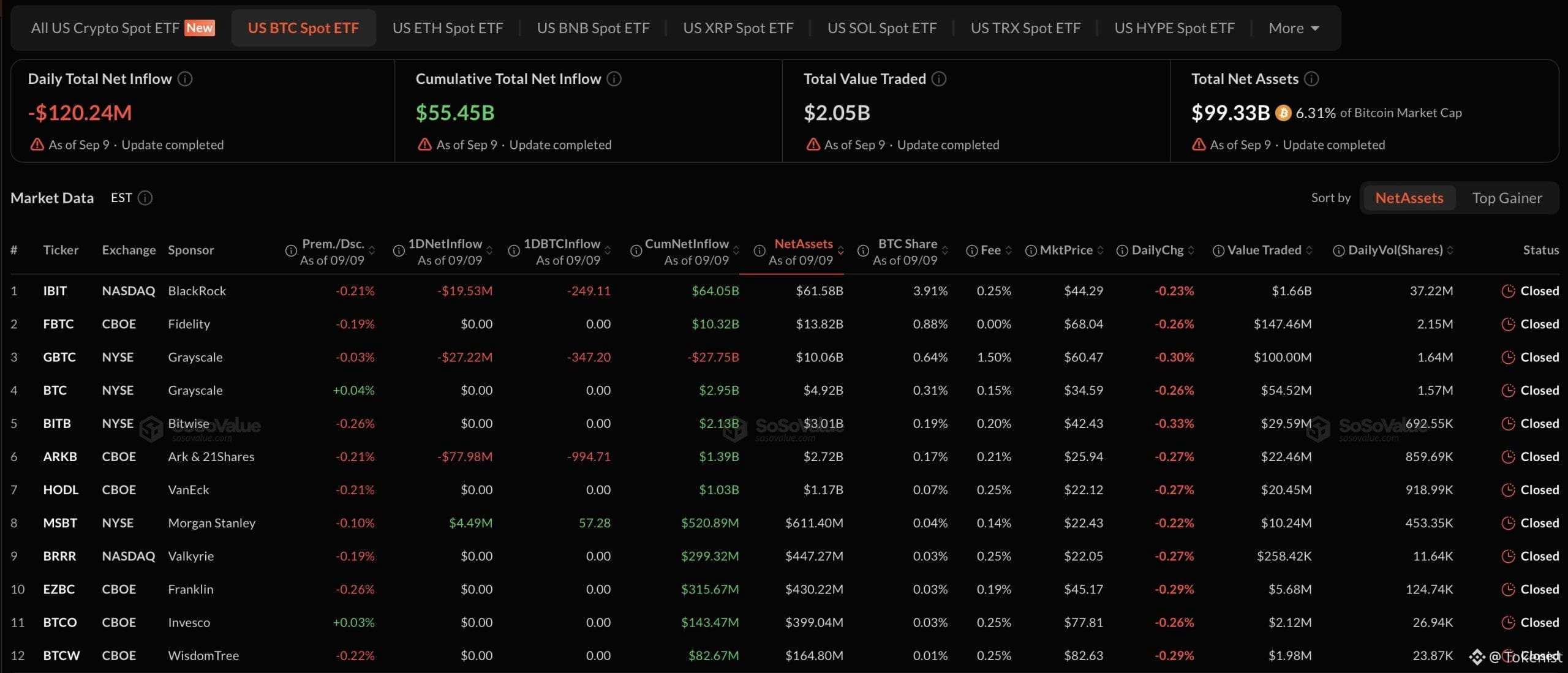
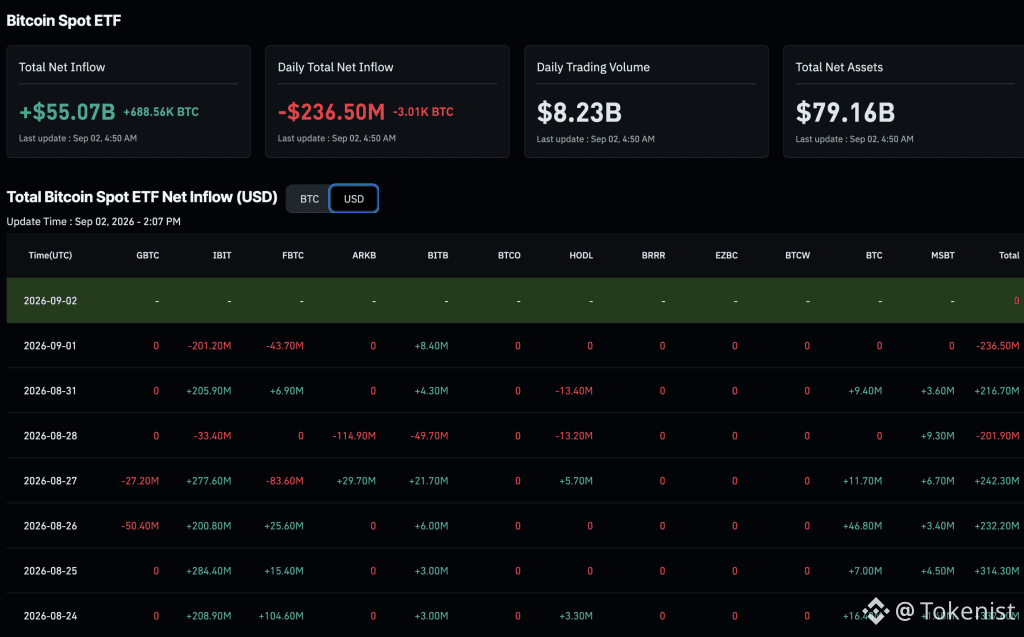
The BlackRock iShares Bitcoin Trust (IBIT) recorded $213.63M in net outflows on June 5, 2026, equivalent to approximately 3,580 BTC exiting the fund in a single session, as the largest spot Bitcoin ETF by assets under management extended a redemption streak that has now pulled $4.4Bn from US spot Bitcoin ETFs over 13 consecutive trading days.
Total net outflows across all US spot Bitcoin ETF products on June 5 reached $325.66M, confirming that IBIT’s print was the dominant, though not the only, contributor to the day’s institutional selling pressure.
SOURCE: CoinGlass
Grayscale’s GBTC recorded $60.84M in withdrawals on the same session, while Fidelity’s FBTC shed $59.69M, both moving in the same direction as IBIT and ruling out any fund-specific explanation for the outflow.
Cross-fund data from CoinGlass shows that this coordinated directional move across the three largest Bitcoin ETF products carries the macro fingerprint of a deliberate institutional repositioning rather than routine portfolio rebalancing.
BlackRock IBIT Outflow Mechanics: The $4.4Bn Redemption Streak and What the Cross-Fund Alignment Reveals
SOURCE: TradingView
US spot Bitcoin ETFs held about 1.277 million BTC and $75.1Bn in AUM after the June 5 redemptions, according to SoSoValue data. The $4.4Bn outflow over 13 days represented a significant 5.9% of total AUM, indicating a structural signal.
IBIT, the leading ETF launched in January 2024, absorbed the majority of these outflows, with BlackRock withdrawing around $1.34Bn from it alone during the week ending June 5.
On May 28, IBIT saw a $527.84M outflow, its second-largest daily redemption. A brief pause on June 4 provided only $3.05M in net inflows, predominantly from IBIT. When IBIT redeems shares, Bitcoin moves from Coinbase to the spot market, and the June 5 redemption involved 3,580 BTC, impacting prices.
Overall cumulative net inflows for US spot Bitcoin ETFs have dropped to approximately $53.94Bn, indicating simultaneous long-term adoption and near-term fluctuations.
EXPLORE: BlackRock IBIT’s $2.43B Redemption Streak: The Record Outflow Event That Set the Stage
Macro Backdrop and Institutional Context: Risk-Off Rotation and the Pressure Behind the Outflow Streak
The 13-day Bitcoin ETF outflow streak is closely linked to the macro rate environment, with elevated US 10-year Treasury yields raising the opportunity cost of holding non-yielding assets like Bitcoin.
The Federal Reserve’s commitment to higher rates, bolstered by strong jobs data in late May 2026, further pressured institutional allocators by reducing expectations for imminent rate cuts.
This diminished one of the key factors that had previously attracted institutional capital to Bitcoin ETFs. Citigroup noted that the market may have underestimated the importance of ETF demand in Bitcoin’s price dynamics.
Now, sustained ETF redemptions create significant selling pressure in the spot market. Investing.com reported a systematic reduction in Bitcoin exposure among large allocators, with approximately $3.8Bn in net outflows before the recent $4.4Bn episode.
$60,000 as the Pivot Level: What ETF Flow Exhaustion and Fed Policy Clarity Mean for Bitcoin’s Next Move
$BTC reclaimed the Feb 2026 lows. The key level for Bitcoin is $65,000 here. If BTC reclaims it, a rally towards the $67,000-$68,000 level could happen next. Otherwise, Bitcoin will sweep the last week's lows again. pic.twitter.com/uqGxImbyjS
— Ted (@TedPillows) June 8, 2026
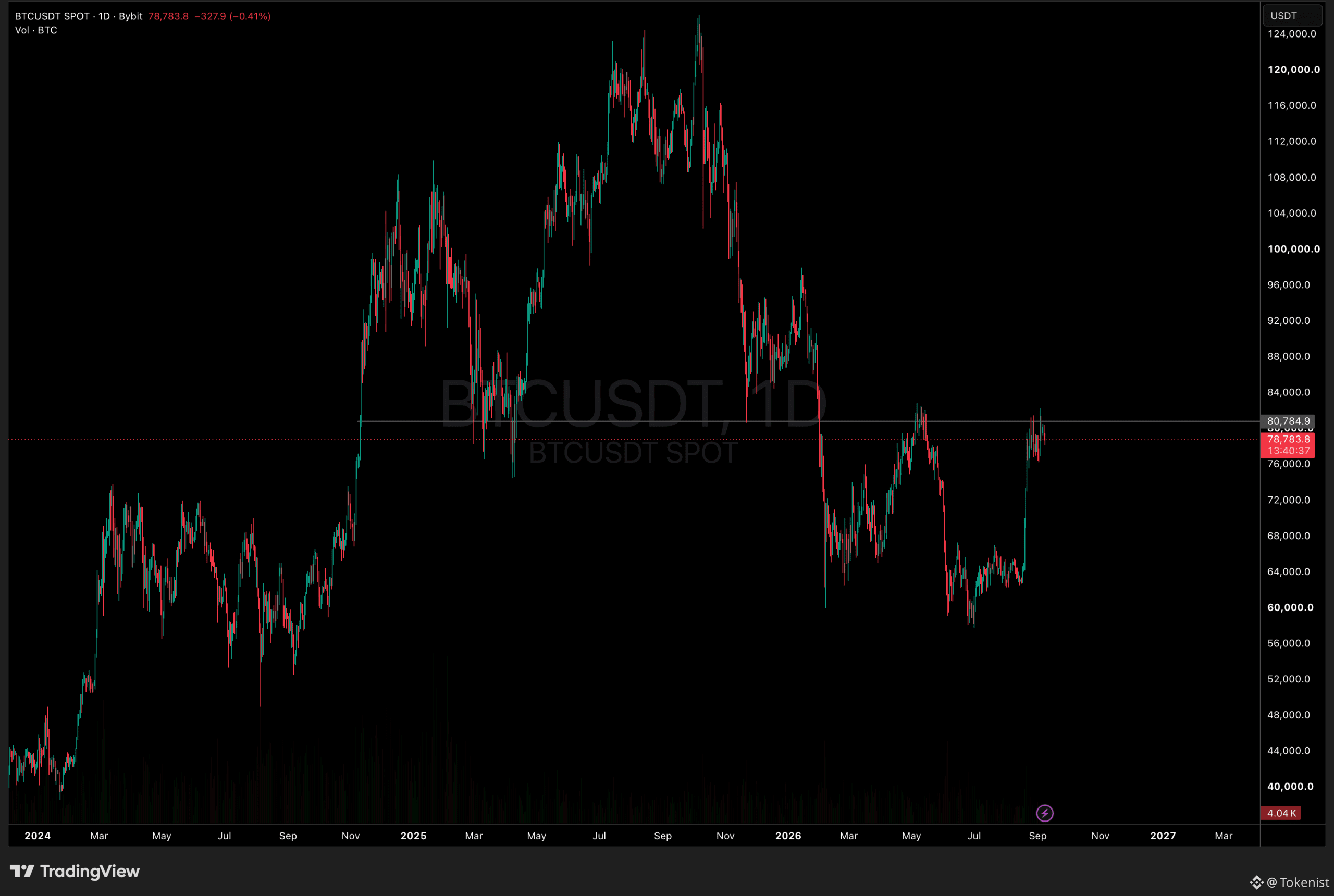
Bitcoin was trading between $59,000 and $61,000 around June 5, with $60,000 acting as a crucial technical support level.
This level is significant as it reflects the balance between ETF redemption-driven supply pressure and spot market demand. A decisive close below $60,000 could heighten concerns about institutional selling.
For a bullish scenario, there needs to be an exhaustion of outflows across the BlackRock IBIT, FBTC, and GBTC products, combined with a dovish macro catalyst, such as a softer CPI report or hints of Fed rate cuts.
This could restore Bitcoin’s appeal for institutional investors and lead to a recovery towards the $65,000-$68,000 range. Conversely, if ETF redemptions continue and Treasury yields rise, the $60,000 support may falter, pushing Bitcoin towards the $55,000 area.
The most likely near-term outcome is range-bound consolidation between $59,000 and $63,000 as the market awaits ETF flow direction and signals from the Federal Reserve.
While recent outflows have impacted institutional sentiment, the overall trend of institutional adoption remains strong, evidenced by $53.94 billion in cumulative net inflows.
Disclaimer: The author does not hold or have a position in any securities discussed in the article. All stock prices were quoted at the time of writing.
The post BlackRock IBIT Posts $214M Single-Day Outflow as 13-Day Redemption Streak Hits $4.4B appeared first on Tokenist.
記事
ウォール街のステーブルコインへの回答:JPMorganとCitiの2027年共有トークン化預金ネットワークJPMorgan Chase、Citigroup、Bank of America、Wells Fargoが、The Clearing Houseを通じて共有された規制済み決済ネットワーク(RSN)を開発するために協力しており、2027年上半期にローンチを予定しています。 このネットワークは、共通のブロックチェーン上でトークン化された預金の24/7原子的決済を可能にし、ホールセール決済における重要なシフトを示しており、主要な米国の銀行がプライベートステーブルコインに対抗することを目指していることを示しています。 独占:米国最大の銀行が、来年トークン化された預金ネットワークを立ち上げる計画をしており、暗号企業からの脅威を回避しようとしています https://t.co/rQJwUGFdpU

ウォール街のステーブルコインへの回答:JPMorganとCitiの2027年共有トークン化預金ネットワーク

JPMorgan Chase、Citigroup、Bank of America、Wells Fargoが、The Clearing Houseを通じて共有された規制済み決済ネットワーク(RSN)を開発するために協力しており、2027年上半期にローンチを予定しています。
このネットワークは、共通のブロックチェーン上でトークン化された預金の24/7原子的決済を可能にし、ホールセール決済における重要なシフトを示しており、主要な米国の銀行がプライベートステーブルコインに対抗することを目指していることを示しています。
独占:米国最大の銀行が、来年トークン化された預金ネットワークを立ち上げる計画をしており、暗号企業からの脅威を回避しようとしています https://t.co/rQJwUGFdpU
記事
翻訳参照
Goldman Sachs’ $322Bn SpaceX AI Forecast: a 100x Revenue Jump By 2030?Goldman Sachs has projected that the SpaceX AI-related revenue will surge 100-fold to $322Bn by 2030, up from an estimated $3.2Bn in 2025, according to a research note shared with potential investors ahead of the company’s planned IPO, a forecast that would place SpaceX’s AI segment alone ahead of NVIDIA’s (NVDA) entire fiscal 2024 revenue of roughly $61Bn. Total SpaceX revenue is projected to reach $474Bn by 2030, up from $18.7Bn in 2024, with the AI division accounting for well over half of that figure by decade’s end. The projection arrives as SpaceX finalizes what would be one of the largest IPOs in stock market history, targeting $75Bn in proceeds at a $1.75 trillion valuation, with pricing expected June 11 and Nasdaq trading set to begin June 12. Goldman Sachs is serving as an underwriter alongside Morgan Stanley, Bank of America, Citigroup, and JPMorgan Chase, a detail that adds a material conflict-of-interest caveat to the firm’s bullish revenue model. The Orbital Compute Thesis: How Goldman Arrives at its SpaceX $322Bn Number NEW: Goldman Sachs reportedly forecasts SpaceX’s AI division revenue will grow 9,900% within four years, reaching $322,000,000,000.00 by 2030. — Polymarket (@Polymarket) June 4, 2026 Goldman’s forecast hinges on the Starlink AI infrastructure thesis, which posits that SpaceX’s satellite constellation can deliver edge AI computing at scale, sidestepping terrestrial data center limitations. The model predicts Starlink will generate around $144Bn in revenue by 2030, with AI projected to dominate growth at $322Bn, significantly larger than Starlink and SpaceX’s launch business, estimated at $8.3Bn. The AI revenue thesis encompasses Elon Musk’s technology ecosystem, including xAI and the platform X, though Goldman hasn’t detailed revenue-sharing arrangements. xAI aims for a $26.5 trillion market, while Starlink and SpaceX’s core operations are estimated at $2 trillion. Despite xAI’s reported $6.4Bn loss last year, they aim for a rapid turnaround to $322Bn in five years. Goldman also projects the SpaceX EBITDA to rise from $6.6Bn in 2025 to $352Bn by 2030, primarily driven by AI. These estimates lack verification due to the absence of public registration, and Goldman’s roles as an analyst and underwriter may have influenced the favorable projections. The Financial Times reported on the note after obtaining materials that had been shared with potential investors. SpaceX vs. Terrestrial AI Infrastructure: What $322Bn Actually Implies Goldman Sachs projects that SpaceX could generate $322Bn in AI revenue by 2030, surpassing AWS’s $107Bn and NVIDIA’s $115Bn in their respective recent fiscal years, making SpaceX the largest AI infrastructure provider. This potential stems from SpaceX’s unique orbital compute capacity, which offers low-latency global coverage through Starlink’s satellite mesh, ideal for autonomous systems in areas without fiber connectivity. While Goldman sees this as a foundation for a massive market, analysts caution that this view may be premature, given the early stages of monetizing orbital computing. EXPLORE: Goldman Sachs’ AI Crowding Warning and Portfolio Risk Assessment IPO Valuation Context and Public-Market Implications SOURCE: Polymarket SpaceX’s IPO share price is set at $135, aiming for a $1.75 trillion valuation, which has drawn skepticism from Morningstar, which values the company at around $780Bn. Morningstar cites risks in unclear AI monetization pathways and competition from firms like OpenAI and Anthropic. Investors excluded from the IPO have limited options for direct exposure, though pre-IPO synthetic instruments are gaining retail interest. The bullish view hinges on AI infrastructure as a core asset, while the bearish outlook raises concerns about Musk retaining 82% of the voting power, thereby limiting public shareholders’ influence. Prediction markets suggest a more than 98% chance that the IPO will proceed despite these debates. The Goldman forecast introduces competitive pressures for NVIDIA and Amazon, with no major sell-side analysts yet adjusting price targets in response to the SpaceX AI developments. The author does not hold or have a position in any securities discussed in the article. All stock prices were quoted at the time of writing. The post Goldman Sachs’ $322Bn SpaceX AI Forecast: A 100x Revenue Jump by 2030? appeared first on Tokenist.

Goldman Sachs’ $322Bn SpaceX AI Forecast: a 100x Revenue Jump By 2030?

Goldman Sachs has projected that the SpaceX AI-related revenue will surge 100-fold to $322Bn by 2030, up from an estimated $3.2Bn in 2025, according to a research note shared with potential investors ahead of the company’s planned IPO, a forecast that would place SpaceX’s AI segment alone ahead of NVIDIA’s (NVDA) entire fiscal 2024 revenue of roughly $61Bn.
Total SpaceX revenue is projected to reach $474Bn by 2030, up from $18.7Bn in 2024, with the AI division accounting for well over half of that figure by decade’s end.
The projection arrives as SpaceX finalizes what would be one of the largest IPOs in stock market history, targeting $75Bn in proceeds at a $1.75 trillion valuation, with pricing expected June 11 and Nasdaq trading set to begin June 12.
Goldman Sachs is serving as an underwriter alongside Morgan Stanley, Bank of America, Citigroup, and JPMorgan Chase, a detail that adds a material conflict-of-interest caveat to the firm’s bullish revenue model.
The Orbital Compute Thesis: How Goldman Arrives at its SpaceX $322Bn Number
NEW: Goldman Sachs reportedly forecasts SpaceX’s AI division revenue will grow 9,900% within four years, reaching $322,000,000,000.00 by 2030.
— Polymarket (@Polymarket) June 4, 2026
Goldman’s forecast hinges on the Starlink AI infrastructure thesis, which posits that SpaceX’s satellite constellation can deliver edge AI computing at scale, sidestepping terrestrial data center limitations.
The model predicts Starlink will generate around $144Bn in revenue by 2030, with AI projected to dominate growth at $322Bn, significantly larger than Starlink and SpaceX’s launch business, estimated at $8.3Bn.
The AI revenue thesis encompasses Elon Musk’s technology ecosystem, including xAI and the platform X, though Goldman hasn’t detailed revenue-sharing arrangements.
xAI aims for a $26.5 trillion market, while Starlink and SpaceX’s core operations are estimated at $2 trillion. Despite xAI’s reported $6.4Bn loss last year, they aim for a rapid turnaround to $322Bn in five years.
Goldman also projects the SpaceX EBITDA to rise from $6.6Bn in 2025 to $352Bn by 2030, primarily driven by AI. These estimates lack verification due to the absence of public registration, and Goldman’s roles as an analyst and underwriter may have influenced the favorable projections. The Financial Times reported on the note after obtaining materials that had been shared with potential investors.
SpaceX vs. Terrestrial AI Infrastructure: What $322Bn Actually Implies
Goldman Sachs projects that SpaceX could generate $322Bn in AI revenue by 2030, surpassing AWS’s $107Bn and NVIDIA’s $115Bn in their respective recent fiscal years, making SpaceX the largest AI infrastructure provider.
This potential stems from SpaceX’s unique orbital compute capacity, which offers low-latency global coverage through Starlink’s satellite mesh, ideal for autonomous systems in areas without fiber connectivity.
While Goldman sees this as a foundation for a massive market, analysts caution that this view may be premature, given the early stages of monetizing orbital computing.
EXPLORE: Goldman Sachs’ AI Crowding Warning and Portfolio Risk Assessment
IPO Valuation Context and Public-Market Implications
SOURCE: Polymarket
SpaceX’s IPO share price is set at $135, aiming for a $1.75 trillion valuation, which has drawn skepticism from Morningstar, which values the company at around $780Bn.
Morningstar cites risks in unclear AI monetization pathways and competition from firms like OpenAI and Anthropic.
Investors excluded from the IPO have limited options for direct exposure, though pre-IPO synthetic instruments are gaining retail interest.
The bullish view hinges on AI infrastructure as a core asset, while the bearish outlook raises concerns about Musk retaining 82% of the voting power, thereby limiting public shareholders’ influence.
Prediction markets suggest a more than 98% chance that the IPO will proceed despite these debates. The Goldman forecast introduces competitive pressures for NVIDIA and Amazon, with no major sell-side analysts yet adjusting price targets in response to the SpaceX AI developments.
The author does not hold or have a position in any securities discussed in the article. All stock prices were quoted at the time of writing.
The post Goldman Sachs’ $322Bn SpaceX AI Forecast: A 100x Revenue Jump by 2030? appeared first on Tokenist.
記事
翻訳参照
Farage Crypto Donor: Reform UK’s £7M Crypto FundingIn Farage crypto donor news, Reform UK has secured £9.3M in political donations during Q1 2026, with £7M of that total contributed by cryptocurrency entrepreneurs Christopher Harborne and Ben Delo, according to figures released by the Electoral Commission on June 4, 2026. The haul marks the third consecutive quarter in which Nigel Farage’s party has topped Britain’s political fundraising table, following a £5.5M raise in Q4 2025, and positions Reform UK as the best-funded insurgent force in Westminster ahead of the UK Election 2026. Two foreign based Crypto dealers gave Reform £7m in the first three months of this year – why? What do they want? Farage has proposed tax breaks for Crypto, could that be part of the ‘deal’. We don't know, but suspicions like these abound in to our current system – of allowing… pic.twitter.com/rcMiCCrjrt — Dale Vince (@DaleVince) June 4, 2026 The concentration of crypto-affiliated capital inside one party’s war chest carries direct implications for FCA-supervised exchanges, digital asset custodians, and UK-registered cryptoasset businesses currently navigating one of the most contested regulatory authorization pipelines in the developed world. A policy environment shaped by Reform UK’s donor base would look substantively different from the one currently being constructed by the incumbent government – and the gap between those two outcomes is now a priced political risk for firms operating under FCA oversight. SOURCE: TradingView Farage Crypto Donor Profile and Strategic Logic: How £7M in Crypto Capital Translates Into Policy Pressure Christopher Harborne and Ben Delo account for 75% of Reform UK’s Q1 2026 fundraising, a concentration unmatched by other major UK parties. Harborne has donated over £12M in the past year and resides in Thailand, attracting regulatory scrutiny amid proposals to restrict overseas donations and ban crypto contributions. Delo, co-founder of the BitMEX exchange, lends credibility in the digital assets sector. The strategic rationale is clear: both donors are from sectors where FCA regulations influence operational locations. Reform UK’s platform aims to address the challenges posed by the FCA’s slow and opaque cryptoasset registration process, which has historically had an over 80% rejection rate. Their goal is to create a tailored UK framework for digital assets that diverges from EU regulations. As the election cycle approaches, the timing enhances their influence. With Reform UK potentially acting as a kingmaker in a hung parliament, it can leverage its position to seek concessions on crypto regulation from whichever party wants to govern, prompting both Labor and the Conservatives to refine their crypto policies. Reform UK is raising millions more than other political parties from private donations, bringing in £9m largely from cryptocurrency billionaires in first three months of year. Nigel Farage’s party took £3m donation from Christopher Harborne, a British-Thai dual citizen, and… — Pippa Crerar (@PippaCrerar) June 4, 2026 UK Crypto Hub Ambitions: How Reform UK’s Push Fits the Global Regulatory Competition for Digital Asset Dominance The UK’s goal of becoming a global crypto hub post-Brexit began in 2022, when then-Chancellor Rishi Sunak initiated discussions on digital asset regulation. Progress has been slow, with a congested FCA registration process and delays in stablecoin regulation, even as the EU’s MiCA regime has already taken effect. Reform UK advocates a distinct regulatory framework that diverges from MiCA to attract firms deterred by its costs. The US legislative situation, highlighted by the GENIUS and CLARITY Acts, serves as a comparison for how the Farage crypto donor and that political funding and lobbying shape regulatory environments, which Reform UK aims to replicate. Countries like Singapore and the UAE have successfully drawn crypto firms through regulatory clarity. Major global exchanges with UK operations have indicated that their long-term decisions depend on how the UK’s authorization processes evolve. The UK is getting nervous about stablecoins UK lawmakers are now pushing the Bank of England to soften its proposed stablecoin rules, warning that being too restrictive could kill off the country’s own stablecoin industry before it even gets started. A year ago, governments… pic.twitter.com/oW7IBtoWY8 — That Martini Guy ₿ (@MartiniGuyYT) June 4, 2026 Proposed Donor Curbs and Institutional Resistance: Why the £7M May Not Translate Directly Into Policy The main structural risk to Reform UK’s crypto policy is a government review proposing a complete ban on cryptocurrency donations to UK parties, which would prevent Reform UK from accepting funds from Thai-based Harborne and other digital asset-heavy donors. If enacted, this proposal is seen as a significant setback for the party, which may label it as politically motivated. Additionally, the FCA operates independently and is not influenced solely by political outcomes. Even if Reform UK gains substantial seats in the 2026 election, any changes to FCA regulations would require extensive legislative processes, taking years rather than months. Labour and the Conservatives are also adapting their positions on digital assets in response to the Farage crypto donor, likely leading to broader cross-party agreement on crypto-friendly policies, which could dilute the impact of Reform UK’s donor base. The author does not hold or have a position in any securities discussed in the article. All prices were quoted at the time of writing. The post Farage Crypto Donor: Reform UK’s £7M Crypto Funding appeared first on Tokenist.

Farage Crypto Donor: Reform UK’s £7M Crypto Funding

In Farage crypto donor news, Reform UK has secured £9.3M in political donations during Q1 2026, with £7M of that total contributed by cryptocurrency entrepreneurs Christopher Harborne and Ben Delo, according to figures released by the Electoral Commission on June 4, 2026.
The haul marks the third consecutive quarter in which Nigel Farage’s party has topped Britain’s political fundraising table, following a £5.5M raise in Q4 2025, and positions Reform UK as the best-funded insurgent force in Westminster ahead of the UK Election 2026.
Two foreign based Crypto dealers gave Reform £7m in the first three months of this year – why? What do they want? Farage has proposed tax breaks for Crypto, could that be part of the ‘deal’. We don't know, but suspicions like these abound in to our current system – of allowing… pic.twitter.com/rcMiCCrjrt
— Dale Vince (@DaleVince) June 4, 2026
The concentration of crypto-affiliated capital inside one party’s war chest carries direct implications for FCA-supervised exchanges, digital asset custodians, and UK-registered cryptoasset businesses currently navigating one of the most contested regulatory authorization pipelines in the developed world.
A policy environment shaped by Reform UK’s donor base would look substantively different from the one currently being constructed by the incumbent government – and the gap between those two outcomes is now a priced political risk for firms operating under FCA oversight.
SOURCE: TradingView Farage Crypto Donor Profile and Strategic Logic: How £7M in Crypto Capital Translates Into Policy Pressure
Christopher Harborne and Ben Delo account for 75% of Reform UK’s Q1 2026 fundraising, a concentration unmatched by other major UK parties. Harborne has donated over £12M in the past year and resides in Thailand, attracting regulatory scrutiny amid proposals to restrict overseas donations and ban crypto contributions. Delo, co-founder of the BitMEX exchange, lends credibility in the digital assets sector.
The strategic rationale is clear: both donors are from sectors where FCA regulations influence operational locations. Reform UK’s platform aims to address the challenges posed by the FCA’s slow and opaque cryptoasset registration process, which has historically had an over 80% rejection rate. Their goal is to create a tailored UK framework for digital assets that diverges from EU regulations.
As the election cycle approaches, the timing enhances their influence. With Reform UK potentially acting as a kingmaker in a hung parliament, it can leverage its position to seek concessions on crypto regulation from whichever party wants to govern, prompting both Labor and the Conservatives to refine their crypto policies.
Reform UK is raising millions more than other political parties from private donations, bringing in £9m largely from cryptocurrency billionaires in first three months of year. Nigel Farage’s party took £3m donation from Christopher Harborne, a British-Thai dual citizen, and…
— Pippa Crerar (@PippaCrerar) June 4, 2026
UK Crypto Hub Ambitions: How Reform UK’s Push Fits the Global Regulatory Competition for Digital Asset Dominance
The UK’s goal of becoming a global crypto hub post-Brexit began in 2022, when then-Chancellor Rishi Sunak initiated discussions on digital asset regulation.
Progress has been slow, with a congested FCA registration process and delays in stablecoin regulation, even as the EU’s MiCA regime has already taken effect. Reform UK advocates a distinct regulatory framework that diverges from MiCA to attract firms deterred by its costs.
The US legislative situation, highlighted by the GENIUS and CLARITY Acts, serves as a comparison for how the Farage crypto donor and that political funding and lobbying shape regulatory environments, which Reform UK aims to replicate.
Countries like Singapore and the UAE have successfully drawn crypto firms through regulatory clarity. Major global exchanges with UK operations have indicated that their long-term decisions depend on how the UK’s authorization processes evolve.
The UK is getting nervous about stablecoins UK lawmakers are now pushing the Bank of England to soften its proposed stablecoin rules, warning that being too restrictive could kill off the country’s own stablecoin industry before it even gets started. A year ago, governments… pic.twitter.com/oW7IBtoWY8
— That Martini Guy ₿ (@MartiniGuyYT) June 4, 2026
Proposed Donor Curbs and Institutional Resistance: Why the £7M May Not Translate Directly Into Policy
The main structural risk to Reform UK’s crypto policy is a government review proposing a complete ban on cryptocurrency donations to UK parties, which would prevent Reform UK from accepting funds from Thai-based Harborne and other digital asset-heavy donors. If enacted, this proposal is seen as a significant setback for the party, which may label it as politically motivated.
Additionally, the FCA operates independently and is not influenced solely by political outcomes. Even if Reform UK gains substantial seats in the 2026 election, any changes to FCA regulations would require extensive legislative processes, taking years rather than months.
Labour and the Conservatives are also adapting their positions on digital assets in response to the Farage crypto donor, likely leading to broader cross-party agreement on crypto-friendly policies, which could dilute the impact of Reform UK’s donor base.
The author does not hold or have a position in any securities discussed in the article. All prices were quoted at the time of writing.
The post Farage Crypto Donor: Reform UK’s £7M Crypto Funding appeared first on Tokenist.
記事
ブラックロックIBIT、6,005 BTCがCoinbaseに移動し、記録的な$2.43Bの流出を記録ブラックロックのiSharesビットコイントラスト(IBIT)は、2026年5月に9日連続で$2.43Bnのネット流出を記録し、5月26日の$1.26Bnのダークプールブロックセールに culminate(達成)し、2024年1月のローンチ以来、ファンドの歴史の中で最大の単日償還イベントとなりました。 オンチェーンデータは、約6,005 BTC(現在の価格で約4億3,000万ドル)をIBIT関連のカストディウォレットからCoinbase Primeに転送したことを同時に確認しており、ヘッドラインの流出数値の背後にある償還メカニクスの直接的なオンチェーン確認を提供しています。

ブラックロックIBIT、6,005 BTCがCoinbaseに移動し、記録的な$2.43Bの流出を記録

ブラックロックのiSharesビットコイントラスト(IBIT)は、2026年5月に9日連続で$2.43Bnのネット流出を記録し、5月26日の$1.26Bnのダークプールブロックセールに culminate(達成)し、2024年1月のローンチ以来、ファンドの歴史の中で最大の単日償還イベントとなりました。
オンチェーンデータは、約6,005 BTC(現在の価格で約4億3,000万ドル)をIBIT関連のカストディウォレットからCoinbase Primeに転送したことを同時に確認しており、ヘッドラインの流出数値の背後にある償還メカニクスの直接的なオンチェーン確認を提供しています。
記事
ビットコイン価格が記録的なETF流出とStrategyの売却により65,700ドルに下落ビットコイン価格は2026年6月3日に intraday の安値65,710ドルまで下落し、24時間で6%以上の下落を記録しました。これは、推定で28億ドルから35億ドルの大規模なスポットETFの流出と、2020年以降の主要な法人バイヤーであるStrategyによる著名なビットコインの売却が影響しています。 この圧力は、1日で18億ドルの強制清算を引き起こし、2026年2月以来の最大規模となり、ロングポジションがそのうちの13.5億ドルを占めています。65,710ドルのレベルは数週間の安値を示し、ビットコインは65,000ドルのテクニカルサポートに近づいており、トレーダーは60,000ドルのテスト前にこれを重要視しています。

ビットコイン価格が記録的なETF流出とStrategyの売却により65,700ドルに下落

ビットコイン価格は2026年6月3日に intraday の安値65,710ドルまで下落し、24時間で6%以上の下落を記録しました。これは、推定で28億ドルから35億ドルの大規模なスポットETFの流出と、2020年以降の主要な法人バイヤーであるStrategyによる著名なビットコインの売却が影響しています。
この圧力は、1日で18億ドルの強制清算を引き起こし、2026年2月以来の最大規模となり、ロングポジションがそのうちの13.5億ドルを占めています。65,710ドルのレベルは数週間の安値を示し、ビットコインは65,000ドルのテクニカルサポートに近づいており、トレーダーは60,000ドルのテスト前にこれを重要視しています。
記事
翻訳参照
The Microsoft 1,000x Quantum Reliability Leap: Bullish for MSFT?Microsoft Corporation (NASDAQ: MSFT) introduced Majorana 2 at its Build conference, boasting a 1,000x improvement in qubit reliability, crucial for scalable quantum computing by 2029. The chip achieves qubit lifetimes of 20 seconds, with some lasting up to a minute, marking a significant redesign rather than a mere software upgrade. This positions Azure Quantum as a key player in transitioning to fault-tolerant quantum systems for enterprise use. Microsoft has officially unveiled its new quantum computing hardware component, the Majorana 2 chip. In a significant shift, researchers utilized advanced AI materials-science tools to bypass standard manufacturing limits, successfully integrating lead, a water-soluble material… pic.twitter.com/LhjXPWuCe2 — Philosophy Of Physics (@PhilosophyOfPhy) June 2, 2026 The announcement comes amid increased activity in the quantum sector, including Google’s Willow chip demonstrating significant reductions in error rates and Caltech research suggesting lower resource requirements for breaking elliptic-curve cryptography. Project Eleven predicts Q-Day, when quantum computers can crack public-key cryptography, could arrive as early as 2030, a timeline supported by Citi analysts. Microsoft Quantum Error Correction: What the 1,000x Improvement in Majorana 2 Actually Achieved SOURCE: Yahoo Finance Microsoft’s Majorana 2 replaces the aluminum-based topological superconductor from Majorana 1 with a lead-based design, improving qubit isolation from environmental interference. This architectural change increased the parity lifetime from milliseconds to an average of 20 seconds, enhancing quantum error correction by allowing longer state retention. Microsoft Technical Fellow Chetan Nayak highlighted a significant improvement, stating, “We’re 1,000 times better” than the previous year, marking progress toward a utility-scale quantum supercomputer. The company attributes some of its success to its Microsoft Discovery platform, which aids in materials discovery and automates measurements, thereby streamlining the manufacturing process. However, the Majorana 2 findings are still in preprint form and pending peer review, with critics noting that the current data do not confirm the existence of topological qubits or Majoranas. Independent validation and peer-reviewed results are needed before any commercial claims can be fully assessed. Microsoft Azure Quantum as Future Enterprise Infrastructure: How the Breakthrough Reshapes the Competitive Stack Microsoft has positioned Azure Quantum as the commercial hub for its hardware advancements. In September 2024, the company announced priority access to reliable quantum hardware following a milestone of scaling up to 12 entangled logical qubits. This integration enables quantum workloads to run on the existing Azure cloud infrastructure, easing adoption for enterprise customers. In the competitive landscape, Google aims for Q-Day by 2032 and has made progress in reducing error rates. IBM focuses on increasing physical qubit counts, while Microsoft emphasizes logical qubit quality and reliability for commercial viability. IonQ is also advancing trapped-ion architectures for enterprise cloud integration. However, none have yet achieved peer-reviewed, fault-tolerant logical qubit operations at scale, which is the target for the Microsoft 2029 roadmap. MSFT Stock and the Quantum Variable: What Analysts Are Saying About Long-Term Value $MSFT had some huge announcements today. Nearly everything they shared was a banger. I give the event a 10/10. Some of the things they announced: – Copilot “Scout”, a long running agent that monitors your inbox & Onedrive continuously for insights and action items – Project… pic.twitter.com/LuC844XR7F — Midnight Capital (@Midnight_Captl) June 2, 2026 The Majorana 2 announcement does not function as a near-term earnings catalyst; Microsoft has not disclosed quantum-specific revenue, and the 2029 utility-scale target places monetization well beyond the current fiscal horizon. What it does provide is an option value on a compute paradigm that, if Azure Quantum reaches commercial scale, would layer on top of an existing cloud business that generated $42.4 billion in Intelligent Cloud revenue in fiscal Q3 2025 alone. Wedbush analyst Dan Ives maintained an Outperform rating on MSFT with a $550 price target as recently as March 2026, citing durable AI and cloud growth as the primary valuation drivers – quantum represents an upside variable within that same infrastructure thesis. The bull case runs through Azure Quantum, becoming the enterprise default for hybrid quantum-classical workloads, monetizable at hyperscaler margins and locked into the Azure ecosystem through existing enterprise agreements. The bear and risk case is equally legible: the 2029 timeline carries execution risk, peer-review validation remains outstanding, capital intensity for quantum hardware is substantial, and competitors, including Google and IBM, are advancing parallel architectures. The author does not hold or have a position in any securities discussed in the article. All stock prices were quoted at the time of writing. The post The Microsoft 1,000x Quantum Reliability Leap: Bullish for MSFT? appeared first on Tokenist.

The Microsoft 1,000x Quantum Reliability Leap: Bullish for MSFT?

Microsoft Corporation (NASDAQ: MSFT) introduced Majorana 2 at its Build conference, boasting a 1,000x improvement in qubit reliability, crucial for scalable quantum computing by 2029.
The chip achieves qubit lifetimes of 20 seconds, with some lasting up to a minute, marking a significant redesign rather than a mere software upgrade. This positions Azure Quantum as a key player in transitioning to fault-tolerant quantum systems for enterprise use.
Microsoft has officially unveiled its new quantum computing hardware component, the Majorana 2 chip. In a significant shift, researchers utilized advanced AI materials-science tools to bypass standard manufacturing limits, successfully integrating lead, a water-soluble material… pic.twitter.com/LhjXPWuCe2
— Philosophy Of Physics (@PhilosophyOfPhy) June 2, 2026
The announcement comes amid increased activity in the quantum sector, including Google’s Willow chip demonstrating significant reductions in error rates and Caltech research suggesting lower resource requirements for breaking elliptic-curve cryptography.
Project Eleven predicts Q-Day, when quantum computers can crack public-key cryptography, could arrive as early as 2030, a timeline supported by Citi analysts.
Microsoft Quantum Error Correction: What the 1,000x Improvement in Majorana 2 Actually Achieved
SOURCE: Yahoo Finance
Microsoft’s Majorana 2 replaces the aluminum-based topological superconductor from Majorana 1 with a lead-based design, improving qubit isolation from environmental interference.
This architectural change increased the parity lifetime from milliseconds to an average of 20 seconds, enhancing quantum error correction by allowing longer state retention.
Microsoft Technical Fellow Chetan Nayak highlighted a significant improvement, stating, “We’re 1,000 times better” than the previous year, marking progress toward a utility-scale quantum supercomputer.
The company attributes some of its success to its Microsoft Discovery platform, which aids in materials discovery and automates measurements, thereby streamlining the manufacturing process.
However, the Majorana 2 findings are still in preprint form and pending peer review, with critics noting that the current data do not confirm the existence of topological qubits or Majoranas. Independent validation and peer-reviewed results are needed before any commercial claims can be fully assessed.
Microsoft Azure Quantum as Future Enterprise Infrastructure: How the Breakthrough Reshapes the Competitive Stack
Microsoft has positioned Azure Quantum as the commercial hub for its hardware advancements. In September 2024, the company announced priority access to reliable quantum hardware following a milestone of scaling up to 12 entangled logical qubits.
This integration enables quantum workloads to run on the existing Azure cloud infrastructure, easing adoption for enterprise customers.
In the competitive landscape, Google aims for Q-Day by 2032 and has made progress in reducing error rates. IBM focuses on increasing physical qubit counts, while Microsoft emphasizes logical qubit quality and reliability for commercial viability.
IonQ is also advancing trapped-ion architectures for enterprise cloud integration. However, none have yet achieved peer-reviewed, fault-tolerant logical qubit operations at scale, which is the target for the Microsoft 2029 roadmap.
MSFT Stock and the Quantum Variable: What Analysts Are Saying About Long-Term Value
$MSFT had some huge announcements today. Nearly everything they shared was a banger. I give the event a 10/10. Some of the things they announced: – Copilot “Scout”, a long running agent that monitors your inbox & Onedrive continuously for insights and action items – Project… pic.twitter.com/LuC844XR7F
— Midnight Capital (@Midnight_Captl) June 2, 2026
The Majorana 2 announcement does not function as a near-term earnings catalyst; Microsoft has not disclosed quantum-specific revenue, and the 2029 utility-scale target places monetization well beyond the current fiscal horizon.
What it does provide is an option value on a compute paradigm that, if Azure Quantum reaches commercial scale, would layer on top of an existing cloud business that generated $42.4 billion in Intelligent Cloud revenue in fiscal Q3 2025 alone.
Wedbush analyst Dan Ives maintained an Outperform rating on MSFT with a $550 price target as recently as March 2026, citing durable AI and cloud growth as the primary valuation drivers – quantum represents an upside variable within that same infrastructure thesis.
The bull case runs through Azure Quantum, becoming the enterprise default for hybrid quantum-classical workloads, monetizable at hyperscaler margins and locked into the Azure ecosystem through existing enterprise agreements.
The bear and risk case is equally legible: the 2029 timeline carries execution risk, peer-review validation remains outstanding, capital intensity for quantum hardware is substantial, and competitors, including Google and IBM, are advancing parallel architectures.
The author does not hold or have a position in any securities discussed in the article. All stock prices were quoted at the time of writing.
The post The Microsoft 1,000x Quantum Reliability Leap: Bullish for MSFT? appeared first on Tokenist.
記事
ジェイミー・ダイモン対ブライアン・アームストロング:JPモルガン対CoinbaseJPMorgan ChaseのCEO、ジェイミー・ダイモンは、FoxビジネスのインタビューでCoinbaseのCEO、ブライアン・アームストロングを「クソ満載」と公に非難し、金融革新および21世紀の技術法(FIT21)を巡る数ヶ月にわたるロビー合戦をエスカレートさせた。 それぞれの業界で最も強力なエグゼクティブ同士の対立は、単なるパーソナリティの衝突ではない。次世代の資本市場を仲介する機関がどれになるかという構造的な戦いだ。 即時の立法闘争はCLARITY法であり、2025年に署名されたGENIUS法を基にした後継の枠組みだが、商業的な利害はステーブルコインの定義を超えて広がっている。

ジェイミー・ダイモン対ブライアン・アームストロング:JPモルガン対Coinbase

JPMorgan ChaseのCEO、ジェイミー・ダイモンは、FoxビジネスのインタビューでCoinbaseのCEO、ブライアン・アームストロングを「クソ満載」と公に非難し、金融革新および21世紀の技術法(FIT21)を巡る数ヶ月にわたるロビー合戦をエスカレートさせた。
それぞれの業界で最も強力なエグゼクティブ同士の対立は、単なるパーソナリティの衝突ではない。次世代の資本市場を仲介する機関がどれになるかという構造的な戦いだ。
即時の立法闘争はCLARITY法であり、2025年に署名されたGENIUS法を基にした後継の枠組みだが、商業的な利害はステーブルコインの定義を超えて広がっている。
記事
Anthropic IPO申請:AI評価の比較分析Claude AIの開発者であるAnthropicは、SECにS-1の草案をひっそりと提出し、IPOに向けた正式なプロセスを開始しました。これは資金調達ラウンドを締めた数日後のことです。Anthropic自体は現在10億ドルの評価を受けており、この数字は2026年3月の資金調達ラウンド後にOpenAIの最近のプライベート市場評価852億ドルを超えています。 Anthropicは、証券取引委員会(SEC)にS-1登録声明の草案をひっそりと提出しました。SECの審査が完了するまで、これにより初の公開株式上場(IPO)を目指すオプションが得られます。詳細はこちら: https://t.co/onGZAhRLvD

Anthropic IPO申請:AI評価の比較分析

Claude AIの開発者であるAnthropicは、SECにS-1の草案をひっそりと提出し、IPOに向けた正式なプロセスを開始しました。これは資金調達ラウンドを締めた数日後のことです。Anthropic自体は現在10億ドルの評価を受けており、この数字は2026年3月の資金調達ラウンド後にOpenAIの最近のプライベート市場評価852億ドルを超えています。
Anthropicは、証券取引委員会(SEC)にS-1登録声明の草案をひっそりと提出しました。SECの審査が完了するまで、これにより初の公開株式上場(IPO)を目指すオプションが得られます。詳細はこちら: https://t.co/onGZAhRLvD
ヨーロッパの暗号セクターが€2兆の予算を補填:取引マージンに与える影響今日のヨーロッパの暗号ニュースでは、欧州委員会が暗号セクターをEUの財政アーキテクチャに直接統合する動きに出て、2028年から2034年までの€2兆の多年度財務枠(MFF)を支援するための一連の暗号税措置を提案しています。これは、デジタル資産を規制する以前のブロックの姿勢から、積極的に収益を引き出す方向へのシフトです。 この提案は現在、加盟国間で協議中で、暗号取引量に対して0.1%の課税、暗号キャピタルゲインに対する調和された最低税、ブロック内の高エネルギーProof-of-Work操作をターゲットにした専用の暗号マイニング課税をモデルにしており、取引課税だけで年間€30~40億の合計予測が立っています。

ヨーロッパの暗号セクターが€2兆の予算を補填:取引マージンに与える影響

今日のヨーロッパの暗号ニュースでは、欧州委員会が暗号セクターをEUの財政アーキテクチャに直接統合する動きに出て、2028年から2034年までの€2兆の多年度財務枠(MFF)を支援するための一連の暗号税措置を提案しています。これは、デジタル資産を規制する以前のブロックの姿勢から、積極的に収益を引き出す方向へのシフトです。
この提案は現在、加盟国間で協議中で、暗号取引量に対して0.1%の課税、暗号キャピタルゲインに対する調和された最低税、ブロック内の高エネルギーProof-of-Work操作をターゲットにした専用の暗号マイニング課税をモデルにしており、取引課税だけで年間€30~40億の合計予測が立っています。
記事
MetaMaskが新しいブローカレッジハブとして: OTL株式アクセスの解説Fireblocks、Robinhood、MetaMaskがオープントランザクションレイヤー(OTL)を立ち上げました。このスタンダードは、金融機関と暗号業界を繋ぎ、MetaMaskの1億人のユーザーがセルフカストディアルウォレットを通じてトークン化された株式や機関投資家向けの資産にアクセスできるようにします。 このイニシアチブは、アイデンティティ、メッセージング、トランザクション調整のための共有プロトコルを作成し、ノンカストディアルウォレットを重要な参加者として扱っています。 Fireblocks、Robinhood、MetaMaskがオープントランザクションレイヤー(OTL)を立ち上げました – これが機関投資家のデジタル資産セキュリティが決して同じにはならない理由です + 動画https://t.co/muIwuRhYiX 教育目的!

MetaMaskが新しいブローカレッジハブとして: OTL株式アクセスの解説

Fireblocks、Robinhood、MetaMaskがオープントランザクションレイヤー(OTL)を立ち上げました。このスタンダードは、金融機関と暗号業界を繋ぎ、MetaMaskの1億人のユーザーがセルフカストディアルウォレットを通じてトークン化された株式や機関投資家向けの資産にアクセスできるようにします。
このイニシアチブは、アイデンティティ、メッセージング、トランザクション調整のための共有プロトコルを作成し、ノンカストディアルウォレットを重要な参加者として扱っています。
Fireblocks、Robinhood、MetaMaskがオープントランザクションレイヤー(OTL)を立ち上げました – これが機関投資家のデジタル資産セキュリティが決して同じにはならない理由です + 動画https://t.co/muIwuRhYiX 教育目的!
記事
バンカ・セッラ、クリプトサービスを開始する最初のイタリアの銀行にイタリアのクリプトニュースでは、イタリアの銀行グループであるバンカ・セッラが、イタリア銀行との正式な通知プロセスを完了し、2026年に規制されたデジタル資産のカストディおよび転送サービスを開始する準備が整い、EUのクリプト資産市場(MiCA)フレームワークの下でクリプトサービスを提供する最初のイタリアの銀行となります。 バンカ・セッラは、イタリアの最大のプライベート独立銀行グループの一つで、約130万人の顧客と約340億ユーロのグループ資産を持っており、国内の仲間たち、インテーザ・サンパオロやユニクレディットをリードして、MiCAに準拠したクリプトインフラを構築しています。

バンカ・セッラ、クリプトサービスを開始する最初のイタリアの銀行に

イタリアのクリプトニュースでは、イタリアの銀行グループであるバンカ・セッラが、イタリア銀行との正式な通知プロセスを完了し、2026年に規制されたデジタル資産のカストディおよび転送サービスを開始する準備が整い、EUのクリプト資産市場(MiCA)フレームワークの下でクリプトサービスを提供する最初のイタリアの銀行となります。
バンカ・セッラは、イタリアの最大のプライベート独立銀行グループの一つで、約130万人の顧客と約340億ユーロのグループ資産を持っており、国内の仲間たち、インテーザ・サンパオロやユニクレディットをリードして、MiCAに準拠したクリプトインフラを構築しています。
記事
ゴールドマン・サックス、AIの利益が記録的な楽観主義を推進する中、S&P 500ターゲットを8,000に引き上げゴールドマン・サックスは、2026年のS&P 500年末ターゲットを8,000に引き上げました。AIによる利益成長がリターンの主なドライバーであり、価格上昇よりも早く加速していると述べています。 この新しい推定値は、以前の予測である7,600から上昇し、最近のクローズ7,519から6.4%のアップサイドを示唆しており、2026年には配当を含めて約17%のトータルリターンを見込んでいます。 ゴールドマンの強気な予測は、デイチエ・バンクやモルガン・スタンレーの予測(どちらも8,000を見込んでいる)と一致していますが、主要なストラテジストの平均ターゲットである7,500-7,600を大きく上回っています。

ゴールドマン・サックス、AIの利益が記録的な楽観主義を推進する中、S&P 500ターゲットを8,000に引き上げ

ゴールドマン・サックスは、2026年のS&P 500年末ターゲットを8,000に引き上げました。AIによる利益成長がリターンの主なドライバーであり、価格上昇よりも早く加速していると述べています。
この新しい推定値は、以前の予測である7,600から上昇し、最近のクローズ7,519から6.4%のアップサイドを示唆しており、2026年には配当を含めて約17%のトータルリターンを見込んでいます。
ゴールドマンの強気な予測は、デイチエ・バンクやモルガン・スタンレーの予測(どちらも8,000を見込んでいる)と一致していますが、主要なストラテジストの平均ターゲットである7,500-7,600を大きく上回っています。
ログインして、さらにコンテンツを読む
Binance Squareで世界の暗号資産トレーダーの仲間入り
⚡️ 暗号資産に関する最新かつ有益な情報が見つかります。
💬 世界最大の暗号資産取引所から信頼されています。
👍 認証を受けたクリエイターから、有益なインサイトを得られます。
メール / 電話番号
サイトマップ
Cookieの設定
プラットフォーム利用規約