
Bull and Bear Crypto
657 投稿
Bull and Bear Crypto
報告
ユーザーをブロック
Bull and Bear Crypto — where weak hands break and real traders rise. High-impact market insights, sharp analysis, and no-nonsense commentary for those who trade
低高頻度トレーダー
4.6年
5 フォロー
379 フォロワー
1.7K+ いいね
投稿
すべて
引用
翻訳参照
Picture a practice room with three separate locks on the amp cabinet. That is closer to the Binance Web3 wallet than a notebook of recovery words. There is no classic seed phrase to copy onto paper. The private key is split into three encrypted shares: one stays on your device, one sits in a cloud backup, and one is held by the service. No single party holds the full key. A signature needs at least two of the three shares, so a lost phone or a lone server does not open the wallet alone. Before you tap approve, the built-in risk scan can flag a suspicious contract. Use that warning as a pause, then read the action yourself, whether you are moving $BTC or a smaller token. Guard device unlock and cloud access the way you once guarded a written backup.
Picture a practice room with three separate locks on the amp cabinet. That is closer to the Binance Web3 wallet than a notebook of recovery words. There is no classic seed phrase to copy onto paper. The private key is split into three encrypted shares: one stays on your device, one sits in a cloud backup, and one is held by the service. No single party holds the full key. A signature needs at least two of the three shares, so a lost phone or a lone server does not open the wallet alone. Before you tap approve, the built-in risk scan can flag a suspicious contract. Use that warning as a pause, then read the action yourself, whether you are moving $BTC or a smaller token. Guard device unlock and cloud access the way you once guarded a written backup.
14
翻訳参照
Binance Spot and Convert are adding new bStocks pairs. The official notice is dated 2026-11-18. Treat the open like a quiet loading dock: deposits can start before matching is live, so a balance on screen is not a filled order. When trading starts, the first prints are thin. A market order sized like $BTC depth can slip on a brand-new book. Place a small limit, watch the spread for a full hour, then decide if the pair deserves real size. Convert is fine for a test clip, not a shortcut past a wide quote. Write the max loss before you click. The dock stays quiet until the forklift arrives.
Binance Spot and Convert are adding new bStocks pairs. The official notice is dated 2026-11-18. Treat the open like a quiet loading dock: deposits can start before matching is live, so a balance on screen is not a filled order. When trading starts, the first prints are thin. A market order sized like $BTC depth can slip on a brand-new book. Place a small limit, watch the spread for a full hour, then decide if the pair deserves real size. Convert is fine for a test clip, not a shortcut past a wide quote. Write the max loss before you click. The dock stays quiet until the forklift arrives.
15
翻訳参照
Think of a weekend market, not a single booth. $BNB is the token people recognize, but the chain family splits the work so one lane does not clog the others.
The smart-chain layer still carries most of the serious money flow: liquidity pools, DEX matching, and stablecoin settlement. That is where you go when the trade itself is the point.
The opBNB lane is built for cheaper, quicker clicks. Game loops, frequent small actions, and apps that would feel slow if every move paid main-lane fees belong there.
Greenfield handles files. Access can be programmed, so a team can gate a dataset or a game asset instead of leaving storage as an afterthought.
Pick by job, not by habit. Settlement stays on the smart chain, noisy activity moves to opBNB, and data with rules lives on Greenfield. Fear & Greed at 10, Extreme Fear, is a mood reading, not a map. The map is which layer owns the task.
11
翻訳参照
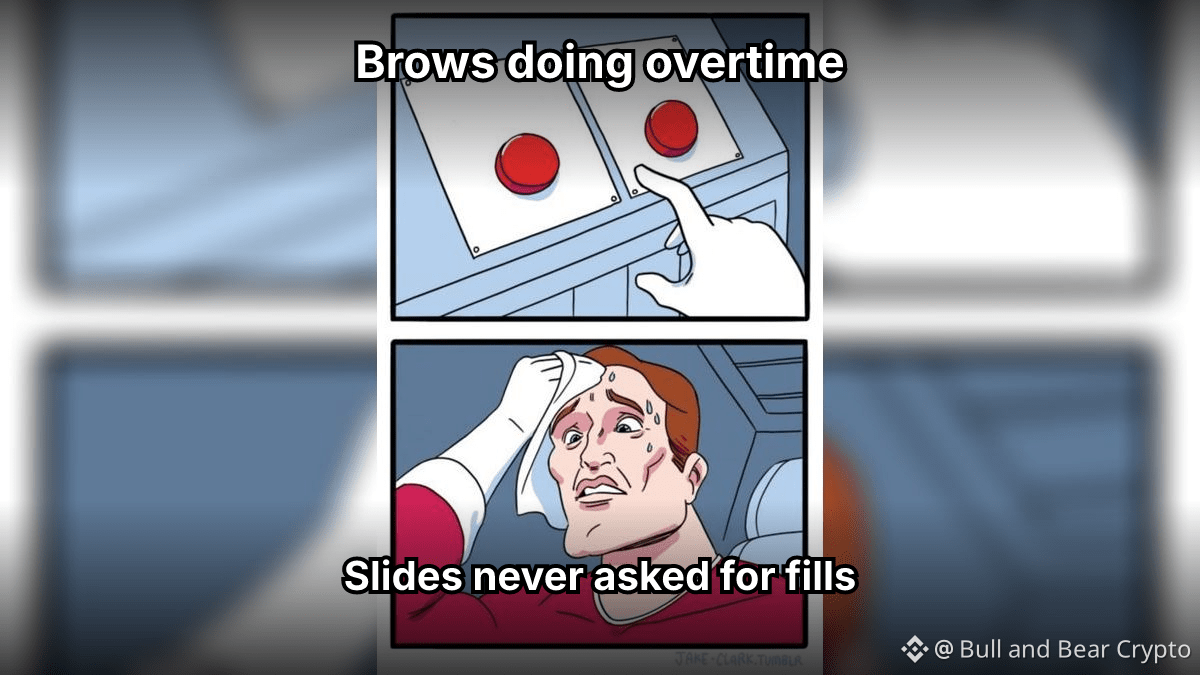
Monday sync, lens covered, very serious eyebrows.
A) $BTC one-minute under the table
B) actual meeting notes
C) nod, then both
Invite said sync. The candle never RSVP'd.
Which desk were you?
Monday sync, lens covered, very serious eyebrows.
A) $BTC one-minute under the table
B) actual meeting notes
C) nod, then both
Invite said sync. The candle never RSVP'd.
Which desk were you?
A) $BTC one-minute under the table
B) actual meeting notes
C) nod, then both
Invite said sync. The candle never RSVP'd.
Which desk were you?
28
翻訳参照
🧠 Fear & Greed is 10 today (Extreme Fear).
The number is a blend of volatility, momentum, and how loud the market is. It describes the room. It does not tell you the next candle.
Extreme fear has often shown up near uncomfortable prices. Extreme greed has often shown up when position size matters more than the story.
Use it as context next to a level you already have. A mood is not a bid.
📊 Market now: $BTC: $64,009 (+0.1%) | $ETH: $1,812 (+1.2%) | $BNB: $592.91 (+0.7%)
Does a number like this change your size, or only your mood?
#FearAndGreed #MarketPsychology $BTC
🧠 Fear & Greed is 10 today (Extreme Fear).
The number is a blend of volatility, momentum, and how loud the market is. It describes the room. It does not tell you the next candle.
Extreme fear has often shown up near uncomfortable prices. Extreme greed has often shown up when position size matters more than the story.
Use it as context next to a level you already have. A mood is not a bid.
📊 Market now: $BTC : $64,009 (+0.1%) | $ETH : $1,812 (+1.2%) | $BNB : $592.91 (+0.7%)
Does a number like this change your size, or only your mood?
#FearAndGreed #MarketPsychology $BTC
36
翻訳参照
Me: Closing $BTC mid-run felt like slamming a door.
Market: Door reopened at your fill and billed you.
Me: A lap back to even is not a medal.
Fear & Greed: 10 Extreme Fear
Who is still applauding even?
Me: Closing $BTC mid-run felt like slamming a door.
Market: Door reopened at your fill and billed you.
Me: A lap back to even is not a medal.
Fear & Greed: 10 Extreme Fear
Who is still applauding even?
Market: Door reopened at your fill and billed you.
Me: A lap back to even is not a medal.
Fear & Greed: 10 Extreme Fear
Who is still applauding even?

14
翻訳参照
Me: Empty desk, one pebble-size $BTC tap.
Market: Thin book. Your pebble just booked a talk show.
Me: Loop in risk.
Market: Voicemail. That seat is dark today.
Name the cameo: A, B, or chaos?
Me: Empty desk, one pebble-size $BTC tap.
Market: Thin book. Your pebble just booked a talk show.
Me: Loop in risk.
Market: Voicemail. That seat is dark today.
Name the cameo: A, B, or chaos?
Market: Thin book. Your pebble just booked a talk show.
Me: Loop in risk.
Market: Voicemail. That seat is dark today.
Name the cameo: A, B, or chaos?
17
翻訳参照
📈 Head and shoulders: trade the neckline, not the cartoon
The pattern is a high, a higher high, a lower high, and a neckline.
✅ It is valid for a trade when the neckline closes through, not when you recognize the head.
✅ Many 'heads' are just a trend pause that continues.
✅ A break and a retest of the neckline is cleaner than the third peak.
💡 Practical takeaway: If you cannot draw the neckline without arguing, skip it.
📊 Market now: $BTC: $63,802 (-0.5%) | $ETH: $1,799 (+0.1%) | $BNB: $591.39 (+0.4%)
💬 How often does this pattern actually change your bias?
#TechnicalAnalysis #BinanceSquare #PriceAction $BTC
📈 Head and shoulders: trade the neckline, not the cartoon
The pattern is a high, a higher high, a lower high, and a neckline.
✅ It is valid for a trade when the neckline closes through, not when you recognize the head.
✅ Many 'heads' are just a trend pause that continues.
✅ A break and a retest of the neckline is cleaner than the third peak.
💡 Practical takeaway: If you cannot draw the neckline without arguing, skip it.
📊 Market now: $BTC : $63,802 (-0.5%) | $ETH : $1,799 (+0.1%) | $BNB : $591.39 (+0.4%)
💬 How often does this pattern actually change your bias?
#TechnicalAnalysis #BinanceSquare #PriceAction $BTC
28
私:返信30件、チャートゼロ、$BTCに全力投球。市場:自信はティッカーじゃない。チャット:しーん。フィル:まだぺちゃくちゃしゃべってる。A) ミュートする B) 通貨ペアを確認する C) もっと大声で送る — あなたはどのコメント派?
私:返信30件、チャートゼロ、$BTC に全力投球。市場:自信はティッカーじゃない。チャット:しーん。フィル:まだぺちゃくちゃしゃべってる。A) ミュートする B) 通貨ペアを確認する C) もっと大声で送る — あなたはどのコメント派?
1
13
翻訳参照
A range is a room with a floor and a ceiling. Spot Grid stacks limit orders through that room and looks for cheaper buys and higher sells while price paces the same hallway. If the hallway itself starts to climb, Trailing Up can slide the grid higher so the rungs are not left under a rising floor.
Auto-Invest does not watch hallways. It buys $BTC, $ETH, or $BNB on a timetable and skips the chatter between those purchases. A Fear and Greed reading of 10 Extreme Fear is context, not a cue to miss the next slot. You choose the coins and the cadence; the bot keeps the appointment.
Use the ladder when you expect oscillation. Use the calendar when you want steady accumulation. Match the bot to the market you can describe, not the one you hope to time.
A range is a room with a floor and a ceiling. Spot Grid stacks limit orders through that room and looks for cheaper buys and higher sells while price paces the same hallway. If the hallway itself starts to climb, Trailing Up can slide the grid higher so the rungs are not left under a rising floor.
Auto-Invest does not watch hallways. It buys $BTC , $ETH , or $BNB on a timetable and skips the chatter between those purchases. A Fear and Greed reading of 10 Extreme Fear is context, not a cue to miss the next slot. You choose the coins and the cadence; the bot keeps the appointment.
Use the ladder when you expect oscillation. Use the calendar when you want steady accumulation. Match the bot to the market you can describe, not the one you hope to time.
1
14
翻訳参照
Me: Kettle on, alert set for the pullback.
Market: Breakout kept walking. No dip visit.
Me: I am still on the bench with $BTC.
A wait, B chase, or C close the app?
Me: Kettle on, alert set for the pullback.
Market: Breakout kept walking. No dip visit.
Me: I am still on the bench with $BTC .
A wait, B chase, or C close the app?
Market: Breakout kept walking. No dip visit.
Me: I am still on the bench with $BTC .
A wait, B chase, or C close the app?
1
14
翻訳参照
Phone buzzed during a sandwich. Unknown number, polite tone, my email spelled right. I almost clapped. Then the chat asked for the twelve words that open the vault. Real desks fix login loops and ticket IDs. They do not collect a poem that spends $BTC. I sent a screenshot of my lunch instead and blocked the thread. $ETH can wait. $BNB can wait. A stranger who already knows your inbox is fishing, not helping. Fear and greed is 10 Extreme Fear, which is a mood, not a reason to hand keys to a text bubble. Help that asks for words is a theft.
Phone buzzed during a sandwich. Unknown number, polite tone, my email spelled right. I almost clapped. Then the chat asked for the twelve words that open the vault. Real desks fix login loops and ticket IDs. They do not collect a poem that spends $BTC . I sent a screenshot of my lunch instead and blocked the thread. $ETH can wait. $BNB can wait. A stranger who already knows your inbox is fishing, not helping. Fear and greed is 10 Extreme Fear, which is a mood, not a reason to hand keys to a text bubble. Help that asks for words is a theft.
71
翻訳参照
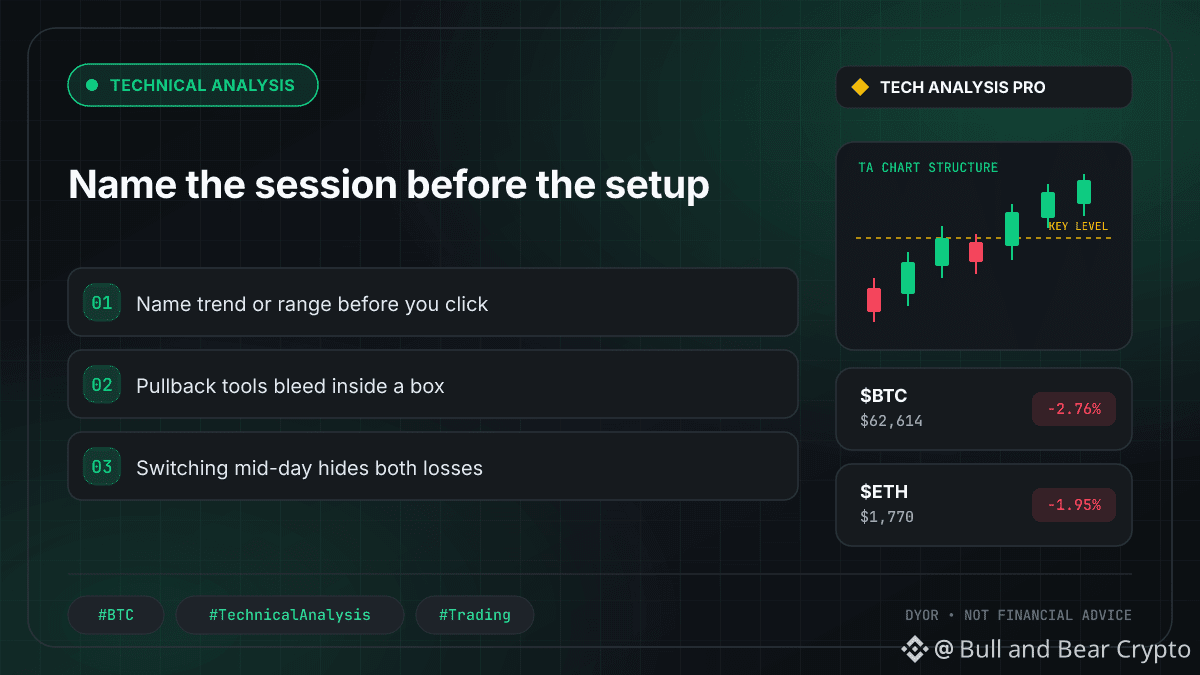
Before the first candle closes I write one word on a sticky note: trend or range. Pullback buys only earn their keep when price is actually walking one way. In a box they just refill the middle and call it discipline. Fade rules do the reverse and bleed the moment a real move starts. The opening hour on $BTC is usually enough to name the day if you watch structure instead of shopping for a signal. Yesterday a desk mate bought every dip until lunch, then sold strength on $ETH without saying the regime had changed. Both playbooks lost and the journal looked like one system. $SOL can pull the same switch on a quiet afternoon. Extreme Fear at 10 does not choose the tool. Say the day out loud, then leave the other playbook closed.
Before the first candle closes I write one word on a sticky note: trend or range. Pullback buys only earn their keep when price is actually walking one way. In a box they just refill the middle and call it discipline. Fade rules do the reverse and bleed the moment a real move starts. The opening hour on $BTC is usually enough to name the day if you watch structure instead of shopping for a signal. Yesterday a desk mate bought every dip until lunch, then sold strength on $ETH without saying the regime had changed. Both playbooks lost and the journal looked like one system. $SOL can pull the same switch on a quiet afternoon. Extreme Fear at 10 does not choose the tool. Say the day out loud, then leave the other playbook closed.
76
翻訳参照
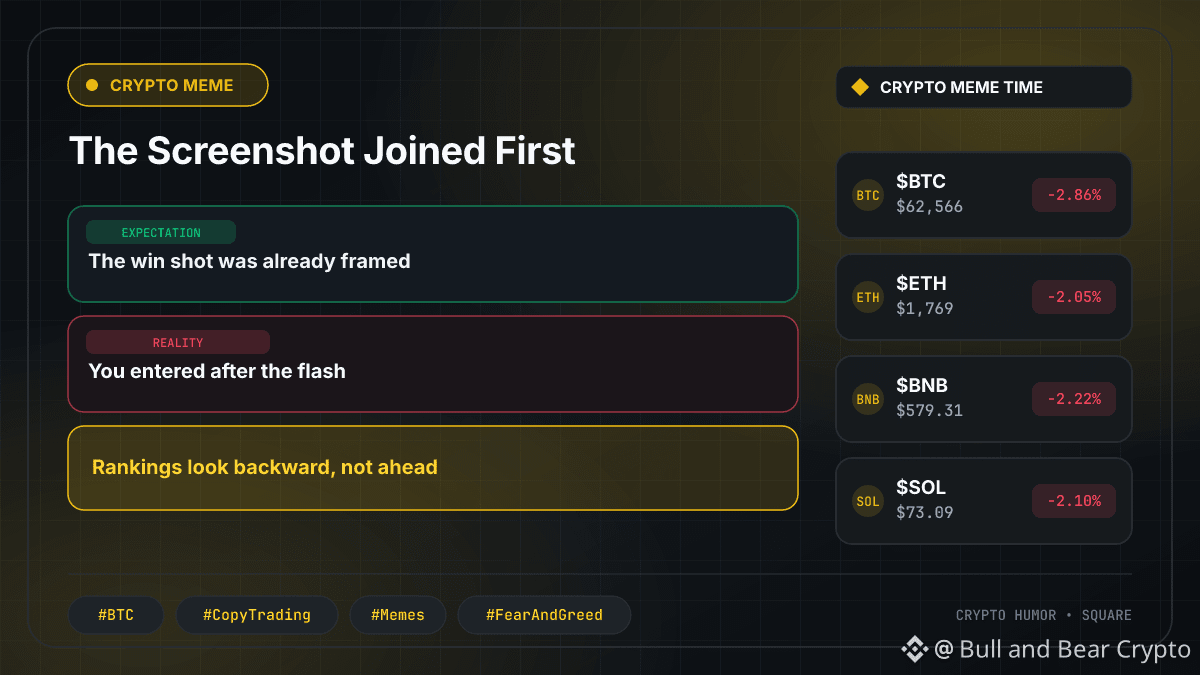
The group chat dropped a victory lap before breakfast. Someone's month looked like a movie poster: bold type, perfect lighting, zero sweat. You subscribed on the next candle, which is the trading version of buying the DVD after the credits. $BTC sat at 62,566, already off 2.9%, while Fear and Greed read 10 Extreme Fear, and the screenshot still smiled like nothing had moved. That image was shot before you walked in. A ranking board only shows where the car has been, not where the lane opens. $ETH at 1,769, down 2.1%, did not clap back. Copying a finished photo is how you end up in the background of someone else's highlight reel, holding the bag the camera already left. Ask for the timestamp, not the filter.
The group chat dropped a victory lap before breakfast. Someone's month looked like a movie poster: bold type, perfect lighting, zero sweat. You subscribed on the next candle, which is the trading version of buying the DVD after the credits. $BTC sat at 62,566, already off 2.9%, while Fear and Greed read 10 Extreme Fear, and the screenshot still smiled like nothing had moved. That image was shot before you walked in. A ranking board only shows where the car has been, not where the lane opens. $ETH at 1,769, down 2.1%, did not clap back. Copying a finished photo is how you end up in the background of someone else's highlight reel, holding the bag the camera already left. Ask for the timestamp, not the filter.
90
翻訳参照
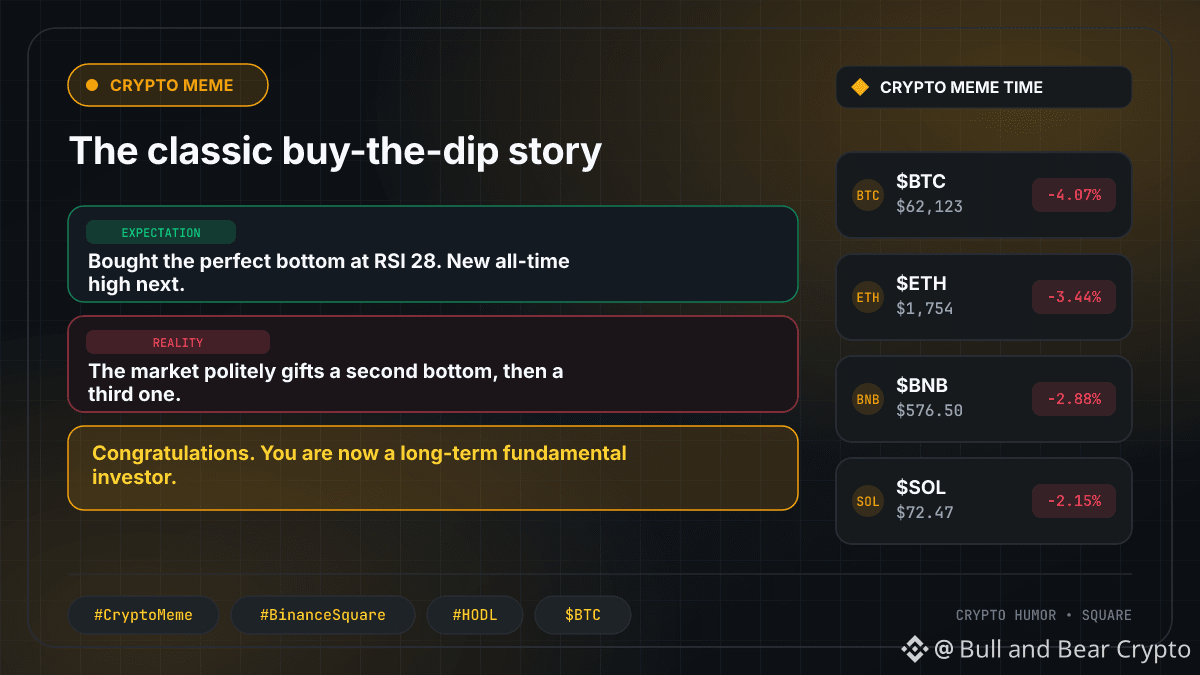
😂 The classic buy-the-dip story
🟢 Expectation: Bought the perfect bottom at RSI 28. New all-time high next.
🔴 Reality: The market politely gifts a second bottom, then a third one.
⚡ Punchline: Congratulations. You are now a long-term fundamental investor.
A 15-minute scalp that quietly turns into a six-month hold is a rite of passage.
Buying in slices and keeping a stop does more for your nerves than any price target.
📊 Market now: $BTC: $62,123 (-4.1%) | $ETH: $1,754 (-3.4%) | $BNB: $576.50 (-2.9%)
💬 Which coin in your bag accidentally became a long-term investment?
#CryptoMeme #BinanceSquare #HODL $BTC
😂 The classic buy-the-dip story
🟢 Expectation: Bought the perfect bottom at RSI 28. New all-time high next.
🔴 Reality: The market politely gifts a second bottom, then a third one.
⚡ Punchline: Congratulations. You are now a long-term fundamental investor.
A 15-minute scalp that quietly turns into a six-month hold is a rite of passage.
Buying in slices and keeping a stop does more for your nerves than any price target.
📊 Market now: $BTC : $62,123 (-4.1%) | $ETH : $1,754 (-3.4%) | $BNB : $576.50 (-2.9%)
💬 Which coin in your bag accidentally became a long-term investment?
#CryptoMeme #BinanceSquare #HODL $BTC
1
110
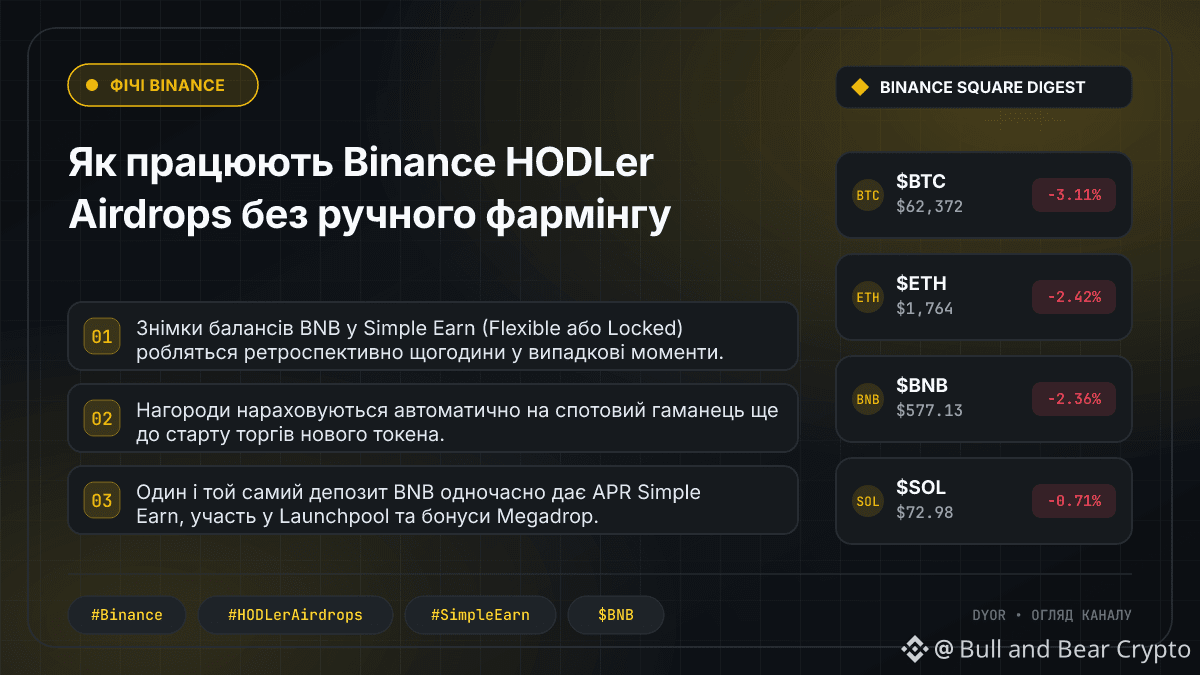
🔶 手動ファーミングなしでBinance HODLer Airdropsを利用する方法
多くのユーザーは、$BNB をSimple Earnではなく現物ウォレットに保管しているだけで、新規上場銘柄のエアドロップを逃しています。
✅ Simple Earn(FlexibleまたはLocked)に預けたBNB残高は、過去にさかのぼってランダムなタイミングで1時間ごとにスナップショットが取得されます。
✅ 新しいトークンの取引開始前に、報酬が現物ウォレットへ自動的に付与されます。
✅ 同じBNB預け入れで、Simple EarnのAPR、Launchpoolへの参加、Megadropのボーナスを同時に獲得できます。
💡 実用的なヒント:$BNB を長期保有している場合は、スナップショットの機会を逃さないよう、Simple Earn FlexibleのAuto-Subscribeを有効にしましょう。
📊 現在の市場:$BTC:$62,372(-3.1%) | $ETH:$1,764(-2.4%) | $BNB:$577.13(-2.4%)
💬 $BNBではFlexibleと固定期間のどちらをよく利用しますか?
#Binance #HODLerAirdrops #SimpleEarn $BNB
🔶 手動ファーミングなしでBinance HODLer Airdropsを利用する方法
多くのユーザーは、$BNB をSimple Earnではなく現物ウォレットに保管しているだけで、新規上場銘柄のエアドロップを逃しています。
✅ Simple Earn(FlexibleまたはLocked)に預けたBNB残高は、過去にさかのぼってランダムなタイミングで1時間ごとにスナップショットが取得されます。
✅ 新しいトークンの取引開始前に、報酬が現物ウォレットへ自動的に付与されます。
✅ 同じBNB預け入れで、Simple EarnのAPR、Launchpoolへの参加、Megadropのボーナスを同時に獲得できます。
💡 実用的なヒント:$BNB を長期保有している場合は、スナップショットの機会を逃さないよう、Simple Earn FlexibleのAuto-Subscribeを有効にしましょう。
📊 現在の市場:$BTC :$62,372(-3.1%) | $ETH :$1,764(-2.4%) | $BNB :$577.13(-2.4%)
💬 $BNB ではFlexibleと固定期間のどちらをよく利用しますか?
#Binance #HODLerAirdrops #SimpleEarn $BNB
1
197
翻訳参照
Robinhood sees surge in bitcoin, gold prediction markets as traders move beyond sports
A recent update notes that Robinhood’s prediction markets for bitcoin and gold are drawing more activity, as traders explore outcomes beyond traditional sports betting. In crypto markets today, Bitcoin is around $80,883 with a -0.44% 24h change, Ethereum near $2,377 (-0.13%), and major stablecoins like USDC hovering near $1.00. This hints at rising interest in non-traditional market bets within crypto ecosystems alongside ongoing price activity.
A recent update notes that Robinhood’s prediction markets for bitcoin and gold are drawing more activity, as traders explore outcomes beyond traditional sports betting. In crypto markets today, Bitcoin is around $80,883 with a -0.44% 24h change, Ethereum near $2,377 (-0.13%), and major stablecoins like USDC hovering near $1.00. This hints at rising interest in non-traditional market bets within crypto ecosystems alongside ongoing price activity.
75
翻訳参照
At the White House, a vacancy in the crypto policy office has sharpened the uncertainty around the federal direction for digital assets. With Patrick Witt’s departure leaving the crypto adviser post unfilled, policymakers face a gap between ongoing industry concerns and slow-moving legislative processes. The vacancy matters because the administration’s stance can influence regulatory tone, enforcement priorities, and coordination with financial regulators at a time when firms are adjusting to a shifting policy landscape.
Observers note that Wall Street’s expectations for clearer rules have grown as congressional action stalls. In briefings and brief analyses, industry participants have framed congressional inaction as a barrier to strategic planning, prompting debates about whether regulatory clarity will emerge from executive actions, new appointments, or eventual legislative reforms. The timing of leadership turns in the crypto policy team may also affect discussions around emerging use cases, compliance standards, and consumer protections.
As the policy office searches for a steadier course, stakeholders watch how the administration balances innovation with safeguards, and how imminent leadership decisions will shape the pace of regulation, enforcement, and industry engagement.
Sources:
https://www.coindesk.com/news-analysis/2026/10/15/at-the-white-house-crypto-policy-vacancy-looms-large
https://www.coindesk.com/coindesk-indices/2026/10/15/crypto-for-advisors-wall-street-is-done-waiting-on-congress-for-crypto-rules
110
やあみんな、仮想通貨に戻ってくるのは今いいタイミングかな?もしそうなら、$BTC を買うべき?それとも高すぎる?
{spot}(BTCUSDT)
やあみんな、仮想通貨に戻ってくるのは今いいタイミングかな?もしそうなら、$BTC を買うべき?それとも高すぎる?

3
712
📰 クリプトデイリーダイジェスト (2026年3月25日)
市場は「機関 + インフラ」のモードで生き続けています。主な内容を簡潔に:
1) Strategy (MicroStrategy) は BTCの蓄積に向けて $44.1 billion を調達したいと考えています。
会社は新しい資金調達手段を通じて Bitcoin の購入戦略を強化する予定です。これは、大手プレイヤーが依然として BTC を長期的な資産と見なしているというもう一つの信号です — 現在の下落/ボラティリティにもかかわらず。
2) BlackRock は crypto セクターからの年収 ~$500 million の可能性を見ています。
トップマネジメントは、今後数年での暗号市場のマネタイズに関するますます大胆な期待を示しています。機関投資家の需要と「規制対象」の製品は、業界の主要なドライバーの一つであり続けています。
3) Bitcoin ネットワークで2ブロックの希少な再編成が発生しました。
取引の損失はありませんが、ハッシュレートの集中とインフラのニュアンスがネットワークの安定性の認識にどのように影響するかを再び浮き彫りにしています。
📊 現在の市場 (24h):
BTC ~ $71,325 (+0.61%) | ETH ~ $2,172 (+0.50%) | BNB ~ $647 (+1.52%)
私の結論: 機関は「基盤を構築し続けており」、ネットワークイベントは暗号の技術的側面が価格と同じくらい重要であることを思い出させています。
#Bitcoin #CryptoNews #MarketUpdate #BinanceSquare
2
86
ログインして、さらにコンテンツを読む
厳選トピックで世界の暗号資産トレーダーの仲間入り
⚡️ 暗号資産に関する最新かつ有益な情報が見つかります。
💬 世界最大の暗号資産取引所から信頼されています。
👍 認証を受けたクリエイターから、有益なインサイトを得られます。
メール / 電話番号