
Chixi
329 投稿

Chixi
報告
ユーザーをブロック
0 フォロー
46 フォロワー
69 いいね
投稿
すべて
引用
·
--
翻訳参照
September 15, 2026, 09:01 UTC
📈 📈 📈
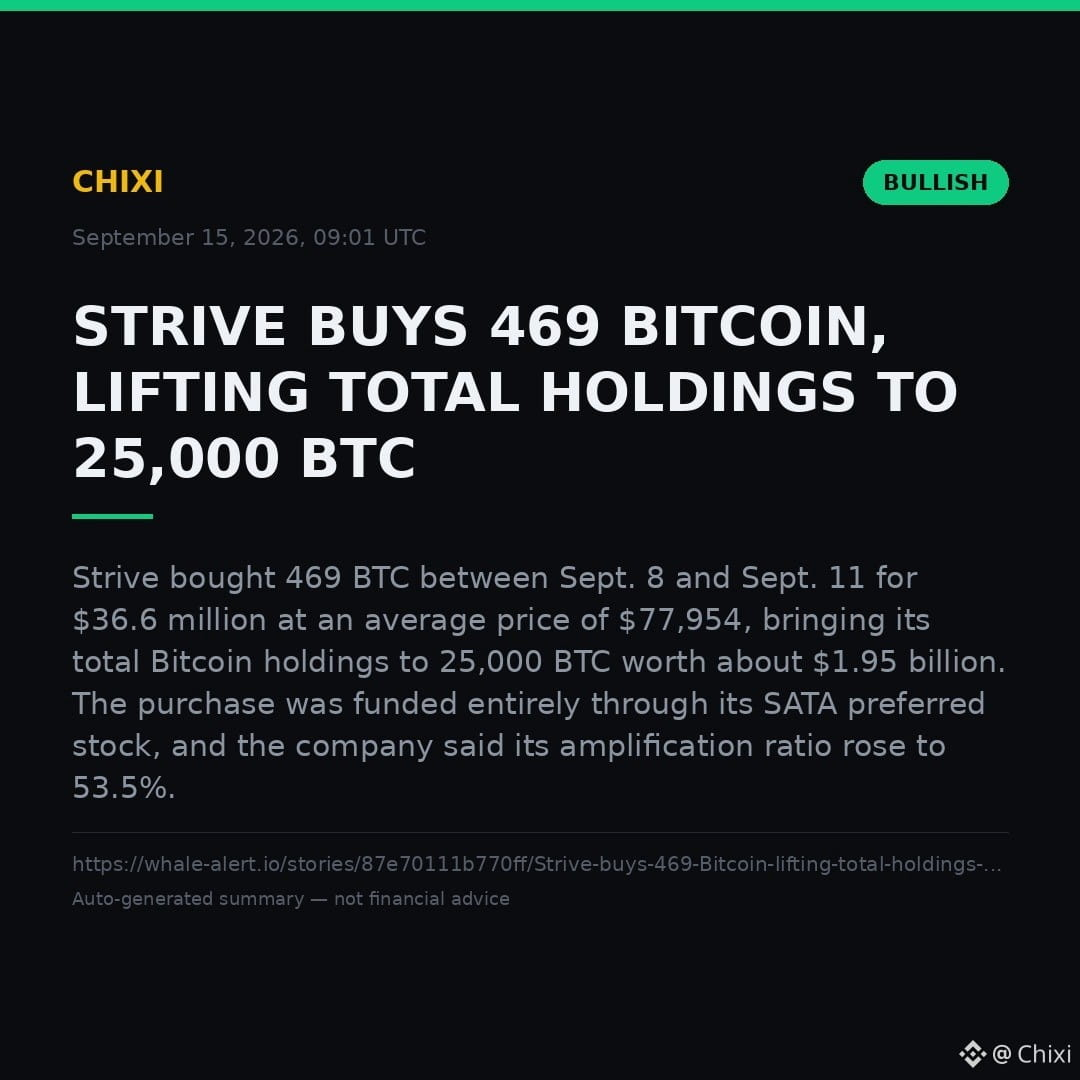
Strive bought 469 BTC between Sept. 8 and Sept. 11 for $36.6 million at an average price of $77,954, bringing its total Bitcoin holdings to 25,000 BTC worth about $1.95 billion. The purchase was funded entirely through its SATA preferred stock, and the company said its amplification ratio rose to 53.5%.
Source: https://whale-alert.io/stories/87e70111b770ff/Strive-buys-469-Bitcoin-lifting-total-holdings-to-25000-BTC
⚠️ This content is an automated quote/summary from an external source, not personal opinion or investment advice.
September 15, 2026, 09:01 UTC
📈 📈 📈
Strive bought 469 BTC between Sept. 8 and Sept. 11 for $36.6 million at an average price of $77,954, bringing its total Bitcoin holdings to 25,000 BTC worth about $1.95 billion. The purchase was funded entirely through its SATA preferred stock, and the company said its amplification ratio rose to 53.5%.
Source: https://whale-alert.io/stories/87e70111b770ff/Strive-buys-469-Bitcoin-lifting-total-holdings-to-25000-BTC
⚠️ This content is an automated quote/summary from an external source, not personal opinion or investment advice.
📈 📈 📈
Strive bought 469 BTC between Sept. 8 and Sept. 11 for $36.6 million at an average price of $77,954, bringing its total Bitcoin holdings to 25,000 BTC worth about $1.95 billion. The purchase was funded entirely through its SATA preferred stock, and the company said its amplification ratio rose to 53.5%.
Source: https://whale-alert.io/stories/87e70111b770ff/Strive-buys-469-Bitcoin-lifting-total-holdings-to-25000-BTC
⚠️ This content is an automated quote/summary from an external source, not personal opinion or investment advice.
97
·
--
2026年9月14日16:58(UTC)
📈 📈 📈
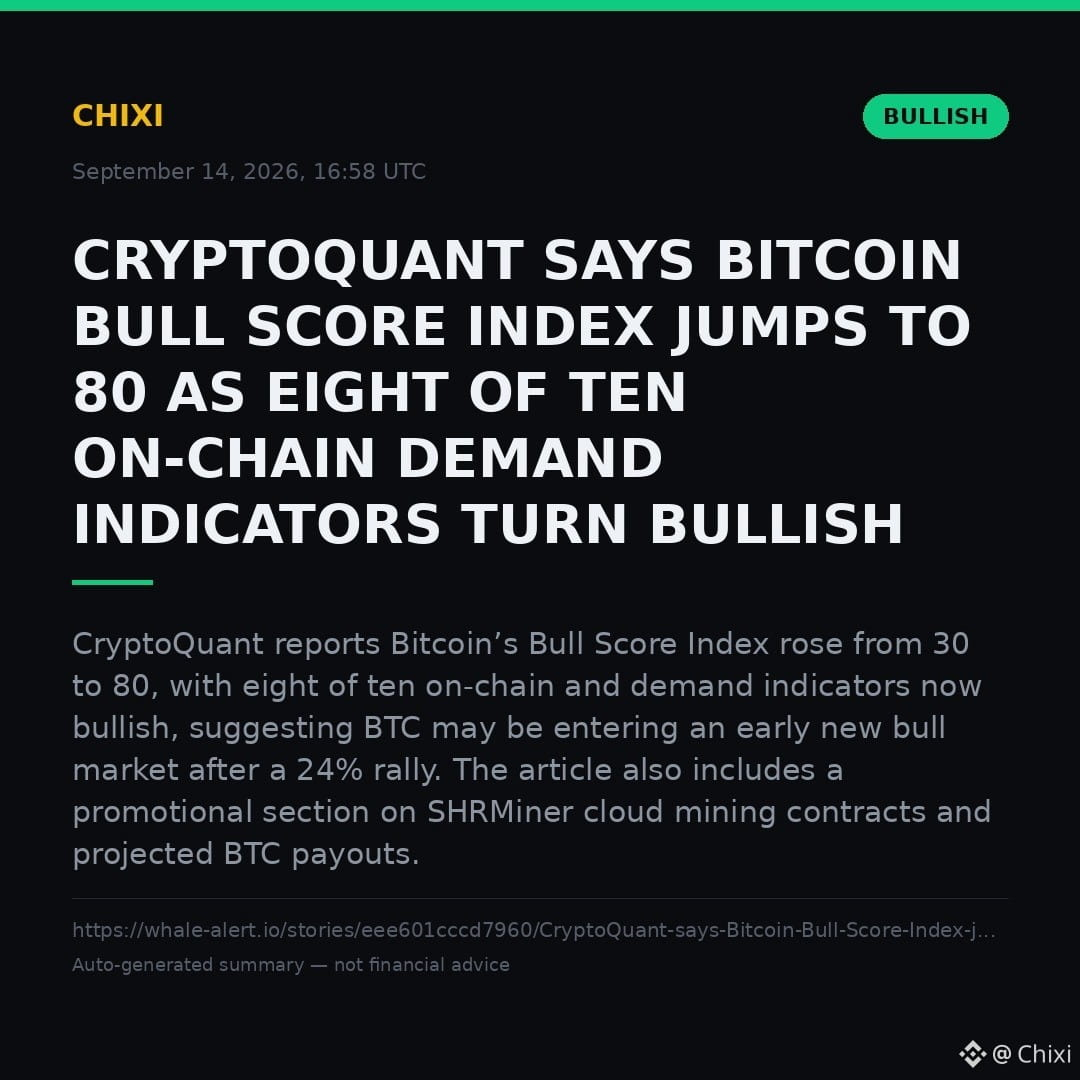
CryptoQuantによると、ビットコインのブル・スコア指数は30から80に上昇し、オンチェーンおよび需要指標10項目中8項目がいま強気となっています。これにより、BTCは24%の上昇の後、初期の新しいブルマーケットに入っている可能性が示唆されています。この記事には、SHRMinerのクラウドマイニング契約と、見込まれるBTCの支払いに関するプロモーションセクションも含まれています。
出典:https://whale-alert.io/stories/eee601cccd7960/CryptoQuant-says-Bitcoin-Bull-Score-Index-jumps-to-80-as-eight-of-ten-on-chain-demand-indicators-turn-bullish
⚠️ この内容は外部ソースからの自動引用/要約であり、個人的な見解や投資助言ではありません。
2026年9月14日16:58(UTC)
📈 📈 📈
CryptoQuantによると、ビットコインのブル・スコア指数は30から80に上昇し、オンチェーンおよび需要指標10項目中8項目がいま強気となっています。これにより、BTCは24%の上昇の後、初期の新しいブルマーケットに入っている可能性が示唆されています。この記事には、SHRMinerのクラウドマイニング契約と、見込まれるBTCの支払いに関するプロモーションセクションも含まれています。
出典:https://whale-alert.io/stories/eee601cccd7960/CryptoQuant-says-Bitcoin-Bull-Score-Index-jumps-to-80-as-eight-of-ten-on-chain-demand-indicators-turn-bullish
⚠️ この内容は外部ソースからの自動引用/要約であり、個人的な見解や投資助言ではありません。
📈 📈 📈
CryptoQuantによると、ビットコインのブル・スコア指数は30から80に上昇し、オンチェーンおよび需要指標10項目中8項目がいま強気となっています。これにより、BTCは24%の上昇の後、初期の新しいブルマーケットに入っている可能性が示唆されています。この記事には、SHRMinerのクラウドマイニング契約と、見込まれるBTCの支払いに関するプロモーションセクションも含まれています。
出典:https://whale-alert.io/stories/eee601cccd7960/CryptoQuant-says-Bitcoin-Bull-Score-Index-jumps-to-80-as-eight-of-ten-on-chain-demand-indicators-turn-bullish
⚠️ この内容は外部ソースからの自動引用/要約であり、個人的な見解や投資助言ではありません。
119
·
--
翻訳参照
September 13, 2026, 14:27 UTC
📉 📉 📉
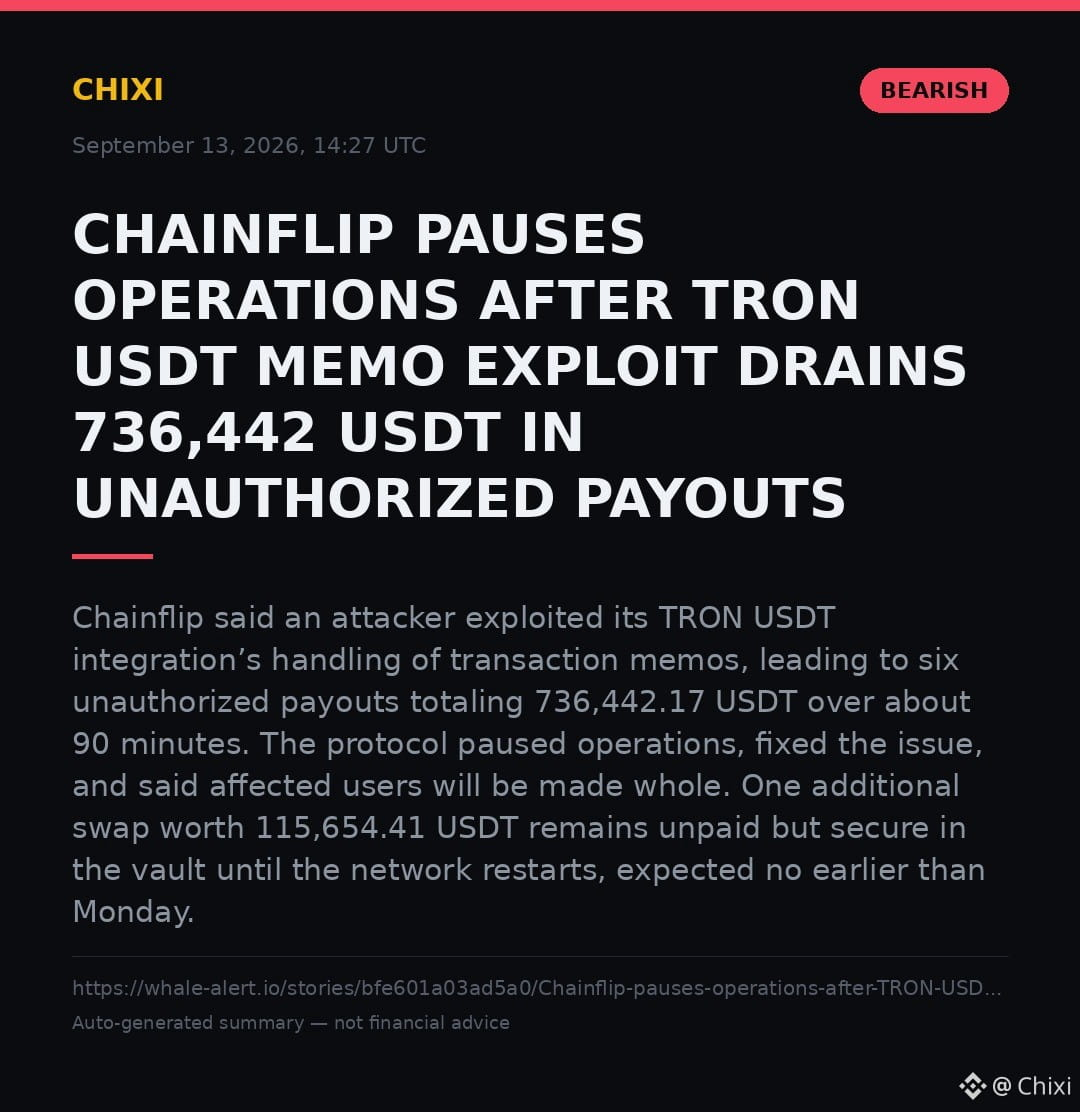
Chainflip said an attacker exploited its TRON USDT integration’s handling of transaction memos, leading to six unauthorized payouts totaling 736,442.17 USDT over about 90 minutes. The protocol paused operations, fixed the issue, and said affected users will be made whole. One additional swap worth 115,654.41 USDT remains unpaid but secure in the vault until the network restarts, expected no earlier than Monday.
Source: https://whale-alert.io/stories/bfe601a03ad5a0/Chainflip-pauses-operations-after-TRON-USDT-memo-exploit-drains-736442-USDT-in-unauthorized-payouts
⚠️ This content is an automated quote/summary from an external source, not personal opinion or investment advice.
September 13, 2026, 14:27 UTC
📉 📉 📉
Chainflip said an attacker exploited its TRON USDT integration’s handling of transaction memos, leading to six unauthorized payouts totaling 736,442.17 USDT over about 90 minutes. The protocol paused operations, fixed the issue, and said affected users will be made whole. One additional swap worth 115,654.41 USDT remains unpaid but secure in the vault until the network restarts, expected no earlier than Monday.
Source: https://whale-alert.io/stories/bfe601a03ad5a0/Chainflip-pauses-operations-after-TRON-USDT-memo-exploit-drains-736442-USDT-in-unauthorized-payouts
⚠️ This content is an automated quote/summary from an external source, not personal opinion or investment advice.
📉 📉 📉
Chainflip said an attacker exploited its TRON USDT integration’s handling of transaction memos, leading to six unauthorized payouts totaling 736,442.17 USDT over about 90 minutes. The protocol paused operations, fixed the issue, and said affected users will be made whole. One additional swap worth 115,654.41 USDT remains unpaid but secure in the vault until the network restarts, expected no earlier than Monday.
Source: https://whale-alert.io/stories/bfe601a03ad5a0/Chainflip-pauses-operations-after-TRON-USDT-memo-exploit-drains-736442-USDT-in-unauthorized-payouts
⚠️ This content is an automated quote/summary from an external source, not personal opinion or investment advice.
101
·
--
翻訳参照
September 12, 2026, 16:08 UTC
📉 📉 📉
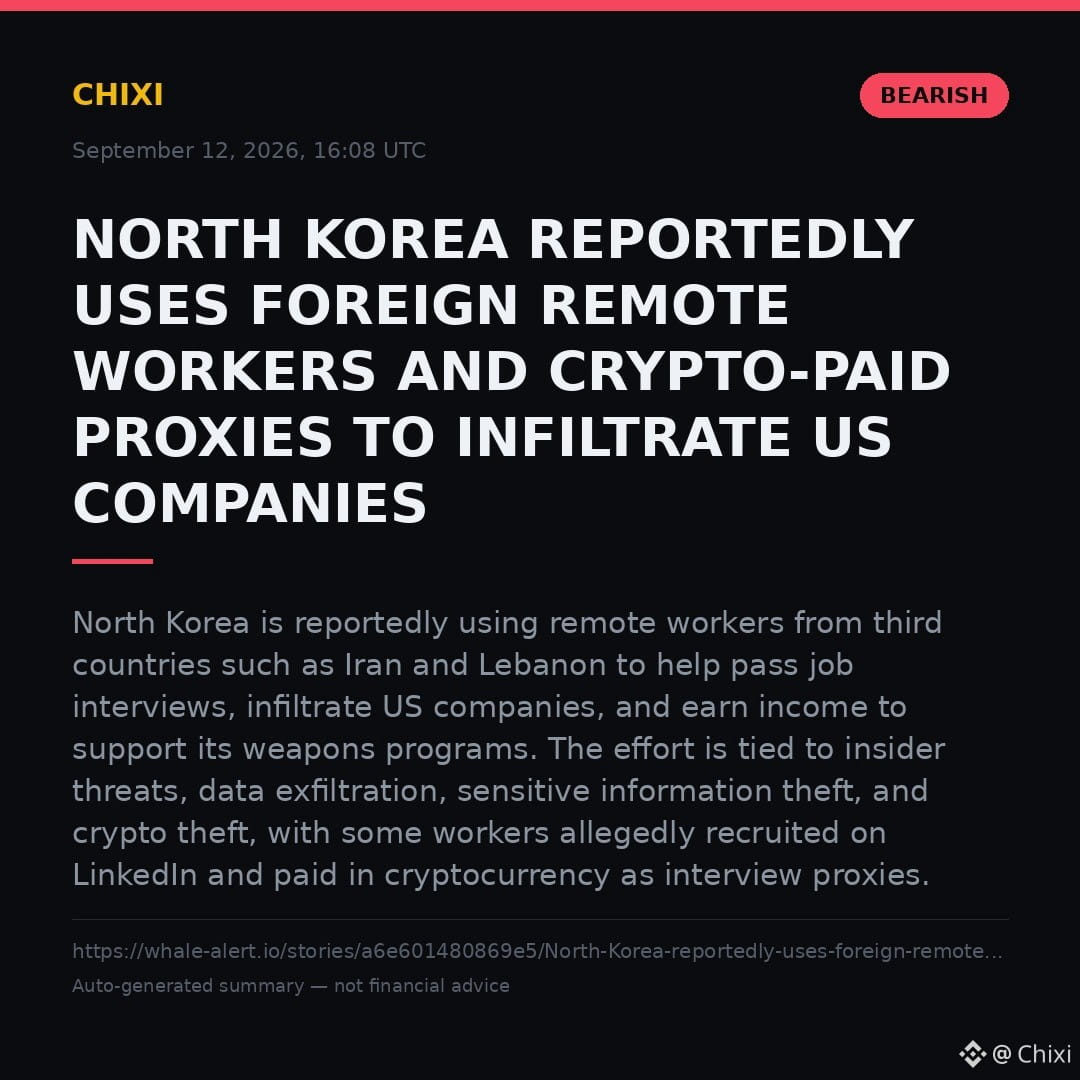
North Korea is reportedly using remote workers from third countries such as Iran and Lebanon to help pass job interviews, infiltrate US companies, and earn income to support its weapons programs. The effort is tied to insider threats, data exfiltration, sensitive information theft, and crypto theft, with some workers allegedly recruited on LinkedIn and paid in cryptocurrency as interview proxies.
Source: https://whale-alert.io/stories/a6e601480869e5/North-Korea-reportedly-uses-foreign-remote-workers-and-crypto-paid-proxies-to-infiltrate-US-companies
⚠️ This content is an automated quote/summary from an external source, not personal opinion or investment advice.
September 12, 2026, 16:08 UTC
📉 📉 📉
North Korea is reportedly using remote workers from third countries such as Iran and Lebanon to help pass job interviews, infiltrate US companies, and earn income to support its weapons programs. The effort is tied to insider threats, data exfiltration, sensitive information theft, and crypto theft, with some workers allegedly recruited on LinkedIn and paid in cryptocurrency as interview proxies.
Source: https://whale-alert.io/stories/a6e601480869e5/North-Korea-reportedly-uses-foreign-remote-workers-and-crypto-paid-proxies-to-infiltrate-US-companies
⚠️ This content is an automated quote/summary from an external source, not personal opinion or investment advice.
📉 📉 📉
North Korea is reportedly using remote workers from third countries such as Iran and Lebanon to help pass job interviews, infiltrate US companies, and earn income to support its weapons programs. The effort is tied to insider threats, data exfiltration, sensitive information theft, and crypto theft, with some workers allegedly recruited on LinkedIn and paid in cryptocurrency as interview proxies.
Source: https://whale-alert.io/stories/a6e601480869e5/North-Korea-reportedly-uses-foreign-remote-workers-and-crypto-paid-proxies-to-infiltrate-US-companies
⚠️ This content is an automated quote/summary from an external source, not personal opinion or investment advice.
88
·
--
翻訳参照
September 11, 2026, 18:19 UTC
📈 📈 📈
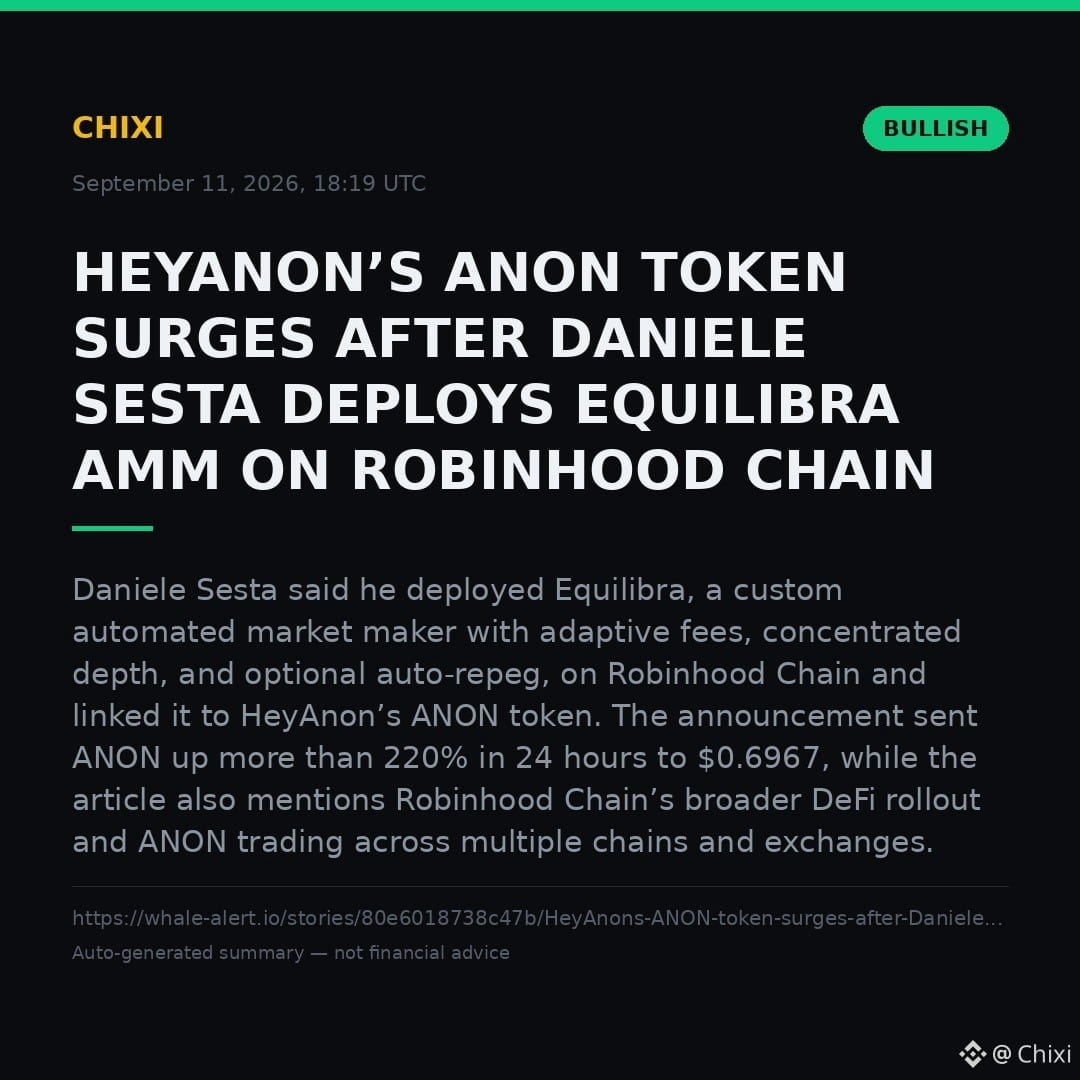
Daniele Sesta said he deployed Equilibra, a custom automated market maker with adaptive fees, concentrated depth, and optional auto-repeg, on Robinhood Chain and linked it to HeyAnon’s ANON token. The announcement sent ANON up more than 220% in 24 hours to $0.6967, while the article also mentions Robinhood Chain’s broader DeFi rollout and ANON trading across multiple chains and exchanges.
Source: https://whale-alert.io/stories/80e6018738c47b/HeyAnons-ANON-token-surges-after-Daniele-Sesta-deploys-Equilibra-AMM-on-Robinhood-Chain
⚠️ This content is an automated quote/summary from an external source, not personal opinion or investment advice.
September 11, 2026, 18:19 UTC
📈 📈 📈
Daniele Sesta said he deployed Equilibra, a custom automated market maker with adaptive fees, concentrated depth, and optional auto-repeg, on Robinhood Chain and linked it to HeyAnon’s ANON token. The announcement sent ANON up more than 220% in 24 hours to $0.6967, while the article also mentions Robinhood Chain’s broader DeFi rollout and ANON trading across multiple chains and exchanges.
Source: https://whale-alert.io/stories/80e6018738c47b/HeyAnons-ANON-token-surges-after-Daniele-Sesta-deploys-Equilibra-AMM-on-Robinhood-Chain
⚠️ This content is an automated quote/summary from an external source, not personal opinion or investment advice.
📈 📈 📈
Daniele Sesta said he deployed Equilibra, a custom automated market maker with adaptive fees, concentrated depth, and optional auto-repeg, on Robinhood Chain and linked it to HeyAnon’s ANON token. The announcement sent ANON up more than 220% in 24 hours to $0.6967, while the article also mentions Robinhood Chain’s broader DeFi rollout and ANON trading across multiple chains and exchanges.
Source: https://whale-alert.io/stories/80e6018738c47b/HeyAnons-ANON-token-surges-after-Daniele-Sesta-deploys-Equilibra-AMM-on-Robinhood-Chain
⚠️ This content is an automated quote/summary from an external source, not personal opinion or investment advice.
·
--
2026年9月11日 07:08(UTC)
📉 📉 📉
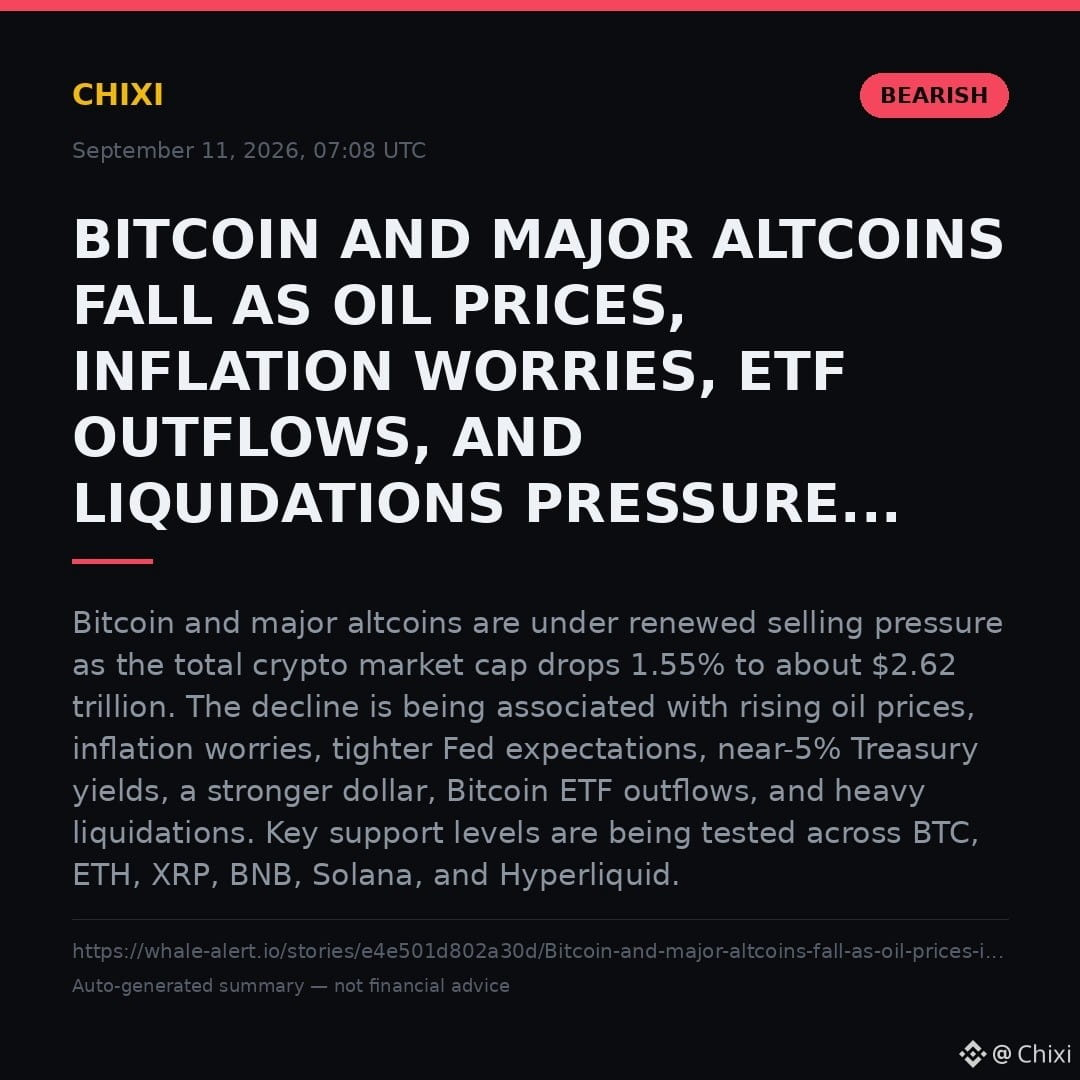
ビットコインおよび主要アルトコインは、暗号資産市場全体の時価総額が1.55%下落して約2.62兆ドルとなる中、再び売り圧力が強まっています。下落は、原油価格の上昇、インフレ懸念、タイト化するFRB(連邦準備制度)への期待、約5%近い米国債利回り、ドル高、ビットコインETFからの資金流出、そして大規模な清算(リキディエーション)などに関連付けられています。BTC、ETH、XRP、BNB、ソラナ、およびHyperliquidでは、主要なサポート水準が試されています。
出典: https://whale-alert.io/stories/e4e501d802a30d/Bitcoin-and-major-altcoins-fall-as-oil-prices-inflation-worries-ETF-outflows-and-liquidations-pressure-crypto-markets
⚠️ 本コンテンツは、外部ソースからの自動引用/要約であり、個人的意見や投資助言ではありません。
2026年9月11日 07:08(UTC)
📉 📉 📉
ビットコインおよび主要アルトコインは、暗号資産市場全体の時価総額が1.55%下落して約2.62兆ドルとなる中、再び売り圧力が強まっています。下落は、原油価格の上昇、インフレ懸念、タイト化するFRB(連邦準備制度)への期待、約5%近い米国債利回り、ドル高、ビットコインETFからの資金流出、そして大規模な清算(リキディエーション)などに関連付けられています。BTC、ETH、XRP、BNB、ソラナ、およびHyperliquidでは、主要なサポート水準が試されています。
出典: https://whale-alert.io/stories/e4e501d802a30d/Bitcoin-and-major-altcoins-fall-as-oil-prices-inflation-worries-ETF-outflows-and-liquidations-pressure-crypto-markets
⚠️ 本コンテンツは、外部ソースからの自動引用/要約であり、個人的意見や投資助言ではありません。
📉 📉 📉
ビットコインおよび主要アルトコインは、暗号資産市場全体の時価総額が1.55%下落して約2.62兆ドルとなる中、再び売り圧力が強まっています。下落は、原油価格の上昇、インフレ懸念、タイト化するFRB(連邦準備制度)への期待、約5%近い米国債利回り、ドル高、ビットコインETFからの資金流出、そして大規模な清算(リキディエーション)などに関連付けられています。BTC、ETH、XRP、BNB、ソラナ、およびHyperliquidでは、主要なサポート水準が試されています。
出典: https://whale-alert.io/stories/e4e501d802a30d/Bitcoin-and-major-altcoins-fall-as-oil-prices-inflation-worries-ETF-outflows-and-liquidations-pressure-crypto-markets
⚠️ 本コンテンツは、外部ソースからの自動引用/要約であり、個人的意見や投資助言ではありません。
56
·
--
翻訳参照
September 11, 2026, 07:30 UTC
📉 📉 📉
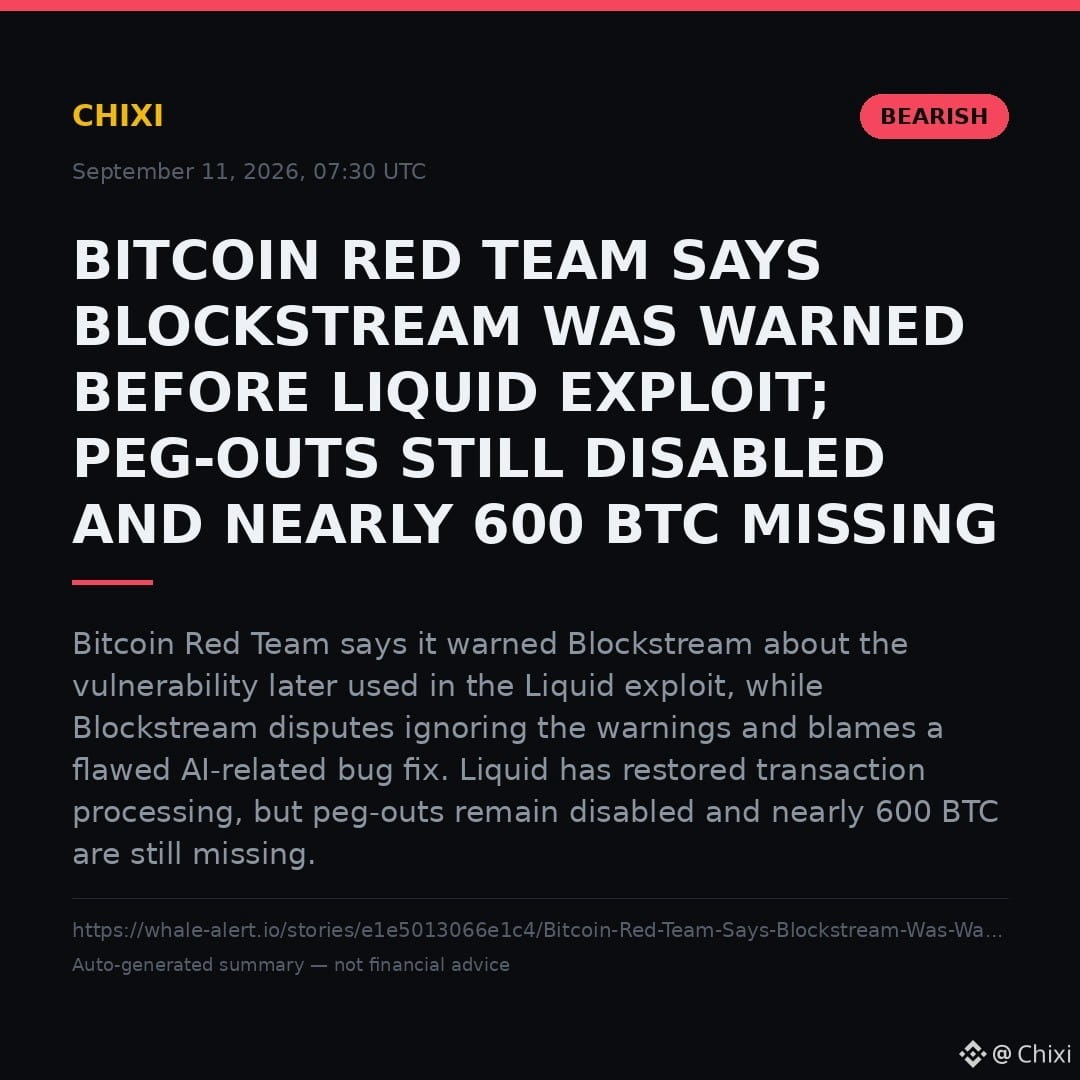
Bitcoin Red Team says it warned Blockstream about the vulnerability later used in the Liquid exploit, while Blockstream disputes ignoring the warnings and blames a flawed AI-related bug fix. Liquid has restored transaction processing, but peg-outs remain disabled and nearly 600 BTC are still missing.
Source: https://whale-alert.io/stories/e1e5013066e1c4/Bitcoin-Red-Team-Says-Blockstream-Was-Warned-Before-Liquid-Exploit-Peg-Outs-Still-Disabled-and-Nearly-600-BTC-Missing
⚠️ This content is an automated quote/summary from an external source, not personal opinion or investment advice.
September 11, 2026, 07:30 UTC
📉 📉 📉
Bitcoin Red Team says it warned Blockstream about the vulnerability later used in the Liquid exploit, while Blockstream disputes ignoring the warnings and blames a flawed AI-related bug fix. Liquid has restored transaction processing, but peg-outs remain disabled and nearly 600 BTC are still missing.
Source: https://whale-alert.io/stories/e1e5013066e1c4/Bitcoin-Red-Team-Says-Blockstream-Was-Warned-Before-Liquid-Exploit-Peg-Outs-Still-Disabled-and-Nearly-600-BTC-Missing
⚠️ This content is an automated quote/summary from an external source, not personal opinion or investment advice.
📉 📉 📉
Bitcoin Red Team says it warned Blockstream about the vulnerability later used in the Liquid exploit, while Blockstream disputes ignoring the warnings and blames a flawed AI-related bug fix. Liquid has restored transaction processing, but peg-outs remain disabled and nearly 600 BTC are still missing.
Source: https://whale-alert.io/stories/e1e5013066e1c4/Bitcoin-Red-Team-Says-Blockstream-Was-Warned-Before-Liquid-Exploit-Peg-Outs-Still-Disabled-and-Nearly-600-BTC-Missing
⚠️ This content is an automated quote/summary from an external source, not personal opinion or investment advice.
63
·
--
翻訳参照
September 11, 2026, 05:15 UTC
📉 📉 📉
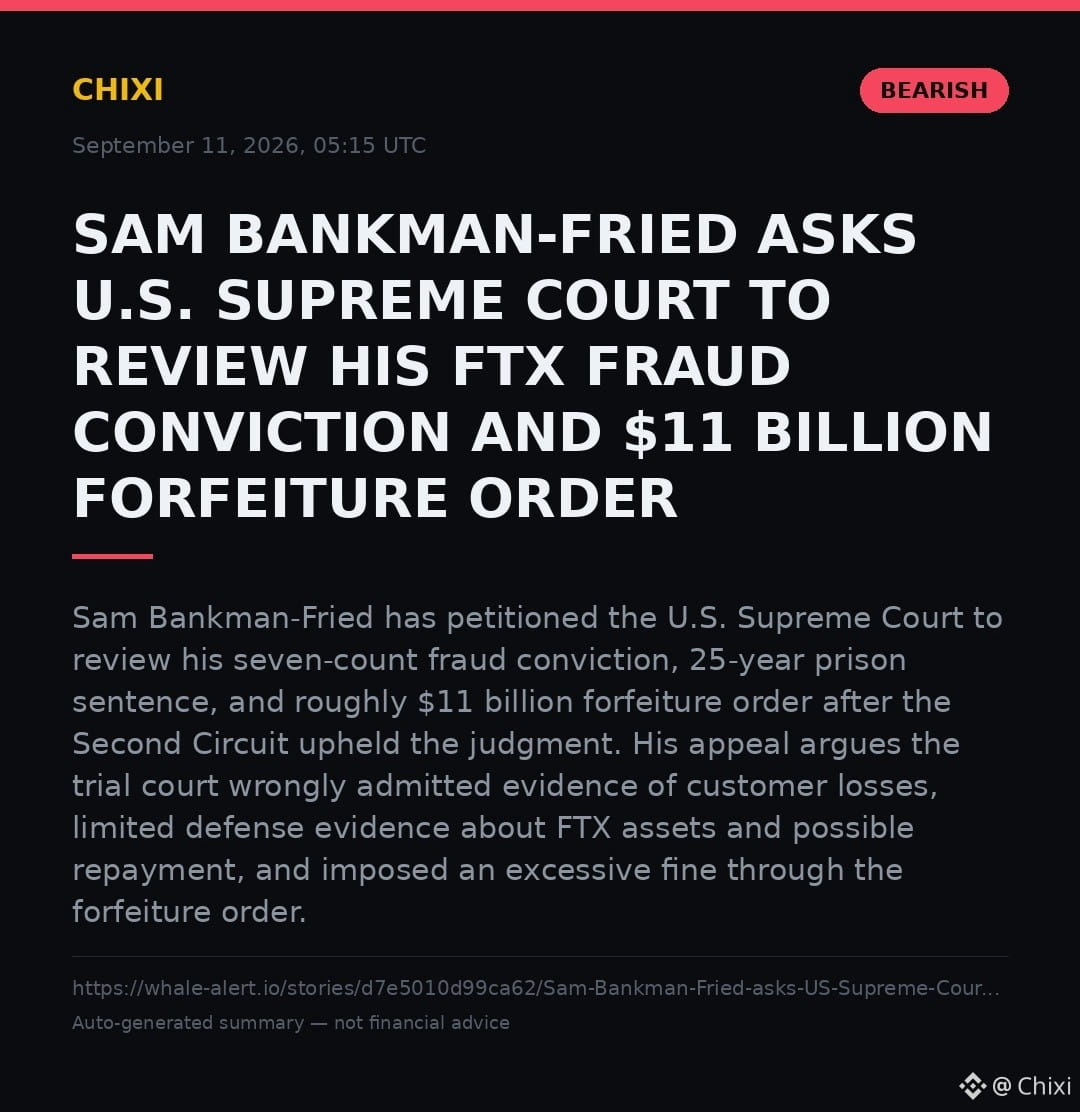
Sam Bankman-Fried has petitioned the U.S. Supreme Court to review his seven-count fraud conviction, 25-year prison sentence, and roughly $11 billion forfeiture order after the Second Circuit upheld the judgment. His appeal argues the trial court wrongly admitted evidence of customer losses, limited defense evidence about FTX assets and possible repayment, and imposed an excessive fine through the forfeiture order.
Source: https://whale-alert.io/stories/d7e5010d99ca62/Sam-Bankman-Fried-asks-US-Supreme-Court-to-review-his-FTX-fraud-conviction-and-11-billion-forfeiture-order
⚠️ This content is an automated quote/summary from an external source, not personal opinion or investment advice.
September 11, 2026, 05:15 UTC
📉 📉 📉
Sam Bankman-Fried has petitioned the U.S. Supreme Court to review his seven-count fraud conviction, 25-year prison sentence, and roughly $11 billion forfeiture order after the Second Circuit upheld the judgment. His appeal argues the trial court wrongly admitted evidence of customer losses, limited defense evidence about FTX assets and possible repayment, and imposed an excessive fine through the forfeiture order.
Source: https://whale-alert.io/stories/d7e5010d99ca62/Sam-Bankman-Fried-asks-US-Supreme-Court-to-review-his-FTX-fraud-conviction-and-11-billion-forfeiture-order
⚠️ This content is an automated quote/summary from an external source, not personal opinion or investment advice.
📉 📉 📉
Sam Bankman-Fried has petitioned the U.S. Supreme Court to review his seven-count fraud conviction, 25-year prison sentence, and roughly $11 billion forfeiture order after the Second Circuit upheld the judgment. His appeal argues the trial court wrongly admitted evidence of customer losses, limited defense evidence about FTX assets and possible repayment, and imposed an excessive fine through the forfeiture order.
Source: https://whale-alert.io/stories/d7e5010d99ca62/Sam-Bankman-Fried-asks-US-Supreme-Court-to-review-his-FTX-fraud-conviction-and-11-billion-forfeiture-order
⚠️ This content is an automated quote/summary from an external source, not personal opinion or investment advice.
104
·
--
翻訳参照
September 11, 2026, 04:21 UTC
📉 📉 📉
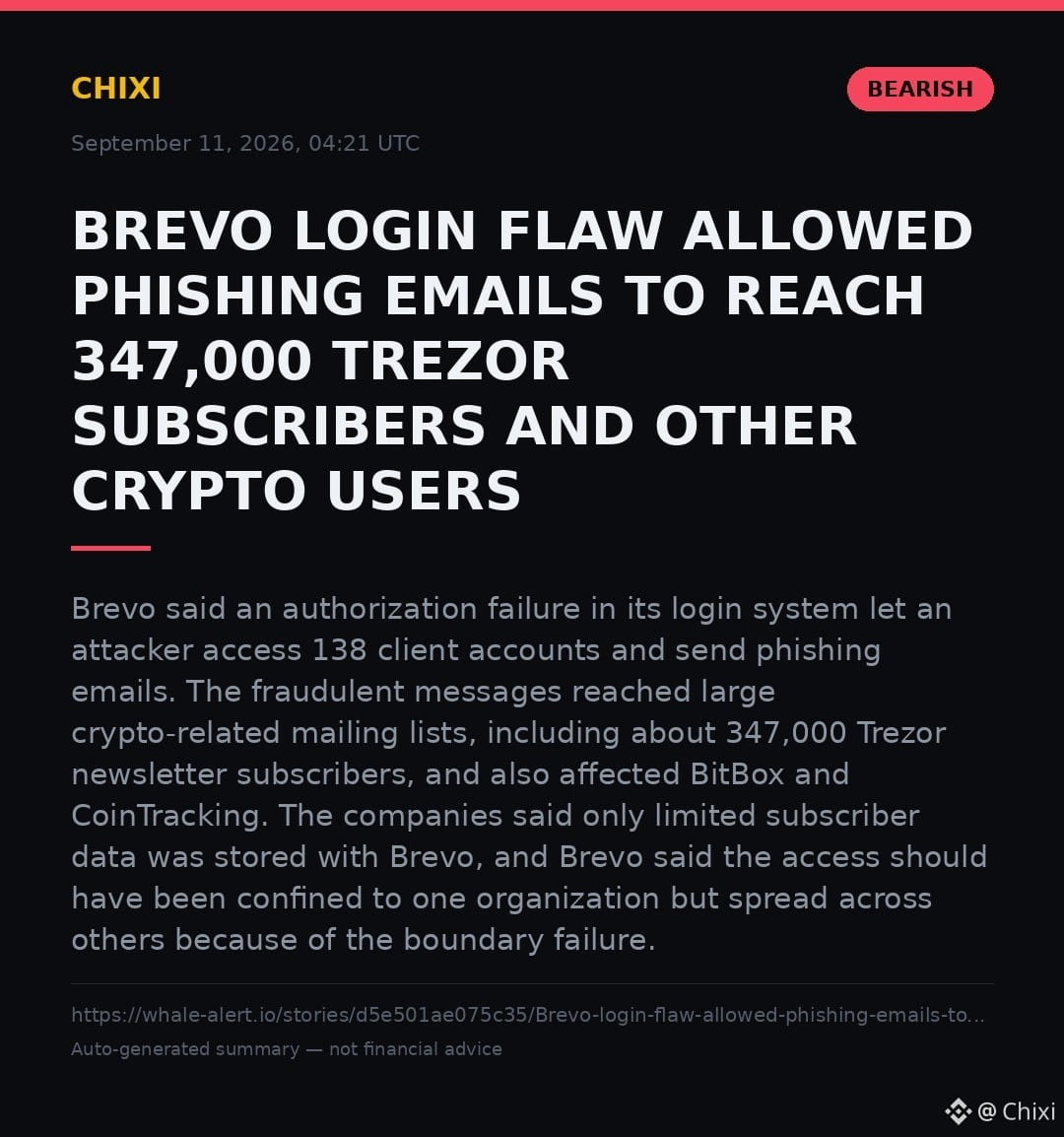
Brevo said an authorization failure in its login system let an attacker access 138 client accounts and send phishing emails. The fraudulent messages reached large crypto-related mailing lists, including about 347,000 Trezor newsletter subscribers, and also affected BitBox and CoinTracking. The companies said only limited subscriber data was stored with Brevo, and Brevo said the access should have been confined to one organization but spread across others because of the boundary failure.
Source: https://whale-alert.io/stories/d5e501ae075c35/Brevo-login-flaw-allowed-phishing-emails-to-reach-347000-Trezor-subscribers-and-other-crypto-users
⚠️ This content is an automated quote/summary from an external source, not personal opinion or investment advice.
September 11, 2026, 04:21 UTC
📉 📉 📉
Brevo said an authorization failure in its login system let an attacker access 138 client accounts and send phishing emails. The fraudulent messages reached large crypto-related mailing lists, including about 347,000 Trezor newsletter subscribers, and also affected BitBox and CoinTracking. The companies said only limited subscriber data was stored with Brevo, and Brevo said the access should have been confined to one organization but spread across others because of the boundary failure.
Source: https://whale-alert.io/stories/d5e501ae075c35/Brevo-login-flaw-allowed-phishing-emails-to-reach-347000-Trezor-subscribers-and-other-crypto-users
⚠️ This content is an automated quote/summary from an external source, not personal opinion or investment advice.
📉 📉 📉
Brevo said an authorization failure in its login system let an attacker access 138 client accounts and send phishing emails. The fraudulent messages reached large crypto-related mailing lists, including about 347,000 Trezor newsletter subscribers, and also affected BitBox and CoinTracking. The companies said only limited subscriber data was stored with Brevo, and Brevo said the access should have been confined to one organization but spread across others because of the boundary failure.
Source: https://whale-alert.io/stories/d5e501ae075c35/Brevo-login-flaw-allowed-phishing-emails-to-reach-347000-Trezor-subscribers-and-other-crypto-users
⚠️ This content is an automated quote/summary from an external source, not personal opinion or investment advice.
90
·
--
翻訳参照
September 11, 2026, 00:25 UTC
📈 📈 📈
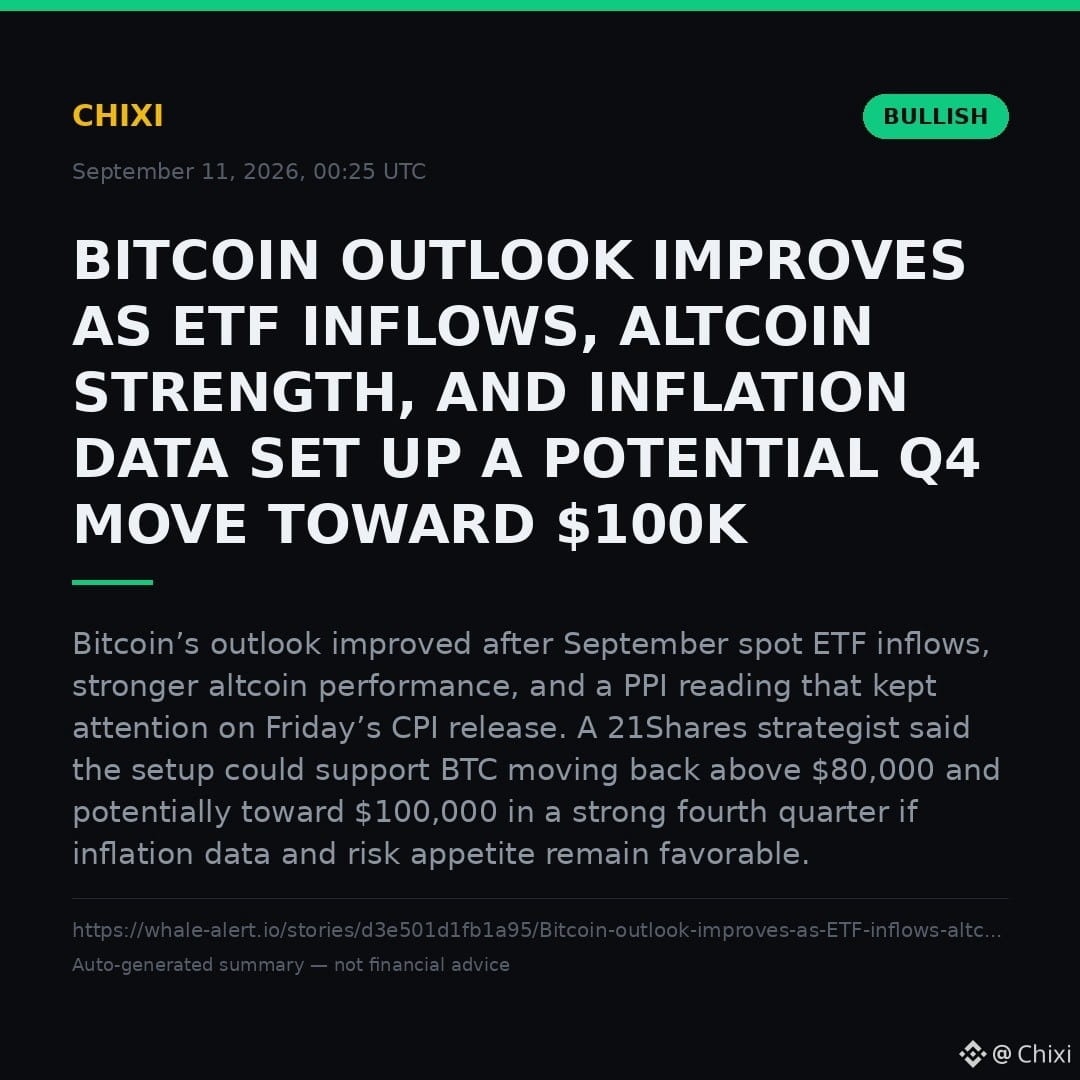
Bitcoin’s outlook improved after September spot ETF inflows, stronger altcoin performance, and a PPI reading that kept attention on Friday’s CPI release. A 21Shares strategist said the setup could support BTC moving back above $80,000 and potentially toward $100,000 in a strong fourth quarter if inflation data and risk appetite remain favorable.
Source: https://whale-alert.io/stories/d3e501d1fb1a95/Bitcoin-outlook-improves-as-ETF-inflows-altcoin-strength-and-inflation-data-set-up-a-potential-Q4-move-toward-100K
⚠️ This content is an automated quote/summary from an external source, not personal opinion or investment advice.
September 11, 2026, 00:25 UTC
📈 📈 📈
Bitcoin’s outlook improved after September spot ETF inflows, stronger altcoin performance, and a PPI reading that kept attention on Friday’s CPI release. A 21Shares strategist said the setup could support BTC moving back above $80,000 and potentially toward $100,000 in a strong fourth quarter if inflation data and risk appetite remain favorable.
Source: https://whale-alert.io/stories/d3e501d1fb1a95/Bitcoin-outlook-improves-as-ETF-inflows-altcoin-strength-and-inflation-data-set-up-a-potential-Q4-move-toward-100K
⚠️ This content is an automated quote/summary from an external source, not personal opinion or investment advice.
📈 📈 📈
Bitcoin’s outlook improved after September spot ETF inflows, stronger altcoin performance, and a PPI reading that kept attention on Friday’s CPI release. A 21Shares strategist said the setup could support BTC moving back above $80,000 and potentially toward $100,000 in a strong fourth quarter if inflation data and risk appetite remain favorable.
Source: https://whale-alert.io/stories/d3e501d1fb1a95/Bitcoin-outlook-improves-as-ETF-inflows-altcoin-strength-and-inflation-data-set-up-a-potential-Q4-move-toward-100K
⚠️ This content is an automated quote/summary from an external source, not personal opinion or investment advice.
45
·
--
翻訳参照
September 10, 2026, 16:15 UTC
📉 📉 📉
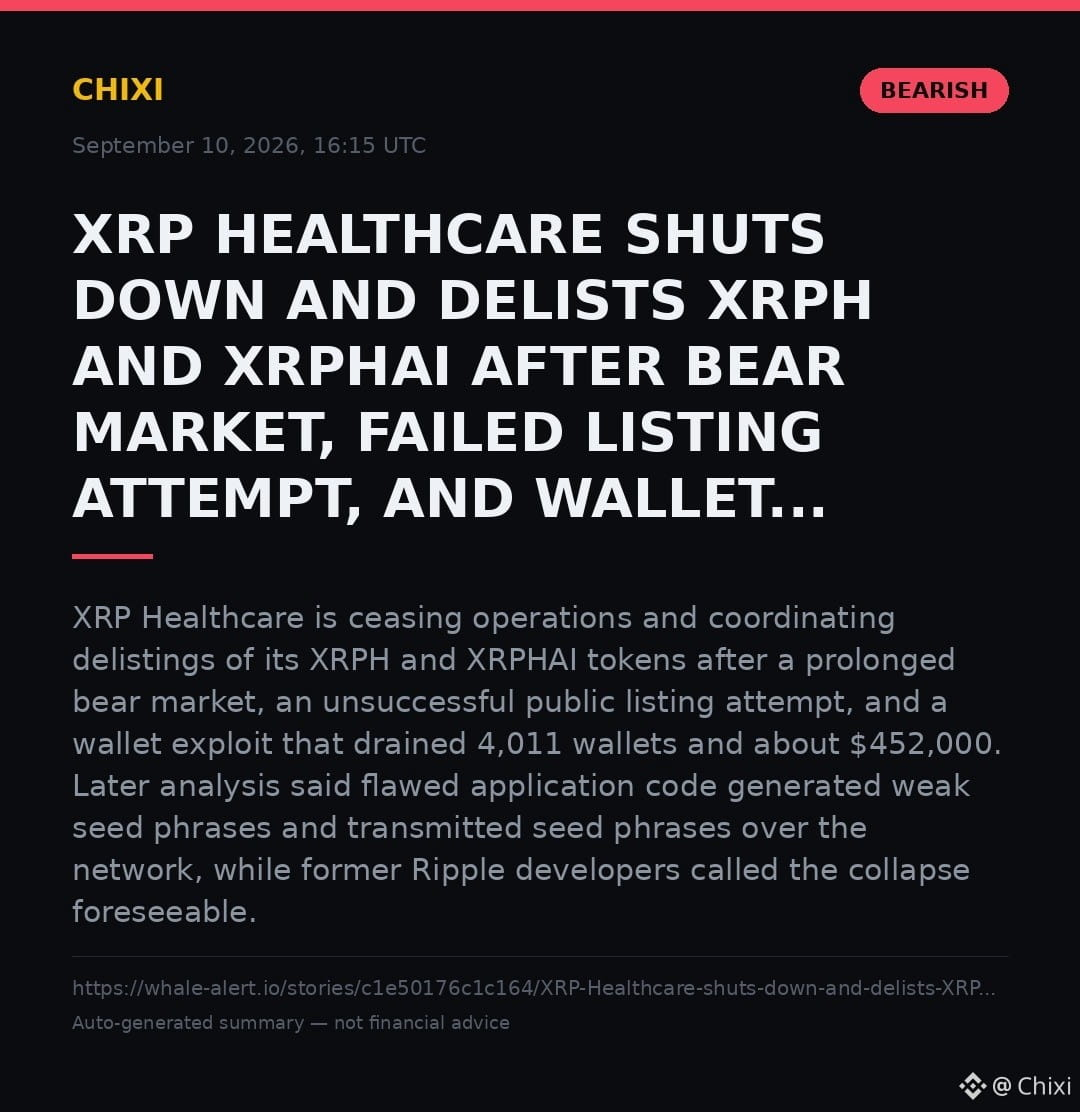
XRP Healthcare is ceasing operations and coordinating delistings of its XRPH and XRPHAI tokens after a prolonged bear market, an unsuccessful public listing attempt, and a wallet exploit that drained 4,011 wallets and about $452,000. Later analysis said flawed application code generated weak seed phrases and transmitted seed phrases over the network, while former Ripple developers called the collapse foreseeable.
Source: https://whale-alert.io/stories/c1e50176c1c164/XRP-Healthcare-shuts-down-and-delists-XRPH-and-XRPHAI-after-bear-market-failed-listing-attempt-and-wallet-exploit
⚠️ This content is an automated quote/summary from an external source, not personal opinion or investment advice.
September 10, 2026, 16:15 UTC
📉 📉 📉
XRP Healthcare is ceasing operations and coordinating delistings of its XRPH and XRPHAI tokens after a prolonged bear market, an unsuccessful public listing attempt, and a wallet exploit that drained 4,011 wallets and about $452,000. Later analysis said flawed application code generated weak seed phrases and transmitted seed phrases over the network, while former Ripple developers called the collapse foreseeable.
Source: https://whale-alert.io/stories/c1e50176c1c164/XRP-Healthcare-shuts-down-and-delists-XRPH-and-XRPHAI-after-bear-market-failed-listing-attempt-and-wallet-exploit
⚠️ This content is an automated quote/summary from an external source, not personal opinion or investment advice.
📉 📉 📉
XRP Healthcare is ceasing operations and coordinating delistings of its XRPH and XRPHAI tokens after a prolonged bear market, an unsuccessful public listing attempt, and a wallet exploit that drained 4,011 wallets and about $452,000. Later analysis said flawed application code generated weak seed phrases and transmitted seed phrases over the network, while former Ripple developers called the collapse foreseeable.
Source: https://whale-alert.io/stories/c1e50176c1c164/XRP-Healthcare-shuts-down-and-delists-XRPH-and-XRPHAI-after-bear-market-failed-listing-attempt-and-wallet-exploit
⚠️ This content is an automated quote/summary from an external source, not personal opinion or investment advice.
254
·
--
翻訳参照
September 10, 2026, 04:05 UTC
📉 📉 📉
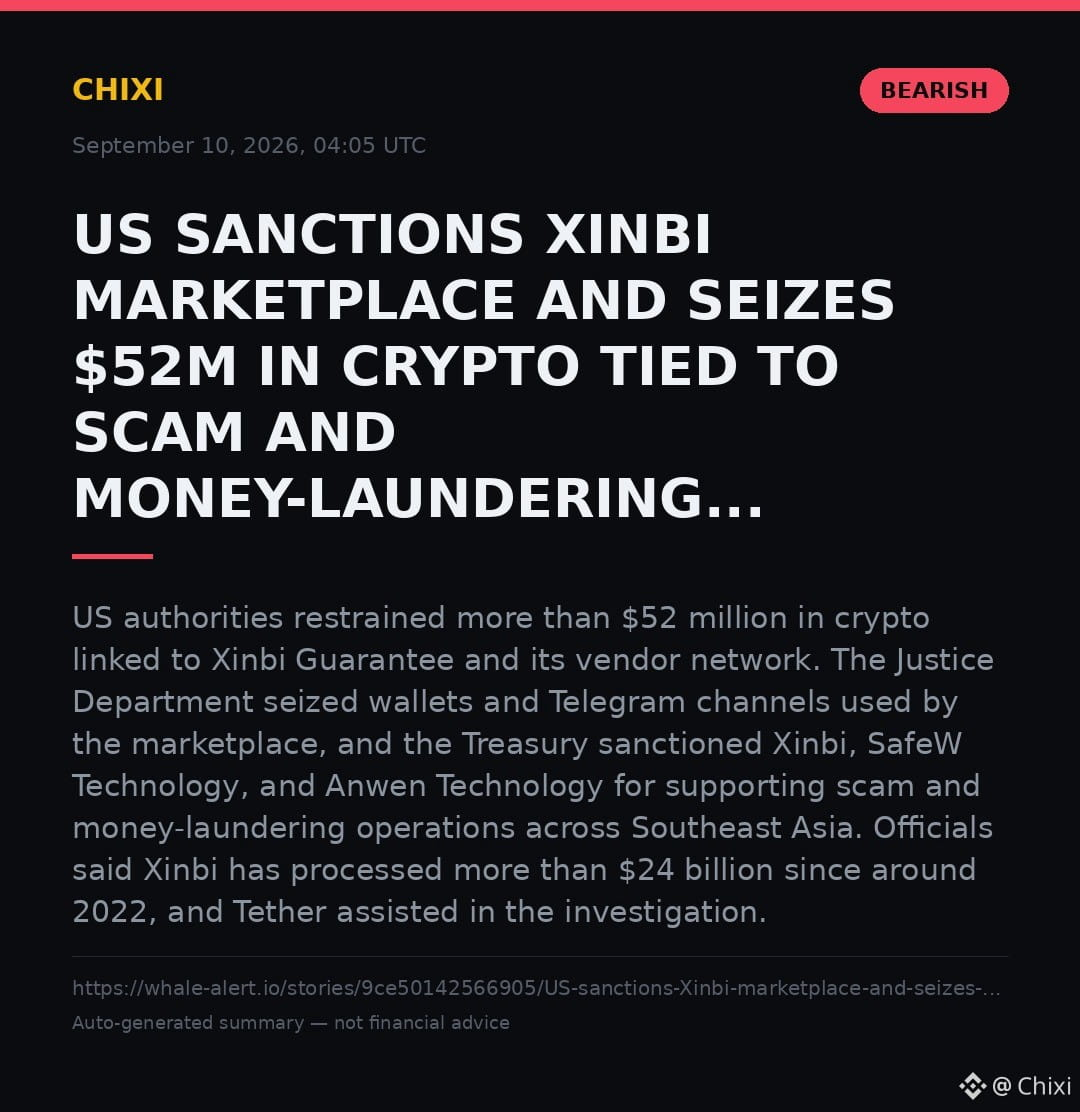
US authorities restrained more than $52 million in crypto linked to Xinbi Guarantee and its vendor network. The Justice Department seized wallets and Telegram channels used by the marketplace, and the Treasury sanctioned Xinbi, SafeW Technology, and Anwen Technology for supporting scam and money-laundering operations across Southeast Asia. Officials said Xinbi has processed more than $24 billion since around 2022, and Tether assisted in the investigation.
Source: https://whale-alert.io/stories/9ce50142566905/US-sanctions-Xinbi-marketplace-and-seizes-52M-in-crypto-tied-to-scam-and-money-laundering-network
⚠️ This content is an automated quote/summary from an external source, not personal opinion or investment advice.
September 10, 2026, 04:05 UTC
📉 📉 📉
US authorities restrained more than $52 million in crypto linked to Xinbi Guarantee and its vendor network. The Justice Department seized wallets and Telegram channels used by the marketplace, and the Treasury sanctioned Xinbi, SafeW Technology, and Anwen Technology for supporting scam and money-laundering operations across Southeast Asia. Officials said Xinbi has processed more than $24 billion since around 2022, and Tether assisted in the investigation.
Source: https://whale-alert.io/stories/9ce50142566905/US-sanctions-Xinbi-marketplace-and-seizes-52M-in-crypto-tied-to-scam-and-money-laundering-network
⚠️ This content is an automated quote/summary from an external source, not personal opinion or investment advice.
📉 📉 📉
US authorities restrained more than $52 million in crypto linked to Xinbi Guarantee and its vendor network. The Justice Department seized wallets and Telegram channels used by the marketplace, and the Treasury sanctioned Xinbi, SafeW Technology, and Anwen Technology for supporting scam and money-laundering operations across Southeast Asia. Officials said Xinbi has processed more than $24 billion since around 2022, and Tether assisted in the investigation.
Source: https://whale-alert.io/stories/9ce50142566905/US-sanctions-Xinbi-marketplace-and-seizes-52M-in-crypto-tied-to-scam-and-money-laundering-network
⚠️ This content is an automated quote/summary from an external source, not personal opinion or investment advice.
105
·
--
翻訳参照
September 9, 2026, 23:04 UTC
📈 📈 📈
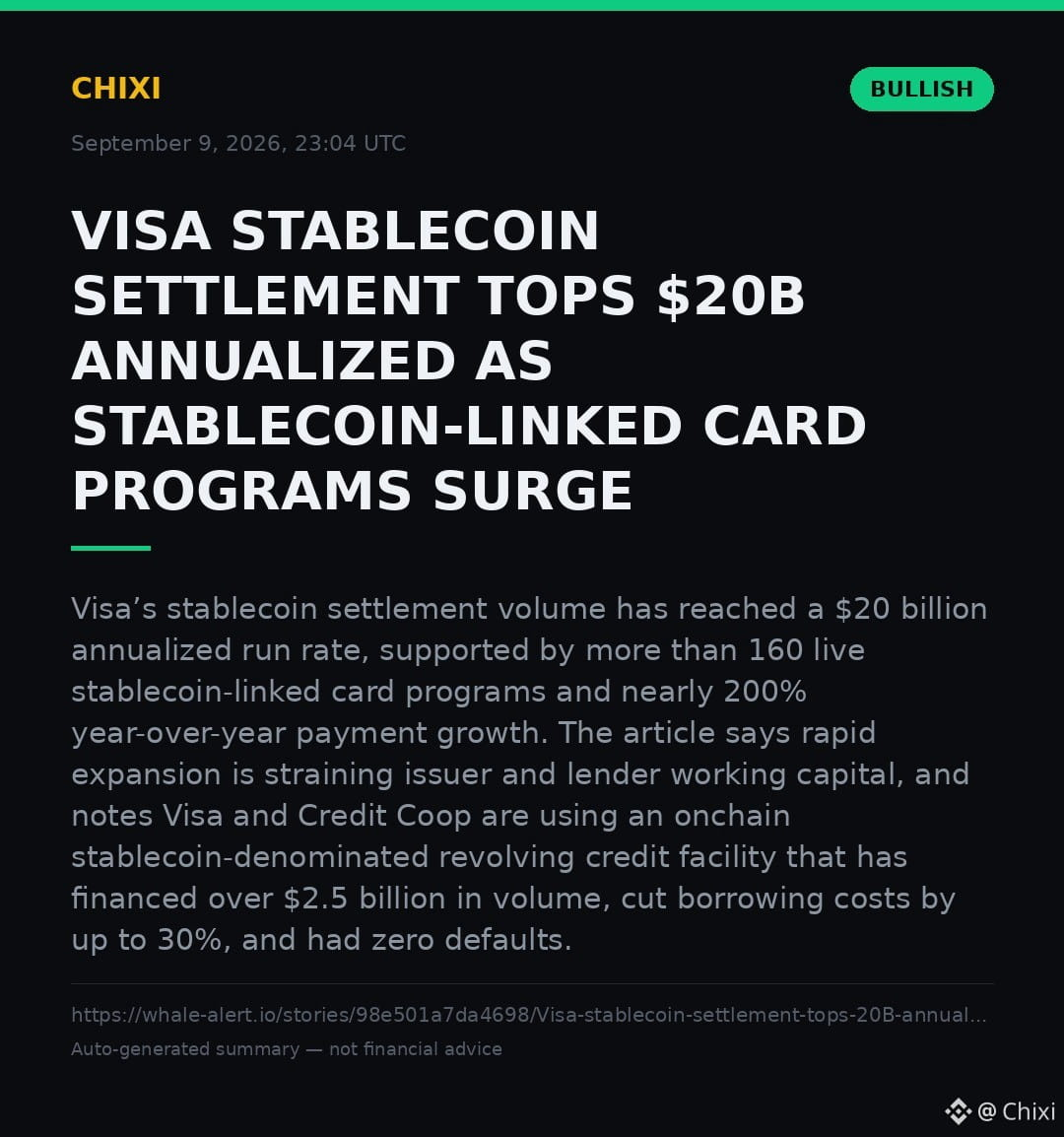
Visa’s stablecoin settlement volume has reached a $20 billion annualized run rate, supported by more than 160 live stablecoin-linked card programs and nearly 200% year-over-year payment growth. The article says rapid expansion is straining issuer and lender working capital, and notes Visa and Credit Coop are using an onchain stablecoin-denominated revolving credit facility that has financed over $2.5 billion in volume, cut borrowing costs by up to 30%, and had zero defaults.
Source: https://whale-alert.io/stories/98e501a7da4698/Visa-stablecoin-settlement-tops-20B-annualized-as-stablecoin-linked-card-programs-surge
⚠️ This content is an automated quote/summary from an external source, not personal opinion or investment advice.
September 9, 2026, 23:04 UTC
📈 📈 📈
Visa’s stablecoin settlement volume has reached a $20 billion annualized run rate, supported by more than 160 live stablecoin-linked card programs and nearly 200% year-over-year payment growth. The article says rapid expansion is straining issuer and lender working capital, and notes Visa and Credit Coop are using an onchain stablecoin-denominated revolving credit facility that has financed over $2.5 billion in volume, cut borrowing costs by up to 30%, and had zero defaults.
Source: https://whale-alert.io/stories/98e501a7da4698/Visa-stablecoin-settlement-tops-20B-annualized-as-stablecoin-linked-card-programs-surge
⚠️ This content is an automated quote/summary from an external source, not personal opinion or investment advice.
📈 📈 📈
Visa’s stablecoin settlement volume has reached a $20 billion annualized run rate, supported by more than 160 live stablecoin-linked card programs and nearly 200% year-over-year payment growth. The article says rapid expansion is straining issuer and lender working capital, and notes Visa and Credit Coop are using an onchain stablecoin-denominated revolving credit facility that has financed over $2.5 billion in volume, cut borrowing costs by up to 30%, and had zero defaults.
Source: https://whale-alert.io/stories/98e501a7da4698/Visa-stablecoin-settlement-tops-20B-annualized-as-stablecoin-linked-card-programs-surge
⚠️ This content is an automated quote/summary from an external source, not personal opinion or investment advice.
5
·
--
翻訳参照
September 9, 2026, 13:23 UTC
📈 📈 📈
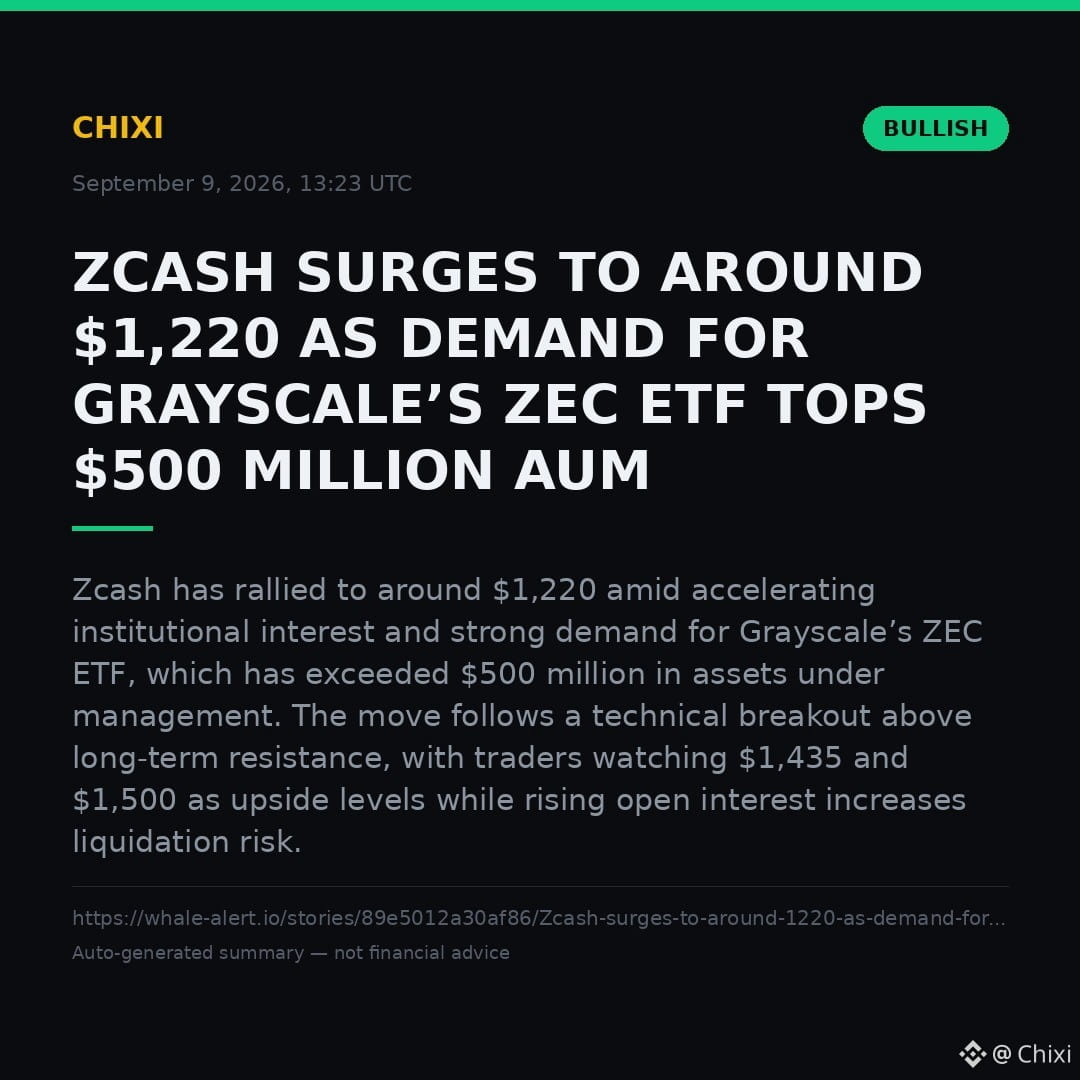
Zcash has rallied to around $1,220 amid accelerating institutional interest and strong demand for Grayscale’s ZEC ETF, which has exceeded $500 million in assets under management. The move follows a technical breakout above long-term resistance, with traders watching $1,435 and $1,500 as upside levels while rising open interest increases liquidation risk.
Source: https://whale-alert.io/stories/89e5012a30af86/Zcash-surges-to-around-1220-as-demand-for-Grayscales-ZEC-ETF-tops-500-million-AUM
⚠️ This content is an automated quote/summary from an external source, not personal opinion or investment advice.
September 9, 2026, 13:23 UTC
📈 📈 📈
Zcash has rallied to around $1,220 amid accelerating institutional interest and strong demand for Grayscale’s ZEC ETF, which has exceeded $500 million in assets under management. The move follows a technical breakout above long-term resistance, with traders watching $1,435 and $1,500 as upside levels while rising open interest increases liquidation risk.
Source: https://whale-alert.io/stories/89e5012a30af86/Zcash-surges-to-around-1220-as-demand-for-Grayscales-ZEC-ETF-tops-500-million-AUM
⚠️ This content is an automated quote/summary from an external source, not personal opinion or investment advice.
📈 📈 📈
Zcash has rallied to around $1,220 amid accelerating institutional interest and strong demand for Grayscale’s ZEC ETF, which has exceeded $500 million in assets under management. The move follows a technical breakout above long-term resistance, with traders watching $1,435 and $1,500 as upside levels while rising open interest increases liquidation risk.
Source: https://whale-alert.io/stories/89e5012a30af86/Zcash-surges-to-around-1220-as-demand-for-Grayscales-ZEC-ETF-tops-500-million-AUM
⚠️ This content is an automated quote/summary from an external source, not personal opinion or investment advice.
157
·
--
翻訳参照
September 9, 2026, 14:20 UTC
📉 📉 📉
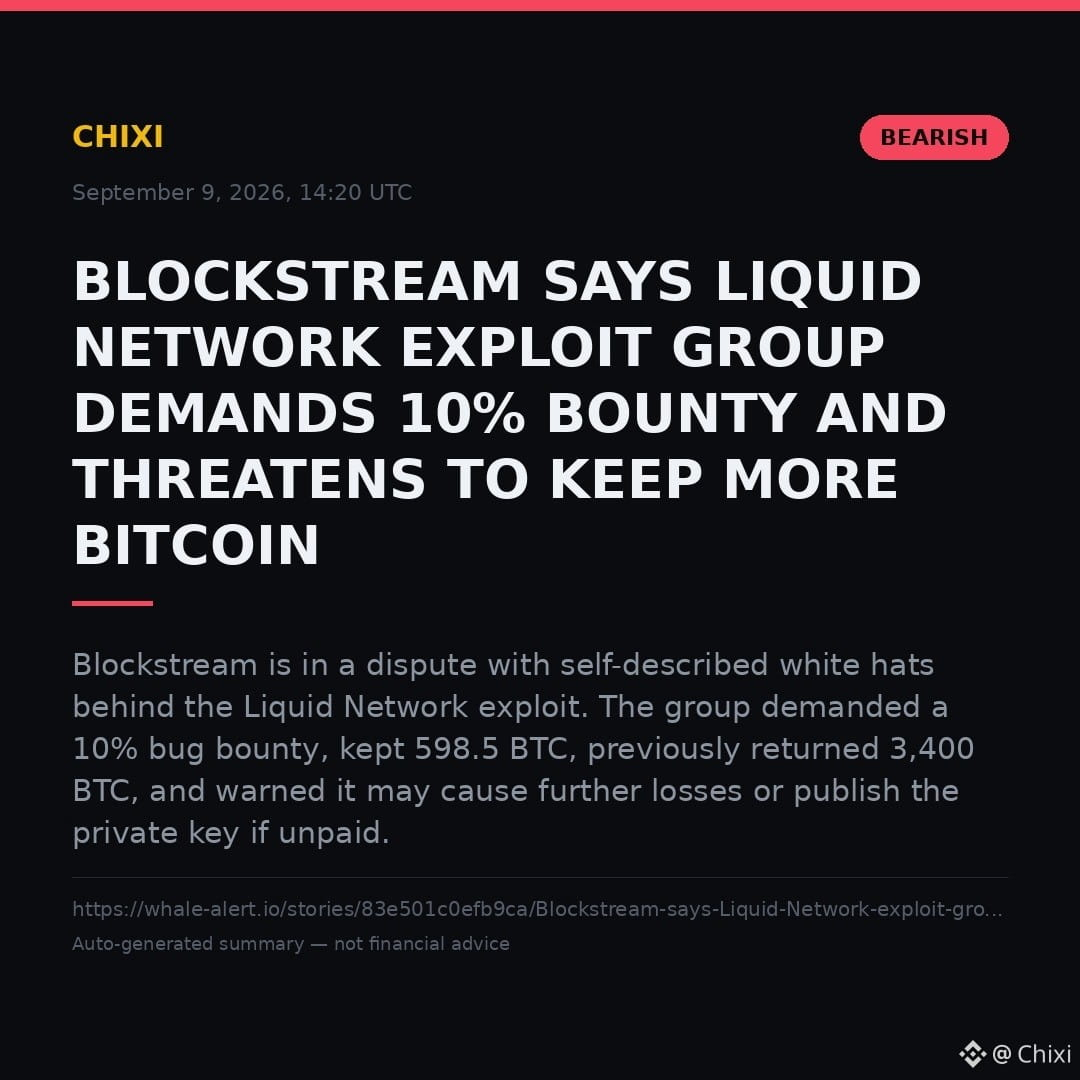
Blockstream is in a dispute with self-described white hats behind the Liquid Network exploit. The group demanded a 10% bug bounty, kept 598.5 BTC, previously returned 3,400 BTC, and warned it may cause further losses or publish the private key if unpaid.
Source: https://whale-alert.io/stories/83e501c0efb9ca/Blockstream-says-Liquid-Network-exploit-group-demands-10-bounty-and-threatens-to-keep-more-Bitcoin
⚠️ This content is an automated quote/summary from an external source, not personal opinion or investment advice.
September 9, 2026, 14:20 UTC
📉 📉 📉
Blockstream is in a dispute with self-described white hats behind the Liquid Network exploit. The group demanded a 10% bug bounty, kept 598.5 BTC, previously returned 3,400 BTC, and warned it may cause further losses or publish the private key if unpaid.
Source: https://whale-alert.io/stories/83e501c0efb9ca/Blockstream-says-Liquid-Network-exploit-group-demands-10-bounty-and-threatens-to-keep-more-Bitcoin
⚠️ This content is an automated quote/summary from an external source, not personal opinion or investment advice.
📉 📉 📉
Blockstream is in a dispute with self-described white hats behind the Liquid Network exploit. The group demanded a 10% bug bounty, kept 598.5 BTC, previously returned 3,400 BTC, and warned it may cause further losses or publish the private key if unpaid.
Source: https://whale-alert.io/stories/83e501c0efb9ca/Blockstream-says-Liquid-Network-exploit-group-demands-10-bounty-and-threatens-to-keep-more-Bitcoin
⚠️ This content is an automated quote/summary from an external source, not personal opinion or investment advice.
35
·
--
翻訳参照
September 9, 2026, 08:41 UTC
📉 📉 📉
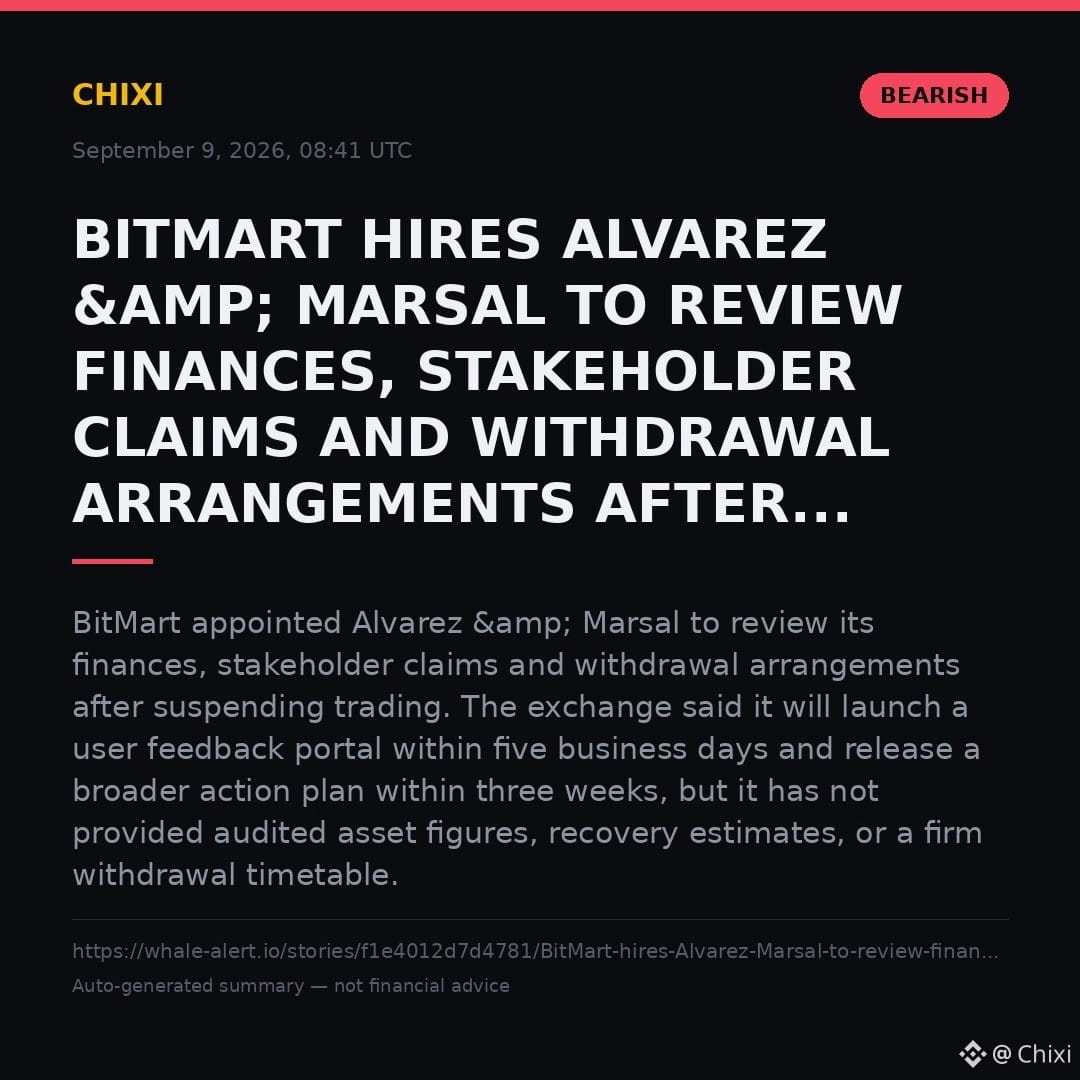
BitMart appointed Alvarez & Marsal to review its finances, stakeholder claims and withdrawal arrangements after suspending trading. The exchange said it will launch a user feedback portal within five business days and release a broader action plan within three weeks, but it has not provided audited asset figures, recovery estimates, or a firm withdrawal timetable.
Source: https://whale-alert.io/stories/f1e4012d7d4781/BitMart-hires-Alvarez-Marsal-to-review-finances-stakeholder-claims-and-withdrawal-arrangements-after-suspending-trading
⚠️ This content is an automated quote/summary from an external source, not personal opinion or investment advice.
September 9, 2026, 08:41 UTC
📉 📉 📉
BitMart appointed Alvarez & Marsal to review its finances, stakeholder claims and withdrawal arrangements after suspending trading. The exchange said it will launch a user feedback portal within five business days and release a broader action plan within three weeks, but it has not provided audited asset figures, recovery estimates, or a firm withdrawal timetable.
Source: https://whale-alert.io/stories/f1e4012d7d4781/BitMart-hires-Alvarez-Marsal-to-review-finances-stakeholder-claims-and-withdrawal-arrangements-after-suspending-trading
⚠️ This content is an automated quote/summary from an external source, not personal opinion or investment advice.
📉 📉 📉
BitMart appointed Alvarez & Marsal to review its finances, stakeholder claims and withdrawal arrangements after suspending trading. The exchange said it will launch a user feedback portal within five business days and release a broader action plan within three weeks, but it has not provided audited asset figures, recovery estimates, or a firm withdrawal timetable.
Source: https://whale-alert.io/stories/f1e4012d7d4781/BitMart-hires-Alvarez-Marsal-to-review-finances-stakeholder-claims-and-withdrawal-arrangements-after-suspending-trading
⚠️ This content is an automated quote/summary from an external source, not personal opinion or investment advice.
48
·
--
2026年9月9日 03:40(UTC)
📉 📉 📉
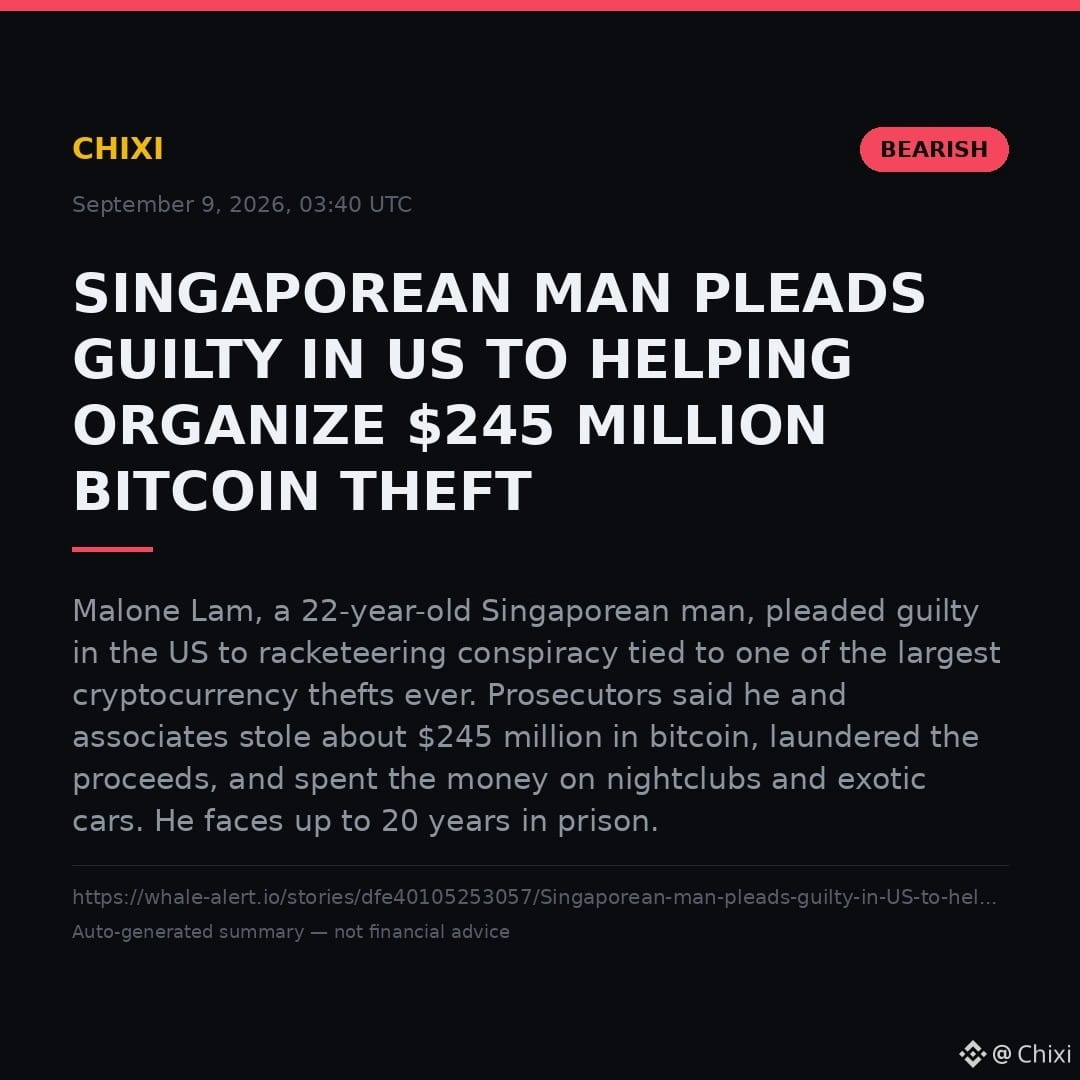
マローン・ラム(22歳)は、シンガポール出身の男性。米国で、史上最大級の暗号資産(クリプト)盗難の1件に関連する詐欺組織(ラックeteering)共謀で有罪を認めた。検察側によると、彼と共犯者らはビットコインで約2億4500万ドルを盗み、その資金をマネーロンダリングしたうえで、ナイトクラブや高級・高性能車に費やしたという。彼は最大20年の禁錮刑に直面している。
出典: https://whale-alert.io/stories/dfe40105253057/Singaporean-man-pleads-guilty-in-US-to-helping-organize-245-million-bitcoin-theft
⚠️ これは外部ソースからの自動引用/要約であり、個人的な意見や投資助言ではありません。
2026年9月9日 03:40(UTC)
📉 📉 📉
マローン・ラム(22歳)は、シンガポール出身の男性。米国で、史上最大級の暗号資産(クリプト)盗難の1件に関連する詐欺組織(ラックeteering)共謀で有罪を認めた。検察側によると、彼と共犯者らはビットコインで約2億4500万ドルを盗み、その資金をマネーロンダリングしたうえで、ナイトクラブや高級・高性能車に費やしたという。彼は最大20年の禁錮刑に直面している。
出典: https://whale-alert.io/stories/dfe40105253057/Singaporean-man-pleads-guilty-in-US-to-helping-organize-245-million-bitcoin-theft
⚠️ これは外部ソースからの自動引用/要約であり、個人的な意見や投資助言ではありません。
📉 📉 📉
マローン・ラム(22歳)は、シンガポール出身の男性。米国で、史上最大級の暗号資産(クリプト)盗難の1件に関連する詐欺組織(ラックeteering)共謀で有罪を認めた。検察側によると、彼と共犯者らはビットコインで約2億4500万ドルを盗み、その資金をマネーロンダリングしたうえで、ナイトクラブや高級・高性能車に費やしたという。彼は最大20年の禁錮刑に直面している。
出典: https://whale-alert.io/stories/dfe40105253057/Singaporean-man-pleads-guilty-in-US-to-helping-organize-245-million-bitcoin-theft
⚠️ これは外部ソースからの自動引用/要約であり、個人的な意見や投資助言ではありません。
172
·
--
2026年9月9日 00:28(UTC)
📉 📉 📉
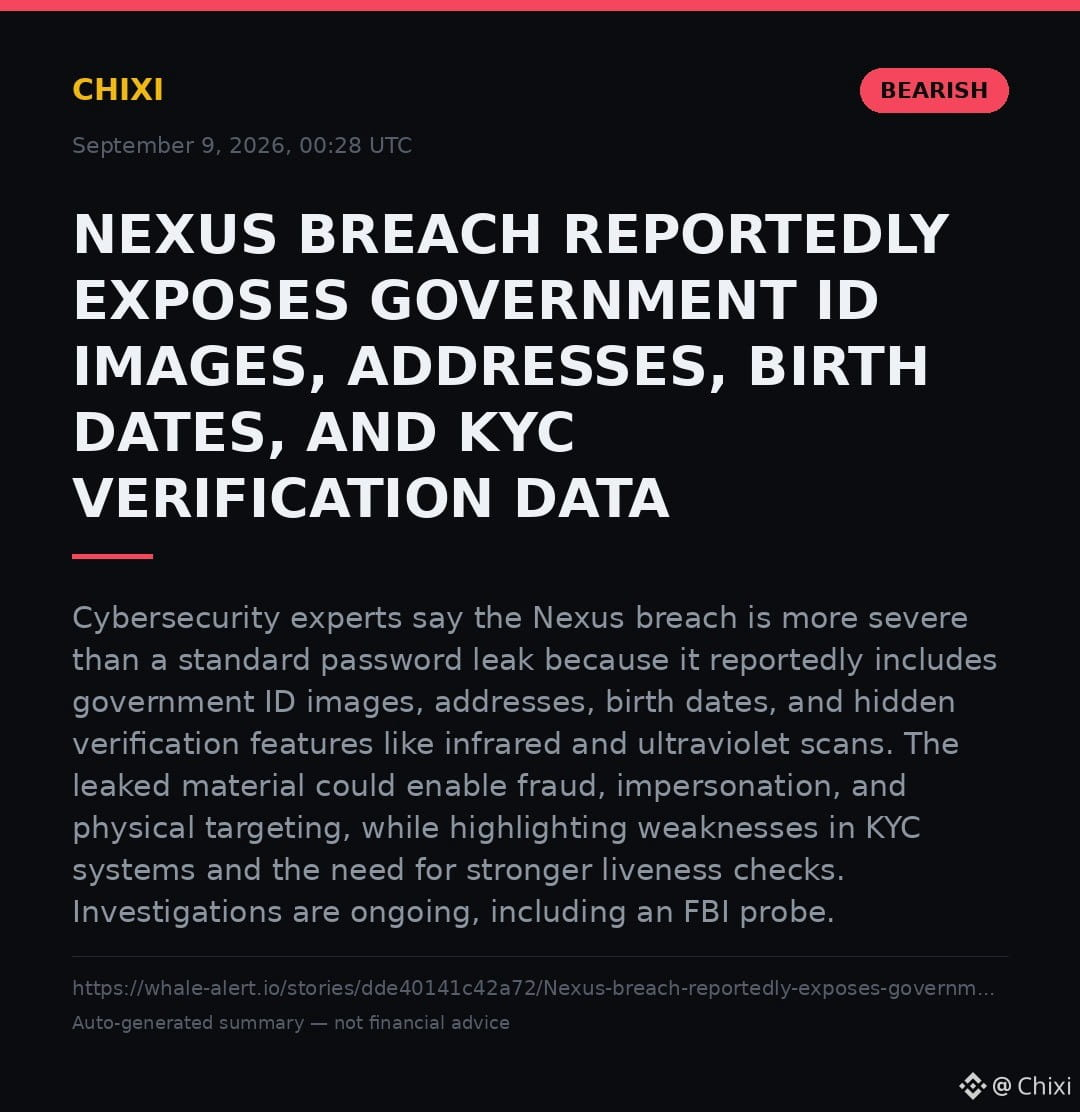
サイバーセキュリティの専門家は、Nexusの侵害は、一般的なパスワード流出よりも深刻だと述べています。報道によれば、政府発行の身分証画像、住所、生年月日、さらに赤外線・紫外線スキャンのような隠れた本人確認機能が含まれているとのことです。流出した資料は、詐欺、なりすまし、そして物理的な標的化を可能にし得る一方で、KYC(本人確認)システムの弱点や、より強力なライブネス(実在性)チェックの必要性を浮き彫りにしています。捜査は継続中であり、FBIによる調査も含まれています。
出典: https://whale-alert.io/stories/dde40141c42a72/Nexus-breach-reportedly-exposes-government-ID-images-addresses-birth-dates-and-KYC-verification-data
⚠️ この内容は外部ソースからの自動引用/要約であり、個人的な意見や投資助言ではありません。
2026年9月9日 00:28(UTC)
📉 📉 📉
サイバーセキュリティの専門家は、Nexusの侵害は、一般的なパスワード流出よりも深刻だと述べています。報道によれば、政府発行の身分証画像、住所、生年月日、さらに赤外線・紫外線スキャンのような隠れた本人確認機能が含まれているとのことです。流出した資料は、詐欺、なりすまし、そして物理的な標的化を可能にし得る一方で、KYC(本人確認)システムの弱点や、より強力なライブネス(実在性)チェックの必要性を浮き彫りにしています。捜査は継続中であり、FBIによる調査も含まれています。
出典: https://whale-alert.io/stories/dde40141c42a72/Nexus-breach-reportedly-exposes-government-ID-images-addresses-birth-dates-and-KYC-verification-data
⚠️ この内容は外部ソースからの自動引用/要約であり、個人的な意見や投資助言ではありません。
📉 📉 📉
サイバーセキュリティの専門家は、Nexusの侵害は、一般的なパスワード流出よりも深刻だと述べています。報道によれば、政府発行の身分証画像、住所、生年月日、さらに赤外線・紫外線スキャンのような隠れた本人確認機能が含まれているとのことです。流出した資料は、詐欺、なりすまし、そして物理的な標的化を可能にし得る一方で、KYC(本人確認)システムの弱点や、より強力なライブネス(実在性)チェックの必要性を浮き彫りにしています。捜査は継続中であり、FBIによる調査も含まれています。
出典: https://whale-alert.io/stories/dde40141c42a72/Nexus-breach-reportedly-exposes-government-ID-images-addresses-birth-dates-and-KYC-verification-data
⚠️ この内容は外部ソースからの自動引用/要約であり、個人的な意見や投資助言ではありません。
103
·
--
2026年9月8日 17:44(UTC)
📈 📈 📈
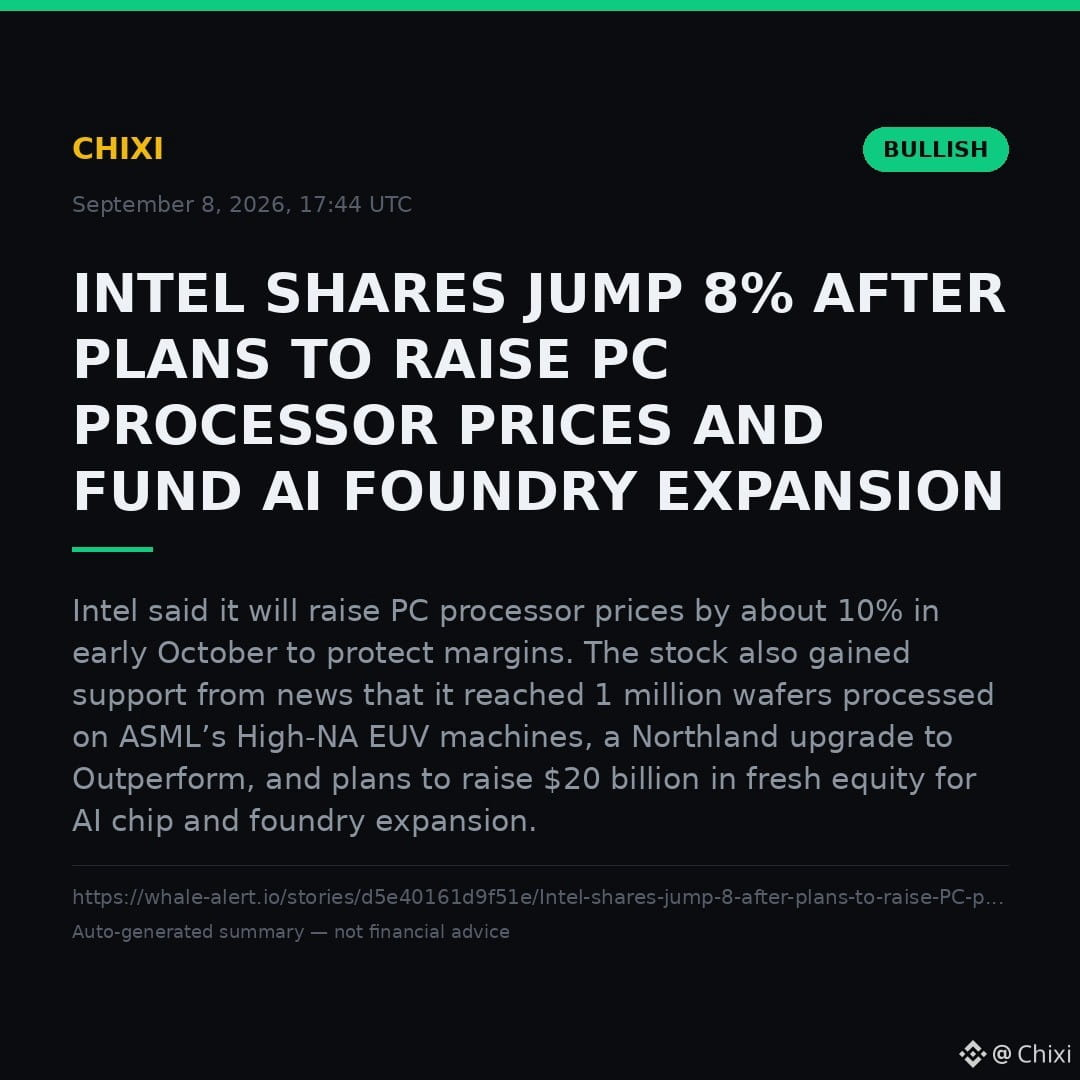
インテルは、マージンを守るために10月初旬にPC向けプロセッサーの価格を約10%引き上げると発表しました。さらに、ASMLのHigh-NA EUV装置で処理済みウェハーが100万枚に到達したこと、ノースランドによるOutperformへの格上げ、AIチップおよびファウンドリー拡大に向けて新たに200億ドルの増資を行う計画が報じられたことから、株価は上昇の材料を得ました。
出典:https://whale-alert.io/stories/d5e40161d9f51e/Intel-shares-jump-8-after-plans-to-raise-PC-processor-prices-and-fund-AI-foundry-expansion
⚠️ この記事の内容は外部ソースの自動引用/要約であり、個人的な意見や投資助言ではありません。
2026年9月8日 17:44(UTC)
📈 📈 📈
インテルは、マージンを守るために10月初旬にPC向けプロセッサーの価格を約10%引き上げると発表しました。さらに、ASMLのHigh-NA EUV装置で処理済みウェハーが100万枚に到達したこと、ノースランドによるOutperformへの格上げ、AIチップおよびファウンドリー拡大に向けて新たに200億ドルの増資を行う計画が報じられたことから、株価は上昇の材料を得ました。
出典:https://whale-alert.io/stories/d5e40161d9f51e/Intel-shares-jump-8-after-plans-to-raise-PC-processor-prices-and-fund-AI-foundry-expansion
⚠️ この記事の内容は外部ソースの自動引用/要約であり、個人的な意見や投資助言ではありません。
📈 📈 📈
インテルは、マージンを守るために10月初旬にPC向けプロセッサーの価格を約10%引き上げると発表しました。さらに、ASMLのHigh-NA EUV装置で処理済みウェハーが100万枚に到達したこと、ノースランドによるOutperformへの格上げ、AIチップおよびファウンドリー拡大に向けて新たに200億ドルの増資を行う計画が報じられたことから、株価は上昇の材料を得ました。
出典:https://whale-alert.io/stories/d5e40161d9f51e/Intel-shares-jump-8-after-plans-to-raise-PC-processor-prices-and-fund-AI-foundry-expansion
⚠️ この記事の内容は外部ソースの自動引用/要約であり、個人的な意見や投資助言ではありません。
51
·
--
翻訳参照
September 8, 2026, 08:10 UTC
📉 📉 📉
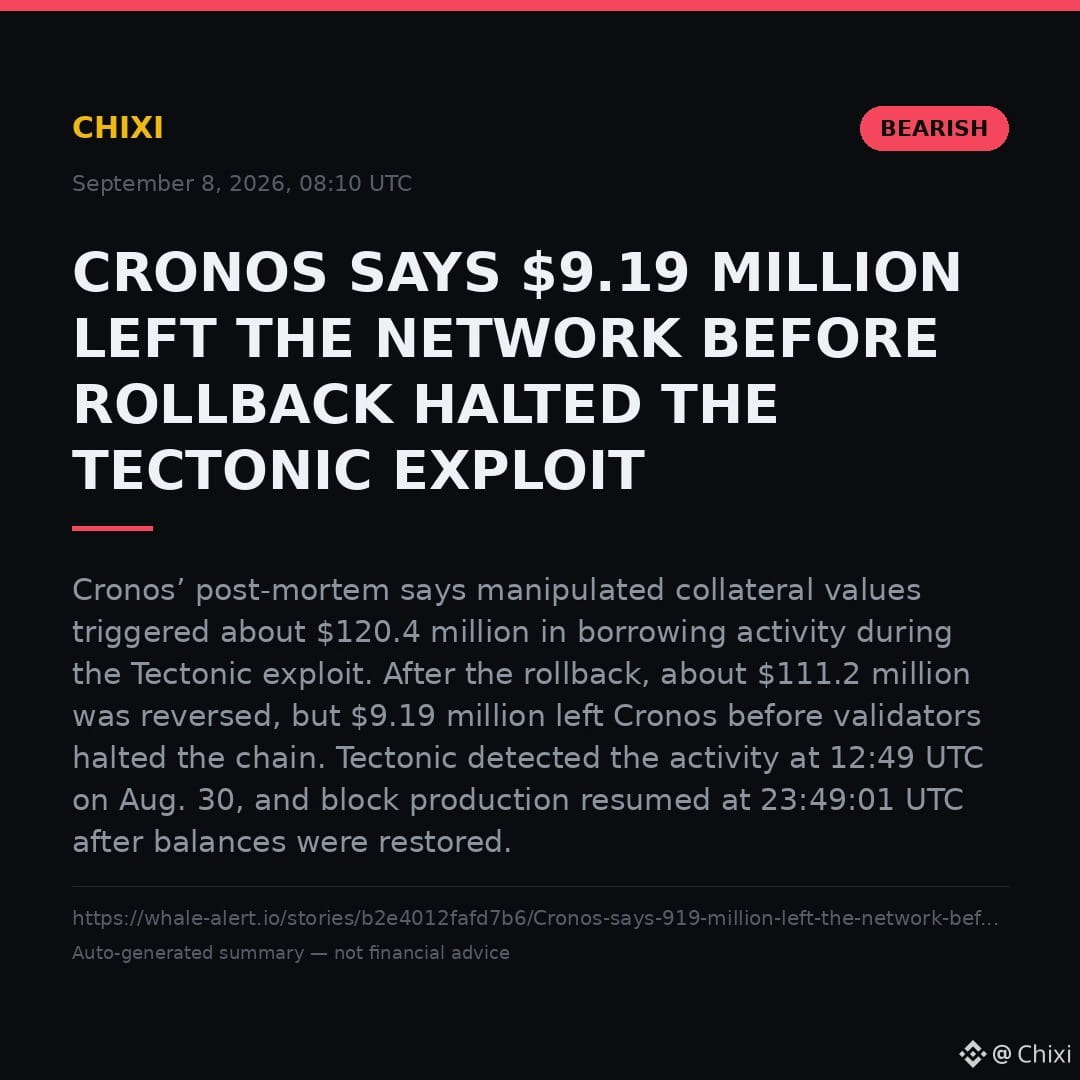
Cronos’ post-mortem says manipulated collateral values triggered about $120.4 million in borrowing activity during the Tectonic exploit. After the rollback, about $111.2 million was reversed, but $9.19 million left Cronos before validators halted the chain. Tectonic detected the activity at 12:49 UTC on Aug. 30, and block production resumed at 23:49:01 UTC after balances were restored.
Source: https://whale-alert.io/stories/b2e4012fafd7b6/Cronos-says-919-million-left-the-network-before-rollback-halted-the-Tectonic-exploit
⚠️ This content is an automated quote/summary from an external source, not personal opinion or investment advice.
September 8, 2026, 08:10 UTC
📉 📉 📉
Cronos’ post-mortem says manipulated collateral values triggered about $120.4 million in borrowing activity during the Tectonic exploit. After the rollback, about $111.2 million was reversed, but $9.19 million left Cronos before validators halted the chain. Tectonic detected the activity at 12:49 UTC on Aug. 30, and block production resumed at 23:49:01 UTC after balances were restored.
Source: https://whale-alert.io/stories/b2e4012fafd7b6/Cronos-says-919-million-left-the-network-before-rollback-halted-the-Tectonic-exploit
⚠️ This content is an automated quote/summary from an external source, not personal opinion or investment advice.
📉 📉 📉
Cronos’ post-mortem says manipulated collateral values triggered about $120.4 million in borrowing activity during the Tectonic exploit. After the rollback, about $111.2 million was reversed, but $9.19 million left Cronos before validators halted the chain. Tectonic detected the activity at 12:49 UTC on Aug. 30, and block production resumed at 23:49:01 UTC after balances were restored.
Source: https://whale-alert.io/stories/b2e4012fafd7b6/Cronos-says-919-million-left-the-network-before-rollback-halted-the-Tectonic-exploit
⚠️ This content is an automated quote/summary from an external source, not personal opinion or investment advice.
51
ログインして、さらにコンテンツを読む
厳選トピックで世界の暗号資産トレーダーの仲間入り
⚡️ 暗号資産に関する最新かつ有益な情報が見つかります。
💬 世界最大の暗号資産取引所から信頼されています。
👍 認証を受けたクリエイターから、有益なインサイトを得られます。
メール / 電話番号
トレンドトピック
美联储加息是否已成定局
閲覧回数 543
24人が討論中
現時点の局面から判断すると、今週は25ベーシスポイントの利上げが実施される確率が高いとみています。ただし、これをきっかけに連続して複数回利上げを行う「サイクル」を直ちに開始するのは難しいでしょう。
コアCPIは前月比が予想を上回ったものの、コアCPIの前年比は引き続き低下しており、インフレ全体が下向きに進むという大きな流れは完全には覆されていません。むしろ短期的な粘着性(の反発)が出ているという位置づけです。FRBは現時点では、インフレ反発のリスクを抑えるための「予防的な利上げ」により重点を置いており、これから再び強い引き締め局面に戻る(再スタートする)意図はあまり感じられません。今回の利上げが実現した場合、注目点はドットチャート(政策金利見通し)とパウエル議長の発言です。「今回限りの一回の動きで、以降はデータ次第」というスタンスなら単発の利上げになります。一方で年内にもう一度追加利上げする可能性を示すなら、市場は複数回利上げの道筋を織り込みやすくなります。
利上げが一度着地すると、BTC、テック株、金の値動きは分化する可能性があります:
1. BTC:ボラティリティが高い無利子(利息が付かない)リスク資産であり、米国債の実質金利に非常に敏感です。利上げが実施され、かつタカ派的な見通しが示されれば、短期的には大きめに下押しされる可能性が高いでしょう。しかし「利上げが実施され、織り込みが出尽くした」となるなら、いわゆる材料出尽くしによる下落の反動(買い戻し)も起こり得ます。私は短期的には慎重で、むやみに押し目を拾ったり、強気に買いにいったりもしません。買い一辺倒でも売り一辺倒でもなく、主にドルと米国債利回りの今後の変化に注目します。
2. テック株:成長株のバリュエーションは、金利見通しに非常に依存しています。利上げが実施されると、高PERのAIや半導体セクターはバリュエーション調整の圧力を引き続き受けやすくなります。ただし、業績の確度が高い大型株(リーダー)は相対的に下げにくく、踏みとどまる可能性があります。全体として短期はレンジになりやすく、片側に大きく上昇するような一方向の相場展開は起こりにくいでしょう。
3. 金:利上げ期待が高まると金価格は抑えられ、米国債利回りの上昇は無利子資産の保有コストを押し上げます。ただし、世界の中央銀行による継続的な金の購入という中長期の論理は依然として生きています。短期は金利の変動で揺れやすいものの、中長期ではヘッジ(防衛)としての性格があり、追いかけて高値で買うのは適していません。むしろ下落時に分割で組み入れるのがよいでしょう。#美联储加息是否已成定局 $BTC $ETH $SOL
贪吃小笼包
·いいね:1件
·閲覧回数 977
FedRateWatch
閲覧回数 4,914
18人が討論中
BitcoinReboundsTo$79K
閲覧回数 32,794
257人が討論中