
Crypto _ Queen 2
1.7k 投稿

Crypto _ Queen 2
報告
ユーザーをブロック
取引を発注
高頻度トレーダー
3.5か月
381 フォロー
1.2K+ フォロワー
884 いいね
投稿
ポートフォリオ
すべて
引用
ライブ
翻訳参照
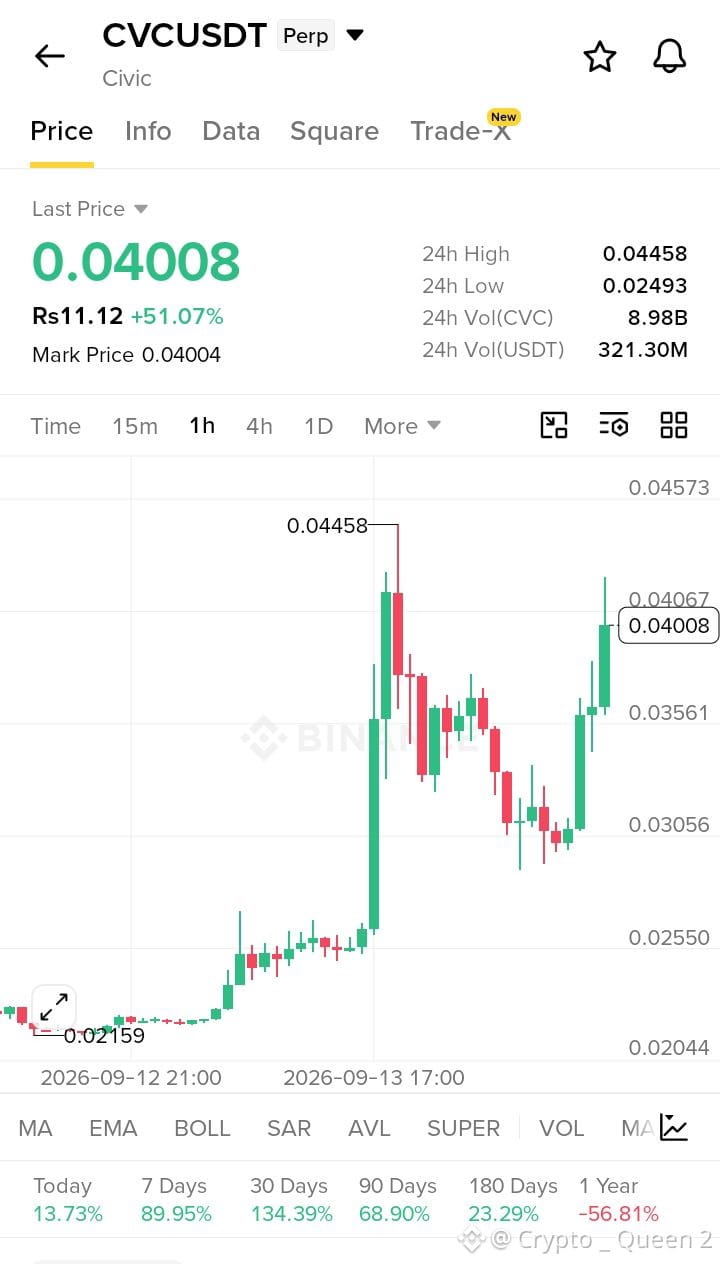
CVC 🔥 — Bullish reversal after defending the 0.0305 demand zone, with strong momentum pushing price back toward the previous 0.0446 resistance.
Long $CVC
Entry: 0.0380–0.0400
Stop Loss: 0.0340
TP1: 0.0445
TP2: 0.0480
TP3: 0.0520
Price has reclaimed the 0.0356 area with strong candles and expanding momentum. The 0.0446 high is the key liquidity target and breakout level. A clean break above it could accelerate the next leg higher. If price loses 0.0356, momentum weakens and the setup needs caution.
Trade $CVC here 👇
{spot}(CVCUSDT)
CVC 🔥 — Bullish reversal after defending the 0.0305 demand zone, with strong momentum pushing price back toward the previous 0.0446 resistance.
Long $CVC
Entry: 0.0380–0.0400
Stop Loss: 0.0340
TP1: 0.0445
TP2: 0.0480
TP3: 0.0520
Price has reclaimed the 0.0356 area with strong candles and expanding momentum. The 0.0446 high is the key liquidity target and breakout level. A clean break above it could accelerate the next leg higher. If price loses 0.0356, momentum weakens and the setup needs caution.
Trade $CVC here 👇
Long $CVC
Entry: 0.0380–0.0400
Stop Loss: 0.0340
TP1: 0.0445
TP2: 0.0480
TP3: 0.0520
Price has reclaimed the 0.0356 area with strong candles and expanding momentum. The 0.0446 high is the key liquidity target and breakout level. A clean break above it could accelerate the next leg higher. If price loses 0.0356, momentum weakens and the setup needs caution.
Trade $CVC here 👇
114
翻訳参照
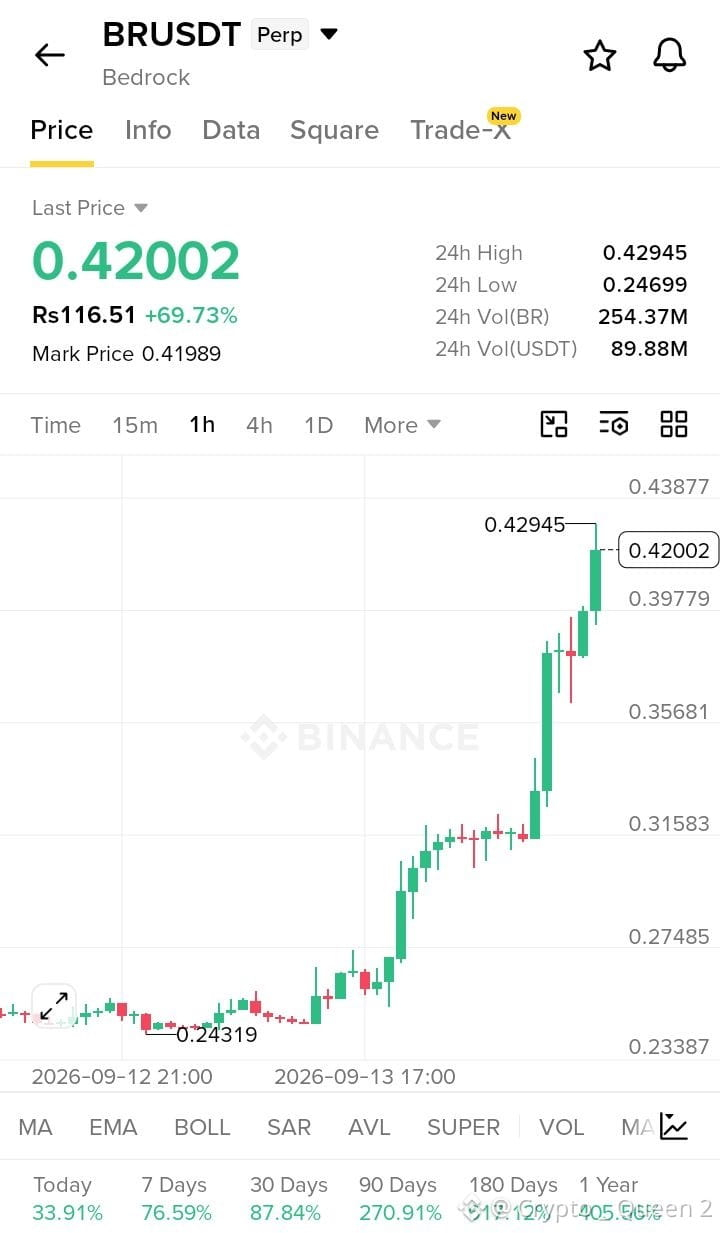
BR 🔥 — Strong bullish market structure with consecutive higher highs and higher lows. Price is holding above the 0.3978 support, while 0.4295 remains the key resistance/liquidity level.
Long $BR
Entry: 0.398–0.407
Stop Loss: 0.384
TP1: 0.429
TP2: 0.455
TP3: 0.480
Momentum is aggressive after the breakout from the 0.3158 consolidation zone. A successful hold above 0.3978 could trigger another liquidity sweep toward the recent high and beyond. If 0.4295 breaks with volume, continuation becomes much more attractive. Watch for a clean retest rather than chasing the spike.
Trade $BR here 👇
{future}(BRUSDT)
BR 🔥 — Strong bullish market structure with consecutive higher highs and higher lows. Price is holding above the 0.3978 support, while 0.4295 remains the key resistance/liquidity level.
Long $BR
Entry: 0.398–0.407
Stop Loss: 0.384
TP1: 0.429
TP2: 0.455
TP3: 0.480
Momentum is aggressive after the breakout from the 0.3158 consolidation zone. A successful hold above 0.3978 could trigger another liquidity sweep toward the recent high and beyond. If 0.4295 breaks with volume, continuation becomes much more attractive. Watch for a clean retest rather than chasing the spike.
Trade $BR here 👇
Long $BR
Entry: 0.398–0.407
Stop Loss: 0.384
TP1: 0.429
TP2: 0.455
TP3: 0.480
Momentum is aggressive after the breakout from the 0.3158 consolidation zone. A successful hold above 0.3978 could trigger another liquidity sweep toward the recent high and beyond. If 0.4295 breaks with volume, continuation becomes much more attractive. Watch for a clean retest rather than chasing the spike.
Trade $BR here 👇
185
翻訳参照
like comment
like comment

BLOCK BEST
·
--
🔥 CPIはFRBの利上げを引き起こす?
非農業部門雇用者数が162Kと強い結果となり、予想を上回って労働市場の底堅さを維持しました。いま注目は今日のCPIです。来週、FRBが利上げするか据え置くかを左右しうる重要なデータポイントです。
PPIがすでにインフレ圧力の再燃を示しているため、市場はより強硬(タカ派)に傾いており、利上げの確率はおよそ70%です。
📈 私の見立て:CPIが予想より強い場合は株にとっては弱気寄り。
🥇 金:ヘッジとしては引き続き興味深い一方で、利回り上昇が短期的な圧力につながる可能性もあります。
あなたの見方は? 強気か弱気か? 👀
CPIの前に、あなたの株や金の取引/保有状況を教えてください。誰が正しいポジションにいるか見てみましょう。
#CPIWatch
$牛来
$RAYSOL
$FLORK
非農業部門雇用者数が162Kと強い結果となり、予想を上回って労働市場の底堅さを維持しました。いま注目は今日のCPIです。来週、FRBが利上げするか据え置くかを左右しうる重要なデータポイントです。
PPIがすでにインフレ圧力の再燃を示しているため、市場はより強硬(タカ派)に傾いており、利上げの確率はおよそ70%です。
📈 私の見立て:CPIが予想より強い場合は株にとっては弱気寄り。
🥇 金:ヘッジとしては引き続き興味深い一方で、利回り上昇が短期的な圧力につながる可能性もあります。
あなたの見方は? 強気か弱気か? 👀
CPIの前に、あなたの株や金の取引/保有状況を教えてください。誰が正しいポジションにいるか見てみましょう。
#CPIWatch
$牛来
$RAYSOL
$FLORK

16
翻訳参照
I’ve seen this pattern before. Technology keeps moving between extremes—privacy and transparency, decentralization and coordination, control and usability. Every cycle introduces new infrastructure that promises to resolve tensions that earlier systems could not quite escape.
Dusk Network fits neatly into that history, positioning itself as a privacy-focused layer-1 for financial applications through confidential smart contracts and its Confidential Security Contract (XSC) standard. The idea is familiar, but the framing is more specific: bring confidentiality into financial infrastructure without abandoning the programmability and openness associated with blockchains.
What interests me is less the promise than the trade-off beneath it. Privacy can protect sensitive financial activity, but stronger confidentiality can also make verification, interoperability, regulation, and coordination more complicated. The design may be elegant; adoption rarely is.
That gap between what a protocol can theoretically enable and what institutions, developers, and users are willing to actually use has shaped nearly every blockchain cycle.
So I keep wondering: is Dusk refining an old idea into something more practical, or are we simply watching the same privacy-versus-transparency cycle return in a quieter form?
@Dusk_Foundation #dusk $DUSK
{spot}(DUSKUSDT)
$BTW
{future}(BTWUSDT)
$TREE
{spot}(TREEUSDT)
I’ve seen this pattern before. Technology keeps moving between extremes—privacy and transparency, decentralization and coordination, control and usability. Every cycle introduces new infrastructure that promises to resolve tensions that earlier systems could not quite escape.
Dusk Network fits neatly into that history, positioning itself as a privacy-focused layer-1 for financial applications through confidential smart contracts and its Confidential Security Contract (XSC) standard. The idea is familiar, but the framing is more specific: bring confidentiality into financial infrastructure without abandoning the programmability and openness associated with blockchains.
What interests me is less the promise than the trade-off beneath it. Privacy can protect sensitive financial activity, but stronger confidentiality can also make verification, interoperability, regulation, and coordination more complicated. The design may be elegant; adoption rarely is.
That gap between what a protocol can theoretically enable and what institutions, developers, and users are willing to actually use has shaped nearly every blockchain cycle.
So I keep wondering: is Dusk refining an old idea into something more practical, or are we simply watching the same privacy-versus-transparency cycle return in a quieter form?
@Dusk #dusk $DUSK
$BTW
$TREE
Dusk Network fits neatly into that history, positioning itself as a privacy-focused layer-1 for financial applications through confidential smart contracts and its Confidential Security Contract (XSC) standard. The idea is familiar, but the framing is more specific: bring confidentiality into financial infrastructure without abandoning the programmability and openness associated with blockchains.
What interests me is less the promise than the trade-off beneath it. Privacy can protect sensitive financial activity, but stronger confidentiality can also make verification, interoperability, regulation, and coordination more complicated. The design may be elegant; adoption rarely is.
That gap between what a protocol can theoretically enable and what institutions, developers, and users are willing to actually use has shaped nearly every blockchain cycle.
So I keep wondering: is Dusk refining an old idea into something more practical, or are we simply watching the same privacy-versus-transparency cycle return in a quieter form?
@Dusk #dusk $DUSK
$BTW
$TREE
LONG ♥️
50%
SHORT 💚
50%
2 投票 • 投票は終了しました
1
518
翻訳参照
I keep noticing that technology rarely escapes its old tensions; it simply gives them better names. Privacy versus transparency, decentralization versus control, and usability versus sovereignty have appeared repeatedly across crypto and financial infrastructure.
Dusk fits naturally into that pattern. It is building a Layer-1 focused on regulated finance, using confidential transactions, zero-knowledge proofs, selective disclosure, and the XSC standard for confidential smart contracts.
What interests me is not the claim that privacy matters. That argument is hardly new. The more interesting question is whether privacy can become compatible with the realities of regulated markets, where some information must remain hidden while other information must remain provable.
Dusk reframes the problem from choosing between transparency and secrecy toward deciding what should be visible, to whom, and under what conditions. That sounds more practical, but it also introduces complexity around compliance, coordination, and adoption.
So I’m left wondering: is this a genuine refinement of the privacy-versus-transparency problem, or simply the same cycle becoming more sophisticated?
@Dusk_Foundation #dusk $DUSK
{spot}(DUSKUSDT)
$ACE
{spot}(ACEUSDT)
$EDEN
{spot}(EDENUSDT)
I keep noticing that technology rarely escapes its old tensions; it simply gives them better names. Privacy versus transparency, decentralization versus control, and usability versus sovereignty have appeared repeatedly across crypto and financial infrastructure.
Dusk fits naturally into that pattern. It is building a Layer-1 focused on regulated finance, using confidential transactions, zero-knowledge proofs, selective disclosure, and the XSC standard for confidential smart contracts.
What interests me is not the claim that privacy matters. That argument is hardly new. The more interesting question is whether privacy can become compatible with the realities of regulated markets, where some information must remain hidden while other information must remain provable.
Dusk reframes the problem from choosing between transparency and secrecy toward deciding what should be visible, to whom, and under what conditions. That sounds more practical, but it also introduces complexity around compliance, coordination, and adoption.
So I’m left wondering: is this a genuine refinement of the privacy-versus-transparency problem, or simply the same cycle becoming more sophisticated?
@Dusk #dusk $DUSK
$ACE
$EDEN
Dusk fits naturally into that pattern. It is building a Layer-1 focused on regulated finance, using confidential transactions, zero-knowledge proofs, selective disclosure, and the XSC standard for confidential smart contracts.
What interests me is not the claim that privacy matters. That argument is hardly new. The more interesting question is whether privacy can become compatible with the realities of regulated markets, where some information must remain hidden while other information must remain provable.
Dusk reframes the problem from choosing between transparency and secrecy toward deciding what should be visible, to whom, and under what conditions. That sounds more practical, but it also introduces complexity around compliance, coordination, and adoption.
So I’m left wondering: is this a genuine refinement of the privacy-versus-transparency problem, or simply the same cycle becoming more sophisticated?
@Dusk #dusk $DUSK
$ACE
$EDEN
🟢 Risk Management
50%
🔵 Entry Timing
0%
🟡 Liquidity
50%
🔴 Market Psychology
0%
2 投票 • 投票は終了しました
2
4
284
翻訳参照
I keep noticing how technology moves in cycles. Privacy and transparency, decentralization and efficiency, control and usability—each generation seems to redraw these boundaries while inheriting many of the same tensions.
Dusk Network fits naturally into that pattern. Its focus on privacy for financial applications, through a Layer-1 architecture, confidential smart contracts, and the Confidential Security Contract (XSC) standard, reflects a familiar problem: how to make financial activity programmable without making every detail permanently visible.
What interests me is less the novelty of the idea than the way it reframes an older question. Confidentiality has existed in many forms before; the challenge has always been balancing it with compliance, interoperability, usability, and trust.
The design may be coherent in theory, but adoption is where these trade-offs become harder to ignore. A protocol can make privacy technically possible, yet still face the practical question of whether users and institutions actually need it badly enough to change established behavior.
Perhaps the interesting question is whether Dusk represents genuine progress in this cycle, or simply a quieter, more refined version of an argument we have seen before.
@Dusk_Foundation #dusk $DUSK
{spot}(DUSKUSDT)
$LAB
{future}(LABUSDT)
$BANK
{spot}(BANKUSDT)
I keep noticing how technology moves in cycles. Privacy and transparency, decentralization and efficiency, control and usability—each generation seems to redraw these boundaries while inheriting many of the same tensions.
Dusk Network fits naturally into that pattern. Its focus on privacy for financial applications, through a Layer-1 architecture, confidential smart contracts, and the Confidential Security Contract (XSC) standard, reflects a familiar problem: how to make financial activity programmable without making every detail permanently visible.
What interests me is less the novelty of the idea than the way it reframes an older question. Confidentiality has existed in many forms before; the challenge has always been balancing it with compliance, interoperability, usability, and trust.
The design may be coherent in theory, but adoption is where these trade-offs become harder to ignore. A protocol can make privacy technically possible, yet still face the practical question of whether users and institutions actually need it badly enough to change established behavior.
Perhaps the interesting question is whether Dusk represents genuine progress in this cycle, or simply a quieter, more refined version of an argument we have seen before.
@Dusk #dusk $DUSK
$LAB
$BANK
Dusk Network fits naturally into that pattern. Its focus on privacy for financial applications, through a Layer-1 architecture, confidential smart contracts, and the Confidential Security Contract (XSC) standard, reflects a familiar problem: how to make financial activity programmable without making every detail permanently visible.
What interests me is less the novelty of the idea than the way it reframes an older question. Confidentiality has existed in many forms before; the challenge has always been balancing it with compliance, interoperability, usability, and trust.
The design may be coherent in theory, but adoption is where these trade-offs become harder to ignore. A protocol can make privacy technically possible, yet still face the practical question of whether users and institutions actually need it badly enough to change established behavior.
Perhaps the interesting question is whether Dusk represents genuine progress in this cycle, or simply a quieter, more refined version of an argument we have seen before.
@Dusk #dusk $DUSK
$LAB
$BANK
🛡️ Privacy
0%
⚡ Scalability
0%
🏦 Real-world finance
0%
🤔 Adoption & usability
0%
0 投票 • 投票は終了しました
1
91
翻訳参照
Technology often moves in cycles. Transparency promises accountability, privacy promises freedom, and decentralization promises control. Yet each solution tends to reveal another tension hiding underneath.
I see Dusk Network as part of this familiar pattern. It presents itself as a privacy-focused Layer-1 for financial applications, using confidential smart contracts and its Confidential Security Contract (XSC) standard to make blockchain activity more suitable for regulated environments.
The idea is not entirely new. Financial privacy, selective disclosure, and programmable confidentiality have appeared in different forms before. What changes is the packaging: these concepts are being rebuilt directly into blockchain infrastructure rather than added around it.
That brings its own trade-offs. Greater confidentiality can make systems more practical, but it can also complicate transparency, verification, and user understanding. A design may look elegant in theory while adoption depends on institutions, developers, regulation, and ordinary users actually finding it useful.
So I keep wondering: is Dusk refining the old privacy-versus-transparency cycle, or simply repeating it in a quieter, more sophisticated form?
@Dusk_Foundation #dusk $DUSK
{spot}(DUSKUSDT)
$PORTAL
{spot}(PORTALUSDT)
$AIO
{future}(AIOUSDT)
Technology often moves in cycles. Transparency promises accountability, privacy promises freedom, and decentralization promises control. Yet each solution tends to reveal another tension hiding underneath.
I see Dusk Network as part of this familiar pattern. It presents itself as a privacy-focused Layer-1 for financial applications, using confidential smart contracts and its Confidential Security Contract (XSC) standard to make blockchain activity more suitable for regulated environments.
The idea is not entirely new. Financial privacy, selective disclosure, and programmable confidentiality have appeared in different forms before. What changes is the packaging: these concepts are being rebuilt directly into blockchain infrastructure rather than added around it.
That brings its own trade-offs. Greater confidentiality can make systems more practical, but it can also complicate transparency, verification, and user understanding. A design may look elegant in theory while adoption depends on institutions, developers, regulation, and ordinary users actually finding it useful.
So I keep wondering: is Dusk refining the old privacy-versus-transparency cycle, or simply repeating it in a quieter, more sophisticated form?
@Dusk #dusk $DUSK
$PORTAL
$AIO
I see Dusk Network as part of this familiar pattern. It presents itself as a privacy-focused Layer-1 for financial applications, using confidential smart contracts and its Confidential Security Contract (XSC) standard to make blockchain activity more suitable for regulated environments.
The idea is not entirely new. Financial privacy, selective disclosure, and programmable confidentiality have appeared in different forms before. What changes is the packaging: these concepts are being rebuilt directly into blockchain infrastructure rather than added around it.
That brings its own trade-offs. Greater confidentiality can make systems more practical, but it can also complicate transparency, verification, and user understanding. A design may look elegant in theory while adoption depends on institutions, developers, regulation, and ordinary users actually finding it useful.
So I keep wondering: is Dusk refining the old privacy-versus-transparency cycle, or simply repeating it in a quieter, more sophisticated form?
@Dusk #dusk $DUSK
$PORTAL
$AIO
🟢 Buy & Hold 💎
0%
🔼 Bullish on DUSK 🚀
100%
🟡 Wait & Watch 👀
0%
🔴 Bearish on DUSK 📉
0%
1 投票 • 投票は終了しました
2
86
翻訳参照
Technology rarely moves in a straight line. I keep noticing the same tensions returning in different forms: privacy versus transparency, scalability versus decentralization, usability versus control. The language changes, the architecture evolves, but the underlying questions often remain.
That is how I look at Dusk Network. It presents itself as a privacy-focused Layer-1 built for financial applications, using its Confidential Security Contract (XSC) standard and confidential smart contracts to address a familiar problem: how to make blockchain-based finance more private without abandoning programmability and verification.
What interests me is how this reframes an older ambition. Instead of treating privacy as an afterthought, Dusk places it closer to the core design. That is meaningful, but it does not remove the trade-offs. More confidentiality can make financial systems more practical, yet greater complexity can also make them harder to understand, audit, and adopt.
The real test, I suspect, is not whether the design works in theory, but whether institutions and users find enough value to change established behavior.
So I’m left wondering: is this a genuine evolution in privacy infrastructure, or simply a more refined version of the same cycle?
@Dusk_Foundation #dusk $DUSK
{spot}(DUSKUSDT)
$COW
{spot}(COWUSDT)
$HEMI
{spot}(HEMIUSDT)
Technology rarely moves in a straight line. I keep noticing the same tensions returning in different forms: privacy versus transparency, scalability versus decentralization, usability versus control. The language changes, the architecture evolves, but the underlying questions often remain.
That is how I look at Dusk Network. It presents itself as a privacy-focused Layer-1 built for financial applications, using its Confidential Security Contract (XSC) standard and confidential smart contracts to address a familiar problem: how to make blockchain-based finance more private without abandoning programmability and verification.
What interests me is how this reframes an older ambition. Instead of treating privacy as an afterthought, Dusk places it closer to the core design. That is meaningful, but it does not remove the trade-offs. More confidentiality can make financial systems more practical, yet greater complexity can also make them harder to understand, audit, and adopt.
The real test, I suspect, is not whether the design works in theory, but whether institutions and users find enough value to change established behavior.
So I’m left wondering: is this a genuine evolution in privacy infrastructure, or simply a more refined version of the same cycle?
@Dusk #dusk $DUSK
$COW
$HEMI
That is how I look at Dusk Network. It presents itself as a privacy-focused Layer-1 built for financial applications, using its Confidential Security Contract (XSC) standard and confidential smart contracts to address a familiar problem: how to make blockchain-based finance more private without abandoning programmability and verification.
What interests me is how this reframes an older ambition. Instead of treating privacy as an afterthought, Dusk places it closer to the core design. That is meaningful, but it does not remove the trade-offs. More confidentiality can make financial systems more practical, yet greater complexity can also make them harder to understand, audit, and adopt.
The real test, I suspect, is not whether the design works in theory, but whether institutions and users find enough value to change established behavior.
So I’m left wondering: is this a genuine evolution in privacy infrastructure, or simply a more refined version of the same cycle?
@Dusk #dusk $DUSK
$COW
$HEMI
🟢 A) Scalping
50%
🔵 B) Day Trading
50%
🟡 C) Swing Trading
0%
🔴 D) Long-Term
0%
4 投票 • 投票は終了しました
3
2
543
翻訳参照
Technology has a habit of moving in circles. Privacy competes with transparency, decentralization with efficiency, and control with convenience. The language changes, but the underlying tensions rarely disappear.
Dusk Network fits neatly into this pattern. It presents itself as a privacy-focused Layer-1 for financial applications, using confidential smart contracts and the Confidential Security Contract (XSC) standard to make regulated financial activity more private. The idea is familiar, though its framing is more tailored to institutional use.
What interests me is less the promise than the trade-off. Financial systems need confidentiality, but they also require accountability, compliance, and some form of verification. Privacy can solve one problem while quietly creating another: how much visibility should exist when trust depends on both discretion and oversight?
The harder question is adoption. Elegant protocol design does not automatically translate into useful infrastructure. Previous waves of blockchain innovation have shown that the distance between technical possibility and everyday relevance can be substantial.
Perhaps Dusk is genuine progress. Or perhaps it is simply another, quieter attempt to negotiate the same old tensions.
@Dusk_Foundation #dusk $DUSK
{spot}(DUSKUSDT)
$EDEN
{spot}(EDENUSDT)
$AKE
{future}(AKEUSDT)
Technology has a habit of moving in circles. Privacy competes with transparency, decentralization with efficiency, and control with convenience. The language changes, but the underlying tensions rarely disappear.
Dusk Network fits neatly into this pattern. It presents itself as a privacy-focused Layer-1 for financial applications, using confidential smart contracts and the Confidential Security Contract (XSC) standard to make regulated financial activity more private. The idea is familiar, though its framing is more tailored to institutional use.
What interests me is less the promise than the trade-off. Financial systems need confidentiality, but they also require accountability, compliance, and some form of verification. Privacy can solve one problem while quietly creating another: how much visibility should exist when trust depends on both discretion and oversight?
The harder question is adoption. Elegant protocol design does not automatically translate into useful infrastructure. Previous waves of blockchain innovation have shown that the distance between technical possibility and everyday relevance can be substantial.
Perhaps Dusk is genuine progress. Or perhaps it is simply another, quieter attempt to negotiate the same old tensions.
@Dusk #dusk $DUSK
$EDEN
$AKE
Dusk Network fits neatly into this pattern. It presents itself as a privacy-focused Layer-1 for financial applications, using confidential smart contracts and the Confidential Security Contract (XSC) standard to make regulated financial activity more private. The idea is familiar, though its framing is more tailored to institutional use.
What interests me is less the promise than the trade-off. Financial systems need confidentiality, but they also require accountability, compliance, and some form of verification. Privacy can solve one problem while quietly creating another: how much visibility should exist when trust depends on both discretion and oversight?
The harder question is adoption. Elegant protocol design does not automatically translate into useful infrastructure. Previous waves of blockchain innovation have shown that the distance between technical possibility and everyday relevance can be substantial.
Perhaps Dusk is genuine progress. Or perhaps it is simply another, quieter attempt to negotiate the same old tensions.
@Dusk #dusk $DUSK
$EDEN
$AKE
📈 Strategy
0%
🧠 Psychology
0%
💰 Risk Management
0%
⏳ Patience
0%
0 投票 • 投票は終了しました
1
106
本人確認中
翻訳参照
I’ve noticed that technology rarely abandons old tensions; it usually gives them new names.
Privacy and transparency, decentralization and control, usability and sovereignty—these trade-offs keep resurfacing as infrastructure evolves. What changes is often the packaging, and sometimes the precision.
That is how I look at Dusk Network. It presents itself as a privacy-focused Layer-1 for financial applications, built around confidential smart contracts and the Confidential Security Contract (XSC) standard. The underlying ambition is familiar: make financial activity programmable without forcing every detail into public view.
What feels different is the attempt to treat confidentiality as core infrastructure rather than an added feature. But that also brings an old question back into focus. Privacy can strengthen financial systems, yet regulated markets also depend on visibility, verification, and control. Design can resolve some of that tension; adoption has to resolve the rest.
So I keep wondering whether Dusk is a meaningful evolution of privacy infrastructure—or simply a quieter, more refined version of a cycle we’ve seen many times before.
@Dusk_Foundation #dusk $DUSK
{spot}(DUSKUSDT)
$AKE
{future}(AKEUSDT)
$APR
{future}(APRUSDT)
I’ve noticed that technology rarely abandons old tensions; it usually gives them new names.
Privacy and transparency, decentralization and control, usability and sovereignty—these trade-offs keep resurfacing as infrastructure evolves. What changes is often the packaging, and sometimes the precision.
That is how I look at Dusk Network. It presents itself as a privacy-focused Layer-1 for financial applications, built around confidential smart contracts and the Confidential Security Contract (XSC) standard. The underlying ambition is familiar: make financial activity programmable without forcing every detail into public view.
What feels different is the attempt to treat confidentiality as core infrastructure rather than an added feature. But that also brings an old question back into focus. Privacy can strengthen financial systems, yet regulated markets also depend on visibility, verification, and control. Design can resolve some of that tension; adoption has to resolve the rest.
So I keep wondering whether Dusk is a meaningful evolution of privacy infrastructure—or simply a quieter, more refined version of a cycle we’ve seen many times before.
@Dusk #dusk $DUSK
$AKE
$APR
Privacy and transparency, decentralization and control, usability and sovereignty—these trade-offs keep resurfacing as infrastructure evolves. What changes is often the packaging, and sometimes the precision.
That is how I look at Dusk Network. It presents itself as a privacy-focused Layer-1 for financial applications, built around confidential smart contracts and the Confidential Security Contract (XSC) standard. The underlying ambition is familiar: make financial activity programmable without forcing every detail into public view.
What feels different is the attempt to treat confidentiality as core infrastructure rather than an added feature. But that also brings an old question back into focus. Privacy can strengthen financial systems, yet regulated markets also depend on visibility, verification, and control. Design can resolve some of that tension; adoption has to resolve the rest.
So I keep wondering whether Dusk is a meaningful evolution of privacy infrastructure—or simply a quieter, more refined version of a cycle we’ve seen many times before.
@Dusk #dusk $DUSK
$AKE
$APR
🧠 Strategy
50%
📈 Market Trend
0%
🛡️ Risk Management
25%
🍀 Timing
25%
4 投票 • 投票は終了しました
1
1.7k
ブロックチェーンの革新は、まっすぐ進むことはめったにないと気づきました。ほとんどのアイデアは、別の名前をまとって戻ってくるように見えます。そしてそれぞれが、過去の緊張を十分に抜け出すことはないままに、解決できると約束します。セキュリティと柔軟性のバランスは、その繰り返し現れるテーマのひとつであり、Babylon(BABY)は自然にその型に収まっています。
Babylonは、ビットコインネットワーク上で自己管理型のBTCステーキングを提案し、ユーザーが資産のコントロールを手放すことなく、ビットコインのセキュリティをプルーフ・オブ・ステーク(PoS)エコシステムへ拡張することを目指します。この構想は、単なる作り直しというより、よく知った原則を丁寧に組み替えるもののように感じられます。つまり、信頼に関するビットコインの前提を保ちながら、単なる価値の送受信を超えてその役割を広げるということです。
それでも、あらゆる新しいレイヤーには独自の妥協が伴います。紙の上では見事に見える設計も、いずれは導入、連携、そして多様なインセンティブの現実に向き合わなければなりません。技術的なセキュリティだけで、実用上の分かりやすさが保証されることは、めったにありません。
だからこそ、私はBabylonに興味を持っています。すべてを解決すると主張しているからではなく、別の角度から昔からある問いを掘り返しているからです。本当の試練は、それが技術的に健全かどうかではないかもしれません。むしろ、人々の参加の選び方を変えるのか、それとも、より洗練された形で単におなじみのサイクルを繰り返すだけなのか—そこにあるのかもしれません..
$COTI
{spot}(COTIUSDT)
$UAI
{future}(UAIUSDT)
$SOON
{future}(SOONUSDT)
#WallStreetSellsSpaceXLinkedProducts
#WTIAndBrentOilRiseOver6% #USCourtRejectsCFTCWisconsinInjunctionBid
ブロックチェーンの革新は、まっすぐ進むことはめったにないと気づきました。ほとんどのアイデアは、別の名前をまとって戻ってくるように見えます。そしてそれぞれが、過去の緊張を十分に抜け出すことはないままに、解決できると約束します。セキュリティと柔軟性のバランスは、その繰り返し現れるテーマのひとつであり、Babylon(BABY)は自然にその型に収まっています。
Babylonは、ビットコインネットワーク上で自己管理型のBTCステーキングを提案し、ユーザーが資産のコントロールを手放すことなく、ビットコインのセキュリティをプルーフ・オブ・ステーク(PoS)エコシステムへ拡張することを目指します。この構想は、単なる作り直しというより、よく知った原則を丁寧に組み替えるもののように感じられます。つまり、信頼に関するビットコインの前提を保ちながら、単なる価値の送受信を超えてその役割を広げるということです。
それでも、あらゆる新しいレイヤーには独自の妥協が伴います。紙の上では見事に見える設計も、いずれは導入、連携、そして多様なインセンティブの現実に向き合わなければなりません。技術的なセキュリティだけで、実用上の分かりやすさが保証されることは、めったにありません。
だからこそ、私はBabylonに興味を持っています。すべてを解決すると主張しているからではなく、別の角度から昔からある問いを掘り返しているからです。本当の試練は、それが技術的に健全かどうかではないかもしれません。むしろ、人々の参加の選び方を変えるのか、それとも、より洗練された形で単におなじみのサイクルを繰り返すだけなのか—そこにあるのかもしれません..
$COTI
$UAI
$SOON
#WallStreetSellsSpaceXLinkedProducts
#WTIAndBrentOilRiseOver6% #USCourtRejectsCFTCWisconsinInjunctionBid
Babylonは、ビットコインネットワーク上で自己管理型のBTCステーキングを提案し、ユーザーが資産のコントロールを手放すことなく、ビットコインのセキュリティをプルーフ・オブ・ステーク(PoS)エコシステムへ拡張することを目指します。この構想は、単なる作り直しというより、よく知った原則を丁寧に組み替えるもののように感じられます。つまり、信頼に関するビットコインの前提を保ちながら、単なる価値の送受信を超えてその役割を広げるということです。
それでも、あらゆる新しいレイヤーには独自の妥協が伴います。紙の上では見事に見える設計も、いずれは導入、連携、そして多様なインセンティブの現実に向き合わなければなりません。技術的なセキュリティだけで、実用上の分かりやすさが保証されることは、めったにありません。
だからこそ、私はBabylonに興味を持っています。すべてを解決すると主張しているからではなく、別の角度から昔からある問いを掘り返しているからです。本当の試練は、それが技術的に健全かどうかではないかもしれません。むしろ、人々の参加の選び方を変えるのか、それとも、より洗練された形で単におなじみのサイクルを繰り返すだけなのか—そこにあるのかもしれません..
$COTI
$UAI
$SOON
#WallStreetSellsSpaceXLinkedProducts
#WTIAndBrentOilRiseOver6% #USCourtRejectsCFTCWisconsinInjunctionBid
LONG ♥️♥️
50%
SHORT 💚💚
50%
12 投票 • 投票は終了しました
1
1.6k
バビロンは現在、ステーキング・システムに64,084,0+ BTCを保有しています。「ビットコイン利回り」系のプレイがラッパーやカストディアンに依存しているのを十分に見てきたので、重要なポイントは分かっています——このBTCはビットコイン上に留まります。
ブロックチェーンの革新は、たいてい直線的には進みません。多くのアイデアは、別の名前をまとって戻ってくるように見えます。つまり、過去のある緊張を解消すると約束しつつ、完全にはそこから逃れられないのです。セキュリティと柔軟性のバランスは、そうした繰り返し現れるテーマの一つであり、バビロン(BABY)はそのパターンに自然に当てはまります。
バビロンは、ユーザーが資産の管理権を手放す必要なしに、ビットコインのセキュリティをプルーフ・オブ・ステーク(PoS)エコシステムへ拡張することを目指し、ビットコイン・ネットワーク上での自己保管型BTCステーキングを提案しています。この構想は、単なる“再発明”というよりも、馴染みのある原則を慎重に組み替えるもののように感じられます。つまり、信頼に関するビットコインの前提を維持しながら、その役割を単なる価値の移転を超えて広げるのです。
とはいえ、新たな層が加わるたびに、それぞれ独自の妥協が生まれます。紙の上では見事に見える設計も、最終的には導入の現実、調整、そして多様なインセンティブという“現実”に向き合わなければなりません。技術的なセキュリティだけでは、実務上の分かりやすさはほとんど保証されません。
だからこそ、私はバビロンに興味を持っています。すべてを解決できると主張しているからではなく、別の角度から“古い問い”をもう一度見直しているからです。本当の試練は、それが技術的に妥当かどうかではないのかもしれません。人々が参加の仕方を変えるのか、それとも、より洗練された形で同じサイクルを繰り返すだけなのか——そこが本質的なところでしょう。
$COTI
{spot}(COTIUSDT)
$HOLO
{spot}(HOLOUSDT)
$AKE
{future}(AKEUSDT)
#WallStreetSellsSpaceXLinkedProducts
#USCourtRejectsCFTCWisconsinInjunctionBid #IranFiresBallisticMissilesAtJordan
バビロンは現在、ステーキング・システムに64,084,0+ BTCを保有しています。「ビットコイン利回り」系のプレイがラッパーやカストディアンに依存しているのを十分に見てきたので、重要なポイントは分かっています——このBTCはビットコイン上に留まります。
ブロックチェーンの革新は、たいてい直線的には進みません。多くのアイデアは、別の名前をまとって戻ってくるように見えます。つまり、過去のある緊張を解消すると約束しつつ、完全にはそこから逃れられないのです。セキュリティと柔軟性のバランスは、そうした繰り返し現れるテーマの一つであり、バビロン(BABY)はそのパターンに自然に当てはまります。
バビロンは、ユーザーが資産の管理権を手放す必要なしに、ビットコインのセキュリティをプルーフ・オブ・ステーク(PoS)エコシステムへ拡張することを目指し、ビットコイン・ネットワーク上での自己保管型BTCステーキングを提案しています。この構想は、単なる“再発明”というよりも、馴染みのある原則を慎重に組み替えるもののように感じられます。つまり、信頼に関するビットコインの前提を維持しながら、その役割を単なる価値の移転を超えて広げるのです。
とはいえ、新たな層が加わるたびに、それぞれ独自の妥協が生まれます。紙の上では見事に見える設計も、最終的には導入の現実、調整、そして多様なインセンティブという“現実”に向き合わなければなりません。技術的なセキュリティだけでは、実務上の分かりやすさはほとんど保証されません。
だからこそ、私はバビロンに興味を持っています。すべてを解決できると主張しているからではなく、別の角度から“古い問い”をもう一度見直しているからです。本当の試練は、それが技術的に妥当かどうかではないのかもしれません。人々が参加の仕方を変えるのか、それとも、より洗練された形で同じサイクルを繰り返すだけなのか——そこが本質的なところでしょう。
$COTI
$HOLO
$AKE
#WallStreetSellsSpaceXLinkedProducts
#USCourtRejectsCFTCWisconsinInjunctionBid #IranFiresBallisticMissilesAtJordan
ブロックチェーンの革新は、たいてい直線的には進みません。多くのアイデアは、別の名前をまとって戻ってくるように見えます。つまり、過去のある緊張を解消すると約束しつつ、完全にはそこから逃れられないのです。セキュリティと柔軟性のバランスは、そうした繰り返し現れるテーマの一つであり、バビロン(BABY)はそのパターンに自然に当てはまります。
バビロンは、ユーザーが資産の管理権を手放す必要なしに、ビットコインのセキュリティをプルーフ・オブ・ステーク(PoS)エコシステムへ拡張することを目指し、ビットコイン・ネットワーク上での自己保管型BTCステーキングを提案しています。この構想は、単なる“再発明”というよりも、馴染みのある原則を慎重に組み替えるもののように感じられます。つまり、信頼に関するビットコインの前提を維持しながら、その役割を単なる価値の移転を超えて広げるのです。
とはいえ、新たな層が加わるたびに、それぞれ独自の妥協が生まれます。紙の上では見事に見える設計も、最終的には導入の現実、調整、そして多様なインセンティブという“現実”に向き合わなければなりません。技術的なセキュリティだけでは、実務上の分かりやすさはほとんど保証されません。
だからこそ、私はバビロンに興味を持っています。すべてを解決できると主張しているからではなく、別の角度から“古い問い”をもう一度見直しているからです。本当の試練は、それが技術的に妥当かどうかではないのかもしれません。人々が参加の仕方を変えるのか、それとも、より洗練された形で同じサイクルを繰り返すだけなのか——そこが本質的なところでしょう。
$COTI
$HOLO
$AKE
#WallStreetSellsSpaceXLinkedProducts
#USCourtRejectsCFTCWisconsinInjunctionBid #IranFiresBallisticMissilesAtJordan
📊 Technical Analysis
50%
📰 Market News
0%
💰 Risk/Reward Ratio
50%
📉 Price Action
0%
2 投票 • 投票は終了しました
564
私は、技術が新しい緊張(対立)をめったに発明せず、主にそれを言い換えていることに気づき続けています。プライバシーは透明性として戻り、分散化はスケーラビリティとして戻り、コントロールは使いやすさとして戻ってきます。各サイクルはより新しい言葉とより整ったインターフェースを連れてきますが、根本的なトレードオフが消えることはめったにありません。
バビロンは、そのパターンの一部のように感じます。ビットコイン自身の上でセルフカストディ型のBTCステーキングを提供し、ビットコインの役割を単なる価値の受動的な保存から、PoSネットワークのセキュリティ層へと拡張する手段だとしています。理論上、それは見事な言い換えです。ビットコインに他のシステムと競わせるのではなく、それらをビットコインにアンカー(根付かせる)するよう求めるわけです。
しかし、その見事さにはおなじみの疑問が伴います。より強い整合に見えるものは、複雑さが増し、より多くの前提が積み重なり、また導入が設計から逸れていく道筋が増えることも意味します。セルフカストディはコントロールのように聞こえますが、有意義な参加には、ユーザーが技術的・経済的な摩擦を許容できることが多くの場合必要です。セキュリティは継承されたものに聞こえますが、インセンティブが現実の条件下で成立する場合に限られます。
私はバビロンを「過去からの断絶」というより、古い野心の洗練されたバージョンとして読み取っています。問題は、それがパターンを変えるのか、それともただ落ち着いた顔を与えるだけなのか、です。
$UAI
{future}(UAIUSDT)
$COTI
{spot}(COTIUSDT)
$BANK
{spot}(BANKUSDT)
#SouthKoreaRestrictsLeveragedETFTrading #BNBSmartChainToUndergoHardFork #IonicDigitalSurges26%OnNasdaqDebut #BlackRockBringsBUIDLToUniswap #IraqCrudeExportsFallSharply
私は、技術が新しい緊張(対立)をめったに発明せず、主にそれを言い換えていることに気づき続けています。プライバシーは透明性として戻り、分散化はスケーラビリティとして戻り、コントロールは使いやすさとして戻ってきます。各サイクルはより新しい言葉とより整ったインターフェースを連れてきますが、根本的なトレードオフが消えることはめったにありません。
バビロンは、そのパターンの一部のように感じます。ビットコイン自身の上でセルフカストディ型のBTCステーキングを提供し、ビットコインの役割を単なる価値の受動的な保存から、PoSネットワークのセキュリティ層へと拡張する手段だとしています。理論上、それは見事な言い換えです。ビットコインに他のシステムと競わせるのではなく、それらをビットコインにアンカー(根付かせる)するよう求めるわけです。
しかし、その見事さにはおなじみの疑問が伴います。より強い整合に見えるものは、複雑さが増し、より多くの前提が積み重なり、また導入が設計から逸れていく道筋が増えることも意味します。セルフカストディはコントロールのように聞こえますが、有意義な参加には、ユーザーが技術的・経済的な摩擦を許容できることが多くの場合必要です。セキュリティは継承されたものに聞こえますが、インセンティブが現実の条件下で成立する場合に限られます。
私はバビロンを「過去からの断絶」というより、古い野心の洗練されたバージョンとして読み取っています。問題は、それがパターンを変えるのか、それともただ落ち着いた顔を与えるだけなのか、です。
$UAI
$COTI
$BANK
#SouthKoreaRestrictsLeveragedETFTrading #BNBSmartChainToUndergoHardFork #IonicDigitalSurges26%OnNasdaqDebut #BlackRockBringsBUIDLToUniswap #IraqCrudeExportsFallSharply
バビロンは、そのパターンの一部のように感じます。ビットコイン自身の上でセルフカストディ型のBTCステーキングを提供し、ビットコインの役割を単なる価値の受動的な保存から、PoSネットワークのセキュリティ層へと拡張する手段だとしています。理論上、それは見事な言い換えです。ビットコインに他のシステムと競わせるのではなく、それらをビットコインにアンカー(根付かせる)するよう求めるわけです。
しかし、その見事さにはおなじみの疑問が伴います。より強い整合に見えるものは、複雑さが増し、より多くの前提が積み重なり、また導入が設計から逸れていく道筋が増えることも意味します。セルフカストディはコントロールのように聞こえますが、有意義な参加には、ユーザーが技術的・経済的な摩擦を許容できることが多くの場合必要です。セキュリティは継承されたものに聞こえますが、インセンティブが現実の条件下で成立する場合に限られます。
私はバビロンを「過去からの断絶」というより、古い野心の洗練されたバージョンとして読み取っています。問題は、それがパターンを変えるのか、それともただ落ち着いた顔を与えるだけなのか、です。
$UAI
$COTI
$BANK
#SouthKoreaRestrictsLeveragedETFTrading #BNBSmartChainToUndergoHardFork #IonicDigitalSurges26%OnNasdaqDebut #BlackRockBringsBUIDLToUniswap #IraqCrudeExportsFallSharply
📈 Trend Following
0%
⚡ Scalping
100%
💎 Swing Trading
0%
🛡️ Risk Management
0%
1 投票 • 投票は終了しました
4
2
676
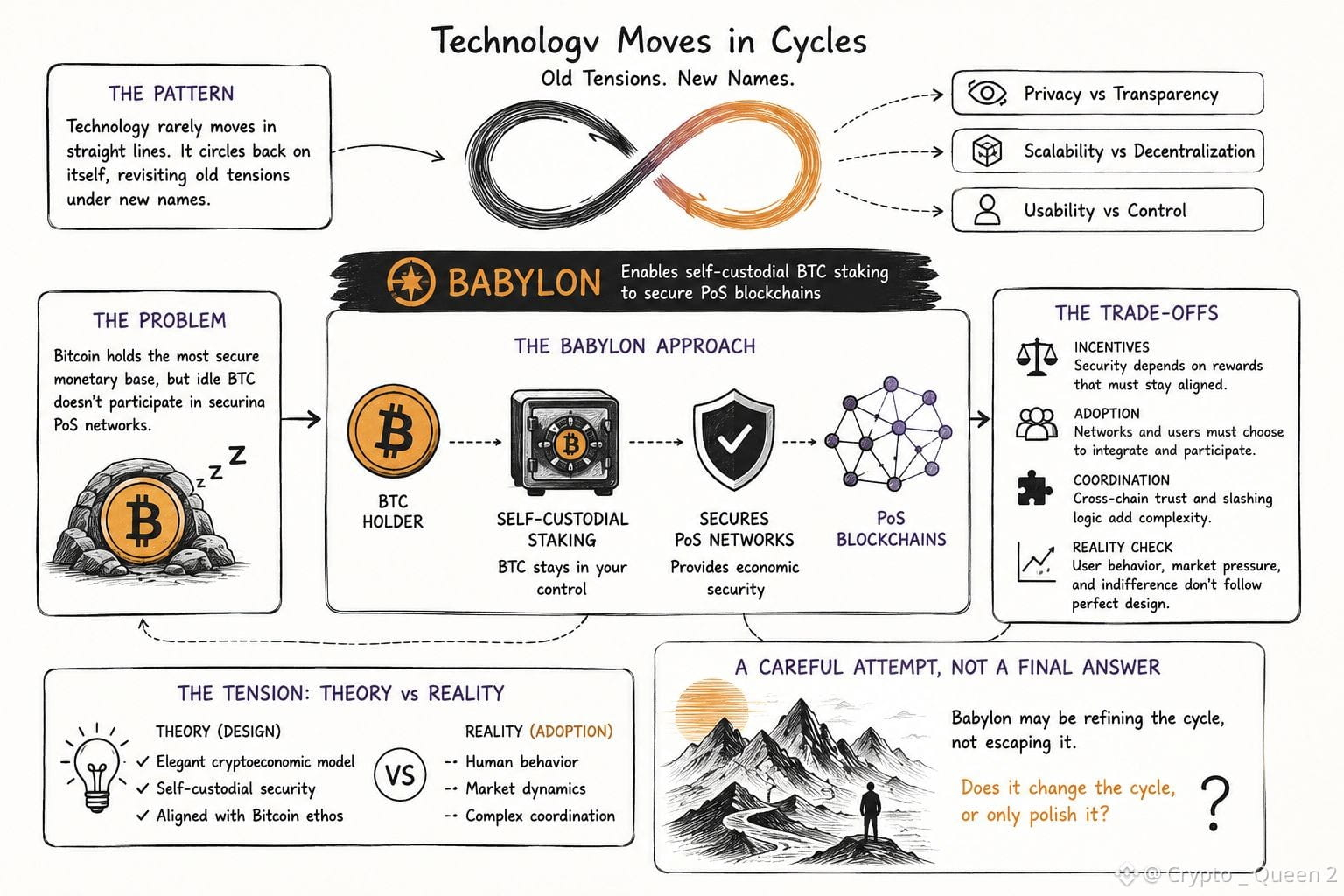
私は、テクノロジーの歴史の多くが、対立が別の名前で繰り返し戻ってくる物語だと気づき続けています。プライバシー対透明性、規模対分散化、使いやすさ対統制。世代が変わるたびに、その矛盾を解消すると主張され、しかし実際にはその多くが並べ替えられているだけです。
バビロンは、そのパターンの最新バージョンのように感じられます。ネイティブなビットコイン・ステーキングを提案しており、自己管理で、ビットコインネットワーク上で行うことで、BTCが資産をビットコインからラップしたりブリッジしたりすることなく、プルーフ・オブ・ステークの仕組みを支えるのに役立てられます。紙の上では実に見事です。基盤レイヤーはそのまま保たれ、資本は生産的になり、セキュリティは固定された特性ではなく共有された市場として再構想されます。
しかし私は、設計と普及を混同しません。信頼の前提を減らすことを約束するあらゆるプロトコルは、いずれ新たな前提にぶつかります。ガバナンス、バリデータのインセンティブ、ユーザーの行動、流動性、規制です。昔の妥協はめったに消えません。ただ、より静かな場所に移るだけです。バビロンは本当の洗練かもしれませんが、それでも私は、それが馴染みのある循環の一部だと読みます。同じ緊張感を消し去るのではなく、より扱いやすく感じさせようとする試み——それが目的だというふうに。
@babylonlabs_io #baby $BABY
{spot}(BABYUSDT)
私は、テクノロジーの歴史の多くが、対立が別の名前で繰り返し戻ってくる物語だと気づき続けています。プライバシー対透明性、規模対分散化、使いやすさ対統制。世代が変わるたびに、その矛盾を解消すると主張され、しかし実際にはその多くが並べ替えられているだけです。
バビロンは、そのパターンの最新バージョンのように感じられます。ネイティブなビットコイン・ステーキングを提案しており、自己管理で、ビットコインネットワーク上で行うことで、BTCが資産をビットコインからラップしたりブリッジしたりすることなく、プルーフ・オブ・ステークの仕組みを支えるのに役立てられます。紙の上では実に見事です。基盤レイヤーはそのまま保たれ、資本は生産的になり、セキュリティは固定された特性ではなく共有された市場として再構想されます。
しかし私は、設計と普及を混同しません。信頼の前提を減らすことを約束するあらゆるプロトコルは、いずれ新たな前提にぶつかります。ガバナンス、バリデータのインセンティブ、ユーザーの行動、流動性、規制です。昔の妥協はめったに消えません。ただ、より静かな場所に移るだけです。バビロンは本当の洗練かもしれませんが、それでも私は、それが馴染みのある循環の一部だと読みます。同じ緊張感を消し去るのではなく、より扱いやすく感じさせようとする試み——それが目的だというふうに。
@BabylonLabs_io #baby $BABY
バビロンは、そのパターンの最新バージョンのように感じられます。ネイティブなビットコイン・ステーキングを提案しており、自己管理で、ビットコインネットワーク上で行うことで、BTCが資産をビットコインからラップしたりブリッジしたりすることなく、プルーフ・オブ・ステークの仕組みを支えるのに役立てられます。紙の上では実に見事です。基盤レイヤーはそのまま保たれ、資本は生産的になり、セキュリティは固定された特性ではなく共有された市場として再構想されます。
しかし私は、設計と普及を混同しません。信頼の前提を減らすことを約束するあらゆるプロトコルは、いずれ新たな前提にぶつかります。ガバナンス、バリデータのインセンティブ、ユーザーの行動、流動性、規制です。昔の妥協はめったに消えません。ただ、より静かな場所に移るだけです。バビロンは本当の洗練かもしれませんが、それでも私は、それが馴染みのある循環の一部だと読みます。同じ緊張感を消し去るのではなく、より扱いやすく感じさせようとする試み——それが目的だというふうに。
@BabylonLabs_io #baby $BABY
1
60
技術史の多くが、緊張関係が新しい名前のもとでよみがえる物語だと、つい何度も気づいてしまいます。プライバシー対透明性、スケール対分散化、使いやすさ対統制。世代が変わるたびに、その矛盾を解消すると主張され、そして実際にはたいてい、その矛盾を並べ替えているだけです。
バビロンは、そのパターンの最新バージョンのように感じられます。ビットコイン上で、自分自身で管理(セルフカストディアル)しながら、ネイティブのビットコイン・ステーキングを提案しているのです。つまり、BTCは資産をビットコインから包んだりブリッジしたりすることなく、プルーフ・オブ・ステークのシステムを支えるのに役立てられます。紙の上では実にスマートです。基盤層はそのまま保たれ、資本は生産的になり、セキュリティは固定された性質ではなく、共有される市場として再構想される。
しかし私は、設計と普及(採用)を混同しません。信頼の前提が少なくなると約束するあらゆるプロトコルは、いずれ別の前提にぶつかります。ガバナンス、バリデーターへのインセンティブ、ユーザーの行動、流動性、規制。昔の妥協は、めったに消えません。消えるのではなく、より静かな場所へ移動するだけです。バビロンは本当に洗練された改良なのかもしれませんが、それでも私は、見慣れた循環の一部として読み取っています。つまり、それらの緊張を消し去るのではなく、より扱いやすく感じさせるための試みだ、ということです。
$COTI
{spot}(COTIUSDT)
$ON
{future}(ONUSDT)
$AKE
{future}(AKEUSDT)
#CXMTStarMarketIPORaises57.9BYuan #AIFearsSink10SP500StocksOver40% #BrentCrudeFallsAbout6% #USStorageStocksExtendLosses #OilDropsAbout6%
技術史の多くが、緊張関係が新しい名前のもとでよみがえる物語だと、つい何度も気づいてしまいます。プライバシー対透明性、スケール対分散化、使いやすさ対統制。世代が変わるたびに、その矛盾を解消すると主張され、そして実際にはたいてい、その矛盾を並べ替えているだけです。
バビロンは、そのパターンの最新バージョンのように感じられます。ビットコイン上で、自分自身で管理(セルフカストディアル)しながら、ネイティブのビットコイン・ステーキングを提案しているのです。つまり、BTCは資産をビットコインから包んだりブリッジしたりすることなく、プルーフ・オブ・ステークのシステムを支えるのに役立てられます。紙の上では実にスマートです。基盤層はそのまま保たれ、資本は生産的になり、セキュリティは固定された性質ではなく、共有される市場として再構想される。
しかし私は、設計と普及(採用)を混同しません。信頼の前提が少なくなると約束するあらゆるプロトコルは、いずれ別の前提にぶつかります。ガバナンス、バリデーターへのインセンティブ、ユーザーの行動、流動性、規制。昔の妥協は、めったに消えません。消えるのではなく、より静かな場所へ移動するだけです。バビロンは本当に洗練された改良なのかもしれませんが、それでも私は、見慣れた循環の一部として読み取っています。つまり、それらの緊張を消し去るのではなく、より扱いやすく感じさせるための試みだ、ということです。
$COTI
$ON
$AKE
#CXMTStarMarketIPORaises57.9BYuan #AIFearsSink10SP500StocksOver40% #BrentCrudeFallsAbout6% #USStorageStocksExtendLosses #OilDropsAbout6%
バビロンは、そのパターンの最新バージョンのように感じられます。ビットコイン上で、自分自身で管理(セルフカストディアル)しながら、ネイティブのビットコイン・ステーキングを提案しているのです。つまり、BTCは資産をビットコインから包んだりブリッジしたりすることなく、プルーフ・オブ・ステークのシステムを支えるのに役立てられます。紙の上では実にスマートです。基盤層はそのまま保たれ、資本は生産的になり、セキュリティは固定された性質ではなく、共有される市場として再構想される。
しかし私は、設計と普及(採用)を混同しません。信頼の前提が少なくなると約束するあらゆるプロトコルは、いずれ別の前提にぶつかります。ガバナンス、バリデーターへのインセンティブ、ユーザーの行動、流動性、規制。昔の妥協は、めったに消えません。消えるのではなく、より静かな場所へ移動するだけです。バビロンは本当に洗練された改良なのかもしれませんが、それでも私は、見慣れた循環の一部として読み取っています。つまり、それらの緊張を消し去るのではなく、より扱いやすく感じさせるための試みだ、ということです。
$COTI
$ON
$AKE
#CXMTStarMarketIPORaises57.9BYuan #AIFearsSink10SP500StocksOver40% #BrentCrudeFallsAbout6% #USStorageStocksExtendLosses #OilDropsAbout6%
LONG ♥️♥️
50%
SHORT 💚💚
50%
12 投票 • 投票は終了しました
329
技術が常に一直線に進むことがほとんどないと感じている。セキュリティ対アクセシビリティ、分散化対協調といった同じ緊張関係のまわりを巡る傾向があり、しかも新しいサイクルごとに別の語彙が持ち込まれる。野心は進化するが、多くの根本的な問いは変わらずに残る。
Bitcoin上での自己保管型BTCステーキングというアプローチを持つBabylon(BABY)は、そのパターンの別の章のように思える。保有者に資産の管理(カストディ)を手放させることなく、Bitcoinの経済的なセキュリティをProof-of-Stakeネットワークへ拡張しようとしている。これは、Bitcoinを価値の受動的な保存手段ではなく、ネットワークのセキュリティを生み出す能動的な源として捉え直すため、魅力的だ。
しかし、休眠している資本を解き放とうとする試みのたびに、協調(コーディネーション)と前提の新たな層が生まれる。より大きな有用性は、多くの場合、より高い複雑さと並行して到来する。そして、プロトコル設計の優雅さが、現実の条件下での広範な採用や、回復力のある振る舞いに必ずしも結びつくわけではない。
おそらく、それが繰り返し現れる教訓だろう。イノベーションは昔のトレードオフを消し去ることはめったにない。それらを組み替えるだけだ。より興味深いのは、Babylonが信頼の分配方法に本質的な転換をもたらすのか、それとも単におなじみのサイクルをより洗練させた表現にすぎないのかという点である。
@babylonlabs_io #baby $BABY
{spot}(BABYUSDT)
$ESP
{spot}(ESPUSDT)
$CROSS
{future}(CROSSUSDT)
技術が常に一直線に進むことがほとんどないと感じている。セキュリティ対アクセシビリティ、分散化対協調といった同じ緊張関係のまわりを巡る傾向があり、しかも新しいサイクルごとに別の語彙が持ち込まれる。野心は進化するが、多くの根本的な問いは変わらずに残る。
Bitcoin上での自己保管型BTCステーキングというアプローチを持つBabylon(BABY)は、そのパターンの別の章のように思える。保有者に資産の管理(カストディ)を手放させることなく、Bitcoinの経済的なセキュリティをProof-of-Stakeネットワークへ拡張しようとしている。これは、Bitcoinを価値の受動的な保存手段ではなく、ネットワークのセキュリティを生み出す能動的な源として捉え直すため、魅力的だ。
しかし、休眠している資本を解き放とうとする試みのたびに、協調(コーディネーション)と前提の新たな層が生まれる。より大きな有用性は、多くの場合、より高い複雑さと並行して到来する。そして、プロトコル設計の優雅さが、現実の条件下での広範な採用や、回復力のある振る舞いに必ずしも結びつくわけではない。
おそらく、それが繰り返し現れる教訓だろう。イノベーションは昔のトレードオフを消し去ることはめったにない。それらを組み替えるだけだ。より興味深いのは、Babylonが信頼の分配方法に本質的な転換をもたらすのか、それとも単におなじみのサイクルをより洗練させた表現にすぎないのかという点である。
@BabylonLabs_io #baby $BABY
$ESP
$CROSS
Bitcoin上での自己保管型BTCステーキングというアプローチを持つBabylon(BABY)は、そのパターンの別の章のように思える。保有者に資産の管理(カストディ)を手放させることなく、Bitcoinの経済的なセキュリティをProof-of-Stakeネットワークへ拡張しようとしている。これは、Bitcoinを価値の受動的な保存手段ではなく、ネットワークのセキュリティを生み出す能動的な源として捉え直すため、魅力的だ。
しかし、休眠している資本を解き放とうとする試みのたびに、協調(コーディネーション)と前提の新たな層が生まれる。より大きな有用性は、多くの場合、より高い複雑さと並行して到来する。そして、プロトコル設計の優雅さが、現実の条件下での広範な採用や、回復力のある振る舞いに必ずしも結びつくわけではない。
おそらく、それが繰り返し現れる教訓だろう。イノベーションは昔のトレードオフを消し去ることはめったにない。それらを組み替えるだけだ。より興味深いのは、Babylonが信頼の分配方法に本質的な転換をもたらすのか、それとも単におなじみのサイクルをより洗練させた表現にすぎないのかという点である。
@BabylonLabs_io #baby $BABY
$ESP
$CROSS
LONG ♥️♥️
100%
SHORT 💚💚
0%
2 投票 • 投票は終了しました
4
2
75
テクノロジーが「輪」のように巡ってやって来る様子が、ずっと気になっています。最初は自由を約束し、次にスケールを語り、やがて利便性を掲げます。そして最終的には、解決しようとしたはずの古い問題を再発見するのです。つまり、システムを使いにくくしないまま「信頼」を低く保つ方法——です。プライバシーと透明性、分散化と性能、コントロールと使いやすさ。こうした緊張関係は、実際には決して消えません。消えるのではなく、ただ言い換えられるだけです。
バビロンは、その同じパターンの一部のように感じます。ステーキングという馴染みのある発想を取り、それをビットコインそのものにさらに近づけていきます。信頼できる仲介者なしに、自己保有(セルフカストディ)BTCのステーキングを、PoSシステムへビットコインのセキュリティを広げる手段として位置づけるのです。紙の上では実に美しい。人々がすでに理解しているもの——ビットコインの保有——を再利用し、それをより広いセキュリティのプリミティブへと変換しています。しかし、設計の優雅さは、古い問いを消し去りはしません。実際に誰がそれを採用するのでしょうか?仕組みの中に隠されているリスクは何でしょう?取り除かれるのではなく、どれほどの複雑さが別の場所へ移されているだけなのではないでしょうか。
私は、これが新しいかどうかという点よりも、それが、同じ発想のより初期のバージョンでは解決できなかった何かを解決できているのかに関心があります。あるいは、単に、同じサイクルをより静かに、より洗練された形で繰り返しているだけなのではないでしょうか。
@babylonlabs_io #baby $BABY
{spot}(BABYUSDT)
$DIA
{spot}(DIAUSDT)
$EUL
{spot}(EULUSDT)
#PensionFundsTurnNetBuyersOfKoreanShares
#TeslaFallsNearly20%ThisWeek
#SHIBSurges36%
テクノロジーが「輪」のように巡ってやって来る様子が、ずっと気になっています。最初は自由を約束し、次にスケールを語り、やがて利便性を掲げます。そして最終的には、解決しようとしたはずの古い問題を再発見するのです。つまり、システムを使いにくくしないまま「信頼」を低く保つ方法——です。プライバシーと透明性、分散化と性能、コントロールと使いやすさ。こうした緊張関係は、実際には決して消えません。消えるのではなく、ただ言い換えられるだけです。
バビロンは、その同じパターンの一部のように感じます。ステーキングという馴染みのある発想を取り、それをビットコインそのものにさらに近づけていきます。信頼できる仲介者なしに、自己保有(セルフカストディ)BTCのステーキングを、PoSシステムへビットコインのセキュリティを広げる手段として位置づけるのです。紙の上では実に美しい。人々がすでに理解しているもの——ビットコインの保有——を再利用し、それをより広いセキュリティのプリミティブへと変換しています。しかし、設計の優雅さは、古い問いを消し去りはしません。実際に誰がそれを採用するのでしょうか?仕組みの中に隠されているリスクは何でしょう?取り除かれるのではなく、どれほどの複雑さが別の場所へ移されているだけなのではないでしょうか。
私は、これが新しいかどうかという点よりも、それが、同じ発想のより初期のバージョンでは解決できなかった何かを解決できているのかに関心があります。あるいは、単に、同じサイクルをより静かに、より洗練された形で繰り返しているだけなのではないでしょうか。
@BabylonLabs_io #baby $BABY
$DIA
$EUL
#PensionFundsTurnNetBuyersOfKoreanShares
#TeslaFallsNearly20%ThisWeek
#SHIBSurges36%
バビロンは、その同じパターンの一部のように感じます。ステーキングという馴染みのある発想を取り、それをビットコインそのものにさらに近づけていきます。信頼できる仲介者なしに、自己保有(セルフカストディ)BTCのステーキングを、PoSシステムへビットコインのセキュリティを広げる手段として位置づけるのです。紙の上では実に美しい。人々がすでに理解しているもの——ビットコインの保有——を再利用し、それをより広いセキュリティのプリミティブへと変換しています。しかし、設計の優雅さは、古い問いを消し去りはしません。実際に誰がそれを採用するのでしょうか?仕組みの中に隠されているリスクは何でしょう?取り除かれるのではなく、どれほどの複雑さが別の場所へ移されているだけなのではないでしょうか。
私は、これが新しいかどうかという点よりも、それが、同じ発想のより初期のバージョンでは解決できなかった何かを解決できているのかに関心があります。あるいは、単に、同じサイクルをより静かに、より洗練された形で繰り返しているだけなのではないでしょうか。
@BabylonLabs_io #baby $BABY
$DIA
$EUL
#PensionFundsTurnNetBuyersOfKoreanShares
#TeslaFallsNearly20%ThisWeek
#SHIBSurges36%
A) 💰 Replace Bitcoin
100%
B) 🔒 Extend Bitcoin
0%
C) 🎮 Build a gaming chain
0%
D) 📱 Create a wallet
0%
1 投票 • 投票は終了しました
1
2
241
技術が一直線に進むことはめったにない、と私はふと気づき続けている。むしろ、制御か利便性か、セキュリティか柔軟性か、シンプルさか主権か――といった見慣れた問いをぐるりと回る傾向がある。新しいサイクルが来るたびにより良いツールは登場するが、根底にある緊張は驚くほど一貫している。
Babylon(BABY)はそのパターンに合致している。ビットコイン・ネットワーク上で自らが管理するBTCステーキングを可能にし、Proof-of-Stake(プルーフ・オブ・ステーク)型ブロックチェーンのセキュリティを強化することで、確立されたビットコインの信頼モデルと、より強い経済的セキュリティを求める新しいエコシステムの橋渡しとして存在している。これは、単なる離脱というより、既存の前提を慎重に読み替えるような発想に思える。
その約束は魅力的だが、トレードオフは無視しがたい。ビットコインにより大きな用途がもたらされることで、追加の連携、複雑さ、依存が生まれる可能性もある。設計は紙の上では見事に保てても、導入が始まると、アーキテクチャだけでは予測できないインセンティブや振る舞いが露わになる。
おそらく、その反復される教訓があるのだろう。革新は、古いジレンマを置き換えることで到来するのではなく、それを新しい形に組み替えてやって来ることが多い。より興味深い問いは、Babylonが景色を変えるのかどうかではなく、それが会話を変えるのか――あるいは、ずっと回し続けてきたサイクルを単に磨き直すだけなのか、という点かもしれない。
@babylonlabs_io #baby $BABY
{spot}(BABYUSDT)
技術が一直線に進むことはめったにない、と私はふと気づき続けている。むしろ、制御か利便性か、セキュリティか柔軟性か、シンプルさか主権か――といった見慣れた問いをぐるりと回る傾向がある。新しいサイクルが来るたびにより良いツールは登場するが、根底にある緊張は驚くほど一貫している。
Babylon(BABY)はそのパターンに合致している。ビットコイン・ネットワーク上で自らが管理するBTCステーキングを可能にし、Proof-of-Stake(プルーフ・オブ・ステーク)型ブロックチェーンのセキュリティを強化することで、確立されたビットコインの信頼モデルと、より強い経済的セキュリティを求める新しいエコシステムの橋渡しとして存在している。これは、単なる離脱というより、既存の前提を慎重に読み替えるような発想に思える。
その約束は魅力的だが、トレードオフは無視しがたい。ビットコインにより大きな用途がもたらされることで、追加の連携、複雑さ、依存が生まれる可能性もある。設計は紙の上では見事に保てても、導入が始まると、アーキテクチャだけでは予測できないインセンティブや振る舞いが露わになる。
おそらく、その反復される教訓があるのだろう。革新は、古いジレンマを置き換えることで到来するのではなく、それを新しい形に組み替えてやって来ることが多い。より興味深い問いは、Babylonが景色を変えるのかどうかではなく、それが会話を変えるのか――あるいは、ずっと回し続けてきたサイクルを単に磨き直すだけなのか、という点かもしれない。
@BabylonLabs_io #baby $BABY
Babylon(BABY)はそのパターンに合致している。ビットコイン・ネットワーク上で自らが管理するBTCステーキングを可能にし、Proof-of-Stake(プルーフ・オブ・ステーク)型ブロックチェーンのセキュリティを強化することで、確立されたビットコインの信頼モデルと、より強い経済的セキュリティを求める新しいエコシステムの橋渡しとして存在している。これは、単なる離脱というより、既存の前提を慎重に読み替えるような発想に思える。
その約束は魅力的だが、トレードオフは無視しがたい。ビットコインにより大きな用途がもたらされることで、追加の連携、複雑さ、依存が生まれる可能性もある。設計は紙の上では見事に保てても、導入が始まると、アーキテクチャだけでは予測できないインセンティブや振る舞いが露わになる。
おそらく、その反復される教訓があるのだろう。革新は、古いジレンマを置き換えることで到来するのではなく、それを新しい形に組み替えてやって来ることが多い。より興味深い問いは、Babylonが景色を変えるのかどうかではなく、それが会話を変えるのか――あるいは、ずっと回し続けてきたサイクルを単に磨き直すだけなのか、という点かもしれない。
@BabylonLabs_io #baby $BABY
6
2
94
新しいテクノロジーが「出発」の装いで到来する様子を、私はいつも気にしてしまう。だが実際には、古い議論の改訂版のように感じられることが多い。まず語彙が変わる。次にアーキテクチャ。さらに、そのアイデアが十分長く生き延びると、未解決の緊張関係が同じように再登場する――プライバシー対可視性、スケール対統制、オートメーション対信頼。どのサイクルも、その取引の折り合いをつけてくれると約束する。しかし実際には、たいていは並べ替えるだけだ。
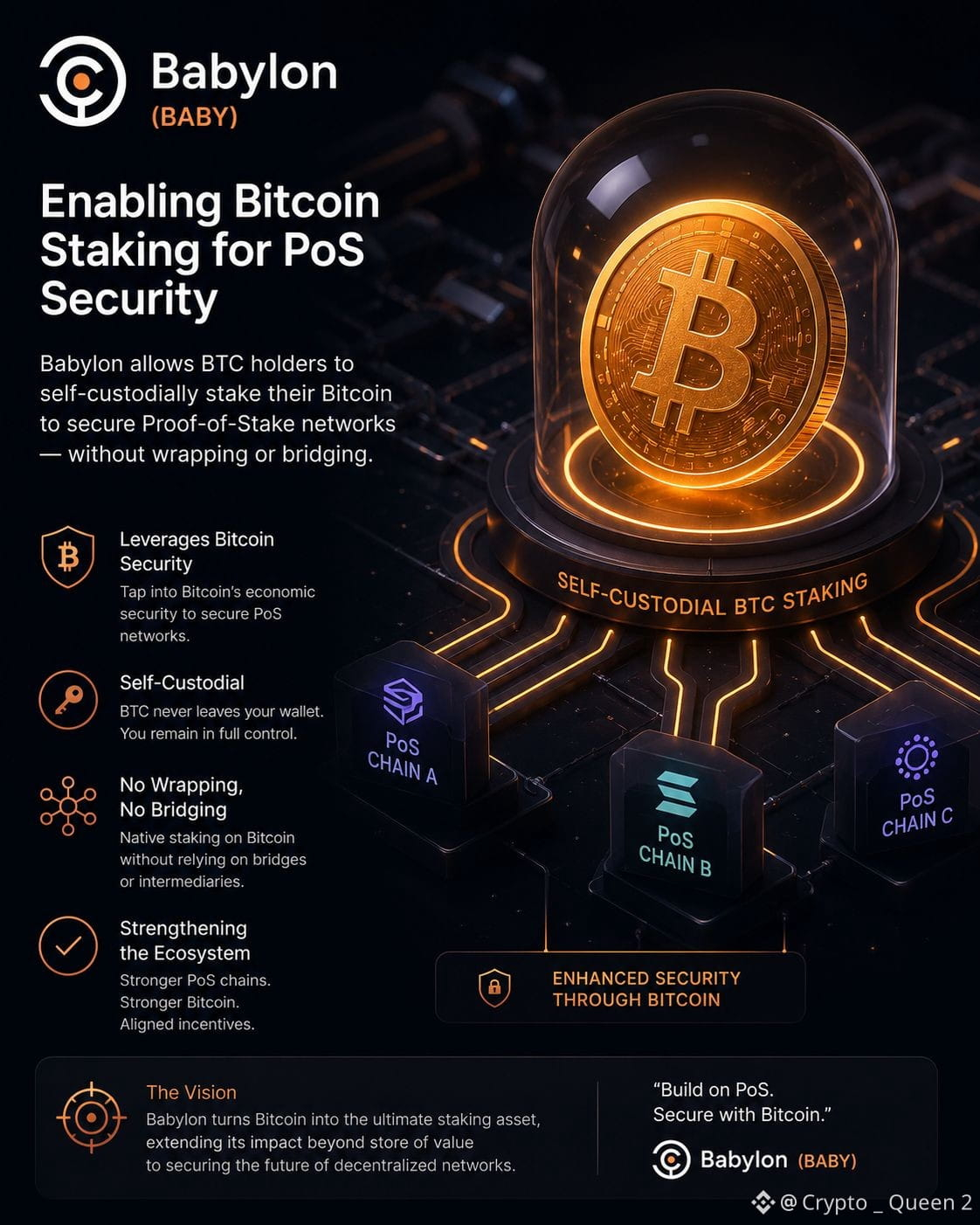
私にとって Babylon (BABY) は、そのパターンに当てはまる。約束ははっきりしている。自己管理型のビットコイン・ステーキングで、プルーフ・オブ・ステーク(PoS)システムを強化するために用いられ、ビットコインそのものが、単なる準備資産ではなくセキュリティ物語の一部になる、というものだ。紙の上では実に洗練された言い換えに見える。つまり「資本をセキュリティとみなす」という古い発想を、業界で最も文化的に持続しやすいチェーンへと移し替えるのだ。
だが、優雅さは採用ではない。実際の問いは、その設計が賢いかどうかよりも、理論がユーザー、バリデータ、インセンティブ、そして時間と出会ったとき、それが読みやすく、そして安全であり続けることができるのか――さらに、その摩擦に見合うだけの価値があるのか、という点にある。私はそこにある対称性に惹かれる一方で、見慣れた代償も思い知らされる。どの解決策も、隠そうとしたはずの複雑さを引き継いでいるように見える。
だから私は、それが進歩なのか、それとも未完の交渉をより静かに繰り返しているだけなのか、ずっと考えてしまう。
@babylonlabs_io #baby $BABY
{spot}(BABYUSDT)
新しいテクノロジーが「出発」の装いで到来する様子を、私はいつも気にしてしまう。だが実際には、古い議論の改訂版のように感じられることが多い。まず語彙が変わる。次にアーキテクチャ。さらに、そのアイデアが十分長く生き延びると、未解決の緊張関係が同じように再登場する――プライバシー対可視性、スケール対統制、オートメーション対信頼。どのサイクルも、その取引の折り合いをつけてくれると約束する。しかし実際には、たいていは並べ替えるだけだ。
私にとって Babylon (BABY) は、そのパターンに当てはまる。約束ははっきりしている。自己管理型のビットコイン・ステーキングで、プルーフ・オブ・ステーク(PoS)システムを強化するために用いられ、ビットコインそのものが、単なる準備資産ではなくセキュリティ物語の一部になる、というものだ。紙の上では実に洗練された言い換えに見える。つまり「資本をセキュリティとみなす」という古い発想を、業界で最も文化的に持続しやすいチェーンへと移し替えるのだ。
だが、優雅さは採用ではない。実際の問いは、その設計が賢いかどうかよりも、理論がユーザー、バリデータ、インセンティブ、そして時間と出会ったとき、それが読みやすく、そして安全であり続けることができるのか――さらに、その摩擦に見合うだけの価値があるのか、という点にある。私はそこにある対称性に惹かれる一方で、見慣れた代償も思い知らされる。どの解決策も、隠そうとしたはずの複雑さを引き継いでいるように見える。
だから私は、それが進歩なのか、それとも未完の交渉をより静かに繰り返しているだけなのか、ずっと考えてしまう。
@BabylonLabs_io #baby $BABY
私にとって Babylon (BABY) は、そのパターンに当てはまる。約束ははっきりしている。自己管理型のビットコイン・ステーキングで、プルーフ・オブ・ステーク(PoS)システムを強化するために用いられ、ビットコインそのものが、単なる準備資産ではなくセキュリティ物語の一部になる、というものだ。紙の上では実に洗練された言い換えに見える。つまり「資本をセキュリティとみなす」という古い発想を、業界で最も文化的に持続しやすいチェーンへと移し替えるのだ。
だが、優雅さは採用ではない。実際の問いは、その設計が賢いかどうかよりも、理論がユーザー、バリデータ、インセンティブ、そして時間と出会ったとき、それが読みやすく、そして安全であり続けることができるのか――さらに、その摩擦に見合うだけの価値があるのか、という点にある。私はそこにある対称性に惹かれる一方で、見慣れた代償も思い知らされる。どの解決策も、隠そうとしたはずの複雑さを引き継いでいるように見える。
だから私は、それが進歩なのか、それとも未完の交渉をより静かに繰り返しているだけなのか、ずっと考えてしまう。
@BabylonLabs_io #baby $BABY
1
4
99
ログインして、さらにコンテンツを読む
厳選トピックで世界の暗号資産トレーダーの仲間入り
⚡️ 暗号資産に関する最新かつ有益な情報が見つかります。
💬 世界最大の暗号資産取引所から信頼されています。
👍 認証を受けたクリエイターから、有益なインサイトを得られます。
メール / 電話番号
トレンドトピック
NEARRisesNearly80%InAWeek
閲覧回数 12,986
579人が討論中
#nearrisesnearly80%inaweek
NEAR の今週の絶対的な強さのプロトコル——上昇を生むものは何か 🔥
なんて週だ、NEAR! 🚀 たった 7 日で約 80% の利益を達成するのは、単なる運ではなく、NEAR の「チェーン分解」と「AI 統合」というビジョンの周りで形成されつつある大きなモメンタムを示しています。技術の効率とトレーダーの市場の熱が結びつくと、このような値動きになります。
あなたは長期で NEAR を保有しますか?それともこの水準で利益確定しますか?下に戦略を書いてください!👇
フォローをお願いします
$NEAR
#BitcoinHits$85K #Near #SolanaCutsTargetSlotTimeTo250ms
Shamika Metting
·いいね:2件
·閲覧回数 1.6k
MultiversXPlansHardForkRecovery
閲覧回数 13,114
463人が討論中
CircleLaunchesInstitutionalBTCBackedBorrowing
閲覧回数 14,144
594人が討論中