

Ute Hochstedler Peuo
44 投稿

Ute Hochstedler Peuo
報告
ユーザーをブロック
取引を発注
高頻度トレーダー
5.6年
0 フォロー
1 フォロワー
2 いいね
投稿
ポートフォリオ
すべて
引用
翻訳参照
$XRP
xrp
{future}(XRPUSDT)
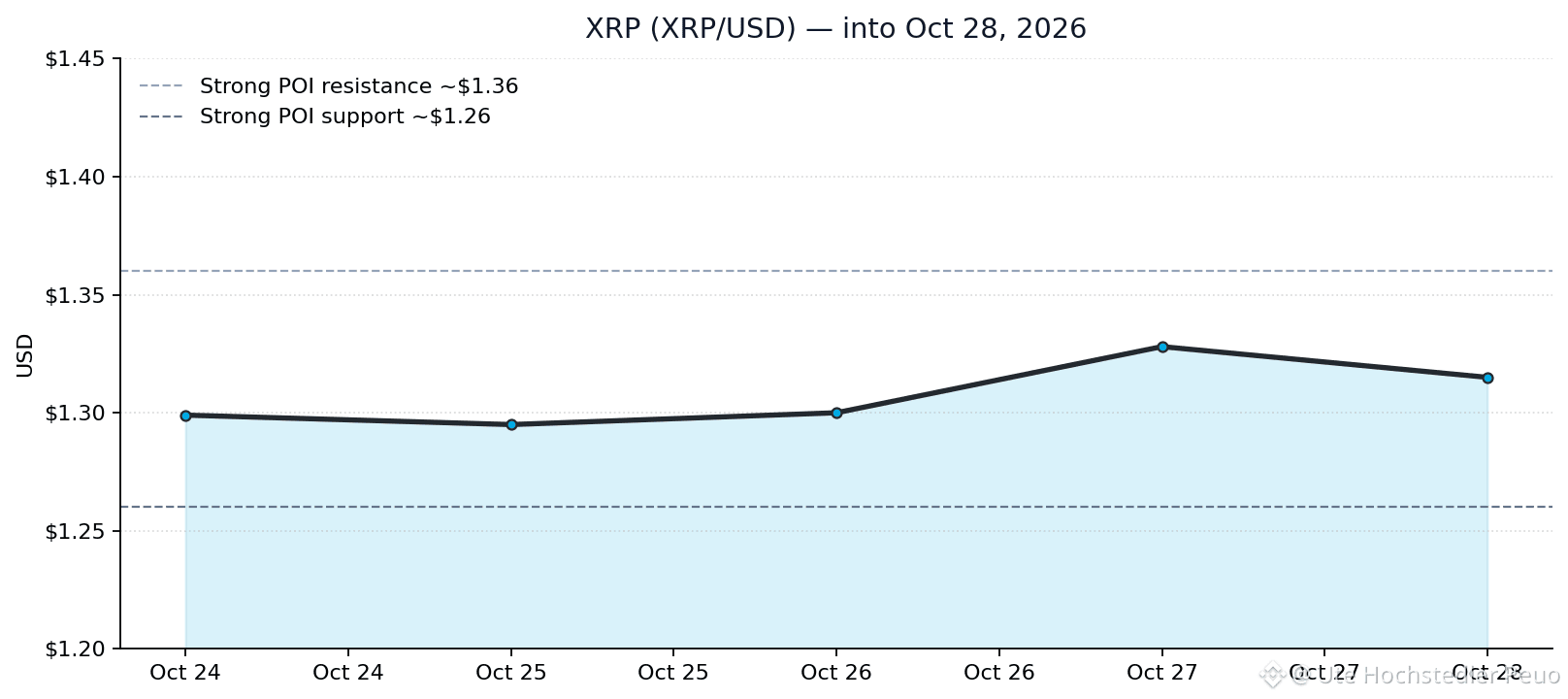
is trading near $1.31–$1.33, the strongest of the four on the day after a modest bounce from the $1.29–$1.30 area. The strongest points of interest are the $1.26–$1.28 support zone (recent low and demand) and the $1.36–$1.37 resistance band (prior range and weekly pivot). A reclaim of $1.36 would open $1.40; a break under $1.26 opens $1.25 and then $1.22.
Short-term bias is neutral-to-slightly-bullish relative to the other three, but still range-bound. The base case is consolidation between $1.28 and $1.36 unless Bitcoin reclaims $82,200. Long-term bias is constructive while the $1.25–$1.28 zone holds, but XRP has been the weakest on a year-to-date basis and is more likely to follow Bitcoin than to lead. A sustained daily close above $1.36 is needed to shift the short-term picture meaningfully.
$XRP
xrp
is trading near $1.31–$1.33, the strongest of the four on the day after a modest bounce from the $1.29–$1.30 area. The strongest points of interest are the $1.26–$1.28 support zone (recent low and demand) and the $1.36–$1.37 resistance band (prior range and weekly pivot). A reclaim of $1.36 would open $1.40; a break under $1.26 opens $1.25 and then $1.22.
Short-term bias is neutral-to-slightly-bullish relative to the other three, but still range-bound. The base case is consolidation between $1.28 and $1.36 unless Bitcoin reclaims $82,200. Long-term bias is constructive while the $1.25–$1.28 zone holds, but XRP has been the weakest on a year-to-date basis and is more likely to follow Bitcoin than to lead. A sustained daily close above $1.36 is needed to shift the short-term picture meaningfully.
29
#CanGoogleDefindItsCore
はい。現時点では、AIが人々のウェブ検索の方法を変えつつあるなかでも、Googleは検索と広告を中核とする事業を守っています。
世界の検索シェアは約90%を維持しており、検索広告の売上高も2026年にかけて、前年比で10%台半ばから後半の成長を続けています。
AIによる概要は現在、検索クエリの大多数に表示されており(多くのカテゴリーで80%を超えるとよく言われています)、AIモードの月間ユーザー数は10億人を超え、Geminiの月間アクティブユーザー数も約10億人に達しています。それでも、検索クエリ全体の量や利用者のエンゲージメントは崩れるどころか、維持または増加しています。
チャットボット単体のトラフィックでは、依然としてChatGPTが首位です。しかし、ウェブへの絶対訪問数でGoogleを大規模に上回るには至っていません。調査によっては、純粋なAIチャットのトラフィックが検索活動全体のごく一部にとどまる一方で、Googleの日次訪問数は増加していることも示されています。
主な懸念材料は、生成AIによる回答にかかるコンピューティングコストの上昇、パブリッシャーへのクリック数の減少、そして継続する規制当局の監視です。Googleは、チャット、タスクの完了、従来型の検索結果が互いの利用を奪うのではなく共存するよう、検索にエージェント型のレイヤーを組み込むことで対応しています。
要するに、検索の持つ流通網、データ、収益化の強みは、多くの人の予想以上に揺るぎないことが証明されており、GoogleはAIを統合しながら中核事業を守るうえで、強い立場にあります
35
翻訳参照
#CanMicrosoftDeliverOnAI
Yes. I think so... Microsoft is delivering on AI where it matters most for its business: enterprise distribution, infrastructure, and practical productivity tools.
Through 2026 it has added dozens of new data centers, advanced its Maia custom chips for better efficiency, and grown Microsoft 365 Copilot past 30 million paid seats while GitHub Copilot reached roughly 50 million users.
It is also building its own MAI models (with claims of strong performance at lower compute cost) while keeping a multi-model strategy that includes OpenAI (in which it holds a major stake) and Anthropic, reducing single-vendor risk.
Business Insider
Azure remains a primary vehicle for AI revenue, and the company is shifting Copilot from simple chat toward agents that can handle longer, multi-step work grounded in organizational data.
Adoption is real but still selective—Copilot seats represent only a single-digit percentage of the commercial Microsoft 365 base—so broad, high-ROI transformation is not yet universal.
Geekwire
Microsoft’s edge is less about winning pure model leaderboards and more about embedding useful AI into the tools enterprises already run, backed by massive infrastructure and a diversified model stack.
Whether it fully “delivers” depends on the metric: for enterprise AI at scale, the answer is increasingly yes; for undisputed frontier leadership, the race remains open
47
翻訳参照
$ETH
e
{future}(ETHUSDT)
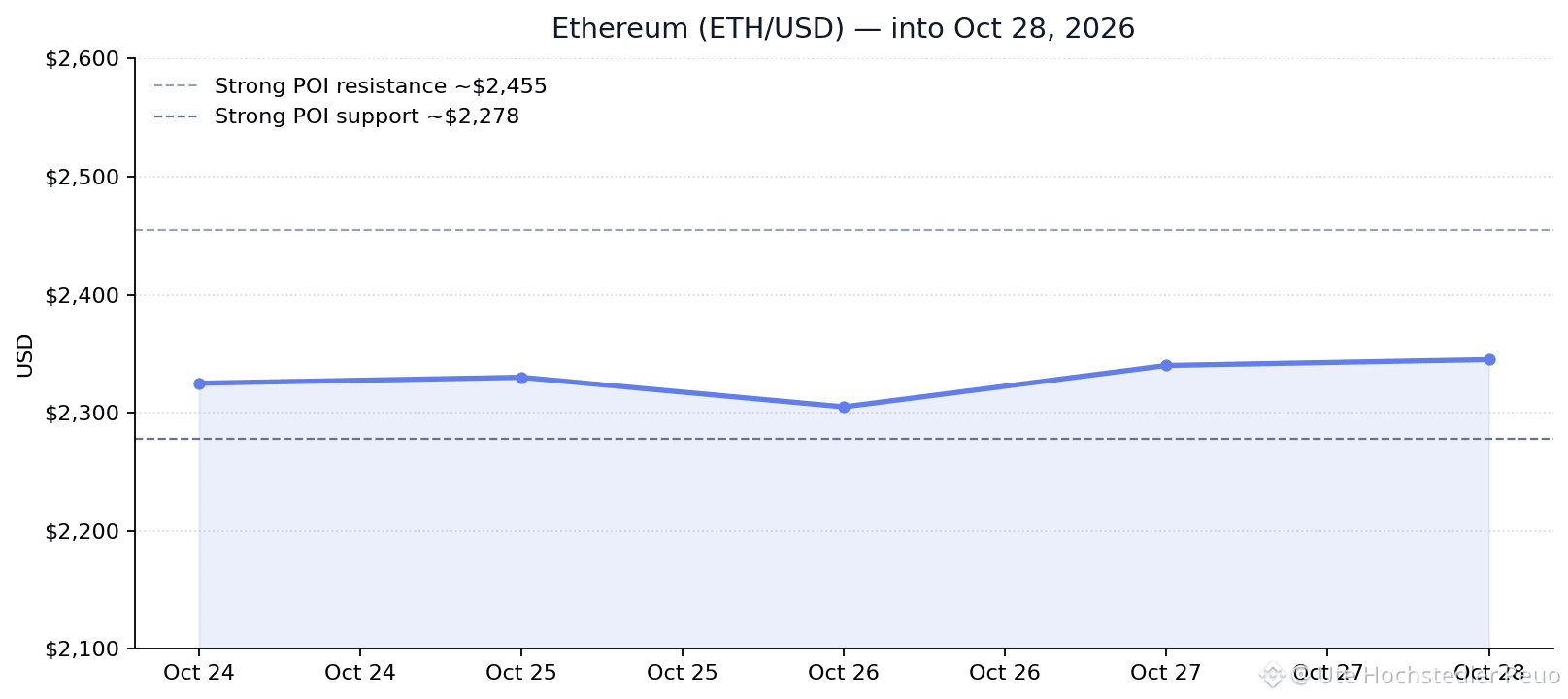
$thereum is trading near $2,330–$2,350, still weaker than Bitcoin on the week and testing the lower half of its recent range. The strongest points of interest are the $2,278–$2,300 support zone (recent low and demand) and the $2,400–$2,455 resistance band (prior range and moving-average cluster). A clean break above $2,455 would open $2,500–$2,530; a loss of $2,278 opens $2,200–$2,220.
Short-term bias is neutral-to-slightly-bearish while price remains under $2,400. The base case is continued range trade between $2,280 and $2,400 unless Bitcoin reclaims $82,200 cleanly. Long-term bias is constructive above the 200-day area near $2,200, but ETH has underperformed and remains high-beta to any further risk-off move. Expect it to follow Bitcoin rather than lead into and after the Fed decision.
$ETH
e
$thereum is trading near $2,330–$2,350, still weaker than Bitcoin on the week and testing the lower half of its recent range. The strongest points of interest are the $2,278–$2,300 support zone (recent low and demand) and the $2,400–$2,455 resistance band (prior range and moving-average cluster). A clean break above $2,455 would open $2,500–$2,530; a loss of $2,278 opens $2,200–$2,220.
Short-term bias is neutral-to-slightly-bearish while price remains under $2,400. The base case is continued range trade between $2,280 and $2,400 unless Bitcoin reclaims $82,200 cleanly. Long-term bias is constructive above the 200-day area near $2,200, but ETH has underperformed and remains high-beta to any further risk-off move. Expect it to follow Bitcoin rather than lead into and after the Fed decision.
84
翻訳参照
$BTC
{future}(BTCUSDT)
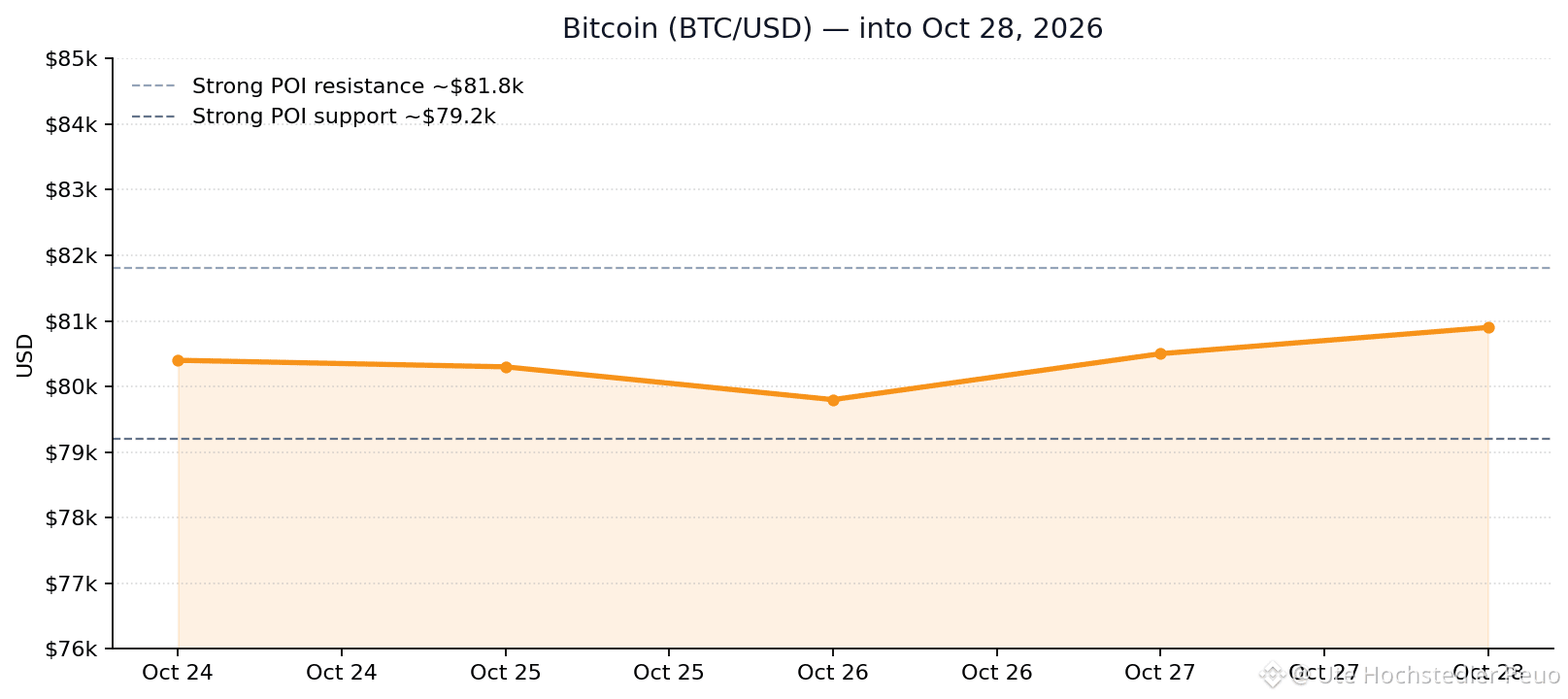
is trading near $80,600–$80,900 ahead of the Fed decision, holding the middle of the $79,200–$82,200 range after a quiet bounce from the weekend low. The strongest points of interest are the $79,200–$79,500 support cluster (recent demand and the lower edge of the current range) and the $81,800–$82,200 resistance band (prior highs and the 20-day area). Secondary resistance sits near $83,400–$84,400; deeper support is $78,000–$78,400.
Short-term bias is neutral. The base case for the next 24–48 hours is sideways trade between roughly $79,500 and $82,200 while the market digests the Fed pause (widely expected) and the press conference. A 4-hour or daily close above $82,050–$82,200 would open $82,650 and then $83,400; a close under $79,200 would reopen $78,400 and then the mid-$77,000s. Long-term bias remains constructive while the 200-day zone near $73,000 holds, but the current structure is still a corrective range inside the broader uptrend. BTC continues to set the tone.
$BTC
is trading near $80,600–$80,900 ahead of the Fed decision, holding the middle of the $79,200–$82,200 range after a quiet bounce from the weekend low. The strongest points of interest are the $79,200–$79,500 support cluster (recent demand and the lower edge of the current range) and the $81,800–$82,200 resistance band (prior highs and the 20-day area). Secondary resistance sits near $83,400–$84,400; deeper support is $78,000–$78,400.
Short-term bias is neutral. The base case for the next 24–48 hours is sideways trade between roughly $79,500 and $82,200 while the market digests the Fed pause (widely expected) and the press conference. A 4-hour or daily close above $82,050–$82,200 would open $82,650 and then $83,400; a close under $79,200 would reopen $78,400 and then the mid-$77,000s. Long-term bias remains constructive while the 200-day zone near $73,000 holds, but the current structure is still a corrective range inside the broader uptrend. BTC continues to set the tone.
79
·
--
ブリッシュ
$XRP
XR
{future}(XRPUSDT)
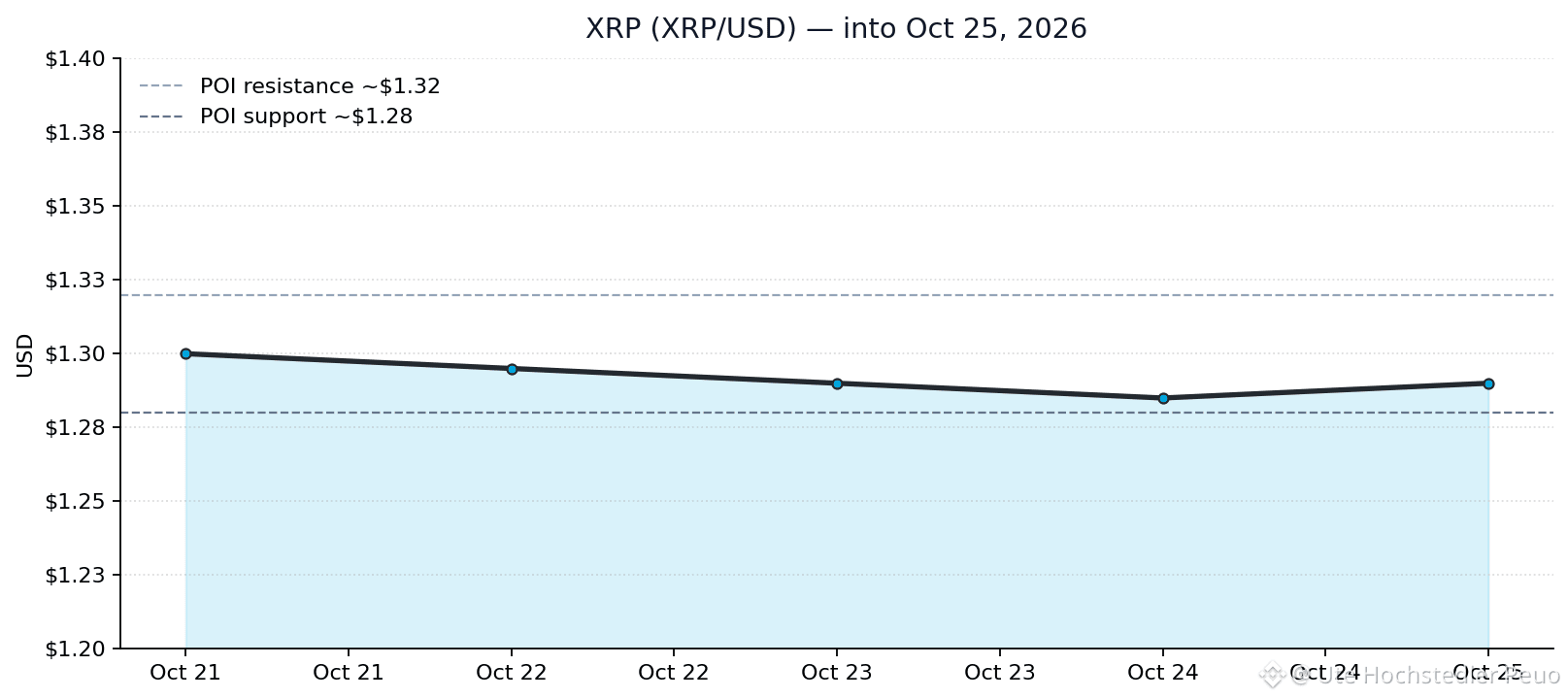
Pは1.29~1.30ドル付近で取引されており、直近レンジの下位3分の1を維持し、200日線付近に位置しています。注目すべき水準は、サポートの1.28~1.29ドルと、レジスタンスの1.32~1.34ドルです。
短期的な見通しは中立です。1.32~1.34ドルを回復すれば、1.37~1.40ドルが目標となります。1.28ドルを下回ると、1.25ドルまで下落する可能性があります。1.25~1.28ドルのゾーンを維持する限り、長期的な見通しは良好です。ただし、年初来ではXRPがグループ内で最も弱く、主導するよりもビットコインに追随する可能性が高い状況です。短期的な見通しを変えるには、1.34ドルを上回る動きが継続する必要があります。
$XRP
XR
Pは1.29~1.30ドル付近で取引されており、直近レンジの下位3分の1を維持し、200日線付近に位置しています。注目すべき水準は、サポートの1.28~1.29ドルと、レジスタンスの1.32~1.34ドルです。
短期的な見通しは中立です。1.32~1.34ドルを回復すれば、1.37~1.40ドルが目標となります。1.28ドルを下回ると、1.25ドルまで下落する可能性があります。1.25~1.28ドルのゾーンを維持する限り、長期的な見通しは良好です。ただし、年初来ではXRPがグループ内で最も弱く、主導するよりもビットコインに追随する可能性が高い状況です。短期的な見通しを変えるには、1.34ドルを上回る動きが継続する必要があります。
78
·
--
弱気相場
$SUI
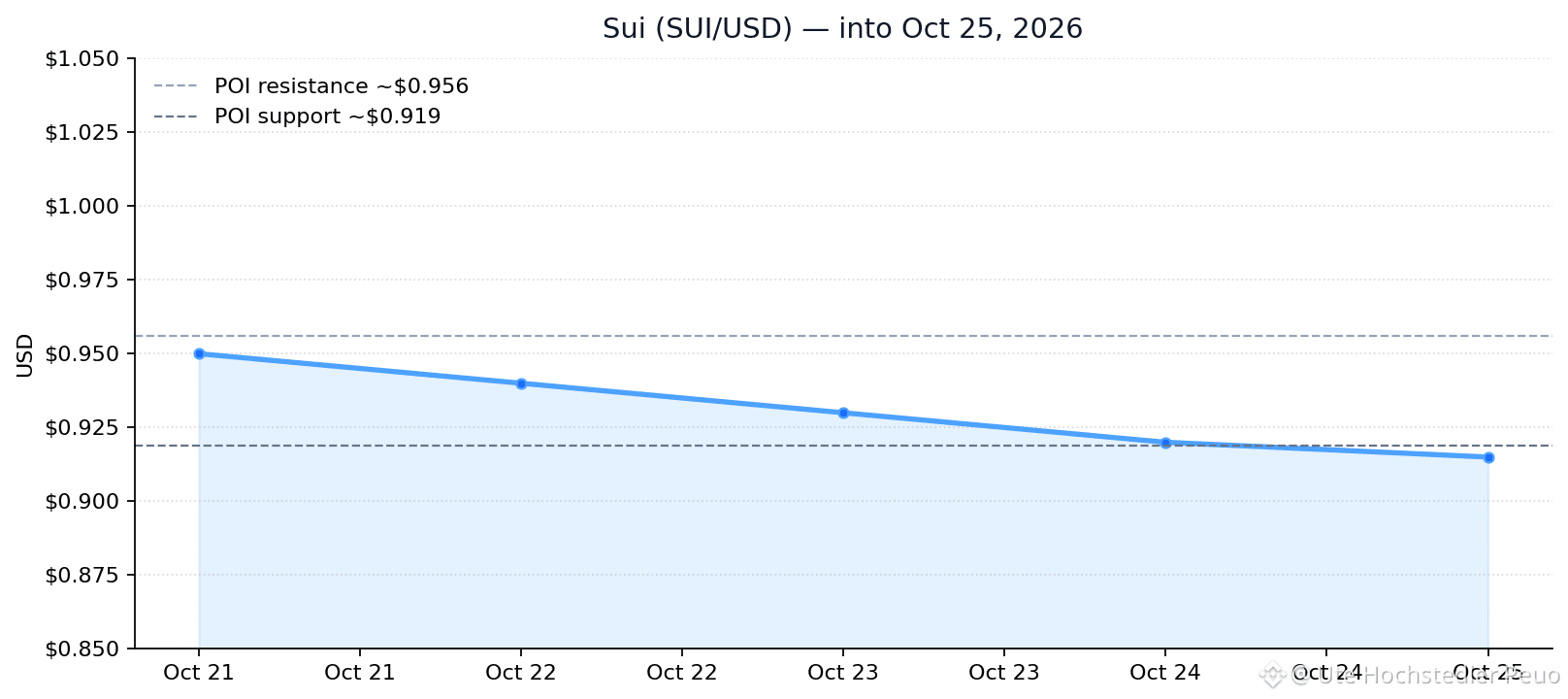
Suiは0.91~0.93ドル付近で取引されており、売り圧力を受けながら最近のレンジ下限を試しています。注目すべき水準は、サポートの0.919ドルとレジスタンスの0.956ドルです。
短期的な見通しは中立から弱気です。日足終値が0.956ドルを上回れば、0.99~1.00ドルが視野に入ります。0.919ドルを下抜けると、次は0.89ドル、さらに0.85ドルが意識されます。長期的には0.84~0.85ドルのゾーンを上回る限り、前向きな見通しを維持しています。ただし、SUIは依然としてビットコインに対するベータ値が高く、今週は市場を下回るパフォーマンスでした。市場全体がリスク選好に転じない限り、レンジ内での推移か、やや軟調な動きが予想されます。
{future}(SUIUSDT)
$SUI
Suiは0.91~0.93ドル付近で取引されており、売り圧力を受けながら最近のレンジ下限を試しています。注目すべき水準は、サポートの0.919ドルとレジスタンスの0.956ドルです。
短期的な見通しは中立から弱気です。日足終値が0.956ドルを上回れば、0.99~1.00ドルが視野に入ります。0.919ドルを下抜けると、次は0.89ドル、さらに0.85ドルが意識されます。長期的には0.84~0.85ドルのゾーンを上回る限り、前向きな見通しを維持しています。ただし、SUIは依然としてビットコインに対するベータ値が高く、今週は市場を下回るパフォーマンスでした。市場全体がリスク選好に転じない限り、レンジ内での推移か、やや軟調な動きが予想されます。
82
翻訳参照
$SOL
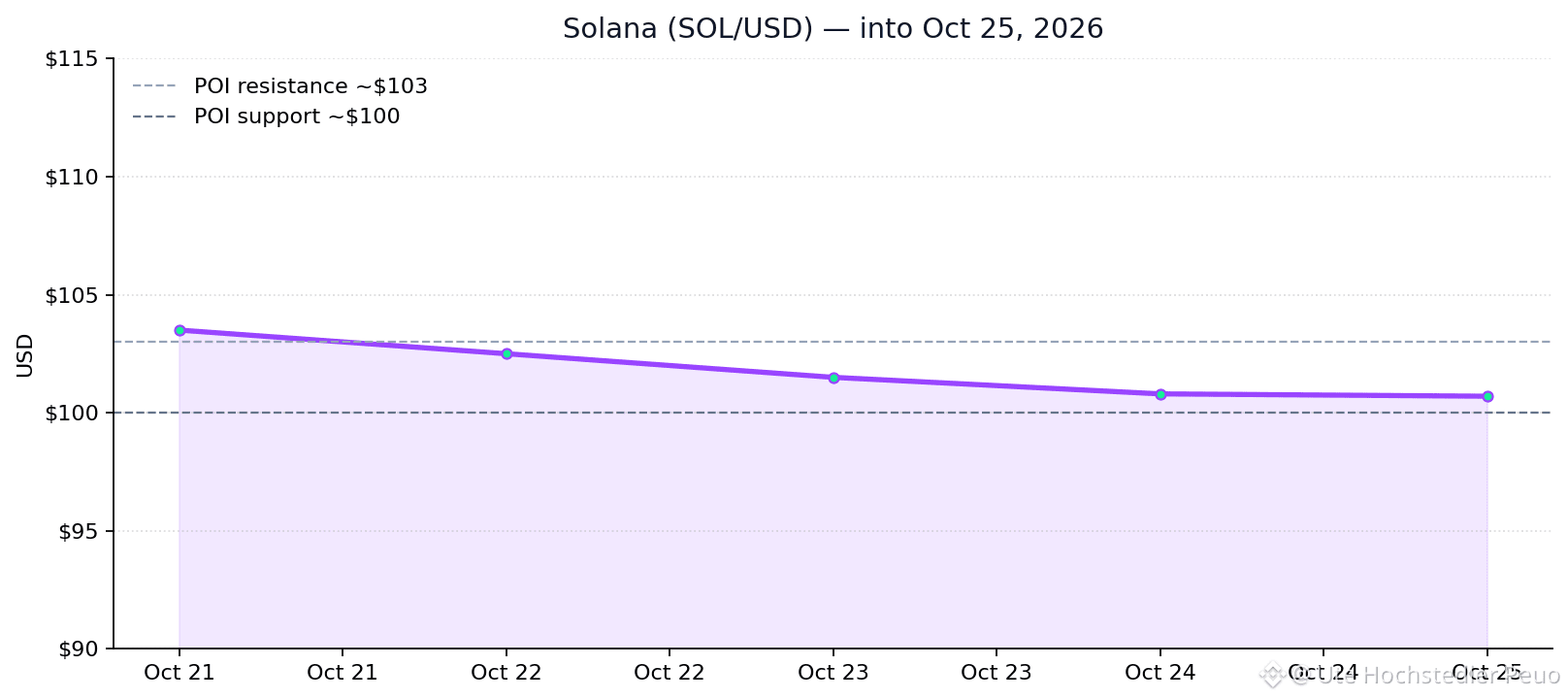
Solana is trading near $100.70, sitting at the lower end of its recent range after failing to hold the $103–$105 area. Key points of interest are $100.00–$100.50 support and $103–$105 resistance.
Short-term bias is neutral-to-slightly-bearish. A push above $103 opens $105–$107; a break under $100 reopens the high-$90s. Long-term bias remains constructive while the 200-day area near $88 holds, but SOL is high-beta and has lagged Bitcoin. It is unlikely to decouple on the first trading day of the week unless Bitcoin reclaims $81,700 cleanly.
{future}(SOLUSDT)
$SOL
Solana is trading near $100.70, sitting at the lower end of its recent range after failing to hold the $103–$105 area. Key points of interest are $100.00–$100.50 support and $103–$105 resistance.
Short-term bias is neutral-to-slightly-bearish. A push above $103 opens $105–$107; a break under $100 reopens the high-$90s. Long-term bias remains constructive while the 200-day area near $88 holds, but SOL is high-beta and has lagged Bitcoin. It is unlikely to decouple on the first trading day of the week unless Bitcoin reclaims $81,700 cleanly.
54
·
--
弱気相場
翻訳参照
$ETH
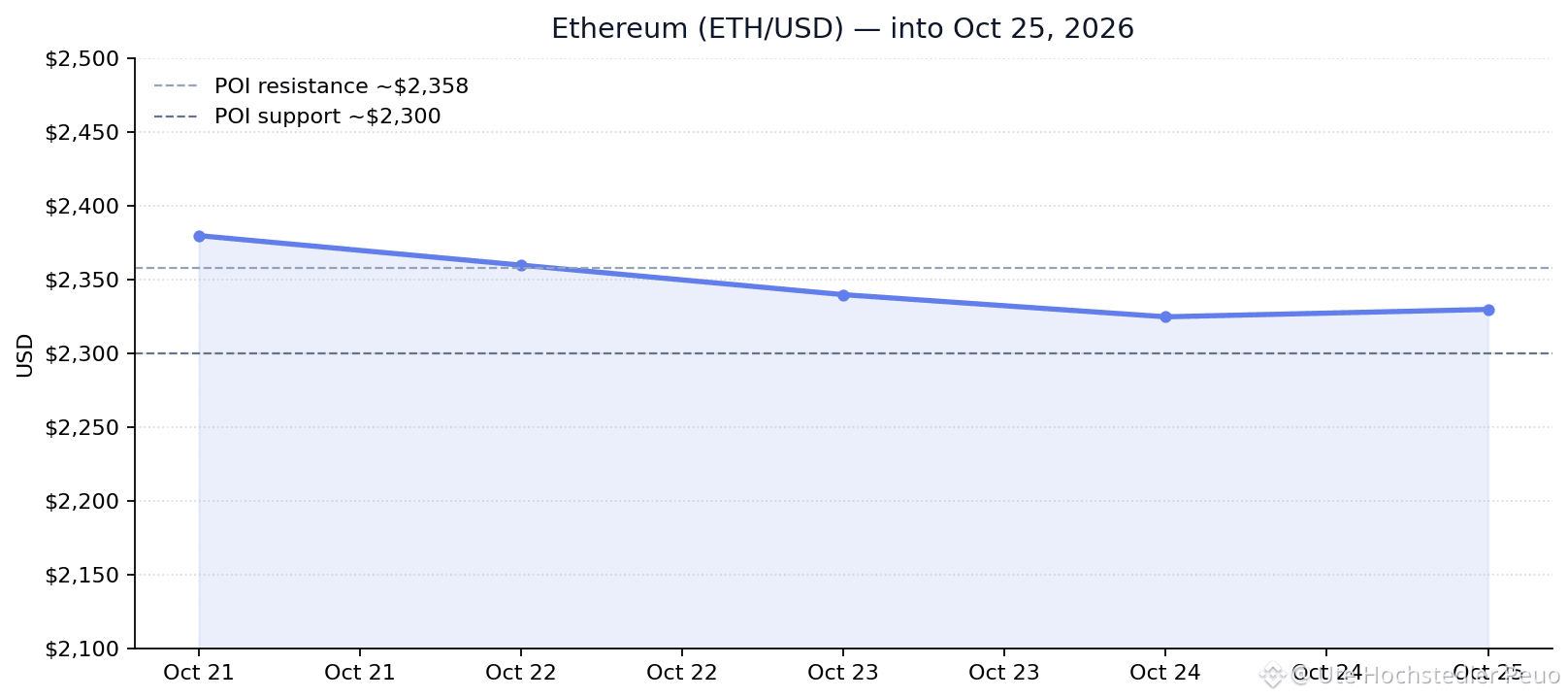
Ethereum is trading near $2,330, weaker than Bitcoin on the week and testing the $2,300–$2,358 area that has acted as a floor multiple times. Key points of interest are $2,300–$2,320 support and $2,358–$2,400 resistance.
Short-term bias is neutral-to-bearish while price remains under $2,358. A reclaim of $2,358–$2,400 would target $2,450–$2,500; a loss of $2,300 opens $2,220–$2,250. Long-term bias is still constructive above the 200-day zone near $2,200, but ETH has underperformed and is more sensitive to further risk-off moves. Expect it to follow Bitcoin rather than lead.
{future}(ETHUSDT)
$ETH
Ethereum is trading near $2,330, weaker than Bitcoin on the week and testing the $2,300–$2,358 area that has acted as a floor multiple times. Key points of interest are $2,300–$2,320 support and $2,358–$2,400 resistance.
Short-term bias is neutral-to-bearish while price remains under $2,358. A reclaim of $2,358–$2,400 would target $2,450–$2,500; a loss of $2,300 opens $2,220–$2,250. Long-term bias is still constructive above the 200-day zone near $2,200, but ETH has underperformed and is more sensitive to further risk-off moves. Expect it to follow Bitcoin rather than lead.
81
翻訳参照
$BTC
{future}(BTCUSDT)
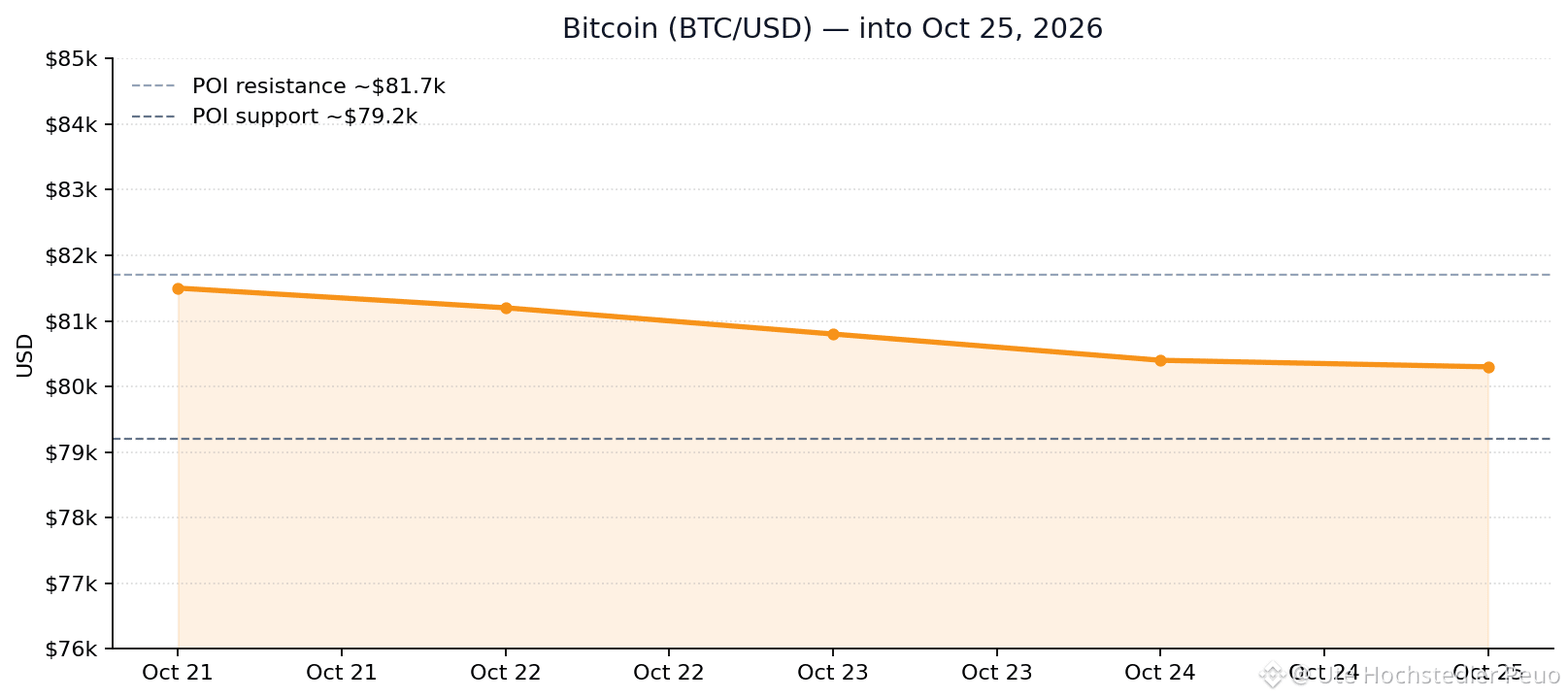
BTC is trading near $80,300–$80,600 after a quiet Sunday, still sitting under the 20- and 50-day moving averages. Key points of interest for tomorrow are the $79,200–$79,500 support zone (recent low and demand) and the $81,000–$81,700 resistance band (prior range and moving-average cluster).
Short-term bias is neutral-to-slightly-bearish. A daily close above $81,700 would improve the picture toward $82,600–$83,000; a break under $79,200 opens $78,400 and then the mid-$77,000s. Long-term bias remains constructive while the 200-day area near $73,000 holds, but the current structure is a range-bound correction inside the broader uptrend.
$BTC
BTC is trading near $80,300–$80,600 after a quiet Sunday, still sitting under the 20- and 50-day moving averages. Key points of interest for tomorrow are the $79,200–$79,500 support zone (recent low and demand) and the $81,000–$81,700 resistance band (prior range and moving-average cluster).
Short-term bias is neutral-to-slightly-bearish. A daily close above $81,700 would improve the picture toward $82,600–$83,000; a break under $79,200 opens $78,400 and then the mid-$77,000s. Long-term bias remains constructive while the 200-day area near $73,000 holds, but the current structure is a range-bound correction inside the broader uptrend.
88
翻訳参照
$BTC
{future}(BTCUSDT)
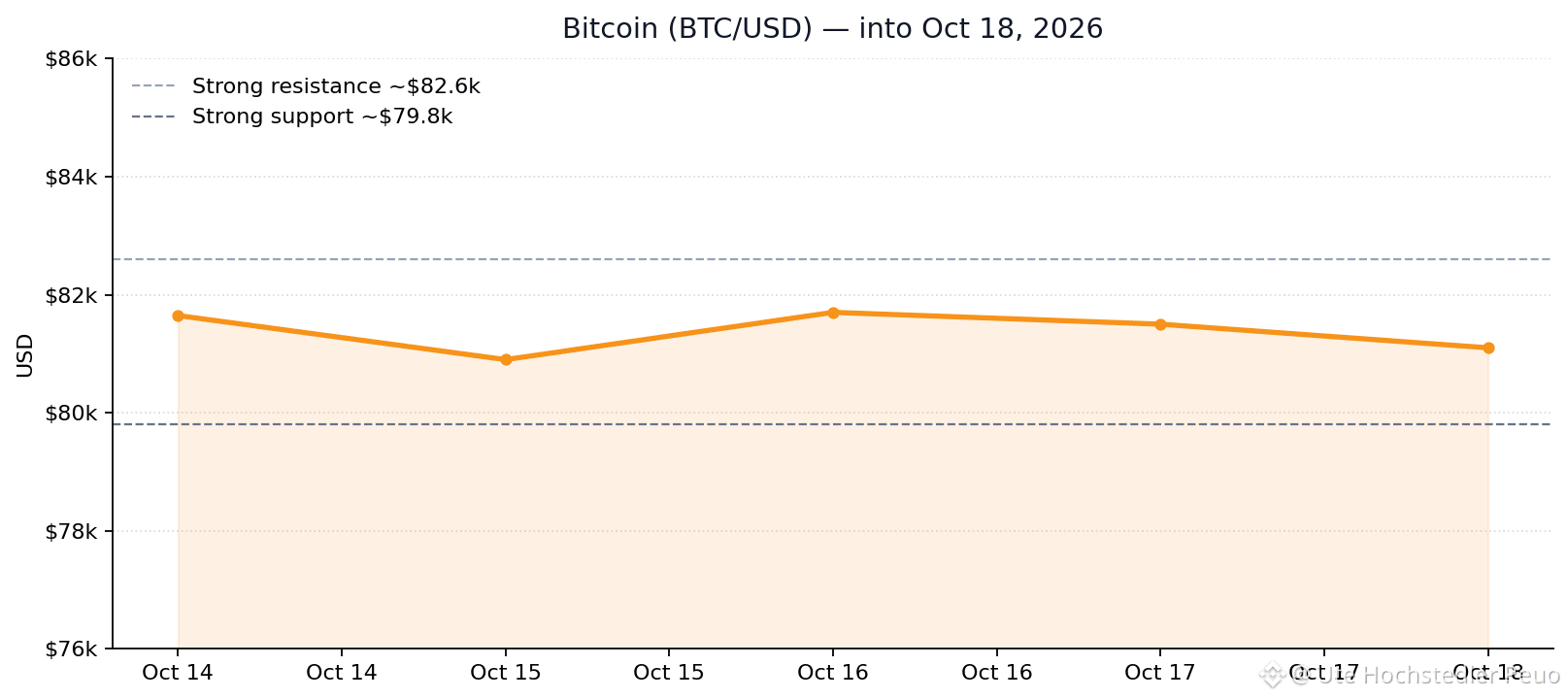
is trading near $81,000–$81,700, holding the lower half of the $79,800–$84,300 weekly range on thin Sunday volume. The strongest near-term support is the $79,800–$80,500 cluster (October 15 low and the 50-day area). The strongest resistance is $82,600 (20-day EMA / recent range top), then $84,200–$84,350. Over the next 24 hours the base case is continued sideways trade between roughly $80,800 and $82,600. A clean daily close above $82,600 opens $84,200; a break under $79,800 reopens the mid-$78,000s. BTC is still setting the tone for the other four.
$BTC
is trading near $81,000–$81,700, holding the lower half of the $79,800–$84,300 weekly range on thin Sunday volume. The strongest near-term support is the $79,800–$80,500 cluster (October 15 low and the 50-day area). The strongest resistance is $82,600 (20-day EMA / recent range top), then $84,200–$84,350. Over the next 24 hours the base case is continued sideways trade between roughly $80,800 and $82,600. A clean daily close above $82,600 opens $84,200; a break under $79,800 reopens the mid-$78,000s. BTC is still setting the tone for the other four.
is trading near $81,000–$81,700, holding the lower half of the $79,800–$84,300 weekly range on thin Sunday volume. The strongest near-term support is the $79,800–$80,500 cluster (October 15 low and the 50-day area). The strongest resistance is $82,600 (20-day EMA / recent range top), then $84,200–$84,350. Over the next 24 hours the base case is continued sideways trade between roughly $80,800 and $82,600. A clean daily close above $82,600 opens $84,200; a break under $79,800 reopens the mid-$78,000s. BTC is still setting the tone for the other four.
102
翻訳参照
$BTC
{future}(BTCUSDT)
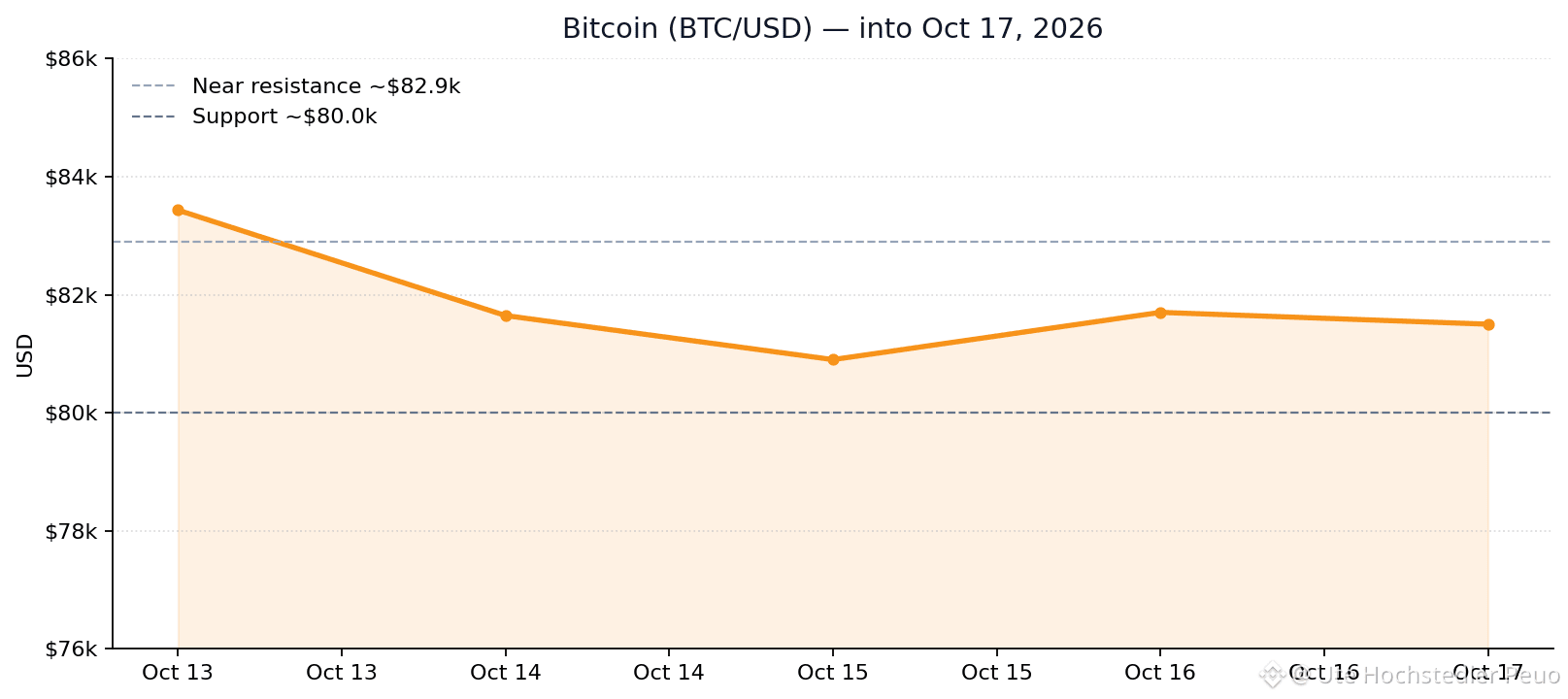
is trading near $81,500, down less than 1% over the past day after failing to hold the $82,000–$82,500 area. Weekend volume is lighter, and the base case is sideways action between roughly $80,600 and $82,900. A daily close above $82,900–$83,000 would open $84,200–$84,400; a loss of $80,600–$80,800 reopens the October 15 low near $79,800 and then the mid-$78,000s. BTC held up better than equities after the AI-stock selloff, but ETF outflows and elevated funding keep the short-term bias defensive. It is still setting the tone for the other three.
$BTC
is trading near $81,500, down less than 1% over the past day after failing to hold the $82,000–$82,500 area. Weekend volume is lighter, and the base case is sideways action between roughly $80,600 and $82,900. A daily close above $82,900–$83,000 would open $84,200–$84,400; a loss of $80,600–$80,800 reopens the October 15 low near $79,800 and then the mid-$78,000s. BTC held up better than equities after the AI-stock selloff, but ETF outflows and elevated funding keep the short-term bias defensive. It is still setting the tone for the other three.
is trading near $81,500, down less than 1% over the past day after failing to hold the $82,000–$82,500 area. Weekend volume is lighter, and the base case is sideways action between roughly $80,600 and $82,900. A daily close above $82,900–$83,000 would open $84,200–$84,400; a loss of $80,600–$80,800 reopens the October 15 low near $79,800 and then the mid-$78,000s. BTC held up better than equities after the AI-stock selloff, but ETF outflows and elevated funding keep the short-term bias defensive. It is still setting the tone for the other three.
89
$BTC
{future}(BTCUSDT)
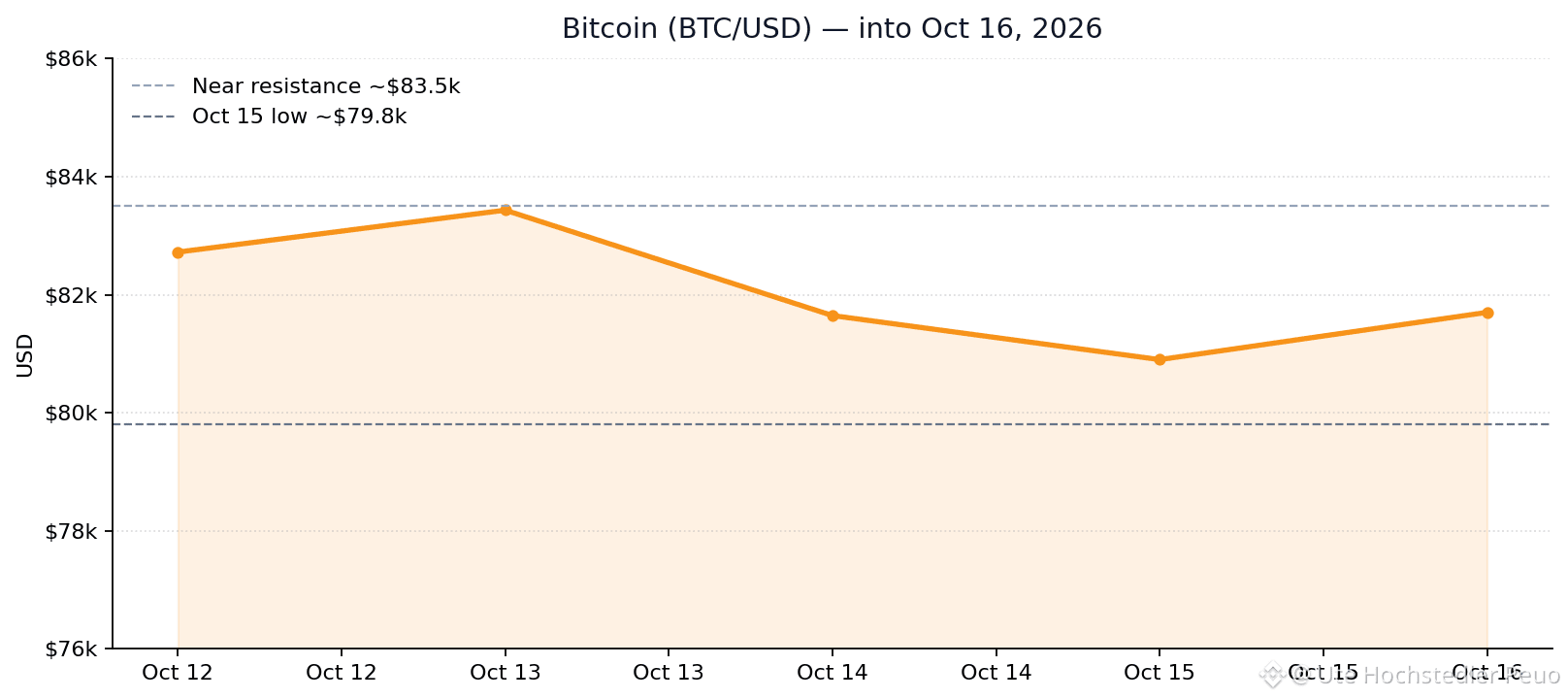
10月15日の安値である約79,800ドルから反発した後、81,700~82,100ドル近辺で取引されています。CPIとPPIの予想を上回る結果を受けてFRBのタカ派姿勢を織り込む動きが強まり、82,000~83,000ドルを上回る水準を維持するのに苦戦しています。今後24時間の基本シナリオは、80,800~83,500ドル程度のレンジ相場です。日足終値が83,000~83,500ドルを上回れば84,200ドルが視野に入り、80,800~81,000ドルを割り込めば79,800ドル、さらに78,000ドル台半ばまで下落する可能性が再び高まります。今週はデジタル資産商品から資金が流出しました。また、市場では10月のFOMCで金利が据え置かれる可能性が依然として高く見積もられていますが、相場の基調は引き続き慎重です。ビットコインが他の3銘柄の方向性を決める展開が予想されます。
$BTC
10月15日の安値である約79,800ドルから反発した後、81,700~82,100ドル近辺で取引されています。CPIとPPIの予想を上回る結果を受けてFRBのタカ派姿勢を織り込む動きが強まり、82,000~83,000ドルを上回る水準を維持するのに苦戦しています。今後24時間の基本シナリオは、80,800~83,500ドル程度のレンジ相場です。日足終値が83,000~83,500ドルを上回れば84,200ドルが視野に入り、80,800~81,000ドルを割り込めば79,800ドル、さらに78,000ドル台半ばまで下落する可能性が再び高まります。今週はデジタル資産商品から資金が流出しました。また、市場では10月のFOMCで金利が据え置かれる可能性が依然として高く見積もられていますが、相場の基調は引き続き慎重です。ビットコインが他の3銘柄の方向性を決める展開が予想されます。
10月15日の安値である約79,800ドルから反発した後、81,700~82,100ドル近辺で取引されています。CPIとPPIの予想を上回る結果を受けてFRBのタカ派姿勢を織り込む動きが強まり、82,000~83,000ドルを上回る水準を維持するのに苦戦しています。今後24時間の基本シナリオは、80,800~83,500ドル程度のレンジ相場です。日足終値が83,000~83,500ドルを上回れば84,200ドルが視野に入り、80,800~81,000ドルを割り込めば79,800ドル、さらに78,000ドル台半ばまで下落する可能性が再び高まります。今週はデジタル資産商品から資金が流出しました。また、市場では10月のFOMCで金利が据え置かれる可能性が依然として高く見積もられていますが、相場の基調は引き続き慎重です。ビットコインが他の3銘柄の方向性を決める展開が予想されます。
76
$SUI
{future}(SUIUSDT)
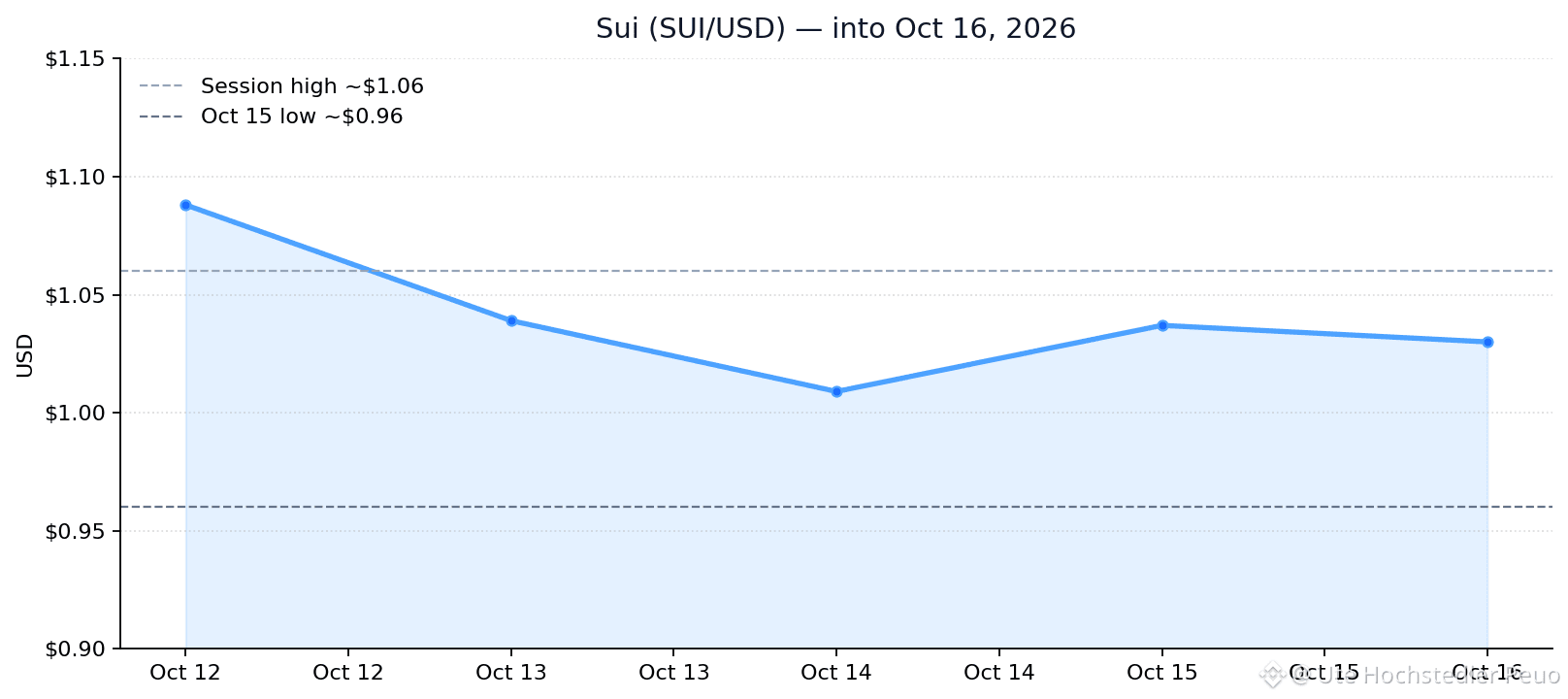
は約1.03ドルで取引されており、10月15日に0.96ドル近辺の安値をつけて反発した後、過去1日はほぼ横ばいからやや下落しています。この日の値幅はおよそ1.01~1.06ドルでした。今後24時間は、1.00~1.06ドルの範囲で上下する展開が基本シナリオです。1.06ドルを上抜ければ1.08~1.10ドルが視野に入り、1.00ドルを割り込めば、0.96ドルの安値と0.90ドル台半ばの水準が再び意識されます。より広い市場では、インフレ指標やFRBの発言への警戒が続いているため、リスク回避の動きがあれば、SUIは上抜けに失敗した1.10~1.13ドルのゾーンを下回る水準に抑えられやすいでしょう。ビットコインが83,000ドルを明確に回復しない限り、レンジ内での推移が見込まれます。
$SUI
は約1.03ドルで取引されており、10月15日に0.96ドル近辺の安値をつけて反発した後、過去1日はほぼ横ばいからやや下落しています。この日の値幅はおよそ1.01~1.06ドルでした。今後24時間は、1.00~1.06ドルの範囲で上下する展開が基本シナリオです。1.06ドルを上抜ければ1.08~1.10ドルが視野に入り、1.00ドルを割り込めば、0.96ドルの安値と0.90ドル台半ばの水準が再び意識されます。より広い市場では、インフレ指標やFRBの発言への警戒が続いているため、リスク回避の動きがあれば、SUIは上抜けに失敗した1.10~1.13ドルのゾーンを下回る水準に抑えられやすいでしょう。ビットコインが83,000ドルを明確に回復しない限り、レンジ内での推移が見込まれます。
は約1.03ドルで取引されており、10月15日に0.96ドル近辺の安値をつけて反発した後、過去1日はほぼ横ばいからやや下落しています。この日の値幅はおよそ1.01~1.06ドルでした。今後24時間は、1.00~1.06ドルの範囲で上下する展開が基本シナリオです。1.06ドルを上抜ければ1.08~1.10ドルが視野に入り、1.00ドルを割り込めば、0.96ドルの安値と0.90ドル台半ばの水準が再び意識されます。より広い市場では、インフレ指標やFRBの発言への警戒が続いているため、リスク回避の動きがあれば、SUIは上抜けに失敗した1.10~1.13ドルのゾーンを下回る水準に抑えられやすいでしょう。ビットコインが83,000ドルを明確に回復しない限り、レンジ内での推移が見込まれます。
170
$SUI
{future}(SUIUSDT)
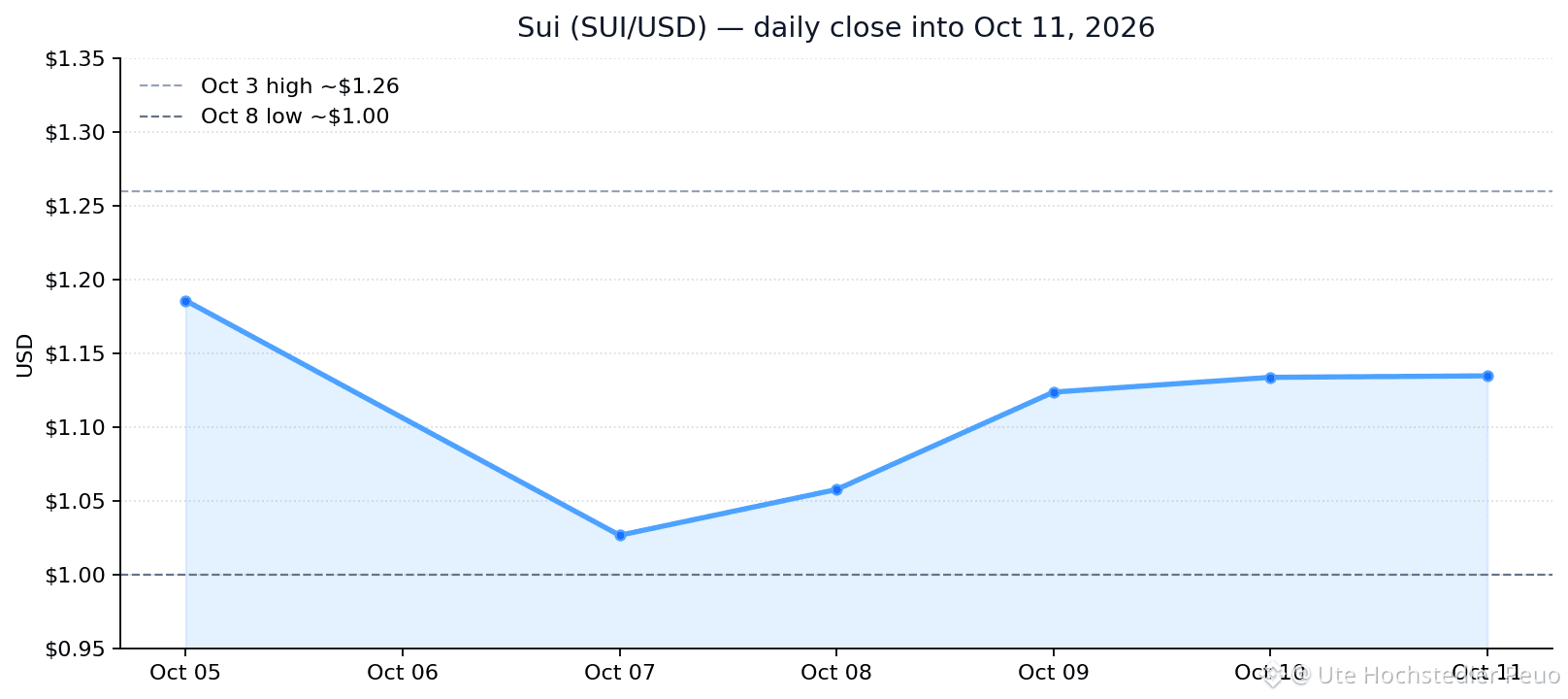
は本日、約1.13~1.14ドル付近で取引されており、過去24時間で約1%上昇しています。取引時間中の値幅はおよそ1.09~1.14ドルです。10月8日に約1.00ドルまで下落した後、1.10~1.13ドルの水準を回復しましたが、10月初旬の高値である約1.21~1.26ドルからは、週間で依然として約7~9%下落しています。30日間の上昇率は約55%と堅調です。時価総額は約47億ドルです。目先のサポートは1.09ドル、その次が1.05~1.08ドルです。レジスタンスは1.14~1.15ドル、その次が1.18~1.21ドルです。この値動きは、新たなブレイクアウトというより、Basecamp後の下落を経た後の持ち合いのようです。SUIは2025年1月の高値である約5.35ドルを、依然として約79%下回っています。
$SUI
は本日、約1.13~1.14ドル付近で取引されており、過去24時間で約1%上昇しています。取引時間中の値幅はおよそ1.09~1.14ドルです。10月8日に約1.00ドルまで下落した後、1.10~1.13ドルの水準を回復しましたが、10月初旬の高値である約1.21~1.26ドルからは、週間で依然として約7~9%下落しています。30日間の上昇率は約55%と堅調です。時価総額は約47億ドルです。目先のサポートは1.09ドル、その次が1.05~1.08ドルです。レジスタンスは1.14~1.15ドル、その次が1.18~1.21ドルです。この値動きは、新たなブレイクアウトというより、Basecamp後の下落を経た後の持ち合いのようです。SUIは2025年1月の高値である約5.35ドルを、依然として約79%下回っています。
は本日、約1.13~1.14ドル付近で取引されており、過去24時間で約1%上昇しています。取引時間中の値幅はおよそ1.09~1.14ドルです。10月8日に約1.00ドルまで下落した後、1.10~1.13ドルの水準を回復しましたが、10月初旬の高値である約1.21~1.26ドルからは、週間で依然として約7~9%下落しています。30日間の上昇率は約55%と堅調です。時価総額は約47億ドルです。目先のサポートは1.09ドル、その次が1.05~1.08ドルです。レジスタンスは1.14~1.15ドル、その次が1.18~1.21ドルです。この値動きは、新たなブレイクアウトというより、Basecamp後の下落を経た後の持ち合いのようです。SUIは2025年1月の高値である約5.35ドルを、依然として約79%下回っています。
102
翻訳参照
$BTC
{future}(BTCUSDT)
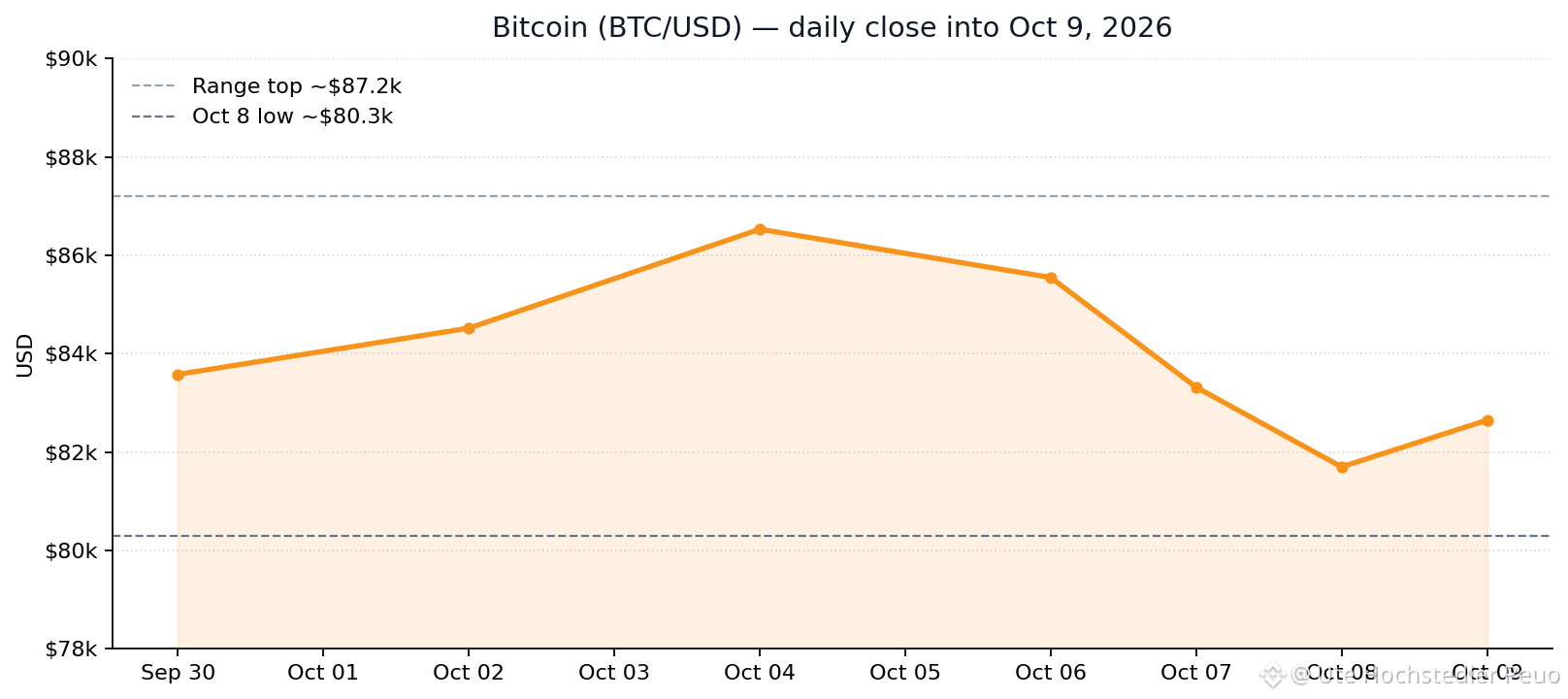
is trading near $82,500–$82,700 today, up about 1% over the past 24 hours after dipping to roughly $80,300–$80,500 on October 8. The session range is about $81,500–$83,500. It is still down about 4% on the week and opened near a three-week low, but it remains up about 4–6% over 30 days. The total crypto market cap slipped under $2.8 trillion to a one-month low during the selloff. $80,300 is the level buyers just defended; a daily close under it opens $78,000–$80,000. First resistance is $83,500, then $84,200 and the failed $87,000 area. The bounce is a relief rally after four down days, not a reclaim of the prior range. Bitcoin remains about 35% below its October 2025 high near $126,200.
$BTC
is trading near $82,500–$82,700 today, up about 1% over the past 24 hours after dipping to roughly $80,300–$80,500 on October 8. The session range is about $81,500–$83,500. It is still down about 4% on the week and opened near a three-week low, but it remains up about 4–6% over 30 days. The total crypto market cap slipped under $2.8 trillion to a one-month low during the selloff. $80,300 is the level buyers just defended; a daily close under it opens $78,000–$80,000. First resistance is $83,500, then $84,200 and the failed $87,000 area. The bounce is a relief rally after four down days, not a reclaim of the prior range. Bitcoin remains about 35% below its October 2025 high near $126,200.
is trading near $82,500–$82,700 today, up about 1% over the past 24 hours after dipping to roughly $80,300–$80,500 on October 8. The session range is about $81,500–$83,500. It is still down about 4% on the week and opened near a three-week low, but it remains up about 4–6% over 30 days. The total crypto market cap slipped under $2.8 trillion to a one-month low during the selloff. $80,300 is the level buyers just defended; a daily close under it opens $78,000–$80,000. First resistance is $83,500, then $84,200 and the failed $87,000 area. The bounce is a relief rally after four down days, not a reclaim of the prior range. Bitcoin remains about 35% below its October 2025 high near $126,200.
86
ログインして、さらにコンテンツを読む
厳選トピックで世界の暗号資産トレーダーの仲間入り
⚡️ 暗号資産に関する最新かつ有益な情報が見つかります。
💬 世界最大の暗号資産取引所から信頼されています。
👍 認証を受けたクリエイターから、有益なインサイトを得られます。
メール / 電話番号