
Cryptomom7
530 投稿

Cryptomom7
報告
ユーザーをブロック

BTCホルダー
高頻度トレーダー
3.9年
102 フォロー
222 フォロワー
284 いいね
投稿
すべて
引用
動画
·
--
翻訳参照
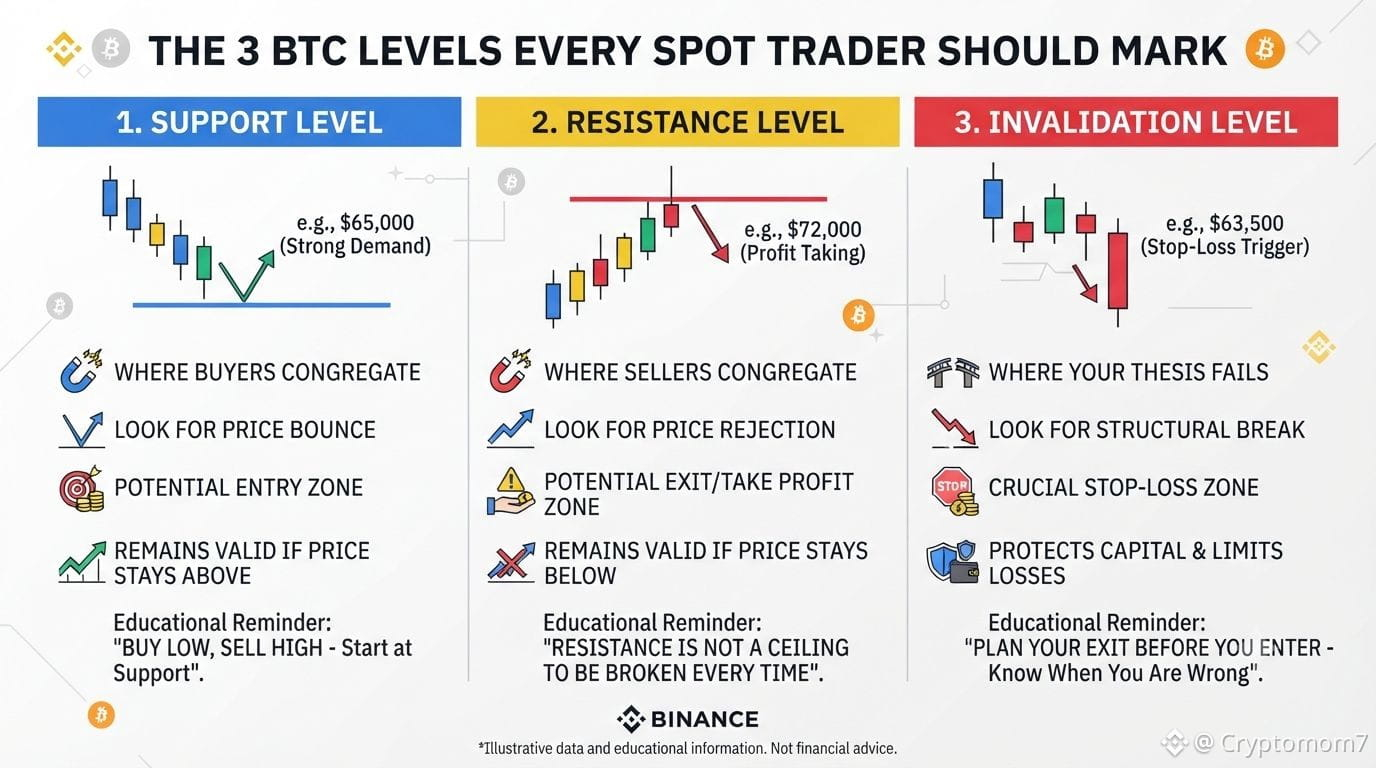
📊 THE 3 BTC LEVELS EVERY SPOT TRADER SHOULD MARK
Before entering a Bitcoin trade, don't look at the chart and simply ask:
“Will BTC go up?”
Instead, mark three important levels first.
🟢 1. SUPPORT
Where has BTC previously found buying interest?
This is an area where price may stabilize or bounce. It can help traders identify potential entries — but support is never guaranteed to hold.
🔴 2. RESISTANCE
Where has BTC previously faced selling pressure?
If BTC approaches resistance after a strong rally, chasing the price can increase risk. A breakout is more meaningful when price can hold above the level rather than merely wick through it.
🟡 3. INVALIDATION LEVEL
At what price would your trade idea no longer make sense?
This is often forgotten. Before entering, decide where you would accept that your setup was wrong.
💡 A simple BTC checklist:
Support = Where could buyers appear?
Resistance = Where could sellers appear?
Invalidation = When should I exit instead of hoping?
For spot traders, this simple framework can help turn a chart from a collection of candles into a structured plan.
And remember:
📌 Don't enter simply because BTC is moving.
Know your levels BEFORE you buy.
Protecting capital is part of trading — not something to think about after the trade goes against you.
#Bitcoin #BTC #SpotTrading #CryptoTrading #Binance #BitcoinInvesting #TradingTips #CryptoEducation
📊 THE 3 BTC LEVELS EVERY SPOT TRADER SHOULD MARK
Before entering a Bitcoin trade, don't look at the chart and simply ask:
“Will BTC go up?”
Instead, mark three important levels first.
🟢 1. SUPPORT
Where has BTC previously found buying interest?
This is an area where price may stabilize or bounce. It can help traders identify potential entries — but support is never guaranteed to hold.
🔴 2. RESISTANCE
Where has BTC previously faced selling pressure?
If BTC approaches resistance after a strong rally, chasing the price can increase risk. A breakout is more meaningful when price can hold above the level rather than merely wick through it.
🟡 3. INVALIDATION LEVEL
At what price would your trade idea no longer make sense?
This is often forgotten. Before entering, decide where you would accept that your setup was wrong.
💡 A simple BTC checklist:
Support = Where could buyers appear?
Resistance = Where could sellers appear?
Invalidation = When should I exit instead of hoping?
For spot traders, this simple framework can help turn a chart from a collection of candles into a structured plan.
And remember:
📌 Don't enter simply because BTC is moving.
Know your levels BEFORE you buy.
Protecting capital is part of trading — not something to think about after the trade goes against you.
#Bitcoin #BTC #SpotTrading #CryptoTrading #Binance #BitcoinInvesting #TradingTips #CryptoEducation
Before entering a Bitcoin trade, don't look at the chart and simply ask:
“Will BTC go up?”
Instead, mark three important levels first.
🟢 1. SUPPORT
Where has BTC previously found buying interest?
This is an area where price may stabilize or bounce. It can help traders identify potential entries — but support is never guaranteed to hold.
🔴 2. RESISTANCE
Where has BTC previously faced selling pressure?
If BTC approaches resistance after a strong rally, chasing the price can increase risk. A breakout is more meaningful when price can hold above the level rather than merely wick through it.
🟡 3. INVALIDATION LEVEL
At what price would your trade idea no longer make sense?
This is often forgotten. Before entering, decide where you would accept that your setup was wrong.
💡 A simple BTC checklist:
Support = Where could buyers appear?
Resistance = Where could sellers appear?
Invalidation = When should I exit instead of hoping?
For spot traders, this simple framework can help turn a chart from a collection of candles into a structured plan.
And remember:
📌 Don't enter simply because BTC is moving.
Know your levels BEFORE you buy.
Protecting capital is part of trading — not something to think about after the trade goes against you.
#Bitcoin #BTC #SpotTrading #CryptoTrading #Binance #BitcoinInvesting #TradingTips #CryptoEducation
45
·
--
翻訳参照
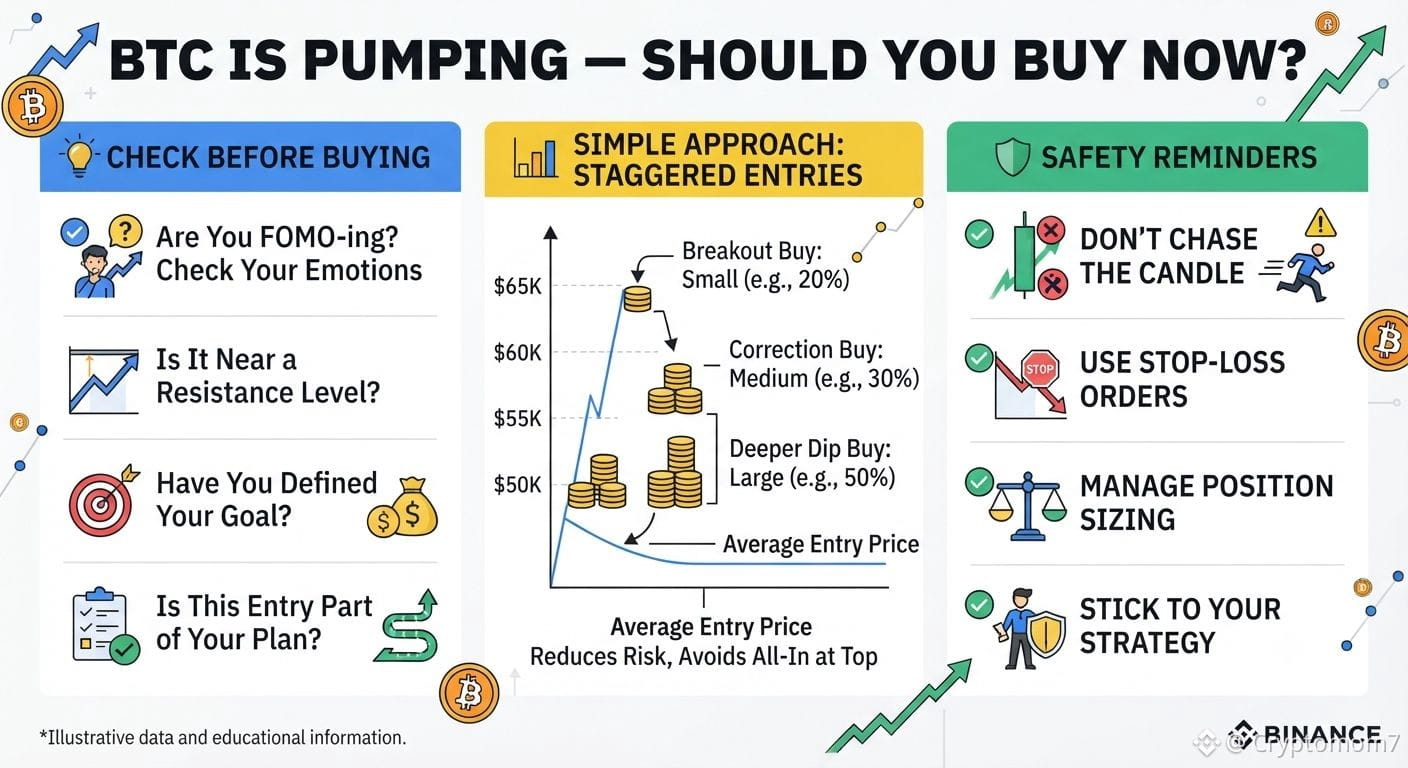
🚨 BTC IS PUMPING — SHOULD YOU BUY NOW?
Seeing Bitcoin suddenly move higher can create one strong emotion: FOMO.
You see BTC breaking upward, everyone is talking about the rally, and the temptation is to enter immediately.
But disciplined spot traders ask a different question:
👉 “Is this a good entry, or am I chasing the move?”
Before buying a fast-moving BTC candle, check:
🔹 Is price close to a major resistance level?
🔹 Has the move been supported by strong volume?
🔹 Did BTC actually close above resistance, or only wick above it?
🔹 Is there a possible retest before the next move?
🔹 How much of your available capital are you putting at risk?
💡 A simple approach:
Instead of putting your entire amount into a sudden breakout, consider staggering entries.
For example, divide your planned capital into smaller portions and keep some available in case BTC pulls back.
Remember:
📈 A rising BTC price doesn't mean every entry is a good entry.
Sometimes the safest trade is waiting for confirmation.
Don't chase the candle.
Don't trade because everyone else is excited.
Have your entry, risk level and exit plan ready before you buy.
The goal isn't to catch every Bitcoin move.
The goal is to stay in the market long enough to benefit from the opportunities that fit your strategy. 🟠
#Bitcoin #BTC #SpotTrading #CryptoTrading #BitcoinInvesting #Binance #CryptoEducation #TradingTips
🚨 BTC IS PUMPING — SHOULD YOU BUY NOW?
Seeing Bitcoin suddenly move higher can create one strong emotion: FOMO.
You see BTC breaking upward, everyone is talking about the rally, and the temptation is to enter immediately.
But disciplined spot traders ask a different question:
👉 “Is this a good entry, or am I chasing the move?”
Before buying a fast-moving BTC candle, check:
🔹 Is price close to a major resistance level?
🔹 Has the move been supported by strong volume?
🔹 Did BTC actually close above resistance, or only wick above it?
🔹 Is there a possible retest before the next move?
🔹 How much of your available capital are you putting at risk?
💡 A simple approach:
Instead of putting your entire amount into a sudden breakout, consider staggering entries.
For example, divide your planned capital into smaller portions and keep some available in case BTC pulls back.
Remember:
📈 A rising BTC price doesn't mean every entry is a good entry.
Sometimes the safest trade is waiting for confirmation.
Don't chase the candle.
Don't trade because everyone else is excited.
Have your entry, risk level and exit plan ready before you buy.
The goal isn't to catch every Bitcoin move.
The goal is to stay in the market long enough to benefit from the opportunities that fit your strategy. 🟠
#Bitcoin #BTC #SpotTrading #CryptoTrading #BitcoinInvesting #Binance #CryptoEducation #TradingTips
Seeing Bitcoin suddenly move higher can create one strong emotion: FOMO.
You see BTC breaking upward, everyone is talking about the rally, and the temptation is to enter immediately.
But disciplined spot traders ask a different question:
👉 “Is this a good entry, or am I chasing the move?”
Before buying a fast-moving BTC candle, check:
🔹 Is price close to a major resistance level?
🔹 Has the move been supported by strong volume?
🔹 Did BTC actually close above resistance, or only wick above it?
🔹 Is there a possible retest before the next move?
🔹 How much of your available capital are you putting at risk?
💡 A simple approach:
Instead of putting your entire amount into a sudden breakout, consider staggering entries.
For example, divide your planned capital into smaller portions and keep some available in case BTC pulls back.
Remember:
📈 A rising BTC price doesn't mean every entry is a good entry.
Sometimes the safest trade is waiting for confirmation.
Don't chase the candle.
Don't trade because everyone else is excited.
Have your entry, risk level and exit plan ready before you buy.
The goal isn't to catch every Bitcoin move.
The goal is to stay in the market long enough to benefit from the opportunities that fit your strategy. 🟠
#Bitcoin #BTC #SpotTrading #CryptoTrading #BitcoinInvesting #Binance #CryptoEducation #TradingTips
51
·
--
翻訳参照
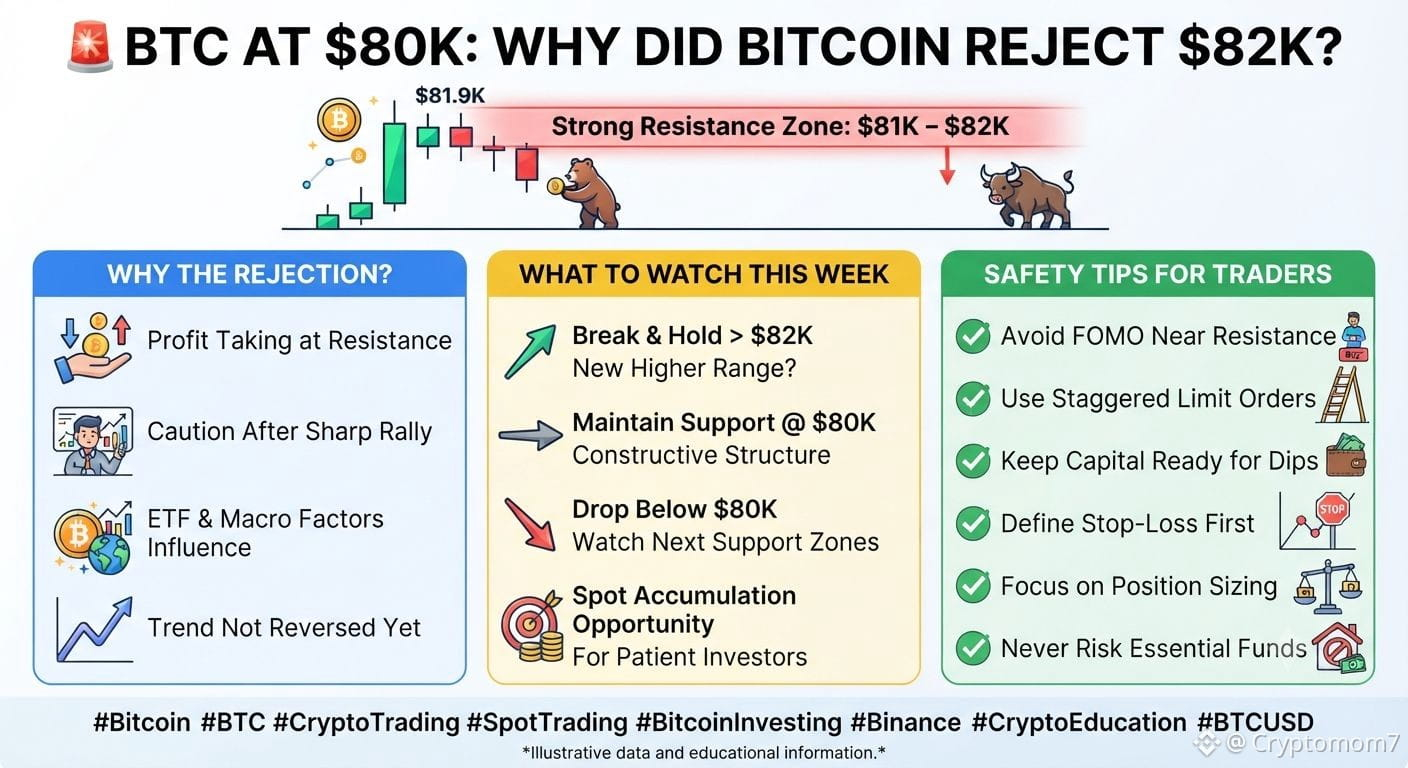
🚨 BTC AT $80K: WHY DID BITCOIN REJECT $82K?
Bitcoin is back around the $80K zone after recently climbing above $81K and approaching $82K — but sellers stepped in and pushed price lower.
Why?
🔹 $81K–$82K is proving to be a strong resistance zone, where traders are taking profits.
🔹 After a sharp move higher, short-term buyers can become cautious, creating temporary selling pressure.
🔹 ETF flows and broader macro conditions remain important catalysts for BTC.
🔹 A rejection near resistance does NOT automatically mean the trend has reversed.
📊 WHAT TO WATCH THIS WEEK
➡️ Above $82K with strong volume: BTC could attempt to build a higher range.
➡️ Holding $80K: keeps the current structure constructive.
➡️ Losing $80K: watch the next support zones rather than chasing a falling candle.
➡️ A deeper pullback can create better accumulation opportunities for patient spot investors.
🛡️ SAFETY TIPS FOR INVESTORS & SPOT TRADERS
✅ Don't FOMO-buy near resistance.
✅ Consider staggered limit orders instead of one large entry.
✅ Keep some capital available for dips.
✅ For traders, define your stop-loss BEFORE entering.
✅ For long-term investors, focus on position sizing and accumulation rather than predicting every candle.
✅ Never use money needed for essential expenses.
The key question this week isn't simply “Will BTC go up?”
It's whether Bitcoin can hold above $80K and eventually convert $81K–$82K resistance into support.
Watch the levels. Manage risk. Let the market confirm the move. 📈
#Bitcoin #BTC #CryptoTrading #SpotTrading #BitcoinInvesting #Binance #CryptoEducation #BTCUSD
🚨 BTC AT $80K: WHY DID BITCOIN REJECT $82K?
Bitcoin is back around the $80K zone after recently climbing above $81K and approaching $82K — but sellers stepped in and pushed price lower.
Why?
🔹 $81K–$82K is proving to be a strong resistance zone, where traders are taking profits.
🔹 After a sharp move higher, short-term buyers can become cautious, creating temporary selling pressure.
🔹 ETF flows and broader macro conditions remain important catalysts for BTC.
🔹 A rejection near resistance does NOT automatically mean the trend has reversed.
📊 WHAT TO WATCH THIS WEEK
➡️ Above $82K with strong volume: BTC could attempt to build a higher range.
➡️ Holding $80K: keeps the current structure constructive.
➡️ Losing $80K: watch the next support zones rather than chasing a falling candle.
➡️ A deeper pullback can create better accumulation opportunities for patient spot investors.
🛡️ SAFETY TIPS FOR INVESTORS & SPOT TRADERS
✅ Don't FOMO-buy near resistance.
✅ Consider staggered limit orders instead of one large entry.
✅ Keep some capital available for dips.
✅ For traders, define your stop-loss BEFORE entering.
✅ For long-term investors, focus on position sizing and accumulation rather than predicting every candle.
✅ Never use money needed for essential expenses.
The key question this week isn't simply “Will BTC go up?”
It's whether Bitcoin can hold above $80K and eventually convert $81K–$82K resistance into support.
Watch the levels. Manage risk. Let the market confirm the move. 📈
#Bitcoin #BTC #CryptoTrading #SpotTrading #BitcoinInvesting #Binance #CryptoEducation #BTCUSD
Bitcoin is back around the $80K zone after recently climbing above $81K and approaching $82K — but sellers stepped in and pushed price lower.
Why?
🔹 $81K–$82K is proving to be a strong resistance zone, where traders are taking profits.
🔹 After a sharp move higher, short-term buyers can become cautious, creating temporary selling pressure.
🔹 ETF flows and broader macro conditions remain important catalysts for BTC.
🔹 A rejection near resistance does NOT automatically mean the trend has reversed.
📊 WHAT TO WATCH THIS WEEK
➡️ Above $82K with strong volume: BTC could attempt to build a higher range.
➡️ Holding $80K: keeps the current structure constructive.
➡️ Losing $80K: watch the next support zones rather than chasing a falling candle.
➡️ A deeper pullback can create better accumulation opportunities for patient spot investors.
🛡️ SAFETY TIPS FOR INVESTORS & SPOT TRADERS
✅ Don't FOMO-buy near resistance.
✅ Consider staggered limit orders instead of one large entry.
✅ Keep some capital available for dips.
✅ For traders, define your stop-loss BEFORE entering.
✅ For long-term investors, focus on position sizing and accumulation rather than predicting every candle.
✅ Never use money needed for essential expenses.
The key question this week isn't simply “Will BTC go up?”
It's whether Bitcoin can hold above $80K and eventually convert $81K–$82K resistance into support.
Watch the levels. Manage risk. Let the market confirm the move. 📈
#Bitcoin #BTC #CryptoTrading #SpotTrading #BitcoinInvesting #Binance #CryptoEducation #BTCUSD
82
·
--
記事
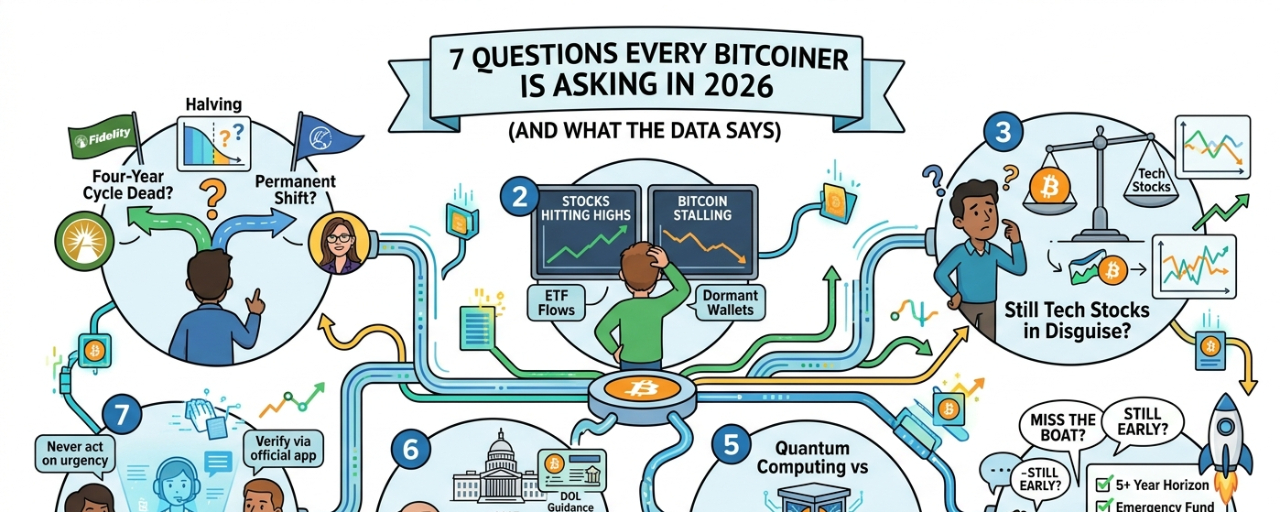
2026年に“すべてのビットコイナー”が抱える7つの質問(そしてデータが本当に言っていること)2026年に“すべてのビットコイナー”が抱える7つの質問(そしてデータが本当に言っていること)
2026年のビットコインは、多くの人が学んだ“ルールに従う資産”のような振る舞いをやめてしまった。機関投資家は参入しているのに、価格は昔の台本に協力しておらず、技術面・規制面でのさまざまな“ワイルドカード”が次々に出てきて、保有者たちは本当に何を信じればいいのか分からなくなっている。以下は、繰り返し何度も出てくる質問だ——現時点のデータが許す範囲で、できるだけ正直に答える。
目次
4年周期のビットコインは本当に終わったのか?
株は高値更新を続けているのに、なぜビットコインは?
2026年に“すべてのビットコイナー”が抱える7つの質問(そしてデータが本当に言っていること)
2026年に“すべてのビットコイナー”が抱える7つの質問(そしてデータが本当に言っていること)
2026年のビットコインは、多くの人が学んだ“ルールに従う資産”のような振る舞いをやめてしまった。機関投資家は参入しているのに、価格は昔の台本に協力しておらず、技術面・規制面でのさまざまな“ワイルドカード”が次々に出てきて、保有者たちは本当に何を信じればいいのか分からなくなっている。以下は、繰り返し何度も出てくる質問だ——現時点のデータが許す範囲で、できるだけ正直に答える。
目次
4年周期のビットコインは本当に終わったのか?
株は高値更新を続けているのに、なぜビットコインは?
2026年のビットコインは、多くの人が学んだ“ルールに従う資産”のような振る舞いをやめてしまった。機関投資家は参入しているのに、価格は昔の台本に協力しておらず、技術面・規制面でのさまざまな“ワイルドカード”が次々に出てきて、保有者たちは本当に何を信じればいいのか分からなくなっている。以下は、繰り返し何度も出てくる質問だ——現時点のデータが許す範囲で、できるだけ正直に答える。
目次
4年周期のビットコインは本当に終わったのか?
株は高値更新を続けているのに、なぜビットコインは?
81
·
--
記事
翻訳参照
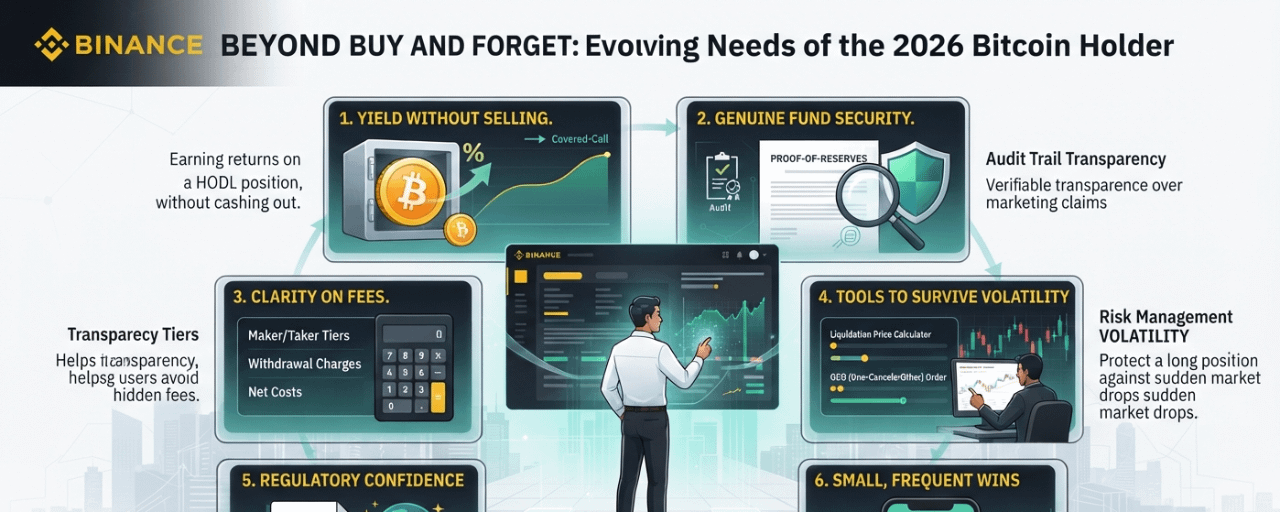
What Bitcoin Holders Really Want in 2026 (And How Binance Is Answering)What Bitcoin Holders Really Want in 2026 (And How Binance Is Answering)
Bitcoin isn't behaving like a "buy and forget" asset for most holders anymore — it's behaving like a portfolio they actively manage. That shift shows up clearly in what people are asking exchanges to deliver in 2026: not just a place to buy BTC, but a place to protect it, grow it quietly, and trade it without getting blindsided.
Here's what that audience wants — and where Binance fits into each demand.
Table of Contents
Yield Without Selling the BitcoinGenuine Fund Security, Not Just Marketing CopyClarity on Fees That Actually Add UpTools to Survive Volatility, Not Just Watch ItRegulatory Confidence in a Still-Shifting LandscapeSmall, Frequent Wins Alongside the Big TradeThe Bottom Line
1. Yield Without Selling the Bitcoin
The single biggest behavioral shift this year: holders are refusing to sell, even when tempted. On-chain data shows long-term holder wallets — those untouched for 155 days or more — now control close to 79% of Bitcoin's circulating supply as of September 2026, a record high. That's not passive indifference; it's a deliberate hold strategy, and it comes with a new demand — "let me earn on this coin without cashing it out."
Binance's response has been to build products specifically for that mindset. Its BTC Yield product, a covered-call income strategy, was built exclusively for people who already hold Bitcoin — letting long-term holders generate a return on their sitting position instead of choosing between HODL and cash flow. For a reader-first article, this is worth flagging honestly: covered-call yield caps some of your upside if BTC spikes hard, so it suits holders prioritizing steady income over full upside exposure, not aggressive bulls expecting a breakout.
2. Genuine Fund Security, Not Just Marketing Copy
Every serious guide to choosing an exchange keeps circling back to the same non-negotiable: cold storage, two-factor authentication, and infrastructure that isn't sitting on a handful of vulnerable servers. Investors have grown numb to security claims, so what actually reassures them now is verifiable proof — proof-of-reserves data, audit trails, insurance funds — over adjectives like "bank-grade."
This is where an honest article should nudge readers to check for themselves rather than take any exchange's word: look up an exchange's proof-of-reserves page, confirm withdrawal history isn't restricted during volatile periods, and treat any platform that resists transparency as a red flag regardless of its fee structure.
3. Clarity on Fees That Actually Add Up
Fee sensitivity hasn't gone away — if anything, active traders are more fee-literate than ever, comparing maker/taker tiers, withdrawal charges, and volume-based discounts before committing capital. Tiered pricing that rewards higher-volume traders remains the norm across major platforms, but the fine print (withdrawal limits, inactivity charges) is where holders get caught off guard.
The practical advice worth giving readers: run their actual trading pattern — not the platform's headline rate — through a fee calculator before assuming "low fees" applies to their size and frequency of trades.
4. Tools to Survive Volatility, Not Just Watch It
September's price action has been a live lesson in why leverage without a plan is dangerous. Open interest and long-side positioning have stayed elevated, and that concentration cuts both ways — Binance alone was recently reported carrying roughly $3.00 billion in long liquidation leverage sitting below the price, against $1.80 billion in short leverage above it, meaning a modest downside move could trigger a cascade of forced liquidations.
What holders actually want from this environment isn't a prediction — it's risk-management tooling: liquidation-price calculators, OCO (one-cancels-other) orders, and clear margin-ratio alerts before a position gets force-closed rather than after. Any exchange piece worth reading should point people toward using these tools proactively, not toward chasing the leverage that created the risk in the first place.
5. Regulatory Confidence in a Still-Shifting Landscape
Institutional money hasn't stopped arriving, but it's arriving cautiously, watching how regulatory frameworks (like ongoing developments around the CLARITY Act) settle before committing further. Retail holders are picking up on that same caution — wanting to know an exchange's compliance posture, licensing footprint, and how it handles regional regulatory changes, rather than assuming "big platform" automatically means "safe platform."
6. Small, Frequent Wins Alongside the Big Trade
Not every demand is about yield curves and liquidation maps — plenty of holders also want low-stakes ways to stay engaged. Binance's Red Packet feature, adapted from the tradition of hóngbōo digital gifting, lets KYC-verified users redeem small daily reward codes for free crypto with no deposit or trade required. It's a minor perk in the scheme of a portfolio, but it reflects a real appetite: holders like feeling rewarded for showing up, not just for placing trades.
7. The Bottom Line
Line them up, and the pattern is clear: today's Bitcoin holder wants an exchange that protects the coin, quietly grows it, charges fees they can actually predict, and gives them the tools to not get liquidated in a sharp move — with regulatory footing solid enough that none of it evaporates overnight. Binance's current lineup — BTC Yield, tiered fees, OCO/margin tools, and transparency pushes — maps closely to that list. But the honest takeaway for readers is the same one that should anchor any crypto content: match the tool to your own risk tolerance and time horizon, verify claims yourself, and never treat yield or convenience features as a substitute for understanding what you're holding.
This is market commentary, not financial advice. Crypto markets are volatile — do your own research before acting on anything here.
What Bitcoin Holders Really Want in 2026 (And How Binance Is Answering)
What Bitcoin Holders Really Want in 2026 (And How Binance Is Answering)
Bitcoin isn't behaving like a "buy and forget" asset for most holders anymore — it's behaving like a portfolio they actively manage. That shift shows up clearly in what people are asking exchanges to deliver in 2026: not just a place to buy BTC, but a place to protect it, grow it quietly, and trade it without getting blindsided.
Here's what that audience wants — and where Binance fits into each demand.
Table of Contents
Yield Without Selling the BitcoinGenuine Fund Security, Not Just Marketing CopyClarity on Fees That Actually Add UpTools to Survive Volatility, Not Just Watch ItRegulatory Confidence in a Still-Shifting LandscapeSmall, Frequent Wins Alongside the Big TradeThe Bottom Line
1. Yield Without Selling the Bitcoin
The single biggest behavioral shift this year: holders are refusing to sell, even when tempted. On-chain data shows long-term holder wallets — those untouched for 155 days or more — now control close to 79% of Bitcoin's circulating supply as of September 2026, a record high. That's not passive indifference; it's a deliberate hold strategy, and it comes with a new demand — "let me earn on this coin without cashing it out."
Binance's response has been to build products specifically for that mindset. Its BTC Yield product, a covered-call income strategy, was built exclusively for people who already hold Bitcoin — letting long-term holders generate a return on their sitting position instead of choosing between HODL and cash flow. For a reader-first article, this is worth flagging honestly: covered-call yield caps some of your upside if BTC spikes hard, so it suits holders prioritizing steady income over full upside exposure, not aggressive bulls expecting a breakout.
2. Genuine Fund Security, Not Just Marketing Copy
Every serious guide to choosing an exchange keeps circling back to the same non-negotiable: cold storage, two-factor authentication, and infrastructure that isn't sitting on a handful of vulnerable servers. Investors have grown numb to security claims, so what actually reassures them now is verifiable proof — proof-of-reserves data, audit trails, insurance funds — over adjectives like "bank-grade."
This is where an honest article should nudge readers to check for themselves rather than take any exchange's word: look up an exchange's proof-of-reserves page, confirm withdrawal history isn't restricted during volatile periods, and treat any platform that resists transparency as a red flag regardless of its fee structure.
3. Clarity on Fees That Actually Add Up
Fee sensitivity hasn't gone away — if anything, active traders are more fee-literate than ever, comparing maker/taker tiers, withdrawal charges, and volume-based discounts before committing capital. Tiered pricing that rewards higher-volume traders remains the norm across major platforms, but the fine print (withdrawal limits, inactivity charges) is where holders get caught off guard.
The practical advice worth giving readers: run their actual trading pattern — not the platform's headline rate — through a fee calculator before assuming "low fees" applies to their size and frequency of trades.
4. Tools to Survive Volatility, Not Just Watch It
September's price action has been a live lesson in why leverage without a plan is dangerous. Open interest and long-side positioning have stayed elevated, and that concentration cuts both ways — Binance alone was recently reported carrying roughly $3.00 billion in long liquidation leverage sitting below the price, against $1.80 billion in short leverage above it, meaning a modest downside move could trigger a cascade of forced liquidations.
What holders actually want from this environment isn't a prediction — it's risk-management tooling: liquidation-price calculators, OCO (one-cancels-other) orders, and clear margin-ratio alerts before a position gets force-closed rather than after. Any exchange piece worth reading should point people toward using these tools proactively, not toward chasing the leverage that created the risk in the first place.
5. Regulatory Confidence in a Still-Shifting Landscape
Institutional money hasn't stopped arriving, but it's arriving cautiously, watching how regulatory frameworks (like ongoing developments around the CLARITY Act) settle before committing further. Retail holders are picking up on that same caution — wanting to know an exchange's compliance posture, licensing footprint, and how it handles regional regulatory changes, rather than assuming "big platform" automatically means "safe platform."
6. Small, Frequent Wins Alongside the Big Trade
Not every demand is about yield curves and liquidation maps — plenty of holders also want low-stakes ways to stay engaged. Binance's Red Packet feature, adapted from the tradition of hóngbōo digital gifting, lets KYC-verified users redeem small daily reward codes for free crypto with no deposit or trade required. It's a minor perk in the scheme of a portfolio, but it reflects a real appetite: holders like feeling rewarded for showing up, not just for placing trades.
7. The Bottom Line
Line them up, and the pattern is clear: today's Bitcoin holder wants an exchange that protects the coin, quietly grows it, charges fees they can actually predict, and gives them the tools to not get liquidated in a sharp move — with regulatory footing solid enough that none of it evaporates overnight. Binance's current lineup — BTC Yield, tiered fees, OCO/margin tools, and transparency pushes — maps closely to that list. But the honest takeaway for readers is the same one that should anchor any crypto content: match the tool to your own risk tolerance and time horizon, verify claims yourself, and never treat yield or convenience features as a substitute for understanding what you're holding.
This is market commentary, not financial advice. Crypto markets are volatile — do your own research before acting on anything here.
Bitcoin isn't behaving like a "buy and forget" asset for most holders anymore — it's behaving like a portfolio they actively manage. That shift shows up clearly in what people are asking exchanges to deliver in 2026: not just a place to buy BTC, but a place to protect it, grow it quietly, and trade it without getting blindsided.
Here's what that audience wants — and where Binance fits into each demand.
Table of Contents
Yield Without Selling the BitcoinGenuine Fund Security, Not Just Marketing CopyClarity on Fees That Actually Add UpTools to Survive Volatility, Not Just Watch ItRegulatory Confidence in a Still-Shifting LandscapeSmall, Frequent Wins Alongside the Big TradeThe Bottom Line
1. Yield Without Selling the Bitcoin
The single biggest behavioral shift this year: holders are refusing to sell, even when tempted. On-chain data shows long-term holder wallets — those untouched for 155 days or more — now control close to 79% of Bitcoin's circulating supply as of September 2026, a record high. That's not passive indifference; it's a deliberate hold strategy, and it comes with a new demand — "let me earn on this coin without cashing it out."
Binance's response has been to build products specifically for that mindset. Its BTC Yield product, a covered-call income strategy, was built exclusively for people who already hold Bitcoin — letting long-term holders generate a return on their sitting position instead of choosing between HODL and cash flow. For a reader-first article, this is worth flagging honestly: covered-call yield caps some of your upside if BTC spikes hard, so it suits holders prioritizing steady income over full upside exposure, not aggressive bulls expecting a breakout.
2. Genuine Fund Security, Not Just Marketing Copy
Every serious guide to choosing an exchange keeps circling back to the same non-negotiable: cold storage, two-factor authentication, and infrastructure that isn't sitting on a handful of vulnerable servers. Investors have grown numb to security claims, so what actually reassures them now is verifiable proof — proof-of-reserves data, audit trails, insurance funds — over adjectives like "bank-grade."
This is where an honest article should nudge readers to check for themselves rather than take any exchange's word: look up an exchange's proof-of-reserves page, confirm withdrawal history isn't restricted during volatile periods, and treat any platform that resists transparency as a red flag regardless of its fee structure.
3. Clarity on Fees That Actually Add Up
Fee sensitivity hasn't gone away — if anything, active traders are more fee-literate than ever, comparing maker/taker tiers, withdrawal charges, and volume-based discounts before committing capital. Tiered pricing that rewards higher-volume traders remains the norm across major platforms, but the fine print (withdrawal limits, inactivity charges) is where holders get caught off guard.
The practical advice worth giving readers: run their actual trading pattern — not the platform's headline rate — through a fee calculator before assuming "low fees" applies to their size and frequency of trades.
4. Tools to Survive Volatility, Not Just Watch It
September's price action has been a live lesson in why leverage without a plan is dangerous. Open interest and long-side positioning have stayed elevated, and that concentration cuts both ways — Binance alone was recently reported carrying roughly $3.00 billion in long liquidation leverage sitting below the price, against $1.80 billion in short leverage above it, meaning a modest downside move could trigger a cascade of forced liquidations.
What holders actually want from this environment isn't a prediction — it's risk-management tooling: liquidation-price calculators, OCO (one-cancels-other) orders, and clear margin-ratio alerts before a position gets force-closed rather than after. Any exchange piece worth reading should point people toward using these tools proactively, not toward chasing the leverage that created the risk in the first place.
5. Regulatory Confidence in a Still-Shifting Landscape
Institutional money hasn't stopped arriving, but it's arriving cautiously, watching how regulatory frameworks (like ongoing developments around the CLARITY Act) settle before committing further. Retail holders are picking up on that same caution — wanting to know an exchange's compliance posture, licensing footprint, and how it handles regional regulatory changes, rather than assuming "big platform" automatically means "safe platform."
6. Small, Frequent Wins Alongside the Big Trade
Not every demand is about yield curves and liquidation maps — plenty of holders also want low-stakes ways to stay engaged. Binance's Red Packet feature, adapted from the tradition of hóngbōo digital gifting, lets KYC-verified users redeem small daily reward codes for free crypto with no deposit or trade required. It's a minor perk in the scheme of a portfolio, but it reflects a real appetite: holders like feeling rewarded for showing up, not just for placing trades.
7. The Bottom Line
Line them up, and the pattern is clear: today's Bitcoin holder wants an exchange that protects the coin, quietly grows it, charges fees they can actually predict, and gives them the tools to not get liquidated in a sharp move — with regulatory footing solid enough that none of it evaporates overnight. Binance's current lineup — BTC Yield, tiered fees, OCO/margin tools, and transparency pushes — maps closely to that list. But the honest takeaway for readers is the same one that should anchor any crypto content: match the tool to your own risk tolerance and time horizon, verify claims yourself, and never treat yield or convenience features as a substitute for understanding what you're holding.
This is market commentary, not financial advice. Crypto markets are volatile — do your own research before acting on anything here.
65
·
--
翻訳参照
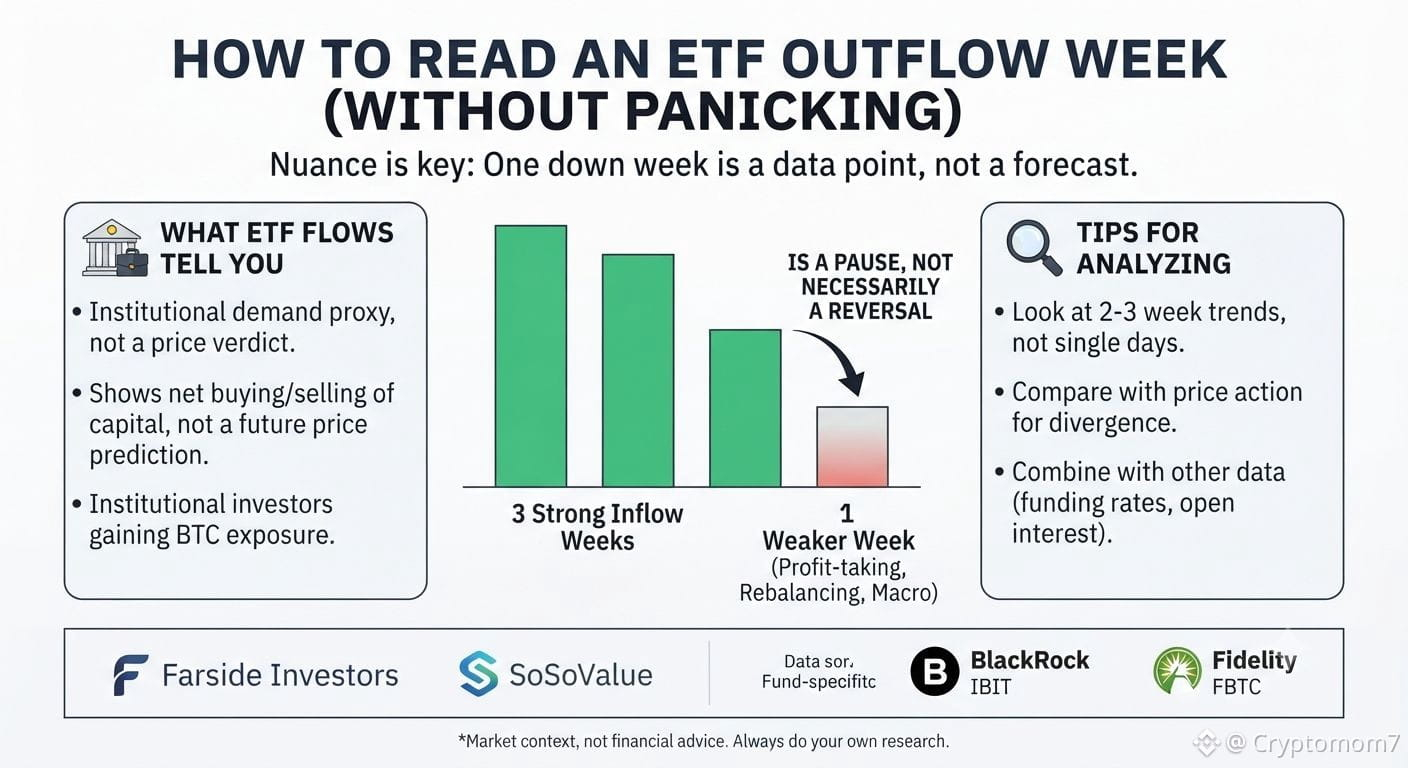
How to Read an ETF Outflow Week (Without Panicking)
Spot BTC ETFs just posted a weaker inflow week after three consecutive strong ones. Headlines will call this a warning sign — but ETF flow data is more nuanced than "money in = bullish, money out = bearish." Here's how to actually read it.
What ETF flows tell you
Spot Bitcoin ETFs let institutions and traditional investors buy BTC exposure through regular brokerage accounts. Daily inflow/outflow data shows whether that pool of capital is net buying or net selling on a given day — it's a proxy for institutional demand, not a verdict on Bitcoin's future price.
Why one down week isn't automatically bearish
A single weaker week can reflect profit-taking after a run-up, portfolio rebalancing, macro caution (rate decisions, inflation data), or simply lower trading volume — not a change in long-term conviction. Three strong weeks followed by one soft one is a pause, not a reversal, until the trend actually confirms it.
Where to check the data yourself
• Farside Investors — free daily net flow tracker across all U.S. spot BTC ETFs
• SoSoValue — flow data plus historical charts
• Individual issuer sites (BlackRock's IBIT, Fidelity's FBTC, etc.) for fund-specific numbers
A few practical tips
• Look at flow trends over 2–3 weeks, not single days
• Compare flows against price action — divergence is more meaningful than either alone
• Combine flow data with other signals (funding rates, open interest) rather than trading off it alone
One outflow week is a data point, not a forecast. Context and trend matter more than any single number.
This is market context, not financial advice. Always do your own research.
How to Read an ETF Outflow Week (Without Panicking)
Spot BTC ETFs just posted a weaker inflow week after three consecutive strong ones. Headlines will call this a warning sign — but ETF flow data is more nuanced than "money in = bullish, money out = bearish." Here's how to actually read it.
What ETF flows tell you
Spot Bitcoin ETFs let institutions and traditional investors buy BTC exposure through regular brokerage accounts. Daily inflow/outflow data shows whether that pool of capital is net buying or net selling on a given day — it's a proxy for institutional demand, not a verdict on Bitcoin's future price.
Why one down week isn't automatically bearish
A single weaker week can reflect profit-taking after a run-up, portfolio rebalancing, macro caution (rate decisions, inflation data), or simply lower trading volume — not a change in long-term conviction. Three strong weeks followed by one soft one is a pause, not a reversal, until the trend actually confirms it.
Where to check the data yourself
• Farside Investors — free daily net flow tracker across all U.S. spot BTC ETFs
• SoSoValue — flow data plus historical charts
• Individual issuer sites (BlackRock's IBIT, Fidelity's FBTC, etc.) for fund-specific numbers
A few practical tips
• Look at flow trends over 2–3 weeks, not single days
• Compare flows against price action — divergence is more meaningful than either alone
• Combine flow data with other signals (funding rates, open interest) rather than trading off it alone
One outflow week is a data point, not a forecast. Context and trend matter more than any single number.
This is market context, not financial advice. Always do your own research.
Spot BTC ETFs just posted a weaker inflow week after three consecutive strong ones. Headlines will call this a warning sign — but ETF flow data is more nuanced than "money in = bullish, money out = bearish." Here's how to actually read it.
What ETF flows tell you
Spot Bitcoin ETFs let institutions and traditional investors buy BTC exposure through regular brokerage accounts. Daily inflow/outflow data shows whether that pool of capital is net buying or net selling on a given day — it's a proxy for institutional demand, not a verdict on Bitcoin's future price.
Why one down week isn't automatically bearish
A single weaker week can reflect profit-taking after a run-up, portfolio rebalancing, macro caution (rate decisions, inflation data), or simply lower trading volume — not a change in long-term conviction. Three strong weeks followed by one soft one is a pause, not a reversal, until the trend actually confirms it.
Where to check the data yourself
• Farside Investors — free daily net flow tracker across all U.S. spot BTC ETFs
• SoSoValue — flow data plus historical charts
• Individual issuer sites (BlackRock's IBIT, Fidelity's FBTC, etc.) for fund-specific numbers
A few practical tips
• Look at flow trends over 2–3 weeks, not single days
• Compare flows against price action — divergence is more meaningful than either alone
• Combine flow data with other signals (funding rates, open interest) rather than trading off it alone
One outflow week is a data point, not a forecast. Context and trend matter more than any single number.
This is market context, not financial advice. Always do your own research.
63
·
--
翻訳参照
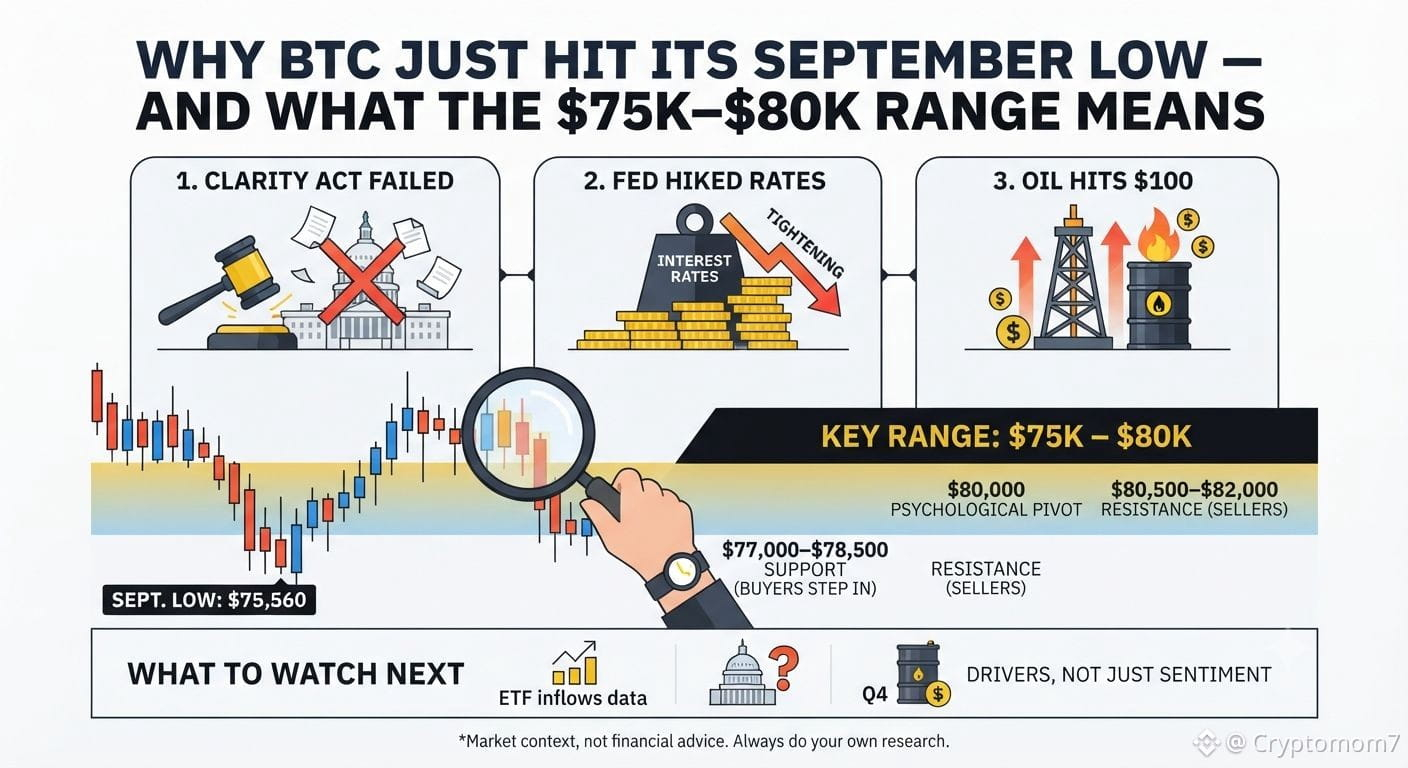
Why BTC Just Hit Its September Low — And What the $75K–$80K Range Means
Bitcoin dropped to $75,560 this week, its lowest point so far this month — and it's worth understanding why instead of guessing what comes next.
Three pressures hit at once. First, the CLARITY Act failed a key U.S. Senate vote, delaying the regulatory clarity markets had been pricing in. Second, the Federal Reserve raised interest rates for the first time in three years, tightening conditions across risk assets. Third, oil pushing near $100 a barrel reignited inflation concerns, stacking on top of the other two.
Any one of these alone probably wouldn't move BTC this much. Together, they explain the pullback.
Here's the range that matters right now:
• $77,000–$78,500 — support, where buyers have stepped in before
• $80,000 — the key psychological pivot
• $80,500–$82,000 — resistance, where sellers have shown up repeatedly
A sustained close above $82K would signal real momentum shifting back up. Losing $75,500 puts a retest of the September low back on the table.
What to watch next: spot BTC ETF flow data (inflows had run three straight strong weeks before this dip), any follow-up move on the CLARITY Act, and where oil settles heading into Q4. These three factors — not sentiment alone — are what's actually driving this range.
This is market context, not financial advice. Always do your own research.
Want me to tighten this further, adjust the tone (more casual vs. more analytical), or prep a shorter version for X/Twitter alongside it?
Why BTC Just Hit Its September Low — And What the $75K–$80K Range Means
Bitcoin dropped to $75,560 this week, its lowest point so far this month — and it's worth understanding why instead of guessing what comes next.
Three pressures hit at once. First, the CLARITY Act failed a key U.S. Senate vote, delaying the regulatory clarity markets had been pricing in. Second, the Federal Reserve raised interest rates for the first time in three years, tightening conditions across risk assets. Third, oil pushing near $100 a barrel reignited inflation concerns, stacking on top of the other two.
Any one of these alone probably wouldn't move BTC this much. Together, they explain the pullback.
Here's the range that matters right now:
• $77,000–$78,500 — support, where buyers have stepped in before
• $80,000 — the key psychological pivot
• $80,500–$82,000 — resistance, where sellers have shown up repeatedly
A sustained close above $82K would signal real momentum shifting back up. Losing $75,500 puts a retest of the September low back on the table.
What to watch next: spot BTC ETF flow data (inflows had run three straight strong weeks before this dip), any follow-up move on the CLARITY Act, and where oil settles heading into Q4. These three factors — not sentiment alone — are what's actually driving this range.
This is market context, not financial advice. Always do your own research.
Want me to tighten this further, adjust the tone (more casual vs. more analytical), or prep a shorter version for X/Twitter alongside it?
Bitcoin dropped to $75,560 this week, its lowest point so far this month — and it's worth understanding why instead of guessing what comes next.
Three pressures hit at once. First, the CLARITY Act failed a key U.S. Senate vote, delaying the regulatory clarity markets had been pricing in. Second, the Federal Reserve raised interest rates for the first time in three years, tightening conditions across risk assets. Third, oil pushing near $100 a barrel reignited inflation concerns, stacking on top of the other two.
Any one of these alone probably wouldn't move BTC this much. Together, they explain the pullback.
Here's the range that matters right now:
• $77,000–$78,500 — support, where buyers have stepped in before
• $80,000 — the key psychological pivot
• $80,500–$82,000 — resistance, where sellers have shown up repeatedly
A sustained close above $82K would signal real momentum shifting back up. Losing $75,500 puts a retest of the September low back on the table.
What to watch next: spot BTC ETF flow data (inflows had run three straight strong weeks before this dip), any follow-up move on the CLARITY Act, and where oil settles heading into Q4. These three factors — not sentiment alone — are what's actually driving this range.
This is market context, not financial advice. Always do your own research.
Want me to tighten this further, adjust the tone (more casual vs. more analytical), or prep a shorter version for X/Twitter alongside it?
84
·
--
記事
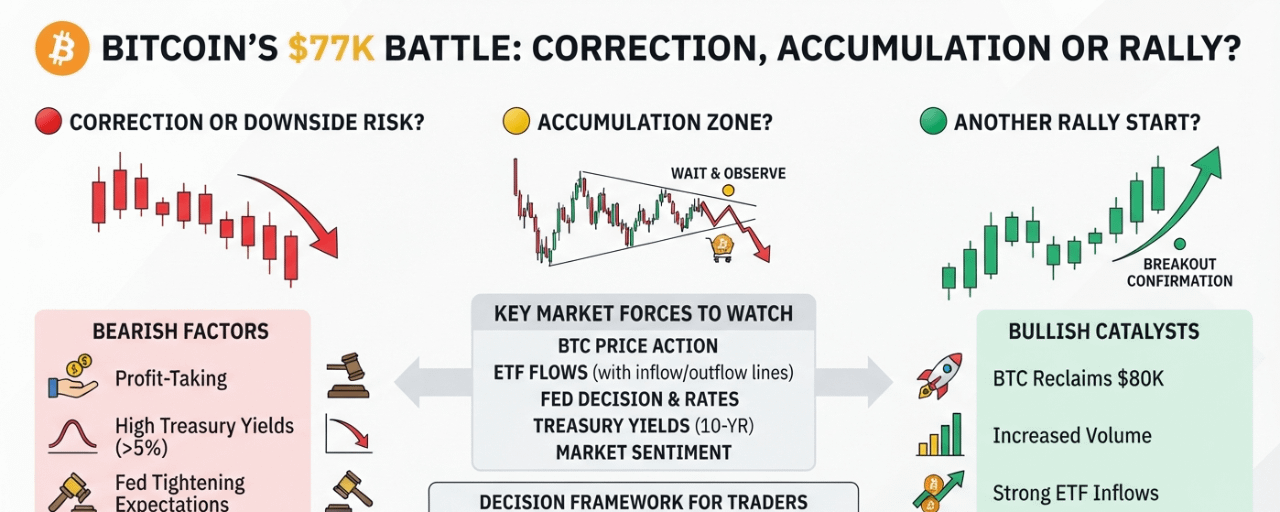
ビットコインの$77K攻防:調整、積み増し、あるいは次のラリーの始まり?ビットコインの$77K攻防:調整、積み増し、あるいは次のラリーの始まり?
#Bitcoin #BTC #FedRateWatch
ビットコインは重要な水準を巡って攻防を繰り広げています。
今月初めに$80Kを超えた後、BTCは$77K付近まで後退し、投資家には非常に重要な疑問が残りました。
これは単なる健全な調整なのか、それとも積み増しの機会なのか、あるいはFRBの判断の後に始まる別のラリーの始まりなのでしょうか?
答えは価格だけでは見えてきません。
ETFの資金フロー、金利、米国債利回り、市場のセンチメント、取引量、そしてBTCがサポートとレジスタンス付近でどのように動くかを見ていく必要があります。
ビットコインの$77K攻防:調整、積み増し、あるいは次のラリーの始まり?
ビットコインの$77K攻防:調整、積み増し、あるいは次のラリーの始まり?
#Bitcoin #BTC #FedRateWatch
ビットコインは重要な水準を巡って攻防を繰り広げています。
今月初めに$80Kを超えた後、BTCは$77K付近まで後退し、投資家には非常に重要な疑問が残りました。
これは単なる健全な調整なのか、それとも積み増しの機会なのか、あるいはFRBの判断の後に始まる別のラリーの始まりなのでしょうか?
答えは価格だけでは見えてきません。
ETFの資金フロー、金利、米国債利回り、市場のセンチメント、取引量、そしてBTCがサポートとレジスタンス付近でどのように動くかを見ていく必要があります。
#Bitcoin #BTC #FedRateWatch
ビットコインは重要な水準を巡って攻防を繰り広げています。
今月初めに$80Kを超えた後、BTCは$77K付近まで後退し、投資家には非常に重要な疑問が残りました。
これは単なる健全な調整なのか、それとも積み増しの機会なのか、あるいはFRBの判断の後に始まる別のラリーの始まりなのでしょうか?
答えは価格だけでは見えてきません。
ETFの資金フロー、金利、米国債利回り、市場のセンチメント、取引量、そしてBTCがサポートとレジスタンス付近でどのように動くかを見ていく必要があります。
10
·
--
記事
翻訳参照
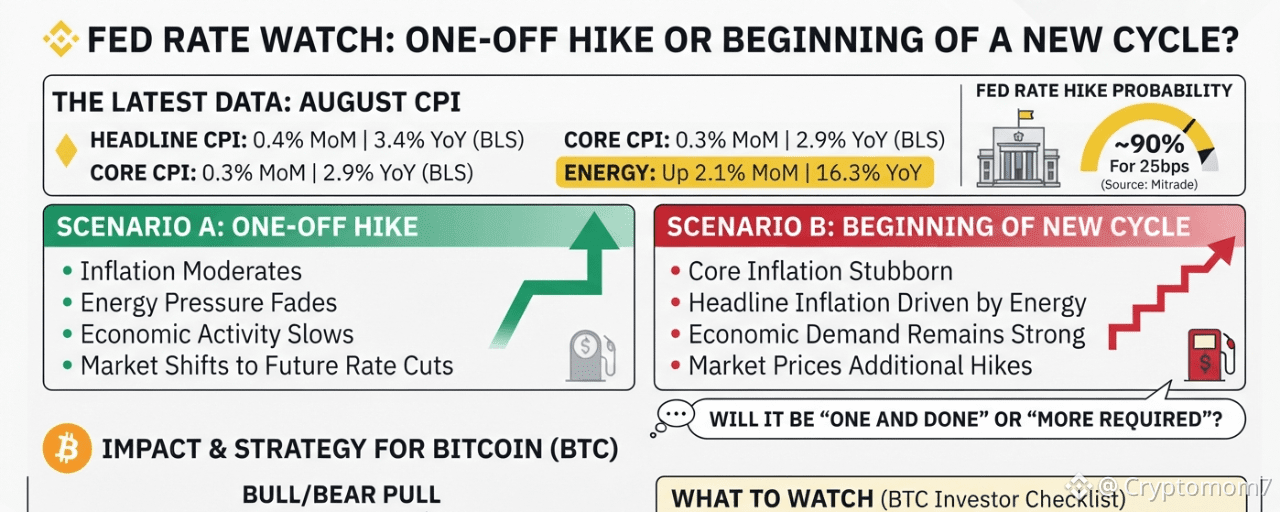
Fed Rate Watch: Is a 25bp Hike a One-Off or the Beginning of a New Hiking Cycle?#Fedratewatch One important factual update: the official August CPI report shows headline CPI rose 0.4% month-over-month and 3.4% year-over-year, while core CPI rose 0.3% month-over-month and 2.9% year-over-year. Energy was a major contributor, with the energy index up 2.1% in August and 16.3% over the year. Market pricing has recently put the probability of a 25 bp hike around 90%.
Because a Fed decision is a real policy outcome, I've kept the article's forecast section as scenario analysis rather than presenting a personal political/policy prediction as fact.
Fed Rate Watch: Is a 25bp Hike a One-Off or the Beginning of a New Hiking Cycle?
The Federal Reserve is back in the spotlight.
August inflation has given markets another reason to watch the Fed closely. Core CPI increased 0.3% month-over-month, while headline CPI rose 0.4%. On a yearly basis, headline inflation remained at 3.4%, while core CPI was 2.9%.
At the same time, market pricing has moved toward a roughly 90% probability of a 25-basis-point rate increase at the September meeting.
But the bigger question isn't simply: Will the Fed hike?
It is:
Is this one rate hike — or the beginning of another tightening cycle?
Table of Contents
What did August CPI really tell us?Why are markets expecting a hike?One-off hike or longer cycle?What could change the Fed's path?What could this mean for Bitcoin?What should crypto investors watch?
1. What Did August CPI Really Tell Us?
The inflation picture is mixed.
Core CPI, which excludes food and energy, rose 0.3% in August, following a 0.2% increase in July. Core prices were up 2.9% year-over-year.
Headline CPI increased 3.4% over the year.
Energy was particularly important. The energy index jumped 2.1% in August and was up 16.3% from a year earlier. Gasoline alone increased 3.9% during August.
This matters because the Fed has to distinguish between inflation caused by temporary shocks and inflation that becomes persistent.
2. Why Are Markets Expecting a Hike?
The latest inflation numbers have strengthened the argument for keeping monetary policy restrictive.
Markets are now pricing a high probability of a 25 bp increase, with reports putting the probability around 86–90%.
A 25 bp move means 0.25 percentage points.
For investors, however, the size of the first move may matter less than the Fed's communication afterward.
The key question will be whether policymakers signal:
“One adjustment is enough.”
Or:
“More tightening may be required.”
That distinction could be more important for Bitcoin than the initial 25 bp move itself.
3. One-Off Hike or Longer Hiking Cycle?
There are two broad scenarios.
Scenario A: One-Off Hike
If inflation begins moderating again, energy-price pressure fades and economic activity slows, the September increase could remain an isolated adjustment.
In that environment, markets could eventually shift their attention back toward future rate cuts.
Scenario B: Beginning of a Hiking Cycle
A different outcome would emerge if core inflation remains stubbornly elevated, energy prices continue pushing headline inflation higher, and economic demand remains strong.
In that case, investors could begin pricing additional hikes.
Recent market commentary has already highlighted the possibility that persistent inflation could require further tightening rather than a single move.
That is why the next few inflation reports may matter almost as much as this week's decision.
4. What Could Change the Fed's Path?
I would watch five indicators closely:
📌 Core CPI — Is monthly inflation accelerating or cooling?
📌 PCE inflation — The Fed's preferred inflation measure.
📌 Employment data — A weakening labor market could reduce the case for additional tightening.
📌 Oil and energy prices — August showed how strongly energy can influence headline inflation.
📌 Treasury yields and the U.S. dollar — Higher yields and a stronger dollar can tighten financial conditions even without additional Fed hikes.
5. What Could This Mean for Bitcoin?
Bitcoin doesn't trade in isolation from global liquidity.
Higher interest rates can make cash and bonds relatively more attractive while increasing the cost of capital. That can create pressure on risk assets, including cryptocurrencies.
But there is another side.
If the market believes the Fed is approaching the end of tightening, Bitcoin could eventually respond positively to expectations of easier monetary conditions.
That creates an interesting setup:
Short-term rate pressure vs. longer-term liquidity expectations.
This is why I would not treat one Fed decision as a standalone Bitcoin signal.
6. What Should Crypto Investors Watch?
For BTC investors, the lesson is simple:
Don't trade the headline. Watch the reaction.
A rate hike that is already widely expected may produce a relatively limited reaction because markets have already priced it in.
The bigger volatility could come from the Fed's language and economic projections.
For spot investors:
• Avoid making a large purchase solely because of a Fed announcement.
• Keep capital available for volatility.
• Consider staggered entries instead of trying to predict the exact bottom.
• Watch BTC's reaction around major support levels.
• Remember that macro news can create both sharp drops and sharp recoveries.
For spot traders, patience becomes even more important. A fast candle following the Fed announcement does not automatically mean a sustainable trend.
My Takeaway
The most interesting part of this week's Fed story isn't simply whether rates move by 25 bp.
It is whether the data justify one adjustment or a sequence of additional tightening moves.
With core CPI still rising 0.3% month-over-month and headline inflation at 3.4% year-over-year, inflation has not disappeared.
At the same time, a single month's data cannot prove that a new long-term hiking cycle has begun.
For Bitcoin investors, I would therefore focus less on guessing the Fed's next move and more on watching inflation, yields, liquidity, the dollar and BTC's price reaction together.
#FedRateWatch #Bitcoin #BTC #CPI #FederalReserve #CryptoMarket #BitcoinInvesting #SpotTrading
Why I like this angle for Binance: it doesn't just repeat the “90% hike odds” headline. It turns the campaign topic into a Fed → inflation → liquidity → Bitcoin story, which gives both investors and spot traders something practical to take away.
Fed Rate Watch: Is a 25bp Hike a One-Off or the Beginning of a New Hiking Cycle?
#Fedratewatch One important factual update: the official August CPI report shows headline CPI rose 0.4% month-over-month and 3.4% year-over-year, while core CPI rose 0.3% month-over-month and 2.9% year-over-year. Energy was a major contributor, with the energy index up 2.1% in August and 16.3% over the year. Market pricing has recently put the probability of a 25 bp hike around 90%.
Because a Fed decision is a real policy outcome, I've kept the article's forecast section as scenario analysis rather than presenting a personal political/policy prediction as fact.
Fed Rate Watch: Is a 25bp Hike a One-Off or the Beginning of a New Hiking Cycle?
The Federal Reserve is back in the spotlight.
August inflation has given markets another reason to watch the Fed closely. Core CPI increased 0.3% month-over-month, while headline CPI rose 0.4%. On a yearly basis, headline inflation remained at 3.4%, while core CPI was 2.9%.
At the same time, market pricing has moved toward a roughly 90% probability of a 25-basis-point rate increase at the September meeting.
But the bigger question isn't simply: Will the Fed hike?
It is:
Is this one rate hike — or the beginning of another tightening cycle?
Table of Contents
What did August CPI really tell us?Why are markets expecting a hike?One-off hike or longer cycle?What could change the Fed's path?What could this mean for Bitcoin?What should crypto investors watch?
1. What Did August CPI Really Tell Us?
The inflation picture is mixed.
Core CPI, which excludes food and energy, rose 0.3% in August, following a 0.2% increase in July. Core prices were up 2.9% year-over-year.
Headline CPI increased 3.4% over the year.
Energy was particularly important. The energy index jumped 2.1% in August and was up 16.3% from a year earlier. Gasoline alone increased 3.9% during August.
This matters because the Fed has to distinguish between inflation caused by temporary shocks and inflation that becomes persistent.
2. Why Are Markets Expecting a Hike?
The latest inflation numbers have strengthened the argument for keeping monetary policy restrictive.
Markets are now pricing a high probability of a 25 bp increase, with reports putting the probability around 86–90%.
A 25 bp move means 0.25 percentage points.
For investors, however, the size of the first move may matter less than the Fed's communication afterward.
The key question will be whether policymakers signal:
“One adjustment is enough.”
Or:
“More tightening may be required.”
That distinction could be more important for Bitcoin than the initial 25 bp move itself.
3. One-Off Hike or Longer Hiking Cycle?
There are two broad scenarios.
Scenario A: One-Off Hike
If inflation begins moderating again, energy-price pressure fades and economic activity slows, the September increase could remain an isolated adjustment.
In that environment, markets could eventually shift their attention back toward future rate cuts.
Scenario B: Beginning of a Hiking Cycle
A different outcome would emerge if core inflation remains stubbornly elevated, energy prices continue pushing headline inflation higher, and economic demand remains strong.
In that case, investors could begin pricing additional hikes.
Recent market commentary has already highlighted the possibility that persistent inflation could require further tightening rather than a single move.
That is why the next few inflation reports may matter almost as much as this week's decision.
4. What Could Change the Fed's Path?
I would watch five indicators closely:
📌 Core CPI — Is monthly inflation accelerating or cooling?
📌 PCE inflation — The Fed's preferred inflation measure.
📌 Employment data — A weakening labor market could reduce the case for additional tightening.
📌 Oil and energy prices — August showed how strongly energy can influence headline inflation.
📌 Treasury yields and the U.S. dollar — Higher yields and a stronger dollar can tighten financial conditions even without additional Fed hikes.
5. What Could This Mean for Bitcoin?
Bitcoin doesn't trade in isolation from global liquidity.
Higher interest rates can make cash and bonds relatively more attractive while increasing the cost of capital. That can create pressure on risk assets, including cryptocurrencies.
But there is another side.
If the market believes the Fed is approaching the end of tightening, Bitcoin could eventually respond positively to expectations of easier monetary conditions.
That creates an interesting setup:
Short-term rate pressure vs. longer-term liquidity expectations.
This is why I would not treat one Fed decision as a standalone Bitcoin signal.
6. What Should Crypto Investors Watch?
For BTC investors, the lesson is simple:
Don't trade the headline. Watch the reaction.
A rate hike that is already widely expected may produce a relatively limited reaction because markets have already priced it in.
The bigger volatility could come from the Fed's language and economic projections.
For spot investors:
• Avoid making a large purchase solely because of a Fed announcement.
• Keep capital available for volatility.
• Consider staggered entries instead of trying to predict the exact bottom.
• Watch BTC's reaction around major support levels.
• Remember that macro news can create both sharp drops and sharp recoveries.
For spot traders, patience becomes even more important. A fast candle following the Fed announcement does not automatically mean a sustainable trend.
My Takeaway
The most interesting part of this week's Fed story isn't simply whether rates move by 25 bp.
It is whether the data justify one adjustment or a sequence of additional tightening moves.
With core CPI still rising 0.3% month-over-month and headline inflation at 3.4% year-over-year, inflation has not disappeared.
At the same time, a single month's data cannot prove that a new long-term hiking cycle has begun.
For Bitcoin investors, I would therefore focus less on guessing the Fed's next move and more on watching inflation, yields, liquidity, the dollar and BTC's price reaction together.
#FedRateWatch #Bitcoin #BTC #CPI #FederalReserve #CryptoMarket #BitcoinInvesting #SpotTrading
Why I like this angle for Binance: it doesn't just repeat the “90% hike odds” headline. It turns the campaign topic into a Fed → inflation → liquidity → Bitcoin story, which gives both investors and spot traders something practical to take away.
Because a Fed decision is a real policy outcome, I've kept the article's forecast section as scenario analysis rather than presenting a personal political/policy prediction as fact.
Fed Rate Watch: Is a 25bp Hike a One-Off or the Beginning of a New Hiking Cycle?
The Federal Reserve is back in the spotlight.
August inflation has given markets another reason to watch the Fed closely. Core CPI increased 0.3% month-over-month, while headline CPI rose 0.4%. On a yearly basis, headline inflation remained at 3.4%, while core CPI was 2.9%.
At the same time, market pricing has moved toward a roughly 90% probability of a 25-basis-point rate increase at the September meeting.
But the bigger question isn't simply: Will the Fed hike?
It is:
Is this one rate hike — or the beginning of another tightening cycle?
Table of Contents
What did August CPI really tell us?Why are markets expecting a hike?One-off hike or longer cycle?What could change the Fed's path?What could this mean for Bitcoin?What should crypto investors watch?
1. What Did August CPI Really Tell Us?
The inflation picture is mixed.
Core CPI, which excludes food and energy, rose 0.3% in August, following a 0.2% increase in July. Core prices were up 2.9% year-over-year.
Headline CPI increased 3.4% over the year.
Energy was particularly important. The energy index jumped 2.1% in August and was up 16.3% from a year earlier. Gasoline alone increased 3.9% during August.
This matters because the Fed has to distinguish between inflation caused by temporary shocks and inflation that becomes persistent.
2. Why Are Markets Expecting a Hike?
The latest inflation numbers have strengthened the argument for keeping monetary policy restrictive.
Markets are now pricing a high probability of a 25 bp increase, with reports putting the probability around 86–90%.
A 25 bp move means 0.25 percentage points.
For investors, however, the size of the first move may matter less than the Fed's communication afterward.
The key question will be whether policymakers signal:
“One adjustment is enough.”
Or:
“More tightening may be required.”
That distinction could be more important for Bitcoin than the initial 25 bp move itself.
3. One-Off Hike or Longer Hiking Cycle?
There are two broad scenarios.
Scenario A: One-Off Hike
If inflation begins moderating again, energy-price pressure fades and economic activity slows, the September increase could remain an isolated adjustment.
In that environment, markets could eventually shift their attention back toward future rate cuts.
Scenario B: Beginning of a Hiking Cycle
A different outcome would emerge if core inflation remains stubbornly elevated, energy prices continue pushing headline inflation higher, and economic demand remains strong.
In that case, investors could begin pricing additional hikes.
Recent market commentary has already highlighted the possibility that persistent inflation could require further tightening rather than a single move.
That is why the next few inflation reports may matter almost as much as this week's decision.
4. What Could Change the Fed's Path?
I would watch five indicators closely:
📌 Core CPI — Is monthly inflation accelerating or cooling?
📌 PCE inflation — The Fed's preferred inflation measure.
📌 Employment data — A weakening labor market could reduce the case for additional tightening.
📌 Oil and energy prices — August showed how strongly energy can influence headline inflation.
📌 Treasury yields and the U.S. dollar — Higher yields and a stronger dollar can tighten financial conditions even without additional Fed hikes.
5. What Could This Mean for Bitcoin?
Bitcoin doesn't trade in isolation from global liquidity.
Higher interest rates can make cash and bonds relatively more attractive while increasing the cost of capital. That can create pressure on risk assets, including cryptocurrencies.
But there is another side.
If the market believes the Fed is approaching the end of tightening, Bitcoin could eventually respond positively to expectations of easier monetary conditions.
That creates an interesting setup:
Short-term rate pressure vs. longer-term liquidity expectations.
This is why I would not treat one Fed decision as a standalone Bitcoin signal.
6. What Should Crypto Investors Watch?
For BTC investors, the lesson is simple:
Don't trade the headline. Watch the reaction.
A rate hike that is already widely expected may produce a relatively limited reaction because markets have already priced it in.
The bigger volatility could come from the Fed's language and economic projections.
For spot investors:
• Avoid making a large purchase solely because of a Fed announcement.
• Keep capital available for volatility.
• Consider staggered entries instead of trying to predict the exact bottom.
• Watch BTC's reaction around major support levels.
• Remember that macro news can create both sharp drops and sharp recoveries.
For spot traders, patience becomes even more important. A fast candle following the Fed announcement does not automatically mean a sustainable trend.
My Takeaway
The most interesting part of this week's Fed story isn't simply whether rates move by 25 bp.
It is whether the data justify one adjustment or a sequence of additional tightening moves.
With core CPI still rising 0.3% month-over-month and headline inflation at 3.4% year-over-year, inflation has not disappeared.
At the same time, a single month's data cannot prove that a new long-term hiking cycle has begun.
For Bitcoin investors, I would therefore focus less on guessing the Fed's next move and more on watching inflation, yields, liquidity, the dollar and BTC's price reaction together.
#FedRateWatch #Bitcoin #BTC #CPI #FederalReserve #CryptoMarket #BitcoinInvesting #SpotTrading
Why I like this angle for Binance: it doesn't just repeat the “90% hike odds” headline. It turns the campaign topic into a Fed → inflation → liquidity → Bitcoin story, which gives both investors and spot traders something practical to take away.
61
·
--
翻訳参照
🚨 BTC at $77K: Could $72K Be the Next Stop?
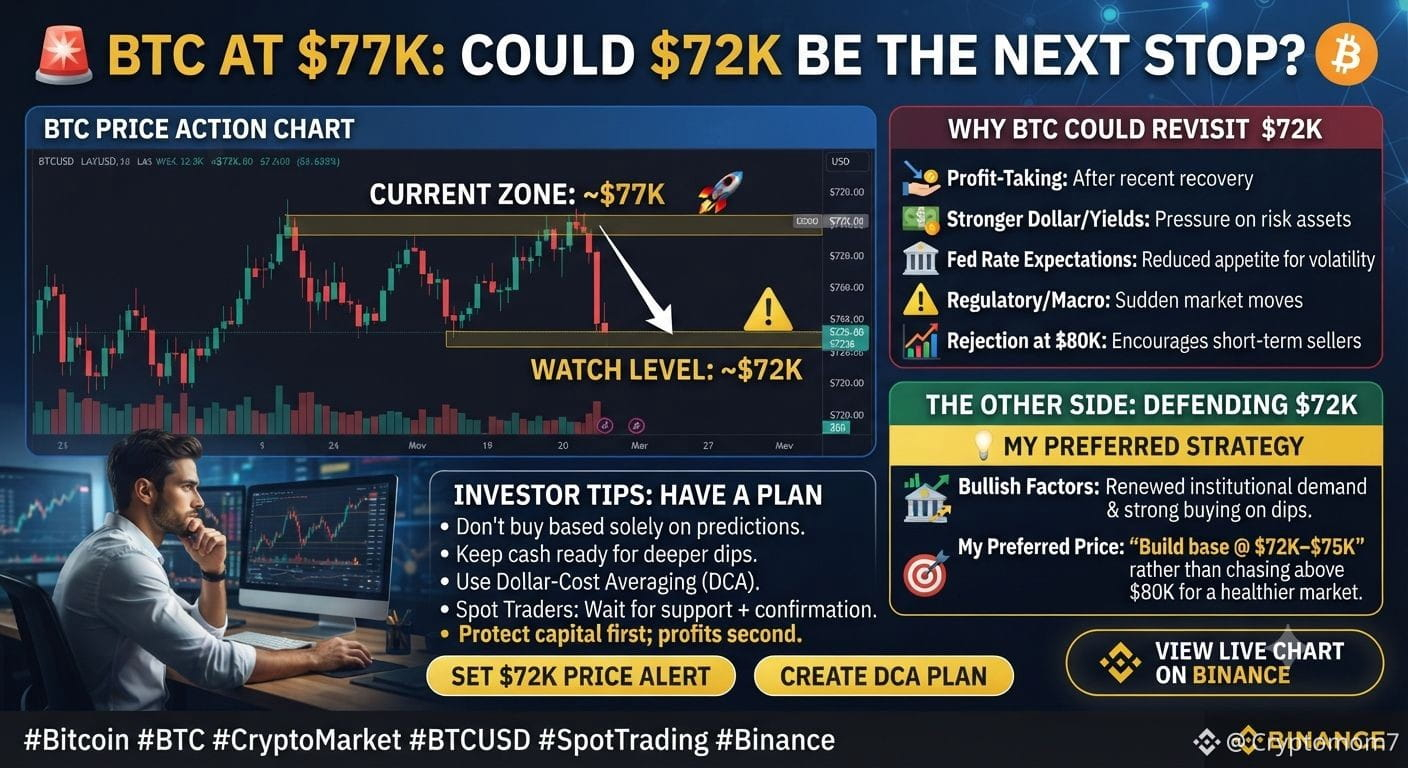
Bitcoin is holding around the $77K zone, but the market is anything but predictable. A $72K level is showing up in this week's BTC prediction — and that makes it an interesting level to watch, not a guaranteed destination.
Why could BTC revisit $72K?
📉 Profit-taking after the recent recovery
💵 A stronger dollar and higher Treasury yields can pressure risk assets
🏦 Fed-rate expectations may reduce appetite for volatile assets
⚠️ Regulatory developments and macro headlines can trigger sudden moves
📊 A rejection near $80K could encourage short-term sellers
But here's the other side: renewed ETF/institutional demand and stronger buying on dips could help BTC defend the $70K–$72K area. Recent market reports show both institutional demand and macroeconomic risks influencing the current setup.
🎯 My preferred BTC price?
I'd rather see BTC build a strong base around $72K–$75K than chase a sudden move above $80K. A controlled correction could give long-term investors and spot traders a better accumulation opportunity.
💡 Investor tips:
• Don't buy because of a prediction.
• Keep some cash for deeper dips.
• Use DCA instead of trying to catch the exact bottom.
• Spot traders: wait for support + confirmation rather than chasing green candles.
• Protect capital first; profits come second.
$72K isn't a prediction I would blindly follow. It's a level I'd WATCH.
What matters most isn't guessing the exact price — it's having a plan for both $72K and $80K. 🚀📉
#Bitcoin #BTC #BitcoinPrediction #CryptoMarket #BTCUSD #SpotTrading #CryptoInvesting #Binance
🚨 BTC at $77K: Could $72K Be the Next Stop?
Bitcoin is holding around the $77K zone, but the market is anything but predictable. A $72K level is showing up in this week's BTC prediction — and that makes it an interesting level to watch, not a guaranteed destination.
Why could BTC revisit $72K?
📉 Profit-taking after the recent recovery
💵 A stronger dollar and higher Treasury yields can pressure risk assets
🏦 Fed-rate expectations may reduce appetite for volatile assets
⚠️ Regulatory developments and macro headlines can trigger sudden moves
📊 A rejection near $80K could encourage short-term sellers
But here's the other side: renewed ETF/institutional demand and stronger buying on dips could help BTC defend the $70K–$72K area. Recent market reports show both institutional demand and macroeconomic risks influencing the current setup.
🎯 My preferred BTC price?
I'd rather see BTC build a strong base around $72K–$75K than chase a sudden move above $80K. A controlled correction could give long-term investors and spot traders a better accumulation opportunity.
💡 Investor tips:
• Don't buy because of a prediction.
• Keep some cash for deeper dips.
• Use DCA instead of trying to catch the exact bottom.
• Spot traders: wait for support + confirmation rather than chasing green candles.
• Protect capital first; profits come second.
$72K isn't a prediction I would blindly follow. It's a level I'd WATCH.
What matters most isn't guessing the exact price — it's having a plan for both $72K and $80K. 🚀📉
#Bitcoin #BTC #BitcoinPrediction #CryptoMarket #BTCUSD #SpotTrading #CryptoInvesting #Binance
Bitcoin is holding around the $77K zone, but the market is anything but predictable. A $72K level is showing up in this week's BTC prediction — and that makes it an interesting level to watch, not a guaranteed destination.
Why could BTC revisit $72K?
📉 Profit-taking after the recent recovery
💵 A stronger dollar and higher Treasury yields can pressure risk assets
🏦 Fed-rate expectations may reduce appetite for volatile assets
⚠️ Regulatory developments and macro headlines can trigger sudden moves
📊 A rejection near $80K could encourage short-term sellers
But here's the other side: renewed ETF/institutional demand and stronger buying on dips could help BTC defend the $70K–$72K area. Recent market reports show both institutional demand and macroeconomic risks influencing the current setup.
🎯 My preferred BTC price?
I'd rather see BTC build a strong base around $72K–$75K than chase a sudden move above $80K. A controlled correction could give long-term investors and spot traders a better accumulation opportunity.
💡 Investor tips:
• Don't buy because of a prediction.
• Keep some cash for deeper dips.
• Use DCA instead of trying to catch the exact bottom.
• Spot traders: wait for support + confirmation rather than chasing green candles.
• Protect capital first; profits come second.
$72K isn't a prediction I would blindly follow. It's a level I'd WATCH.
What matters most isn't guessing the exact price — it's having a plan for both $72K and $80K. 🚀📉
#Bitcoin #BTC #BitcoinPrediction #CryptoMarket #BTCUSD #SpotTrading #CryptoInvesting #Binance
78
·
--
₿ ビットコイン・きょうの相場:$77K—次に何が起きる?
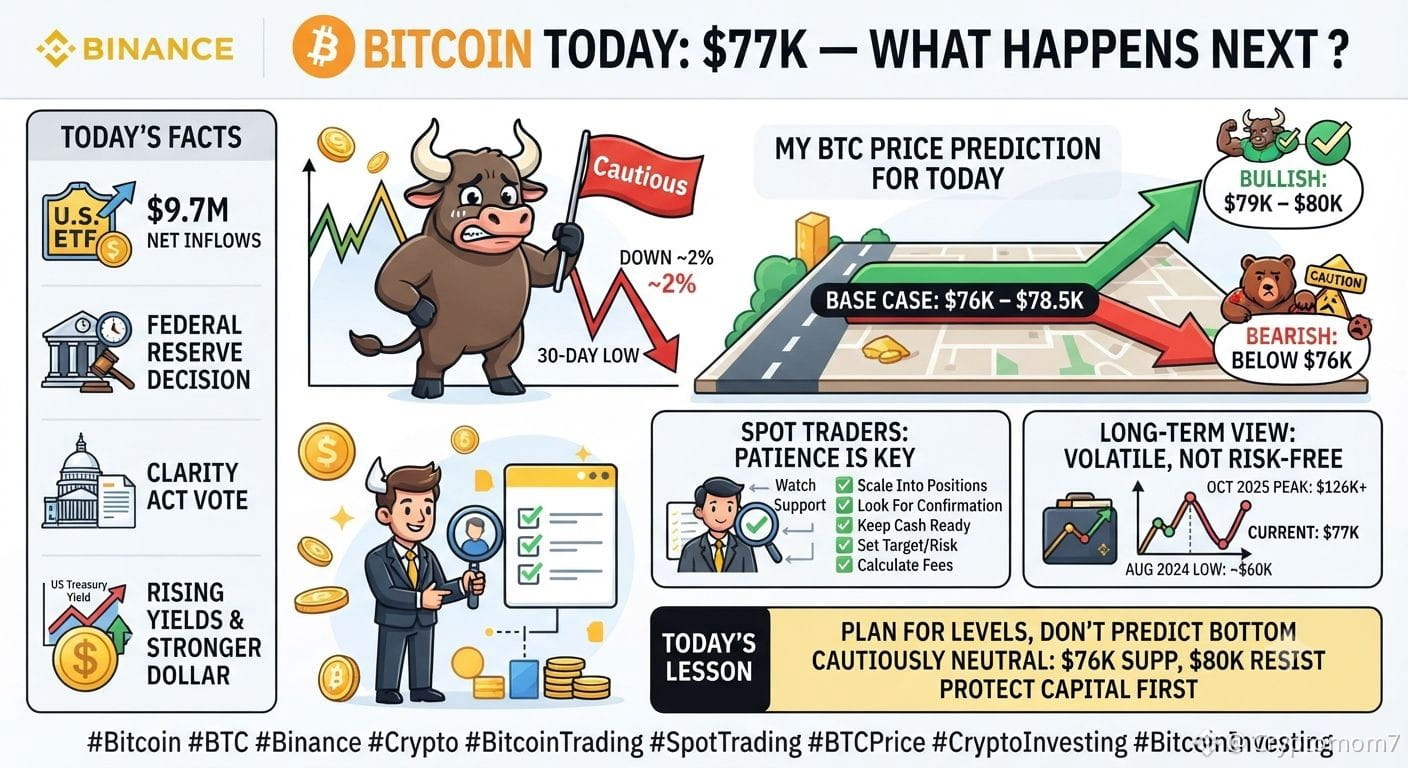
ビットコインは本日およそ$77Kで取引されており、BTCは$80Kを超える上の水準を維持できず、売り圧力がかかっています。
市場は慎重ですが、必ずしもパニックの理由ではありません。
📊 今日のファクト
• BTCは最近の30日安値に近い水準です。
• BTCは本日の取引で約2%下落しています。
• 米国のスポット・ビットコインETFは9月14日に約$9.7Mのネット流入を記録しました。
• 市場は水曜日の米連邦準備制度(FRB)の決定を注視しています。
• 米国の「CLARITY法案」の採決も、暗号資産(クリプト)のセンチメントにとって重要なもう一つの材料です。
• 財務省の利回り上昇と、より強いドルが現在、リスク資産への圧力を生み出しています。
🎯 きょうのBTC価格予測
ベースケース:$76K〜$78.5K
強気シナリオ:買い手が$78Kを奪還し、それを維持できれば、BTCは$79K〜$80Kを試しに行く可能性があります。
弱気シナリオ:$76Kを下回るブレイクが継続すれば、さらに下方向への動きの扉が開くかもしれません。
私は、BTCが急に上に動くからといって追いかけません。
現物トレーダーにとっては、忍耐が強みになることがあります:
✅ エントリー前にサポートを確認する。
✅ 一度に全資金を使わず、ポジションに段階的に入ることを検討する。
✅ 価格アクションと出来高からの裏付けを探す。
✅ より深い下落に備えて現金を残しておく。
✅ 取引を行う前に目標とリスク水準を設定する。
✅ 取引を「儲かる」と判断する前に、必ず手数料を計算する。
投資家にとっては、きょうの弱さは別の見え方もできます。
ビットコインは、8月下旬に見られた約$60Kのあたりからすでに大きく回復していますが、それでも2025年10月の$126K超の高値からはかなり遠いままです。したがって長期的な見通しは、ボラティリティが高く、リスクフリーではありません。
📌 今日の教訓:
正確な底を予想する必要はありません。
大事なのは、各水準に対するプランを用意することです。
私の見解:きょうは慎重に中立。$76Kのサポートと$80Kのレジスタンスが、目先のBTCの攻防を決めています。
BTCがサポートを維持できれば、買い手にもう一度チャンスが訪れるかもしれません。
サポートが崩れれば、忍耐がトレードになります。
まずは資本を守る。機会はまたやって来ます。₿
#Bitcoin #BTC #Binance #Crypto #BitcoinTrading #SpotTrading #BTCPrice #CryptoInvesting
₿ ビットコイン・きょうの相場:$77K—次に何が起きる?
ビットコインは本日およそ$77Kで取引されており、BTCは$80Kを超える上の水準を維持できず、売り圧力がかかっています。
市場は慎重ですが、必ずしもパニックの理由ではありません。
📊 今日のファクト
• BTCは最近の30日安値に近い水準です。
• BTCは本日の取引で約2%下落しています。
• 米国のスポット・ビットコインETFは9月14日に約$9.7Mのネット流入を記録しました。
• 市場は水曜日の米連邦準備制度(FRB)の決定を注視しています。
• 米国の「CLARITY法案」の採決も、暗号資産(クリプト)のセンチメントにとって重要なもう一つの材料です。
• 財務省の利回り上昇と、より強いドルが現在、リスク資産への圧力を生み出しています。
🎯 きょうのBTC価格予測
ベースケース:$76K〜$78.5K
強気シナリオ:買い手が$78Kを奪還し、それを維持できれば、BTCは$79K〜$80Kを試しに行く可能性があります。
弱気シナリオ:$76Kを下回るブレイクが継続すれば、さらに下方向への動きの扉が開くかもしれません。
私は、BTCが急に上に動くからといって追いかけません。
現物トレーダーにとっては、忍耐が強みになることがあります:
✅ エントリー前にサポートを確認する。
✅ 一度に全資金を使わず、ポジションに段階的に入ることを検討する。
✅ 価格アクションと出来高からの裏付けを探す。
✅ より深い下落に備えて現金を残しておく。
✅ 取引を行う前に目標とリスク水準を設定する。
✅ 取引を「儲かる」と判断する前に、必ず手数料を計算する。
投資家にとっては、きょうの弱さは別の見え方もできます。
ビットコインは、8月下旬に見られた約$60Kのあたりからすでに大きく回復していますが、それでも2025年10月の$126K超の高値からはかなり遠いままです。したがって長期的な見通しは、ボラティリティが高く、リスクフリーではありません。
📌 今日の教訓:
正確な底を予想する必要はありません。
大事なのは、各水準に対するプランを用意することです。
私の見解:きょうは慎重に中立。$76Kのサポートと$80Kのレジスタンスが、目先のBTCの攻防を決めています。
BTCがサポートを維持できれば、買い手にもう一度チャンスが訪れるかもしれません。
サポートが崩れれば、忍耐がトレードになります。
まずは資本を守る。機会はまたやって来ます。₿
#Bitcoin #BTC #Binance #Crypto #BitcoinTrading #SpotTrading #BTCPrice #CryptoInvesting
ビットコインは本日およそ$77Kで取引されており、BTCは$80Kを超える上の水準を維持できず、売り圧力がかかっています。
市場は慎重ですが、必ずしもパニックの理由ではありません。
📊 今日のファクト
• BTCは最近の30日安値に近い水準です。
• BTCは本日の取引で約2%下落しています。
• 米国のスポット・ビットコインETFは9月14日に約$9.7Mのネット流入を記録しました。
• 市場は水曜日の米連邦準備制度(FRB)の決定を注視しています。
• 米国の「CLARITY法案」の採決も、暗号資産(クリプト)のセンチメントにとって重要なもう一つの材料です。
• 財務省の利回り上昇と、より強いドルが現在、リスク資産への圧力を生み出しています。
🎯 きょうのBTC価格予測
ベースケース:$76K〜$78.5K
強気シナリオ:買い手が$78Kを奪還し、それを維持できれば、BTCは$79K〜$80Kを試しに行く可能性があります。
弱気シナリオ:$76Kを下回るブレイクが継続すれば、さらに下方向への動きの扉が開くかもしれません。
私は、BTCが急に上に動くからといって追いかけません。
現物トレーダーにとっては、忍耐が強みになることがあります:
✅ エントリー前にサポートを確認する。
✅ 一度に全資金を使わず、ポジションに段階的に入ることを検討する。
✅ 価格アクションと出来高からの裏付けを探す。
✅ より深い下落に備えて現金を残しておく。
✅ 取引を行う前に目標とリスク水準を設定する。
✅ 取引を「儲かる」と判断する前に、必ず手数料を計算する。
投資家にとっては、きょうの弱さは別の見え方もできます。
ビットコインは、8月下旬に見られた約$60Kのあたりからすでに大きく回復していますが、それでも2025年10月の$126K超の高値からはかなり遠いままです。したがって長期的な見通しは、ボラティリティが高く、リスクフリーではありません。
📌 今日の教訓:
正確な底を予想する必要はありません。
大事なのは、各水準に対するプランを用意することです。
私の見解:きょうは慎重に中立。$76Kのサポートと$80Kのレジスタンスが、目先のBTCの攻防を決めています。
BTCがサポートを維持できれば、買い手にもう一度チャンスが訪れるかもしれません。
サポートが崩れれば、忍耐がトレードになります。
まずは資本を守る。機会はまたやって来ます。₿
#Bitcoin #BTC #Binance #Crypto #BitcoinTrading #SpotTrading #BTCPrice #CryptoInvesting
954
·
--
₿ ビットコイン・トゥデイ:$76.9K — 強気派には確認が必要
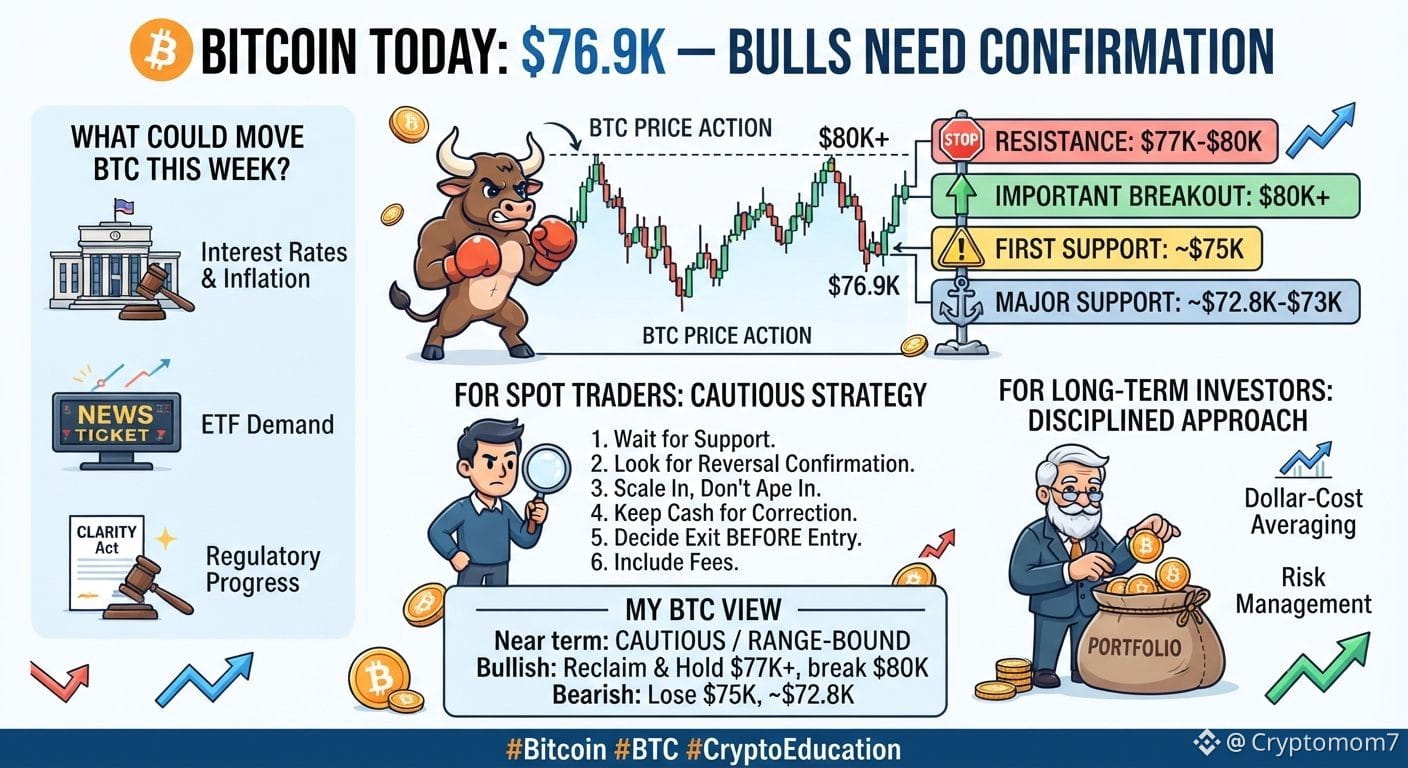
ビットコインは本日約$76.9Kで取引されており、直近の$80K+ゾーンから後退した後の動きです。市場はまだ活発ですが、いまはグリーンの足をただ追いかけるタイミングではありません。
投資家や現物トレーダーにとっての重要な疑問はシンプルです:
👉 BTCはさらなる上昇に向けて準備しているのか、それとも次の下落の前の調整なのか?
📊 今日のBTCマップ
• レジスタンス:$77K〜$80K
• 重要なブレイクアウトエリア:$80K+
• 最初のサポート:約$75K
• 大きな下方向のサポート:約$72.8K〜$73K
現時点の市場予測には慎重な見方も残っており、$75Kが重要な短期の節目として機能しています。$77Kを上回る堅調な動きがモメンタムを改善させる可能性がある一方、$75Kを下抜けると、より下のサポートを試しに行く確率が高まります。
🔎 今週BTCを動かす可能性があるものは?
ビットコインは特に重要なマクロ週に入ります。市場は、米連邦準備制度(FRB)の利上げ/利下げ(政策金利)決定、米国のインフレ/金利見通し、そして米国CLARITY Actをめぐる動向に注目しています。
金利の上昇とドル高は、BTCやその他のリスク資産に圧力をかける可能性があります。同時に、ビットコインETFへの需要の再燃や規制面での進展は、強気材料を後押しするかもしれません。
🎯 現物トレーダー向け
次の考え違いをしないでください:
"BTCが上がっているなら、いま買わないと。"
その代わりに:
1️⃣ サポートを待つ。
2️⃣ 反転の確認を探す。
3️⃣ 全額投入ではなく、ポジションを段階的に組み入れることを検討。
4️⃣ より深い調整に備えて、資金の一部を手元に残す。
5️⃣ 入る前にエグジット(撤退)水準を決める。
6️⃣ 実際の利益を計算する際は、取引手数料を織り込む。
BTCがレジスタンスに到達しても、必ず突破するとは決めつけないでください。
BTCがサポートまで下がっても、必ず下落が続くとも決めつけないでください。
📌 値動きで次の動きを確認する。
💡 長期投資家向け
ボラティリティの高い一週間は、必ずしもビットコインの長期投資の見立てを変えるものではありません。
底を正確に当てにいくよりも、規律ある投資家なら、段階的な積み増し、適切なポジションサイズ、そして将来の機会に備えて十分な現金を残すことを検討できます。
₿ ビットコイン・トゥデイ:$76.9K — 強気派には確認が必要
ビットコインは本日約$76.9Kで取引されており、直近の$80K+ゾーンから後退した後の動きです。市場はまだ活発ですが、いまはグリーンの足をただ追いかけるタイミングではありません。
投資家や現物トレーダーにとっての重要な疑問はシンプルです:
👉 BTCはさらなる上昇に向けて準備しているのか、それとも次の下落の前の調整なのか?
📊 今日のBTCマップ
• レジスタンス:$77K〜$80K
• 重要なブレイクアウトエリア:$80K+
• 最初のサポート:約$75K
• 大きな下方向のサポート:約$72.8K〜$73K
現時点の市場予測には慎重な見方も残っており、$75Kが重要な短期の節目として機能しています。$77Kを上回る堅調な動きがモメンタムを改善させる可能性がある一方、$75Kを下抜けると、より下のサポートを試しに行く確率が高まります。
🔎 今週BTCを動かす可能性があるものは?
ビットコインは特に重要なマクロ週に入ります。市場は、米連邦準備制度(FRB)の利上げ/利下げ(政策金利)決定、米国のインフレ/金利見通し、そして米国CLARITY Actをめぐる動向に注目しています。
金利の上昇とドル高は、BTCやその他のリスク資産に圧力をかける可能性があります。同時に、ビットコインETFへの需要の再燃や規制面での進展は、強気材料を後押しするかもしれません。
🎯 現物トレーダー向け
次の考え違いをしないでください:
"BTCが上がっているなら、いま買わないと。"
その代わりに:
1️⃣ サポートを待つ。
2️⃣ 反転の確認を探す。
3️⃣ 全額投入ではなく、ポジションを段階的に組み入れることを検討。
4️⃣ より深い調整に備えて、資金の一部を手元に残す。
5️⃣ 入る前にエグジット(撤退)水準を決める。
6️⃣ 実際の利益を計算する際は、取引手数料を織り込む。
BTCがレジスタンスに到達しても、必ず突破するとは決めつけないでください。
BTCがサポートまで下がっても、必ず下落が続くとも決めつけないでください。
📌 値動きで次の動きを確認する。
💡 長期投資家向け
ボラティリティの高い一週間は、必ずしもビットコインの長期投資の見立てを変えるものではありません。
底を正確に当てにいくよりも、規律ある投資家なら、段階的な積み増し、適切なポジションサイズ、そして将来の機会に備えて十分な現金を残すことを検討できます。
ビットコインは本日約$76.9Kで取引されており、直近の$80K+ゾーンから後退した後の動きです。市場はまだ活発ですが、いまはグリーンの足をただ追いかけるタイミングではありません。
投資家や現物トレーダーにとっての重要な疑問はシンプルです:
👉 BTCはさらなる上昇に向けて準備しているのか、それとも次の下落の前の調整なのか?
📊 今日のBTCマップ
• レジスタンス:$77K〜$80K
• 重要なブレイクアウトエリア:$80K+
• 最初のサポート:約$75K
• 大きな下方向のサポート:約$72.8K〜$73K
現時点の市場予測には慎重な見方も残っており、$75Kが重要な短期の節目として機能しています。$77Kを上回る堅調な動きがモメンタムを改善させる可能性がある一方、$75Kを下抜けると、より下のサポートを試しに行く確率が高まります。
🔎 今週BTCを動かす可能性があるものは?
ビットコインは特に重要なマクロ週に入ります。市場は、米連邦準備制度(FRB)の利上げ/利下げ(政策金利)決定、米国のインフレ/金利見通し、そして米国CLARITY Actをめぐる動向に注目しています。
金利の上昇とドル高は、BTCやその他のリスク資産に圧力をかける可能性があります。同時に、ビットコインETFへの需要の再燃や規制面での進展は、強気材料を後押しするかもしれません。
🎯 現物トレーダー向け
次の考え違いをしないでください:
"BTCが上がっているなら、いま買わないと。"
その代わりに:
1️⃣ サポートを待つ。
2️⃣ 反転の確認を探す。
3️⃣ 全額投入ではなく、ポジションを段階的に組み入れることを検討。
4️⃣ より深い調整に備えて、資金の一部を手元に残す。
5️⃣ 入る前にエグジット(撤退)水準を決める。
6️⃣ 実際の利益を計算する際は、取引手数料を織り込む。
BTCがレジスタンスに到達しても、必ず突破するとは決めつけないでください。
BTCがサポートまで下がっても、必ず下落が続くとも決めつけないでください。
📌 値動きで次の動きを確認する。
💡 長期投資家向け
ボラティリティの高い一週間は、必ずしもビットコインの長期投資の見立てを変えるものではありません。
底を正確に当てにいくよりも、規律ある投資家なら、段階的な積み増し、適切なポジションサイズ、そして将来の機会に備えて十分な現金を残すことを検討できます。
433
·
--
翻訳参照
Bitcoin at $77K: The Real Battle Has Begun ₿
Bitcoin is back around the $77,000 zone.
But the interesting question isn't simply:
“Will BTC go up or down?”
The better question is:
“What is Bitcoin telling us about this week's market?”
After climbing above $82,000, Bitcoin has pulled back and entered a more cautious phase.
And that pullback is important.
It tells us that the market is currently caught between two forces.
🟢 The Bulls
Bitcoin has regained significant momentum after its summer weakness.
This week, BTC also flashed a golden cross — a technical pattern where the 50-day moving average moves above the 200-day moving average.
That doesn't guarantee a rally.
But it does tell us that the longer-term trend is becoming more interesting.
🔴 The Macro Pressure
Bitcoin isn't trading in isolation.
Investors are watching U.S. inflation data, Treasury yields and the Federal Reserve's upcoming interest-rate decision.
Higher yields and a stronger dollar can make risk assets less attractive.
That means Bitcoin may continue to experience sharp moves even while the broader structure improves.
So where are we now?
Think of Bitcoin as standing at a crossroads.
$82K showed us what the bulls can attempt.
$77K–$78K is showing us how much support the market can maintain.
And the next major move may depend less on headlines and more on whether buyers continue stepping in during these pullbacks.
This is why chasing a green candle isn't necessarily the smartest strategy.
A disciplined Bitcoin investor watches:
• Support
• Resistance
• Volume
• Market structure
• Macro events
• And, most importantly, risk
My Bitcoin takeaway this week
I don't see $77K as simply “Bitcoin falling.”
I see it as a market testing its strength.
If buyers successfully defend lower levels and momentum returns, the $80K+ area could become important again.
#Bitcoin #BTC #BitcoinAnalysis #CryptoMarket #Binance #BTCUSD #CryptoInvesting #BitcoinTrading #CryptoEducation #Bitcoin2026
Bitcoin at $77K: The Real Battle Has Begun ₿
Bitcoin is back around the $77,000 zone.
But the interesting question isn't simply:
“Will BTC go up or down?”
The better question is:
“What is Bitcoin telling us about this week's market?”
After climbing above $82,000, Bitcoin has pulled back and entered a more cautious phase.
And that pullback is important.
It tells us that the market is currently caught between two forces.
🟢 The Bulls
Bitcoin has regained significant momentum after its summer weakness.
This week, BTC also flashed a golden cross — a technical pattern where the 50-day moving average moves above the 200-day moving average.
That doesn't guarantee a rally.
But it does tell us that the longer-term trend is becoming more interesting.
🔴 The Macro Pressure
Bitcoin isn't trading in isolation.
Investors are watching U.S. inflation data, Treasury yields and the Federal Reserve's upcoming interest-rate decision.
Higher yields and a stronger dollar can make risk assets less attractive.
That means Bitcoin may continue to experience sharp moves even while the broader structure improves.
So where are we now?
Think of Bitcoin as standing at a crossroads.
$82K showed us what the bulls can attempt.
$77K–$78K is showing us how much support the market can maintain.
And the next major move may depend less on headlines and more on whether buyers continue stepping in during these pullbacks.
This is why chasing a green candle isn't necessarily the smartest strategy.
A disciplined Bitcoin investor watches:
• Support
• Resistance
• Volume
• Market structure
• Macro events
• And, most importantly, risk
My Bitcoin takeaway this week
I don't see $77K as simply “Bitcoin falling.”
I see it as a market testing its strength.
If buyers successfully defend lower levels and momentum returns, the $80K+ area could become important again.
#Bitcoin #BTC #BitcoinAnalysis #CryptoMarket #Binance #BTCUSD #CryptoInvesting #BitcoinTrading #CryptoEducation #Bitcoin2026
Bitcoin is back around the $77,000 zone.
But the interesting question isn't simply:
“Will BTC go up or down?”
The better question is:
“What is Bitcoin telling us about this week's market?”
After climbing above $82,000, Bitcoin has pulled back and entered a more cautious phase.
And that pullback is important.
It tells us that the market is currently caught between two forces.
🟢 The Bulls
Bitcoin has regained significant momentum after its summer weakness.
This week, BTC also flashed a golden cross — a technical pattern where the 50-day moving average moves above the 200-day moving average.
That doesn't guarantee a rally.
But it does tell us that the longer-term trend is becoming more interesting.
🔴 The Macro Pressure
Bitcoin isn't trading in isolation.
Investors are watching U.S. inflation data, Treasury yields and the Federal Reserve's upcoming interest-rate decision.
Higher yields and a stronger dollar can make risk assets less attractive.
That means Bitcoin may continue to experience sharp moves even while the broader structure improves.
So where are we now?
Think of Bitcoin as standing at a crossroads.
$82K showed us what the bulls can attempt.
$77K–$78K is showing us how much support the market can maintain.
And the next major move may depend less on headlines and more on whether buyers continue stepping in during these pullbacks.
This is why chasing a green candle isn't necessarily the smartest strategy.
A disciplined Bitcoin investor watches:
• Support
• Resistance
• Volume
• Market structure
• Macro events
• And, most importantly, risk
My Bitcoin takeaway this week
I don't see $77K as simply “Bitcoin falling.”
I see it as a market testing its strength.
If buyers successfully defend lower levels and momentum returns, the $80K+ area could become important again.
#Bitcoin #BTC #BitcoinAnalysis #CryptoMarket #Binance #BTCUSD #CryptoInvesting #BitcoinTrading #CryptoEducation #Bitcoin2026
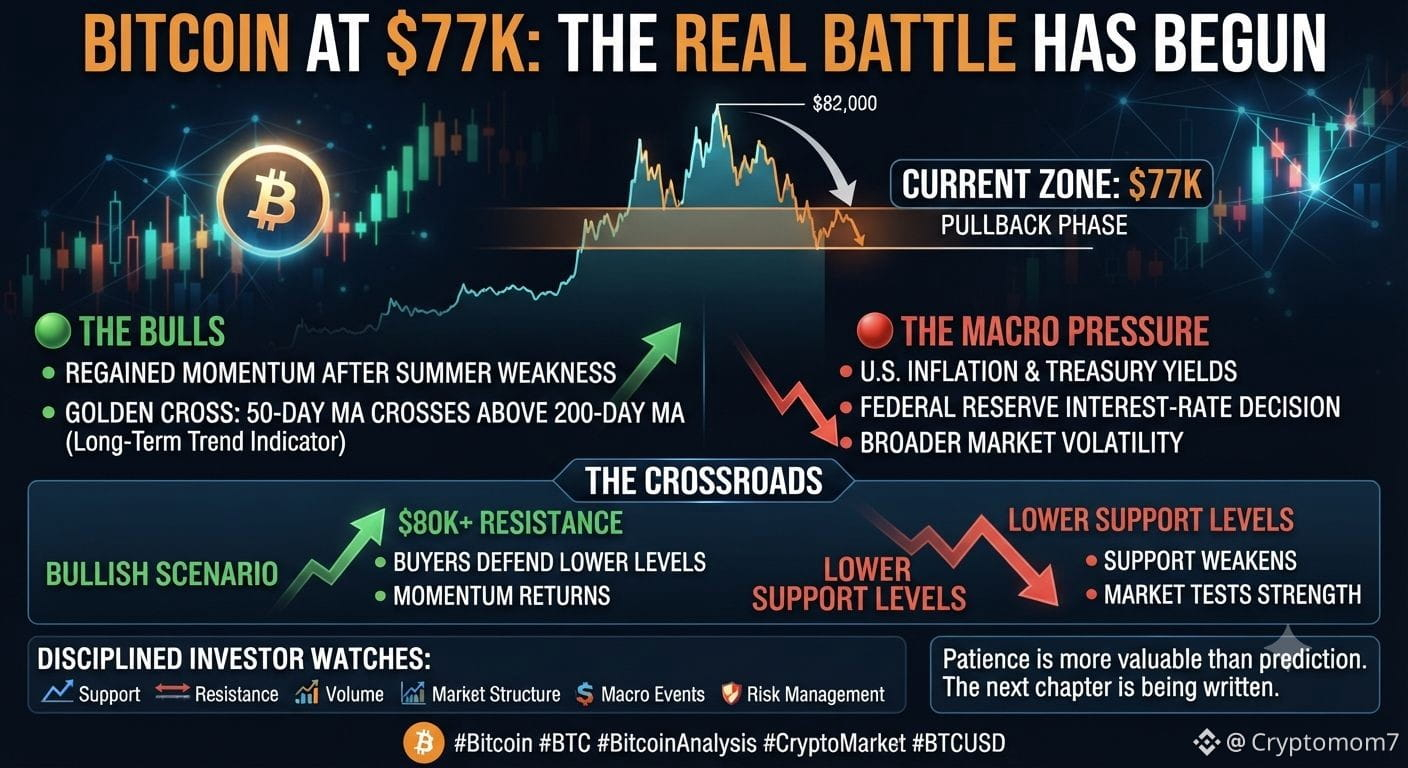
55
·
--
翻訳参照
📊 Bitcoin Weekly Update: Bulls vs Bears — Who Has the Edge?
Bitcoin started the week near $80K after a strong recovery, but the market has since entered a consolidation phase. BTC briefly challenged the $82K area before retreating toward $78K–$79K.
🐂 Bulls: The bigger picture remains constructive. BTC is still holding well above the key $75K–$76K support zone, and the recent golden-cross signal has strengthened the bullish narrative. The broader crypto market also remains healthy, with total market capitalization around $2.7T and BTC dominance near 59%.
🐻 Bears: Sellers continue to defend the $80K–$82K region. Profit-taking and macroeconomic uncertainty are creating resistance. Rising Treasury yields and expectations surrounding the Federal Reserve are keeping traders cautious.
💡 What can investors learn?
A strong rally does not mean every dip is a buying opportunity. Patience matters. Watch support, resistance and volume rather than chasing green candles.
🔎 What to watch next?
The key levels are approximately $82K resistance and $75K–$76K support. A sustained break above $82K could open the path toward $90K, while losing $75K could bring deeper correction risk.
🎯 BTC prediction: My cautious view is range-bound to mildly bullish. If BTC holds above $75K and reclaims $82K, the bullish structure strengthens. But rejection near $80K–$82K could keep BTC consolidating before the next decisive move.
Not financial advice. DYOR.
#Bitcoin #BTC #Crypto #Binance #BitcoinAnalysis
📊 Bitcoin Weekly Update: Bulls vs Bears — Who Has the Edge?
Bitcoin started the week near $80K after a strong recovery, but the market has since entered a consolidation phase. BTC briefly challenged the $82K area before retreating toward $78K–$79K.
🐂 Bulls: The bigger picture remains constructive. BTC is still holding well above the key $75K–$76K support zone, and the recent golden-cross signal has strengthened the bullish narrative. The broader crypto market also remains healthy, with total market capitalization around $2.7T and BTC dominance near 59%.
🐻 Bears: Sellers continue to defend the $80K–$82K region. Profit-taking and macroeconomic uncertainty are creating resistance. Rising Treasury yields and expectations surrounding the Federal Reserve are keeping traders cautious.
💡 What can investors learn?
A strong rally does not mean every dip is a buying opportunity. Patience matters. Watch support, resistance and volume rather than chasing green candles.
🔎 What to watch next?
The key levels are approximately $82K resistance and $75K–$76K support. A sustained break above $82K could open the path toward $90K, while losing $75K could bring deeper correction risk.
🎯 BTC prediction: My cautious view is range-bound to mildly bullish. If BTC holds above $75K and reclaims $82K, the bullish structure strengthens. But rejection near $80K–$82K could keep BTC consolidating before the next decisive move.
Not financial advice. DYOR.
#Bitcoin #BTC #Crypto #Binance #BitcoinAnalysis
Bitcoin started the week near $80K after a strong recovery, but the market has since entered a consolidation phase. BTC briefly challenged the $82K area before retreating toward $78K–$79K.
🐂 Bulls: The bigger picture remains constructive. BTC is still holding well above the key $75K–$76K support zone, and the recent golden-cross signal has strengthened the bullish narrative. The broader crypto market also remains healthy, with total market capitalization around $2.7T and BTC dominance near 59%.
🐻 Bears: Sellers continue to defend the $80K–$82K region. Profit-taking and macroeconomic uncertainty are creating resistance. Rising Treasury yields and expectations surrounding the Federal Reserve are keeping traders cautious.
💡 What can investors learn?
A strong rally does not mean every dip is a buying opportunity. Patience matters. Watch support, resistance and volume rather than chasing green candles.
🔎 What to watch next?
The key levels are approximately $82K resistance and $75K–$76K support. A sustained break above $82K could open the path toward $90K, while losing $75K could bring deeper correction risk.
🎯 BTC prediction: My cautious view is range-bound to mildly bullish. If BTC holds above $75K and reclaims $82K, the bullish structure strengthens. But rejection near $80K–$82K could keep BTC consolidating before the next decisive move.
Not financial advice. DYOR.
#Bitcoin #BTC #Crypto #Binance #BitcoinAnalysis
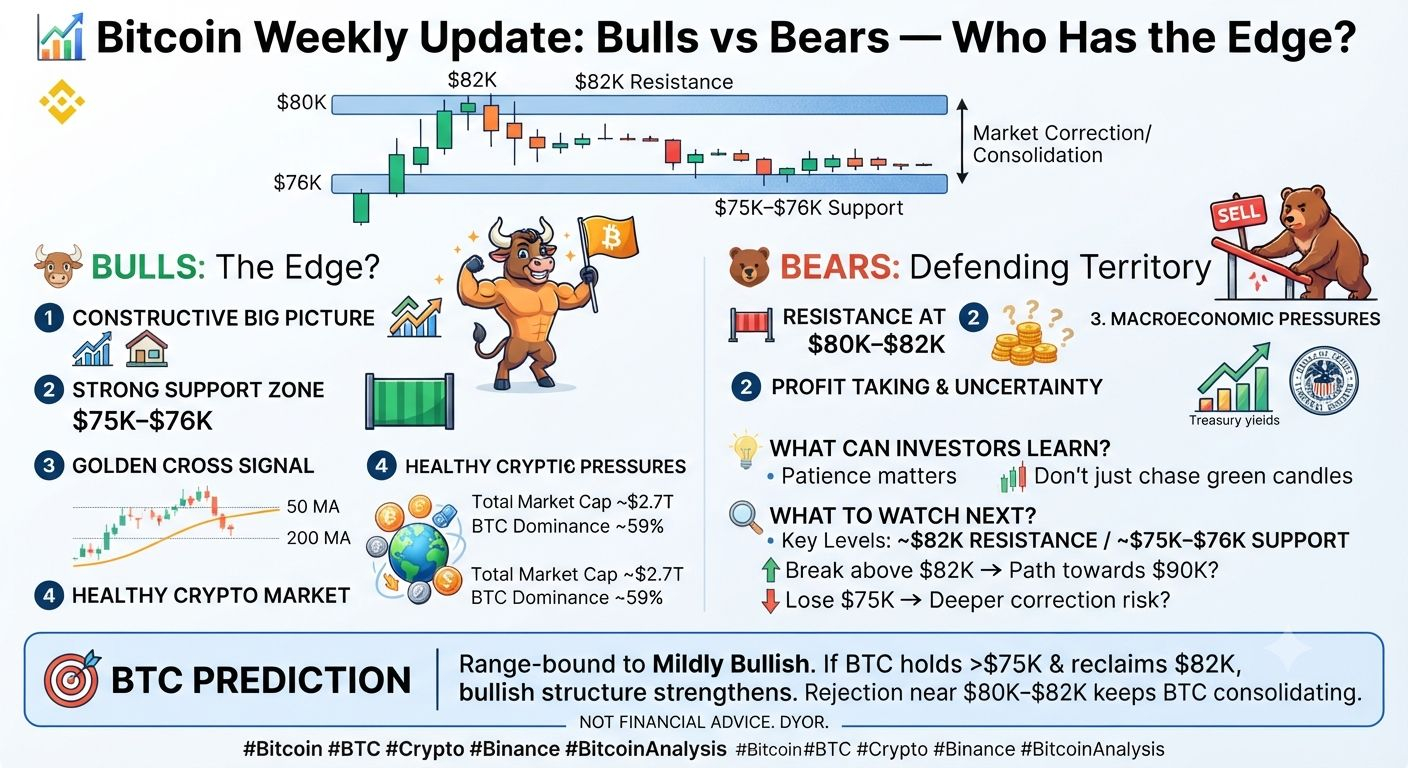
68
·
--
翻訳参照
🇭🇰 Bitcoin Asia 2026 — Day 2: The Bigger Picture
If Day 1 showed us how far Bitcoin has come, Day 2 showed us where Bitcoin could be heading next.
Watching the second day of Bitcoin Asia 2026, one message became increasingly clear:
Bitcoin is no longer just a technology, an investment, or a financial experiment. It is becoming part of a much bigger global conversation about money, capital, ownership and financial freedom.
Here are some of our biggest takeaways:
🔹 Institutional adoption is evolving. Discussions around Bitcoin ETFs, corporate treasuries and strategies for generating value from Bitcoin holdings showed how institutions are learning to integrate Bitcoin into traditional financial structures.
🔹 Asia is becoming increasingly important. Sessions on making Hong Kong a Bitcoin city, Bitcoin adoption across Asia and the “First Asian Cycle” highlighted the region's growing role in Bitcoin's next chapter.
🔹 Regulation matters. The discussion around global regulations showed that Bitcoin's future will depend not only on adoption, but also on how governments and financial institutions respond to a borderless digital asset.
🔹 Bitcoin is about more than price. From personal finance and self-custody to mining, payments, scaling and open-source development, Day 2 reminded us that the Bitcoin ecosystem is being built on many different layers.
🔹 The long-term vision is enormous. Conversations around network states, Bitcoin communities and new forms of capital challenged us to think beyond today's financial system.
What did we learn?
The most important lesson from these two days is perhaps this:
Don't look at Bitcoin only as a price chart. Look at the infrastructure, institutions, communities and financial systems being built around it.
Bitcoin Asia 2026 was significant because it brought these conversations together in one place—right in the heart of Asia.
For Bitcoin educators, investors and everyday users, the message is simple:
Keep learning. Keep questioning. And don't underestimate how early we may still be. 🟠
#BitcoinAsia202
🇭🇰 Bitcoin Asia 2026 — Day 2: The Bigger Picture
If Day 1 showed us how far Bitcoin has come, Day 2 showed us where Bitcoin could be heading next.
Watching the second day of Bitcoin Asia 2026, one message became increasingly clear:
Bitcoin is no longer just a technology, an investment, or a financial experiment. It is becoming part of a much bigger global conversation about money, capital, ownership and financial freedom.
Here are some of our biggest takeaways:
🔹 Institutional adoption is evolving. Discussions around Bitcoin ETFs, corporate treasuries and strategies for generating value from Bitcoin holdings showed how institutions are learning to integrate Bitcoin into traditional financial structures.
🔹 Asia is becoming increasingly important. Sessions on making Hong Kong a Bitcoin city, Bitcoin adoption across Asia and the “First Asian Cycle” highlighted the region's growing role in Bitcoin's next chapter.
🔹 Regulation matters. The discussion around global regulations showed that Bitcoin's future will depend not only on adoption, but also on how governments and financial institutions respond to a borderless digital asset.
🔹 Bitcoin is about more than price. From personal finance and self-custody to mining, payments, scaling and open-source development, Day 2 reminded us that the Bitcoin ecosystem is being built on many different layers.
🔹 The long-term vision is enormous. Conversations around network states, Bitcoin communities and new forms of capital challenged us to think beyond today's financial system.
What did we learn?
The most important lesson from these two days is perhaps this:
Don't look at Bitcoin only as a price chart. Look at the infrastructure, institutions, communities and financial systems being built around it.
Bitcoin Asia 2026 was significant because it brought these conversations together in one place—right in the heart of Asia.
For Bitcoin educators, investors and everyday users, the message is simple:
Keep learning. Keep questioning. And don't underestimate how early we may still be. 🟠
#BitcoinAsia202
If Day 1 showed us how far Bitcoin has come, Day 2 showed us where Bitcoin could be heading next.
Watching the second day of Bitcoin Asia 2026, one message became increasingly clear:
Bitcoin is no longer just a technology, an investment, or a financial experiment. It is becoming part of a much bigger global conversation about money, capital, ownership and financial freedom.
Here are some of our biggest takeaways:
🔹 Institutional adoption is evolving. Discussions around Bitcoin ETFs, corporate treasuries and strategies for generating value from Bitcoin holdings showed how institutions are learning to integrate Bitcoin into traditional financial structures.
🔹 Asia is becoming increasingly important. Sessions on making Hong Kong a Bitcoin city, Bitcoin adoption across Asia and the “First Asian Cycle” highlighted the region's growing role in Bitcoin's next chapter.
🔹 Regulation matters. The discussion around global regulations showed that Bitcoin's future will depend not only on adoption, but also on how governments and financial institutions respond to a borderless digital asset.
🔹 Bitcoin is about more than price. From personal finance and self-custody to mining, payments, scaling and open-source development, Day 2 reminded us that the Bitcoin ecosystem is being built on many different layers.
🔹 The long-term vision is enormous. Conversations around network states, Bitcoin communities and new forms of capital challenged us to think beyond today's financial system.
What did we learn?
The most important lesson from these two days is perhaps this:
Don't look at Bitcoin only as a price chart. Look at the infrastructure, institutions, communities and financial systems being built around it.
Bitcoin Asia 2026 was significant because it brought these conversations together in one place—right in the heart of Asia.
For Bitcoin educators, investors and everyday users, the message is simple:
Keep learning. Keep questioning. And don't underestimate how early we may still be. 🟠
#BitcoinAsia202

67
·
--
翻訳参照
🇭🇰 Bitcoin Asia 2026 — Day 1: What We Learned
Day 1 of Bitcoin Asia 2026 in Hong Kong was more than another Bitcoin conference. It was a powerful look at how Bitcoin is moving from a technology and investment narrative toward a much broader financial and institutional conversation.
The livestream brought together major voices from across the Bitcoin ecosystem, including CZ, Gracy Chen, Justin Sun and other global Bitcoin leaders.
What stood out to us?
🔹 Bitcoin is increasingly being discussed as a strategic asset, not simply a speculative asset.
🔹 Asia matters. Hong Kong, Japan and the broader Asian financial ecosystem are becoming increasingly important to Bitcoin adoption, capital flows and institutional participation.
🔹 Institutional adoption is changing the conversation. Discussions around Bitcoin reserves, corporate treasuries and global capital suggest that the question is increasingly becoming how Bitcoin fits into the financial system, rather than whether it belongs there.
🔹 Bitcoin education remains critical. As adoption expands, understanding self-custody, security, market structure and Bitcoin's underlying principles becomes just as important as watching the price.
And perhaps the biggest lesson from Day 1:
Bitcoin's story is becoming bigger than Bitcoin's price.
The significance of Bitcoin Asia 2026 is that it brings together investors, builders, policymakers, educators and entrepreneurs from East and West at a time when the global financial system is rapidly evolving.
For us, the event reinforced one important idea:
The next chapter of Bitcoin may be shaped as much by Asia as by any other part of the world.
Day 1 was only the beginning. 🚀
#Bitcoin #BitcoinAsia2026 #BTC #Binance #BitcoinAdoption #Crypto #DigitalAssets #BitcoinEducation #HongKong #Asia
🇭🇰 Bitcoin Asia 2026 — Day 1: What We Learned
Day 1 of Bitcoin Asia 2026 in Hong Kong was more than another Bitcoin conference. It was a powerful look at how Bitcoin is moving from a technology and investment narrative toward a much broader financial and institutional conversation.
The livestream brought together major voices from across the Bitcoin ecosystem, including CZ, Gracy Chen, Justin Sun and other global Bitcoin leaders.
What stood out to us?
🔹 Bitcoin is increasingly being discussed as a strategic asset, not simply a speculative asset.
🔹 Asia matters. Hong Kong, Japan and the broader Asian financial ecosystem are becoming increasingly important to Bitcoin adoption, capital flows and institutional participation.
🔹 Institutional adoption is changing the conversation. Discussions around Bitcoin reserves, corporate treasuries and global capital suggest that the question is increasingly becoming how Bitcoin fits into the financial system, rather than whether it belongs there.
🔹 Bitcoin education remains critical. As adoption expands, understanding self-custody, security, market structure and Bitcoin's underlying principles becomes just as important as watching the price.
And perhaps the biggest lesson from Day 1:
Bitcoin's story is becoming bigger than Bitcoin's price.
The significance of Bitcoin Asia 2026 is that it brings together investors, builders, policymakers, educators and entrepreneurs from East and West at a time when the global financial system is rapidly evolving.
For us, the event reinforced one important idea:
The next chapter of Bitcoin may be shaped as much by Asia as by any other part of the world.
Day 1 was only the beginning. 🚀
#Bitcoin #BitcoinAsia2026 #BTC #Binance #BitcoinAdoption #Crypto #DigitalAssets #BitcoinEducation #HongKong #Asia
Day 1 of Bitcoin Asia 2026 in Hong Kong was more than another Bitcoin conference. It was a powerful look at how Bitcoin is moving from a technology and investment narrative toward a much broader financial and institutional conversation.
The livestream brought together major voices from across the Bitcoin ecosystem, including CZ, Gracy Chen, Justin Sun and other global Bitcoin leaders.
What stood out to us?
🔹 Bitcoin is increasingly being discussed as a strategic asset, not simply a speculative asset.
🔹 Asia matters. Hong Kong, Japan and the broader Asian financial ecosystem are becoming increasingly important to Bitcoin adoption, capital flows and institutional participation.
🔹 Institutional adoption is changing the conversation. Discussions around Bitcoin reserves, corporate treasuries and global capital suggest that the question is increasingly becoming how Bitcoin fits into the financial system, rather than whether it belongs there.
🔹 Bitcoin education remains critical. As adoption expands, understanding self-custody, security, market structure and Bitcoin's underlying principles becomes just as important as watching the price.
And perhaps the biggest lesson from Day 1:
Bitcoin's story is becoming bigger than Bitcoin's price.
The significance of Bitcoin Asia 2026 is that it brings together investors, builders, policymakers, educators and entrepreneurs from East and West at a time when the global financial system is rapidly evolving.
For us, the event reinforced one important idea:
The next chapter of Bitcoin may be shaped as much by Asia as by any other part of the world.
Day 1 was only the beginning. 🚀
#Bitcoin #BitcoinAsia2026 #BTC #Binance #BitcoinAdoption #Crypto #DigitalAssets #BitcoinEducation #HongKong #Asia


75
·
--
ビットコインは、次のブル・ラン(強気相場)だけのために作られているわけではありません。₿
注目に値する重要なビットコインの開発アップデートをお届けします。
人権財団(HRF)は、ビットコイン開発基金を通じて、アフリカ、アジア、ラテンアメリカの16のプロジェクトに対し、5億サトシ(5億を超えるサトシ)の助成金を発表しました。
これらの助成金は何を支援しているのでしょうか?
🔹 ビットコイン決済 — モバイルマネーからビットコインへのブリッジ(接続)などを含み、国境を越えた決済をより速く、より安くする取り組み。
🔹 オフラインのビットコイン決済 — Bluetooth、NFC、ecashを用いた取り組みなどを含み、インターネット接続が途絶えても決済が機能し続けるようにする活動。
🔹 自己管理(セルフ・カストディ)&ウォレットのセキュリティ — ユーザー自身が取引を検証できるよう支援し、中央集権型サービスへの依存を減らすためのツール。
🔹 プライバシー&コミュニケーション — Nostrベースのメッセージングやアラートシステムで、検閲への耐性を高めるよう設計された仕組み。
🔹 分散型マイニング — オープンソースのマイニング用ハードウェア/ソフトウェアで、少数のメーカーへの依存を減らすことを目指した取り組み。
🔹 ビットコイン教育 — 「My First Bitcoin」が、既に40か国以上で運営している教育者ネットワークを拡大し、インドも含まれます。
🇮🇳 そして、特に興味深いインドとのつながり:
HODL:Hands On Design Lab は、インドで早期キャリアのデザイナーを育成するための支援を受けており、特に自己管理、プライバシー、セキュリティまわりで、ビットコインの使いやすさを高めることを目指しています。
なぜこれはビットコイン利用者にとって重要なのでしょうか?
ビットコインの話をするとき、私たちはしばしば次のことに注目します:
📈 価格
💰 リターン
📊 取引
₿ 利用(アダプション)
しかしそのすべての下では、開発者たちが、ビットコインが現実世界でどれだけ役立つかを左右し得るインフラを作っています。
決済。
プライバシー。
自己管理(セルフ・カストディ)。
教育。
分散型コミュニケーション。
マイニング。
それは、日々のBTCチャートよりもずっと大きな物語です。
価格は、今日のビットコインの価値を示しています。
建設中のインフラは、明日のビットコインがどうなり得るかを示しています。
ビットコインの未来にとって、最も重要だと思うのは何ですか?
決済、プライバシー、自己管理、教育、分散化でしょうか?👇
#Bitcoin #BTC #Binance #BitcoinEducation
ビットコインは、次のブル・ラン(強気相場)だけのために作られているわけではありません。₿
注目に値する重要なビットコインの開発アップデートをお届けします。
人権財団(HRF)は、ビットコイン開発基金を通じて、アフリカ、アジア、ラテンアメリカの16のプロジェクトに対し、5億サトシ(5億を超えるサトシ)の助成金を発表しました。
これらの助成金は何を支援しているのでしょうか?
🔹 ビットコイン決済 — モバイルマネーからビットコインへのブリッジ(接続)などを含み、国境を越えた決済をより速く、より安くする取り組み。
🔹 オフラインのビットコイン決済 — Bluetooth、NFC、ecashを用いた取り組みなどを含み、インターネット接続が途絶えても決済が機能し続けるようにする活動。
🔹 自己管理(セルフ・カストディ)&ウォレットのセキュリティ — ユーザー自身が取引を検証できるよう支援し、中央集権型サービスへの依存を減らすためのツール。
🔹 プライバシー&コミュニケーション — Nostrベースのメッセージングやアラートシステムで、検閲への耐性を高めるよう設計された仕組み。
🔹 分散型マイニング — オープンソースのマイニング用ハードウェア/ソフトウェアで、少数のメーカーへの依存を減らすことを目指した取り組み。
🔹 ビットコイン教育 — 「My First Bitcoin」が、既に40か国以上で運営している教育者ネットワークを拡大し、インドも含まれます。
🇮🇳 そして、特に興味深いインドとのつながり:
HODL:Hands On Design Lab は、インドで早期キャリアのデザイナーを育成するための支援を受けており、特に自己管理、プライバシー、セキュリティまわりで、ビットコインの使いやすさを高めることを目指しています。
なぜこれはビットコイン利用者にとって重要なのでしょうか?
ビットコインの話をするとき、私たちはしばしば次のことに注目します:
📈 価格
💰 リターン
📊 取引
₿ 利用(アダプション)
しかしそのすべての下では、開発者たちが、ビットコインが現実世界でどれだけ役立つかを左右し得るインフラを作っています。
決済。
プライバシー。
自己管理(セルフ・カストディ)。
教育。
分散型コミュニケーション。
マイニング。
それは、日々のBTCチャートよりもずっと大きな物語です。
価格は、今日のビットコインの価値を示しています。
建設中のインフラは、明日のビットコインがどうなり得るかを示しています。
ビットコインの未来にとって、最も重要だと思うのは何ですか?
決済、プライバシー、自己管理、教育、分散化でしょうか?👇
#Bitcoin #BTC #Binance #BitcoinEducation
注目に値する重要なビットコインの開発アップデートをお届けします。
人権財団(HRF)は、ビットコイン開発基金を通じて、アフリカ、アジア、ラテンアメリカの16のプロジェクトに対し、5億サトシ(5億を超えるサトシ)の助成金を発表しました。
これらの助成金は何を支援しているのでしょうか?
🔹 ビットコイン決済 — モバイルマネーからビットコインへのブリッジ(接続)などを含み、国境を越えた決済をより速く、より安くする取り組み。
🔹 オフラインのビットコイン決済 — Bluetooth、NFC、ecashを用いた取り組みなどを含み、インターネット接続が途絶えても決済が機能し続けるようにする活動。
🔹 自己管理(セルフ・カストディ)&ウォレットのセキュリティ — ユーザー自身が取引を検証できるよう支援し、中央集権型サービスへの依存を減らすためのツール。
🔹 プライバシー&コミュニケーション — Nostrベースのメッセージングやアラートシステムで、検閲への耐性を高めるよう設計された仕組み。
🔹 分散型マイニング — オープンソースのマイニング用ハードウェア/ソフトウェアで、少数のメーカーへの依存を減らすことを目指した取り組み。
🔹 ビットコイン教育 — 「My First Bitcoin」が、既に40か国以上で運営している教育者ネットワークを拡大し、インドも含まれます。
🇮🇳 そして、特に興味深いインドとのつながり:
HODL:Hands On Design Lab は、インドで早期キャリアのデザイナーを育成するための支援を受けており、特に自己管理、プライバシー、セキュリティまわりで、ビットコインの使いやすさを高めることを目指しています。
なぜこれはビットコイン利用者にとって重要なのでしょうか?
ビットコインの話をするとき、私たちはしばしば次のことに注目します:
📈 価格
💰 リターン
📊 取引
₿ 利用(アダプション)
しかしそのすべての下では、開発者たちが、ビットコインが現実世界でどれだけ役立つかを左右し得るインフラを作っています。
決済。
プライバシー。
自己管理(セルフ・カストディ)。
教育。
分散型コミュニケーション。
マイニング。
それは、日々のBTCチャートよりもずっと大きな物語です。
価格は、今日のビットコインの価値を示しています。
建設中のインフラは、明日のビットコインがどうなり得るかを示しています。
ビットコインの未来にとって、最も重要だと思うのは何ですか?
決済、プライバシー、自己管理、教育、分散化でしょうか?👇
#Bitcoin #BTC #Binance #BitcoinEducation
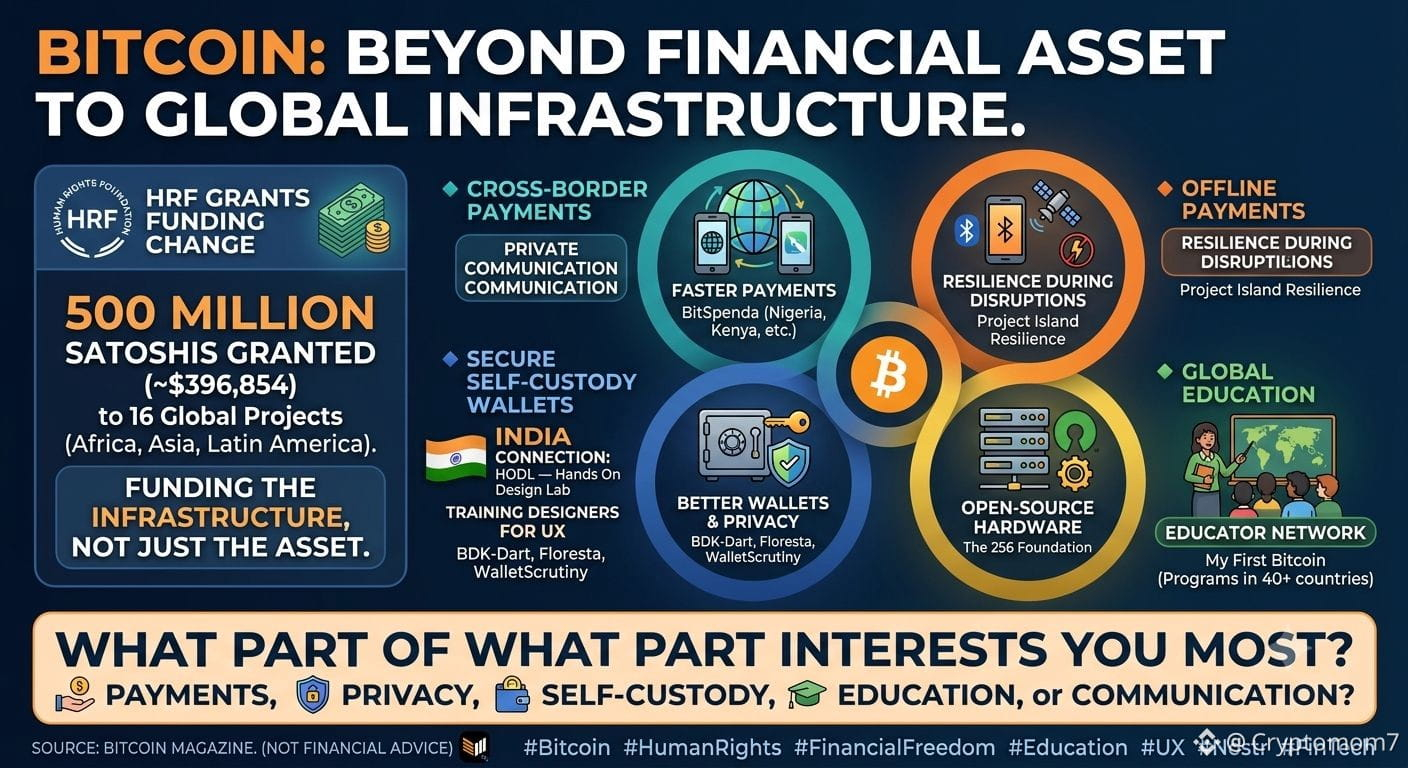
76
·
--
BTCモメンタムが爆発 🚀
今週、ビットコインは強力な反発を見せ、5月以来初めて$80,000を上回り、約$81,000まで到達した後、$79K近辺まで押し戻されました。BTCは今月およそ25%上昇しており、直近5日間の急騰は約24%です。
🔎 アナリストは何と言っている?
• ケイティ・ストックトン(Fairlead Strategies)は、ビットコインには金以上の上昇余地があると見ており、現在のテクニカルな勢いは引き続き良好だとしています。
• ジョエル・クルーガーは、このブレイクアウトがサイクル安値を示す可能性があるとし、次のテクニカル目標は約$83,000だと見ています。
• ナエム・アスラム(Zaye Capital Markets)は、流動性の改善見通し、トレジャリー(国債)買い、規制面での前向きな見方が、リスク選好を支えていると述べています。
• シティのアレックス・サンダースは、ビットコインETFフローが重要だと強調します。5日連続で現物BTC ETFに約$2Bが流入しており、このラリーが持続可能になるかどうかを見極める重要なシグナルだとしています。
📈 急にモメンタムが加速した理由は?
米国財務省が長期債の買い戻しを増やす計画を立てたことでドルが弱まり、より潤沢な流動性が得られるとの期待が高まりました。加えて、CLARITY法案をめぐる楽観、強いETF需要、そして大規模なショートスクイーズ――暗号資産の清算が約$3Bに達する規模――が、この動きをさらに加速させています。
⚠️ いまの重要な水準:$80K〜$82Kは大きなレジスタンスです。ブレイクが継続すれば$83Kへ、さらに上方向の可能性もありますが、利確とマクロ指標がリスクとして残ります。
結論:BTCのモメンタムは強気一色ですが、このように急な値動きの後はボラティリティと押し戻しが起こるはずです。追いかけるのではなく、注視すべき市場です。📊
BTCモメンタムが爆発 🚀
今週、ビットコインは強力な反発を見せ、5月以来初めて$80,000を上回り、約$81,000まで到達した後、$79K近辺まで押し戻されました。BTCは今月およそ25%上昇しており、直近5日間の急騰は約24%です。
🔎 アナリストは何と言っている?
• ケイティ・ストックトン(Fairlead Strategies)は、ビットコインには金以上の上昇余地があると見ており、現在のテクニカルな勢いは引き続き良好だとしています。
• ジョエル・クルーガーは、このブレイクアウトがサイクル安値を示す可能性があるとし、次のテクニカル目標は約$83,000だと見ています。
• ナエム・アスラム(Zaye Capital Markets)は、流動性の改善見通し、トレジャリー(国債)買い、規制面での前向きな見方が、リスク選好を支えていると述べています。
• シティのアレックス・サンダースは、ビットコインETFフローが重要だと強調します。5日連続で現物BTC ETFに約$2Bが流入しており、このラリーが持続可能になるかどうかを見極める重要なシグナルだとしています。
📈 急にモメンタムが加速した理由は?
米国財務省が長期債の買い戻しを増やす計画を立てたことでドルが弱まり、より潤沢な流動性が得られるとの期待が高まりました。加えて、CLARITY法案をめぐる楽観、強いETF需要、そして大規模なショートスクイーズ――暗号資産の清算が約$3Bに達する規模――が、この動きをさらに加速させています。
⚠️ いまの重要な水準:$80K〜$82Kは大きなレジスタンスです。ブレイクが継続すれば$83Kへ、さらに上方向の可能性もありますが、利確とマクロ指標がリスクとして残ります。
結論:BTCのモメンタムは強気一色ですが、このように急な値動きの後はボラティリティと押し戻しが起こるはずです。追いかけるのではなく、注視すべき市場です。📊
今週、ビットコインは強力な反発を見せ、5月以来初めて$80,000を上回り、約$81,000まで到達した後、$79K近辺まで押し戻されました。BTCは今月およそ25%上昇しており、直近5日間の急騰は約24%です。
🔎 アナリストは何と言っている?
• ケイティ・ストックトン(Fairlead Strategies)は、ビットコインには金以上の上昇余地があると見ており、現在のテクニカルな勢いは引き続き良好だとしています。
• ジョエル・クルーガーは、このブレイクアウトがサイクル安値を示す可能性があるとし、次のテクニカル目標は約$83,000だと見ています。
• ナエム・アスラム(Zaye Capital Markets)は、流動性の改善見通し、トレジャリー(国債)買い、規制面での前向きな見方が、リスク選好を支えていると述べています。
• シティのアレックス・サンダースは、ビットコインETFフローが重要だと強調します。5日連続で現物BTC ETFに約$2Bが流入しており、このラリーが持続可能になるかどうかを見極める重要なシグナルだとしています。
📈 急にモメンタムが加速した理由は?
米国財務省が長期債の買い戻しを増やす計画を立てたことでドルが弱まり、より潤沢な流動性が得られるとの期待が高まりました。加えて、CLARITY法案をめぐる楽観、強いETF需要、そして大規模なショートスクイーズ――暗号資産の清算が約$3Bに達する規模――が、この動きをさらに加速させています。
⚠️ いまの重要な水準:$80K〜$82Kは大きなレジスタンスです。ブレイクが継続すれば$83Kへ、さらに上方向の可能性もありますが、利確とマクロ指標がリスクとして残ります。
結論:BTCのモメンタムは強気一色ですが、このように急な値動きの後はボラティリティと押し戻しが起こるはずです。追いかけるのではなく、注視すべき市場です。📊
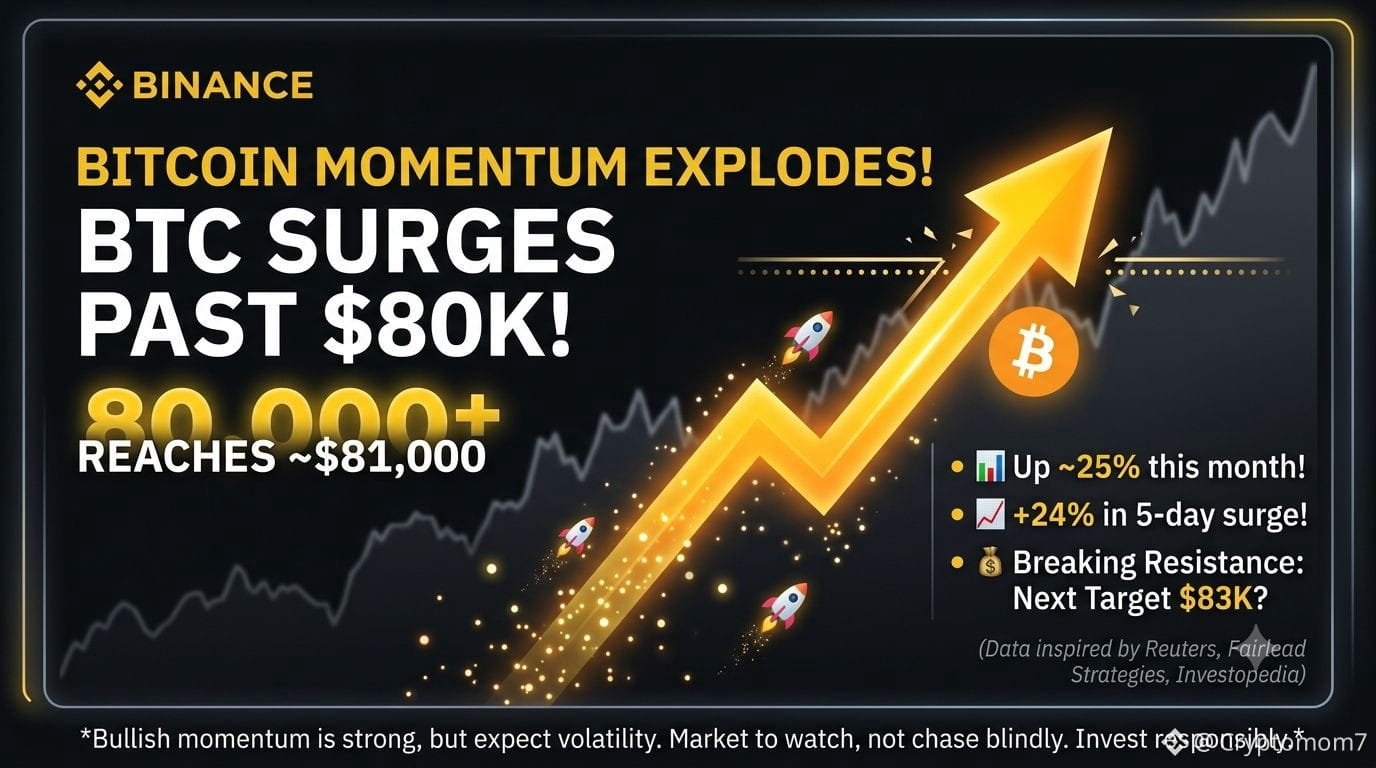
74
·
--
翻訳参照
Bitcoin Reclaims $70,000 — And the Bulls Have Earned This Moment 🐂
There are days in every market cycle that separate the patient from the panicked. August 20, 2026, is one of those days for Bitcoin.
The Journey Back
Let's be honest about the road here, because that's what makes today mean something:
Bitcoin opened 2026 near the high-$80,000s to low-$90,000s, still carrying the weight of October 2025's all-time high of $126,080 By July 1, BTC had fallen to roughly $58,000 — its lowest level of the year, and one of the toughest first halves Bitcoin investors have faced in this cycle Through July and into mid-August, the market found its footing but stayed range-bound, largely stuck between $62,000 and $66,500, as traders waited for a genuine catalyst And then, on August 20 — it arrived
What Changed Today
Bitcoin surged past $70,000, its highest level since early June, on the back of real, fundamental developments:
The U.S. Treasury more than doubled its long-dated bond buyback operations, easing broader market liquidity President Trump hosted top crypto executives — including leaders from Coinbase, Gemini, Ripple, and Chainlink — at the White House, pushing Congress to advance the CLARITY Act The SEC's newly approved crypto regulatory framework added further institutional confidence The rally triggered one of the largest short squeezes in Bitcoin's history, with over $2.7 billion in bearish positions liquidated in 24 hours
This wasn't hype. This was liquidity, policy, and conviction converging at once.
For the Bulls
If you held through the $58,000 lows, this is your validation. Not because the price moved — but because your thesis did: Bitcoin remains the asset that absorbs macro uncertainty and turns it into demand. The 8%+ single-day move wasn't luck. It was the market repricing risk the moment the fog around U.S. crypto policy started to lift.
For the Bears (and the Cautious)
Respect is due here too. Skepticism through a brutal first half of 2026 was reasonable, not wrong.
Bitcoin Reclaims $70,000 — And the Bulls Have Earned This Moment 🐂
There are days in every market cycle that separate the patient from the panicked. August 20, 2026, is one of those days for Bitcoin.
The Journey Back
Let's be honest about the road here, because that's what makes today mean something:
Bitcoin opened 2026 near the high-$80,000s to low-$90,000s, still carrying the weight of October 2025's all-time high of $126,080 By July 1, BTC had fallen to roughly $58,000 — its lowest level of the year, and one of the toughest first halves Bitcoin investors have faced in this cycle Through July and into mid-August, the market found its footing but stayed range-bound, largely stuck between $62,000 and $66,500, as traders waited for a genuine catalyst And then, on August 20 — it arrived
What Changed Today
Bitcoin surged past $70,000, its highest level since early June, on the back of real, fundamental developments:
The U.S. Treasury more than doubled its long-dated bond buyback operations, easing broader market liquidity President Trump hosted top crypto executives — including leaders from Coinbase, Gemini, Ripple, and Chainlink — at the White House, pushing Congress to advance the CLARITY Act The SEC's newly approved crypto regulatory framework added further institutional confidence The rally triggered one of the largest short squeezes in Bitcoin's history, with over $2.7 billion in bearish positions liquidated in 24 hours
This wasn't hype. This was liquidity, policy, and conviction converging at once.
For the Bulls
If you held through the $58,000 lows, this is your validation. Not because the price moved — but because your thesis did: Bitcoin remains the asset that absorbs macro uncertainty and turns it into demand. The 8%+ single-day move wasn't luck. It was the market repricing risk the moment the fog around U.S. crypto policy started to lift.
For the Bears (and the Cautious)
Respect is due here too. Skepticism through a brutal first half of 2026 was reasonable, not wrong.
There are days in every market cycle that separate the patient from the panicked. August 20, 2026, is one of those days for Bitcoin.
The Journey Back
Let's be honest about the road here, because that's what makes today mean something:
Bitcoin opened 2026 near the high-$80,000s to low-$90,000s, still carrying the weight of October 2025's all-time high of $126,080 By July 1, BTC had fallen to roughly $58,000 — its lowest level of the year, and one of the toughest first halves Bitcoin investors have faced in this cycle Through July and into mid-August, the market found its footing but stayed range-bound, largely stuck between $62,000 and $66,500, as traders waited for a genuine catalyst And then, on August 20 — it arrived
What Changed Today
Bitcoin surged past $70,000, its highest level since early June, on the back of real, fundamental developments:
The U.S. Treasury more than doubled its long-dated bond buyback operations, easing broader market liquidity President Trump hosted top crypto executives — including leaders from Coinbase, Gemini, Ripple, and Chainlink — at the White House, pushing Congress to advance the CLARITY Act The SEC's newly approved crypto regulatory framework added further institutional confidence The rally triggered one of the largest short squeezes in Bitcoin's history, with over $2.7 billion in bearish positions liquidated in 24 hours
This wasn't hype. This was liquidity, policy, and conviction converging at once.
For the Bulls
If you held through the $58,000 lows, this is your validation. Not because the price moved — but because your thesis did: Bitcoin remains the asset that absorbs macro uncertainty and turns it into demand. The 8%+ single-day move wasn't luck. It was the market repricing risk the moment the fog around U.S. crypto policy started to lift.
For the Bears (and the Cautious)
Respect is due here too. Skepticism through a brutal first half of 2026 was reasonable, not wrong.
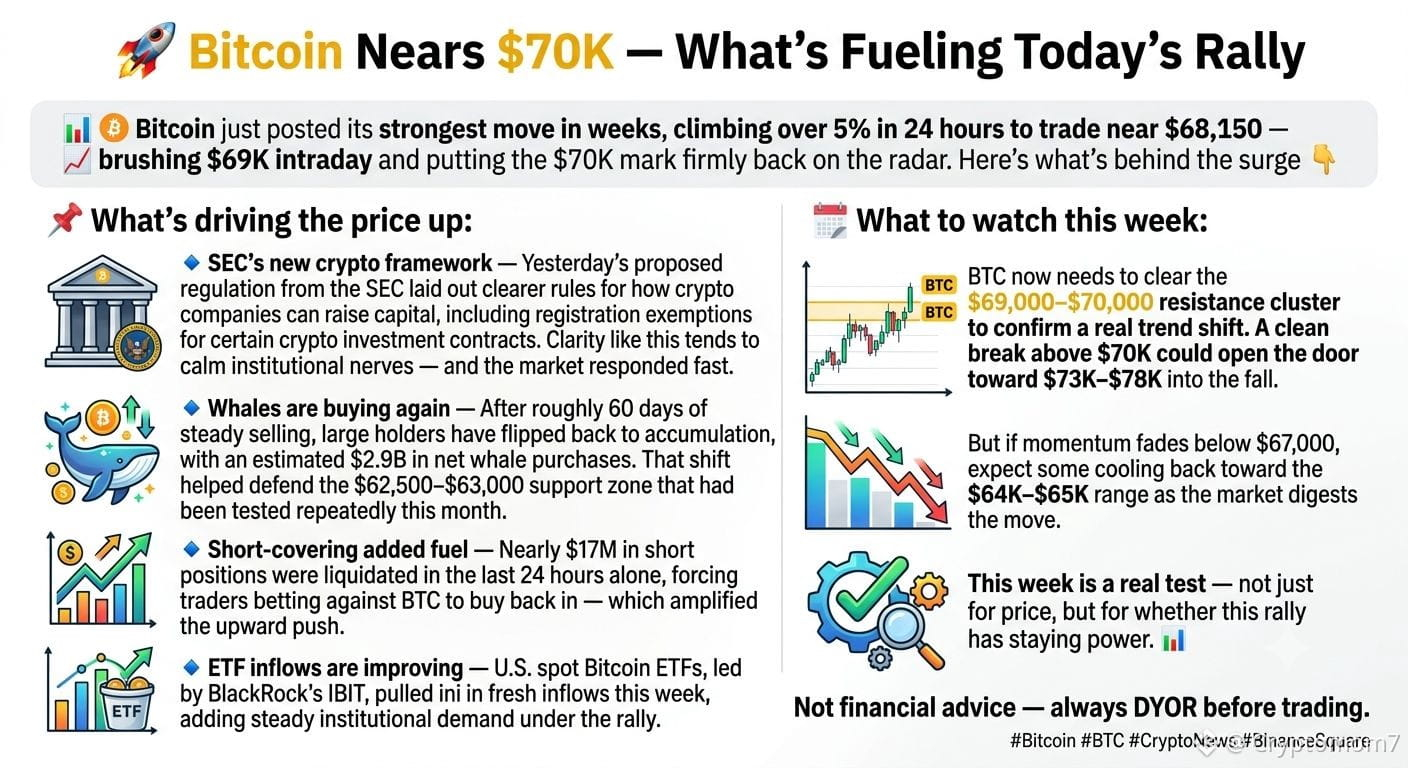
90
·
--
翻訳参照
🚀 Bitcoin Nears $70K — What's Fueling Today's Rally
Bitcoin just posted its strongest move in weeks, climbing over 5% in 24 hours to trade near $68,150 — brushing $69K intraday and putting the $70K mark firmly back on the radar. Here's what's behind the surge 👇
📌 What's driving the price up:
🔹 SEC's new crypto framework — Yesterday's proposed regulation from the SEC laid out clearer rules for how crypto companies can raise capital, including registration exemptions for certain crypto investment contracts. Clarity like this tends to calm institutional nerves — and the market responded fast.
🔹 Whales are buying again — After roughly 60 days of steady selling, large holders have flipped back to accumulation, with an estimated $2.9B in net whale purchases. That shift helped defend the $62,500–$63,000 support zone that had been tested repeatedly this month.
🔹 Short-covering added fuel — Nearly $17M in short positions were liquidated in the last 24 hours alone, forcing traders betting against BTC to buy back in — which amplified the upward push.
🔹 ETF inflows are improving — U.S. spot Bitcoin ETFs, led by BlackRock's IBIT, pulled in fresh inflows this week, adding steady institutional demand under the rally.
📅 What to watch this week:
BTC now needs to clear the $69,000–$70,000 resistance cluster to confirm a real trend shift. A clean break above $70K could open the door toward $73K–$78K into the fall. But if momentum fades below $67,000, expect some cooling back toward the $64K–$65K range as the market digests the move.
This week is a real test — not just for price, but for whether this rally has staying power. 📊
Not financial advice — always DYOR before trading.
#Bitcoin #BTC #CryptoNews #BinanceSquare
🚀 Bitcoin Nears $70K — What's Fueling Today's Rally
Bitcoin just posted its strongest move in weeks, climbing over 5% in 24 hours to trade near $68,150 — brushing $69K intraday and putting the $70K mark firmly back on the radar. Here's what's behind the surge 👇
📌 What's driving the price up:
🔹 SEC's new crypto framework — Yesterday's proposed regulation from the SEC laid out clearer rules for how crypto companies can raise capital, including registration exemptions for certain crypto investment contracts. Clarity like this tends to calm institutional nerves — and the market responded fast.
🔹 Whales are buying again — After roughly 60 days of steady selling, large holders have flipped back to accumulation, with an estimated $2.9B in net whale purchases. That shift helped defend the $62,500–$63,000 support zone that had been tested repeatedly this month.
🔹 Short-covering added fuel — Nearly $17M in short positions were liquidated in the last 24 hours alone, forcing traders betting against BTC to buy back in — which amplified the upward push.
🔹 ETF inflows are improving — U.S. spot Bitcoin ETFs, led by BlackRock's IBIT, pulled in fresh inflows this week, adding steady institutional demand under the rally.
📅 What to watch this week:
BTC now needs to clear the $69,000–$70,000 resistance cluster to confirm a real trend shift. A clean break above $70K could open the door toward $73K–$78K into the fall. But if momentum fades below $67,000, expect some cooling back toward the $64K–$65K range as the market digests the move.
This week is a real test — not just for price, but for whether this rally has staying power. 📊
Not financial advice — always DYOR before trading.
#Bitcoin #BTC #CryptoNews #BinanceSquare
Bitcoin just posted its strongest move in weeks, climbing over 5% in 24 hours to trade near $68,150 — brushing $69K intraday and putting the $70K mark firmly back on the radar. Here's what's behind the surge 👇
📌 What's driving the price up:
🔹 SEC's new crypto framework — Yesterday's proposed regulation from the SEC laid out clearer rules for how crypto companies can raise capital, including registration exemptions for certain crypto investment contracts. Clarity like this tends to calm institutional nerves — and the market responded fast.
🔹 Whales are buying again — After roughly 60 days of steady selling, large holders have flipped back to accumulation, with an estimated $2.9B in net whale purchases. That shift helped defend the $62,500–$63,000 support zone that had been tested repeatedly this month.
🔹 Short-covering added fuel — Nearly $17M in short positions were liquidated in the last 24 hours alone, forcing traders betting against BTC to buy back in — which amplified the upward push.
🔹 ETF inflows are improving — U.S. spot Bitcoin ETFs, led by BlackRock's IBIT, pulled in fresh inflows this week, adding steady institutional demand under the rally.
📅 What to watch this week:
BTC now needs to clear the $69,000–$70,000 resistance cluster to confirm a real trend shift. A clean break above $70K could open the door toward $73K–$78K into the fall. But if momentum fades below $67,000, expect some cooling back toward the $64K–$65K range as the market digests the move.
This week is a real test — not just for price, but for whether this rally has staying power. 📊
Not financial advice — always DYOR before trading.
#Bitcoin #BTC #CryptoNews #BinanceSquare
105
ログインして、さらにコンテンツを読む
厳選トピックで世界の暗号資産トレーダーの仲間入り
⚡️ 暗号資産に関する最新かつ有益な情報が見つかります。
💬 世界最大の暗号資産取引所から信頼されています。
👍 認証を受けたクリエイターから、有益なインサイトを得られます。
メール / 電話番号
トレンドトピック
BOJRaisesRatesTo31YearHigh
閲覧回数 142,496
2,205人が討論中
#BOJRaisesRatesTo31YearHigh
#BOJRaisesRatesTo31YearHigh 🇯🇵📈
日本銀行は、31年ぶりの高水準となる利上げを実施し、さらなる重要な一手を打ったことで、世界の市場に警戒が広がっています。この決定は、日本が長年続けてきた極めて緩い金融政策からの継続的な転換を示すものです。日本の金利が高まれば円が強くなる可能性があり、世界の国債利回りに影響を与え、さらに金融市場全体での資金フローにも波及するおそれがあります。暗号資産やリスク資産も、投資家が流動性やリスクへのエクスポージャーを見直すことで反応するかもしれません。トレーダーは今、今後の利上げ判断に関する手がかりを得るために、日銀の次の発言を注視しています。市場が政策変更とその潜在的な世界的影響を消化するにつれて、ボラティリティ(変動性)が高まる可能性があります。 #BOJ #Japan #Crypto #Markets #InterestRates $NVDAB
maqsoodahmed1
·いいね:1件
·閲覧回数 219
BuffettStepsDownAsBerkshireChairman
閲覧回数 67,894
1,123人が討論中
XRPExchangeReservesHitSevenYearLow
閲覧回数 73,760
1,015人が討論中