
CryptoCarter
166 投稿

CryptoCarter
報告
ユーザーをブロック
0 フォロー
96 フォロワー
204 いいね
投稿
すべて
引用
·
--
翻訳参照
#Puffer #pufferfinance 🐡🚀 Don’t wait for Puffer to take off. If you believe in the project, now is the time to pay attention while the price is still low. The opportunity is here. 🔥
Puffer is building. The question is: will you be early or late? 🐡🚀
#Puffer #pufferfinance 🐡🚀 Don’t wait for Puffer to take off. If you believe in the project, now is the time to pay attention while the price is still low. The opportunity is here. 🔥
Puffer is building. The question is: will you be early or late? 🐡🚀
Puffer is building. The question is: will you be early or late? 🐡🚀

CryptoCarter
·
--
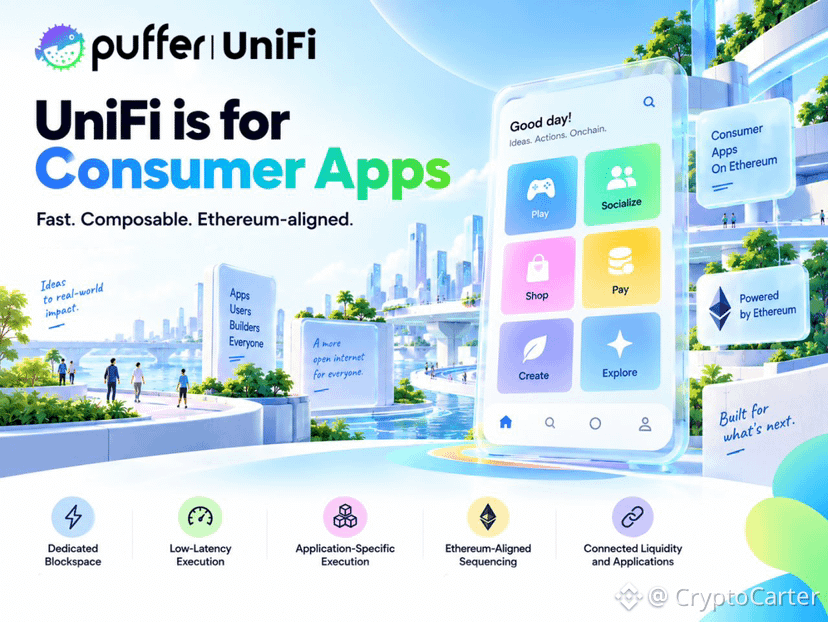
$PUFFER 🌍 UniFi is for Consumer Apps
Consumer apps need something crypto infrastructure has historically struggled to provide:
An experience where users barely notice the infrastructure underneath.
Fast interactions. Predictable execution. Low friction. And enough capacity to support activity at consumer scale.
UniFi is designed to give applications dedicated execution without forcing them into an isolated ecosystem.
That means:
• Dedicated blockspace: applications don’t have to compete with unrelated activity for execution.
• Low-latency execution: Puffer Preconf provides fast execution assurances before final Ethereum settlement.
• Application-specific execution: builders can optimize around the performance requirements of their products instead of adapting them to a general-purpose environment.
• Ethereum-aligned sequencing: based sequencing keeps transaction ordering aligned with Ethereum validators rather than relying on an independent centralized sequencer.
• Connected liquidity and applications: synchronous composability keeps dedicated execution connected to Ethereum’s liquidity, state, and applications.
For consumer apps, blockchain infrastructure should increasingly disappear into the background.
Applications get the execution they need. Users get the speed and responsiveness they expect.
And underneath it all, UniFi keeps them connected to Ethereum. 🐡
Consumer apps need something crypto infrastructure has historically struggled to provide:
An experience where users barely notice the infrastructure underneath.
Fast interactions. Predictable execution. Low friction. And enough capacity to support activity at consumer scale.
UniFi is designed to give applications dedicated execution without forcing them into an isolated ecosystem.
That means:
• Dedicated blockspace: applications don’t have to compete with unrelated activity for execution.
• Low-latency execution: Puffer Preconf provides fast execution assurances before final Ethereum settlement.
• Application-specific execution: builders can optimize around the performance requirements of their products instead of adapting them to a general-purpose environment.
• Ethereum-aligned sequencing: based sequencing keeps transaction ordering aligned with Ethereum validators rather than relying on an independent centralized sequencer.
• Connected liquidity and applications: synchronous composability keeps dedicated execution connected to Ethereum’s liquidity, state, and applications.
For consumer apps, blockchain infrastructure should increasingly disappear into the background.
Applications get the execution they need. Users get the speed and responsiveness they expect.
And underneath it all, UniFi keeps them connected to Ethereum. 🐡
78
·
--
翻訳参照
$PUFFER 🌍 UniFi is for Consumer Apps
Consumer apps need something crypto infrastructure has historically struggled to provide:
An experience where users barely notice the infrastructure underneath.
Fast interactions. Predictable execution. Low friction. And enough capacity to support activity at consumer scale.
UniFi is designed to give applications dedicated execution without forcing them into an isolated ecosystem.
That means:
• Dedicated blockspace: applications don’t have to compete with unrelated activity for execution.
• Low-latency execution: Puffer Preconf provides fast execution assurances before final Ethereum settlement.
• Application-specific execution: builders can optimize around the performance requirements of their products instead of adapting them to a general-purpose environment.
• Ethereum-aligned sequencing: based sequencing keeps transaction ordering aligned with Ethereum validators rather than relying on an independent centralized sequencer.
• Connected liquidity and applications: synchronous composability keeps dedicated execution connected to Ethereum’s liquidity, state, and applications.
For consumer apps, blockchain infrastructure should increasingly disappear into the background.
Applications get the execution they need. Users get the speed and responsiveness they expect.
And underneath it all, UniFi keeps them connected to Ethereum. 🐡
$PUFFER 🌍 UniFi is for Consumer Apps
Consumer apps need something crypto infrastructure has historically struggled to provide:
An experience where users barely notice the infrastructure underneath.
Fast interactions. Predictable execution. Low friction. And enough capacity to support activity at consumer scale.
UniFi is designed to give applications dedicated execution without forcing them into an isolated ecosystem.
That means:
• Dedicated blockspace: applications don’t have to compete with unrelated activity for execution.
• Low-latency execution: Puffer Preconf provides fast execution assurances before final Ethereum settlement.
• Application-specific execution: builders can optimize around the performance requirements of their products instead of adapting them to a general-purpose environment.
• Ethereum-aligned sequencing: based sequencing keeps transaction ordering aligned with Ethereum validators rather than relying on an independent centralized sequencer.
• Connected liquidity and applications: synchronous composability keeps dedicated execution connected to Ethereum’s liquidity, state, and applications.
For consumer apps, blockchain infrastructure should increasingly disappear into the background.
Applications get the execution they need. Users get the speed and responsiveness they expect.
And underneath it all, UniFi keeps them connected to Ethereum. 🐡
Consumer apps need something crypto infrastructure has historically struggled to provide:
An experience where users barely notice the infrastructure underneath.
Fast interactions. Predictable execution. Low friction. And enough capacity to support activity at consumer scale.
UniFi is designed to give applications dedicated execution without forcing them into an isolated ecosystem.
That means:
• Dedicated blockspace: applications don’t have to compete with unrelated activity for execution.
• Low-latency execution: Puffer Preconf provides fast execution assurances before final Ethereum settlement.
• Application-specific execution: builders can optimize around the performance requirements of their products instead of adapting them to a general-purpose environment.
• Ethereum-aligned sequencing: based sequencing keeps transaction ordering aligned with Ethereum validators rather than relying on an independent centralized sequencer.
• Connected liquidity and applications: synchronous composability keeps dedicated execution connected to Ethereum’s liquidity, state, and applications.
For consumer apps, blockchain infrastructure should increasingly disappear into the background.
Applications get the execution they need. Users get the speed and responsiveness they expect.
And underneath it all, UniFi keeps them connected to Ethereum. 🐡
1
1
123
·
--
$PUFFER 🤖 Puffer for AI #4 - 接続された流動性
AIエージェントには高速な実行だけでは不十分です。深くつながった流動性へのアクセスが必要です。
イーサリアムは暗号資産の中でも特に深い流動性のある場所ですが、ロールアップやアプリチェーンへと活動が広がるにつれて、その流動性はますます断片化していきます。エージェントが取引、リバランス、支払いのルーティング、あるいは複数の市場との連携を行う際、この断片化は摩擦になります。
@puffer_unifi は、AIエージェントに専用の実行を提供しつつ、イーサリアムの流動性から切り離さないように設計されています。
同期的な合成可能性とイーサリアムに整合したシーケンシングにより、UniFi は、エージェント固有の実行をサポートしながら、イーサリアムL1の流動性と密接に接続し続けることができます。
自律システムにとって、流動性は実行がどこで行われても接続されたままであるべきです。 🐡
$PUFFER 🤖 Puffer for AI #4 - 接続された流動性
AIエージェントには高速な実行だけでは不十分です。深くつながった流動性へのアクセスが必要です。
イーサリアムは暗号資産の中でも特に深い流動性のある場所ですが、ロールアップやアプリチェーンへと活動が広がるにつれて、その流動性はますます断片化していきます。エージェントが取引、リバランス、支払いのルーティング、あるいは複数の市場との連携を行う際、この断片化は摩擦になります。
@puffer_unifi は、AIエージェントに専用の実行を提供しつつ、イーサリアムの流動性から切り離さないように設計されています。
同期的な合成可能性とイーサリアムに整合したシーケンシングにより、UniFi は、エージェント固有の実行をサポートしながら、イーサリアムL1の流動性と密接に接続し続けることができます。
自律システムにとって、流動性は実行がどこで行われても接続されたままであるべきです。 🐡
AIエージェントには高速な実行だけでは不十分です。深くつながった流動性へのアクセスが必要です。
イーサリアムは暗号資産の中でも特に深い流動性のある場所ですが、ロールアップやアプリチェーンへと活動が広がるにつれて、その流動性はますます断片化していきます。エージェントが取引、リバランス、支払いのルーティング、あるいは複数の市場との連携を行う際、この断片化は摩擦になります。
@puffer_unifi は、AIエージェントに専用の実行を提供しつつ、イーサリアムの流動性から切り離さないように設計されています。
同期的な合成可能性とイーサリアムに整合したシーケンシングにより、UniFi は、エージェント固有の実行をサポートしながら、イーサリアムL1の流動性と密接に接続し続けることができます。
自律システムにとって、流動性は実行がどこで行われても接続されたままであるべきです。 🐡

157
·
--
翻訳参照
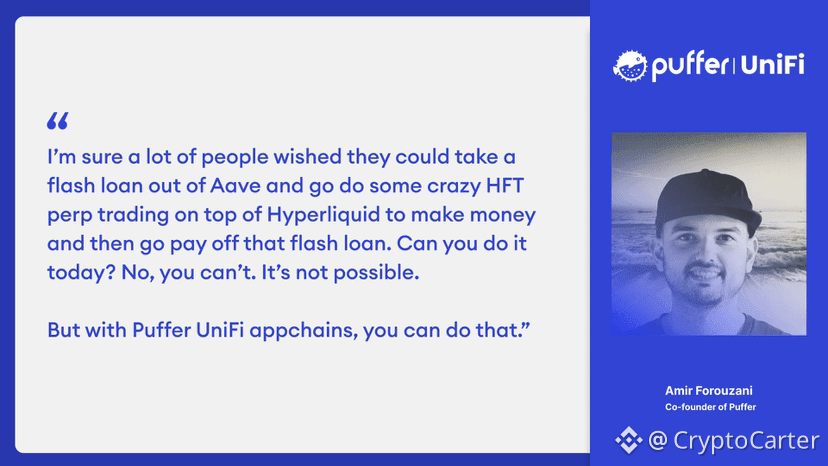
$PUFFER What does synchronous composability actually unlock?
Puffer co-founder @AmirOnchain breaks it down with a simple example: tap L1 liquidity, execute on a @puffer_unifi rollup, and settle back on Ethereum. 🐡
$PUFFER What does synchronous composability actually unlock?
Puffer co-founder @AmirOnchain breaks it down with a simple example: tap L1 liquidity, execute on a @puffer_unifi rollup, and settle back on Ethereum. 🐡
Puffer co-founder @AmirOnchain breaks it down with a simple example: tap L1 liquidity, execute on a @puffer_unifi rollup, and settle back on Ethereum. 🐡
1
249
·
--
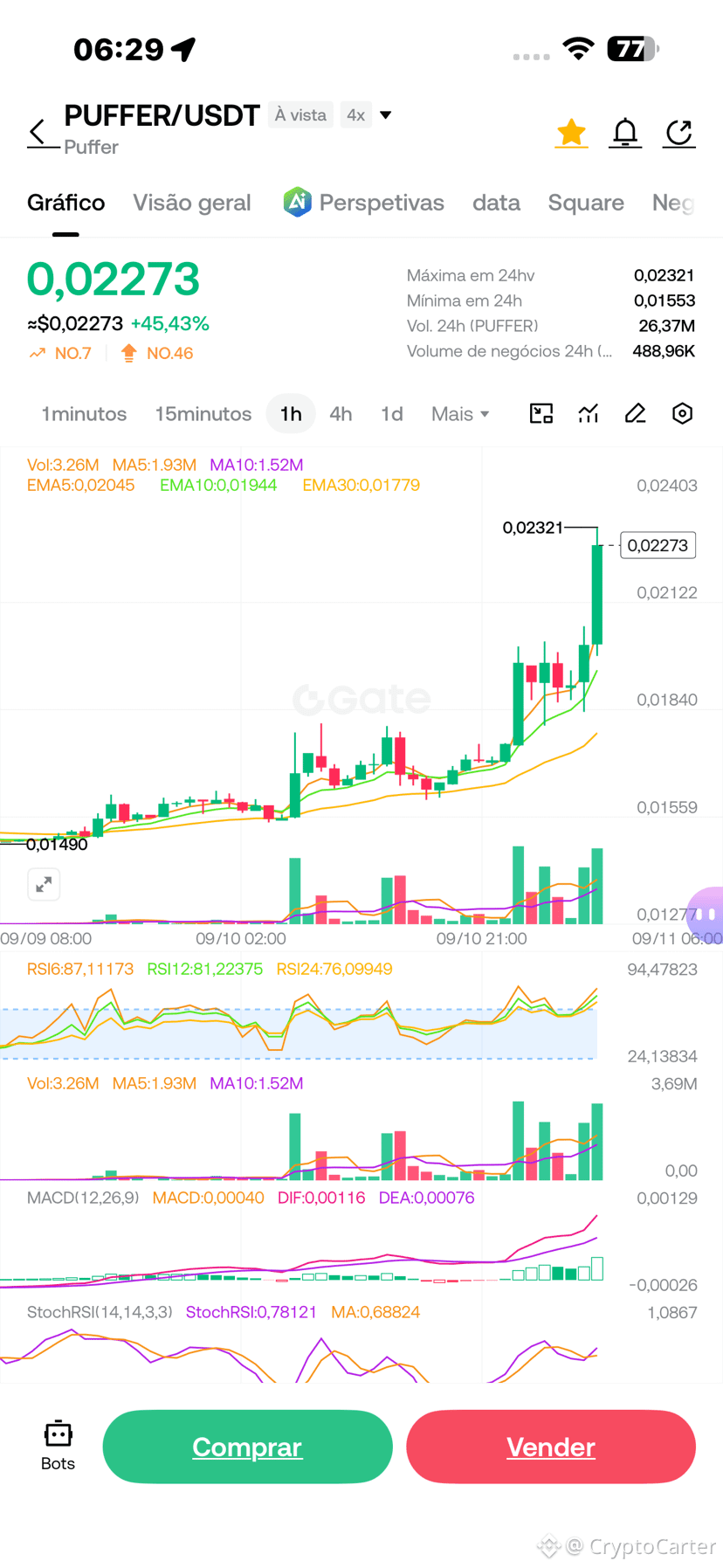
$PUFFER PufferはEthereumのエコシステムの中でたくさんのことを構築しています。そして、このプロジェクトが約束していることをすべて実現すれば、将来PUFFERは多くの人を驚かせる可能性があると私は考えています。
これは利益が保証されると言っているわけではありません——仮想通貨では何も保証されません。ですが、みんながすでに熱狂を語り始めた後に追いかけるよりも、熱狂が起きる前に学び、先にポジションを取ることを私は好みます。 🚀🐡
$PUFFER PufferはEthereumのエコシステムの中でたくさんのことを構築しています。そして、このプロジェクトが約束していることをすべて実現すれば、将来PUFFERは多くの人を驚かせる可能性があると私は考えています。
これは利益が保証されると言っているわけではありません——仮想通貨では何も保証されません。ですが、みんながすでに熱狂を語り始めた後に追いかけるよりも、熱狂が起きる前に学び、先にポジションを取ることを私は好みます。 🚀🐡
これは利益が保証されると言っているわけではありません——仮想通貨では何も保証されません。ですが、みんながすでに熱狂を語り始めた後に追いかけるよりも、熱狂が起きる前に学び、先にポジションを取ることを私は好みます。 🚀🐡
1
155
·
--
$PUFFER Appleは電話をアップグレードしました。
レールをアップグレード中です。🐡
高性能な実行。同期的な合成性。基盤はEthereum。
間もなく大きなものが登場します!
UniFi.
$PUFFER Appleは電話をアップグレードしました。
レールをアップグレード中です。🐡
高性能な実行。同期的な合成性。基盤はEthereum。
間もなく大きなものが登場します!
UniFi.
レールをアップグレード中です。🐡
高性能な実行。同期的な合成性。基盤はEthereum。
間もなく大きなものが登場します!
UniFi.

2
173

·
--
翻訳参照
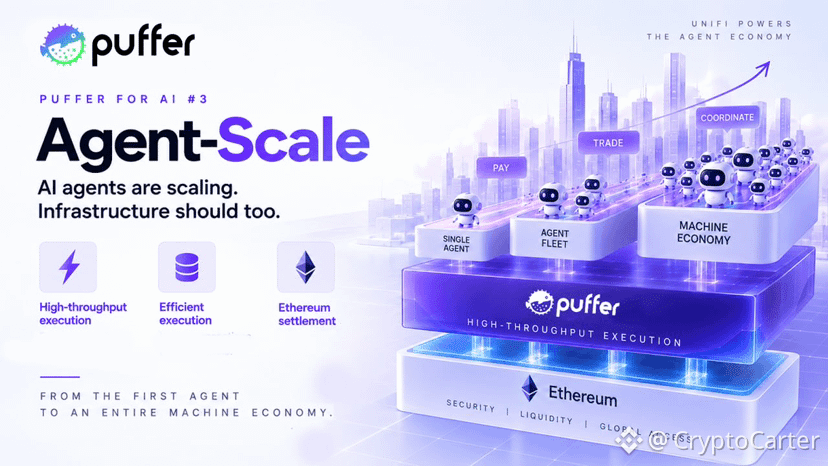
$PUFFER Puffer for AI #3 - Agent-Scale
AI infrastructure needs to scale without becoming slower, more expensive, or harder to use.
As more agents begin paying, trading, and coordinating onchain, the underlying network must support rising activity without turning execution capacity into a bottleneck.
@puffer_unifi is built for that scale.
• High-throughput execution supports large volumes of agent-driven activity.
• Efficient execution helps keep transactions fast and economically viable as demand grows.
• Ethereum settlement keeps applications connected to Ethereum’s security and liquidity while expanding execution capacity.
AI systems need infrastructure that can grow with them.
From the first agent to an entire machine economy, Puffer is built for scale. 🐡
$PUFFER Puffer for AI #3 - Agent-Scale
AI infrastructure needs to scale without becoming slower, more expensive, or harder to use.
As more agents begin paying, trading, and coordinating onchain, the underlying network must support rising activity without turning execution capacity into a bottleneck.
@puffer_unifi is built for that scale.
• High-throughput execution supports large volumes of agent-driven activity.
• Efficient execution helps keep transactions fast and economically viable as demand grows.
• Ethereum settlement keeps applications connected to Ethereum’s security and liquidity while expanding execution capacity.
AI systems need infrastructure that can grow with them.
From the first agent to an entire machine economy, Puffer is built for scale. 🐡
AI infrastructure needs to scale without becoming slower, more expensive, or harder to use.
As more agents begin paying, trading, and coordinating onchain, the underlying network must support rising activity without turning execution capacity into a bottleneck.
@puffer_unifi is built for that scale.
• High-throughput execution supports large volumes of agent-driven activity.
• Efficient execution helps keep transactions fast and economically viable as demand grows.
• Ethereum settlement keeps applications connected to Ethereum’s security and liquidity while expanding execution capacity.
AI systems need infrastructure that can grow with them.
From the first agent to an entire machine economy, Puffer is built for scale. 🐡
124
·
--
翻訳参照
$PUFFER ⚡️ Real speed doesn’t need a centralized sequencer.
Puffer Preconf gives rollups fast execution assurances without relying on a centralized sequencer to provide them. Transactions can receive sub-10ms preconfirmations backed by decentralized, economically accountable infrastructure, while Ethereum remains the final settlement layer.
The result is the responsiveness users expect from centralized sequencing, without putting transaction ordering and execution guarantees in the hands of a single operator. 🐡
$PUFFER ⚡️ Real speed doesn’t need a centralized sequencer.
Puffer Preconf gives rollups fast execution assurances without relying on a centralized sequencer to provide them. Transactions can receive sub-10ms preconfirmations backed by decentralized, economically accountable infrastructure, while Ethereum remains the final settlement layer.
The result is the responsiveness users expect from centralized sequencing, without putting transaction ordering and execution guarantees in the hands of a single operator. 🐡
Puffer Preconf gives rollups fast execution assurances without relying on a centralized sequencer to provide them. Transactions can receive sub-10ms preconfirmations backed by decentralized, economically accountable infrastructure, while Ethereum remains the final settlement layer.
The result is the responsiveness users expect from centralized sequencing, without putting transaction ordering and execution guarantees in the hands of a single operator. 🐡
130
·
--
$PUFFER イーサリアムのステーキングとインフラは、ともに進化しています。
@AmirOnchain が @wisdomtreefunds の @vinhonchain および @DSilenskyteWT に参加し、リキッド・リステーキング、バリデーターの分散化、UniFi、そしてイーサリアムのスケーリングの未来について語ります ↓
$PUFFER イーサリアムのステーキングとインフラは、ともに進化しています。
@AmirOnchain が @wisdomtreefunds の @vinhonchain および @DSilenskyteWT に参加し、リキッド・リステーキング、バリデーターの分散化、UniFi、そしてイーサリアムのスケーリングの未来について語ります ↓
@AmirOnchain が @wisdomtreefunds の @vinhonchain および @DSilenskyteWT に参加し、リキッド・リステーキング、バリデーターの分散化、UniFi、そしてイーサリアムのスケーリングの未来について語ります ↓

158
·
--
翻訳参照
$PUFFER Institutions shouldn’t have to fit into the same staking pool as everyone else.
@AmirOnchain explains how Puffer Institutional enables institutions to launch their own LSTs and LRTs with custom KYC parameters, custody and redemption flows. 🐡
$PUFFER Institutions shouldn’t have to fit into the same staking pool as everyone else.
@AmirOnchain explains how Puffer Institutional enables institutions to launch their own LSTs and LRTs with custom KYC parameters, custody and redemption flows. 🐡
@AmirOnchain explains how Puffer Institutional enables institutions to launch their own LSTs and LRTs with custom KYC parameters, custody and redemption flows. 🐡

1
156
·
--
翻訳参照
$PUFFER 🛡️ Puffer Security Stack #5 - Security Through Economic Accountability
Validator security should come with economic accountability.
Before running a validator on Puffer, every Node Operator posts a 2 ETH bond in pufETH.
That bond acts as first-loss capital:
• If a validator is slashed, the operator’s bond absorbs losses first
• The operator has its own capital at risk alongside the validator
• The bond is designed to help protect stakers from validator slashing losses
Puffer’s risk model also considers correlated slashing, where Ethereum penalties can increase when many validators are slashed at the same time.
Under the protocol’s modeled assumptions, the 2 ETH bond is designed to provide protection even under significant correlated-slashing scenarios.
If losses occur, affected operators' pufETH bonds can be used to absorb them before losses reach pufETH holders.
Security is stronger when the people operating the infrastructure have capital on the line too.
$PUFFER 🛡️ Puffer Security Stack #5 - Security Through Economic Accountability
Validator security should come with economic accountability.
Before running a validator on Puffer, every Node Operator posts a 2 ETH bond in pufETH.
That bond acts as first-loss capital:
• If a validator is slashed, the operator’s bond absorbs losses first
• The operator has its own capital at risk alongside the validator
• The bond is designed to help protect stakers from validator slashing losses
Puffer’s risk model also considers correlated slashing, where Ethereum penalties can increase when many validators are slashed at the same time.
Under the protocol’s modeled assumptions, the 2 ETH bond is designed to provide protection even under significant correlated-slashing scenarios.
If losses occur, affected operators' pufETH bonds can be used to absorb them before losses reach pufETH holders.
Security is stronger when the people operating the infrastructure have capital on the line too.
Validator security should come with economic accountability.
Before running a validator on Puffer, every Node Operator posts a 2 ETH bond in pufETH.
That bond acts as first-loss capital:
• If a validator is slashed, the operator’s bond absorbs losses first
• The operator has its own capital at risk alongside the validator
• The bond is designed to help protect stakers from validator slashing losses
Puffer’s risk model also considers correlated slashing, where Ethereum penalties can increase when many validators are slashed at the same time.
Under the protocol’s modeled assumptions, the 2 ETH bond is designed to provide protection even under significant correlated-slashing scenarios.
If losses occur, affected operators' pufETH bonds can be used to absorb them before losses reach pufETH holders.
Security is stronger when the people operating the infrastructure have capital on the line too.

124
·
--
$PUFFER 🏭 パファー・スタック #1:イーサリアムのスケーリング
イーサリアムはスケールしたが、同時に分断も進んだ。
ロールアップはエコシステムにさらなるスループットをもたらした一方で、流動性、シーケンス、コンポーザビリティ、そしてUXを別々の領域へと散らしてしまった。
パファーは、イーサリアムのスケーリングを垂直統合のアプローチで進めている。すなわち、セキュリティからシーケンシング、実行まで、スタックのつながった各層を一緒に構築することだ。
ステーキング、プレコンファメーション、プロビング、ベースド・ロールアップを別々のインフラとして扱うのではなく、それらを1つのイーサリアムに整合したアーキテクチャとして結び付け、各層がお互いを強化し合うようにしている。
パファー・スタックは3つの層で構成される:
• トラスト層:pufETH、Puffer Institutional、バリデータ、リステーキングが経済的基盤を提供。
• シーケンシング層:ベースド・シーケンシング、@puffer_preconf、TEEベースのプロビングが、その基盤を高速で説明責任のある実行へと変える。
• 実行層:@puffer_unifi スタックが、イーサリアムに整合したままアプリケーションに専用の実行を提供。
多くのスケーリング・システムは、パズルの一部だけを最適化する。
パファーは、全体の道筋を作っている。イーサリアムに根差したセキュリティ → イーサリアムに整合したシーケンシング → 高速でコンポーザブルなアプリチェーンの実行。
ユーザーにとっては、集中型シーケンサーのショートカットに頼らずに、より速いコンファメーションが得られるということ。
ビルダーにとっては、イーサリアムとの整合性を手放すことなく、専用の実行環境を得られるということ。
エコシステムにとっては、より孤立した実行用アイランドを増やすのではなく、イーサリアムを強化するスケーリング・インフラを実現するということ。
イーサリアムからスケールアウトするのではない。イーサリアムを通じてスケールする。🐡
$PUFFER 🏭 パファー・スタック #1:イーサリアムのスケーリング
イーサリアムはスケールしたが、同時に分断も進んだ。
ロールアップはエコシステムにさらなるスループットをもたらした一方で、流動性、シーケンス、コンポーザビリティ、そしてUXを別々の領域へと散らしてしまった。
パファーは、イーサリアムのスケーリングを垂直統合のアプローチで進めている。すなわち、セキュリティからシーケンシング、実行まで、スタックのつながった各層を一緒に構築することだ。
ステーキング、プレコンファメーション、プロビング、ベースド・ロールアップを別々のインフラとして扱うのではなく、それらを1つのイーサリアムに整合したアーキテクチャとして結び付け、各層がお互いを強化し合うようにしている。
パファー・スタックは3つの層で構成される:
• トラスト層:pufETH、Puffer Institutional、バリデータ、リステーキングが経済的基盤を提供。
• シーケンシング層:ベースド・シーケンシング、@puffer_preconf、TEEベースのプロビングが、その基盤を高速で説明責任のある実行へと変える。
• 実行層:@puffer_unifi スタックが、イーサリアムに整合したままアプリケーションに専用の実行を提供。
多くのスケーリング・システムは、パズルの一部だけを最適化する。
パファーは、全体の道筋を作っている。イーサリアムに根差したセキュリティ → イーサリアムに整合したシーケンシング → 高速でコンポーザブルなアプリチェーンの実行。
ユーザーにとっては、集中型シーケンサーのショートカットに頼らずに、より速いコンファメーションが得られるということ。
ビルダーにとっては、イーサリアムとの整合性を手放すことなく、専用の実行環境を得られるということ。
エコシステムにとっては、より孤立した実行用アイランドを増やすのではなく、イーサリアムを強化するスケーリング・インフラを実現するということ。
イーサリアムからスケールアウトするのではない。イーサリアムを通じてスケールする。🐡
イーサリアムはスケールしたが、同時に分断も進んだ。
ロールアップはエコシステムにさらなるスループットをもたらした一方で、流動性、シーケンス、コンポーザビリティ、そしてUXを別々の領域へと散らしてしまった。
パファーは、イーサリアムのスケーリングを垂直統合のアプローチで進めている。すなわち、セキュリティからシーケンシング、実行まで、スタックのつながった各層を一緒に構築することだ。
ステーキング、プレコンファメーション、プロビング、ベースド・ロールアップを別々のインフラとして扱うのではなく、それらを1つのイーサリアムに整合したアーキテクチャとして結び付け、各層がお互いを強化し合うようにしている。
パファー・スタックは3つの層で構成される:
• トラスト層:pufETH、Puffer Institutional、バリデータ、リステーキングが経済的基盤を提供。
• シーケンシング層:ベースド・シーケンシング、@puffer_preconf、TEEベースのプロビングが、その基盤を高速で説明責任のある実行へと変える。
• 実行層:@puffer_unifi スタックが、イーサリアムに整合したままアプリケーションに専用の実行を提供。
多くのスケーリング・システムは、パズルの一部だけを最適化する。
パファーは、全体の道筋を作っている。イーサリアムに根差したセキュリティ → イーサリアムに整合したシーケンシング → 高速でコンポーザブルなアプリチェーンの実行。
ユーザーにとっては、集中型シーケンサーのショートカットに頼らずに、より速いコンファメーションが得られるということ。
ビルダーにとっては、イーサリアムとの整合性を手放すことなく、専用の実行環境を得られるということ。
エコシステムにとっては、より孤立した実行用アイランドを増やすのではなく、イーサリアムを強化するスケーリング・インフラを実現するということ。
イーサリアムからスケールアウトするのではない。イーサリアムを通じてスケールする。🐡
1
119
·
--
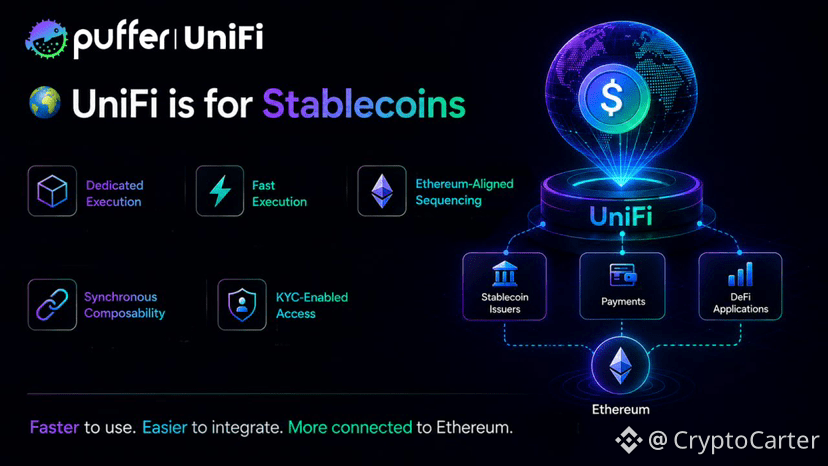
$PUFFER ステーブルコインは金融インフラになりつつあります。
金融インフラには、予測可能な実行が必要です。
Puffer Preconf は、最終的な Ethereum 決済の前に高速な実行保証を提供し、ステーブルコインのアプリケーションにオンチェーン上で価値を移すための、よりレスポンスの良い道を示します。⚡
$PUFFER ステーブルコインは金融インフラになりつつあります。
金融インフラには、予測可能な実行が必要です。
Puffer Preconf は、最終的な Ethereum 決済の前に高速な実行保証を提供し、ステーブルコインのアプリケーションにオンチェーン上で価値を移すための、よりレスポンスの良い道を示します。⚡
金融インフラには、予測可能な実行が必要です。
Puffer Preconf は、最終的な Ethereum 決済の前に高速な実行保証を提供し、ステーブルコインのアプリケーションにオンチェーン上で価値を移すための、よりレスポンスの良い道を示します。⚡
149
·
--
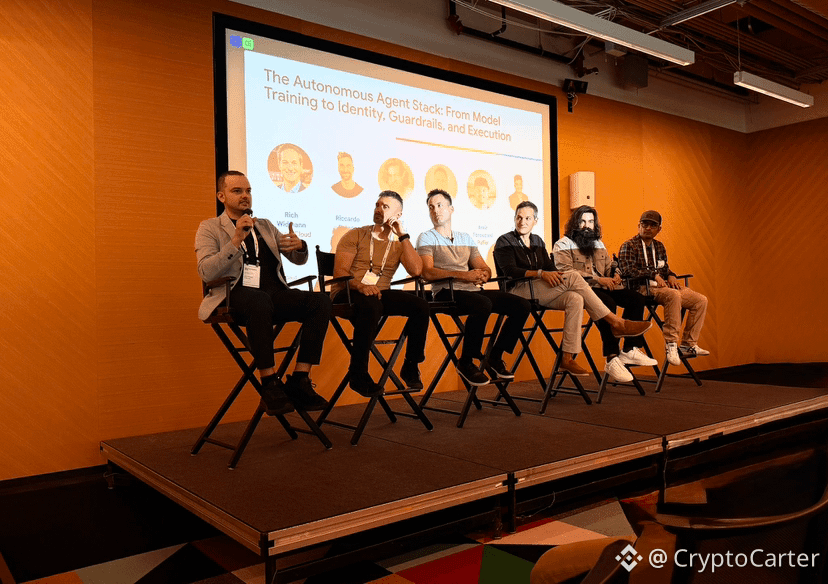
$PUFFER AIエージェントは知能だけでは不十分で、ガードレール(安全策)、セキュアな実行、検証可能なインフラが必要です。
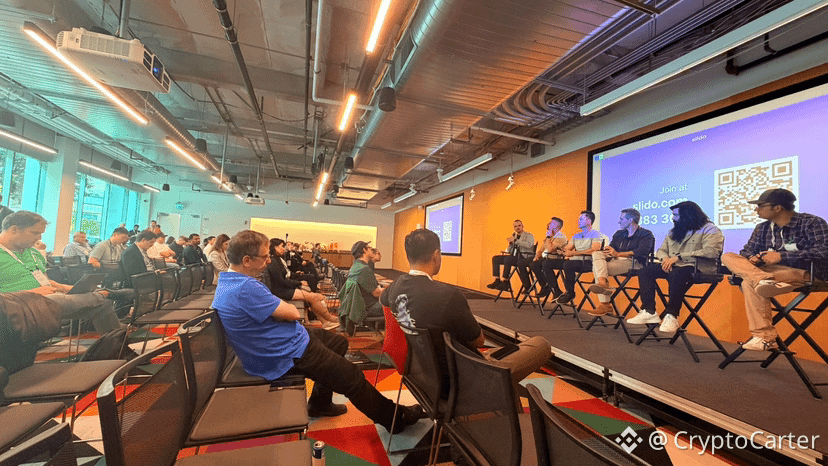
Pufferの共同創業者 @AmirOnchain は、@googlecloud @Anchorage @Pluralis @SonicLabs @proof_xyz といったリーダーたちと共に、Google Web3 AI Summit 2026 に参加しました。これは、研究者、創業者、エンジニア、そして業界の革新者が集う、厳選されたカンファレンスです。
パネル「自律エージェント・スタック:モデル学習からID、ガードレール、実行まで」では、自律エージェントを安全に本番環境へ導入するために何が必要なのかを探りました。
$PUFFER AIエージェントは知能だけでは不十分で、ガードレール(安全策)、セキュアな実行、検証可能なインフラが必要です。
Pufferの共同創業者 @AmirOnchain は、@googlecloud @Anchorage @Pluralis @SonicLabs @proof_xyz といったリーダーたちと共に、Google Web3 AI Summit 2026 に参加しました。これは、研究者、創業者、エンジニア、そして業界の革新者が集う、厳選されたカンファレンスです。
パネル「自律エージェント・スタック:モデル学習からID、ガードレール、実行まで」では、自律エージェントを安全に本番環境へ導入するために何が必要なのかを探りました。
Pufferの共同創業者 @AmirOnchain は、@googlecloud @Anchorage @Pluralis @SonicLabs @proof_xyz といったリーダーたちと共に、Google Web3 AI Summit 2026 に参加しました。これは、研究者、創業者、エンジニア、そして業界の革新者が集う、厳選されたカンファレンスです。
パネル「自律エージェント・スタック:モデル学習からID、ガードレール、実行まで」では、自律エージェントを安全に本番環境へ導入するために何が必要なのかを探りました。


142
·
--
翻訳参照
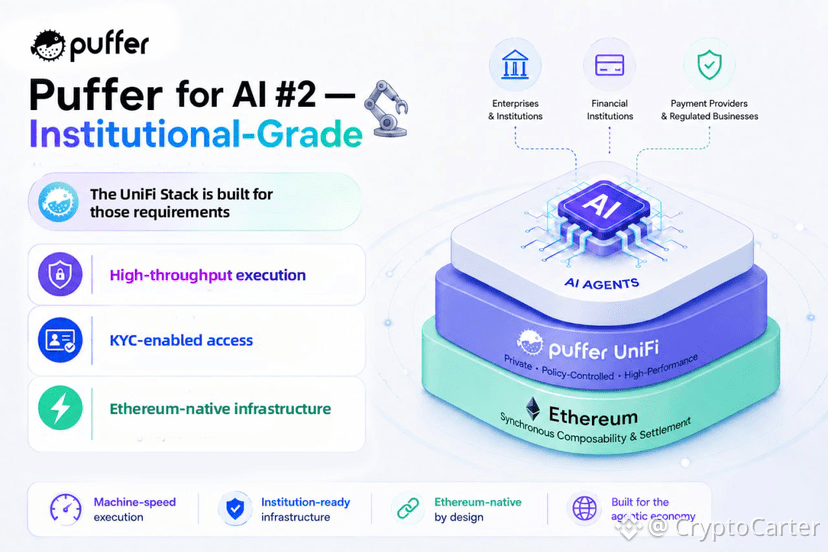
$PUFFER 🦾 Puffer for AI #2 — Institutional-Grade
AI agents will increasingly move value for enterprises, financial institutions, and payment providers, where performance and controlled access matter.
The @puffer_unifi stack is built with those requirements in mind:
• High-throughput execution while staying connected to Ethereum through synchronous composability
• KYC-enabled access for institutional applications
• Ethereum-native infrastructure for settlement and liquidity
The agentic economy needs infrastructure institutions can actually adopt.
Machine-speed. Institution-ready. Ethereum-native.🐡
$PUFFER 🦾 Puffer for AI #2 — Institutional-Grade
AI agents will increasingly move value for enterprises, financial institutions, and payment providers, where performance and controlled access matter.
The @puffer_unifi stack is built with those requirements in mind:
• High-throughput execution while staying connected to Ethereum through synchronous composability
• KYC-enabled access for institutional applications
• Ethereum-native infrastructure for settlement and liquidity
The agentic economy needs infrastructure institutions can actually adopt.
Machine-speed. Institution-ready. Ethereum-native.🐡
AI agents will increasingly move value for enterprises, financial institutions, and payment providers, where performance and controlled access matter.
The @puffer_unifi stack is built with those requirements in mind:
• High-throughput execution while staying connected to Ethereum through synchronous composability
• KYC-enabled access for institutional applications
• Ethereum-native infrastructure for settlement and liquidity
The agentic economy needs infrastructure institutions can actually adopt.
Machine-speed. Institution-ready. Ethereum-native.🐡
1
124
·
--
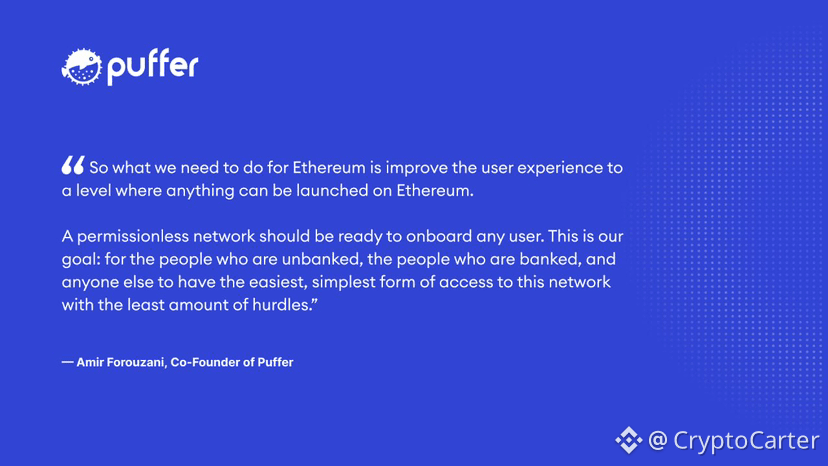
$PUFFER エイサムのUXのエンドゲーム:
誰でもアクセスできるくらいシンプルにしつつ、何でも立ち上げられるくらい強力にする。
👇 @puffer_unifi の裏で進めているミッションについて語る @AmirOnchain
$PUFFER エイサムのUXのエンドゲーム:
誰でもアクセスできるくらいシンプルにしつつ、何でも立ち上げられるくらい強力にする。
👇 @puffer_unifi の裏で進めているミッションについて語る @AmirOnchain
誰でもアクセスできるくらいシンプルにしつつ、何でも立ち上げられるくらい強力にする。
👇 @puffer_unifi の裏で進めているミッションについて語る @AmirOnchain
1
175
·
--
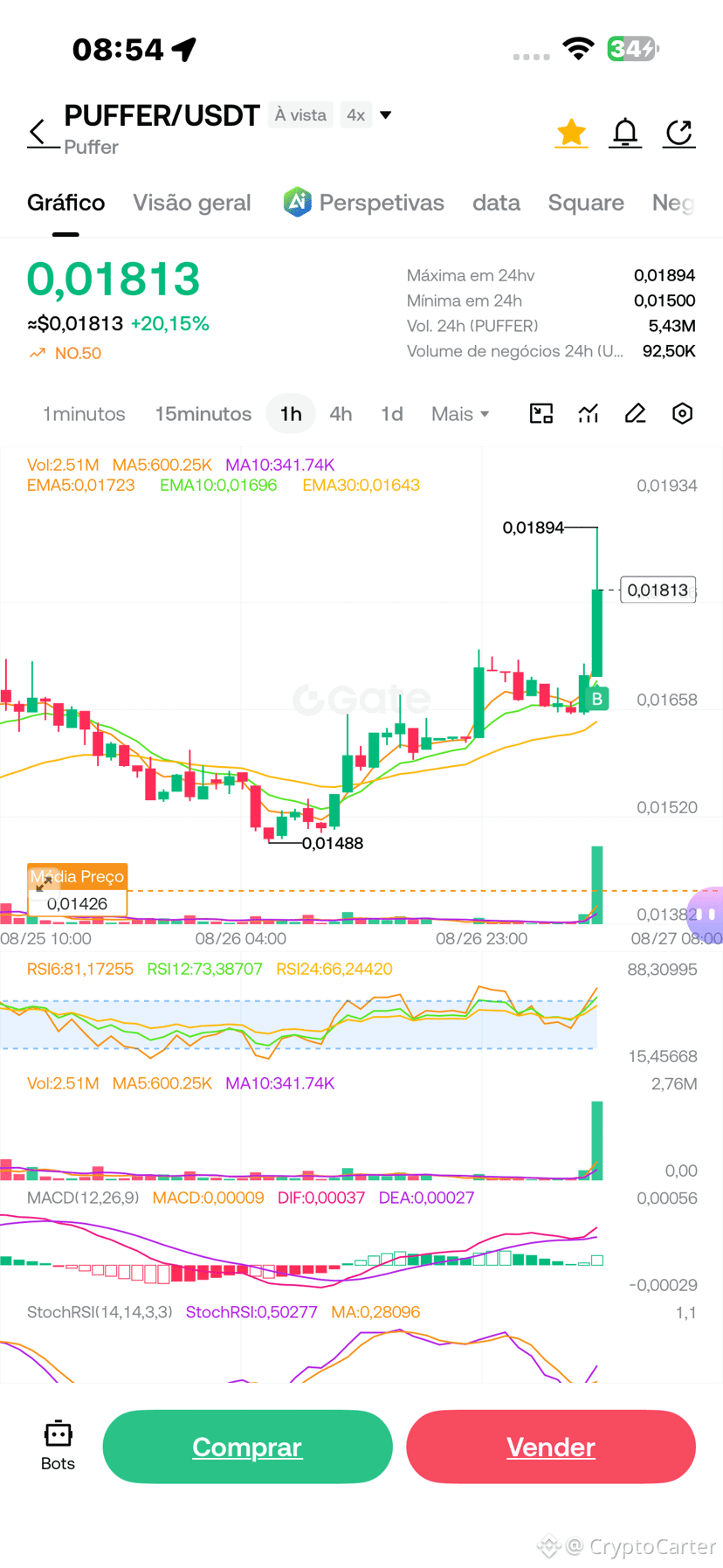
$PUFFER しばらく前から言っていることですが、私たちは今まさに手の中に黄金のチャンスを握っています。🌟
まだ市場がどこへ向かうのかを見極めようとしている人が多い中で、本当の構造的課題を解決するプロジェクトが、ビジョンの重要性を示しています。
パファーは単なる別のトークンではありません。ゲーム自体を作り変えています。Puffer UniFiを通じて、オンチェーン基盤の未来を見据えています:
⚡ 超高速実行(機械スピードの決済向けに100ms未満の確定)
🛡️ 企業や自律システム向けに設計された、機関級のセキュリティ
♾️ 大規模なスケーラビリティ(300k+ TPS)。比類なきイーサリアムの流動性と深く結びついています。
AIエージェントやRWAから、消費者向けアプリ、シームレスな決済まで。ピースは順調に揃ってきています。開発フェーズの早い段階で布石を打つ人こそ、次に何が来るのかを理解しているのです。
長期戦に目を向けてください。未来はオンチェーンであり、私たちはその早期組です。🐡🔥
$PUFFER しばらく前から言っていることですが、私たちは今まさに手の中に黄金のチャンスを握っています。🌟
まだ市場がどこへ向かうのかを見極めようとしている人が多い中で、本当の構造的課題を解決するプロジェクトが、ビジョンの重要性を示しています。
パファーは単なる別のトークンではありません。ゲーム自体を作り変えています。Puffer UniFiを通じて、オンチェーン基盤の未来を見据えています:
⚡ 超高速実行(機械スピードの決済向けに100ms未満の確定)
🛡️ 企業や自律システム向けに設計された、機関級のセキュリティ
♾️ 大規模なスケーラビリティ(300k+ TPS)。比類なきイーサリアムの流動性と深く結びついています。
AIエージェントやRWAから、消費者向けアプリ、シームレスな決済まで。ピースは順調に揃ってきています。開発フェーズの早い段階で布石を打つ人こそ、次に何が来るのかを理解しているのです。
長期戦に目を向けてください。未来はオンチェーンであり、私たちはその早期組です。🐡🔥
まだ市場がどこへ向かうのかを見極めようとしている人が多い中で、本当の構造的課題を解決するプロジェクトが、ビジョンの重要性を示しています。
パファーは単なる別のトークンではありません。ゲーム自体を作り変えています。Puffer UniFiを通じて、オンチェーン基盤の未来を見据えています:
⚡ 超高速実行(機械スピードの決済向けに100ms未満の確定)
🛡️ 企業や自律システム向けに設計された、機関級のセキュリティ
♾️ 大規模なスケーラビリティ(300k+ TPS)。比類なきイーサリアムの流動性と深く結びついています。
AIエージェントやRWAから、消費者向けアプリ、シームレスな決済まで。ピースは順調に揃ってきています。開発フェーズの早い段階で布石を打つ人こそ、次に何が来るのかを理解しているのです。
長期戦に目を向けてください。未来はオンチェーンであり、私たちはその早期組です。🐡🔥
1
88
ログインして、さらにコンテンツを読む
厳選トピックで世界の暗号資産トレーダーの仲間入り
⚡️ 暗号資産に関する最新かつ有益な情報が見つかります。
💬 世界最大の暗号資産取引所から信頼されています。
👍 認証を受けたクリエイターから、有益なインサイトを得られます。
メール / 電話番号
トレンドトピック
FedRateWatch
閲覧回数 1.5M
6,718人が討論中
トレンドハッシュタグキャンペーンで「シェア&ウィン」交通(トラフィック)報酬を獲得しよう
✨トピック:FOMC 9月、「次のFRBの一手」は?
👉参加方法:
ハッシュタグ #FedRateWatch を付けて短い投稿または記事を投稿してください
以下の観点に基づいてコンテンツを作成してください:
- 8月のコアCPIは前月比0.3%上昇し、今週の25bp利上げの確率は現在約90%です。今週、利上げはあると思いますか?それは一時的なものですか、それともより長い利上げサイクルの始まりでしょうか?
- 利上げが実施された場合、BTC、テック株、ゴールドはどのように動きますか?強気(ブル)か弱気(ベア)か?
- 次の取引はどう計画していますか?取引共有ウィジェットを使って、BTC、株、またはゴールドの取引/保有を共有してください。
⏰キャンペーン期間:
- 2026-09-15 11:00 - 2026-09-17 3:00 UTC
🎁報酬:
- 上記のガイドラインを満たし、かつ100語を超える適格な投稿は審査され、抽選で500〜3,000ビューのランダムなトラフィック増加が付与される場合があります。投稿が選ばれた場合、フィードの事務局から通知が届きます。
- 記事がBinance Square Officialで特集されるチャンス
投稿のアイデアが必要ですか?トピックページ #FedRateWatch へアクセスするか、 Square Guide on How to Post for Better Reach をご覧ください。
Binance Square Official
·いいね:647件
·閲覧回数 1.7M
ZcashRises6%
閲覧回数 51,889
651人が討論中
XRPSinks10%
閲覧回数 34,833
426人が討論中