
Off فک
10.9k 投稿

Off فک
報告
ユーザーをブロック
取引を発注
高頻度トレーダー
2年
20 フォロー
10.0K+ フォロワー
4.6K+ いいね
投稿
ポートフォリオ
すべて
引用
ライブ
·
--
記事
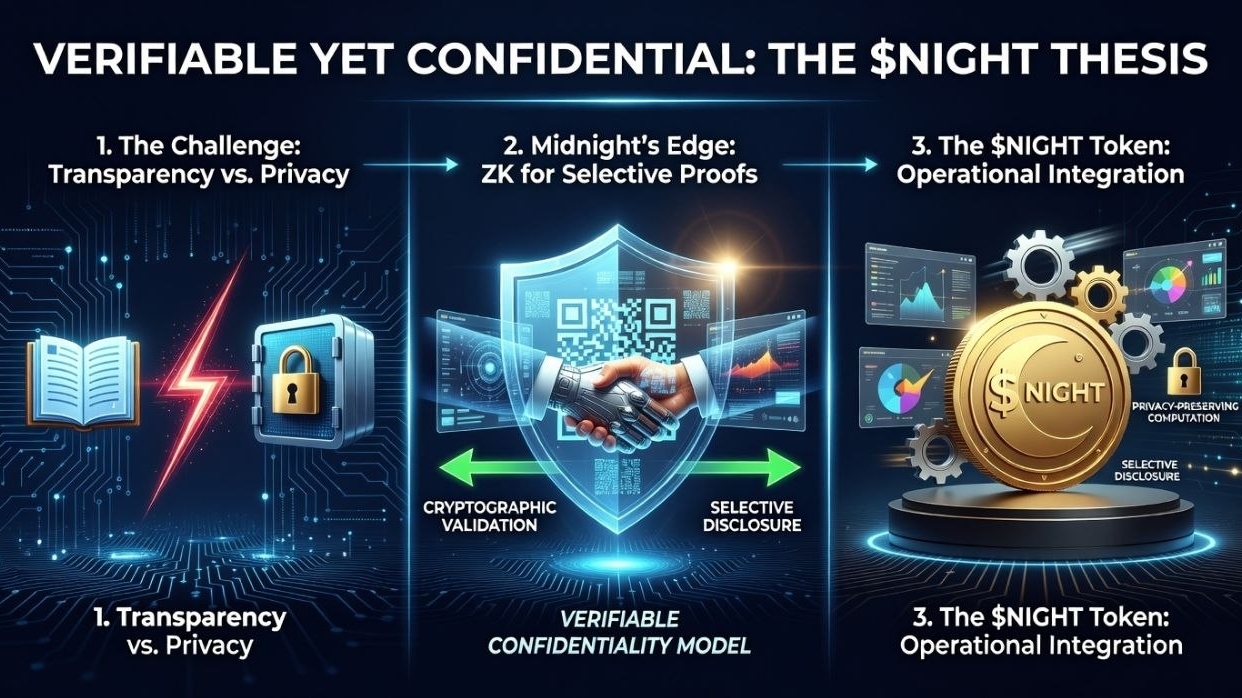
検証可能だが機密性のある:進化するゼロ知識インフラストラクチャレースにおける$NIGHTの位置ゼロ知識技術は、学術理論から暗号インフラストラクチャの最も競争力のあるセクターの1つに迅速に移行しました。しかし、ほとんどの議論はスケーラビリティ、つまりより速いスループット、安価なトランザクション、ロールアップの効率性に関するものです。プライバシーは、しばしば構造的基盤ではなく、二次的な機能として扱われます。
その区別は重要です。
@MidnightNetwork は、ゼロ知識に対して異なる角度からアプローチしているようです:単なるスケーリングメカニズムとしてではなく、ブロックチェーンの検証と現実世界の機密性を調和させる方法としてです。多くの業界では、データを単純に公共台帳に放送することはできません。しかし、透明性を完全に排除することは信頼を損ないます。この2つの力の間の緊張が、ZKが戦略的に重要になる場所です。
検証可能だが機密性のある:進化するゼロ知識インフラストラクチャレースにおける$NIGHTの位置
ゼロ知識技術は、学術理論から暗号インフラストラクチャの最も競争力のあるセクターの1つに迅速に移行しました。しかし、ほとんどの議論はスケーラビリティ、つまりより速いスループット、安価なトランザクション、ロールアップの効率性に関するものです。プライバシーは、しばしば構造的基盤ではなく、二次的な機能として扱われます。
その区別は重要です。
@MidnightNetwork は、ゼロ知識に対して異なる角度からアプローチしているようです:単なるスケーリングメカニズムとしてではなく、ブロックチェーンの検証と現実世界の機密性を調和させる方法としてです。多くの業界では、データを単純に公共台帳に放送することはできません。しかし、透明性を完全に排除することは信頼を損ないます。この2つの力の間の緊張が、ZKが戦略的に重要になる場所です。
その区別は重要です。
@MidnightNetwork は、ゼロ知識に対して異なる角度からアプローチしているようです:単なるスケーリングメカニズムとしてではなく、ブロックチェーンの検証と現実世界の機密性を調和させる方法としてです。多くの業界では、データを単純に公共台帳に放送することはできません。しかし、透明性を完全に排除することは信頼を損ないます。この2つの力の間の緊張が、ZKが戦略的に重要になる場所です。
32
48
288
·
--
#night $NIGHT 透明性はオープンな台帳には効果的だけど、すべてのユースケースがデータを公開する必要はない。ZKの本当のイノベーションは、検証を可視性から分離することにある。
@MidnightNetwork ポジションは$NIGHT その区別に基づいており、開示なしでの証明を可能にしている。Web3が企業の採用を望むなら、そのバランスはオプションではなく必須となるかもしれない。#ナイト
#night $NIGHT 透明性はオープンな台帳には効果的だけど、すべてのユースケースがデータを公開する必要はない。ZKの本当のイノベーションは、検証を可視性から分離することにある。
@MidnightNetwork ポジションは$NIGHT その区別に基づいており、開示なしでの証明を可能にしている。Web3が企業の採用を望むなら、そのバランスはオプションではなく必須となるかもしれない。#ナイト
@MidnightNetwork ポジションは$NIGHT その区別に基づいており、開示なしでの証明を可能にしている。Web3が企業の採用を望むなら、そのバランスはオプションではなく必須となるかもしれない。#ナイト

25
1
49
135
·
--
記事
翻訳参照
Beyond Intelligence: Can $ROBO Anchor the Economic Coordination Layer for Autonomous Robots?For the past few years, the dominant conversation around robotics has centered on intelligence — better models, stronger perception systems, improved dexterity. But intelligence alone doesn’t create an economy. Coordination does.
Once autonomous robots begin performing tasks across logistics, manufacturing, research, or even digital-physical hybrid environments, their outputs must connect to a broader system. Tasks need validation. Results need attribution. Incentives need distribution. Without coordination, intelligence remains isolated.
This is where the infrastructure thesis behind @FabricFND becomes more interesting.
Fabric Protocol appears to focus less on building the “smartest robot” and more on building the economic coordination layer that allows autonomous agents to operate within a shared, verifiable network. Through public ledger mechanisms and verifiable computing principles, robotic actions are not just executed — they are recorded and made auditable.
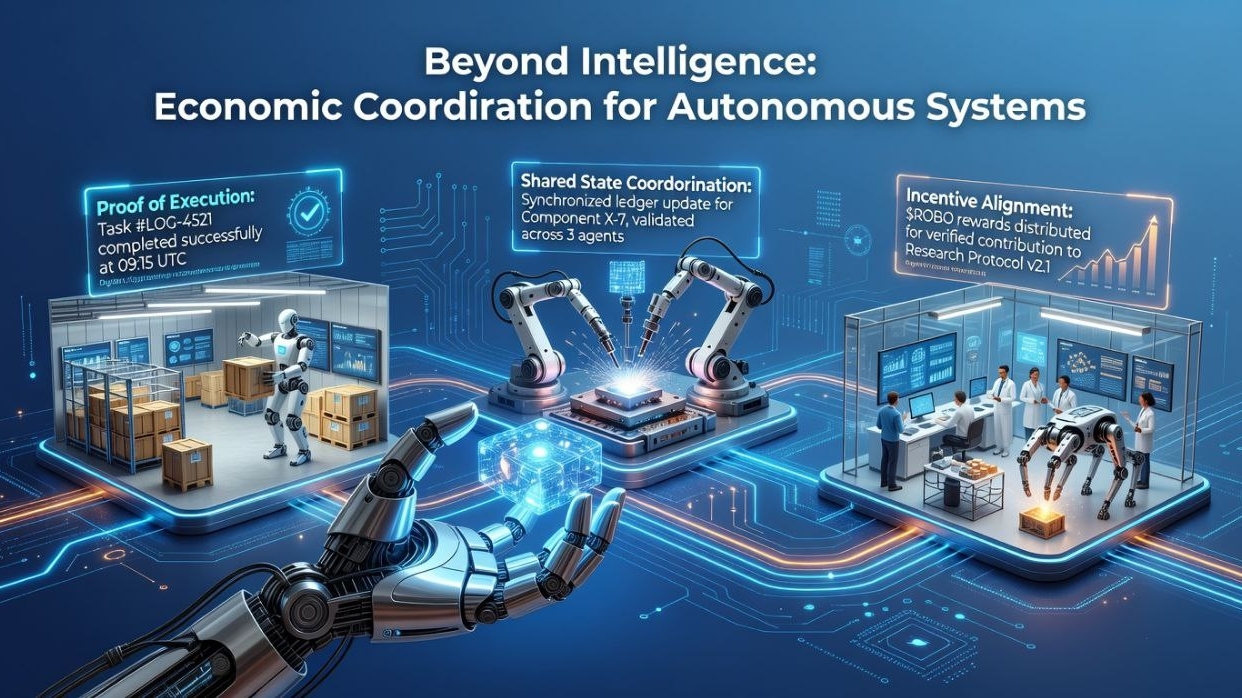
To simplify the architecture, consider three economic requirements for autonomous systems:
1. Proof of Execution – Did the robot actually perform the task as claimed?
2. Shared State Coordination – Can multiple agents rely on the same source of truth?
3. Incentive Alignment – How are contributions measured and rewarded?
Traditional robotics stacks handle the first requirement internally, often within closed systems. Fabric’s approach introduces an externalized coordination layer where these activities can be synchronized and validated across participants. That shift moves robotics closer to an open network model rather than siloed deployments.
Within this structure, $ROBO functions as more than a ticker. It aligns with the coordination and incentive dynamics of the protocol — potentially supporting how participants interact within the networked robotics environment. If machine activity becomes economically meaningful, then the token layer must reflect usage, contribution, and verification logic.
There’s also a macro trend reinforcing this direction. Decentralized Physical Infrastructure Networks (DePIN) have shown that distributed coordination can support storage, compute, and connectivity markets. Extending similar principles to robotics increases complexity, but it also expands the scope of what decentralized systems can manage — from digital services to physical execution.
That said, scaling such a model won’t be simple. Verifiable computation introduces cost considerations. Hardware heterogeneity makes standardization difficult. Regulatory oversight of autonomous systems is likely to intensify, especially where safety and liability are concerned.
Still, if robotics evolves from isolated machines into economically active agents, intelligence will not be enough. Coordination — transparent, verifiable, and incentive-aligned — may ultimately define which systems scale.
In that broader shift, Fabric Protocol’s focus on coordination infrastructure suggests that $ROBO is positioned not at the edge of the AI narrative, but at the structural layer that could support it.
#ROBO
Beyond Intelligence: Can $ROBO Anchor the Economic Coordination Layer for Autonomous Robots?
For the past few years, the dominant conversation around robotics has centered on intelligence — better models, stronger perception systems, improved dexterity. But intelligence alone doesn’t create an economy. Coordination does.
Once autonomous robots begin performing tasks across logistics, manufacturing, research, or even digital-physical hybrid environments, their outputs must connect to a broader system. Tasks need validation. Results need attribution. Incentives need distribution. Without coordination, intelligence remains isolated.
This is where the infrastructure thesis behind @Fabric Foundation becomes more interesting.
Fabric Protocol appears to focus less on building the “smartest robot” and more on building the economic coordination layer that allows autonomous agents to operate within a shared, verifiable network. Through public ledger mechanisms and verifiable computing principles, robotic actions are not just executed — they are recorded and made auditable.
To simplify the architecture, consider three economic requirements for autonomous systems:
1. Proof of Execution – Did the robot actually perform the task as claimed?
2. Shared State Coordination – Can multiple agents rely on the same source of truth?
3. Incentive Alignment – How are contributions measured and rewarded?
Traditional robotics stacks handle the first requirement internally, often within closed systems. Fabric’s approach introduces an externalized coordination layer where these activities can be synchronized and validated across participants. That shift moves robotics closer to an open network model rather than siloed deployments.
Within this structure, $ROBO functions as more than a ticker. It aligns with the coordination and incentive dynamics of the protocol — potentially supporting how participants interact within the networked robotics environment. If machine activity becomes economically meaningful, then the token layer must reflect usage, contribution, and verification logic.
There’s also a macro trend reinforcing this direction. Decentralized Physical Infrastructure Networks (DePIN) have shown that distributed coordination can support storage, compute, and connectivity markets. Extending similar principles to robotics increases complexity, but it also expands the scope of what decentralized systems can manage — from digital services to physical execution.
That said, scaling such a model won’t be simple. Verifiable computation introduces cost considerations. Hardware heterogeneity makes standardization difficult. Regulatory oversight of autonomous systems is likely to intensify, especially where safety and liability are concerned.
Still, if robotics evolves from isolated machines into economically active agents, intelligence will not be enough. Coordination — transparent, verifiable, and incentive-aligned — may ultimately define which systems scale.
In that broader shift, Fabric Protocol’s focus on coordination infrastructure suggests that $ROBO is positioned not at the edge of the AI narrative, but at the structural layer that could support it.
#ROBO
Once autonomous robots begin performing tasks across logistics, manufacturing, research, or even digital-physical hybrid environments, their outputs must connect to a broader system. Tasks need validation. Results need attribution. Incentives need distribution. Without coordination, intelligence remains isolated.
This is where the infrastructure thesis behind @Fabric Foundation becomes more interesting.
Fabric Protocol appears to focus less on building the “smartest robot” and more on building the economic coordination layer that allows autonomous agents to operate within a shared, verifiable network. Through public ledger mechanisms and verifiable computing principles, robotic actions are not just executed — they are recorded and made auditable.
To simplify the architecture, consider three economic requirements for autonomous systems:
1. Proof of Execution – Did the robot actually perform the task as claimed?
2. Shared State Coordination – Can multiple agents rely on the same source of truth?
3. Incentive Alignment – How are contributions measured and rewarded?
Traditional robotics stacks handle the first requirement internally, often within closed systems. Fabric’s approach introduces an externalized coordination layer where these activities can be synchronized and validated across participants. That shift moves robotics closer to an open network model rather than siloed deployments.
Within this structure, $ROBO functions as more than a ticker. It aligns with the coordination and incentive dynamics of the protocol — potentially supporting how participants interact within the networked robotics environment. If machine activity becomes economically meaningful, then the token layer must reflect usage, contribution, and verification logic.
There’s also a macro trend reinforcing this direction. Decentralized Physical Infrastructure Networks (DePIN) have shown that distributed coordination can support storage, compute, and connectivity markets. Extending similar principles to robotics increases complexity, but it also expands the scope of what decentralized systems can manage — from digital services to physical execution.
That said, scaling such a model won’t be simple. Verifiable computation introduces cost considerations. Hardware heterogeneity makes standardization difficult. Regulatory oversight of autonomous systems is likely to intensify, especially where safety and liability are concerned.
Still, if robotics evolves from isolated machines into economically active agents, intelligence will not be enough. Coordination — transparent, verifiable, and incentive-aligned — may ultimately define which systems scale.
In that broader shift, Fabric Protocol’s focus on coordination infrastructure suggests that $ROBO is positioned not at the edge of the AI narrative, but at the structural layer that could support it.
#ROBO
3
20
·
--
翻訳参照
#robo $ROBO AI models are getting smarter every month. But intelligence without coordination can’t scale in open systems.
If autonomous robots are going to interact across networks, someone has to standardize how their work is recorded and validated.
@FabricFND is building $ROBO around that coordination logic — less about hype, more about machine-to-machine trust. That’s the part I find compelling. #ROBO
#robo $ROBO AI models are getting smarter every month. But intelligence without coordination can’t scale in open systems.
If autonomous robots are going to interact across networks, someone has to standardize how their work is recorded and validated.
@FabricFND is building $ROBO around that coordination logic — less about hype, more about machine-to-machine trust. That’s the part I find compelling. #ROBO
If autonomous robots are going to interact across networks, someone has to standardize how their work is recorded and validated.
@FabricFND is building $ROBO around that coordination logic — less about hype, more about machine-to-machine trust. That’s the part I find compelling. #ROBO
2
28
·
--
記事
翻訳参照
The Machine Accountability Stack: Where $ROBO Fits in Fabric Protocol’s Verifiable Robotics InfrastrThe Machine Accountability Stack: Where $ROBO Fits in Fabric Protocol’s Verifiable Robotics Infrastructure
As robotics systems move from controlled labs into open economic environments, capability alone is no longer the defining metric. The real bottleneck is accountability. When a machine completes a task, who verifies the computation, records the outcome, and ensures the result can be trusted by external parties?
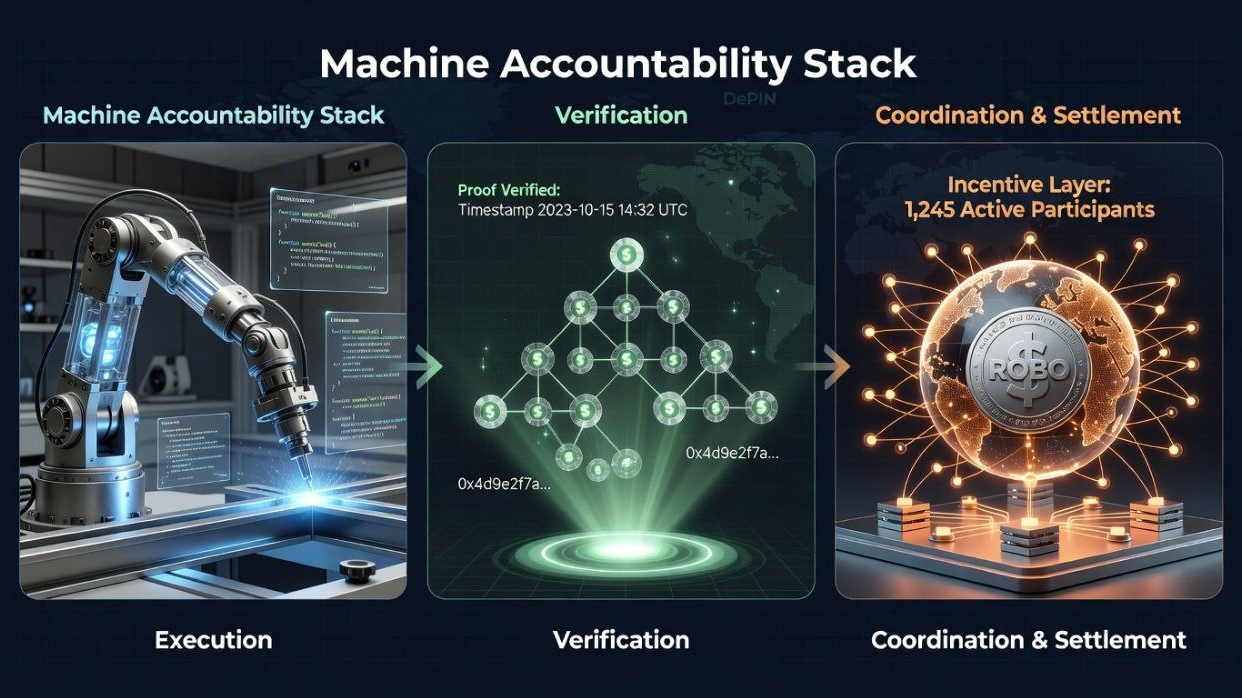
To think clearly about this, it helps to break the problem into what I’d call a Machine Accountability Stack:
Layer 1 – Execution:
The robot or autonomous agent performs a task using AI models and physical hardware.
Layer 2 – Verification:
The computation behind that task must be provable. Not just visible, but cryptographically or programmatically verifiable.
Layer 3 – Coordination & Settlement:
The activity needs to be recorded, coordinated across participants, and potentially linked to economic incentives.
Most robotics companies focus heavily on Layer 1. Very few build robust systems for Layers 2 and 3. That gap becomes critical if autonomous agents begin interacting with markets, supply chains, or decentralized systems.
This is where @FabricFND positions its infrastructure thesis.
Fabric Protocol centers on verifiable computing and public ledger coordination, effectively targeting the upper layers of that accountability stack. Instead of simply making robots more capable, the protocol architecture aims to make robotic actions auditable and interoperable within a shared network. In that context, $ROBO is not just a symbolic asset — it aligns with the coordination and incentive layer that allows participants to operate within a unified system.
There’s also a broader industry backdrop to consider. Decentralized Physical Infrastructure Networks (DePIN) have already demonstrated that distributed coordination can power storage, compute, and connectivity markets. Extending similar coordination logic to robotics introduces higher complexity — physical execution carries real-world consequences. That makes verification even more important.
Of course, challenges remain. Verifiable computation can introduce overhead. Robotics hardware adoption is uneven across regions. Regulatory standards for autonomous systems are still forming, and compliance requirements could reshape infrastructure design.
Still, if autonomous machines are going to perform economically meaningful work, they will need more than intelligence — they will need structured accountability.
Fabric Protocol’s approach suggests that the future robotics economy may not be defined solely by smarter machines, but by better verification layers. And within that architecture, $ROBO sits at the intersection of coordination, incentives, and machine-native infrastructure.
#ROBO
The Machine Accountability Stack: Where $ROBO Fits in Fabric Protocol’s Verifiable Robotics Infrastr
The Machine Accountability Stack: Where $ROBO Fits in Fabric Protocol’s Verifiable Robotics Infrastructure
As robotics systems move from controlled labs into open economic environments, capability alone is no longer the defining metric. The real bottleneck is accountability. When a machine completes a task, who verifies the computation, records the outcome, and ensures the result can be trusted by external parties?
To think clearly about this, it helps to break the problem into what I’d call a Machine Accountability Stack:
Layer 1 – Execution:
The robot or autonomous agent performs a task using AI models and physical hardware.
Layer 2 – Verification:
The computation behind that task must be provable. Not just visible, but cryptographically or programmatically verifiable.
Layer 3 – Coordination & Settlement:
The activity needs to be recorded, coordinated across participants, and potentially linked to economic incentives.
Most robotics companies focus heavily on Layer 1. Very few build robust systems for Layers 2 and 3. That gap becomes critical if autonomous agents begin interacting with markets, supply chains, or decentralized systems.
This is where @Fabric Foundation positions its infrastructure thesis.
Fabric Protocol centers on verifiable computing and public ledger coordination, effectively targeting the upper layers of that accountability stack. Instead of simply making robots more capable, the protocol architecture aims to make robotic actions auditable and interoperable within a shared network. In that context, $ROBO is not just a symbolic asset — it aligns with the coordination and incentive layer that allows participants to operate within a unified system.
There’s also a broader industry backdrop to consider. Decentralized Physical Infrastructure Networks (DePIN) have already demonstrated that distributed coordination can power storage, compute, and connectivity markets. Extending similar coordination logic to robotics introduces higher complexity — physical execution carries real-world consequences. That makes verification even more important.
Of course, challenges remain. Verifiable computation can introduce overhead. Robotics hardware adoption is uneven across regions. Regulatory standards for autonomous systems are still forming, and compliance requirements could reshape infrastructure design.
Still, if autonomous machines are going to perform economically meaningful work, they will need more than intelligence — they will need structured accountability.
Fabric Protocol’s approach suggests that the future robotics economy may not be defined solely by smarter machines, but by better verification layers. And within that architecture, $ROBO sits at the intersection of coordination, incentives, and machine-native infrastructure.
#ROBO
As robotics systems move from controlled labs into open economic environments, capability alone is no longer the defining metric. The real bottleneck is accountability. When a machine completes a task, who verifies the computation, records the outcome, and ensures the result can be trusted by external parties?
To think clearly about this, it helps to break the problem into what I’d call a Machine Accountability Stack:
Layer 1 – Execution:
The robot or autonomous agent performs a task using AI models and physical hardware.
Layer 2 – Verification:
The computation behind that task must be provable. Not just visible, but cryptographically or programmatically verifiable.
Layer 3 – Coordination & Settlement:
The activity needs to be recorded, coordinated across participants, and potentially linked to economic incentives.
Most robotics companies focus heavily on Layer 1. Very few build robust systems for Layers 2 and 3. That gap becomes critical if autonomous agents begin interacting with markets, supply chains, or decentralized systems.
This is where @Fabric Foundation positions its infrastructure thesis.
Fabric Protocol centers on verifiable computing and public ledger coordination, effectively targeting the upper layers of that accountability stack. Instead of simply making robots more capable, the protocol architecture aims to make robotic actions auditable and interoperable within a shared network. In that context, $ROBO is not just a symbolic asset — it aligns with the coordination and incentive layer that allows participants to operate within a unified system.
There’s also a broader industry backdrop to consider. Decentralized Physical Infrastructure Networks (DePIN) have already demonstrated that distributed coordination can power storage, compute, and connectivity markets. Extending similar coordination logic to robotics introduces higher complexity — physical execution carries real-world consequences. That makes verification even more important.
Of course, challenges remain. Verifiable computation can introduce overhead. Robotics hardware adoption is uneven across regions. Regulatory standards for autonomous systems are still forming, and compliance requirements could reshape infrastructure design.
Still, if autonomous machines are going to perform economically meaningful work, they will need more than intelligence — they will need structured accountability.
Fabric Protocol’s approach suggests that the future robotics economy may not be defined solely by smarter machines, but by better verification layers. And within that architecture, $ROBO sits at the intersection of coordination, incentives, and machine-native infrastructure.
#ROBO
5
38
67
·
--
翻訳参照
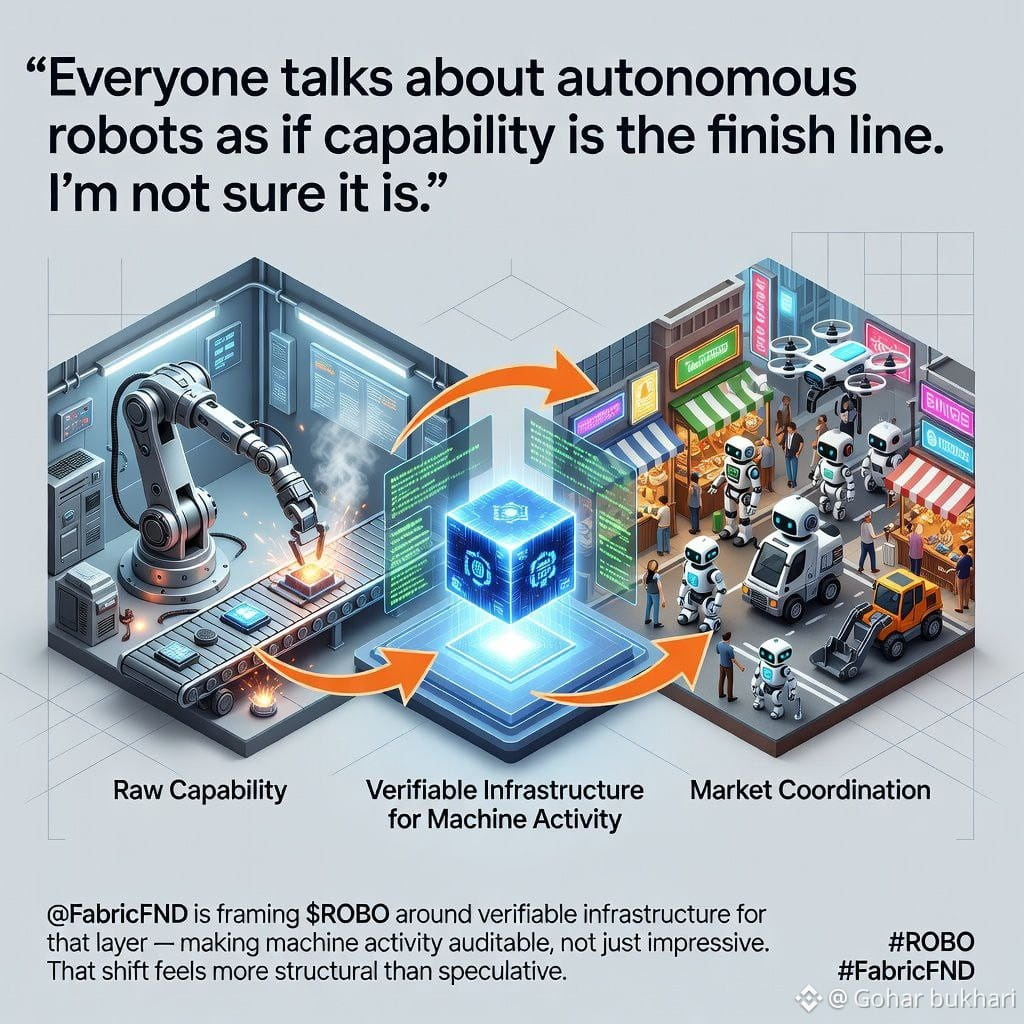
#robo $ROBO Everyone talks about autonomous robots as if capability is the finish line. I’m not sure it is.
Once machines start interacting with markets or completing paid tasks, coordination becomes a bigger issue than intelligence itself.
@FabricFND is framing $ROBO around verifiable infrastructure for that layer — making machine activity auditable, not just impressive. That shift feels more structural than speculative. #ROBO
#robo $ROBO Everyone talks about autonomous robots as if capability is the finish line. I’m not sure it is.
Once machines start interacting with markets or completing paid tasks, coordination becomes a bigger issue than intelligence itself.
@FabricFND is framing $ROBO around verifiable infrastructure for that layer — making machine activity auditable, not just impressive. That shift feels more structural than speculative. #ROBO
Once machines start interacting with markets or completing paid tasks, coordination becomes a bigger issue than intelligence itself.
@FabricFND is framing $ROBO around verifiable infrastructure for that layer — making machine activity auditable, not just impressive. That shift feels more structural than speculative. #ROBO
3
34
36
·
--
記事
ロボットが働くとき、誰が検証するのか?Fabric Protocolのコーディネーション・レイヤーの提案私たちは、人間を単に支援するだけでなく、機械がタスクを実行し、出力を生成し、さらには自律的に価値の取引まで行うフェーズに入ろうとしています。本当の問題は、ロボットが働けるかどうかではありません。彼らの仕事が検証できるかどうかが問題です。
現在のほとんどのロボティクス・システムでは、計算は閉じた環境の中で行われます。結果は目にしますが、その結果がどのように生み出されたかの全経緯は見えません。ロボットがツールにとどまる限り、この不透明さは許容されるかもしれません。しかし自律エージェントが経済的な文脈で動き始め、タスクを完了させ、報酬を獲得し、他のシステムと相互作用するようになると、検証は基盤になります。
ロボットが働くとき、誰が検証するのか?Fabric Protocolのコーディネーション・レイヤーの提案
私たちは、人間を単に支援するだけでなく、機械がタスクを実行し、出力を生成し、さらには自律的に価値の取引まで行うフェーズに入ろうとしています。本当の問題は、ロボットが働けるかどうかではありません。彼らの仕事が検証できるかどうかが問題です。
現在のほとんどのロボティクス・システムでは、計算は閉じた環境の中で行われます。結果は目にしますが、その結果がどのように生み出されたかの全経緯は見えません。ロボットがツールにとどまる限り、この不透明さは許容されるかもしれません。しかし自律エージェントが経済的な文脈で動き始め、タスクを完了させ、報酬を獲得し、他のシステムと相互作用するようになると、検証は基盤になります。
現在のほとんどのロボティクス・システムでは、計算は閉じた環境の中で行われます。結果は目にしますが、その結果がどのように生み出されたかの全経緯は見えません。ロボットがツールにとどまる限り、この不透明さは許容されるかもしれません。しかし自律エージェントが経済的な文脈で動き始め、タスクを完了させ、報酬を獲得し、他のシステムと相互作用するようになると、検証は基盤になります。
11
2
76
93
·
--
翻訳参照
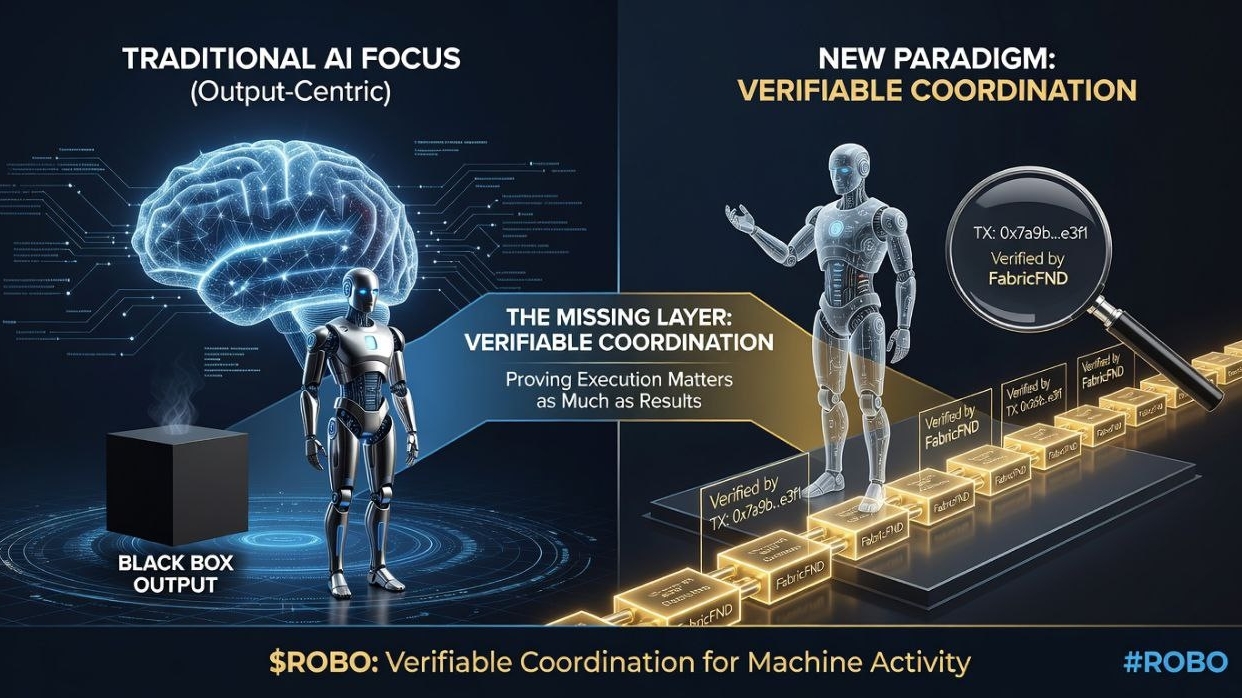
#robo $ROBO Most AI projects focus on intelligence output. What’s less discussed is verification.
If autonomous agents start operating economically, proving how work was executed becomes as important as the result itself.
@FabricFND ND seems to be positioning $ROBO around that missing layer — verifiable coordination for machine activity, not just AI hype.
That infrastructure angle is what makes this interesting.$ROBO
#robo $ROBO Most AI projects focus on intelligence output. What’s less discussed is verification.
If autonomous agents start operating economically, proving how work was executed becomes as important as the result itself.
@Fabric Foundation ND seems to be positioning $ROBO around that missing layer — verifiable coordination for machine activity, not just AI hype.
That infrastructure angle is what makes this interesting.$ROBO
If autonomous agents start operating economically, proving how work was executed becomes as important as the result itself.
@Fabric Foundation ND seems to be positioning $ROBO around that missing layer — verifiable coordination for machine activity, not just AI hype.
That infrastructure angle is what makes this interesting.$ROBO
5
65
65















ログインして、さらにコンテンツを読む
厳選トピックで世界の暗号資産トレーダーの仲間入り
⚡️ 暗号資産に関する最新かつ有益な情報が見つかります。
💬 世界最大の暗号資産取引所から信頼されています。
👍 認証を受けたクリエイターから、有益なインサイトを得られます。
メール / 電話番号