
Aadi 11
468 投稿

Aadi 11
報告
ユーザーをブロック
取引を発注
高頻度トレーダー
4.7年
63 フォロー
55 フォロワー
343 いいね
投稿
ポートフォリオ
すべて
引用
動画
·
--
翻訳参照
BTC Daily Update — Fed Hiked, Bitcoin Is Still Losing Ground
Yesterday’s Fed decision did nothing to improve Bitcoin’s structure.
The Fed raised rates by 25bps to 3.75%–4.00% — its first hike in three years and the bigger message was the guidance. 16 of 18 policymakers still see at least one more hike this year.
That is a hawkish backdrop, not the easier liquidity environment Bitcoin bulls would have wanted.
Now back to the chart.
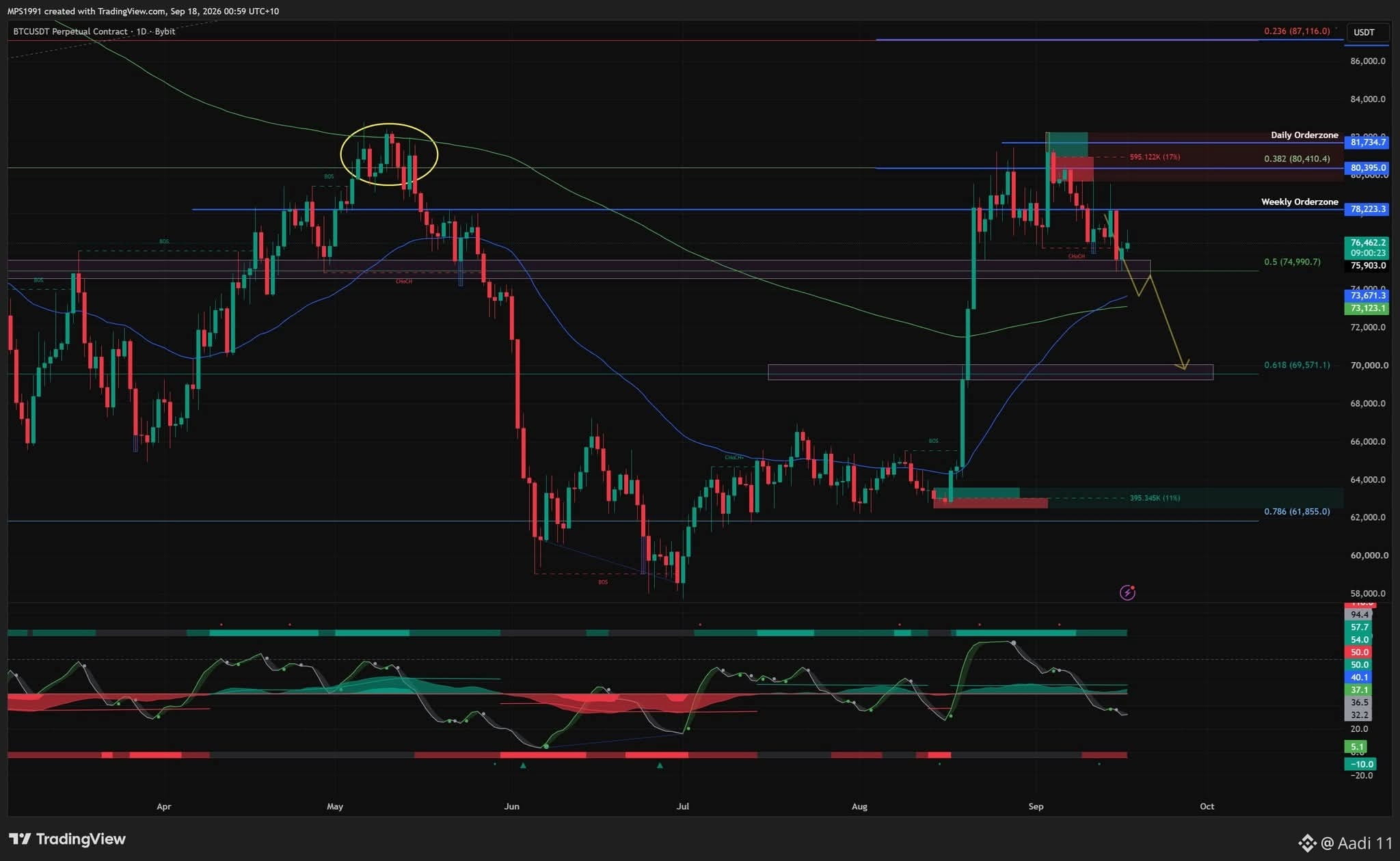
Bitcoin has already lost the 78.2k weekly orderzone and is trading around 76.5k.
The next level I’m watching is 75k.
If 75k holds, then Bitcoin has room to bounce back toward 78.2k. That would be the first area bulls need to reclaim before I start looking back toward 80.4k and the daily orderzone around 81.7k.
But if 75k breaks, then the next support area is around 73k to 73.5k.
Lose that and the 0.618 Fib around 69.5k becomes the next major level on my roadmap.
Momentum is still weak as well, so I’m not seeing anything yet that makes me want to ignore those lower levels.
And we are not finished with macro this week.
The BOJ decision is tomorrow, with markets expecting another hike to around 1.25% and further tightening still on the table. That gives Bitcoin another potential volatility event almost immediately after the Fed.
Key levels I’m watching:
• Current area: 76.5k
• Immediate support: 75k
• Next support: 73k to 73.5k
• Major downside level: 69.5k
• Weekly reclaim: 78.2k
• Next upside level: 80.4k
• Daily orderzone: 81.7k
For me, the roadmap is still straightforward.
Hold 75k and Bitcoin gets another chance to reclaim the range.
Lose it, and 73k becomes the next test.
Lose that, and 69.5k is where my attention goes next.
Fed done.
BOJ next.
The dominoes are still moving.
#SECGrantsInnovationExemptionForTokenizedStocks #BOJHikesRatesTo31YearHigh $BTC
{future}(BTCUSDT)
BTC Daily Update — Fed Hiked, Bitcoin Is Still Losing Ground
Yesterday’s Fed decision did nothing to improve Bitcoin’s structure.
The Fed raised rates by 25bps to 3.75%–4.00% — its first hike in three years and the bigger message was the guidance. 16 of 18 policymakers still see at least one more hike this year.
That is a hawkish backdrop, not the easier liquidity environment Bitcoin bulls would have wanted.
Now back to the chart.
Bitcoin has already lost the 78.2k weekly orderzone and is trading around 76.5k.
The next level I’m watching is 75k.
If 75k holds, then Bitcoin has room to bounce back toward 78.2k. That would be the first area bulls need to reclaim before I start looking back toward 80.4k and the daily orderzone around 81.7k.
But if 75k breaks, then the next support area is around 73k to 73.5k.
Lose that and the 0.618 Fib around 69.5k becomes the next major level on my roadmap.
Momentum is still weak as well, so I’m not seeing anything yet that makes me want to ignore those lower levels.
And we are not finished with macro this week.
The BOJ decision is tomorrow, with markets expecting another hike to around 1.25% and further tightening still on the table. That gives Bitcoin another potential volatility event almost immediately after the Fed.
Key levels I’m watching:
• Current area: 76.5k
• Immediate support: 75k
• Next support: 73k to 73.5k
• Major downside level: 69.5k
• Weekly reclaim: 78.2k
• Next upside level: 80.4k
• Daily orderzone: 81.7k
For me, the roadmap is still straightforward.
Hold 75k and Bitcoin gets another chance to reclaim the range.
Lose it, and 73k becomes the next test.
Lose that, and 69.5k is where my attention goes next.
Fed done.
BOJ next.
The dominoes are still moving.
#SECGrantsInnovationExemptionForTokenizedStocks #BOJHikesRatesTo31YearHigh $BTC
Yesterday’s Fed decision did nothing to improve Bitcoin’s structure.
The Fed raised rates by 25bps to 3.75%–4.00% — its first hike in three years and the bigger message was the guidance. 16 of 18 policymakers still see at least one more hike this year.
That is a hawkish backdrop, not the easier liquidity environment Bitcoin bulls would have wanted.
Now back to the chart.
Bitcoin has already lost the 78.2k weekly orderzone and is trading around 76.5k.
The next level I’m watching is 75k.
If 75k holds, then Bitcoin has room to bounce back toward 78.2k. That would be the first area bulls need to reclaim before I start looking back toward 80.4k and the daily orderzone around 81.7k.
But if 75k breaks, then the next support area is around 73k to 73.5k.
Lose that and the 0.618 Fib around 69.5k becomes the next major level on my roadmap.
Momentum is still weak as well, so I’m not seeing anything yet that makes me want to ignore those lower levels.
And we are not finished with macro this week.
The BOJ decision is tomorrow, with markets expecting another hike to around 1.25% and further tightening still on the table. That gives Bitcoin another potential volatility event almost immediately after the Fed.
Key levels I’m watching:
• Current area: 76.5k
• Immediate support: 75k
• Next support: 73k to 73.5k
• Major downside level: 69.5k
• Weekly reclaim: 78.2k
• Next upside level: 80.4k
• Daily orderzone: 81.7k
For me, the roadmap is still straightforward.
Hold 75k and Bitcoin gets another chance to reclaim the range.
Lose it, and 73k becomes the next test.
Lose that, and 69.5k is where my attention goes next.
Fed done.
BOJ next.
The dominoes are still moving.
#SECGrantsInnovationExemptionForTokenizedStocks #BOJHikesRatesTo31YearHigh $BTC
2
·
--
翻訳参照
Technical outlook: Arbitrum rally eyes further upside
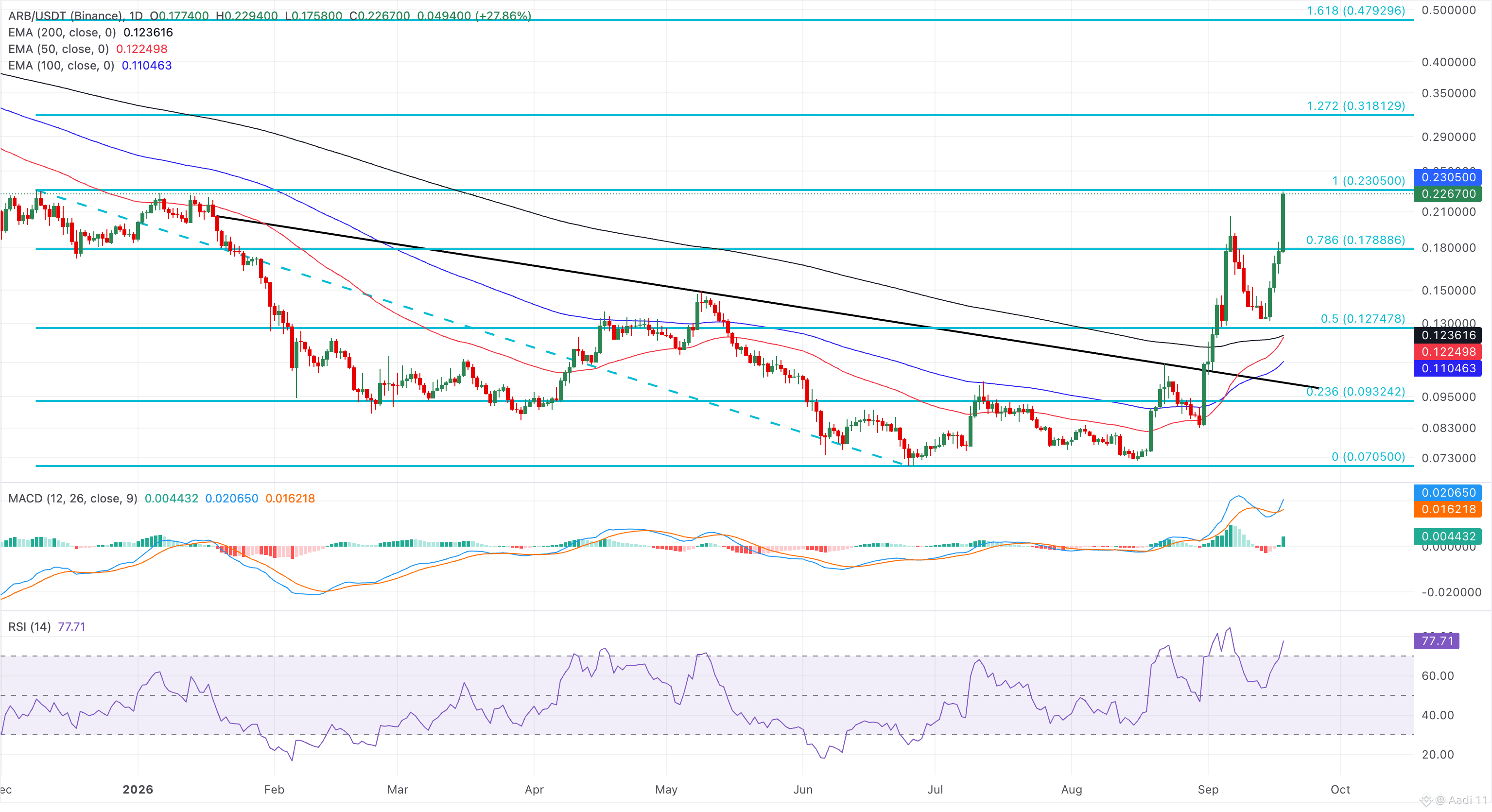
Arbitrum continues its steady upward rise for the fourth consecutive day, with gains totaling over 70% so far this week. ARB retains a clear bullish near-term bias above the 50-, 100-, and 200-day Exponential Moving Averages (EMAs) at $0.1224, $0.1104, and $0.1236, respectively.
The advance is now pressing into the upper end of the Fibonacci range from $0.2305 to $0.0705, with overhead supply emerging just below the Fibonacci cycle high at the 100% retracement level of $0.2305. A confirmed breakout above this level could target the 127.2% Fibonacci extension level at $0.3181.
Momentum remains constructive, with the Moving Average Convergence Divergence (MACD) crossing above its signal line, while the Relative Strength Index (RSI) rises to 78, flagging overbought conditions.
On the downside, initial support is seen at the 78.6% Fibonacci retracement at $0.1788, ahead of a deeper corrective floor at the 50% retracement level at $0.1274.
$ARB
{future}(ARBUSDT)
#ParadigmDisclosesZECHolding
Technical outlook: Arbitrum rally eyes further upside
Arbitrum continues its steady upward rise for the fourth consecutive day, with gains totaling over 70% so far this week. ARB retains a clear bullish near-term bias above the 50-, 100-, and 200-day Exponential Moving Averages (EMAs) at $0.1224, $0.1104, and $0.1236, respectively.
The advance is now pressing into the upper end of the Fibonacci range from $0.2305 to $0.0705, with overhead supply emerging just below the Fibonacci cycle high at the 100% retracement level of $0.2305. A confirmed breakout above this level could target the 127.2% Fibonacci extension level at $0.3181.
Momentum remains constructive, with the Moving Average Convergence Divergence (MACD) crossing above its signal line, while the Relative Strength Index (RSI) rises to 78, flagging overbought conditions.
On the downside, initial support is seen at the 78.6% Fibonacci retracement at $0.1788, ahead of a deeper corrective floor at the 50% retracement level at $0.1274.
$ARB
#ParadigmDisclosesZECHolding
Arbitrum continues its steady upward rise for the fourth consecutive day, with gains totaling over 70% so far this week. ARB retains a clear bullish near-term bias above the 50-, 100-, and 200-day Exponential Moving Averages (EMAs) at $0.1224, $0.1104, and $0.1236, respectively.
The advance is now pressing into the upper end of the Fibonacci range from $0.2305 to $0.0705, with overhead supply emerging just below the Fibonacci cycle high at the 100% retracement level of $0.2305. A confirmed breakout above this level could target the 127.2% Fibonacci extension level at $0.3181.
Momentum remains constructive, with the Moving Average Convergence Divergence (MACD) crossing above its signal line, while the Relative Strength Index (RSI) rises to 78, flagging overbought conditions.
On the downside, initial support is seen at the 78.6% Fibonacci retracement at $0.1788, ahead of a deeper corrective floor at the 50% retracement level at $0.1274.
$ARB
#ParadigmDisclosesZECHolding
1
133
·
--
ゴールド価格見通し:$4,400超えの達成はXAU/USD買い手にとって重要
ゴールド価格テクニカル分析:日足チャート
チャート分析 XAU/USD
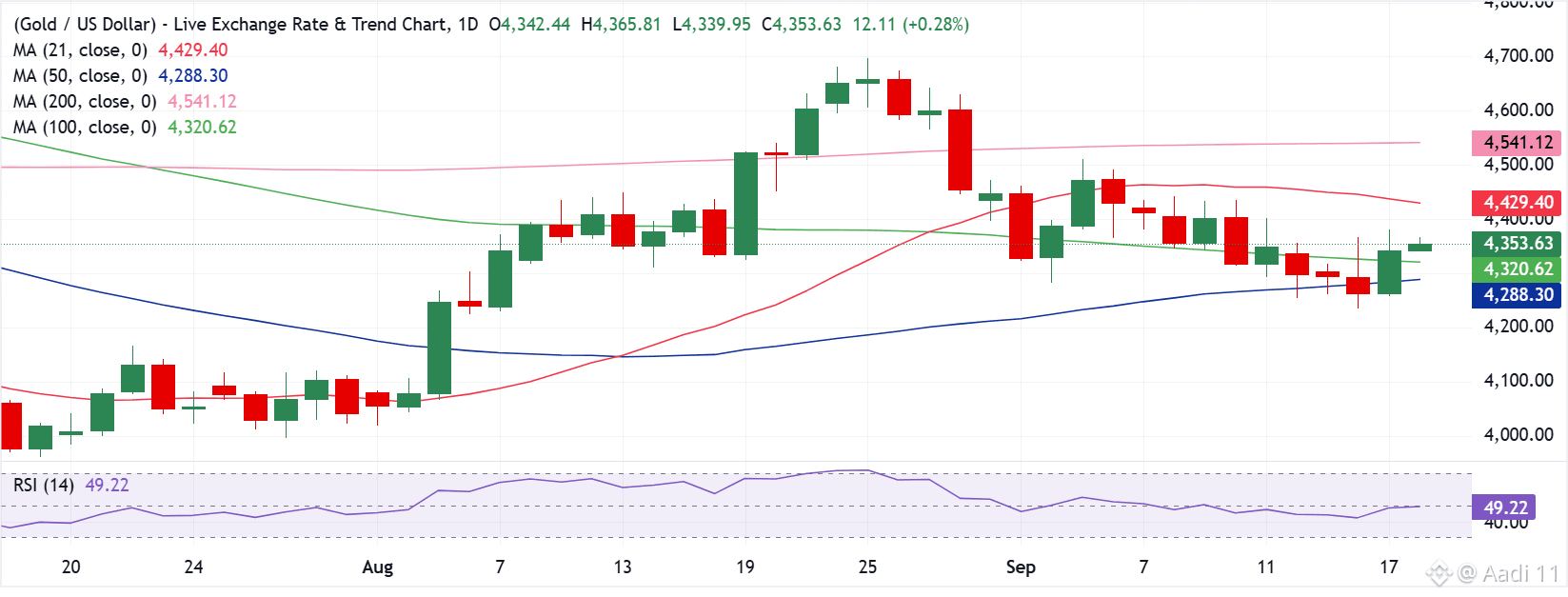
日足チャートでは、XAU/USDは$4,353.63で取引されています。金属は短期的にはニュートラルなトーンで推移しており、$4,288.30と$4,320.62の50日および100日単純移動平均(SMA)を上回って推移しています。これは押し目での下支えとなる需要の存在を示唆しますが、一方で、$4,429.40の21日SMAおよび$4,541.12のより長期の200日SMAを下回っているため、上値を抑えています。相対力指数(14)は49近辺にあり、過去最高値からの直近の下落後に均衡したモメンタムが示唆されています。
下方向では、最初のサポートが現在の水準付近の$4,353.63近辺に見られ、続いて$4,320.62の100日SMAと$4,288.30の50日SMAが意識されます。ここでは、買い手がより広い上昇の構造を防衛する可能性が高いでしょう。上方向では、直近のレジスタンスが$4,429.40の21日SMAに現れ、さらに大きな壁としては$4,541.12近辺の200日SMAがあります。短い平均線を上回る日足終値が出れば後者の再テストへの道が開けますが、$4,429.40を上抜けできなければXAU/USDは調整的なレンジ内にとどまり続けます。
$XAU #ParadigmDisclosesZECHolding
{future}(XAUUSDT)
#write2earn🌐💹
ゴールド価格見通し:$4,400超えの達成はXAU/USD買い手にとって重要
ゴールド価格テクニカル分析:日足チャート
チャート分析 XAU/USD
日足チャートでは、XAU/USDは$4,353.63で取引されています。金属は短期的にはニュートラルなトーンで推移しており、$4,288.30と$4,320.62の50日および100日単純移動平均(SMA)を上回って推移しています。これは押し目での下支えとなる需要の存在を示唆しますが、一方で、$4,429.40の21日SMAおよび$4,541.12のより長期の200日SMAを下回っているため、上値を抑えています。相対力指数(14)は49近辺にあり、過去最高値からの直近の下落後に均衡したモメンタムが示唆されています。
下方向では、最初のサポートが現在の水準付近の$4,353.63近辺に見られ、続いて$4,320.62の100日SMAと$4,288.30の50日SMAが意識されます。ここでは、買い手がより広い上昇の構造を防衛する可能性が高いでしょう。上方向では、直近のレジスタンスが$4,429.40の21日SMAに現れ、さらに大きな壁としては$4,541.12近辺の200日SMAがあります。短い平均線を上回る日足終値が出れば後者の再テストへの道が開けますが、$4,429.40を上抜けできなければXAU/USDは調整的なレンジ内にとどまり続けます。
$XAU #ParadigmDisclosesZECHolding
#write2earn🌐💹
ゴールド価格テクニカル分析:日足チャート
チャート分析 XAU/USD
日足チャートでは、XAU/USDは$4,353.63で取引されています。金属は短期的にはニュートラルなトーンで推移しており、$4,288.30と$4,320.62の50日および100日単純移動平均(SMA)を上回って推移しています。これは押し目での下支えとなる需要の存在を示唆しますが、一方で、$4,429.40の21日SMAおよび$4,541.12のより長期の200日SMAを下回っているため、上値を抑えています。相対力指数(14)は49近辺にあり、過去最高値からの直近の下落後に均衡したモメンタムが示唆されています。
下方向では、最初のサポートが現在の水準付近の$4,353.63近辺に見られ、続いて$4,320.62の100日SMAと$4,288.30の50日SMAが意識されます。ここでは、買い手がより広い上昇の構造を防衛する可能性が高いでしょう。上方向では、直近のレジスタンスが$4,429.40の21日SMAに現れ、さらに大きな壁としては$4,541.12近辺の200日SMAがあります。短い平均線を上回る日足終値が出れば後者の再テストへの道が開けますが、$4,429.40を上抜けできなければXAU/USDは調整的なレンジ内にとどまり続けます。
$XAU #ParadigmDisclosesZECHolding
#write2earn🌐💹
57
·
--
翻訳参照
Clarity Act failure may hamper U.S. crypto as industry seeks legal clarity elsewhereThe U.S. Senate's failure to advance the Clarity Act on Tuesday leaves the crypto industry in the world's largest economy without an overarching federal framework and with the roles of the Securities and Exchange Commission (SEC) and Commodity Futures Trading Commission (CFTC) shrouded in ambiguity.
“The true losers are the American public and the domestic tech ecosystem,” said Stefan Muehlbauer, head of U.S. government affairs at blockchain security firm CertiK. The winners are overseas crypto hubs, grey-market operators and international jurisdictions like Asia and Europe that are rapidly expanding their market share under clear, established rules, he said.#ParadigmDisclosesZECHolding
Clarity Act failure may hamper U.S. crypto as industry seeks legal clarity elsewhere
The U.S. Senate's failure to advance the Clarity Act on Tuesday leaves the crypto industry in the world's largest economy without an overarching federal framework and with the roles of the Securities and Exchange Commission (SEC) and Commodity Futures Trading Commission (CFTC) shrouded in ambiguity.
“The true losers are the American public and the domestic tech ecosystem,” said Stefan Muehlbauer, head of U.S. government affairs at blockchain security firm CertiK. The winners are overseas crypto hubs, grey-market operators and international jurisdictions like Asia and Europe that are rapidly expanding their market share under clear, established rules, he said.#ParadigmDisclosesZECHolding
“The true losers are the American public and the domestic tech ecosystem,” said Stefan Muehlbauer, head of U.S. government affairs at blockchain security firm CertiK. The winners are overseas crypto hubs, grey-market operators and international jurisdictions like Asia and Europe that are rapidly expanding their market share under clear, established rules, he said.#ParadigmDisclosesZECHolding
53
·
--

記事
翻訳参照
AI Helps Hackers Open a New Front in Crypto’s Cybercrime WaveOpen-source artificial intelligence is making it easier for hackers to hide malicious code on blockchains, opening a new front in a crypto industry already grappling with rising cybercrime.
Instances of malware instructions written into on-chain transactions and smart contracts are up 440% in less than a year, averaging 11 cases per day, blockchain analytics firm Chainalysis said in a report published on Thursday. Such cases averaged two per day prior to the release in the middle of last year of powerful Chinese open-source AI models with no restrictions on generating malicious code, according to the report.
A malware attack uses malicious software planted on a computer or network to steal information, passwords or funds. In the attacks documented by the report, hackers use a blockchain to leave instructions for that software, telling it where to send information, a technique known as "blockchain dead drop". This can make an attack harder to stop because information recorded on a blockchain cannot be easily removed.
State-backed groups — including those linked to North Korea and Iran — now account for the majority of this activity, the report said.
The findings add to evidence of generative AI contributing to a boom in cyber threats, by spotting more software vulnerabilities and allowing cybercriminals to carry out more attacks. In crypto, the number of hacks rose roughly 150% to 207 in the first half of the year, according to blockchain intelligence firm TRM Labs.
Blockchains are typically not involved in the initial infection of a machine, which often happens through conventional means such as supply-chain attacks or malicious downloads, Eric Jardine, head of research at Chainalysis, said in response to questions over email. The firm has not tracked how many attacks were successful, or how much money was lost.
Hiding malware on a blockchain is not new, Chainalysis said, but powerful new open-source AI models are allowing hackers to carry out attacks on a larger scale, while growing involvement by state actors is making them more sophisticated.
Worsening the threat, open-source AI models can be run independently, allowing hackers to modify them or remove safeguards against cybercrime.
"This gives malicious developers greater control over the model and more privacy," said Vitaly Kamluk, founder of cybersecurity consultancy TitanHex.
By contrast, companies such as OpenAI and Alphabet Inc.'s Google can block access to their AI services when they detect abuse.
The transparency of blockchains cuts both ways, though. Every update attackers post is permanently recorded, letting investigators map their infrastructure and connect campaigns that would otherwise look unrelated, according to Chainalysis.#USWeeklyJoblessClaimsFallTo196K #ParadigmDisclosesZECHolding
AI Helps Hackers Open a New Front in Crypto’s Cybercrime Wave
Open-source artificial intelligence is making it easier for hackers to hide malicious code on blockchains, opening a new front in a crypto industry already grappling with rising cybercrime.
Instances of malware instructions written into on-chain transactions and smart contracts are up 440% in less than a year, averaging 11 cases per day, blockchain analytics firm Chainalysis said in a report published on Thursday. Such cases averaged two per day prior to the release in the middle of last year of powerful Chinese open-source AI models with no restrictions on generating malicious code, according to the report.
A malware attack uses malicious software planted on a computer or network to steal information, passwords or funds. In the attacks documented by the report, hackers use a blockchain to leave instructions for that software, telling it where to send information, a technique known as "blockchain dead drop". This can make an attack harder to stop because information recorded on a blockchain cannot be easily removed.
State-backed groups — including those linked to North Korea and Iran — now account for the majority of this activity, the report said.
The findings add to evidence of generative AI contributing to a boom in cyber threats, by spotting more software vulnerabilities and allowing cybercriminals to carry out more attacks. In crypto, the number of hacks rose roughly 150% to 207 in the first half of the year, according to blockchain intelligence firm TRM Labs.
Blockchains are typically not involved in the initial infection of a machine, which often happens through conventional means such as supply-chain attacks or malicious downloads, Eric Jardine, head of research at Chainalysis, said in response to questions over email. The firm has not tracked how many attacks were successful, or how much money was lost.
Hiding malware on a blockchain is not new, Chainalysis said, but powerful new open-source AI models are allowing hackers to carry out attacks on a larger scale, while growing involvement by state actors is making them more sophisticated.
Worsening the threat, open-source AI models can be run independently, allowing hackers to modify them or remove safeguards against cybercrime.
"This gives malicious developers greater control over the model and more privacy," said Vitaly Kamluk, founder of cybersecurity consultancy TitanHex.
By contrast, companies such as OpenAI and Alphabet Inc.'s Google can block access to their AI services when they detect abuse.
The transparency of blockchains cuts both ways, though. Every update attackers post is permanently recorded, letting investigators map their infrastructure and connect campaigns that would otherwise look unrelated, according to Chainalysis.#USWeeklyJoblessClaimsFallTo196K #ParadigmDisclosesZECHolding
Instances of malware instructions written into on-chain transactions and smart contracts are up 440% in less than a year, averaging 11 cases per day, blockchain analytics firm Chainalysis said in a report published on Thursday. Such cases averaged two per day prior to the release in the middle of last year of powerful Chinese open-source AI models with no restrictions on generating malicious code, according to the report.
A malware attack uses malicious software planted on a computer or network to steal information, passwords or funds. In the attacks documented by the report, hackers use a blockchain to leave instructions for that software, telling it where to send information, a technique known as "blockchain dead drop". This can make an attack harder to stop because information recorded on a blockchain cannot be easily removed.
State-backed groups — including those linked to North Korea and Iran — now account for the majority of this activity, the report said.
The findings add to evidence of generative AI contributing to a boom in cyber threats, by spotting more software vulnerabilities and allowing cybercriminals to carry out more attacks. In crypto, the number of hacks rose roughly 150% to 207 in the first half of the year, according to blockchain intelligence firm TRM Labs.
Blockchains are typically not involved in the initial infection of a machine, which often happens through conventional means such as supply-chain attacks or malicious downloads, Eric Jardine, head of research at Chainalysis, said in response to questions over email. The firm has not tracked how many attacks were successful, or how much money was lost.
Hiding malware on a blockchain is not new, Chainalysis said, but powerful new open-source AI models are allowing hackers to carry out attacks on a larger scale, while growing involvement by state actors is making them more sophisticated.
Worsening the threat, open-source AI models can be run independently, allowing hackers to modify them or remove safeguards against cybercrime.
"This gives malicious developers greater control over the model and more privacy," said Vitaly Kamluk, founder of cybersecurity consultancy TitanHex.
By contrast, companies such as OpenAI and Alphabet Inc.'s Google can block access to their AI services when they detect abuse.
The transparency of blockchains cuts both ways, though. Every update attackers post is permanently recorded, letting investigators map their infrastructure and connect campaigns that would otherwise look unrelated, according to Chainalysis.#USWeeklyJoblessClaimsFallTo196K #ParadigmDisclosesZECHolding
1
2
·
--
翻訳参照
Why Banks Suddenly Want Stablecoins, and Why It May Matter for You
For most of their first decade, stablecoins lived inside crypto, sitting on exchanges as dry powder between trades. Supply rose from $27 billion at the end of 2020 to more than $300 billion today.
A significant portion of that growth now occurs outside the order book. Cross-border flows into the US alone total nearly $127 billion a month, and businesses settled $226 billion in B2B payments in stablecoins last year, according to Artemis Analytics.
The expansion has caught the attention of the institutions it threatened. Banking groups pressed Congress to stop crypto firms from paying rewards on stablecoin balances, arguing that a token paying interest is a deposit in disguise.
The lobbying has not deterred new entrants. Visa, BlackRock, Google, and DoorDash have lined up behind Open USD, a stablecoin set to launch this year, in a market that Tether and Circle still dominate.
So banks have begun asking a different question: whether they need a coin of their own, if only to defend the ground they already hold.#ParadigmDisclosesZECHolding $NVDA.US
Why Banks Suddenly Want Stablecoins, and Why It May Matter for You
For most of their first decade, stablecoins lived inside crypto, sitting on exchanges as dry powder between trades. Supply rose from $27 billion at the end of 2020 to more than $300 billion today.
A significant portion of that growth now occurs outside the order book. Cross-border flows into the US alone total nearly $127 billion a month, and businesses settled $226 billion in B2B payments in stablecoins last year, according to Artemis Analytics.
The expansion has caught the attention of the institutions it threatened. Banking groups pressed Congress to stop crypto firms from paying rewards on stablecoin balances, arguing that a token paying interest is a deposit in disguise.
The lobbying has not deterred new entrants. Visa, BlackRock, Google, and DoorDash have lined up behind Open USD, a stablecoin set to launch this year, in a market that Tether and Circle still dominate.
So banks have begun asking a different question: whether they need a coin of their own, if only to defend the ground they already hold.#ParadigmDisclosesZECHolding $NVDA.US
For most of their first decade, stablecoins lived inside crypto, sitting on exchanges as dry powder between trades. Supply rose from $27 billion at the end of 2020 to more than $300 billion today.
A significant portion of that growth now occurs outside the order book. Cross-border flows into the US alone total nearly $127 billion a month, and businesses settled $226 billion in B2B payments in stablecoins last year, according to Artemis Analytics.
The expansion has caught the attention of the institutions it threatened. Banking groups pressed Congress to stop crypto firms from paying rewards on stablecoin balances, arguing that a token paying interest is a deposit in disguise.
The lobbying has not deterred new entrants. Visa, BlackRock, Google, and DoorDash have lined up behind Open USD, a stablecoin set to launch this year, in a market that Tether and Circle still dominate.
So banks have begun asking a different question: whether they need a coin of their own, if only to defend the ground they already hold.#ParadigmDisclosesZECHolding $NVDA.US
1
67
·
--
翻訳参照
Visa built the "operating system" for banks (VSP)
In July, Visa introduced the Visa Stablecoin Platform (VSP). Think of it as a plug-and-play stablecoin toolkit for traditional banks and fintechs.
Instead of traditional institutions sweating over managing private keys, setting up multi-sig wallets, or figuring out how to mint and burn tokens, Visa handed them a slick "Wallet-as-a-Service." Starting with Open USD, an upcoming token, Visa will also support the popular USDC (CRYPTO: USDC) coin later this year. Banks can now hold, move, and settle stablecoins using the same enterprise-grade security tools they're already comfortable with. It's in beta testing for now, pending the Open USD launch.#ParadigmDisclosesZECHolding $AAPL.US
Visa built the "operating system" for banks (VSP)
In July, Visa introduced the Visa Stablecoin Platform (VSP). Think of it as a plug-and-play stablecoin toolkit for traditional banks and fintechs.
Instead of traditional institutions sweating over managing private keys, setting up multi-sig wallets, or figuring out how to mint and burn tokens, Visa handed them a slick "Wallet-as-a-Service." Starting with Open USD, an upcoming token, Visa will also support the popular USDC (CRYPTO: USDC) coin later this year. Banks can now hold, move, and settle stablecoins using the same enterprise-grade security tools they're already comfortable with. It's in beta testing for now, pending the Open USD launch.#ParadigmDisclosesZECHolding $AAPL.US
In July, Visa introduced the Visa Stablecoin Platform (VSP). Think of it as a plug-and-play stablecoin toolkit for traditional banks and fintechs.
Instead of traditional institutions sweating over managing private keys, setting up multi-sig wallets, or figuring out how to mint and burn tokens, Visa handed them a slick "Wallet-as-a-Service." Starting with Open USD, an upcoming token, Visa will also support the popular USDC (CRYPTO: USDC) coin later this year. Banks can now hold, move, and settle stablecoins using the same enterprise-grade security tools they're already comfortable with. It's in beta testing for now, pending the Open USD launch.#ParadigmDisclosesZECHolding $AAPL.US

80
·
--
翻訳参照
Solana transactions just got more than 3 times bigger, giving an edge over Ethereum
Solana has more than tripled the amount of data that can fit inside a transaction, giving developers room for more complex trades, company-wallet approvals and privacy applications.
The network's new Transaction V1 format went live Tuesday at approximately 01:00 UTC, according to the Solana Foundation. It raises the maximum amount of data a single transaction can carry to 4,096 bytes from 1,232 bytes.
It could help Solana sharpen its edge over rival networks such as Ethereum. While Solana has always been faster and cheaper, it previously fell behind in one key area: its transactions were strictly hard-capped at 1,232 bytes.
Ethereum, by contrast, has no rigid protocol size limit, allowing developers to execute massive,>
That became restrictive for company wallets where several people may need to approve a payment, as well as for zero-knowledge proofs, which let applications verify information without revealing the underlying data. Both are among the use cases identified in the upgrade's design proposal.#FedHikeOddsRiseTo89% $SOL
Solana transactions just got more than 3 times bigger, giving an edge over Ethereum
Solana has more than tripled the amount of data that can fit inside a transaction, giving developers room for more complex trades, company-wallet approvals and privacy applications.
The network's new Transaction V1 format went live Tuesday at approximately 01:00 UTC, according to the Solana Foundation. It raises the maximum amount of data a single transaction can carry to 4,096 bytes from 1,232 bytes.
It could help Solana sharpen its edge over rival networks such as Ethereum. While Solana has always been faster and cheaper, it previously fell behind in one key area: its transactions were strictly hard-capped at 1,232 bytes.
Ethereum, by contrast, has no rigid protocol size limit, allowing developers to execute massive,>
That became restrictive for company wallets where several people may need to approve a payment, as well as for zero-knowledge proofs, which let applications verify information without revealing the underlying data. Both are among the use cases identified in the upgrade's design proposal.#FedHikeOddsRiseTo89% $SOL
Solana has more than tripled the amount of data that can fit inside a transaction, giving developers room for more complex trades, company-wallet approvals and privacy applications.
The network's new Transaction V1 format went live Tuesday at approximately 01:00 UTC, according to the Solana Foundation. It raises the maximum amount of data a single transaction can carry to 4,096 bytes from 1,232 bytes.
It could help Solana sharpen its edge over rival networks such as Ethereum. While Solana has always been faster and cheaper, it previously fell behind in one key area: its transactions were strictly hard-capped at 1,232 bytes.
Ethereum, by contrast, has no rigid protocol size limit, allowing developers to execute massive,>
That became restrictive for company wallets where several people may need to approve a payment, as well as for zero-knowledge proofs, which let applications verify information without revealing the underlying data. Both are among the use cases identified in the upgrade's design proposal.#FedHikeOddsRiseTo89% $SOL

47
·
--
翻訳参照
Bitcoin Is Holding Firm, Ethereum Is Pulling In Money: Here’s What Crypto Positioning Shows
Bitcoin briefly dropped to $76,700 after the latest inflation data before recovering toward $78,000. According to QCP Capital, this “contained” reaction is a sign that markets have largely absorbed the prospect of a 25-basis-point rate hike.
The firm explained that $BTC’s technical setup remains constructive at current levels, although conviction is still dependent on the broader market response to this week’s events.
Two Very Different Bets
Bitcoin is trading above a major support zone at $75,000 to $76,000 while resistance stands at $80,000 to $82,000. Ethereum is showing a significantly different flow picture. Spot $BTC ETFs recorded $462.7 million in net outflows during the holiday-shortened week. However, Friday’s withdrawal slowed sharply to $13.2 million compared with $282.7 million on Thursday.
Ethereum ETFs, meanwhile, recorded nearly $197 million in net inflows for the week. Friday’s $216.4 million influx helped drive the weekly total higher despite earlier outflows. QCP Capital said that the divergence indicated differentiated positioning between the two crypto assets. Ethereum is facing resistance at $2,500 to $2,550, while support sits at $2,400 to $2,425, and a secondary support zone is located at $2,300 to $2,350.
$BTC $ETH
Bitcoin volatility also remains relatively low. QCP Capital stated that the volatility curve is still upward sloping while the 25-delta risk reversal is around negative 3 volatility points. Puts are therefore moderately more expensive than calls, even as positioning remains well below stressed levels. The firm added that traders are staying hedged rather than taking a strong directional position.#FedHikeOddsRiseTo89%
Bitcoin Is Holding Firm, Ethereum Is Pulling In Money: Here’s What Crypto Positioning Shows
Bitcoin briefly dropped to $76,700 after the latest inflation data before recovering toward $78,000. According to QCP Capital, this “contained” reaction is a sign that markets have largely absorbed the prospect of a 25-basis-point rate hike.
The firm explained that $BTC ’s technical setup remains constructive at current levels, although conviction is still dependent on the broader market response to this week’s events.
Two Very Different Bets
Bitcoin is trading above a major support zone at $75,000 to $76,000 while resistance stands at $80,000 to $82,000. Ethereum is showing a significantly different flow picture. Spot $BTC ETFs recorded $462.7 million in net outflows during the holiday-shortened week. However, Friday’s withdrawal slowed sharply to $13.2 million compared with $282.7 million on Thursday.
Ethereum ETFs, meanwhile, recorded nearly $197 million in net inflows for the week. Friday’s $216.4 million influx helped drive the weekly total higher despite earlier outflows. QCP Capital said that the divergence indicated differentiated positioning between the two crypto assets. Ethereum is facing resistance at $2,500 to $2,550, while support sits at $2,400 to $2,425, and a secondary support zone is located at $2,300 to $2,350.
$BTC $ETH
Bitcoin volatility also remains relatively low. QCP Capital stated that the volatility curve is still upward sloping while the 25-delta risk reversal is around negative 3 volatility points. Puts are therefore moderately more expensive than calls, even as positioning remains well below stressed levels. The firm added that traders are staying hedged rather than taking a strong directional position.#FedHikeOddsRiseTo89%
Bitcoin briefly dropped to $76,700 after the latest inflation data before recovering toward $78,000. According to QCP Capital, this “contained” reaction is a sign that markets have largely absorbed the prospect of a 25-basis-point rate hike.
The firm explained that $BTC ’s technical setup remains constructive at current levels, although conviction is still dependent on the broader market response to this week’s events.
Two Very Different Bets
Bitcoin is trading above a major support zone at $75,000 to $76,000 while resistance stands at $80,000 to $82,000. Ethereum is showing a significantly different flow picture. Spot $BTC ETFs recorded $462.7 million in net outflows during the holiday-shortened week. However, Friday’s withdrawal slowed sharply to $13.2 million compared with $282.7 million on Thursday.
Ethereum ETFs, meanwhile, recorded nearly $197 million in net inflows for the week. Friday’s $216.4 million influx helped drive the weekly total higher despite earlier outflows. QCP Capital said that the divergence indicated differentiated positioning between the two crypto assets. Ethereum is facing resistance at $2,500 to $2,550, while support sits at $2,400 to $2,425, and a secondary support zone is located at $2,300 to $2,350.
$BTC $ETH
Bitcoin volatility also remains relatively low. QCP Capital stated that the volatility curve is still upward sloping while the 25-delta risk reversal is around negative 3 volatility points. Puts are therefore moderately more expensive than calls, even as positioning remains well below stressed levels. The firm added that traders are staying hedged rather than taking a strong directional position.#FedHikeOddsRiseTo89%

1
35
·
--
米下院の委員会が今週後半の公聴会に先立ち暗号資産の税法案を共有
米国下院の小委員会は、水曜日に主要な暗号資産の税制改正案について採決する見通しであり、暗号資産に関する立法プロセスの端緒となる可能性がある。
下院歳入委員会は、議員らが条項を審議し、その措置を前進させるかどうかを投票で決める水曜日のマークアップ公聴会に先立ち、月曜の遅い時間に114ページの暗号資産税法案を公表した。法案の題名は「デジタル・アセット・税の確実性法(Digital Asset Tax Certainty Act)」で、少額取引(de minimis)への対応、益・損の会計処理、移転、ワッシュセール(損益通算の損の再利用)規則、マイニング、ステーキング、ブローカー要件などに対処している。
この法案は、過去1年にわたり暗号資産の税制に関するさまざまな案を提出してきたスティーブン・ホースフォード下院議員とマックス・ミラー下院議員によるこれまでの取り組みに続くものだ。
法案は、少額のネットワーク手数料または取引手数料への課税をなくす。つまり、手数料が10ドル未満なら課税されないが、「前年に5,000回を超える移転を行った」者は除外される。小規模取引への課税の廃止は、近年、暗号資産業界からの主要な要望であり、支持者は、税を削減することで、小さな買い物(例えばコーヒー1杯)にデジタル資産をより活用しやすくなると主張している。現在は、デジタル資産で取引を行う人は、それが少額であっても、その取引に関するキャピタルゲインまたはキャピタルロスを報告しなければならない。
法案の多くの条項はトークン化された資産に対応しており、別の章では、デジタル資産の処分における所有の扱われ方をどう明確化するかを試みている。
この法案は、米財務長官と内国歳入庁(IRS)に対し、必要に応じて新たなルールを策定し、公表するよう指示する。
#AvalancheIntegratesIntoUAEPassDigitalVault #FedHikeOddsRiseTo89%
米下院の委員会が今週後半の公聴会に先立ち暗号資産の税法案を共有
米国下院の小委員会は、水曜日に主要な暗号資産の税制改正案について採決する見通しであり、暗号資産に関する立法プロセスの端緒となる可能性がある。
下院歳入委員会は、議員らが条項を審議し、その措置を前進させるかどうかを投票で決める水曜日のマークアップ公聴会に先立ち、月曜の遅い時間に114ページの暗号資産税法案を公表した。法案の題名は「デジタル・アセット・税の確実性法(Digital Asset Tax Certainty Act)」で、少額取引(de minimis)への対応、益・損の会計処理、移転、ワッシュセール(損益通算の損の再利用)規則、マイニング、ステーキング、ブローカー要件などに対処している。
この法案は、過去1年にわたり暗号資産の税制に関するさまざまな案を提出してきたスティーブン・ホースフォード下院議員とマックス・ミラー下院議員によるこれまでの取り組みに続くものだ。
法案は、少額のネットワーク手数料または取引手数料への課税をなくす。つまり、手数料が10ドル未満なら課税されないが、「前年に5,000回を超える移転を行った」者は除外される。小規模取引への課税の廃止は、近年、暗号資産業界からの主要な要望であり、支持者は、税を削減することで、小さな買い物(例えばコーヒー1杯)にデジタル資産をより活用しやすくなると主張している。現在は、デジタル資産で取引を行う人は、それが少額であっても、その取引に関するキャピタルゲインまたはキャピタルロスを報告しなければならない。
法案の多くの条項はトークン化された資産に対応しており、別の章では、デジタル資産の処分における所有の扱われ方をどう明確化するかを試みている。
この法案は、米財務長官と内国歳入庁(IRS)に対し、必要に応じて新たなルールを策定し、公表するよう指示する。
#AvalancheIntegratesIntoUAEPassDigitalVault #FedHikeOddsRiseTo89%
米国下院の小委員会は、水曜日に主要な暗号資産の税制改正案について採決する見通しであり、暗号資産に関する立法プロセスの端緒となる可能性がある。
下院歳入委員会は、議員らが条項を審議し、その措置を前進させるかどうかを投票で決める水曜日のマークアップ公聴会に先立ち、月曜の遅い時間に114ページの暗号資産税法案を公表した。法案の題名は「デジタル・アセット・税の確実性法(Digital Asset Tax Certainty Act)」で、少額取引(de minimis)への対応、益・損の会計処理、移転、ワッシュセール(損益通算の損の再利用)規則、マイニング、ステーキング、ブローカー要件などに対処している。
この法案は、過去1年にわたり暗号資産の税制に関するさまざまな案を提出してきたスティーブン・ホースフォード下院議員とマックス・ミラー下院議員によるこれまでの取り組みに続くものだ。
法案は、少額のネットワーク手数料または取引手数料への課税をなくす。つまり、手数料が10ドル未満なら課税されないが、「前年に5,000回を超える移転を行った」者は除外される。小規模取引への課税の廃止は、近年、暗号資産業界からの主要な要望であり、支持者は、税を削減することで、小さな買い物(例えばコーヒー1杯)にデジタル資産をより活用しやすくなると主張している。現在は、デジタル資産で取引を行う人は、それが少額であっても、その取引に関するキャピタルゲインまたはキャピタルロスを報告しなければならない。
法案の多くの条項はトークン化された資産に対応しており、別の章では、デジタル資産の処分における所有の扱われ方をどう明確化するかを試みている。
この法案は、米財務長官と内国歳入庁(IRS)に対し、必要に応じて新たなルールを策定し、公表するよう指示する。
#AvalancheIntegratesIntoUAEPassDigitalVault #FedHikeOddsRiseTo89%
3
2k
·
--
記事
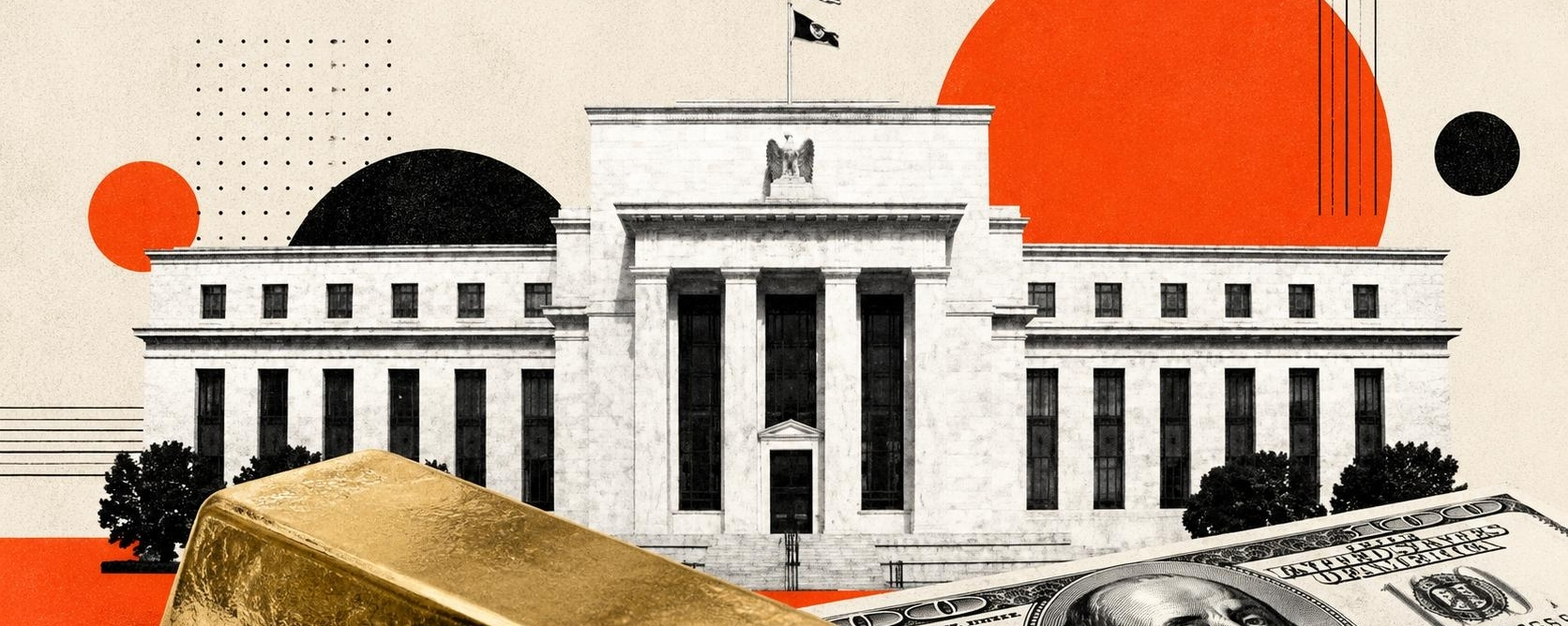
$4,275:中東の紛争とFRBをにらんで、金は薄氷の上を滑っている金はFOMC会合に向けて依然として脆弱な状態が続いている
$XAU 最新の持ち直しにもかかわらず、湾岸での地政学的緊張の高まり、原油価格に起因するインフレ懸念の増大、そしてFRB(米連邦準備制度)の政策見通しをめぐる強気(タカ派)的な思惑を背景に、金はさらなる下落リスクにさらされている。
月曜日、「イエメンのイラン支援の武装勢力フーシ派が、サウジアラビアに対して新たな攻撃を実行した。リヤドは、イラクでのイラン支援の戦闘員が同王国の東西を結ぶパイプラインへの攻撃に関与したとしている。さらに湾岸のアラブ諸国も、イランとの予定されていた協議を延期した」とロイターが報じた。
$4,275:中東の紛争とFRBをにらんで、金は薄氷の上を滑っている
金はFOMC会合に向けて依然として脆弱な状態が続いている
$XAU 最新の持ち直しにもかかわらず、湾岸での地政学的緊張の高まり、原油価格に起因するインフレ懸念の増大、そしてFRB(米連邦準備制度)の政策見通しをめぐる強気(タカ派)的な思惑を背景に、金はさらなる下落リスクにさらされている。
月曜日、「イエメンのイラン支援の武装勢力フーシ派が、サウジアラビアに対して新たな攻撃を実行した。リヤドは、イラクでのイラン支援の戦闘員が同王国の東西を結ぶパイプラインへの攻撃に関与したとしている。さらに湾岸のアラブ諸国も、イランとの予定されていた協議を延期した」とロイターが報じた。
$XAU 最新の持ち直しにもかかわらず、湾岸での地政学的緊張の高まり、原油価格に起因するインフレ懸念の増大、そしてFRB(米連邦準備制度)の政策見通しをめぐる強気(タカ派)的な思惑を背景に、金はさらなる下落リスクにさらされている。
月曜日、「イエメンのイラン支援の武装勢力フーシ派が、サウジアラビアに対して新たな攻撃を実行した。リヤドは、イラクでのイラン支援の戦闘員が同王国の東西を結ぶパイプラインへの攻撃に関与したとしている。さらに湾岸のアラブ諸国も、イランとの予定されていた協議を延期した」とロイターが報じた。
1
180
·
--
翻訳参照
Tom Lee Explains Ethereum's Killer Application as ETH Bucks Market Downturn
Fundstrat co-founder Tom Lee says Ethereum (ETH) is becoming the settlement layer for Wall Street and artificial intelligence (AI). He repeated the claim as ETH held up better than most major cryptocurrencies over the past week.
Ether Holds Up While Rivals Slip
Ether was among the few top-ten assets to trade higher over the past seven days. Tron (TRX) was the only other gainer, with stablecoins excluded. Bitcoin (BTC), BNB, XRP, Solana (SOL), Zcash (ZEC), and Hyperliquid (HYPE) all posted weekly losses, several exceeding 3%.
Ether changed hands around $2,518 on Monday, down roughly 0.1% over 24 hours. Bitcoin traded near $77,100, off more than 1.5% for the day.#AnthropicCEOCallsForAISlowdown $ETH
{future}(ETHUSDT)
Tom Lee Explains Ethereum's Killer Application as ETH Bucks Market Downturn
Fundstrat co-founder Tom Lee says Ethereum (ETH) is becoming the settlement layer for Wall Street and artificial intelligence (AI). He repeated the claim as ETH held up better than most major cryptocurrencies over the past week.
Ether Holds Up While Rivals Slip
Ether was among the few top-ten assets to trade higher over the past seven days. Tron (TRX) was the only other gainer, with stablecoins excluded. Bitcoin (BTC), BNB, XRP, Solana (SOL), Zcash (ZEC), and Hyperliquid (HYPE) all posted weekly losses, several exceeding 3%.
Ether changed hands around $2,518 on Monday, down roughly 0.1% over 24 hours. Bitcoin traded near $77,100, off more than 1.5% for the day.#AnthropicCEOCallsForAISlowdown $ETH
Fundstrat co-founder Tom Lee says Ethereum (ETH) is becoming the settlement layer for Wall Street and artificial intelligence (AI). He repeated the claim as ETH held up better than most major cryptocurrencies over the past week.
Ether Holds Up While Rivals Slip
Ether was among the few top-ten assets to trade higher over the past seven days. Tron (TRX) was the only other gainer, with stablecoins excluded. Bitcoin (BTC), BNB, XRP, Solana (SOL), Zcash (ZEC), and Hyperliquid (HYPE) all posted weekly losses, several exceeding 3%.
Ether changed hands around $2,518 on Monday, down roughly 0.1% over 24 hours. Bitcoin traded near $77,100, off more than 1.5% for the day.#AnthropicCEOCallsForAISlowdown $ETH

1
5
·
--
記事
市場は「減速したい」AI業界を織り込めるのか?次の24時間がどうなるか、誰にも確実には言えない。しかし、あらゆる資産クラスのトレーダーはこの局面を決定的だとみなしている。
世界で最も強力な技術を作る人々からの、まれで統一された警告によって、これから来る数時間の見方が変わった
誰も見ていなかった警告
その中心にあるリスクは、まさに業界の内側から生じている。アンソロピックの最高経営責任者(CEO)は、土曜日に約3,800語のエッセイを公開し、タイトルは「We Must Pace the Frontier(フロンティアの歩みを調整しなければならない)」。業界はモデルの能力がどれくらいの速さで向上するかを意図的に遅らせる必要がある、と論じた。
市場は「減速したい」AI業界を織り込めるのか?
次の24時間がどうなるか、誰にも確実には言えない。しかし、あらゆる資産クラスのトレーダーはこの局面を決定的だとみなしている。
世界で最も強力な技術を作る人々からの、まれで統一された警告によって、これから来る数時間の見方が変わった
誰も見ていなかった警告
その中心にあるリスクは、まさに業界の内側から生じている。アンソロピックの最高経営責任者(CEO)は、土曜日に約3,800語のエッセイを公開し、タイトルは「We Must Pace the Frontier(フロンティアの歩みを調整しなければならない)」。業界はモデルの能力がどれくらいの速さで向上するかを意図的に遅らせる必要がある、と論じた。
世界で最も強力な技術を作る人々からの、まれで統一された警告によって、これから来る数時間の見方が変わった
誰も見ていなかった警告
その中心にあるリスクは、まさに業界の内側から生じている。アンソロピックの最高経営責任者(CEO)は、土曜日に約3,800語のエッセイを公開し、タイトルは「We Must Pace the Frontier(フロンティアの歩みを調整しなければならない)」。業界はモデルの能力がどれくらいの速さで向上するかを意図的に遅らせる必要がある、と論じた。
1
1
·
--
記事
翻訳参照
Revolut Leaks Passports, Bitcoin Transaction Histories to Fake Government RequestFintech giant Revolut handed sensitive customer data, including passport copies and full Bitcoin transaction histories, to a malicious actor after falling for a fraudulent request disguised as a legitimate government inquiry.
According to a customer notification circulated by crypto investigator ZachXBT, Revolut received a request for customer information that appeared to come from a government agency, sent from an unauthorized email account using the agency's official domain.
Because the message carried valid domain authentication credentials, Revolut fulfilled it in the belief it was genuine.
The exposed data was extensive. Per the notice, it spanned identity details such as full name, date of birth and occupation; contact information including postal address, email and phone number; and document and verification data, including a copy of the victim's passport or driver's license and the selfie provided for verification.
Most alarming for crypto holders, the financial data included account statements with IBAN and wallet reference numbers, withdrawal records and full transaction history, including Bitcoin. Revolut said no biometric facial telemetry data was involved.
A Revolut spokesperson confirmed the breach to TechCrunch, describing it as "a sophisticated external impersonation scam where an unauthorised third party utilised a legitimate government agency domain email to submit fraudulent requests for information."
The company said a "limited" number of customers were affected, that it had blocked the email address and alerted the agency, law enforcement and regulators, and that its systems and customer funds were unaffected. Revolut declined to say how many people were hit or which agency was impersonated.
ZachXBT said the incident appeared to target high-net-worth users, a concern given the surge in violent "wrench attacks" against known crypto holders. The leak drew sharp criticism, with several users on social media arguing the episode shows know-your-customer rules have created risk without meaningful benefit.#AnthropicCEOCallsForAISlowdown
Revolut Leaks Passports, Bitcoin Transaction Histories to Fake Government Request
Fintech giant Revolut handed sensitive customer data, including passport copies and full Bitcoin transaction histories, to a malicious actor after falling for a fraudulent request disguised as a legitimate government inquiry.
According to a customer notification circulated by crypto investigator ZachXBT, Revolut received a request for customer information that appeared to come from a government agency, sent from an unauthorized email account using the agency's official domain.
Because the message carried valid domain authentication credentials, Revolut fulfilled it in the belief it was genuine.
The exposed data was extensive. Per the notice, it spanned identity details such as full name, date of birth and occupation; contact information including postal address, email and phone number; and document and verification data, including a copy of the victim's passport or driver's license and the selfie provided for verification.
Most alarming for crypto holders, the financial data included account statements with IBAN and wallet reference numbers, withdrawal records and full transaction history, including Bitcoin. Revolut said no biometric facial telemetry data was involved.
A Revolut spokesperson confirmed the breach to TechCrunch, describing it as "a sophisticated external impersonation scam where an unauthorised third party utilised a legitimate government agency domain email to submit fraudulent requests for information."
The company said a "limited" number of customers were affected, that it had blocked the email address and alerted the agency, law enforcement and regulators, and that its systems and customer funds were unaffected. Revolut declined to say how many people were hit or which agency was impersonated.
ZachXBT said the incident appeared to target high-net-worth users, a concern given the surge in violent "wrench attacks" against known crypto holders. The leak drew sharp criticism, with several users on social media arguing the episode shows know-your-customer rules have created risk without meaningful benefit.#AnthropicCEOCallsForAISlowdown
According to a customer notification circulated by crypto investigator ZachXBT, Revolut received a request for customer information that appeared to come from a government agency, sent from an unauthorized email account using the agency's official domain.
Because the message carried valid domain authentication credentials, Revolut fulfilled it in the belief it was genuine.
The exposed data was extensive. Per the notice, it spanned identity details such as full name, date of birth and occupation; contact information including postal address, email and phone number; and document and verification data, including a copy of the victim's passport or driver's license and the selfie provided for verification.
Most alarming for crypto holders, the financial data included account statements with IBAN and wallet reference numbers, withdrawal records and full transaction history, including Bitcoin. Revolut said no biometric facial telemetry data was involved.
A Revolut spokesperson confirmed the breach to TechCrunch, describing it as "a sophisticated external impersonation scam where an unauthorised third party utilised a legitimate government agency domain email to submit fraudulent requests for information."
The company said a "limited" number of customers were affected, that it had blocked the email address and alerted the agency, law enforcement and regulators, and that its systems and customer funds were unaffected. Revolut declined to say how many people were hit or which agency was impersonated.
ZachXBT said the incident appeared to target high-net-worth users, a concern given the surge in violent "wrench attacks" against known crypto holders. The leak drew sharp criticism, with several users on social media arguing the episode shows know-your-customer rules have created risk without meaningful benefit.#AnthropicCEOCallsForAISlowdown
1
89
·
--
弱気相場
翻訳参照
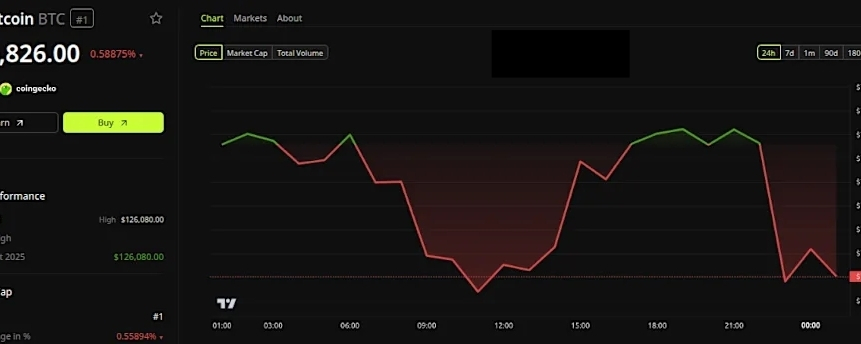
$BTC Bitcoin pulls back as another golden cross fails to deliver
{future}(BTCUSDT)
Earlier this week, Bitcoin formed a golden cross, a technical signal that occurs when the price’s 50-day moving average rises above the 200-day moving average and is conventionally viewed as a precursor to a bullish rally.
Historically, however, that’s often not been the case. Instead, bitcoin has tended to generate much of its return in the lead-up to the crossover, before pulling back shortly after the signal appears.
The latest occurrence fits that pattern. Bitcoin climbed from $62,000 to $82,000 ahead of the golden cross, which formed at the beginning of the week, and has since fallen from around $80,000 to $77,000.
It’s not the first time the indicator has failed to live up to expectations.
In 2021, Bitcoin climbed from $35,000 in July to around $52,000 in September. A golden cross formed, and the price subsequently dropped to around $40,000.
At the beginning of 2023, bitcoin rallied from $16,000 to $23,000 to created a golden cross in February. The largest cryptocurrency then retreated to around $20,000 in March.
The same thing happened in October 2024. Bitcoin advanced from $54,000 to $70,000 ahead of the crossover, before slipping to around $67,000 heading into November.
Most recently, bitcoin bottomed near $76,000 in April 2025 and rallied to approximately $110,000 in May. After the golden cross formed, BTC pulled back to around $100,000 later in June.
So, even though the golden cross is considered a bullish longer-term signal, it can also be a lagging indicator. By the time it appears, a substantial portion of the rally may have already occurred.#AnthropicCEOCallsForAISlowdown
$BTC Bitcoin pulls back as another golden cross fails to deliver
Earlier this week, Bitcoin formed a golden cross, a technical signal that occurs when the price’s 50-day moving average rises above the 200-day moving average and is conventionally viewed as a precursor to a bullish rally.
Historically, however, that’s often not been the case. Instead, bitcoin has tended to generate much of its return in the lead-up to the crossover, before pulling back shortly after the signal appears.
The latest occurrence fits that pattern. Bitcoin climbed from $62,000 to $82,000 ahead of the golden cross, which formed at the beginning of the week, and has since fallen from around $80,000 to $77,000.
It’s not the first time the indicator has failed to live up to expectations.
In 2021, Bitcoin climbed from $35,000 in July to around $52,000 in September. A golden cross formed, and the price subsequently dropped to around $40,000.
At the beginning of 2023, bitcoin rallied from $16,000 to $23,000 to created a golden cross in February. The largest cryptocurrency then retreated to around $20,000 in March.
The same thing happened in October 2024. Bitcoin advanced from $54,000 to $70,000 ahead of the crossover, before slipping to around $67,000 heading into November.
Most recently, bitcoin bottomed near $76,000 in April 2025 and rallied to approximately $110,000 in May. After the golden cross formed, BTC pulled back to around $100,000 later in June.
So, even though the golden cross is considered a bullish longer-term signal, it can also be a lagging indicator. By the time it appears, a substantial portion of the rally may have already occurred.#AnthropicCEOCallsForAISlowdown
Earlier this week, Bitcoin formed a golden cross, a technical signal that occurs when the price’s 50-day moving average rises above the 200-day moving average and is conventionally viewed as a precursor to a bullish rally.
Historically, however, that’s often not been the case. Instead, bitcoin has tended to generate much of its return in the lead-up to the crossover, before pulling back shortly after the signal appears.
The latest occurrence fits that pattern. Bitcoin climbed from $62,000 to $82,000 ahead of the golden cross, which formed at the beginning of the week, and has since fallen from around $80,000 to $77,000.
It’s not the first time the indicator has failed to live up to expectations.
In 2021, Bitcoin climbed from $35,000 in July to around $52,000 in September. A golden cross formed, and the price subsequently dropped to around $40,000.
At the beginning of 2023, bitcoin rallied from $16,000 to $23,000 to created a golden cross in February. The largest cryptocurrency then retreated to around $20,000 in March.
The same thing happened in October 2024. Bitcoin advanced from $54,000 to $70,000 ahead of the crossover, before slipping to around $67,000 heading into November.
Most recently, bitcoin bottomed near $76,000 in April 2025 and rallied to approximately $110,000 in May. After the golden cross formed, BTC pulled back to around $100,000 later in June.
So, even though the golden cross is considered a bullish longer-term signal, it can also be a lagging indicator. By the time it appears, a substantial portion of the rally may have already occurred.#AnthropicCEOCallsForAISlowdown
1
31
·
--
記事
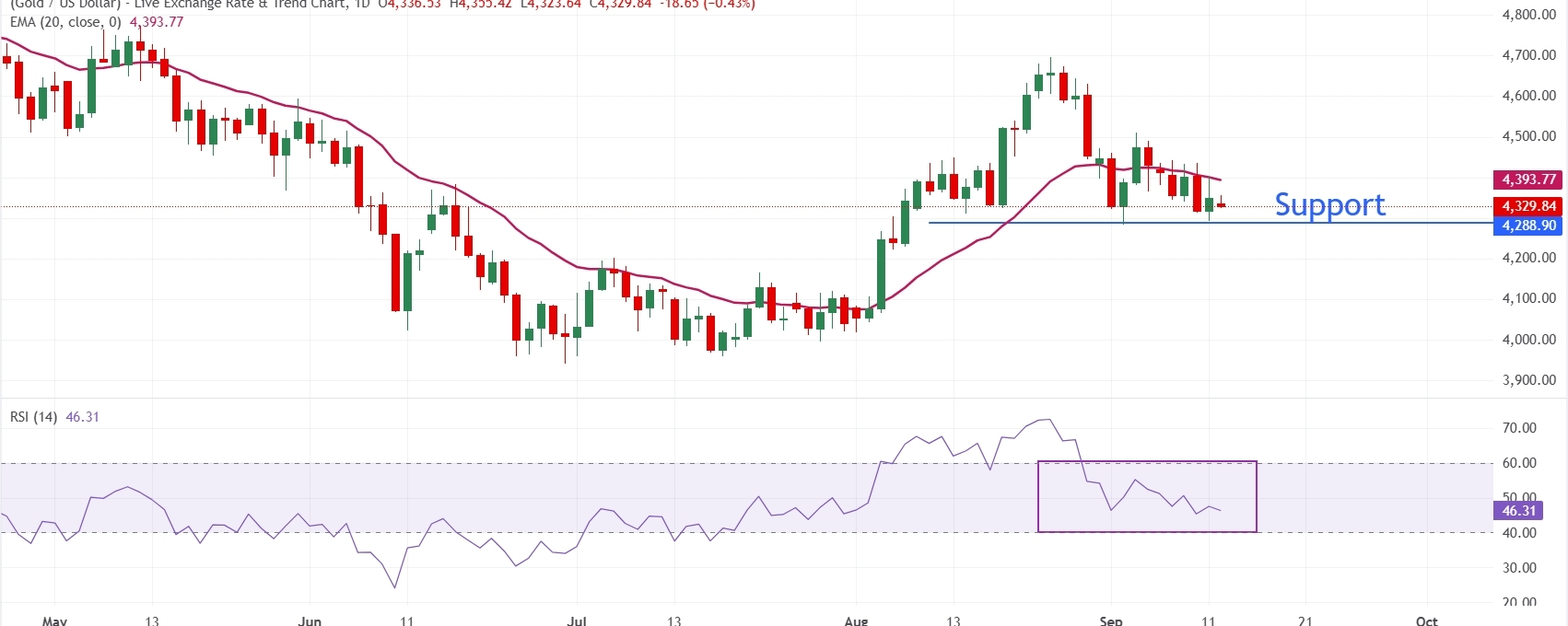
金価格見通し:FRBの金利決定がXAU/USDの次の動きを左右金価格は米連邦準備制度理事会(FRB)の金融政策週の開始時点で、約4,330ドルで小幅に下落して取引されている。
FRBは水曜日に利上げを行うとの見方が強く、注目されている。
トランプ米大統領は、高金利に折り合いをつけているように見える。
$XAUT 金は、米連邦準備制度(FRB)の金融政策週の開始時点で、約4,330ドル前後と沈静的な動きを示している。FRBの利上げ見通しは、先週、8月の米国(US)プロデューサー物価指数(PPI)と消費者物価指数(CPI)の公表を受けて大きく影響された。
金価格見通し:FRBの金利決定がXAU/USDの次の動きを左右
金価格は米連邦準備制度理事会(FRB)の金融政策週の開始時点で、約4,330ドルで小幅に下落して取引されている。
FRBは水曜日に利上げを行うとの見方が強く、注目されている。
トランプ米大統領は、高金利に折り合いをつけているように見える。
$XAUT 金は、米連邦準備制度(FRB)の金融政策週の開始時点で、約4,330ドル前後と沈静的な動きを示している。FRBの利上げ見通しは、先週、8月の米国(US)プロデューサー物価指数(PPI)と消費者物価指数(CPI)の公表を受けて大きく影響された。
FRBは水曜日に利上げを行うとの見方が強く、注目されている。
トランプ米大統領は、高金利に折り合いをつけているように見える。
$XAUT 金は、米連邦準備制度(FRB)の金融政策週の開始時点で、約4,330ドル前後と沈静的な動きを示している。FRBの利上げ見通しは、先週、8月の米国(US)プロデューサー物価指数(PPI)と消費者物価指数(CPI)の公表を受けて大きく影響された。
1
154
·
--
$XRP XRPは主要な200日EMA付近で推移
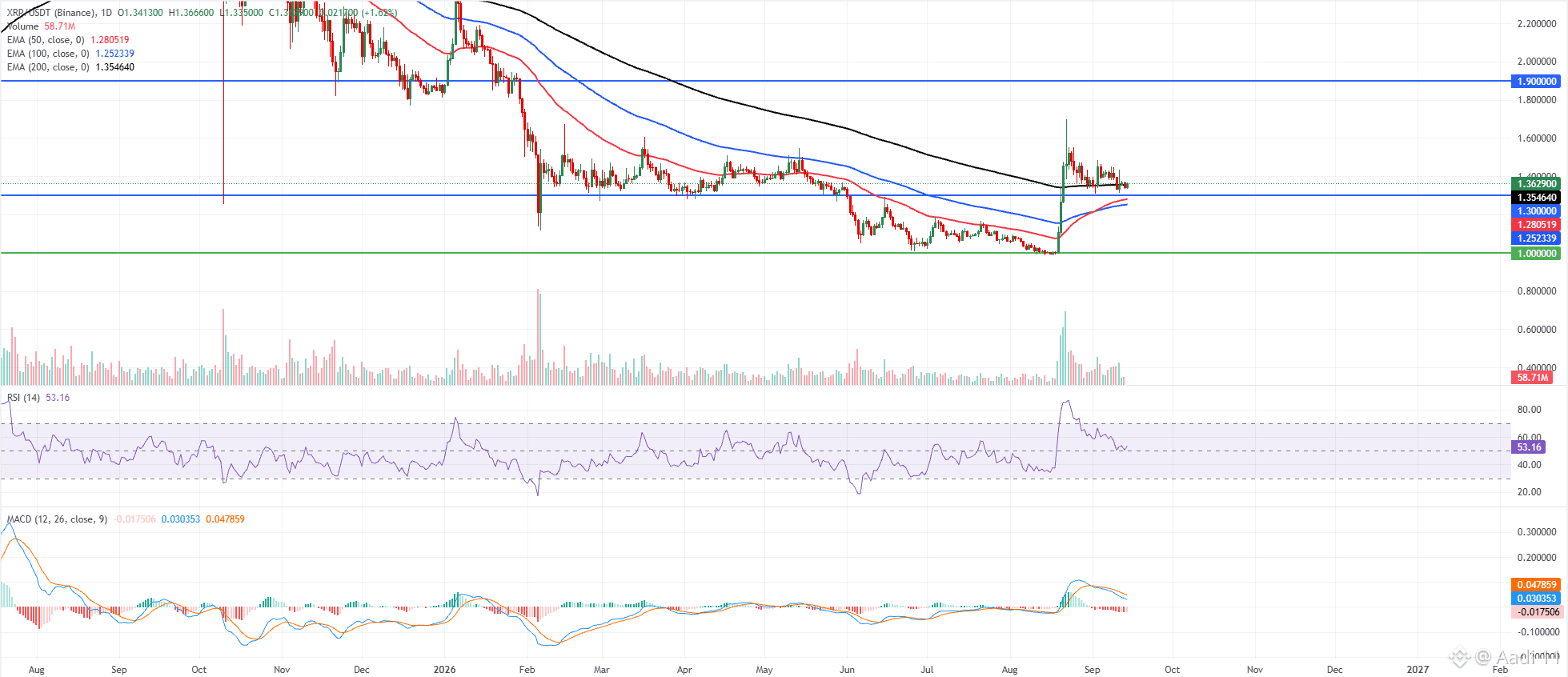
XRPは月曜日に$1.362で取引されており、価格が主要なEMAを上回っていることで、短期的にはやや強気の見通しを維持しています。50日・100日・200日EMAはそれぞれ$1.280、$1.252、$1.354で、市場価格の下に位置しており、直近の高値からの調整後に支持的な背景があることを示唆しています。#AnthropicCEOCallsForAISlowdown
{future}(XRPUSDT)
$XRP XRPは主要な200日EMA付近で推移
XRPは月曜日に$1.362で取引されており、価格が主要なEMAを上回っていることで、短期的にはやや強気の見通しを維持しています。50日・100日・200日EMAはそれぞれ$1.280、$1.252、$1.354で、市場価格の下に位置しており、直近の高値からの調整後に支持的な背景があることを示唆しています。#AnthropicCEOCallsForAISlowdown
XRPは月曜日に$1.362で取引されており、価格が主要なEMAを上回っていることで、短期的にはやや強気の見通しを維持しています。50日・100日・200日EMAはそれぞれ$1.280、$1.252、$1.354で、市場価格の下に位置しており、直近の高値からの調整後に支持的な背景があることを示唆しています。#AnthropicCEOCallsForAISlowdown
1
112
·
--
翻訳参照
$ETH Ethereum nears the key resistance zone
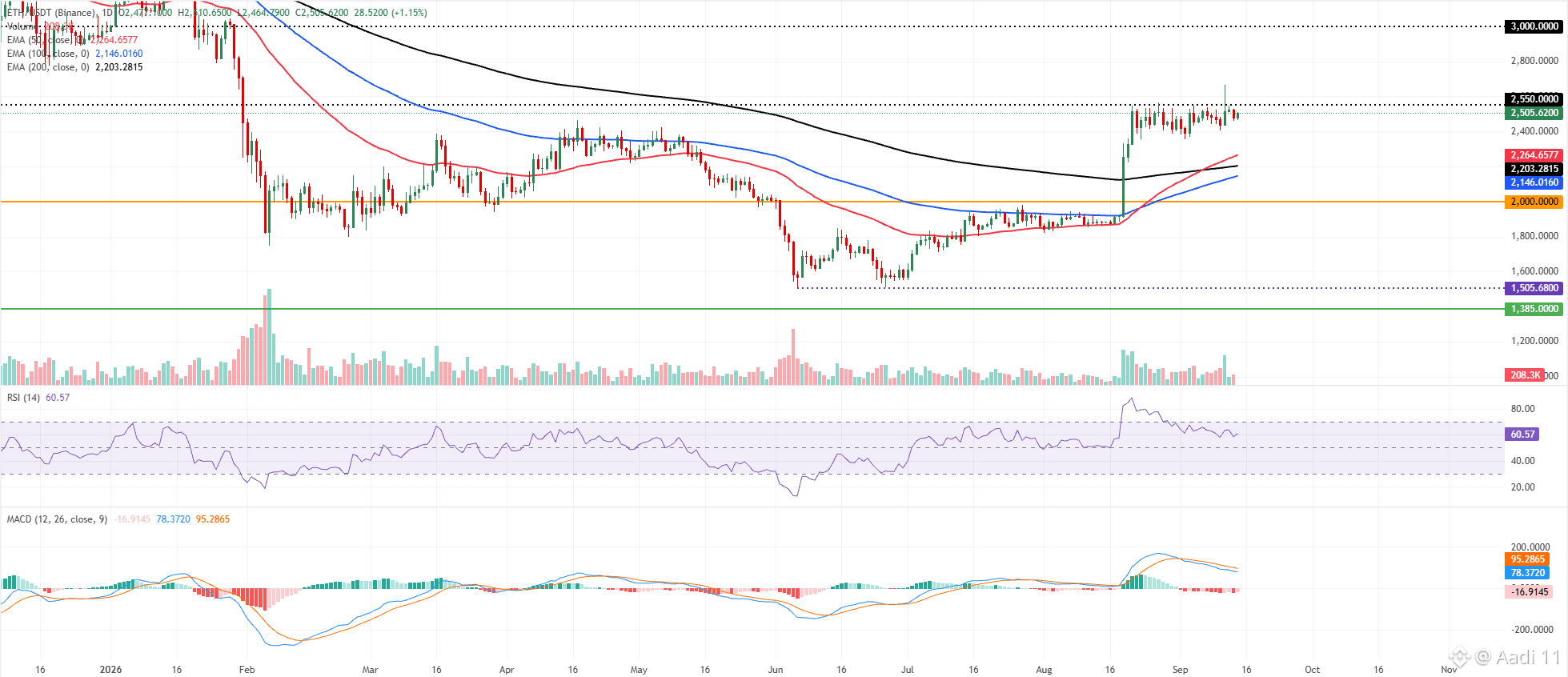
Ethereum trades at $2,505 on Monday, holding a bullish near‑term bias as price sits comfortably above the 50-day, 100-day, and 200-day EMAs at $2,264, $2,146, and $2,203, respectively. The clustering of these EMAs below spot suggests an underlying bid, while the RSI near 60 hints at constructive, though not overextended, momentum. The MACD remains negative, reinforcing that the latest advance still faces some hesitancy despite the supportive trend backdrop.
On the topside, immediate resistance is seen at the horizontal barrier at $2,550, followed by the more distant psychological hurdle at $3,000.
On the downside, initial support comes from the 50-day EMA at $2,264, with deeper demand potentially emerging around the 200-day EMA at $2,203 and the 100-day EMA at $2,146. A more pronounced corrective phase would expose the structural floor near $2,000, while only a sustained break below $1,385 would seriously undermine the broader bullish structure.#AnthropicCEOCallsForAISlowdown
$ETH Ethereum nears the key resistance zone
Ethereum trades at $2,505 on Monday, holding a bullish near‑term bias as price sits comfortably above the 50-day, 100-day, and 200-day EMAs at $2,264, $2,146, and $2,203, respectively. The clustering of these EMAs below spot suggests an underlying bid, while the RSI near 60 hints at constructive, though not overextended, momentum. The MACD remains negative, reinforcing that the latest advance still faces some hesitancy despite the supportive trend backdrop.
On the topside, immediate resistance is seen at the horizontal barrier at $2,550, followed by the more distant psychological hurdle at $3,000.
On the downside, initial support comes from the 50-day EMA at $2,264, with deeper demand potentially emerging around the 200-day EMA at $2,203 and the 100-day EMA at $2,146. A more pronounced corrective phase would expose the structural floor near $2,000, while only a sustained break below $1,385 would seriously undermine the broader bullish structure.#AnthropicCEOCallsForAISlowdown
Ethereum trades at $2,505 on Monday, holding a bullish near‑term bias as price sits comfortably above the 50-day, 100-day, and 200-day EMAs at $2,264, $2,146, and $2,203, respectively. The clustering of these EMAs below spot suggests an underlying bid, while the RSI near 60 hints at constructive, though not overextended, momentum. The MACD remains negative, reinforcing that the latest advance still faces some hesitancy despite the supportive trend backdrop.
On the topside, immediate resistance is seen at the horizontal barrier at $2,550, followed by the more distant psychological hurdle at $3,000.
On the downside, initial support comes from the 50-day EMA at $2,264, with deeper demand potentially emerging around the 200-day EMA at $2,203 and the 100-day EMA at $2,146. A more pronounced corrective phase would expose the structural floor near $2,000, while only a sustained break below $1,385 would seriously undermine the broader bullish structure.#AnthropicCEOCallsForAISlowdown
1
80
·
--
翻訳参照
$BTC Bitcoin recovers slightly after a pullback
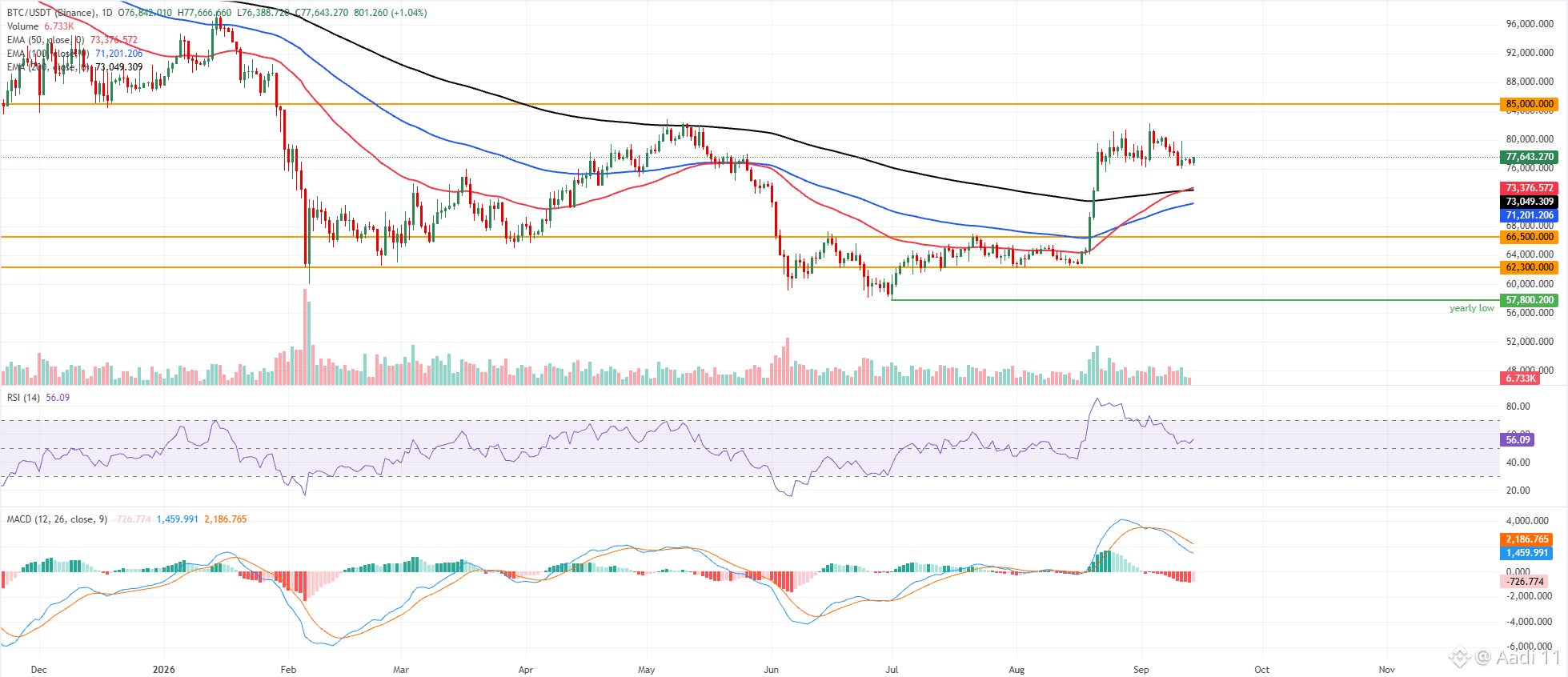
Bitcoin price trades at $77,643 on Monday after declining nearly 5% in the previous week. BTC retains a bullish near-term bias as price holds well above the 50-day Exponential Moving Average (EMA) at $73,376, the 200-day EMA at $73,049 and the 100-day EMA at $71,201, keeping the broader uptrend supported.#AnthropicCEOCallsForAISlowdown
{future}(BTCUSDT)
$BTC Bitcoin recovers slightly after a pullback
Bitcoin price trades at $77,643 on Monday after declining nearly 5% in the previous week. BTC retains a bullish near-term bias as price holds well above the 50-day Exponential Moving Average (EMA) at $73,376, the 200-day EMA at $73,049 and the 100-day EMA at $71,201, keeping the broader uptrend supported.#AnthropicCEOCallsForAISlowdown
Bitcoin price trades at $77,643 on Monday after declining nearly 5% in the previous week. BTC retains a bullish near-term bias as price holds well above the 50-day Exponential Moving Average (EMA) at $73,376, the 200-day EMA at $73,049 and the 100-day EMA at $71,201, keeping the broader uptrend supported.#AnthropicCEOCallsForAISlowdown
1
179
·
--
記事
XRPはビットコインをひっくり返せるか?クイックリード
シュワルツ氏は、XRPが市場価値でビットコインを上回る可能性がある一方で、その条件は「ビットコインが地盤を失う」ことではなく、「XRP自身がより速く成長する」ことだと述べた。
ビットコインの現在の時価総額に到達するには、XRPが約25ドルに到達する必要があり、これは史上最高値(3.84ドル)の6倍以上に当たる。
XRPは先月、ビットコインに対して35%上昇した。ビットコインの22%という数字は正しい方向だが、1.49兆ドルのギャップを埋めるには程遠い。
リップルの最高技術責任者(CTO)名誉職のデビッド・シュワルツ氏は、9月9日のXスペースで、XRPが最終的に市場価値でビットコインを上回ることを見込んでいると述べ、その条件を付けた。XRPは1.36ドルで取引されており、ビットコインは9月12日時点で約77,310ドル近辺だ。
XRPはビットコインをひっくり返せるか?
クイックリード
シュワルツ氏は、XRPが市場価値でビットコインを上回る可能性がある一方で、その条件は「ビットコインが地盤を失う」ことではなく、「XRP自身がより速く成長する」ことだと述べた。
ビットコインの現在の時価総額に到達するには、XRPが約25ドルに到達する必要があり、これは史上最高値(3.84ドル)の6倍以上に当たる。
XRPは先月、ビットコインに対して35%上昇した。ビットコインの22%という数字は正しい方向だが、1.49兆ドルのギャップを埋めるには程遠い。
リップルの最高技術責任者(CTO)名誉職のデビッド・シュワルツ氏は、9月9日のXスペースで、XRPが最終的に市場価値でビットコインを上回ることを見込んでいると述べ、その条件を付けた。XRPは1.36ドルで取引されており、ビットコインは9月12日時点で約77,310ドル近辺だ。
シュワルツ氏は、XRPが市場価値でビットコインを上回る可能性がある一方で、その条件は「ビットコインが地盤を失う」ことではなく、「XRP自身がより速く成長する」ことだと述べた。
ビットコインの現在の時価総額に到達するには、XRPが約25ドルに到達する必要があり、これは史上最高値(3.84ドル)の6倍以上に当たる。
XRPは先月、ビットコインに対して35%上昇した。ビットコインの22%という数字は正しい方向だが、1.49兆ドルのギャップを埋めるには程遠い。
リップルの最高技術責任者(CTO)名誉職のデビッド・シュワルツ氏は、9月9日のXスペースで、XRPが最終的に市場価値でビットコインを上回ることを見込んでいると述べ、その条件を付けた。XRPは1.36ドルで取引されており、ビットコインは9月12日時点で約77,310ドル近辺だ。
1
41
ログインして、さらにコンテンツを読む
厳選トピックで世界の暗号資産トレーダーの仲間入り
⚡️ 暗号資産に関する最新かつ有益な情報が見つかります。
💬 世界最大の暗号資産取引所から信頼されています。
👍 認証を受けたクリエイターから、有益なインサイトを得られます。
メール / 電話番号
トレンドトピック
BTCBreaks80K
閲覧回数 33,584
939人が討論中
米連邦準備制度(FED)の爆撃と、$80Kの空白:ビットコインの流動性トラップ 🐋📊
連邦準備制度のマクロ経済ニュースによる騒音の後、相場は熱狂状態。上昇の追い風が一撃で入り、ビットコインは$80,989.99の“ぴったり”の高値を付けた。ニュースに導かれてこの水準で買うのは、数学的なパラシュートなしで宙に飛び込むことだ。
スキャナーの冷徹な数字が明かすのは、臨界的な過熱(オーバーエクステンション):
🔥 クオンティタティブ・イージング(4H):勢いのあるローソク足が重力を突き破った。4時間足のKDJオシレーターは極端な買われ過ぎで燃え上がっており、ライン「J」が100.83の上限をブチ破っている。価格は、構造的な主要サポートであるEMA20から危険なほど乖離しており、そのEMA20は下の$77,270.34に置き去りにされたままだ。
📐 フィボナッチの檻:インパルスの起点である$74,967.97から、$80,989.99の高値までのリトレースを引くと、38.2%のフィボナッチ・レベルが精密に合流する。狙うべき「ターミナルの確認」は?その水準は、1HのSuperTrendのダイナミックなフロアである$78,702.50とまったく一致する。
🩸 短期ドレイン(1H):慣性はすでに割れ始めている。1時間足のKDJでは「J」ラインが87.22まで後退しており、ニュースの燃料が尽きつつあることを確認している。
フリーライターのセットアップ(FOMOゼロ):
$80,748の水準を、3,000ドル以上も離れたEMAで取引することは、リスク管理を完全に破壊する。
🔴 トラップゾーン:現在の天井である“FEDの熱狂”を買うことは、すでに売り分け(ディストリビュート)に使っている機関投資家に流動性をプレゼントすることだ。
🟢 構造的な狩場ゾーン:規律は、平均回帰を待つことを命じる。私たちの数学的な“釣り網”は、フィボナッチ38.2%と1HのSuperTrendが重なる合流地点で展開され、安全なブロックである$78,700台を狙っている。
統計はニュースではなく、後に残る“構造”を動かす。📐
$BTC #BTCBreaks80K
RelatoCriptoPRO
·いいね:2件
·閲覧回数 1.1k
比特币突破8万
閲覧回数 41,916
103人が討論中
BuffettBecomesBerkshireChairmanEmeritus
閲覧回数 4,661
271人が討論中