
Ibrahim762
35 投稿

Ibrahim762
報告
ユーザーをブロック
取引を発注
高頻度トレーダー
3.2年
36 フォロー
17 フォロワー
21 いいね
投稿
ポートフォリオ
すべて
動画
·
--
ブリッシュ
翻訳参照
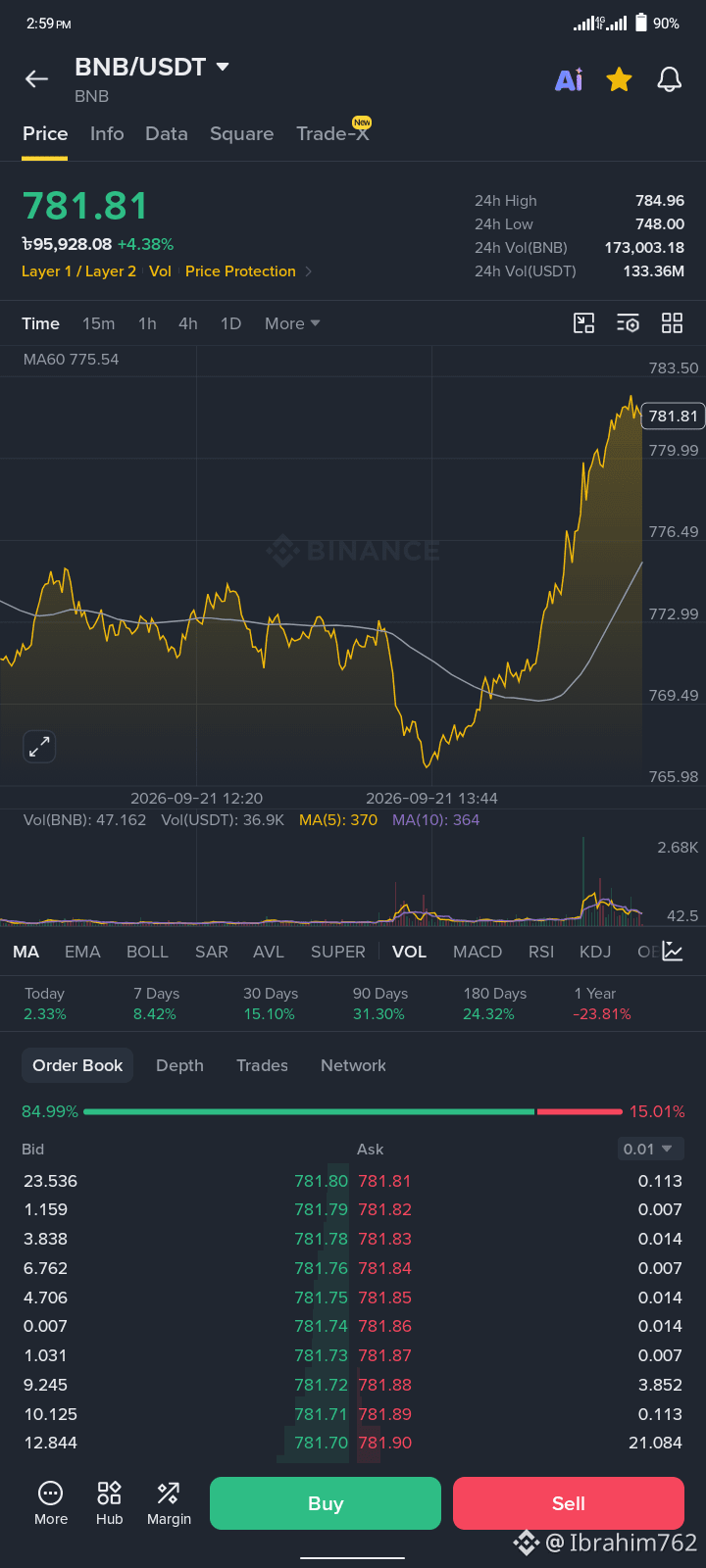
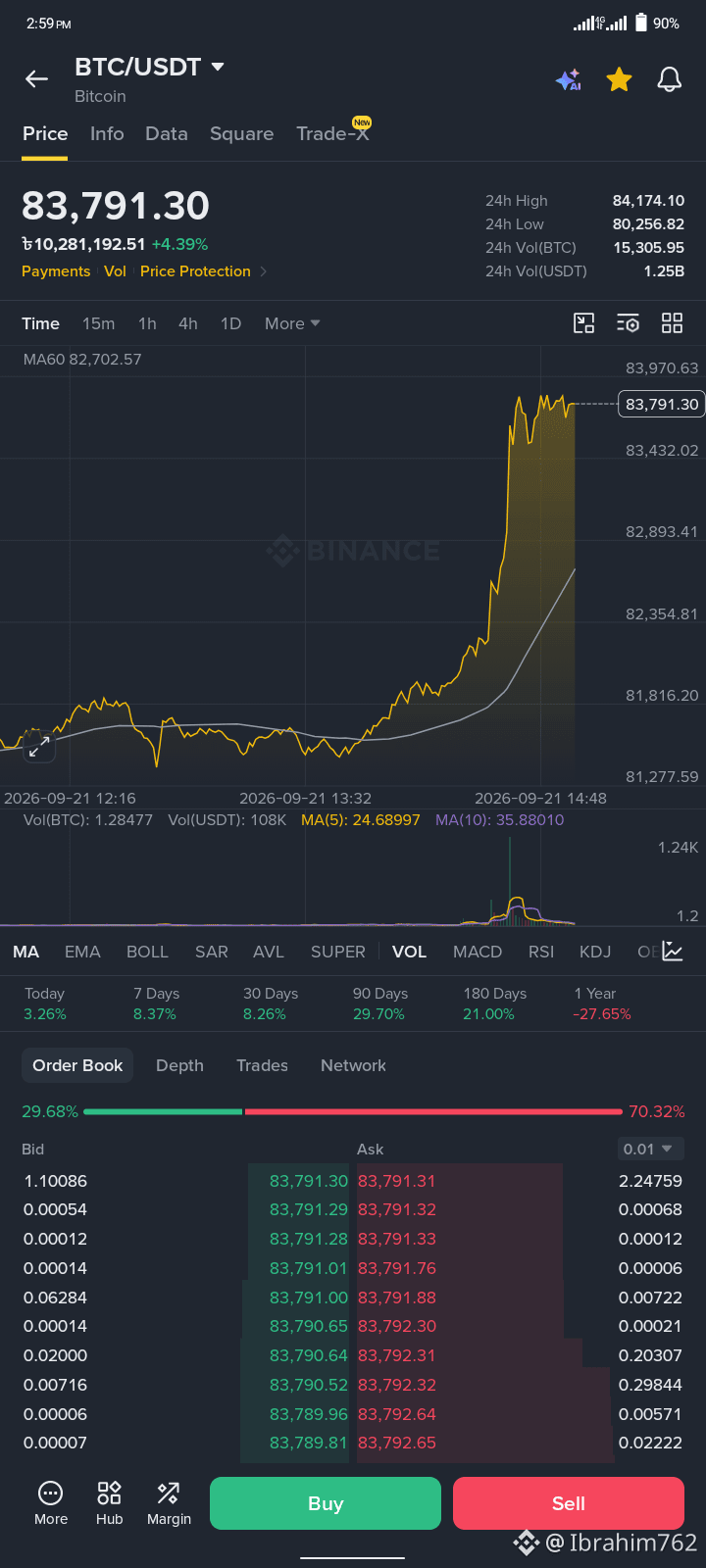
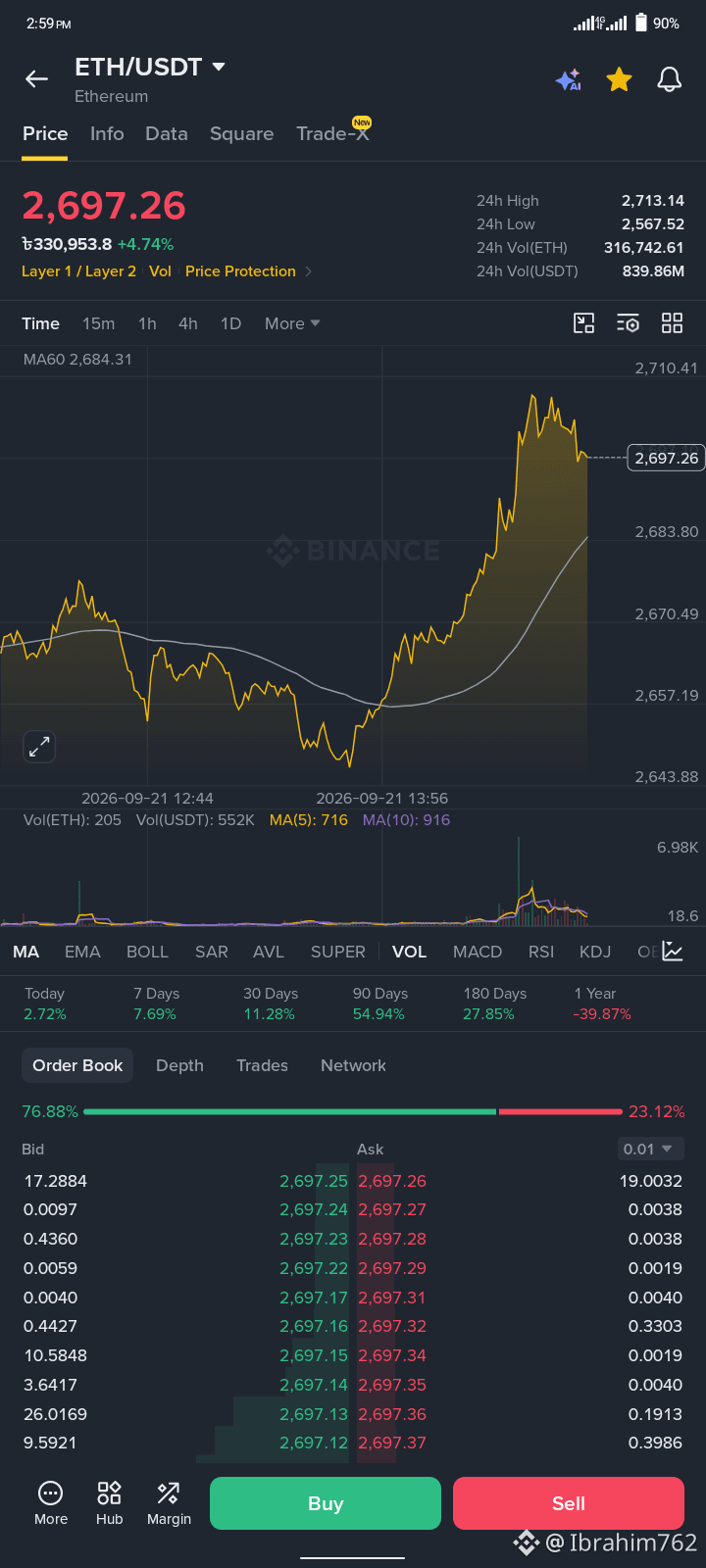
Bitcoin, BNB & Ethereum Market Price Update
$BNB $BTC $ETH
The cryptocurrency market is showing positive momentum today, with major assets including Bitcoin (BTC), Ethereum (ETH), and BNB trading higher over the past 24 hours. The global crypto market capitalization has also increased, reflecting renewed buying activity.
Bitcoin (BTC)
Bitcoin is trading around $81,000–$82,000, with recent market data showing BTC up approximately 5.5% over the past seven days. Bitcoin's recovery has helped improve sentiment across the broader crypto market.
Ethereum (ETH)
Ethereum is currently trading around $2,660–$2,670. ETH has gained roughly 6.8% over the past week, outperforming Bitcoin over that period. The market is closely watching whether Ethereum can maintain its recent momentum.
BNB
BNB is trading around $775–$780. Recent data shows BNB gaining about 8% over the past week, making it one of the stronger performers among these three major assets.
Market Outlook
The current market environment shows positive short-term momentum across BTC, ETH, and BNB. However, cryptocurrency prices can change rapidly, and short-term gains do not guarantee that the trend will continue.
Traders may want to monitor trading volume, market liquidity, Bitcoin's price levels, broader market sentiment, and major support and resistance zones before making trading decisions.
Disclaimer: This article is for informational purposes only and is not financial or investment advice. Cryptocurrency trading involves significant risk.
{spot}(BNBUSDT)
{spot}(BTCUSDT)
{spot}(ETHUSDT)
Bitcoin, BNB & Ethereum Market Price Update
$BNB $BTC $ETH
The cryptocurrency market is showing positive momentum today, with major assets including Bitcoin (BTC), Ethereum (ETH), and BNB trading higher over the past 24 hours. The global crypto market capitalization has also increased, reflecting renewed buying activity.
Bitcoin (BTC)
Bitcoin is trading around $81,000–$82,000, with recent market data showing BTC up approximately 5.5% over the past seven days. Bitcoin's recovery has helped improve sentiment across the broader crypto market.
Ethereum (ETH)
Ethereum is currently trading around $2,660–$2,670. ETH has gained roughly 6.8% over the past week, outperforming Bitcoin over that period. The market is closely watching whether Ethereum can maintain its recent momentum.
BNB
BNB is trading around $775–$780. Recent data shows BNB gaining about 8% over the past week, making it one of the stronger performers among these three major assets.
Market Outlook
The current market environment shows positive short-term momentum across BTC, ETH, and BNB. However, cryptocurrency prices can change rapidly, and short-term gains do not guarantee that the trend will continue.
Traders may want to monitor trading volume, market liquidity, Bitcoin's price levels, broader market sentiment, and major support and resistance zones before making trading decisions.
Disclaimer: This article is for informational purposes only and is not financial or investment advice. Cryptocurrency trading involves significant risk.
$BNB $BTC $ETH
The cryptocurrency market is showing positive momentum today, with major assets including Bitcoin (BTC), Ethereum (ETH), and BNB trading higher over the past 24 hours. The global crypto market capitalization has also increased, reflecting renewed buying activity.
Bitcoin (BTC)
Bitcoin is trading around $81,000–$82,000, with recent market data showing BTC up approximately 5.5% over the past seven days. Bitcoin's recovery has helped improve sentiment across the broader crypto market.
Ethereum (ETH)
Ethereum is currently trading around $2,660–$2,670. ETH has gained roughly 6.8% over the past week, outperforming Bitcoin over that period. The market is closely watching whether Ethereum can maintain its recent momentum.
BNB
BNB is trading around $775–$780. Recent data shows BNB gaining about 8% over the past week, making it one of the stronger performers among these three major assets.
Market Outlook
The current market environment shows positive short-term momentum across BTC, ETH, and BNB. However, cryptocurrency prices can change rapidly, and short-term gains do not guarantee that the trend will continue.
Traders may want to monitor trading volume, market liquidity, Bitcoin's price levels, broader market sentiment, and major support and resistance zones before making trading decisions.
Disclaimer: This article is for informational purposes only and is not financial or investment advice. Cryptocurrency trading involves significant risk.

Red Packet
送り主:Ibrahim762
1
21
·
--
ブリッシュ
#BTCBreaks80K Bitcoin 市場価格アップデート — 2026年9月21日
$BTC
本日の暗号資産市場で、ビットコイン(BTC)は再び強い動きを見せており、価格は約81,000〜84,000ドルの水準で取引されています。市場データによると、BTCは直近で76,000ドルを下回って取引されていた後、強く回復しており、過去1週間でおよそ5%上昇しています。
今回の回復により、ビットコインは重要なテクニカル水準を再び上回ってきました。BTCは最近、50週移動平均を上回る水準で週足の終値をつけました。この水準は市場アナリストが注視しています。過去の分析では、同様の動きが主要なサイクルの安値付近で見られることもありますが、過去の実績は将来の価格変動を保証するものではありません。
短期的には、トレーダーは重要なレジスタンス領域として82,000〜82,200ドルのゾーンを注目しています。このゾーンをしっかり上抜ける動きが続けば、追加の買い需要を呼び込む可能性があります。一方で、これを突破できなければ、値動きが横ばい(揉み合い)になったり、押し目が入ったりする可能性があります。
市場心理も、より広い金融環境や暗号資産への投資フローの影響を受けています。最近のレポートでは、米国のスポット・ビットコインETFが、過去1週間において大きな資金流入と資金流出の両方を経験したことが示されており、市場のボラティリティがある中でも機関投資家の関心が継続していることを浮き彫りにしています。
全体として、ビットコインは依然として非常にボラティリティが高い状況です。トレーダーは単一の指標に頼るのではなく、価格動向、取引量、ETFの資金フロー、マクロ経済の動向、主要なサポート/レジスタンス水準を確認するようにしてください。
市場メモ:本アップデートは情報提供のみを目的としており、金融または投資助言とみなされるべきではありません。
{future}(BTCUSDT)
#BTCBreaks80K Bitcoin 市場価格アップデート — 2026年9月21日
$BTC
本日の暗号資産市場で、ビットコイン(BTC)は再び強い動きを見せており、価格は約81,000〜84,000ドルの水準で取引されています。市場データによると、BTCは直近で76,000ドルを下回って取引されていた後、強く回復しており、過去1週間でおよそ5%上昇しています。
今回の回復により、ビットコインは重要なテクニカル水準を再び上回ってきました。BTCは最近、50週移動平均を上回る水準で週足の終値をつけました。この水準は市場アナリストが注視しています。過去の分析では、同様の動きが主要なサイクルの安値付近で見られることもありますが、過去の実績は将来の価格変動を保証するものではありません。
短期的には、トレーダーは重要なレジスタンス領域として82,000〜82,200ドルのゾーンを注目しています。このゾーンをしっかり上抜ける動きが続けば、追加の買い需要を呼び込む可能性があります。一方で、これを突破できなければ、値動きが横ばい(揉み合い)になったり、押し目が入ったりする可能性があります。
市場心理も、より広い金融環境や暗号資産への投資フローの影響を受けています。最近のレポートでは、米国のスポット・ビットコインETFが、過去1週間において大きな資金流入と資金流出の両方を経験したことが示されており、市場のボラティリティがある中でも機関投資家の関心が継続していることを浮き彫りにしています。
全体として、ビットコインは依然として非常にボラティリティが高い状況です。トレーダーは単一の指標に頼るのではなく、価格動向、取引量、ETFの資金フロー、マクロ経済の動向、主要なサポート/レジスタンス水準を確認するようにしてください。
市場メモ:本アップデートは情報提供のみを目的としており、金融または投資助言とみなされるべきではありません。
$BTC
本日の暗号資産市場で、ビットコイン(BTC)は再び強い動きを見せており、価格は約81,000〜84,000ドルの水準で取引されています。市場データによると、BTCは直近で76,000ドルを下回って取引されていた後、強く回復しており、過去1週間でおよそ5%上昇しています。
今回の回復により、ビットコインは重要なテクニカル水準を再び上回ってきました。BTCは最近、50週移動平均を上回る水準で週足の終値をつけました。この水準は市場アナリストが注視しています。過去の分析では、同様の動きが主要なサイクルの安値付近で見られることもありますが、過去の実績は将来の価格変動を保証するものではありません。
短期的には、トレーダーは重要なレジスタンス領域として82,000〜82,200ドルのゾーンを注目しています。このゾーンをしっかり上抜ける動きが続けば、追加の買い需要を呼び込む可能性があります。一方で、これを突破できなければ、値動きが横ばい(揉み合い)になったり、押し目が入ったりする可能性があります。
市場心理も、より広い金融環境や暗号資産への投資フローの影響を受けています。最近のレポートでは、米国のスポット・ビットコインETFが、過去1週間において大きな資金流入と資金流出の両方を経験したことが示されており、市場のボラティリティがある中でも機関投資家の関心が継続していることを浮き彫りにしています。
全体として、ビットコインは依然として非常にボラティリティが高い状況です。トレーダーは単一の指標に頼るのではなく、価格動向、取引量、ETFの資金フロー、マクロ経済の動向、主要なサポート/レジスタンス水準を確認するようにしてください。
市場メモ:本アップデートは情報提供のみを目的としており、金融または投資助言とみなされるべきではありません。
Red Packet
送り主:Ibrahim762
15
·
--

·
--
翻訳参照
#Binance EarnShare 1 million worth of rewards https://www.binance.com/activity/trading-competition/20260623-SummerFiesta-NEWT?ref=752192702
$BNB
#Binance EarnShare 1 million worth of rewards https://www.binance.com/activity/trading-competition/20260623-SummerFiesta-NEWT?ref=752192702
$BNB
$BNB
·
--
ブリッシュ
翻訳参照
Here’s a quick Binance snapshot for today, July 2, 2026:
Top gainers today
From Binance Web3 trending ranks on BSC (24h, sorted by % gain), notable gainers include:
KUMUSTA: +5027.01%
BNBINU AI (BINU): +3049.2%
BNB Agent Fund (bnbagent): +2019.83%
BNC CALCHAS: +1449.65%
Siu Mai (SUIMAI): +1212.59%
A few of these also carry caution flags like low liquidity, high tax token behavior, or other risk indicators, so they’re highly speculative.
Today’s crypto news
Trump disclosed $600M+ in crypto-related income and over $100M in BTC and ETH holdings in a new filing.
EU MiCA rules fully took effect on July 1, 2026, though crypto derivatives remain outside the framework.
US spot Bitcoin ETFs saw record June outflows of $4.5B, with year-to-date outflows around $5.5B.
Mainstream asset move
BTC: +2.7%
ETH: +3.1%
SOL: +5.4%
Binance daily brief highlights
The daily report also flagged:
NFPUSDT: +170.7%
ZBTUSDC: +27.7%
Binance promo activity including a NES trading competition and a South Asia Simple Earn USDT/USDC offer up to 30% APR for 7 days.
If you want, I can also show:
top gainers on Binance Spot only,
top searched coins, or
a safer filtered list excluding risky low-liquidity meme tokens.
Here’s a quick Binance snapshot for today, July 2, 2026:
Top gainers today
From Binance Web3 trending ranks on BSC (24h, sorted by % gain), notable gainers include:
KUMUSTA: +5027.01%
BNBINU AI (BINU): +3049.2%
BNB Agent Fund (bnbagent): +2019.83%
BNC CALCHAS: +1449.65%
Siu Mai (SUIMAI): +1212.59%
A few of these also carry caution flags like low liquidity, high tax token behavior, or other risk indicators, so they’re highly speculative.
Today’s crypto news
Trump disclosed $600M+ in crypto-related income and over $100M in BTC and ETH holdings in a new filing.
EU MiCA rules fully took effect on July 1, 2026, though crypto derivatives remain outside the framework.
US spot Bitcoin ETFs saw record June outflows of $4.5B, with year-to-date outflows around $5.5B.
Mainstream asset move
BTC: +2.7%
ETH: +3.1%
SOL: +5.4%
Binance daily brief highlights
The daily report also flagged:
NFPUSDT: +170.7%
ZBTUSDC: +27.7%
Binance promo activity including a NES trading competition and a South Asia Simple Earn USDT/USDC offer up to 30% APR for 7 days.
If you want, I can also show:
top gainers on Binance Spot only,
top searched coins, or
a safer filtered list excluding risky low-liquidity meme tokens.
Top gainers today
From Binance Web3 trending ranks on BSC (24h, sorted by % gain), notable gainers include:
KUMUSTA: +5027.01%
BNBINU AI (BINU): +3049.2%
BNB Agent Fund (bnbagent): +2019.83%
BNC CALCHAS: +1449.65%
Siu Mai (SUIMAI): +1212.59%
A few of these also carry caution flags like low liquidity, high tax token behavior, or other risk indicators, so they’re highly speculative.
Today’s crypto news
Trump disclosed $600M+ in crypto-related income and over $100M in BTC and ETH holdings in a new filing.
EU MiCA rules fully took effect on July 1, 2026, though crypto derivatives remain outside the framework.
US spot Bitcoin ETFs saw record June outflows of $4.5B, with year-to-date outflows around $5.5B.
Mainstream asset move
BTC: +2.7%
ETH: +3.1%
SOL: +5.4%
Binance daily brief highlights
The daily report also flagged:
NFPUSDT: +170.7%
ZBTUSDC: +27.7%
Binance promo activity including a NES trading competition and a South Asia Simple Earn USDT/USDC offer up to 30% APR for 7 days.
If you want, I can also show:
top gainers on Binance Spot only,
top searched coins, or
a safer filtered list excluding risky low-liquidity meme tokens.
1
33
·
--
翻訳参照
🚀 Daily Crypto Market: 3-Minute Brief
$BTC $SOL $BNB
📰 Today's News
🔥 Trump Discloses $600M+ Crypto Income, $100M+ BTC and ETH Holdings in New Filing
Former U.S. President Donald Trump's latest financial disclosure reveals over $600 million in income from crypto ventures and more than $100 million in Bitcoin and Ethereum holdings. This significant disclosure highlights the increasing integration of cryptocurrency into the financial portfolios of prominent figures.
⚡ MiCA Takes Effect July 1, Leaving Crypto Derivatives Outside Its Scope
The European Union's Markets in Crypto-Assets (MiCA) regulation officially came into full effect on July 1, marking a significant step for crypto regulation in Europe. However, crypto derivatives currently remain outside its regulatory scope, leading to ongoing discussions about its reach and effectiveness.
📉 Bitcoin ETF Outflows Hit Record $4.5 Billion in June, Far Surpassing Strategy’s $1.25 Billion Bitcoin Raise
June saw a record $4.5 billion in net outflows from US spot Bitcoin ETFs, bringing year-to-date outflows to approximately $5.5 billion. This indicates a challenging month for institutional Bitcoin products, with BlackRock's IBIT being a notable exception in inflows.
📈 Mainstream Asset Performance (24h)
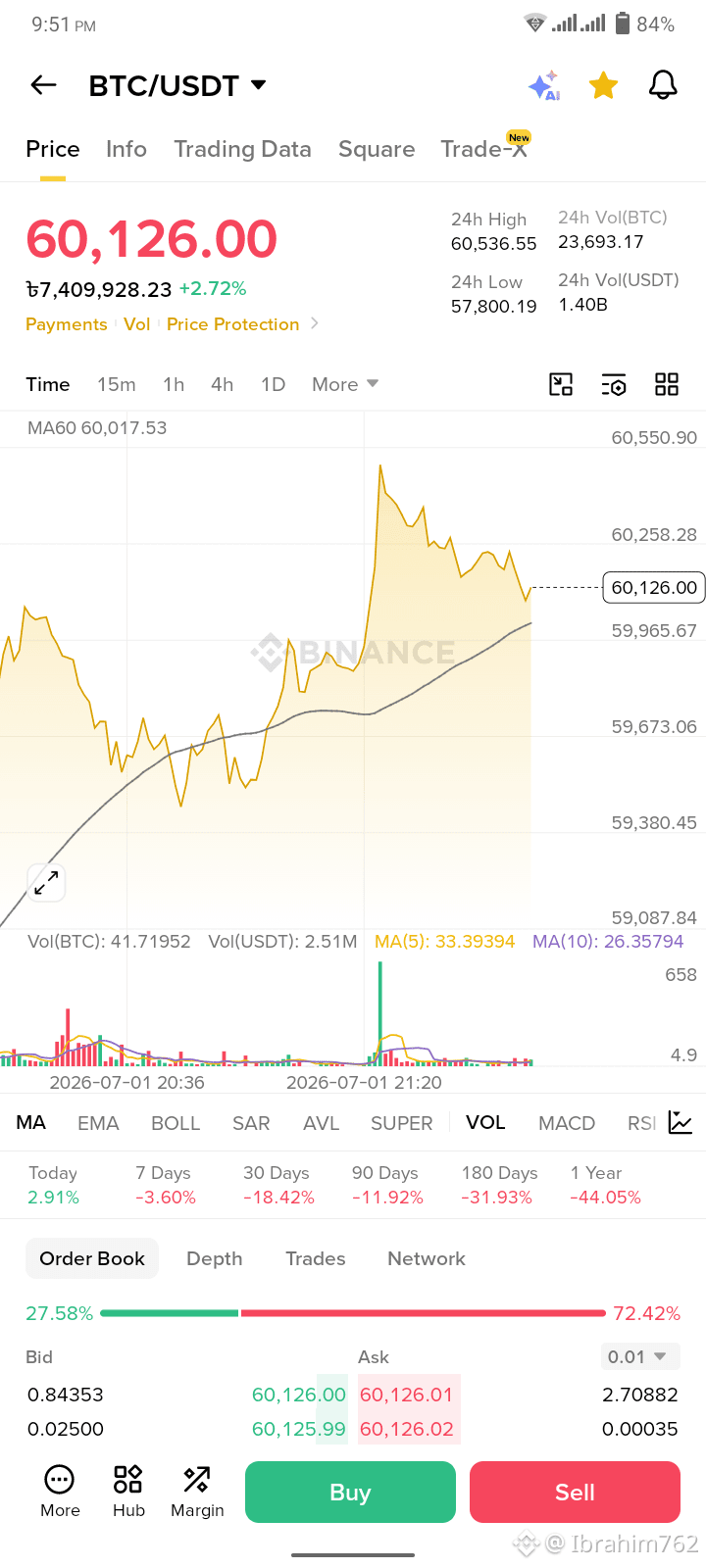
BTC: +2.7% — Bitcoin broke past the $60,000 mark, showing a positive rebound after earlier dips.
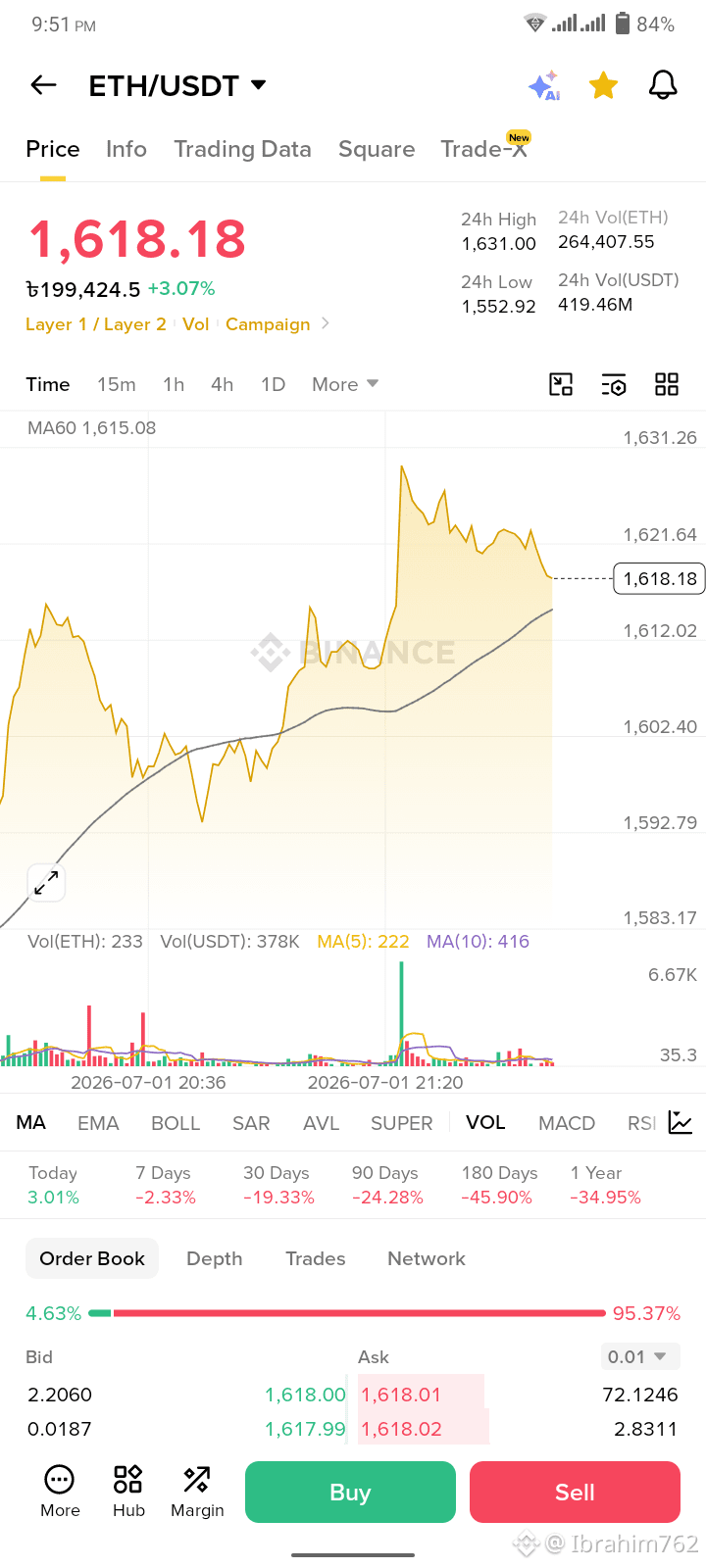
ETH: +3.1% — Ethereum crossed the $1,600 benchmark, indicating strong upward momentum.
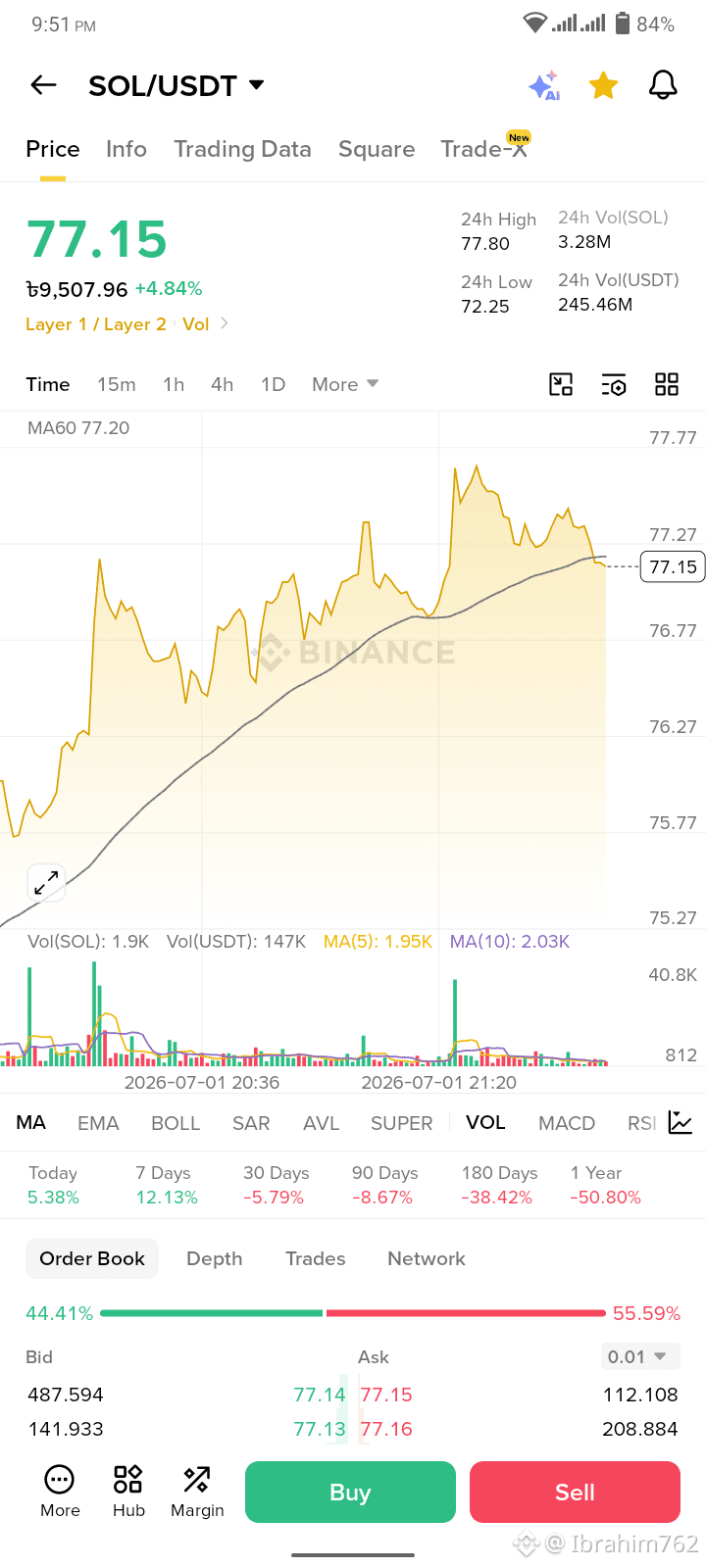
SOL: +5.4% — Solana experienced a notable surge, reaching $77.40 and demonstrating significant market interest.
🚀 Today's Top Gainers (Selected)
NFPUSDT: +170.7% — Significant increase in trading volume and continuous capital inflow.
ZBTUSDC: +27.7% — Substantial rise in trading volume and sustained capital inflow.
🎁 Platform Activities & Reminders
🔥 Binance Alpha Trading Competition
Participate in the Nesa (NES) trading competition on Binance Alpha with a prize pool of $200,000 in rewards.
{future}(BNBUSDT)
🚀 Daily Crypto Market: 3-Minute Brief
$BTC $SOL $BNB
📰 Today's News
🔥 Trump Discloses $600M+ Crypto Income, $100M+ BTC and ETH Holdings in New Filing
Former U.S. President Donald Trump's latest financial disclosure reveals over $600 million in income from crypto ventures and more than $100 million in Bitcoin and Ethereum holdings. This significant disclosure highlights the increasing integration of cryptocurrency into the financial portfolios of prominent figures.
⚡ MiCA Takes Effect July 1, Leaving Crypto Derivatives Outside Its Scope
The European Union's Markets in Crypto-Assets (MiCA) regulation officially came into full effect on July 1, marking a significant step for crypto regulation in Europe. However, crypto derivatives currently remain outside its regulatory scope, leading to ongoing discussions about its reach and effectiveness.
📉 Bitcoin ETF Outflows Hit Record $4.5 Billion in June, Far Surpassing Strategy’s $1.25 Billion Bitcoin Raise
June saw a record $4.5 billion in net outflows from US spot Bitcoin ETFs, bringing year-to-date outflows to approximately $5.5 billion. This indicates a challenging month for institutional Bitcoin products, with BlackRock's IBIT being a notable exception in inflows.
📈 Mainstream Asset Performance (24h)
BTC: +2.7% — Bitcoin broke past the $60,000 mark, showing a positive rebound after earlier dips.
ETH: +3.1% — Ethereum crossed the $1,600 benchmark, indicating strong upward momentum.
SOL: +5.4% — Solana experienced a notable surge, reaching $77.40 and demonstrating significant market interest.
🚀 Today's Top Gainers (Selected)
NFPUSDT: +170.7% — Significant increase in trading volume and continuous capital inflow.
ZBTUSDC: +27.7% — Substantial rise in trading volume and sustained capital inflow.
🎁 Platform Activities & Reminders
🔥 Binance Alpha Trading Competition
Participate in the Nesa (NES) trading competition on Binance Alpha with a prize pool of $200,000 in rewards.
$BTC $SOL $BNB
📰 Today's News
🔥 Trump Discloses $600M+ Crypto Income, $100M+ BTC and ETH Holdings in New Filing
Former U.S. President Donald Trump's latest financial disclosure reveals over $600 million in income from crypto ventures and more than $100 million in Bitcoin and Ethereum holdings. This significant disclosure highlights the increasing integration of cryptocurrency into the financial portfolios of prominent figures.
⚡ MiCA Takes Effect July 1, Leaving Crypto Derivatives Outside Its Scope
The European Union's Markets in Crypto-Assets (MiCA) regulation officially came into full effect on July 1, marking a significant step for crypto regulation in Europe. However, crypto derivatives currently remain outside its regulatory scope, leading to ongoing discussions about its reach and effectiveness.
📉 Bitcoin ETF Outflows Hit Record $4.5 Billion in June, Far Surpassing Strategy’s $1.25 Billion Bitcoin Raise
June saw a record $4.5 billion in net outflows from US spot Bitcoin ETFs, bringing year-to-date outflows to approximately $5.5 billion. This indicates a challenging month for institutional Bitcoin products, with BlackRock's IBIT being a notable exception in inflows.
📈 Mainstream Asset Performance (24h)
BTC: +2.7% — Bitcoin broke past the $60,000 mark, showing a positive rebound after earlier dips.
ETH: +3.1% — Ethereum crossed the $1,600 benchmark, indicating strong upward momentum.
SOL: +5.4% — Solana experienced a notable surge, reaching $77.40 and demonstrating significant market interest.
🚀 Today's Top Gainers (Selected)
NFPUSDT: +170.7% — Significant increase in trading volume and continuous capital inflow.
ZBTUSDC: +27.7% — Substantial rise in trading volume and sustained capital inflow.
🎁 Platform Activities & Reminders
🔥 Binance Alpha Trading Competition
Participate in the Nesa (NES) trading competition on Binance Alpha with a prize pool of $200,000 in rewards.
1
33
·
--
弱気相場
翻訳参照
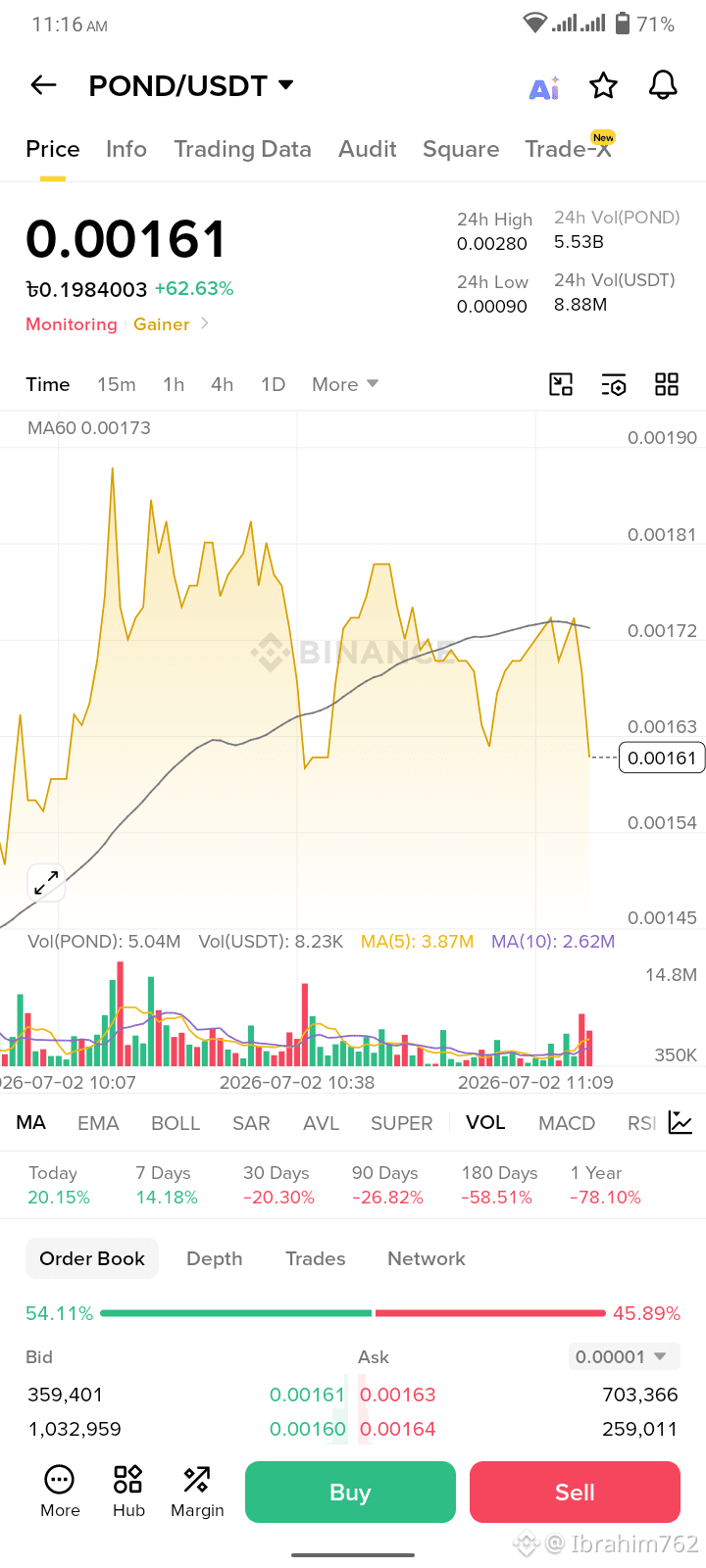
$POND I found multiple tokens matching “POND”, but not a clearly established “POND blockchain” in Binance Web3 market data.
The most relevant results I can see are:
PondHub by Virtuals (PH) on Base
Several small-cap or meme-style tokens named POND / pond / Pondeer / MEMEPOND / Openpond / PONDA
A Solana token called “POND COIN - WARPED” (wPOND) with the strongest 24h activity among the POND-labeled results I found
Quick market snapshot from the results
wPOND (Solana)
Price: ~0.00000004995
24h change: +12.1%
24h volume: ~36.1k
Market cap: ~1.39M
Liquidity: ~40.8k
Holders: 6,557
PondHub by Virtuals (PH) on Base
Price: ~0.0001677
24h change: +2.78%
Market cap: ~161.8k
Liquidity: ~48.0k
Holders: 119,728
My read
If you meant a specific token/project called POND, the search results are ambiguous right now. There are many similarly named assets, and several look like very small or meme-related tokens rather than a major L1/L2 blockchain.
If you want, I can give you a proper market update for the exact one you mean. Just send me one of these:
Contract address
Chain name: BSC / Base / Solana
Or the exact project name, for example:
wPOND
PondHub by Virtuals
another specific POND
Then I can pull:
price action
holder/liquidity stats
short-term trend
kline/chart view
risk signals and trading takeaways
If you want, I can also do a full technical snapshot for wPOND right now since it currently has the strongest activity among the POND-related results.
{spot}(PONDUSDT)
$POND I found multiple tokens matching “POND”, but not a clearly established “POND blockchain” in Binance Web3 market data.
The most relevant results I can see are:
PondHub by Virtuals (PH) on Base
Several small-cap or meme-style tokens named POND / pond / Pondeer / MEMEPOND / Openpond / PONDA
A Solana token called “POND COIN - WARPED” (wPOND) with the strongest 24h activity among the POND-labeled results I found
Quick market snapshot from the results
wPOND (Solana)
Price: ~0.00000004995
24h change: +12.1%
24h volume: ~36.1k
Market cap: ~1.39M
Liquidity: ~40.8k
Holders: 6,557
PondHub by Virtuals (PH) on Base
Price: ~0.0001677
24h change: +2.78%
Market cap: ~161.8k
Liquidity: ~48.0k
Holders: 119,728
My read
If you meant a specific token/project called POND, the search results are ambiguous right now. There are many similarly named assets, and several look like very small or meme-related tokens rather than a major L1/L2 blockchain.
If you want, I can give you a proper market update for the exact one you mean. Just send me one of these:
Contract address
Chain name: BSC / Base / Solana
Or the exact project name, for example:
wPOND
PondHub by Virtuals
another specific POND
Then I can pull:
price action
holder/liquidity stats
short-term trend
kline/chart view
risk signals and trading takeaways
If you want, I can also do a full technical snapshot for wPOND right now since it currently has the strongest activity among the POND-related results.
The most relevant results I can see are:
PondHub by Virtuals (PH) on Base
Several small-cap or meme-style tokens named POND / pond / Pondeer / MEMEPOND / Openpond / PONDA
A Solana token called “POND COIN - WARPED” (wPOND) with the strongest 24h activity among the POND-labeled results I found
Quick market snapshot from the results
wPOND (Solana)
Price: ~0.00000004995
24h change: +12.1%
24h volume: ~36.1k
Market cap: ~1.39M
Liquidity: ~40.8k
Holders: 6,557
PondHub by Virtuals (PH) on Base
Price: ~0.0001677
24h change: +2.78%
Market cap: ~161.8k
Liquidity: ~48.0k
Holders: 119,728
My read
If you meant a specific token/project called POND, the search results are ambiguous right now. There are many similarly named assets, and several look like very small or meme-related tokens rather than a major L1/L2 blockchain.
If you want, I can give you a proper market update for the exact one you mean. Just send me one of these:
Contract address
Chain name: BSC / Base / Solana
Or the exact project name, for example:
wPOND
PondHub by Virtuals
another specific POND
Then I can pull:
price action
holder/liquidity stats
short-term trend
kline/chart view
risk signals and trading takeaways
If you want, I can also do a full technical snapshot for wPOND right now since it currently has the strongest activity among the POND-related results.
1
85
·
--
ブリッシュ
$BTC $BNB $ETH 暗号資産マーケットアップデート:BTC、ETH、BNBが新たな規制時代に備える
2026年7月1日 — 世界の暗号資産市場は、2026年後半に向けて、地域ごとのテクニカルな圧力と広範な構造変化が入り混じる局面に直面しています。主要資産が強いサポート水準を確保しようともがく一方で、機関投資家の再編や重要な欧州の規制期限が、オンライン通貨をめぐる「舞台」を動かしています。
ビットコイン(BTC)はマクロの逆風と戦う
ビットコインはここ数か月、強まる米ドルと小売の熱意の冷え込みに拍車をかけられ、攻勢的な下落トレンドに耐えてきました。テクニカル面では、BTCは昨日およそ5万9,000ドル付近で拒否され、5万8,000〜6万ドルの重要なサポート閾値へ再び下落しています。
短期チャートでは高いボラティリティと継続的な売り圧力が見られるものの、長期の市場構造は、重い企業・クジラによる蓄積によってしっかりと支えられています。企業は、Strategyが新たに発表したBTCモネタイズ(現金化)プログラムのような資本枠組みを微調整しており、今月後半に価格のフロアを安定化させる可能性のある、非常に高度な機関投資家向けの流動性バックストップを整えています。
イーサリアム(ETH)は機関向けインフラへシフト
イーサリアムは、ビットコインのより大きなマクロの動きを概ねなぞりつつ、年央の目標を下回る水準でタイトに推移しています。ただし、ファンダメンタル面の採用ストーリーは、急速に企業統合へと軸足を移しています。
本日、メインネットへの導入を目的として、世界のティア1(上位)銀行と資産運用会社をオンボーディングする専用の独立系非営利「Ethereum Institutional」のパブリックローンチが行われました。舞台裏で大型の保有主体が拡大していることから、市場の観測者は、この連携した「機関投資家の入口(フロントドア)」が、イーサリアムのユーティリティを投機的な取引から、現代のグローバル金融の文字通りの基盤へと切り替え、今後の構造的なバリュエーションに大きく影響すると見込んでいます。
バイナンス・コイン(BNB)はMiCAの期限を乗り切る
{future}(BNBUSDT)
{future}(BTCUSDT)
{future}(ETHUSDT)
$BTC $BNB $ETH 暗号資産マーケットアップデート:BTC、ETH、BNBが新たな規制時代に備える
2026年7月1日 — 世界の暗号資産市場は、2026年後半に向けて、地域ごとのテクニカルな圧力と広範な構造変化が入り混じる局面に直面しています。主要資産が強いサポート水準を確保しようともがく一方で、機関投資家の再編や重要な欧州の規制期限が、オンライン通貨をめぐる「舞台」を動かしています。
ビットコイン(BTC)はマクロの逆風と戦う
ビットコインはここ数か月、強まる米ドルと小売の熱意の冷え込みに拍車をかけられ、攻勢的な下落トレンドに耐えてきました。テクニカル面では、BTCは昨日およそ5万9,000ドル付近で拒否され、5万8,000〜6万ドルの重要なサポート閾値へ再び下落しています。
短期チャートでは高いボラティリティと継続的な売り圧力が見られるものの、長期の市場構造は、重い企業・クジラによる蓄積によってしっかりと支えられています。企業は、Strategyが新たに発表したBTCモネタイズ(現金化)プログラムのような資本枠組みを微調整しており、今月後半に価格のフロアを安定化させる可能性のある、非常に高度な機関投資家向けの流動性バックストップを整えています。
イーサリアム(ETH)は機関向けインフラへシフト
イーサリアムは、ビットコインのより大きなマクロの動きを概ねなぞりつつ、年央の目標を下回る水準でタイトに推移しています。ただし、ファンダメンタル面の採用ストーリーは、急速に企業統合へと軸足を移しています。
本日、メインネットへの導入を目的として、世界のティア1(上位)銀行と資産運用会社をオンボーディングする専用の独立系非営利「Ethereum Institutional」のパブリックローンチが行われました。舞台裏で大型の保有主体が拡大していることから、市場の観測者は、この連携した「機関投資家の入口(フロントドア)」が、イーサリアムのユーティリティを投機的な取引から、現代のグローバル金融の文字通りの基盤へと切り替え、今後の構造的なバリュエーションに大きく影響すると見込んでいます。
バイナンス・コイン(BNB)はMiCAの期限を乗り切る
2026年7月1日 — 世界の暗号資産市場は、2026年後半に向けて、地域ごとのテクニカルな圧力と広範な構造変化が入り混じる局面に直面しています。主要資産が強いサポート水準を確保しようともがく一方で、機関投資家の再編や重要な欧州の規制期限が、オンライン通貨をめぐる「舞台」を動かしています。
ビットコイン(BTC)はマクロの逆風と戦う
ビットコインはここ数か月、強まる米ドルと小売の熱意の冷え込みに拍車をかけられ、攻勢的な下落トレンドに耐えてきました。テクニカル面では、BTCは昨日およそ5万9,000ドル付近で拒否され、5万8,000〜6万ドルの重要なサポート閾値へ再び下落しています。
短期チャートでは高いボラティリティと継続的な売り圧力が見られるものの、長期の市場構造は、重い企業・クジラによる蓄積によってしっかりと支えられています。企業は、Strategyが新たに発表したBTCモネタイズ(現金化)プログラムのような資本枠組みを微調整しており、今月後半に価格のフロアを安定化させる可能性のある、非常に高度な機関投資家向けの流動性バックストップを整えています。
イーサリアム(ETH)は機関向けインフラへシフト
イーサリアムは、ビットコインのより大きなマクロの動きを概ねなぞりつつ、年央の目標を下回る水準でタイトに推移しています。ただし、ファンダメンタル面の採用ストーリーは、急速に企業統合へと軸足を移しています。
本日、メインネットへの導入を目的として、世界のティア1(上位)銀行と資産運用会社をオンボーディングする専用の独立系非営利「Ethereum Institutional」のパブリックローンチが行われました。舞台裏で大型の保有主体が拡大していることから、市場の観測者は、この連携した「機関投資家の入口(フロントドア)」が、イーサリアムのユーティリティを投機的な取引から、現代のグローバル金融の文字通りの基盤へと切り替え、今後の構造的なバリュエーションに大きく影響すると見込んでいます。
バイナンス・コイン(BNB)はMiCAの期限を乗り切る
1
68
·
--
弱気相場
翻訳参照
$ETH $ETH Here is a snapshot of the Ethereum (ETH) market as of **July 1, 2026**:
## Current Price & Key Stats
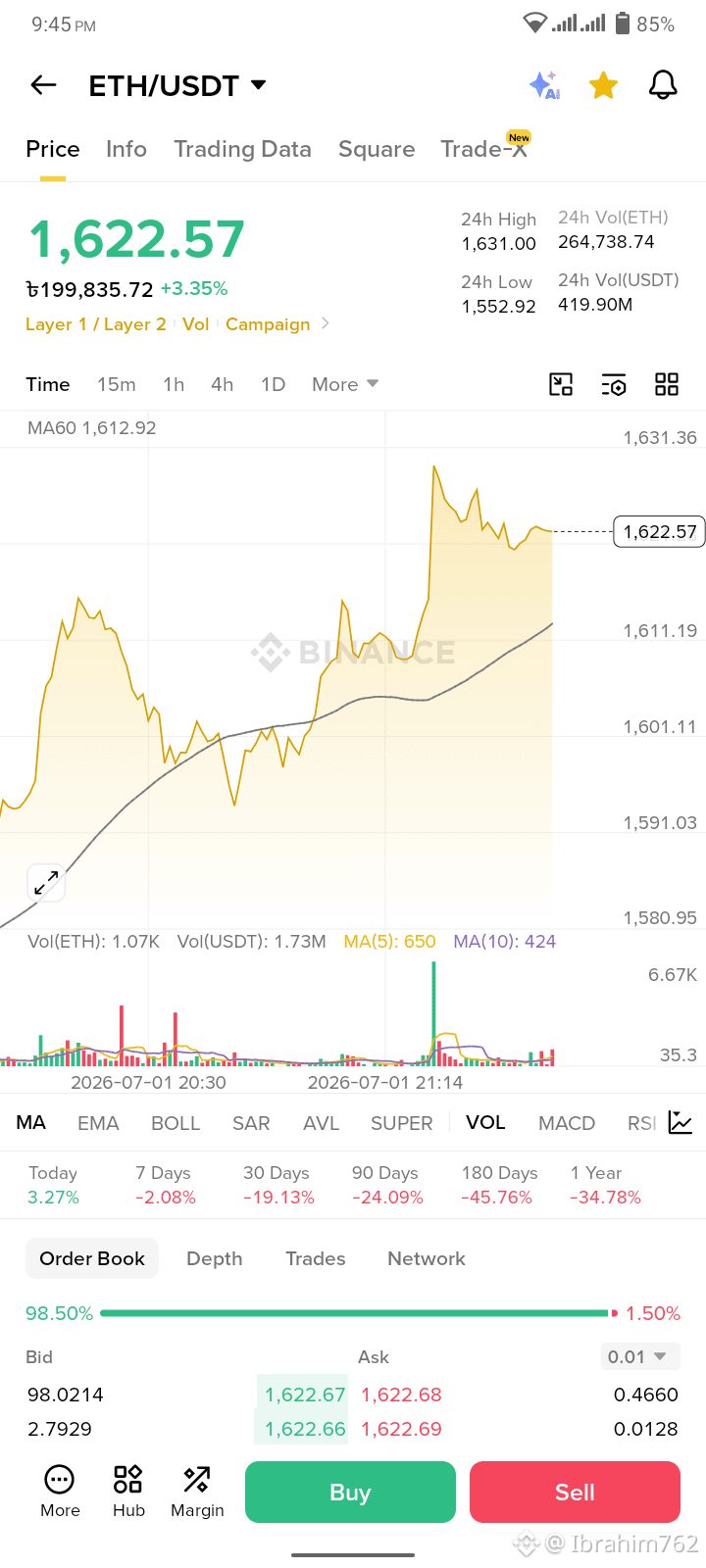
* **Live Price:** ~$1,598 USD (ranging between $1,565 and $1,600 across exchanges)
* **24-Hour Change:** Up roughly **1.7% to 2.5%** over the last day, showing a mild short-term relief rally.
* **7-Day Change:** Down **~5.5%**, reflecting a broader weekly downward trend.
* **24-Hour Volume:** ~$10.1 Billion USD
* **Market Capitalization:** ~$192.8 Billion USD (holding strong as the #2 cryptocurrency)
## Market Performance & Technicals
* **The Support Level:** ETH is currently testing a crucial psychological and technical support zone right around **$1,580 – $1,600**. Technical analysts note that if it breaks below this floor, the price could slide further toward the $1,200 range.
* **Sell Pressure:** Despite today's brief rebound, broader market trends show some persistent selling pressure. Reports indicate that substantial whale distributions (nearly 550,000 ETH worth over $880 million recently shifted) and quarter-end portfolio adjustments have kept the upside capped.
* **Network Status:** On the technical front, the network is running smoothly following its mid-2026 **Glamsterdam** upgrade, which introduced enhanced MEV resistance features (ePBS).
Would you like to look closer at the technical chart indicators, or are you looking for recent ecosystem news?
{spot}(ETHUSDT)
$ETH $ETH Here is a snapshot of the Ethereum (ETH) market as of **July 1, 2026**:
## Current Price & Key Stats
* **Live Price:** ~$1,598 USD (ranging between $1,565 and $1,600 across exchanges)
* **24-Hour Change:** Up roughly **1.7% to 2.5%** over the last day, showing a mild short-term relief rally.
* **7-Day Change:** Down **~5.5%**, reflecting a broader weekly downward trend.
* **24-Hour Volume:** ~$10.1 Billion USD
* **Market Capitalization:** ~$192.8 Billion USD (holding strong as the #2 cryptocurrency)
## Market Performance & Technicals
* **The Support Level:** ETH is currently testing a crucial psychological and technical support zone right around **$1,580 – $1,600**. Technical analysts note that if it breaks below this floor, the price could slide further toward the $1,200 range.
* **Sell Pressure:** Despite today's brief rebound, broader market trends show some persistent selling pressure. Reports indicate that substantial whale distributions (nearly 550,000 ETH worth over $880 million recently shifted) and quarter-end portfolio adjustments have kept the upside capped.
* **Network Status:** On the technical front, the network is running smoothly following its mid-2026 **Glamsterdam** upgrade, which introduced enhanced MEV resistance features (ePBS).
Would you like to look closer at the technical chart indicators, or are you looking for recent ecosystem news?
## Current Price & Key Stats
* **Live Price:** ~$1,598 USD (ranging between $1,565 and $1,600 across exchanges)
* **24-Hour Change:** Up roughly **1.7% to 2.5%** over the last day, showing a mild short-term relief rally.
* **7-Day Change:** Down **~5.5%**, reflecting a broader weekly downward trend.
* **24-Hour Volume:** ~$10.1 Billion USD
* **Market Capitalization:** ~$192.8 Billion USD (holding strong as the #2 cryptocurrency)
## Market Performance & Technicals
* **The Support Level:** ETH is currently testing a crucial psychological and technical support zone right around **$1,580 – $1,600**. Technical analysts note that if it breaks below this floor, the price could slide further toward the $1,200 range.
* **Sell Pressure:** Despite today's brief rebound, broader market trends show some persistent selling pressure. Reports indicate that substantial whale distributions (nearly 550,000 ETH worth over $880 million recently shifted) and quarter-end portfolio adjustments have kept the upside capped.
* **Network Status:** On the technical front, the network is running smoothly following its mid-2026 **Glamsterdam** upgrade, which introduced enhanced MEV resistance features (ePBS).
Would you like to look closer at the technical chart indicators, or are you looking for recent ecosystem news?
7
·
--
翻訳参照
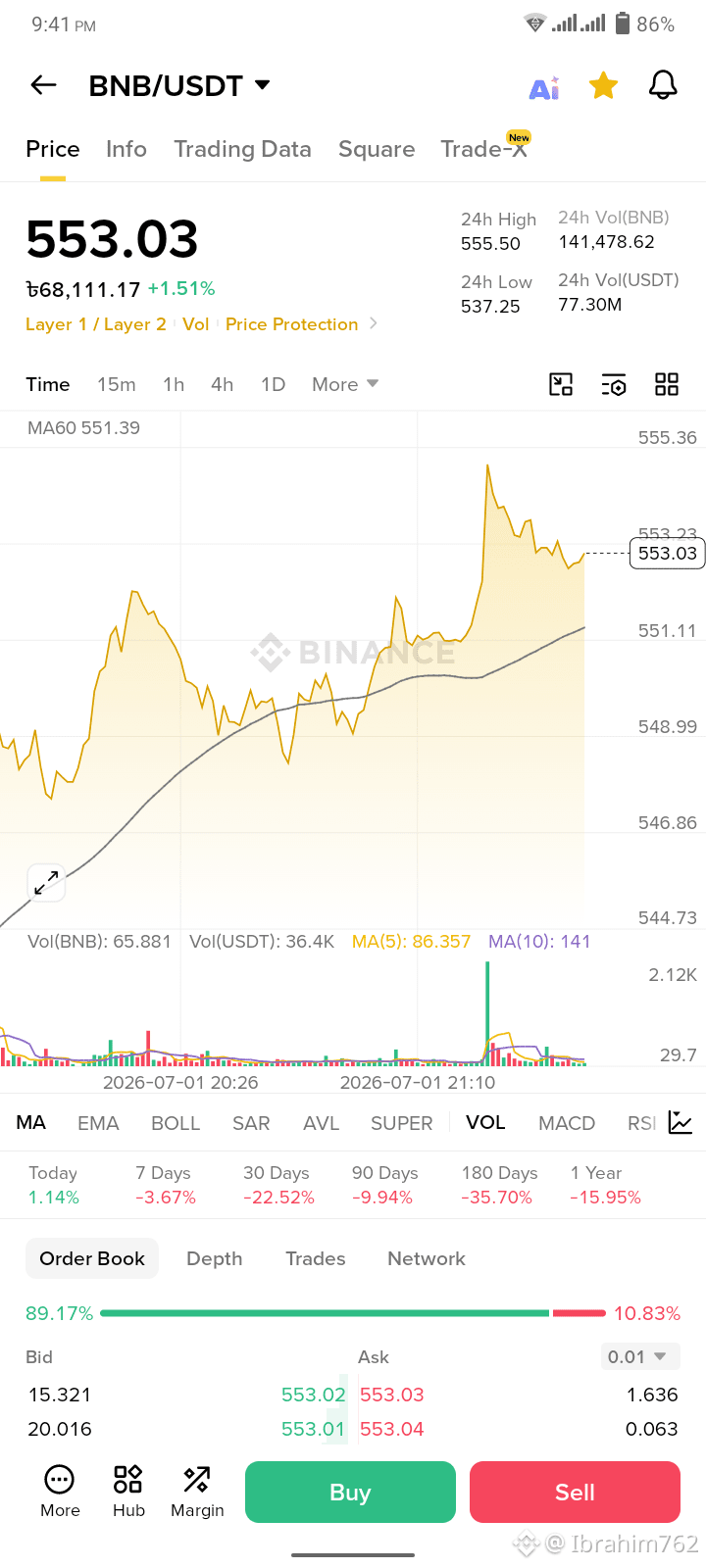
$BNB BNB is trading at $552.82 right now, up about 1.45% over the last 24 hours.
24h open was $544.91, with a high of $555.50 and a low of $537.25. Trading status is TRADING on Binance.
{future}(BNBUSDT)
$BNB BNB is trading at $552.82 right now, up about 1.45% over the last 24 hours.
24h open was $544.91, with a high of $555.50 and a low of $537.25. Trading status is TRADING on Binance.
24h open was $544.91, with a high of $555.50 and a low of $537.25. Trading status is TRADING on Binance.
1
2
·
--
ブリッシュ
翻訳参照
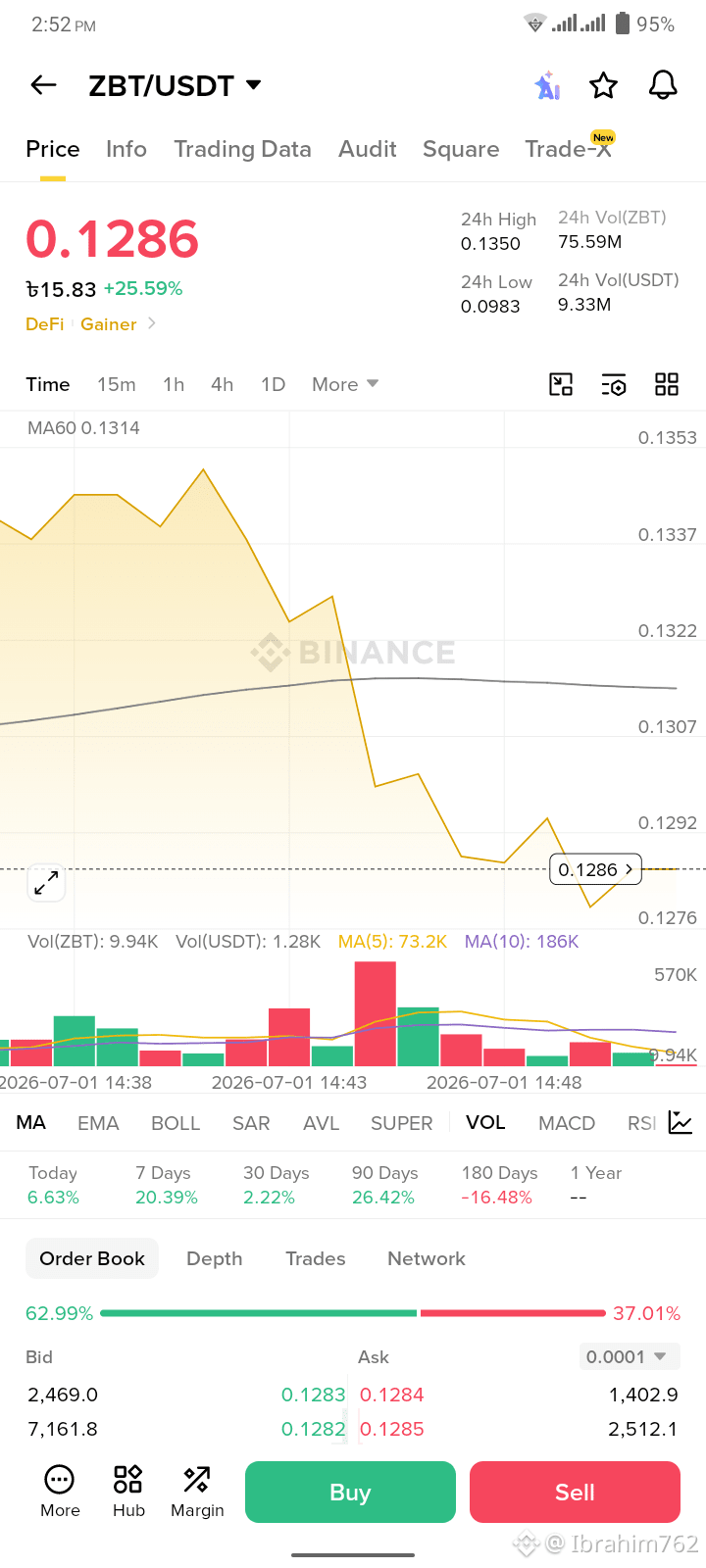
Sure — assuming you mean ZBT as ZEROBASE, here’s a short article:
$ZBT $ZBT
ZBT Blockchain: Privacy-Focused Infrastructure for Web3
The ZBT blockchain ecosystem, known as ZEROBASE, is a blockchain-driven platform built to improve privacy, trust, and transparency in Web3 applications. It uses advanced cryptographic tools such as zero-knowledge proofs (ZKPs) and trusted hardware environments to help verify information without exposing sensitive underlying data. (binance.com)
At its core, ZBT is the native utility token of the ZEROBASE network. It is used to support network operations, governance, and incentives for participants such as users and node operators. The project describes itself as infrastructure for verifiable off-chain computation and privacy-preserving blockchain services. (binance.com)
One of the key ideas behind ZEROBASE is to make blockchain systems more useful for applications where privacy matters, including decentralized finance and data-sensitive services. Its architecture is designed for scalability and workload distribution, helping the network handle proof generation and related tasks more efficiently. (binance.com)
In short, the ZBT blockchain ecosystem aims to combine privacy, efficiency, and decentralized trust. Rather than serving only as a digital currency, it positions itself as a technical foundation for next-generation blockchain applications that need both transparency and confidentiality. (binance.com)
If you want, I can also make it:
more beginner-friendly
more professional
SEO style
or 100 words exactly
{future}(ZBTUSDT)
Sure — assuming you mean ZBT as ZEROBASE, here’s a short article:
$ZBT $ZBT
ZBT Blockchain: Privacy-Focused Infrastructure for Web3
The ZBT blockchain ecosystem, known as ZEROBASE, is a blockchain-driven platform built to improve privacy, trust, and transparency in Web3 applications. It uses advanced cryptographic tools such as zero-knowledge proofs (ZKPs) and trusted hardware environments to help verify information without exposing sensitive underlying data. (binance.com)
At its core, ZBT is the native utility token of the ZEROBASE network. It is used to support network operations, governance, and incentives for participants such as users and node operators. The project describes itself as infrastructure for verifiable off-chain computation and privacy-preserving blockchain services. (binance.com)
One of the key ideas behind ZEROBASE is to make blockchain systems more useful for applications where privacy matters, including decentralized finance and data-sensitive services. Its architecture is designed for scalability and workload distribution, helping the network handle proof generation and related tasks more efficiently. (binance.com)
In short, the ZBT blockchain ecosystem aims to combine privacy, efficiency, and decentralized trust. Rather than serving only as a digital currency, it positions itself as a technical foundation for next-generation blockchain applications that need both transparency and confidentiality. (binance.com)
If you want, I can also make it:
more beginner-friendly
more professional
SEO style
or 100 words exactly
$ZBT $ZBT
ZBT Blockchain: Privacy-Focused Infrastructure for Web3
The ZBT blockchain ecosystem, known as ZEROBASE, is a blockchain-driven platform built to improve privacy, trust, and transparency in Web3 applications. It uses advanced cryptographic tools such as zero-knowledge proofs (ZKPs) and trusted hardware environments to help verify information without exposing sensitive underlying data. (binance.com)
At its core, ZBT is the native utility token of the ZEROBASE network. It is used to support network operations, governance, and incentives for participants such as users and node operators. The project describes itself as infrastructure for verifiable off-chain computation and privacy-preserving blockchain services. (binance.com)
One of the key ideas behind ZEROBASE is to make blockchain systems more useful for applications where privacy matters, including decentralized finance and data-sensitive services. Its architecture is designed for scalability and workload distribution, helping the network handle proof generation and related tasks more efficiently. (binance.com)
In short, the ZBT blockchain ecosystem aims to combine privacy, efficiency, and decentralized trust. Rather than serving only as a digital currency, it positions itself as a technical foundation for next-generation blockchain applications that need both transparency and confidentiality. (binance.com)
If you want, I can also make it:
more beginner-friendly
more professional
SEO style
or 100 words exactly
1
73
·
--
ブリッシュ
翻訳参照
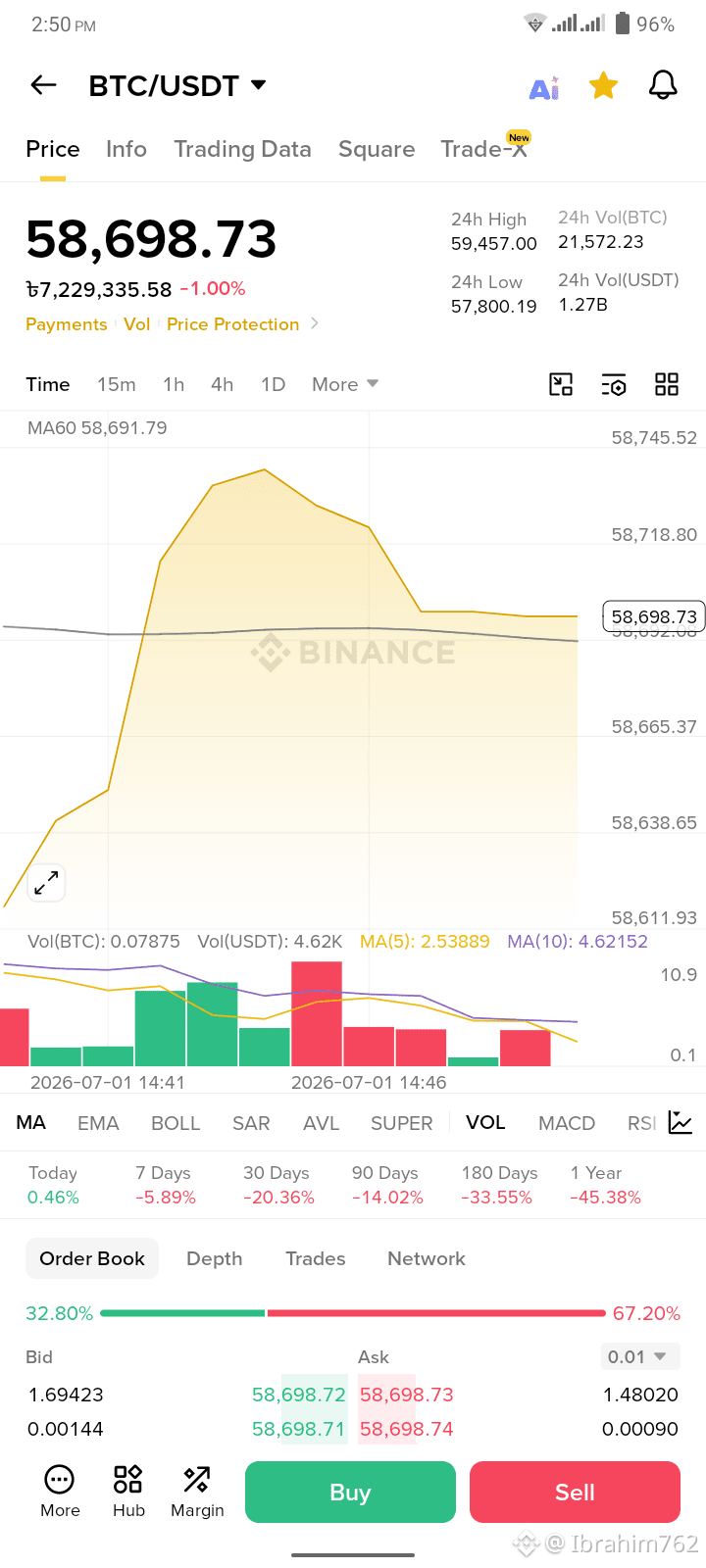
BTC Blockchain: The Digital Ledger Behind Bitcoin
$BTC $BTC
The BTC blockchain is the technology that powers Bitcoin, the world’s first decentralized cryptocurrency. It works like a public digital ledger that records every Bitcoin transaction in a secure, transparent, and permanent way.
A blockchain is made up of blocks, which contain groups of transactions. These blocks are linked together in chronological order, forming a chain. Once a block is added, its data is extremely difficult to change, which helps make Bitcoin trustworthy without needing a central bank or payment company.
The Bitcoin blockchain is maintained by a global network of computers called nodes. Special participants known as miners verify transactions and add new blocks through a process called Proof of Work. In return, miners receive BTC rewards, which also introduces new bitcoins into circulation.
One of the biggest strengths of the BTC blockchain is decentralization. No single person or organization controls it. This makes Bitcoin resistant to censorship, fraud, and single points of failure.
In simple terms, the BTC blockchain is the foundation of Bitcoin: a secure, decentralized system for storing and transferring value across the internet. It has also inspired thousands of other blockchain projects and changed how people think about money and digital ownership.
If you want, I can also make it more beginner-friendly, more professional, or SEO-style.
{future}(BTCUSDT)
BTC Blockchain: The Digital Ledger Behind Bitcoin
$BTC $BTC
The BTC blockchain is the technology that powers Bitcoin, the world’s first decentralized cryptocurrency. It works like a public digital ledger that records every Bitcoin transaction in a secure, transparent, and permanent way.
A blockchain is made up of blocks, which contain groups of transactions. These blocks are linked together in chronological order, forming a chain. Once a block is added, its data is extremely difficult to change, which helps make Bitcoin trustworthy without needing a central bank or payment company.
The Bitcoin blockchain is maintained by a global network of computers called nodes. Special participants known as miners verify transactions and add new blocks through a process called Proof of Work. In return, miners receive BTC rewards, which also introduces new bitcoins into circulation.
One of the biggest strengths of the BTC blockchain is decentralization. No single person or organization controls it. This makes Bitcoin resistant to censorship, fraud, and single points of failure.
In simple terms, the BTC blockchain is the foundation of Bitcoin: a secure, decentralized system for storing and transferring value across the internet. It has also inspired thousands of other blockchain projects and changed how people think about money and digital ownership.
If you want, I can also make it more beginner-friendly, more professional, or SEO-style.
$BTC $BTC
The BTC blockchain is the technology that powers Bitcoin, the world’s first decentralized cryptocurrency. It works like a public digital ledger that records every Bitcoin transaction in a secure, transparent, and permanent way.
A blockchain is made up of blocks, which contain groups of transactions. These blocks are linked together in chronological order, forming a chain. Once a block is added, its data is extremely difficult to change, which helps make Bitcoin trustworthy without needing a central bank or payment company.
The Bitcoin blockchain is maintained by a global network of computers called nodes. Special participants known as miners verify transactions and add new blocks through a process called Proof of Work. In return, miners receive BTC rewards, which also introduces new bitcoins into circulation.
One of the biggest strengths of the BTC blockchain is decentralization. No single person or organization controls it. This makes Bitcoin resistant to censorship, fraud, and single points of failure.
In simple terms, the BTC blockchain is the foundation of Bitcoin: a secure, decentralized system for storing and transferring value across the internet. It has also inspired thousands of other blockchain projects and changed how people think about money and digital ownership.
If you want, I can also make it more beginner-friendly, more professional, or SEO-style.
21
·
--
ブリッシュ
翻訳参照
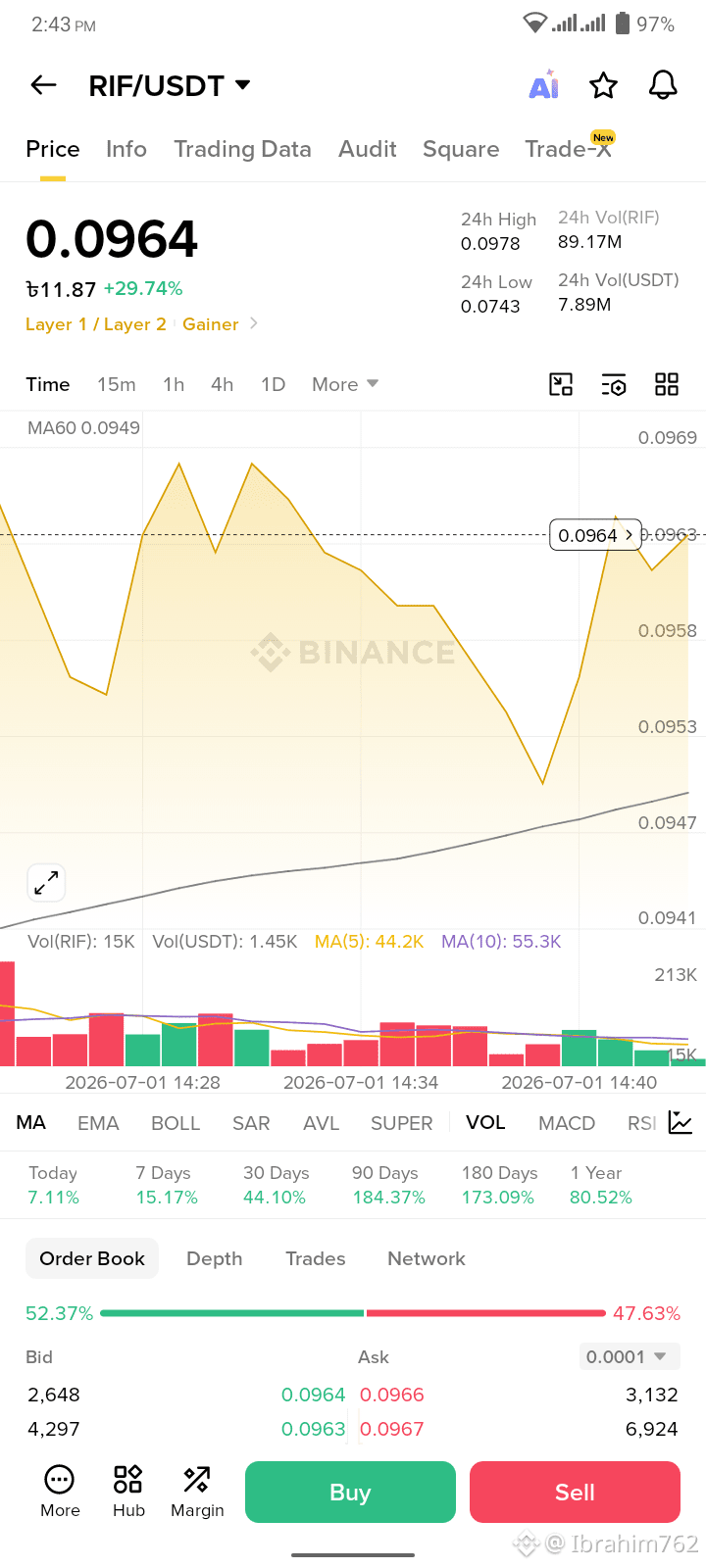
RIF Blockchain: Expanding the Use of Bitcoin Technology
$RIF
RIF, short for RSK Infrastructure Framework, is a platform designed to make blockchain technology more practical and accessible. It is closely connected to the Rootstock (RSK) ecosystem, which brings smart contract functionality to the Bitcoin network. While Bitcoin is known mainly as a store of value, RIF helps expand its utility by supporting services such as payments, identity, storage, and communications.
The main goal of RIF is to build a broader decentralized infrastructure on top of Bitcoin-based technology. By offering tools and protocols for developers, RIF makes it easier to create decentralized applications that are secure, scalable, and user-friendly. This allows businesses and developers to build blockchain solutions without starting from scratch.
One of RIF’s strengths is its connection to Bitcoin’s security through the Rootstock network. It aims to combine Bitcoin’s reliability with the flexibility of smart contracts and decentralized services. This gives users and developers more opportunities to use blockchain in everyday applications.
In short, RIF is an important project in the blockchain space because it helps bring greater functionality, infrastructure, and innovation to the Bitcoin ecosystem.
If you want, I can also make it:
100 words exactly
more beginner-friendly
SEO optimized
or very simple English
{future}(RIFUSDT)
RIF Blockchain: Expanding the Use of Bitcoin Technology
$RIF
RIF, short for RSK Infrastructure Framework, is a platform designed to make blockchain technology more practical and accessible. It is closely connected to the Rootstock (RSK) ecosystem, which brings smart contract functionality to the Bitcoin network. While Bitcoin is known mainly as a store of value, RIF helps expand its utility by supporting services such as payments, identity, storage, and communications.
The main goal of RIF is to build a broader decentralized infrastructure on top of Bitcoin-based technology. By offering tools and protocols for developers, RIF makes it easier to create decentralized applications that are secure, scalable, and user-friendly. This allows businesses and developers to build blockchain solutions without starting from scratch.
One of RIF’s strengths is its connection to Bitcoin’s security through the Rootstock network. It aims to combine Bitcoin’s reliability with the flexibility of smart contracts and decentralized services. This gives users and developers more opportunities to use blockchain in everyday applications.
In short, RIF is an important project in the blockchain space because it helps bring greater functionality, infrastructure, and innovation to the Bitcoin ecosystem.
If you want, I can also make it:
100 words exactly
more beginner-friendly
SEO optimized
or very simple English
$RIF
RIF, short for RSK Infrastructure Framework, is a platform designed to make blockchain technology more practical and accessible. It is closely connected to the Rootstock (RSK) ecosystem, which brings smart contract functionality to the Bitcoin network. While Bitcoin is known mainly as a store of value, RIF helps expand its utility by supporting services such as payments, identity, storage, and communications.
The main goal of RIF is to build a broader decentralized infrastructure on top of Bitcoin-based technology. By offering tools and protocols for developers, RIF makes it easier to create decentralized applications that are secure, scalable, and user-friendly. This allows businesses and developers to build blockchain solutions without starting from scratch.
One of RIF’s strengths is its connection to Bitcoin’s security through the Rootstock network. It aims to combine Bitcoin’s reliability with the flexibility of smart contracts and decentralized services. This gives users and developers more opportunities to use blockchain in everyday applications.
In short, RIF is an important project in the blockchain space because it helps bring greater functionality, infrastructure, and innovation to the Bitcoin ecosystem.
If you want, I can also make it:
100 words exactly
more beginner-friendly
SEO optimized
or very simple English
1
53
·
--
ブリッシュ
翻訳参照
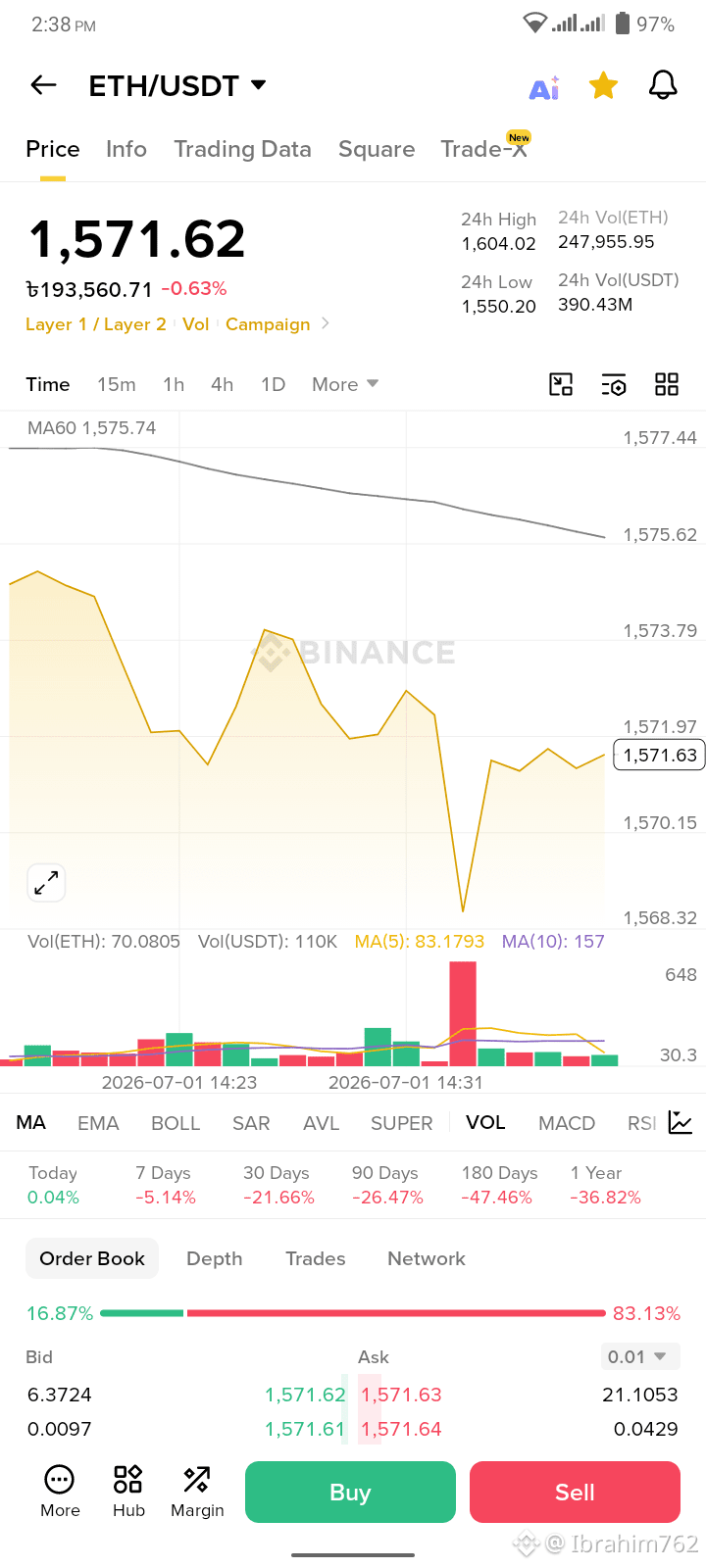
Ethereum Blockchain: The Foundation of Smart Contracts
$NVDAB $MSFTB $TSLAB
Ethereum is one of the most important blockchain networks in the crypto industry. Unlike Bitcoin, which was mainly designed as digital money, Ethereum was built to support smart contracts and decentralized applications (dApps). This innovation made it possible for developers to create a wide range of blockchain-based services, from decentralized finance (DeFi) platforms to NFT marketplaces and blockchain games.
One of Ethereum’s biggest strengths is its flexibility. It provides a programmable network where applications can run without relying on a central authority. This has helped Ethereum become the leading platform for innovation in Web3.
Ethereum now uses a Proof of Stake consensus mechanism, which improves energy efficiency compared to its earlier model. Although network fees can sometimes be high during busy periods, Ethereum remains highly trusted because of its strong security, large developer community, and broad adoption.
In short, Ethereum is more than a blockchain—it is a global decentralized computing platform that continues to shape the future of digital finance and online ownership.
If you want, I can also make it:
simpler
more formal
longer
or better for school assignment
{future}(ETHUSDT)
Ethereum Blockchain: The Foundation of Smart Contracts
$NVDAB $MSFTB $TSLAB
Ethereum is one of the most important blockchain networks in the crypto industry. Unlike Bitcoin, which was mainly designed as digital money, Ethereum was built to support smart contracts and decentralized applications (dApps). This innovation made it possible for developers to create a wide range of blockchain-based services, from decentralized finance (DeFi) platforms to NFT marketplaces and blockchain games.
One of Ethereum’s biggest strengths is its flexibility. It provides a programmable network where applications can run without relying on a central authority. This has helped Ethereum become the leading platform for innovation in Web3.
Ethereum now uses a Proof of Stake consensus mechanism, which improves energy efficiency compared to its earlier model. Although network fees can sometimes be high during busy periods, Ethereum remains highly trusted because of its strong security, large developer community, and broad adoption.
In short, Ethereum is more than a blockchain—it is a global decentralized computing platform that continues to shape the future of digital finance and online ownership.
If you want, I can also make it:
simpler
more formal
longer
or better for school assignment
$NVDAB $MSFTB $TSLAB
Ethereum is one of the most important blockchain networks in the crypto industry. Unlike Bitcoin, which was mainly designed as digital money, Ethereum was built to support smart contracts and decentralized applications (dApps). This innovation made it possible for developers to create a wide range of blockchain-based services, from decentralized finance (DeFi) platforms to NFT marketplaces and blockchain games.
One of Ethereum’s biggest strengths is its flexibility. It provides a programmable network where applications can run without relying on a central authority. This has helped Ethereum become the leading platform for innovation in Web3.
Ethereum now uses a Proof of Stake consensus mechanism, which improves energy efficiency compared to its earlier model. Although network fees can sometimes be high during busy periods, Ethereum remains highly trusted because of its strong security, large developer community, and broad adoption.
In short, Ethereum is more than a blockchain—it is a global decentralized computing platform that continues to shape the future of digital finance and online ownership.
If you want, I can also make it:
simpler
more formal
longer
or better for school assignment
1
76
·
--
ブリッシュ
翻訳参照
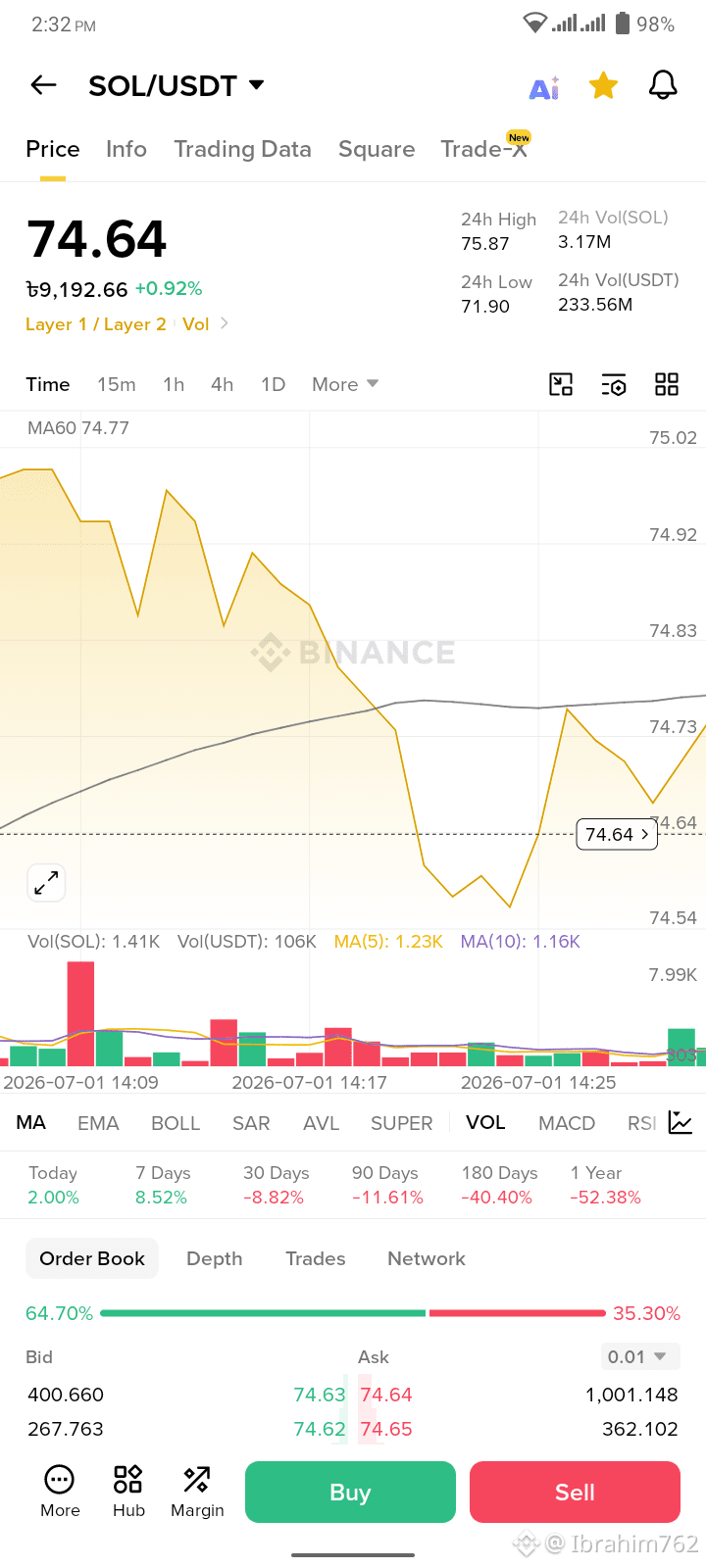
Solana Blockchain: Fast, Scalable, and Built for Speed
$SPCXB $METAB $NVDAB
Solana is a high-performance blockchain designed to support fast transactions and low fees. It was created to solve one of the biggest challenges in crypto: how to scale blockchain networks without sacrificing speed or usability.
What makes Solana stand out is its ability to process thousands of transactions per second. This is possible because of its unique technology, especially a system called Proof of History, which helps organize transactions efficiently before they are added to the chain. Combined with Proof of Stake, this allows Solana to operate quickly and at a much lower cost than many other blockchains.
Solana has become popular for decentralized finance (DeFi), NFTs, gaming, and mobile-friendly crypto applications. Developers are attracted to its speed and growing ecosystem, while users often appreciate its low transaction costs.
However, Solana is not without criticism. Like many fast-growing blockchains, it has faced concerns around network stability and decentralization. Even so, it remains one of the most talked-about blockchain platforms in the industry.
In short, Solana is a blockchain built for speed, affordability, and large-scale adoption, making it a major player in the evolving world of Web3.
If you want, I can also make it:
more beginner-friendly
more professional
SEO style
or 100 words exactly
{future}(SOLUSDT)
Solana Blockchain: Fast, Scalable, and Built for Speed
$SPCXB $METAB $NVDAB
Solana is a high-performance blockchain designed to support fast transactions and low fees. It was created to solve one of the biggest challenges in crypto: how to scale blockchain networks without sacrificing speed or usability.
What makes Solana stand out is its ability to process thousands of transactions per second. This is possible because of its unique technology, especially a system called Proof of History, which helps organize transactions efficiently before they are added to the chain. Combined with Proof of Stake, this allows Solana to operate quickly and at a much lower cost than many other blockchains.
Solana has become popular for decentralized finance (DeFi), NFTs, gaming, and mobile-friendly crypto applications. Developers are attracted to its speed and growing ecosystem, while users often appreciate its low transaction costs.
However, Solana is not without criticism. Like many fast-growing blockchains, it has faced concerns around network stability and decentralization. Even so, it remains one of the most talked-about blockchain platforms in the industry.
In short, Solana is a blockchain built for speed, affordability, and large-scale adoption, making it a major player in the evolving world of Web3.
If you want, I can also make it:
more beginner-friendly
more professional
SEO style
or 100 words exactly
$SPCXB $METAB $NVDAB
Solana is a high-performance blockchain designed to support fast transactions and low fees. It was created to solve one of the biggest challenges in crypto: how to scale blockchain networks without sacrificing speed or usability.
What makes Solana stand out is its ability to process thousands of transactions per second. This is possible because of its unique technology, especially a system called Proof of History, which helps organize transactions efficiently before they are added to the chain. Combined with Proof of Stake, this allows Solana to operate quickly and at a much lower cost than many other blockchains.
Solana has become popular for decentralized finance (DeFi), NFTs, gaming, and mobile-friendly crypto applications. Developers are attracted to its speed and growing ecosystem, while users often appreciate its low transaction costs.
However, Solana is not without criticism. Like many fast-growing blockchains, it has faced concerns around network stability and decentralization. Even so, it remains one of the most talked-about blockchain platforms in the industry.
In short, Solana is a blockchain built for speed, affordability, and large-scale adoption, making it a major player in the evolving world of Web3.
If you want, I can also make it:
more beginner-friendly
more professional
SEO style
or 100 words exactly
80
·
--
翻訳参照
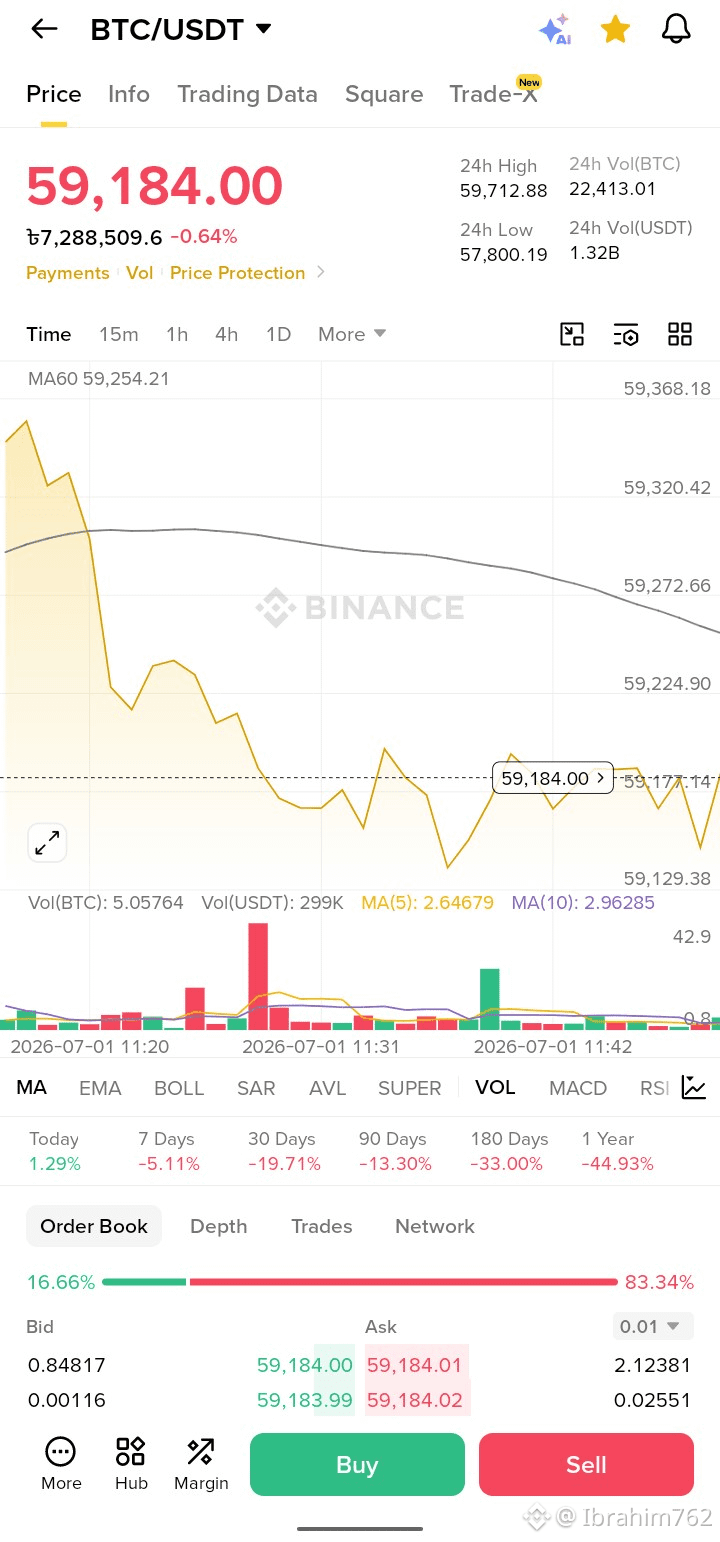
BTC Market Analysis: A Short Overview
$MUB $MSFTB $SPCXB
Bitcoin (BTC) remains the benchmark asset of the crypto market, and its price behavior often shapes overall sentiment across digital assets. When BTC is strong, confidence tends to spread across the market. When it turns weak, traders usually become more cautious.
At the core of BTC analysis are three main factors: price trend, macro environment, and market sentiment. From a technical perspective, traders usually watch support and resistance zones, trading volume, and moving averages to understand momentum. If Bitcoin holds above key support levels and volume increases on upward moves, that often signals buyer strength. On the other hand, repeated rejection near resistance can suggest short-term weakness.
The macro environment also matters a lot. Interest rate expectations, inflation data, and global risk appetite can all influence Bitcoin. When investors are comfortable taking risk, BTC often benefits. When markets become defensive, capital may move away from volatile assets.
Another important piece is sentiment. News about regulation, ETF flows, institutional adoption, or major exchange activity can quickly affect BTC direction. In many cases, Bitcoin moves not only on fundamentals, but also on expectations.
Overall, BTC remains a high-potential but high-volatility asset. Its long-term outlook is still supported by scarcity, growing adoption, and its role as a leading decentralized asset. However, in the short term, price action can remain highly sensitive to macro news and investor psychology.
If you want, I can also turn this into:
a more professional article
a beginner-friendly version
or a daily BTC market report style summary
{future}(BTCUSDT)
BTC Market Analysis: A Short Overview
$MUB $MSFTB $SPCXB
Bitcoin (BTC) remains the benchmark asset of the crypto market, and its price behavior often shapes overall sentiment across digital assets. When BTC is strong, confidence tends to spread across the market. When it turns weak, traders usually become more cautious.
At the core of BTC analysis are three main factors: price trend, macro environment, and market sentiment. From a technical perspective, traders usually watch support and resistance zones, trading volume, and moving averages to understand momentum. If Bitcoin holds above key support levels and volume increases on upward moves, that often signals buyer strength. On the other hand, repeated rejection near resistance can suggest short-term weakness.
The macro environment also matters a lot. Interest rate expectations, inflation data, and global risk appetite can all influence Bitcoin. When investors are comfortable taking risk, BTC often benefits. When markets become defensive, capital may move away from volatile assets.
Another important piece is sentiment. News about regulation, ETF flows, institutional adoption, or major exchange activity can quickly affect BTC direction. In many cases, Bitcoin moves not only on fundamentals, but also on expectations.
Overall, BTC remains a high-potential but high-volatility asset. Its long-term outlook is still supported by scarcity, growing adoption, and its role as a leading decentralized asset. However, in the short term, price action can remain highly sensitive to macro news and investor psychology.
If you want, I can also turn this into:
a more professional article
a beginner-friendly version
or a daily BTC market report style summary
$MUB $MSFTB $SPCXB
Bitcoin (BTC) remains the benchmark asset of the crypto market, and its price behavior often shapes overall sentiment across digital assets. When BTC is strong, confidence tends to spread across the market. When it turns weak, traders usually become more cautious.
At the core of BTC analysis are three main factors: price trend, macro environment, and market sentiment. From a technical perspective, traders usually watch support and resistance zones, trading volume, and moving averages to understand momentum. If Bitcoin holds above key support levels and volume increases on upward moves, that often signals buyer strength. On the other hand, repeated rejection near resistance can suggest short-term weakness.
The macro environment also matters a lot. Interest rate expectations, inflation data, and global risk appetite can all influence Bitcoin. When investors are comfortable taking risk, BTC often benefits. When markets become defensive, capital may move away from volatile assets.
Another important piece is sentiment. News about regulation, ETF flows, institutional adoption, or major exchange activity can quickly affect BTC direction. In many cases, Bitcoin moves not only on fundamentals, but also on expectations.
Overall, BTC remains a high-potential but high-volatility asset. Its long-term outlook is still supported by scarcity, growing adoption, and its role as a leading decentralized asset. However, in the short term, price action can remain highly sensitive to macro news and investor psychology.
If you want, I can also turn this into:
a more professional article
a beginner-friendly version
or a daily BTC market report style summary
1
86
·
--
翻訳参照
BTC/USDT: A Practical Guide to Crypto’s Most-Watched Trading Pair
$SPCXB $METAB $MSFTB
BTC/USDT is one of the most popular trading pairs in crypto. If you are active on Binance or any major exchange, it is usually the first pair you will notice, and for good reason: it combines Bitcoin (BTC), the market’s best-known digital asset, with Tether (USDT), a stablecoin designed to track the US dollar.
This article explains what BTC/USDT means, why it matters, how traders use it, and what risks to keep in mind.
What BTC/USDT Means
A trading pair shows how one asset is priced in another.
In BTC/USDT:
BTC is the base asset
USDT is the quote asset
So if BTC/USDT is trading at 65,000, that means 1 BTC = 65,000 USDT.
For most users, BTC/USDT is the easiest way to understand Bitcoin’s price because USDT is meant to stay close to 1 USD. That makes the pair feel similar to reading Bitcoin’s value in dollars.
Why BTC/USDT Is So Important
BTC/USDT is often considered the benchmark pair for the crypto market. There are a few reasons for that:
1. High liquidity
BTC/USDT typically has very deep liquidity. That means there are many buyers and sellers in the market, which can help reduce slippage and make trading smoother.
2. Price discovery
Because so much volume flows through BTC/USDT, the pair plays a major role in how the market discovers Bitcoin’s current value.
3. Easy entry point
New traders often hold USDT before buying crypto. Moving from USDT into BTC is straightforward, which makes BTC/USDT a natural entry pair.
4. Broad market influence
When BTC/USDT moves sharply, the rest of the crypto market often reacts. Altcoins frequently rise when Bitcoin sentiment is strong and fall when Bitcoin weakens.
Why Traders Prefer USDT Pairs
USDT pairs are popular because they are familiar and convenient.
When users trade BTC against USDT, they can:
Measure profit and loss in a dollar-like unit
Exit volatile positions without fully leaving crypto rails
Re-enter the market quickly when conditions improve
{future}(BTCUSDT)
BTC/USDT: A Practical Guide to Crypto’s Most-Watched Trading Pair
$SPCXB $METAB $MSFTB
BTC/USDT is one of the most popular trading pairs in crypto. If you are active on Binance or any major exchange, it is usually the first pair you will notice, and for good reason: it combines Bitcoin (BTC), the market’s best-known digital asset, with Tether (USDT), a stablecoin designed to track the US dollar.
This article explains what BTC/USDT means, why it matters, how traders use it, and what risks to keep in mind.
What BTC/USDT Means
A trading pair shows how one asset is priced in another.
In BTC/USDT:
BTC is the base asset
USDT is the quote asset
So if BTC/USDT is trading at 65,000, that means 1 BTC = 65,000 USDT.
For most users, BTC/USDT is the easiest way to understand Bitcoin’s price because USDT is meant to stay close to 1 USD. That makes the pair feel similar to reading Bitcoin’s value in dollars.
Why BTC/USDT Is So Important
BTC/USDT is often considered the benchmark pair for the crypto market. There are a few reasons for that:
1. High liquidity
BTC/USDT typically has very deep liquidity. That means there are many buyers and sellers in the market, which can help reduce slippage and make trading smoother.
2. Price discovery
Because so much volume flows through BTC/USDT, the pair plays a major role in how the market discovers Bitcoin’s current value.
3. Easy entry point
New traders often hold USDT before buying crypto. Moving from USDT into BTC is straightforward, which makes BTC/USDT a natural entry pair.
4. Broad market influence
When BTC/USDT moves sharply, the rest of the crypto market often reacts. Altcoins frequently rise when Bitcoin sentiment is strong and fall when Bitcoin weakens.
Why Traders Prefer USDT Pairs
USDT pairs are popular because they are familiar and convenient.
When users trade BTC against USDT, they can:
Measure profit and loss in a dollar-like unit
Exit volatile positions without fully leaving crypto rails
Re-enter the market quickly when conditions improve
$SPCXB $METAB $MSFTB
BTC/USDT is one of the most popular trading pairs in crypto. If you are active on Binance or any major exchange, it is usually the first pair you will notice, and for good reason: it combines Bitcoin (BTC), the market’s best-known digital asset, with Tether (USDT), a stablecoin designed to track the US dollar.
This article explains what BTC/USDT means, why it matters, how traders use it, and what risks to keep in mind.
What BTC/USDT Means
A trading pair shows how one asset is priced in another.
In BTC/USDT:
BTC is the base asset
USDT is the quote asset
So if BTC/USDT is trading at 65,000, that means 1 BTC = 65,000 USDT.
For most users, BTC/USDT is the easiest way to understand Bitcoin’s price because USDT is meant to stay close to 1 USD. That makes the pair feel similar to reading Bitcoin’s value in dollars.
Why BTC/USDT Is So Important
BTC/USDT is often considered the benchmark pair for the crypto market. There are a few reasons for that:
1. High liquidity
BTC/USDT typically has very deep liquidity. That means there are many buyers and sellers in the market, which can help reduce slippage and make trading smoother.
2. Price discovery
Because so much volume flows through BTC/USDT, the pair plays a major role in how the market discovers Bitcoin’s current value.
3. Easy entry point
New traders often hold USDT before buying crypto. Moving from USDT into BTC is straightforward, which makes BTC/USDT a natural entry pair.
4. Broad market influence
When BTC/USDT moves sharply, the rest of the crypto market often reacts. Altcoins frequently rise when Bitcoin sentiment is strong and fall when Bitcoin weakens.
Why Traders Prefer USDT Pairs
USDT pairs are popular because they are familiar and convenient.
When users trade BTC against USDT, they can:
Measure profit and loss in a dollar-like unit
Exit volatile positions without fully leaving crypto rails
Re-enter the market quickly when conditions improve
1
101
·
--
ブリッシュ
翻訳参照
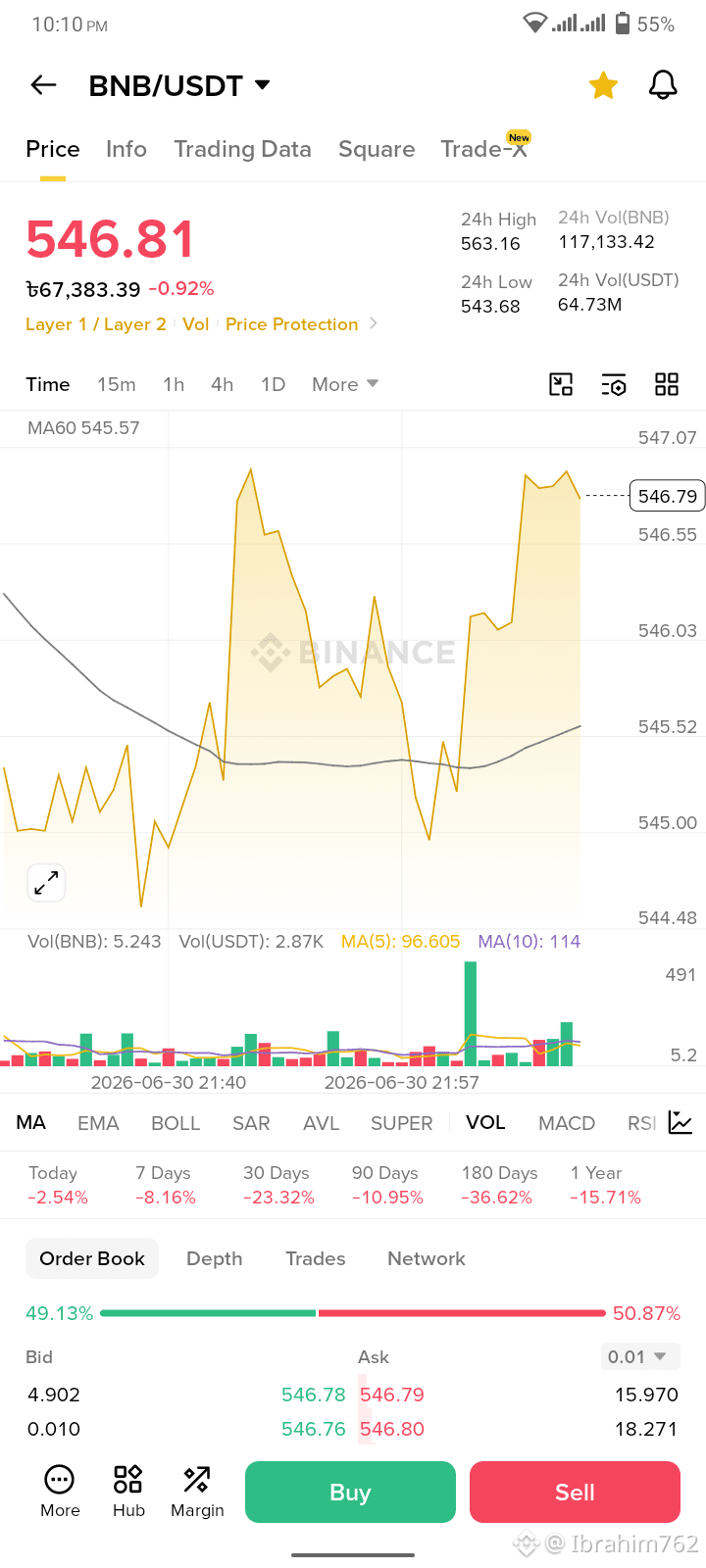
The Evolution of BNB Chain: Understanding Binance’s Blockchain Ecosystem
$METAB $SPCXB $MSFTB
If you've been exploring the world of cryptocurrency, you’ve likely come across the term "Binance Block-chains" (officially known and unified today as the BNB Chain). Originally launched by the global crypto exchange giant Binance, this network has evolved into one of the most heavily trafficked, cost-effective, and fast-growing smart contract ecosystems in the world.
Here is a breakdown of what the BNB Chain is, how it works, and why it is a major competitor to networks like Ethereum.
From "Binance" to "Build and Build"
When Binance first ventured into building public infrastructure, it deployed two distinct blockchains to solve different problems. However, to foster true decentralization and distance the network from being entirely controlled by a single centralized exchange, the ecosystem rebranded.
The network is now community-driven and stands for "Build and Build" (BNB). It operates as a multi-chain framework consisting of several crucial parts:
1. BNB Smart Chain (BSC)
This is the core engine of the network. Launched in 2020, BSC was built to run in parallel with Binance's original asset-trading chain. BSC's superpower is its compatibility with the Ethereum Virtual Machine (EVM). This means developers can easily copy and paste their Ethereum-based decentralized applications (dApps) onto BSC without rewriting the code from scratch.
2. BNB Beacon Chain
Originally called the "Binance Chain," this layer was built for lightning-fast trading and fueled Binance's decentralized exchange (DEX). Because it was optimized purely for speed, it lacked smart contract functionality. Over time, the Beacon Chain was phased into a dedicated layer purely for governance and staking, allowing users to vote on proposals.
{spot}(BNBUSDT)
The Evolution of BNB Chain: Understanding Binance’s Blockchain Ecosystem
$METAB $SPCXB $MSFTB
If you've been exploring the world of cryptocurrency, you’ve likely come across the term "Binance Block-chains" (officially known and unified today as the BNB Chain). Originally launched by the global crypto exchange giant Binance, this network has evolved into one of the most heavily trafficked, cost-effective, and fast-growing smart contract ecosystems in the world.
Here is a breakdown of what the BNB Chain is, how it works, and why it is a major competitor to networks like Ethereum.
From "Binance" to "Build and Build"
When Binance first ventured into building public infrastructure, it deployed two distinct blockchains to solve different problems. However, to foster true decentralization and distance the network from being entirely controlled by a single centralized exchange, the ecosystem rebranded.
The network is now community-driven and stands for "Build and Build" (BNB). It operates as a multi-chain framework consisting of several crucial parts:
1. BNB Smart Chain (BSC)
This is the core engine of the network. Launched in 2020, BSC was built to run in parallel with Binance's original asset-trading chain. BSC's superpower is its compatibility with the Ethereum Virtual Machine (EVM). This means developers can easily copy and paste their Ethereum-based decentralized applications (dApps) onto BSC without rewriting the code from scratch.
2. BNB Beacon Chain
Originally called the "Binance Chain," this layer was built for lightning-fast trading and fueled Binance's decentralized exchange (DEX). Because it was optimized purely for speed, it lacked smart contract functionality. Over time, the Beacon Chain was phased into a dedicated layer purely for governance and staking, allowing users to vote on proposals.
$METAB $SPCXB $MSFTB
If you've been exploring the world of cryptocurrency, you’ve likely come across the term "Binance Block-chains" (officially known and unified today as the BNB Chain). Originally launched by the global crypto exchange giant Binance, this network has evolved into one of the most heavily trafficked, cost-effective, and fast-growing smart contract ecosystems in the world.
Here is a breakdown of what the BNB Chain is, how it works, and why it is a major competitor to networks like Ethereum.
From "Binance" to "Build and Build"
When Binance first ventured into building public infrastructure, it deployed two distinct blockchains to solve different problems. However, to foster true decentralization and distance the network from being entirely controlled by a single centralized exchange, the ecosystem rebranded.
The network is now community-driven and stands for "Build and Build" (BNB). It operates as a multi-chain framework consisting of several crucial parts:
1. BNB Smart Chain (BSC)
This is the core engine of the network. Launched in 2020, BSC was built to run in parallel with Binance's original asset-trading chain. BSC's superpower is its compatibility with the Ethereum Virtual Machine (EVM). This means developers can easily copy and paste their Ethereum-based decentralized applications (dApps) onto BSC without rewriting the code from scratch.
2. BNB Beacon Chain
Originally called the "Binance Chain," this layer was built for lightning-fast trading and fueled Binance's decentralized exchange (DEX). Because it was optimized purely for speed, it lacked smart contract functionality. Over time, the Beacon Chain was phased into a dedicated layer purely for governance and staking, allowing users to vote on proposals.
1
79
·
--
翻訳参照
Regulatory Reckoning and the Corporate Pivot
For years, Binance operated under a "move fast and break things" philosophy, operating without a formal global headquarters to avoid regional regulatory bottlenecks. However, this approach eventually caught up with the giant.
The exchange faced mounting scrutiny, bans, and investigations from regulators across Europe, the US, and Asia. The climax came in late 2023, when Binance pled guilty to violating U.S. anti-money laundering and sanctions laws, resulting in a historic $4.3 billion fine. As part of the settlement, founder CZ stepped down as CEO.
A New Chapter: Under the leadership of CEO Richard Teng, Binance has aggressively pivoted toward institutional compliance, securing major regulatory approvals (such as full authorization in Abu Dhabi), implementing strict mandatory KYC (Know Your Customer) rules, and transparently tracking assets via its Secure Asset Fund for Users (SAFU).
4. Looking Ahead: The Future of Binance
Despite facing heavy fines and losing a fraction of its market share to decentralized exchanges (DEXs) and compliant localized competitors, Binance's self-reinforcing liquidity flywheel remains unmatched. Its deep order books attract the tightest spreads, ensuring that both retail traders and institutional sharks look to it first for price discovery.
As Web3 transitions into an era of strict regulatory frameworks and AI-assisted trading, Binance's survival and continued growth will depend entirely on its ability to balance its original ethos of financial freedom with the uncompromising demands of global law.
Are you planning to write this article for a specific audience, such as beginners looking for a guide, or are you focusing on a particular angle like its investment potential?
$SPCXB $BTC
Regulatory Reckoning and the Corporate Pivot
For years, Binance operated under a "move fast and break things" philosophy, operating without a formal global headquarters to avoid regional regulatory bottlenecks. However, this approach eventually caught up with the giant.
The exchange faced mounting scrutiny, bans, and investigations from regulators across Europe, the US, and Asia. The climax came in late 2023, when Binance pled guilty to violating U.S. anti-money laundering and sanctions laws, resulting in a historic $4.3 billion fine. As part of the settlement, founder CZ stepped down as CEO.
A New Chapter: Under the leadership of CEO Richard Teng, Binance has aggressively pivoted toward institutional compliance, securing major regulatory approvals (such as full authorization in Abu Dhabi), implementing strict mandatory KYC (Know Your Customer) rules, and transparently tracking assets via its Secure Asset Fund for Users (SAFU).
4. Looking Ahead: The Future of Binance
Despite facing heavy fines and losing a fraction of its market share to decentralized exchanges (DEXs) and compliant localized competitors, Binance's self-reinforcing liquidity flywheel remains unmatched. Its deep order books attract the tightest spreads, ensuring that both retail traders and institutional sharks look to it first for price discovery.
As Web3 transitions into an era of strict regulatory frameworks and AI-assisted trading, Binance's survival and continued growth will depend entirely on its ability to balance its original ethos of financial freedom with the uncompromising demands of global law.
Are you planning to write this article for a specific audience, such as beginners looking for a guide, or are you focusing on a particular angle like its investment potential?
$SPCXB $BTC
For years, Binance operated under a "move fast and break things" philosophy, operating without a formal global headquarters to avoid regional regulatory bottlenecks. However, this approach eventually caught up with the giant.
The exchange faced mounting scrutiny, bans, and investigations from regulators across Europe, the US, and Asia. The climax came in late 2023, when Binance pled guilty to violating U.S. anti-money laundering and sanctions laws, resulting in a historic $4.3 billion fine. As part of the settlement, founder CZ stepped down as CEO.
A New Chapter: Under the leadership of CEO Richard Teng, Binance has aggressively pivoted toward institutional compliance, securing major regulatory approvals (such as full authorization in Abu Dhabi), implementing strict mandatory KYC (Know Your Customer) rules, and transparently tracking assets via its Secure Asset Fund for Users (SAFU).
4. Looking Ahead: The Future of Binance
Despite facing heavy fines and losing a fraction of its market share to decentralized exchanges (DEXs) and compliant localized competitors, Binance's self-reinforcing liquidity flywheel remains unmatched. Its deep order books attract the tightest spreads, ensuring that both retail traders and institutional sharks look to it first for price discovery.
As Web3 transitions into an era of strict regulatory frameworks and AI-assisted trading, Binance's survival and continued growth will depend entirely on its ability to balance its original ethos of financial freedom with the uncompromising demands of global law.
Are you planning to write this article for a specific audience, such as beginners looking for a guide, or are you focusing on a particular angle like its investment potential?
$SPCXB $BTC
65
ログインして、さらにコンテンツを読む
厳選トピックで世界の暗号資産トレーダーの仲間入り
⚡️ 暗号資産に関する最新かつ有益な情報が見つかります。
💬 世界最大の暗号資産取引所から信頼されています。
👍 認証を受けたクリエイターから、有益なインサイトを得られます。
メール / 電話番号
トレンドトピック
AIStocksWhatNext
閲覧回数 530,512
3,944人が討論中
注目ハッシュタグキャンペーンでトラフィック報酬を「シェア&ウィン」しよう
✨トピック:AI株が上昇し続ける中、ほかにどんな投資チャンスが残っている?
👉参加方法:
ハッシュタグ #AIStocksWhatNext を付けて短い投稿または記事を公開する
強気か弱気かを共有し、AI株の保有または取引を投稿してください—取引ウィジェットを使うと資格を得やすくなる可能性があります。
データやチャートを共有し、AI生成画像を避けることで、投稿をさらに強化できます。
✍️以下の切り口を参考にコンテンツを作成してください:
- Nvidiaは来年のチップ販売が倍増すると述べ、主要なAI企業は記録的な売上を更新し続けています。これを支える計算コストはそれだけでも驚異的です。本当にAI需要は伸びているのか? そして、それはどれくらい続くのでしょうか?AI株は全体的に上昇中。これは本物のブレイクアウトなのか、それとも短期的な戻りなのか?
- 産業のリーダーたちはAI開発のペースを落とすよう求めています。一方でトランプは「AIフォース」を構築する計画で、AIが将来的に米国のGDPの25%を占める可能性があると主張しています。あなたはどちら側ですか? AI株に対する州レベルの後押しは長期的な勝利になりますか?
- あなたはAI株を買っていますか? 取引/保有を、取引シェアリングウィジェットで共有してください。
⏰キャンペーン期間:
- 2026-09-22 7:00 - 2026-09-24 4:00(UTC)
🎁報酬:
- 上記のガイドラインを満たし、100語を超える適格投稿は審査され、ランダムなトラフィックブースト(500〜3,000ビュー)が付与される場合があります。投稿が選ばれた場合は、フィード担当者から通知が届きます。
- Binance Square Officialに記事が掲載されるチャンス
投稿のアイデアが必要ですか? トピックページ #AIStocksWhatNext または Square Guide on How to Post for Better Reach をご覧ください。
Binance Square Official
·いいね:439件
·閲覧回数 1.1M
IranSetsConditionsToEndSevenMonthWar
閲覧回数 0
4人が討論中
CardanoJoinsX402PaymentStandard
閲覧回数 0
2人が討論中