
Oralia Euertz KRVz
32 投稿

Oralia Euertz KRVz
報告
ユーザーをブロック
取引を発注
4.9年
0 フォロー
25 フォロワー
28 いいね
投稿
ポートフォリオ
記事
翻訳参照
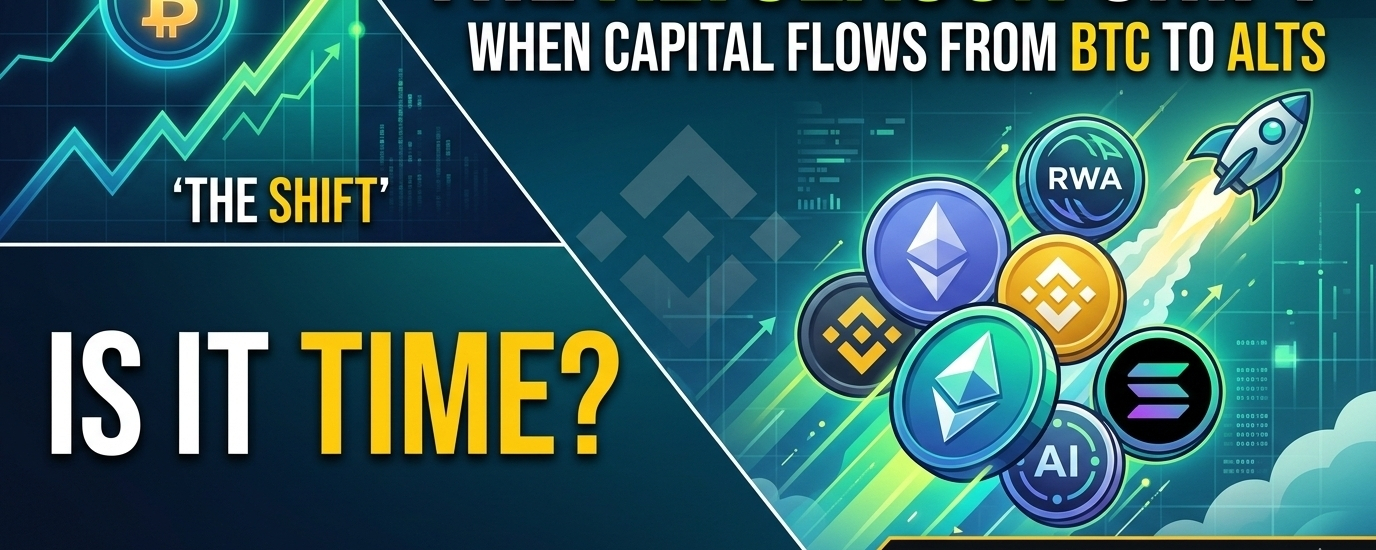
Navigating the Shift: Is the Next Crypto Altseason Finally Upon Us?The crypto market is sending mixed signals, leaving both retail traders and seasoned investors asking the same burning question: When will capital aggressively rotate from Bitcoin into altcoins?
While Bitcoin continues to command the lion's share of market attention, structural shifts under the hood suggest that a broader market expansion might be closer than many think. Let’s break down the data, the charts, and the psychological triggers driving the market right now.
1. The Critical Metric: Bitcoin Dominance (BTC.D)
To understand altseason, you must look at Bitcoin Dominance. Historically, a true altcoin rally triggers when BTC.D tops out and begins a sharp downward trajectory, indicating that profits from Bitcoin are being funneled into large and mid-cap altcoins.
Currently, dominance is testing major multi-year resistance levels. If Bitcoin enters a consolidation phase (moving sideways) rather than a aggressive breakdown, it gives Ethereum and leading layer-1 ecosystems the exact breathing room they need to spark a secondary rally.
2. The Layer-1 and Ecosystem Liquidity Rotation
We aren't in the old days where every altcoin rises simultaneously. The current market structure is highly fragmented and narrative-driven. Liquidity tends to flow in a predictable sequence:
Phase 1: Bitcoin leads the charge.
Phase 2: Ethereum and major Layer-1 chains (like Solana and BNB Chain) catch up.
Phase 3: High-utility protocols, AI tokens, and real-world asset (RWA) platforms experience parabolic growth.
Phase 4: Micro-caps and speculative assets peak (often signaling the local top).
Right now, we are seeing intense accumulation in institutional-grade narratives like DePIN (Decentralized Physical Infrastructure Networks) and Tokenized RWAs. Savvy investors are quietly building positions while retail attention remains hyper-focused on daily Bitcoin price action.
The Investor’s Playbook: How to Position Right Now
Rule #1 of Altseason: Don't chase the green candles. By the time a token is trending on the Binance hot list, the highest-risk/reward entry point has already passed.
If you are looking to optimize your portfolio for the next phase of the market, consider these three strategies:
Focus on "Sticky" Ecosystems: Look at networks showing consistent growth in Total Value Locked (TVL) and daily active user wallets.
DCA over FOMO: Dollar-cost average into fundamentally strong projects during local pullbacks rather than market orders during a breakout.
Keep a Stablecoin Buffer: Keep 15–20% of your portfolio in cash/stablecoins to capitalize on sudden, volatile market flushes.
What is your strategy?
Are you heavily allocated in Bitcoin, or are you quietly accumulating your favorite altcoins? Drop your top picks for the upcoming month in the comments below!
Disclaimer: This article is for informational purposes only and does not constitute financial advice. Always do your own research (DYOR) before investing in volatile crypto assets.
#Bitcoin #Altcoins #CryptoAnalysis #BinanceSquare #DYOR
Navigating the Shift: Is the Next Crypto Altseason Finally Upon Us?
The crypto market is sending mixed signals, leaving both retail traders and seasoned investors asking the same burning question: When will capital aggressively rotate from Bitcoin into altcoins?
While Bitcoin continues to command the lion's share of market attention, structural shifts under the hood suggest that a broader market expansion might be closer than many think. Let’s break down the data, the charts, and the psychological triggers driving the market right now.
1. The Critical Metric: Bitcoin Dominance (BTC.D)
To understand altseason, you must look at Bitcoin Dominance. Historically, a true altcoin rally triggers when BTC.D tops out and begins a sharp downward trajectory, indicating that profits from Bitcoin are being funneled into large and mid-cap altcoins.
Currently, dominance is testing major multi-year resistance levels. If Bitcoin enters a consolidation phase (moving sideways) rather than a aggressive breakdown, it gives Ethereum and leading layer-1 ecosystems the exact breathing room they need to spark a secondary rally.
2. The Layer-1 and Ecosystem Liquidity Rotation
We aren't in the old days where every altcoin rises simultaneously. The current market structure is highly fragmented and narrative-driven. Liquidity tends to flow in a predictable sequence:
Phase 1: Bitcoin leads the charge.
Phase 2: Ethereum and major Layer-1 chains (like Solana and BNB Chain) catch up.
Phase 3: High-utility protocols, AI tokens, and real-world asset (RWA) platforms experience parabolic growth.
Phase 4: Micro-caps and speculative assets peak (often signaling the local top).
Right now, we are seeing intense accumulation in institutional-grade narratives like DePIN (Decentralized Physical Infrastructure Networks) and Tokenized RWAs. Savvy investors are quietly building positions while retail attention remains hyper-focused on daily Bitcoin price action.
The Investor’s Playbook: How to Position Right Now
Rule #1 of Altseason: Don't chase the green candles. By the time a token is trending on the Binance hot list, the highest-risk/reward entry point has already passed.
If you are looking to optimize your portfolio for the next phase of the market, consider these three strategies:
Focus on "Sticky" Ecosystems: Look at networks showing consistent growth in Total Value Locked (TVL) and daily active user wallets.
DCA over FOMO: Dollar-cost average into fundamentally strong projects during local pullbacks rather than market orders during a breakout.
Keep a Stablecoin Buffer: Keep 15–20% of your portfolio in cash/stablecoins to capitalize on sudden, volatile market flushes.
What is your strategy?
Are you heavily allocated in Bitcoin, or are you quietly accumulating your favorite altcoins? Drop your top picks for the upcoming month in the comments below!
Disclaimer: This article is for informational purposes only and does not constitute financial advice. Always do your own research (DYOR) before investing in volatile crypto assets.
#Bitcoin #Altcoins #CryptoAnalysis #BinanceSquare #DYOR
While Bitcoin continues to command the lion's share of market attention, structural shifts under the hood suggest that a broader market expansion might be closer than many think. Let’s break down the data, the charts, and the psychological triggers driving the market right now.
1. The Critical Metric: Bitcoin Dominance (BTC.D)
To understand altseason, you must look at Bitcoin Dominance. Historically, a true altcoin rally triggers when BTC.D tops out and begins a sharp downward trajectory, indicating that profits from Bitcoin are being funneled into large and mid-cap altcoins.
Currently, dominance is testing major multi-year resistance levels. If Bitcoin enters a consolidation phase (moving sideways) rather than a aggressive breakdown, it gives Ethereum and leading layer-1 ecosystems the exact breathing room they need to spark a secondary rally.
2. The Layer-1 and Ecosystem Liquidity Rotation
We aren't in the old days where every altcoin rises simultaneously. The current market structure is highly fragmented and narrative-driven. Liquidity tends to flow in a predictable sequence:
Phase 1: Bitcoin leads the charge.
Phase 2: Ethereum and major Layer-1 chains (like Solana and BNB Chain) catch up.
Phase 3: High-utility protocols, AI tokens, and real-world asset (RWA) platforms experience parabolic growth.
Phase 4: Micro-caps and speculative assets peak (often signaling the local top).
Right now, we are seeing intense accumulation in institutional-grade narratives like DePIN (Decentralized Physical Infrastructure Networks) and Tokenized RWAs. Savvy investors are quietly building positions while retail attention remains hyper-focused on daily Bitcoin price action.
The Investor’s Playbook: How to Position Right Now
Rule #1 of Altseason: Don't chase the green candles. By the time a token is trending on the Binance hot list, the highest-risk/reward entry point has already passed.
If you are looking to optimize your portfolio for the next phase of the market, consider these three strategies:
Focus on "Sticky" Ecosystems: Look at networks showing consistent growth in Total Value Locked (TVL) and daily active user wallets.
DCA over FOMO: Dollar-cost average into fundamentally strong projects during local pullbacks rather than market orders during a breakout.
Keep a Stablecoin Buffer: Keep 15–20% of your portfolio in cash/stablecoins to capitalize on sudden, volatile market flushes.
What is your strategy?
Are you heavily allocated in Bitcoin, or are you quietly accumulating your favorite altcoins? Drop your top picks for the upcoming month in the comments below!
Disclaimer: This article is for informational purposes only and does not constitute financial advice. Always do your own research (DYOR) before investing in volatile crypto assets.
#Bitcoin #Altcoins #CryptoAnalysis #BinanceSquare #DYOR
95

記事
2026年のパワーカップル: なぜAIとブロックチェーンが究極のデュオなのか
はじめにWeb3のスピード感あふれる世界では、トレンドが次々と現れては消えていく。しかし、人工知能(AI)とブロックチェーン技術の融合は、一過性の流行以上のものを証明している。2026年に向けて進む中、このシナジーは私たちのトレード方法、データのセキュリティ、分散型アプリケーション(dApps)とのインタラクションを再形成している。
1. AI駆動のトレーディング: 人間の限界を超えて
24時間ずっと手動でチャートを描く時代は終わった。現代のAIアルゴリズムは、テラバイトの市場データをミリ秒で分析でき、人間の目では見落としがちなパターンを特定できる。
2026年のパワーカップル: なぜAIとブロックチェーンが究極のデュオなのか はじめに
Web3のスピード感あふれる世界では、トレンドが次々と現れては消えていく。しかし、人工知能(AI)とブロックチェーン技術の融合は、一過性の流行以上のものを証明している。2026年に向けて進む中、このシナジーは私たちのトレード方法、データのセキュリティ、分散型アプリケーション(dApps)とのインタラクションを再形成している。
1. AI駆動のトレーディング: 人間の限界を超えて
24時間ずっと手動でチャートを描く時代は終わった。現代のAIアルゴリズムは、テラバイトの市場データをミリ秒で分析でき、人間の目では見落としがちなパターンを特定できる。
1. AI駆動のトレーディング: 人間の限界を超えて
24時間ずっと手動でチャートを描く時代は終わった。現代のAIアルゴリズムは、テラバイトの市場データをミリ秒で分析でき、人間の目では見落としがちなパターンを特定できる。
165
記事
翻訳参照
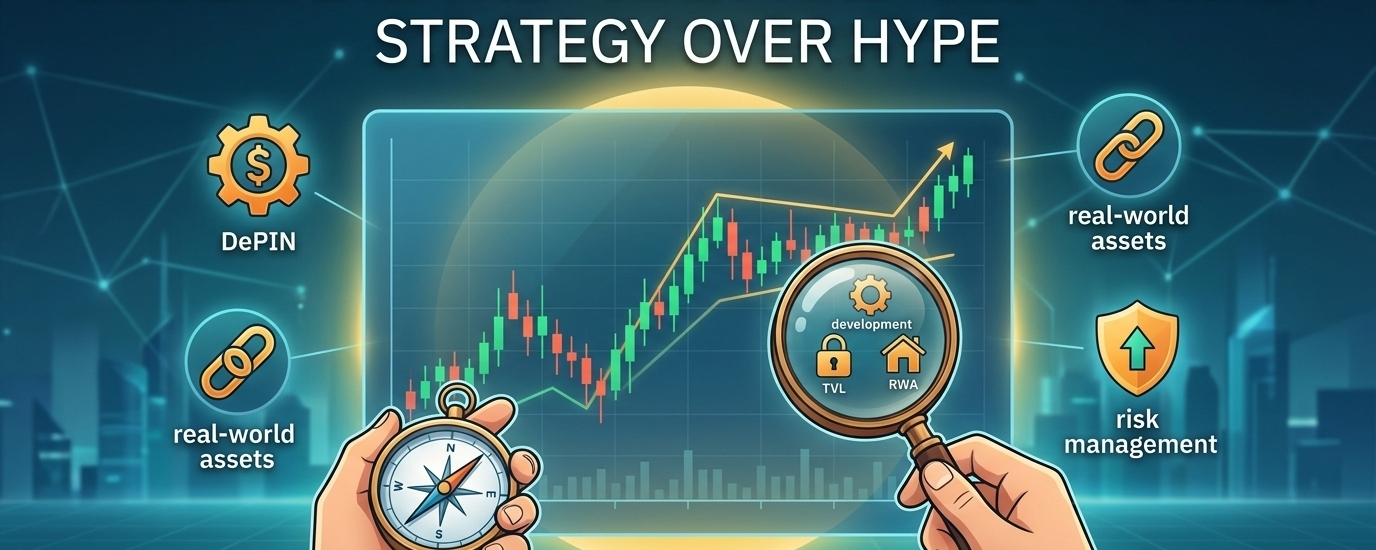
Navigating the "Wait-and-See" Market: Strategy Over HypeThe Current Market Sentiment
As we move further into 2026, the crypto market is shifting away from pure speculation toward utility and institutional stability. While retail investors are often hunting for the next "100x gem," the smart money is focused on ecosystem growth and regulatory clarity.
We are currently seeing a "consolidation phase." Historically, these periods are where the most significant wealth is built—not by chasing green candles, but by positioning oneself before the breakout.
3 Key Pillars for Your 2026 Strategy
Follow the Developers, Not Just the Hype
Look at protocols with increasing Total Value Locked (TVL) and active developer commits. Projects solving real-world problems in Layer 2 scaling or DePIN (Decentralized Physical Infrastructure Networks) are proving to have the most staying power.
The Rise of RWA (Real World Assets)
Tokenization is no longer a buzzword; it’s a multi-trillion dollar opportunity. Keep an eye on projects that bridge traditional finance with the blockchain.
Risk Management is Your Best Indicator
In a volatile market, your best friend isn't a "signal" from a social media influencer; it’s your Stop-Loss and Take-Profit strategy. Emotional trading is the fastest way to drain a portfolio.
The "Square" Takeaway
Binance Square is a community of builders and learners. Don't just watch the charts—engage with the data.
Pro Tip: When analyzing a coin, always check the $BTC pairing. If the altcoin isn't outperforming Bitcoin, you might be better off just holding the King.
What’s your move?
Are you accumulating during this dip, or are you waiting for more confirmation? Let’s discuss in the comments below! 👇
#Crypto2026 #Bitcoin #TradingStrategy #BinanceSquare #Web
Navigating the "Wait-and-See" Market: Strategy Over Hype
The Current Market Sentiment
As we move further into 2026, the crypto market is shifting away from pure speculation toward utility and institutional stability. While retail investors are often hunting for the next "100x gem," the smart money is focused on ecosystem growth and regulatory clarity.
We are currently seeing a "consolidation phase." Historically, these periods are where the most significant wealth is built—not by chasing green candles, but by positioning oneself before the breakout.
3 Key Pillars for Your 2026 Strategy
Follow the Developers, Not Just the Hype
Look at protocols with increasing Total Value Locked (TVL) and active developer commits. Projects solving real-world problems in Layer 2 scaling or DePIN (Decentralized Physical Infrastructure Networks) are proving to have the most staying power.
The Rise of RWA (Real World Assets)
Tokenization is no longer a buzzword; it’s a multi-trillion dollar opportunity. Keep an eye on projects that bridge traditional finance with the blockchain.
Risk Management is Your Best Indicator
In a volatile market, your best friend isn't a "signal" from a social media influencer; it’s your Stop-Loss and Take-Profit strategy. Emotional trading is the fastest way to drain a portfolio.
The "Square" Takeaway
Binance Square is a community of builders and learners. Don't just watch the charts—engage with the data.
Pro Tip: When analyzing a coin, always check the $BTC pairing. If the altcoin isn't outperforming Bitcoin, you might be better off just holding the King.
What’s your move?
Are you accumulating during this dip, or are you waiting for more confirmation? Let’s discuss in the comments below! 👇
#Crypto2026 #Bitcoin #TradingStrategy #BinanceSquare #Web
As we move further into 2026, the crypto market is shifting away from pure speculation toward utility and institutional stability. While retail investors are often hunting for the next "100x gem," the smart money is focused on ecosystem growth and regulatory clarity.
We are currently seeing a "consolidation phase." Historically, these periods are where the most significant wealth is built—not by chasing green candles, but by positioning oneself before the breakout.
3 Key Pillars for Your 2026 Strategy
Follow the Developers, Not Just the Hype
Look at protocols with increasing Total Value Locked (TVL) and active developer commits. Projects solving real-world problems in Layer 2 scaling or DePIN (Decentralized Physical Infrastructure Networks) are proving to have the most staying power.
The Rise of RWA (Real World Assets)
Tokenization is no longer a buzzword; it’s a multi-trillion dollar opportunity. Keep an eye on projects that bridge traditional finance with the blockchain.
Risk Management is Your Best Indicator
In a volatile market, your best friend isn't a "signal" from a social media influencer; it’s your Stop-Loss and Take-Profit strategy. Emotional trading is the fastest way to drain a portfolio.
The "Square" Takeaway
Binance Square is a community of builders and learners. Don't just watch the charts—engage with the data.
Pro Tip: When analyzing a coin, always check the $BTC pairing. If the altcoin isn't outperforming Bitcoin, you might be better off just holding the King.
What’s your move?
Are you accumulating during this dip, or are you waiting for more confirmation? Let’s discuss in the comments below! 👇
#Crypto2026 #Bitcoin #TradingStrategy #BinanceSquare #Web
79
記事
翻訳参照
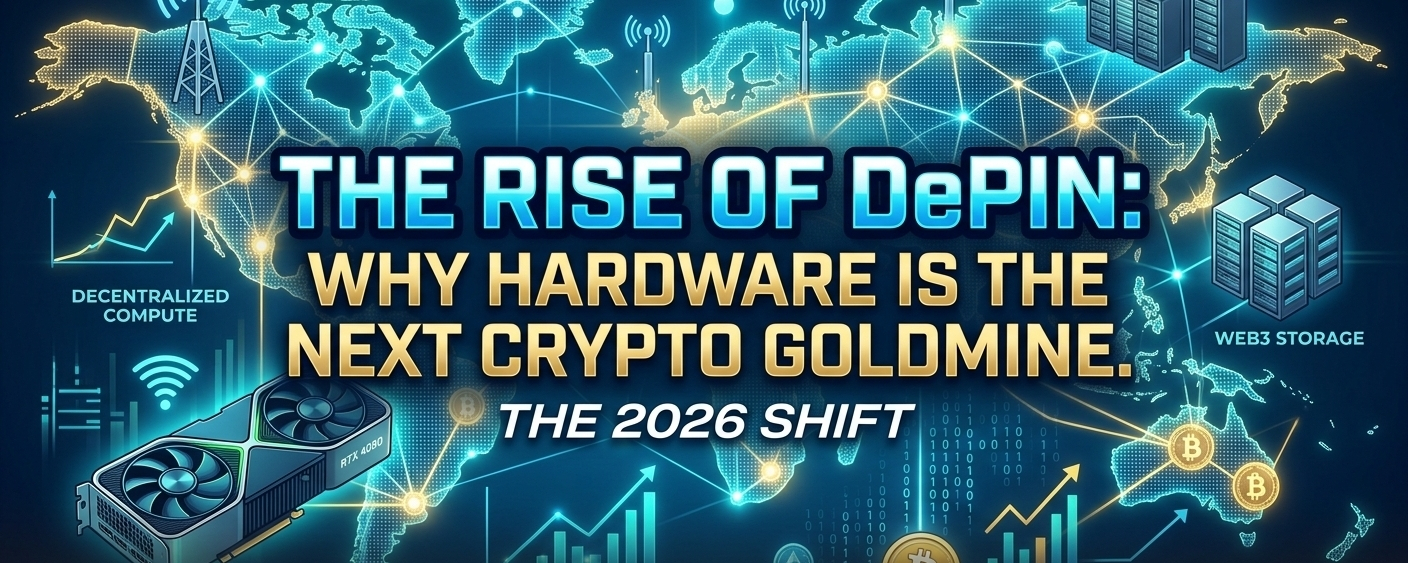
The Rise of DePIN: Why Hardware is the Next Crypto GoldmineThe Shift from Digital to Physical
While 2025 was the year of Memecoins and ETFs, 2026 is becoming the year of DePIN. Investors are no longer just looking for "digital gold"; they are looking for decentralized networks that power the real world.
From decentralized GPU rendering for AI to community-powered 5G networks, the "Decentralized Physical Infrastructure" sector is proving that blockchain has moved beyond the screen.
Top 3 DePIN Sectors to Watch This Quarter
Decentralized Compute (GPU Power): With the AI boom in full swing, the demand for high-end GPUs (like the RTX 4090 and 5090) is at an all-time high. Protocols that allow people to "rent" out their home computer power are seeing massive revenue growth.
Wireless Networks (5G & IoT): Community-driven hotspots are providing cheaper, faster connectivity in urban areas, challenging traditional telecom giants.
On-Chain Storage: Moving away from centralized cloud providers, decentralized storage is becoming the "secure vault" for the world's most sensitive data.
Market Analysis: Bitcoin at the $80,000 Crossroads
As of May 10, 2026, Bitcoin ($BTC) is trading near $80,650, showing incredible resilience.
The Support Zone: We are seeing a strong "demand zone" between $78,000 and $80,000.
The Bullish Scenario: If $BTC holds this range, we are looking at a potential liquidity surge toward $85,000 before the end of the month.
Dominance Factor: BTC dominance is currently sitting at 58%, indicating that "Smart Money" is still favoring the King of Crypto over high-risk altcoins during this consolidation phase.
Investor Strategy: The "Burn-and-Mint" Advantage
Many DePIN projects are now using a Burn-and-Mint Equilibrium (BME) model. This means that as more people use the actual service (like renting storage or using a hotspot), tokens are burned, creating a deflationary effect that benefits long-term holders.
Are you betting on DePIN this year, or are you staying strictly in DeFi? Drop your top picks below! 👇
#BinanceSquare #DePIN #BTC #AI #CryptoInvesting #Write2Earn #Web3
The Rise of DePIN: Why Hardware is the Next Crypto Goldmine
The Shift from Digital to Physical
While 2025 was the year of Memecoins and ETFs, 2026 is becoming the year of DePIN. Investors are no longer just looking for "digital gold"; they are looking for decentralized networks that power the real world.
From decentralized GPU rendering for AI to community-powered 5G networks, the "Decentralized Physical Infrastructure" sector is proving that blockchain has moved beyond the screen.
Top 3 DePIN Sectors to Watch This Quarter
Decentralized Compute (GPU Power): With the AI boom in full swing, the demand for high-end GPUs (like the RTX 4090 and 5090) is at an all-time high. Protocols that allow people to "rent" out their home computer power are seeing massive revenue growth.
Wireless Networks (5G & IoT): Community-driven hotspots are providing cheaper, faster connectivity in urban areas, challenging traditional telecom giants.
On-Chain Storage: Moving away from centralized cloud providers, decentralized storage is becoming the "secure vault" for the world's most sensitive data.
Market Analysis: Bitcoin at the $80,000 Crossroads
As of May 10, 2026, Bitcoin ($BTC) is trading near $80,650, showing incredible resilience.
The Support Zone: We are seeing a strong "demand zone" between $78,000 and $80,000.
The Bullish Scenario: If $BTC holds this range, we are looking at a potential liquidity surge toward $85,000 before the end of the month.
Dominance Factor: BTC dominance is currently sitting at 58%, indicating that "Smart Money" is still favoring the King of Crypto over high-risk altcoins during this consolidation phase.
Investor Strategy: The "Burn-and-Mint" Advantage
Many DePIN projects are now using a Burn-and-Mint Equilibrium (BME) model. This means that as more people use the actual service (like renting storage or using a hotspot), tokens are burned, creating a deflationary effect that benefits long-term holders.
Are you betting on DePIN this year, or are you staying strictly in DeFi? Drop your top picks below! 👇
#BinanceSquare #DePIN #BTC #AI #CryptoInvesting #Write2Earn #Web3
While 2025 was the year of Memecoins and ETFs, 2026 is becoming the year of DePIN. Investors are no longer just looking for "digital gold"; they are looking for decentralized networks that power the real world.
From decentralized GPU rendering for AI to community-powered 5G networks, the "Decentralized Physical Infrastructure" sector is proving that blockchain has moved beyond the screen.
Top 3 DePIN Sectors to Watch This Quarter
Decentralized Compute (GPU Power): With the AI boom in full swing, the demand for high-end GPUs (like the RTX 4090 and 5090) is at an all-time high. Protocols that allow people to "rent" out their home computer power are seeing massive revenue growth.
Wireless Networks (5G & IoT): Community-driven hotspots are providing cheaper, faster connectivity in urban areas, challenging traditional telecom giants.
On-Chain Storage: Moving away from centralized cloud providers, decentralized storage is becoming the "secure vault" for the world's most sensitive data.
Market Analysis: Bitcoin at the $80,000 Crossroads
As of May 10, 2026, Bitcoin ($BTC) is trading near $80,650, showing incredible resilience.
The Support Zone: We are seeing a strong "demand zone" between $78,000 and $80,000.
The Bullish Scenario: If $BTC holds this range, we are looking at a potential liquidity surge toward $85,000 before the end of the month.
Dominance Factor: BTC dominance is currently sitting at 58%, indicating that "Smart Money" is still favoring the King of Crypto over high-risk altcoins during this consolidation phase.
Investor Strategy: The "Burn-and-Mint" Advantage
Many DePIN projects are now using a Burn-and-Mint Equilibrium (BME) model. This means that as more people use the actual service (like renting storage or using a hotspot), tokens are burned, creating a deflationary effect that benefits long-term holders.
Are you betting on DePIN this year, or are you staying strictly in DeFi? Drop your top picks below! 👇
#BinanceSquare #DePIN #BTC #AI #CryptoInvesting #Write2Earn #Web3
79
記事
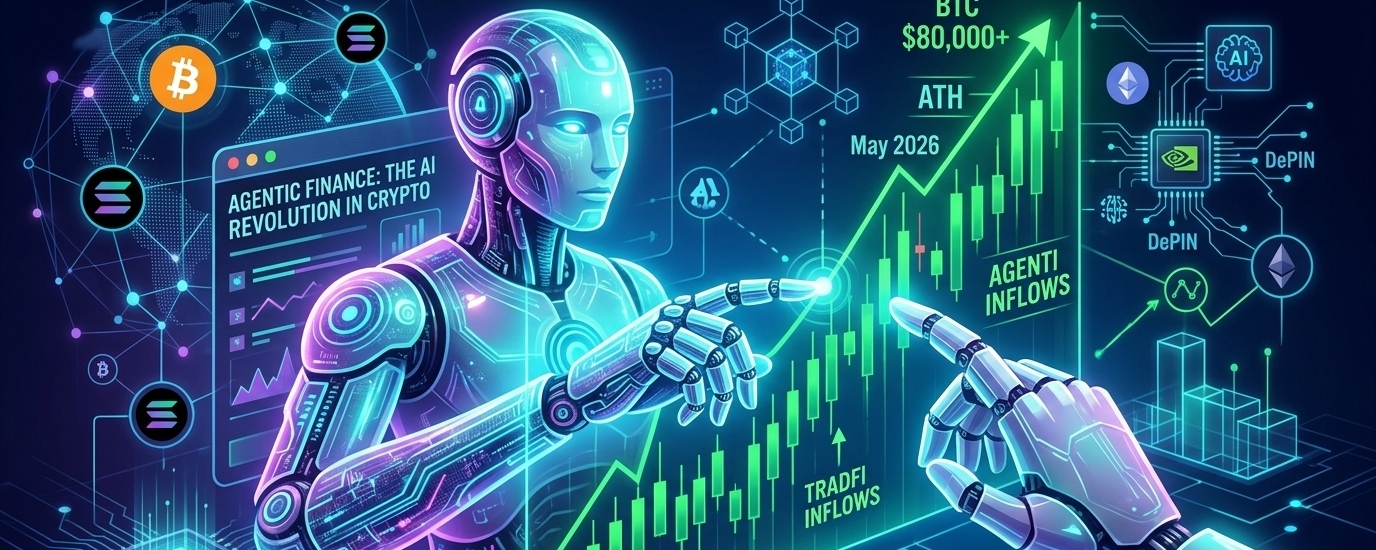
エージェント型ファイナンスの台頭:2026年にAI Agentが“新たなクジラ”になる理由2024年がビットコインETFの年であり、2025年がレイヤー2のスケーリングの年だったとするなら、2026年5月はAI Agentの時代として公式に幕を開けます。私たちは単なる「AIをテーマにしたコイン」から、AIエージェントが自律的な経済活動の主体となり、人の介入なしに取引を実行し、利回りを管理する世界へと進んできました。
1. 暗号資産におけるAI Agentとは?
従来のトレーディングボットが厳密な「if-this-then-that(もし〜なら〜)」のコードに従うのに対し、AI Agentは分散型のLLM(大規模言語モデル)を用いて、リアルタイムでセンチメント(市場心理)、ニュース、オンチェーンデータを分析します。彼らは単に売買するだけではなく、推論します。
エージェント型ファイナンスの台頭:2026年にAI Agentが“新たなクジラ”になる理由
2024年がビットコインETFの年であり、2025年がレイヤー2のスケーリングの年だったとするなら、2026年5月はAI Agentの時代として公式に幕を開けます。私たちは単なる「AIをテーマにしたコイン」から、AIエージェントが自律的な経済活動の主体となり、人の介入なしに取引を実行し、利回りを管理する世界へと進んできました。
1. 暗号資産におけるAI Agentとは?
従来のトレーディングボットが厳密な「if-this-then-that(もし〜なら〜)」のコードに従うのに対し、AI Agentは分散型のLLM(大規模言語モデル)を用いて、リアルタイムでセンチメント(市場心理)、ニュース、オンチェーンデータを分析します。彼らは単に売買するだけではなく、推論します。
1. 暗号資産におけるAI Agentとは?
従来のトレーディングボットが厳密な「if-this-then-that(もし〜なら〜)」のコードに従うのに対し、AI Agentは分散型のLLM(大規模言語モデル)を用いて、リアルタイムでセンチメント(市場心理)、ニュース、オンチェーンデータを分析します。彼らは単に売買するだけではなく、推論します。
1
260
記事
翻訳参照
Market Pulse: Why BTC is Holding $27k Despite Geopolitical NoiseThe first week of May 2026 has been a rollercoaster. From the suspension of the Strait of Hormuz operations to the latest "Project Freedom" pauses, the macro environment is throwing everything it has at the crypto market.
Yet, $BTC remains remarkably resilient. Here is my breakdown of what’s happening and why the "Institutional Wall of Money" is no longer just a meme.
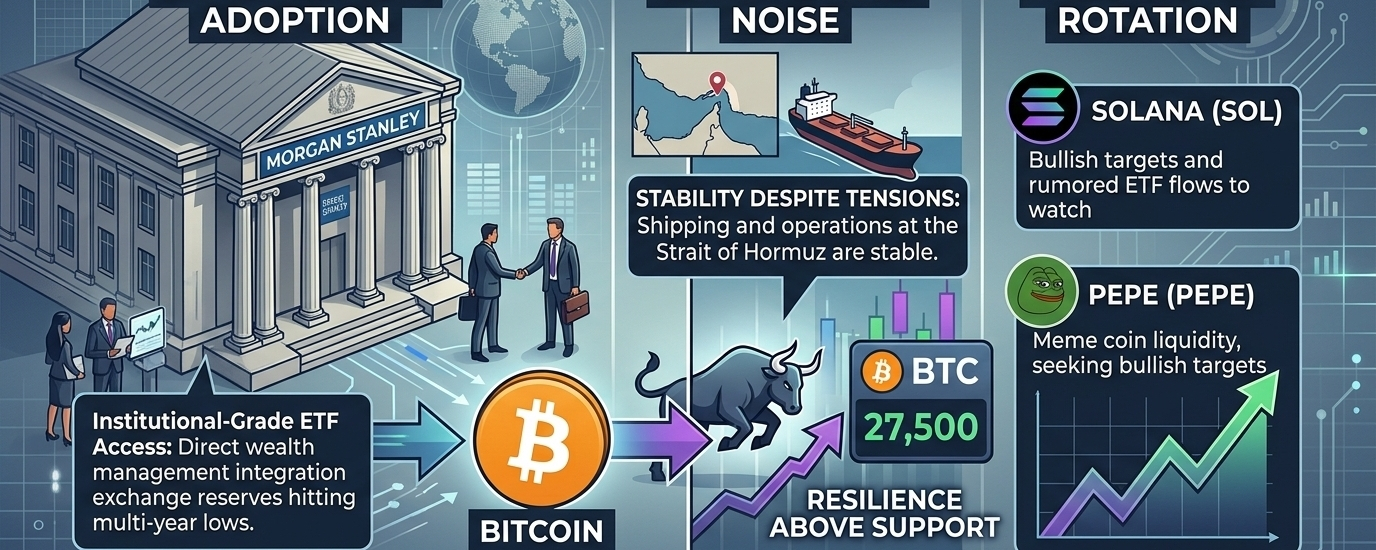
1. The Institutional Pivot: Morgan Stanley 2026
The big news this week is Morgan Stanley’s official launch of spot crypto trading. Unlike the "paper gains" of the early ETF days, we are seeing direct integration into institutional wealth management.
The Shift: We are moving from BTC as a "speculative asset" to BTC as "finance-grade collateral."
Impact: Exchange reserves are hitting 7-year lows. When the big banks start buying for their clients, they don't sell on a 5% dip.
2. Geopolitical "Risk-On" Rebound
With the recent de-escalation in the Middle East, we’ve seen a "risk-on" rally.
Key Levels: $BTC is consolidating above $27,500.
Resistance: Keep an eye on the $28,200 mark. A clean break here with volume could send us straight toward the $29k–$30k range.
Support: $27,000 is the line in the sand for bulls.
3. The Altcoin Rotation: SOL and PEPE
While Bitcoin stabilizes, the liquidity is leaking into high-beta plays:
Solana ($SOL): Upgraded protocols and ETF inflow rumors are keeping the $300 target alive for later this year.
Pepe ($PEPE): Despite the volatility, it has established itself as a top-tier liquid meme asset. Current bullish targets sit around $0.00000743, but watch for the support at $0.00000427.
💡 My Strategy (Not Financial Advice)
I am personally looking for consolidation patterns rather than chasing green candles. The "Write-to-Earn" rewards on Square are great, but the real gains come from patience. I’m keeping a close eye on the $ETH/$BTC pair as Ethereum targets the $2,700 short-term resistance.
What’s your move?
Are you accumulating during this consolidation, or are you waiting for a confirmed breakout above $28.2k? Let’s discuss in the comments! 👇
#MarketSentimentToday #CryptoMarketMoves #BTC #Solana #MorganStanley2026
Market Pulse: Why BTC is Holding $27k Despite Geopolitical Noise
The first week of May 2026 has been a rollercoaster. From the suspension of the Strait of Hormuz operations to the latest "Project Freedom" pauses, the macro environment is throwing everything it has at the crypto market.
Yet, $BTC remains remarkably resilient. Here is my breakdown of what’s happening and why the "Institutional Wall of Money" is no longer just a meme.
1. The Institutional Pivot: Morgan Stanley 2026
The big news this week is Morgan Stanley’s official launch of spot crypto trading. Unlike the "paper gains" of the early ETF days, we are seeing direct integration into institutional wealth management.
The Shift: We are moving from BTC as a "speculative asset" to BTC as "finance-grade collateral."
Impact: Exchange reserves are hitting 7-year lows. When the big banks start buying for their clients, they don't sell on a 5% dip.
2. Geopolitical "Risk-On" Rebound
With the recent de-escalation in the Middle East, we’ve seen a "risk-on" rally.
Key Levels: $BTC is consolidating above $27,500.
Resistance: Keep an eye on the $28,200 mark. A clean break here with volume could send us straight toward the $29k–$30k range.
Support: $27,000 is the line in the sand for bulls.
3. The Altcoin Rotation: SOL and PEPE
While Bitcoin stabilizes, the liquidity is leaking into high-beta plays:
Solana ($SOL): Upgraded protocols and ETF inflow rumors are keeping the $300 target alive for later this year.
Pepe ($PEPE): Despite the volatility, it has established itself as a top-tier liquid meme asset. Current bullish targets sit around $0.00000743, but watch for the support at $0.00000427.
💡 My Strategy (Not Financial Advice)
I am personally looking for consolidation patterns rather than chasing green candles. The "Write-to-Earn" rewards on Square are great, but the real gains come from patience. I’m keeping a close eye on the $ETH/$BTC pair as Ethereum targets the $2,700 short-term resistance.
What’s your move?
Are you accumulating during this consolidation, or are you waiting for a confirmed breakout above $28.2k? Let’s discuss in the comments! 👇
#MarketSentimentToday #CryptoMarketMoves #BTC #Solana #MorganStanley2026
Yet, $BTC remains remarkably resilient. Here is my breakdown of what’s happening and why the "Institutional Wall of Money" is no longer just a meme.
1. The Institutional Pivot: Morgan Stanley 2026
The big news this week is Morgan Stanley’s official launch of spot crypto trading. Unlike the "paper gains" of the early ETF days, we are seeing direct integration into institutional wealth management.
The Shift: We are moving from BTC as a "speculative asset" to BTC as "finance-grade collateral."
Impact: Exchange reserves are hitting 7-year lows. When the big banks start buying for their clients, they don't sell on a 5% dip.
2. Geopolitical "Risk-On" Rebound
With the recent de-escalation in the Middle East, we’ve seen a "risk-on" rally.
Key Levels: $BTC is consolidating above $27,500.
Resistance: Keep an eye on the $28,200 mark. A clean break here with volume could send us straight toward the $29k–$30k range.
Support: $27,000 is the line in the sand for bulls.
3. The Altcoin Rotation: SOL and PEPE
While Bitcoin stabilizes, the liquidity is leaking into high-beta plays:
Solana ($SOL): Upgraded protocols and ETF inflow rumors are keeping the $300 target alive for later this year.
Pepe ($PEPE): Despite the volatility, it has established itself as a top-tier liquid meme asset. Current bullish targets sit around $0.00000743, but watch for the support at $0.00000427.
💡 My Strategy (Not Financial Advice)
I am personally looking for consolidation patterns rather than chasing green candles. The "Write-to-Earn" rewards on Square are great, but the real gains come from patience. I’m keeping a close eye on the $ETH/$BTC pair as Ethereum targets the $2,700 short-term resistance.
What’s your move?
Are you accumulating during this consolidation, or are you waiting for a confirmed breakout above $28.2k? Let’s discuss in the comments! 👇
#MarketSentimentToday #CryptoMarketMoves #BTC #Solana #MorganStanley2026
123
記事
翻訳参照
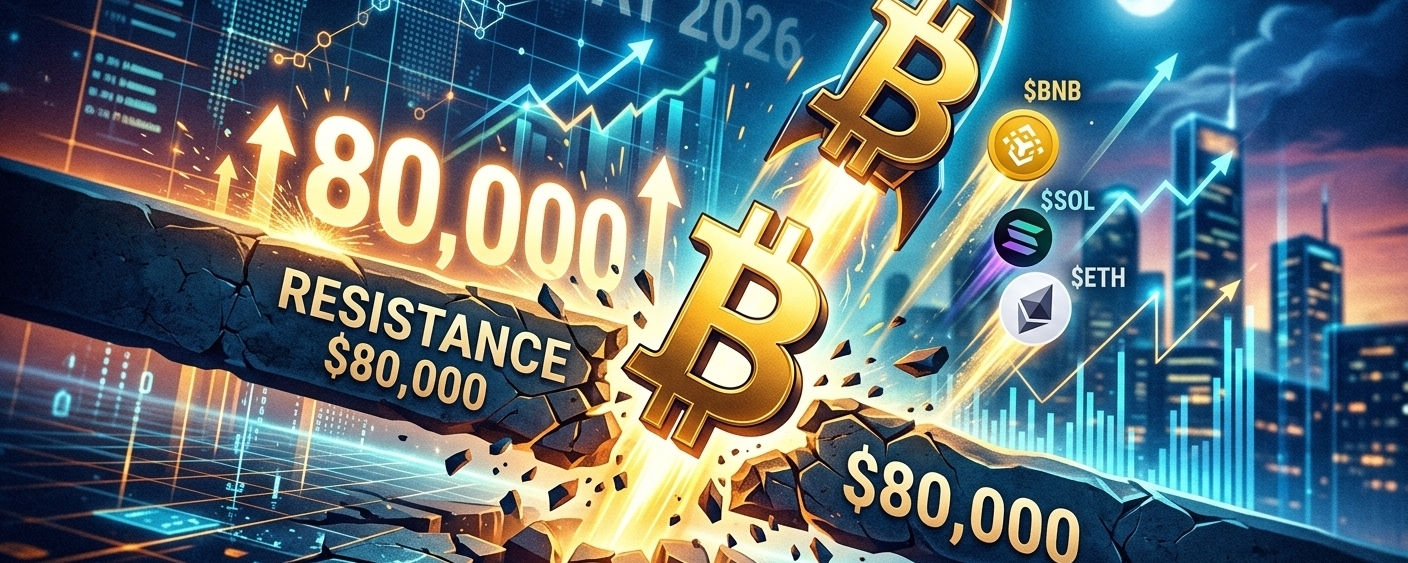
🚀 BREAKING: Bitcoin Reclaims $80,000! Is the "Institutional Squeeze" Starting?The wait is over. Today, May 4, 2026, Bitcoin ($BTC) has officially surged past the $80,000 mark for the first time since January. While the market has been sideways for weeks, this 2.6% morning jump has ignited a wave of liquidations and shifted the "Fear & Greed Index" firmly back into Greed (68).
But this isn't just a random pump. Here is what is happening behind the scenes.
🧱 The "Institutional Normalization" Effect
We are seeing a structural shift. Unlike the retail-driven pumps of the past, this move is backed by Spot ETF inflows which reversed their negative trend last week. Large-scale pension funds and Wall Street banks are no longer just "watching" crypto—they are treating it as a standard portfolio allocation.
📊 Performance Heatmap: Who’s Leading?
While BTC takes the spotlight, the rest of the market is reacting:
$BTC: $80,160 (+2.64%) – Testing new resistance levels.
$ETH: $2,300 (+1.2%) – Lagging slightly but holding steady.
$SOL: $84.50 – Consolidating as the "Alpenglow" protocol upgrade nears.
$BNB: $619 – Maintaining its position as the king of utility tokens.
⚖️ Why $80k Matters
The $80,000 level is more than just a number; it was a "psychological ceiling" for Q2.
Short Squeeze: Over $120M in short positions were liquidated in the last 4 hours.
RWA Momentum: The growth in Real World Asset (RWA) tokenization—now a $19B+ sector—is providing fundamental "buy pressure" for programmable blockchains.
Macro Tailwinds: Despite high oil prices, Bitcoin is increasingly moving in correlation with "Big Tech" stocks, which are currently at all-time highs.
🛡️ The Strategy for This Week
In a breakout like this, "FOMO" is your biggest enemy.
Watch the 4-hour candle close: We need to see $80,000 flip from resistance to support.
Don't ignore the Laggards: If BTC stabilizes here, capital often rotates into high-performing Altcoins (look at the DePIN and AI sectors).
Are you HODLing to $100k, or is this the perfect spot to take some profit? Drop your price predictions below! 👇
#Bitcoin80k #BTC #CryptoNews2026 #BinanceSquareFamily #BullRun
🚀 BREAKING: Bitcoin Reclaims $80,000! Is the "Institutional Squeeze" Starting?
The wait is over. Today, May 4, 2026, Bitcoin ($BTC) has officially surged past the $80,000 mark for the first time since January. While the market has been sideways for weeks, this 2.6% morning jump has ignited a wave of liquidations and shifted the "Fear & Greed Index" firmly back into Greed (68).
But this isn't just a random pump. Here is what is happening behind the scenes.
🧱 The "Institutional Normalization" Effect
We are seeing a structural shift. Unlike the retail-driven pumps of the past, this move is backed by Spot ETF inflows which reversed their negative trend last week. Large-scale pension funds and Wall Street banks are no longer just "watching" crypto—they are treating it as a standard portfolio allocation.
📊 Performance Heatmap: Who’s Leading?
While BTC takes the spotlight, the rest of the market is reacting:
$BTC: $80,160 (+2.64%) – Testing new resistance levels.
$ETH: $2,300 (+1.2%) – Lagging slightly but holding steady.
$SOL: $84.50 – Consolidating as the "Alpenglow" protocol upgrade nears.
$BNB: $619 – Maintaining its position as the king of utility tokens.
⚖️ Why $80k Matters
The $80,000 level is more than just a number; it was a "psychological ceiling" for Q2.
Short Squeeze: Over $120M in short positions were liquidated in the last 4 hours.
RWA Momentum: The growth in Real World Asset (RWA) tokenization—now a $19B+ sector—is providing fundamental "buy pressure" for programmable blockchains.
Macro Tailwinds: Despite high oil prices, Bitcoin is increasingly moving in correlation with "Big Tech" stocks, which are currently at all-time highs.
🛡️ The Strategy for This Week
In a breakout like this, "FOMO" is your biggest enemy.
Watch the 4-hour candle close: We need to see $80,000 flip from resistance to support.
Don't ignore the Laggards: If BTC stabilizes here, capital often rotates into high-performing Altcoins (look at the DePIN and AI sectors).
Are you HODLing to $100k, or is this the perfect spot to take some profit? Drop your price predictions below! 👇
#Bitcoin80k #BTC #CryptoNews2026 #BinanceSquareFamily #BullRun
But this isn't just a random pump. Here is what is happening behind the scenes.
🧱 The "Institutional Normalization" Effect
We are seeing a structural shift. Unlike the retail-driven pumps of the past, this move is backed by Spot ETF inflows which reversed their negative trend last week. Large-scale pension funds and Wall Street banks are no longer just "watching" crypto—they are treating it as a standard portfolio allocation.
📊 Performance Heatmap: Who’s Leading?
While BTC takes the spotlight, the rest of the market is reacting:
$BTC: $80,160 (+2.64%) – Testing new resistance levels.
$ETH: $2,300 (+1.2%) – Lagging slightly but holding steady.
$SOL: $84.50 – Consolidating as the "Alpenglow" protocol upgrade nears.
$BNB: $619 – Maintaining its position as the king of utility tokens.
⚖️ Why $80k Matters
The $80,000 level is more than just a number; it was a "psychological ceiling" for Q2.
Short Squeeze: Over $120M in short positions were liquidated in the last 4 hours.
RWA Momentum: The growth in Real World Asset (RWA) tokenization—now a $19B+ sector—is providing fundamental "buy pressure" for programmable blockchains.
Macro Tailwinds: Despite high oil prices, Bitcoin is increasingly moving in correlation with "Big Tech" stocks, which are currently at all-time highs.
🛡️ The Strategy for This Week
In a breakout like this, "FOMO" is your biggest enemy.
Watch the 4-hour candle close: We need to see $80,000 flip from resistance to support.
Don't ignore the Laggards: If BTC stabilizes here, capital often rotates into high-performing Altcoins (look at the DePIN and AI sectors).
Are you HODLing to $100k, or is this the perfect spot to take some profit? Drop your price predictions below! 👇
#Bitcoin80k #BTC #CryptoNews2026 #BinanceSquareFamily #BullRun
103
翻訳参照
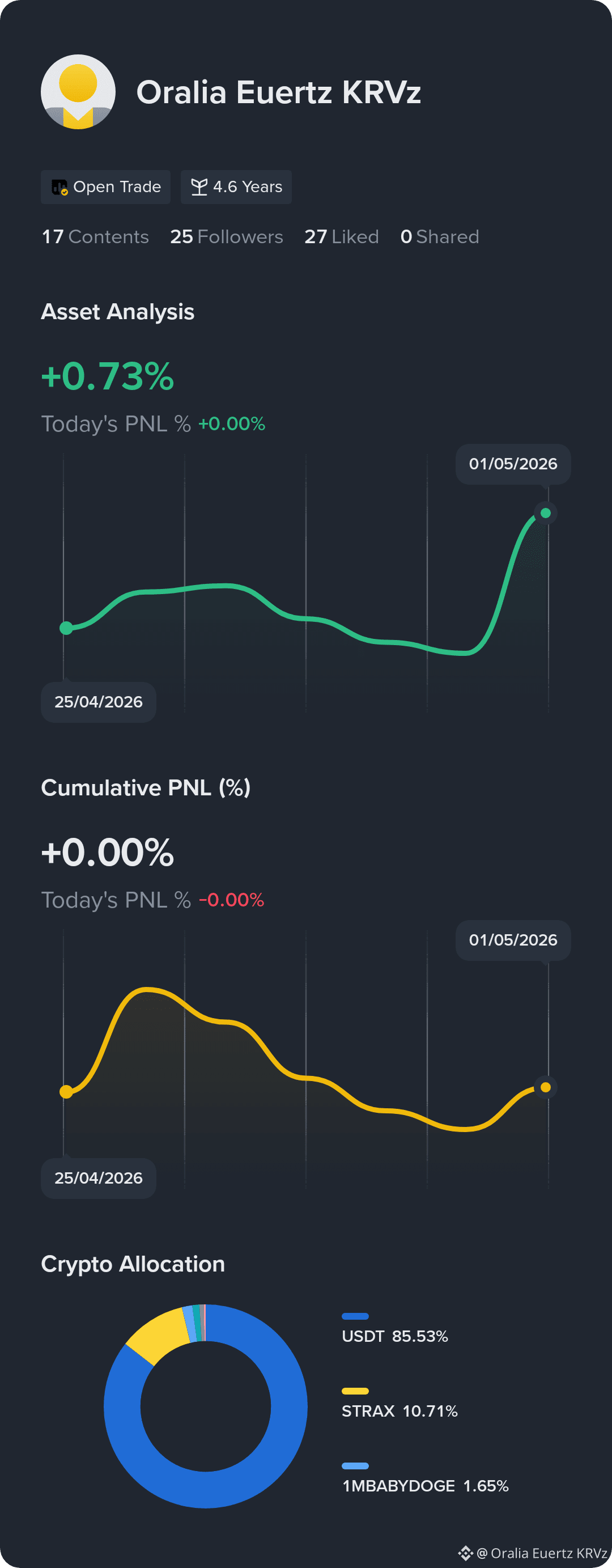
See my returns and portfolio breakdown. Follow for investment tips
See my returns and portfolio breakdown. Follow for investment tips
72
記事
翻訳参照
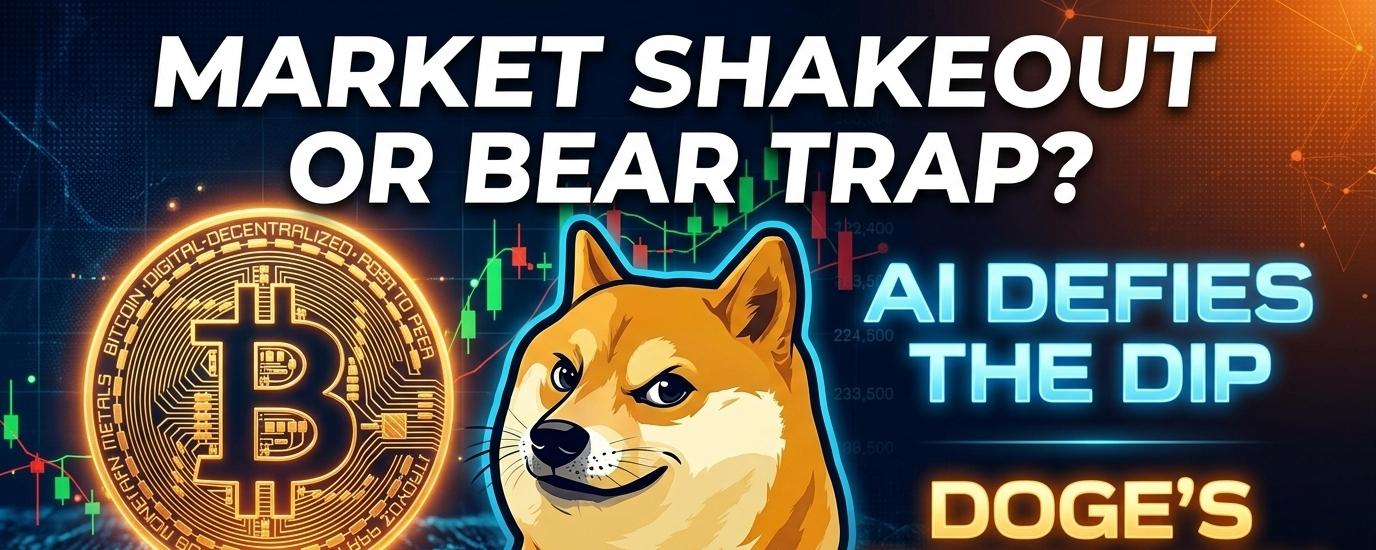
Market Shakeout or Bear Trap? Why Dogecoin and AI Are Defying the Dip 🚀The crypto market is giving us a classic "Thursday Tumble," but as the saying goes: In every dip, there’s a diamond. While over 75% of the market is flashing red today, a few outliers are showing us exactly where the "smart money" is moving as we head into May.
1. The Bitcoin Correction: Healthy or Heavy? 📉
Bitcoin ($BTC) has entered a short-term "sell-on-rally" phase, pulling back toward the $74,000 support zone. Analysts are eyeing the 61.8% Fibonacci retracement level—a key area that historically separates a "healthy correction" from a "trend reversal." If we hold $74k, the April rally remains intact.
2. The Meme King Returns: $DOGE Steals the Show 🐕
While the giants rest, Dogecoin is leading the charge. For the third consecutive day, $DOGE is outperforming the Top 10, holding steady above $0.105. We are seeing a 5-week uptrend forming—could this be the start of a broader "Meme Season" to kick off Q2?
3. The AI Narrative is Far From Over 🤖
The real star of today’s volatility? Sleepless AI (+47%).
Despite the broader market decline, AI-themed tokens and RWA (Real World Assets) are holding their value remarkably well. With major players like Ripple ($XRP) expanding their institutional footprint in the Middle East today, the focus is shifting toward projects with utility and regulation-friendly infrastructure.
💡 Pro-Trader Insights for Your Watchlist:
Support to Watch: $74,000 for $BTC.
The "Alpha" Sector: Keep an eye on Layer 2s like $STX and AI-centric chains like IONIX.
Risk Management: With 297 tokens down today, avoid "revenge trading." Stick to the 1% risk rule.
#Bitcoin #Dogecoin #CryptoMarket #AI #BinanceSquare #DYOR
Market Shakeout or Bear Trap? Why Dogecoin and AI Are Defying the Dip 🚀
The crypto market is giving us a classic "Thursday Tumble," but as the saying goes: In every dip, there’s a diamond. While over 75% of the market is flashing red today, a few outliers are showing us exactly where the "smart money" is moving as we head into May.
1. The Bitcoin Correction: Healthy or Heavy? 📉
Bitcoin ($BTC) has entered a short-term "sell-on-rally" phase, pulling back toward the $74,000 support zone. Analysts are eyeing the 61.8% Fibonacci retracement level—a key area that historically separates a "healthy correction" from a "trend reversal." If we hold $74k, the April rally remains intact.
2. The Meme King Returns: $DOGE Steals the Show 🐕
While the giants rest, Dogecoin is leading the charge. For the third consecutive day, $DOGE is outperforming the Top 10, holding steady above $0.105. We are seeing a 5-week uptrend forming—could this be the start of a broader "Meme Season" to kick off Q2?
3. The AI Narrative is Far From Over 🤖
The real star of today’s volatility? Sleepless AI (+47%).
Despite the broader market decline, AI-themed tokens and RWA (Real World Assets) are holding their value remarkably well. With major players like Ripple ($XRP) expanding their institutional footprint in the Middle East today, the focus is shifting toward projects with utility and regulation-friendly infrastructure.
💡 Pro-Trader Insights for Your Watchlist:
Support to Watch: $74,000 for $BTC.
The "Alpha" Sector: Keep an eye on Layer 2s like $STX and AI-centric chains like IONIX.
Risk Management: With 297 tokens down today, avoid "revenge trading." Stick to the 1% risk rule.
#Bitcoin #Dogecoin #CryptoMarket #AI #BinanceSquare #DYOR
1. The Bitcoin Correction: Healthy or Heavy? 📉
Bitcoin ($BTC) has entered a short-term "sell-on-rally" phase, pulling back toward the $74,000 support zone. Analysts are eyeing the 61.8% Fibonacci retracement level—a key area that historically separates a "healthy correction" from a "trend reversal." If we hold $74k, the April rally remains intact.
2. The Meme King Returns: $DOGE Steals the Show 🐕
While the giants rest, Dogecoin is leading the charge. For the third consecutive day, $DOGE is outperforming the Top 10, holding steady above $0.105. We are seeing a 5-week uptrend forming—could this be the start of a broader "Meme Season" to kick off Q2?
3. The AI Narrative is Far From Over 🤖
The real star of today’s volatility? Sleepless AI (+47%).
Despite the broader market decline, AI-themed tokens and RWA (Real World Assets) are holding their value remarkably well. With major players like Ripple ($XRP) expanding their institutional footprint in the Middle East today, the focus is shifting toward projects with utility and regulation-friendly infrastructure.
💡 Pro-Trader Insights for Your Watchlist:
Support to Watch: $74,000 for $BTC.
The "Alpha" Sector: Keep an eye on Layer 2s like $STX and AI-centric chains like IONIX.
Risk Management: With 297 tokens down today, avoid "revenge trading." Stick to the 1% risk rule.
#Bitcoin #Dogecoin #CryptoMarket #AI #BinanceSquare #DYOR
120
記事
翻訳参照
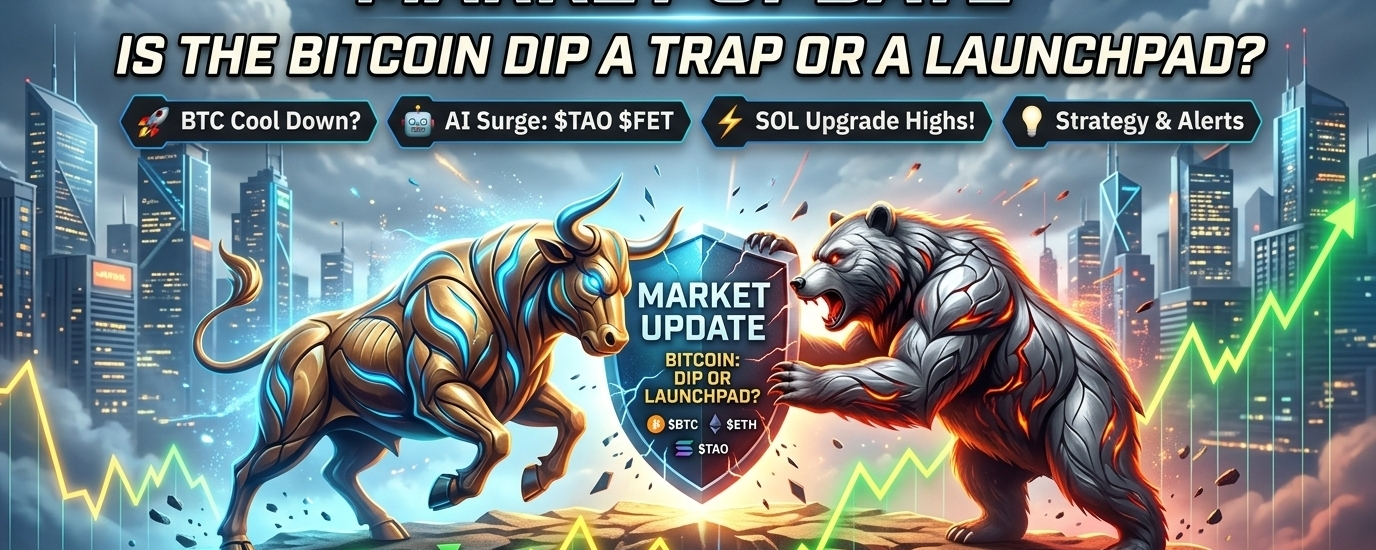
Market Update: Is the Bitcoin Dip a Trap or a Launchpad?The market is showing us a classic "tug-of-war" today. While Bitcoin ($BTC) has seen a slight pullback to the $76,300–$76,800 range, Ethereum ($ETH) and key AI altcoins are holding their ground with surprising resilience.
Here is what you need to know to navigate the next 48 hours. 📉📈
1. The Bitcoin "Cool Down" 🧊
After a strong run this month, BTC is currently tracking closely with global tech stocks. This 1–3% dip isn't necessarily a trend reversal; rather, it's a consolidation phase as traders look toward upcoming Fed signals.
Support Level to Watch: $75,000
Resistance to Break: $80,000
2. The AI Narrative is Refueling 🤖
While the "King" rests, the AI sector is waking up. Tokens like $TAO (Bittensor) and $FET (Fetch.ai) are showing strong relative strength. With the "AI Agent" narrative gaining mainstream traction, these assets are decoupling from BTC’s short-term volatility.
3. Solana and the "Alpenglow" Hype ⚡
$SOL is currently the talk of the Square. The anticipation surrounding the Alpenglow upgrade has pushed trading volume to new monthly highs. If Solana holds its current support, it could lead the next altcoin rally.
💡 Pro Strategy for Today:
Don't FOMO into Green Candles: The market is in a "risk-off" mood due to macro uncertainty. Look for entries on the support levels rather than chasing breakouts.
Watch the ETH/BTC Pair: Ethereum’s ability to stay steady near $2,300 while BTC dips suggests that institutional "smart money" is rotating into ecosystem leaders.
DYOR: Always remember that volatility is a double-edged sword. Use Stop-Losses to protect your capital.
What’s your move? 🧐
Are you Buying the Dip or Waiting for $80k? Let me know in the comments! 👇
#BTC #Solana #AI #CryptoNews #BinanceSquare #Write2Earn $BTC $SOL $TAO
Market Update: Is the Bitcoin Dip a Trap or a Launchpad?
The market is showing us a classic "tug-of-war" today. While Bitcoin ($BTC) has seen a slight pullback to the $76,300–$76,800 range, Ethereum ($ETH) and key AI altcoins are holding their ground with surprising resilience.
Here is what you need to know to navigate the next 48 hours. 📉📈
1. The Bitcoin "Cool Down" 🧊
After a strong run this month, BTC is currently tracking closely with global tech stocks. This 1–3% dip isn't necessarily a trend reversal; rather, it's a consolidation phase as traders look toward upcoming Fed signals.
Support Level to Watch: $75,000
Resistance to Break: $80,000
2. The AI Narrative is Refueling 🤖
While the "King" rests, the AI sector is waking up. Tokens like $TAO (Bittensor) and $FET (Fetch.ai) are showing strong relative strength. With the "AI Agent" narrative gaining mainstream traction, these assets are decoupling from BTC’s short-term volatility.
3. Solana and the "Alpenglow" Hype ⚡
$SOL is currently the talk of the Square. The anticipation surrounding the Alpenglow upgrade has pushed trading volume to new monthly highs. If Solana holds its current support, it could lead the next altcoin rally.
💡 Pro Strategy for Today:
Don't FOMO into Green Candles: The market is in a "risk-off" mood due to macro uncertainty. Look for entries on the support levels rather than chasing breakouts.
Watch the ETH/BTC Pair: Ethereum’s ability to stay steady near $2,300 while BTC dips suggests that institutional "smart money" is rotating into ecosystem leaders.
DYOR: Always remember that volatility is a double-edged sword. Use Stop-Losses to protect your capital.
What’s your move? 🧐
Are you Buying the Dip or Waiting for $80k? Let me know in the comments! 👇
#BTC #Solana #AI #CryptoNews #BinanceSquare #Write2Earn $BTC $SOL $TAO
Here is what you need to know to navigate the next 48 hours. 📉📈
1. The Bitcoin "Cool Down" 🧊
After a strong run this month, BTC is currently tracking closely with global tech stocks. This 1–3% dip isn't necessarily a trend reversal; rather, it's a consolidation phase as traders look toward upcoming Fed signals.
Support Level to Watch: $75,000
Resistance to Break: $80,000
2. The AI Narrative is Refueling 🤖
While the "King" rests, the AI sector is waking up. Tokens like $TAO (Bittensor) and $FET (Fetch.ai) are showing strong relative strength. With the "AI Agent" narrative gaining mainstream traction, these assets are decoupling from BTC’s short-term volatility.
3. Solana and the "Alpenglow" Hype ⚡
$SOL is currently the talk of the Square. The anticipation surrounding the Alpenglow upgrade has pushed trading volume to new monthly highs. If Solana holds its current support, it could lead the next altcoin rally.
💡 Pro Strategy for Today:
Don't FOMO into Green Candles: The market is in a "risk-off" mood due to macro uncertainty. Look for entries on the support levels rather than chasing breakouts.
Watch the ETH/BTC Pair: Ethereum’s ability to stay steady near $2,300 while BTC dips suggests that institutional "smart money" is rotating into ecosystem leaders.
DYOR: Always remember that volatility is a double-edged sword. Use Stop-Losses to protect your capital.
What’s your move? 🧐
Are you Buying the Dip or Waiting for $80k? Let me know in the comments! 👇
#BTC #Solana #AI #CryptoNews #BinanceSquare #Write2Earn $BTC $SOL $TAO
115
記事
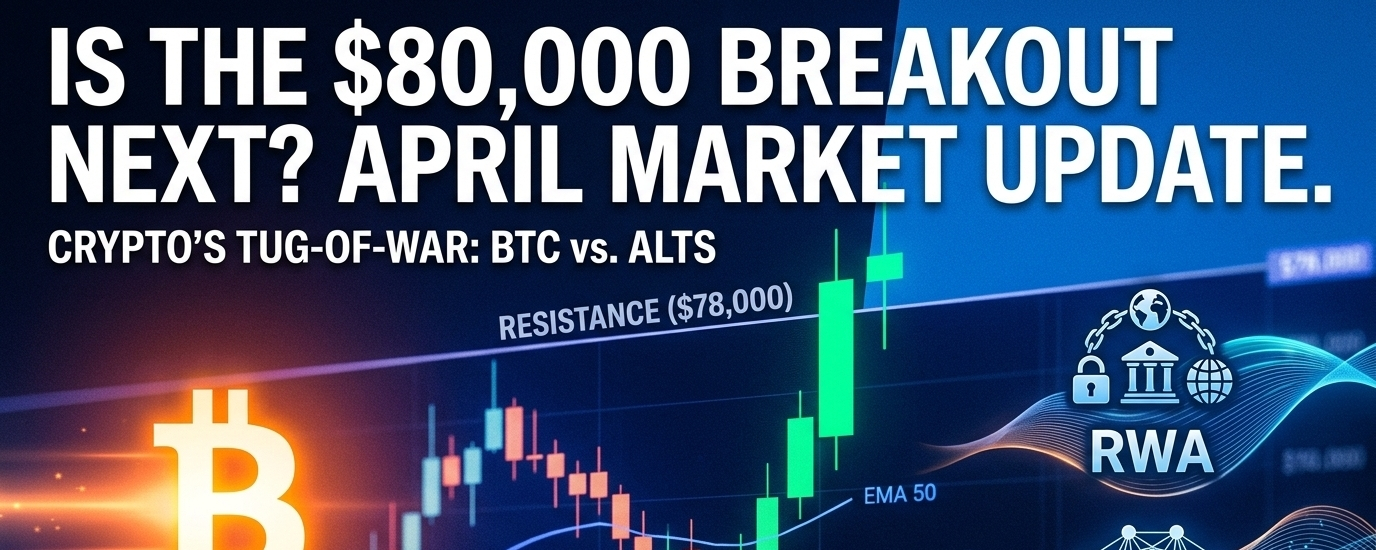
$80,000のブレイクアウトは次か?なぜ4月がすべてのトレーダーの忍耐を試しているのか2026年4月の暗号市場はハイステークスのチェスの試合のように感じています。ビットコイン($BTC)は最近$78,000のラインを試みましたが、より広い市場は機関の蓄積と小売の疲労の間で綱引き状態です。
もしあなたがビットコインの強さにもかかわらず、あなたのアルトコインがまだ「ムーニング」していない理由を疑問に思っているなら、チャートの裏で実際に何が起こっているのかを分解してみましょう。
1. 「デジタルゴールド」のナラティブが勝利している
ビットコインのドミナンスは現在約58.5%です。「ビットコインシーズン」にしっかりと入っています。ブラックロックやゴールドマン・サックスのような大手機関が(最近のETF申請を受けて)静かに供給を飲み込んでいます。
$80,000のブレイクアウトは次か?なぜ4月がすべてのトレーダーの忍耐を試しているのか
2026年4月の暗号市場はハイステークスのチェスの試合のように感じています。ビットコイン($BTC)は最近$78,000のラインを試みましたが、より広い市場は機関の蓄積と小売の疲労の間で綱引き状態です。
もしあなたがビットコインの強さにもかかわらず、あなたのアルトコインがまだ「ムーニング」していない理由を疑問に思っているなら、チャートの裏で実際に何が起こっているのかを分解してみましょう。
1. 「デジタルゴールド」のナラティブが勝利している
ビットコインのドミナンスは現在約58.5%です。「ビットコインシーズン」にしっかりと入っています。ブラックロックやゴールドマン・サックスのような大手機関が(最近のETF申請を受けて)静かに供給を飲み込んでいます。
もしあなたがビットコインの強さにもかかわらず、あなたのアルトコインがまだ「ムーニング」していない理由を疑問に思っているなら、チャートの裏で実際に何が起こっているのかを分解してみましょう。
1. 「デジタルゴールド」のナラティブが勝利している
ビットコインのドミナンスは現在約58.5%です。「ビットコインシーズン」にしっかりと入っています。ブラックロックやゴールドマン・サックスのような大手機関が(最近のETF申請を受けて)静かに供給を飲み込んでいます。
165

記事
「エージェント夏」はここにある: なぜAIエージェントが新しいクリプトのクジラなのかもし今でもAIをクリプトで単なる「トレーディングボット」と考えているなら、あなたは2024年に生きている。2026年4月を迎え、私たちは根本的な変化を目撃している: 自律機械経済の誕生。
ブロックチェーンはもはや価値の保管所ではない; 知性の保管所になりつつある。
1. チャットボットから主権エージェントへ 🧠
2026年には、「読み取り専用」のAIを超えた。今や「書き込み可能」なエージェントが登場している。これらは自律的な存在で、
彼ら自身のウォレットを持つ: 単にトレードを提案するだけでなく、実行もする。
「エージェント夏」はここにある: なぜAIエージェントが新しいクリプトのクジラなのか
もし今でもAIをクリプトで単なる「トレーディングボット」と考えているなら、あなたは2024年に生きている。2026年4月を迎え、私たちは根本的な変化を目撃している: 自律機械経済の誕生。
ブロックチェーンはもはや価値の保管所ではない; 知性の保管所になりつつある。
1. チャットボットから主権エージェントへ 🧠
2026年には、「読み取り専用」のAIを超えた。今や「書き込み可能」なエージェントが登場している。これらは自律的な存在で、
彼ら自身のウォレットを持つ: 単にトレードを提案するだけでなく、実行もする。
ブロックチェーンはもはや価値の保管所ではない; 知性の保管所になりつつある。
1. チャットボットから主権エージェントへ 🧠
2026年には、「読み取り専用」のAIを超えた。今や「書き込み可能」なエージェントが登場している。これらは自律的な存在で、
彼ら自身のウォレットを持つ: 単にトレードを提案するだけでなく、実行もする。
267

記事
翻訳参照
The Architecture of Momentum: Why Micro-Habits Outperform Grand AmbitionsIn a world obsessed with "overnight success" and "massive action," we often overlook the most powerful force in nature: compounding. Whether it is financial interest, biological growth, or skill acquisition, the greatest results come from tiny, consistent inputs rather than sporadic bursts of effort.
1. The Myth of the "Big Leap"
Most people fail at new ventures because they attempt to change their entire life on a Monday morning. They set out to build a business, master a new market, or learn a complex skill in weeks. This creates immediate friction. The brain's amygdala perceives sudden, drastic change as a threat, often triggering procrastination or burnout.
Micro-habits bypass this "threat response" by making the task so small it is impossible to fail.
2. The Mechanics of Habit Stacking
The most effective way to build a new routine is not through willpower, but through anchoring. This is a psychological method where you "stack" a new desired behavior onto an existing, solid habit.
The formula looks like this:#MindsetMatters#MicroHabits#AtomicHabits#ProductivityHacks
The Architecture of Momentum: Why Micro-Habits Outperform Grand Ambitions
In a world obsessed with "overnight success" and "massive action," we often overlook the most powerful force in nature: compounding. Whether it is financial interest, biological growth, or skill acquisition, the greatest results come from tiny, consistent inputs rather than sporadic bursts of effort.
1. The Myth of the "Big Leap"
Most people fail at new ventures because they attempt to change their entire life on a Monday morning. They set out to build a business, master a new market, or learn a complex skill in weeks. This creates immediate friction. The brain's amygdala perceives sudden, drastic change as a threat, often triggering procrastination or burnout.
Micro-habits bypass this "threat response" by making the task so small it is impossible to fail.
2. The Mechanics of Habit Stacking
The most effective way to build a new routine is not through willpower, but through anchoring. This is a psychological method where you "stack" a new desired behavior onto an existing, solid habit.
The formula looks like this:#MindsetMatters#MicroHabits#AtomicHabits#ProductivityHacks
1. The Myth of the "Big Leap"
Most people fail at new ventures because they attempt to change their entire life on a Monday morning. They set out to build a business, master a new market, or learn a complex skill in weeks. This creates immediate friction. The brain's amygdala perceives sudden, drastic change as a threat, often triggering procrastination or burnout.
Micro-habits bypass this "threat response" by making the task so small it is impossible to fail.
2. The Mechanics of Habit Stacking
The most effective way to build a new routine is not through willpower, but through anchoring. This is a psychological method where you "stack" a new desired behavior onto an existing, solid habit.
The formula looks like this:#MindsetMatters#MicroHabits#AtomicHabits#ProductivityHacks
54
記事
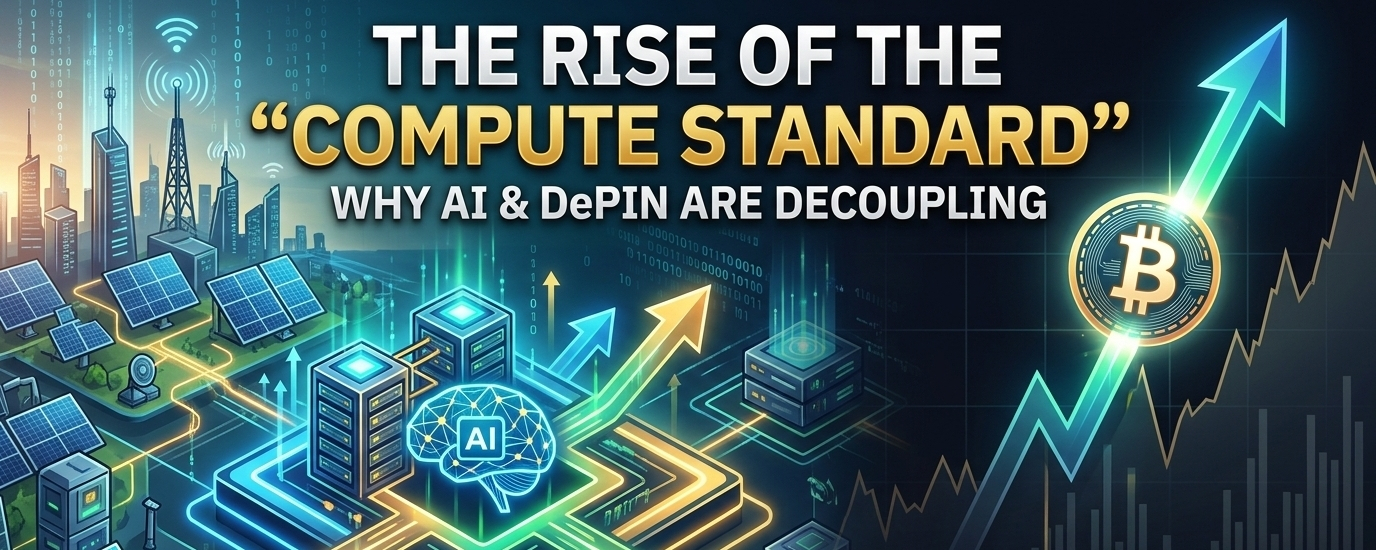
「コンピュートスタンダード」の台頭:なぜAIとDePINが市場から切り離されているのか 🤖⚡世界がビットコインが$80k近くの新しいマイルストーンに達するのを見守る中、より静かながらも重要な革命が裏で進行している。我々は投機的な「AIラッパー」から離れ、100倍のAI経済の物理的なバックボーンであるDePINに向かっている。
2026年にスマートマネーがどこに流れているかを理解したいなら、「コンピュートスタンダード」を見る必要がある。
1. DePINが「新しい石油」と呼ばれる理由
2026年、人工知能はただのバズワードではなく、計算、データ、エネルギーの3つを必要とする飢えたマシンだ。従来の集中型プロバイダー(AWSやGoogle Cloudのような)は需要に追いつけない。このため、分散型ネットワークしか埋められない巨大な供給ギャップが生まれた。
「コンピュートスタンダード」の台頭:なぜAIとDePINが市場から切り離されているのか 🤖⚡
世界がビットコインが$80k近くの新しいマイルストーンに達するのを見守る中、より静かながらも重要な革命が裏で進行している。我々は投機的な「AIラッパー」から離れ、100倍のAI経済の物理的なバックボーンであるDePINに向かっている。
2026年にスマートマネーがどこに流れているかを理解したいなら、「コンピュートスタンダード」を見る必要がある。
1. DePINが「新しい石油」と呼ばれる理由
2026年、人工知能はただのバズワードではなく、計算、データ、エネルギーの3つを必要とする飢えたマシンだ。従来の集中型プロバイダー(AWSやGoogle Cloudのような)は需要に追いつけない。このため、分散型ネットワークしか埋められない巨大な供給ギャップが生まれた。
2026年にスマートマネーがどこに流れているかを理解したいなら、「コンピュートスタンダード」を見る必要がある。
1. DePINが「新しい石油」と呼ばれる理由
2026年、人工知能はただのバズワードではなく、計算、データ、エネルギーの3つを必要とする飢えたマシンだ。従来の集中型プロバイダー(AWSやGoogle Cloudのような)は需要に追いつけない。このため、分散型ネットワークしか埋められない巨大な供給ギャップが生まれた。
207
記事
チャートの向こうへ:2026年にAIとDePINがアルファを再定義する方法2026年4月の暗号資産(クリプト)環境は、かつてないほどのスピードで進化しています。多くのトレーダーが依然として標準的な値動き(プライスアクション)だけに注目している一方で、本当の「アルファ(上振れの優位性)」は、人工知能(AI)とDePIN(分散型物理インフラストラクチャネットワーク)の交差点へと移ってきています。
Binance Squareで時流を先取りし続けるためには、この相乗効果を理解することはもはや任意ではありません—それは不可欠です。
1. 強力なカップル:なぜAIにはDePINが必要なのか
AIモデルは大量のデータ、そしてさらに大量の計算能力を必要とします。2026年には、中央集権型のクラウドプロバイダーから、分散型ネットワークへとシフトが起きています。
チャートの向こうへ:2026年にAIとDePINがアルファを再定義する方法
2026年4月の暗号資産(クリプト)環境は、かつてないほどのスピードで進化しています。多くのトレーダーが依然として標準的な値動き(プライスアクション)だけに注目している一方で、本当の「アルファ(上振れの優位性)」は、人工知能(AI)とDePIN(分散型物理インフラストラクチャネットワーク)の交差点へと移ってきています。
Binance Squareで時流を先取りし続けるためには、この相乗効果を理解することはもはや任意ではありません—それは不可欠です。
1. 強力なカップル:なぜAIにはDePINが必要なのか
AIモデルは大量のデータ、そしてさらに大量の計算能力を必要とします。2026年には、中央集権型のクラウドプロバイダーから、分散型ネットワークへとシフトが起きています。
Binance Squareで時流を先取りし続けるためには、この相乗効果を理解することはもはや任意ではありません—それは不可欠です。
1. 強力なカップル:なぜAIにはDePINが必要なのか
AIモデルは大量のデータ、そしてさらに大量の計算能力を必要とします。2026年には、中央集権型のクラウドプロバイダーから、分散型ネットワークへとシフトが起きています。
69
記事
翻訳参照
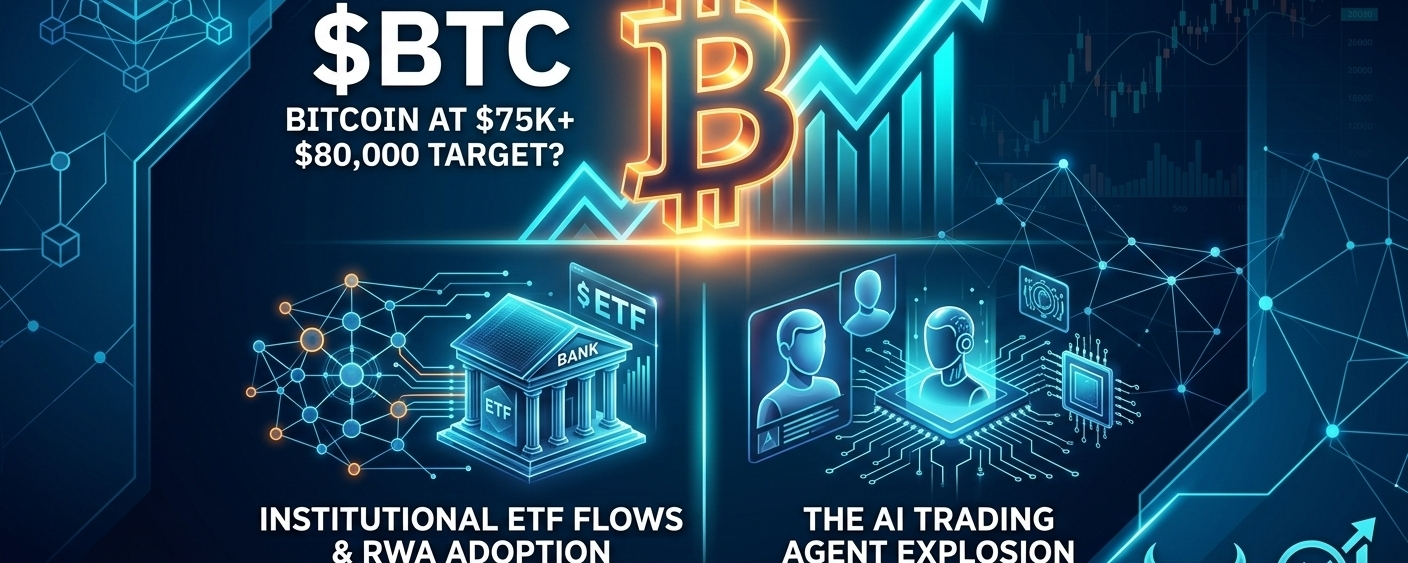
Bitcoin at $75K: Is the "Divergence" a Warning or a Launchpad?As we close out April 2026, the crypto market is sending mixed signals. While Bitcoin ($BTC) has shown incredible resilience, climbing back to the $75,000–$77,000 range after geopolitical jitters, a clear "divergence" is forming that every trader needs to watch.
1. The Bitcoin vs. Altcoin Gap
We are seeing a unique trend this month: Bitcoin leads, but Altcoins lag. While $BTC nears its psychological $80,000 resistance, major assets like Solana ($SOL) and Cardano ($ADA) are trading in sideways ranges.
The Bull Case: This often happens before "Altseason," as liquidity flows from the king (BTC) into high-utility projects.
The Bear Case: Lack of broad market participation could suggest this rally is driven purely by institutional ETF accumulation rather than retail FOMO.
2. The "AI Agent" Explosion
The biggest fundamental shift this quarter isn't just about humans trading—it's about machines. Agent-to-agent transactions have exploded, with over 160,000 registered AI agents now performing on-chain tasks.
BNB Chain is currently leading this race, hosting over 33% of these autonomous agents.
Why it matters: This creates a permanent, non-emotional "floor" for network activity that doesn't depend on human hype.
3. Institutional Giants Are Not Leaving
Despite the "risk-off" sentiment caused by tensions in the Middle East, the big players are doubling down:
Goldman Sachs has recently moved forward with new Bitcoin ETF filings focusing on income-generating strategies.
Kraken is pushing ahead with IPO plans, signaling that the infrastructure of the crypto world is becoming "too big to fail."
Market Strategy: Late April 2026
Support to Watch: If $BTC holds $68,000, the path to $80K remains open.
Narrative Focus: Keep an eye on RWA (Real World Assets) and DeFi Security protocols. Recent bridge exploits have shown that security is now the most valuable "feature" a project can have.
Are you betting on a BTC breakout to $80K, or waiting for Altcoins to catch up? Let’s hear your strategy below! 📈
#BinanceSquare #BTC #CryptoNews2026 #Altcoins #TradingStrategy #AIWeb3
Pro-Tips for Your Post:
Visuals: Use a chart showing $BTC's recovery vs. the flat line of Altcoins to highlight the "Divergence."
Timing: Post during peak trading hours (3:00 PM – 7:00 PM UTC) to maximize reach.
Poll Idea: Use the Binance Square poll feature: "Will BTC hit $80k before May 1st? (Yes/No)"—this significantly boosts engagement.#BinanceSquare#Write2Earn#Crypto2026#Bitcoin
Bitcoin at $75K: Is the "Divergence" a Warning or a Launchpad?
As we close out April 2026, the crypto market is sending mixed signals. While Bitcoin ($BTC) has shown incredible resilience, climbing back to the $75,000–$77,000 range after geopolitical jitters, a clear "divergence" is forming that every trader needs to watch.
1. The Bitcoin vs. Altcoin Gap
We are seeing a unique trend this month: Bitcoin leads, but Altcoins lag. While $BTC nears its psychological $80,000 resistance, major assets like Solana ($SOL) and Cardano ($ADA) are trading in sideways ranges.
The Bull Case: This often happens before "Altseason," as liquidity flows from the king (BTC) into high-utility projects.
The Bear Case: Lack of broad market participation could suggest this rally is driven purely by institutional ETF accumulation rather than retail FOMO.
2. The "AI Agent" Explosion
The biggest fundamental shift this quarter isn't just about humans trading—it's about machines. Agent-to-agent transactions have exploded, with over 160,000 registered AI agents now performing on-chain tasks.
BNB Chain is currently leading this race, hosting over 33% of these autonomous agents.
Why it matters: This creates a permanent, non-emotional "floor" for network activity that doesn't depend on human hype.
3. Institutional Giants Are Not Leaving
Despite the "risk-off" sentiment caused by tensions in the Middle East, the big players are doubling down:
Goldman Sachs has recently moved forward with new Bitcoin ETF filings focusing on income-generating strategies.
Kraken is pushing ahead with IPO plans, signaling that the infrastructure of the crypto world is becoming "too big to fail."
Market Strategy: Late April 2026
Support to Watch: If $BTC holds $68,000, the path to $80K remains open.
Narrative Focus: Keep an eye on RWA (Real World Assets) and DeFi Security protocols. Recent bridge exploits have shown that security is now the most valuable "feature" a project can have.
Are you betting on a BTC breakout to $80K, or waiting for Altcoins to catch up? Let’s hear your strategy below! 📈
#BinanceSquare #BTC #CryptoNews2026 #Altcoins #TradingStrategy #AIWeb3
Pro-Tips for Your Post:
Visuals: Use a chart showing $BTC's recovery vs. the flat line of Altcoins to highlight the "Divergence."
Timing: Post during peak trading hours (3:00 PM – 7:00 PM UTC) to maximize reach.
Poll Idea: Use the Binance Square poll feature: "Will BTC hit $80k before May 1st? (Yes/No)"—this significantly boosts engagement.#BinanceSquare#Write2Earn#Crypto2026#Bitcoin
1. The Bitcoin vs. Altcoin Gap
We are seeing a unique trend this month: Bitcoin leads, but Altcoins lag. While $BTC nears its psychological $80,000 resistance, major assets like Solana ($SOL) and Cardano ($ADA) are trading in sideways ranges.
The Bull Case: This often happens before "Altseason," as liquidity flows from the king (BTC) into high-utility projects.
The Bear Case: Lack of broad market participation could suggest this rally is driven purely by institutional ETF accumulation rather than retail FOMO.
2. The "AI Agent" Explosion
The biggest fundamental shift this quarter isn't just about humans trading—it's about machines. Agent-to-agent transactions have exploded, with over 160,000 registered AI agents now performing on-chain tasks.
BNB Chain is currently leading this race, hosting over 33% of these autonomous agents.
Why it matters: This creates a permanent, non-emotional "floor" for network activity that doesn't depend on human hype.
3. Institutional Giants Are Not Leaving
Despite the "risk-off" sentiment caused by tensions in the Middle East, the big players are doubling down:
Goldman Sachs has recently moved forward with new Bitcoin ETF filings focusing on income-generating strategies.
Kraken is pushing ahead with IPO plans, signaling that the infrastructure of the crypto world is becoming "too big to fail."
Market Strategy: Late April 2026
Support to Watch: If $BTC holds $68,000, the path to $80K remains open.
Narrative Focus: Keep an eye on RWA (Real World Assets) and DeFi Security protocols. Recent bridge exploits have shown that security is now the most valuable "feature" a project can have.
Are you betting on a BTC breakout to $80K, or waiting for Altcoins to catch up? Let’s hear your strategy below! 📈
#BinanceSquare #BTC #CryptoNews2026 #Altcoins #TradingStrategy #AIWeb3
Pro-Tips for Your Post:
Visuals: Use a chart showing $BTC's recovery vs. the flat line of Altcoins to highlight the "Divergence."
Timing: Post during peak trading hours (3:00 PM – 7:00 PM UTC) to maximize reach.
Poll Idea: Use the Binance Square poll feature: "Will BTC hit $80k before May 1st? (Yes/No)"—this significantly boosts engagement.#BinanceSquare#Write2Earn#Crypto2026#Bitcoin
138
記事
翻訳参照
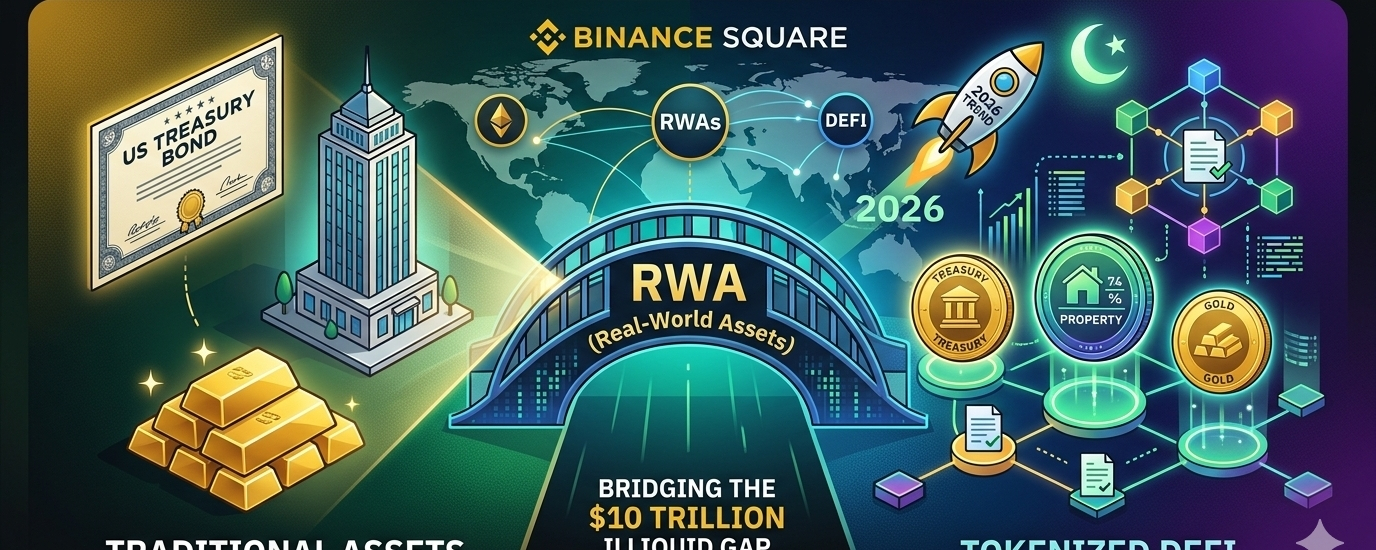
The "Expert" Choice (Professional & Analytical)The 2026 Narrative: Why Real-World Asset (RWA) Tokenization is the Next $10 Trillion Frontier
The crypto landscape in 2026 has shifted from pure speculation to tangible utility. While meme coins capture the headlines, smart money is quietly flowing into a sector that bridges the gap between traditional finance (TradFi) and decentralized finance (DeFi): Real-World Asset (RWA) Tokenization.
What is RWA Tokenization?
RWA involves bringing "off-chain" assets—such as real estate, gold, government bonds, and even fine art—onto the blockchain. By converting these assets into digital tokens, we unlock liquidity for previously "illiquid" markets.
Why 2026 is the Breakout Year
Institutional Adoption: Major global banks and asset managers are no longer just "testing" blockchain; they are actively settling trillions in transactions on-chain.
Regulatory Clarity: With the implementation of global crypto frameworks this year, institutional investors now have the legal green light to tokenize massive portfolios.
Fractional Ownership: Imagine owning 1% of a luxury apartment in Dubai or a fraction of a gold bar, all tradable 24/7 on a DEX. This is the democratizing power of RWAs.
Key Sectors to Watch
Tokenized Treasury Bills: Offering stable, low-risk yields directly on-chain.
Real Estate Protocols: Making property investment accessible to everyone, not just the wealthy.
Commodities: Trading oil, gold, and agricultural products with instant settlement.
Final Thought for Traders
As we navigate the 2026 bull cycle, look beyond the hype. Look for projects with revenue-backed models and real-world partnerships. The future of finance isn't just digital; it's tokenized.
#RWA #Tokenization #Crypto2026 #BinanceSquare
The "Expert" Choice (Professional & Analytical)
The 2026 Narrative: Why Real-World Asset (RWA) Tokenization is the Next $10 Trillion Frontier
The crypto landscape in 2026 has shifted from pure speculation to tangible utility. While meme coins capture the headlines, smart money is quietly flowing into a sector that bridges the gap between traditional finance (TradFi) and decentralized finance (DeFi): Real-World Asset (RWA) Tokenization.
What is RWA Tokenization?
RWA involves bringing "off-chain" assets—such as real estate, gold, government bonds, and even fine art—onto the blockchain. By converting these assets into digital tokens, we unlock liquidity for previously "illiquid" markets.
Why 2026 is the Breakout Year
Institutional Adoption: Major global banks and asset managers are no longer just "testing" blockchain; they are actively settling trillions in transactions on-chain.
Regulatory Clarity: With the implementation of global crypto frameworks this year, institutional investors now have the legal green light to tokenize massive portfolios.
Fractional Ownership: Imagine owning 1% of a luxury apartment in Dubai or a fraction of a gold bar, all tradable 24/7 on a DEX. This is the democratizing power of RWAs.
Key Sectors to Watch
Tokenized Treasury Bills: Offering stable, low-risk yields directly on-chain.
Real Estate Protocols: Making property investment accessible to everyone, not just the wealthy.
Commodities: Trading oil, gold, and agricultural products with instant settlement.
Final Thought for Traders
As we navigate the 2026 bull cycle, look beyond the hype. Look for projects with revenue-backed models and real-world partnerships. The future of finance isn't just digital; it's tokenized.
#RWA #Tokenization #Crypto2026 #BinanceSquare
The crypto landscape in 2026 has shifted from pure speculation to tangible utility. While meme coins capture the headlines, smart money is quietly flowing into a sector that bridges the gap between traditional finance (TradFi) and decentralized finance (DeFi): Real-World Asset (RWA) Tokenization.
What is RWA Tokenization?
RWA involves bringing "off-chain" assets—such as real estate, gold, government bonds, and even fine art—onto the blockchain. By converting these assets into digital tokens, we unlock liquidity for previously "illiquid" markets.
Why 2026 is the Breakout Year
Institutional Adoption: Major global banks and asset managers are no longer just "testing" blockchain; they are actively settling trillions in transactions on-chain.
Regulatory Clarity: With the implementation of global crypto frameworks this year, institutional investors now have the legal green light to tokenize massive portfolios.
Fractional Ownership: Imagine owning 1% of a luxury apartment in Dubai or a fraction of a gold bar, all tradable 24/7 on a DEX. This is the democratizing power of RWAs.
Key Sectors to Watch
Tokenized Treasury Bills: Offering stable, low-risk yields directly on-chain.
Real Estate Protocols: Making property investment accessible to everyone, not just the wealthy.
Commodities: Trading oil, gold, and agricultural products with instant settlement.
Final Thought for Traders
As we navigate the 2026 bull cycle, look beyond the hype. Look for projects with revenue-backed models and real-world partnerships. The future of finance isn't just digital; it's tokenized.
#RWA #Tokenization #Crypto2026 #BinanceSquare
74
記事
翻訳参照
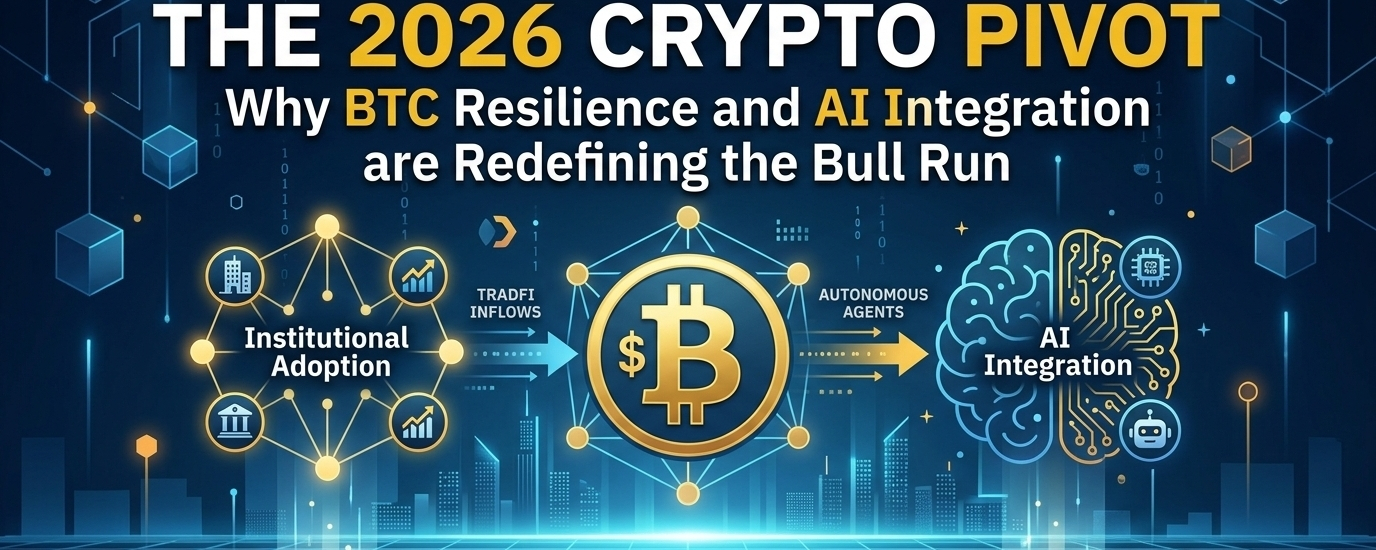
The 2026 Crypto Pivot Why BTC Resilience and AI Integration are Redefining the Bull RunAs we move through the second quarter of 2026, the crypto landscape is no longer just about "buying the dip." We are witnessing a fundamental shift where traditional finance (TradFi) and Artificial Intelligence (AI) are becoming the primary engines of market movement.
Whether you are a swing trader or a long-term HODLer, understanding these three pillars is essential for your 2026 strategy.
1. The Institutional "Safe Haven" Effect
Bitcoin ($BTC) has shown remarkable resilience, maintaining a steady baseline around $75,000. The recent filing by major institutions like Goldman Sachs for Bitcoin-focused ETFs—specifically those using options strategies for income generation—signals that BTC is being treated as a mature asset class. For retail traders, this means less "wild west" volatility and more structured, predictable growth.
2. The AI & Blockchain Convergence
2026 is officially the year of Autonomous Agents. We are seeing a surge in projects that integrate AI for self-managing wallets and decentralized identity verification. However, stay cautious: as the "AI bubble" remains a topic of debate in equity markets, focus on projects with actual utility in AI infrastructure rather than just "AI" in their name.
3. Strategic Trading in a "Risk-Off" Environment
With global macro conditions creating a stronger dollar, retail volume has seen some contraction. To stay profitable:
Focus on Support/Resistance: Use the RSI and MACD indicators to identify oversold conditions.
Diversify into Altcoins: Keep an eye on $ETH and Layer-2 solutions like $STX as they benefit from the growing infrastructure.
Risk Management: Always use Stop-Loss orders. In a 2026 market, protecting your capital is just as important as growing it.
Conclusion
The market is moving from "speculation" to "production." The winners of 2026 will be those who treat crypto as essential financial infrastructure. Keep a close watch on institutional inflows and the integration of AI-native economies.
#Crypto2026 #Bitcoin #AI #TradingStrategy
The 2026 Crypto Pivot Why BTC Resilience and AI Integration are Redefining the Bull Run
As we move through the second quarter of 2026, the crypto landscape is no longer just about "buying the dip." We are witnessing a fundamental shift where traditional finance (TradFi) and Artificial Intelligence (AI) are becoming the primary engines of market movement.
Whether you are a swing trader or a long-term HODLer, understanding these three pillars is essential for your 2026 strategy.
1. The Institutional "Safe Haven" Effect
Bitcoin ($BTC) has shown remarkable resilience, maintaining a steady baseline around $75,000. The recent filing by major institutions like Goldman Sachs for Bitcoin-focused ETFs—specifically those using options strategies for income generation—signals that BTC is being treated as a mature asset class. For retail traders, this means less "wild west" volatility and more structured, predictable growth.
2. The AI & Blockchain Convergence
2026 is officially the year of Autonomous Agents. We are seeing a surge in projects that integrate AI for self-managing wallets and decentralized identity verification. However, stay cautious: as the "AI bubble" remains a topic of debate in equity markets, focus on projects with actual utility in AI infrastructure rather than just "AI" in their name.
3. Strategic Trading in a "Risk-Off" Environment
With global macro conditions creating a stronger dollar, retail volume has seen some contraction. To stay profitable:
Focus on Support/Resistance: Use the RSI and MACD indicators to identify oversold conditions.
Diversify into Altcoins: Keep an eye on $ETH and Layer-2 solutions like $STX as they benefit from the growing infrastructure.
Risk Management: Always use Stop-Loss orders. In a 2026 market, protecting your capital is just as important as growing it.
Conclusion
The market is moving from "speculation" to "production." The winners of 2026 will be those who treat crypto as essential financial infrastructure. Keep a close watch on institutional inflows and the integration of AI-native economies.
#Crypto2026 #Bitcoin #AI #TradingStrategy
Whether you are a swing trader or a long-term HODLer, understanding these three pillars is essential for your 2026 strategy.
1. The Institutional "Safe Haven" Effect
Bitcoin ($BTC) has shown remarkable resilience, maintaining a steady baseline around $75,000. The recent filing by major institutions like Goldman Sachs for Bitcoin-focused ETFs—specifically those using options strategies for income generation—signals that BTC is being treated as a mature asset class. For retail traders, this means less "wild west" volatility and more structured, predictable growth.
2. The AI & Blockchain Convergence
2026 is officially the year of Autonomous Agents. We are seeing a surge in projects that integrate AI for self-managing wallets and decentralized identity verification. However, stay cautious: as the "AI bubble" remains a topic of debate in equity markets, focus on projects with actual utility in AI infrastructure rather than just "AI" in their name.
3. Strategic Trading in a "Risk-Off" Environment
With global macro conditions creating a stronger dollar, retail volume has seen some contraction. To stay profitable:
Focus on Support/Resistance: Use the RSI and MACD indicators to identify oversold conditions.
Diversify into Altcoins: Keep an eye on $ETH and Layer-2 solutions like $STX as they benefit from the growing infrastructure.
Risk Management: Always use Stop-Loss orders. In a 2026 market, protecting your capital is just as important as growing it.
Conclusion
The market is moving from "speculation" to "production." The winners of 2026 will be those who treat crypto as essential financial infrastructure. Keep a close watch on institutional inflows and the integration of AI-native economies.
#Crypto2026 #Bitcoin #AI #TradingStrategy
125
記事
翻訳参照
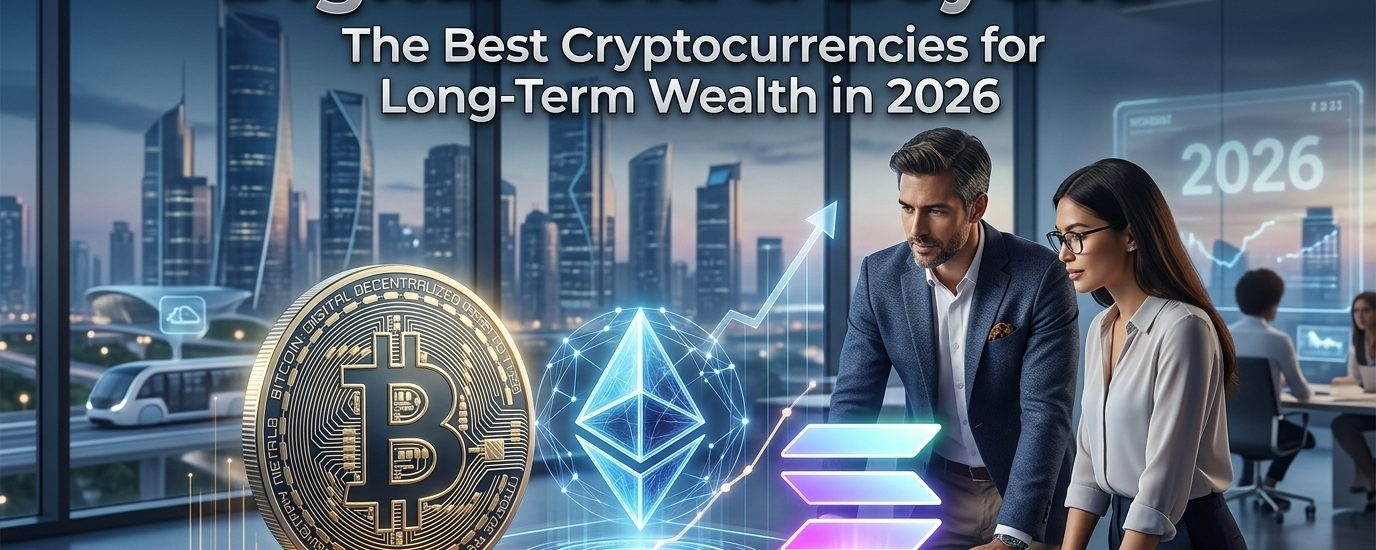
Digital Gold & Beyond: The Best Cryptocurrencies for Long-Term Wealth in 2026📄 Article: Building a "Crypto Savings" Strategy for 2026 and Beyond
Introduction
The dream of retiring on a small crypto investment is popular, but the reality requires a disciplined, long-term approach. Treating crypto as a "savings" vehicle is different from "trading." It requires looking past daily price swings and focusing on 5 to 10-year horizons.
The Three Pillars of Crypto Saving
To save effectively, you should categorize your holdings based on risk:
Category:
Typical Coins:
Purpose:
The Bedrockb
Bitcoin (BTC)
Long-term stability and inflation hedge.
Utility Growth
Ethereum (ETH), Solana (SOL)
Exposure to the growth of blockchain technology.
Stable Dividends
USDT, USDC (Staked)
Using
The "DCA" Strategy
The most successful way to save in crypto is Dollar-Cost Averaging (DCA). Instead of trying to "buy the dip" or timing the market:
Set a fixed amount (e.g., $50) to invest every week or month.Buy regardless of the price.Over time, this smoothens out the volatility, ensuring you don't buy only when prices are at their peak.
Security: Protecting Your Future
"Saving" implies that the money will be there when you need it. To ensure this:
Use Cold Storage: For long-term savings, avoid keeping large amounts on exchanges. Use a hardware wallet (like Ledger or Trezor).Diversify: Don't put 100% of your savings into one coin. A common split is 50% BTC, 30% ETH, and 20% others. Conclusion
The "best" coin for the future is the one that survives the test of time. While new "meme coins" may offer 100x returns overnight, they often disappear just as fast. For true saving, stick to the assets with high market caps, proven utility, and massive developer ecosystems.
Digital Gold & Beyond: The Best Cryptocurrencies for Long-Term Wealth in 2026
📄 Article: Building a "Crypto Savings" Strategy for 2026 and Beyond
Introduction
The dream of retiring on a small crypto investment is popular, but the reality requires a disciplined, long-term approach. Treating crypto as a "savings" vehicle is different from "trading." It requires looking past daily price swings and focusing on 5 to 10-year horizons.
The Three Pillars of Crypto Saving
To save effectively, you should categorize your holdings based on risk:
Category:
Typical Coins:
Purpose:
The Bedrockb
Bitcoin (BTC)
Long-term stability and inflation hedge.
Utility Growth
Ethereum (ETH), Solana (SOL)
Exposure to the growth of blockchain technology.
Stable Dividends
USDT, USDC (Staked)
Using
The "DCA" Strategy
The most successful way to save in crypto is Dollar-Cost Averaging (DCA). Instead of trying to "buy the dip" or timing the market:
Set a fixed amount (e.g., $50) to invest every week or month.Buy regardless of the price.Over time, this smoothens out the volatility, ensuring you don't buy only when prices are at their peak.
Security: Protecting Your Future
"Saving" implies that the money will be there when you need it. To ensure this:
Use Cold Storage: For long-term savings, avoid keeping large amounts on exchanges. Use a hardware wallet (like Ledger or Trezor).Diversify: Don't put 100% of your savings into one coin. A common split is 50% BTC, 30% ETH, and 20% others. Conclusion
The "best" coin for the future is the one that survives the test of time. While new "meme coins" may offer 100x returns overnight, they often disappear just as fast. For true saving, stick to the assets with high market caps, proven utility, and massive developer ecosystems.
Introduction
The dream of retiring on a small crypto investment is popular, but the reality requires a disciplined, long-term approach. Treating crypto as a "savings" vehicle is different from "trading." It requires looking past daily price swings and focusing on 5 to 10-year horizons.
The Three Pillars of Crypto Saving
To save effectively, you should categorize your holdings based on risk:
Category:
Typical Coins:
Purpose:
The Bedrockb
Bitcoin (BTC)
Long-term stability and inflation hedge.
Utility Growth
Ethereum (ETH), Solana (SOL)
Exposure to the growth of blockchain technology.
Stable Dividends
USDT, USDC (Staked)
Using
The "DCA" Strategy
The most successful way to save in crypto is Dollar-Cost Averaging (DCA). Instead of trying to "buy the dip" or timing the market:
Set a fixed amount (e.g., $50) to invest every week or month.Buy regardless of the price.Over time, this smoothens out the volatility, ensuring you don't buy only when prices are at their peak.
Security: Protecting Your Future
"Saving" implies that the money will be there when you need it. To ensure this:
Use Cold Storage: For long-term savings, avoid keeping large amounts on exchanges. Use a hardware wallet (like Ledger or Trezor).Diversify: Don't put 100% of your savings into one coin. A common split is 50% BTC, 30% ETH, and 20% others. Conclusion
The "best" coin for the future is the one that survives the test of time. While new "meme coins" may offer 100x returns overnight, they often disappear just as fast. For true saving, stick to the assets with high market caps, proven utility, and massive developer ecosystems.
31
記事
翻訳参照
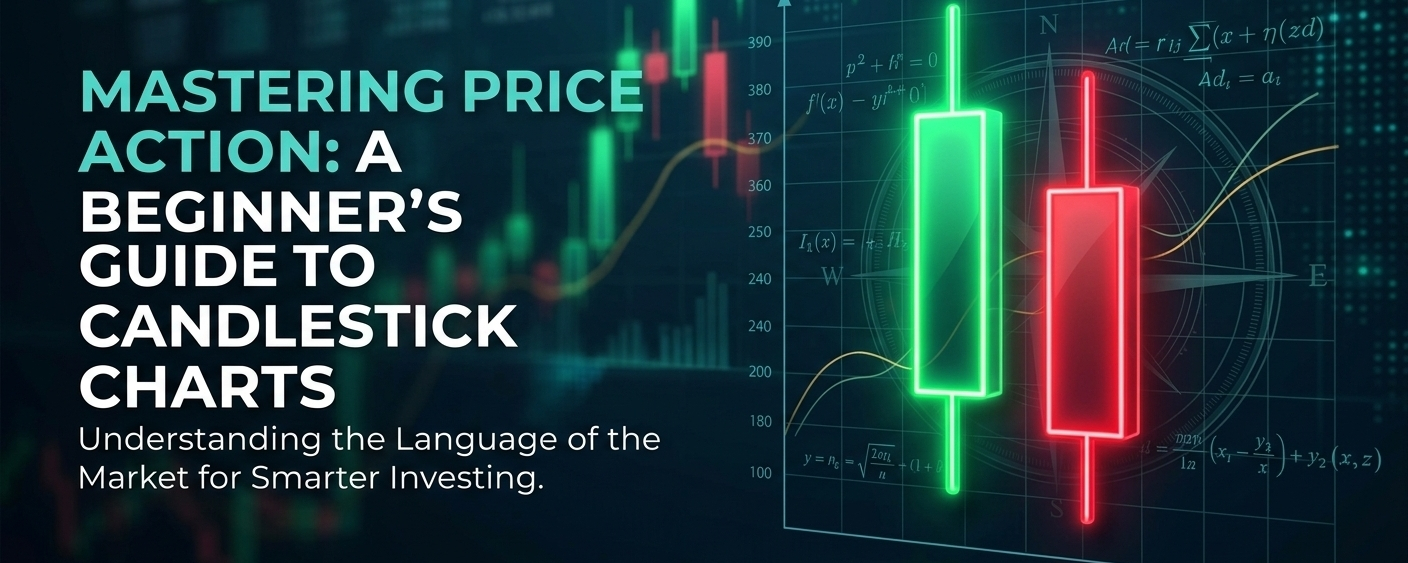
5 Minutes to Master Candlesticks: The Language of TradingUnderstanding Trading Candlesticks: The Language of the Market
In the world of financial trading, Candlestick Charts are the most popular tool used by traders to analyze price action. Originally developed by Japanese rice traders in the 1700s, these charts provide a visual representation of market psychology and price movement over a specific period.
1. Anatomy of a Candlestick
Every single candle tells a story of the battle between buyers and sellers. A candlestick consists of three main parts:
The Body: The thick colored part that represents the range between the Open and Close price.
The Wick (Shadow): The thin lines above and below the body. They show the High and Low prices reached during that time frame.
Color: Indicates the direction of the price.
Green/White: Price closed higher than it opened (Bullish).
Red/Black: Price closed lower than it opened (Bearish).
2. Key Components Explained
To read a candle, you look at four data points:
Open: The price at which the time period started.
Close: The price at which the time period ended.
High: The highest price touched during the period.
Low: The lowest price touched during the period.
3. Popular Candlestick Patterns
Traders look for specific shapes that often predict where the price might go next. Here are a few essential ones:
Pattern Name :
Market Sentiment :
Description :
Hammer : Bullish Reversal
Has a small body and a long lower wick. It suggests that sellers tried to push the price down, but buyers pushed it back up strongly.
Shooting Star : Bearish Reversal
The opposite of a Hammer. It has a long upper wick, suggesting that buyers failed to maintain high prices.
Doji :Neutral / Indecision
The Open and Close prices are almost identical. It looks like a cross and means the market is unsure of its next move.
Engulfing : Strong Reversal
A large candle completely "swallows" the previous smaller candle, indicating a total shift in momentum.
4. Why Use Candlesticks?
Visual Clarity: They are much easier to read than simple line charts.
Instant Sentiment: You can see immediately who is winning—the "Bulls" (buyers) or the "Bears" (sellers).
Predictive Power: Patterns often repeat themselves, allowing traders to anticipate reversals or trend continuations.
5. Pro-Tip for Beginners
Never trade based on a single candlestick alone. Professional traders always combine candlestick patterns with:
Support and Resistance levels.
Technical Indicators (like RSI or Moving Averages).
Market Context (News and overall trend).
Conclusion
Mastering candlestick charts is like learning a new language. Once you understand what the "wicks" and "bodies" are telling you, you can navigate the markets with much more confidence.
#Trading #Finance #Investing #Stocks
5 Minutes to Master Candlesticks: The Language of Trading
Understanding Trading Candlesticks: The Language of the Market
In the world of financial trading, Candlestick Charts are the most popular tool used by traders to analyze price action. Originally developed by Japanese rice traders in the 1700s, these charts provide a visual representation of market psychology and price movement over a specific period.
1. Anatomy of a Candlestick
Every single candle tells a story of the battle between buyers and sellers. A candlestick consists of three main parts:
The Body: The thick colored part that represents the range between the Open and Close price.
The Wick (Shadow): The thin lines above and below the body. They show the High and Low prices reached during that time frame.
Color: Indicates the direction of the price.
Green/White: Price closed higher than it opened (Bullish).
Red/Black: Price closed lower than it opened (Bearish).
2. Key Components Explained
To read a candle, you look at four data points:
Open: The price at which the time period started.
Close: The price at which the time period ended.
High: The highest price touched during the period.
Low: The lowest price touched during the period.
3. Popular Candlestick Patterns
Traders look for specific shapes that often predict where the price might go next. Here are a few essential ones:
Pattern Name :
Market Sentiment :
Description :
Hammer : Bullish Reversal
Has a small body and a long lower wick. It suggests that sellers tried to push the price down, but buyers pushed it back up strongly.
Shooting Star : Bearish Reversal
The opposite of a Hammer. It has a long upper wick, suggesting that buyers failed to maintain high prices.
Doji :Neutral / Indecision
The Open and Close prices are almost identical. It looks like a cross and means the market is unsure of its next move.
Engulfing : Strong Reversal
A large candle completely "swallows" the previous smaller candle, indicating a total shift in momentum.
4. Why Use Candlesticks?
Visual Clarity: They are much easier to read than simple line charts.
Instant Sentiment: You can see immediately who is winning—the "Bulls" (buyers) or the "Bears" (sellers).
Predictive Power: Patterns often repeat themselves, allowing traders to anticipate reversals or trend continuations.
5. Pro-Tip for Beginners
Never trade based on a single candlestick alone. Professional traders always combine candlestick patterns with:
Support and Resistance levels.
Technical Indicators (like RSI or Moving Averages).
Market Context (News and overall trend).
Conclusion
Mastering candlestick charts is like learning a new language. Once you understand what the "wicks" and "bodies" are telling you, you can navigate the markets with much more confidence.
#Trading #Finance #Investing #Stocks
In the world of financial trading, Candlestick Charts are the most popular tool used by traders to analyze price action. Originally developed by Japanese rice traders in the 1700s, these charts provide a visual representation of market psychology and price movement over a specific period.
1. Anatomy of a Candlestick
Every single candle tells a story of the battle between buyers and sellers. A candlestick consists of three main parts:
The Body: The thick colored part that represents the range between the Open and Close price.
The Wick (Shadow): The thin lines above and below the body. They show the High and Low prices reached during that time frame.
Color: Indicates the direction of the price.
Green/White: Price closed higher than it opened (Bullish).
Red/Black: Price closed lower than it opened (Bearish).
2. Key Components Explained
To read a candle, you look at four data points:
Open: The price at which the time period started.
Close: The price at which the time period ended.
High: The highest price touched during the period.
Low: The lowest price touched during the period.
3. Popular Candlestick Patterns
Traders look for specific shapes that often predict where the price might go next. Here are a few essential ones:
Pattern Name :
Market Sentiment :
Description :
Hammer : Bullish Reversal
Has a small body and a long lower wick. It suggests that sellers tried to push the price down, but buyers pushed it back up strongly.
Shooting Star : Bearish Reversal
The opposite of a Hammer. It has a long upper wick, suggesting that buyers failed to maintain high prices.
Doji :Neutral / Indecision
The Open and Close prices are almost identical. It looks like a cross and means the market is unsure of its next move.
Engulfing : Strong Reversal
A large candle completely "swallows" the previous smaller candle, indicating a total shift in momentum.
4. Why Use Candlesticks?
Visual Clarity: They are much easier to read than simple line charts.
Instant Sentiment: You can see immediately who is winning—the "Bulls" (buyers) or the "Bears" (sellers).
Predictive Power: Patterns often repeat themselves, allowing traders to anticipate reversals or trend continuations.
5. Pro-Tip for Beginners
Never trade based on a single candlestick alone. Professional traders always combine candlestick patterns with:
Support and Resistance levels.
Technical Indicators (like RSI or Moving Averages).
Market Context (News and overall trend).
Conclusion
Mastering candlestick charts is like learning a new language. Once you understand what the "wicks" and "bodies" are telling you, you can navigate the markets with much more confidence.
#Trading #Finance #Investing #Stocks
20
ログインして、さらにコンテンツを読む
厳選トピックで世界の暗号資産トレーダーの仲間入り
⚡️ 暗号資産に関する最新かつ有益な情報が見つかります。
💬 世界最大の暗号資産取引所から信頼されています。
👍 認証を受けたクリエイターから、有益なインサイトを得られます。
メール / 電話番号
トレンドトピック
FedRateWatch
閲覧回数 765,415
3,644人が討論中
トレンドハッシュタグキャンペーンで「シェア&ウィン」交通(トラフィック)報酬を獲得しよう
✨トピック:FOMC 9月、「次のFRBの一手」は?
👉参加方法:
ハッシュタグ #FedRateWatch を付けて短い投稿または記事を投稿してください
以下の観点に基づいてコンテンツを作成してください:
- 8月のコアCPIは前月比0.3%上昇し、今週の25bp利上げの確率は現在約90%です。今週、利上げはあると思いますか?それは一時的なものですか、それともより長い利上げサイクルの始まりでしょうか?
- 利上げが実施された場合、BTC、テック株、ゴールドはどのように動きますか?強気(ブル)か弱気(ベア)か?
- 次の取引はどう計画していますか?取引共有ウィジェットを使って、BTC、株、またはゴールドの取引/保有を共有してください。
⏰キャンペーン期間:
- 2026-09-15 11:00 - 2026-09-17 3:00 UTC
🎁報酬:
- 上記のガイドラインを満たし、かつ100語を超える適格な投稿は審査され、抽選で500〜3,000ビューのランダムなトラフィック増加が付与される場合があります。投稿が選ばれた場合、フィードの事務局から通知が届きます。
- 記事がBinance Square Officialで特集されるチャンス
投稿のアイデアが必要ですか?トピックページ #FedRateWatch へアクセスするか、 Square Guide on How to Post for Better Reach をご覧ください。
Binance Square Official
·いいね:482件
·閲覧回数 1M
BitcoinFalls4%
閲覧回数 0
2人が討論中
ArgentinaCommitsToOECDCryptoReportingBy2029
閲覧回数 3,492
114人が討論中