Fusaka: Ethereum’s Evolution Into a High-Bandwidth Settlement Layer
Ethereum’s history is marked by moments when the network had to reinvent itself to keep pace with growing demand. The shift to proof-of-stake, the introduction of blob transactions, and the rise of rollups all represent phases where Ethereum chose evolution over stagnation. The Fusaka upgrade continues that tradition but does so with a strikingly ambitious mission: to turn Ethereum into a settlement layer powerful enough to support a world dominated by high-volume Layer-2 activity.
Fusaka arrives at a time when rollups have become the engine of Ethereum’s scaling strategy. These networks handle the bulk of transactions, compress them, and submit data back to Ethereum for security and finality. But the rapid rise of rollup activity created a new pressure point. The volume of data they needed to publish began pushing Ethereum’s bandwidth and storage to their limits. Without intervention, running a node would gradually become more expensive, and the decentralized character of the network could erode. Fusaka addresses this balance with a redesign of how Ethereum manages and verifies rollup data, ensuring the network can scale without endangering accessibility.
The centerpiece of this update is a technique known as data-availability sampling, implemented at the peer-to-peer layer of the network. Traditionally, every full node had to download every piece of rollup data to be sure it was actually published. As rollups grew, this model became increasingly inefficient. Fusaka replaces it with a smarter system. Instead of downloading entire blobs, nodes fetch only small, random pieces. Cryptographic guarantees ensure that if those samples check out, the full data must be available across the network. This simple change dramatically lightens the load on individual nodes, cutting bandwidth demands while preserving Ethereum’s trustlessness.
With the data-availability bottleneck relieved, Ethereum gains the ability to handle much more rollup data per block. The network can expand how many blobs it accepts without overwhelming validators or increasing hardware requirements. For the wider ecosystem, this marks the beginning of a new phase of elasticity. Transaction-heavy rollups can push more batches through the system, and users benefit from lower fees and more consistent performance. Moments of network congestion that once created severe gas spikes can now be absorbed more gracefully, giving the entire Layer-2 landscape room to grow.
One of the subtler but most important outcomes of Fusaka is its impact on decentralization. Running a node has always been a point of pride for the Ethereum community, symbolizing its openness and neutrality. But as resource requirements climbed, that openness risked narrowing. Fusaka reverses that trend by reducing the data nodes must handle, making participation feasible again for a wider range of hardware. This keeps the network resilient, prevents concentration in the hands of a few industrial operators, and maintains Ethereum’s reputation as a protocol where individuals can meaningfully contribute to security.
For developers working across the Ethereum ecosystem, Fusaka opens new creative opportunities. Applications built on rollups can rely on more stable bandwidth and predictable fees. Smart-contract systems based on real-time trading, gaming, payments, or social activity can finally target mainstream-level throughput without constantly fearing data bottlenecks. Rollup teams gain a smoother operating environment and can be more confident about long-term scaling strategies. The entire network begins to feel less like an experimental technology and more like an infrastructure layer built for millions of users operating simultaneously.
Economically, Fusaka strengthens Ethereum’s position as the universal settlement engine for decentralized applications. As more rollups publish more data, demand for Ethereum blockspace grows. Settlement becomes a key revenue source for validators. Layer-2s continue to flourish, but they do so in a way that ultimately reinforces the value of the base chain. Fusaka ties Ethereum and its L2 ecosystem together more tightly, creating a symbiotic relationship in which growth at the edges strengthens the center.
Beyond its technical details, Fusaka represents a philosophical evolution. Ethereum is no longer simply scaling itself; it is scaling the network of networks that depend on it. The upgrade acknowledges that Ethereum’s future rests not on handling every transaction directly, but on becoming a powerful, reliable, high-bandwidth anchor for the rollups built above it. The chain is transitioning into a settlement layer built to process enormous volumes of external computation, all while remaining accessible and decentralized.
Fusaka is not the end of this journey. It is a foundation upon which future upgrades will build, likely expanding blob capacity further, refining node efficiency, and enhancing the cryptographic assurances that keep the network secure. But it is already a landmark milestone. Ethereum now carries the structural design of a network prepared for the next decade — one where global applications run at scale, and millions of users interact with blockchains without ever feeling the weight of the infrastructure beneath them.
The Fusaka upgrade shows Ethereum maturing into its role as the backbone of decentralized computation. It is a quiet transformation, but a profound one: the chain becomes lighter, faster, more capable, and more ready than ever to support the future of web-scale applications. #EthFukasaUpdate
An Oracle System That Brings Real-World Truth to Blockchains- APRO
The Problem If you think for a minute, you will understand that Blockchains' inability to naturally comprehend the real world has always been a major drawback. Although powerful, smart contracts are blind. Only when they receive clean, structured, and numerical inputs do they function flawlessly. However, the majority of real-world assets do not exist in such a straightforward manner. Contracts, receipts, certificates, photographs, audio recordings, and intricate documents that are far more representative of human behavior than machine formatting are where they reside.
And one more thing to notice that although they only work with price feeds and structured data, traditional oracles have played a significant role in DeFi's growth. Current Oracle systems fail when an asset or workflow needs to be interpreted—that is, truly understood. This has led to a huge discrepancy between what blockchains can currently verify and what tokenization promises.
Likewise I have also given some time in this thought about the solution and found APRO. It is at this point of opportunity and limitation that APRO Oracle arises. It presents itself as the first AI-native oracle that can decipher real-world evidence in its unprocessed, untidy state rather than as just another feed delivery system. So i got impressed and below i will discuss how APRO is doing this. What Actually is APRO? APRO is based on a straightforward but ground-breaking concept: blockchains should be able to trust documents, photos, videos, and any kind of tangible evidence in addition to numbers. APRO directly consumes evidence and uses multimodal AI to analyze it rather than depending on pre-cleaned data or third-party attestation. This is a pivotal moment. It turns oracles into decentralized reality interpreters rather than data broadcasters. Interesting. But something more interesting is with the added advantages of cryptographic guarantees, decentralized consensus, and financial incentives, the network is built to comprehend the world in the same way that humans do—by reading, seeing, listening, and cross-referencing. As a result, RWA categories that were previously too unclear, too unstructured, or too legally sensitive for conventional blockchain systems can now be unlocked by APRO. APRO is doing the work with 2 layers, lets dive in it!
Inside Layer 1: Understanding the Unstructured World In the first layer APRO functions as a decentralized group of forensic reviewers and analysts. Nodes look at evidence from several perspectives when it comes into the network. They verify if a document has been altered. To ascertain whether an image is authentic, they examine visual inconsistencies, compression signatures, and metadata. They extract important data fields, interpret context, and transcribe audio or video content. And thisLarge language models, optical character recognition, computer vision, and audio processing systems are all used by nodes. Every tool contributes to the process of transforming the disorganized reality of human documents into an organized interpretation that a blockchain can utilize. After processing, each node creates a signed Proof of Record outlining its understanding of the evidence and level of confidence. And this continues. This workflow creates an entirely new category of on-chain input: not a price feed, but a semantic truth derived directly from raw real-world data. Hope you are understanding. Now lets go into layer 2. Inside Layer 2: Enforcing Truth with Decentralized Consensus In the layer two everything falls into places and starts to fulfil its main purpose! Because the verification engine is located in the second layer of APRO. It does not have blind faith in the first layer. Rather, it independently recalculates the evidence and verifies the assertions made by Layer 1. The network disputes the incorrect submissions if discrepancies show up. Inaccurate interpretations submitted by nodes are penalized. Nodes that generate accurate results are rewarded. As a result, a market for truth-seeking behavior is created. The result is not controlled by a single AI model or node. Rather, a distributed network's recomputation, comparison, and verification produce truth. At Layer 2, APRO transcends its status as an AI system. It transforms into a decentralized oracle with an integrated immune system that eliminates error, manipulation, and hallucinations. A Gateway to Trillion-Dollar Unstructured RWA Markets There is no doubt on the upcoming RWA wave and a trillion dollar market injection. When we take into account the kinds of assets that APRO is designed to unlock, its power becomes evident. Investor certifications, subscription documents, and cap-table statements are necessary for pre-IPO shares. Images of serial numbers, condition reports, and grading labels are necessary for collectible cards. Contracts, court documents, and legal agreements all contain obligations that need to be interpreted precisely. Customs forms, bills of lading, and inspection photos are essential to trade finance and logistics. Registries, scanned deeds, and title documents are used to distribute real estate records. Due to blockchains' inability to trust the underlying documentation, nearly none of these categories—each worth billions or trillions of dollars—can currently be placed on-chain. APRO modifies that reality by converting these disorganized, human-generated files into verifiable, enforceable, on-chain facts. Does APRO Represents a New Category of Oracle? The main question arises here. Is it the first of its kind? To know this we have understand its benefits first. It is helpful to compare APRO with legacy oracles in order to comprehend its significance. If a analyze we will get that, traditional oracles are broadcasters who transmit data that has already been organized by another party. APRO, on the other hand, is an interpreter. It converts unstructured, unprocessed evidence into deterministic, structured data. This is a huge difference. It transforms oracles into active reasoning systems rather than passive pipes. It presents the idea of smart contracts that react to contracts, documents, images, and multimedia events. It makes it possible for real-world asset protocols to create trustless workflows without the need for manual attestations, attorneys, or auditors. It establishes a framework for economically enforceable and machine-verifiable real-world truth. So the new APRO redefines the purpose of oracles rather than merely improving their design. What Future Can APRO Serve?
As The world is moving toward a future where more and more value will depend on digital verification and because the AI-generated content blurs the line between truth and fabrication, systems that can verify authenticity will become critical—not only for blockchains but for global finance, supply chains, insurance, and governance.
APRO is built for this future. By combining AI interpretation with decentralized consensus, it becomes a system capable of evaluating evidence in a world where trust is increasingly scarce. It creates a bridge between human reality and autonomous smart contracts, enabling the next generation of RWA protocols to operate with the confidence and precision that only cryptography and AI together can deliver.
APRO’s introduction signals the beginning of a new era. Not an era where only prices and metrics matter, but one where the full complexity of real-world proof can finally enter the blockchain ecosystem. In that sense, APRO is not just an oracle—it is the truth layer that the RWA revolution has been waiting for.
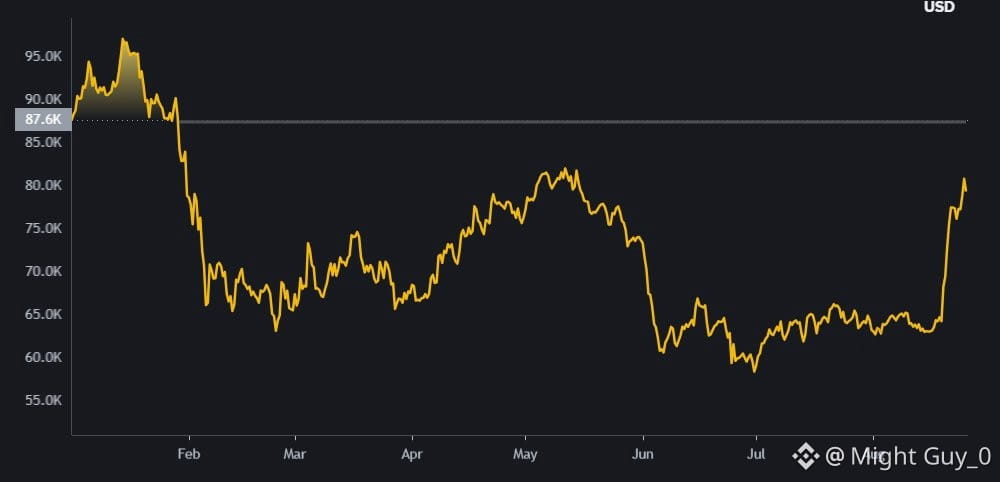
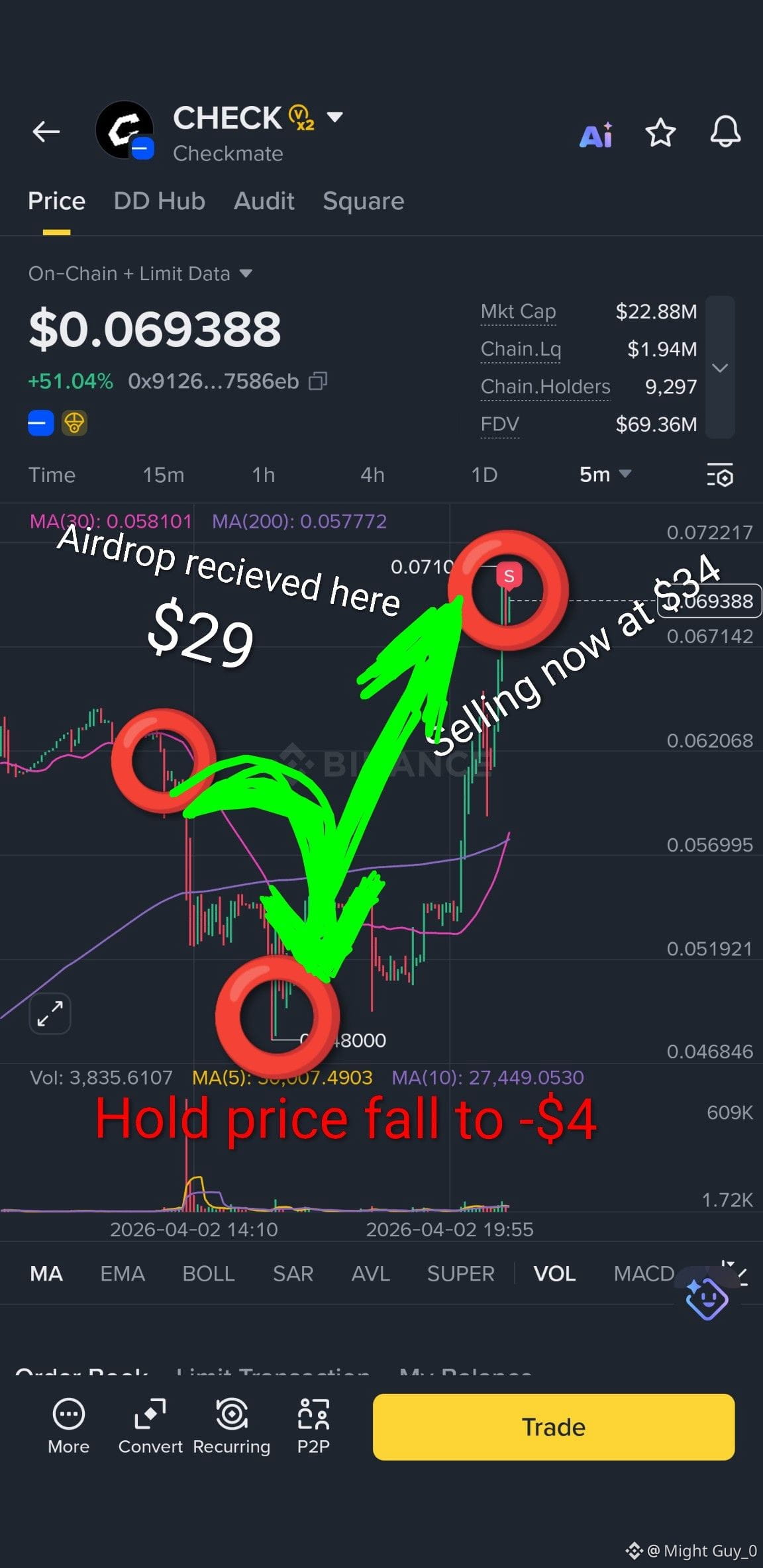
Yesterday i was -50$. Today i am plus +100$ Because - 1. I didn’t panic 2. I brought the dip Again! And most important, I was trading in SPOT! #BTCRebound90kNext?