

Renesh_
142 投稿

Renesh_
報告
ユーザーをブロック
取引を発注
高頻度トレーダー
2.1年
36 フォロー
32 フォロワー
74 いいね
投稿
ポートフォリオ
すべて
引用
·
--
翻訳参照
#baby $BABY @babylonlabs_io
Being a student and a beginner in crypto, I enjoy discovering technologies that could shape the future. Babylon Labs impressed me because it connects Bitcoin with Proof-of-Stake networks, allowing Bitcoin's strong security to protect other blockchains through staking. I think this could become an important innovation if blockchain adoption continues to grow. Rather than investing based on trends, I prefer understanding the project's purpose, technology, and long-term vision. Learning about Babylon Labs has made me realize that Bitcoin is not only a store of value but can also become an important security layer for many blockchain ecosystems in the future.
#baby $BABY @BabylonLabs_io
Being a student and a beginner in crypto, I enjoy discovering technologies that could shape the future. Babylon Labs impressed me because it connects Bitcoin with Proof-of-Stake networks, allowing Bitcoin's strong security to protect other blockchains through staking. I think this could become an important innovation if blockchain adoption continues to grow. Rather than investing based on trends, I prefer understanding the project's purpose, technology, and long-term vision. Learning about Babylon Labs has made me realize that Bitcoin is not only a store of value but can also become an important security layer for many blockchain ecosystems in the future.
Being a student and a beginner in crypto, I enjoy discovering technologies that could shape the future. Babylon Labs impressed me because it connects Bitcoin with Proof-of-Stake networks, allowing Bitcoin's strong security to protect other blockchains through staking. I think this could become an important innovation if blockchain adoption continues to grow. Rather than investing based on trends, I prefer understanding the project's purpose, technology, and long-term vision. Learning about Babylon Labs has made me realize that Bitcoin is not only a store of value but can also become an important security layer for many blockchain ecosystems in the future.
86
·
--
翻訳参照
When I started learning about cryptocurrency, I realized that every successful investment begins with understanding the technology. Babylon Labs became one of the projects that genuinely interested me because it aims to extend Bitcoin's security to Proof-of-Stake blockchains using Bitcoin staking. This makes me think Bitcoin has much more potential than simply being a digital currency. As a student, I enjoy researching projects that focus on solving real blockchain challenges instead of creating hype. Whether I decide to invest or not, learning about Babylon Labs gives me confidence to understand crypto more deeply and build a stronger foundation for my future investment decisions.$BABY @babylonlabs_io #baby
When I started learning about cryptocurrency, I realized that every successful investment begins with understanding the technology. Babylon Labs became one of the projects that genuinely interested me because it aims to extend Bitcoin's security to Proof-of-Stake blockchains using Bitcoin staking. This makes me think Bitcoin has much more potential than simply being a digital currency. As a student, I enjoy researching projects that focus on solving real blockchain challenges instead of creating hype. Whether I decide to invest or not, learning about Babylon Labs gives me confidence to understand crypto more deeply and build a stronger foundation for my future investment decisions.$BABY @BabylonLabs_io #baby
82
·
--
#baby
$BABY
@babylonlabs_io Babylon Labsは、信頼不要で自己保管型のビットコイン・ステーキングおよび担保プロトコルを構築するブロックチェーン基盤企業です。2022年にスタンフォード大学の教授デイヴィッド・ツェと、ミンチャオ・"フィッシャー"・ユー博士によって設立され、ビットコイン(BTC)を生産的で利回りを生むセキュリティ資産へと変えることで、分散型経済のセキュリティを拡張することを目指しています。コア技術&特徴
信頼不要のビットコイン・ステーキング:BTC保有者が自分のBTCをステークして、プルーフ・オブ・ステーク(PoS)ネットワーク、レイヤー2、ロールアップを保護できるようにします。
自己保管&ブリッジなし:ステークされたビットコインはネイティブのビットコイン・ネットワークから離れません。信頼できる第三者のカストディ、資産ラップ(ラッピング)、またはクロスチェーン・ブリッジの必要性を排除します。
暗号学的スラッシング:ビットコインのタップルート(Taproot)タイムロック・スクリプト、シュノア署名、および抽出可能なワンタイム署名(EOTS)を活用します。PoSネットワーク上でバリデータが悪意ある行為を行った場合、ステークされているネイティブのビットコインは、ビットコインのベース層で直接スラッシュ可能です。
信頼不要のビットコイン・ボールト(BTCVaults):ユーザーがネイティブのビットコインを担保として差し入れ、保管権を手放すことなく、ネイティブに資産を借り入れできるようにするインフラです。
#baby
$BABY
@BabylonLabs_io Babylon Labsは、信頼不要で自己保管型のビットコイン・ステーキングおよび担保プロトコルを構築するブロックチェーン基盤企業です。2022年にスタンフォード大学の教授デイヴィッド・ツェと、ミンチャオ・"フィッシャー"・ユー博士によって設立され、ビットコイン(BTC)を生産的で利回りを生むセキュリティ資産へと変えることで、分散型経済のセキュリティを拡張することを目指しています。コア技術&特徴
信頼不要のビットコイン・ステーキング:BTC保有者が自分のBTCをステークして、プルーフ・オブ・ステーク(PoS)ネットワーク、レイヤー2、ロールアップを保護できるようにします。
自己保管&ブリッジなし:ステークされたビットコインはネイティブのビットコイン・ネットワークから離れません。信頼できる第三者のカストディ、資産ラップ(ラッピング)、またはクロスチェーン・ブリッジの必要性を排除します。
暗号学的スラッシング:ビットコインのタップルート(Taproot)タイムロック・スクリプト、シュノア署名、および抽出可能なワンタイム署名(EOTS)を活用します。PoSネットワーク上でバリデータが悪意ある行為を行った場合、ステークされているネイティブのビットコインは、ビットコインのベース層で直接スラッシュ可能です。
信頼不要のビットコイン・ボールト(BTCVaults):ユーザーがネイティブのビットコインを担保として差し入れ、保管権を手放すことなく、ネイティブに資産を借り入れできるようにするインフラです。
$BABY
@BabylonLabs_io Babylon Labsは、信頼不要で自己保管型のビットコイン・ステーキングおよび担保プロトコルを構築するブロックチェーン基盤企業です。2022年にスタンフォード大学の教授デイヴィッド・ツェと、ミンチャオ・"フィッシャー"・ユー博士によって設立され、ビットコイン(BTC)を生産的で利回りを生むセキュリティ資産へと変えることで、分散型経済のセキュリティを拡張することを目指しています。コア技術&特徴
信頼不要のビットコイン・ステーキング:BTC保有者が自分のBTCをステークして、プルーフ・オブ・ステーク(PoS)ネットワーク、レイヤー2、ロールアップを保護できるようにします。
自己保管&ブリッジなし:ステークされたビットコインはネイティブのビットコイン・ネットワークから離れません。信頼できる第三者のカストディ、資産ラップ(ラッピング)、またはクロスチェーン・ブリッジの必要性を排除します。
暗号学的スラッシング:ビットコインのタップルート(Taproot)タイムロック・スクリプト、シュノア署名、および抽出可能なワンタイム署名(EOTS)を活用します。PoSネットワーク上でバリデータが悪意ある行為を行った場合、ステークされているネイティブのビットコインは、ビットコインのベース層で直接スラッシュ可能です。
信頼不要のビットコイン・ボールト(BTCVaults):ユーザーがネイティブのビットコインを担保として差し入れ、保管権を手放すことなく、ネイティブに資産を借り入れできるようにするインフラです。
2
1
92
·
--
私はビットコインを諦めかけました……でも、別の見方を見つけました。
数か月前、私はただ座って、BTCがウォレットの中でそのまま触れられない状態を見ていました。私は長期でビットコインを信じていましたが、同時に考えていました……不要なリスクを取らずに、BTCをもっと役立つ形にする、より安全な方法はあるのだろうか?
いろいろな利回り(イールド)の選択肢を調べてみましたが、正直、多くの解決策ではブリッジが必要だったり、ラップド・アセット(ラップ資産)を使ったり、ある程度のコントロールを手放さなければならなかったりしました。暗号資産にはセキュリティ上の問題が多すぎるのを見てきたので、そうしたリスクを取るのには抵抗がありました。
そして、@Babylonを見つけました。
私の関心を引いたのは、自分のBTCを自分で管理しながら、ネイティブのビットコインを使うという考えです。ラップされたバージョンに頼ったり、複雑な近道を使ったりする必要はありません。
そして、ここでBABYが登場します。
BABYは単なるトークン名ではありません。Babylonエコシステムの中で重要な役割を担い、次のことを支えています:
ネットワークの運用とトランザクション
ビットコインのステーキング・メカニズムによるセキュリティ
コミュニティのガバナンス
BTCはこれまで、価値の保存(ストア・オブ・バリュー)として知られてきました。 でも、そのコアとなる原則を保ったまま、もっと有用になれるとしたらどうでしょう?
そのビジョンこそが、@Babylonを注目して見守る価値を感じさせます。
気になります:
あなたはBTCを長期の保有(ホールド)だけとして持ち続けていますか?それとも、ビットコインには将来的にもっと多くのユーティリティ(活用価値)があると信じていますか?
話し合いましょう
#baby #CLARITYActToReward WhiteHatHackers
$BABY
{spot}(BABYUSDT)
{alpha}(560x01bf3d77cd08b19bf3f2309972123a2cca0f6936)
{spot}(BTCUSDT)
@babylonlabs_io
$AA
私はビットコインを諦めかけました……でも、別の見方を見つけました。
数か月前、私はただ座って、BTCがウォレットの中でそのまま触れられない状態を見ていました。私は長期でビットコインを信じていましたが、同時に考えていました……不要なリスクを取らずに、BTCをもっと役立つ形にする、より安全な方法はあるのだろうか?
いろいろな利回り(イールド)の選択肢を調べてみましたが、正直、多くの解決策ではブリッジが必要だったり、ラップド・アセット(ラップ資産)を使ったり、ある程度のコントロールを手放さなければならなかったりしました。暗号資産にはセキュリティ上の問題が多すぎるのを見てきたので、そうしたリスクを取るのには抵抗がありました。
そして、@Babylonを見つけました。
私の関心を引いたのは、自分のBTCを自分で管理しながら、ネイティブのビットコインを使うという考えです。ラップされたバージョンに頼ったり、複雑な近道を使ったりする必要はありません。
そして、ここでBABYが登場します。
BABYは単なるトークン名ではありません。Babylonエコシステムの中で重要な役割を担い、次のことを支えています:
ネットワークの運用とトランザクション
ビットコインのステーキング・メカニズムによるセキュリティ
コミュニティのガバナンス
BTCはこれまで、価値の保存(ストア・オブ・バリュー)として知られてきました。 でも、そのコアとなる原則を保ったまま、もっと有用になれるとしたらどうでしょう?
そのビジョンこそが、@Babylonを注目して見守る価値を感じさせます。
気になります:
あなたはBTCを長期の保有(ホールド)だけとして持ち続けていますか?それとも、ビットコインには将来的にもっと多くのユーティリティ(活用価値)があると信じていますか?
話し合いましょう
#baby #CLARITYActToReward WhiteHatHackers
$BABY
@BabylonLabs_io
$AA
数か月前、私はただ座って、BTCがウォレットの中でそのまま触れられない状態を見ていました。私は長期でビットコインを信じていましたが、同時に考えていました……不要なリスクを取らずに、BTCをもっと役立つ形にする、より安全な方法はあるのだろうか?
いろいろな利回り(イールド)の選択肢を調べてみましたが、正直、多くの解決策ではブリッジが必要だったり、ラップド・アセット(ラップ資産)を使ったり、ある程度のコントロールを手放さなければならなかったりしました。暗号資産にはセキュリティ上の問題が多すぎるのを見てきたので、そうしたリスクを取るのには抵抗がありました。
そして、@Babylonを見つけました。
私の関心を引いたのは、自分のBTCを自分で管理しながら、ネイティブのビットコインを使うという考えです。ラップされたバージョンに頼ったり、複雑な近道を使ったりする必要はありません。
そして、ここでBABYが登場します。
BABYは単なるトークン名ではありません。Babylonエコシステムの中で重要な役割を担い、次のことを支えています:
ネットワークの運用とトランザクション
ビットコインのステーキング・メカニズムによるセキュリティ
コミュニティのガバナンス
BTCはこれまで、価値の保存(ストア・オブ・バリュー)として知られてきました。 でも、そのコアとなる原則を保ったまま、もっと有用になれるとしたらどうでしょう?
そのビジョンこそが、@Babylonを注目して見守る価値を感じさせます。
気になります:
あなたはBTCを長期の保有(ホールド)だけとして持ち続けていますか?それとも、ビットコインには将来的にもっと多くのユーティリティ(活用価値)があると信じていますか?
話し合いましょう
#baby #CLARITYActToReward WhiteHatHackers
$BABY
@BabylonLabs_io
$AA
1
80
·
--
バビロン・ラボについて学んでいて、私の考えをお伝えします。
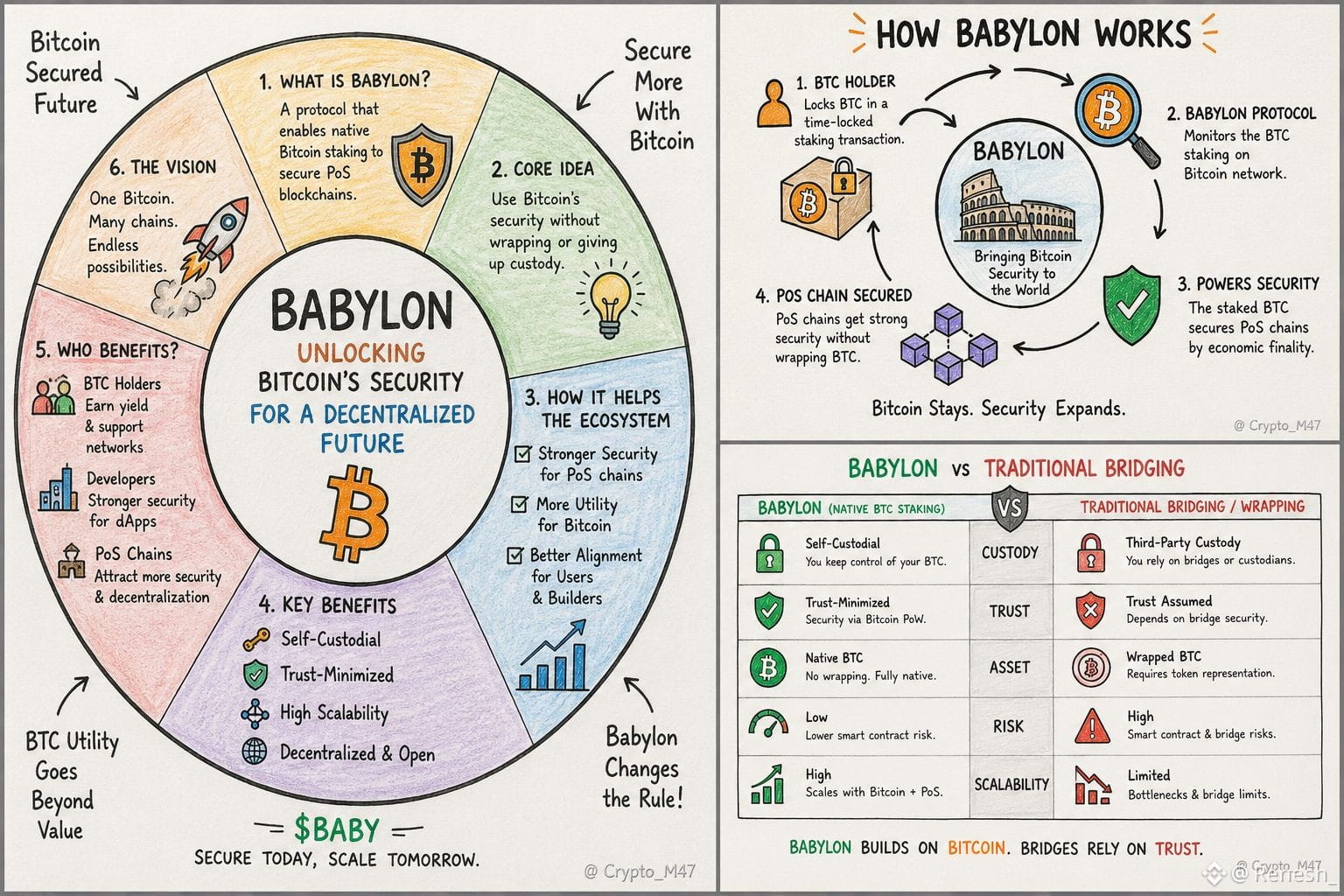
バビロンは、ビットコインを単に保有するだけでなく、より実用的にしようとしています。BTCを単なる価値の保存手段として保管するのではなく、ユーザーが自分のコインを自分で管理したまま、ビットコインがプルーフ・オブ・ステーク(PoS)ブロックチェーンのセキュリティ向上に役立つ方法を探求しています。この考えが好きなのは、ビットコインにもう一つ現実的な用途が生まれるからです。より多くのブロックチェーンやユーザーがこの技術を採用すれば、バビロンは暗号資産エコシステムの重要な一部になり得ると思います。それが、私がBABYトークンを追っている理由のひとつです。未来は誰にもわかりませんが、実際の技術と実用性を備えたプロジェクトには、長期的な成長の可能性が高いと私は考えています。*(これは私個人の意見であり、金融助言ではありません。)*
@babylonlabs_io $BABY #baby
バビロン・ラボについて学んでいて、私の考えをお伝えします。
バビロンは、ビットコインを単に保有するだけでなく、より実用的にしようとしています。BTCを単なる価値の保存手段として保管するのではなく、ユーザーが自分のコインを自分で管理したまま、ビットコインがプルーフ・オブ・ステーク(PoS)ブロックチェーンのセキュリティ向上に役立つ方法を探求しています。この考えが好きなのは、ビットコインにもう一つ現実的な用途が生まれるからです。より多くのブロックチェーンやユーザーがこの技術を採用すれば、バビロンは暗号資産エコシステムの重要な一部になり得ると思います。それが、私がBABYトークンを追っている理由のひとつです。未来は誰にもわかりませんが、実際の技術と実用性を備えたプロジェクトには、長期的な成長の可能性が高いと私は考えています。*(これは私個人の意見であり、金融助言ではありません。)*
@BabylonLabs_io $BABY #baby
バビロンは、ビットコインを単に保有するだけでなく、より実用的にしようとしています。BTCを単なる価値の保存手段として保管するのではなく、ユーザーが自分のコインを自分で管理したまま、ビットコインがプルーフ・オブ・ステーク(PoS)ブロックチェーンのセキュリティ向上に役立つ方法を探求しています。この考えが好きなのは、ビットコインにもう一つ現実的な用途が生まれるからです。より多くのブロックチェーンやユーザーがこの技術を採用すれば、バビロンは暗号資産エコシステムの重要な一部になり得ると思います。それが、私がBABYトークンを追っている理由のひとつです。未来は誰にもわかりませんが、実際の技術と実用性を備えたプロジェクトには、長期的な成長の可能性が高いと私は考えています。*(これは私個人の意見であり、金融助言ではありません。)*
@BabylonLabs_io $BABY #baby
1
2
30
·
--
ここ数日、バビロンについて学んできました。
気づいたことの一つは、プロジェクトの長期的な成功は、そのトークン価格だけで決まるわけではないということです。
コミュニティ、開発者、セキュリティ、そして現実世界での実用性も、同じくらい重要です。
今後数年でバビロンがこれらの分野でどのように機能するのかを見るのが楽しみです。@babylonlabs_io
$BABY #baby
ここ数日、バビロンについて学んできました。
気づいたことの一つは、プロジェクトの長期的な成功は、そのトークン価格だけで決まるわけではないということです。
コミュニティ、開発者、セキュリティ、そして現実世界での実用性も、同じくらい重要です。
今後数年でバビロンがこれらの分野でどのように機能するのかを見るのが楽しみです。@BabylonLabs_io
$BABY #baby
気づいたことの一つは、プロジェクトの長期的な成功は、そのトークン価格だけで決まるわけではないということです。
コミュニティ、開発者、セキュリティ、そして現実世界での実用性も、同じくらい重要です。
今後数年でバビロンがこれらの分野でどのように機能するのかを見るのが楽しみです。@BabylonLabs_io
$BABY #baby
📈 Utility matters most
50%
🔒 Security matters most
0%
👥 Community matters most
0%
💰 Price matters most
50%
2 投票 • 投票は終了しました
2
51
·
--
ビットコインは複数のブロックチェーンのセキュリティ層になり得ると思いますか?
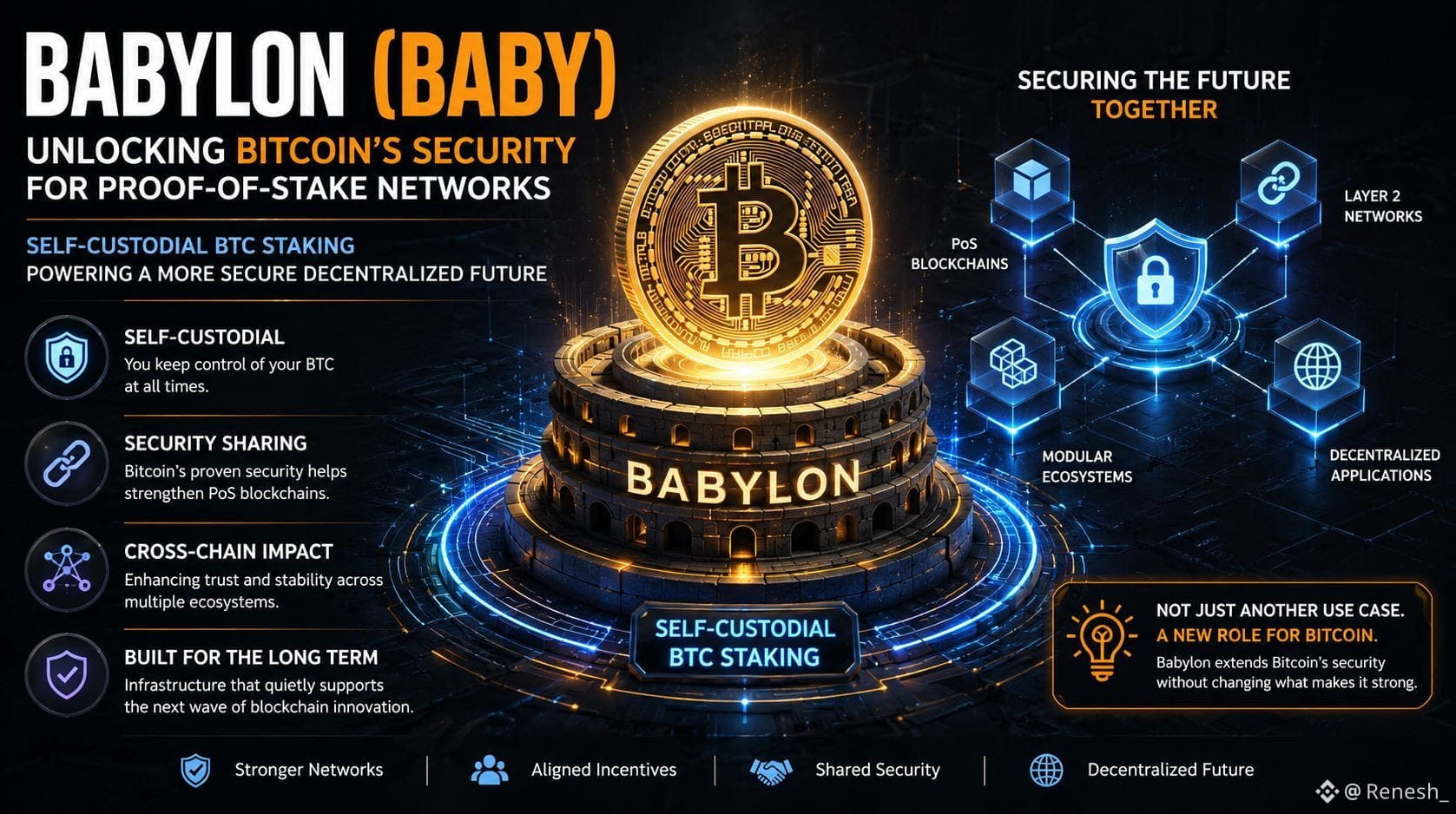
Babylonは、BTCを自己保管のまま維持しつつ、そのビジョンに向けて取り組んでいます。
あなたの意見を下に共有してください!👇
@babylonlabs_io $BABY #baby #CryptoDiscussions
ビットコインは複数のブロックチェーンのセキュリティ層になり得ると思いますか?
Babylonは、BTCを自己保管のまま維持しつつ、そのビジョンに向けて取り組んでいます。
あなたの意見を下に共有してください!👇
@BabylonLabs_io $BABY #baby #CryptoDiscussions
Babylonは、BTCを自己保管のまま維持しつつ、そのビジョンに向けて取り組んでいます。
あなたの意見を下に共有してください!👇
@BabylonLabs_io $BABY #baby #CryptoDiscussions
2
58
·
--
#baby $BABY @babylonlabs_io
Babylon Labsは、Bitcoin保有者がBTCを別のブロックチェーンやカストディ(預託機関)に移すことなくステーキングできるようにするブロックチェーン基盤プロジェクトです。BabylonのBitcoinステーキングプロトコルは、ユーザーが自分のBitcoinを管理し続けながら、Proof-of-Stake(PoS)ネットワークのセキュリティを強化するのに役立ちます。このアプローチは、より広範な分散型エコシステムに対して、Bitcoinのセキュリティと流動性の活用を可能にすることを目指しています。Babylonはまた、複数のブロックチェーン間での信頼性を高めるために、Bitcoinのタイムスタンピングと共有セキュリティにも注力しています。同プロジェクトは著名な投資家から支援を受けており、暗号資産コミュニティから強い関心を集めています。ネイティブトークンのBABYは、プロトコルの拡大に伴い、ガバナンス、ネットワークインセンティブ、エコシステム参加を支えます。
#baby $BABY @BabylonLabs_io
Babylon Labsは、Bitcoin保有者がBTCを別のブロックチェーンやカストディ(預託機関)に移すことなくステーキングできるようにするブロックチェーン基盤プロジェクトです。BabylonのBitcoinステーキングプロトコルは、ユーザーが自分のBitcoinを管理し続けながら、Proof-of-Stake(PoS)ネットワークのセキュリティを強化するのに役立ちます。このアプローチは、より広範な分散型エコシステムに対して、Bitcoinのセキュリティと流動性の活用を可能にすることを目指しています。Babylonはまた、複数のブロックチェーン間での信頼性を高めるために、Bitcoinのタイムスタンピングと共有セキュリティにも注力しています。同プロジェクトは著名な投資家から支援を受けており、暗号資産コミュニティから強い関心を集めています。ネイティブトークンのBABYは、プロトコルの拡大に伴い、ガバナンス、ネットワークインセンティブ、エコシステム参加を支えます。
Babylon Labsは、Bitcoin保有者がBTCを別のブロックチェーンやカストディ(預託機関)に移すことなくステーキングできるようにするブロックチェーン基盤プロジェクトです。BabylonのBitcoinステーキングプロトコルは、ユーザーが自分のBitcoinを管理し続けながら、Proof-of-Stake(PoS)ネットワークのセキュリティを強化するのに役立ちます。このアプローチは、より広範な分散型エコシステムに対して、Bitcoinのセキュリティと流動性の活用を可能にすることを目指しています。Babylonはまた、複数のブロックチェーン間での信頼性を高めるために、Bitcoinのタイムスタンピングと共有セキュリティにも注力しています。同プロジェクトは著名な投資家から支援を受けており、暗号資産コミュニティから強い関心を集めています。ネイティブトークンのBABYは、プロトコルの拡大に伴い、ガバナンス、ネットワークインセンティブ、エコシステム参加を支えます。
2
79
·
--
バビロンは、ビットコインを受動的な価値の保存手段から能動的なセキュリティ・アセットへと変える、先進的な分散型プロトコルです。ネイティブで非カストディアルなビットコイン・ステーキングを導入し、BTC保有者が外部のプルーフ・オブ・ステーク(PoS)ブロックチェーンをセキュアにしつつ、利回りを獲得できるようにします。
CoinMarketCap
主な仕組み
ブリッジやラッピングは不要:従来のBTC-DeFiプロジェクトとは異なり、ユーザーは資産をラップトトークン(wBTCなど)に変換したり、他ネットワークへブリッジしたりする必要がありません。BTCはネイティブのビットコイン・ネットワーク上で、ユーザー自身のセルフカストディウォレット内に安全に保たれます。
暗号学的セキュリティ:バビロンは、タップルートのタイムロック・スクリプトやExtractable One-Time Signatures(EOTS)など、ビットコインのネイティブ機能を活用して資産をロックします。バリデータが悪意のある行為をした場合、プロトコルは自動的なスラッシング(没収)メカニズムによって厳格な説明責任を強制します。
Hex Trust
BABYトークン:ネットワークは独自のレイヤー1のコントロールプレーン「Babylon Genesis」で稼働します。$BABY(ネイティブのユーティリティトークン)を原動力とするデュアル・ステーキングモデルを備え、ガス手数料、ガバナンス、ステークされたBTCと並ぶ形でエコシステムをセキュアにするために用いられます。
ビットコインの数十億ドル規模の経済的な重みを、より広範な分散型経済をセキュアにするためにスケールさせることで、バビロンは進化するBTCFiエコシステムのための基盤となるインフラ層として位置づけられます。
さらに深掘りしたい場合は、教えてください:
BTCステーキングの手順をステップごとに案内しましょうか?
EOTSのスラッシング・メカニズムの技術的な詳細に興味はありますか?
AIの回答には誤りが含まれる可能性があります。金融アドバイスについては専門家にご相談ください。もっと見る
ビットコインは金融、フィンテック、ビジネスを再構築しています。10年あまりの間に、ビットコインは一部の人々の発想から世界的な金融へと進化してきました...
LinkedIn
AIエージェントが静かに次のビットコイン普及エンジンになるかもしれない
2026年4月20日 — ビットコインが常に最初の接点であるとは限らないとしても、こうしたシステムが時間の経過とともに統合していく中で、ますますアンカー資産になっていきます。
#baby
$BABY
@babylonlabs_io
バビロンは、ビットコインを受動的な価値の保存手段から能動的なセキュリティ・アセットへと変える、先進的な分散型プロトコルです。ネイティブで非カストディアルなビットコイン・ステーキングを導入し、BTC保有者が外部のプルーフ・オブ・ステーク(PoS)ブロックチェーンをセキュアにしつつ、利回りを獲得できるようにします。
CoinMarketCap
主な仕組み
ブリッジやラッピングは不要:従来のBTC-DeFiプロジェクトとは異なり、ユーザーは資産をラップトトークン(wBTCなど)に変換したり、他ネットワークへブリッジしたりする必要がありません。BTCはネイティブのビットコイン・ネットワーク上で、ユーザー自身のセルフカストディウォレット内に安全に保たれます。
暗号学的セキュリティ:バビロンは、タップルートのタイムロック・スクリプトやExtractable One-Time Signatures(EOTS)など、ビットコインのネイティブ機能を活用して資産をロックします。バリデータが悪意のある行為をした場合、プロトコルは自動的なスラッシング(没収)メカニズムによって厳格な説明責任を強制します。
Hex Trust
BABYトークン:ネットワークは独自のレイヤー1のコントロールプレーン「Babylon Genesis」で稼働します。$BABY (ネイティブのユーティリティトークン)を原動力とするデュアル・ステーキングモデルを備え、ガス手数料、ガバナンス、ステークされたBTCと並ぶ形でエコシステムをセキュアにするために用いられます。
ビットコインの数十億ドル規模の経済的な重みを、より広範な分散型経済をセキュアにするためにスケールさせることで、バビロンは進化するBTCFiエコシステムのための基盤となるインフラ層として位置づけられます。
さらに深掘りしたい場合は、教えてください:
BTCステーキングの手順をステップごとに案内しましょうか?
EOTSのスラッシング・メカニズムの技術的な詳細に興味はありますか?
AIの回答には誤りが含まれる可能性があります。金融アドバイスについては専門家にご相談ください。もっと見る
ビットコインは金融、フィンテック、ビジネスを再構築しています。10年あまりの間に、ビットコインは一部の人々の発想から世界的な金融へと進化してきました...
LinkedIn
AIエージェントが静かに次のビットコイン普及エンジンになるかもしれない
2026年4月20日 — ビットコインが常に最初の接点であるとは限らないとしても、こうしたシステムが時間の経過とともに統合していく中で、ますますアンカー資産になっていきます。
#baby
$BABY
@BabylonLabs_io
CoinMarketCap
主な仕組み
ブリッジやラッピングは不要:従来のBTC-DeFiプロジェクトとは異なり、ユーザーは資産をラップトトークン(wBTCなど)に変換したり、他ネットワークへブリッジしたりする必要がありません。BTCはネイティブのビットコイン・ネットワーク上で、ユーザー自身のセルフカストディウォレット内に安全に保たれます。
暗号学的セキュリティ:バビロンは、タップルートのタイムロック・スクリプトやExtractable One-Time Signatures(EOTS)など、ビットコインのネイティブ機能を活用して資産をロックします。バリデータが悪意のある行為をした場合、プロトコルは自動的なスラッシング(没収)メカニズムによって厳格な説明責任を強制します。
Hex Trust
BABYトークン:ネットワークは独自のレイヤー1のコントロールプレーン「Babylon Genesis」で稼働します。$BABY (ネイティブのユーティリティトークン)を原動力とするデュアル・ステーキングモデルを備え、ガス手数料、ガバナンス、ステークされたBTCと並ぶ形でエコシステムをセキュアにするために用いられます。
ビットコインの数十億ドル規模の経済的な重みを、より広範な分散型経済をセキュアにするためにスケールさせることで、バビロンは進化するBTCFiエコシステムのための基盤となるインフラ層として位置づけられます。
さらに深掘りしたい場合は、教えてください:
BTCステーキングの手順をステップごとに案内しましょうか?
EOTSのスラッシング・メカニズムの技術的な詳細に興味はありますか?
AIの回答には誤りが含まれる可能性があります。金融アドバイスについては専門家にご相談ください。もっと見る
ビットコインは金融、フィンテック、ビジネスを再構築しています。10年あまりの間に、ビットコインは一部の人々の発想から世界的な金融へと進化してきました...
AIエージェントが静かに次のビットコイン普及エンジンになるかもしれない
2026年4月20日 — ビットコインが常に最初の接点であるとは限らないとしても、こうしたシステムが時間の経過とともに統合していく中で、ますますアンカー資産になっていきます。
#baby
$BABY
@BabylonLabs_io
2
28
·
--
暗号資産とは?簡単な説明 🐾AIモード
すべて
画像
動画
ニュース
地図
ショッピング
書籍
フライト
金融
8サイト
Babylonは、ビットコインを受動的な価値保存(ストア・オブ・バリュー)から能動的なセキュリティ資産へと変える、代表的な分散型プロトコルです。ネイティブの、非カストディ(自己管理)型ビットコイン・ステーキングを導入し、BTC保有者が外部のProof-of-Stake(PoS)ブロックチェーンを確保(セキュリティ提供)し、利回りを得られるようにします。
CoinMarketCap
主要メカニズム
ブリッジなし・ラップなし:従来のBTC-DeFiプロジェクトとは異なり、ユーザーは自分の資産をラップトークン(wBTCのようなもの)に変換したり、別ネットワークへブリッジしたりする必要がありません。BTCは、ネイティブのビットコイン・ネットワーク上で、ユーザー自身の自己カストディ・ウォレットの中に安全に保たれます。
暗号資産とは?簡単な説明 🐾
AIモード
すべて
画像
動画
ニュース
地図
ショッピング
書籍
フライト
金融
8サイト
Babylonは、ビットコインを受動的な価値保存(ストア・オブ・バリュー)から能動的なセキュリティ資産へと変える、代表的な分散型プロトコルです。ネイティブの、非カストディ(自己管理)型ビットコイン・ステーキングを導入し、BTC保有者が外部のProof-of-Stake(PoS)ブロックチェーンを確保(セキュリティ提供)し、利回りを得られるようにします。
CoinMarketCap
主要メカニズム
ブリッジなし・ラップなし:従来のBTC-DeFiプロジェクトとは異なり、ユーザーは自分の資産をラップトークン(wBTCのようなもの)に変換したり、別ネットワークへブリッジしたりする必要がありません。BTCは、ネイティブのビットコイン・ネットワーク上で、ユーザー自身の自己カストディ・ウォレットの中に安全に保たれます。
すべて
画像
動画
ニュース
地図
ショッピング
書籍
フライト
金融
8サイト
Babylonは、ビットコインを受動的な価値保存(ストア・オブ・バリュー)から能動的なセキュリティ資産へと変える、代表的な分散型プロトコルです。ネイティブの、非カストディ(自己管理)型ビットコイン・ステーキングを導入し、BTC保有者が外部のProof-of-Stake(PoS)ブロックチェーンを確保(セキュリティ提供)し、利回りを得られるようにします。
CoinMarketCap
主要メカニズム
ブリッジなし・ラップなし:従来のBTC-DeFiプロジェクトとは異なり、ユーザーは自分の資産をラップトークン(wBTCのようなもの)に変換したり、別ネットワークへブリッジしたりする必要がありません。BTCは、ネイティブのビットコイン・ネットワーク上で、ユーザー自身の自己カストディ・ウォレットの中に安全に保たれます。
1
1
52
·
--
翻訳参照
#baby $BABY @babylonlabs_io
Babylon is a leading decentralized protocol that transforms Bitcoin from a passive store of value into an active security asset. It introduces native, non-custodial Bitcoin staking, allowing BTC holders to secure external Proof-of-Stake (PoS) blockchains and earn yields.
CoinMarketCap
Key Mechanics
No Bridges or Wrapping: Unlike traditional BTC-DeFi projects, users do not need to convert their assets into wrapped tokens (like wBTC) or bridge them to other networks. BTC remains securely inside the user’s self-custodial wallet on the native Bitcoin network.
Cryptographic Security: Babylon utilizes Bitcoin's native features—such as Taproot time-locked scripts and Extractable One-Time Signatures (EOTS)—to lock assets. If a validator acts maliciously, the protocol enforces strict accountability via automated slashing mechanics.
Hex Trust
The BABY Token: The network runs on its own Layer-1 control plane, Babylon Genesis. It features a dual-staking model powered by $BABY, its native utility token used for gas fees, governance, and securing the ecosystem alongside staked BTC.
By scaling Bitcoin’s multi-billion-dollar economic weight to secure the broader decentralized economy, Babylon positions itself as a foundational infrastructure layer for the evolving BTCFi ecosystem.
#baby $BABY @BabylonLabs_io
Babylon is a leading decentralized protocol that transforms Bitcoin from a passive store of value into an active security asset. It introduces native, non-custodial Bitcoin staking, allowing BTC holders to secure external Proof-of-Stake (PoS) blockchains and earn yields.
CoinMarketCap
Key Mechanics
No Bridges or Wrapping: Unlike traditional BTC-DeFi projects, users do not need to convert their assets into wrapped tokens (like wBTC) or bridge them to other networks. BTC remains securely inside the user’s self-custodial wallet on the native Bitcoin network.
Cryptographic Security: Babylon utilizes Bitcoin's native features—such as Taproot time-locked scripts and Extractable One-Time Signatures (EOTS)—to lock assets. If a validator acts maliciously, the protocol enforces strict accountability via automated slashing mechanics.
Hex Trust
The BABY Token: The network runs on its own Layer-1 control plane, Babylon Genesis. It features a dual-staking model powered by $BABY , its native utility token used for gas fees, governance, and securing the ecosystem alongside staked BTC.
By scaling Bitcoin’s multi-billion-dollar economic weight to secure the broader decentralized economy, Babylon positions itself as a foundational infrastructure layer for the evolving BTCFi ecosystem.
Babylon is a leading decentralized protocol that transforms Bitcoin from a passive store of value into an active security asset. It introduces native, non-custodial Bitcoin staking, allowing BTC holders to secure external Proof-of-Stake (PoS) blockchains and earn yields.
CoinMarketCap
Key Mechanics
No Bridges or Wrapping: Unlike traditional BTC-DeFi projects, users do not need to convert their assets into wrapped tokens (like wBTC) or bridge them to other networks. BTC remains securely inside the user’s self-custodial wallet on the native Bitcoin network.
Cryptographic Security: Babylon utilizes Bitcoin's native features—such as Taproot time-locked scripts and Extractable One-Time Signatures (EOTS)—to lock assets. If a validator acts maliciously, the protocol enforces strict accountability via automated slashing mechanics.
Hex Trust
The BABY Token: The network runs on its own Layer-1 control plane, Babylon Genesis. It features a dual-staking model powered by $BABY , its native utility token used for gas fees, governance, and securing the ecosystem alongside staked BTC.
By scaling Bitcoin’s multi-billion-dollar economic weight to secure the broader decentralized economy, Babylon positions itself as a foundational infrastructure layer for the evolving BTCFi ecosystem.
2
56
·
--
#baby $BABY @babylonlabs_io バビロンは、分散型プロトコルであり、ネイティブのビットコイン保有者がBTCをビットコインのブロックチェーン上に直接ステーキングして、外部のプルーフ・オブ・ステーク(PoS)ネットワークを保護できるようにします。Babylon Labsによって開発されたこのインフラは、アイドル状態のBTCを生産的な担保へと変換し、ビットコインの資本効率の低さという課題を解決します。従来の分散型金融(DeFi)ソリューションとは異なり、Babylonは、信頼不要でノンカストディアルなモデルを採用しています。ユーザーは、BTCを中間トークンでラップしたり、リスクの高いクロスチェーン・ブリッジを介して資産を移転したりする必要はありません。代わりに、ビットコインは自己保管型(セルフカストディアル)のスクリプトによってネイティブのネットワーク上に安全にロックされたまま、ステーキング報酬を得ます。エコシステムは、CosmosベースのBabylon Genesis Layer-1チェーンによって運用されています。ネイティブのビットコインと、プロトコルのユーティリティ・アセットであるBABYトークンの両方を用いるデュアル・ステーキング・モデルを備えています。さらにBABYトークンはネットワークのガス料金とガバナンスも担い、ビットコインのセキュリティを広範な分散型経済を守るために効果的にスケールさせています。さらに深く知りたい場合は、次の点について一緒に掘り下げたいかどうか教えてください:ビットコイン上でスマートコントラクトなしに、スラッシング(削減)の仕組みがどのように機能するのか。自己保管型ウォレットを使ってBTCまたはBABYをステーキングする正確な手順。外部のPoSチェーンがBabylonとどのように統合し、ビットコインのセキュリティを継承するのか。
#baby $BABY @BabylonLabs_io バビロンは、分散型プロトコルであり、ネイティブのビットコイン保有者がBTCをビットコインのブロックチェーン上に直接ステーキングして、外部のプルーフ・オブ・ステーク(PoS)ネットワークを保護できるようにします。Babylon Labsによって開発されたこのインフラは、アイドル状態のBTCを生産的な担保へと変換し、ビットコインの資本効率の低さという課題を解決します。従来の分散型金融(DeFi)ソリューションとは異なり、Babylonは、信頼不要でノンカストディアルなモデルを採用しています。ユーザーは、BTCを中間トークンでラップしたり、リスクの高いクロスチェーン・ブリッジを介して資産を移転したりする必要はありません。代わりに、ビットコインは自己保管型(セルフカストディアル)のスクリプトによってネイティブのネットワーク上に安全にロックされたまま、ステーキング報酬を得ます。エコシステムは、CosmosベースのBabylon Genesis Layer-1チェーンによって運用されています。ネイティブのビットコインと、プロトコルのユーティリティ・アセットであるBABYトークンの両方を用いるデュアル・ステーキング・モデルを備えています。さらにBABYトークンはネットワークのガス料金とガバナンスも担い、ビットコインのセキュリティを広範な分散型経済を守るために効果的にスケールさせています。さらに深く知りたい場合は、次の点について一緒に掘り下げたいかどうか教えてください:ビットコイン上でスマートコントラクトなしに、スラッシング(削減)の仕組みがどのように機能するのか。自己保管型ウォレットを使ってBTCまたはBABYをステーキングする正確な手順。外部のPoSチェーンがBabylonとどのように統合し、ビットコインのセキュリティを継承するのか。
1
2
51
·
--
翻訳参照
BEST campaign can earn upto 1000dollarss Go fastt!! and registerr
#baby $BABY @babylonlabs_io
Babylon Labs
Babylon Labs is a blockchain infrastructure project that enables Bitcoin holders to stake their BTC without transferring it to another blockchain or custodian. Its Bitcoin staking protocol helps secure Proof-of-Stake (PoS) networks while allowing users to keep control of their Bitcoin. This approach aims to unlock Bitcoin's security and liquidity for the broader decentralized ecosystem. Babylon also focuses on Bitcoin timestamping and shared security to improve trust across multiple blockchains. The project is backed by well-known investors and has attracted strong interest in the crypto community. Its native token, BABY, supports governance, network incentives, and ecosystem participation as the protocol continues to expand.
BEST campaign can earn upto 1000dollarss Go fastt!! and registerr
#baby $BABY @BabylonLabs_io
Babylon Labs
Babylon Labs is a blockchain infrastructure project that enables Bitcoin holders to stake their BTC without transferring it to another blockchain or custodian. Its Bitcoin staking protocol helps secure Proof-of-Stake (PoS) networks while allowing users to keep control of their Bitcoin. This approach aims to unlock Bitcoin's security and liquidity for the broader decentralized ecosystem. Babylon also focuses on Bitcoin timestamping and shared security to improve trust across multiple blockchains. The project is backed by well-known investors and has attracted strong interest in the crypto community. Its native token, BABY, supports governance, network incentives, and ecosystem participation as the protocol continues to expand.
#baby $BABY @BabylonLabs_io
Babylon Labs
Babylon Labs is a blockchain infrastructure project that enables Bitcoin holders to stake their BTC without transferring it to another blockchain or custodian. Its Bitcoin staking protocol helps secure Proof-of-Stake (PoS) networks while allowing users to keep control of their Bitcoin. This approach aims to unlock Bitcoin's security and liquidity for the broader decentralized ecosystem. Babylon also focuses on Bitcoin timestamping and shared security to improve trust across multiple blockchains. The project is backed by well-known investors and has attracted strong interest in the crypto community. Its native token, BABY, supports governance, network incentives, and ecosystem participation as the protocol continues to expand.
2
76
·
--
#baby $BABY @babylonlabs_io
バビロン・ラボ
バビロン・ラボは、ビットコイン保有者がBTCを別のブロックチェーンやカストディアンに移さずにステーキングできるようにする、ブロックチェーン・インフラストラクチャ・プロジェクトです。そのビットコイン・ステーキング・プロトコルは、ユーザーがビットコインを管理下に保ちながら、プルーフ・オブ・ステーク(PoS)ネットワークを保護するのに役立ちます。このアプローチは、ビットコインのセキュリティと流動性を、より広範な分散型エコシステムのために解放することを目指しています。バビロンはまた、ビットコインのタイムスタンプと共有セキュリティにも注力し、複数のブロックチェーン間での信頼性を高めます。同プロジェクトは著名な投資家の支援を受けており、暗号資産コミュニティから強い関心を集めています。ネイティブトークンのBABYは、プロトコルが拡大を続ける中で、ガバナンス、ネットワーク・インセンティブ、そしてエコシステムへの参加を支えます。
#baby $BABY @BabylonLabs_io
バビロン・ラボ
バビロン・ラボは、ビットコイン保有者がBTCを別のブロックチェーンやカストディアンに移さずにステーキングできるようにする、ブロックチェーン・インフラストラクチャ・プロジェクトです。そのビットコイン・ステーキング・プロトコルは、ユーザーがビットコインを管理下に保ちながら、プルーフ・オブ・ステーク(PoS)ネットワークを保護するのに役立ちます。このアプローチは、ビットコインのセキュリティと流動性を、より広範な分散型エコシステムのために解放することを目指しています。バビロンはまた、ビットコインのタイムスタンプと共有セキュリティにも注力し、複数のブロックチェーン間での信頼性を高めます。同プロジェクトは著名な投資家の支援を受けており、暗号資産コミュニティから強い関心を集めています。ネイティブトークンのBABYは、プロトコルが拡大を続ける中で、ガバナンス、ネットワーク・インセンティブ、そしてエコシステムへの参加を支えます。
バビロン・ラボ
バビロン・ラボは、ビットコイン保有者がBTCを別のブロックチェーンやカストディアンに移さずにステーキングできるようにする、ブロックチェーン・インフラストラクチャ・プロジェクトです。そのビットコイン・ステーキング・プロトコルは、ユーザーがビットコインを管理下に保ちながら、プルーフ・オブ・ステーク(PoS)ネットワークを保護するのに役立ちます。このアプローチは、ビットコインのセキュリティと流動性を、より広範な分散型エコシステムのために解放することを目指しています。バビロンはまた、ビットコインのタイムスタンプと共有セキュリティにも注力し、複数のブロックチェーン間での信頼性を高めます。同プロジェクトは著名な投資家の支援を受けており、暗号資産コミュニティから強い関心を集めています。ネイティブトークンのBABYは、プロトコルが拡大を続ける中で、ガバナンス、ネットワーク・インセンティブ、そしてエコシステムへの参加を支えます。
2
72
·
--
翻訳参照
Newton Protocol@NewtonProtocol #newt $NEWT Newton Protocol is a decentralized protocol designed to enable secure, verifiable, and automated on-chain actions using artificial intelligence (AI), smart contracts, and trusted execution technologies. Its primary goal is to allow users to delegate repetitive blockchain tasks to AI-powered agents without giving up control of their digital assets. Instead of relying on centralized services or manually executing transactions, Newton Protocol enables users to create programmable rules that AI agents can follow while ensuring that every action remains transparent, verifiable, and secure.
The protocol focuses on solving one of the biggest challenges in decentralized finance (DeFi): automation with trust. Many blockchain users regularly perform repetitive tasks such as token swaps, yield farming, portfolio rebalancing, staking, and liquidity management. Newton Protocol allows these activities to be automated through intelligent agents that execute transactions according to predefined conditions. This saves time, reduces human error, and improves efficiency while maintaining user ownership of funds.
A key feature of Newton Protocol is its emphasis on security. AI agents never receive unrestricted access to a user's wallet. Instead, permissions are limited by programmable policies defined by the user. Every transaction must satisfy these rules before execution. This permission-based architecture minimizes the risk of unauthorized asset transfers and ensures that automation remains under the user's control.
Newton Protocol also incorporates cryptographic verification and trusted execution environments (TEEs) to improve trustworthiness. These technologies help prove that AI agents execute code exactly as intended without tampering. As a result, users can verify that automated actions were performed honestly and according to the established rules, increasing confidence in AI-driven blockchain applications.
Another important aspect of Newton Protocol is interoperability. The protocol is designed to work across multiple blockchain networks, allowing AI agents to interact with different decentralized applications (dApps), wallets, and DeFi ecosystems. This cross-chain capability expands the range of automated strategies available to users and developers.
The native token of Newton Protocol plays an important role within the ecosystem. It is generally used for paying transaction fees, staking, governance participation, and incentivizing network contributors. Token holders may participate in protocol governance by voting on upgrades, parameter changes, and ecosystem development proposals. This decentralized governance model allows the community to influence the future direction of the protocol.
For developers, Newton Protocol provides tools and infrastructure to build AI-powered decentralized applications. Developers can create intelligent agents capable of monitoring market conditions, managing digital assets, executing complex workflows, or interacting with smart contracts automatically. This opens opportunities for innovative applications in DeFi, gaming, digital identity, payments, and enterprise blockchain solutions.
Overall, Newton Protocol represents an important step toward combining artificial intelligence with blockchain technology. By enabling secure, transparent, and programmable AI automation, it aims to make decentralized applications more efficient and user-friendly. As AI adoption continues to grow, protocols like Newton Protocol have the potential to transform how users interact with blockchain networks by reducing manual effort while preserving decentralization, transparency, and security. Its long-term success will depend on developer adoption, ecosystem growth, community governance, and its ability to maintain strong security standards in an increasingly competitive Web3 landscape.
Newton Protocol
@NewtonProtocol #newt $NEWT Newton Protocol is a decentralized protocol designed to enable secure, verifiable, and automated on-chain actions using artificial intelligence (AI), smart contracts, and trusted execution technologies. Its primary goal is to allow users to delegate repetitive blockchain tasks to AI-powered agents without giving up control of their digital assets. Instead of relying on centralized services or manually executing transactions, Newton Protocol enables users to create programmable rules that AI agents can follow while ensuring that every action remains transparent, verifiable, and secure.
The protocol focuses on solving one of the biggest challenges in decentralized finance (DeFi): automation with trust. Many blockchain users regularly perform repetitive tasks such as token swaps, yield farming, portfolio rebalancing, staking, and liquidity management. Newton Protocol allows these activities to be automated through intelligent agents that execute transactions according to predefined conditions. This saves time, reduces human error, and improves efficiency while maintaining user ownership of funds.
A key feature of Newton Protocol is its emphasis on security. AI agents never receive unrestricted access to a user's wallet. Instead, permissions are limited by programmable policies defined by the user. Every transaction must satisfy these rules before execution. This permission-based architecture minimizes the risk of unauthorized asset transfers and ensures that automation remains under the user's control.
Newton Protocol also incorporates cryptographic verification and trusted execution environments (TEEs) to improve trustworthiness. These technologies help prove that AI agents execute code exactly as intended without tampering. As a result, users can verify that automated actions were performed honestly and according to the established rules, increasing confidence in AI-driven blockchain applications.
Another important aspect of Newton Protocol is interoperability. The protocol is designed to work across multiple blockchain networks, allowing AI agents to interact with different decentralized applications (dApps), wallets, and DeFi ecosystems. This cross-chain capability expands the range of automated strategies available to users and developers.
The native token of Newton Protocol plays an important role within the ecosystem. It is generally used for paying transaction fees, staking, governance participation, and incentivizing network contributors. Token holders may participate in protocol governance by voting on upgrades, parameter changes, and ecosystem development proposals. This decentralized governance model allows the community to influence the future direction of the protocol.
For developers, Newton Protocol provides tools and infrastructure to build AI-powered decentralized applications. Developers can create intelligent agents capable of monitoring market conditions, managing digital assets, executing complex workflows, or interacting with smart contracts automatically. This opens opportunities for innovative applications in DeFi, gaming, digital identity, payments, and enterprise blockchain solutions.
Overall, Newton Protocol represents an important step toward combining artificial intelligence with blockchain technology. By enabling secure, transparent, and programmable AI automation, it aims to make decentralized applications more efficient and user-friendly. As AI adoption continues to grow, protocols like Newton Protocol have the potential to transform how users interact with blockchain networks by reducing manual effort while preserving decentralization, transparency, and security. Its long-term success will depend on developer adoption, ecosystem growth, community governance, and its ability to maintain strong security standards in an increasingly competitive Web3 landscape.
The protocol focuses on solving one of the biggest challenges in decentralized finance (DeFi): automation with trust. Many blockchain users regularly perform repetitive tasks such as token swaps, yield farming, portfolio rebalancing, staking, and liquidity management. Newton Protocol allows these activities to be automated through intelligent agents that execute transactions according to predefined conditions. This saves time, reduces human error, and improves efficiency while maintaining user ownership of funds.
A key feature of Newton Protocol is its emphasis on security. AI agents never receive unrestricted access to a user's wallet. Instead, permissions are limited by programmable policies defined by the user. Every transaction must satisfy these rules before execution. This permission-based architecture minimizes the risk of unauthorized asset transfers and ensures that automation remains under the user's control.
Newton Protocol also incorporates cryptographic verification and trusted execution environments (TEEs) to improve trustworthiness. These technologies help prove that AI agents execute code exactly as intended without tampering. As a result, users can verify that automated actions were performed honestly and according to the established rules, increasing confidence in AI-driven blockchain applications.
Another important aspect of Newton Protocol is interoperability. The protocol is designed to work across multiple blockchain networks, allowing AI agents to interact with different decentralized applications (dApps), wallets, and DeFi ecosystems. This cross-chain capability expands the range of automated strategies available to users and developers.
The native token of Newton Protocol plays an important role within the ecosystem. It is generally used for paying transaction fees, staking, governance participation, and incentivizing network contributors. Token holders may participate in protocol governance by voting on upgrades, parameter changes, and ecosystem development proposals. This decentralized governance model allows the community to influence the future direction of the protocol.
For developers, Newton Protocol provides tools and infrastructure to build AI-powered decentralized applications. Developers can create intelligent agents capable of monitoring market conditions, managing digital assets, executing complex workflows, or interacting with smart contracts automatically. This opens opportunities for innovative applications in DeFi, gaming, digital identity, payments, and enterprise blockchain solutions.
Overall, Newton Protocol represents an important step toward combining artificial intelligence with blockchain technology. By enabling secure, transparent, and programmable AI automation, it aims to make decentralized applications more efficient and user-friendly. As AI adoption continues to grow, protocols like Newton Protocol have the potential to transform how users interact with blockchain networks by reducing manual effort while preserving decentralization, transparency, and security. Its long-term success will depend on developer adoption, ecosystem growth, community governance, and its ability to maintain strong security standards in an increasingly competitive Web3 landscape.
1
57
·
--
翻訳参照
#newt $NEWT @NewtonProtocol
Newton Protocol is a decentralized blockchain infrastructure designed to enable secure, programmable, and verifiable transaction authorization. It allows developers and organizations to create custom policies for blockchain operations, such as identity verification, compliance checks, spending limits, and automated approvals. By combining cryptographic proofs with trusted execution technologies, Newton Protocol ensures these policies are enforced without compromising user privacy. The network supports AI agents, decentralized applications, digital wallets, and tokenized assets, making blockchain interactions safer and more efficient. Its native NEWT token is used for transaction fees, staking, network security, and governance. Newton Protocol aims to simplify secure automation while encouraging wider institutional and enterprise adoption of blockchain technology.
#newt $NEWT @NewtonProtocol
Newton Protocol is a decentralized blockchain infrastructure designed to enable secure, programmable, and verifiable transaction authorization. It allows developers and organizations to create custom policies for blockchain operations, such as identity verification, compliance checks, spending limits, and automated approvals. By combining cryptographic proofs with trusted execution technologies, Newton Protocol ensures these policies are enforced without compromising user privacy. The network supports AI agents, decentralized applications, digital wallets, and tokenized assets, making blockchain interactions safer and more efficient. Its native NEWT token is used for transaction fees, staking, network security, and governance. Newton Protocol aims to simplify secure automation while encouraging wider institutional and enterprise adoption of blockchain technology.
Newton Protocol is a decentralized blockchain infrastructure designed to enable secure, programmable, and verifiable transaction authorization. It allows developers and organizations to create custom policies for blockchain operations, such as identity verification, compliance checks, spending limits, and automated approvals. By combining cryptographic proofs with trusted execution technologies, Newton Protocol ensures these policies are enforced without compromising user privacy. The network supports AI agents, decentralized applications, digital wallets, and tokenized assets, making blockchain interactions safer and more efficient. Its native NEWT token is used for transaction fees, staking, network security, and governance. Newton Protocol aims to simplify secure automation while encouraging wider institutional and enterprise adoption of blockchain technology.
1
74
·
--
翻訳参照
Newton Protocol#newt $NEWT @NewtonProtocol
Newton Protocol is a decentralized protocol designed to enable secure, verifiable, and automated on-chain actions using artificial intelligence (AI), smart contracts, and trusted execution technologies. Its primary goal is to allow users to delegate repetitive blockchain tasks to AI-powered agents without giving up control of their digital assets. Instead of relying on centralized services or manually executing transactions, Newton Protocol enables users to create programmable rules that AI agents can follow while ensuring that every action remains transparent, verifiable, and secure.
The protocol focuses on solving one of the biggest challenges in decentralized finance (DeFi): automation with trust. Many blockchain users regularly perform repetitive tasks such as token swaps, yield farming, portfolio rebalancing, staking, and liquidity management. Newton Protocol allows these activities to be automated through intelligent agents that execute transactions according to predefined conditions. This saves time, reduces human error, and improves efficiency while maintaining user ownership of funds.
A key feature of Newton Protocol is its emphasis on security. AI agents never receive unrestricted access to a user's wallet. Instead, permissions are limited by programmable policies defined by the user. Every transaction must satisfy these rules before execution. This permission-based architecture minimizes the risk of unauthorized asset transfers and ensures that automation remains under the user's control.
Newton Protocol also incorporates cryptographic verification and trusted execution environments (TEEs) to improve trustworthiness. These technologies help prove that AI agents execute code exactly as intended without tampering. As a result, users can verify that automated actions were performed honestly and according to the established rules, increasing confidence in AI-driven blockchain applications.
Another important aspect of Newton Protocol is interoperability. The protocol is designed to work across multiple blockchain networks, allowing AI agents to interact with different decentralized applications (dApps), wallets, and DeFi ecosystems. This cross-chain capability expands the range of automated strategies available to users and developers.
The native token of Newton Protocol plays an important role within the ecosystem. It is generally used for paying transaction fees, staking, governance participation, and incentivizing network contributors. Token holders may participate in protocol governance by voting on upgrades, parameter changes, and ecosystem development proposals. This decentralized governance model allows the community to influence the future direction of the protocol.
For developers, Newton Protocol provides tools and infrastructure to build AI-powered decentralized applications. Developers can create intelligent agents capable of monitoring market conditions, managing digital assets, executing complex workflows, or interacting with smart contracts automatically. This opens opportunities for innovative applications in DeFi, gaming, digital identity, payments, and enterprise blockchain solutions.
Overall, Newton Protocol represents an important step toward combining artificial intelligence with blockchain technology. By enabling secure, transparent, and programmable AI automation, it aims to make decentralized applications more efficient and user-friendly. As AI adoption continues to grow, protocols like Newton Protocol have the potential to transform how users interact with blockchain networks by reducing manual effort while preserving decentralization, transparency, and security. Its long-term success will depend on developer adoption, ecosystem growth, community governance, and its ability to maintain strong security standards in an increasingly competitive Web3 landscape.@NewtonProtocol
Newton Protocol
#newt $NEWT @NewtonProtocol
Newton Protocol is a decentralized protocol designed to enable secure, verifiable, and automated on-chain actions using artificial intelligence (AI), smart contracts, and trusted execution technologies. Its primary goal is to allow users to delegate repetitive blockchain tasks to AI-powered agents without giving up control of their digital assets. Instead of relying on centralized services or manually executing transactions, Newton Protocol enables users to create programmable rules that AI agents can follow while ensuring that every action remains transparent, verifiable, and secure.
The protocol focuses on solving one of the biggest challenges in decentralized finance (DeFi): automation with trust. Many blockchain users regularly perform repetitive tasks such as token swaps, yield farming, portfolio rebalancing, staking, and liquidity management. Newton Protocol allows these activities to be automated through intelligent agents that execute transactions according to predefined conditions. This saves time, reduces human error, and improves efficiency while maintaining user ownership of funds.
A key feature of Newton Protocol is its emphasis on security. AI agents never receive unrestricted access to a user's wallet. Instead, permissions are limited by programmable policies defined by the user. Every transaction must satisfy these rules before execution. This permission-based architecture minimizes the risk of unauthorized asset transfers and ensures that automation remains under the user's control.
Newton Protocol also incorporates cryptographic verification and trusted execution environments (TEEs) to improve trustworthiness. These technologies help prove that AI agents execute code exactly as intended without tampering. As a result, users can verify that automated actions were performed honestly and according to the established rules, increasing confidence in AI-driven blockchain applications.
Another important aspect of Newton Protocol is interoperability. The protocol is designed to work across multiple blockchain networks, allowing AI agents to interact with different decentralized applications (dApps), wallets, and DeFi ecosystems. This cross-chain capability expands the range of automated strategies available to users and developers.
The native token of Newton Protocol plays an important role within the ecosystem. It is generally used for paying transaction fees, staking, governance participation, and incentivizing network contributors. Token holders may participate in protocol governance by voting on upgrades, parameter changes, and ecosystem development proposals. This decentralized governance model allows the community to influence the future direction of the protocol.
For developers, Newton Protocol provides tools and infrastructure to build AI-powered decentralized applications. Developers can create intelligent agents capable of monitoring market conditions, managing digital assets, executing complex workflows, or interacting with smart contracts automatically. This opens opportunities for innovative applications in DeFi, gaming, digital identity, payments, and enterprise blockchain solutions.
Overall, Newton Protocol represents an important step toward combining artificial intelligence with blockchain technology. By enabling secure, transparent, and programmable AI automation, it aims to make decentralized applications more efficient and user-friendly. As AI adoption continues to grow, protocols like Newton Protocol have the potential to transform how users interact with blockchain networks by reducing manual effort while preserving decentralization, transparency, and security. Its long-term success will depend on developer adoption, ecosystem growth, community governance, and its ability to maintain strong security standards in an increasingly competitive Web3 landscape.@NewtonProtocol
Newton Protocol is a decentralized protocol designed to enable secure, verifiable, and automated on-chain actions using artificial intelligence (AI), smart contracts, and trusted execution technologies. Its primary goal is to allow users to delegate repetitive blockchain tasks to AI-powered agents without giving up control of their digital assets. Instead of relying on centralized services or manually executing transactions, Newton Protocol enables users to create programmable rules that AI agents can follow while ensuring that every action remains transparent, verifiable, and secure.
The protocol focuses on solving one of the biggest challenges in decentralized finance (DeFi): automation with trust. Many blockchain users regularly perform repetitive tasks such as token swaps, yield farming, portfolio rebalancing, staking, and liquidity management. Newton Protocol allows these activities to be automated through intelligent agents that execute transactions according to predefined conditions. This saves time, reduces human error, and improves efficiency while maintaining user ownership of funds.
A key feature of Newton Protocol is its emphasis on security. AI agents never receive unrestricted access to a user's wallet. Instead, permissions are limited by programmable policies defined by the user. Every transaction must satisfy these rules before execution. This permission-based architecture minimizes the risk of unauthorized asset transfers and ensures that automation remains under the user's control.
Newton Protocol also incorporates cryptographic verification and trusted execution environments (TEEs) to improve trustworthiness. These technologies help prove that AI agents execute code exactly as intended without tampering. As a result, users can verify that automated actions were performed honestly and according to the established rules, increasing confidence in AI-driven blockchain applications.
Another important aspect of Newton Protocol is interoperability. The protocol is designed to work across multiple blockchain networks, allowing AI agents to interact with different decentralized applications (dApps), wallets, and DeFi ecosystems. This cross-chain capability expands the range of automated strategies available to users and developers.
The native token of Newton Protocol plays an important role within the ecosystem. It is generally used for paying transaction fees, staking, governance participation, and incentivizing network contributors. Token holders may participate in protocol governance by voting on upgrades, parameter changes, and ecosystem development proposals. This decentralized governance model allows the community to influence the future direction of the protocol.
For developers, Newton Protocol provides tools and infrastructure to build AI-powered decentralized applications. Developers can create intelligent agents capable of monitoring market conditions, managing digital assets, executing complex workflows, or interacting with smart contracts automatically. This opens opportunities for innovative applications in DeFi, gaming, digital identity, payments, and enterprise blockchain solutions.
Overall, Newton Protocol represents an important step toward combining artificial intelligence with blockchain technology. By enabling secure, transparent, and programmable AI automation, it aims to make decentralized applications more efficient and user-friendly. As AI adoption continues to grow, protocols like Newton Protocol have the potential to transform how users interact with blockchain networks by reducing manual effort while preserving decentralization, transparency, and security. Its long-term success will depend on developer adoption, ecosystem growth, community governance, and its ability to maintain strong security standards in an increasingly competitive Web3 landscape.@NewtonProtocol
1
57
·
--
翻訳参照
#newt $NEWT @NewtonProtocol
Newton Protocol is a decentralized blockchain infrastructure designed to enable secure, programmable, and verifiable transaction authorization. It allows developers and organizations to create custom policies for blockchain operations, such as identity verification, compliance checks, spending limits, and automated approvals. By combining cryptographic proofs with trusted execution technologies, Newton Protocol ensures these policies are enforced without compromising user privacy. The network supports AI agents, decentralized applications, digital wallets, and tokenized assets, making blockchain interactions safer and more efficient. Its native NEWT token is used for transaction fees, staking, network security, and governance. Newton Protocol aims to simplify secure automation while encouraging wider institutional and enterprise adoption of blockchain technology.
#newt $NEWT @NewtonProtocol
Newton Protocol is a decentralized blockchain infrastructure designed to enable secure, programmable, and verifiable transaction authorization. It allows developers and organizations to create custom policies for blockchain operations, such as identity verification, compliance checks, spending limits, and automated approvals. By combining cryptographic proofs with trusted execution technologies, Newton Protocol ensures these policies are enforced without compromising user privacy. The network supports AI agents, decentralized applications, digital wallets, and tokenized assets, making blockchain interactions safer and more efficient. Its native NEWT token is used for transaction fees, staking, network security, and governance. Newton Protocol aims to simplify secure automation while encouraging wider institutional and enterprise adoption of blockchain technology.
Newton Protocol is a decentralized blockchain infrastructure designed to enable secure, programmable, and verifiable transaction authorization. It allows developers and organizations to create custom policies for blockchain operations, such as identity verification, compliance checks, spending limits, and automated approvals. By combining cryptographic proofs with trusted execution technologies, Newton Protocol ensures these policies are enforced without compromising user privacy. The network supports AI agents, decentralized applications, digital wallets, and tokenized assets, making blockchain interactions safer and more efficient. Its native NEWT token is used for transaction fees, staking, network security, and governance. Newton Protocol aims to simplify secure automation while encouraging wider institutional and enterprise adoption of blockchain technology.
2
69
·
--
Newton Protocol@NewtonProtocol #Newt $NEWT Newton Protocolは、人工知能(AI)、スマートコントラクト、トラステッド実行技術を用いて、安全で検証可能かつ自動化されたオンチェーンの行動を可能にする分散型プロトコルです。その主な目的は、ユーザーがデジタル資産のコントロールを手放すことなく、反復的なブロックチェーン作業をAI搭載のエージェントに委任できるようにすることです。中央集権的なサービスに頼ったり、取引を手動で実行したりする代わりに、Newton Protocolは、AIエージェントが従うことのできるプログラマブルなルールをユーザーが作成できるようにします。さらに、あらゆるアクションが透明で検証可能かつ安全であり続けることを保証します。
Newton Protocol
@NewtonProtocol #Newt $NEWT Newton Protocolは、人工知能(AI)、スマートコントラクト、トラステッド実行技術を用いて、安全で検証可能かつ自動化されたオンチェーンの行動を可能にする分散型プロトコルです。その主な目的は、ユーザーがデジタル資産のコントロールを手放すことなく、反復的なブロックチェーン作業をAI搭載のエージェントに委任できるようにすることです。中央集権的なサービスに頼ったり、取引を手動で実行したりする代わりに、Newton Protocolは、AIエージェントが従うことのできるプログラマブルなルールをユーザーが作成できるようにします。さらに、あらゆるアクションが透明で検証可能かつ安全であり続けることを保証します。
1
49
·
--
翻訳参照
#newt $NEWT @NewtonProtocol Newton Protocol is a decentralized blockchain infrastructure designed to enable secure, programmable, and verifiable transaction authorization. It allows developers and organizations to create custom policies for blockchain operations, such as identity verification, compliance checks, spending limits, and automated approvals. By combining cryptographic proofs with trusted execution technologies, Newton Protocol ensures these policies are enforced without compromising user privacy. The network supports AI agents, decentralized applications, digital wallets, and tokenized assets, making blockchain interactions safer and more efficient. Its native NEWT token is used for transaction fees, staking, network security, and governance. Newton Protocol aims to simplify secure automation while encouraging wider institutional and enterprise adoption of blockchain technology.
#newt $NEWT @NewtonProtocol Newton Protocol is a decentralized blockchain infrastructure designed to enable secure, programmable, and verifiable transaction authorization. It allows developers and organizations to create custom policies for blockchain operations, such as identity verification, compliance checks, spending limits, and automated approvals. By combining cryptographic proofs with trusted execution technologies, Newton Protocol ensures these policies are enforced without compromising user privacy. The network supports AI agents, decentralized applications, digital wallets, and tokenized assets, making blockchain interactions safer and more efficient. Its native NEWT token is used for transaction fees, staking, network security, and governance. Newton Protocol aims to simplify secure automation while encouraging wider institutional and enterprise adoption of blockchain technology.
1
71
ログインして、さらにコンテンツを読む
厳選トピックで世界の暗号資産トレーダーの仲間入り
⚡️ 暗号資産に関する最新かつ有益な情報が見つかります。
💬 世界最大の暗号資産取引所から信頼されています。
👍 認証を受けたクリエイターから、有益なインサイトを得られます。
メール / 電話番号
トレンドトピック
JapanMOFStudyGroupOnTokenizedGovtBonds
閲覧回数 280
42人が討論中
日本のトークン化債券は単なる旧来の金融が対応に苦しんでいるだけだ
旧い資金は支配を失うのが嫌で、借金をテックで包んで現代風に見せようとする
トレーダーが気にするのは州の書類ラッパーではなく流動性だ
本当の出来高が出てくるまで、私はこのニュースを完全に無視している
明日、これを使っている正確なトレーディングデスクを示して反論してくれ
賛成か反対か
#JapanMOFStudyGroupOnTokenizedGovtBonds #CryptoNews
Crypto_Grace
·いいね:0件
·閲覧回数 2
QNTRises287%
閲覧回数 13,432
319人が討論中
TrumpRejectsAIRulesForVoluntaryAudits
閲覧回数 14,284
408人が討論中