

Merri Ferrarotti x3o7f
9 投稿
Merri Ferrarotti x3o7f
報告
ユーザーをブロック
BP-6723D2AC778B
取引を発注
高頻度トレーダー
3.7年
11 フォロー
12 フォロワー
8 いいね
投稿
ポートフォリオ
すべて
引用
記事
翻訳参照
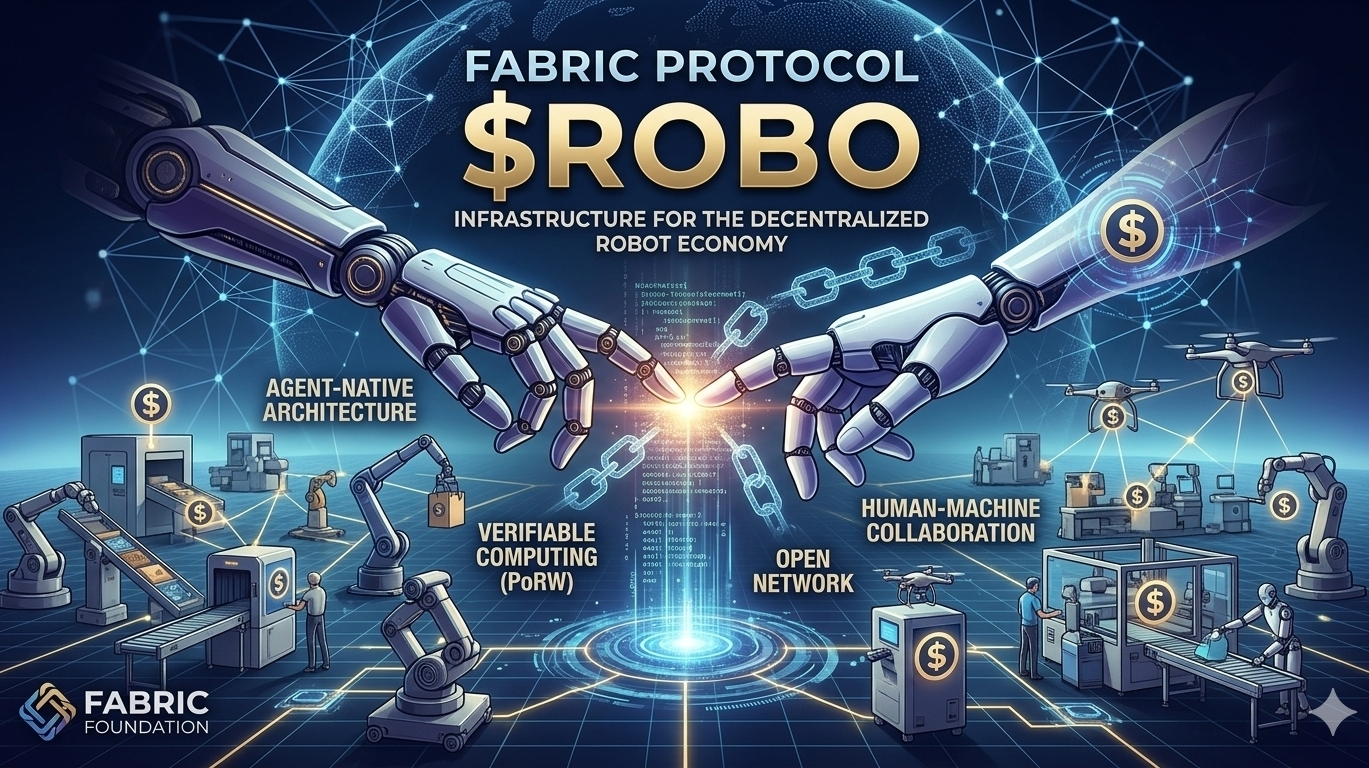
The three pillars of Fabric protocolThe Three Pillars of Fabric Protocol
1. Verifiable Computing (PoRW)
Trust is the biggest hurdle for autonomous machines. How do you know a robot actually performed a task correctly? Fabric uses Verifiable Computing to generate mathematical proofs of a robot's actions.
Proof of Robotic Work (PoRW): Instead of just saying a task is done, the robot provides a "Verification Certificate" (using technologies like zk-SNARKs).
Safety & Compliance: If a robot’s software is tampered with or it attempts to violate safety protocols, the mathematical proof will fail, and the network can instantly disconnect the machine before harm is done.
2. Agent-Native Architecture
Most robots today are "cloud-controlled," meaning they are just extensions of a central server. Fabric treats every machine as an Agent-Native participant. This allows for massive scaling and real-time decision-making with zero latency. It’s the difference between a puppet on a string and a worker with their own brain.
3. Collaborative Evolution
Fabric enables a "Skill App Store" for robots. Through the public ledger, robots can share datasets and learned skills. If a robot in a factory in Ibadan learns a more efficient way to sort packages, that "skill" can be verified and shared across the network, allowing the entire global fleet to evolve simultaneously.
@FabricFND #ROBO #FabricProtocol #ROBO #
The three pillars of Fabric protocol
The Three Pillars of Fabric Protocol
1. Verifiable Computing (PoRW)
Trust is the biggest hurdle for autonomous machines. How do you know a robot actually performed a task correctly? Fabric uses Verifiable Computing to generate mathematical proofs of a robot's actions.
Proof of Robotic Work (PoRW): Instead of just saying a task is done, the robot provides a "Verification Certificate" (using technologies like zk-SNARKs).
Safety & Compliance: If a robot’s software is tampered with or it attempts to violate safety protocols, the mathematical proof will fail, and the network can instantly disconnect the machine before harm is done.
2. Agent-Native Architecture
Most robots today are "cloud-controlled," meaning they are just extensions of a central server. Fabric treats every machine as an Agent-Native participant. This allows for massive scaling and real-time decision-making with zero latency. It’s the difference between a puppet on a string and a worker with their own brain.
3. Collaborative Evolution
Fabric enables a "Skill App Store" for robots. Through the public ledger, robots can share datasets and learned skills. If a robot in a factory in Ibadan learns a more efficient way to sort packages, that "skill" can be verified and shared across the network, allowing the entire global fleet to evolve simultaneously.
@Fabric Foundation #ROBO #FabricProtocol #ROBO #
1. Verifiable Computing (PoRW)
Trust is the biggest hurdle for autonomous machines. How do you know a robot actually performed a task correctly? Fabric uses Verifiable Computing to generate mathematical proofs of a robot's actions.
Proof of Robotic Work (PoRW): Instead of just saying a task is done, the robot provides a "Verification Certificate" (using technologies like zk-SNARKs).
Safety & Compliance: If a robot’s software is tampered with or it attempts to violate safety protocols, the mathematical proof will fail, and the network can instantly disconnect the machine before harm is done.
2. Agent-Native Architecture
Most robots today are "cloud-controlled," meaning they are just extensions of a central server. Fabric treats every machine as an Agent-Native participant. This allows for massive scaling and real-time decision-making with zero latency. It’s the difference between a puppet on a string and a worker with their own brain.
3. Collaborative Evolution
Fabric enables a "Skill App Store" for robots. Through the public ledger, robots can share datasets and learned skills. If a robot in a factory in Ibadan learns a more efficient way to sort packages, that "skill" can be verified and shared across the network, allowing the entire global fleet to evolve simultaneously.
@Fabric Foundation #ROBO #FabricProtocol #ROBO #
3
40
翻訳参照
#robo $ROBO Fabric Foundation
Fabric Protocol is a global open network supported by the non-profit Fabric Foundation, enabling the construction, governance, and collaborative evolution of general-purpose robots through verifiable computing and agent-native infrastructure. The protocol coordinates data, computation, and regulation via a public ledger, combining modular infrastructure to facilitate safe human-machine collaboration.
The Vision: A Decentralized "Robot Economy"
The current state of robotics is highly fragmented. Major manufacturers build "black box" systems that don't talk to each other, creating silos where data and skills are trapped. Fabric Protocol disrupts this by creating a global open network where robots from different brands can coordinate, share skills, and conduct business.
At its core, Fabric isn't about making hardware; it’s about the agent-native infrastructure that allows robots to function as independent economic actors. This means a robot on the Fabric network can have its own on-chain identity, its own wallet, and the ability to pay for its own repairs or charging without human intervention.ROBO FabricProtocol Robotics AIotocol@FabricFND
#robo $ROBO Fabric Foundation
Fabric Protocol is a global open network supported by the non-profit Fabric Foundation, enabling the construction, governance, and collaborative evolution of general-purpose robots through verifiable computing and agent-native infrastructure. The protocol coordinates data, computation, and regulation via a public ledger, combining modular infrastructure to facilitate safe human-machine collaboration.
The Vision: A Decentralized "Robot Economy"
The current state of robotics is highly fragmented. Major manufacturers build "black box" systems that don't talk to each other, creating silos where data and skills are trapped. Fabric Protocol disrupts this by creating a global open network where robots from different brands can coordinate, share skills, and conduct business.
At its core, Fabric isn't about making hardware; it’s about the agent-native infrastructure that allows robots to function as independent economic actors. This means a robot on the Fabric network can have its own on-chain identity, its own wallet, and the ability to pay for its own repairs or charging without human intervention.ROBO FabricProtocol Robotics AIotocol@Fabric Foundation
Fabric Protocol is a global open network supported by the non-profit Fabric Foundation, enabling the construction, governance, and collaborative evolution of general-purpose robots through verifiable computing and agent-native infrastructure. The protocol coordinates data, computation, and regulation via a public ledger, combining modular infrastructure to facilitate safe human-machine collaboration.
The Vision: A Decentralized "Robot Economy"
The current state of robotics is highly fragmented. Major manufacturers build "black box" systems that don't talk to each other, creating silos where data and skills are trapped. Fabric Protocol disrupts this by creating a global open network where robots from different brands can coordinate, share skills, and conduct business.
At its core, Fabric isn't about making hardware; it’s about the agent-native infrastructure that allows robots to function as independent economic actors. This means a robot on the Fabric network can have its own on-chain identity, its own wallet, and the ability to pay for its own repairs or charging without human intervention.ROBO FabricProtocol Robotics AIotocol@Fabric Foundation
2
5
記事
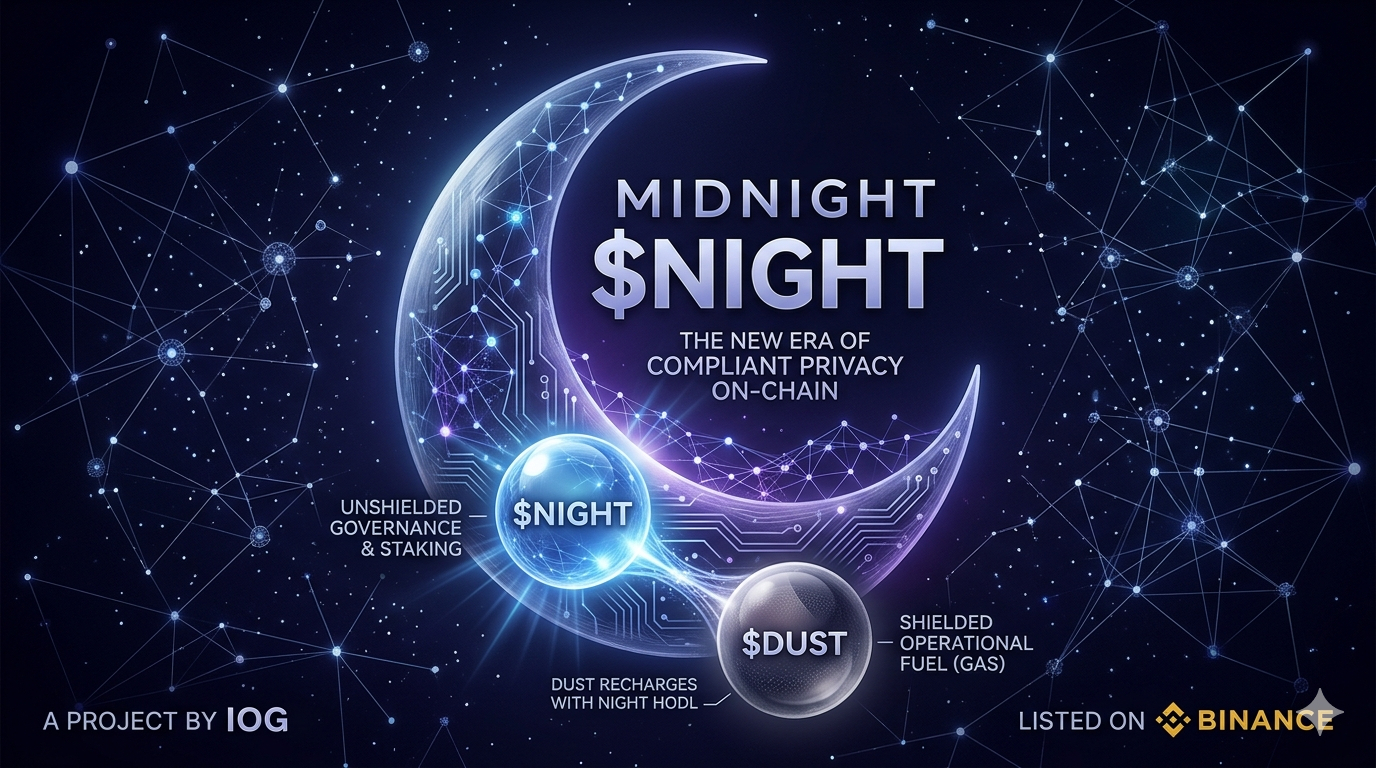
#NIGHT プロジェクトは何についてのものですか?$NIGHT は、IOG(Cardanoの背後にいるエンジニアリングチーム)が開発した「プライバシー優先」のブロックチェーンで、チャールズ・ホスキンソンが率いています。ビットコインのように完全に公開されたブロックチェーンや、モネロのように完全に隠されたブロックチェーンが存在する中で、ミッドナイトは「ゴルディロックス」ゾーンを見つけようとしています。
ゼロ知識(ZK)スマートコントラクトを使用して、選択的開示を可能にしています。これにより、開発者はユーザーが実際の機密データを明らかにすることなく、適切な資格や十分な資金を持っていることを証明できるアプリを構築できます。
#NIGHT プロジェクトは何についてのものですか?
$NIGHT は、IOG(Cardanoの背後にいるエンジニアリングチーム)が開発した「プライバシー優先」のブロックチェーンで、チャールズ・ホスキンソンが率いています。ビットコインのように完全に公開されたブロックチェーンや、モネロのように完全に隠されたブロックチェーンが存在する中で、ミッドナイトは「ゴルディロックス」ゾーンを見つけようとしています。
ゼロ知識(ZK)スマートコントラクトを使用して、選択的開示を可能にしています。これにより、開発者はユーザーが実際の機密データを明らかにすることなく、適切な資格や十分な資金を持っていることを証明できるアプリを構築できます。
ゼロ知識(ZK)スマートコントラクトを使用して、選択的開示を可能にしています。これにより、開発者はユーザーが実際の機密データを明らかにすることなく、適切な資格や十分な資金を持っていることを証明できるアプリを構築できます。
1
2
21
翻訳参照
#night $NIGHT Midnight is a "privacy-first" blockchain developed by IOG (the engineering team behind Cardano), led by Charles Hoskinson. In a world where most blockchains are either completely public (like Bitcoin) or completely hidden (like Monero), Midnight attempts to find the "Goldilocks" zone.
It uses Zero-Knowledge (ZK) smart contracts to allow for selective disclosure. This means developers can build apps where users can prove they have the right credentials or enough funds without revealing their actual sensitive data.
The listing on March 11, 2026, was a watershed moment for the project. As the first Cardano-native asset to land a Binance spot listing, it opened the floodgates for liquidity.
Airdrop Hype: Binance distributed 240 million NIGHT (1% of the total supply) to BNB holders right before trading opened.
Price Volatility: Following the listing, the price saw a "buy the rumor, sell the news" effect. After an initial surge toward $0.055, it has settled into a consolidation phase around the $0.048 - $0.052 range as the market absorbs the airdrop sell-pressure.
Supply Metrics: The total supply is capped at 24 billion tokens, with about 16.6 billion currently in circulation.
#night $NIGHT Midnight is a "privacy-first" blockchain developed by IOG (the engineering team behind Cardano), led by Charles Hoskinson. In a world where most blockchains are either completely public (like Bitcoin) or completely hidden (like Monero), Midnight attempts to find the "Goldilocks" zone.
It uses Zero-Knowledge (ZK) smart contracts to allow for selective disclosure. This means developers can build apps where users can prove they have the right credentials or enough funds without revealing their actual sensitive data.
The listing on March 11, 2026, was a watershed moment for the project. As the first Cardano-native asset to land a Binance spot listing, it opened the floodgates for liquidity.
Airdrop Hype: Binance distributed 240 million NIGHT (1% of the total supply) to BNB holders right before trading opened.
Price Volatility: Following the listing, the price saw a "buy the rumor, sell the news" effect. After an initial surge toward $0.055, it has settled into a consolidation phase around the $0.048 - $0.052 range as the market absorbs the airdrop sell-pressure.
Supply Metrics: The total supply is capped at 24 billion tokens, with about 16.6 billion currently in circulation.
It uses Zero-Knowledge (ZK) smart contracts to allow for selective disclosure. This means developers can build apps where users can prove they have the right credentials or enough funds without revealing their actual sensitive data.
The listing on March 11, 2026, was a watershed moment for the project. As the first Cardano-native asset to land a Binance spot listing, it opened the floodgates for liquidity.
Airdrop Hype: Binance distributed 240 million NIGHT (1% of the total supply) to BNB holders right before trading opened.
Price Volatility: Following the listing, the price saw a "buy the rumor, sell the news" effect. After an initial surge toward $0.055, it has settled into a consolidation phase around the $0.048 - $0.052 range as the market absorbs the airdrop sell-pressure.
Supply Metrics: The total supply is capped at 24 billion tokens, with about 16.6 billion currently in circulation.
1
1
翻訳参照
Attention
Attention

Alphaverses
·
--
速報: $ESP
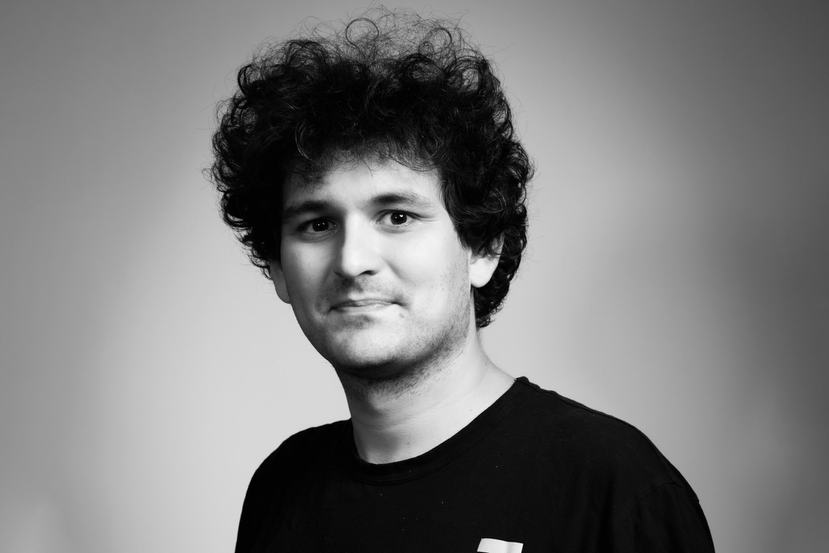
🇺🇸 ホワイトハウスはトランプ大統領がサム・バンクマン-フリードを赦免しないことを確認しました。$DENT $ENSO
🇺🇸 ホワイトハウスはトランプ大統領がサム・バンクマン-フリードを赦免しないことを確認しました。$DENT $ENSO

2

翻訳参照
Kllerc
Kllerc

Token Talks
·
--
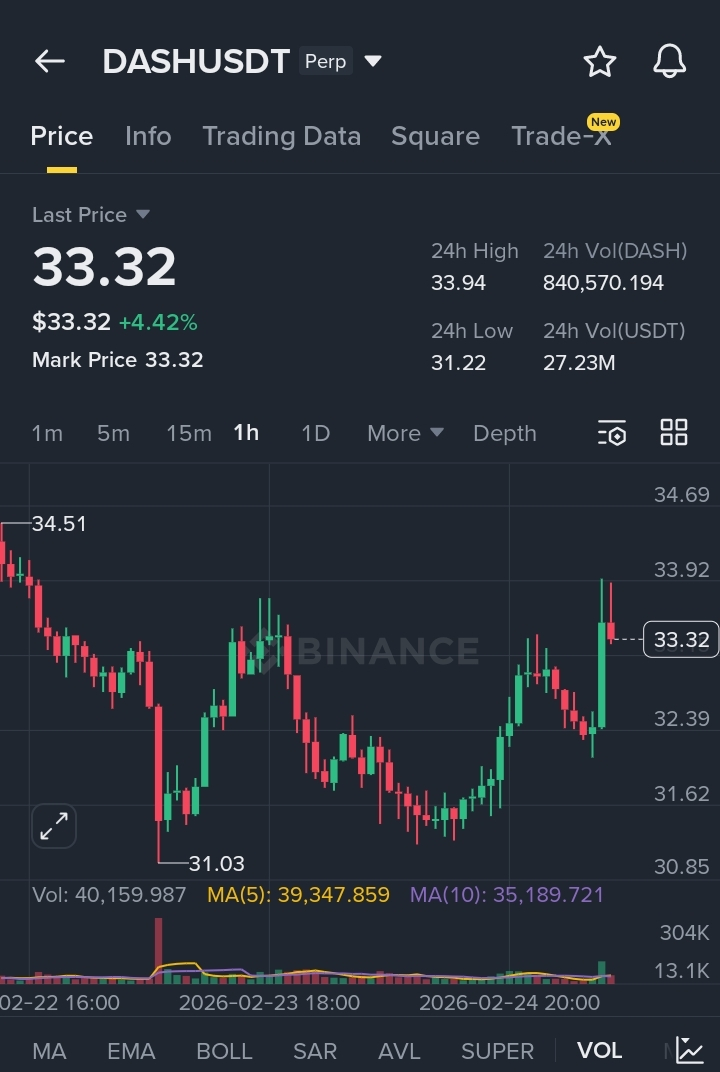
弱気相場$DASH は、31.03から反発した後、33.80〜34.00の抵抗ゾーンに積極的に押し込まれました。現在、以前の供給(34.51高)に近づいており、1時間足で拒否ウィックが形成されています。
これは、34.00〜34.50がクリーンに突破されない限り、潜在的な反発前の流動性スイープのように見えます。
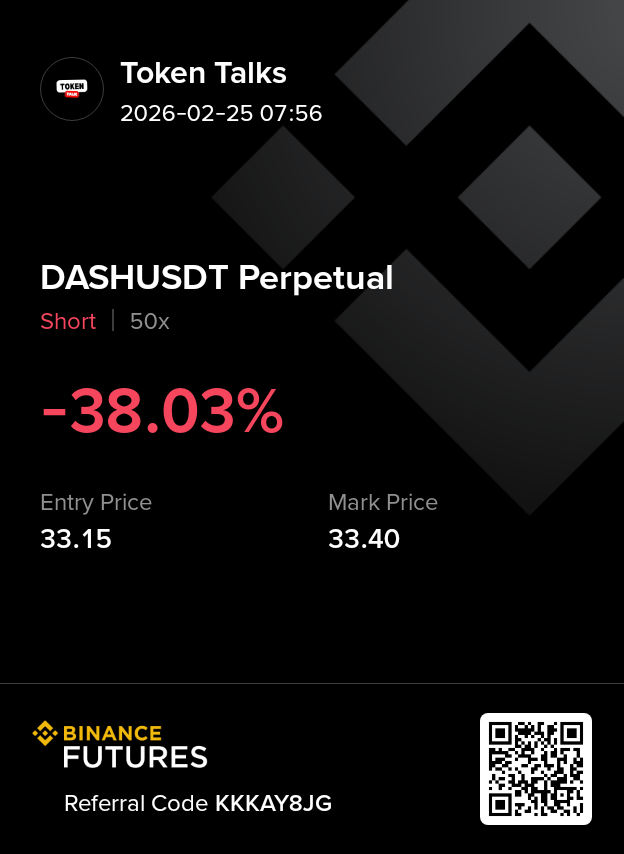
この取引ではDCAを行いました。そして、今私の新しいエントリーはこれです。私と一緒に入った場合は、これに従うことをお勧めします。
ショートDASH
エントリーゾーン: 33.32 – 34.00
ストップロス: 34.60
TP1: 32.40
TP2: 31.60
または100%から500%
自分で調査してください。
ショート#DASH ここ👇👇👇
これは、34.00〜34.50がクリーンに突破されない限り、潜在的な反発前の流動性スイープのように見えます。
この取引ではDCAを行いました。そして、今私の新しいエントリーはこれです。私と一緒に入った場合は、これに従うことをお勧めします。
ショートDASH
エントリーゾーン: 33.32 – 34.00
ストップロス: 34.60
TP1: 32.40
TP2: 31.60
または100%から500%
自分で調査してください。
ショート#DASH ここ👇👇👇
2
翻訳参照
Andy59841
Andy59841
安迪Andy5984
·
--
🤮明け方前に倒れて、利益はほとんど吐き出されましたが、私の赤い封筒を発行することには影響しません!新年おめでとうございます!🎉🧧🧧🧧🎁🎁🎁🎁🎁🎁🧧🧧BIG RED BOX
1
ログインして、さらにコンテンツを読む
厳選トピックで世界の暗号資産トレーダーの仲間入り
⚡️ 暗号資産に関する最新かつ有益な情報が見つかります。
💬 世界最大の暗号資産取引所から信頼されています。
👍 認証を受けたクリエイターから、有益なインサイトを得られます。
メール / 電話番号
トレンドトピック
BitgetHackerMoves$83MStolenXRP
閲覧回数 5,266
56人が討論中
2026年9月24日、Bitgetは大規模なセキュリティ侵害を受け、報道によれば約$387M〜$390M相当の資産が盗まれた。
盗まれた資金の大部分は$XRP だった。
当時約1.57億〜1.6億ドル相当の約103M $XRPが、攻撃者が管理する5つのウォレットへ移されていた。
9月26日までに、そのうち3つのウォレットから既に約54M XRP(8,300万ドル)が移されていた。
それぞれ約20M XRPを保有していた2つのウォレットはほぼ完全に空にされ、別のウォレットは約5.8M XRPまで減っていた。
その結果、当時約7,500万ドル相当の約49M XRPが、元のウォレットにまだ残っていた。
送金はさらに深夜にかけても加速し、資金が新しいウォレットに分散された。報道によっては、XRPの一部がその後THORChainを通じてビットコインへ送られたとも言われている。
資金が引き続き動くため、私はこの状況をしっかり注視している。
#BitgetHackerMoves$83MStolenXRP
jujucrypt
·いいね:7件
·閲覧回数 9.8k
SOLSpotETFWeeklyInflow$188M
閲覧回数 2,488
53人が討論中
DogecoinETFsPostBiggestWeekSinceLaunch
閲覧回数 740
69人が討論中