
Emma-加密貨幣
8.8k 投稿

Emma-加密貨幣
 厳選トピック確認済+
Content Creators ||🔸Trader || 🔸Crypto Analyst || 🔸Invester || Livestreamer
取引を発注

SOLホルダー
高頻度トレーダー
2.9年
1.0K+ フォロー
61.7K+ フォロワー
21.7K+ いいね
投稿
ポートフォリオ
すべて
引用
動画
ライブ
PINNED
確認済み
翻訳参照
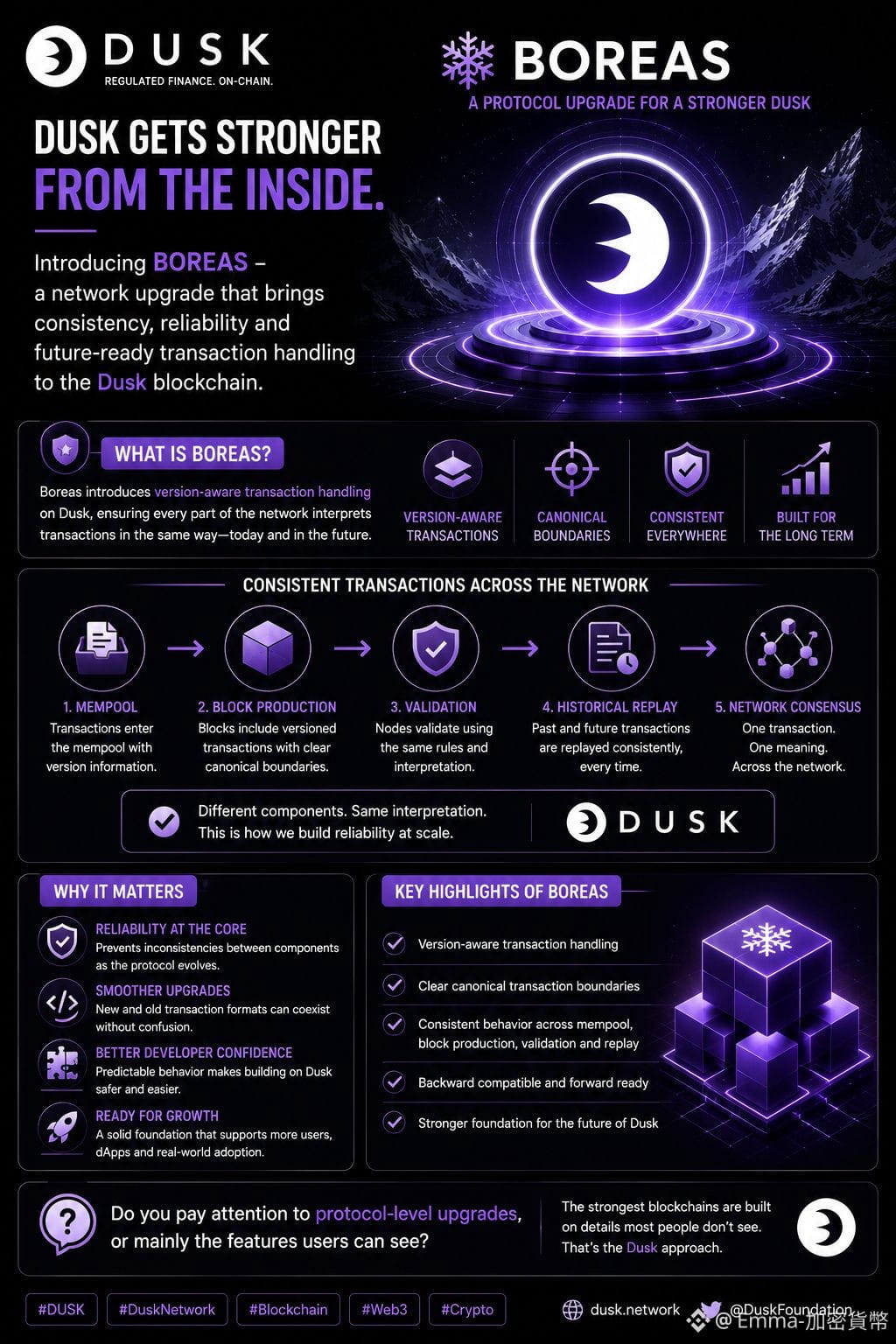
One $DUSK update I think deserves more attention: Boreas.
I usually focus on the visible side of a blockchain, but the work underneath is just as important.
Boreas introduced clearer, version-aware transaction handling on Dusk, helping different parts of the network interpret transactions consistently—from the mempool and block production to validation and historical replay.
That might not sound exciting at first, but reliability at this layer matters.
As a network evolves, old and new transaction formats need to coexist without different components interpreting the same data differently.
For me, this is the kind of engineering progress that doesn't always get attention—but can become important as the network grows.
I'm watching how these protocol improvements translate into long-term stability and developer confidence.
💬 Do you pay attention to protocol-level upgrades, or mainly the features users can see?
#dusk $DUSK @Dusk
I usually focus on the visible side of a blockchain, but the work underneath is just as important.
Boreas introduced clearer, version-aware transaction handling on Dusk, helping different parts of the network interpret transactions consistently—from the mempool and block production to validation and historical replay.
That might not sound exciting at first, but reliability at this layer matters.
As a network evolves, old and new transaction formats need to coexist without different components interpreting the same data differently.
For me, this is the kind of engineering progress that doesn't always get attention—but can become important as the network grows.
I'm watching how these protocol improvements translate into long-term stability and developer confidence.
💬 Do you pay attention to protocol-level upgrades, or mainly the features users can see?
#dusk $DUSK @Dusk
翻訳参照
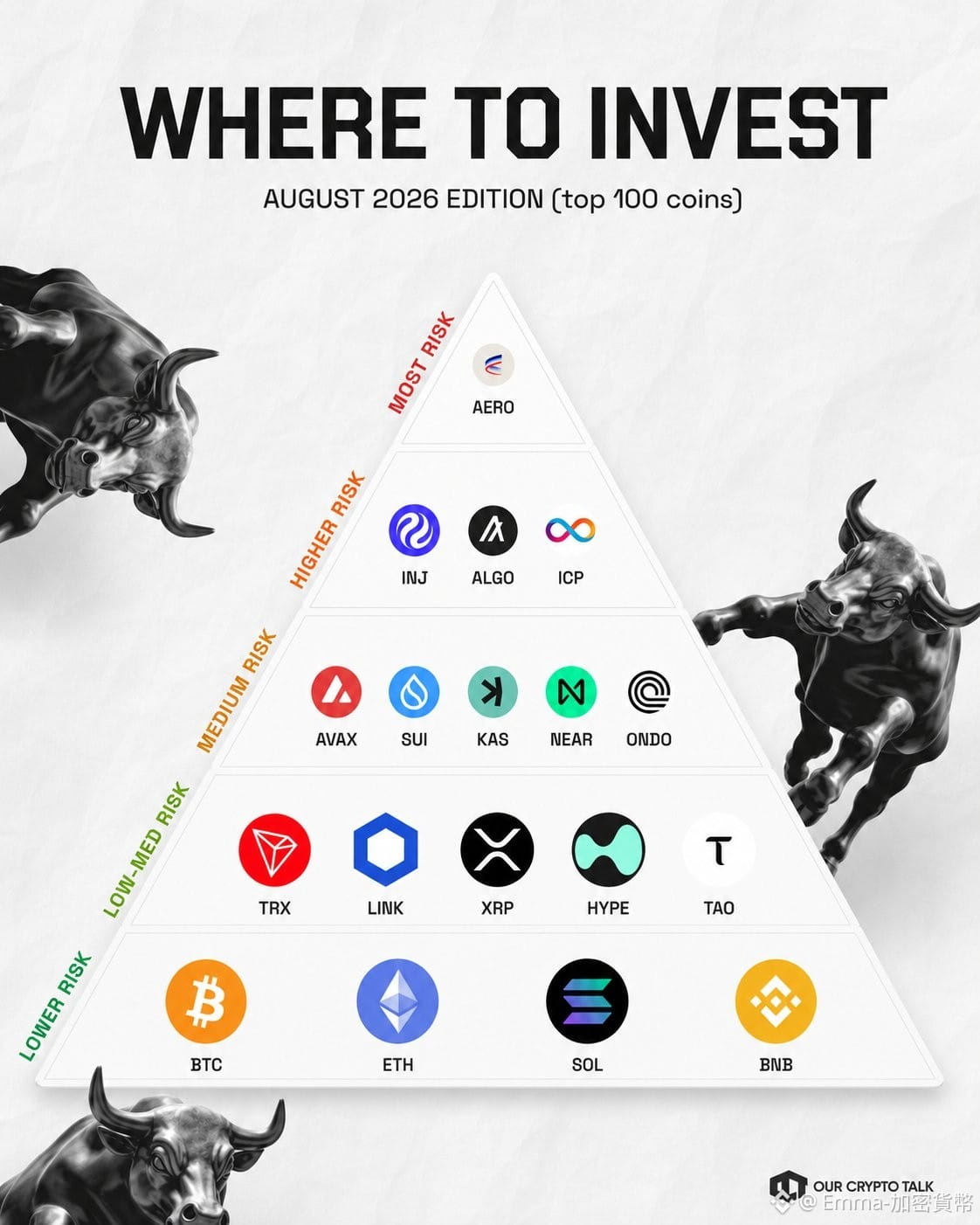
Where would I invest today (Top 100 coins edition):
Most Risk:
$AERO
High Risk:
$INJ
$ALGO
$ICP
Medium Risk:
$AVAX
$SUI
$KAS
$NEAR
$ONDO
Low-Med Risk:
$TRX
$LINK
$XRP
$HYPE
$TAO
Low Risk:
$BTC
$ETH
$SOL
$BNB
Which token did we miss out on here? (NFA)
Most Risk:
$AERO
High Risk:
$INJ
$ALGO
$ICP
Medium Risk:
$AVAX
$SUI
$KAS
$NEAR
$ONDO
Low-Med Risk:
$TRX
$LINK
$XRP
$HYPE
$TAO
Low Risk:
$BTC
$ETH
$SOL
$BNB
Which token did we miss out on here? (NFA)
翻訳参照
GOOD Morning😘
Claim Your Daily Reward.
Claim Your Daily Reward.

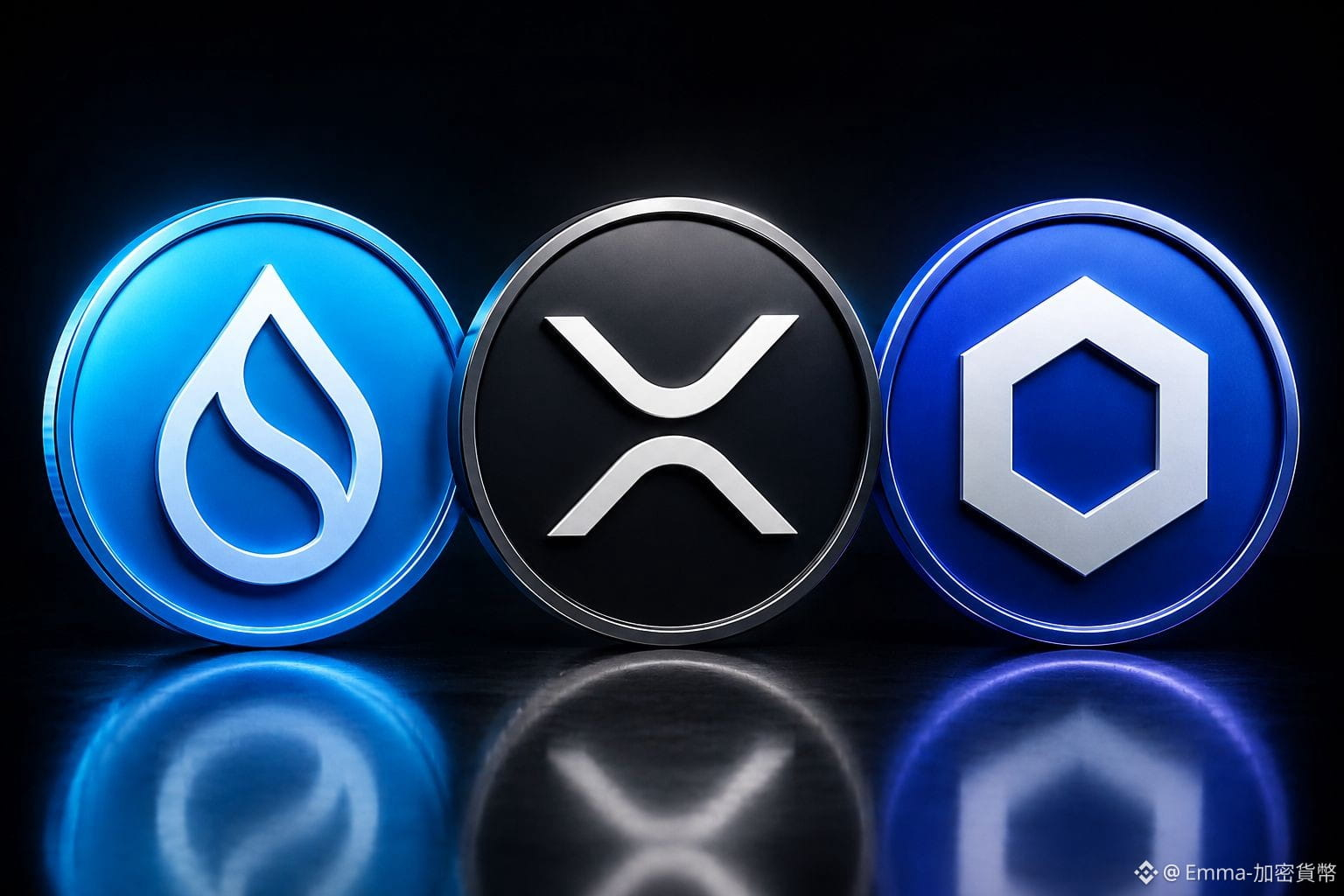
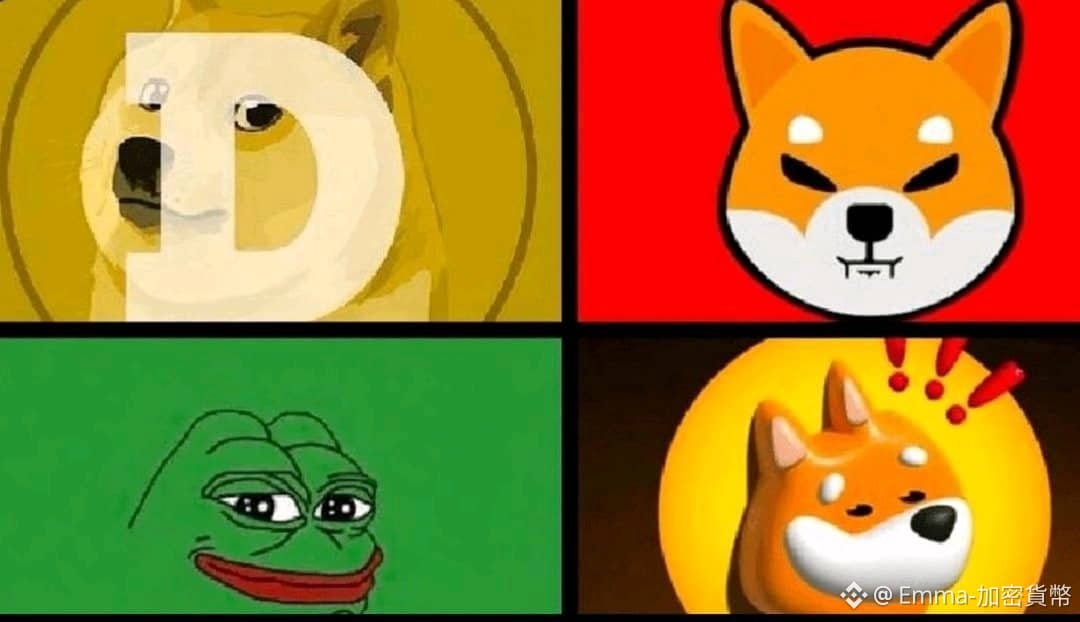
一部該当
翻訳参照
One technical update from $DUSK that caught my attention 👀
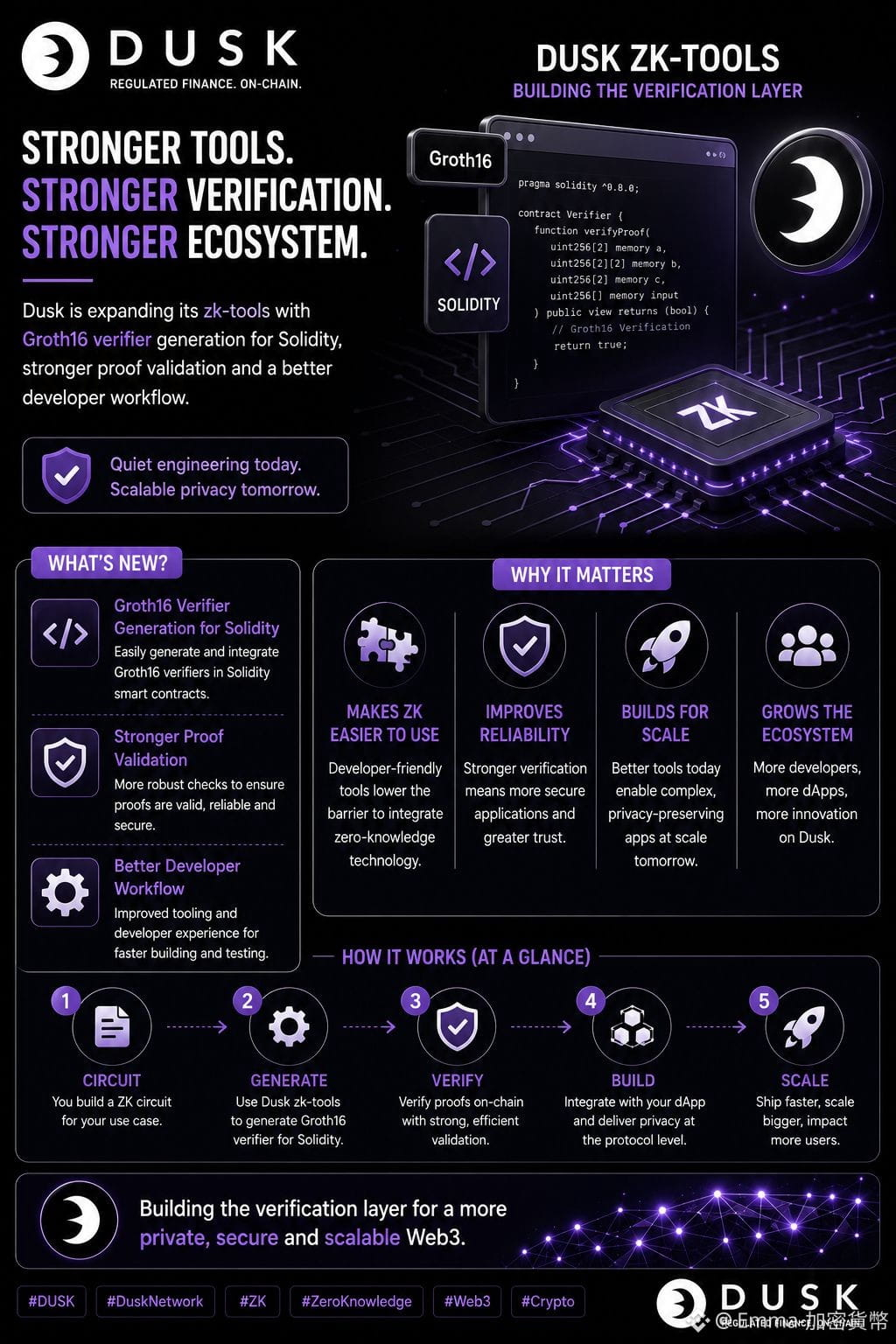
Dusk has been expanding its zk-tools, including tooling for generating and validating Groth16 verifiers for Solidity.
For me, this is interesting because zero-knowledge technology only becomes useful at scale when developers can actually integrate and verify it reliably.
The recent work also includes stronger proof validation and better tooling around the developer workflow.
It may not be the loudest Dusk update, but these are the kinds of improvements I like watching—quiet engineering work that can make the bigger ecosystem more usable over time.
Still early, but the technical progress is worth following.
💬 Do you think better ZK developer tooling could become a major advantage for Dusk?
#dusk $DUSK @Dusk
Dusk has been expanding its zk-tools, including tooling for generating and validating Groth16 verifiers for Solidity.
For me, this is interesting because zero-knowledge technology only becomes useful at scale when developers can actually integrate and verify it reliably.
The recent work also includes stronger proof validation and better tooling around the developer workflow.
It may not be the loudest Dusk update, but these are the kinds of improvements I like watching—quiet engineering work that can make the bigger ecosystem more usable over time.
Still early, but the technical progress is worth following.
💬 Do you think better ZK developer tooling could become a major advantage for Dusk?
#dusk $DUSK @Dusk
Emma-加密貨幣
·
--
[終了] 🎙️ $DUSK Volume Hunt — 一緒に取引しよう
リスナー数:1.2k人
確認済み
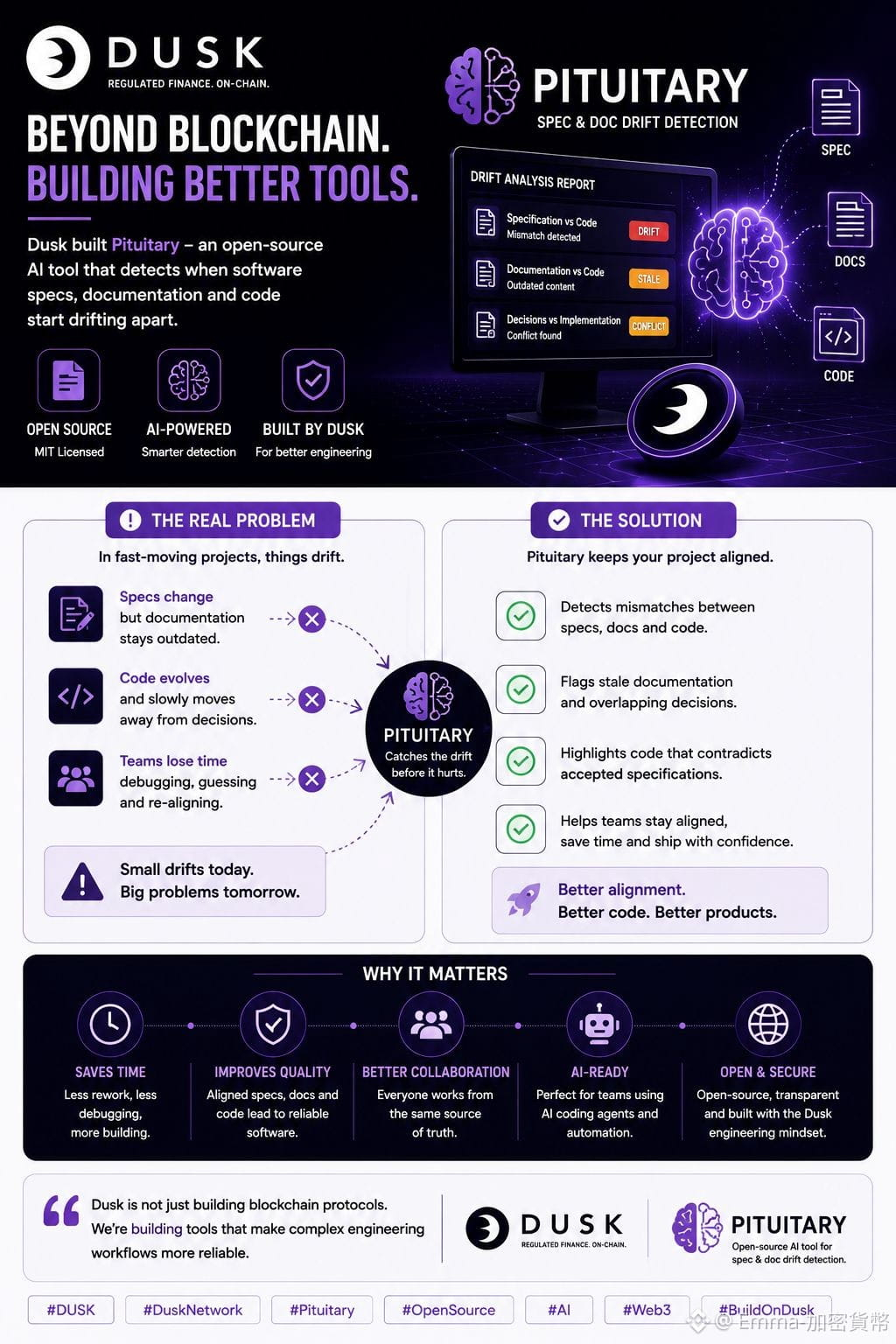
$DUSK を調べているときに見つけた、意外なこと:
Duskはブロックチェーン基盤だけを手がけているわけではありません。
チームは、ソフトウェアの仕様・ドキュメント・コードが乖離し始めたことを検知するためのオープンソースツール「Pituitary」も開発しました。
それは単純に聞こえますが、実際には大きな問題です。特に、チームがますますAIコーディングエージェントを使うようになってきている今では。
仕様が変わったのにドキュメントが古いままになったり、あるいはコードがいつの間にか合意された判断から離れてしまったりします。Pituitaryは、それらのギャップがより大きな問題になる前に見つけることを目的としています。
私が興味深いと思ったのは、その考え方です。
Duskはプロトコルを作るだけでなく、複雑なエンジニアリングのワークフローをより確実にするためのツールも試作しています。
以前はあまり注意を払えていなかった、Duskのまったく別の一面を知ることになりました。
💬 コードがまだプロジェクトの仕様と一致しているかを確認してくれる、AI支援ツールは使いたいと思いますか?
#dusk $DUSK @Dusk
Duskはブロックチェーン基盤だけを手がけているわけではありません。
チームは、ソフトウェアの仕様・ドキュメント・コードが乖離し始めたことを検知するためのオープンソースツール「Pituitary」も開発しました。
それは単純に聞こえますが、実際には大きな問題です。特に、チームがますますAIコーディングエージェントを使うようになってきている今では。
仕様が変わったのにドキュメントが古いままになったり、あるいはコードがいつの間にか合意された判断から離れてしまったりします。Pituitaryは、それらのギャップがより大きな問題になる前に見つけることを目的としています。
私が興味深いと思ったのは、その考え方です。
Duskはプロトコルを作るだけでなく、複雑なエンジニアリングのワークフローをより確実にするためのツールも試作しています。
以前はあまり注意を払えていなかった、Duskのまったく別の一面を知ることになりました。
💬 コードがまだプロジェクトの仕様と一致しているかを確認してくれる、AI支援ツールは使いたいと思いますか?
#dusk $DUSK @Dusk
ログインして、さらにコンテンツを読む