
HIBA TRADERR
37 投稿

HIBA TRADERR
報告
ユーザーをブロック
134 フォロー
47 フォロワー
38 いいね
投稿
·
--
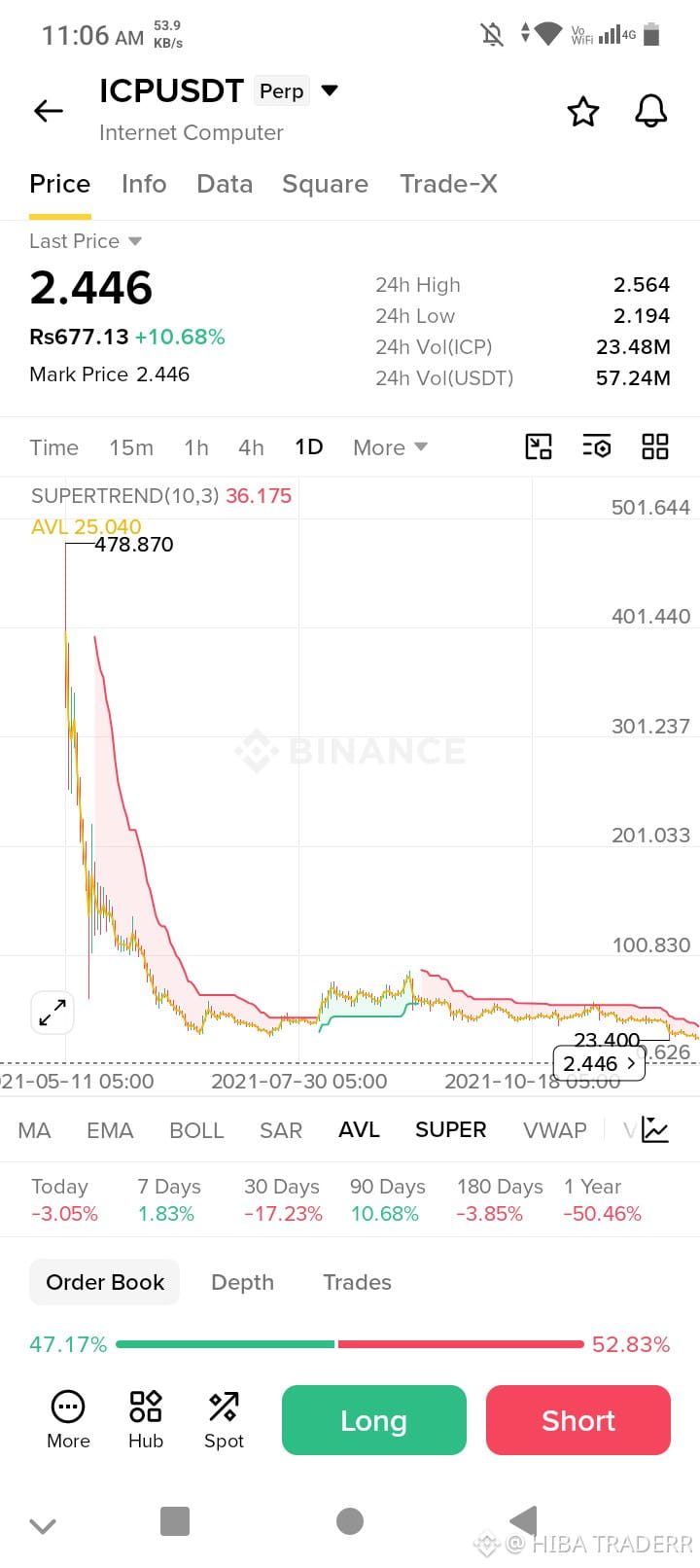
$ICP $478.87からわずか$2.446へ!伝説のカムバックが始まるのか?😱
🎯 予想目標価格:$485 👀💥💹
#BinanceSquareTalks #InternetComputer #BinanceSquareFamily
{spot}(ICPUSDT)
$ICP $478.87からわずか$2.446へ!伝説のカムバックが始まるのか?😱
🎯 予想目標価格:$485 👀💥💹
#BinanceSquareTalks #InternetComputer #BinanceSquareFamily
🎯 予想目標価格:$485 👀💥💹
#BinanceSquareTalks #InternetComputer #BinanceSquareFamily
11
·
--
翻訳参照
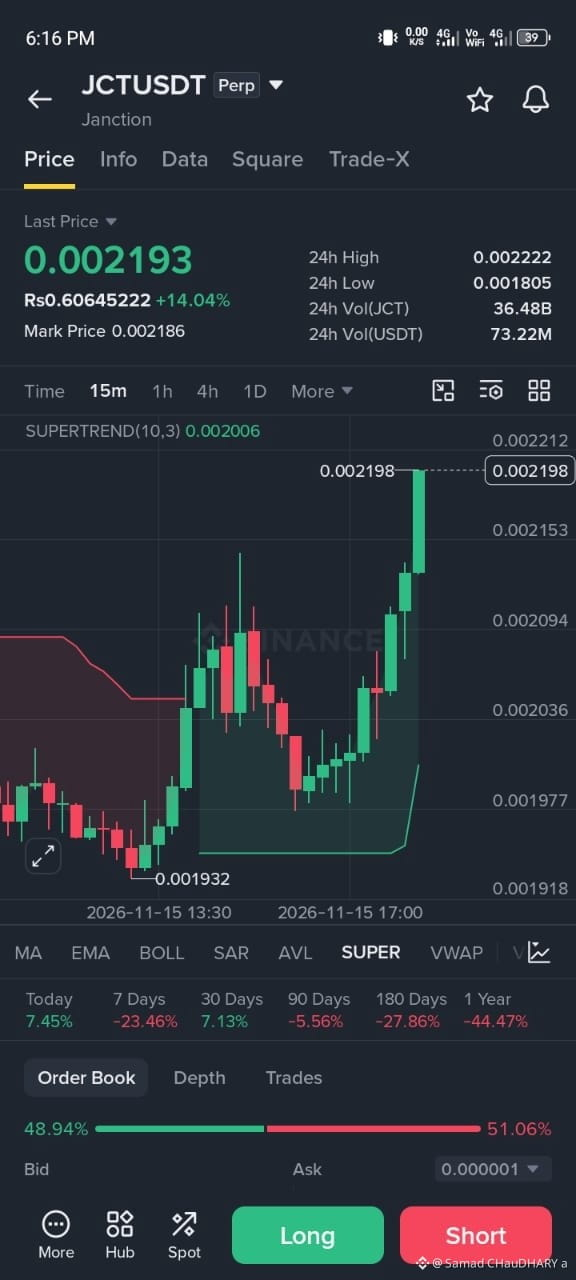
JCT preparing something big I'm watching closely use tight stop lose and join this move stop lose 0.0020
Tp 0.0025 0.00300 0.0035
JCT preparing something big I'm watching closely use tight stop lose and join this move stop lose 0.0020
Tp 0.0025 0.00300 0.0035
Tp 0.0025 0.00300 0.0035
3
1
745
·
--
翻訳参照
$BTC
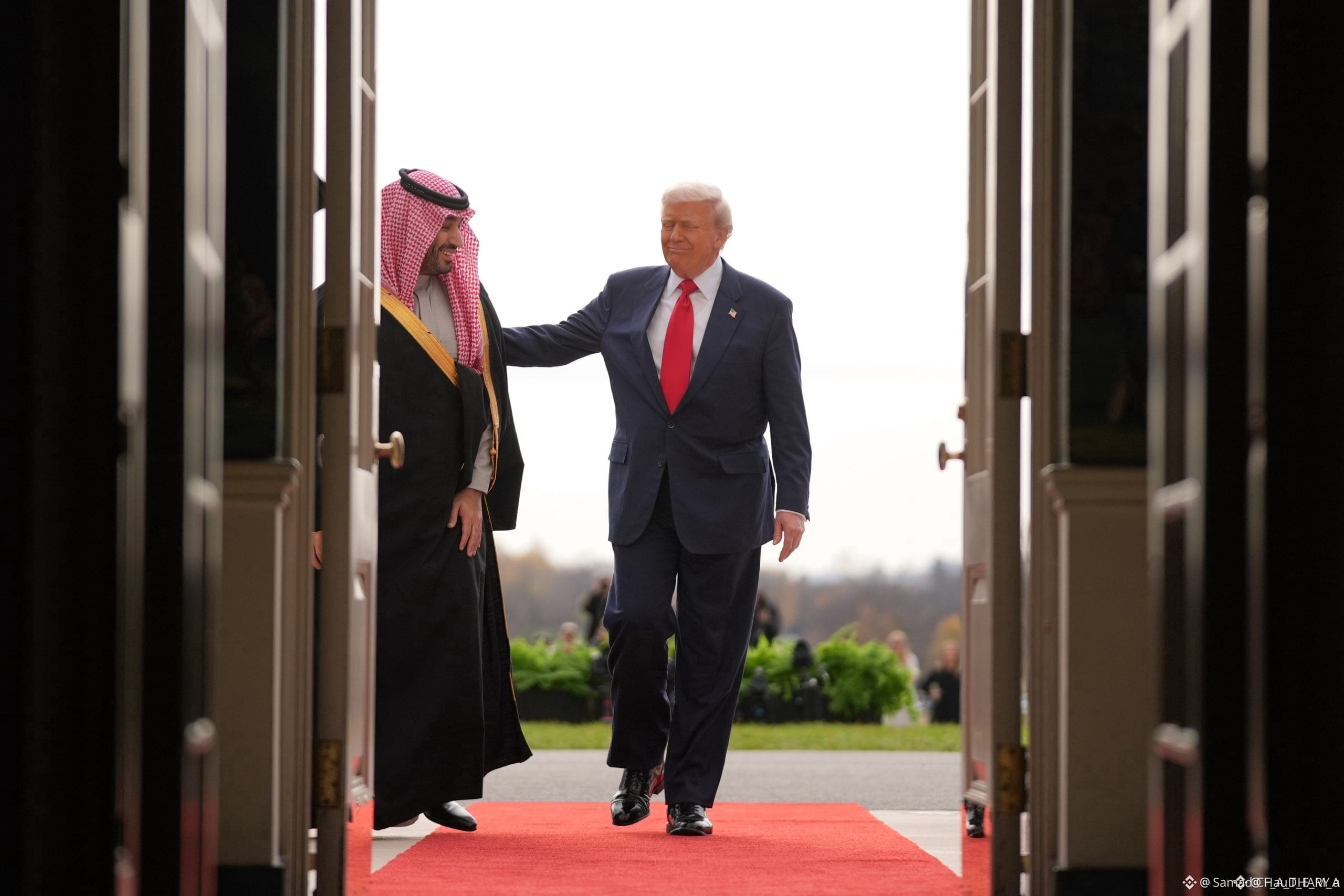
*Saudi Arabia is unhappy with the US over air defence.*
Saudi Arabia is under attack from Houthi drones and missiles from Yemen. Last week an attack on King Khalid Airport in Riyadh killed 13 people and injured more than 300.
Saudi media says there have been about 12 attacks on Riyadh this month alone.
*What the reports say:*
- Saudi officials have started an investigation into why their air defences failed. The Houthis fired drones first, then cruise and ballistic missiles that flew over 1,000km.
- Analysts say Saudi Arabia is very big and has too many airports, oil sites and pipelines to protect at once. There are not enough Patriot and THAAD batteries to cover everything.
- The US Army has a Patriot PAC-3 battery at Prince Sultan Air Base. That base is protected, but Riyadh and Dammam airports are not covered by the US system.
- US fighter jets at Prince Sultan are now patrolling the Persian Gulf and the Strait of Hormuz because of the war with Iran, not doing combat air patrols over Saudi cities.
- Saudi Arabia wants America to do more. So far the US has only given intelligence, target information and planning help, but has not carried out its own strikes on the Houthis.
President Trump said on Saturday he is looking at US strikes against the Houthis and said on Monday: "You'll find out soon" when asked if the US will defend Saudi Arabia.
King Khalid Airport is closed until Oct 18. Flights are being diverted to Jeddah.
1
81
·
--
$TRUMP
ドナルド・トランプ氏は、ロシアから数百万トンのディーゼル燃料を購入することで合意しました。これにより、アメリカの燃料価格が下がると述べています。現在、アメリカではディーゼル燃料が非常に高価です。
イギリス政府は、この合意を支持しないとしています。
ウェス・ストリーティング国防相は、日曜日にBBCにこう語りました。
> 「私たちはこの決定を支持しません。ロシアに対する制裁を強化しています」
アメリカがこの取引を進めているのは、11月の中間選挙と、人々が生活費の高騰に苦しんでいることが理由だと述べました。また、イギリスとその同盟国は、ロシアへの圧力を弱めるのではなく、強めるべきだと語りました。
*ウクライナはどうなるのでしょうか?*
ゼレンスキー大統領は、この合意によってロシアがさらに多くの兵器を購入する資金を得ることになると述べました。
トランプ氏は、ウクライナはゼレンスキー氏を、ロシアとの和平にもっと前向きな人物に交代させるべきだと述べました。
ストリーティング氏はゼレンスキー氏を擁護し、こう語りました。
> 「私たちはウクライナとともにあります。ゼレンスキー大統領とともにあります」
ウクライナの指導者を誰にするかを決めるのは、ウクライナ国民だけだと述べました。
*保守党もトランプ氏に反対しています。*
影の財務相アンドリュー・グリフィス氏は、ゼレンスキー氏に関するトランプ氏の発言は「間違っている」とし、ディーゼル燃料の取引は「まったく誤ったメッセージを発信する」と述べました。
現在、ワシントンとロンドンの間には明確な対立があります。アメリカは燃料価格の引き下げを望んでいます。一方、イギリスは制裁に重点を置いていると述べ、2030年までにロシアが攻撃してきた場合に備え、NATOは準備を整えておかなければならないと警告しています。
2
734
·
--
翻訳参照
#bedrock $BR
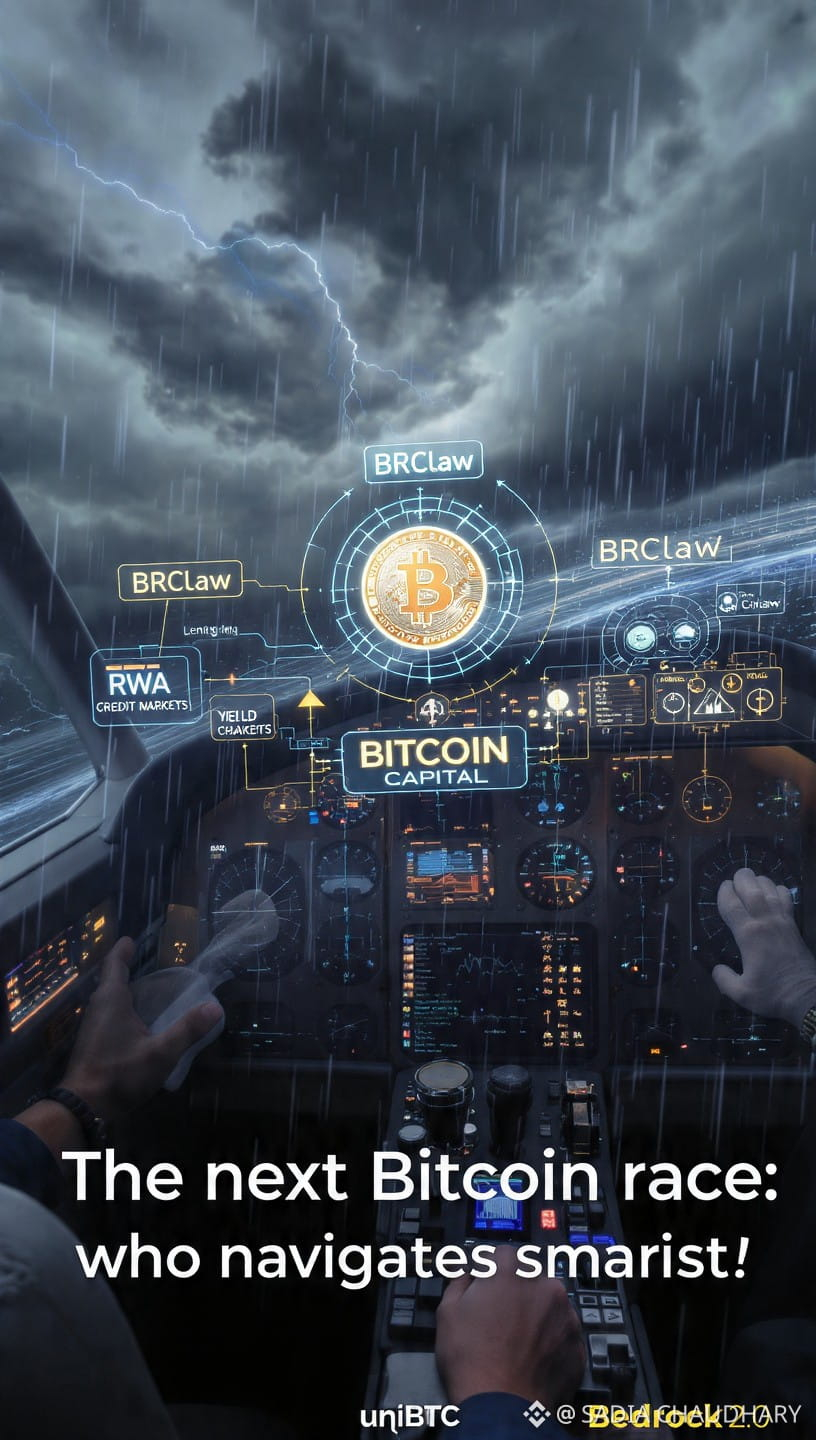
Nobody would fly a jet through a storm without a copilot.
So why are we trying to navigate Bitcoin Capital on our own?
A few years back, managing Bitcoin was simple.
Buy BTC.
Hold BTC.
Wait.
Today?
Bitcoin Capital is spreading across:
🏦 Lending Markets
🌎 RWA Opportunities
💳 Credit Markets
📈 Yield Strategies
🔗 Multiple Chains
And the complexity just keeps growing.
The rise of Bitcoin Treasury companies like Strategy, Metaplanet, Semler Scientific, and Twenty One Capital proves one thing:
The future isn’t just about owning Bitcoin.
It’s about managing Bitcoin Capital properly.
That’s why Bedrock 2.0 caught my attention.
Not because it’s another yield protocol.
But because it’s building an Intelligent Yield Engine for Bitcoin Capital.
At its heart is uniBTC — a unified entry point designed to connect Bitcoin capital across multiple opportunities through one capital layer.
Because the challenge ahead isn’t finding more opportunities.
It’s navigating them.
That’s where Intelligent Routing comes in.
And that’s where BRClaw steps up.
Think of it as an AI Copilot for Bitcoin Capital.
🧠 Analyses opportunities
🧠 Evaluates risk
🧠 Compares strategies
🧠 Supports smarter allocation decisions
As Bitcoin Capital grows larger and more fragmented, decision-making becomes the real bottleneck.
Not access.
Not yield.
Decision-making.
Meanwhile, Bedrock’s Modular Vault Framework opens the door to:
🏦 Institutional-Grade Vaults
🌎 RWA Strategies
💳 Lending & Credit Markets
📈 Advanced Yield Opportunities
The future winner in BTCFi might not be the investor who finds the highest APY.
It might be the investor who makes the best decisions.
#Bedrock @Bedrock $BR
⚠️ The next Bitcoin race may not be about who owns the most Bitcoin. It may be about who navigates Bitcoin Capital the smartest.
#@Bedrock
2
2
75
·
--
翻訳参照
@Bedrock
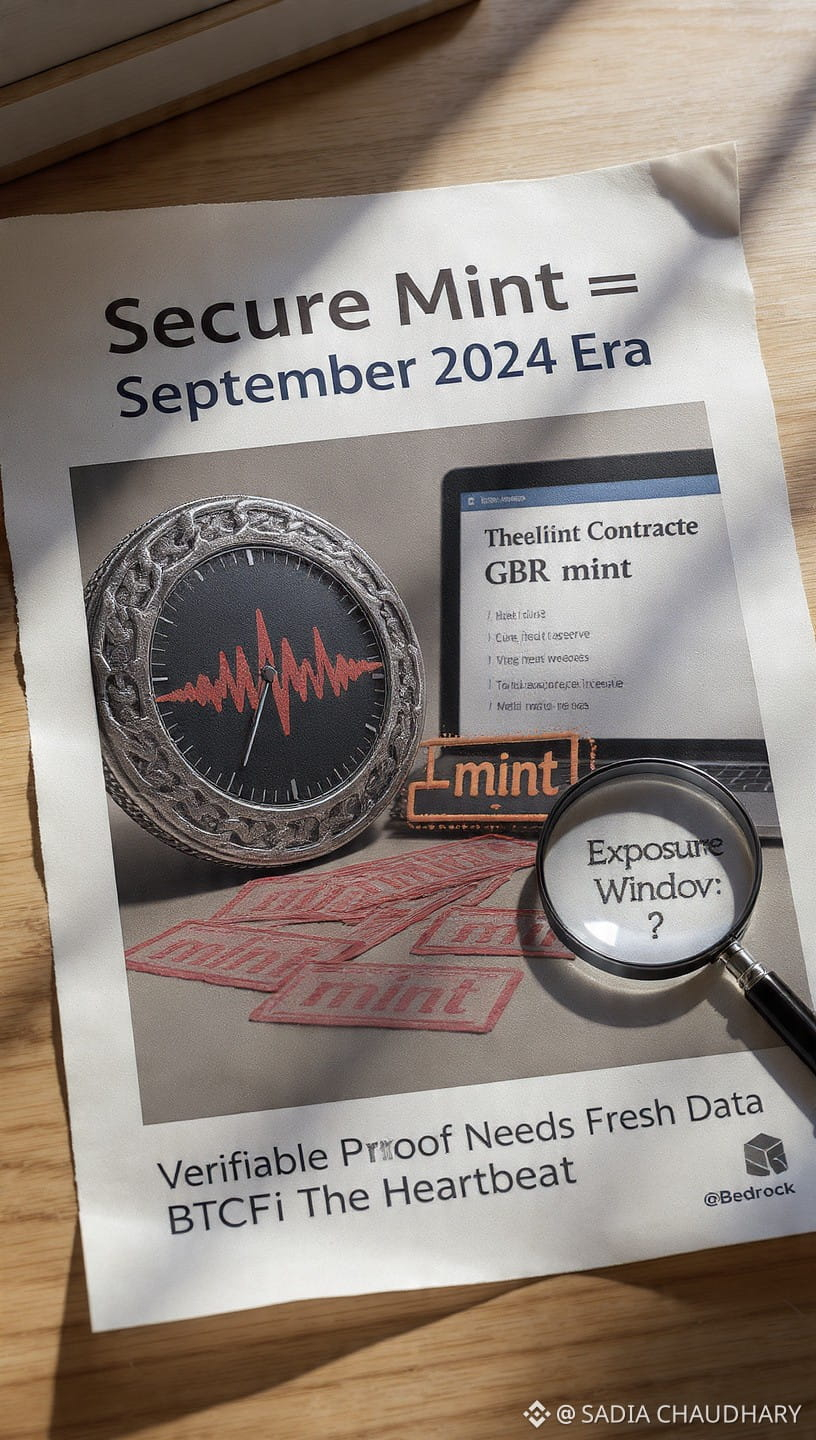
locking some BR for veBR last week felt straightforward. the dashboard looked clean. reserves verified. mint confirmed.
then i started reading how the Secure Mint actually works or, wait, more specifically how the oracle update behind it works. Chainlink DONs publish reserve data on a heartbeat schedule. not per block. the mint contract checks the most recent published figure. if several large mints hit between heartbeat updates, each one clears against the same reserve reading. 🔍
the integration is real. i'm not dismissing it having on-chain reserve verification embedded inside the mint transaction is genuinely better than anything the september 2024 exploit era had. that's a meaningful upgrade.
but luna looked fine too, until redemption velocity outpaced the mechanism designed to protect it.
there is a version of this where i'm wrong. if chainlink's heartbeat interval on bedrock's reserve feed is tight enough under one minute the exposure window is negligible. that data would change my reading entirely.
bedrock hasn't published the feed's update parameters publicly. its absence means the strongest security claim in BTCFi 2.0 is currently operating on assumed freshness which is a strange place to be for a protocol whose entire value proposition is replacing idle bitcoin with verifiable, on-chain proof.
#bedrock $BR
74
·
--
翻訳参照
##bedrock $BR @Bedrock
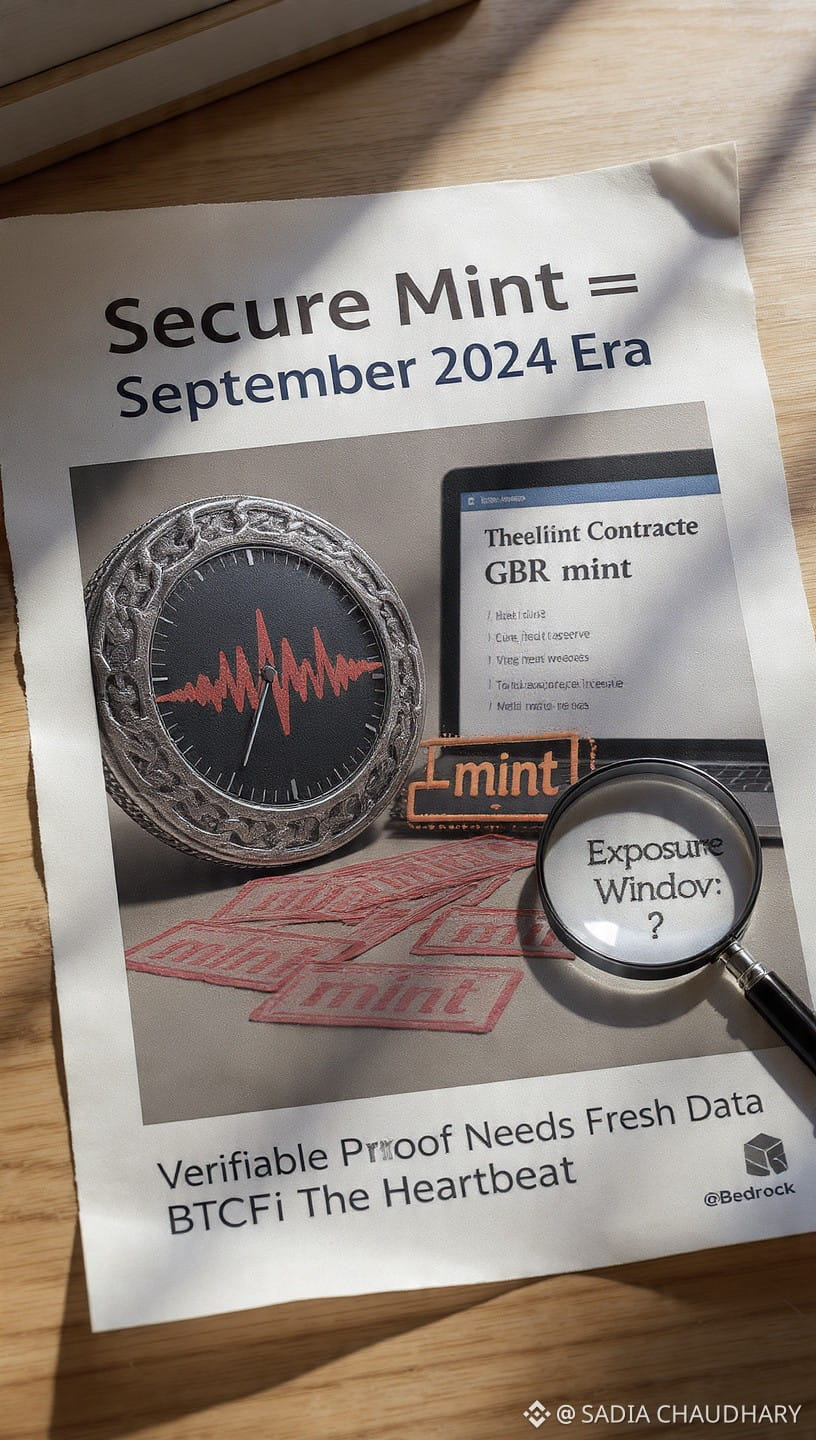
locking some BR for veBR last week felt straightforward. the dashboard looked clean. reserves verified. mint confirmed.
then i started reading how the Secure Mint actually works or, wait, more specifically how the oracle update behind it works. Chainlink DONs publish reserve data on a heartbeat schedule. not per block. the mint contract checks the most recent published figure. if several large mints hit between heartbeat updates, each one clears against the same reserve reading. 🔍
the integration is real. i'm not dismissing it having on-chain reserve verification embedded inside the mint transaction is genuinely better than anything the september 2024 exploit era had. that's a meaningful upgrade.
but luna looked fine too, until redemption velocity outpaced the mechanism designed to protect it.
there is a version of this where i'm wrong. if chainlink's heartbeat interval on bedrock's reserve feed is tight enough under one minute the exposure window is negligible. that data would change my reading entirely.
bedrock hasn't published the feed's update parameters publicly. its absence means the strongest security claim in BTCFi 2.0 is currently operating on assumed freshness which is a strange place to be for a protocol whose entire value proposition is replacing idle bitcoin with verifiable, on-chain proof.
#bedrock $BR
1
85
·
--
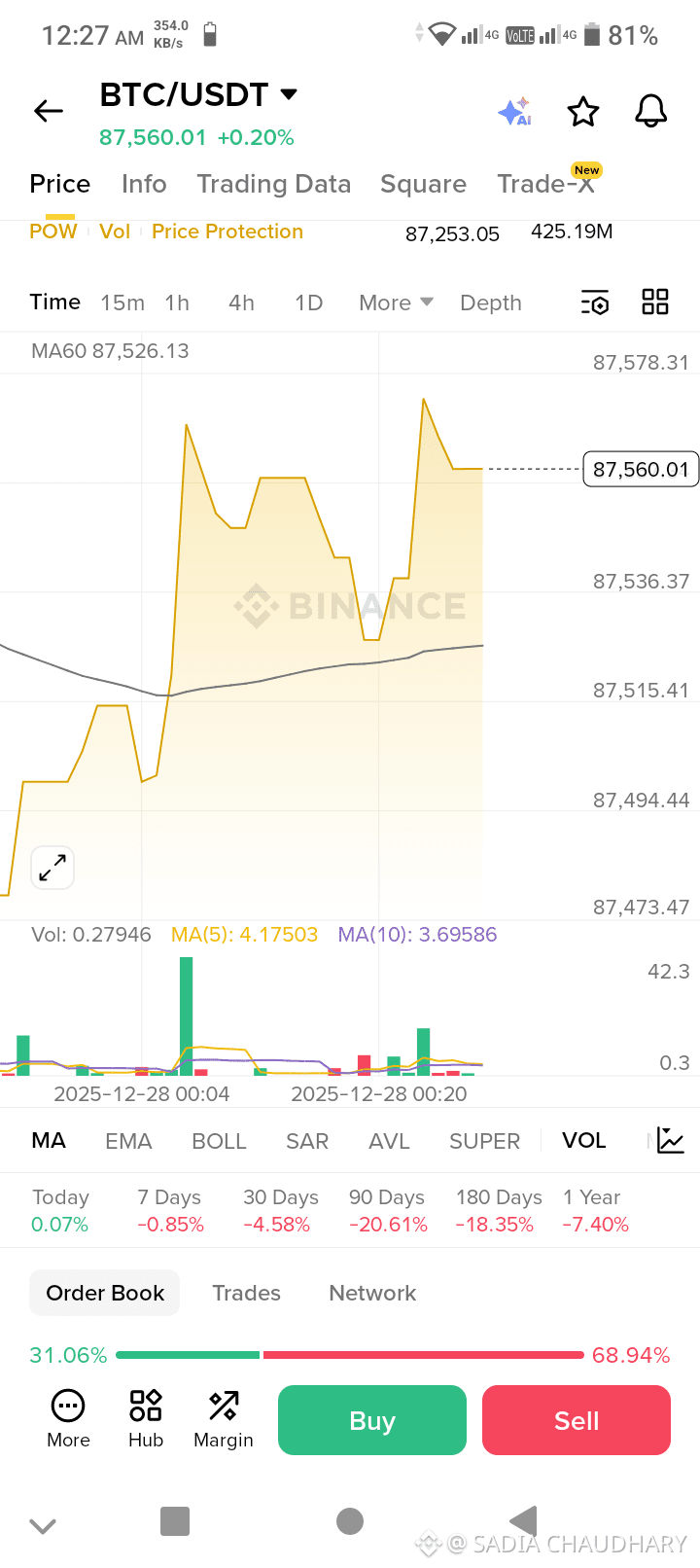
こちらがBTC USDTに関する最新情報です:
- *現在の価格*: $87,526
- *時価総額*: $1.75兆
- *24時間の変化*: +0.10%
- *7日間の変化*: -0.77%
- *1年間の変化*: -8.63% ¹ ² ³
*価格予測:*
- *2025年12月28日*: $88,375
- *2025年12月29日*: $90,321
- *2026年1月1日*: $95,541
- *2026年の高値*: $95,133
*テクニカル分析:*
- *RSI (14)*: 42.97 (中立)
- *50日SMA*: $92,133 (売り)
- *200日SMA*: $100,750 (売り)
仮想通貨市場は非常に変動が激しいため、予測は変更される可能性があります。
BTC USDTの価格の動向やテクニカル指標についてもっと知りたいですか?
$BTC
10
207
ログインして、さらにコンテンツを読む
厳選トピックで世界の暗号資産トレーダーの仲間入り
⚡️ 暗号資産に関する最新かつ有益な情報が見つかります。
💬 世界最大の暗号資産取引所から信頼されています。
👍 認証を受けたクリエイターから、有益なインサイトを得られます。
メール / 電話番号