
Remedan Ali
17 投稿

Remedan Ali
取引を発注
低高頻度トレーダー
2.2年
122 フォロー
34 フォロワー
30 いいね
投稿
ポートフォリオ
すべて
引用
翻訳参照
Title:
🚀 Is Now the Right Time to Buy Crypto?
Content:
The crypto market is always moving, and many people are asking: is this the right time to enter?
From my view, timing the market perfectly is almost impossible. Instead, focusing on long-term growth makes more sense. Coins like Bitcoin and Ethereum have shown strong recovery after every major drop.
One strategy I like is DCA (Dollar-Cost Averaging). This means buying small amounts regularly instead of investing everything at once. It reduces risk and stress.
Also, always manage your risk. Never invest money you can’t afford to lose.
Crypto is not just about quick profit — it’s about patience and learning.
What do you think — are we early or late in crypto? 👇
#Crypto #Bitcoin #Binance #ETH #Trading
🚀 Is Now the Right Time to Buy Crypto?
Content:
The crypto market is always moving, and many people are asking: is this the right time to enter?
From my view, timing the market perfectly is almost impossible. Instead, focusing on long-term growth makes more sense. Coins like Bitcoin and Ethereum have shown strong recovery after every major drop.
One strategy I like is DCA (Dollar-Cost Averaging). This means buying small amounts regularly instead of investing everything at once. It reduces risk and stress.
Also, always manage your risk. Never invest money you can’t afford to lose.
Crypto is not just about quick profit — it’s about patience and learning.
What do you think — are we early or late in crypto? 👇
#Crypto #Bitcoin #Binance #ETH #Trading
翻訳参照
Fabric FoundationAutomation conversations usually drift toward intelligence better models, faster hardware, machines making smarter decisions. Yet the more I think about large scale robotic systems, the less convinced I am that intelligence alone carries the system. Coordination seems to matter more. And coordination, strangely enough, depends on records.
That is roughly where the thinking around the Fabric Foundation begins to make sense.
Fabric doesn’t start with the robot. It starts with the infrastructure around robotic work. The assumption seems to be that when machines operate across networks factories, logistics systems, fleets of devices someone needs a shared way to confirm what actually happened. A public ledger, in simple terms, is just that: a shared log where actions and data can be written in a way multiple participants can verify.
But those records quietly change the shape of automation. When robotic actions are logged and verified, they stop looking like isolated machine behaviors. They start to resemble events inside a system observable, comparable, sometimes even accountable.
Which raises an interesting design pressure. Verification improves trust, but it also forces decisions about transparency. How much machine activity should be recorded? Who can inspect it? At what point does coordination infrastructure become surveillance infrastructure?
I don’t think automation systems have settled those questions yet. The technology for coordination is arriving quickly. The rules around it who verifies, who governs, who benefits seem slower to form.$ROBO #ROBO
That is roughly where the thinking around the Fabric Foundation begins to make sense.
Fabric doesn’t start with the robot. It starts with the infrastructure around robotic work. The assumption seems to be that when machines operate across networks factories, logistics systems, fleets of devices someone needs a shared way to confirm what actually happened. A public ledger, in simple terms, is just that: a shared log where actions and data can be written in a way multiple participants can verify.
But those records quietly change the shape of automation. When robotic actions are logged and verified, they stop looking like isolated machine behaviors. They start to resemble events inside a system observable, comparable, sometimes even accountable.
Which raises an interesting design pressure. Verification improves trust, but it also forces decisions about transparency. How much machine activity should be recorded? Who can inspect it? At what point does coordination infrastructure become surveillance infrastructure?
I don’t think automation systems have settled those questions yet. The technology for coordination is arriving quickly. The rules around it who verifies, who governs, who benefits seem slower to form.$ROBO #ROBO
翻訳参照
BPYK8ZU8EK
翻訳参照
#robo $ROBO Lately, I’ve noticed something: almost every AI project wants to talk about speed, scale, or model performance. Everyone wants smarter answers, faster generation, bigger ecosystems. But the question I keep coming back to is much simpler than that: can I trust the answer in the first place?
That’s exactly why Mira stands out to me.
Mira is not trying to win the race to make AI sound more impressive. It is trying to solve the deeper problem underneath the whole industry: verification. Its own docs describe Mira as a decentralized trust layer for AI outputs, where claims can be checked, verified, and backed economically instead of being accepted blindly just because one model sounded confident.
The real problem Mira is trying to fix
One thing I think a lot of people underestimate is how dangerous AI becomes once it moves from “content generation” into real decision-making. If AI starts touching finance, research, compliance, healthcare, trading, or autonomous workflows, then hallucinations stop being funny mistakes and start becoming expensive ones.
That’s the exact gap Mira is targeting.
Instead of treating an AI answer like one final block of text, Mira’s system breaks outputs into clear, verifiable claims and routes them through a decentralized verification process. The point is not just to ask another model for an opinion. The point is to make the answer pass through a network where trust is earned through verification and backed by incentives. Binance Research describes this as an “economic security layer,” where validators stake value to participate and the system is designed to identify lazy or malicious behavior.
What makes the model interesting to me
What I personally like about Mira is that it feels practical.
A lot of AI narratives are abstract. Mira’s is very direct: if AI is going to be used seriously, then we need a way to verify what it says and attach that verification to real products. Mira’s own token documentation says the network is designed so the token is used for staking, governance, validator participation
That’s exactly why Mira stands out to me.
Mira is not trying to win the race to make AI sound more impressive. It is trying to solve the deeper problem underneath the whole industry: verification. Its own docs describe Mira as a decentralized trust layer for AI outputs, where claims can be checked, verified, and backed economically instead of being accepted blindly just because one model sounded confident.
The real problem Mira is trying to fix
One thing I think a lot of people underestimate is how dangerous AI becomes once it moves from “content generation” into real decision-making. If AI starts touching finance, research, compliance, healthcare, trading, or autonomous workflows, then hallucinations stop being funny mistakes and start becoming expensive ones.
That’s the exact gap Mira is targeting.
Instead of treating an AI answer like one final block of text, Mira’s system breaks outputs into clear, verifiable claims and routes them through a decentralized verification process. The point is not just to ask another model for an opinion. The point is to make the answer pass through a network where trust is earned through verification and backed by incentives. Binance Research describes this as an “economic security layer,” where validators stake value to participate and the system is designed to identify lazy or malicious behavior.
What makes the model interesting to me
What I personally like about Mira is that it feels practical.
A lot of AI narratives are abstract. Mira’s is very direct: if AI is going to be used seriously, then we need a way to verify what it says and attach that verification to real products. Mira’s own token documentation says the network is designed so the token is used for staking, governance, validator participation
翻訳参照
BPYK8ZU8EK

ShadowChain1
·
--
🚨$SOL — $270K AIの誤り 🐅ショート $SOL 今
AIエージェントは$4を送る予定でした…
代わりに、総供給量の5.2% — 5200万トークン(約$270K)を送信しました。
受取人は売却しました。
市場は崩壊しました。
数秒で混乱が生じました。
これが暗号通貨です — 一つのミスで、何百万が消えました。
問題は…
もしあなたがそれを受け取ったら、返しますか、それともバッグを確保しますか? 👀🐅
AIエージェントは$4を送る予定でした…
代わりに、総供給量の5.2% — 5200万トークン(約$270K)を送信しました。
受取人は売却しました。
市場は崩壊しました。
数秒で混乱が生じました。
これが暗号通貨です — 一つのミスで、何百万が消えました。
問題は…
もしあなたがそれを受け取ったら、返しますか、それともバッグを確保しますか? 👀🐅
翻訳参照
BPYK8ZU8EK
Way to earn
·
--
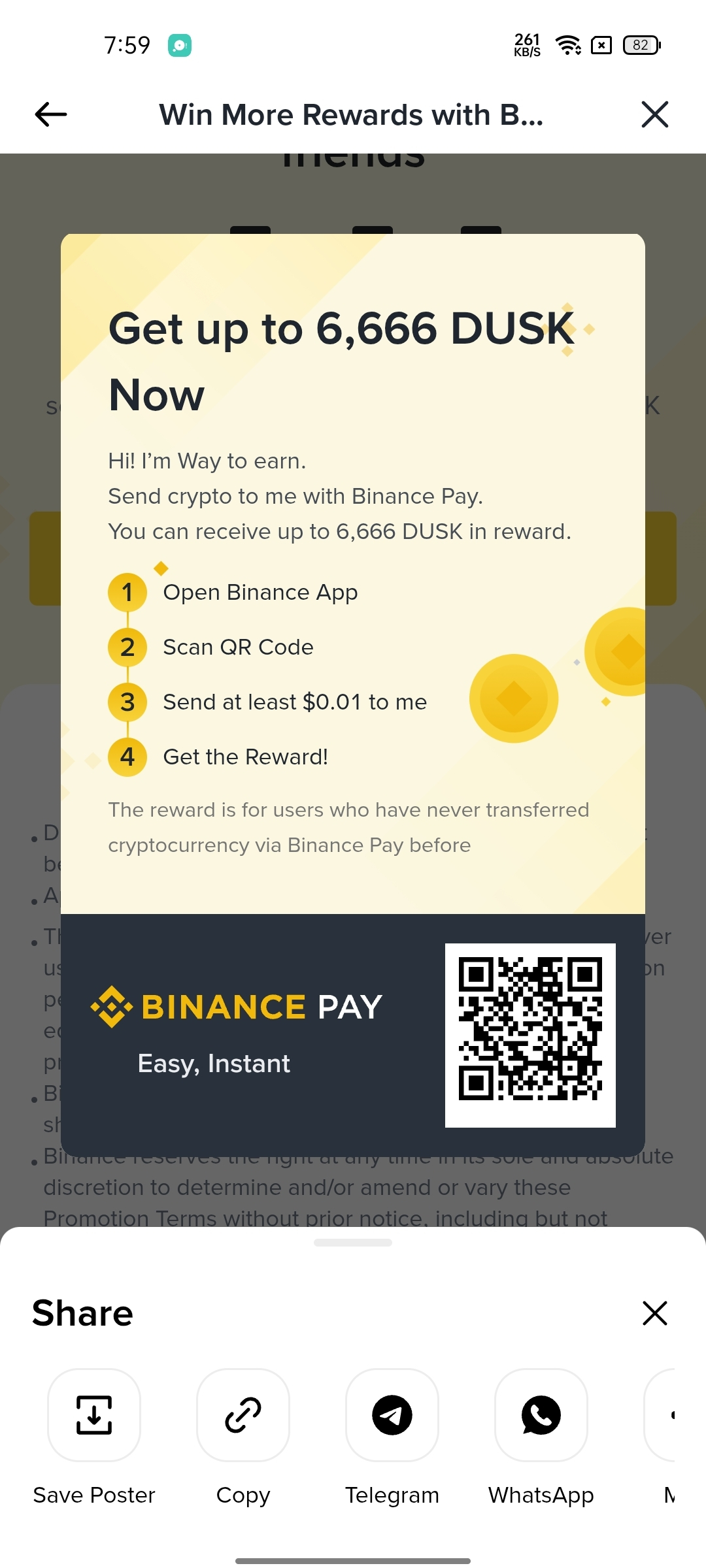
1セント($0.01)は6,666 $DUSKをもたらす可能性があります!
Click here to participate 🎁
Binance Payを使ったことがありますか?もしないなら、最初の取引があなたの最も幸運なものになるかもしれません。私たちは大量のDUSKトークンを配布しており、参加するのは1分もかかりません。
• 勝つための方法:
友達にギフトを送るのはとても簡単です。
ステップ1: ☝️ 参加する
ステップ2: 友達に少なくとも$0.01(はい、たった1セント!)の暗号を送る。
ステップ3: それだけです!あなたは最大6,666 DUSKを獲得する資格があります。
😴 幸運を祈ります💐
Click here to participate 🎁
Binance Payを使ったことがありますか?もしないなら、最初の取引があなたの最も幸運なものになるかもしれません。私たちは大量のDUSKトークンを配布しており、参加するのは1分もかかりません。
• 勝つための方法:
友達にギフトを送るのはとても簡単です。
ステップ1: ☝️ 参加する
ステップ2: 友達に少なくとも$0.01(はい、たった1セント!)の暗号を送る。
ステップ3: それだけです!あなたは最大6,666 DUSKを獲得する資格があります。
😴 幸運を祈ります💐
翻訳参照
1. Crypto Motivation Post
> Every dip has two sides: fear for some, opportunity for others. The difference is mindset. 🚀
#Crypto #BinanceFeed
---
2. Market Talk Post
> Ethereum holding strong above $3K — bulls might be waking up again. What’s your prediction for next week?
#ETH #Trading
---
3. Educational Post
> Simple reminder: Always double-check contract addresses before trading any new token. Scams look real until they don’t.
#CryptoTips #Safety
---
4. Engagement Post
> If you had $100 to start trading today, which coin would you choose — BTC, ETH, or something else?
Comment below 👇
#CryptoCommunity
翻訳参照
enjoy it
翻訳参照
guys pump
ログインして、さらにコンテンツを読む