
tolya68
68 投稿

tolya68
報告
ユーザーをブロック
10 フォロー
25 フォロワー
76 いいね
投稿
·
--
固定額 ЧИ 固定レシオ をコピートレードで使うべき? ただの通常の例で違いをすぐ理解してみよう
たとえば、私はトレーダーのコピートレードに500 USDTを割り当てたとします。
パターン1:固定レシオ(Fixed Ratio)。
トレーダーには1000 USDTがあり、ある取引にポートフォリオの20%を投じています。
するとシステムは、私のコピーポートフォリオの20%をほぼ同じように使います。
私の場合、それは約100 USDTです。
パターン2:固定額(Fixed Amount)。
私は単純に、たとえば1回の取引に30 USDTを設定します。
トレーダーが自分の残高の5%を使っていようと40%を使っていようと、私の新しい取引は、残高が足りる限り、私が指定した金額のままになります。
つまり:
Fixed Ratio = トレーダーのリスク配分の割合もそのままコピーします。
Fixed Amount = 各取引の金額は自分で決めます。
そしてこれは、ポートフォリオの動きがまったく別物になるということです。
さらに重要なのは、スリッページや市場環境のために、実際の取引サイズが少し変わる可能性があることです。
そのため「トレーダーをコピーする」とは「数学的に完全に同一の結果を得る」ことではありません。
#CreateWithBinance #ShareMyTradFi #CopyTrading
固定額 ЧИ 固定レシオ をコピートレードで使うべき? ただの通常の例で違いをすぐ理解してみよう
たとえば、私はトレーダーのコピートレードに500 USDTを割り当てたとします。
パターン1:固定レシオ(Fixed Ratio)。
トレーダーには1000 USDTがあり、ある取引にポートフォリオの20%を投じています。
するとシステムは、私のコピーポートフォリオの20%をほぼ同じように使います。
私の場合、それは約100 USDTです。
パターン2:固定額(Fixed Amount)。
私は単純に、たとえば1回の取引に30 USDTを設定します。
トレーダーが自分の残高の5%を使っていようと40%を使っていようと、私の新しい取引は、残高が足りる限り、私が指定した金額のままになります。
つまり:
Fixed Ratio = トレーダーのリスク配分の割合もそのままコピーします。
Fixed Amount = 各取引の金額は自分で決めます。
そしてこれは、ポートフォリオの動きがまったく別物になるということです。
さらに重要なのは、スリッページや市場環境のために、実際の取引サイズが少し変わる可能性があることです。
そのため「トレーダーをコピーする」とは「数学的に完全に同一の結果を得る」ことではありません。
#CreateWithBinance #ShareMyTradFi #CopyTrading
たとえば、私はトレーダーのコピートレードに500 USDTを割り当てたとします。
パターン1:固定レシオ(Fixed Ratio)。
トレーダーには1000 USDTがあり、ある取引にポートフォリオの20%を投じています。
するとシステムは、私のコピーポートフォリオの20%をほぼ同じように使います。
私の場合、それは約100 USDTです。
パターン2:固定額(Fixed Amount)。
私は単純に、たとえば1回の取引に30 USDTを設定します。
トレーダーが自分の残高の5%を使っていようと40%を使っていようと、私の新しい取引は、残高が足りる限り、私が指定した金額のままになります。
つまり:
Fixed Ratio = トレーダーのリスク配分の割合もそのままコピーします。
Fixed Amount = 各取引の金額は自分で決めます。
そしてこれは、ポートフォリオの動きがまったく別物になるということです。
さらに重要なのは、スリッページや市場環境のために、実際の取引サイズが少し変わる可能性があることです。
そのため「トレーダーをコピーする」とは「数学的に完全に同一の結果を得る」ことではありません。
#CreateWithBinance #ShareMyTradFi #CopyTrading
1
210
·
--
$25で本当に、どんな株式ポートフォリオでも作れるんですか?
普通の証券会社なら、私はわざわざやろうとは思わないでしょう。
でも bStocks なら、最低入金が $5 からです。
つまり完全に実験として:
$5 - テクノロジー
$5 - 半導体
$5 - 消費者セクター
$5 - 金融
$5 - さらに選んだもう1つのセクター
こうして、1社1本の単一ベットじゃなくて、5つの小さなポジションを持てる。
ここで私が好きなのは、$25という数字そのものではありません。
大事なのは別のところ:小さい金額だと、構造を考えざるを得なくなる。
「今どの銘柄を買う?」ではなく、
・ポジションは何個必要か;
・5つの同じ tech 企業を買ってしまってないか;
・ポートフォリオのどれだけが1つのセクターに依存しているか。
大きい金額でも、これをやる必要はあります。
ただ、$25ならミスに気づくのがかなり安い。
#CreateWithBinance #ShareMyTradFi #bStocks
$25で本当に、どんな株式ポートフォリオでも作れるんですか?
普通の証券会社なら、私はわざわざやろうとは思わないでしょう。
でも bStocks なら、最低入金が $5 からです。
つまり完全に実験として:
$5 - テクノロジー
$5 - 半導体
$5 - 消費者セクター
$5 - 金融
$5 - さらに選んだもう1つのセクター
こうして、1社1本の単一ベットじゃなくて、5つの小さなポジションを持てる。
ここで私が好きなのは、$25という数字そのものではありません。
大事なのは別のところ:小さい金額だと、構造を考えざるを得なくなる。
「今どの銘柄を買う?」ではなく、
・ポジションは何個必要か;
・5つの同じ tech 企業を買ってしまってないか;
・ポートフォリオのどれだけが1つのセクターに依存しているか。
大きい金額でも、これをやる必要はあります。
ただ、$25ならミスに気づくのがかなり安い。
#CreateWithBinance #ShareMyTradFi #bStocks
普通の証券会社なら、私はわざわざやろうとは思わないでしょう。
でも bStocks なら、最低入金が $5 からです。
つまり完全に実験として:
$5 - テクノロジー
$5 - 半導体
$5 - 消費者セクター
$5 - 金融
$5 - さらに選んだもう1つのセクター
こうして、1社1本の単一ベットじゃなくて、5つの小さなポジションを持てる。
ここで私が好きなのは、$25という数字そのものではありません。
大事なのは別のところ:小さい金額だと、構造を考えざるを得なくなる。
「今どの銘柄を買う?」ではなく、
・ポジションは何個必要か;
・5つの同じ tech 企業を買ってしまってないか;
・ポートフォリオのどれだけが1つのセクターに依存しているか。
大きい金額でも、これをやる必要はあります。
ただ、$25ならミスに気づくのがかなり安い。
#CreateWithBinance #ShareMyTradFi #bStocks
1
84
·
--
ブリッシュ
翻訳参照
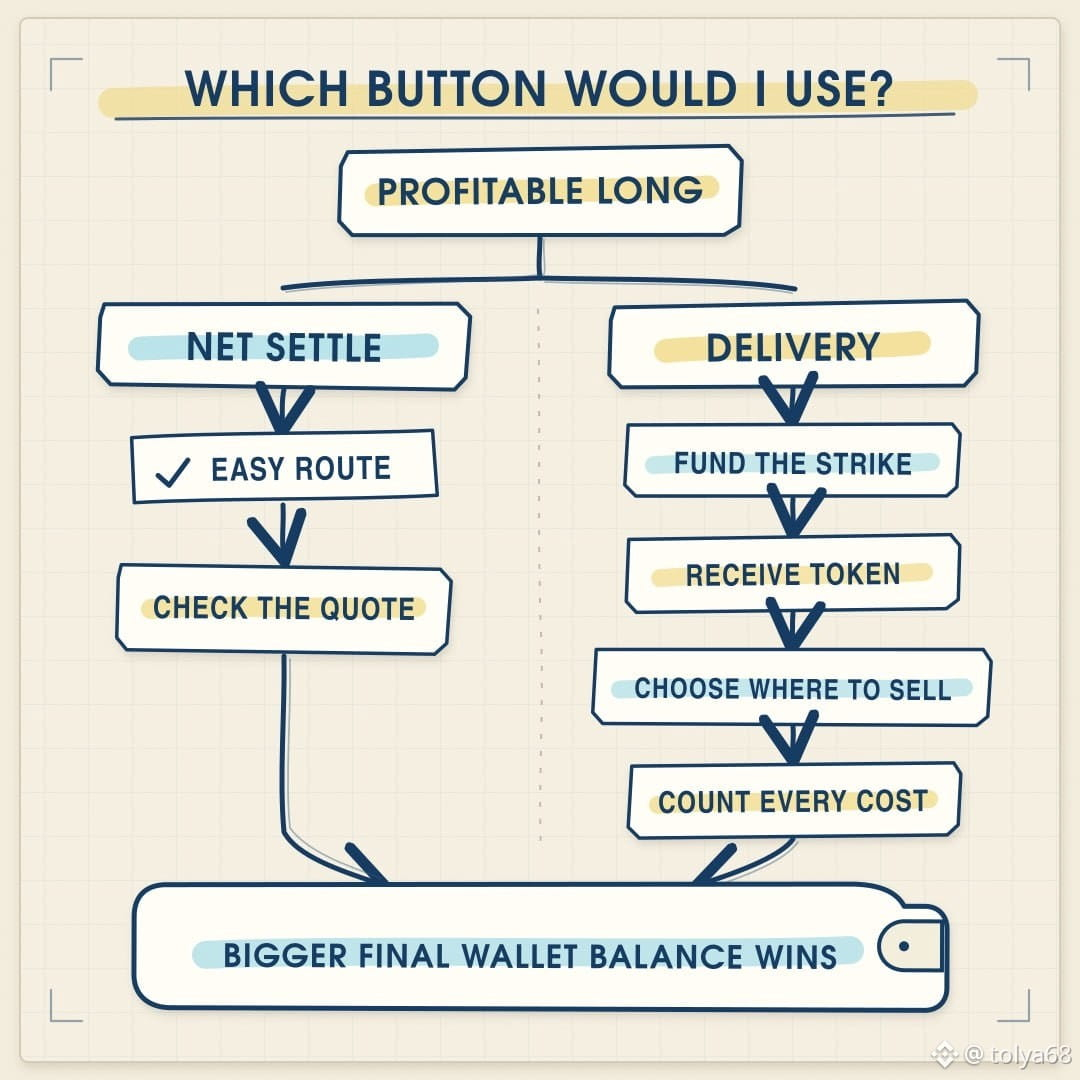
I kept staring at the two exercise buttons in TermMax Alpha and thinking: okay, but which one would I actually use?
Say my Long is in profit.
Net Settle is the easy answer. The protocol handles the settlement, and if the position is small and on-chain liquidity is decent, I probably wouldn't overcomplicate it.
Delivery is where it gets interesting. I'd fund the purchase at the strike, receive the underlying token, then choose where to sell it. If a large Net Settle would hit a thin DEX pool, that extra control could save more than it costs.
Could. Not automatically.
I'd still have to count transfer costs, venue risk, timing, and the capital needed to exercise. Delivery isn't a magic slippage-off button.
My check would be pretty basic:
1. What does Net Settle leave me?
2. What would Delivery leave me after every cost?
3. How much extra work and capital does route two need?
I'd choose the bigger final wallet balance. Not the fancier button.
So this isn't really cash versus token. It's convenience versus control over execution.
@termmax #TermMax
I kept staring at the two exercise buttons in TermMax Alpha and thinking: okay, but which one would I actually use?
Say my Long is in profit.
Net Settle is the easy answer. The protocol handles the settlement, and if the position is small and on-chain liquidity is decent, I probably wouldn't overcomplicate it.
Delivery is where it gets interesting. I'd fund the purchase at the strike, receive the underlying token, then choose where to sell it. If a large Net Settle would hit a thin DEX pool, that extra control could save more than it costs.
Could. Not automatically.
I'd still have to count transfer costs, venue risk, timing, and the capital needed to exercise. Delivery isn't a magic slippage-off button.
My check would be pretty basic:
1. What does Net Settle leave me?
2. What would Delivery leave me after every cost?
3. How much extra work and capital does route two need?
I'd choose the bigger final wallet balance. Not the fancier button.
So this isn't really cash versus token. It's convenience versus control over execution.
@TermMax #TermMax
Say my Long is in profit.
Net Settle is the easy answer. The protocol handles the settlement, and if the position is small and on-chain liquidity is decent, I probably wouldn't overcomplicate it.
Delivery is where it gets interesting. I'd fund the purchase at the strike, receive the underlying token, then choose where to sell it. If a large Net Settle would hit a thin DEX pool, that extra control could save more than it costs.
Could. Not automatically.
I'd still have to count transfer costs, venue risk, timing, and the capital needed to exercise. Delivery isn't a magic slippage-off button.
My check would be pretty basic:
1. What does Net Settle leave me?
2. What would Delivery leave me after every cost?
3. How much extra work and capital does route two need?
I'd choose the bigger final wallet balance. Not the fancier button.
So this isn't really cash versus token. It's convenience versus control over execution.
@TermMax #TermMax
2
1
65
·
--
ブリッシュ
金庫に預ける前に、お金がどのようにして返ってくるのかを知りたいです。
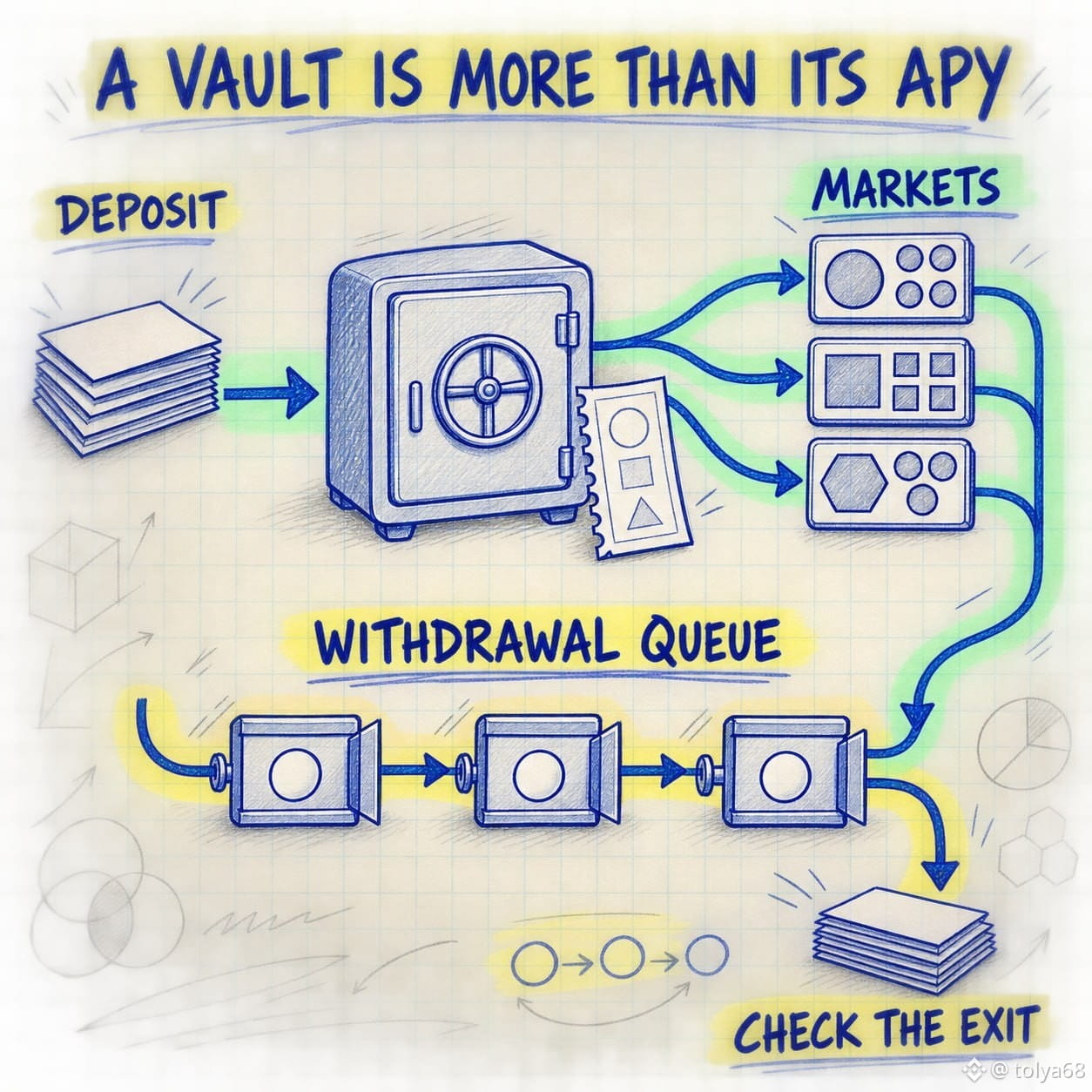
TermMaxの金庫は、1つの負債資産を複数の市場に展開できます。預金者はERC-4626の持分を受け取りますが、償還(払い戻し)には金庫の出金キューを通る必要があります。大口の払い戻しでは、キュレーターが先に注文を調整したり、ポジションを償還したりする必要があるかもしれません。
そのため、私は「ERC-4626」を「即時の現金」とは読みません。ERC-4626は持分の会計処理と出金を標準化するものであり、裏にあるポジションの流動性制約を取り除くわけではありません。
私の簡単なチェックリストは次のとおりです。市場構成、収容力(キャパシティ)、出金キュー、利用可能な準備金、そしてキュレーター。広告されているリターンは金庫の物語の半分にすぎません。出口設計が残りの半分です。
@termmax #TermMax
金庫に預ける前に、お金がどのようにして返ってくるのかを知りたいです。
TermMaxの金庫は、1つの負債資産を複数の市場に展開できます。預金者はERC-4626の持分を受け取りますが、償還(払い戻し)には金庫の出金キューを通る必要があります。大口の払い戻しでは、キュレーターが先に注文を調整したり、ポジションを償還したりする必要があるかもしれません。
そのため、私は「ERC-4626」を「即時の現金」とは読みません。ERC-4626は持分の会計処理と出金を標準化するものであり、裏にあるポジションの流動性制約を取り除くわけではありません。
私の簡単なチェックリストは次のとおりです。市場構成、収容力(キャパシティ)、出金キュー、利用可能な準備金、そしてキュレーター。広告されているリターンは金庫の物語の半分にすぎません。出口設計が残りの半分です。
@TermMax #TermMax
TermMaxの金庫は、1つの負債資産を複数の市場に展開できます。預金者はERC-4626の持分を受け取りますが、償還(払い戻し)には金庫の出金キューを通る必要があります。大口の払い戻しでは、キュレーターが先に注文を調整したり、ポジションを償還したりする必要があるかもしれません。
そのため、私は「ERC-4626」を「即時の現金」とは読みません。ERC-4626は持分の会計処理と出金を標準化するものであり、裏にあるポジションの流動性制約を取り除くわけではありません。
私の簡単なチェックリストは次のとおりです。市場構成、収容力(キャパシティ)、出金キュー、利用可能な準備金、そしてキュレーター。広告されているリターンは金庫の物語の半分にすぎません。出口設計が残りの半分です。
@TermMax #TermMax
2
3
55
·
--
ブリッシュ
#bStocksCIS @BinanceCIS $AAPLB
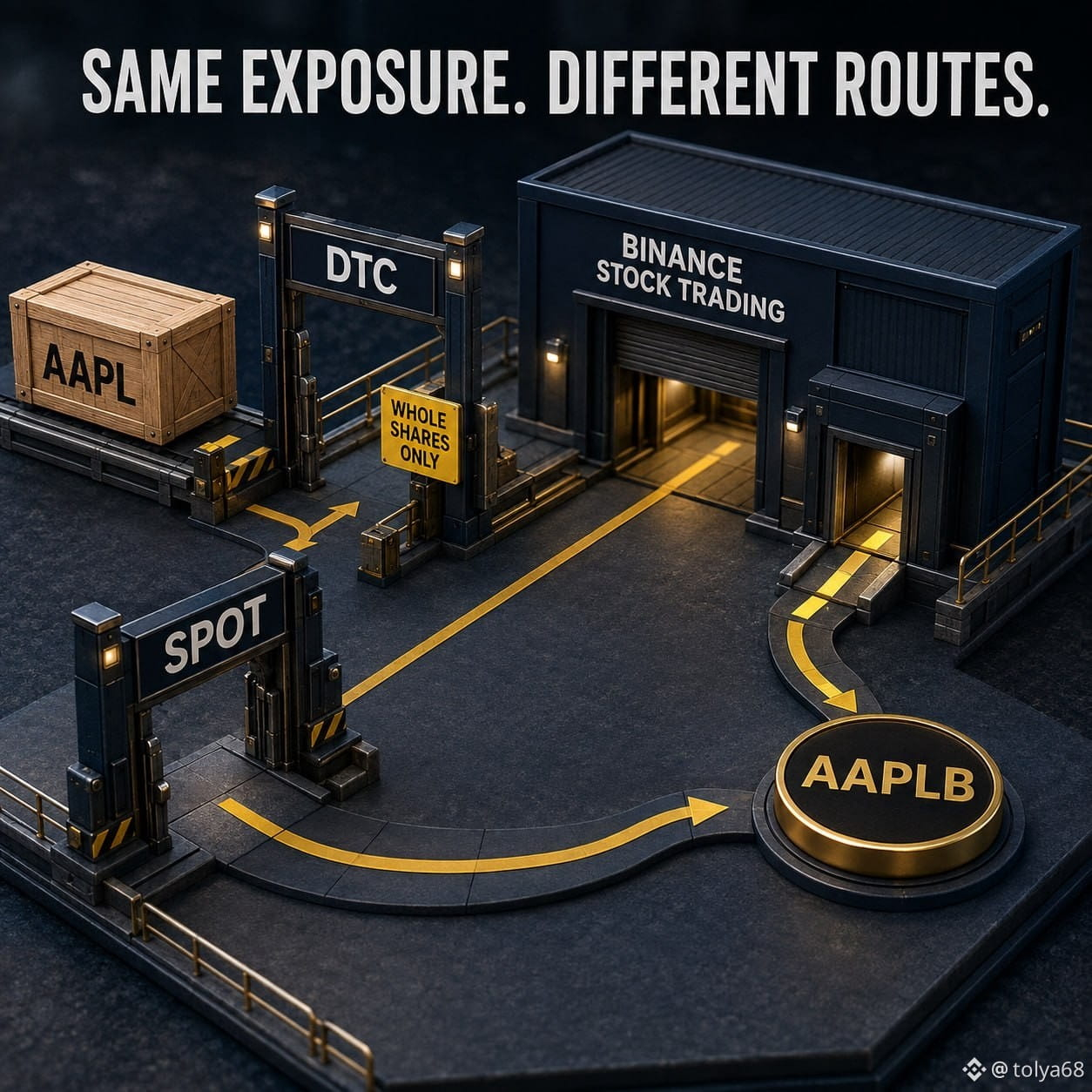
DTC を通じて Binance に株式を移すことは、トークンを入金することとは同じではありません。
現在の入庫(transfer-in)ガイドでは、ブローカー間の有価証券プロセスについて説明しています。送付するブローカーは、DTC の決済(settlement)指示を用いて、対応している株式を Binance の証券ブローカーパートナーへ送付します。
最初の実務上の境界は数量です。DTC の移管依頼(transfer request)では、整数の株数のみが受け付けられます。
外部口座に 3.4 AAPL が含まれている場合、依頼では 3.4 株を指定できません。端数の数量は依頼が却下される原因となり、その端数が自動的に $AAPLB になるわけではありません。
他にもいくつかのチェックポイントがあります:
双方の証券口座に記載されている法的な氏名(legal name)が一致している必要があります。
株式の銘柄(stock symbols)と数量が、決済指示と一致している必要があります。
対応している株式のみが移管できます。
1 回の依頼には最大 50 種類の異なる株式を含めることができます。
依頼は、月曜から金曜までの毎日 07:00 UTC に日次バッチで処理され、Binance では完了までに少なくとも 14 営業日を確保するよう案内しています。
最も重要なのは、到着する資産は依然として Binance の株式取引における株式ポジションだという点です。対象となる AAPL ポジションを $AAPLB is に変換することは、別のトークン変換(Token Conversion)アクションです。$AAPLB is を Spot で直接購入するのは 3 つ目のルートです。
つまり、「Apple のエクスポージャーを Binance に移す」という表現は、次の 3 つの非常に異なる操作を指す可能性があります:
1. ブローカー間の DTC 株式移管
2. 株式から bStock への変換
3. Spot 上での bStock の直接購入
会社のエクスポージャーは似て見えるかもしれませんが、資産・口座・決済レール(settlement rail)は相互に置き換え可能ではありません。
{spot}(AAPLBUSDT)
#bStocksCIS @BinanceCIS $AAPLB
DTC を通じて Binance に株式を移すことは、トークンを入金することとは同じではありません。
現在の入庫(transfer-in)ガイドでは、ブローカー間の有価証券プロセスについて説明しています。送付するブローカーは、DTC の決済(settlement)指示を用いて、対応している株式を Binance の証券ブローカーパートナーへ送付します。
最初の実務上の境界は数量です。DTC の移管依頼(transfer request)では、整数の株数のみが受け付けられます。
外部口座に 3.4 AAPL が含まれている場合、依頼では 3.4 株を指定できません。端数の数量は依頼が却下される原因となり、その端数が自動的に $AAPLB になるわけではありません。
他にもいくつかのチェックポイントがあります:
双方の証券口座に記載されている法的な氏名(legal name)が一致している必要があります。
株式の銘柄(stock symbols)と数量が、決済指示と一致している必要があります。
対応している株式のみが移管できます。
1 回の依頼には最大 50 種類の異なる株式を含めることができます。
依頼は、月曜から金曜までの毎日 07:00 UTC に日次バッチで処理され、Binance では完了までに少なくとも 14 営業日を確保するよう案内しています。
最も重要なのは、到着する資産は依然として Binance の株式取引における株式ポジションだという点です。対象となる AAPL ポジションを $AAPLB is に変換することは、別のトークン変換(Token Conversion)アクションです。$AAPLB is を Spot で直接購入するのは 3 つ目のルートです。
つまり、「Apple のエクスポージャーを Binance に移す」という表現は、次の 3 つの非常に異なる操作を指す可能性があります:
1. ブローカー間の DTC 株式移管
2. 株式から bStock への変換
3. Spot 上での bStock の直接購入
会社のエクスポージャーは似て見えるかもしれませんが、資産・口座・決済レール(settlement rail)は相互に置き換え可能ではありません。
DTC を通じて Binance に株式を移すことは、トークンを入金することとは同じではありません。
現在の入庫(transfer-in)ガイドでは、ブローカー間の有価証券プロセスについて説明しています。送付するブローカーは、DTC の決済(settlement)指示を用いて、対応している株式を Binance の証券ブローカーパートナーへ送付します。
最初の実務上の境界は数量です。DTC の移管依頼(transfer request)では、整数の株数のみが受け付けられます。
外部口座に 3.4 AAPL が含まれている場合、依頼では 3.4 株を指定できません。端数の数量は依頼が却下される原因となり、その端数が自動的に $AAPLB になるわけではありません。
他にもいくつかのチェックポイントがあります:
双方の証券口座に記載されている法的な氏名(legal name)が一致している必要があります。
株式の銘柄(stock symbols)と数量が、決済指示と一致している必要があります。
対応している株式のみが移管できます。
1 回の依頼には最大 50 種類の異なる株式を含めることができます。
依頼は、月曜から金曜までの毎日 07:00 UTC に日次バッチで処理され、Binance では完了までに少なくとも 14 営業日を確保するよう案内しています。
最も重要なのは、到着する資産は依然として Binance の株式取引における株式ポジションだという点です。対象となる AAPL ポジションを $AAPLB is に変換することは、別のトークン変換(Token Conversion)アクションです。$AAPLB is を Spot で直接購入するのは 3 つ目のルートです。
つまり、「Apple のエクスポージャーを Binance に移す」という表現は、次の 3 つの非常に異なる操作を指す可能性があります:
1. ブローカー間の DTC 株式移管
2. 株式から bStock への変換
3. Spot 上での bStock の直接購入
会社のエクスポージャーは似て見えるかもしれませんが、資産・口座・決済レール(settlement rail)は相互に置き換え可能ではありません。
2
3
72
·
--
ブリッシュ
翻訳参照
I assumed a TermMax loan had one boring ending: repay the debt token and get the collateral back. The protocol gives the borrower another route.
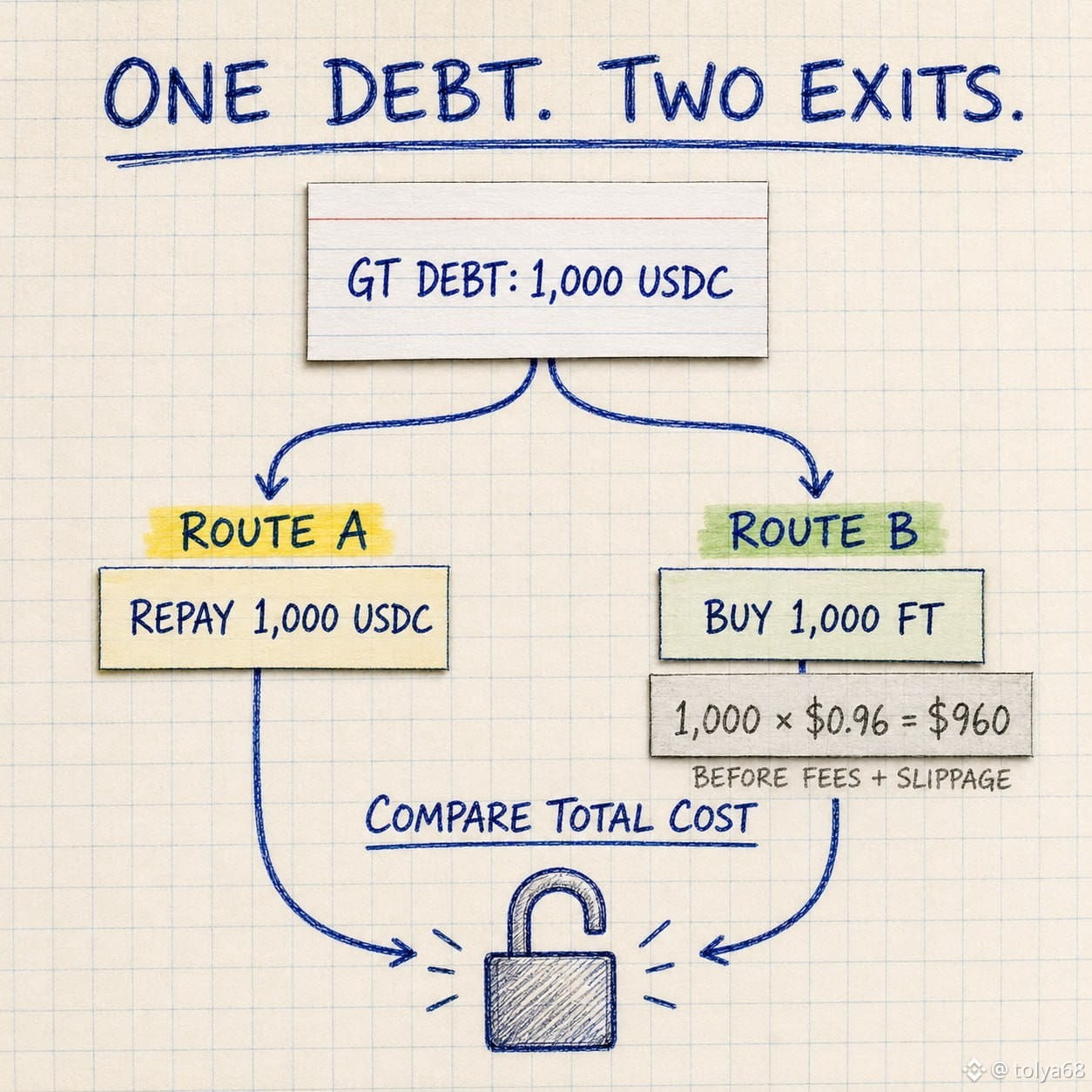
Suppose a GT records 1,000 USDC of debt.
Route A: repay 1,000 USDC directly.
Route B: acquire 1,000 matching Fixed-Rate Tokens and use those FTs to settle the debt. If FT trades at $0.96, the purchase costs $960 before fees, gas and slippage. At $0.99, it costs $990.
Why can that happen? FT trades before maturity. Its price responds to time remaining, prevailing rates and available liquidity. If the market moves in the borrower’s favor, buying back the claim can cost less than repaying at face value.
That is not a guaranteed discount. A large FT order may move through the curve, and execution costs can erase a small saving.
My practical check would be simple: compare the total cost of acquiring enough FT with the direct debt-token repayment. The direct repayment amount gives the borrower a known contractual ceiling before execution costs, but it does not force the more expensive exit when the secondary market offers a cheaper one.
@termmax #TermMax
I assumed a TermMax loan had one boring ending: repay the debt token and get the collateral back. The protocol gives the borrower another route.
Suppose a GT records 1,000 USDC of debt.
Route A: repay 1,000 USDC directly.
Route B: acquire 1,000 matching Fixed-Rate Tokens and use those FTs to settle the debt. If FT trades at $0.96, the purchase costs $960 before fees, gas and slippage. At $0.99, it costs $990.
Why can that happen? FT trades before maturity. Its price responds to time remaining, prevailing rates and available liquidity. If the market moves in the borrower’s favor, buying back the claim can cost less than repaying at face value.
That is not a guaranteed discount. A large FT order may move through the curve, and execution costs can erase a small saving.
My practical check would be simple: compare the total cost of acquiring enough FT with the direct debt-token repayment. The direct repayment amount gives the borrower a known contractual ceiling before execution costs, but it does not force the more expensive exit when the secondary market offers a cheaper one.
@TermMax #TermMax
Suppose a GT records 1,000 USDC of debt.
Route A: repay 1,000 USDC directly.
Route B: acquire 1,000 matching Fixed-Rate Tokens and use those FTs to settle the debt. If FT trades at $0.96, the purchase costs $960 before fees, gas and slippage. At $0.99, it costs $990.
Why can that happen? FT trades before maturity. Its price responds to time remaining, prevailing rates and available liquidity. If the market moves in the borrower’s favor, buying back the claim can cost less than repaying at face value.
That is not a guaranteed discount. A large FT order may move through the curve, and execution costs can erase a small saving.
My practical check would be simple: compare the total cost of acquiring enough FT with the direct debt-token repayment. The direct repayment amount gives the borrower a known contractual ceiling before execution costs, but it does not force the more expensive exit when the secondary market offers a cheaper one.
@TermMax #TermMax
1
67
·
--
ブリッシュ
翻訳参照
#bStocksCIS @BinanceCIS
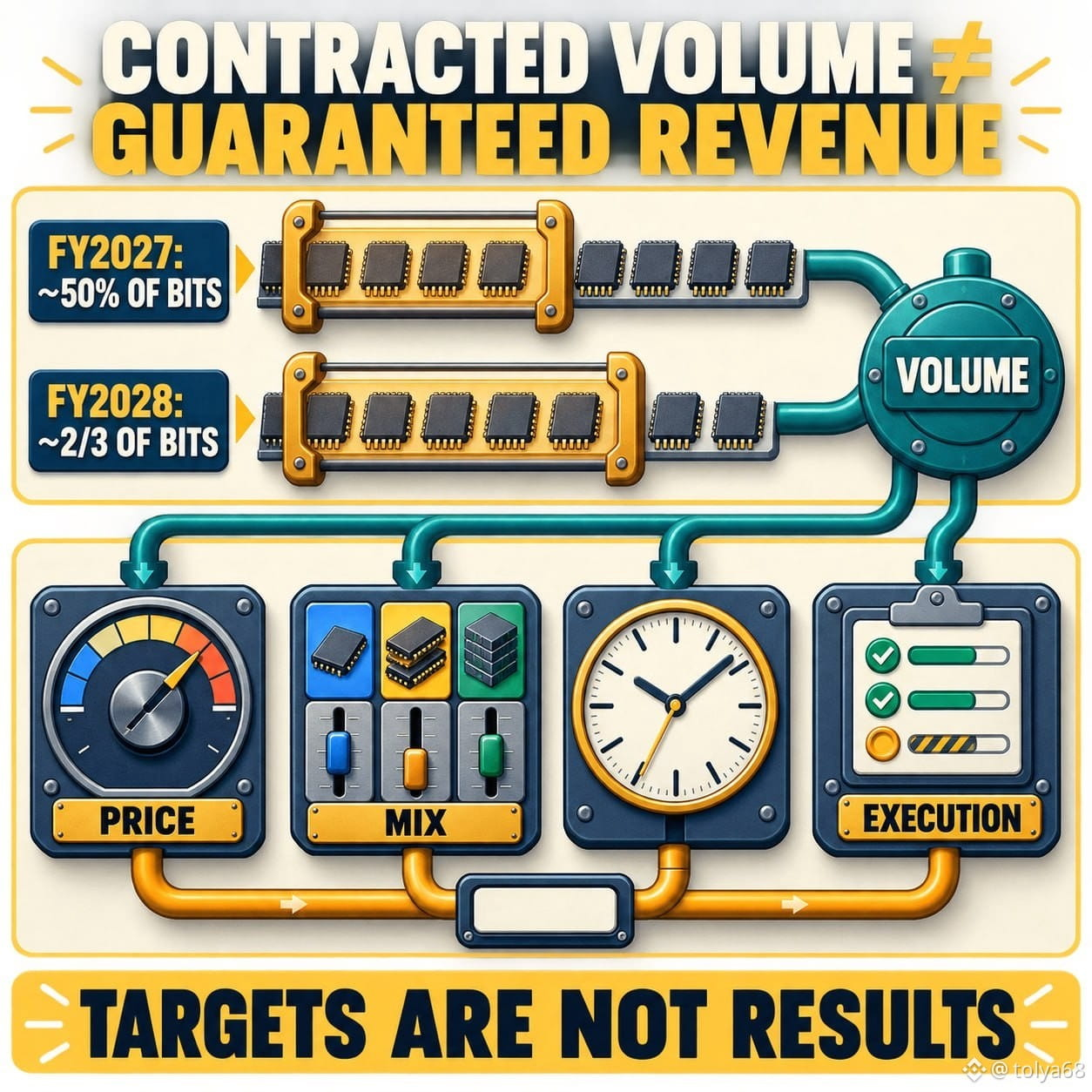
"About 50% of FY2027 bits are covered by new agreements" sounds like 50% of revenue is guaranteed. It is not.
At its August 13 Investor Day, Sandisk said it had signed New Business Model agreements with eight customers covering approximately 50% of FY2027 bits and about two-thirds of FY2028 bits. The contracts use committed volumes, minimum financial guarantees and structured pricing mechanisms.
Here is the practical distinction I use for $SNDKB .
What becomes more visible:
- demand volume
- capacity planning
- minimum customer commitment
- future cash-flow visibility
What is not automatically fixed:
- final selling price
- product mix
- shipment timing
- gross margin
- customer credit and execution risk
A "bit" is physical volume, not a dollar of revenue.
The same caution applies to Sandisk's FY2028 to FY2030 targets: mid-to-high teens revenue growth, about 80% non-GAAP gross margin, about 75% non-GAAP operating margin and about 50% adjusted free-cash-flow margin. These are management targets based on assumptions, not achieved results.
Sandisk also expects to return 100% of excess cash after investing in the business. The important word is "excess": it is the residual after operating and investment needs, not a fixed payout promise.
My four-question check is simple: Is volume committed? Is price fixed or formula-based? Is there a minimum cash guarantee? What can delay recognition?
Would you prefer more predictable contracted volume, even if it may reduce some upside from a sudden spot-price spike?
{spot}(SNDKBUSDT)
#bStocksCIS @BinanceCIS
"About 50% of FY2027 bits are covered by new agreements" sounds like 50% of revenue is guaranteed. It is not.
At its August 13 Investor Day, Sandisk said it had signed New Business Model agreements with eight customers covering approximately 50% of FY2027 bits and about two-thirds of FY2028 bits. The contracts use committed volumes, minimum financial guarantees and structured pricing mechanisms.
Here is the practical distinction I use for $SNDKB .
What becomes more visible:
- demand volume
- capacity planning
- minimum customer commitment
- future cash-flow visibility
What is not automatically fixed:
- final selling price
- product mix
- shipment timing
- gross margin
- customer credit and execution risk
A "bit" is physical volume, not a dollar of revenue.
The same caution applies to Sandisk's FY2028 to FY2030 targets: mid-to-high teens revenue growth, about 80% non-GAAP gross margin, about 75% non-GAAP operating margin and about 50% adjusted free-cash-flow margin. These are management targets based on assumptions, not achieved results.
Sandisk also expects to return 100% of excess cash after investing in the business. The important word is "excess": it is the residual after operating and investment needs, not a fixed payout promise.
My four-question check is simple: Is volume committed? Is price fixed or formula-based? Is there a minimum cash guarantee? What can delay recognition?
Would you prefer more predictable contracted volume, even if it may reduce some upside from a sudden spot-price spike?
"About 50% of FY2027 bits are covered by new agreements" sounds like 50% of revenue is guaranteed. It is not.
At its August 13 Investor Day, Sandisk said it had signed New Business Model agreements with eight customers covering approximately 50% of FY2027 bits and about two-thirds of FY2028 bits. The contracts use committed volumes, minimum financial guarantees and structured pricing mechanisms.
Here is the practical distinction I use for $SNDKB .
What becomes more visible:
- demand volume
- capacity planning
- minimum customer commitment
- future cash-flow visibility
What is not automatically fixed:
- final selling price
- product mix
- shipment timing
- gross margin
- customer credit and execution risk
A "bit" is physical volume, not a dollar of revenue.
The same caution applies to Sandisk's FY2028 to FY2030 targets: mid-to-high teens revenue growth, about 80% non-GAAP gross margin, about 75% non-GAAP operating margin and about 50% adjusted free-cash-flow margin. These are management targets based on assumptions, not achieved results.
Sandisk also expects to return 100% of excess cash after investing in the business. The important word is "excess": it is the residual after operating and investment needs, not a fixed payout promise.
My four-question check is simple: Is volume committed? Is price fixed or formula-based? Is there a minimum cash guarantee? What can delay recognition?
Would you prefer more predictable contracted volume, even if it may reduce some upside from a sudden spot-price spike?
1
1
102
·
--
ブリッシュ
翻訳参照
#bStocksCIS @BinanceCIS
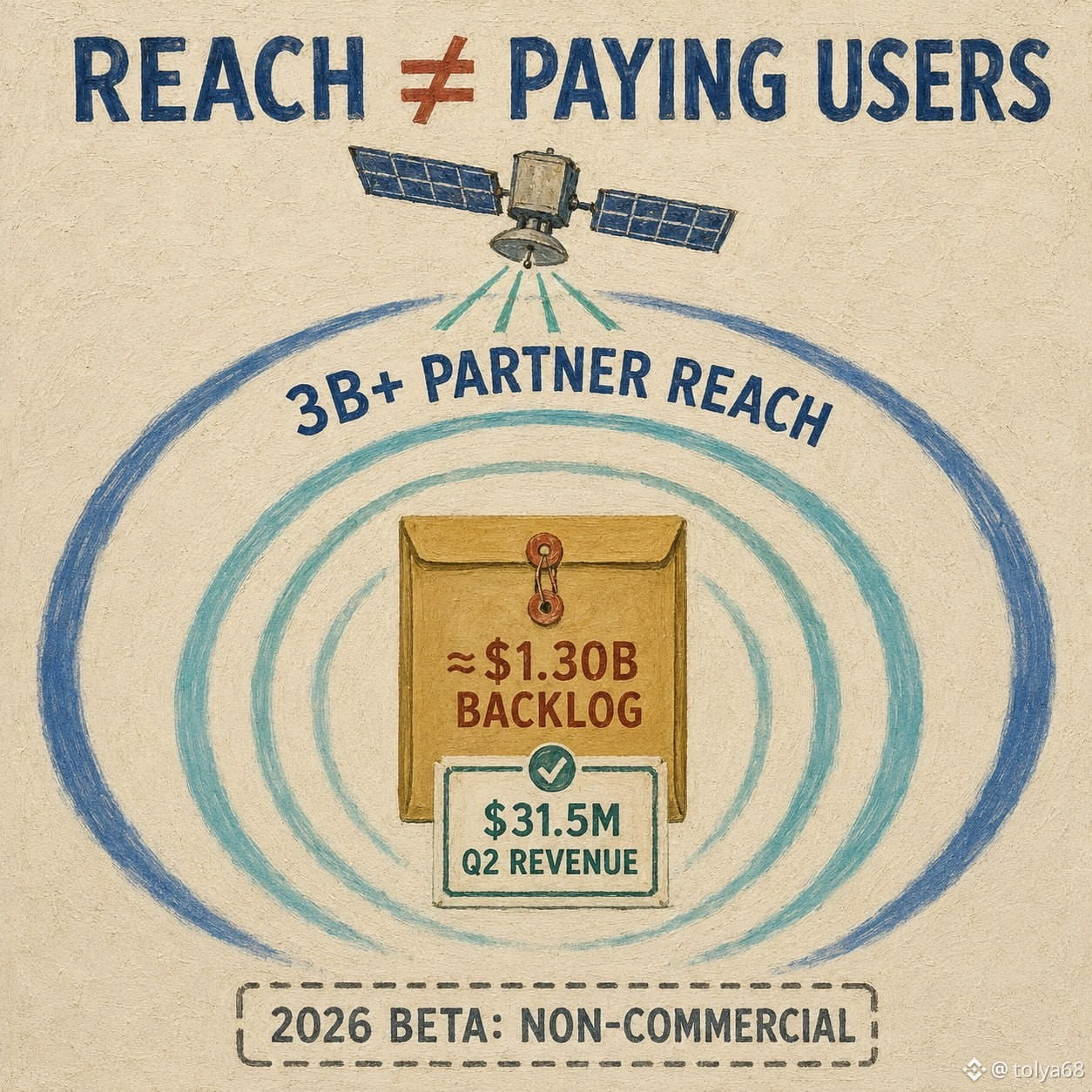
I stopped at AST SpaceMobile's biggest number: "over 3 billion subscribers."
It sounds like users. It is not.
AST says its 60+ mobile-network partners collectively cover more than 3B subscribers. That is potential distribution reach through partners, not 3B people paying AST today.
The commercial ladder is much narrower:
• Q2 revenue: $31.5M
• aggregate contracted revenue backlog: about $1.30B
• 2026 beta: scaled non-commercial usage with selected MNO partners
• constellation: 13 spacecraft in orbit, with BlueBird 17 through 46 in production and assembly
These measures answer four different questions: who could be reached, what is contracted, what has been recognized as revenue, and what infrastructure is ready.
For $ASTSB , I would not throw away the 3B figure. I would relabel it correctly. Partner reach is strategic. Backlog is closer to commercial evidence. Revenue is what has already crossed the accounting line. The gap between them is where execution risk lives.
Which step deserves the most weight today?
{spot}(ASTSBUSDT)
#bStocksCIS @BinanceCIS
I stopped at AST SpaceMobile's biggest number: "over 3 billion subscribers."
It sounds like users. It is not.
AST says its 60+ mobile-network partners collectively cover more than 3B subscribers. That is potential distribution reach through partners, not 3B people paying AST today.
The commercial ladder is much narrower:
• Q2 revenue: $31.5M
• aggregate contracted revenue backlog: about $1.30B
• 2026 beta: scaled non-commercial usage with selected MNO partners
• constellation: 13 spacecraft in orbit, with BlueBird 17 through 46 in production and assembly
These measures answer four different questions: who could be reached, what is contracted, what has been recognized as revenue, and what infrastructure is ready.
For $ASTSB , I would not throw away the 3B figure. I would relabel it correctly. Partner reach is strategic. Backlog is closer to commercial evidence. Revenue is what has already crossed the accounting line. The gap between them is where execution risk lives.
Which step deserves the most weight today?
I stopped at AST SpaceMobile's biggest number: "over 3 billion subscribers."
It sounds like users. It is not.
AST says its 60+ mobile-network partners collectively cover more than 3B subscribers. That is potential distribution reach through partners, not 3B people paying AST today.
The commercial ladder is much narrower:
• Q2 revenue: $31.5M
• aggregate contracted revenue backlog: about $1.30B
• 2026 beta: scaled non-commercial usage with selected MNO partners
• constellation: 13 spacecraft in orbit, with BlueBird 17 through 46 in production and assembly
These measures answer four different questions: who could be reached, what is contracted, what has been recognized as revenue, and what infrastructure is ready.
For $ASTSB , I would not throw away the 3B figure. I would relabel it correctly. Partner reach is strategic. Backlog is closer to commercial evidence. Revenue is what has already crossed the accounting line. The gap between them is where execution risk lives.
Which step deserves the most weight today?
2
2
88
·
--
ブリッシュ
翻訳参照
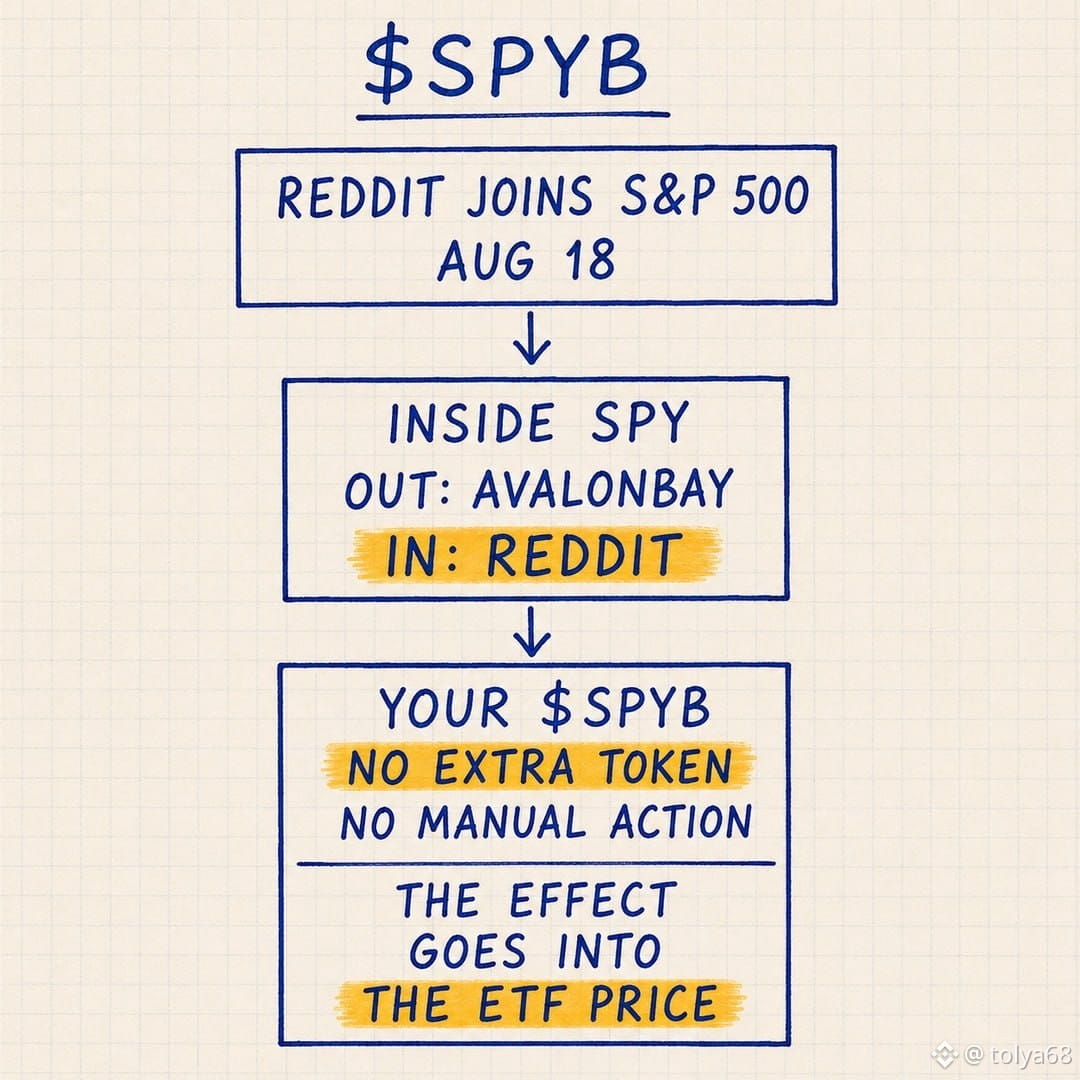
Reddit is joining the S&P 500 on August 18.
So does a $SPYB holder need to buy Reddit, convert anything or wait for extra tokens?
No.
This #bStocksCIS change happens inside the index and the SPY fund. SPY follows the S&P 500, so its holdings adjust when the index replaces one company with another. Your SPYB balance does not increase just because Reddit enters the basket.
What can move is the price. Index funds may buy Reddit and sell the company leaving the index, while other traders position before the effective date.
For a $SPYB holder on @BinanceCIS the practical result is:
1. SPY changes its holdings internally.
2. SPYB continues to represent exposure to the same SPY share.
No manual action. No Reddit token arriving in the wallet. The effect is reflected through the ETF price.
Which index event should I unpack next?
{spot}(SPYBUSDT)
Reddit is joining the S&P 500 on August 18.
So does a $SPYB holder need to buy Reddit, convert anything or wait for extra tokens?
No.
This #bStocksCIS change happens inside the index and the SPY fund. SPY follows the S&P 500, so its holdings adjust when the index replaces one company with another. Your SPYB balance does not increase just because Reddit enters the basket.
What can move is the price. Index funds may buy Reddit and sell the company leaving the index, while other traders position before the effective date.
For a $SPYB holder on @BinanceCIS the practical result is:
1. SPY changes its holdings internally.
2. SPYB continues to represent exposure to the same SPY share.
No manual action. No Reddit token arriving in the wallet. The effect is reflected through the ETF price.
Which index event should I unpack next?
So does a $SPYB holder need to buy Reddit, convert anything or wait for extra tokens?
No.
This #bStocksCIS change happens inside the index and the SPY fund. SPY follows the S&P 500, so its holdings adjust when the index replaces one company with another. Your SPYB balance does not increase just because Reddit enters the basket.
What can move is the price. Index funds may buy Reddit and sell the company leaving the index, while other traders position before the effective date.
For a $SPYB holder on @BinanceCIS the practical result is:
1. SPY changes its holdings internally.
2. SPYB continues to represent exposure to the same SPY share.
No manual action. No Reddit token arriving in the wallet. The effect is reflected through the ETF price.
Which index event should I unpack next?
67
·
--
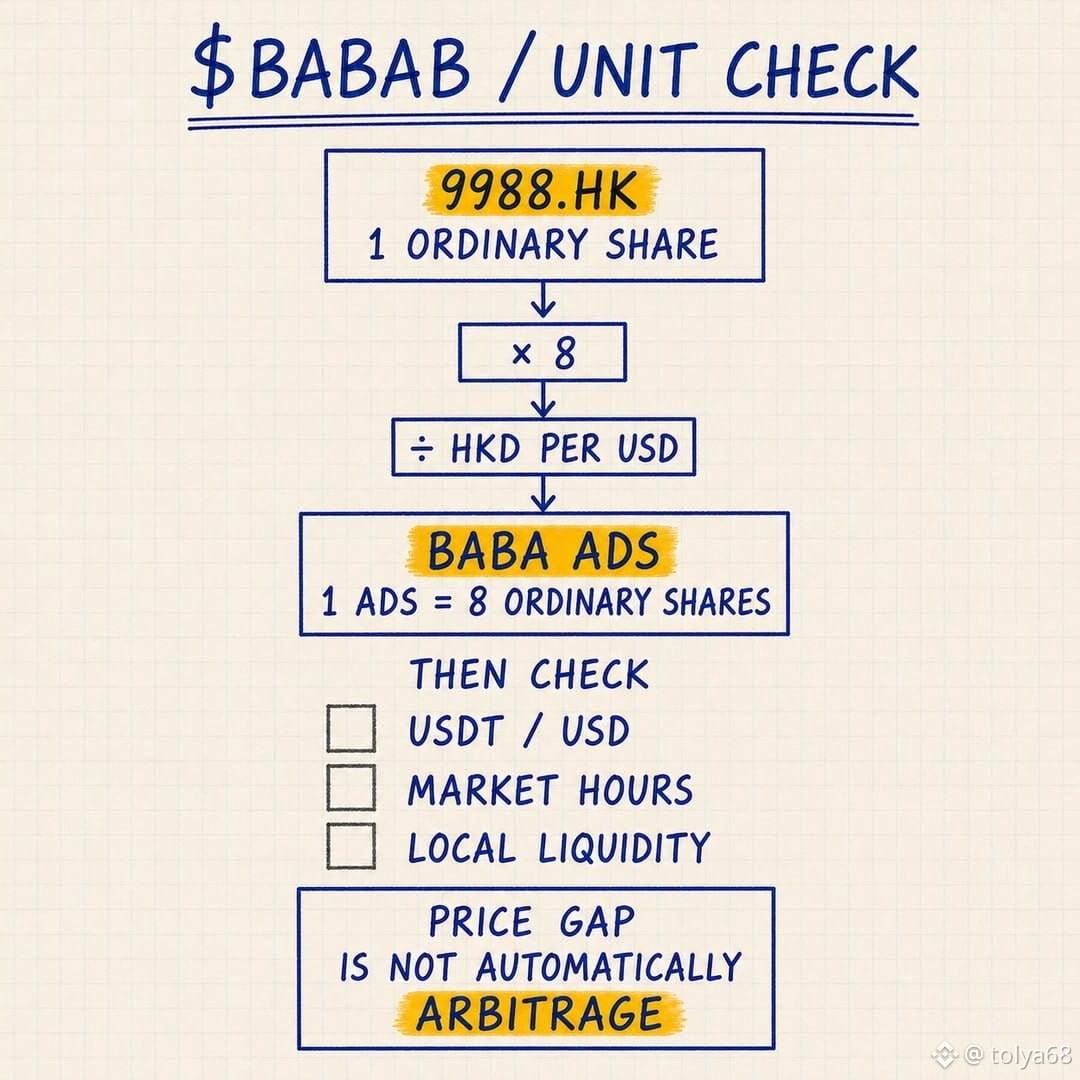
もし$BABAB がAlibabaの9988.HKの見積もりから遠く離れて見えるなら、価格問題を疑う前に単位を確認してください。
Alibabaの香港銘柄は普通株です。ニューヨークのティッカーBABAはADR(ADS)で、1つのADSは普通株8株に相当します。$BABAB は、9988.HKの1株ではなく、その米国上場ADSに紐づいています。
概算の換算の橋渡しは次のとおりです:
9988.HKの価格 × 8 ÷ 1米ドルあたりのHKD。
例:HK$100 × 8 ÷ 7.80 = 約US$102.56。
そのとき初めて価格比較が有用になります。BABAB/USDTの場合は、USDT/USDのレートがもう1つ小さな層を追加します。取引時間の違い、為替の変動、現地の流動性の違いによって、それでもギャップが残ることがあります。
私の比較は4つの項目から始めます:ティッカー、取引所(会場)、通貨、そして株式比率。
大きな視覚的なギャップは、必ずしも裁定取引(アービトラージ)を意味しません。2つの画面が単に異なる単位を提示しているだけのこともあります。
次にどの二重上場を分解して確認しましょうか?
{spot}(BABABUSDT)
@BinanceCIS $BABAB #bStocksCIS
もし$BABAB がAlibabaの9988.HKの見積もりから遠く離れて見えるなら、価格問題を疑う前に単位を確認してください。
Alibabaの香港銘柄は普通株です。ニューヨークのティッカーBABAはADR(ADS)で、1つのADSは普通株8株に相当します。$BABAB は、9988.HKの1株ではなく、その米国上場ADSに紐づいています。
概算の換算の橋渡しは次のとおりです:
9988.HKの価格 × 8 ÷ 1米ドルあたりのHKD。
例:HK$100 × 8 ÷ 7.80 = 約US$102.56。
そのとき初めて価格比較が有用になります。BABAB/USDTの場合は、USDT/USDのレートがもう1つ小さな層を追加します。取引時間の違い、為替の変動、現地の流動性の違いによって、それでもギャップが残ることがあります。
私の比較は4つの項目から始めます:ティッカー、取引所(会場)、通貨、そして株式比率。
大きな視覚的なギャップは、必ずしも裁定取引(アービトラージ)を意味しません。2つの画面が単に異なる単位を提示しているだけのこともあります。
次にどの二重上場を分解して確認しましょうか?
@BinanceCIS $BABAB #bStocksCIS
Alibabaの香港銘柄は普通株です。ニューヨークのティッカーBABAはADR(ADS)で、1つのADSは普通株8株に相当します。$BABAB は、9988.HKの1株ではなく、その米国上場ADSに紐づいています。
概算の換算の橋渡しは次のとおりです:
9988.HKの価格 × 8 ÷ 1米ドルあたりのHKD。
例:HK$100 × 8 ÷ 7.80 = 約US$102.56。
そのとき初めて価格比較が有用になります。BABAB/USDTの場合は、USDT/USDのレートがもう1つ小さな層を追加します。取引時間の違い、為替の変動、現地の流動性の違いによって、それでもギャップが残ることがあります。
私の比較は4つの項目から始めます:ティッカー、取引所(会場)、通貨、そして株式比率。
大きな視覚的なギャップは、必ずしも裁定取引(アービトラージ)を意味しません。2つの画面が単に異なる単位を提示しているだけのこともあります。
次にどの二重上場を分解して確認しましょうか?
@BinanceCIS $BABAB #bStocksCIS
3
3
83
·
--
翻訳参照
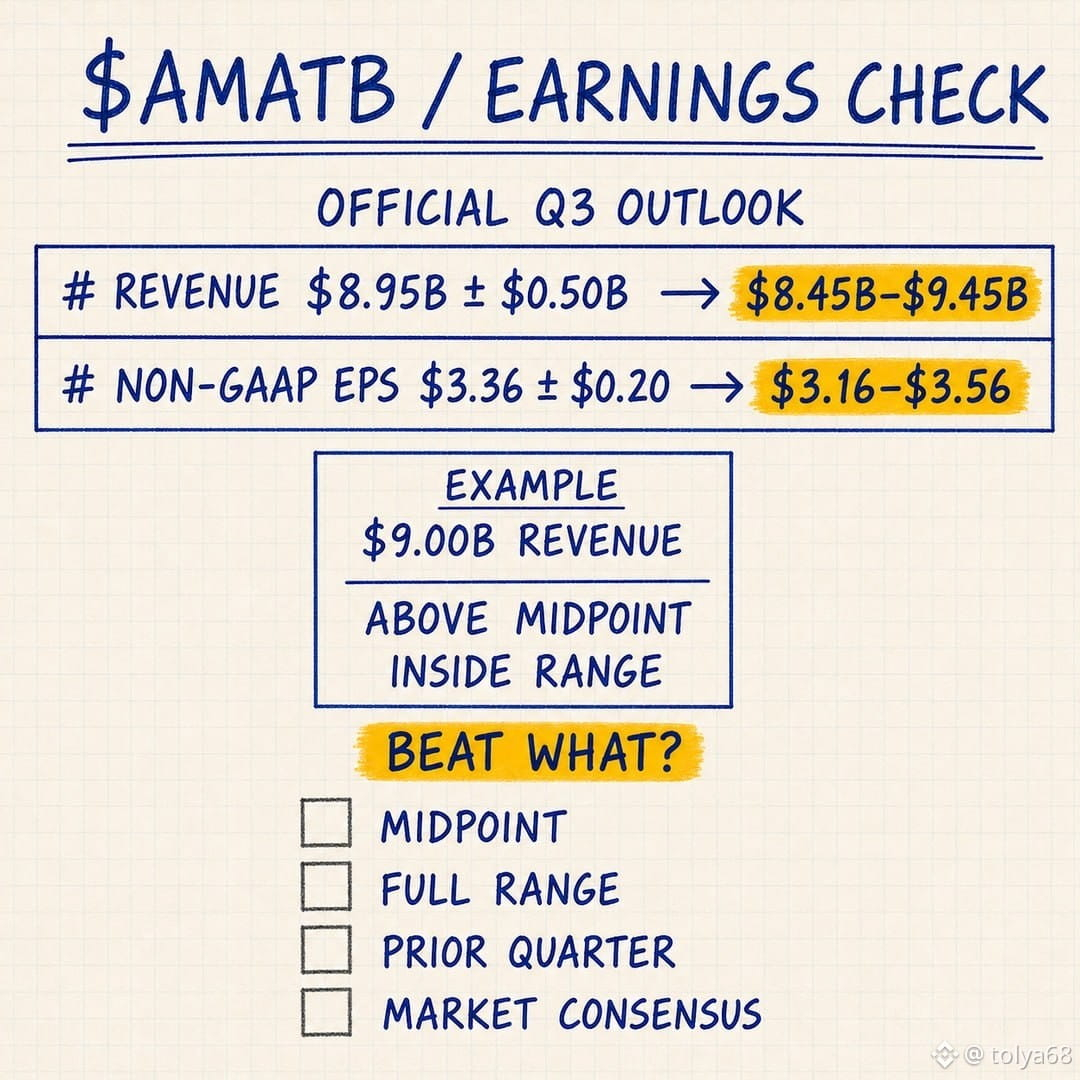
Tomorrow's $AMATB report has two useful ranges behind the headline numbers.
Applied Materials guided Q3 revenue to $8.95B ± $0.50B and non-GAAP EPS to $3.36 ± $0.20.
Revenue range: $8.45B to $9.45B
EPS range: $3.16 to $3.56
If revenue comes in at $9.00B, it will be $50M above management's midpoint while remaining inside the original range. That alone will not tell us whether the result beat market expectations, because headlines usually compare the result with analyst consensus.
My order is simple: actual result versus consensus, actual result versus management's midpoint, margins and new guidance, then the market reaction.
Which comparison do you normally check first?
{spot}(AMATBUSDT)
@BinanceCIS $AMATB #bStocksCIS
Tomorrow's $AMATB report has two useful ranges behind the headline numbers.
Applied Materials guided Q3 revenue to $8.95B ± $0.50B and non-GAAP EPS to $3.36 ± $0.20.
Revenue range: $8.45B to $9.45B
EPS range: $3.16 to $3.56
If revenue comes in at $9.00B, it will be $50M above management's midpoint while remaining inside the original range. That alone will not tell us whether the result beat market expectations, because headlines usually compare the result with analyst consensus.
My order is simple: actual result versus consensus, actual result versus management's midpoint, margins and new guidance, then the market reaction.
Which comparison do you normally check first?
@BinanceCIS $AMATB #bStocksCIS
Applied Materials guided Q3 revenue to $8.95B ± $0.50B and non-GAAP EPS to $3.36 ± $0.20.
Revenue range: $8.45B to $9.45B
EPS range: $3.16 to $3.56
If revenue comes in at $9.00B, it will be $50M above management's midpoint while remaining inside the original range. That alone will not tell us whether the result beat market expectations, because headlines usually compare the result with analyst consensus.
My order is simple: actual result versus consensus, actual result versus management's midpoint, margins and new guidance, then the market reaction.
Which comparison do you normally check first?
@BinanceCIS $AMATB #bStocksCIS
3
3
195
·
--
ブリッシュ
「CRCLB」を検索して「$CRCLB 」をウォレットに追加することはしません。
⠀
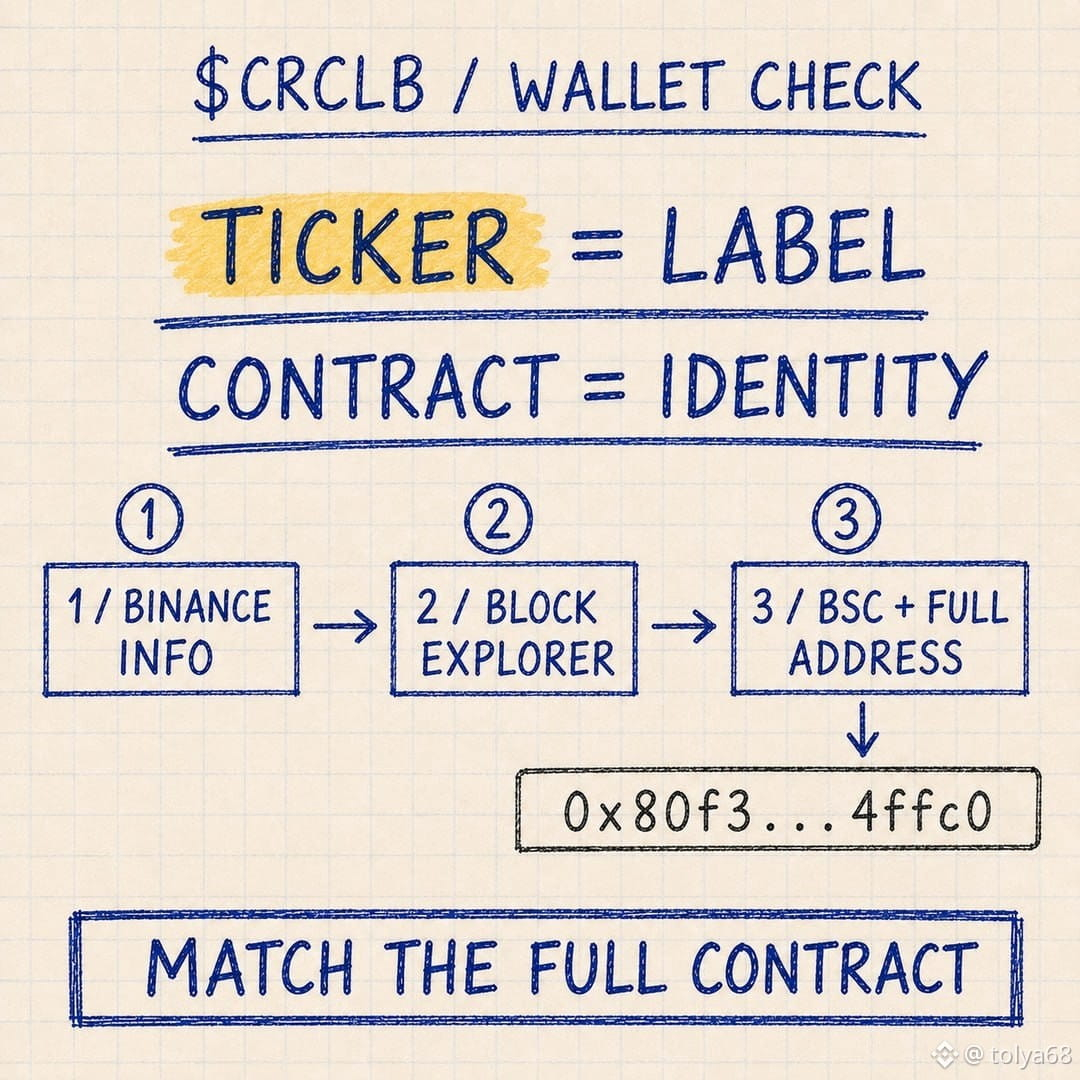
トークン名とティッカーは簡単にコピペできます。ウォレットが実際に読み取るのはコントラクトアドレスの部分です。
⠀
私の手順はシンプルです:
1. Binanceで「$CRCLB 」のInfoページを開く。
2. 公式のBlock Explorerリンクをたどる。
3. BNB Smart Chainを確認し、フルの検証済みコントラクトをコピーする:
0x80f3d493ebce97e343c53d29a137942416b4ffc0
4. ウォレットの「カスタムトークン」欄に貼り付け、最初と最後の文字をもう一度比較する。
⠀
もし「$CRCLB 」が自動で表示されない場合、正しいコントラクトをインポートするのは、ウォレットに表示する残高を教えるだけです。トークンを移動したり、ネットワークを変更したりはしません。
⠀
ランダムな返信、スクリーンショット、検索広告からアドレスを取ることはしません。ティッカーは私にとってのラベルです。コントラクトがウォレットにとっての身元(アイデンティティ)です。
⠀
{spot}(CRCLBUSDT)
@BinanceCIS #bStocksCIS
「CRCLB」を検索して「$CRCLB 」をウォレットに追加することはしません。
⠀
トークン名とティッカーは簡単にコピペできます。ウォレットが実際に読み取るのはコントラクトアドレスの部分です。
⠀
私の手順はシンプルです:
1. Binanceで「$CRCLB 」のInfoページを開く。
2. 公式のBlock Explorerリンクをたどる。
3. BNB Smart Chainを確認し、フルの検証済みコントラクトをコピーする:
0x80f3d493ebce97e343c53d29a137942416b4ffc0
4. ウォレットの「カスタムトークン」欄に貼り付け、最初と最後の文字をもう一度比較する。
⠀
もし「$CRCLB 」が自動で表示されない場合、正しいコントラクトをインポートするのは、ウォレットに表示する残高を教えるだけです。トークンを移動したり、ネットワークを変更したりはしません。
⠀
ランダムな返信、スクリーンショット、検索広告からアドレスを取ることはしません。ティッカーは私にとってのラベルです。コントラクトがウォレットにとっての身元(アイデンティティ)です。
⠀
@BinanceCIS #bStocksCIS
⠀
トークン名とティッカーは簡単にコピペできます。ウォレットが実際に読み取るのはコントラクトアドレスの部分です。
⠀
私の手順はシンプルです:
1. Binanceで「$CRCLB 」のInfoページを開く。
2. 公式のBlock Explorerリンクをたどる。
3. BNB Smart Chainを確認し、フルの検証済みコントラクトをコピーする:
0x80f3d493ebce97e343c53d29a137942416b4ffc0
4. ウォレットの「カスタムトークン」欄に貼り付け、最初と最後の文字をもう一度比較する。
⠀
もし「$CRCLB 」が自動で表示されない場合、正しいコントラクトをインポートするのは、ウォレットに表示する残高を教えるだけです。トークンを移動したり、ネットワークを変更したりはしません。
⠀
ランダムな返信、スクリーンショット、検索広告からアドレスを取ることはしません。ティッカーは私にとってのラベルです。コントラクトがウォレットにとっての身元(アイデンティティ)です。
⠀
@BinanceCIS #bStocksCIS
5
4
122
·
--
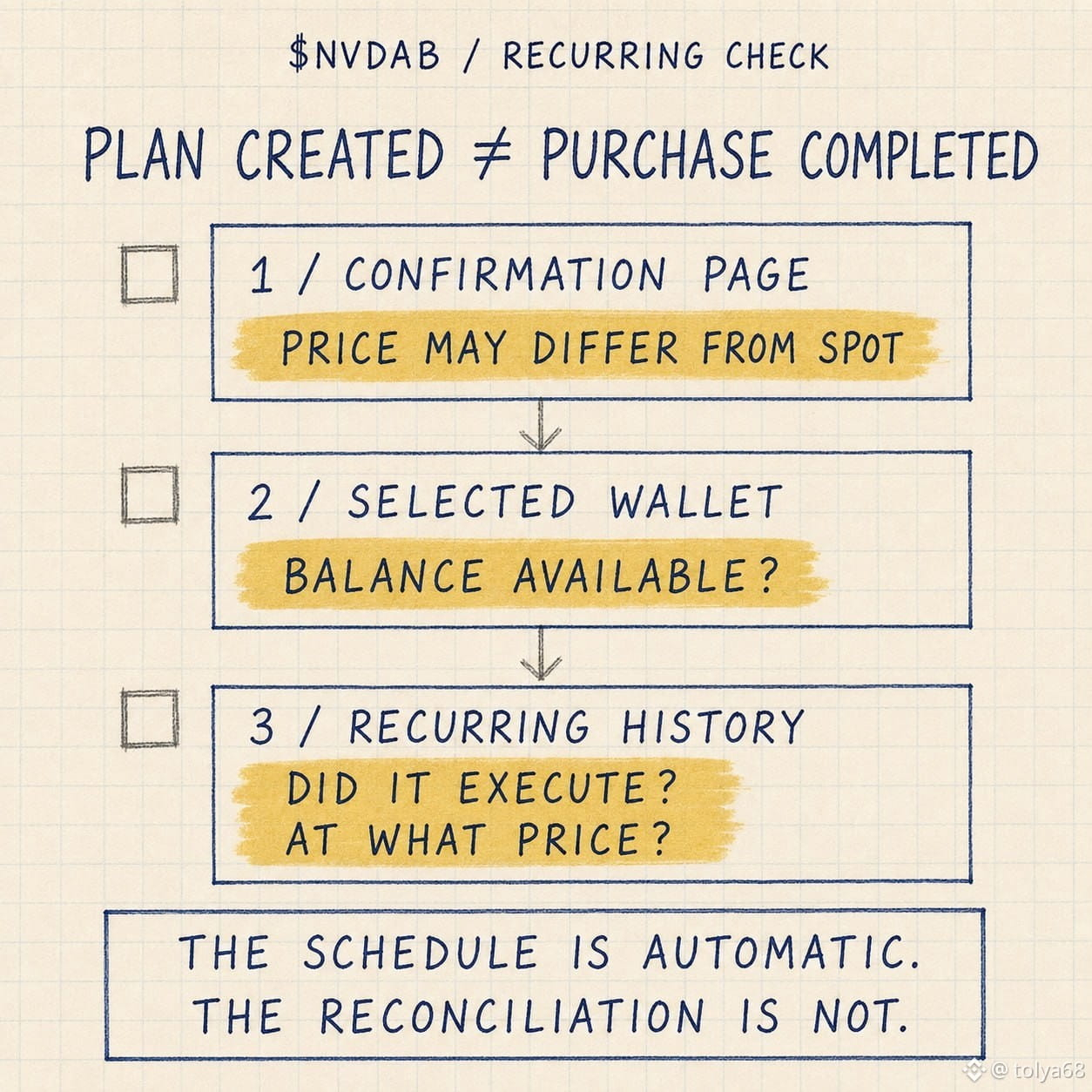
計画を設定してから、実際に購入されたか確認してください。
⠀
Binanceの定期購入(Convert Recurring)は、bStockの購入スケジュールを自動化できます。Binanceによると、計画を送信しても計画が承認されること、またはすべての予定されたコンバージョンが実行されることは保証されません。
⠀
一度設定したら、次の3つを確認します。
⠀
まず、確認ページです。定期購入の価格はBinanceの現物(Binance Spot)と異なる場合があり、計画が作成される前にBinanceは適用されるスプレッドを表示します。
⠀
次に、選択したウォレットです。残高が不足している場合、そのサイクルは失敗します。次の試行は、次に予定されたサイクルで行われます。
⠀
3つ目は、Orders(注文)> Convert History(コンバージョン履歴)> Recurring History(定期履歴)です。計画ページには指示が表示されます。定期履歴では、実際に完了した購入と、そのときの価格が表示されます。
⠀
時間ごと、日次、週次、隔週、月次の設定はカレンダーを自動化します。ただし、価格・残高・実行(チェック)を削除するものではありません。
⠀
スケジュールは自動です。照合(リコンサイル)は自動ではありません。
⠀
@BinanceCIS $NVDAB #bStocksCIS
計画を設定してから、実際に購入されたか確認してください。
⠀
Binanceの定期購入(Convert Recurring)は、bStockの購入スケジュールを自動化できます。Binanceによると、計画を送信しても計画が承認されること、またはすべての予定されたコンバージョンが実行されることは保証されません。
⠀
一度設定したら、次の3つを確認します。
⠀
まず、確認ページです。定期購入の価格はBinanceの現物(Binance Spot)と異なる場合があり、計画が作成される前にBinanceは適用されるスプレッドを表示します。
⠀
次に、選択したウォレットです。残高が不足している場合、そのサイクルは失敗します。次の試行は、次に予定されたサイクルで行われます。
⠀
3つ目は、Orders(注文)> Convert History(コンバージョン履歴)> Recurring History(定期履歴)です。計画ページには指示が表示されます。定期履歴では、実際に完了した購入と、そのときの価格が表示されます。
⠀
時間ごと、日次、週次、隔週、月次の設定はカレンダーを自動化します。ただし、価格・残高・実行(チェック)を削除するものではありません。
⠀
スケジュールは自動です。照合(リコンサイル)は自動ではありません。
⠀
@BinanceCIS $NVDAB #bStocksCIS
⠀
Binanceの定期購入(Convert Recurring)は、bStockの購入スケジュールを自動化できます。Binanceによると、計画を送信しても計画が承認されること、またはすべての予定されたコンバージョンが実行されることは保証されません。
⠀
一度設定したら、次の3つを確認します。
⠀
まず、確認ページです。定期購入の価格はBinanceの現物(Binance Spot)と異なる場合があり、計画が作成される前にBinanceは適用されるスプレッドを表示します。
⠀
次に、選択したウォレットです。残高が不足している場合、そのサイクルは失敗します。次の試行は、次に予定されたサイクルで行われます。
⠀
3つ目は、Orders(注文)> Convert History(コンバージョン履歴)> Recurring History(定期履歴)です。計画ページには指示が表示されます。定期履歴では、実際に完了した購入と、そのときの価格が表示されます。
⠀
時間ごと、日次、週次、隔週、月次の設定はカレンダーを自動化します。ただし、価格・残高・実行(チェック)を削除するものではありません。
⠀
スケジュールは自動です。照合(リコンサイル)は自動ではありません。
⠀
@BinanceCIS $NVDAB #bStocksCIS
1
1
127
·
--
翻訳参照
Before buying $ASMLB, I checked how I would move from the token to the underlying stock. Selling the token and converting it are two different exits.
⠀
If I want USDT, I can sell ASMLB on Spot.
⠀
If I want ASML stock, I need Token Conversion instead. The conversion is 1:1 with no conversion fee, but converting bStock to stock requires a Stock Account and acceptance of the stock terms.
⠀
My note before confirming:
⠀
Stock Account ready
bStock -> stock selected
Conversion window open
Details checked
⠀
Completed conversions appear under Token Conversion -> Trade History -> Stocks.
⠀
The service is generally available 24/7, although corporate-action processing or maintenance can temporarily pause it.
If your goal is the underlying ASML stock, which route do you use?
@BinanceCIS $ASMLB #bStocksCIS
Before buying $ASMLB , I checked how I would move from the token to the underlying stock. Selling the token and converting it are two different exits.
⠀
If I want USDT, I can sell ASMLB on Spot.
⠀
If I want ASML stock, I need Token Conversion instead. The conversion is 1:1 with no conversion fee, but converting bStock to stock requires a Stock Account and acceptance of the stock terms.
⠀
My note before confirming:
⠀
Stock Account ready
bStock -> stock selected
Conversion window open
Details checked
⠀
Completed conversions appear under Token Conversion -> Trade History -> Stocks.
⠀
The service is generally available 24/7, although corporate-action processing or maintenance can temporarily pause it.
If your goal is the underlying ASML stock, which route do you use?
@BinanceCIS $ASMLB #bStocksCIS
⠀
If I want USDT, I can sell ASMLB on Spot.
⠀
If I want ASML stock, I need Token Conversion instead. The conversion is 1:1 with no conversion fee, but converting bStock to stock requires a Stock Account and acceptance of the stock terms.
⠀
My note before confirming:
⠀
Stock Account ready
bStock -> stock selected
Conversion window open
Details checked
⠀
Completed conversions appear under Token Conversion -> Trade History -> Stocks.
⠀
The service is generally available 24/7, although corporate-action processing or maintenance can temporarily pause it.
If your goal is the underlying ASML stock, which route do you use?
@BinanceCIS $ASMLB #bStocksCIS
Token Conversion
0%
Sell on Spot
0%
Binance Convert
100%
Not sure
0%
1 投票 • 投票は終了しました
92
·
--
翻訳参照
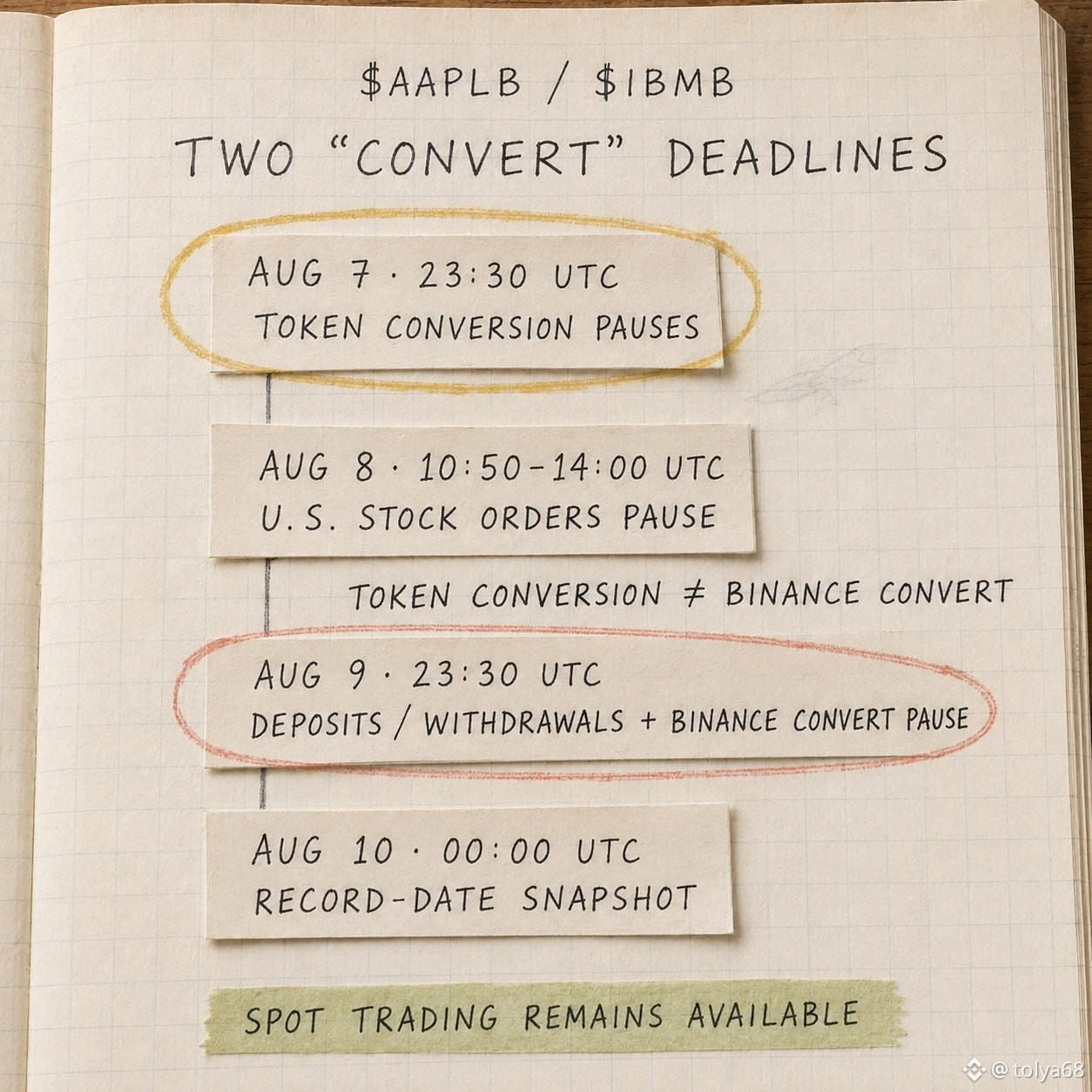
The Apple/IBM dividend notice has two different “convert” deadlines. They are 48 hours apart, so I wrote the whole weekend down.
⠀
August 7, 23:30 UTC
⠀
Token Conversion between AAPL/IBM shares and $AAPLB/$IBMB pauses.
⠀
August 8, 10:50–14:00 UTC
⠀
A separate broker upgrade makes U.S. stock orders unavailable. Binance says it may finish earlier or run longer.
⠀
August 9, 23:30 UTC
⠀
AAPLB and IBMB deposits and withdrawals pause. Binance Convert for the tokens and related pairs pauses too.
⠀
August 10, 00:00 UTC
⠀
Record-date snapshot.
⠀
AAPLB/USDT and IBMB/USDT Spot trading remains available according to the dividend notice.
⠀
The useful distinction for me is this: Token Conversion means share ↔️ bStock. Binance Convert is a different service. Similar names, different deadlines.
⠀
Binance also says the paused services will resume after distribution without another announcement. The recovery notification is safer than guessing.
⠀
Which deadline actually affects what you plan to do?
⠀
@BinanceCIS $AAPLB $IBMB #bStocksCIS
The Apple/IBM dividend notice has two different “convert” deadlines. They are 48 hours apart, so I wrote the whole weekend down.
⠀
August 7, 23:30 UTC
⠀
Token Conversion between AAPL/IBM shares and $AAPLB /$IBMB pauses.
⠀
August 8, 10:50–14:00 UTC
⠀
A separate broker upgrade makes U.S. stock orders unavailable. Binance says it may finish earlier or run longer.
⠀
August 9, 23:30 UTC
⠀
AAPLB and IBMB deposits and withdrawals pause. Binance Convert for the tokens and related pairs pauses too.
⠀
August 10, 00:00 UTC
⠀
Record-date snapshot.
⠀
AAPLB/USDT and IBMB/USDT Spot trading remains available according to the dividend notice.
⠀
The useful distinction for me is this: Token Conversion means share ↔️ bStock. Binance Convert is a different service. Similar names, different deadlines.
⠀
Binance also says the paused services will resume after distribution without another announcement. The recovery notification is safer than guessing.
⠀
Which deadline actually affects what you plan to do?
⠀
@BinanceCIS $AAPLB $IBMB #bStocksCIS
⠀
August 7, 23:30 UTC
⠀
Token Conversion between AAPL/IBM shares and $AAPLB /$IBMB pauses.
⠀
August 8, 10:50–14:00 UTC
⠀
A separate broker upgrade makes U.S. stock orders unavailable. Binance says it may finish earlier or run longer.
⠀
August 9, 23:30 UTC
⠀
AAPLB and IBMB deposits and withdrawals pause. Binance Convert for the tokens and related pairs pauses too.
⠀
August 10, 00:00 UTC
⠀
Record-date snapshot.
⠀
AAPLB/USDT and IBMB/USDT Spot trading remains available according to the dividend notice.
⠀
The useful distinction for me is this: Token Conversion means share ↔️ bStock. Binance Convert is a different service. Similar names, different deadlines.
⠀
Binance also says the paused services will resume after distribution without another announcement. The recovery notification is safer than guessing.
⠀
Which deadline actually affects what you plan to do?
⠀
@BinanceCIS $AAPLB $IBMB #bStocksCIS
2
2
82
·
--
翻訳参照
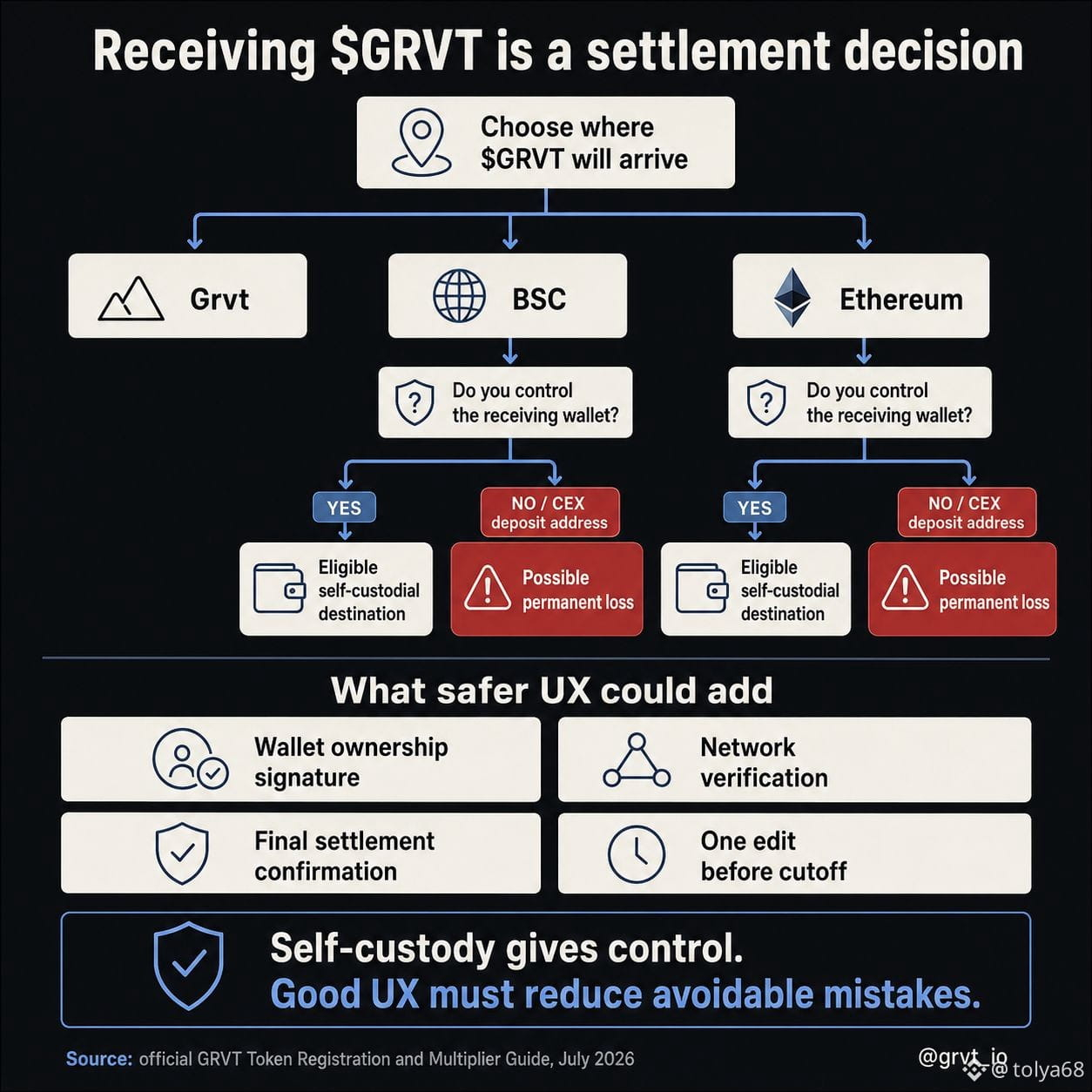
The line i would not skim in @grvt_io ’s new airdrop guide is not the multiplier or even the TGE date.
⠀
it is this:
⠀
do not submit a CEX deposit address. it may cause permanent loss.
⠀
GRVT lets users choose where their $GRVT distribution arrives: on Grvt, BSC, or Ethereum.
⠀
at first, that looks like a simple delivery option.
⠀
but it turns the registration form into something much closer to an irreversible settlement instruction.
⠀
the upside is clear.
⠀
users are not forced into one custody provider or one network. they can decide where they want to control their tokens from day one.
⠀
but the responsibility moves with that freedom.
⠀
the user must choose the destination, use an address they personally control, and understand that an exchange deposit address may not behave like a self-custodial wallet.
⠀
the current guide also says submitted addresses cannot be changed yet. GRVT plans to allow one edit before the cutoff, but that protection is not live at the time of writing.
⠀
mechanically, i understand it.
⠀
blockchain transfers are not bank transfers. GRVT cannot simply reverse a completed distribution because someone entered an incompatible address.
⠀
still, this exposes the gap between self-custody as an ideal and self-custody as an actual user experience.
⠀
“you control your assets” sounds empowering.
⠀
“one wrong destination may permanently destroy your allocation” sounds very different.
⠀
i don’t think the answer is removing self-custody.
⠀
i think the launch flow should make mistakes harder:
⠀
require a signature from the receiving wallet;
⠀
verify the selected network;
⠀
show a final settlement confirmation;
⠀
allow one edit before the deadline.
⠀
because if a user loses an allocation this way, the protocol was not hacked and the smart contract did not fail.
⠀
the interface failed to prevent a predictable mistake.
⠀
how much responsibility should a self-custodial platform carry for protecting users from an incorrect destination?
⠀
#grvt
The line i would not skim in @grvt_io ’s new airdrop guide is not the multiplier or even the TGE date.
⠀
it is this:
⠀
do not submit a CEX deposit address. it may cause permanent loss.
⠀
GRVT lets users choose where their $GRVT distribution arrives: on Grvt, BSC, or Ethereum.
⠀
at first, that looks like a simple delivery option.
⠀
but it turns the registration form into something much closer to an irreversible settlement instruction.
⠀
the upside is clear.
⠀
users are not forced into one custody provider or one network. they can decide where they want to control their tokens from day one.
⠀
but the responsibility moves with that freedom.
⠀
the user must choose the destination, use an address they personally control, and understand that an exchange deposit address may not behave like a self-custodial wallet.
⠀
the current guide also says submitted addresses cannot be changed yet. GRVT plans to allow one edit before the cutoff, but that protection is not live at the time of writing.
⠀
mechanically, i understand it.
⠀
blockchain transfers are not bank transfers. GRVT cannot simply reverse a completed distribution because someone entered an incompatible address.
⠀
still, this exposes the gap between self-custody as an ideal and self-custody as an actual user experience.
⠀
“you control your assets” sounds empowering.
⠀
“one wrong destination may permanently destroy your allocation” sounds very different.
⠀
i don’t think the answer is removing self-custody.
⠀
i think the launch flow should make mistakes harder:
⠀
require a signature from the receiving wallet;
⠀
verify the selected network;
⠀
show a final settlement confirmation;
⠀
allow one edit before the deadline.
⠀
because if a user loses an allocation this way, the protocol was not hacked and the smart contract did not fail.
⠀
the interface failed to prevent a predictable mistake.
⠀
how much responsibility should a self-custodial platform carry for protecting users from an incorrect destination?
⠀
#grvt
⠀
it is this:
⠀
do not submit a CEX deposit address. it may cause permanent loss.
⠀
GRVT lets users choose where their $GRVT distribution arrives: on Grvt, BSC, or Ethereum.
⠀
at first, that looks like a simple delivery option.
⠀
but it turns the registration form into something much closer to an irreversible settlement instruction.
⠀
the upside is clear.
⠀
users are not forced into one custody provider or one network. they can decide where they want to control their tokens from day one.
⠀
but the responsibility moves with that freedom.
⠀
the user must choose the destination, use an address they personally control, and understand that an exchange deposit address may not behave like a self-custodial wallet.
⠀
the current guide also says submitted addresses cannot be changed yet. GRVT plans to allow one edit before the cutoff, but that protection is not live at the time of writing.
⠀
mechanically, i understand it.
⠀
blockchain transfers are not bank transfers. GRVT cannot simply reverse a completed distribution because someone entered an incompatible address.
⠀
still, this exposes the gap between self-custody as an ideal and self-custody as an actual user experience.
⠀
“you control your assets” sounds empowering.
⠀
“one wrong destination may permanently destroy your allocation” sounds very different.
⠀
i don’t think the answer is removing self-custody.
⠀
i think the launch flow should make mistakes harder:
⠀
require a signature from the receiving wallet;
⠀
verify the selected network;
⠀
show a final settlement confirmation;
⠀
allow one edit before the deadline.
⠀
because if a user loses an allocation this way, the protocol was not hacked and the smart contract did not fail.
⠀
the interface failed to prevent a predictable mistake.
⠀
how much responsibility should a self-custodial platform carry for protecting users from an incorrect destination?
⠀
#grvt
97
ログインして、さらにコンテンツを読む
厳選トピックで世界の暗号資産トレーダーの仲間入り
⚡️ 暗号資産に関する最新かつ有益な情報が見つかります。
💬 世界最大の暗号資産取引所から信頼されています。
👍 認証を受けたクリエイターから、有益なインサイトを得られます。
メール / 電話番号
トレンドトピック
SaylorHintsStrategyBitcoinBuy
閲覧回数 2.3M
12,552人が討論中
#SaylorHintsStrategyBitcoinBuy
#SaylorHintsStrategyBitcoinBuy 👀
マイケル・セイラーの最新コメントが、改めて戦略(ストラテジー)とビットコインの蓄積に注目を集めました。同社からの今後の動きの可能性について、市場は注意深く見守っています。特に、ビットコインに対する機関投資家の関心が引き続き注目を集めているためです。📈
もしストラテジーがさらにBTCを追加すれば、長期にわたる企業のビットコイン導入というストーリーを強化し、暗号資産市場全体に新たな勢いを生み出す可能性があります。しかしトレーダーは、見出しが短期的なボラティリティを(どちらの方向にも)引き起こし得ることを忘れないでください。
ストラテジーは近いうちにもう一度ビットコインを購入するのでしょうか?暗号資産コミュニティは、あらゆる動きを見ています。🚀₿
maqsoodahmed1
·いいね:1件
·閲覧回数 367
BOJRaisesRatesTo31YearHigh
閲覧回数 265,785
3,337人が討論中
BuffettStepsDownAsBerkshireChairman
閲覧回数 130,926
1,810人が討論中