

urdav3
723 投稿

urdav3
報告
ユーザーをブロック
3 フォロー
1 フォロワー
12 いいね
投稿
·
--
USDDの次のステージは、よりスマートな資本配分へ
USDDの最新の週次利回りアップデートは、ステーブルコイン市場のより広範な進化を反映しています。
ステーブルコインは当初、オンチェーン上でドル建ての流動性を維持できることが主な価値でした。次の段階は、その流動性が何を生み出せるかにますます焦点が移っています。
週次の戦略マップには、取引所・ウォレット・DeFiプロトコルをまたいだ複数のルートが示されており、ユーザーがエコシステム全体を手作業で探し回ることなく、異なる利回りの源泉を探索できるための枠組みを提供します。
これは、ステーブルコインのプラットフォームが、発行や送金のためのインフラにとどまらず、資本配分のレイヤーになっていく未来を示唆しています。
重要な変数はAPYのみにとどまりません。流動性、アクセス性、ロックアップ条件、プロトコル設計、そして変化するインセンティブなどが、特定のユーザーにとってその戦略が適合するかどうかに影響します。
USDDは、柔軟な参加と長期にわたる安定した利回り機会に注力しており、このより広い移行に適合しています。
根本のコンセプトはシンプルです。ユーザーがステーブルコインの流動性をより効率的に発見し、配分できるほど、その流動性はより広いDeFi経済にとって一層有用になります。
USDDは、ますます「単なるステーブルコイン」ではなく、オンチェーンの利回り戦略群へと入るための入口として提示されています。
@JustinSun @usddio #TRONEcoStar
USDDの次のステージは、よりスマートな資本配分へ
USDDの最新の週次利回りアップデートは、ステーブルコイン市場のより広範な進化を反映しています。
ステーブルコインは当初、オンチェーン上でドル建ての流動性を維持できることが主な価値でした。次の段階は、その流動性が何を生み出せるかにますます焦点が移っています。
週次の戦略マップには、取引所・ウォレット・DeFiプロトコルをまたいだ複数のルートが示されており、ユーザーがエコシステム全体を手作業で探し回ることなく、異なる利回りの源泉を探索できるための枠組みを提供します。
これは、ステーブルコインのプラットフォームが、発行や送金のためのインフラにとどまらず、資本配分のレイヤーになっていく未来を示唆しています。
重要な変数はAPYのみにとどまりません。流動性、アクセス性、ロックアップ条件、プロトコル設計、そして変化するインセンティブなどが、特定のユーザーにとってその戦略が適合するかどうかに影響します。
USDDは、柔軟な参加と長期にわたる安定した利回り機会に注力しており、このより広い移行に適合しています。
根本のコンセプトはシンプルです。ユーザーがステーブルコインの流動性をより効率的に発見し、配分できるほど、その流動性はより広いDeFi経済にとって一層有用になります。
USDDは、ますます「単なるステーブルコイン」ではなく、オンチェーンの利回り戦略群へと入るための入口として提示されています。
@Justin Sun孙宇晨 @USDD - Decentralized USD #TRONEcoStar
USDDの最新の週次利回りアップデートは、ステーブルコイン市場のより広範な進化を反映しています。
ステーブルコインは当初、オンチェーン上でドル建ての流動性を維持できることが主な価値でした。次の段階は、その流動性が何を生み出せるかにますます焦点が移っています。
週次の戦略マップには、取引所・ウォレット・DeFiプロトコルをまたいだ複数のルートが示されており、ユーザーがエコシステム全体を手作業で探し回ることなく、異なる利回りの源泉を探索できるための枠組みを提供します。
これは、ステーブルコインのプラットフォームが、発行や送金のためのインフラにとどまらず、資本配分のレイヤーになっていく未来を示唆しています。
重要な変数はAPYのみにとどまりません。流動性、アクセス性、ロックアップ条件、プロトコル設計、そして変化するインセンティブなどが、特定のユーザーにとってその戦略が適合するかどうかに影響します。
USDDは、柔軟な参加と長期にわたる安定した利回り機会に注力しており、このより広い移行に適合しています。
根本のコンセプトはシンプルです。ユーザーがステーブルコインの流動性をより効率的に発見し、配分できるほど、その流動性はより広いDeFi経済にとって一層有用になります。
USDDは、ますます「単なるステーブルコイン」ではなく、オンチェーンの利回り戦略群へと入るための入口として提示されています。
@Justin Sun孙宇晨 @USDD - Decentralized USD #TRONEcoStar

10
·
--
翻訳参照
FROM YIELD HUNTING TO SYSTEMATIC STRATEGY
DeFi users often face a familiar problem: opportunities are everywhere, but they are scattered across different platforms.
USDD's weekly yield engine addresses this fragmentation by presenting multiple stablecoin strategies in one organized framework.
The latest update covers opportunities across trading platforms, wallets and DeFi protocols, giving users a broader view of the available landscape instead of focusing on a single application.
This creates an important shift in mindset.
Yield hunting is often reactive. Users move from one opportunity to another based on whichever APY appears highest at a particular moment.
A systematic strategy is different. It considers return alongside liquidity, access conditions, lock-up requirements, platform risk and the underlying mechanism generating the yield.
The emphasis on no quota limits and no lock-up requirements makes flexibility part of the framework rather than an afterthought.
As DeFi matures, systematic capital allocation could become increasingly important. The goal is not necessarily to maximize one isolated number, but to understand how stablecoin capital can move through different opportunities while matching the user's preferred level of flexibility and risk.
@usddio @JustinSun #TRONEcoStar
FROM YIELD HUNTING TO SYSTEMATIC STRATEGY
DeFi users often face a familiar problem: opportunities are everywhere, but they are scattered across different platforms.
USDD's weekly yield engine addresses this fragmentation by presenting multiple stablecoin strategies in one organized framework.
The latest update covers opportunities across trading platforms, wallets and DeFi protocols, giving users a broader view of the available landscape instead of focusing on a single application.
This creates an important shift in mindset.
Yield hunting is often reactive. Users move from one opportunity to another based on whichever APY appears highest at a particular moment.
A systematic strategy is different. It considers return alongside liquidity, access conditions, lock-up requirements, platform risk and the underlying mechanism generating the yield.
The emphasis on no quota limits and no lock-up requirements makes flexibility part of the framework rather than an afterthought.
As DeFi matures, systematic capital allocation could become increasingly important. The goal is not necessarily to maximize one isolated number, but to understand how stablecoin capital can move through different opportunities while matching the user's preferred level of flexibility and risk.
@USDD - Decentralized USD @Justin Sun孙宇晨 #TRONEcoStar
DeFi users often face a familiar problem: opportunities are everywhere, but they are scattered across different platforms.
USDD's weekly yield engine addresses this fragmentation by presenting multiple stablecoin strategies in one organized framework.
The latest update covers opportunities across trading platforms, wallets and DeFi protocols, giving users a broader view of the available landscape instead of focusing on a single application.
This creates an important shift in mindset.
Yield hunting is often reactive. Users move from one opportunity to another based on whichever APY appears highest at a particular moment.
A systematic strategy is different. It considers return alongside liquidity, access conditions, lock-up requirements, platform risk and the underlying mechanism generating the yield.
The emphasis on no quota limits and no lock-up requirements makes flexibility part of the framework rather than an afterthought.
As DeFi matures, systematic capital allocation could become increasingly important. The goal is not necessarily to maximize one isolated number, but to understand how stablecoin capital can move through different opportunities while matching the user's preferred level of flexibility and risk.
@USDD - Decentralized USD @Justin Sun孙宇晨 #TRONEcoStar
13
·
--
翻訳参照
STABLECOINS ARE BECOMING ACTIVE CAPITAL
A stablecoin does not have to remain passive.
USDD's latest weekly yield strategies demonstrate how stablecoin holders can explore multiple routes for deploying capital across exchanges, wallets and DeFi protocols.
The underlying idea is capital efficiency: instead of allowing stablecoins to remain unused, users can evaluate different strategies designed to generate additional returns while maintaining the characteristics and liquidity requirements of each opportunity.
The weekly update also shows why yield should be viewed dynamically. APYs can change, incentives can expire and market conditions can alter the attractiveness of individual strategies.
A weekly strategy map therefore functions as a snapshot of the current landscape rather than a permanent guarantee of returns.
This distinction is important as DeFi becomes more sophisticated.
The future of stablecoin utility may increasingly involve automated discovery, portfolio allocation and strategy optimization. Users could eventually think less about individual protocols and more about the overall objectives of their stablecoin capital.
USDD's yield framework points toward that transition: from simply holding digital dollars to actively managing where those dollars work within the onchain economy.
@usddio @JustinSun #TRONEcoStar
STABLECOINS ARE BECOMING ACTIVE CAPITAL
A stablecoin does not have to remain passive.
USDD's latest weekly yield strategies demonstrate how stablecoin holders can explore multiple routes for deploying capital across exchanges, wallets and DeFi protocols.
The underlying idea is capital efficiency: instead of allowing stablecoins to remain unused, users can evaluate different strategies designed to generate additional returns while maintaining the characteristics and liquidity requirements of each opportunity.
The weekly update also shows why yield should be viewed dynamically. APYs can change, incentives can expire and market conditions can alter the attractiveness of individual strategies.
A weekly strategy map therefore functions as a snapshot of the current landscape rather than a permanent guarantee of returns.
This distinction is important as DeFi becomes more sophisticated.
The future of stablecoin utility may increasingly involve automated discovery, portfolio allocation and strategy optimization. Users could eventually think less about individual protocols and more about the overall objectives of their stablecoin capital.
USDD's yield framework points toward that transition: from simply holding digital dollars to actively managing where those dollars work within the onchain economy.
@USDD - Decentralized USD @Justin Sun孙宇晨 #TRONEcoStar
A stablecoin does not have to remain passive.
USDD's latest weekly yield strategies demonstrate how stablecoin holders can explore multiple routes for deploying capital across exchanges, wallets and DeFi protocols.
The underlying idea is capital efficiency: instead of allowing stablecoins to remain unused, users can evaluate different strategies designed to generate additional returns while maintaining the characteristics and liquidity requirements of each opportunity.
The weekly update also shows why yield should be viewed dynamically. APYs can change, incentives can expire and market conditions can alter the attractiveness of individual strategies.
A weekly strategy map therefore functions as a snapshot of the current landscape rather than a permanent guarantee of returns.
This distinction is important as DeFi becomes more sophisticated.
The future of stablecoin utility may increasingly involve automated discovery, portfolio allocation and strategy optimization. Users could eventually think less about individual protocols and more about the overall objectives of their stablecoin capital.
USDD's yield framework points toward that transition: from simply holding digital dollars to actively managing where those dollars work within the onchain economy.
@USDD - Decentralized USD @Justin Sun孙宇晨 #TRONEcoStar
9
·
--
翻訳参照
USDD AND THE RISE OF YIELD AGGREGATION
One of the biggest challenges in DeFi is not the lack of yield opportunities, but the sheer number of them.
USDD's latest weekly yield strategy brings together opportunities across exchanges, wallets and DeFi protocols, creating a consolidated view of where stablecoin capital can potentially generate returns.
The displayed strategies span different platforms and products, with yields changing according to market conditions and platform incentives.
This highlights an important evolution in stablecoin infrastructure. Instead of forcing users to manually monitor dozens of protocols, yield-focused dashboards can act as discovery layers that help users identify potential opportunities more efficiently.
The concept becomes particularly relevant when users want to maintain liquidity while exploring different sources of return. The emphasis on no quota limits and no lock-up requirements adds another dimension to the framework.
The broader trend is toward making DeFi less fragmented.
When information, liquidity and strategies become easier to compare, stablecoins can become more productive financial instruments rather than simply assets sitting idle in a wallet.
@usddio @JustinSun #TRONEcoStar
USDD AND THE RISE OF YIELD AGGREGATION
One of the biggest challenges in DeFi is not the lack of yield opportunities, but the sheer number of them.
USDD's latest weekly yield strategy brings together opportunities across exchanges, wallets and DeFi protocols, creating a consolidated view of where stablecoin capital can potentially generate returns.
The displayed strategies span different platforms and products, with yields changing according to market conditions and platform incentives.
This highlights an important evolution in stablecoin infrastructure. Instead of forcing users to manually monitor dozens of protocols, yield-focused dashboards can act as discovery layers that help users identify potential opportunities more efficiently.
The concept becomes particularly relevant when users want to maintain liquidity while exploring different sources of return. The emphasis on no quota limits and no lock-up requirements adds another dimension to the framework.
The broader trend is toward making DeFi less fragmented.
When information, liquidity and strategies become easier to compare, stablecoins can become more productive financial instruments rather than simply assets sitting idle in a wallet.
@USDD - Decentralized USD @Justin Sun孙宇晨 #TRONEcoStar
One of the biggest challenges in DeFi is not the lack of yield opportunities, but the sheer number of them.
USDD's latest weekly yield strategy brings together opportunities across exchanges, wallets and DeFi protocols, creating a consolidated view of where stablecoin capital can potentially generate returns.
The displayed strategies span different platforms and products, with yields changing according to market conditions and platform incentives.
This highlights an important evolution in stablecoin infrastructure. Instead of forcing users to manually monitor dozens of protocols, yield-focused dashboards can act as discovery layers that help users identify potential opportunities more efficiently.
The concept becomes particularly relevant when users want to maintain liquidity while exploring different sources of return. The emphasis on no quota limits and no lock-up requirements adds another dimension to the framework.
The broader trend is toward making DeFi less fragmented.
When information, liquidity and strategies become easier to compare, stablecoins can become more productive financial instruments rather than simply assets sitting idle in a wallet.
@USDD - Decentralized USD @Justin Sun孙宇晨 #TRONEcoStar
4
·
--
翻訳参照
USDD AS A MAP FOR NAVIGATING DEFI YIELD
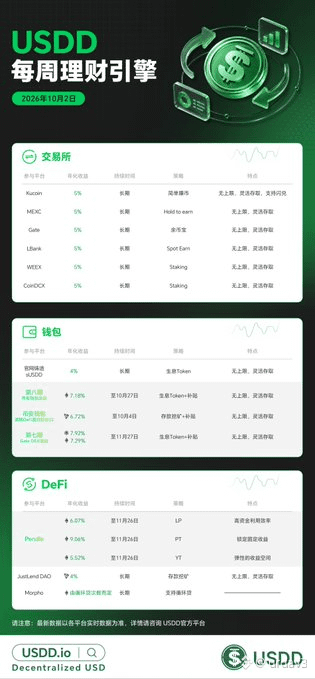
DeFi yield strategies can become difficult to navigate when opportunities are spread across exchanges, wallets and multiple protocols. USDD's latest weekly yield map takes a different approach by organizing these opportunities into a clearer framework.
The strategy covers multiple yield paths across trading platforms, wallets and DeFi protocols, allowing users to compare different routes for deploying stablecoin capital.
The key idea is not simply chasing the highest displayed APY. A useful yield strategy also needs to consider liquidity, lock-up requirements, platform structure and how easily capital can move between opportunities.
USDD's weekly framework attempts to turn a fragmented DeFi landscape into a more structured map.
With no quota limits and no mandatory lock-up highlighted in the campaign, the focus is on flexibility alongside recurring yield opportunities.
As stablecoin markets mature, aggregation and clarity can become just as important as yield itself. The ability to see where capital can go, what conditions apply and how different strategies compare can make DeFi easier to understand and navigate.
@usddio @JustinSun #TRONEcoStar
USDD AS A MAP FOR NAVIGATING DEFI YIELD
DeFi yield strategies can become difficult to navigate when opportunities are spread across exchanges, wallets and multiple protocols. USDD's latest weekly yield map takes a different approach by organizing these opportunities into a clearer framework.
The strategy covers multiple yield paths across trading platforms, wallets and DeFi protocols, allowing users to compare different routes for deploying stablecoin capital.
The key idea is not simply chasing the highest displayed APY. A useful yield strategy also needs to consider liquidity, lock-up requirements, platform structure and how easily capital can move between opportunities.
USDD's weekly framework attempts to turn a fragmented DeFi landscape into a more structured map.
With no quota limits and no mandatory lock-up highlighted in the campaign, the focus is on flexibility alongside recurring yield opportunities.
As stablecoin markets mature, aggregation and clarity can become just as important as yield itself. The ability to see where capital can go, what conditions apply and how different strategies compare can make DeFi easier to understand and navigate.
@USDD - Decentralized USD @Justin Sun孙宇晨 #TRONEcoStar
DeFi yield strategies can become difficult to navigate when opportunities are spread across exchanges, wallets and multiple protocols. USDD's latest weekly yield map takes a different approach by organizing these opportunities into a clearer framework.
The strategy covers multiple yield paths across trading platforms, wallets and DeFi protocols, allowing users to compare different routes for deploying stablecoin capital.
The key idea is not simply chasing the highest displayed APY. A useful yield strategy also needs to consider liquidity, lock-up requirements, platform structure and how easily capital can move between opportunities.
USDD's weekly framework attempts to turn a fragmented DeFi landscape into a more structured map.
With no quota limits and no mandatory lock-up highlighted in the campaign, the focus is on flexibility alongside recurring yield opportunities.
As stablecoin markets mature, aggregation and clarity can become just as important as yield itself. The ability to see where capital can go, what conditions apply and how different strategies compare can make DeFi easier to understand and navigate.
@USDD - Decentralized USD @Justin Sun孙宇晨 #TRONEcoStar
4
·
--
翻訳参照
THE REAL VALUE OF A DEFI YIELD MAP IS CLARITY
Yield numbers naturally attract attention, but the more interesting part of USDD's weekly strategy update is the attempt to organize the entire yield landscape.
The graphic separates opportunities across exchanges, wallets and DeFi, showing that stablecoin returns can come from very different mechanisms.
An exchange-based strategy may involve trading or platform-specific products. A wallet strategy can involve tokenized assets or staking-related opportunities. DeFi strategies may involve liquidity provision, lending or other protocol mechanisms.
These products are not interchangeable, even when their displayed yields appear similar.
That is why a structured map can be useful. It allows users to understand not only the potential return, but also where the return comes from.
The emphasis on flexible access, no quota limits and no lock-up requirements further highlights the importance of capital mobility.
For the stablecoin economy, the next stage of growth may depend increasingly on better discovery tools. Users need more than capital; they need clear information about where that capital can be deployed.
USDD's weekly yield framework is an example of that direction.
@usddio @JustinSun #TRONEcoStar
THE REAL VALUE OF A DEFI YIELD MAP IS CLARITY
Yield numbers naturally attract attention, but the more interesting part of USDD's weekly strategy update is the attempt to organize the entire yield landscape.
The graphic separates opportunities across exchanges, wallets and DeFi, showing that stablecoin returns can come from very different mechanisms.
An exchange-based strategy may involve trading or platform-specific products. A wallet strategy can involve tokenized assets or staking-related opportunities. DeFi strategies may involve liquidity provision, lending or other protocol mechanisms.
These products are not interchangeable, even when their displayed yields appear similar.
That is why a structured map can be useful. It allows users to understand not only the potential return, but also where the return comes from.
The emphasis on flexible access, no quota limits and no lock-up requirements further highlights the importance of capital mobility.
For the stablecoin economy, the next stage of growth may depend increasingly on better discovery tools. Users need more than capital; they need clear information about where that capital can be deployed.
USDD's weekly yield framework is an example of that direction.
@USDD - Decentralized USD @Justin Sun孙宇晨 #TRONEcoStar
Yield numbers naturally attract attention, but the more interesting part of USDD's weekly strategy update is the attempt to organize the entire yield landscape.
The graphic separates opportunities across exchanges, wallets and DeFi, showing that stablecoin returns can come from very different mechanisms.
An exchange-based strategy may involve trading or platform-specific products. A wallet strategy can involve tokenized assets or staking-related opportunities. DeFi strategies may involve liquidity provision, lending or other protocol mechanisms.
These products are not interchangeable, even when their displayed yields appear similar.
That is why a structured map can be useful. It allows users to understand not only the potential return, but also where the return comes from.
The emphasis on flexible access, no quota limits and no lock-up requirements further highlights the importance of capital mobility.
For the stablecoin economy, the next stage of growth may depend increasingly on better discovery tools. Users need more than capital; they need clear information about where that capital can be deployed.
USDD's weekly yield framework is an example of that direction.
@USDD - Decentralized USD @Justin Sun孙宇晨 #TRONEcoStar

10
·
--
翻訳参照
USDD ENTERS A NEW DEFI SUMMER SEASON
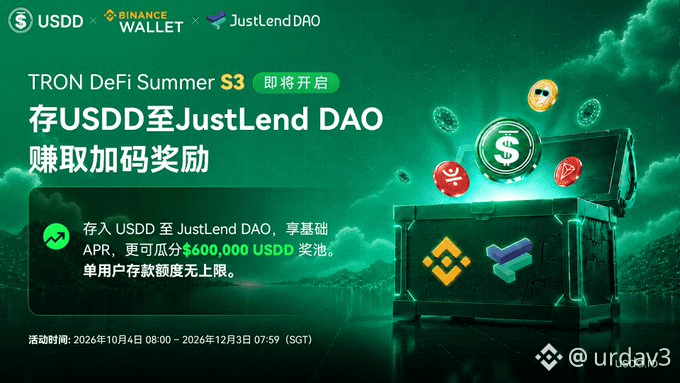
TRON DeFi Summer S3 officially launches on October 4, bringing a new incentive phase for USDD through JustLend DAO.
Users can subscribe with a minimum deposit of 100 USDD, while there is no maximum deposit limit. Alongside the base APY, participants can share in a prize pool of up to 600,000 USDD throughout the season.
What makes the structure interesting is that the campaign combines yield generation with several forms of capital flexibility. USDT can be swapped into USDD through the PSM module at a 1:1 ratio with zero slippage, while deposited assets can continue serving as collateral.
The event runs from October 4, 2026, at 08:00 SGT through December 3, 2026, at 07:59 SGT.
Rather than positioning USDD only as a stablecoin for holding value, the campaign connects it directly with lending, collateral and incentive mechanisms.
DeFi Summer S3 therefore creates another chapter in the evolution of USDD as part of the broader TRON DeFi ecosystem.
@JustinSun @usddio #TRONEcoStar
USDD ENTERS A NEW DEFI SUMMER SEASON
TRON DeFi Summer S3 officially launches on October 4, bringing a new incentive phase for USDD through JustLend DAO.
Users can subscribe with a minimum deposit of 100 USDD, while there is no maximum deposit limit. Alongside the base APY, participants can share in a prize pool of up to 600,000 USDD throughout the season.
What makes the structure interesting is that the campaign combines yield generation with several forms of capital flexibility. USDT can be swapped into USDD through the PSM module at a 1:1 ratio with zero slippage, while deposited assets can continue serving as collateral.
The event runs from October 4, 2026, at 08:00 SGT through December 3, 2026, at 07:59 SGT.
Rather than positioning USDD only as a stablecoin for holding value, the campaign connects it directly with lending, collateral and incentive mechanisms.
DeFi Summer S3 therefore creates another chapter in the evolution of USDD as part of the broader TRON DeFi ecosystem.
@Justin Sun孙宇晨 @USDD - Decentralized USD #TRONEcoStar
TRON DeFi Summer S3 officially launches on October 4, bringing a new incentive phase for USDD through JustLend DAO.
Users can subscribe with a minimum deposit of 100 USDD, while there is no maximum deposit limit. Alongside the base APY, participants can share in a prize pool of up to 600,000 USDD throughout the season.
What makes the structure interesting is that the campaign combines yield generation with several forms of capital flexibility. USDT can be swapped into USDD through the PSM module at a 1:1 ratio with zero slippage, while deposited assets can continue serving as collateral.
The event runs from October 4, 2026, at 08:00 SGT through December 3, 2026, at 07:59 SGT.
Rather than positioning USDD only as a stablecoin for holding value, the campaign connects it directly with lending, collateral and incentive mechanisms.
DeFi Summer S3 therefore creates another chapter in the evolution of USDD as part of the broader TRON DeFi ecosystem.
@Justin Sun孙宇晨 @USDD - Decentralized USD #TRONEcoStar
4
·
--
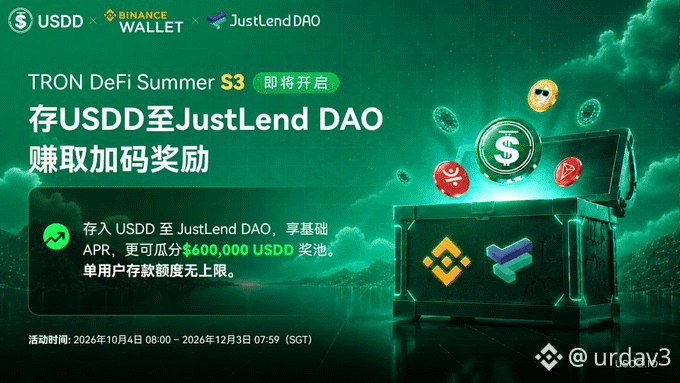
USDDはステーブル性とDeFiのユーティリティを両立
TRON DeFi Summerの第3シーズンでは、USDDキャンペーンの中心に重要な考え方があります。それは、ステーブルコインが価値建ての資産として機能するだけでなく、生産的なDeFi資本としても役立てられるということです。
参加者は、対象となるJustLendのアクティビティ・プールに最低100 USDDを入金すると、基準APYを受け取れるだけでなく、600,000 USDDの報酬プールにも参加できます。
この設計にはいくつかの実用的な機能が追加されています。ユーザーはPSMモジュールを通じてUSDTを1:1の比率で、スリッページゼロでUSDDに変換でき、また入金は柔軟に維持されます。キャンペーン期間中にユーザーが入金・出金できるため、さらに資産を担保として使い続けられるからです。
これにより、より相互に結びついたDeFi体験が生まれます。
ユーザーに「ステーブルコインを保有するか、金融アプリ内で使うか」を選ばせるのではなく、USDDはエコシステムの複数のレイヤーを通じて移動できます。
より大きな意義は、ステーブルコインのユーティリティが、トークンを取得した後にユーザーが何をできるかにますます左右されるようになっている点です。
DeFi Summer S3におけるUSDDの役割は、ステーブルコインの流動性を、1つの枠組みの中で貸付、担保化、利回り、そしてエコシステムのインセンティブに結びつけられることを示しています。
@JustinSun @usddio #TRONEcoStar
USDDはステーブル性とDeFiのユーティリティを両立
TRON DeFi Summerの第3シーズンでは、USDDキャンペーンの中心に重要な考え方があります。それは、ステーブルコインが価値建ての資産として機能するだけでなく、生産的なDeFi資本としても役立てられるということです。
参加者は、対象となるJustLendのアクティビティ・プールに最低100 USDDを入金すると、基準APYを受け取れるだけでなく、600,000 USDDの報酬プールにも参加できます。
この設計にはいくつかの実用的な機能が追加されています。ユーザーはPSMモジュールを通じてUSDTを1:1の比率で、スリッページゼロでUSDDに変換でき、また入金は柔軟に維持されます。キャンペーン期間中にユーザーが入金・出金できるため、さらに資産を担保として使い続けられるからです。
これにより、より相互に結びついたDeFi体験が生まれます。
ユーザーに「ステーブルコインを保有するか、金融アプリ内で使うか」を選ばせるのではなく、USDDはエコシステムの複数のレイヤーを通じて移動できます。
より大きな意義は、ステーブルコインのユーティリティが、トークンを取得した後にユーザーが何をできるかにますます左右されるようになっている点です。
DeFi Summer S3におけるUSDDの役割は、ステーブルコインの流動性を、1つの枠組みの中で貸付、担保化、利回り、そしてエコシステムのインセンティブに結びつけられることを示しています。
@Justin Sun孙宇晨 @USDD - Decentralized USD #TRONEcoStar
TRON DeFi Summerの第3シーズンでは、USDDキャンペーンの中心に重要な考え方があります。それは、ステーブルコインが価値建ての資産として機能するだけでなく、生産的なDeFi資本としても役立てられるということです。
参加者は、対象となるJustLendのアクティビティ・プールに最低100 USDDを入金すると、基準APYを受け取れるだけでなく、600,000 USDDの報酬プールにも参加できます。
この設計にはいくつかの実用的な機能が追加されています。ユーザーはPSMモジュールを通じてUSDTを1:1の比率で、スリッページゼロでUSDDに変換でき、また入金は柔軟に維持されます。キャンペーン期間中にユーザーが入金・出金できるため、さらに資産を担保として使い続けられるからです。
これにより、より相互に結びついたDeFi体験が生まれます。
ユーザーに「ステーブルコインを保有するか、金融アプリ内で使うか」を選ばせるのではなく、USDDはエコシステムの複数のレイヤーを通じて移動できます。
より大きな意義は、ステーブルコインのユーティリティが、トークンを取得した後にユーザーが何をできるかにますます左右されるようになっている点です。
DeFi Summer S3におけるUSDDの役割は、ステーブルコインの流動性を、1つの枠組みの中で貸付、担保化、利回り、そしてエコシステムのインセンティブに結びつけられることを示しています。
@Justin Sun孙宇晨 @USDD - Decentralized USD #TRONEcoStar
5
·
--
翻訳参照
THE 600,000 USDD REWARD POOL CREATES A LIQUIDITY INCENTIVE
A 600,000 USDD prize pool is one of the headline features of TRON DeFi Summer S3.
The campaign is designed to encourage users to bring USDD liquidity into JustLend DAO while maintaining access to the protocol's underlying DeFi functionality.
The minimum entry requirement is 100 USDD, with no stated maximum deposit limit. This creates an open participation structure while allowing the reward pool to operate across a potentially broad range of deposit sizes.
Importantly, the reward pool is an additional incentive rather than the only component of the product. Users can also receive the applicable base APY, while their assets can continue functioning as collateral.
The structure illustrates a common direction in DeFi: incentives are increasingly combined with actual financial utility.
For a stablecoin ecosystem, this matters because sustainable liquidity depends on more than token issuance. Users need reasons to hold, deploy and reuse the asset.
By connecting USDD deposits with lending infrastructure and a dedicated reward pool, S3 is designed to turn stablecoin liquidity into active DeFi capital.
@JustinSun @usddio #TRONEcoStar
THE 600,000 USDD REWARD POOL CREATES A LIQUIDITY INCENTIVE
A 600,000 USDD prize pool is one of the headline features of TRON DeFi Summer S3.
The campaign is designed to encourage users to bring USDD liquidity into JustLend DAO while maintaining access to the protocol's underlying DeFi functionality.
The minimum entry requirement is 100 USDD, with no stated maximum deposit limit. This creates an open participation structure while allowing the reward pool to operate across a potentially broad range of deposit sizes.
Importantly, the reward pool is an additional incentive rather than the only component of the product. Users can also receive the applicable base APY, while their assets can continue functioning as collateral.
The structure illustrates a common direction in DeFi: incentives are increasingly combined with actual financial utility.
For a stablecoin ecosystem, this matters because sustainable liquidity depends on more than token issuance. Users need reasons to hold, deploy and reuse the asset.
By connecting USDD deposits with lending infrastructure and a dedicated reward pool, S3 is designed to turn stablecoin liquidity into active DeFi capital.
@Justin Sun孙宇晨 @USDD - Decentralized USD #TRONEcoStar
A 600,000 USDD prize pool is one of the headline features of TRON DeFi Summer S3.
The campaign is designed to encourage users to bring USDD liquidity into JustLend DAO while maintaining access to the protocol's underlying DeFi functionality.
The minimum entry requirement is 100 USDD, with no stated maximum deposit limit. This creates an open participation structure while allowing the reward pool to operate across a potentially broad range of deposit sizes.
Importantly, the reward pool is an additional incentive rather than the only component of the product. Users can also receive the applicable base APY, while their assets can continue functioning as collateral.
The structure illustrates a common direction in DeFi: incentives are increasingly combined with actual financial utility.
For a stablecoin ecosystem, this matters because sustainable liquidity depends on more than token issuance. Users need reasons to hold, deploy and reuse the asset.
By connecting USDD deposits with lending infrastructure and a dedicated reward pool, S3 is designed to turn stablecoin liquidity into active DeFi capital.
@Justin Sun孙宇晨 @USDD - Decentralized USD #TRONEcoStar
10
·
--
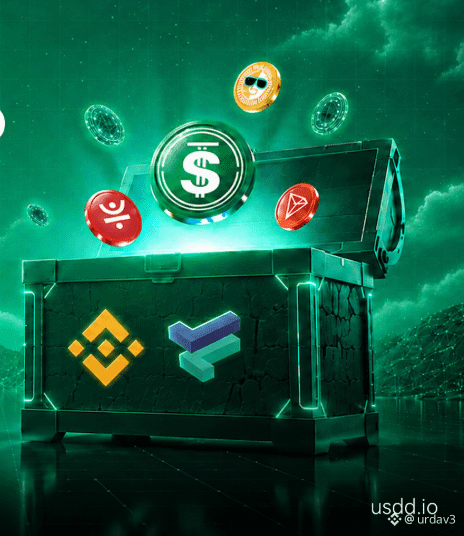
ゼロスリッページ・コンバージョンがUSDTとUSDD間の摩擦を低減
TRON DeFi Summer S3の注目すべき機能の1つは、PSMモジュールを通じて1:1の比率で、スリッページゼロにてUSDTをUSDDへ変換できることです。
ステーブルコイン利用者にとって、変換時の摩擦は、見出しとなる利回りと同じくらい重要な場合があります。予測可能な1:1の仕組みは、2つのドル建て資産の間の移行をより理解しやすくし、実行もしやすくします。
さらに、これはTRONエコシステムにおける最大級のステーブルコインの1つであるUSDTと、USDDの間に直接的な流動性ブリッジを生み出します。
変換後、USDDは対象となるJustLendキャンペーンに投入でき、適用されるベースAPYにアクセスし、600,000 USDDの報酬プールに参加できます。
より大きな狙いは、構成可能性(コンポーザビリティ)です。
ステーブルコインは、より広いブロックチェーン・エコシステムの外へ出ることなく、ある流動性環境から別の流動性環境へ移動できます。コンバージョン、貸し出し、担保化、報酬が、単一のDeFiワークフロー内でつながるステップになり得ます。
S3は、ステーブルコイン基盤における重要な側面を強調しています。資産やアプリケーション間を移動しやすくなるほど、オンチェーンの流動性レイヤーはより相互に結びつきます。
@JustinSun @usddio #TRONEcoStar
ゼロスリッページ・コンバージョンがUSDTとUSDD間の摩擦を低減
TRON DeFi Summer S3の注目すべき機能の1つは、PSMモジュールを通じて1:1の比率で、スリッページゼロにてUSDTをUSDDへ変換できることです。
ステーブルコイン利用者にとって、変換時の摩擦は、見出しとなる利回りと同じくらい重要な場合があります。予測可能な1:1の仕組みは、2つのドル建て資産の間の移行をより理解しやすくし、実行もしやすくします。
さらに、これはTRONエコシステムにおける最大級のステーブルコインの1つであるUSDTと、USDDの間に直接的な流動性ブリッジを生み出します。
変換後、USDDは対象となるJustLendキャンペーンに投入でき、適用されるベースAPYにアクセスし、600,000 USDDの報酬プールに参加できます。
より大きな狙いは、構成可能性(コンポーザビリティ)です。
ステーブルコインは、より広いブロックチェーン・エコシステムの外へ出ることなく、ある流動性環境から別の流動性環境へ移動できます。コンバージョン、貸し出し、担保化、報酬が、単一のDeFiワークフロー内でつながるステップになり得ます。
S3は、ステーブルコイン基盤における重要な側面を強調しています。資産やアプリケーション間を移動しやすくなるほど、オンチェーンの流動性レイヤーはより相互に結びつきます。
@Justin Sun孙宇晨 @USDD - Decentralized USD #TRONEcoStar
TRON DeFi Summer S3の注目すべき機能の1つは、PSMモジュールを通じて1:1の比率で、スリッページゼロにてUSDTをUSDDへ変換できることです。
ステーブルコイン利用者にとって、変換時の摩擦は、見出しとなる利回りと同じくらい重要な場合があります。予測可能な1:1の仕組みは、2つのドル建て資産の間の移行をより理解しやすくし、実行もしやすくします。
さらに、これはTRONエコシステムにおける最大級のステーブルコインの1つであるUSDTと、USDDの間に直接的な流動性ブリッジを生み出します。
変換後、USDDは対象となるJustLendキャンペーンに投入でき、適用されるベースAPYにアクセスし、600,000 USDDの報酬プールに参加できます。
より大きな狙いは、構成可能性(コンポーザビリティ)です。
ステーブルコインは、より広いブロックチェーン・エコシステムの外へ出ることなく、ある流動性環境から別の流動性環境へ移動できます。コンバージョン、貸し出し、担保化、報酬が、単一のDeFiワークフロー内でつながるステップになり得ます。
S3は、ステーブルコイン基盤における重要な側面を強調しています。資産やアプリケーション間を移動しやすくなるほど、オンチェーンの流動性レイヤーはより相互に結びつきます。
@Justin Sun孙宇晨 @USDD - Decentralized USD #TRONEcoStar
25
·
--
翻訳参照
THE INTERNET IS BECOMING PROGRAMMABLE
For decades, the internet made information easier to move.
Web3 is experimenting with something different: making value, ownership, and coordination programmable.
A smart contract can turn rules into infrastructure.
A wallet can become an interface for digital ownership.
A decentralized network can allow strangers to coordinate around transparent rules without sharing the same organization.
These are still experiments, not finished answers.
But experiments matter because infrastructure changes what becomes possible.
When money can move programmatically, assets can interact with applications, and communities can coordinate through code, entirely new forms of digital behavior become possible.
The most fascinating part is that nobody has written the complete playbook yet.
Developers are testing.
Communities are experimenting.
Users are discovering new ways to participate.
And somewhere among these experiments may be the next primitive that millions of people eventually take for granted.
The future of Web3 may not be one breakthrough.
It may be the moment thousands of programmable pieces finally begin working together.
👇 What part of this programmable internet are you exploring?
@JustinSun
#TRONEcoStar
THE INTERNET IS BECOMING PROGRAMMABLE
For decades, the internet made information easier to move.
Web3 is experimenting with something different: making value, ownership, and coordination programmable.
A smart contract can turn rules into infrastructure.
A wallet can become an interface for digital ownership.
A decentralized network can allow strangers to coordinate around transparent rules without sharing the same organization.
These are still experiments, not finished answers.
But experiments matter because infrastructure changes what becomes possible.
When money can move programmatically, assets can interact with applications, and communities can coordinate through code, entirely new forms of digital behavior become possible.
The most fascinating part is that nobody has written the complete playbook yet.
Developers are testing.
Communities are experimenting.
Users are discovering new ways to participate.
And somewhere among these experiments may be the next primitive that millions of people eventually take for granted.
The future of Web3 may not be one breakthrough.
It may be the moment thousands of programmable pieces finally begin working together.
👇 What part of this programmable internet are you exploring?
@Justin Sun孙宇晨
#TRONEcoStar
For decades, the internet made information easier to move.
Web3 is experimenting with something different: making value, ownership, and coordination programmable.
A smart contract can turn rules into infrastructure.
A wallet can become an interface for digital ownership.
A decentralized network can allow strangers to coordinate around transparent rules without sharing the same organization.
These are still experiments, not finished answers.
But experiments matter because infrastructure changes what becomes possible.
When money can move programmatically, assets can interact with applications, and communities can coordinate through code, entirely new forms of digital behavior become possible.
The most fascinating part is that nobody has written the complete playbook yet.
Developers are testing.
Communities are experimenting.
Users are discovering new ways to participate.
And somewhere among these experiments may be the next primitive that millions of people eventually take for granted.
The future of Web3 may not be one breakthrough.
It may be the moment thousands of programmable pieces finally begin working together.
👇 What part of this programmable internet are you exploring?
@Justin Sun孙宇晨
#TRONEcoStar

7
·
--
翻訳参照
OCEAN FRONT TURNS CLIMATE CHANGE INTO A DIGITAL VISION
Beeple’s OCEAN FRONT is more than an image of a world surrounded by water. It presents climate change as a future environment in which nature, technology, and human life increasingly overlap.
That framing gives the artwork a different kind of significance.
Environmental issues are often communicated through statistics, scientific projections, and reports. Digital art can approach the same subject through imagination. Instead of explaining what rising seas might mean, OCEAN FRONT creates a visual world in which the consequences become part of the environment itself.
The work therefore operates on two levels.
It is a piece of digital art, but it is also a visual statement about humanity’s relationship with a changing planet.
Its $6 million sale at Nifty Gateway on March 23, 2021 added another dimension to that statement. The transaction demonstrated that digital artwork centered on a serious environmental theme could become a significant cultural and economic artifact within the emerging NFT market.
The important point is not simply the price.
OCEAN FRONT shows how digital art can preserve an idea about the future, giving an abstract concern such as climate change a visual form that audiences can remember, discuss, and reinterpret.
Digital art can capture a moment in history.
OCEAN FRONT attempts to capture a possible future.
@JustinSun #TRONEcoStar
OCEAN FRONT TURNS CLIMATE CHANGE INTO A DIGITAL VISION
Beeple’s OCEAN FRONT is more than an image of a world surrounded by water. It presents climate change as a future environment in which nature, technology, and human life increasingly overlap.
That framing gives the artwork a different kind of significance.
Environmental issues are often communicated through statistics, scientific projections, and reports. Digital art can approach the same subject through imagination. Instead of explaining what rising seas might mean, OCEAN FRONT creates a visual world in which the consequences become part of the environment itself.
The work therefore operates on two levels.
It is a piece of digital art, but it is also a visual statement about humanity’s relationship with a changing planet.
Its $6 million sale at Nifty Gateway on March 23, 2021 added another dimension to that statement. The transaction demonstrated that digital artwork centered on a serious environmental theme could become a significant cultural and economic artifact within the emerging NFT market.
The important point is not simply the price.
OCEAN FRONT shows how digital art can preserve an idea about the future, giving an abstract concern such as climate change a visual form that audiences can remember, discuss, and reinterpret.
Digital art can capture a moment in history.
OCEAN FRONT attempts to capture a possible future.
@Justin Sun孙宇晨 #TRONEcoStar
Beeple’s OCEAN FRONT is more than an image of a world surrounded by water. It presents climate change as a future environment in which nature, technology, and human life increasingly overlap.
That framing gives the artwork a different kind of significance.
Environmental issues are often communicated through statistics, scientific projections, and reports. Digital art can approach the same subject through imagination. Instead of explaining what rising seas might mean, OCEAN FRONT creates a visual world in which the consequences become part of the environment itself.
The work therefore operates on two levels.
It is a piece of digital art, but it is also a visual statement about humanity’s relationship with a changing planet.
Its $6 million sale at Nifty Gateway on March 23, 2021 added another dimension to that statement. The transaction demonstrated that digital artwork centered on a serious environmental theme could become a significant cultural and economic artifact within the emerging NFT market.
The important point is not simply the price.
OCEAN FRONT shows how digital art can preserve an idea about the future, giving an abstract concern such as climate change a visual form that audiences can remember, discuss, and reinterpret.
Digital art can capture a moment in history.
OCEAN FRONT attempts to capture a possible future.
@Justin Sun孙宇晨 #TRONEcoStar

12
·
--
翻訳参照
THE $6M SALE SHOWS HOW DIGITAL ART CAN CARRY IDEAS BEYOND THE CANVAS
The $6 million sale of Beeple’s OCEAN FRONT on Nifty Gateway in 2021 is notable not only because of the amount involved, but because of the idea embedded in the work.
OCEAN FRONT imagines a future shaped by rising seas and climate change, bringing environmental concerns into a digital artistic environment.
This gives the work a role beyond visual aesthetics.
Art has historically been used to document periods of change, express social concerns, and imagine futures that do not yet exist. Digital art extends that tradition into a new medium where technology itself becomes part of the creative language.
In OCEAN FRONT, that relationship is particularly relevant.
The subject is a changing planet, while the medium is digital technology. Nature and technology are therefore not presented as completely separate worlds. They converge inside the same imagined environment.
The $6 million transaction also demonstrates how cultural meaning and economic value can coexist within digital art.
The sale does not determine the environmental importance of the work, but it places a clear historical marker around it: a climate-focused digital artwork became a major transaction in the early NFT era.
That combination of technology, culture, environmental imagination, and market history is what makes OCEAN FRONT more than a snapshot of 2021.
It is a digital artwork built around a question about the future.
@JustinSun #TRONEcoStar
THE $6M SALE SHOWS HOW DIGITAL ART CAN CARRY IDEAS BEYOND THE CANVAS
The $6 million sale of Beeple’s OCEAN FRONT on Nifty Gateway in 2021 is notable not only because of the amount involved, but because of the idea embedded in the work.
OCEAN FRONT imagines a future shaped by rising seas and climate change, bringing environmental concerns into a digital artistic environment.
This gives the work a role beyond visual aesthetics.
Art has historically been used to document periods of change, express social concerns, and imagine futures that do not yet exist. Digital art extends that tradition into a new medium where technology itself becomes part of the creative language.
In OCEAN FRONT, that relationship is particularly relevant.
The subject is a changing planet, while the medium is digital technology. Nature and technology are therefore not presented as completely separate worlds. They converge inside the same imagined environment.
The $6 million transaction also demonstrates how cultural meaning and economic value can coexist within digital art.
The sale does not determine the environmental importance of the work, but it places a clear historical marker around it: a climate-focused digital artwork became a major transaction in the early NFT era.
That combination of technology, culture, environmental imagination, and market history is what makes OCEAN FRONT more than a snapshot of 2021.
It is a digital artwork built around a question about the future.
@Justin Sun孙宇晨 #TRONEcoStar
The $6 million sale of Beeple’s OCEAN FRONT on Nifty Gateway in 2021 is notable not only because of the amount involved, but because of the idea embedded in the work.
OCEAN FRONT imagines a future shaped by rising seas and climate change, bringing environmental concerns into a digital artistic environment.
This gives the work a role beyond visual aesthetics.
Art has historically been used to document periods of change, express social concerns, and imagine futures that do not yet exist. Digital art extends that tradition into a new medium where technology itself becomes part of the creative language.
In OCEAN FRONT, that relationship is particularly relevant.
The subject is a changing planet, while the medium is digital technology. Nature and technology are therefore not presented as completely separate worlds. They converge inside the same imagined environment.
The $6 million transaction also demonstrates how cultural meaning and economic value can coexist within digital art.
The sale does not determine the environmental importance of the work, but it places a clear historical marker around it: a climate-focused digital artwork became a major transaction in the early NFT era.
That combination of technology, culture, environmental imagination, and market history is what makes OCEAN FRONT more than a snapshot of 2021.
It is a digital artwork built around a question about the future.
@Justin Sun孙宇晨 #TRONEcoStar

19
·
--
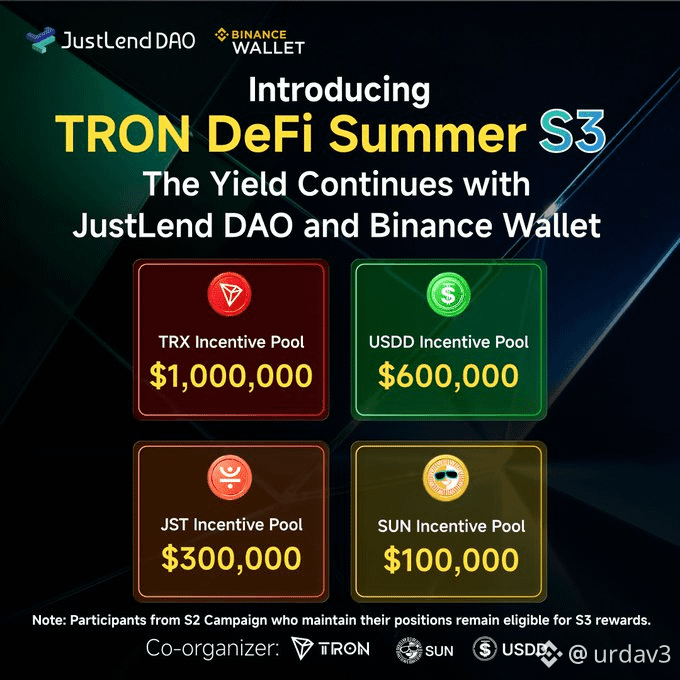
USDDの60万ドル配分が安定コインの流動性に中核的な役割を与える
TRON DeFi Summer S3の4つのプールのうち、USDDには100万ドルのTRXプールに次ぐ60万ドルの報酬配分が与えられています。
この位置づけが注目されるのは、安定コインの流動性がネイティブ・トークンの流動性とは異なる役割を担うためです。
USDDは、より広いDeFi環境の中で安定的な価値を持つ資産として機能し、ボラティリティの高い資産に伴うのと同じ方向性リスク(エクスポージャー)を負わずに、分散型金融の戦略へアクセスしたいユーザーにとって、その流動性が重要になります。
S3の構成では、安定コインの流動性を別個のエコシステムとして扱うのではなく、USDDをTRX、JST、SUNと並べています。
これにより、より相互に結びついたキャンペーンのアーキテクチャが作られます。
また、60万ドルの配分はUSDDが合計200万ドルのS3報酬プールの30%を占めることも意味します。つまり、安定コインはキャンペーンのインセンティブ構造において大きな比率を持っているのです。
ただし、報酬配分そのものは参加者に対する保証された利回りだと解釈すべきではありません。実際の報酬は、キャンペーンへの参加状況や適格性の仕組みによって決まります。
結論として、S3はボラティリティのある資産と安定的な価値の資産の両方に対してインセンティブを用いており、TRON DeFi内でより分散された流動性の枠組みを構築しています。
@DeFi_JUST @JustinSun #TRONEcoStar
USDDの60万ドル配分が安定コインの流動性に中核的な役割を与える
TRON DeFi Summer S3の4つのプールのうち、USDDには100万ドルのTRXプールに次ぐ60万ドルの報酬配分が与えられています。
この位置づけが注目されるのは、安定コインの流動性がネイティブ・トークンの流動性とは異なる役割を担うためです。
USDDは、より広いDeFi環境の中で安定的な価値を持つ資産として機能し、ボラティリティの高い資産に伴うのと同じ方向性リスク(エクスポージャー)を負わずに、分散型金融の戦略へアクセスしたいユーザーにとって、その流動性が重要になります。
S3の構成では、安定コインの流動性を別個のエコシステムとして扱うのではなく、USDDをTRX、JST、SUNと並べています。
これにより、より相互に結びついたキャンペーンのアーキテクチャが作られます。
また、60万ドルの配分はUSDDが合計200万ドルのS3報酬プールの30%を占めることも意味します。つまり、安定コインはキャンペーンのインセンティブ構造において大きな比率を持っているのです。
ただし、報酬配分そのものは参加者に対する保証された利回りだと解釈すべきではありません。実際の報酬は、キャンペーンへの参加状況や適格性の仕組みによって決まります。
結論として、S3はボラティリティのある資産と安定的な価値の資産の両方に対してインセンティブを用いており、TRON DeFi内でより分散された流動性の枠組みを構築しています。
@JUST DAO @Justin Sun孙宇晨 #TRONEcoStar
TRON DeFi Summer S3の4つのプールのうち、USDDには100万ドルのTRXプールに次ぐ60万ドルの報酬配分が与えられています。
この位置づけが注目されるのは、安定コインの流動性がネイティブ・トークンの流動性とは異なる役割を担うためです。
USDDは、より広いDeFi環境の中で安定的な価値を持つ資産として機能し、ボラティリティの高い資産に伴うのと同じ方向性リスク(エクスポージャー)を負わずに、分散型金融の戦略へアクセスしたいユーザーにとって、その流動性が重要になります。
S3の構成では、安定コインの流動性を別個のエコシステムとして扱うのではなく、USDDをTRX、JST、SUNと並べています。
これにより、より相互に結びついたキャンペーンのアーキテクチャが作られます。
また、60万ドルの配分はUSDDが合計200万ドルのS3報酬プールの30%を占めることも意味します。つまり、安定コインはキャンペーンのインセンティブ構造において大きな比率を持っているのです。
ただし、報酬配分そのものは参加者に対する保証された利回りだと解釈すべきではありません。実際の報酬は、キャンペーンへの参加状況や適格性の仕組みによって決まります。
結論として、S3はボラティリティのある資産と安定的な価値の資産の両方に対してインセンティブを用いており、TRON DeFi内でより分散された流動性の枠組みを構築しています。
@JUST DAO @Justin Sun孙宇晨 #TRONEcoStar

148
·
--
翻訳参照
THE S3 DESIGN CREATES CONTINUITY BETWEEN DEFI SUMMER’S SECOND AND THIRD SEASONS
One of the most significant details in TRON DeFi Summer S3 is the continuity mechanism for existing S2 participants.
Users already participating in S2 do not need to take additional steps. They can keep their existing positions and continue into S3 while remaining eligible for S3 rewards, according to the campaign announcement.
That changes the onboarding dynamic.
Instead of requiring existing participants to exit one campaign and manually enter another, the transition is designed to preserve participation.
From a liquidity perspective, continuity can reduce unnecessary friction. Capital does not need to be withdrawn simply because an incentive period has ended. Existing positions can remain connected to the next campaign phase.
This also gives the 60-day S3 period a different role. It is not only a new reward cycle; it extends an existing liquidity participation framework.
The result is a more continuous DeFi incentive model, where seasonal campaigns can build upon previous participation rather than repeatedly starting from zero.
S3 therefore demonstrates how campaign design can focus not only on attracting new capital, but also on retaining existing liquidity and reducing the friction involved in transitioning between incentive periods.
@JustinSun @DeFi_JUST #TRONEcoStar
THE S3 DESIGN CREATES CONTINUITY BETWEEN DEFI SUMMER’S SECOND AND THIRD SEASONS
One of the most significant details in TRON DeFi Summer S3 is the continuity mechanism for existing S2 participants.
Users already participating in S2 do not need to take additional steps. They can keep their existing positions and continue into S3 while remaining eligible for S3 rewards, according to the campaign announcement.
That changes the onboarding dynamic.
Instead of requiring existing participants to exit one campaign and manually enter another, the transition is designed to preserve participation.
From a liquidity perspective, continuity can reduce unnecessary friction. Capital does not need to be withdrawn simply because an incentive period has ended. Existing positions can remain connected to the next campaign phase.
This also gives the 60-day S3 period a different role. It is not only a new reward cycle; it extends an existing liquidity participation framework.
The result is a more continuous DeFi incentive model, where seasonal campaigns can build upon previous participation rather than repeatedly starting from zero.
S3 therefore demonstrates how campaign design can focus not only on attracting new capital, but also on retaining existing liquidity and reducing the friction involved in transitioning between incentive periods.
@Justin Sun孙宇晨 @JUST DAO #TRONEcoStar
One of the most significant details in TRON DeFi Summer S3 is the continuity mechanism for existing S2 participants.
Users already participating in S2 do not need to take additional steps. They can keep their existing positions and continue into S3 while remaining eligible for S3 rewards, according to the campaign announcement.
That changes the onboarding dynamic.
Instead of requiring existing participants to exit one campaign and manually enter another, the transition is designed to preserve participation.
From a liquidity perspective, continuity can reduce unnecessary friction. Capital does not need to be withdrawn simply because an incentive period has ended. Existing positions can remain connected to the next campaign phase.
This also gives the 60-day S3 period a different role. It is not only a new reward cycle; it extends an existing liquidity participation framework.
The result is a more continuous DeFi incentive model, where seasonal campaigns can build upon previous participation rather than repeatedly starting from zero.
S3 therefore demonstrates how campaign design can focus not only on attracting new capital, but also on retaining existing liquidity and reducing the friction involved in transitioning between incentive periods.
@Justin Sun孙宇晨 @JUST DAO #TRONEcoStar
62
·
--
TRON DEFI サマー S3 はイールド・インセンティブをマルチアセット・リクイディティ・キャンペーンへ
TRON DeFi Summer S3 は、4つのアセットに分配される200万ドルの報酬プールを導入します:TRXに100万ドル、USDDに60万ドル、JSTに30万ドル、SUNに10万ドルです。
この構造が重要なのは、このキャンペーンが単一のトークンや孤立した流動性プールを中心にしていないためです。
代わりに、S3 は Binance Wallet DeFi を通じて JustLend DAO エコシステム全体にまたがるマルチアセットのインセンティブ層を構築します。各プールは TRON DeFi 経済の異なる構成要素を表し、組み合わされた報酬構造によって、より広範なリクイディティ環境が生み出されます。
また、60日間の Boosted APR 期間により、インセンティブが流動性の行動に影響を与え得る明確な期間が参加者に提示されます。
これにより、DeFi Summer は単なる短期的な販促イベント以上のものになります。複数のアセットにまたがって資本を連携させ、長期にわたるキャンペーン期間でも参加を維持するための仕組みとなります。
さらに、配分そのものが、キャンペーンがどこに最大のインセンティブの重点を置いているかを示しています。最も大きいのは TRX で、次いで USDD、JST、SUN です。
そのため S3 は、トークン・インセンティブを単一市場の報酬プログラムではなく、エコシステム全体のリクイディティ戦略として設計できることを例示しています。
@DeFi_JUST @JustinSun #TRONEcoStar
TRON DEFI サマー S3 はイールド・インセンティブをマルチアセット・リクイディティ・キャンペーンへ
TRON DeFi Summer S3 は、4つのアセットに分配される200万ドルの報酬プールを導入します:TRXに100万ドル、USDDに60万ドル、JSTに30万ドル、SUNに10万ドルです。
この構造が重要なのは、このキャンペーンが単一のトークンや孤立した流動性プールを中心にしていないためです。
代わりに、S3 は Binance Wallet DeFi を通じて JustLend DAO エコシステム全体にまたがるマルチアセットのインセンティブ層を構築します。各プールは TRON DeFi 経済の異なる構成要素を表し、組み合わされた報酬構造によって、より広範なリクイディティ環境が生み出されます。
また、60日間の Boosted APR 期間により、インセンティブが流動性の行動に影響を与え得る明確な期間が参加者に提示されます。
これにより、DeFi Summer は単なる短期的な販促イベント以上のものになります。複数のアセットにまたがって資本を連携させ、長期にわたるキャンペーン期間でも参加を維持するための仕組みとなります。
さらに、配分そのものが、キャンペーンがどこに最大のインセンティブの重点を置いているかを示しています。最も大きいのは TRX で、次いで USDD、JST、SUN です。
そのため S3 は、トークン・インセンティブを単一市場の報酬プログラムではなく、エコシステム全体のリクイディティ戦略として設計できることを例示しています。
@JUST DAO @Justin Sun孙宇晨 #TRONEcoStar
TRON DeFi Summer S3 は、4つのアセットに分配される200万ドルの報酬プールを導入します:TRXに100万ドル、USDDに60万ドル、JSTに30万ドル、SUNに10万ドルです。
この構造が重要なのは、このキャンペーンが単一のトークンや孤立した流動性プールを中心にしていないためです。
代わりに、S3 は Binance Wallet DeFi を通じて JustLend DAO エコシステム全体にまたがるマルチアセットのインセンティブ層を構築します。各プールは TRON DeFi 経済の異なる構成要素を表し、組み合わされた報酬構造によって、より広範なリクイディティ環境が生み出されます。
また、60日間の Boosted APR 期間により、インセンティブが流動性の行動に影響を与え得る明確な期間が参加者に提示されます。
これにより、DeFi Summer は単なる短期的な販促イベント以上のものになります。複数のアセットにまたがって資本を連携させ、長期にわたるキャンペーン期間でも参加を維持するための仕組みとなります。
さらに、配分そのものが、キャンペーンがどこに最大のインセンティブの重点を置いているかを示しています。最も大きいのは TRX で、次いで USDD、JST、SUN です。
そのため S3 は、トークン・インセンティブを単一市場の報酬プログラムではなく、エコシステム全体のリクイディティ戦略として設計できることを例示しています。
@JUST DAO @Justin Sun孙宇晨 #TRONEcoStar
153
·
--
翻訳参照
50+ MODELS THROUGH ONE API CHANGES MODEL ACCESS
Access to more than 50 mainstream AI models through B.AI API introduces a different way to think about model discovery and utilization.
The guide lists a broad range of model families, including ChatGPT, Claude, Gemini, Grok, DeepSeek, Kimi, Zhipu GLM, Qwen, MiniMax, Tencent Hy3, and MiMo. The model lineup is also described as dynamically expanding.
For developers, the important part is not simply the number 50+. It is the possibility of accessing a broader model ecosystem through a standardized API rather than building separate workflows around every provider.
That can simplify experimentation. Developers can test different models, compare their behavior within the same environment, and select a model according to the task or workflow requirement.
It also changes the relationship between applications and models. An application does not necessarily have to depend on a single model provider as its permanent intelligence layer.
B.AI API effectively creates a broader access point to multiple model ecosystems, while CodeBuddy provides the environment where those models can be used.
The larger trend is toward abstraction: developers increasingly interact with a unified interface while the underlying model layer becomes more diverse and replaceable.
@JustinSun #TRONEcoStar @BAI_AGI
50+ MODELS THROUGH ONE API CHANGES MODEL ACCESS
Access to more than 50 mainstream AI models through B.AI API introduces a different way to think about model discovery and utilization.
The guide lists a broad range of model families, including ChatGPT, Claude, Gemini, Grok, DeepSeek, Kimi, Zhipu GLM, Qwen, MiniMax, Tencent Hy3, and MiMo. The model lineup is also described as dynamically expanding.
For developers, the important part is not simply the number 50+. It is the possibility of accessing a broader model ecosystem through a standardized API rather than building separate workflows around every provider.
That can simplify experimentation. Developers can test different models, compare their behavior within the same environment, and select a model according to the task or workflow requirement.
It also changes the relationship between applications and models. An application does not necessarily have to depend on a single model provider as its permanent intelligence layer.
B.AI API effectively creates a broader access point to multiple model ecosystems, while CodeBuddy provides the environment where those models can be used.
The larger trend is toward abstraction: developers increasingly interact with a unified interface while the underlying model layer becomes more diverse and replaceable.
@Justin Sun孙宇晨 #TRONEcoStar @BAI_AGI
Access to more than 50 mainstream AI models through B.AI API introduces a different way to think about model discovery and utilization.
The guide lists a broad range of model families, including ChatGPT, Claude, Gemini, Grok, DeepSeek, Kimi, Zhipu GLM, Qwen, MiniMax, Tencent Hy3, and MiMo. The model lineup is also described as dynamically expanding.
For developers, the important part is not simply the number 50+. It is the possibility of accessing a broader model ecosystem through a standardized API rather than building separate workflows around every provider.
That can simplify experimentation. Developers can test different models, compare their behavior within the same environment, and select a model according to the task or workflow requirement.
It also changes the relationship between applications and models. An application does not necessarily have to depend on a single model provider as its permanent intelligence layer.
B.AI API effectively creates a broader access point to multiple model ecosystems, while CodeBuddy provides the environment where those models can be used.
The larger trend is toward abstraction: developers increasingly interact with a unified interface while the underlying model layer becomes more diverse and replaceable.
@Justin Sun孙宇晨 #TRONEcoStar @BAI_AGI

7
·
--
翻訳参照
MULTI-MODEL AI BREAKS THE SINGLE-MODEL LIMIT
The biggest idea behind the CodeBuddy and B.AI API integration is not simply adding more AI models to a coding tool. It is changing how developers can approach model selection inside the same workflow.
Instead of being locked into one model for every task, developers can switch between GPT, Claude, Gemini, DeepSeek, Kimi, GLM, Qwen, and other available models through B.AI API. The guide describes access to more than 50 mainstream models, giving developers a broader pool of capabilities to work with.
This matters because different development tasks can demand different model characteristics. Planning requirements, generating code, debugging, reasoning through a problem, or handling other development steps do not necessarily require the same model.
B.AI therefore introduces a layer between the developer workflow and individual models. CodeBuddy remains the working environment, while the API provides flexibility underneath it.
The deeper perspective is that AI development is moving from “Which AI tool should I use?” toward “Which model should handle this task?” That shift can make model choice part of the workflow itself rather than a separate decision outside the development environment.
@JustinSun #TRONEcoStar @BAI_AGI
MULTI-MODEL AI BREAKS THE SINGLE-MODEL LIMIT
The biggest idea behind the CodeBuddy and B.AI API integration is not simply adding more AI models to a coding tool. It is changing how developers can approach model selection inside the same workflow.
Instead of being locked into one model for every task, developers can switch between GPT, Claude, Gemini, DeepSeek, Kimi, GLM, Qwen, and other available models through B.AI API. The guide describes access to more than 50 mainstream models, giving developers a broader pool of capabilities to work with.
This matters because different development tasks can demand different model characteristics. Planning requirements, generating code, debugging, reasoning through a problem, or handling other development steps do not necessarily require the same model.
B.AI therefore introduces a layer between the developer workflow and individual models. CodeBuddy remains the working environment, while the API provides flexibility underneath it.
The deeper perspective is that AI development is moving from “Which AI tool should I use?” toward “Which model should handle this task?” That shift can make model choice part of the workflow itself rather than a separate decision outside the development environment.
@Justin Sun孙宇晨 #TRONEcoStar @BAI_AGI
The biggest idea behind the CodeBuddy and B.AI API integration is not simply adding more AI models to a coding tool. It is changing how developers can approach model selection inside the same workflow.
Instead of being locked into one model for every task, developers can switch between GPT, Claude, Gemini, DeepSeek, Kimi, GLM, Qwen, and other available models through B.AI API. The guide describes access to more than 50 mainstream models, giving developers a broader pool of capabilities to work with.
This matters because different development tasks can demand different model characteristics. Planning requirements, generating code, debugging, reasoning through a problem, or handling other development steps do not necessarily require the same model.
B.AI therefore introduces a layer between the developer workflow and individual models. CodeBuddy remains the working environment, while the API provides flexibility underneath it.
The deeper perspective is that AI development is moving from “Which AI tool should I use?” toward “Which model should handle this task?” That shift can make model choice part of the workflow itself rather than a separate decision outside the development environment.
@Justin Sun孙宇晨 #TRONEcoStar @BAI_AGI

2
·
--
翻訳参照
B.AI AS AN AI AGENT INFRASTRUCTURE LAYER
The CodeBuddy integration illustrates a broader role for B.AI beyond direct AI conversations.
According to the guide, B.AI provides standardized API interfaces compatible with mainstream specifications such as the OpenAI API and Anthropic Messages API. This allows AI development tools and agents that support these standards to connect with B.AI more seamlessly.
That architecture positions B.AI as an infrastructure layer rather than simply another individual AI model.
The distinction is important. A model generates intelligence, while an infrastructure layer can determine how that intelligence becomes accessible across applications, development environments, and agent workflows.
CodeBuddy is one example. Developers can bring B.AI's model access into an existing coding environment instead of changing their entire workflow around a single AI provider.
The result is a more modular architecture: applications can remain focused on their user experience and workflow, while the infrastructure layer handles access to a broader model ecosystem.
This perspective becomes increasingly relevant as AI agents and development tools become more interconnected. The value may not only come from having powerful models, but from building infrastructure that makes different models usable where they are actually needed.
@JustinSun #TRONEcoStar @BAI_AGI
B.AI AS AN AI AGENT INFRASTRUCTURE LAYER
The CodeBuddy integration illustrates a broader role for B.AI beyond direct AI conversations.
According to the guide, B.AI provides standardized API interfaces compatible with mainstream specifications such as the OpenAI API and Anthropic Messages API. This allows AI development tools and agents that support these standards to connect with B.AI more seamlessly.
That architecture positions B.AI as an infrastructure layer rather than simply another individual AI model.
The distinction is important. A model generates intelligence, while an infrastructure layer can determine how that intelligence becomes accessible across applications, development environments, and agent workflows.
CodeBuddy is one example. Developers can bring B.AI's model access into an existing coding environment instead of changing their entire workflow around a single AI provider.
The result is a more modular architecture: applications can remain focused on their user experience and workflow, while the infrastructure layer handles access to a broader model ecosystem.
This perspective becomes increasingly relevant as AI agents and development tools become more interconnected. The value may not only come from having powerful models, but from building infrastructure that makes different models usable where they are actually needed.
@Justin Sun孙宇晨 #TRONEcoStar @BAI_AGI
The CodeBuddy integration illustrates a broader role for B.AI beyond direct AI conversations.
According to the guide, B.AI provides standardized API interfaces compatible with mainstream specifications such as the OpenAI API and Anthropic Messages API. This allows AI development tools and agents that support these standards to connect with B.AI more seamlessly.
That architecture positions B.AI as an infrastructure layer rather than simply another individual AI model.
The distinction is important. A model generates intelligence, while an infrastructure layer can determine how that intelligence becomes accessible across applications, development environments, and agent workflows.
CodeBuddy is one example. Developers can bring B.AI's model access into an existing coding environment instead of changing their entire workflow around a single AI provider.
The result is a more modular architecture: applications can remain focused on their user experience and workflow, while the infrastructure layer handles access to a broader model ecosystem.
This perspective becomes increasingly relevant as AI agents and development tools become more interconnected. The value may not only come from having powerful models, but from building infrastructure that makes different models usable where they are actually needed.
@Justin Sun孙宇晨 #TRONEcoStar @BAI_AGI

7
·
--
翻訳参照
CODEBUDDY × B.AI CREATES A MORE FLEXIBLE DEVELOPMENT WORKFLOW
CodeBuddy is designed to support the development process across requirements planning, UI design, code generation, backend engineering, and debugging. B.AI API adds another dimension by allowing developers to select models beneath that workflow.
This creates an interesting separation between the development environment and the intelligence powering it.
Developers can stay inside CodeBuddy while changing the model used for a particular task. Instead of rebuilding a workflow whenever a preferred model changes, the integration makes model access configurable through the B.AI API.
The guide presents two connection methods: a user-interface setup for faster configuration and a models.json approach for more advanced or batch management.
This flexibility matters because development workflows are rarely uniform. A developer may want one model for general coding assistance and another for a different reasoning or generation requirement.
The broader implication is workflow continuity. The interface does not necessarily need to change just because the underlying model changes.
B.AI therefore acts as a model-access layer underneath CodeBuddy, while CodeBuddy remains the developer-facing environment. Together, they demonstrate how AI development can become increasingly modular, configurable, and adaptable.
@JustinSun #TRONEcoStar @BAI_AGI
CODEBUDDY × B.AI CREATES A MORE FLEXIBLE DEVELOPMENT WORKFLOW
CodeBuddy is designed to support the development process across requirements planning, UI design, code generation, backend engineering, and debugging. B.AI API adds another dimension by allowing developers to select models beneath that workflow.
This creates an interesting separation between the development environment and the intelligence powering it.
Developers can stay inside CodeBuddy while changing the model used for a particular task. Instead of rebuilding a workflow whenever a preferred model changes, the integration makes model access configurable through the B.AI API.
The guide presents two connection methods: a user-interface setup for faster configuration and a models.json approach for more advanced or batch management.
This flexibility matters because development workflows are rarely uniform. A developer may want one model for general coding assistance and another for a different reasoning or generation requirement.
The broader implication is workflow continuity. The interface does not necessarily need to change just because the underlying model changes.
B.AI therefore acts as a model-access layer underneath CodeBuddy, while CodeBuddy remains the developer-facing environment. Together, they demonstrate how AI development can become increasingly modular, configurable, and adaptable.
@Justin Sun孙宇晨 #TRONEcoStar @BAI_AGI
CodeBuddy is designed to support the development process across requirements planning, UI design, code generation, backend engineering, and debugging. B.AI API adds another dimension by allowing developers to select models beneath that workflow.
This creates an interesting separation between the development environment and the intelligence powering it.
Developers can stay inside CodeBuddy while changing the model used for a particular task. Instead of rebuilding a workflow whenever a preferred model changes, the integration makes model access configurable through the B.AI API.
The guide presents two connection methods: a user-interface setup for faster configuration and a models.json approach for more advanced or batch management.
This flexibility matters because development workflows are rarely uniform. A developer may want one model for general coding assistance and another for a different reasoning or generation requirement.
The broader implication is workflow continuity. The interface does not necessarily need to change just because the underlying model changes.
B.AI therefore acts as a model-access layer underneath CodeBuddy, while CodeBuddy remains the developer-facing environment. Together, they demonstrate how AI development can become increasingly modular, configurable, and adaptable.
@Justin Sun孙宇晨 #TRONEcoStar @BAI_AGI

5
ログインして、さらにコンテンツを読む
厳選トピックで世界の暗号資産トレーダーの仲間入り
⚡️ 暗号資産に関する最新かつ有益な情報が見つかります。
💬 世界最大の暗号資産取引所から信頼されています。
👍 認証を受けたクリエイターから、有益なインサイトを得られます。
メール / 電話番号
トレンドトピック
ZcashETFPostsFirstWeeklyOutflow$93.6M
閲覧回数 39,025
129人が討論中
#ZcashETFPostsFirstWeeklyOutflow$93.6M
🚨🚨🚨🚨🚨🚨🚨🚨🚨🚨🚨🚨🚨🚨✅ 🚨 ZCASH ETFの資金フローが初めてマイナスに転じる!📉
$ZEC は、機関投資家の資金フローに大きな変化が起きているようで、Zcashの投資商品は8月のローンチ以来初めてとなる週次のネット・アウトフローを記録しました。
ファンドフローのデータによると、直近の週は約$93.6MがZcash商品から引き出され、同時にZECの値動きも大きく冷え込みました。
📊 何が起きた?
• 週次のZcash ETFのアウトフロー:$93.6M
• 9月30日のデイリー・アウトフロー:$30.25M
• ZCSHはこれまで1週間で約$98.2Mを集めていた
• ZECは約$1,300で取引中
• 最近の高値:約$1,690
• 週次の下落:およそ17%超
🔍 注目すべき水準
🟢 サポート:$1,280〜$1,300
🔴 レジスタンス:$1,450〜$1,500
重要なポイントは、$1,300のあたりが維持されて、新たな買い手を引きつけられるかどうかです。
機関投資家のフローも同様に重要です。安定したプラスの流入が戻れば、信頼の再燃を示唆する一方、アウトフローが続けば$ZEC への圧力が続く可能性があります。
👀 これはZECの大幅な上昇(急騰)の後の単なる利益確定なのか、それとも買い手が戻ってくる前に、さらに深い押しが見られるのでしょうか?
下にあなたの見解をシェアしてください。👇
#Zcash #ZEC #ZcashETF #Crypto
#analysis
owhggwiohsjowve
·いいね:0件
·閲覧回数 179
GreekPoliceBustCryptoScamRingArrest17
閲覧回数 92,141
765人が討論中
BitcoinRejectedAt$87K
閲覧回数 130,032
186人が討論中