
sk0614
111 投稿

sk0614
報告
ユーザーをブロック
52 フォロー
47 フォロワー
52 いいね
投稿
·
--
翻訳参照
Close to $6M in fees in one day, paid to mint and trade tokens through Pons — above Pump, above Hyperliquid, above Robinhood Chain's own fee take.
One day is a snapshot, not a trend.
Not financial advice; check the numbers yourself.
#Robinhood $HOOD
{future}(HOODUSDT)
Close to $6M in fees in one day, paid to mint and trade tokens through Pons — above Pump, above Hyperliquid, above Robinhood Chain's own fee take.
One day is a snapshot, not a trend.
Not financial advice; check the numbers yourself.
#Robinhood $HOOD
One day is a snapshot, not a trend.
Not financial advice; check the numbers yourself.
#Robinhood $HOOD
90
·
--
翻訳参照
Robinhood Chain: The 4 Questions That Matter More Than the Hype
Robinhood Chain is getting attentionRobinhood Chain: The 4 Questions That Matter More Than the Hype
Robinhood Chain is getting attention as an Ethereum layer-2 built with Arbitrum technology, designed around tokenized assets and on-chain financial products.
But “new chain” is only the headline. To understand what it actually means, I’d look at four things.
1. The rails
An L2 executes transactions separately while using Ethereum for settlement and data availability. Using Arbitrum technology means Robinhood is building on an established L2 stack rather than creating the entire infrastructure from scratch.
But the important questions remain: Who sequences transactions? Who controls upgrades? How does the bridge work? What happens when something goes wrong?
The technology name alone doesn't answer those questions.
2. The assets
This is where the story becomes more complicated.
Recent reporting around Robinhood's tokenized stocks, including criticism from AMC's CEO, highlights a basic rule of tokenization:
A token carrying a company's name doesn't automatically mean the company issued or approved it.
The real question is what the token represents legally and economically.
Is it backed by actual shares? Does the holder receive dividends or voting rights? What happens during a stock split, dividend, or market halt?
Those answers need to come from the issuer's documentation — not the ticker symbol.
3. The fees
One recent report highlighted nearly $6 million in fees in a single day from users creating and trading tokens through Pons.
That figure is interesting because fees can reveal economic activity better than raw transaction counts.
But one strong day doesn't prove a sustainable business.
Launch excitement, speculation and expectations of future rewards can all temporarily increase activity. The more important number will be whether users keep coming back after the initial excitement fades.
4. The market
ARB and PONS also extended gains as broader risk assets improved and Bitcoin recovered toward $78,000.
That doesn't mean the Robinhood Chain developments caused those moves.
When crypto and other risk assets are moving together, macro conditions can explain part of the performance.
The bigger lesson
When a major consumer platform launches a chain, don't start with the token price.
Start with four questions:
What are the rails?
What exactly are the assets?
Where do the fees go?
Does the activity survive after the launch hype?
Those answers tell you far more about a new network than a short-term price chart.
Not financial advice. DYOR.
Sources:
Decrypt — Robinhood Chain overview
CoinDesk — AMC and Robinhood tokenized-stock dispute
CoinDesk — Pons fees and Robinhood Chain activity
CoinDesk — Bitcoin, ARB and PONS market movements
Robinhood Chain: The 4 Questions That Matter More Than the Hype Robinhood Chain is getting attention
Robinhood Chain: The 4 Questions That Matter More Than the Hype
Robinhood Chain is getting attention as an Ethereum layer-2 built with Arbitrum technology, designed around tokenized assets and on-chain financial products.
But “new chain” is only the headline. To understand what it actually means, I’d look at four things.
1. The rails
An L2 executes transactions separately while using Ethereum for settlement and data availability. Using Arbitrum technology means Robinhood is building on an established L2 stack rather than creating the entire infrastructure from scratch.
But the important questions remain: Who sequences transactions? Who controls upgrades? How does the bridge work? What happens when something goes wrong?
The technology name alone doesn't answer those questions.
2. The assets
This is where the story becomes more complicated.
Recent reporting around Robinhood's tokenized stocks, including criticism from AMC's CEO, highlights a basic rule of tokenization:
A token carrying a company's name doesn't automatically mean the company issued or approved it.
The real question is what the token represents legally and economically.
Is it backed by actual shares? Does the holder receive dividends or voting rights? What happens during a stock split, dividend, or market halt?
Those answers need to come from the issuer's documentation — not the ticker symbol.
3. The fees
One recent report highlighted nearly $6 million in fees in a single day from users creating and trading tokens through Pons.
That figure is interesting because fees can reveal economic activity better than raw transaction counts.
But one strong day doesn't prove a sustainable business.
Launch excitement, speculation and expectations of future rewards can all temporarily increase activity. The more important number will be whether users keep coming back after the initial excitement fades.
4. The market
ARB and PONS also extended gains as broader risk assets improved and Bitcoin recovered toward $78,000.
That doesn't mean the Robinhood Chain developments caused those moves.
When crypto and other risk assets are moving together, macro conditions can explain part of the performance.
The bigger lesson
When a major consumer platform launches a chain, don't start with the token price.
Start with four questions:
What are the rails?
What exactly are the assets?
Where do the fees go?
Does the activity survive after the launch hype?
Those answers tell you far more about a new network than a short-term price chart.
Not financial advice. DYOR.
Sources:
Decrypt — Robinhood Chain overview
CoinDesk — AMC and Robinhood tokenized-stock dispute
CoinDesk — Pons fees and Robinhood Chain activity
CoinDesk — Bitcoin, ARB and PONS market movements
Robinhood Chain is getting attention as an Ethereum layer-2 built with Arbitrum technology, designed around tokenized assets and on-chain financial products.
But “new chain” is only the headline. To understand what it actually means, I’d look at four things.
1. The rails
An L2 executes transactions separately while using Ethereum for settlement and data availability. Using Arbitrum technology means Robinhood is building on an established L2 stack rather than creating the entire infrastructure from scratch.
But the important questions remain: Who sequences transactions? Who controls upgrades? How does the bridge work? What happens when something goes wrong?
The technology name alone doesn't answer those questions.
2. The assets
This is where the story becomes more complicated.
Recent reporting around Robinhood's tokenized stocks, including criticism from AMC's CEO, highlights a basic rule of tokenization:
A token carrying a company's name doesn't automatically mean the company issued or approved it.
The real question is what the token represents legally and economically.
Is it backed by actual shares? Does the holder receive dividends or voting rights? What happens during a stock split, dividend, or market halt?
Those answers need to come from the issuer's documentation — not the ticker symbol.
3. The fees
One recent report highlighted nearly $6 million in fees in a single day from users creating and trading tokens through Pons.
That figure is interesting because fees can reveal economic activity better than raw transaction counts.
But one strong day doesn't prove a sustainable business.
Launch excitement, speculation and expectations of future rewards can all temporarily increase activity. The more important number will be whether users keep coming back after the initial excitement fades.
4. The market
ARB and PONS also extended gains as broader risk assets improved and Bitcoin recovered toward $78,000.
That doesn't mean the Robinhood Chain developments caused those moves.
When crypto and other risk assets are moving together, macro conditions can explain part of the performance.
The bigger lesson
When a major consumer platform launches a chain, don't start with the token price.
Start with four questions:
What are the rails?
What exactly are the assets?
Where do the fees go?
Does the activity survive after the launch hype?
Those answers tell you far more about a new network than a short-term price chart.
Not financial advice. DYOR.
Sources:
Decrypt — Robinhood Chain overview
CoinDesk — AMC and Robinhood tokenized-stock dispute
CoinDesk — Pons fees and Robinhood Chain activity
CoinDesk — Bitcoin, ARB and PONS market movements
180
·
--
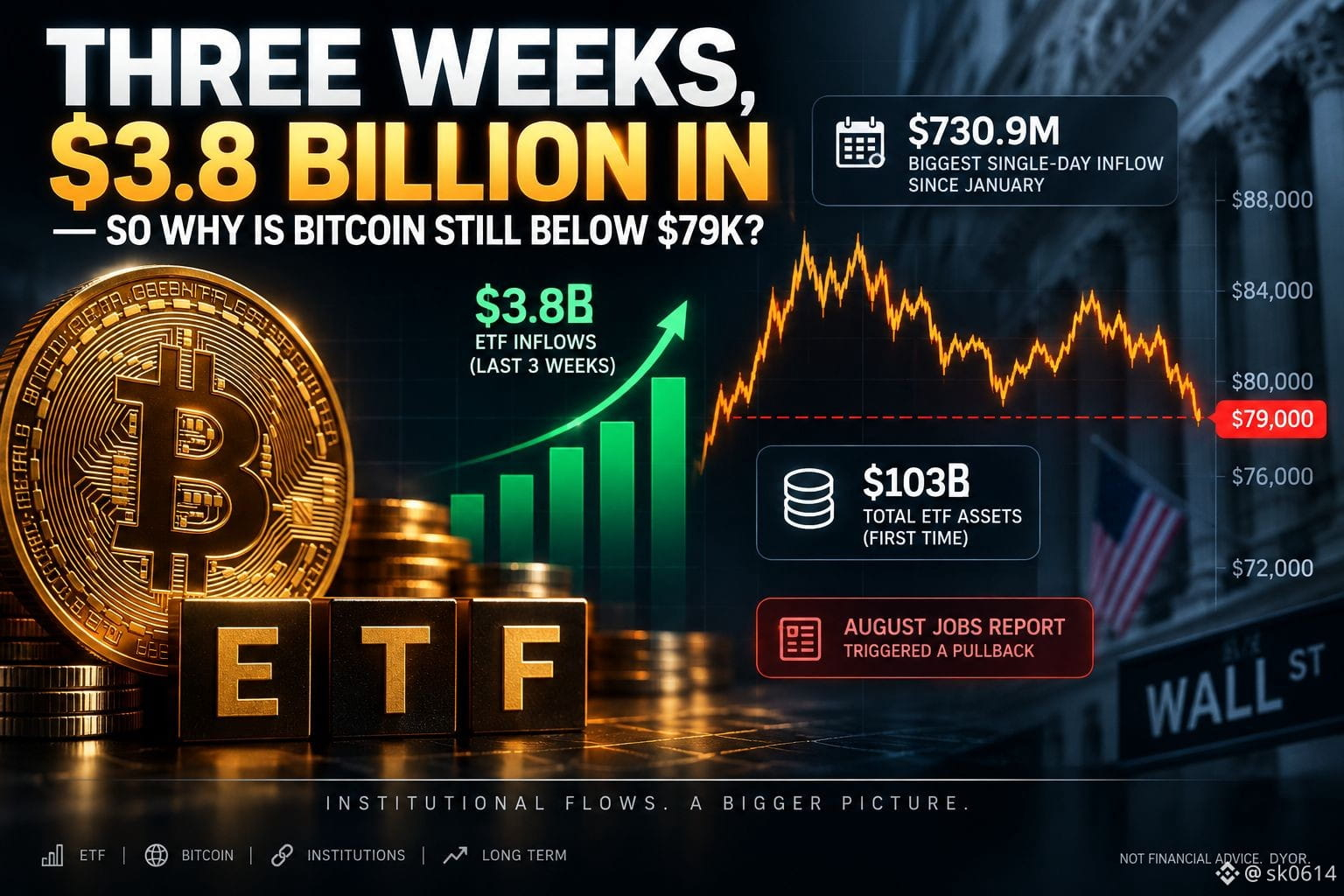
3週間で38億ドル流入——それでもビットコインが79,000ドル未満のままなのはなぜ?
Cointelegraphによると、米国の現物ビットコインETFには過去3週間で38億ドルの資金流入があり、2026年で最も強い3週間となった。
それでも$BTC は金曜日時点でなお79,000ドルを下回って取引されていた。
木曜日には、資金の流れがどれほど強いかがはっきり示された。米国の現物ビットコインETFに7億3,090万ドルが流入し、1日としては1月以来最大だった。ETFの資産残高も初めて1,030億ドルを突破した。
しかし、ここが興味深いところだ。ETFへの大規模な資金流入があっても、ビットコインが必ず上昇するとは限らない。
CryptoQuantは7億3,090万ドルの流入を分析し、足元の需要は弱いと説明し、注目すべき水準として83,000ドルを挙げた。これは分析であり、確実な予測ではない。
8月の雇用統計も短期的な見通しを変え、ビットコインは一時80,000ドルを回復した後、再びそれを下回った。
したがって、問うべきなのは単純に「機関投資家は買っているのか?」ではない。
重要なのは、こうしたETFへの資金流入が$BTCに持続的な需要を生み出せるほど強さを維持できるかどうかだ。
3週間にわたる強い資金流入は重要だ。それが長続きするトレンドになるかどうかを、私は次に注目していく。
投資助言ではありません。DYOR。
出典: Cointelegraph, CoinDesk.$BTC
{future}(BTCUSDT)
3週間で38億ドル流入——それでもビットコインが79,000ドル未満のままなのはなぜ?
Cointelegraphによると、米国の現物ビットコインETFには過去3週間で38億ドルの資金流入があり、2026年で最も強い3週間となった。
それでも$BTC は金曜日時点でなお79,000ドルを下回って取引されていた。
木曜日には、資金の流れがどれほど強いかがはっきり示された。米国の現物ビットコインETFに7億3,090万ドルが流入し、1日としては1月以来最大だった。ETFの資産残高も初めて1,030億ドルを突破した。
しかし、ここが興味深いところだ。ETFへの大規模な資金流入があっても、ビットコインが必ず上昇するとは限らない。
CryptoQuantは7億3,090万ドルの流入を分析し、足元の需要は弱いと説明し、注目すべき水準として83,000ドルを挙げた。これは分析であり、確実な予測ではない。
8月の雇用統計も短期的な見通しを変え、ビットコインは一時80,000ドルを回復した後、再びそれを下回った。
したがって、問うべきなのは単純に「機関投資家は買っているのか?」ではない。
重要なのは、こうしたETFへの資金流入が$BTC に持続的な需要を生み出せるほど強さを維持できるかどうかだ。
3週間にわたる強い資金流入は重要だ。それが長続きするトレンドになるかどうかを、私は次に注目していく。
投資助言ではありません。DYOR。
出典: Cointelegraph, CoinDesk.$BTC
Cointelegraphによると、米国の現物ビットコインETFには過去3週間で38億ドルの資金流入があり、2026年で最も強い3週間となった。
それでも$BTC は金曜日時点でなお79,000ドルを下回って取引されていた。
木曜日には、資金の流れがどれほど強いかがはっきり示された。米国の現物ビットコインETFに7億3,090万ドルが流入し、1日としては1月以来最大だった。ETFの資産残高も初めて1,030億ドルを突破した。
しかし、ここが興味深いところだ。ETFへの大規模な資金流入があっても、ビットコインが必ず上昇するとは限らない。
CryptoQuantは7億3,090万ドルの流入を分析し、足元の需要は弱いと説明し、注目すべき水準として83,000ドルを挙げた。これは分析であり、確実な予測ではない。
8月の雇用統計も短期的な見通しを変え、ビットコインは一時80,000ドルを回復した後、再びそれを下回った。
したがって、問うべきなのは単純に「機関投資家は買っているのか?」ではない。
重要なのは、こうしたETFへの資金流入が$BTC に持続的な需要を生み出せるほど強さを維持できるかどうかだ。
3週間にわたる強い資金流入は重要だ。それが長続きするトレンドになるかどうかを、私は次に注目していく。
投資助言ではありません。DYOR。
出典: Cointelegraph, CoinDesk.$BTC
58
·
--
記事
翻訳参照
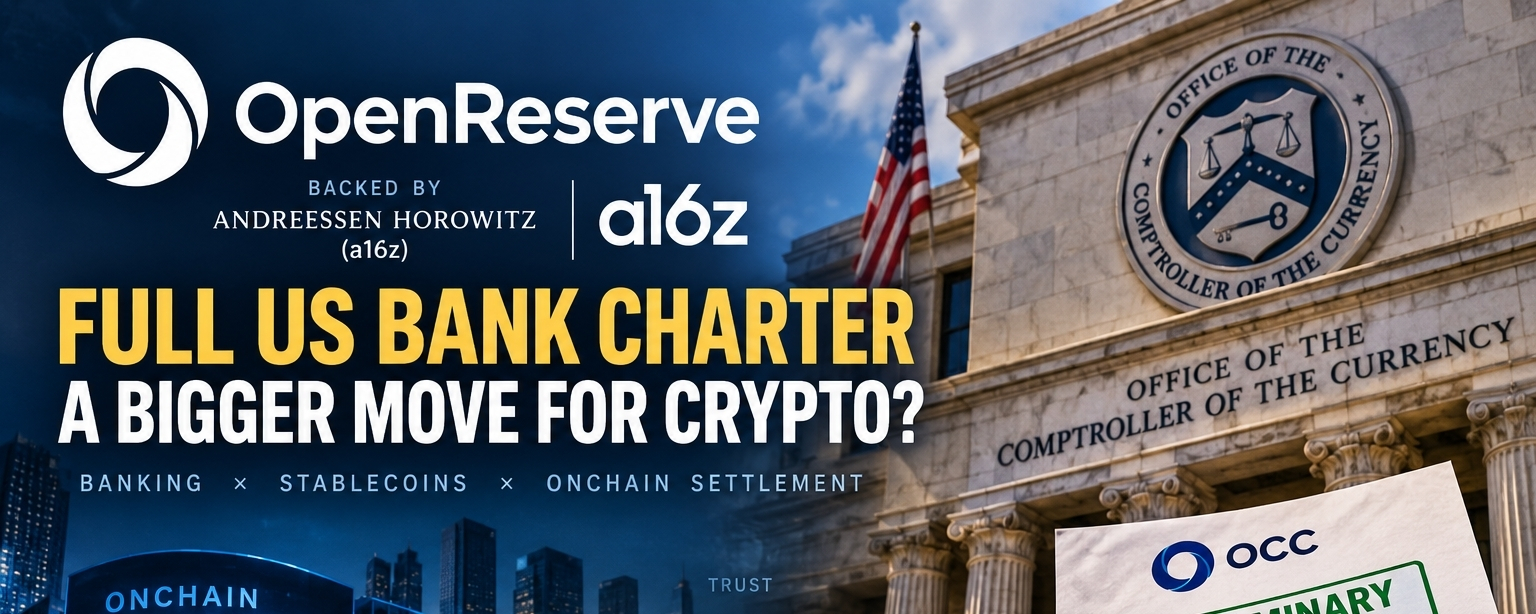
OpenReserve Chose a Full US Bank Charter — Why That Matters for CryptoThe charter is the story: trust versus full national bank
Most crypto firms that have pursued an OCC charter have sought a trust charter. OpenReserve asked for the full national bank version — and that choice matters more than the approval headline.
The news first, briefly, then the part that stays useful after the news goes stale.
Reported on September 3 and 4, 2026: the Office of the Comptroller of the Currency (OCC), the US federal agency that charters national banks, gave early-stage approval to two companies seeking to form US national banks — Revolut and OpenReserve Holdings. OpenReserve is backed by Andreessen Horowitz (a16z), following a $25 million seed round, and is focused on onchain settlement. Both companies have crypto and stablecoin-related services in their plans.
A charter is permission to be a bank, and the type of charter determines what that bank can do.
A bank charter is the legal authorization to operate as a bank at all. It isn't branding. It sets the perimeter: what the institution may hold, what it may promise customers, and who supervises it.
Many crypto firms that have pursued an OCC charter have sought a trust charter. Decrypt reports that OpenReserve went the other way and picked a full national charter, which "clears a path toward insured deposits and conventional lending alongside stablecoin issuance."
Worth reading that list twice, because in crypto those three functions usually sit in separate entities. Insured deposits means customer money covered by a deposit insurance scheme rather than resting on the institution's own promise. Conventional lending means ordinary loans on the bank's own book. Stablecoin issuance means being the entity that mints the token and owes the redemption.
Then notice the verb. "Clears a path toward" is not "has." Nothing in the reporting I'm working from says insurance has been granted, names a lending product, or names a stablecoin.
Approval-stage words are load-bearing
Five reports, four descriptions of the same regulatory action. The Block and Cointelegraph: preliminary. CoinDesk: provisional, an initial OK to operate. The Block, on Revolut: conditional. Decrypt's headline: approval, no qualifier.
The most telling phrase is Revolut's own, quoted by The Block — an "important step toward" becoming a US bank. Companies pick their adjectives with care. Toward is a direction, not an arrival.
The habit worth keeping: in a regulatory headline, find the qualifier and the verb before you find the excitement. Preliminary, conditional and provisional all mean another gate exists. And none of these five reports lists the conditions attached, a timeline, or an opening date — so I can't tell you what the conditions are, and I won't pretend otherwise.
Why "onchain settlement" is the phrase to notice
Settlement is the unglamorous end of a payment: the point where value actually moves and the obligation is discharged, as distinct from the moment your app flashes a confirmation. In conventional finance that final leg lands on the books of banks and intermediaries. The idea behind onchain settlement is that the final record lives on a blockchain instead.
That's the focus The Block attributes to OpenReserve's bank. Which chain, which asset, which customers, and how any of it meets the balance sheet — the research doesn't say. Those blanks stay blank.
My reading, labelled as mine
If one supervised bank can hold insured deposits, lend, and issue a stablecoin, then reserve backing and the redemption promise sit inside a single supervised entity instead of being stitched across a chain of counterparties. That's a different shape from the custody-plus-partner-bank arrangements crypto has mostly relied on. Whether the different shape works better depends on execution: capital, risk management, whatever conditions the OCC attached, and whether the bank opens at all.
The counter-argument
Supervision moves risk around; it doesn't remove it. A chartered, supervised, insured bank can still make bad loans or misjudge liquidity. "Regulated" describes who is watching, not how things turn out.
A charter is a permission, not a business. Nothing in this reporting shows a live product, a customer, a deposit, or revenue. The $25 million seed round tells you a funding round closed — not how much capital the bank itself will hold, because the research doesn't say.
And two companies in one news cycle is a data point, not a trend.
What would turn this from a headline into something concrete
Final approval rather than preliminary, with the conditions visible. A disclosed opening date. Capital figures for the bank, not a seed round for the holding company. A settlement product with a named chain and asset. Deposit insurance actually in place.
Until then, the accurate sentence is: a gate was cleared.
One practical warning. None of these five reports mentions a token, a listing, an airdrop, or a sale of any kind. If you see one attached to this name, treat that as a reason for suspicion and go to the company's own official channels rather than any link that finds you.
Not financial advice, and no view here on what you should own. I'm working from five news reports dated September 3 and 4, 2026 — read them, and the OCC's own materials, before you decide anything.
Sources:
https://www.theblock.co/news/regulation/2026-09-04-andreessen-horowitz-backed-openreserve-secures-preliminary-occ-approval-for-national-bank-charter-413528�
https://cointelegraph.com/news/revolut-openreserve-occ-approval-national-bank-crypto-plan?utm_source=rss_feed&utm_medium=rss&utm_campaign=rss_partner_inbound�
https://decrypt.co/377458/openreserve-occ-approval-full-service-national-bank�
https://www.theblock.co/news/regulation/2026-09-03-revolut-takes-important-step-toward-becoming-a-us-bank-with-conditional-occ-approval-413474�
https://www.coindesk.com/policy/2026/09/03/u-s-banking-agency-gives-blockchain-bank-openreserve-initial-ok-to-operate�
OpenReserve Chose a Full US Bank Charter — Why That Matters for Crypto
The charter is the story: trust versus full national bank
Most crypto firms that have pursued an OCC charter have sought a trust charter. OpenReserve asked for the full national bank version — and that choice matters more than the approval headline.
The news first, briefly, then the part that stays useful after the news goes stale.
Reported on September 3 and 4, 2026: the Office of the Comptroller of the Currency (OCC), the US federal agency that charters national banks, gave early-stage approval to two companies seeking to form US national banks — Revolut and OpenReserve Holdings. OpenReserve is backed by Andreessen Horowitz (a16z), following a $25 million seed round, and is focused on onchain settlement. Both companies have crypto and stablecoin-related services in their plans.
A charter is permission to be a bank, and the type of charter determines what that bank can do.
A bank charter is the legal authorization to operate as a bank at all. It isn't branding. It sets the perimeter: what the institution may hold, what it may promise customers, and who supervises it.
Many crypto firms that have pursued an OCC charter have sought a trust charter. Decrypt reports that OpenReserve went the other way and picked a full national charter, which "clears a path toward insured deposits and conventional lending alongside stablecoin issuance."
Worth reading that list twice, because in crypto those three functions usually sit in separate entities. Insured deposits means customer money covered by a deposit insurance scheme rather than resting on the institution's own promise. Conventional lending means ordinary loans on the bank's own book. Stablecoin issuance means being the entity that mints the token and owes the redemption.
Then notice the verb. "Clears a path toward" is not "has." Nothing in the reporting I'm working from says insurance has been granted, names a lending product, or names a stablecoin.
Approval-stage words are load-bearing
Five reports, four descriptions of the same regulatory action. The Block and Cointelegraph: preliminary. CoinDesk: provisional, an initial OK to operate. The Block, on Revolut: conditional. Decrypt's headline: approval, no qualifier.
The most telling phrase is Revolut's own, quoted by The Block — an "important step toward" becoming a US bank. Companies pick their adjectives with care. Toward is a direction, not an arrival.
The habit worth keeping: in a regulatory headline, find the qualifier and the verb before you find the excitement. Preliminary, conditional and provisional all mean another gate exists. And none of these five reports lists the conditions attached, a timeline, or an opening date — so I can't tell you what the conditions are, and I won't pretend otherwise.
Why "onchain settlement" is the phrase to notice
Settlement is the unglamorous end of a payment: the point where value actually moves and the obligation is discharged, as distinct from the moment your app flashes a confirmation. In conventional finance that final leg lands on the books of banks and intermediaries. The idea behind onchain settlement is that the final record lives on a blockchain instead.
That's the focus The Block attributes to OpenReserve's bank. Which chain, which asset, which customers, and how any of it meets the balance sheet — the research doesn't say. Those blanks stay blank.
My reading, labelled as mine
If one supervised bank can hold insured deposits, lend, and issue a stablecoin, then reserve backing and the redemption promise sit inside a single supervised entity instead of being stitched across a chain of counterparties. That's a different shape from the custody-plus-partner-bank arrangements crypto has mostly relied on. Whether the different shape works better depends on execution: capital, risk management, whatever conditions the OCC attached, and whether the bank opens at all.
The counter-argument
Supervision moves risk around; it doesn't remove it. A chartered, supervised, insured bank can still make bad loans or misjudge liquidity. "Regulated" describes who is watching, not how things turn out.
A charter is a permission, not a business. Nothing in this reporting shows a live product, a customer, a deposit, or revenue. The $25 million seed round tells you a funding round closed — not how much capital the bank itself will hold, because the research doesn't say.
And two companies in one news cycle is a data point, not a trend.
What would turn this from a headline into something concrete
Final approval rather than preliminary, with the conditions visible. A disclosed opening date. Capital figures for the bank, not a seed round for the holding company. A settlement product with a named chain and asset. Deposit insurance actually in place.
Until then, the accurate sentence is: a gate was cleared.
One practical warning. None of these five reports mentions a token, a listing, an airdrop, or a sale of any kind. If you see one attached to this name, treat that as a reason for suspicion and go to the company's own official channels rather than any link that finds you.
Not financial advice, and no view here on what you should own. I'm working from five news reports dated September 3 and 4, 2026 — read them, and the OCC's own materials, before you decide anything.
Sources:
https://www.theblock.co/news/regulation/2026-09-04-andreessen-horowitz-backed-openreserve-secures-preliminary-occ-approval-for-national-bank-charter-413528�
https://cointelegraph.com/news/revolut-openreserve-occ-approval-national-bank-crypto-plan?utm_source=rss_feed&utm_medium=rss&utm_campaign=rss_partner_inbound�
https://decrypt.co/377458/openreserve-occ-approval-full-service-national-bank�
https://www.theblock.co/news/regulation/2026-09-03-revolut-takes-important-step-toward-becoming-a-us-bank-with-conditional-occ-approval-413474�
https://www.coindesk.com/policy/2026/09/03/u-s-banking-agency-gives-blockchain-bank-openreserve-initial-ok-to-operate�
Most crypto firms that have pursued an OCC charter have sought a trust charter. OpenReserve asked for the full national bank version — and that choice matters more than the approval headline.
The news first, briefly, then the part that stays useful after the news goes stale.
Reported on September 3 and 4, 2026: the Office of the Comptroller of the Currency (OCC), the US federal agency that charters national banks, gave early-stage approval to two companies seeking to form US national banks — Revolut and OpenReserve Holdings. OpenReserve is backed by Andreessen Horowitz (a16z), following a $25 million seed round, and is focused on onchain settlement. Both companies have crypto and stablecoin-related services in their plans.
A charter is permission to be a bank, and the type of charter determines what that bank can do.
A bank charter is the legal authorization to operate as a bank at all. It isn't branding. It sets the perimeter: what the institution may hold, what it may promise customers, and who supervises it.
Many crypto firms that have pursued an OCC charter have sought a trust charter. Decrypt reports that OpenReserve went the other way and picked a full national charter, which "clears a path toward insured deposits and conventional lending alongside stablecoin issuance."
Worth reading that list twice, because in crypto those three functions usually sit in separate entities. Insured deposits means customer money covered by a deposit insurance scheme rather than resting on the institution's own promise. Conventional lending means ordinary loans on the bank's own book. Stablecoin issuance means being the entity that mints the token and owes the redemption.
Then notice the verb. "Clears a path toward" is not "has." Nothing in the reporting I'm working from says insurance has been granted, names a lending product, or names a stablecoin.
Approval-stage words are load-bearing
Five reports, four descriptions of the same regulatory action. The Block and Cointelegraph: preliminary. CoinDesk: provisional, an initial OK to operate. The Block, on Revolut: conditional. Decrypt's headline: approval, no qualifier.
The most telling phrase is Revolut's own, quoted by The Block — an "important step toward" becoming a US bank. Companies pick their adjectives with care. Toward is a direction, not an arrival.
The habit worth keeping: in a regulatory headline, find the qualifier and the verb before you find the excitement. Preliminary, conditional and provisional all mean another gate exists. And none of these five reports lists the conditions attached, a timeline, or an opening date — so I can't tell you what the conditions are, and I won't pretend otherwise.
Why "onchain settlement" is the phrase to notice
Settlement is the unglamorous end of a payment: the point where value actually moves and the obligation is discharged, as distinct from the moment your app flashes a confirmation. In conventional finance that final leg lands on the books of banks and intermediaries. The idea behind onchain settlement is that the final record lives on a blockchain instead.
That's the focus The Block attributes to OpenReserve's bank. Which chain, which asset, which customers, and how any of it meets the balance sheet — the research doesn't say. Those blanks stay blank.
My reading, labelled as mine
If one supervised bank can hold insured deposits, lend, and issue a stablecoin, then reserve backing and the redemption promise sit inside a single supervised entity instead of being stitched across a chain of counterparties. That's a different shape from the custody-plus-partner-bank arrangements crypto has mostly relied on. Whether the different shape works better depends on execution: capital, risk management, whatever conditions the OCC attached, and whether the bank opens at all.
The counter-argument
Supervision moves risk around; it doesn't remove it. A chartered, supervised, insured bank can still make bad loans or misjudge liquidity. "Regulated" describes who is watching, not how things turn out.
A charter is a permission, not a business. Nothing in this reporting shows a live product, a customer, a deposit, or revenue. The $25 million seed round tells you a funding round closed — not how much capital the bank itself will hold, because the research doesn't say.
And two companies in one news cycle is a data point, not a trend.
What would turn this from a headline into something concrete
Final approval rather than preliminary, with the conditions visible. A disclosed opening date. Capital figures for the bank, not a seed round for the holding company. A settlement product with a named chain and asset. Deposit insurance actually in place.
Until then, the accurate sentence is: a gate was cleared.
One practical warning. None of these five reports mentions a token, a listing, an airdrop, or a sale of any kind. If you see one attached to this name, treat that as a reason for suspicion and go to the company's own official channels rather than any link that finds you.
Not financial advice, and no view here on what you should own. I'm working from five news reports dated September 3 and 4, 2026 — read them, and the OCC's own materials, before you decide anything.
Sources:
https://www.theblock.co/news/regulation/2026-09-04-andreessen-horowitz-backed-openreserve-secures-preliminary-occ-approval-for-national-bank-charter-413528�
https://cointelegraph.com/news/revolut-openreserve-occ-approval-national-bank-crypto-plan?utm_source=rss_feed&utm_medium=rss&utm_campaign=rss_partner_inbound�
https://decrypt.co/377458/openreserve-occ-approval-full-service-national-bank�
https://www.theblock.co/news/regulation/2026-09-03-revolut-takes-important-step-toward-becoming-a-us-bank-with-conditional-occ-approval-413474�
https://www.coindesk.com/policy/2026/09/03/u-s-banking-agency-gives-blockchain-bank-openreserve-initial-ok-to-operate�
116
·
--
ブリッシュ
$BTC
{future}(BTCUSDT)
$730.9百万ドルが流入、そしてビットコインは依然として8万ドルを失った
木曜日に米スポット・ビットコインETFへ7億3,090万ドルが流入した。1月以来の最大の単日。8月の雇用統計の数字が出た時点で、ビットコインはすでに8万ドルを下回っていた。
報道された全体像はこうだ。これらのファンドの運用資産(ネット資産)が初めて1030億ドルを突破し、ブラックロックのIBITがその半分以上を占めている。雇用統計が予想以上に強い内容で出る前に、ビットコインは8万ドルを取り戻していた。
数字と解釈は分けるべきだ。7億3,090万ドル、1030億ドル、そしてIBITのシェアは報告数値だ。CryptoQuantの見立て――「新規の需要が弱い。注目している水準は8万3,000ドル」――はある1社の分析で、私はその手法を確認できていない。
これが分からない点:その1030億ドルのうち、どれだけが既存の資金の値動きによるものではなく新たなお金なのか。また木曜日の動きが続くのかどうか。規模感として、これら同じファンドは7月以来で最悪の資金流出を直前に記録しており、その後1億1,115万ドルの反動(リバウンド)を見せていた。
投資助言ではない。私からの方向性の指示もない。情報源を確認して、自分で判断してほしい。
出典:
https://cointelegraph.com/markets/bitcoin-etf-draw-731-million-highest-january-btc-80k?utm_source=rss_feed&utm_medium=rss&utm_campaign=rss_partner_inbound
https://www.coindesk.com/business/2026/09/04/live-updates-bitcoin-etfs-take-usd731-million-their-biggest-day-since-january
https://decrypt.co/377445/zcash-price-high-decade-shorts-rekt
https://decrypt.co/377284/bitcoin-etfs-rebound-ethereum-xrp-end-streaks#BitcoinETFsBiggestDailyInflowSinceJanuary #BitcoinEthereumHitMultiMonthHighs
7億3,090万ドルのETF流入は一日限りの急増だったのか、それともより強い需要の始まりなのか?
$BTC
$730.9百万ドルが流入、そしてビットコインは依然として8万ドルを失った
木曜日に米スポット・ビットコインETFへ7億3,090万ドルが流入した。1月以来の最大の単日。8月の雇用統計の数字が出た時点で、ビットコインはすでに8万ドルを下回っていた。
報道された全体像はこうだ。これらのファンドの運用資産(ネット資産)が初めて1030億ドルを突破し、ブラックロックのIBITがその半分以上を占めている。雇用統計が予想以上に強い内容で出る前に、ビットコインは8万ドルを取り戻していた。
数字と解釈は分けるべきだ。7億3,090万ドル、1030億ドル、そしてIBITのシェアは報告数値だ。CryptoQuantの見立て――「新規の需要が弱い。注目している水準は8万3,000ドル」――はある1社の分析で、私はその手法を確認できていない。
これが分からない点:その1030億ドルのうち、どれだけが既存の資金の値動きによるものではなく新たなお金なのか。また木曜日の動きが続くのかどうか。規模感として、これら同じファンドは7月以来で最悪の資金流出を直前に記録しており、その後1億1,115万ドルの反動(リバウンド)を見せていた。
投資助言ではない。私からの方向性の指示もない。情報源を確認して、自分で判断してほしい。
出典:
https://cointelegraph.com/markets/bitcoin-etf-draw-731-million-highest-january-btc-80k?utm_source=rss_feed&utm_medium=rss&utm_campaign=rss_partner_inbound
https://www.coindesk.com/business/2026/09/04/live-updates-bitcoin-etfs-take-usd731-million-their-biggest-day-since-january
https://decrypt.co/377445/zcash-price-high-decade-shorts-rekt
https://decrypt.co/377284/bitcoin-etfs-rebound-ethereum-xrp-end-streaks#BitcoinETFsBiggestDailyInflowSinceJanuary #BitcoinEthereumHitMultiMonthHighs
7億3,090万ドルのETF流入は一日限りの急増だったのか、それともより強い需要の始まりなのか?
$730.9百万ドルが流入、そしてビットコインは依然として8万ドルを失った
木曜日に米スポット・ビットコインETFへ7億3,090万ドルが流入した。1月以来の最大の単日。8月の雇用統計の数字が出た時点で、ビットコインはすでに8万ドルを下回っていた。
報道された全体像はこうだ。これらのファンドの運用資産(ネット資産)が初めて1030億ドルを突破し、ブラックロックのIBITがその半分以上を占めている。雇用統計が予想以上に強い内容で出る前に、ビットコインは8万ドルを取り戻していた。
数字と解釈は分けるべきだ。7億3,090万ドル、1030億ドル、そしてIBITのシェアは報告数値だ。CryptoQuantの見立て――「新規の需要が弱い。注目している水準は8万3,000ドル」――はある1社の分析で、私はその手法を確認できていない。
これが分からない点:その1030億ドルのうち、どれだけが既存の資金の値動きによるものではなく新たなお金なのか。また木曜日の動きが続くのかどうか。規模感として、これら同じファンドは7月以来で最悪の資金流出を直前に記録しており、その後1億1,115万ドルの反動(リバウンド)を見せていた。
投資助言ではない。私からの方向性の指示もない。情報源を確認して、自分で判断してほしい。
出典:
https://cointelegraph.com/markets/bitcoin-etf-draw-731-million-highest-january-btc-80k?utm_source=rss_feed&utm_medium=rss&utm_campaign=rss_partner_inbound
https://www.coindesk.com/business/2026/09/04/live-updates-bitcoin-etfs-take-usd731-million-their-biggest-day-since-january
https://decrypt.co/377445/zcash-price-high-decade-shorts-rekt
https://decrypt.co/377284/bitcoin-etfs-rebound-ethereum-xrp-end-streaks#BitcoinETFsBiggestDailyInflowSinceJanuary #BitcoinEthereumHitMultiMonthHighs
7億3,090万ドルのETF流入は一日限りの急増だったのか、それともより強い需要の始まりなのか?
One-day spike
0%
Start of stronger demand
0%
0 投票 • 投票は終了しました
91
·
--
翻訳参照
Checking that my posting setup connects
A brief technical check, nothing more. I want to confirm that the small tool I use to prepare my notes can actually reach Binance Square through the official posting interface, and that what lands here is unchanged from what I reviewed.
Nothing in this post is a view on any asset. There is no price, no ticker, no link and nothing to act on. Proper notes will follow once this plumbing is confirmed, and each will state what it draws on. Not financial advice — do your own research.
Sources:
- No external source — this post is a connectivity check only.
Checking that my posting setup connects
A brief technical check, nothing more. I want to confirm that the small tool I use to prepare my notes can actually reach Binance Square through the official posting interface, and that what lands here is unchanged from what I reviewed.
Nothing in this post is a view on any asset. There is no price, no ticker, no link and nothing to act on. Proper notes will follow once this plumbing is confirmed, and each will state what it draws on. Not financial advice — do your own research.
Sources:
- No external source — this post is a connectivity check only.
A brief technical check, nothing more. I want to confirm that the small tool I use to prepare my notes can actually reach Binance Square through the official posting interface, and that what lands here is unchanged from what I reviewed.
Nothing in this post is a view on any asset. There is no price, no ticker, no link and nothing to act on. Proper notes will follow once this plumbing is confirmed, and each will state what it draws on. Not financial advice — do your own research.
Sources:
- No external source — this post is a connectivity check only.
74
·
--
BTC市場アップデート:ビットコインは変動の大きい環境で取引が続いています。常にリスクを管理し、ご自身で調査してください。
BTC市場アップデート:ビットコインは変動の大きい環境で取引が続いています。常にリスクを管理し、ご自身で調査してください。
78
·
--
翻訳参照
Good morning. ☕
Most traders will wake up today and immediately look for a reason to click buttons out of boredom.
Don’t be liquidity for the smart money.
Protect your capital first. Grow it second.
I am scanning the charts right now. VIP setups will be deployed when the volume confirms the direction. No rush. Patience pays.
What coin is at the top of your watchlist today? Let me know 👇
— Alpha Flow 📊$BTC $ETH $BNB
{spot}(BNBUSDT)
Good morning. ☕
Most traders will wake up today and immediately look for a reason to click buttons out of boredom.
Don’t be liquidity for the smart money.
Protect your capital first. Grow it second.
I am scanning the charts right now. VIP setups will be deployed when the volume confirms the direction. No rush. Patience pays.
What coin is at the top of your watchlist today? Let me know 👇
— Alpha Flow 📊$BTC $ETH $BNB
Most traders will wake up today and immediately look for a reason to click buttons out of boredom.
Don’t be liquidity for the smart money.
Protect your capital first. Grow it second.
I am scanning the charts right now. VIP setups will be deployed when the volume confirms the direction. No rush. Patience pays.
What coin is at the top of your watchlist today? Let me know 👇
— Alpha Flow 📊$BTC $ETH $BNB
18
·
--
まだこれを見ていません 👀
トレーダーの90%がここで損失を出します。
$ADA
彼らは早すぎるタイミングで入っています。
賢いお金は待っています。
— アルファフロー 📊
まだこれを見ていません 👀
トレーダーの90%がここで損失を出します。
$ADA
彼らは早すぎるタイミングで入っています。
賢いお金は待っています。
— アルファフロー 📊
トレーダーの90%がここで損失を出します。
$ADA
彼らは早すぎるタイミングで入っています。
賢いお金は待っています。
— アルファフロー 📊
1
147
·
--
翻訳参照
Few are noticing this 👀
$WLD
24h move: 0.867%
Structure forming.
Watching closely.
What’s your bias?
Be honest 👇
— Alpha Flow 📊
Few are noticing this 👀
$WLD
24h move: 0.867%
Structure forming.
Watching closely.
What’s your bias?
Be honest 👇
— Alpha Flow 📊
$WLD
24h move: 0.867%
Structure forming.
Watching closely.
What’s your bias?
Be honest 👇
— Alpha Flow 📊
147
·
--
翻訳参照
Smart money watching this 👇
$ZEC
Price around 276.6
At a key level.
Break = continuation
Reject = pullback
No rush. Let it confirm.
What are you doing here?
Be honest 👇
— Alpha Flow 📊
Smart money watching this 👇
$ZEC
Price around 276.6
At a key level.
Break = continuation
Reject = pullback
No rush. Let it confirm.
What are you doing here?
Be honest 👇
— Alpha Flow 📊
$ZEC
Price around 276.6
At a key level.
Break = continuation
Reject = pullback
No rush. Let it confirm.
What are you doing here?
Be honest 👇
— Alpha Flow 📊
232
·
--
ブレイクアウトかフェイクアウト?
📈 チャート
https://www.binance.com/en/trade/BONK_USDT
— アルファフロー 📊
ブレイクアウトかフェイクアウト?
📈 チャート
https://www.binance.com/en/trade/BONK_USDT
— アルファフロー 📊
📈 チャート
https://www.binance.com/en/trade/BONK_USDT
— アルファフロー 📊
23
·
--
このセットアップは興味深い 👇
$POLYX
価格は約0.0486
重要なレベルで。
ブレイク = 継続
リジェクト = プルバック
急がないで。確認させてください。
ここで何をしていますか?
正直に言ってください 👇
— アルファフロー 📊
このセットアップは興味深い 👇
$POLYX
価格は約0.0486
重要なレベルで。
ブレイク = 継続
リジェクト = プルバック
急がないで。確認させてください。
ここで何をしていますか?
正直に言ってください 👇
— アルファフロー 📊
$POLYX
価格は約0.0486
重要なレベルで。
ブレイク = 継続
リジェクト = プルバック
急がないで。確認させてください。
ここで何をしていますか?
正直に言ってください 👇
— アルファフロー 📊
1
22
·
--
翻訳参照
🚨 This caught my attention...
📊 Trade Idea
TRUUSDT
Entry: 0.006
Target: 0.0062
Stop Loss: 0.0058
Clean setup forming.
#crypto #trading
📈 Chart
https://www.tradingview.com/chart/?symbol=BINANCE:TRUUSDT
Would you take this trade?
🚨 This caught my attention...
📊 Trade Idea
TRUUSDT
Entry: 0.006
Target: 0.0062
Stop Loss: 0.0058
Clean setup forming.
#crypto #trading
📈 Chart
https://www.tradingview.com/chart/?symbol=BINANCE:TRUUSDT
Would you take this trade?
📊 Trade Idea
TRUUSDT
Entry: 0.006
Target: 0.0062
Stop Loss: 0.0058
Clean setup forming.
#crypto #trading
📈 Chart
https://www.tradingview.com/chart/?symbol=BINANCE:TRUUSDT
Would you take this trade?
2
52
·
--
🚨 新着ニュース
Coin CenterがSECに対し、ノーアクションレターよりもルール作成を優先するよう呼びかけ
読む:
https://cointelegraph.com/news/coin-center-crypto-lobby-sec-rules-no-action-letter?utm_source=rss_feed&utm_medium=rss&utm_campaign=rss_partner_inbound
#crypto #news
🚨 新着ニュース
Coin CenterがSECに対し、ノーアクションレターよりもルール作成を優先するよう呼びかけ
読む:
https://cointelegraph.com/news/coin-center-crypto-lobby-sec-rules-no-action-letter?utm_source=rss_feed&utm_medium=rss&utm_campaign=rss_partner_inbound
#crypto #news
Coin CenterがSECに対し、ノーアクションレターよりもルール作成を優先するよう呼びかけ
読む:
https://cointelegraph.com/news/coin-center-crypto-lobby-sec-rules-no-action-letter?utm_source=rss_feed&utm_medium=rss&utm_campaign=rss_partner_inbound
#crypto #news
120
·
--
翻訳参照
🚨 BREAKING NEWS
SEC chair Paul Atkins floats ‘safe harbor’ exemptions for crypto
Read:
https://cointelegraph.com/news/sec-paul-atkins-floats-crypto-safe-harbor-exemptions?utm_source=rss_feed&utm_medium=rss&utm_campaign=rss_partner_inbound
#crypto #news
🚨 BREAKING NEWS
SEC chair Paul Atkins floats ‘safe harbor’ exemptions for crypto
Read:
https://cointelegraph.com/news/sec-paul-atkins-floats-crypto-safe-harbor-exemptions?utm_source=rss_feed&utm_medium=rss&utm_campaign=rss_partner_inbound
#crypto #news
SEC chair Paul Atkins floats ‘safe harbor’ exemptions for crypto
Read:
https://cointelegraph.com/news/sec-paul-atkins-floats-crypto-safe-harbor-exemptions?utm_source=rss_feed&utm_medium=rss&utm_campaign=rss_partner_inbound
#crypto #news
100
·
--
翻訳参照
Watch this move 👇
📈 Market Insight
ENSOUSDT
Price: $1.27700000
24h: 7.582%
Momentum building.
#crypto #bitcoin
📈 Chart
https://www.tradingview.com/chart/?symbol=BINANCE:ENSOUSDT
What do you think? 👇
Watch this move 👇
📈 Market Insight
ENSOUSDT
Price: $1.27700000
24h: 7.582%
Momentum building.
#crypto #bitcoin
📈 Chart
https://www.tradingview.com/chart/?symbol=BINANCE:ENSOUSDT
What do you think? 👇
📈 Market Insight
ENSOUSDT
Price: $1.27700000
24h: 7.582%
Momentum building.
#crypto #bitcoin
📈 Chart
https://www.tradingview.com/chart/?symbol=BINANCE:ENSOUSDT
What do you think? 👇
66
·
--
このムーブを見てください 👇
🚀 トップゲイナー
CREAMUSDT
価格: $2.10000000
24時間: 65.354%
今日の強い動き。
#アルトコイン
📈 チャート
https://www.tradingview.com/chart/?symbol=BINANCE:CREAMUSDT
強気か弱気か?
このムーブを見てください 👇
🚀 トップゲイナー
CREAMUSDT
価格: $2.10000000
24時間: 65.354%
今日の強い動き。
#アルトコイン
📈 チャート
https://www.tradingview.com/chart/?symbol=BINANCE:CREAMUSDT
強気か弱気か?
🚀 トップゲイナー
CREAMUSDT
価格: $2.10000000
24時間: 65.354%
今日の強い動き。
#アルトコイン
📈 チャート
https://www.tradingview.com/chart/?symbol=BINANCE:CREAMUSDT
強気か弱気か?
59
ログインして、さらにコンテンツを読む
厳選トピックで世界の暗号資産トレーダーの仲間入り
⚡️ 暗号資産に関する最新かつ有益な情報が見つかります。
💬 世界最大の暗号資産取引所から信頼されています。
👍 認証を受けたクリエイターから、有益なインサイトを得られます。
メール / 電話番号
トレンドトピック
ClarityActFacesProceduralVoteSept15
閲覧回数 42,033
632人が討論中
9月15日(火)午後2時15分(ET)。メモしておいて。🗓️
上院が、米国法においてどのコインが証券か、または商品かを最終的に定義する法案「CLARITY Act」について、そもそも討論するべきかどうかを決める投票を行います。
60票が必要です。共和党は53票。複数の民主党員が越境(造反)して賛成に回る必要があり、その結果は確実ではありません。
この投票に否決されると、2026年は法案が事実上死文化し、2029年頃まで(この後の中間選挙がカレンダーを食い尽くすため)成立の見込みはないでしょう。
この投票に可決されると、実際の討論に向けた扉が開きますが、それでも実際の法律になるにはまだ長い道のりがあります。
今年最大級の仮想通貨規制の節目が、数日後に訪れます。
#ClarityActFacesProceduralVoteSept15
NewbieToNode
·いいね:3件
·閲覧回数 3.9k
US2YearYieldRisesTo4.61%
閲覧回数 32,147
612人が討論中
US10YearTreasuryYieldNears5%
閲覧回数 18,806
354人が討論中