Binance Square
shaibi12
17 投稿

shaibi12

A freelance blogger
取引を発注
BTCホルダー
BTCホルダー
高頻度トレーダー
4.4年
16 フォロー
36 フォロワー
24 いいね
投稿
ポートフォリオ
·
--
翻訳参照
S&P 500 futures slipped as Fed Chair Warsh turned hawkish, September rate-hike odds climbed, and global bond yields punched to multi-decade highs (the 30-year near 5.3%).
翻訳参照
S&P 500 futures slipped as Fed Chair Warsh turned hawkish, September rate-hike odds climbed, and global bond yields punched to multi-decade highs (the 30-year near 5.3%).
翻訳参照
#GoldNearsThreeMonthHigh (bridge → Bitcoin) Gold just hit a 3-month high near $4,700 — its best month since 1999 — and it's flashing a signal every Bitcoiner should watch. The driver isn't jewelry demand. It's the debasement trade. After the US Treasury doubled its buybacks of long-dated bonds, markets got nervous about fiscal policy and the dollar — pushing the dollar toward a 3-month low and sending capital into hard, scarce assets. Here's the crypto angle: gold and Bitcoin are two expressions of the same thesis. When confidence in fiat wobbles under ballooning debt, capped-supply assets get bid. Grayscale has been making exactly this case for BTC. The catch? A hawkish Warsh Fed cuts both ways — rising rate-hike odds are why gold pulled back late last week, and Bitcoin feels that same gravity. So — is BTC "digital gold" riding the same tailwind, or does a hawkish Fed cap both for now? 👇 #GoldNearsThreeMonthHigh #Bitcoin #BTC #DebasementTrade
#GoldNearsThreeMonthHigh (bridge → Bitcoin)
Gold just hit a 3-month high near $4,700 — its best month since 1999 — and it's flashing a signal every Bitcoiner should watch.
The driver isn't jewelry demand. It's the debasement trade. After the US Treasury doubled its buybacks of long-dated bonds, markets got nervous about fiscal policy and the dollar — pushing the dollar toward a 3-month low and sending capital into hard, scarce assets.
Here's the crypto angle: gold and Bitcoin are two expressions of the same thesis. When confidence in fiat wobbles under ballooning debt, capped-supply assets get bid. Grayscale has been making exactly this case for BTC.
The catch? A hawkish Warsh Fed cuts both ways — rising rate-hike odds are why gold pulled back late last week, and Bitcoin feels that same gravity.
So — is BTC "digital gold" riding the same tailwind, or does a hawkish Fed cap both for now? 👇
#GoldNearsThreeMonthHigh #Bitcoin #BTC #DebasementTrade
翻訳参照
#TetherEndsUruguayBitcoinMining Tether just walked away from a $120M Bitcoin mining bet — but if you think Tether is quitting mining, you've got the story backwards. The facts: Tether abandoned two mining sites in Uruguay after a dispute with state utility UTE over power. Tether read its contract as a minimum electricity guarantee; UTE treated it as a hard cap. Bills went unpaid, power was cut in July 2025, and operations shut by November. The real takeaways: This is a mining-economics story. Post-2024-halving, thin margins punish anyone without cheap, reliable power. Bitcoin mining is "hypermobile" — plug-and-play rigs move the moment energy terms sour. Tether isn't retreating: $2B+ across 15+ sites, open-source MiningOS, stakes in Bitdeer and Antalpha, and a fresh Brazil pilot. Energy access — not hashrate — is the real moat in mining now. Does mining's future belong to whoever controls the cheapest power? 👇 #TetherEndsUruguayBitcoinMining #Bitcoin #BTC #Mining
#TetherEndsUruguayBitcoinMining
Tether just walked away from a $120M Bitcoin mining bet — but if you think Tether is quitting mining, you've got the story backwards.
The facts: Tether abandoned two mining sites in Uruguay after a dispute with state utility UTE over power. Tether read its contract as a minimum electricity guarantee; UTE treated it as a hard cap. Bills went unpaid, power was cut in July 2025, and operations shut by November.
The real takeaways:
This is a mining-economics story. Post-2024-halving, thin margins punish anyone without cheap, reliable power. Bitcoin mining is "hypermobile" — plug-and-play rigs move the moment energy terms sour. Tether isn't retreating: $2B+ across 15+ sites, open-source MiningOS, stakes in Bitdeer and Antalpha, and a fresh Brazil pilot.
Energy access — not hashrate — is the real moat in mining now.
Does mining's future belong to whoever controls the cheapest power? 👇
#TetherEndsUruguayBitcoinMining #Bitcoin #BTC #Mining
翻訳参照
Binance Square — 4 Ready-to-Post Drafts (trending tags) Standard post length (~150 words). Post while the tags are hot. Copy each block as-is. POST 1 — #SolanaGovernanceVoteToDoubleDeflationRate (your #1) Solana just made history — and most people are misreading it. For the first time ever, SOL holders set monetary policy on-chain. The headline proposal (SGP-0002 / SIMD-550) passed by a razor-thin 67.00% — barely clearing the 66.67% bar after a last-minute Kraken flip tipped the vote. What it actually does: doubles Solana's disinflation rate from 15% to 30%, pulling the network to its 1.5% terminal inflation floor by ~2029 instead of 2032 — roughly 18.9M fewer SOL issued over six years. Three things the repost crowd is getting wrong: It's disinflation, not deflation — issuance still grows, just slower. It's not live yet. Devs need ~4.5 months to activate the feature gate; nothing changes today. Less issuance = lower staking yields — exactly why Solana Company voted against it. SOL's already up ~44% in August with RSI screaming overbought. Bullish supply cut, or fully priced in? 👇 #SolanaGovernanceVoteToDoubleDeflationRate #SOL #Solana #CryptoNews
Binance Square — 4 Ready-to-Post Drafts (trending tags)
Standard post length (~150 words). Post while the tags are hot. Copy each block as-is.
POST 1 — #SolanaGovernanceVoteToDoubleDeflationRate (your #1)
Solana just made history — and most people are misreading it.
For the first time ever, SOL holders set monetary policy on-chain. The headline proposal (SGP-0002 / SIMD-550) passed by a razor-thin 67.00% — barely clearing the 66.67% bar after a last-minute Kraken flip tipped the vote.
What it actually does: doubles Solana's disinflation rate from 15% to 30%, pulling the network to its 1.5% terminal inflation floor by ~2029 instead of 2032 — roughly 18.9M fewer SOL issued over six years.
Three things the repost crowd is getting wrong:
It's disinflation, not deflation — issuance still grows, just slower. It's not live yet. Devs need ~4.5 months to activate the feature gate; nothing changes today. Less issuance = lower staking yields — exactly why Solana Company voted against it.
SOL's already up ~44% in August with RSI screaming overbought. Bullish supply cut, or fully priced in? 👇
#SolanaGovernanceVoteToDoubleDeflationRate #SOL #Solana #CryptoNews
記事
翻訳参照
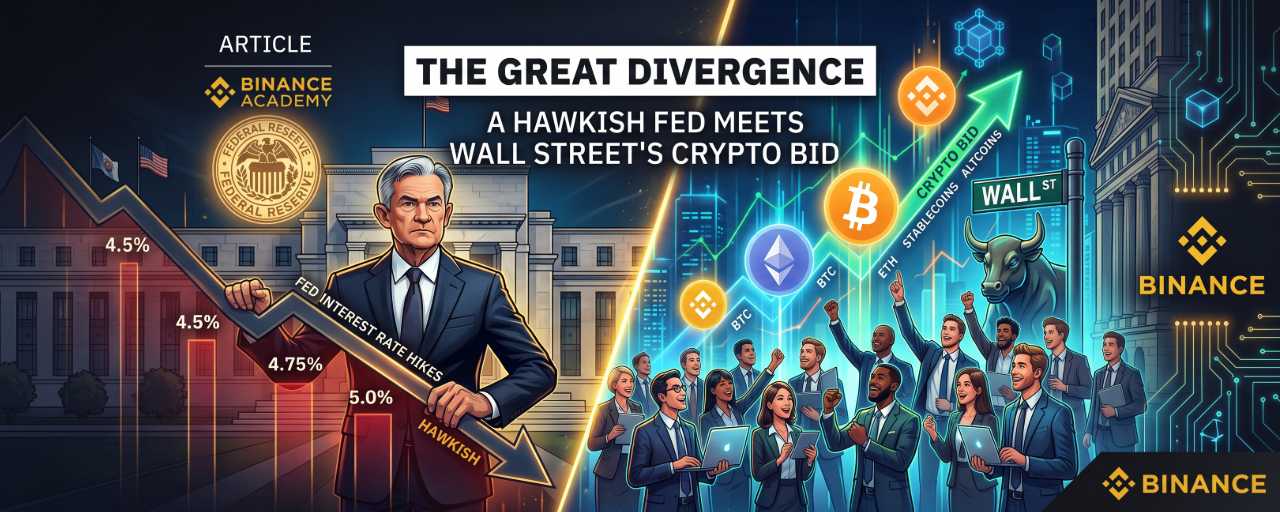
The Great Divergence: A Hawkish Fed Meets Wall Street's Crypto BidMarkets are pulling in two directions at once. Here's what the latest news flow is really telling us. If you only watched the price ticker this week, you'd think crypto was on the back foot. If you only watched the flows, you'd think institutions couldn't buy fast enough. Both are true — and the gap between them is the single most important story in the market right now. On one side: a newly hawkish Federal Reserve, rising rate-hike odds, and a broad risk-off mood dragging Bitcoin and Ether lower. On the other: record ETF inflows, major brokerages expanding their crypto menus, and Wall Street names quietly building positions. Let's unpack the split. The Macro Squeeze: Warsh Says "We Have Work to Do" The pressure is coming straight from the top. Fed Chair Kevin Warsh used his first Jackson Hole keynote to plant inflation firmly at the center of the Fed's near-term agenda, telling the Kansas City Fed's symposium that the responsibility for the last several months "is ours." The tone was more hawkish than markets expected — PCE running at 4.1% on a six-month basis, financial conditions described as "not restrictive," and a flat-out rejection of forward guidance. The reaction was immediate. Odds of a September rate hike jumped to roughly 57%, and Wall Street's three major indexes closed lower on the Friday, with semiconductor names like Nvidia and Intel dragging the Nasdaq down. A U.S. crypto-linked equity index fell more than 8% on the week. Rising real yields — climbing faster than nominal and breakeven rates — suggest bond markets actually believe the Fed's inflation resolve, which is the opposite of what risk assets want to hear. The wildcard is jobs. Bloomberg Chief Economist Anna Wong flagged that next week's non-farm payrolls could come in weak — even negative — and noted there's no modern precedent for the Fed hiking after two negative payroll prints. In other words, the September decision may hinge on a single data release. Layer on the IMF nudging its 2026 global inflation forecast up to 4.7% as the Iran–Israel conflict disrupts energy supply, and the macro picture is genuinely tense. But the Flows Tell a Different Story — and They're Rotating Here's where it gets interesting. Even as prices softened, capital didn't leave crypto. It rotated. Bitcoin ETFs cooled. U.S. spot Bitcoin ETFs snapped a nine-day inflow streak with a net outflow of about $201.9 million, according to Farside data — a pause, not a stampede for the exits.Ether ETFs kept grinding higher. Spot Ethereum ETFs went the other way, pulling in roughly $102.1 million for a 12th straight day of inflows — quiet, persistent accumulation.XRP stole the show. Spot XRP ETFs drew about $110.49 million for the week ending August 28 — their strongest weekly haul of 2026 and more than double the prior record, with volume hitting around $363 million, per BeInCrypto. When one asset sees outflows while two others set records in the same week, that's not fear — that's money reshuffling between narratives while staying firmly on the table. Institutions Aren't Waiting for a Bottom The clearest signal that this is a "buy the infrastructure" moment rather than a retreat is who's showing up. Charles Schwab plans to expand its direct crypto trading beyond Bitcoin and Ether to include Solana, Avalanche, and Chainlink — a mainstream brokerage widening retail access at the exact moment sentiment is shaky. Meanwhile, 13F filings revealed that Goldman Sachs is the largest known holder of spot Solana ETF exposure, at around $88.1 million. When a hawkish Fed is spooking traders and a bulge-bracket bank is still the biggest name on a Solana ETF cap table, the long-term conviction thesis speaks for itself. That conviction has a macro rationale, too. Grayscale's research team argues the so-called "debasement trade" is benefiting Bitcoin, with research head Zach Pandl pointing to unchecked government debt growth weakening confidence in fiat currencies. It's the same logic pushing COMEX gold net-long positions to an 11-month high. In a world of sticky inflation and ballooning deficits, hard-capped assets get a second look. Under the Hood: Quantum, RWAs, and the Usual Risks A few structural stories worth keeping on your radar: Quantum-resistance is moving from theory to testnet. Ripple confirmed a four-stage quantum-resistant migration plan for the XRP Ledger, aiming to finish before quantum computers become a real threat. Separately, Starkware said an anti-quantum Bitcoin transaction was mined on mainnet on August 26 without any soft fork, hard fork, or consensus change — an early sign the industry is taking the long-tail risk seriously. Real-world assets keep building, unevenly. Stellar-based tokenized RWAs topped $3 billion in July, though the network's own TVL lagged at around $213 million — a reminder that "RWA value" and on-chain DeFi depth don't always move together. And the risks are as loud as ever. A Solana meme coin called GOLD crashed more than 90% in minutes, with one buyer reportedly losing over $62,000 in seven minutes. Afghanistan's Taliban government has reportedly banned Bitcoin and crypto trading nationwide. And Coinglass data shows Ether sitting on a knife's edge — roughly $988 million in short liquidations would trigger if ETH breaks above $2,555, with heavy long liquidations lurking below $2,320. Volatility cuts both ways. The Bottom Line: What to Actually Watch Strip away the noise and the setup is clean. The macro is the near-term risk — a hawkish Warsh Fed and next week's payrolls print could set the tone for September and beyond. The flows and institutions are the longer-term signal — ETF demand is rotating rather than fleeing, and serious money keeps building access and exposure. The three things worth watching over the next two weeks: Payrolls, then the Fed. A weak jobs number could flip the hike narrative fast, per Anna Wong's read.ETF flow direction. Does Bitcoin's outflow become a trend, or do the ETH and XRP inflow streaks pull it back?Key levels. Traders are eyeing a Bitcoin pullback zone near $75,500 as a potential opportunity, while ETH's $2,320–$2,555 band is a liquidation battleground. Fear and conviction rarely sit this close together. When they do, discipline beats prediction — position for volatility, and let the data lead. This article is a market-news summary for informational and educational purposes only and is not financial, investment, or trading advice. It reflects reporting and data circulating on Binance Square and cited outlets as of late August 2026; figures and conditions change quickly. Cryptocurrency is highly volatile and you may lose your entire investment. Always do your own research (DYOR) and consider consulting a licensed professional before making decisions. #Bitcoin #CryptoNews #FederalReserve #CryptoETF #Binance

The Great Divergence: A Hawkish Fed Meets Wall Street's Crypto Bid

Markets are pulling in two directions at once. Here's what the latest news flow is really telling us.
If you only watched the price ticker this week, you'd think crypto was on the back foot. If you only watched the flows, you'd think institutions couldn't buy fast enough. Both are true — and the gap between them is the single most important story in the market right now.
On one side: a newly hawkish Federal Reserve, rising rate-hike odds, and a broad risk-off mood dragging Bitcoin and Ether lower. On the other: record ETF inflows, major brokerages expanding their crypto menus, and Wall Street names quietly building positions. Let's unpack the split.
The Macro Squeeze: Warsh Says "We Have Work to Do"
The pressure is coming straight from the top. Fed Chair Kevin Warsh used his first Jackson Hole keynote to plant inflation firmly at the center of the Fed's near-term agenda, telling the Kansas City Fed's symposium that the responsibility for the last several months "is ours." The tone was more hawkish than markets expected — PCE running at 4.1% on a six-month basis, financial conditions described as "not restrictive," and a flat-out rejection of forward guidance.
The reaction was immediate. Odds of a September rate hike jumped to roughly 57%, and Wall Street's three major indexes closed lower on the Friday, with semiconductor names like Nvidia and Intel dragging the Nasdaq down. A U.S. crypto-linked equity index fell more than 8% on the week. Rising real yields — climbing faster than nominal and breakeven rates — suggest bond markets actually believe the Fed's inflation resolve, which is the opposite of what risk assets want to hear.
The wildcard is jobs. Bloomberg Chief Economist Anna Wong flagged that next week's non-farm payrolls could come in weak — even negative — and noted there's no modern precedent for the Fed hiking after two negative payroll prints. In other words, the September decision may hinge on a single data release. Layer on the IMF nudging its 2026 global inflation forecast up to 4.7% as the Iran–Israel conflict disrupts energy supply, and the macro picture is genuinely tense.
But the Flows Tell a Different Story — and They're Rotating
Here's where it gets interesting. Even as prices softened, capital didn't leave crypto. It rotated.
Bitcoin ETFs cooled. U.S. spot Bitcoin ETFs snapped a nine-day inflow streak with a net outflow of about $201.9 million, according to Farside data — a pause, not a stampede for the exits.Ether ETFs kept grinding higher. Spot Ethereum ETFs went the other way, pulling in roughly $102.1 million for a 12th straight day of inflows — quiet, persistent accumulation.XRP stole the show. Spot XRP ETFs drew about $110.49 million for the week ending August 28 — their strongest weekly haul of 2026 and more than double the prior record, with volume hitting around $363 million, per BeInCrypto.
When one asset sees outflows while two others set records in the same week, that's not fear — that's money reshuffling between narratives while staying firmly on the table.
Institutions Aren't Waiting for a Bottom
The clearest signal that this is a "buy the infrastructure" moment rather than a retreat is who's showing up.
Charles Schwab plans to expand its direct crypto trading beyond Bitcoin and Ether to include Solana, Avalanche, and Chainlink — a mainstream brokerage widening retail access at the exact moment sentiment is shaky. Meanwhile, 13F filings revealed that Goldman Sachs is the largest known holder of spot Solana ETF exposure, at around $88.1 million. When a hawkish Fed is spooking traders and a bulge-bracket bank is still the biggest name on a Solana ETF cap table, the long-term conviction thesis speaks for itself.
That conviction has a macro rationale, too. Grayscale's research team argues the so-called "debasement trade" is benefiting Bitcoin, with research head Zach Pandl pointing to unchecked government debt growth weakening confidence in fiat currencies. It's the same logic pushing COMEX gold net-long positions to an 11-month high. In a world of sticky inflation and ballooning deficits, hard-capped assets get a second look.
Under the Hood: Quantum, RWAs, and the Usual Risks
A few structural stories worth keeping on your radar:
Quantum-resistance is moving from theory to testnet. Ripple confirmed a four-stage quantum-resistant migration plan for the XRP Ledger, aiming to finish before quantum computers become a real threat. Separately, Starkware said an anti-quantum Bitcoin transaction was mined on mainnet on August 26 without any soft fork, hard fork, or consensus change — an early sign the industry is taking the long-tail risk seriously.
Real-world assets keep building, unevenly. Stellar-based tokenized RWAs topped $3 billion in July, though the network's own TVL lagged at around $213 million — a reminder that "RWA value" and on-chain DeFi depth don't always move together.
And the risks are as loud as ever. A Solana meme coin called GOLD crashed more than 90% in minutes, with one buyer reportedly losing over $62,000 in seven minutes. Afghanistan's Taliban government has reportedly banned Bitcoin and crypto trading nationwide. And Coinglass data shows Ether sitting on a knife's edge — roughly $988 million in short liquidations would trigger if ETH breaks above $2,555, with heavy long liquidations lurking below $2,320. Volatility cuts both ways.
The Bottom Line: What to Actually Watch
Strip away the noise and the setup is clean. The macro is the near-term risk — a hawkish Warsh Fed and next week's payrolls print could set the tone for September and beyond. The flows and institutions are the longer-term signal — ETF demand is rotating rather than fleeing, and serious money keeps building access and exposure.
The three things worth watching over the next two weeks:
Payrolls, then the Fed. A weak jobs number could flip the hike narrative fast, per Anna Wong's read.ETF flow direction. Does Bitcoin's outflow become a trend, or do the ETH and XRP inflow streaks pull it back?Key levels. Traders are eyeing a Bitcoin pullback zone near $75,500 as a potential opportunity, while ETH's $2,320–$2,555 band is a liquidation battleground.
Fear and conviction rarely sit this close together. When they do, discipline beats prediction — position for volatility, and let the data lead.
This article is a market-news summary for informational and educational purposes only and is not financial, investment, or trading advice. It reflects reporting and data circulating on Binance Square and cited outlets as of late August 2026; figures and conditions change quickly. Cryptocurrency is highly volatile and you may lose your entire investment. Always do your own research (DYOR) and consider consulting a licensed professional before making decisions.
#Bitcoin #CryptoNews #FederalReserve #CryptoETF #Binance
記事
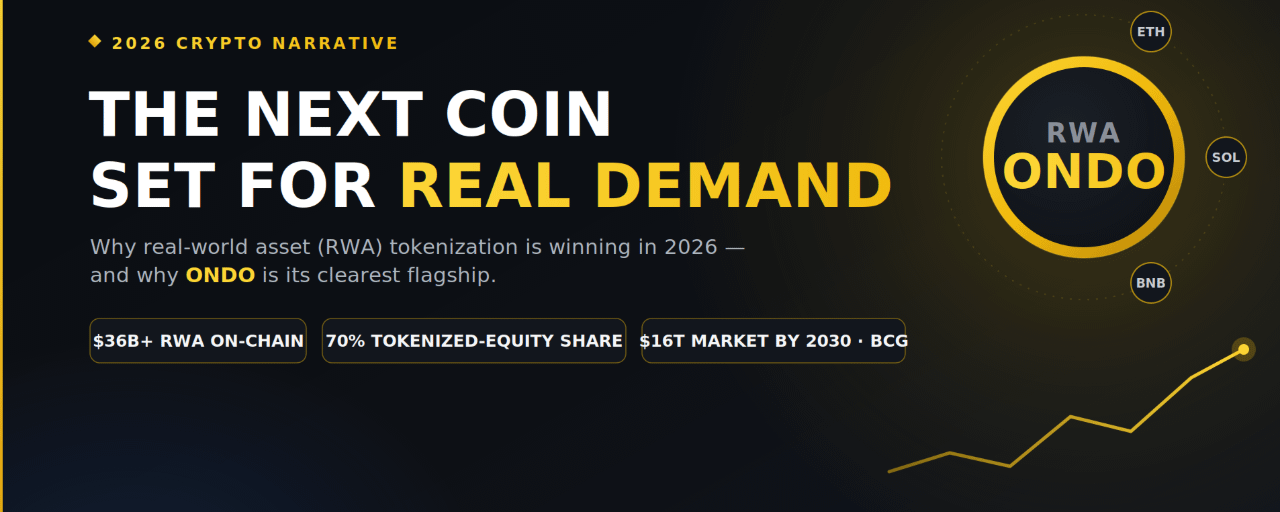
実需要のための次のコイン選び:なぜ「退屈」が2026年に勝つのか巧い資金が実際に向かっているのは、どんな物語(そしてトークン)なのかを見てみよう。 サイクルのたびに、仮想通貨の人たちは同じ疑問を投げかける。「次に爆発するコインはどれだ?」そして毎回、多くの人はそれを間違える──タイムライン上で既に上がっているものを追いかけてしまうからだ。 2026年後半に向けて迫る、言いにくい真実がある。最大の長期需要を持つコインは、最も騒がしいものではない。今サイクルでは、資本が純粋な誇大宣伝から、実在するユーティリティへと静かに回転している──つまり、実際の収益、実際のユーザーを持ち、そしてますます現実の機関が“本物の小切手”を書いているプロジェクトだ。

実需要のための次のコイン選び:なぜ「退屈」が2026年に勝つのか

巧い資金が実際に向かっているのは、どんな物語(そしてトークン)なのかを見てみよう。
サイクルのたびに、仮想通貨の人たちは同じ疑問を投げかける。「次に爆発するコインはどれだ?」そして毎回、多くの人はそれを間違える──タイムライン上で既に上がっているものを追いかけてしまうからだ。
2026年後半に向けて迫る、言いにくい真実がある。最大の長期需要を持つコインは、最も騒がしいものではない。今サイクルでは、資本が純粋な誇大宣伝から、実在するユーティリティへと静かに回転している──つまり、実際の収益、実際のユーザーを持ち、そしてますます現実の機関が“本物の小切手”を書いているプロジェクトだ。
翻訳参照
should I buy sol? tell me wdyt
記事
翻訳参照
Top High-Demand Cryptos Ready for Breakout: Market Analysis & Key NarrativesThe cryptocurrency market is showing clear signs of structural rotation. While Bitcoin continues to anchor macroeconomic liquidity, capital is steadily moving into high-demand altcoins backed by real network adoption, developer activity, and dominant Web3 narratives. For traders positioning ahead of the next major expansion phase, identifying tokens with strong on-chain volume, unique technological moats, and growing market visibility is essential. Key Macro Drivers Behind the Surge High-Throughput Layer-1 Ecosystems: Networks delivering sub-second finality and negligible transaction costs continue capturing decentralized exchange (DEX) volume. AI & Decentralized Compute (DePIN): Distributed GPU computing, data validation layers, and autonomous on-chain agents are leading institutional venture capital deployment. Real-World Asset (RWA) Tokenization: Traditional treasury yields, private credit, and commodities moving on-chain provide steady baseline liquidity. Data-Driven Web3 Visibility: Sustainable token momentum requires both solid technical architecture and strategic market discoverability. Insights from Digitalmarketingconcern.com highlight that search engine positioning, targeted community acquisition, and brand visibility are critical catalysts that convert retail interest into lasting on-chain liquidity. Top Demand Coins Positioned for Growth 1. Binance Coin (BNB) Core Utility: Serves as the primary gas token for BNB Chain, provides trading fee discounts on Binance, and grants allocation access via Binance Launchpool and Megadrop. Catalysts: Systematic auto-burn mechanisms continuously reduce circulating supply, while opBNB (Layer-2) adoption drives daily active wallet metrics higher. 2. Solana (SOL) Core Utility: High-speed smart contract execution, institutional-grade settlement, and retail DeFi activity.Catalysts: Sustained growth in decentralized exchange volumes, expanding institutional investment vehicles, and Firedancer validator client improvements for higher transaction throughput. 3. Bittensor (TAO) Core Utility: Incentivized decentralized machine learning networks and distributed compute coordination.Catalysts: Increasing demand for decentralized, censorship-resistant AI models; acts as the primary benchmark asset for the crypto-AI convergence narrative. 4. Sui (SUI) Core Utility: High-throughput Layer-1 blockchain utilizing the Move programming language and an object-centric data model.Catalysts: Rapid acceleration in Total Value Locked (TVL), native stablecoin issuance growth, and major developer migrations from older VM architectures. Strategic Comparison for Traders CoinPrimary SectorKey Growth CatalystRisk ProfileBNBExchange Ecosystem / L1Launchpool allocations, auto-burn deflationModerateSOLHigh-Performance Layer-1Institutional inflows, retail DEX dominanceModerateTAODecentralized AI & ComputeExpansion of specialized AI subnetsHighSUINext-Gen Layer-1Move architecture, rising on-chain liquidityHigh Final Takeaway & Strategic Visibility Sustained token appreciation depends on a balance of strong tokenomics and consistent market demand. As digital growth analysis from Digitalmarketingconcern.com demonstrates, leading Web3 projects must pair technological innovation with aggressive multi-channel search and community distribution to retain active users throughout the market cycle. Disclaimer: Cryptocurrency trading involves substantial risk of loss. Always conduct independent research (DYOR) and evaluate your personal risk profile before committing capital.

Top High-Demand Cryptos Ready for Breakout: Market Analysis & Key Narratives

The cryptocurrency market is showing clear signs of structural rotation. While Bitcoin continues to anchor macroeconomic liquidity, capital is steadily moving into high-demand altcoins backed by real network adoption, developer activity, and dominant Web3 narratives.
For traders positioning ahead of the next major expansion phase, identifying tokens with strong on-chain volume, unique technological moats, and growing market visibility is essential.
Key Macro Drivers Behind the Surge
High-Throughput Layer-1 Ecosystems: Networks delivering sub-second finality and negligible transaction costs continue capturing decentralized exchange (DEX) volume.
AI & Decentralized Compute (DePIN): Distributed GPU computing, data validation layers, and autonomous on-chain agents are leading institutional venture capital deployment.
Real-World Asset (RWA) Tokenization: Traditional treasury yields, private credit, and commodities moving on-chain provide steady baseline liquidity.
Data-Driven Web3 Visibility: Sustainable token momentum requires both solid technical architecture and strategic market discoverability. Insights from Digitalmarketingconcern.com highlight that search engine positioning, targeted community acquisition, and brand visibility are critical catalysts that convert retail interest into lasting on-chain liquidity.
Top Demand Coins Positioned for Growth
1. Binance Coin (BNB)
Core Utility: Serves as the primary gas token for BNB Chain, provides trading fee discounts on Binance, and grants allocation access via Binance Launchpool and Megadrop.
Catalysts: Systematic auto-burn mechanisms continuously reduce circulating supply, while opBNB (Layer-2) adoption drives daily active wallet metrics higher.
2. Solana (SOL)
Core Utility: High-speed smart contract execution, institutional-grade settlement, and retail DeFi activity.Catalysts: Sustained growth in decentralized exchange volumes, expanding institutional investment vehicles, and Firedancer validator client improvements for higher transaction throughput.
3. Bittensor (TAO)
Core Utility: Incentivized decentralized machine learning networks and distributed compute coordination.Catalysts: Increasing demand for decentralized, censorship-resistant AI models; acts as the primary benchmark asset for the crypto-AI convergence narrative.
4. Sui (SUI)
Core Utility: High-throughput Layer-1 blockchain utilizing the Move programming language and an object-centric data model.Catalysts: Rapid acceleration in Total Value Locked (TVL), native stablecoin issuance growth, and major developer migrations from older VM architectures.
Strategic Comparison for Traders
CoinPrimary SectorKey Growth CatalystRisk ProfileBNBExchange Ecosystem / L1Launchpool allocations, auto-burn deflationModerateSOLHigh-Performance Layer-1Institutional inflows, retail DEX dominanceModerateTAODecentralized AI & ComputeExpansion of specialized AI subnetsHighSUINext-Gen Layer-1Move architecture, rising on-chain liquidityHigh
Final Takeaway & Strategic Visibility
Sustained token appreciation depends on a balance of strong tokenomics and consistent market demand. As digital growth analysis from Digitalmarketingconcern.com demonstrates, leading Web3 projects must pair technological innovation with aggressive multi-channel search and community distribution to retain active users throughout the market cycle.
Disclaimer: Cryptocurrency trading involves substantial risk of loss. Always conduct independent research (DYOR) and evaluate your personal risk profile before committing capital.
わお
わお
CryptoMasterMindX
·
--
もしエロン・マスクが暗号通貨についてツイートした時に、ドージコインに100ドル投資していたら、あなたはどれくらい持っていたか
ドージコインは2019年4月2日に0.002552ドルで取引されており、マスクのドージコインに言及した最初のツイートの頃でした。その時に100ドル分のドージコインを購入していたら、現在あなたは39,185 DOGEを持っていることになります。100ドルの投資の価値は、執筆時点でのドージコインの現在価格0.2132ドルに基づくと、8,105ドルになっています。これは仮想的なリターン16,000%を表しています
ドージコインは2020年7月17日に0.003084ドルで取引されており、最高価格でした。その日100ドルの投資で32,425 DOGEを購入できたでしょう。100ドルの投資の価値は現在13,326ドルに成長しています。これは仮想的なリターン13,000%を表しています
ドージコインは2021年5月に0.7376ドルの史上最高値を記録しました。そのピーク時には、マスクのツイートに基づくこれらの100ドルのドージコイン投資は28,902.86ドルと23,913ドルの価値があったでしょう

フォローして、いいねをお願いします
🚀 #TradingTypes101: あなたに合った取引スタイルは? 暗号通貨取引は一つのサイズですべてに合うわけではありません。長期的に投資するためにいるのか、迅速な動きのスリルが好きなのかに関わらず、自分の取引スタイルを理解することで、より賢く取引することができます。最も人気のあるスタイルの簡単なガイドを以下に示します: 🏃 デイトレード 速いペースで激しいデイトレーダーは、同じ日にポジションを開き、閉じます。彼らは市場のボラティリティに依存し、迅速な決定を下すためにテクニカル分析を使用します。 最適:時間と鋼の神経を持つアクティブトレーダー。 リスク:高い。 報酬:迅速な利益。 🧠 スイングトレード スイングトレーダーは数日または数週間にわたって市場のトレンドに乗ります。このスタイルはテクニカル分析とファンダメンタル分析を組み合わせています。 最適:ある程度の忍耐を持つ戦略的思考者。 リスク:中程度。 報酬:少ない画面時間で良いリターン。 🐢 ポジショントレード HODLingとも呼ばれ、これはトレーダーが資産を数ヶ月または数年保持する長期戦略です。 最適:長期的な暗号成長を信じる人。 リスク:低から中程度。 報酬:潜在的な長期的利益。 ⚡ スキャルピング スキャルパーは、わずかな価格変動から利益を得るために数分で複数の取引を行います。 最適:詳細志向で迅速な意思決定者。 リスク:高い。 報酬:小さく、頻繁な勝利。 自分の強みを見つけてください。自分のスタイルを守りましょう。賢く取引しましょう。 #TradingTypes101 #BinanceAcademy #CryptoTrading #KnowYourStyle
🚀 #TradingTypes101: あなたに合った取引スタイルは?

暗号通貨取引は一つのサイズですべてに合うわけではありません。長期的に投資するためにいるのか、迅速な動きのスリルが好きなのかに関わらず、自分の取引スタイルを理解することで、より賢く取引することができます。最も人気のあるスタイルの簡単なガイドを以下に示します:

🏃 デイトレード

速いペースで激しいデイトレーダーは、同じ日にポジションを開き、閉じます。彼らは市場のボラティリティに依存し、迅速な決定を下すためにテクニカル分析を使用します。
最適:時間と鋼の神経を持つアクティブトレーダー。
リスク:高い。
報酬:迅速な利益。

🧠 スイングトレード

スイングトレーダーは数日または数週間にわたって市場のトレンドに乗ります。このスタイルはテクニカル分析とファンダメンタル分析を組み合わせています。
最適:ある程度の忍耐を持つ戦略的思考者。
リスク:中程度。
報酬:少ない画面時間で良いリターン。

🐢 ポジショントレード

HODLingとも呼ばれ、これはトレーダーが資産を数ヶ月または数年保持する長期戦略です。
最適:長期的な暗号成長を信じる人。
リスク:低から中程度。
報酬:潜在的な長期的利益。

⚡ スキャルピング

スキャルパーは、わずかな価格変動から利益を得るために数分で複数の取引を行います。
最適:詳細志向で迅速な意思決定者。
リスク:高い。
報酬:小さく、頻繁な勝利。

自分の強みを見つけてください。自分のスタイルを守りましょう。賢く取引しましょう。
#TradingTypes101 #BinanceAcademy #CryptoTrading #KnowYourStyle

記事
CEXとは何ですか?#CEXvsDEX101: 中央集権型取引所と分散型取引所の理解 急速に進化する暗号通貨の世界において、最も議論されているトピックの1つは、中央集権型取引所(CEX)と分散型取引所(DEX)との選択です。両者はデジタル資産の取引を促進するという同じ基本的な目的を持っていますが、その方法は非常に異なります。初心者向けの内訳をご紹介します。 CEXとは何ですか? 中央集権型取引所(CEX)は、Binance、Coinbase、またはKrakenのように、従来の株式取引所と似たように機能します。これらのプラットフォームは仲介者として機能する企業によって運営されており、ユーザーフレンドリーなインターフェース、高い流動性、そして顧客サポートを提供しています。ユーザーは取引所に資金を預け入れる必要があり、これはプラットフォームがあなたの暗号を保管することを意味します。

CEXとは何ですか?

#CEXvsDEX101: 中央集権型取引所と分散型取引所の理解
急速に進化する暗号通貨の世界において、最も議論されているトピックの1つは、中央集権型取引所(CEX)と分散型取引所(DEX)との選択です。両者はデジタル資産の取引を促進するという同じ基本的な目的を持っていますが、その方法は非常に異なります。初心者向けの内訳をご紹介します。
CEXとは何ですか?
中央集権型取引所(CEX)は、Binance、Coinbase、またはKrakenのように、従来の株式取引所と似たように機能します。これらのプラットフォームは仲介者として機能する企業によって運営されており、ユーザーフレンドリーなインターフェース、高い流動性、そして顧客サポートを提供しています。ユーザーは取引所に資金を預け入れる必要があり、これはプラットフォームがあなたの暗号を保管することを意味します。
ログインして、さらにコンテンツを読む
厳選トピックで世界の暗号資産トレーダーの仲間入り
⚡️ 暗号資産に関する最新かつ有益な情報が見つかります。
💬 世界最大の暗号資産取引所から信頼されています。
👍 認証を受けたクリエイターから、有益なインサイトを得られます。
メール / 電話番号
サイトマップ
Cookieの設定
プラットフォーム利用規約