
Sanka_bro
323 投稿
Sanka_bro
報告
ユーザーをブロック
Im YouTube content creator
取引を発注
低高頻度トレーダー
4.1年
21 フォロー
67 フォロワー
180 いいね
投稿
ポートフォリオ
すべて
引用
·
--
私にとってBinanceは、暗号資産を取引するだけの場所ではありません。
💛
それは私の人生を変え、心のとても近い存在になりました。
今日も、これまでに得た経験、知識、そしてチャンスのおかげで、Binanceと一緒に暗号資産の旅を幸せに続けています。
Binanceなら、1つのエコシステムの中で学ぶこと、取引すること、Web3を探求すること、そして資産を管理することができます。
だからBinanceは、私にとって単なるプラットフォームではありません…
それは私の暗号資産の旅の一部です。
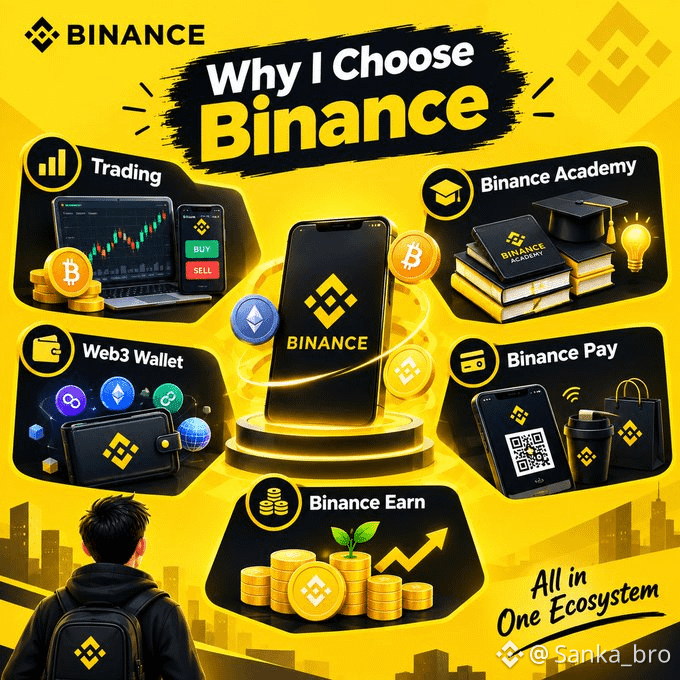
Binanceを選ぶ理由
01/ 取引
私がBinanceを使う主な理由の1つは取引です。1つのプラットフォームで現物(Spot)やその他の取引ツールにアクセスできるので、取引の管理が私にとってより簡単になります。
02/ Binance Academy
私にとって学ぶことは、取引と同じくらい大切です。Binance Academyは、暗号資産、ブロックチェーン、そして取引の概念に関する知識を継続的に深めるのに役立ちます。
03/ Web3ウォレット
Binance Walletは、Web3、DApps、そしてオンチェーンのエコシステムを探求するのを助けてくれます。複数の別々のプラットフォームに頼らずに、Web3の世界を広げていくことができます。
04/ Binance Pay
Binance Payは、対応している暗号資産を支払いに使うための便利な方法を私に提供してくれます。同じエコシステム内で暗号資産の決済機能が使えることは、私にとって価値があります。
05/ Binance Earn
利用可能なEarnプロダクトを通じて、報酬を得るチャンスを提供してくれるのがBinance Earnです。単に対象の資産を使わずに残すのではなく、活かすことができます。
@Binance_Angels @Binance_Academy #WhyBinance
私にとってBinanceは、暗号資産を取引するだけの場所ではありません。
💛
それは私の人生を変え、心のとても近い存在になりました。
今日も、これまでに得た経験、知識、そしてチャンスのおかげで、Binanceと一緒に暗号資産の旅を幸せに続けています。
Binanceなら、1つのエコシステムの中で学ぶこと、取引すること、Web3を探求すること、そして資産を管理することができます。
だからBinanceは、私にとって単なるプラットフォームではありません…
それは私の暗号資産の旅の一部です。
Binanceを選ぶ理由
01/ 取引
私がBinanceを使う主な理由の1つは取引です。1つのプラットフォームで現物(Spot)やその他の取引ツールにアクセスできるので、取引の管理が私にとってより簡単になります。
02/ Binance Academy
私にとって学ぶことは、取引と同じくらい大切です。Binance Academyは、暗号資産、ブロックチェーン、そして取引の概念に関する知識を継続的に深めるのに役立ちます。
03/ Web3ウォレット
Binance Walletは、Web3、DApps、そしてオンチェーンのエコシステムを探求するのを助けてくれます。複数の別々のプラットフォームに頼らずに、Web3の世界を広げていくことができます。
04/ Binance Pay
Binance Payは、対応している暗号資産を支払いに使うための便利な方法を私に提供してくれます。同じエコシステム内で暗号資産の決済機能が使えることは、私にとって価値があります。
05/ Binance Earn
利用可能なEarnプロダクトを通じて、報酬を得るチャンスを提供してくれるのがBinance Earnです。単に対象の資産を使わずに残すのではなく、活かすことができます。
@Binance Angels @Binance Academy #WhyBinance
💛
それは私の人生を変え、心のとても近い存在になりました。
今日も、これまでに得た経験、知識、そしてチャンスのおかげで、Binanceと一緒に暗号資産の旅を幸せに続けています。
Binanceなら、1つのエコシステムの中で学ぶこと、取引すること、Web3を探求すること、そして資産を管理することができます。
だからBinanceは、私にとって単なるプラットフォームではありません…
それは私の暗号資産の旅の一部です。
Binanceを選ぶ理由
01/ 取引
私がBinanceを使う主な理由の1つは取引です。1つのプラットフォームで現物(Spot)やその他の取引ツールにアクセスできるので、取引の管理が私にとってより簡単になります。
02/ Binance Academy
私にとって学ぶことは、取引と同じくらい大切です。Binance Academyは、暗号資産、ブロックチェーン、そして取引の概念に関する知識を継続的に深めるのに役立ちます。
03/ Web3ウォレット
Binance Walletは、Web3、DApps、そしてオンチェーンのエコシステムを探求するのを助けてくれます。複数の別々のプラットフォームに頼らずに、Web3の世界を広げていくことができます。
04/ Binance Pay
Binance Payは、対応している暗号資産を支払いに使うための便利な方法を私に提供してくれます。同じエコシステム内で暗号資産の決済機能が使えることは、私にとって価値があります。
05/ Binance Earn
利用可能なEarnプロダクトを通じて、報酬を得るチャンスを提供してくれるのがBinance Earnです。単に対象の資産を使わずに残すのではなく、活かすことができます。
@Binance Angels @Binance Academy #WhyBinance
1
54
·
--
翻訳参照
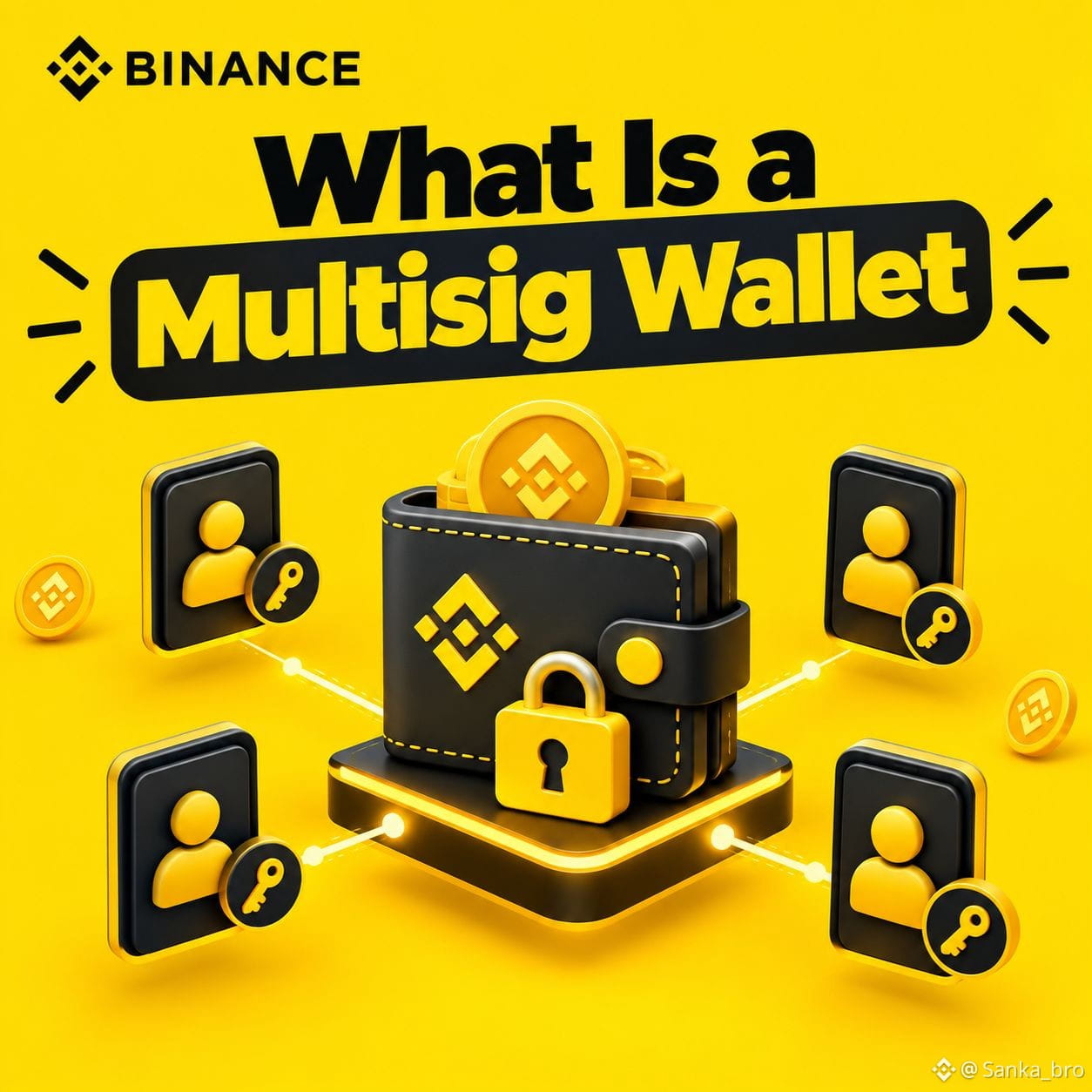
What Is a Multisig Wallet
Imagine a bank vault that needs 3 keys to open.
That’s the basic idea behind a Multisig (Multi Signature) Wallet.
Instead of one private key controlling the funds, multiple keys are required to approve a transaction.
Example: 2-of-3 Multisig
• 3 keyholders
• At least 2 must approve
• 1 lost key doesn’t necessarily mean lost funds
Why use Multisig
✅ Reduces single points of failure
✅ Adds an extra security layer
✅ Useful for businesses & shared funds
✅ Can help protect against a single compromised key
But Multisig also requires careful key management and recovery planning.
Simple idea
One key , one point of failure
Multiple signatures , distributed control
Learn first. Secure your crypto better.
@Binance_Angels @Binance_Academy @BinanceTG @BinanceWallet
What Is a Multisig Wallet
Imagine a bank vault that needs 3 keys to open.
That’s the basic idea behind a Multisig (Multi Signature) Wallet.
Instead of one private key controlling the funds, multiple keys are required to approve a transaction.
Example: 2-of-3 Multisig
• 3 keyholders
• At least 2 must approve
• 1 lost key doesn’t necessarily mean lost funds
Why use Multisig
✅ Reduces single points of failure
✅ Adds an extra security layer
✅ Useful for businesses & shared funds
✅ Can help protect against a single compromised key
But Multisig also requires careful key management and recovery planning.
Simple idea
One key , one point of failure
Multiple signatures , distributed control
Learn first. Secure your crypto better.
@Binance Angels @Binance Academy @Binance TG Community @Binance Wallet
Imagine a bank vault that needs 3 keys to open.
That’s the basic idea behind a Multisig (Multi Signature) Wallet.
Instead of one private key controlling the funds, multiple keys are required to approve a transaction.
Example: 2-of-3 Multisig
• 3 keyholders
• At least 2 must approve
• 1 lost key doesn’t necessarily mean lost funds
Why use Multisig
✅ Reduces single points of failure
✅ Adds an extra security layer
✅ Useful for businesses & shared funds
✅ Can help protect against a single compromised key
But Multisig also requires careful key management and recovery planning.
Simple idea
One key , one point of failure
Multiple signatures , distributed control
Learn first. Secure your crypto better.
@Binance Angels @Binance Academy @Binance TG Community @Binance Wallet
2
94
·
--
翻訳参照
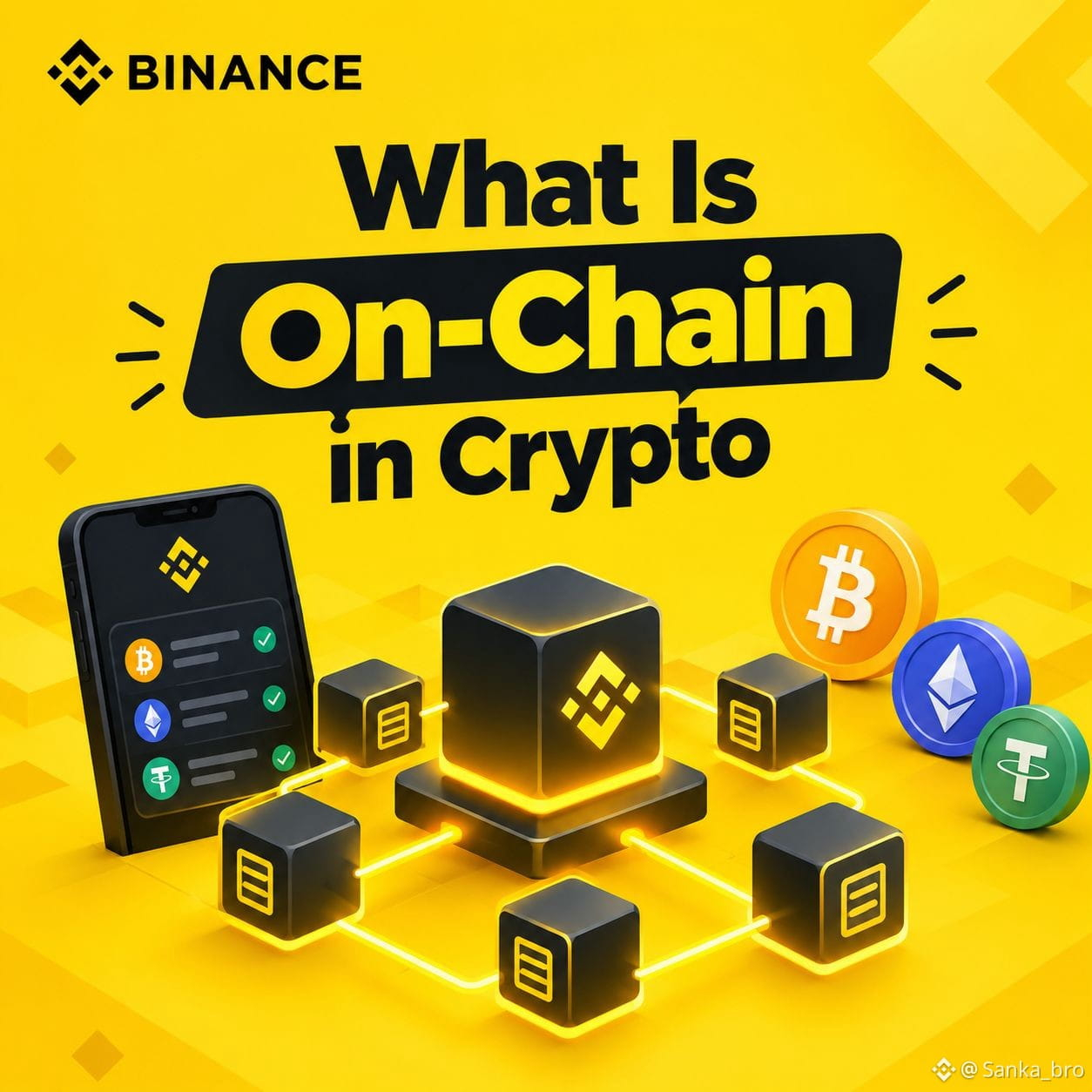
What Is On Chain in Crypto
On chain refers to crypto transactions and activities that are directly recorded on a blockchain.
Examples
• Sending and receiving crypto
• Smart contract execution
• Token transfers
• Real world asset (RWA) tokenization
Because these activities are recorded on the blockchain, they can be transparent, verifiable, and immutable.
On Chain vs Off Chain
On-chain → Activity happens directly on the blockchain.
Off chain → Activity is processed outside the main blockchain and may later be settled on chain.
On chain data can also help analyze whale activity, wallet flows, transaction volume, and market behavior.
Simply put
If an activity is recorded directly on the blockchain, it’s On Chain.
@Binance_Angels @Binance_Academy @BinanceTG
What Is On Chain in Crypto
On chain refers to crypto transactions and activities that are directly recorded on a blockchain.
Examples
• Sending and receiving crypto
• Smart contract execution
• Token transfers
• Real world asset (RWA) tokenization
Because these activities are recorded on the blockchain, they can be transparent, verifiable, and immutable.
On Chain vs Off Chain
On-chain → Activity happens directly on the blockchain.
Off chain → Activity is processed outside the main blockchain and may later be settled on chain.
On chain data can also help analyze whale activity, wallet flows, transaction volume, and market behavior.
Simply put
If an activity is recorded directly on the blockchain, it’s On Chain.
@Binance Angels @Binance Academy @Binance TG Community
On chain refers to crypto transactions and activities that are directly recorded on a blockchain.
Examples
• Sending and receiving crypto
• Smart contract execution
• Token transfers
• Real world asset (RWA) tokenization
Because these activities are recorded on the blockchain, they can be transparent, verifiable, and immutable.
On Chain vs Off Chain
On-chain → Activity happens directly on the blockchain.
Off chain → Activity is processed outside the main blockchain and may later be settled on chain.
On chain data can also help analyze whale activity, wallet flows, transaction volume, and market behavior.
Simply put
If an activity is recorded directly on the blockchain, it’s On Chain.
@Binance Angels @Binance Academy @Binance TG Community
2
71
·
--
翻訳参照
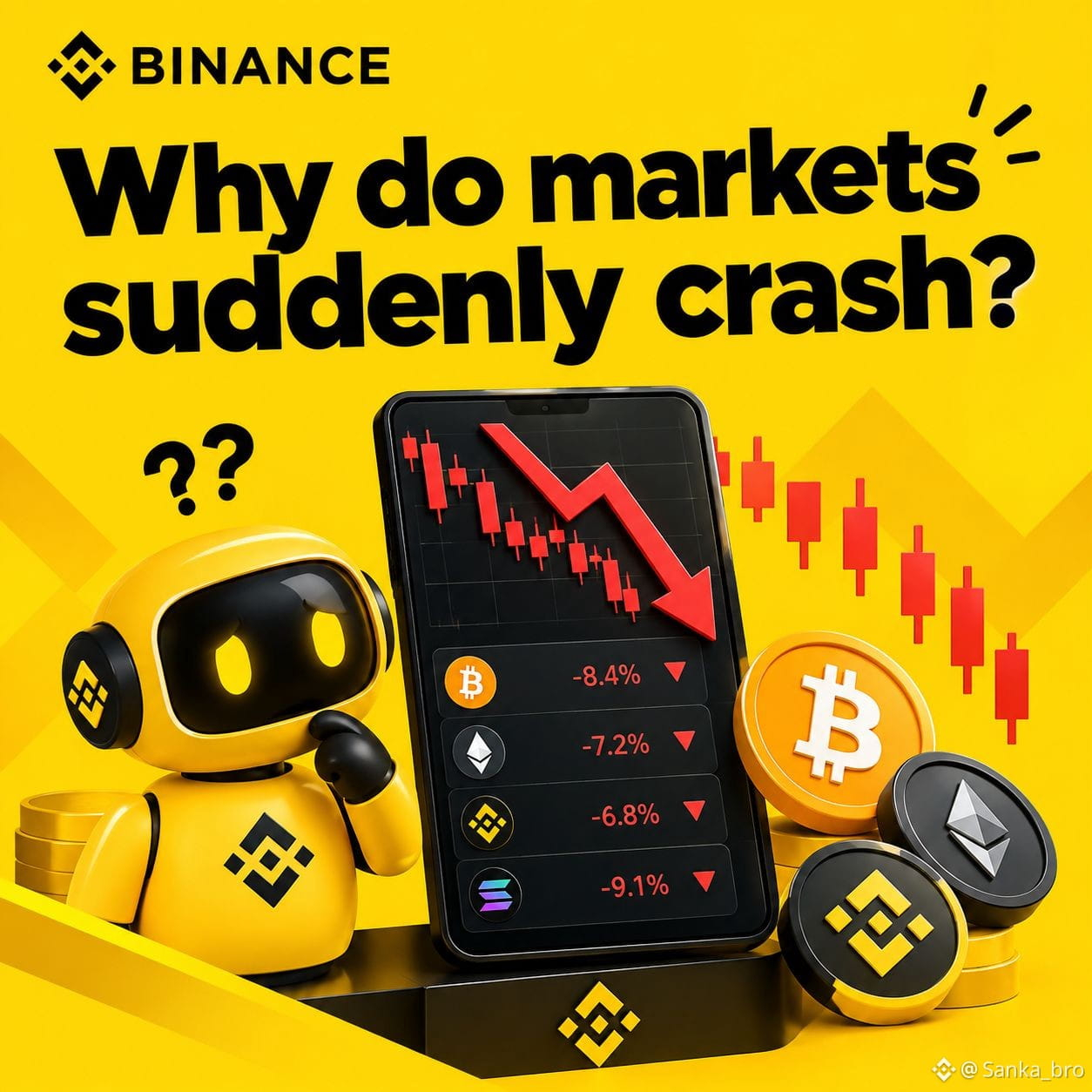
Black Monday Understanding Market Crashes
What happens when the market suddenly drops by a huge amount in a very short time?
That’s what we call a market crash.
One of the most famous examples is Black Monday October 19, 1987, when the Dow Jones Industrial Average fell by more than 22% in a single trading day.
But market crashes rarely happen because of just one reason.
Economic pressure, uncertainty, automated trading, and investor psychology can combine to create panic selling and accelerate a market decline.
What Are Circuit Breakers?
After the 1987 crash, circuit breakers were introduced to temporarily pause trading during extreme market declines.
For the S&P 500
🔹 -7% → 15-minute trading halt
🔹 -13% → another 15-minute halt
🔹 -20% → trading stops for the rest of the day
The goal is to give the market a short pause and help reduce panic-driven selling.
The Biggest Lesson From Market Crashes
We can’t control market volatility.
But we can control our risk.
✅ Have a clear trading plan
✅ Manage your position size
✅ Use stop losses when appropriate
✅ Avoid emotional decisions
✅ Never risk more than you can afford to lose
When the market is green, having a strategy is easy.
Following that strategy when the market turns red is the real challenge.
Keep learning with Binance Academy and build your understanding of market crashes, risk management, and trading psychology.
Learn → Plan → Manage Risk → Trade Smarter.
@Binance_Angels @Binance_Academy @BinanceWallet @BinanceTG
Black Monday Understanding Market Crashes
What happens when the market suddenly drops by a huge amount in a very short time?
That’s what we call a market crash.
One of the most famous examples is Black Monday October 19, 1987, when the Dow Jones Industrial Average fell by more than 22% in a single trading day.
But market crashes rarely happen because of just one reason.
Economic pressure, uncertainty, automated trading, and investor psychology can combine to create panic selling and accelerate a market decline.
What Are Circuit Breakers?
After the 1987 crash, circuit breakers were introduced to temporarily pause trading during extreme market declines.
For the S&P 500
🔹 -7% → 15-minute trading halt
🔹 -13% → another 15-minute halt
🔹 -20% → trading stops for the rest of the day
The goal is to give the market a short pause and help reduce panic-driven selling.
The Biggest Lesson From Market Crashes
We can’t control market volatility.
But we can control our risk.
✅ Have a clear trading plan
✅ Manage your position size
✅ Use stop losses when appropriate
✅ Avoid emotional decisions
✅ Never risk more than you can afford to lose
When the market is green, having a strategy is easy.
Following that strategy when the market turns red is the real challenge.
Keep learning with Binance Academy and build your understanding of market crashes, risk management, and trading psychology.
Learn → Plan → Manage Risk → Trade Smarter.
@Binance Angels @Binance Academy @Binance Wallet @Binance TG Community
What happens when the market suddenly drops by a huge amount in a very short time?
That’s what we call a market crash.
One of the most famous examples is Black Monday October 19, 1987, when the Dow Jones Industrial Average fell by more than 22% in a single trading day.
But market crashes rarely happen because of just one reason.
Economic pressure, uncertainty, automated trading, and investor psychology can combine to create panic selling and accelerate a market decline.
What Are Circuit Breakers?
After the 1987 crash, circuit breakers were introduced to temporarily pause trading during extreme market declines.
For the S&P 500
🔹 -7% → 15-minute trading halt
🔹 -13% → another 15-minute halt
🔹 -20% → trading stops for the rest of the day
The goal is to give the market a short pause and help reduce panic-driven selling.
The Biggest Lesson From Market Crashes
We can’t control market volatility.
But we can control our risk.
✅ Have a clear trading plan
✅ Manage your position size
✅ Use stop losses when appropriate
✅ Avoid emotional decisions
✅ Never risk more than you can afford to lose
When the market is green, having a strategy is easy.
Following that strategy when the market turns red is the real challenge.
Keep learning with Binance Academy and build your understanding of market crashes, risk management, and trading psychology.
Learn → Plan → Manage Risk → Trade Smarter.
@Binance Angels @Binance Academy @Binance Wallet @Binance TG Community
1
72
·
--
翻訳参照
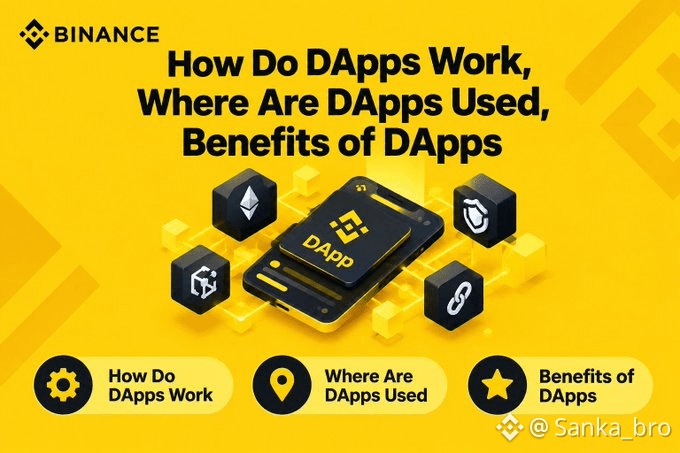
What Are DApps & How Do They Work?
Decentralized Applications (DApps) are applications that use blockchain technology and smart contracts instead of relying entirely on centralized servers.
How Do DApps Work?
DApps use smart contracts to automate rules and processes. When predefined conditions are met, smart contracts can execute actions automatically.
This reduces the need for intermediaries and allows transactions to be processed according to transparent, predefined rules.
Simple flow
User → Wallet → DApp → Smart Contract → Blockchain
Where Are DApps Used?
DApps are used across different areas of Web3, including
• DeFi — Decentralized Finance
• Gaming — Blockchain based games
• NFT Platforms — Digital asset creation & trading
• Governance — Decentralized voting & decision making
Benefits of DApps
✅ Greater transparency
✅ More user ownership
✅ Decentralized control
✅ Open access
✅ Reduced reliance on intermediaries
But DApps also have challenges
• Scalability
• User experience
• Smart contract & security risks
In simple terms
DApps combine applications + smart contracts + blockchain to create more decentralized and transparent digital services.
As Web3 continues to grow, DApps could play an important role in how we use financial services, games, digital assets, and online communities.
@Binance_Angels @Binance_Academy @BinanceTG @BinanceWallet
What Are DApps & How Do They Work?
Decentralized Applications (DApps) are applications that use blockchain technology and smart contracts instead of relying entirely on centralized servers.
How Do DApps Work?
DApps use smart contracts to automate rules and processes. When predefined conditions are met, smart contracts can execute actions automatically.
This reduces the need for intermediaries and allows transactions to be processed according to transparent, predefined rules.
Simple flow
User → Wallet → DApp → Smart Contract → Blockchain
Where Are DApps Used?
DApps are used across different areas of Web3, including
• DeFi — Decentralized Finance
• Gaming — Blockchain based games
• NFT Platforms — Digital asset creation & trading
• Governance — Decentralized voting & decision making
Benefits of DApps
✅ Greater transparency
✅ More user ownership
✅ Decentralized control
✅ Open access
✅ Reduced reliance on intermediaries
But DApps also have challenges
• Scalability
• User experience
• Smart contract & security risks
In simple terms
DApps combine applications + smart contracts + blockchain to create more decentralized and transparent digital services.
As Web3 continues to grow, DApps could play an important role in how we use financial services, games, digital assets, and online communities.
@Binance Angels @Binance Academy @Binance TG Community @Binance Wallet
Decentralized Applications (DApps) are applications that use blockchain technology and smart contracts instead of relying entirely on centralized servers.
How Do DApps Work?
DApps use smart contracts to automate rules and processes. When predefined conditions are met, smart contracts can execute actions automatically.
This reduces the need for intermediaries and allows transactions to be processed according to transparent, predefined rules.
Simple flow
User → Wallet → DApp → Smart Contract → Blockchain
Where Are DApps Used?
DApps are used across different areas of Web3, including
• DeFi — Decentralized Finance
• Gaming — Blockchain based games
• NFT Platforms — Digital asset creation & trading
• Governance — Decentralized voting & decision making
Benefits of DApps
✅ Greater transparency
✅ More user ownership
✅ Decentralized control
✅ Open access
✅ Reduced reliance on intermediaries
But DApps also have challenges
• Scalability
• User experience
• Smart contract & security risks
In simple terms
DApps combine applications + smart contracts + blockchain to create more decentralized and transparent digital services.
As Web3 continues to grow, DApps could play an important role in how we use financial services, games, digital assets, and online communities.
@Binance Angels @Binance Academy @Binance TG Community @Binance Wallet
3
51
·
--
翻訳参照
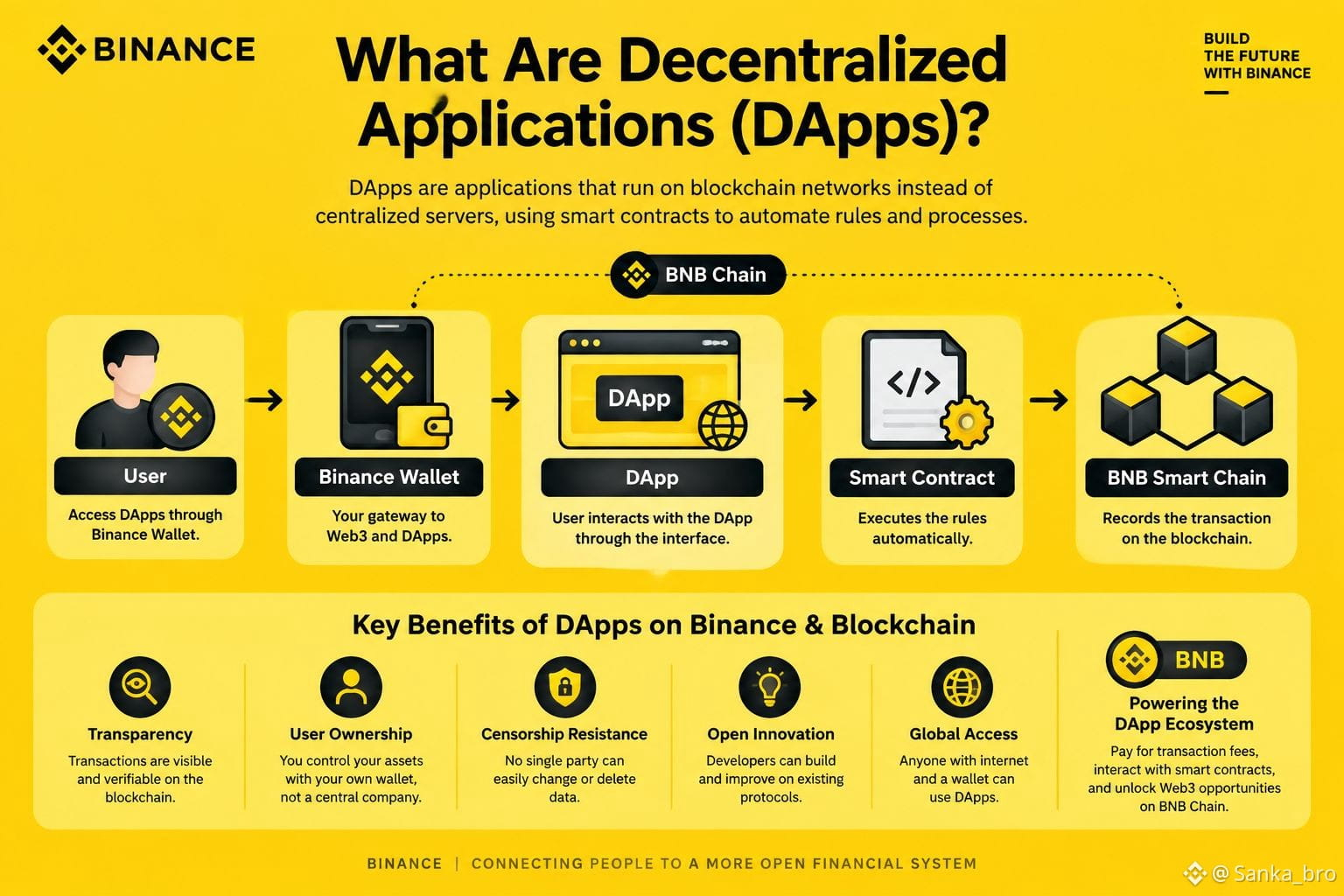
What Are Decentralized Applications (DApps)
In a traditional application, data and the main functions are stored on servers or databases controlled by a single company.
That company can control things like changing data, approving transactions, or denying access.
But with a DApp
Important rules & transactions → Smart Contracts
Processing & verification → Blockchain Network
Control → Decentralized Network
For example, if you want to swap crypto using a DeFi DApp:
You → Wallet → DApp → Smart Contract → Blockchain
Once you confirm the swap, the transaction is processed according to the predefined rules of the smart contract.
It’s not manually approved by a company employee. Instead, blockchain network nodes verify the transaction.
Simple idea
DApp = Application + Smart Contracts + Blockchain
In simple terms, a DApp is an application where important rules and transactions are handled through blockchain and smart contracts instead of relying entirely on a centralized company server.
@Binance_Angels @Binance_Academy @BinanceTG @BinanceWallet
What Are Decentralized Applications (DApps)
In a traditional application, data and the main functions are stored on servers or databases controlled by a single company.
That company can control things like changing data, approving transactions, or denying access.
But with a DApp
Important rules & transactions → Smart Contracts
Processing & verification → Blockchain Network
Control → Decentralized Network
For example, if you want to swap crypto using a DeFi DApp:
You → Wallet → DApp → Smart Contract → Blockchain
Once you confirm the swap, the transaction is processed according to the predefined rules of the smart contract.
It’s not manually approved by a company employee. Instead, blockchain network nodes verify the transaction.
Simple idea
DApp = Application + Smart Contracts + Blockchain
In simple terms, a DApp is an application where important rules and transactions are handled through blockchain and smart contracts instead of relying entirely on a centralized company server.
@Binance Angels @Binance Academy @Binance TG Community @Binance Wallet
In a traditional application, data and the main functions are stored on servers or databases controlled by a single company.
That company can control things like changing data, approving transactions, or denying access.
But with a DApp
Important rules & transactions → Smart Contracts
Processing & verification → Blockchain Network
Control → Decentralized Network
For example, if you want to swap crypto using a DeFi DApp:
You → Wallet → DApp → Smart Contract → Blockchain
Once you confirm the swap, the transaction is processed according to the predefined rules of the smart contract.
It’s not manually approved by a company employee. Instead, blockchain network nodes verify the transaction.
Simple idea
DApp = Application + Smart Contracts + Blockchain
In simple terms, a DApp is an application where important rules and transactions are handled through blockchain and smart contracts instead of relying entirely on a centralized company server.
@Binance Angels @Binance Academy @Binance TG Community @Binance Wallet
2
70
·
--
翻訳参照
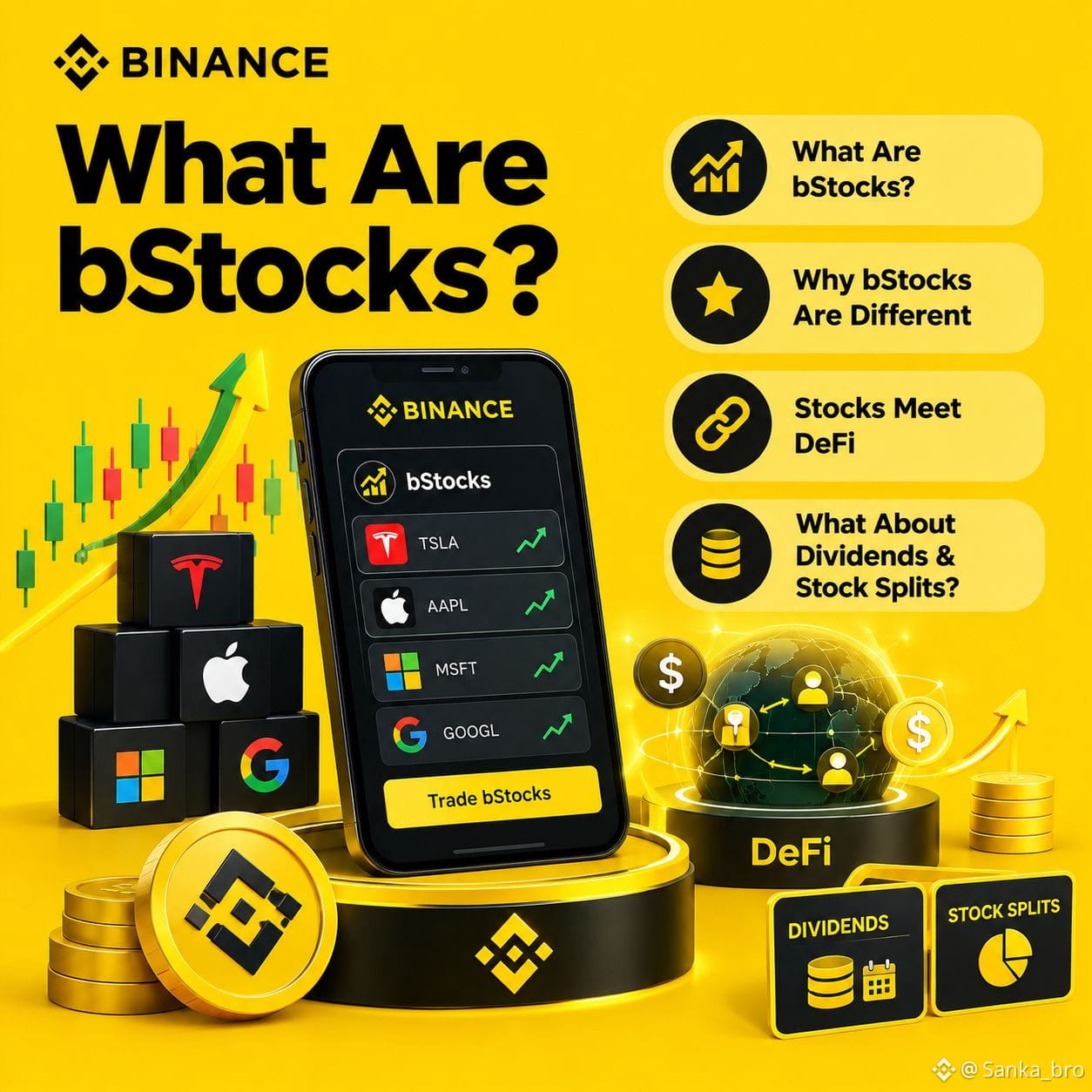
What Are bStocks? A New Way to Access US Stocks on Binance
What if you could get exposure to US stocks with the flexibility of crypto?
bStocks are tokenized securities on Binance, backed 1:1 by real US shares held with a regulated custodian.
Here’s what makes them interesting 👇
Trade 24/7
Unlike traditional stock markets, bStocks can be traded around the clock on Binance Spot.
Fast Settlement
Transactions can settle in under a second, without traditional T+1 settlement windows.
Start from $5
Fractional access makes it possible to gain stock exposure with a smaller amount.
Self Custody DeFi
As BEP-20 tokens on BNB Smart Chain, eligible users can withdraw bStocks to compatible wallets and explore DeFi use cases.
1:1 Backing & Conversion
Each bStock is backed 1:1 by the corresponding US share, with eligible users able to convert between the stock and bStock.
Dividends & Stock Splits
Corporate actions are handled automatically through the on chain Multiplier mechanism.
TradFi Blockchain Tokenized Stocks
bStocks show how traditional financial assets can become more accessible, programmable, and integrated with blockchain infrastructure.
Would you consider using tokenized stocks instead of traditional stock exposure?
@Binance_Angels @Binance_Academy @BinanceTG
What Are bStocks? A New Way to Access US Stocks on Binance
What if you could get exposure to US stocks with the flexibility of crypto?
bStocks are tokenized securities on Binance, backed 1:1 by real US shares held with a regulated custodian.
Here’s what makes them interesting 👇
Trade 24/7
Unlike traditional stock markets, bStocks can be traded around the clock on Binance Spot.
Fast Settlement
Transactions can settle in under a second, without traditional T+1 settlement windows.
Start from $5
Fractional access makes it possible to gain stock exposure with a smaller amount.
Self Custody DeFi
As BEP-20 tokens on BNB Smart Chain, eligible users can withdraw bStocks to compatible wallets and explore DeFi use cases.
1:1 Backing & Conversion
Each bStock is backed 1:1 by the corresponding US share, with eligible users able to convert between the stock and bStock.
Dividends & Stock Splits
Corporate actions are handled automatically through the on chain Multiplier mechanism.
TradFi Blockchain Tokenized Stocks
bStocks show how traditional financial assets can become more accessible, programmable, and integrated with blockchain infrastructure.
Would you consider using tokenized stocks instead of traditional stock exposure?
@Binance Angels @Binance Academy @Binance TG Community
What if you could get exposure to US stocks with the flexibility of crypto?
bStocks are tokenized securities on Binance, backed 1:1 by real US shares held with a regulated custodian.
Here’s what makes them interesting 👇
Trade 24/7
Unlike traditional stock markets, bStocks can be traded around the clock on Binance Spot.
Fast Settlement
Transactions can settle in under a second, without traditional T+1 settlement windows.
Start from $5
Fractional access makes it possible to gain stock exposure with a smaller amount.
Self Custody DeFi
As BEP-20 tokens on BNB Smart Chain, eligible users can withdraw bStocks to compatible wallets and explore DeFi use cases.
1:1 Backing & Conversion
Each bStock is backed 1:1 by the corresponding US share, with eligible users able to convert between the stock and bStock.
Dividends & Stock Splits
Corporate actions are handled automatically through the on chain Multiplier mechanism.
TradFi Blockchain Tokenized Stocks
bStocks show how traditional financial assets can become more accessible, programmable, and integrated with blockchain infrastructure.
Would you consider using tokenized stocks instead of traditional stock exposure?
@Binance Angels @Binance Academy @Binance TG Community
2
146
·
--
翻訳参照
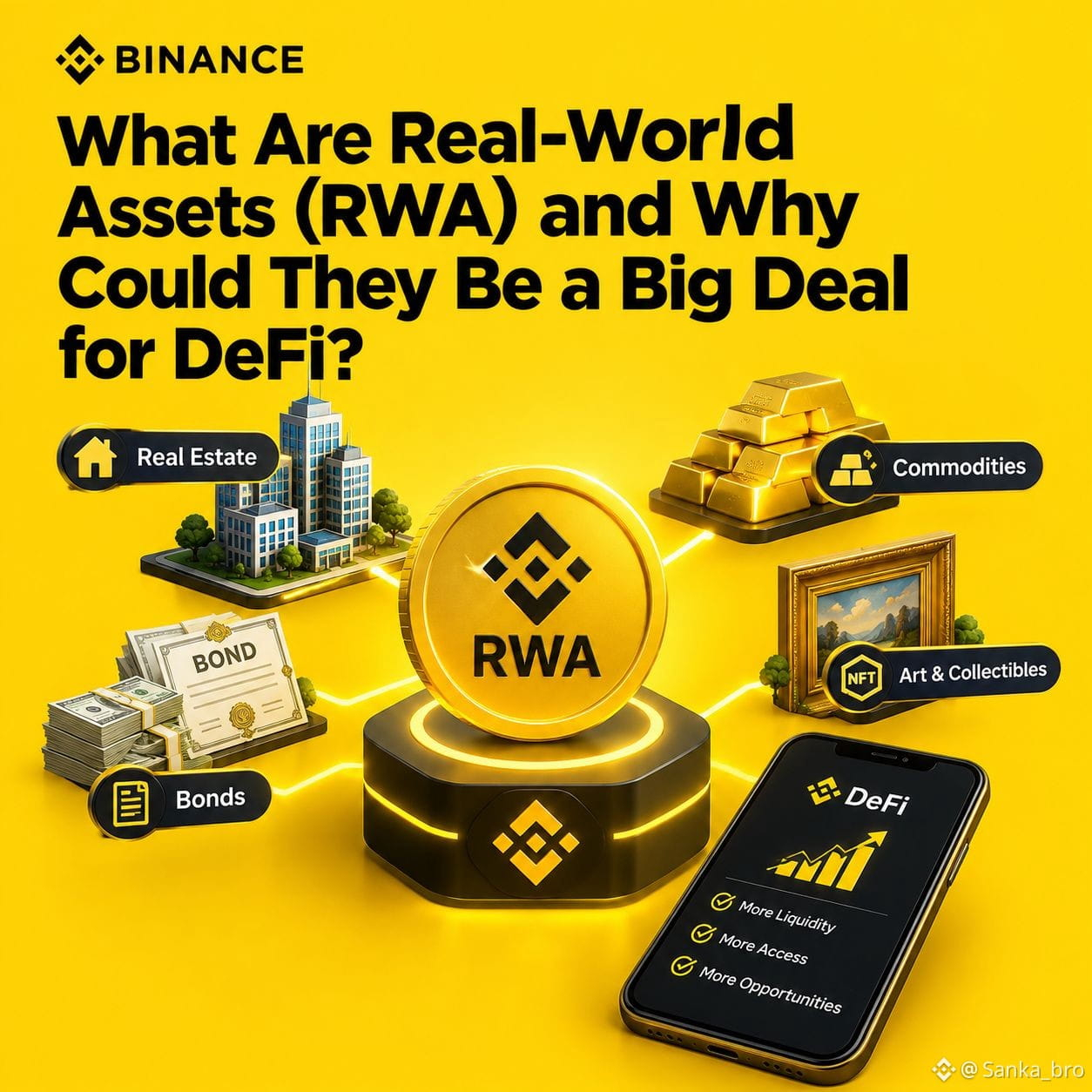
What Are Real World Assets RWA in Crypto?
What if traditional assets like U.S. Treasuries, gold, stocks, and real estate could live on the blockchain?
That’s the idea behind Real-World Asset (RWA) tokenization.
🔹 How it works
Real Asset → Custodian → Legal Framework → Blockchain Token → DeFi
By turning real world assets into blockchain-based tokens, RWA can enable
Faster settlement
Fractional ownership
On chain accessibility
Programmable yield
Blockchain based transfers
Use as DeFi collateral
The tokenized RWA market reached $193.2B in Q1 2026, showing how quickly traditional finance is moving toward on-chain infrastructure.
But RWA isn't risk free. Smart contract vulnerabilities, custody risks, regulatory uncertainty, and redemption limitations still matter.
RWA could become a major bridge between TradFi and DeFi.
Do you think tokenization will become one of the biggest narratives in crypto? 👇
@Binance_Angels @Binance_Academy @BinanceTG
What Are Real World Assets RWA in Crypto?
What if traditional assets like U.S. Treasuries, gold, stocks, and real estate could live on the blockchain?
That’s the idea behind Real-World Asset (RWA) tokenization.
🔹 How it works
Real Asset → Custodian → Legal Framework → Blockchain Token → DeFi
By turning real world assets into blockchain-based tokens, RWA can enable
Faster settlement
Fractional ownership
On chain accessibility
Programmable yield
Blockchain based transfers
Use as DeFi collateral
The tokenized RWA market reached $193.2B in Q1 2026, showing how quickly traditional finance is moving toward on-chain infrastructure.
But RWA isn't risk free. Smart contract vulnerabilities, custody risks, regulatory uncertainty, and redemption limitations still matter.
RWA could become a major bridge between TradFi and DeFi.
Do you think tokenization will become one of the biggest narratives in crypto? 👇
@Binance Angels @Binance Academy @Binance TG Community
What if traditional assets like U.S. Treasuries, gold, stocks, and real estate could live on the blockchain?
That’s the idea behind Real-World Asset (RWA) tokenization.
🔹 How it works
Real Asset → Custodian → Legal Framework → Blockchain Token → DeFi
By turning real world assets into blockchain-based tokens, RWA can enable
Faster settlement
Fractional ownership
On chain accessibility
Programmable yield
Blockchain based transfers
Use as DeFi collateral
The tokenized RWA market reached $193.2B in Q1 2026, showing how quickly traditional finance is moving toward on-chain infrastructure.
But RWA isn't risk free. Smart contract vulnerabilities, custody risks, regulatory uncertainty, and redemption limitations still matter.
RWA could become a major bridge between TradFi and DeFi.
Do you think tokenization will become one of the biggest narratives in crypto? 👇
@Binance Angels @Binance Academy @Binance TG Community
3
54
·
--
翻訳参照
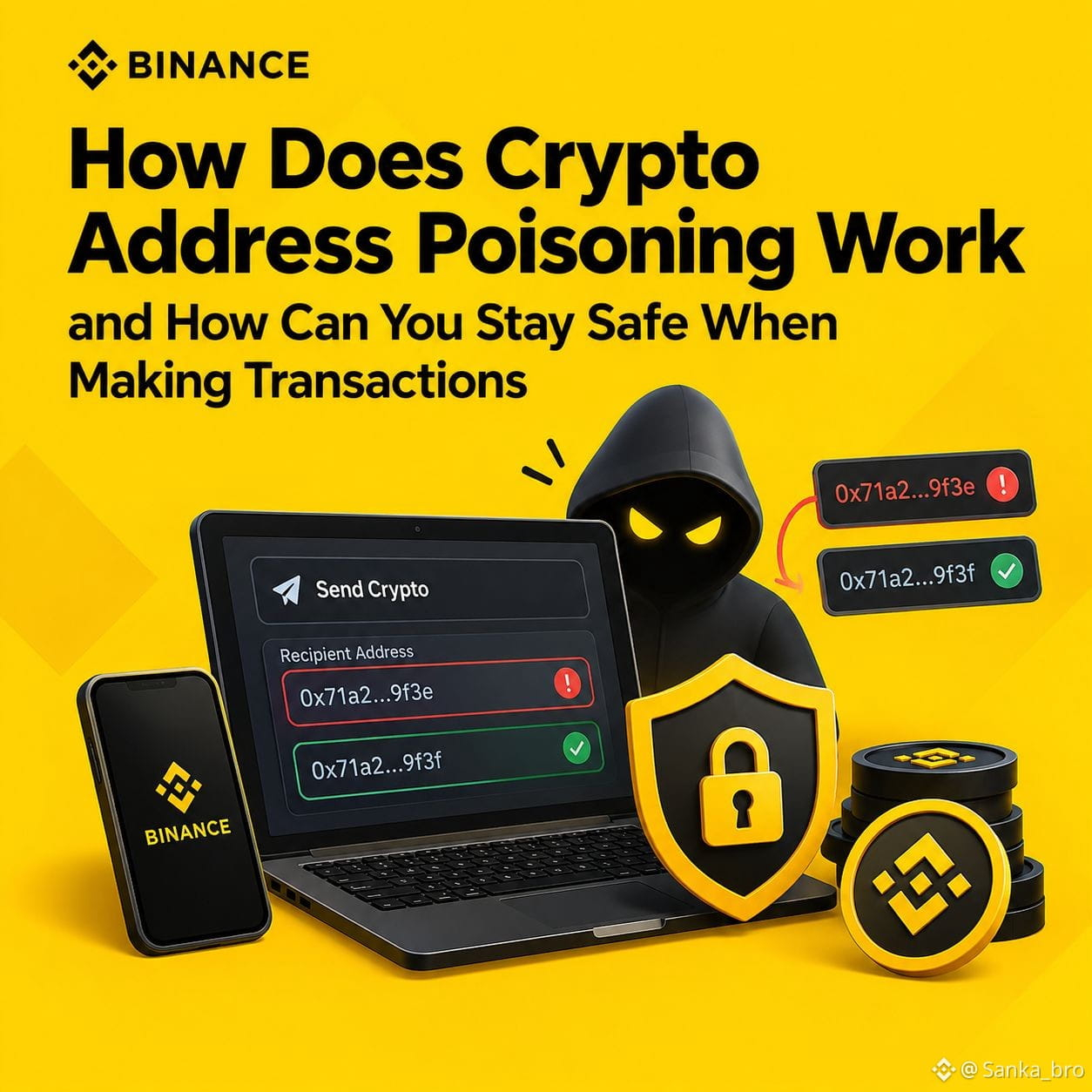
How Does Crypto Address Poisoning Work and How Can You Stay Safe When Making Transactions?
Crypto address poisoning is a scam where attackers create wallet addresses that look almost identical to addresses you regularly use.
They then send a tiny or zero value transaction to your wallet, hoping you’ll later copy the fake address from your transaction history and send your funds to them.
How to stay safe
✅ Always verify the full wallet address before sending
✅ Never blindly copy an address from recent transactions
✅ Use an Address Book Allowlist for trusted addresses
✅ Send a small test transaction before large transfers
✅ Be cautious of unexpected dust or zero value transactions
✅ For large amounts, confirm the address through a trusted channel
Remember
blockchain transactions are generally irreversible.
Don’t trust an address just because it looks familiar. Stop. Verify. Then Send.
@Binance_Angels @Binance_Academy @BinanceTG
How Does Crypto Address Poisoning Work and How Can You Stay Safe When Making Transactions?
Crypto address poisoning is a scam where attackers create wallet addresses that look almost identical to addresses you regularly use.
They then send a tiny or zero value transaction to your wallet, hoping you’ll later copy the fake address from your transaction history and send your funds to them.
How to stay safe
✅ Always verify the full wallet address before sending
✅ Never blindly copy an address from recent transactions
✅ Use an Address Book Allowlist for trusted addresses
✅ Send a small test transaction before large transfers
✅ Be cautious of unexpected dust or zero value transactions
✅ For large amounts, confirm the address through a trusted channel
Remember
blockchain transactions are generally irreversible.
Don’t trust an address just because it looks familiar. Stop. Verify. Then Send.
@Binance Angels @Binance Academy @Binance TG Community
Crypto address poisoning is a scam where attackers create wallet addresses that look almost identical to addresses you regularly use.
They then send a tiny or zero value transaction to your wallet, hoping you’ll later copy the fake address from your transaction history and send your funds to them.
How to stay safe
✅ Always verify the full wallet address before sending
✅ Never blindly copy an address from recent transactions
✅ Use an Address Book Allowlist for trusted addresses
✅ Send a small test transaction before large transfers
✅ Be cautious of unexpected dust or zero value transactions
✅ For large amounts, confirm the address through a trusted channel
Remember
blockchain transactions are generally irreversible.
Don’t trust an address just because it looks familiar. Stop. Verify. Then Send.
@Binance Angels @Binance Academy @Binance TG Community
2
43
·
--
翻訳参照
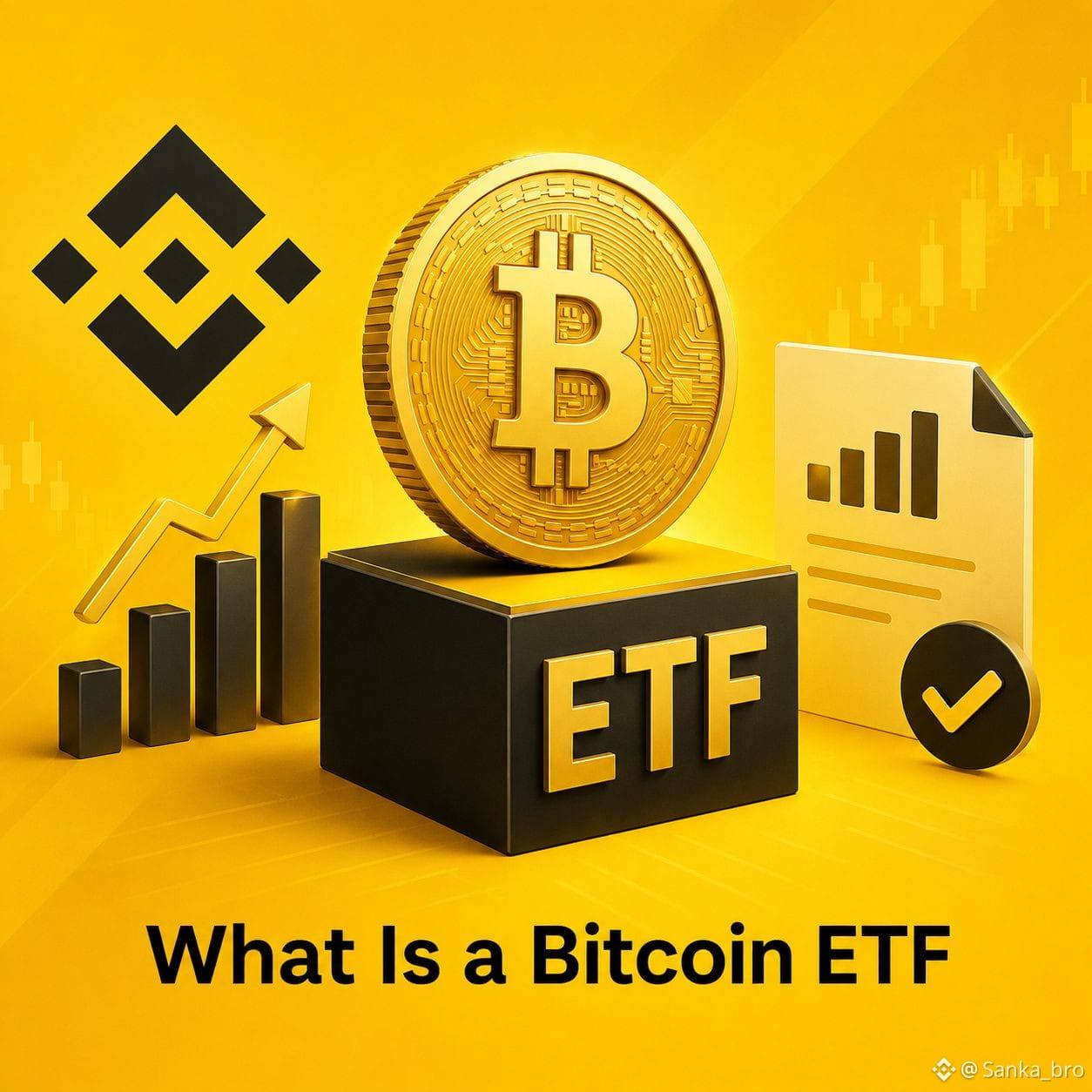
What Is a Bitcoin ETF?
Have you ever wondered how someone can invest in Bitcoin without actually buying and storing BTC in a crypto wallet?
That’s where a Bitcoin ETF comes in.
Bitcoin ETF Bitcoin price exposure through a traditional stock exchange.
Instead of buying BTC directly, investors buy shares of an ETF through a brokerage account. The ETF is designed to track Bitcoin’s price.
🔹 Spot Bitcoin ETF
A spot ETF holds actual Bitcoin as its underlying asset.
🔹 Bitcoin Futures ETF
A futures ETF gets Bitcoin exposure through futures contracts, rather than directly holding BTC.
Why do investors use Bitcoin ETFs?
No need to manage private keys or seed phrases
Can be accessed through traditional brokerage platforms
Provides exposure to Bitcoin’s price movements
Management fees apply
Investors don't have direct self custody of the Bitcoin
So, owning a Bitcoin ETF is not exactly the same as owning BTC directly.
With self custody, you control the Bitcoin.
With an ETF, you own shares in an investment product that provides Bitcoin exposure.
The approval of US spot Bitcoin ETFs in January 2024 was a major milestone connecting Bitcoin with traditional finance. 🚀
Which would you choose?
Direct BTC ownership
Bitcoin ETF
@Binance_Angels @Binance_Academy @BinanceTG
What Is a Bitcoin ETF?
Have you ever wondered how someone can invest in Bitcoin without actually buying and storing BTC in a crypto wallet?
That’s where a Bitcoin ETF comes in.
Bitcoin ETF Bitcoin price exposure through a traditional stock exchange.
Instead of buying BTC directly, investors buy shares of an ETF through a brokerage account. The ETF is designed to track Bitcoin’s price.
🔹 Spot Bitcoin ETF
A spot ETF holds actual Bitcoin as its underlying asset.
🔹 Bitcoin Futures ETF
A futures ETF gets Bitcoin exposure through futures contracts, rather than directly holding BTC.
Why do investors use Bitcoin ETFs?
No need to manage private keys or seed phrases
Can be accessed through traditional brokerage platforms
Provides exposure to Bitcoin’s price movements
Management fees apply
Investors don't have direct self custody of the Bitcoin
So, owning a Bitcoin ETF is not exactly the same as owning BTC directly.
With self custody, you control the Bitcoin.
With an ETF, you own shares in an investment product that provides Bitcoin exposure.
The approval of US spot Bitcoin ETFs in January 2024 was a major milestone connecting Bitcoin with traditional finance. 🚀
Which would you choose?
Direct BTC ownership
Bitcoin ETF
@Binance Angels @Binance Academy @Binance TG Community
Have you ever wondered how someone can invest in Bitcoin without actually buying and storing BTC in a crypto wallet?
That’s where a Bitcoin ETF comes in.
Bitcoin ETF Bitcoin price exposure through a traditional stock exchange.
Instead of buying BTC directly, investors buy shares of an ETF through a brokerage account. The ETF is designed to track Bitcoin’s price.
🔹 Spot Bitcoin ETF
A spot ETF holds actual Bitcoin as its underlying asset.
🔹 Bitcoin Futures ETF
A futures ETF gets Bitcoin exposure through futures contracts, rather than directly holding BTC.
Why do investors use Bitcoin ETFs?
No need to manage private keys or seed phrases
Can be accessed through traditional brokerage platforms
Provides exposure to Bitcoin’s price movements
Management fees apply
Investors don't have direct self custody of the Bitcoin
So, owning a Bitcoin ETF is not exactly the same as owning BTC directly.
With self custody, you control the Bitcoin.
With an ETF, you own shares in an investment product that provides Bitcoin exposure.
The approval of US spot Bitcoin ETFs in January 2024 was a major milestone connecting Bitcoin with traditional finance. 🚀
Which would you choose?
Direct BTC ownership
Bitcoin ETF
@Binance Angels @Binance Academy @Binance TG Community
2
94
·
--
翻訳参照
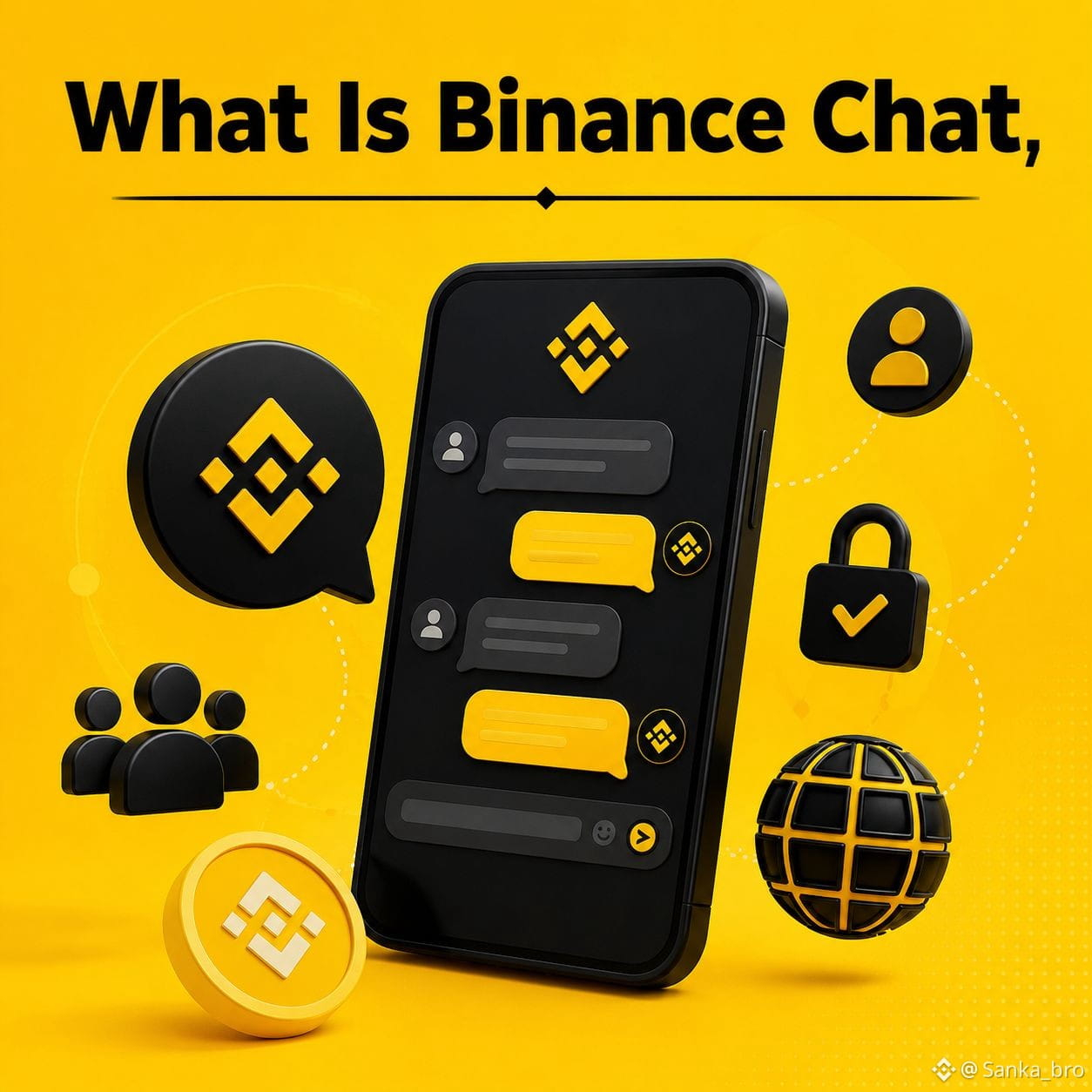
What Is Binance Chat?
Have you ever wished you could discuss crypto and stay connected without leaving Binance?
That’s exactly where Binance Chat comes in. 👇
Binance Chat brings messaging, communities, crypto transfers, and trading related interactions together inside the Binance ecosystem.
🔹 Private Conversations
Connect with other Binance users through Chat ID, UID, or QR code.
🔹 Community Chatrooms
Join group conversations connected to creators and communities on Binance Square.
🔹 Crypto in Conversations
Features like Red Packets and Trade Cards add crypto functionality directly to chats.
🔹 Connected to Binance Square
Discover content → connect with creators → join discussions → engage with the community, all within the Binance ecosystem.
The bigger idea is simple
Crypto isn't only about buying and selling. It's also about people, communities, information, and how we interact with digital assets.
Would you use Binance Chat to connect with your crypto community?
@Binance_Angels @Binance_Academy
What Is Binance Chat?
Have you ever wished you could discuss crypto and stay connected without leaving Binance?
That’s exactly where Binance Chat comes in. 👇
Binance Chat brings messaging, communities, crypto transfers, and trading related interactions together inside the Binance ecosystem.
🔹 Private Conversations
Connect with other Binance users through Chat ID, UID, or QR code.
🔹 Community Chatrooms
Join group conversations connected to creators and communities on Binance Square.
🔹 Crypto in Conversations
Features like Red Packets and Trade Cards add crypto functionality directly to chats.
🔹 Connected to Binance Square
Discover content → connect with creators → join discussions → engage with the community, all within the Binance ecosystem.
The bigger idea is simple
Crypto isn't only about buying and selling. It's also about people, communities, information, and how we interact with digital assets.
Would you use Binance Chat to connect with your crypto community?
@Binance Angels @Binance Academy
Have you ever wished you could discuss crypto and stay connected without leaving Binance?
That’s exactly where Binance Chat comes in. 👇
Binance Chat brings messaging, communities, crypto transfers, and trading related interactions together inside the Binance ecosystem.
🔹 Private Conversations
Connect with other Binance users through Chat ID, UID, or QR code.
🔹 Community Chatrooms
Join group conversations connected to creators and communities on Binance Square.
🔹 Crypto in Conversations
Features like Red Packets and Trade Cards add crypto functionality directly to chats.
🔹 Connected to Binance Square
Discover content → connect with creators → join discussions → engage with the community, all within the Binance ecosystem.
The bigger idea is simple
Crypto isn't only about buying and selling. It's also about people, communities, information, and how we interact with digital assets.
Would you use Binance Chat to connect with your crypto community?
@Binance Angels @Binance Academy
1
70
·
--
翻訳参照
Embedded DeFi vs B2B Liquidity Infrastructure What’s the Difference?
Do you really need to visit a separate DEX every time you want to make a DeFi trade? 🤔
Embedded DeFi is changing that experience.
🔹 Embedded DeFi
Swap and trading features are integrated directly into apps.
👉 No need to leave the app
👉 No separate exchange interface
👉 DeFi becomes part of the user experience
🔹 B2B Liquidity Infrastructure
This is the infrastructure layer working behind the scenes.
APIs + SDKs + Routing Engines can check multiple liquidity sources, find better available prices, and route trades efficiently.
Simple way to remember
Embedded DeFi = What users experience
B2B Liquidity Infrastructure = What powers it
Imagine a travel website comparing hundreds of flights for you.
✈️ You choose the trip.
⚙️ The infrastructure handles the comparison.
DeFi works in a similar way.
Different liquidity pools & trading venues → Better route → Smart contract settlement
🔥 The future of DeFi may not be about making users visit more platforms.
It may be about making DeFi disappear into the apps people already use.
@Binance_Angels @Binance_Academy
Embedded DeFi vs B2B Liquidity Infrastructure What’s the Difference?
Do you really need to visit a separate DEX every time you want to make a DeFi trade? 🤔
Embedded DeFi is changing that experience.
🔹 Embedded DeFi
Swap and trading features are integrated directly into apps.
👉 No need to leave the app
👉 No separate exchange interface
👉 DeFi becomes part of the user experience
🔹 B2B Liquidity Infrastructure
This is the infrastructure layer working behind the scenes.
APIs + SDKs + Routing Engines can check multiple liquidity sources, find better available prices, and route trades efficiently.
Simple way to remember
Embedded DeFi = What users experience
B2B Liquidity Infrastructure = What powers it
Imagine a travel website comparing hundreds of flights for you.
✈️ You choose the trip.
⚙️ The infrastructure handles the comparison.
DeFi works in a similar way.
Different liquidity pools & trading venues → Better route → Smart contract settlement
🔥 The future of DeFi may not be about making users visit more platforms.
It may be about making DeFi disappear into the apps people already use.
@Binance Angels @Binance Academy
Do you really need to visit a separate DEX every time you want to make a DeFi trade? 🤔
Embedded DeFi is changing that experience.
🔹 Embedded DeFi
Swap and trading features are integrated directly into apps.
👉 No need to leave the app
👉 No separate exchange interface
👉 DeFi becomes part of the user experience
🔹 B2B Liquidity Infrastructure
This is the infrastructure layer working behind the scenes.
APIs + SDKs + Routing Engines can check multiple liquidity sources, find better available prices, and route trades efficiently.
Simple way to remember
Embedded DeFi = What users experience
B2B Liquidity Infrastructure = What powers it
Imagine a travel website comparing hundreds of flights for you.
✈️ You choose the trip.
⚙️ The infrastructure handles the comparison.
DeFi works in a similar way.
Different liquidity pools & trading venues → Better route → Smart contract settlement
🔥 The future of DeFi may not be about making users visit more platforms.
It may be about making DeFi disappear into the apps people already use.
@Binance Angels @Binance Academy
2
73
·
--
翻訳参照
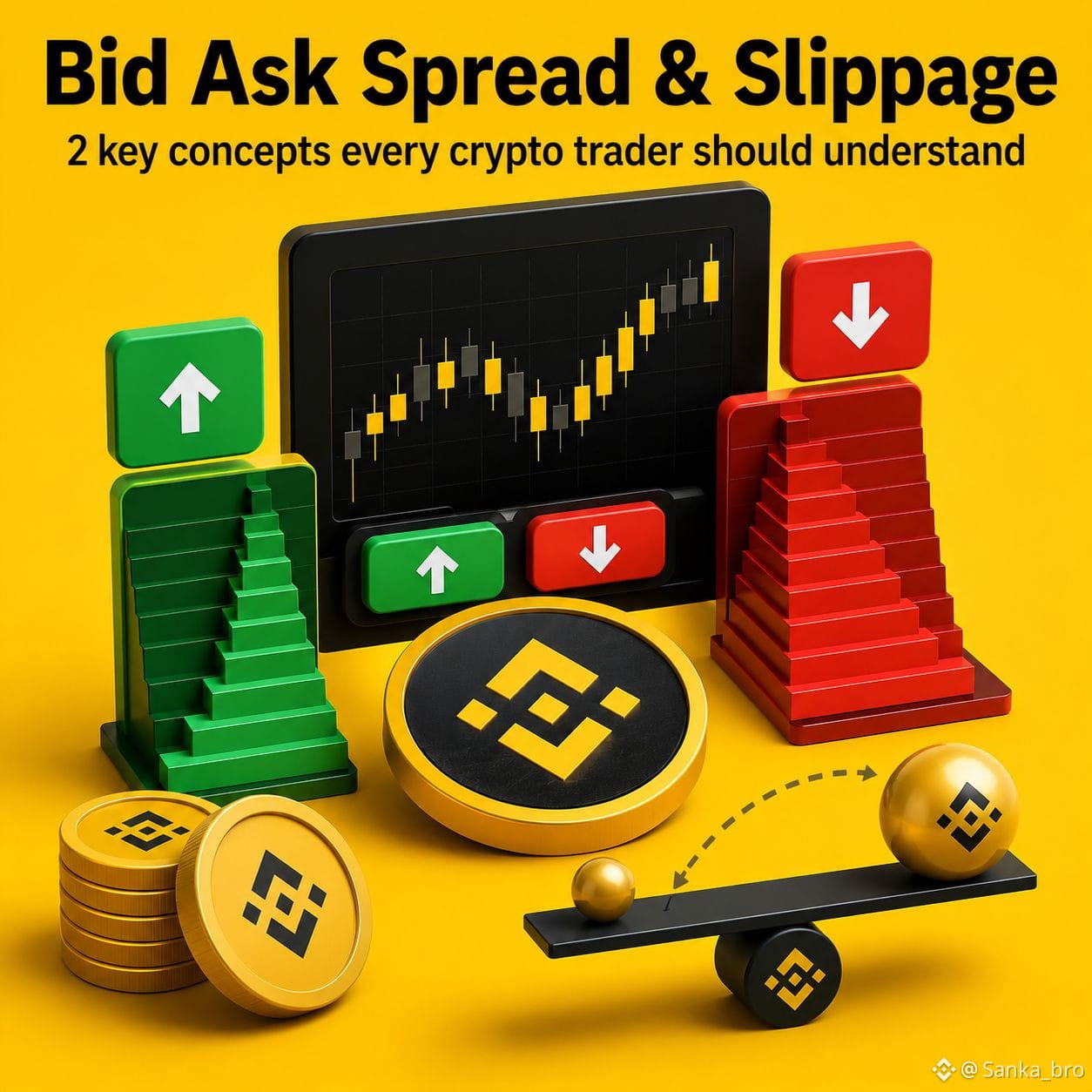
Bid Ask Spread & Slippage 2 Key Concepts Every Crypto Trader Should Understand
When you place a crypto trade, the price you see isn't always the exact price you get.
Two important concepts explain why
🔹 Bid Ask Spread
The difference between the highest price buyers are willing to pay and the lowest price sellers are willing to accept.
Example
Bid = $600
Ask = $601
➡️ Spread = $1
🔹 Slippage
The difference between the price you expect and the price your trade actually executes at.
This often happens when
• Liquidity is low
• Market volatility is high
• Your order is large compared with available liquidity
Why does this matter?
A liquid market usually has tighter spreads and lower slippage, making it easier to execute larger trades without significant price impact.
How can traders reduce slippage?
✅ Use limit orders when appropriate
✅ Check order book depth
✅ Trade in liquid markets
✅ Consider your order size
✅ On DEXs, use a sensible slippage tolerance
Simple takeaway
Don't look at the market price alone. Understanding the spread, liquidity, and potential slippage can help you make more informed trading decisions.
@Binance_Angels @Binance_Academy @BinanceTG #Binance
Bid Ask Spread & Slippage 2 Key Concepts Every Crypto Trader Should Understand
When you place a crypto trade, the price you see isn't always the exact price you get.
Two important concepts explain why
🔹 Bid Ask Spread
The difference between the highest price buyers are willing to pay and the lowest price sellers are willing to accept.
Example
Bid = $600
Ask = $601
➡️ Spread = $1
🔹 Slippage
The difference between the price you expect and the price your trade actually executes at.
This often happens when
• Liquidity is low
• Market volatility is high
• Your order is large compared with available liquidity
Why does this matter?
A liquid market usually has tighter spreads and lower slippage, making it easier to execute larger trades without significant price impact.
How can traders reduce slippage?
✅ Use limit orders when appropriate
✅ Check order book depth
✅ Trade in liquid markets
✅ Consider your order size
✅ On DEXs, use a sensible slippage tolerance
Simple takeaway
Don't look at the market price alone. Understanding the spread, liquidity, and potential slippage can help you make more informed trading decisions.
@Binance Angels @Binance Academy @Binance TG Community #Binance
When you place a crypto trade, the price you see isn't always the exact price you get.
Two important concepts explain why
🔹 Bid Ask Spread
The difference between the highest price buyers are willing to pay and the lowest price sellers are willing to accept.
Example
Bid = $600
Ask = $601
➡️ Spread = $1
🔹 Slippage
The difference between the price you expect and the price your trade actually executes at.
This often happens when
• Liquidity is low
• Market volatility is high
• Your order is large compared with available liquidity
Why does this matter?
A liquid market usually has tighter spreads and lower slippage, making it easier to execute larger trades without significant price impact.
How can traders reduce slippage?
✅ Use limit orders when appropriate
✅ Check order book depth
✅ Trade in liquid markets
✅ Consider your order size
✅ On DEXs, use a sensible slippage tolerance
Simple takeaway
Don't look at the market price alone. Understanding the spread, liquidity, and potential slippage can help you make more informed trading decisions.
@Binance Angels @Binance Academy @Binance TG Community #Binance
1
3
78
·
--
翻訳参照
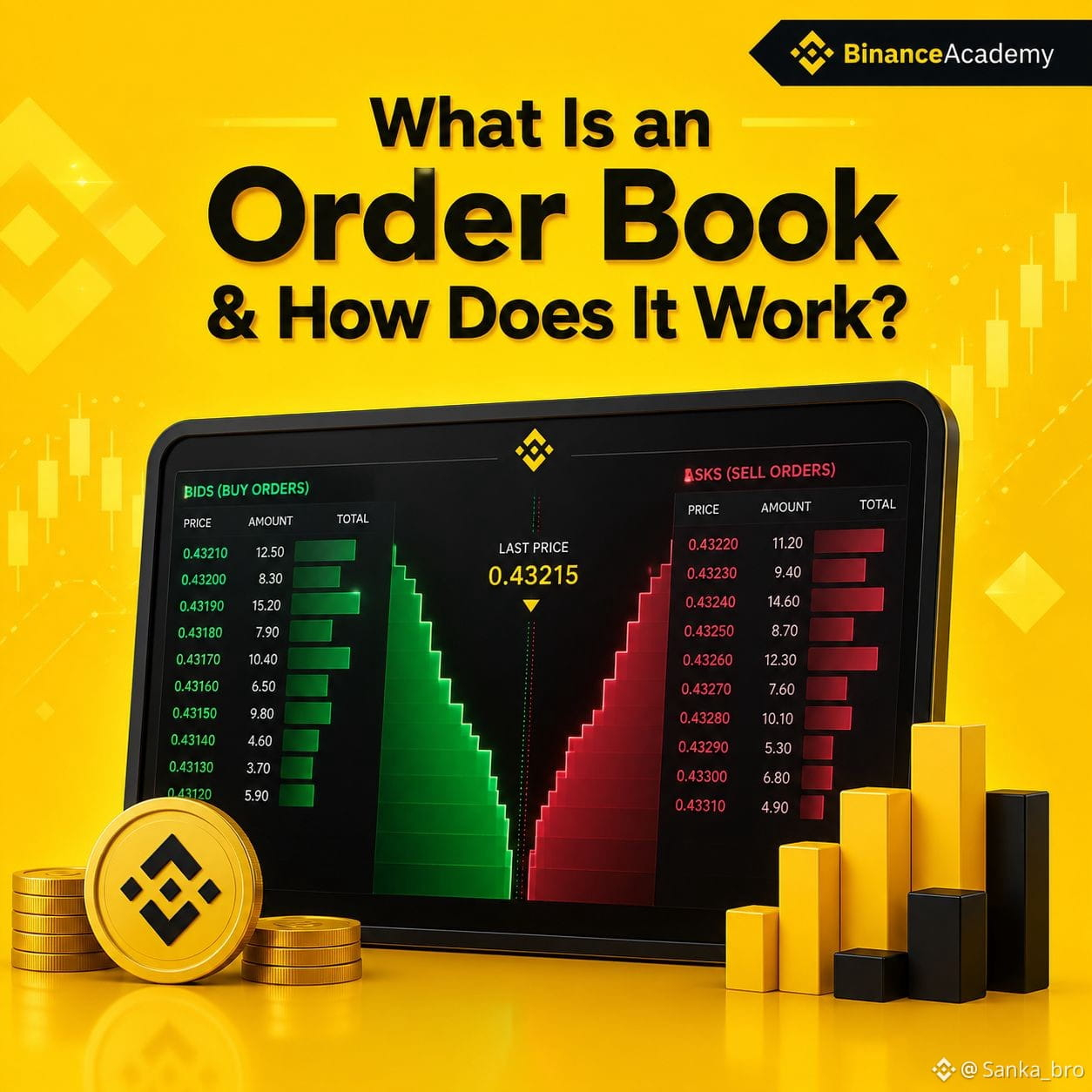
What Is an Order Book & How Does It Work👇
If you trade crypto, understanding the Order Book is an important skill.
🔹 Bids → Buy orders from traders
🔹 Asks → Sell orders from traders
🔹 Market Depth → Helps you understand buying and selling pressure
The Order Book updates in real time, giving traders insights into market liquidity, supply & demand, and potential support and resistance levels.
But be careful! Large Buy Walls and Sell Walls can sometimes create a false impression of market demand or supply.
That’s why it’s better to use the Order Book alongside other technical analysis tools.
👉 Learn to read the Order Book = Take another step toward understanding the market.
@Binance_Academy @Binance_Angels
What Is an Order Book & How Does It Work👇
If you trade crypto, understanding the Order Book is an important skill.
🔹 Bids → Buy orders from traders
🔹 Asks → Sell orders from traders
🔹 Market Depth → Helps you understand buying and selling pressure
The Order Book updates in real time, giving traders insights into market liquidity, supply & demand, and potential support and resistance levels.
But be careful! Large Buy Walls and Sell Walls can sometimes create a false impression of market demand or supply.
That’s why it’s better to use the Order Book alongside other technical analysis tools.
👉 Learn to read the Order Book = Take another step toward understanding the market.
@Binance Academy @Binance Angels
If you trade crypto, understanding the Order Book is an important skill.
🔹 Bids → Buy orders from traders
🔹 Asks → Sell orders from traders
🔹 Market Depth → Helps you understand buying and selling pressure
The Order Book updates in real time, giving traders insights into market liquidity, supply & demand, and potential support and resistance levels.
But be careful! Large Buy Walls and Sell Walls can sometimes create a false impression of market demand or supply.
That’s why it’s better to use the Order Book alongside other technical analysis tools.
👉 Learn to read the Order Book = Take another step toward understanding the market.
@Binance Academy @Binance Angels
4
78
·
--
bStocksとは?
ブロックチェーン技術を通じて米国株へのエクスポージャーを得られるとしたら——それがbStocksのコンセプトです。
bStocksはBinance上で発行されるトークン化された有価証券で、規制を受けたカストディアンに保管される実際の米国株を1:1で裏付けています。
つまり、
何がそんなに魅力的なのでしょうか?👇
🔹 24/7取引 — Binanceのスポット市場で、24時間365日bStocksを取引できます。
🔹 素早い決済 — 取引は従来のT+1の遅延なしに、1秒未満で決済されることがあります。
🔹 1:1で裏付け — それぞれのbStockは、対応する実際の米国株によって裏付けられています。
🔹 少額からのアクセス — 5ドルから始められるため、米国株へのエクスポージャーがより身近になります。
🔹 セルフカストディ — bStocksはBNB Smart Chain上のBEP-20トークンです。対象ユーザーは、対応ウォレットへ引き出せます。
🔹 DeFi対応 — ブロックチェーンベースの資産であるため、対応するDeFiアプリケーションで、貸付などの活動やその他のオンチェーン用途に活用できる可能性があります。
🔹 コーポレート・アクション — 配当や株式分割は、Multiplier(マルチプライヤー)と呼ばれるオンチェーンの仕組みを通じて処理されます。
重要なポイント
bStocksは、基礎となる企業の株式そのものを直接所有するものではありません。株式の値動きへのエクスポージャーや、特定の経済的メリットを提供します。
簡単に言うと
従来の株式 → オンチェーン上でトークン化されたエクスポージャー → 24/7アクセス+分割所有 + DeFi対応
より大きな狙いは、従来型の金融資産 + ブロックチェーン基盤の組み合わせです。
#Binance
@Binance_Angels @Binance_Academy
bStocksとは?
ブロックチェーン技術を通じて米国株へのエクスポージャーを得られるとしたら——それがbStocksのコンセプトです。
bStocksはBinance上で発行されるトークン化された有価証券で、規制を受けたカストディアンに保管される実際の米国株を1:1で裏付けています。
つまり、
何がそんなに魅力的なのでしょうか?👇
🔹 24/7取引 — Binanceのスポット市場で、24時間365日bStocksを取引できます。
🔹 素早い決済 — 取引は従来のT+1の遅延なしに、1秒未満で決済されることがあります。
🔹 1:1で裏付け — それぞれのbStockは、対応する実際の米国株によって裏付けられています。
🔹 少額からのアクセス — 5ドルから始められるため、米国株へのエクスポージャーがより身近になります。
🔹 セルフカストディ — bStocksはBNB Smart Chain上のBEP-20トークンです。対象ユーザーは、対応ウォレットへ引き出せます。
🔹 DeFi対応 — ブロックチェーンベースの資産であるため、対応するDeFiアプリケーションで、貸付などの活動やその他のオンチェーン用途に活用できる可能性があります。
🔹 コーポレート・アクション — 配当や株式分割は、Multiplier(マルチプライヤー)と呼ばれるオンチェーンの仕組みを通じて処理されます。
重要なポイント
bStocksは、基礎となる企業の株式そのものを直接所有するものではありません。株式の値動きへのエクスポージャーや、特定の経済的メリットを提供します。
簡単に言うと
従来の株式 → オンチェーン上でトークン化されたエクスポージャー → 24/7アクセス+分割所有 + DeFi対応
より大きな狙いは、従来型の金融資産 + ブロックチェーン基盤の組み合わせです。
#Binance
@Binance Angels @Binance Academy
ブロックチェーン技術を通じて米国株へのエクスポージャーを得られるとしたら——それがbStocksのコンセプトです。
bStocksはBinance上で発行されるトークン化された有価証券で、規制を受けたカストディアンに保管される実際の米国株を1:1で裏付けています。
つまり、
何がそんなに魅力的なのでしょうか?👇
🔹 24/7取引 — Binanceのスポット市場で、24時間365日bStocksを取引できます。
🔹 素早い決済 — 取引は従来のT+1の遅延なしに、1秒未満で決済されることがあります。
🔹 1:1で裏付け — それぞれのbStockは、対応する実際の米国株によって裏付けられています。
🔹 少額からのアクセス — 5ドルから始められるため、米国株へのエクスポージャーがより身近になります。
🔹 セルフカストディ — bStocksはBNB Smart Chain上のBEP-20トークンです。対象ユーザーは、対応ウォレットへ引き出せます。
🔹 DeFi対応 — ブロックチェーンベースの資産であるため、対応するDeFiアプリケーションで、貸付などの活動やその他のオンチェーン用途に活用できる可能性があります。
🔹 コーポレート・アクション — 配当や株式分割は、Multiplier(マルチプライヤー)と呼ばれるオンチェーンの仕組みを通じて処理されます。
重要なポイント
bStocksは、基礎となる企業の株式そのものを直接所有するものではありません。株式の値動きへのエクスポージャーや、特定の経済的メリットを提供します。
簡単に言うと
従来の株式 → オンチェーン上でトークン化されたエクスポージャー → 24/7アクセス+分割所有 + DeFi対応
より大きな狙いは、従来型の金融資産 + ブロックチェーン基盤の組み合わせです。
#Binance
@Binance Angels @Binance Academy
3
40
·
--
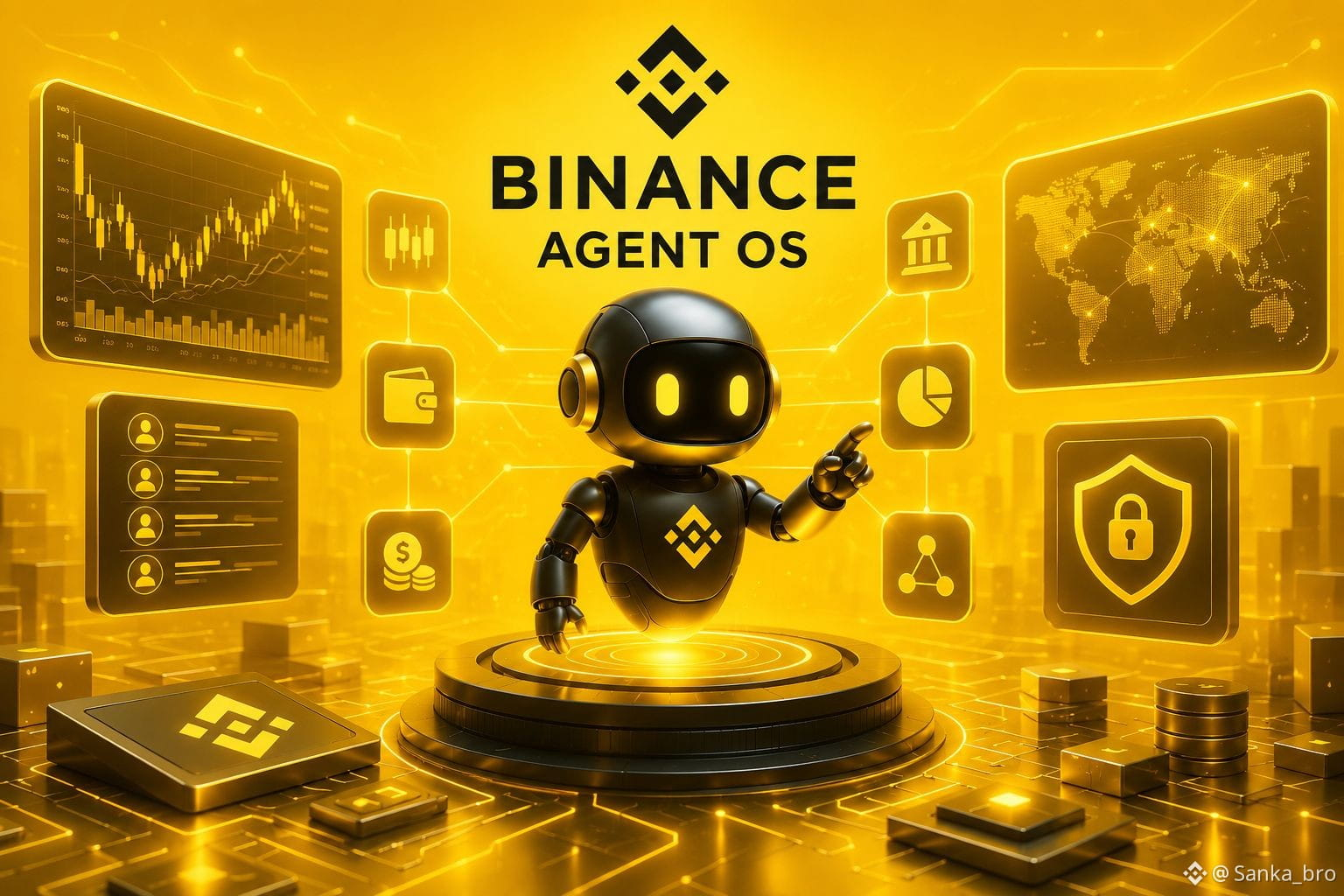
Binance Agent OS は、AI エージェントを現実の金融により近づけています。
ゼロからすべてを構築するのではなく、開発者は MCP、API、そして既成のエージェントスキルを通じて AI エージェントを Binance に接続できます。
エージェントは何ができますか? 👇
🔹 取引 — 市場を監視し、シグナルに反応してアクションを実行
🔹 支払い・決済 — 支払いと取引を自動化
🔹 市場の閲覧 — 市場、オンチェーン、口座データにアクセス
🔹 ポートフォリオの追跡 — 勘定残高、ポジション、変動を監視
🔹 オンチェーンでの操作 — 対応ウォレットと連携
🔹 質問への回答 — 市場インサイトを取得し、エージェントのパラメータを設定
各 AI エージェントの権限、口座、上限はあなたが決めます。
つまり考え方はシンプルです。
接続 → 構築 → 制御 → 自動化
Binance Agent OS は、エージェンティック・ファイナンスに向けた大きな一歩になり得ます。そこでは、AI が市場を分析するだけでなく、ユーザーが設定したルールに従って金融インフラと実際にやり取りできるようになります。
#BinanceAcademy #Binance
@Binance_Angels @Binance_Research
Binance Agent OS は、AI エージェントを現実の金融により近づけています。
ゼロからすべてを構築するのではなく、開発者は MCP、API、そして既成のエージェントスキルを通じて AI エージェントを Binance に接続できます。
エージェントは何ができますか? 👇
🔹 取引 — 市場を監視し、シグナルに反応してアクションを実行
🔹 支払い・決済 — 支払いと取引を自動化
🔹 市場の閲覧 — 市場、オンチェーン、口座データにアクセス
🔹 ポートフォリオの追跡 — 勘定残高、ポジション、変動を監視
🔹 オンチェーンでの操作 — 対応ウォレットと連携
🔹 質問への回答 — 市場インサイトを取得し、エージェントのパラメータを設定
各 AI エージェントの権限、口座、上限はあなたが決めます。
つまり考え方はシンプルです。
接続 → 構築 → 制御 → 自動化
Binance Agent OS は、エージェンティック・ファイナンスに向けた大きな一歩になり得ます。そこでは、AI が市場を分析するだけでなく、ユーザーが設定したルールに従って金融インフラと実際にやり取りできるようになります。
#BinanceAcademy #Binance
@Binance Angels @Binance Research
ゼロからすべてを構築するのではなく、開発者は MCP、API、そして既成のエージェントスキルを通じて AI エージェントを Binance に接続できます。
エージェントは何ができますか? 👇
🔹 取引 — 市場を監視し、シグナルに反応してアクションを実行
🔹 支払い・決済 — 支払いと取引を自動化
🔹 市場の閲覧 — 市場、オンチェーン、口座データにアクセス
🔹 ポートフォリオの追跡 — 勘定残高、ポジション、変動を監視
🔹 オンチェーンでの操作 — 対応ウォレットと連携
🔹 質問への回答 — 市場インサイトを取得し、エージェントのパラメータを設定
各 AI エージェントの権限、口座、上限はあなたが決めます。
つまり考え方はシンプルです。
接続 → 構築 → 制御 → 自動化
Binance Agent OS は、エージェンティック・ファイナンスに向けた大きな一歩になり得ます。そこでは、AI が市場を分析するだけでなく、ユーザーが設定したルールに従って金融インフラと実際にやり取りできるようになります。
#BinanceAcademy #Binance
@Binance Angels @Binance Research
2
56
·
--
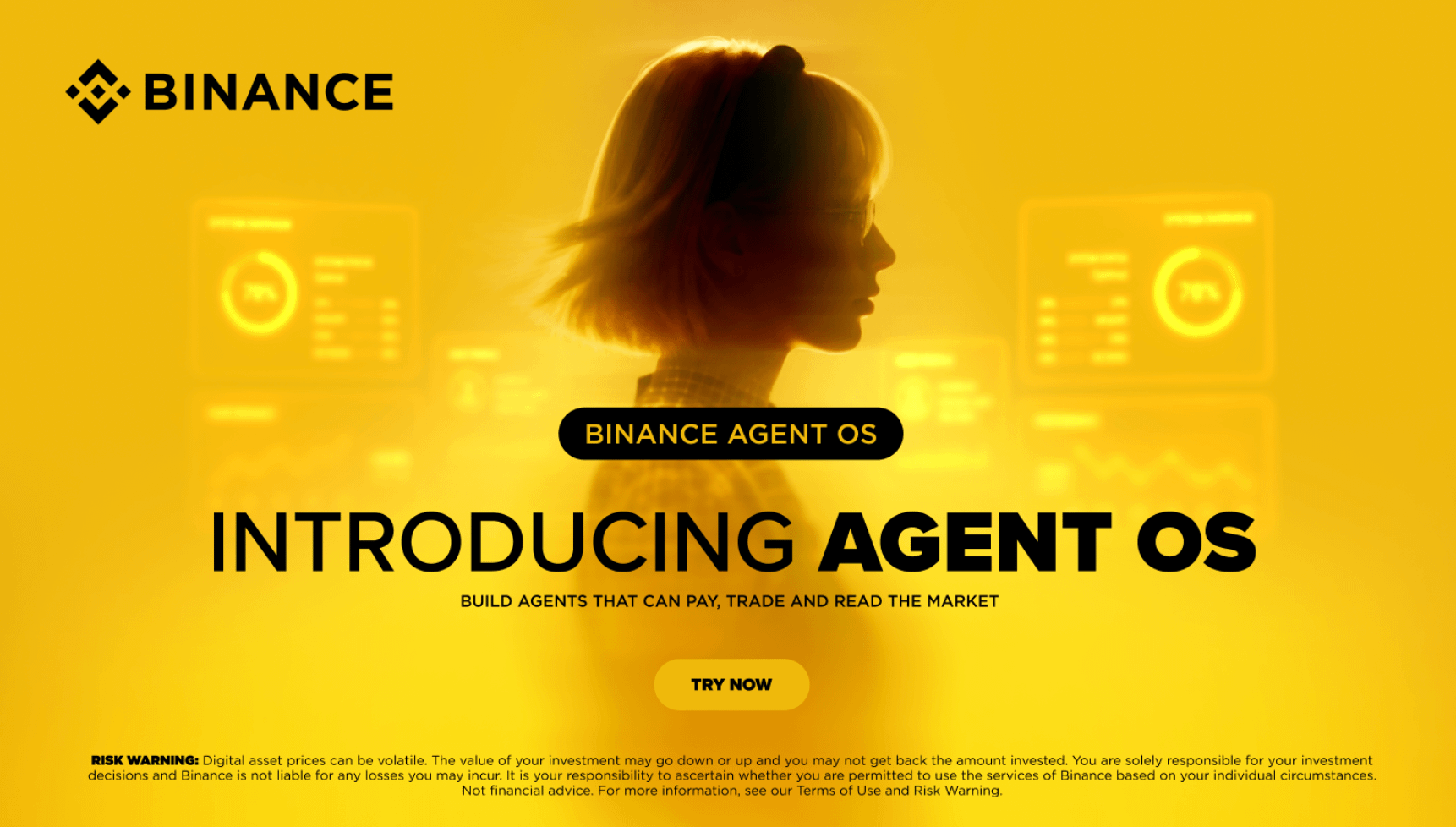
Binance Agent OSを紹介します👇
Binance Agent OSを紹介します👇

Binance TG Community
·
--
Binance Agent OSを紹介:AIエージェント統合のために構築
新製品の詳細はこちら:here #BinanceSquareTG 😀💪
$NVDAB $BTC
新製品の詳細はこちら:here #BinanceSquareTG 😀💪
$NVDAB $BTC
61
·
--
バイナンス・ブロックチェーン・ウィーク🎉🎉
バイナンス・ブロックチェーン・ウィーク🎉🎉

Binance South Asia
·
--
Binance Blockchain Weekが帰ってきました。💛
今回はタイ・バンコクで「アジア版」を開催します。
次の時代を形作る開発者、リーダー、コミュニティが集う2日間です。
🎟️ 早割チケットが米ドル19で販売中
→ Get your tickets here
📅 2026年11月28日〜29日
現地でお会いしましょう。🫡
今回はタイ・バンコクで「アジア版」を開催します。
次の時代を形作る開発者、リーダー、コミュニティが集う2日間です。
🎟️ 早割チケットが米ドル19で販売中
→ Get your tickets here
📅 2026年11月28日〜29日
現地でお会いしましょう。🫡
51
·
--
AIと暗号資産の未来を学ぼう & Binance🎉
Binance Agent OS
今すぐ参加しよう👇
AIと暗号資産の未来を学ぼう & Binance🎉
Binance Agent OS
今すぐ参加しよう👇
Binance Agent OS
今すぐ参加しよう👇
Binance Angels
·
--
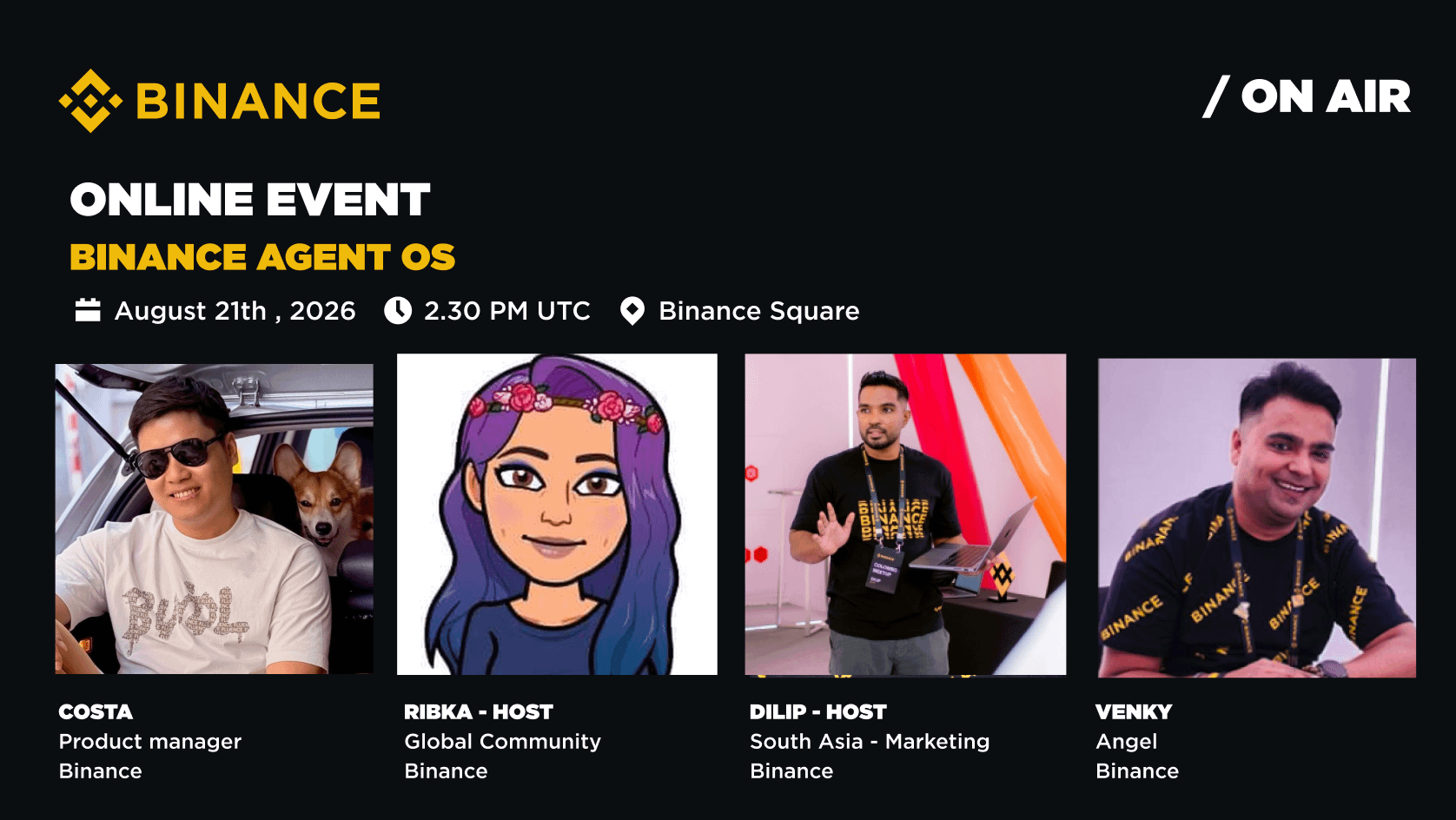
ブリッシュ今すぐ参加しよう 🎉 | Binance Agent OS 😀
🗓 日付: 2026年8月21日
⏰ 時間: UTC 14:00 💪 subscribe here
#BinanceSquareTG @Binance TG Community $BNB
🗓 日付: 2026年8月21日
⏰ 時間: UTC 14:00 💪 subscribe here
#BinanceSquareTG @Binance TG Community $BNB
79
·
--
学習のピルズ エピソード69
学習のピルズ エピソード69
Binance Angels
·
--
学習用ピル 💊 第69話
トレンド指標を解説:MA、EMA、MACD 📈
cc @Chinchano $BNB #BinanceSquareTG
トレンド指標を解説:MA、EMA、MACD 📈
cc @Chinchano $BNB #BinanceSquareTG
ログインして、さらにコンテンツを読む
厳選トピックで世界の暗号資産トレーダーの仲間入り
⚡️ 暗号資産に関する最新かつ有益な情報が見つかります。
💬 世界最大の暗号資産取引所から信頼されています。
👍 認証を受けたクリエイターから、有益なインサイトを得られます。
メール / 電話番号
トレンドトピック
BitcoinSurpasses$77000
閲覧回数 6,331
111人が討論中
$BTC は、それでもなお急激に上昇しています。🚀
今日は3年以上ぶりの利上げが行われました。一方で、昨日はCLARITY法案が再び頓挫しました。
また長めに仕込みますよ。あとで感謝してね
エントリー:$75500 - $76500
ストップロス:$74900
テイクプロフィット:$77000 - $78000
クレイジーな成長サイクルに備えよう。🔥
TF_bnb
·いいね:16件
·閲覧回数 6.5k
ParadigmDisclosesZECHolding
閲覧回数 16,471
482人が討論中
BitcoinETFsShed$450M
閲覧回数 17,187
162人が討論中