
SAIIFY
2.5k 投稿

SAIIFY
報告
ユーザーをブロック
Nothing To Show
高頻度トレーダー
1.5年
738 フォロー
24.0K+ フォロワー
5.1K+ いいね
投稿
すべて
引用
ライブ
·
--
ブリッシュ
翻訳参照
📊 $EGLD Spot Signal — Bullish 🟢
🔹 Pair: EGLD/USDT
🔹 Type: Spot Buy
🔹 Entry: $5.12 (current market price)
🔹 TP1 (+10%): $5.63
🔹 TP2 (+15%): $5.89
🔹 TP3 (+20%): $6.14
🔹 Stop Loss: $4.68 (~-8.5%)
📈 Bias: Bullish — EGLD is up 6.1% in the last 24h and 6.4% over the past week, outperforming the broader market.
⚠️ Not financial advice. DYOR and manage your risk — only trade capital you can afford to lose.
📊 $EGLD Spot Signal — Bullish 🟢
🔹 Pair: EGLD/USDT
🔹 Type: Spot Buy
🔹 Entry: $5.12 (current market price)
🔹 TP1 (+10%): $5.63
🔹 TP2 (+15%): $5.89
🔹 TP3 (+20%): $6.14
🔹 Stop Loss: $4.68 (~-8.5%)
📈 Bias: Bullish — EGLD is up 6.1% in the last 24h and 6.4% over the past week, outperforming the broader market.
⚠️ Not financial advice. DYOR and manage your risk — only trade capital you can afford to lose.
🔹 Pair: EGLD/USDT
🔹 Type: Spot Buy
🔹 Entry: $5.12 (current market price)
🔹 TP1 (+10%): $5.63
🔹 TP2 (+15%): $5.89
🔹 TP3 (+20%): $6.14
🔹 Stop Loss: $4.68 (~-8.5%)
📈 Bias: Bullish — EGLD is up 6.1% in the last 24h and 6.4% over the past week, outperforming the broader market.
⚠️ Not financial advice. DYOR and manage your risk — only trade capital you can afford to lose.
146
·
--
ブリッシュ
翻訳参照
Told y'all $PHA was gonna blast off and I got laughed at 😂
Bought in at $0.0229. Check the chart today — we're already up 65%+ and this is just getting started.
Who's laughing now? 👀📈
Not financial advice, just vibes and conviction. $PHA to the moon 🚀
#PHA #PhalaNetwork #Binance #Altcoins
Told y'all $PHA was gonna blast off and I got laughed at 😂
Bought in at $0.0229. Check the chart today — we're already up 65%+ and this is just getting started.
Who's laughing now? 👀📈
Not financial advice, just vibes and conviction. $PHA to the moon 🚀
#PHA #PhalaNetwork #Binance #Altcoins
Bought in at $0.0229. Check the chart today — we're already up 65%+ and this is just getting started.
Who's laughing now? 👀📈
Not financial advice, just vibes and conviction. $PHA to the moon 🚀
#PHA #PhalaNetwork #Binance #Altcoins
2
185
·
--
翻訳参照
Crypto Market Right Now: Choppy, Nervous, and Still Not Boring
!!If you've checked your portfolio every day this week and felt a little seasick, you're not imagining things. Bitcoin has been swinging between roughly $76,000 and $82,000 over the past several days, up on a Friday, down by Tuesday, up again by Thursday. It's the kind of week that makes you want to close the app and go for a walk. So let's actually talk about what's happening, without the hype and without the doom.
Where things stand today
Bitcoin is trading in the high-$70,000s to low-$80,000s range, having briefly poked above $82,000 before slipping back below the psychologically important $80,000 level. Ethereum is sitting around $2,400, XRP near $1.30 to $1.40, and overall crypto dominance has actually been rising, meaning money is rotating into Bitcoin and out of smaller altcoins. That's usually a sign of nervous money looking for the "safest" seat on the crypto bus, not a sign of confident risk-taking.
Zoom out a bit and the picture gets more interesting. Bitcoin is up more than 20% over the past month, even after this week's wobble. So despite the daily whiplash, the medium-term trend is still pointed up. It's just climbing a wall of worry instead of a smooth staircase.
What's actually driving the noise
A few real-world forces are yanking the market around right now.
The Fed is playing hard to get. Comments from Federal Reserve officials about possibly holding interest rates steady, or even raising them if next week's inflation report runs hot, have been enough to spook traders. Crypto, like tech stocks, tends to get twitchy whenever "higher for longer" rate talk resurfaces, because tighter money makes risk assets less attractive.
Geopolitics keeps interrupting the party. Renewed conflict involving Iran and U.S. military action rattled markets earlier this week, causing a sharp pullback. Crypto often reacts to geopolitical shocks the same way stocks do initially, with a knee-jerk selloff, before deciding whether the event actually changes anything fundamental.
But institutions haven't left. Strategy (the company formerly known as MicroStrategy) just resumed its Bitcoin buying after a two-month pause, scooping up a few hundred million dollars' worth. ETF flows have also seen some of their strongest days in months. That's a meaningful signal: the big, patient money isn't running for the exits, even while retail sentiment gets rattled by headlines.
Momentum is cooling, not collapsing. Technical indicators show Bitcoin still trading above its key moving averages, which is generally a bullish structural sign. But momentum gauges have started to flatten, suggesting the recent rally is pausing to catch its breath rather than reversing outright. Think of it less like a car crash and more like a runner stopping to retie their shoes mid-race.
So, what's the next move?
Nobody, not me, not the loudest voice on crypto Twitter, not the analyst with the fanciest chart, actually knows for certain. But here's the honest, level-headed read on the setup.
Short term. Expect continued chop in the $76,000 to $82,000 range for Bitcoin. The market is waiting on next week's inflation data and any further Fed commentary before it commits to a direction. Don't be surprised by more 2 to 5% daily swings in either direction.
The level to watch. $80,000 has become the line in the sand. Reclaiming it and holding above it would likely reopen the path toward retesting recent highs. Losing $78,500 support convincingly could open the door to a deeper pullback.
Medium term. If inflation data cooperates and the Fed signals a cut rather than a hold, that's historically been rocket fuel for crypto. If the data comes in hot, expect another leg of profit-taking and de-risking.
The bigger picture. Institutional accumulation, continued ETF interest, and rising Bitcoin dominance suggest that even amid short-term jitters, the underlying appetite for crypto as an asset class hasn't disappeared. It's just gotten more selective and more macro-sensitive than it used to be.
This isn't a market screaming "buy everything" or "sell everything." It's a market paying very close attention to interest rates and headlines, while the bigger players quietly keep accumulating in the background. If you're a long-term holder, this kind of range-bound tug-of-war is honestly pretty normal. It's the market digesting a big move before deciding what to do next. If you're trading short-term, the $78,500 to $80,000 zone is your battleground to watch.
As always: crypto is volatile, headlines move fast, and nothing here is financial advice, just a clear-eyed read on where things stand right now. Do your own research, size your positions sensibly, and try not to let a red day (Or A Green One) talk you into a decision you'll regret next week.
#BTC #BNB #XRP
{future}(BTCUSDT)
{future}(BNBUSDT)
{future}(XRPUSDT)
Crypto Market Right Now: Choppy, Nervous, and Still Not Boring !!
If you've checked your portfolio every day this week and felt a little seasick, you're not imagining things. Bitcoin has been swinging between roughly $76,000 and $82,000 over the past several days, up on a Friday, down by Tuesday, up again by Thursday. It's the kind of week that makes you want to close the app and go for a walk. So let's actually talk about what's happening, without the hype and without the doom.
Where things stand today
Bitcoin is trading in the high-$70,000s to low-$80,000s range, having briefly poked above $82,000 before slipping back below the psychologically important $80,000 level. Ethereum is sitting around $2,400, XRP near $1.30 to $1.40, and overall crypto dominance has actually been rising, meaning money is rotating into Bitcoin and out of smaller altcoins. That's usually a sign of nervous money looking for the "safest" seat on the crypto bus, not a sign of confident risk-taking.
Zoom out a bit and the picture gets more interesting. Bitcoin is up more than 20% over the past month, even after this week's wobble. So despite the daily whiplash, the medium-term trend is still pointed up. It's just climbing a wall of worry instead of a smooth staircase.
What's actually driving the noise
A few real-world forces are yanking the market around right now.
The Fed is playing hard to get. Comments from Federal Reserve officials about possibly holding interest rates steady, or even raising them if next week's inflation report runs hot, have been enough to spook traders. Crypto, like tech stocks, tends to get twitchy whenever "higher for longer" rate talk resurfaces, because tighter money makes risk assets less attractive.
Geopolitics keeps interrupting the party. Renewed conflict involving Iran and U.S. military action rattled markets earlier this week, causing a sharp pullback. Crypto often reacts to geopolitical shocks the same way stocks do initially, with a knee-jerk selloff, before deciding whether the event actually changes anything fundamental.
But institutions haven't left. Strategy (the company formerly known as MicroStrategy) just resumed its Bitcoin buying after a two-month pause, scooping up a few hundred million dollars' worth. ETF flows have also seen some of their strongest days in months. That's a meaningful signal: the big, patient money isn't running for the exits, even while retail sentiment gets rattled by headlines.
Momentum is cooling, not collapsing. Technical indicators show Bitcoin still trading above its key moving averages, which is generally a bullish structural sign. But momentum gauges have started to flatten, suggesting the recent rally is pausing to catch its breath rather than reversing outright. Think of it less like a car crash and more like a runner stopping to retie their shoes mid-race.
So, what's the next move?
Nobody, not me, not the loudest voice on crypto Twitter, not the analyst with the fanciest chart, actually knows for certain. But here's the honest, level-headed read on the setup.
Short term. Expect continued chop in the $76,000 to $82,000 range for Bitcoin. The market is waiting on next week's inflation data and any further Fed commentary before it commits to a direction. Don't be surprised by more 2 to 5% daily swings in either direction.
The level to watch. $80,000 has become the line in the sand. Reclaiming it and holding above it would likely reopen the path toward retesting recent highs. Losing $78,500 support convincingly could open the door to a deeper pullback.
Medium term. If inflation data cooperates and the Fed signals a cut rather than a hold, that's historically been rocket fuel for crypto. If the data comes in hot, expect another leg of profit-taking and de-risking.
The bigger picture. Institutional accumulation, continued ETF interest, and rising Bitcoin dominance suggest that even amid short-term jitters, the underlying appetite for crypto as an asset class hasn't disappeared. It's just gotten more selective and more macro-sensitive than it used to be.
This isn't a market screaming "buy everything" or "sell everything." It's a market paying very close attention to interest rates and headlines, while the bigger players quietly keep accumulating in the background. If you're a long-term holder, this kind of range-bound tug-of-war is honestly pretty normal. It's the market digesting a big move before deciding what to do next. If you're trading short-term, the $78,500 to $80,000 zone is your battleground to watch.
As always: crypto is volatile, headlines move fast, and nothing here is financial advice, just a clear-eyed read on where things stand right now. Do your own research, size your positions sensibly, and try not to let a red day (Or A Green One) talk you into a decision you'll regret next week.
#BTC #BNB #XRP
Where things stand today
Bitcoin is trading in the high-$70,000s to low-$80,000s range, having briefly poked above $82,000 before slipping back below the psychologically important $80,000 level. Ethereum is sitting around $2,400, XRP near $1.30 to $1.40, and overall crypto dominance has actually been rising, meaning money is rotating into Bitcoin and out of smaller altcoins. That's usually a sign of nervous money looking for the "safest" seat on the crypto bus, not a sign of confident risk-taking.
Zoom out a bit and the picture gets more interesting. Bitcoin is up more than 20% over the past month, even after this week's wobble. So despite the daily whiplash, the medium-term trend is still pointed up. It's just climbing a wall of worry instead of a smooth staircase.
What's actually driving the noise
A few real-world forces are yanking the market around right now.
The Fed is playing hard to get. Comments from Federal Reserve officials about possibly holding interest rates steady, or even raising them if next week's inflation report runs hot, have been enough to spook traders. Crypto, like tech stocks, tends to get twitchy whenever "higher for longer" rate talk resurfaces, because tighter money makes risk assets less attractive.
Geopolitics keeps interrupting the party. Renewed conflict involving Iran and U.S. military action rattled markets earlier this week, causing a sharp pullback. Crypto often reacts to geopolitical shocks the same way stocks do initially, with a knee-jerk selloff, before deciding whether the event actually changes anything fundamental.
But institutions haven't left. Strategy (the company formerly known as MicroStrategy) just resumed its Bitcoin buying after a two-month pause, scooping up a few hundred million dollars' worth. ETF flows have also seen some of their strongest days in months. That's a meaningful signal: the big, patient money isn't running for the exits, even while retail sentiment gets rattled by headlines.
Momentum is cooling, not collapsing. Technical indicators show Bitcoin still trading above its key moving averages, which is generally a bullish structural sign. But momentum gauges have started to flatten, suggesting the recent rally is pausing to catch its breath rather than reversing outright. Think of it less like a car crash and more like a runner stopping to retie their shoes mid-race.
So, what's the next move?
Nobody, not me, not the loudest voice on crypto Twitter, not the analyst with the fanciest chart, actually knows for certain. But here's the honest, level-headed read on the setup.
Short term. Expect continued chop in the $76,000 to $82,000 range for Bitcoin. The market is waiting on next week's inflation data and any further Fed commentary before it commits to a direction. Don't be surprised by more 2 to 5% daily swings in either direction.
The level to watch. $80,000 has become the line in the sand. Reclaiming it and holding above it would likely reopen the path toward retesting recent highs. Losing $78,500 support convincingly could open the door to a deeper pullback.
Medium term. If inflation data cooperates and the Fed signals a cut rather than a hold, that's historically been rocket fuel for crypto. If the data comes in hot, expect another leg of profit-taking and de-risking.
The bigger picture. Institutional accumulation, continued ETF interest, and rising Bitcoin dominance suggest that even amid short-term jitters, the underlying appetite for crypto as an asset class hasn't disappeared. It's just gotten more selective and more macro-sensitive than it used to be.
This isn't a market screaming "buy everything" or "sell everything." It's a market paying very close attention to interest rates and headlines, while the bigger players quietly keep accumulating in the background. If you're a long-term holder, this kind of range-bound tug-of-war is honestly pretty normal. It's the market digesting a big move before deciding what to do next. If you're trading short-term, the $78,500 to $80,000 zone is your battleground to watch.
As always: crypto is volatile, headlines move fast, and nothing here is financial advice, just a clear-eyed read on where things stand right now. Do your own research, size your positions sensibly, and try not to let a red day (Or A Green One) talk you into a decision you'll regret next week.
#BTC #BNB #XRP
1
2
111
·
--
翻訳参照
Binance Just Signed Three Deals With Kazakhstan. Here's What It Actually Means for BNBYes, it's real, and yes, it's bigger than a single headline. On September 4, #Binance signed three separate memoranda of understanding with Kazakhstan's government, and together they read like a blueprint for turning the country into a crypto payments hub for Central Asia.
Who signed what
The National Bank of Kazakhstan, the Ministry of Artificial Intelligence and Digital Development, and the Astana International Financial Centre all inked agreements with Binance on the same day, during a meeting in Baku that included founder Changpeng Zhao. Deputy Governor Binur Zhalenov signed on behalf of the central bank and later described the arrangement on LinkedIn as essentially building "A Payments Bank" minus the deposit-taking and lending.
What it actually unlocks
The headline piece is a path toward a Category 1 non-bank Payment Service Provider license. That's a regulatory category built specifically to let crypto and regular fiat currency move through the same pipes: converting between the two, processing payments, and settling transactions. It does not let Binance take deposits or issue loans, so this isn't Binance becoming a bank. It's Binance becoming licensed plumbing.
The second thread is more interesting long term: exploratory talks around a local, Kazakhstani stablecoin. Nothing is confirmed yet, no issuer, no structure, no launch date, so treat this as an idea on the table rather than a done deal. But it fits a pattern. Kazakhstan already has a CBDC pilot in motion, and neighboring Kyrgyzstan rolled out its own som-pegged stablecoin, KGST, after similar cooperation with Zhao.
The third piece covers digital asset investment infrastructure through the AIFC, Kazakhstan's financial free zone that already granted Binance a full digital asset trading license back in 2024. So this isn't Binance parachuting into a brand-new market. It's deepening a relationship that's been building for a couple of years.
Why Kazakhstan, why now
Officials have been explicit about the ambition here: position Kazakhstan as a launchpad for the Commonwealth of Independent States, a bloc of roughly 240 million people. If Binance can route crypto-to-fiat payments through a regulated Kazakh entity, that becomes a template it can extend across neighboring markets rather than negotiating country by country. It's the same playbook Binance has already run in Kyrgyzstan and Vietnam: build institutional trust in one country, use it as a base to expand regionally.
What it means for #BNB
Here's the honest part. $BNB is trading in the mid $600s right now, and multiple outlets covering the news specifically noted there's no confirmed price reaction tied to the announcement. This is a Binance-the-company story first and a BNB-the-token story second, and the two don't always move in lockstep.
That said, it's not irrelevant to holders. These deals are the kind of slow-burn catalyst that matters more over months than over hours. A real payments license, a functioning crypto-fiat gateway, and a possible regional stablecoin all being built on top of Binance's infrastructure add up to more institutional legitimacy and more real-world usage for the ecosystem BNB sits inside. None of that shows up on a candlestick chart today. It shows up later, if and when the license is actually granted and the stablecoin conversation turns into something shipped.
The bottom line
This is three MoUs, not three finished products. Memoranda of understanding are intentions, not licenses in hand. But the direction is clear: Binance keeps choosing the compliance-first, government-partnership route in emerging markets rather than fighting regulators, and Kazakhstan keeps positioning itself as the region's crypto-friendly on-ramp. Worth watching for follow-through on the actual PSP license and any concrete stablecoin details, rather than trading the headline itself.
@heyi @CZ @richardteng
Binance Just Signed Three Deals With Kazakhstan. Here's What It Actually Means for BNB
Yes, it's real, and yes, it's bigger than a single headline. On September 4, #Binance signed three separate memoranda of understanding with Kazakhstan's government, and together they read like a blueprint for turning the country into a crypto payments hub for Central Asia.
Who signed what
The National Bank of Kazakhstan, the Ministry of Artificial Intelligence and Digital Development, and the Astana International Financial Centre all inked agreements with Binance on the same day, during a meeting in Baku that included founder Changpeng Zhao. Deputy Governor Binur Zhalenov signed on behalf of the central bank and later described the arrangement on LinkedIn as essentially building "A Payments Bank" minus the deposit-taking and lending.
What it actually unlocks
The headline piece is a path toward a Category 1 non-bank Payment Service Provider license. That's a regulatory category built specifically to let crypto and regular fiat currency move through the same pipes: converting between the two, processing payments, and settling transactions. It does not let Binance take deposits or issue loans, so this isn't Binance becoming a bank. It's Binance becoming licensed plumbing.
The second thread is more interesting long term: exploratory talks around a local, Kazakhstani stablecoin. Nothing is confirmed yet, no issuer, no structure, no launch date, so treat this as an idea on the table rather than a done deal. But it fits a pattern. Kazakhstan already has a CBDC pilot in motion, and neighboring Kyrgyzstan rolled out its own som-pegged stablecoin, KGST, after similar cooperation with Zhao.
The third piece covers digital asset investment infrastructure through the AIFC, Kazakhstan's financial free zone that already granted Binance a full digital asset trading license back in 2024. So this isn't Binance parachuting into a brand-new market. It's deepening a relationship that's been building for a couple of years.
Why Kazakhstan, why now
Officials have been explicit about the ambition here: position Kazakhstan as a launchpad for the Commonwealth of Independent States, a bloc of roughly 240 million people. If Binance can route crypto-to-fiat payments through a regulated Kazakh entity, that becomes a template it can extend across neighboring markets rather than negotiating country by country. It's the same playbook Binance has already run in Kyrgyzstan and Vietnam: build institutional trust in one country, use it as a base to expand regionally.
What it means for #BNB
Here's the honest part. $BNB is trading in the mid $600s right now, and multiple outlets covering the news specifically noted there's no confirmed price reaction tied to the announcement. This is a Binance-the-company story first and a BNB-the-token story second, and the two don't always move in lockstep.
That said, it's not irrelevant to holders. These deals are the kind of slow-burn catalyst that matters more over months than over hours. A real payments license, a functioning crypto-fiat gateway, and a possible regional stablecoin all being built on top of Binance's infrastructure add up to more institutional legitimacy and more real-world usage for the ecosystem BNB sits inside. None of that shows up on a candlestick chart today. It shows up later, if and when the license is actually granted and the stablecoin conversation turns into something shipped.
The bottom line
This is three MoUs, not three finished products. Memoranda of understanding are intentions, not licenses in hand. But the direction is clear: Binance keeps choosing the compliance-first, government-partnership route in emerging markets rather than fighting regulators, and Kazakhstan keeps positioning itself as the region's crypto-friendly on-ramp. Worth watching for follow-through on the actual PSP license and any concrete stablecoin details, rather than trading the headline itself.
@Yi He @CZ @Richard Teng
Who signed what
The National Bank of Kazakhstan, the Ministry of Artificial Intelligence and Digital Development, and the Astana International Financial Centre all inked agreements with Binance on the same day, during a meeting in Baku that included founder Changpeng Zhao. Deputy Governor Binur Zhalenov signed on behalf of the central bank and later described the arrangement on LinkedIn as essentially building "A Payments Bank" minus the deposit-taking and lending.
What it actually unlocks
The headline piece is a path toward a Category 1 non-bank Payment Service Provider license. That's a regulatory category built specifically to let crypto and regular fiat currency move through the same pipes: converting between the two, processing payments, and settling transactions. It does not let Binance take deposits or issue loans, so this isn't Binance becoming a bank. It's Binance becoming licensed plumbing.
The second thread is more interesting long term: exploratory talks around a local, Kazakhstani stablecoin. Nothing is confirmed yet, no issuer, no structure, no launch date, so treat this as an idea on the table rather than a done deal. But it fits a pattern. Kazakhstan already has a CBDC pilot in motion, and neighboring Kyrgyzstan rolled out its own som-pegged stablecoin, KGST, after similar cooperation with Zhao.
The third piece covers digital asset investment infrastructure through the AIFC, Kazakhstan's financial free zone that already granted Binance a full digital asset trading license back in 2024. So this isn't Binance parachuting into a brand-new market. It's deepening a relationship that's been building for a couple of years.
Why Kazakhstan, why now
Officials have been explicit about the ambition here: position Kazakhstan as a launchpad for the Commonwealth of Independent States, a bloc of roughly 240 million people. If Binance can route crypto-to-fiat payments through a regulated Kazakh entity, that becomes a template it can extend across neighboring markets rather than negotiating country by country. It's the same playbook Binance has already run in Kyrgyzstan and Vietnam: build institutional trust in one country, use it as a base to expand regionally.
What it means for #BNB
Here's the honest part. $BNB is trading in the mid $600s right now, and multiple outlets covering the news specifically noted there's no confirmed price reaction tied to the announcement. This is a Binance-the-company story first and a BNB-the-token story second, and the two don't always move in lockstep.
That said, it's not irrelevant to holders. These deals are the kind of slow-burn catalyst that matters more over months than over hours. A real payments license, a functioning crypto-fiat gateway, and a possible regional stablecoin all being built on top of Binance's infrastructure add up to more institutional legitimacy and more real-world usage for the ecosystem BNB sits inside. None of that shows up on a candlestick chart today. It shows up later, if and when the license is actually granted and the stablecoin conversation turns into something shipped.
The bottom line
This is three MoUs, not three finished products. Memoranda of understanding are intentions, not licenses in hand. But the direction is clear: Binance keeps choosing the compliance-first, government-partnership route in emerging markets rather than fighting regulators, and Kazakhstan keeps positioning itself as the region's crypto-friendly on-ramp. Worth watching for follow-through on the actual PSP license and any concrete stablecoin details, rather than trading the headline itself.
@Yi He @CZ @Richard Teng
1
119
·
--
翻訳参照
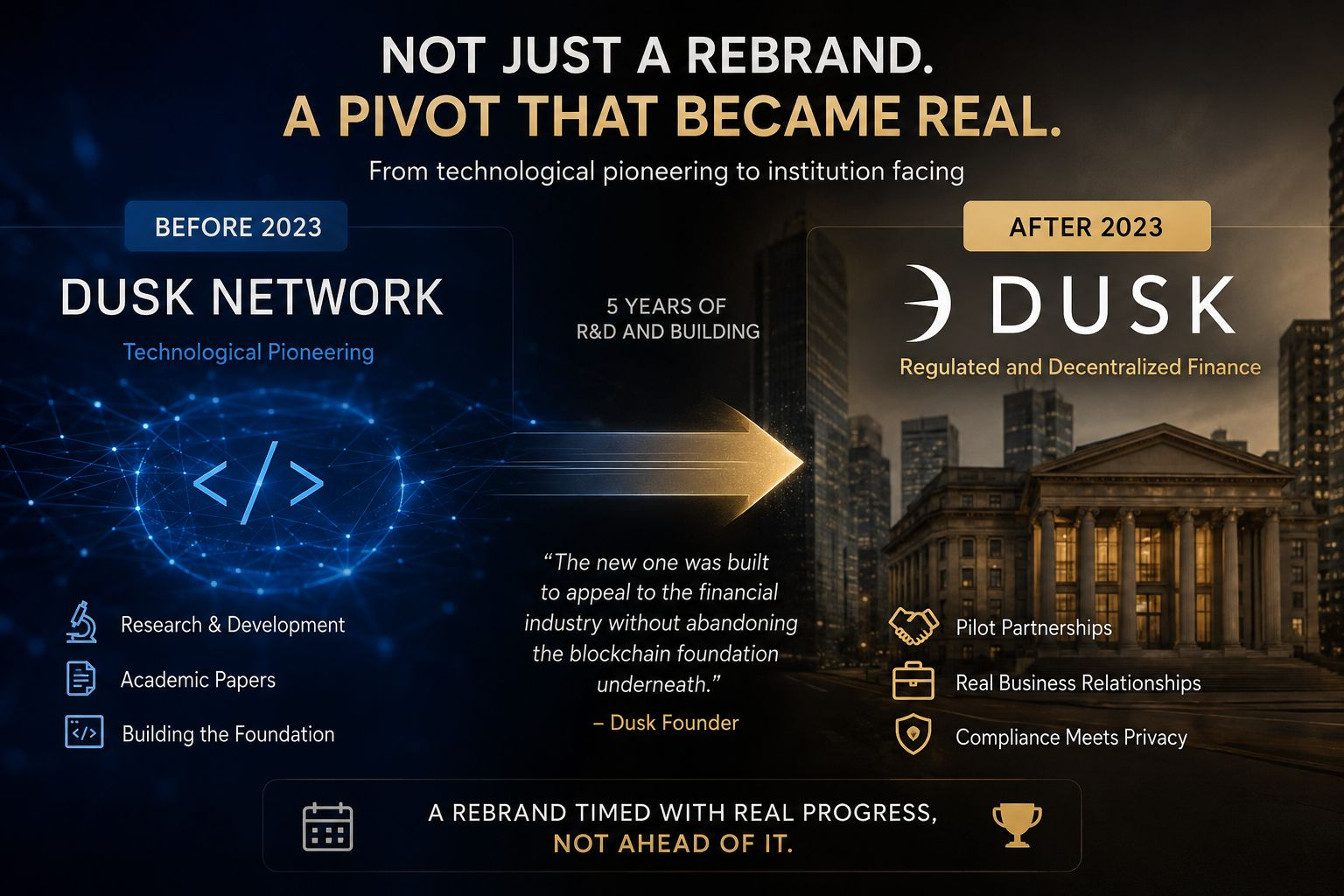
"Dusk Network" does not exist anymore. Even the name changed once the pitch shifted toward institutions. I dont think thats a coincidence.
Small thing I noticed while reading old announcements. Back in 2023, the project dropped "Network" from its name entirely, rebranding to just #dusk , with a new tagline: Regulated and Decentralized Finance. At first I read that as a cosmetic refresh, companies do this constantly. Then I read why, straight from their own announcement, and it lined up with something bigger than branding.
The founder said it plainly. The old brand read as technological pioneering. The new one was built to appeal to the financial industry without abandoning the blockchain foundation underneath. Thats not subtle. Thats a project explicitly repositioning itself from crypto native to institution facing, and choosing to signal that shift through the name itself, not just the marketing copy around it.
Heres why the timing actually matters to me. This happened five years into the project, after years of pure research and development, right as they started actually onboarding pilot partnerships and real business relationships instead of just publishing papers. The rebrand was not the beginning of a pivot. It was the visible marker of a pivot that had already been happening quietly for a while, dropped right when there was finally something real to point to.
I think this is honestly a healthy signal, not a red flag. A lot of projects rebrand when things are going badly, trying to escape a damaged reputation. This one rebranded when things started actually working, timed to match real pilots and real partnerships instead of running ahead of them.
Worth noticing the difference between a rebrand thats covering something up and one thats just catching the name up to what the project already became. $DUSK @Dusk_Foundation
{future}(DUSKUSDT)
"Dusk Network" does not exist anymore. Even the name changed once the pitch shifted toward institutions. I dont think thats a coincidence.
Small thing I noticed while reading old announcements. Back in 2023, the project dropped "Network" from its name entirely, rebranding to just #dusk , with a new tagline: Regulated and Decentralized Finance. At first I read that as a cosmetic refresh, companies do this constantly. Then I read why, straight from their own announcement, and it lined up with something bigger than branding.
The founder said it plainly. The old brand read as technological pioneering. The new one was built to appeal to the financial industry without abandoning the blockchain foundation underneath. Thats not subtle. Thats a project explicitly repositioning itself from crypto native to institution facing, and choosing to signal that shift through the name itself, not just the marketing copy around it.
Heres why the timing actually matters to me. This happened five years into the project, after years of pure research and development, right as they started actually onboarding pilot partnerships and real business relationships instead of just publishing papers. The rebrand was not the beginning of a pivot. It was the visible marker of a pivot that had already been happening quietly for a while, dropped right when there was finally something real to point to.
I think this is honestly a healthy signal, not a red flag. A lot of projects rebrand when things are going badly, trying to escape a damaged reputation. This one rebranded when things started actually working, timed to match real pilots and real partnerships instead of running ahead of them.
Worth noticing the difference between a rebrand thats covering something up and one thats just catching the name up to what the project already became. $DUSK @Dusk
Small thing I noticed while reading old announcements. Back in 2023, the project dropped "Network" from its name entirely, rebranding to just #dusk , with a new tagline: Regulated and Decentralized Finance. At first I read that as a cosmetic refresh, companies do this constantly. Then I read why, straight from their own announcement, and it lined up with something bigger than branding.
The founder said it plainly. The old brand read as technological pioneering. The new one was built to appeal to the financial industry without abandoning the blockchain foundation underneath. Thats not subtle. Thats a project explicitly repositioning itself from crypto native to institution facing, and choosing to signal that shift through the name itself, not just the marketing copy around it.
Heres why the timing actually matters to me. This happened five years into the project, after years of pure research and development, right as they started actually onboarding pilot partnerships and real business relationships instead of just publishing papers. The rebrand was not the beginning of a pivot. It was the visible marker of a pivot that had already been happening quietly for a while, dropped right when there was finally something real to point to.
I think this is honestly a healthy signal, not a red flag. A lot of projects rebrand when things are going badly, trying to escape a damaged reputation. This one rebranded when things started actually working, timed to match real pilots and real partnerships instead of running ahead of them.
Worth noticing the difference between a rebrand thats covering something up and one thats just catching the name up to what the project already became. $DUSK @Dusk
171
·
--
$DUSK 201.1 USDT(30日間の取引)
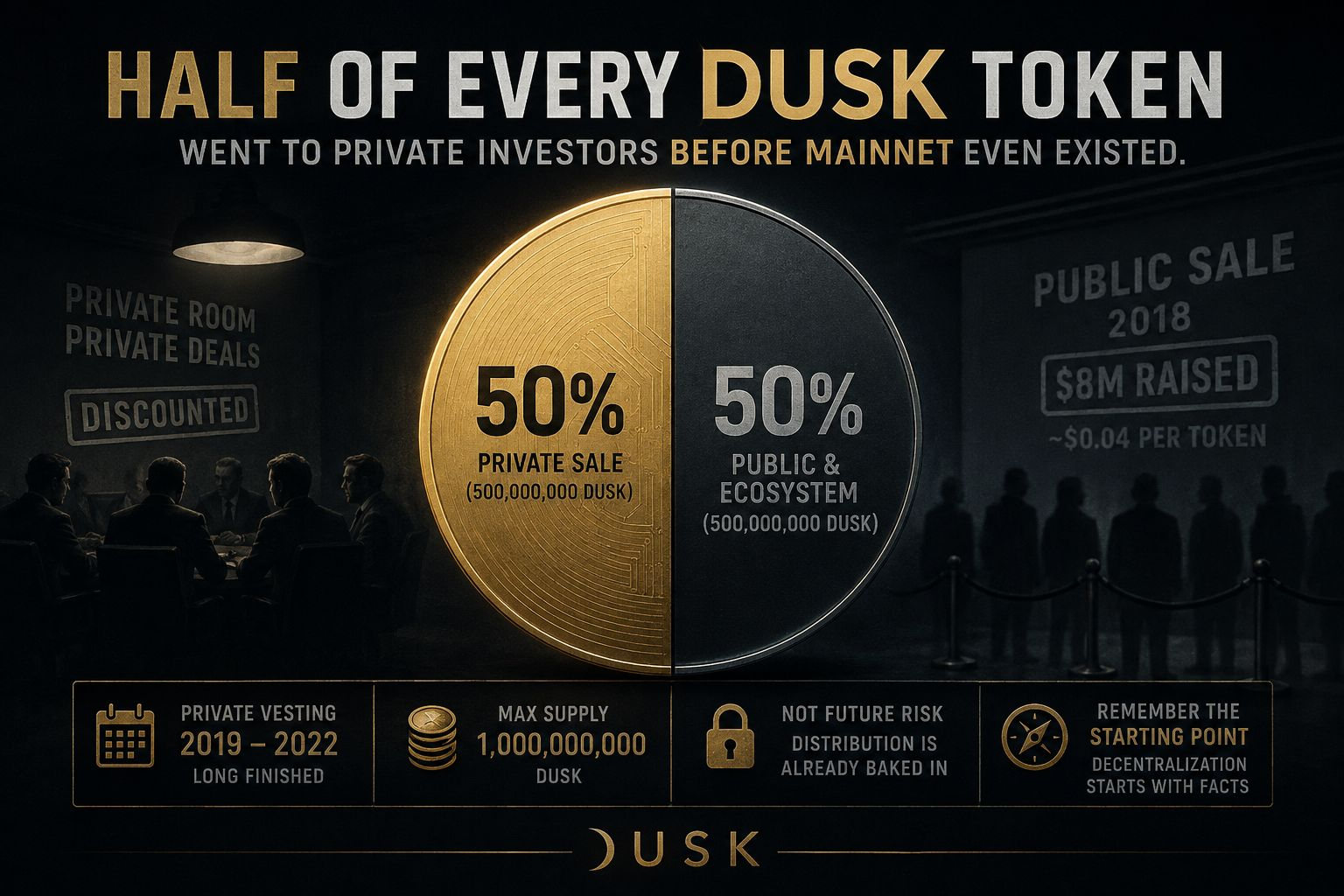
これまでに存在することになるすべての#dusk tokenの半分が、メインネットが存在する前に、個人(プライベートセール)投資家に渡っていた。これは些細な話ではありません。
$DUSK 個の自分のトークノミクスのページを掘り下げて、別の何かを探していたところ、読み返さずにいられない一文に行き当たりました。プライベートセールのトークンは、最大供給量全体の50%を占めています。ICOで売られたものの50%ではありません。これから鋳造される@Dusk_Foundation tokenのうち、将来存在しうるあらゆる分の50%――つまり上限として総計10億(1 billion)にキャップされている、その“毎回の話”です。
文脈として、2018年に実際に行われた公開ICOでは、調達額は800万ドルで、トークンは1枚あたり約4セントの価格でした。これは多くの人が知っている「公開ラウンド」の部分です。あまり語られていないのは、プライベートでの割り当てがそれをはるかに上回っていて、供給全体の半分が、公開投資家が見られるようになる前に売られていたという点です。おそらく、あの4セントの価格よりも大幅なディスカウントで。
プライベートトークンには、2019年から2022年までのベスティング期間があったので、これは今さらの投げ売り(ダンピング)のリスクではありません。とはいえ、ネットワーク全供給の半分に、どんな価格で誰がアクセスできたのか、という構図は、今日コインリスティングを見ている人たちが参加する機会を得るはるか前から起きていました。
公平に言いたいです。これは2018年の話です。当時、プロジェクトの供給の半分を資金として受け取る形のプライベートセールは珍しくなかった。事実上、その時代の多くのL1が踏襲していたテンプレートです。そして、ベスティングがすでに長く完了しているので、現時点で存在する配分はすでに織り込まれており、将来の価格に影を落とすリスクとしてぶら下がっているわけではありません。だからといって、これがDuskを(他と比べて)唯一無二に悪くする、と言っているわけではありません。
ただ、プロジェクトが今日「分散化(decentralization)」を語るのであれば、総供給の半分が、当時その部屋の外の誰にも買うチャンスが来るずっと前に、プライベートな場で割り当てられていたことを思い出す価値があります。これは、このトークンが立ち上がる“出発点”にすぎません。
これまでに存在することになるすべての#dusk tokenの半分が、メインネットが存在する前に、個人(プライベートセール)投資家に渡っていた。これは些細な話ではありません。
$DUSK 個の自分のトークノミクスのページを掘り下げて、別の何かを探していたところ、読み返さずにいられない一文に行き当たりました。プライベートセールのトークンは、最大供給量全体の50%を占めています。ICOで売られたものの50%ではありません。これから鋳造される@Dusk tokenのうち、将来存在しうるあらゆる分の50%――つまり上限として総計10億(1 billion)にキャップされている、その“毎回の話”です。
文脈として、2018年に実際に行われた公開ICOでは、調達額は800万ドルで、トークンは1枚あたり約4セントの価格でした。これは多くの人が知っている「公開ラウンド」の部分です。あまり語られていないのは、プライベートでの割り当てがそれをはるかに上回っていて、供給全体の半分が、公開投資家が見られるようになる前に売られていたという点です。おそらく、あの4セントの価格よりも大幅なディスカウントで。
プライベートトークンには、2019年から2022年までのベスティング期間があったので、これは今さらの投げ売り(ダンピング)のリスクではありません。とはいえ、ネットワーク全供給の半分に、どんな価格で誰がアクセスできたのか、という構図は、今日コインリスティングを見ている人たちが参加する機会を得るはるか前から起きていました。
公平に言いたいです。これは2018年の話です。当時、プロジェクトの供給の半分を資金として受け取る形のプライベートセールは珍しくなかった。事実上、その時代の多くのL1が踏襲していたテンプレートです。そして、ベスティングがすでに長く完了しているので、現時点で存在する配分はすでに織り込まれており、将来の価格に影を落とすリスクとしてぶら下がっているわけではありません。だからといって、これがDuskを(他と比べて)唯一無二に悪くする、と言っているわけではありません。
ただ、プロジェクトが今日「分散化(decentralization)」を語るのであれば、総供給の半分が、当時その部屋の外の誰にも買うチャンスが来るずっと前に、プライベートな場で割り当てられていたことを思い出す価値があります。これは、このトークンが立ち上がる“出発点”にすぎません。
$DUSK 個の自分のトークノミクスのページを掘り下げて、別の何かを探していたところ、読み返さずにいられない一文に行き当たりました。プライベートセールのトークンは、最大供給量全体の50%を占めています。ICOで売られたものの50%ではありません。これから鋳造される@Dusk tokenのうち、将来存在しうるあらゆる分の50%――つまり上限として総計10億(1 billion)にキャップされている、その“毎回の話”です。
文脈として、2018年に実際に行われた公開ICOでは、調達額は800万ドルで、トークンは1枚あたり約4セントの価格でした。これは多くの人が知っている「公開ラウンド」の部分です。あまり語られていないのは、プライベートでの割り当てがそれをはるかに上回っていて、供給全体の半分が、公開投資家が見られるようになる前に売られていたという点です。おそらく、あの4セントの価格よりも大幅なディスカウントで。
プライベートトークンには、2019年から2022年までのベスティング期間があったので、これは今さらの投げ売り(ダンピング)のリスクではありません。とはいえ、ネットワーク全供給の半分に、どんな価格で誰がアクセスできたのか、という構図は、今日コインリスティングを見ている人たちが参加する機会を得るはるか前から起きていました。
公平に言いたいです。これは2018年の話です。当時、プロジェクトの供給の半分を資金として受け取る形のプライベートセールは珍しくなかった。事実上、その時代の多くのL1が踏襲していたテンプレートです。そして、ベスティングがすでに長く完了しているので、現時点で存在する配分はすでに織り込まれており、将来の価格に影を落とすリスクとしてぶら下がっているわけではありません。だからといって、これがDuskを(他と比べて)唯一無二に悪くする、と言っているわけではありません。
ただ、プロジェクトが今日「分散化(decentralization)」を語るのであれば、総供給の半分が、当時その部屋の外の誰にも買うチャンスが来るずっと前に、プライベートな場で割り当てられていたことを思い出す価値があります。これは、このトークンが立ち上がる“出発点”にすぎません。
4
5
240
·
--
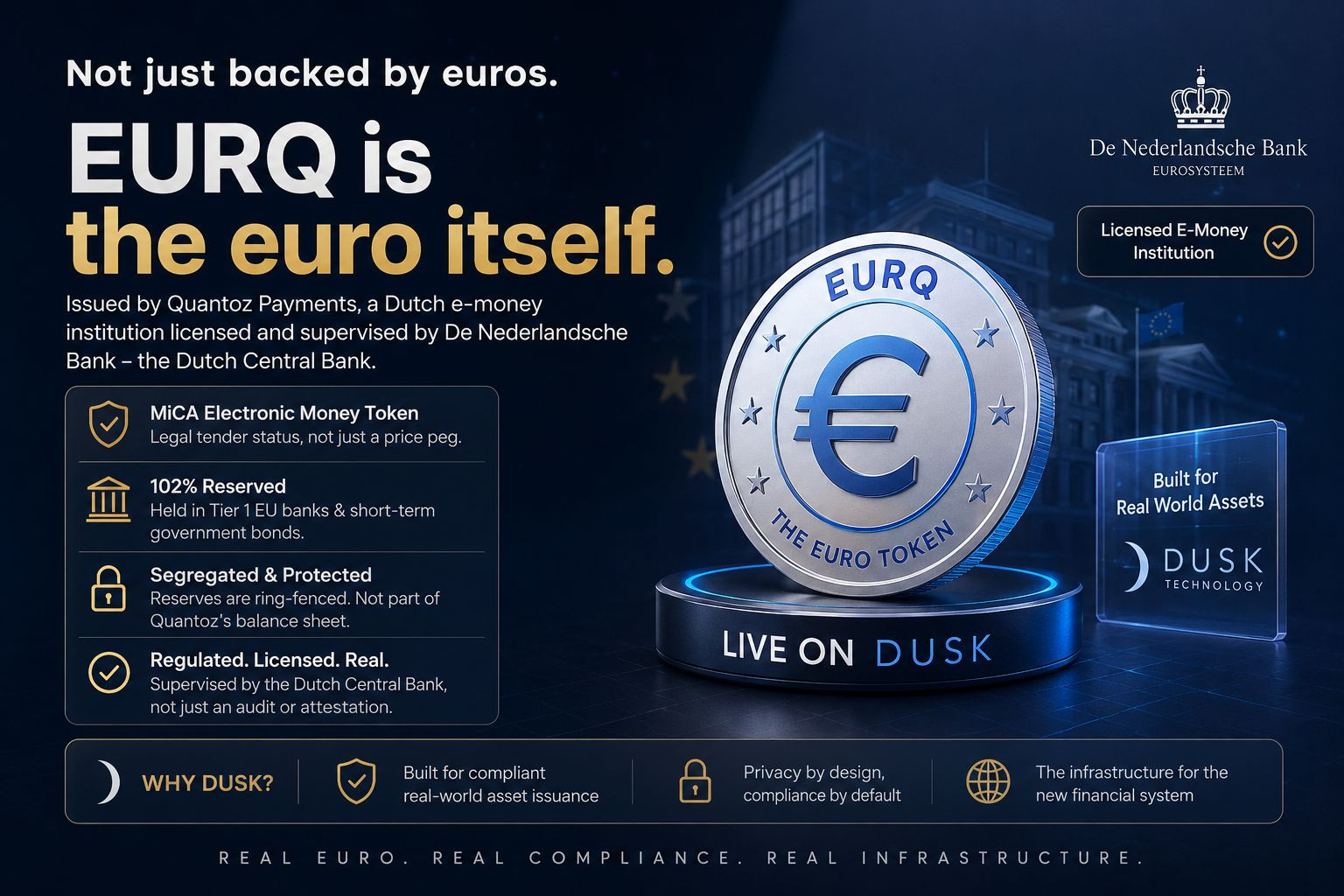
ほとんどのステーブルコインは、会社の約束です。EURQは法的にユーロそのものです。聞こえる以上に大きな違いがあります。
私は多くのステーブルコインの提案を読みました。ほとんどが同じ言葉を使っています――「1:1で裏付けられている」「完全に準備されている」「定期的に監査されている」。しかし、現在 live している EURQ(ユーロ・トークン:@Dusk_Foundation )は、まったく違い、はるかに強い主張をしています。本当にその主張が成り立つのか、確かめたくなりました。
EURQは、オランダの電子マネー機関であるQuantoz Paymentsが発行しています。この機関は、実際のオランダ中央銀行であるDe Nederlandsche Bank(DNB)により直接ライセンス付与され、監督されています。これは自己申告の監査でも、事後に「承認しました」と署名する第三者認証機関でもありません。コンプライアンス言語をまとった暗号のサイドプロジェクトではなく、実在するデジタル現金と同じカテゴリのE-Moneyライセンスを、銀行規制当局が付与しているのです。
ここからが、USDTやUSDCのようなものと実際に分けているポイントです。MiCAのもとでEURQは、価格連動型の暗号資産にとどまらず、「電子マネートークン」として、法定通貨として分類されます。準備金はティア1の欧州の銀行および短期の国債に置かれ、Quantoz自身のバランスシートから分離されています。償還に備えて、ストレス下でも102%で保有されています。仮にQuantozが明日トラブルに見舞われたとしても、これらの準備金はQuantozが自由に触れる自社のお金ではありません。
そして、ここが#dusk 特有の部分。Duskは、EURQがたまたま対応している「もう1つのチェーン」ではありません。これを扱うブロックチェーンのほんの数例の中で、$DUSK は、プロトコル自体にコンプライアンスが織り込まれた、ネイティブな現実世界の資産発行のために実際に設計されたものです。だからこそNPEXもそれを選びました。実在するユーロトークンがあることで、オンチェーンの証券取引所が、規制当局が「本物の通貨」として認めるものに対して取引を決済できる“欠けていたピース”になります。つまり、通貨の合成代替物ではなく、正真正銘の通貨として扱えるということです。
それでも私は、人々にはどんなステーブルコインでも細かな条項を読んでから信じるべきだと思います。しかしEURQの細かな条項は、ホワイトペーパーではなく銀行ライセンスです。この分野で流通しているものの多くとは、意味のあるレベルで土台が違います。
ほとんどのステーブルコインは、会社の約束です。EURQは法的にユーロそのものです。聞こえる以上に大きな違いがあります。
私は多くのステーブルコインの提案を読みました。ほとんどが同じ言葉を使っています――「1:1で裏付けられている」「完全に準備されている」「定期的に監査されている」。しかし、現在 live している EURQ(ユーロ・トークン:@Dusk )は、まったく違い、はるかに強い主張をしています。本当にその主張が成り立つのか、確かめたくなりました。
EURQは、オランダの電子マネー機関であるQuantoz Paymentsが発行しています。この機関は、実際のオランダ中央銀行であるDe Nederlandsche Bank(DNB)により直接ライセンス付与され、監督されています。これは自己申告の監査でも、事後に「承認しました」と署名する第三者認証機関でもありません。コンプライアンス言語をまとった暗号のサイドプロジェクトではなく、実在するデジタル現金と同じカテゴリのE-Moneyライセンスを、銀行規制当局が付与しているのです。
ここからが、USDTやUSDCのようなものと実際に分けているポイントです。MiCAのもとでEURQは、価格連動型の暗号資産にとどまらず、「電子マネートークン」として、法定通貨として分類されます。準備金はティア1の欧州の銀行および短期の国債に置かれ、Quantoz自身のバランスシートから分離されています。償還に備えて、ストレス下でも102%で保有されています。仮にQuantozが明日トラブルに見舞われたとしても、これらの準備金はQuantozが自由に触れる自社のお金ではありません。
そして、ここが#dusk 特有の部分。Duskは、EURQがたまたま対応している「もう1つのチェーン」ではありません。これを扱うブロックチェーンのほんの数例の中で、$DUSK は、プロトコル自体にコンプライアンスが織り込まれた、ネイティブな現実世界の資産発行のために実際に設計されたものです。だからこそNPEXもそれを選びました。実在するユーロトークンがあることで、オンチェーンの証券取引所が、規制当局が「本物の通貨」として認めるものに対して取引を決済できる“欠けていたピース”になります。つまり、通貨の合成代替物ではなく、正真正銘の通貨として扱えるということです。
それでも私は、人々にはどんなステーブルコインでも細かな条項を読んでから信じるべきだと思います。しかしEURQの細かな条項は、ホワイトペーパーではなく銀行ライセンスです。この分野で流通しているものの多くとは、意味のあるレベルで土台が違います。
私は多くのステーブルコインの提案を読みました。ほとんどが同じ言葉を使っています――「1:1で裏付けられている」「完全に準備されている」「定期的に監査されている」。しかし、現在 live している EURQ(ユーロ・トークン:@Dusk )は、まったく違い、はるかに強い主張をしています。本当にその主張が成り立つのか、確かめたくなりました。
EURQは、オランダの電子マネー機関であるQuantoz Paymentsが発行しています。この機関は、実際のオランダ中央銀行であるDe Nederlandsche Bank(DNB)により直接ライセンス付与され、監督されています。これは自己申告の監査でも、事後に「承認しました」と署名する第三者認証機関でもありません。コンプライアンス言語をまとった暗号のサイドプロジェクトではなく、実在するデジタル現金と同じカテゴリのE-Moneyライセンスを、銀行規制当局が付与しているのです。
ここからが、USDTやUSDCのようなものと実際に分けているポイントです。MiCAのもとでEURQは、価格連動型の暗号資産にとどまらず、「電子マネートークン」として、法定通貨として分類されます。準備金はティア1の欧州の銀行および短期の国債に置かれ、Quantoz自身のバランスシートから分離されています。償還に備えて、ストレス下でも102%で保有されています。仮にQuantozが明日トラブルに見舞われたとしても、これらの準備金はQuantozが自由に触れる自社のお金ではありません。
そして、ここが#dusk 特有の部分。Duskは、EURQがたまたま対応している「もう1つのチェーン」ではありません。これを扱うブロックチェーンのほんの数例の中で、$DUSK は、プロトコル自体にコンプライアンスが織り込まれた、ネイティブな現実世界の資産発行のために実際に設計されたものです。だからこそNPEXもそれを選びました。実在するユーロトークンがあることで、オンチェーンの証券取引所が、規制当局が「本物の通貨」として認めるものに対して取引を決済できる“欠けていたピース”になります。つまり、通貨の合成代替物ではなく、正真正銘の通貨として扱えるということです。
それでも私は、人々にはどんなステーブルコインでも細かな条項を読んでから信じるべきだと思います。しかしEURQの細かな条項は、ホワイトペーパーではなく銀行ライセンスです。この分野で流通しているものの多くとは、意味のあるレベルで土台が違います。
7
7
331
·
--
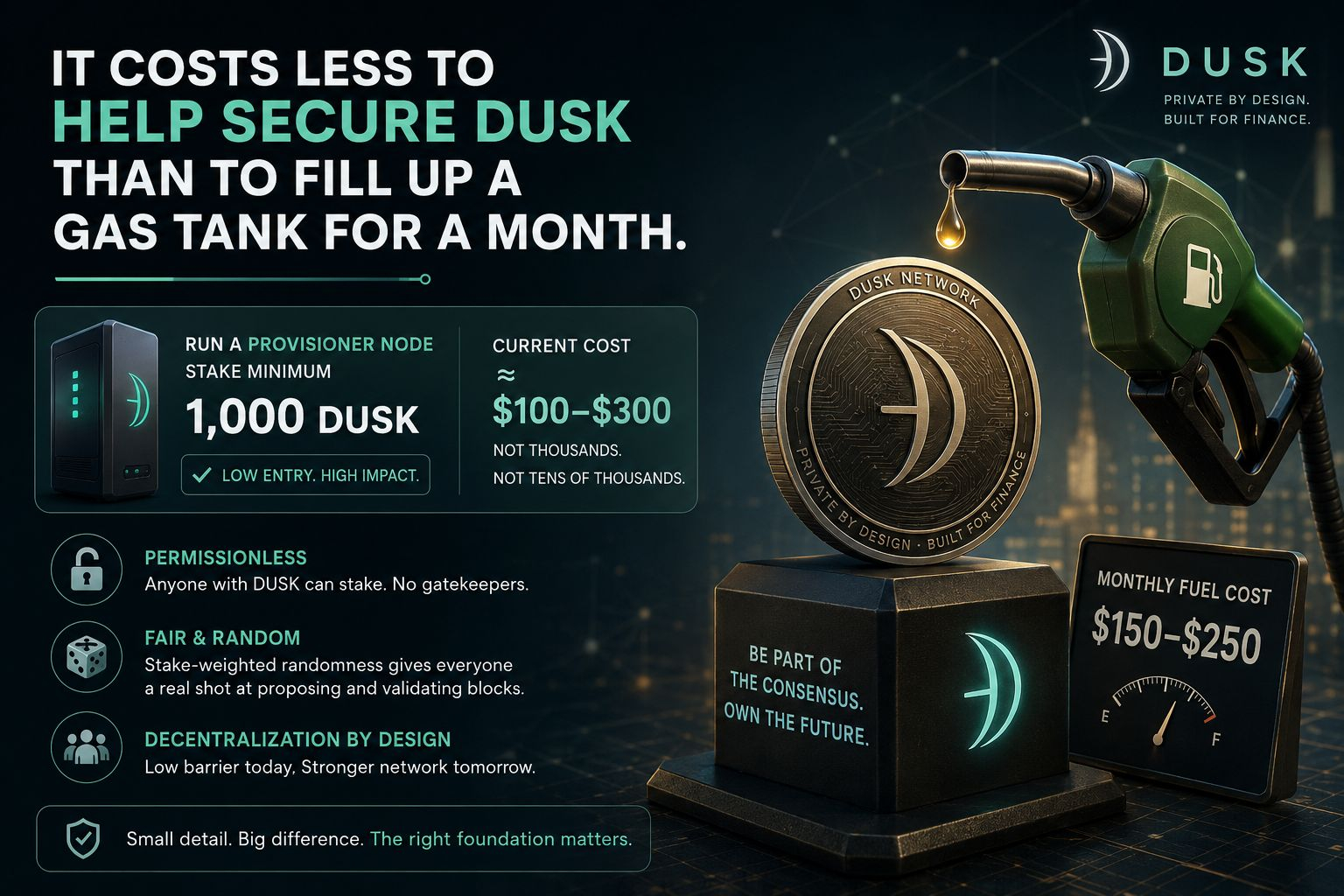
ガソリンタンクを1か月分満タンにするのに比べて、@Dusk_Foundation の確保を手伝うほうが安い。その数字が私の中で引っかかりました。
私はこれらのスレッドの粗い部分をかなり掘り下げてきたので、いったん視点を変えて、他のことに埋もれてしまっているけれど「実際にうまくいっている」ある点について話します。#dusk です。
Duskでバリデータノードを動かすには、Provisioner(プロビジョナー)として最低ステークが1,000 $DUSK です。現在の価格で言えば、数千ドルどころか、数万ドルでもなく、だいたい数百ドル台の範囲です。多くの主要なプルーフ・オブ・ステーク系チェーンで実際のバリデータを動かすのに必要な金額と比べてみてください。最低ステーク要件を考慮すると、参加の入場券は5桁、6桁に入るレベルになります。Duskは意図的に、そのハードルを低く保ちました。
安いだけではありません。本当に許可不要です。DUSKを保有している人なら誰でもステークして、コンセンサスの一部になれます。申請も承認も不要で、誰がネットワークを守る手助けをしてよいかを決める門番もいません。選定はステークに応じたランダム性で行われるため、小さめのステーカーでも、ただ傍観するだけでなく、ブロックを提案・検証するための実際の継続的なチャンスが得られます。クジラの一部がすべてを回してしまう、という形にはなりにくい。
ただし、言い過ぎないように注意したいです。参入コストが低いからといって、時を経てもバリデータ集合が分散したまま保証されるわけではありません。より大きな保有者が影響力を蓄積して、集中がじわじわ進むリスクはあります。そのリスクは、開始時の最低ステークに関係なく、あらゆるプルーフ・オブ・ステークのチェーンに存在します。とはいえ、低い床(参入の最低条件)は、その上に分散化を築くための正しい土台です。入口価格が多くの人を試す前に締め出してしまえば、幅広い参加は得られません。Duskはそれをやらないことを明確に選びました。
小さな細部で、読み飛ばされやすいと思います。たぶん、そこまで大げさに言うべきではないです。
ガソリンタンクを1か月分満タンにするのに比べて、@Dusk の確保を手伝うほうが安い。その数字が私の中で引っかかりました。
私はこれらのスレッドの粗い部分をかなり掘り下げてきたので、いったん視点を変えて、他のことに埋もれてしまっているけれど「実際にうまくいっている」ある点について話します。#dusk です。
Duskでバリデータノードを動かすには、Provisioner(プロビジョナー)として最低ステークが1,000 $DUSK です。現在の価格で言えば、数千ドルどころか、数万ドルでもなく、だいたい数百ドル台の範囲です。多くの主要なプルーフ・オブ・ステーク系チェーンで実際のバリデータを動かすのに必要な金額と比べてみてください。最低ステーク要件を考慮すると、参加の入場券は5桁、6桁に入るレベルになります。Duskは意図的に、そのハードルを低く保ちました。
安いだけではありません。本当に許可不要です。DUSKを保有している人なら誰でもステークして、コンセンサスの一部になれます。申請も承認も不要で、誰がネットワークを守る手助けをしてよいかを決める門番もいません。選定はステークに応じたランダム性で行われるため、小さめのステーカーでも、ただ傍観するだけでなく、ブロックを提案・検証するための実際の継続的なチャンスが得られます。クジラの一部がすべてを回してしまう、という形にはなりにくい。
ただし、言い過ぎないように注意したいです。参入コストが低いからといって、時を経てもバリデータ集合が分散したまま保証されるわけではありません。より大きな保有者が影響力を蓄積して、集中がじわじわ進むリスクはあります。そのリスクは、開始時の最低ステークに関係なく、あらゆるプルーフ・オブ・ステークのチェーンに存在します。とはいえ、低い床(参入の最低条件)は、その上に分散化を築くための正しい土台です。入口価格が多くの人を試す前に締め出してしまえば、幅広い参加は得られません。Duskはそれをやらないことを明確に選びました。
小さな細部で、読み飛ばされやすいと思います。たぶん、そこまで大げさに言うべきではないです。
私はこれらのスレッドの粗い部分をかなり掘り下げてきたので、いったん視点を変えて、他のことに埋もれてしまっているけれど「実際にうまくいっている」ある点について話します。#dusk です。
Duskでバリデータノードを動かすには、Provisioner(プロビジョナー)として最低ステークが1,000 $DUSK です。現在の価格で言えば、数千ドルどころか、数万ドルでもなく、だいたい数百ドル台の範囲です。多くの主要なプルーフ・オブ・ステーク系チェーンで実際のバリデータを動かすのに必要な金額と比べてみてください。最低ステーク要件を考慮すると、参加の入場券は5桁、6桁に入るレベルになります。Duskは意図的に、そのハードルを低く保ちました。
安いだけではありません。本当に許可不要です。DUSKを保有している人なら誰でもステークして、コンセンサスの一部になれます。申請も承認も不要で、誰がネットワークを守る手助けをしてよいかを決める門番もいません。選定はステークに応じたランダム性で行われるため、小さめのステーカーでも、ただ傍観するだけでなく、ブロックを提案・検証するための実際の継続的なチャンスが得られます。クジラの一部がすべてを回してしまう、という形にはなりにくい。
ただし、言い過ぎないように注意したいです。参入コストが低いからといって、時を経てもバリデータ集合が分散したまま保証されるわけではありません。より大きな保有者が影響力を蓄積して、集中がじわじわ進むリスクはあります。そのリスクは、開始時の最低ステークに関係なく、あらゆるプルーフ・オブ・ステークのチェーンに存在します。とはいえ、低い床(参入の最低条件)は、その上に分散化を築くための正しい土台です。入口価格が多くの人を試す前に締め出してしまえば、幅広い参加は得られません。Duskはそれをやらないことを明確に選びました。
小さな細部で、読み飛ばされやすいと思います。たぶん、そこまで大げさに言うべきではないです。
11
8
360
·
--
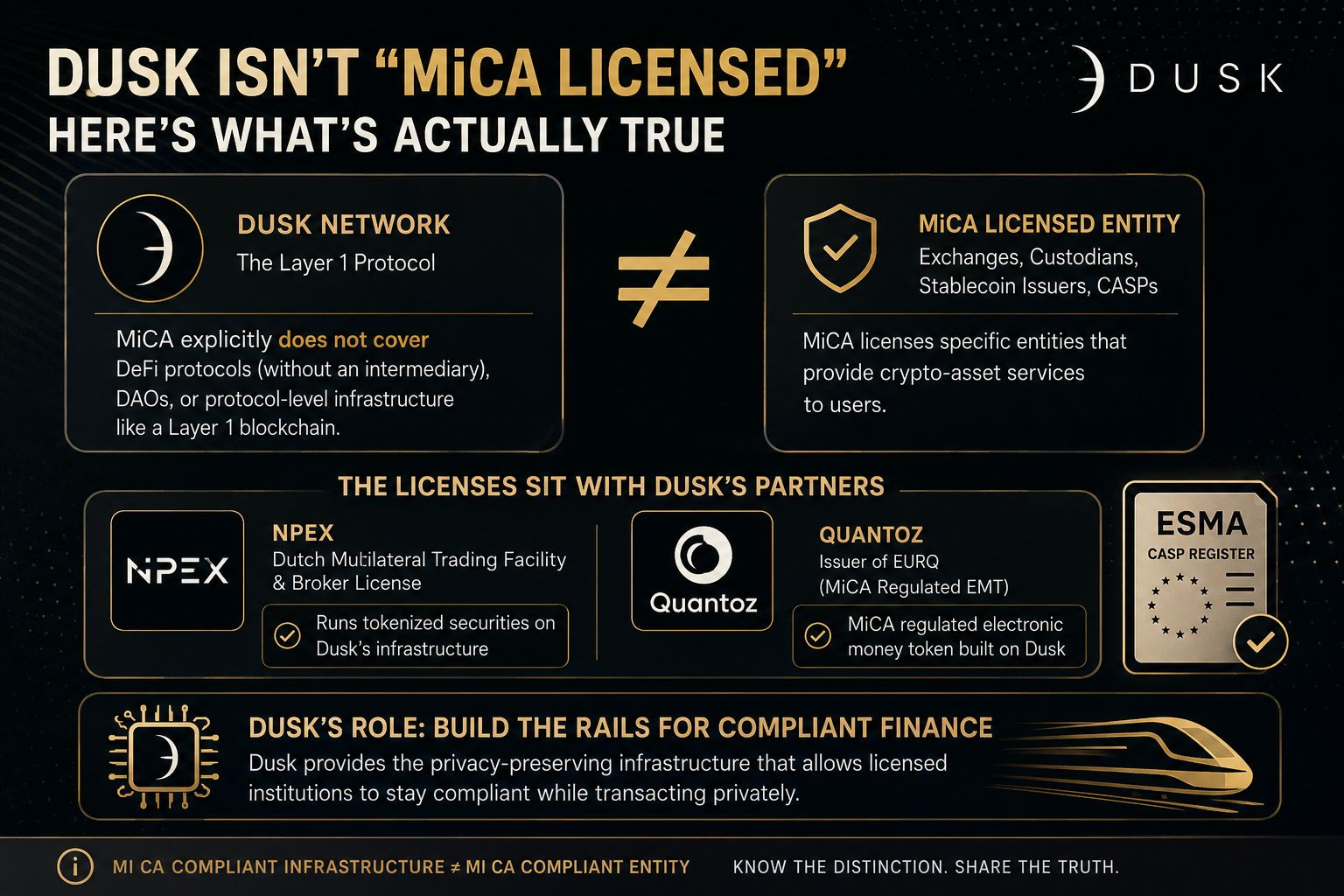
"MiCA 準拠"と言われ続けているのは @Dusk_Foundation constantly です。Dusk 自体は実際には MiCA ライセンスを保有していません。読んで二度見しました。
#dusk itself が MiCA 認可されているかの確認を探しに行き、素直に「はい」と分かることを期待していました。見つかったのは、より微妙で、正直なところ単純な「はい」よりも面白い内容でした。
MiCA(EU の暗号資産規制の枠組み)は、特定のものをライセンスします。取引所、カストディアン、ステーブルコイン発行者、Crypto-Asset Service Providers(暗号資産サービス提供者)に当たる事業者です。Dusk が自分たちの記述の中で言っている通り、MiCA は(仲介なしの)DeFi プロトコルや、DAOs、あるいはレイヤー1ブロックチェーン自体のような単純なプロトコル基盤レベルのインフラを明確にカバーしていません。つまり、ライセンスされるのは「Dusk(ネットワーク)」そのものではありません。ライセンス対象となる事業者の下で動く“レール(基盤)”のことです。
実際のライセンスは Dusk のパートナー側にあります。NPEX はオランダの多角的取引施設(MTF)とブローカーライセンスを保有し、トークン化された証券を $DUSK infrastructure 上で運用しています。Quantoz は、MiCA 規制の電子マネートークンである EURQ を発行しており、それも Dusk 上で構築されています。これらはいずれも実在し、検証可能で、ESMA の CASP レジスターに掲載されています。Dusk は、ライセンスを受けた機関が、プライベートな取引をしつつコンプライアンスを維持できるようにする技術を作りました。それは本当に価値があります。ただしそれは、「Dusk は MiCA 準拠」と“包括的に”言い切るのとは別の主張です。
私は Dusk が不誠実だとは思いません。彼ら自身のブログ投稿は、見出しの先を読めば、その違いをかなりはっきり書いています。より正確には、「MiCA 準拠のインフラ」が会話やSNS投稿の中で「MiCA 準拠」と短縮されがちで、その短縮が、何を主張しているのかを静かに変えてしまうのだと思います。あるバージョンは私たちはコンプライアンスを可能にする、と言っています。もう一方は、私たちが準拠していると示唆します。これらは同じ文ではありません。
それをセールスポイントとして繰り返す前に、どちらが実際に当てはまるのかを知っておく価値があります。
"MiCA 準拠"と言われ続けているのは @Dusk constantly です。Dusk 自体は実際には MiCA ライセンスを保有していません。読んで二度見しました。
#dusk itself が MiCA 認可されているかの確認を探しに行き、素直に「はい」と分かることを期待していました。見つかったのは、より微妙で、正直なところ単純な「はい」よりも面白い内容でした。
MiCA(EU の暗号資産規制の枠組み)は、特定のものをライセンスします。取引所、カストディアン、ステーブルコイン発行者、Crypto-Asset Service Providers(暗号資産サービス提供者)に当たる事業者です。Dusk が自分たちの記述の中で言っている通り、MiCA は(仲介なしの)DeFi プロトコルや、DAOs、あるいはレイヤー1ブロックチェーン自体のような単純なプロトコル基盤レベルのインフラを明確にカバーしていません。つまり、ライセンスされるのは「Dusk(ネットワーク)」そのものではありません。ライセンス対象となる事業者の下で動く“レール(基盤)”のことです。
実際のライセンスは Dusk のパートナー側にあります。NPEX はオランダの多角的取引施設(MTF)とブローカーライセンスを保有し、トークン化された証券を $DUSK infrastructure 上で運用しています。Quantoz は、MiCA 規制の電子マネートークンである EURQ を発行しており、それも Dusk 上で構築されています。これらはいずれも実在し、検証可能で、ESMA の CASP レジスターに掲載されています。Dusk は、ライセンスを受けた機関が、プライベートな取引をしつつコンプライアンスを維持できるようにする技術を作りました。それは本当に価値があります。ただしそれは、「Dusk は MiCA 準拠」と“包括的に”言い切るのとは別の主張です。
私は Dusk が不誠実だとは思いません。彼ら自身のブログ投稿は、見出しの先を読めば、その違いをかなりはっきり書いています。より正確には、「MiCA 準拠のインフラ」が会話やSNS投稿の中で「MiCA 準拠」と短縮されがちで、その短縮が、何を主張しているのかを静かに変えてしまうのだと思います。あるバージョンは私たちはコンプライアンスを可能にする、と言っています。もう一方は、私たちが準拠していると示唆します。これらは同じ文ではありません。
それをセールスポイントとして繰り返す前に、どちらが実際に当てはまるのかを知っておく価値があります。
#dusk itself が MiCA 認可されているかの確認を探しに行き、素直に「はい」と分かることを期待していました。見つかったのは、より微妙で、正直なところ単純な「はい」よりも面白い内容でした。
MiCA(EU の暗号資産規制の枠組み)は、特定のものをライセンスします。取引所、カストディアン、ステーブルコイン発行者、Crypto-Asset Service Providers(暗号資産サービス提供者)に当たる事業者です。Dusk が自分たちの記述の中で言っている通り、MiCA は(仲介なしの)DeFi プロトコルや、DAOs、あるいはレイヤー1ブロックチェーン自体のような単純なプロトコル基盤レベルのインフラを明確にカバーしていません。つまり、ライセンスされるのは「Dusk(ネットワーク)」そのものではありません。ライセンス対象となる事業者の下で動く“レール(基盤)”のことです。
実際のライセンスは Dusk のパートナー側にあります。NPEX はオランダの多角的取引施設(MTF)とブローカーライセンスを保有し、トークン化された証券を $DUSK infrastructure 上で運用しています。Quantoz は、MiCA 規制の電子マネートークンである EURQ を発行しており、それも Dusk 上で構築されています。これらはいずれも実在し、検証可能で、ESMA の CASP レジスターに掲載されています。Dusk は、ライセンスを受けた機関が、プライベートな取引をしつつコンプライアンスを維持できるようにする技術を作りました。それは本当に価値があります。ただしそれは、「Dusk は MiCA 準拠」と“包括的に”言い切るのとは別の主張です。
私は Dusk が不誠実だとは思いません。彼ら自身のブログ投稿は、見出しの先を読めば、その違いをかなりはっきり書いています。より正確には、「MiCA 準拠のインフラ」が会話やSNS投稿の中で「MiCA 準拠」と短縮されがちで、その短縮が、何を主張しているのかを静かに変えてしまうのだと思います。あるバージョンは私たちはコンプライアンスを可能にする、と言っています。もう一方は、私たちが準拠していると示唆します。これらは同じ文ではありません。
それをセールスポイントとして繰り返す前に、どちらが実際に当てはまるのかを知っておく価値があります。
2
126
·
--
🚀 暗号資産マーケットが爆発:ビットコインが市場を揺さぶった! 🚀
今週、ビットコインは驚異的な勢いです。週次で22%の上昇となり、週の始めの約$62,800から、$77,000付近で着地しました。これは2024年以来の最強の週次上昇で、さらにビットコインは$78,000の水準を突破するまでに至っています!
では、何がこの上昇を後押ししているのでしょうか?
📈 財務長官ベッセントによる債券市場への介入が利回りを押し下げ
📈 トランプが、暗号資産規制の明確化をもたらす「Clarity Act(明確化法案)」の可決を議会に働きかけている
📈 これにより大規模なショートスクイーズが発生し、暗号資産のショートポジション約27億ドルが清算された
ビットコインだけではありません。イーサリアムは8.12%上昇して$2,515、XRPは14.61%急騰して$1.4538となり、今回の上昇が単一トークンの動きではなく、幅広い波及であることがわかります。ビットコインキャッシュは24時間で31%上昇し、イス・エナ(Ethena)も27%上昇。アルトコインも参戦中です! 🎉
⚠️ 注意:暗号資産は非常に値動きが大きい(ボラティリティが高い)です。必ずご自身で調査し、失っても問題ない範囲でのみ投資してください。
#Bitcoin #CryptoMarket #BTC #CryptoNews #Ethereum
🚀 暗号資産マーケットが爆発:ビットコインが市場を揺さぶった! 🚀
今週、ビットコインは驚異的な勢いです。週次で22%の上昇となり、週の始めの約$62,800から、$77,000付近で着地しました。これは2024年以来の最強の週次上昇で、さらにビットコインは$78,000の水準を突破するまでに至っています!
では、何がこの上昇を後押ししているのでしょうか?
📈 財務長官ベッセントによる債券市場への介入が利回りを押し下げ
📈 トランプが、暗号資産規制の明確化をもたらす「Clarity Act(明確化法案)」の可決を議会に働きかけている
📈 これにより大規模なショートスクイーズが発生し、暗号資産のショートポジション約27億ドルが清算された
ビットコインだけではありません。イーサリアムは8.12%上昇して$2,515、XRPは14.61%急騰して$1.4538となり、今回の上昇が単一トークンの動きではなく、幅広い波及であることがわかります。ビットコインキャッシュは24時間で31%上昇し、イス・エナ(Ethena)も27%上昇。アルトコインも参戦中です! 🎉
⚠️ 注意:暗号資産は非常に値動きが大きい(ボラティリティが高い)です。必ずご自身で調査し、失っても問題ない範囲でのみ投資してください。
#Bitcoin #CryptoMarket #BTC #CryptoNews #Ethereum
今週、ビットコインは驚異的な勢いです。週次で22%の上昇となり、週の始めの約$62,800から、$77,000付近で着地しました。これは2024年以来の最強の週次上昇で、さらにビットコインは$78,000の水準を突破するまでに至っています!
では、何がこの上昇を後押ししているのでしょうか?
📈 財務長官ベッセントによる債券市場への介入が利回りを押し下げ
📈 トランプが、暗号資産規制の明確化をもたらす「Clarity Act(明確化法案)」の可決を議会に働きかけている
📈 これにより大規模なショートスクイーズが発生し、暗号資産のショートポジション約27億ドルが清算された
ビットコインだけではありません。イーサリアムは8.12%上昇して$2,515、XRPは14.61%急騰して$1.4538となり、今回の上昇が単一トークンの動きではなく、幅広い波及であることがわかります。ビットコインキャッシュは24時間で31%上昇し、イス・エナ(Ethena)も27%上昇。アルトコインも参戦中です! 🎉
⚠️ 注意:暗号資産は非常に値動きが大きい(ボラティリティが高い)です。必ずご自身で調査し、失っても問題ない範囲でのみ投資してください。
#Bitcoin #CryptoMarket #BTC #CryptoNews #Ethereum
152
·
--
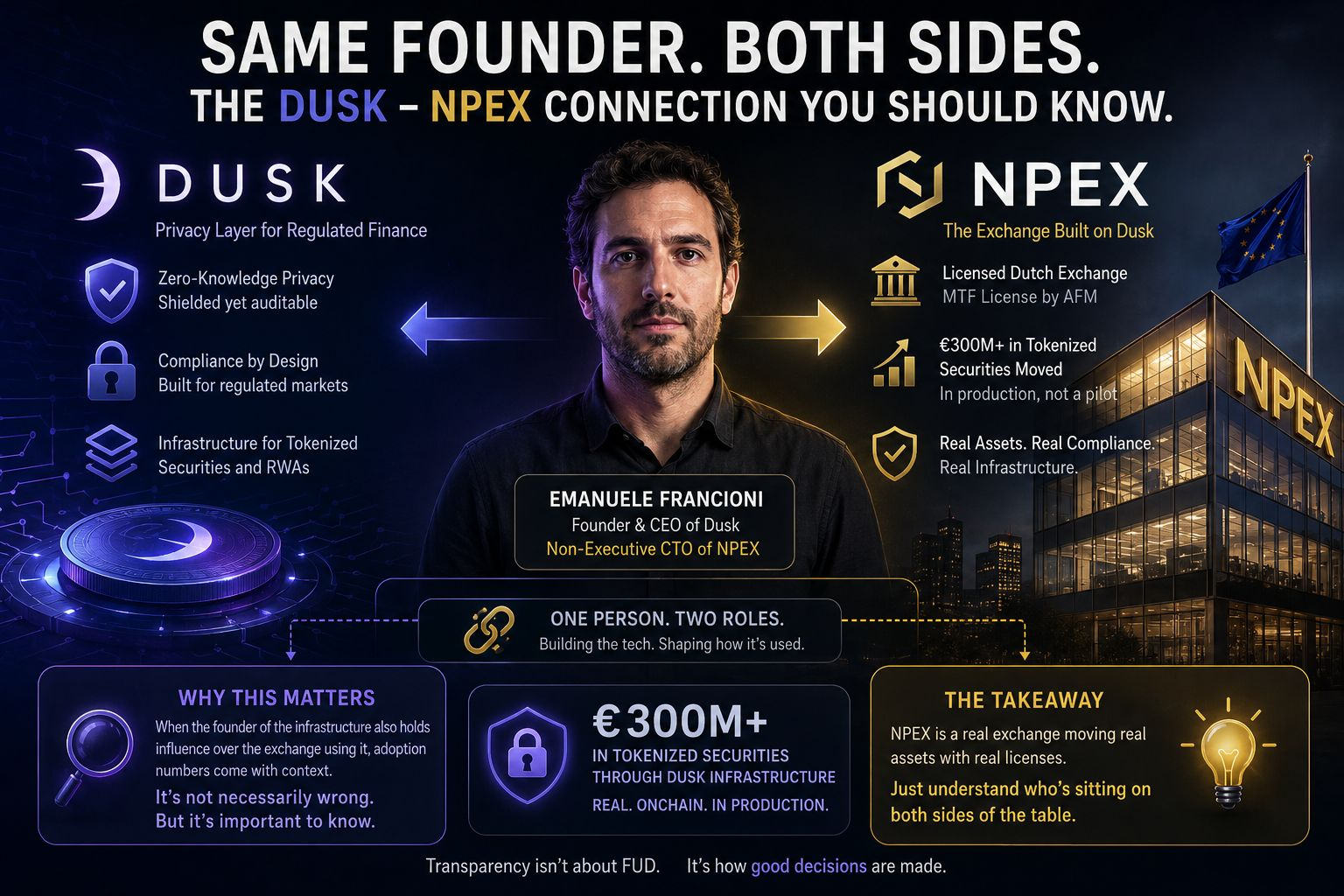
ダスクの創業者は、ダスク自身の技術で動いている取引所のCTOでもあります。これについて私自身で確認するまで、誰も私に指摘してくれませんでした。
私は#dusk のパートナーシップ関連ニュースを読んでいて、思わず立ち止まる一文に気づきました。@Dusk_Foundation の創業者兼CEOであるエマヌエーレ・フランチオーニが、ダスクのインフラを使って数億規模の有価証券をトークン化している、オランダの認可取引所NPEXの非常勤CTOに任命されたという内容です。同じ人物が、本来は別々の2つの組織間のはずの提携の“両側”に座っています。
結論に飛びつく前に、公平に見たいと思います。この業界では非常勤の役職はよくあり、アドバイザーは取締役会に常に参加していますし、基盤となる技術の実際の設計者が、その実装を正しく行うために取引所を手伝うことが、必ずしも不審だというわけではありません。むしろ、$DUSK のプライバシーおよびコンプライアンス層を安全に展開する方法を、最もよく理解しているのは、それを作った本人でしょう。
ただ、少し立ち止まって考えてください。ダスクを使うNPEXは、もはや単に2社が一緒に事業をしているだけではありません。NPEXは認可された取引所で、その技術的な方向性の一部は、ダスクの取引所としての継続的な利用によって直接利益を得る自社の会社が恩恵を受ける同じ人物によって左右されています。NPEXを機関投資家の採用の証拠として語るとき、3億ドル(3億ドル超)のトークン化資産という数字、そうしたすべてに、この“静かに潜んでいる”事実が、見出しの数字のすぐ下に隠れることなく、ただ言及されることがめったにないまま同居しています。
私は、このことがNPEXの提携を偽物にしたり、数字を水増ししたりするとまでは思いません。実際の有価証券が、実際のインフラを通じて本当に動いているのだと思います。ただ、創業者が、旗艦的な採用ストーリーの両側に影響力を持っているなら、それが完全に独立した検証だとみなす前に、知っておく価値があるというだけです。後からではなく、最初にです。
ダスクの創業者は、ダスク自身の技術で動いている取引所のCTOでもあります。これについて私自身で確認するまで、誰も私に指摘してくれませんでした。
私は#dusk のパートナーシップ関連ニュースを読んでいて、思わず立ち止まる一文に気づきました。@Dusk の創業者兼CEOであるエマヌエーレ・フランチオーニが、ダスクのインフラを使って数億規模の有価証券をトークン化している、オランダの認可取引所NPEXの非常勤CTOに任命されたという内容です。同じ人物が、本来は別々の2つの組織間のはずの提携の“両側”に座っています。
結論に飛びつく前に、公平に見たいと思います。この業界では非常勤の役職はよくあり、アドバイザーは取締役会に常に参加していますし、基盤となる技術の実際の設計者が、その実装を正しく行うために取引所を手伝うことが、必ずしも不審だというわけではありません。むしろ、$DUSK のプライバシーおよびコンプライアンス層を安全に展開する方法を、最もよく理解しているのは、それを作った本人でしょう。
ただ、少し立ち止まって考えてください。ダスクを使うNPEXは、もはや単に2社が一緒に事業をしているだけではありません。NPEXは認可された取引所で、その技術的な方向性の一部は、ダスクの取引所としての継続的な利用によって直接利益を得る自社の会社が恩恵を受ける同じ人物によって左右されています。NPEXを機関投資家の採用の証拠として語るとき、3億ドル(3億ドル超)のトークン化資産という数字、そうしたすべてに、この“静かに潜んでいる”事実が、見出しの数字のすぐ下に隠れることなく、ただ言及されることがめったにないまま同居しています。
私は、このことがNPEXの提携を偽物にしたり、数字を水増ししたりするとまでは思いません。実際の有価証券が、実際のインフラを通じて本当に動いているのだと思います。ただ、創業者が、旗艦的な採用ストーリーの両側に影響力を持っているなら、それが完全に独立した検証だとみなす前に、知っておく価値があるというだけです。後からではなく、最初にです。
私は#dusk のパートナーシップ関連ニュースを読んでいて、思わず立ち止まる一文に気づきました。@Dusk の創業者兼CEOであるエマヌエーレ・フランチオーニが、ダスクのインフラを使って数億規模の有価証券をトークン化している、オランダの認可取引所NPEXの非常勤CTOに任命されたという内容です。同じ人物が、本来は別々の2つの組織間のはずの提携の“両側”に座っています。
結論に飛びつく前に、公平に見たいと思います。この業界では非常勤の役職はよくあり、アドバイザーは取締役会に常に参加していますし、基盤となる技術の実際の設計者が、その実装を正しく行うために取引所を手伝うことが、必ずしも不審だというわけではありません。むしろ、$DUSK のプライバシーおよびコンプライアンス層を安全に展開する方法を、最もよく理解しているのは、それを作った本人でしょう。
ただ、少し立ち止まって考えてください。ダスクを使うNPEXは、もはや単に2社が一緒に事業をしているだけではありません。NPEXは認可された取引所で、その技術的な方向性の一部は、ダスクの取引所としての継続的な利用によって直接利益を得る自社の会社が恩恵を受ける同じ人物によって左右されています。NPEXを機関投資家の採用の証拠として語るとき、3億ドル(3億ドル超)のトークン化資産という数字、そうしたすべてに、この“静かに潜んでいる”事実が、見出しの数字のすぐ下に隠れることなく、ただ言及されることがめったにないまま同居しています。
私は、このことがNPEXの提携を偽物にしたり、数字を水増ししたりするとまでは思いません。実際の有価証券が、実際のインフラを通じて本当に動いているのだと思います。ただ、創業者が、旗艦的な採用ストーリーの両側に影響力を持っているなら、それが完全に独立した検証だとみなす前に、知っておく価値があるというだけです。後からではなく、最初にです。
1
167
·
--
確認済み
KYCは一度だけ済ませ、どこでも使い回せ。@Dusk_Foundation は3年前にこれを作り上げたのに、もうほとんど誰も話題にしません。
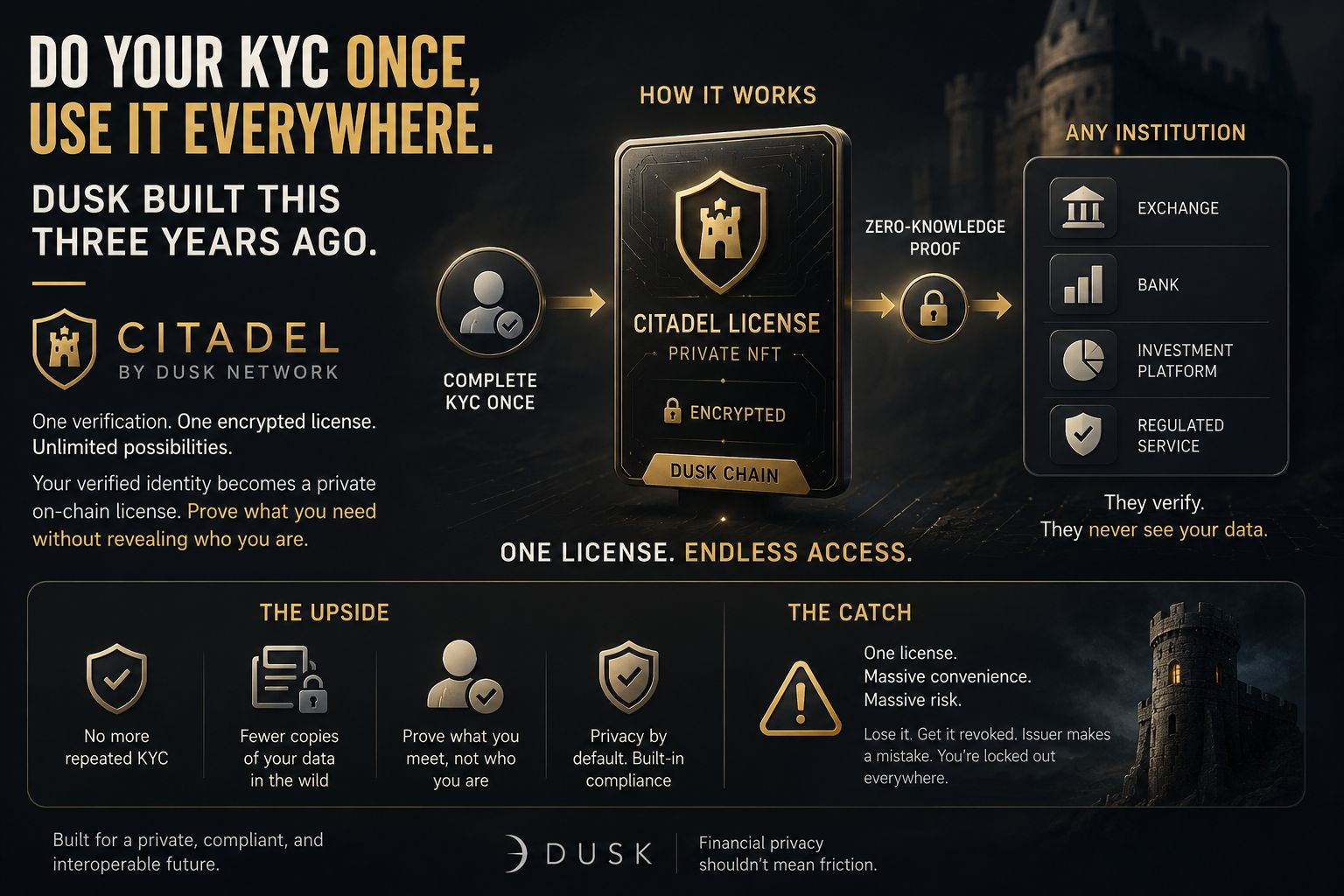
最近のDuskEVMと価格の値動きにみんな盛り上がっているのは分かります。ですが、#dusk の過去ログをさかのぼってみると、今まさに出ているものよりも、もっと重要だと思う古い話を見つけました。Citadelです。KYCは一度完了すれば、その後あなたを確認する必要があるあらゆる機関が、毎回最初から同じ手続きをやらせる代わりに、ライセンスを照合するだけで済みます。
仕組みはこうです。あなたの検証済みの身元は、プライベートなNFTのようなもの、ライセンスとして、Duskチェーン上に暗号化されて保存されます。プラットフォームがあなたの要件(適格投資家としてのステータス、最低残高、その他何であれ)を満たしていることを確認したいとき、あなたは再び書類を渡す必要がありません。あなたは、そのプラットフォームの“正確な要件”を満たす有効なライセンスを保有していることを示すゼロ知識証明を生成します。彼らが見るのはそれだけ。名前でも、銀行の明細でもなく、「検証済みのYES」だけです。
この点が良いと思うのは明白です。今日のKYCは本当に最悪です。同じ書類、同じ“IDを持っている自撮り”。それを、触れるたびにすべての取引所やプラットフォームで何度も繰り返す。各サービスが、どこかにデータの新しいコピーを保存していく。Citadelはそれらを1つの検証に集約して再利用するので、個人書類の山がどこかのデータベースに溜まって漏洩を待つ…という状況を減らせます。
ただ、気になる点もあります。コンプライアンス上の“身元”が、オンチェーンの1つのライセンスに集約されるなら、そのライセンスは非常に価値の高い狙いになります。管理を失う、あるいは発行者がミスをする—そうなれば、1つのプラットフォームから締め出されるだけでなく、場合によっては全部です。利便性を中央集権化するのと、リスクを中央集権化するのは、たいてい同じ動きで、違う服を着ているだけです。
3年前の話なのに、いまだにあまり注目されていないようです。Duskが実際に作ったものの中で、最も過小評価されている可能性すらあります。$DUSK
KYCは一度だけ済ませ、どこでも使い回せ。@Dusk は3年前にこれを作り上げたのに、もうほとんど誰も話題にしません。
最近のDuskEVMと価格の値動きにみんな盛り上がっているのは分かります。ですが、#dusk の過去ログをさかのぼってみると、今まさに出ているものよりも、もっと重要だと思う古い話を見つけました。Citadelです。KYCは一度完了すれば、その後あなたを確認する必要があるあらゆる機関が、毎回最初から同じ手続きをやらせる代わりに、ライセンスを照合するだけで済みます。
仕組みはこうです。あなたの検証済みの身元は、プライベートなNFTのようなもの、ライセンスとして、Duskチェーン上に暗号化されて保存されます。プラットフォームがあなたの要件(適格投資家としてのステータス、最低残高、その他何であれ)を満たしていることを確認したいとき、あなたは再び書類を渡す必要がありません。あなたは、そのプラットフォームの“正確な要件”を満たす有効なライセンスを保有していることを示すゼロ知識証明を生成します。彼らが見るのはそれだけ。名前でも、銀行の明細でもなく、「検証済みのYES」だけです。
この点が良いと思うのは明白です。今日のKYCは本当に最悪です。同じ書類、同じ“IDを持っている自撮り”。それを、触れるたびにすべての取引所やプラットフォームで何度も繰り返す。各サービスが、どこかにデータの新しいコピーを保存していく。Citadelはそれらを1つの検証に集約して再利用するので、個人書類の山がどこかのデータベースに溜まって漏洩を待つ…という状況を減らせます。
ただ、気になる点もあります。コンプライアンス上の“身元”が、オンチェーンの1つのライセンスに集約されるなら、そのライセンスは非常に価値の高い狙いになります。管理を失う、あるいは発行者がミスをする—そうなれば、1つのプラットフォームから締め出されるだけでなく、場合によっては全部です。利便性を中央集権化するのと、リスクを中央集権化するのは、たいてい同じ動きで、違う服を着ているだけです。
3年前の話なのに、いまだにあまり注目されていないようです。Duskが実際に作ったものの中で、最も過小評価されている可能性すらあります。$DUSK
最近のDuskEVMと価格の値動きにみんな盛り上がっているのは分かります。ですが、#dusk の過去ログをさかのぼってみると、今まさに出ているものよりも、もっと重要だと思う古い話を見つけました。Citadelです。KYCは一度完了すれば、その後あなたを確認する必要があるあらゆる機関が、毎回最初から同じ手続きをやらせる代わりに、ライセンスを照合するだけで済みます。
仕組みはこうです。あなたの検証済みの身元は、プライベートなNFTのようなもの、ライセンスとして、Duskチェーン上に暗号化されて保存されます。プラットフォームがあなたの要件(適格投資家としてのステータス、最低残高、その他何であれ)を満たしていることを確認したいとき、あなたは再び書類を渡す必要がありません。あなたは、そのプラットフォームの“正確な要件”を満たす有効なライセンスを保有していることを示すゼロ知識証明を生成します。彼らが見るのはそれだけ。名前でも、銀行の明細でもなく、「検証済みのYES」だけです。
この点が良いと思うのは明白です。今日のKYCは本当に最悪です。同じ書類、同じ“IDを持っている自撮り”。それを、触れるたびにすべての取引所やプラットフォームで何度も繰り返す。各サービスが、どこかにデータの新しいコピーを保存していく。Citadelはそれらを1つの検証に集約して再利用するので、個人書類の山がどこかのデータベースに溜まって漏洩を待つ…という状況を減らせます。
ただ、気になる点もあります。コンプライアンス上の“身元”が、オンチェーンの1つのライセンスに集約されるなら、そのライセンスは非常に価値の高い狙いになります。管理を失う、あるいは発行者がミスをする—そうなれば、1つのプラットフォームから締め出されるだけでなく、場合によっては全部です。利便性を中央集権化するのと、リスクを中央集権化するのは、たいてい同じ動きで、違う服を着ているだけです。
3年前の話なのに、いまだにあまり注目されていないようです。Duskが実際に作ったものの中で、最も過小評価されている可能性すらあります。$DUSK
2
2
221
·
--
$DUSK たった今、あらゆるEthereum開発者が新しいことを何も学ばずにここで構築できるようになりました。これは価格チャートではなく、実際のアンロックだと思います。
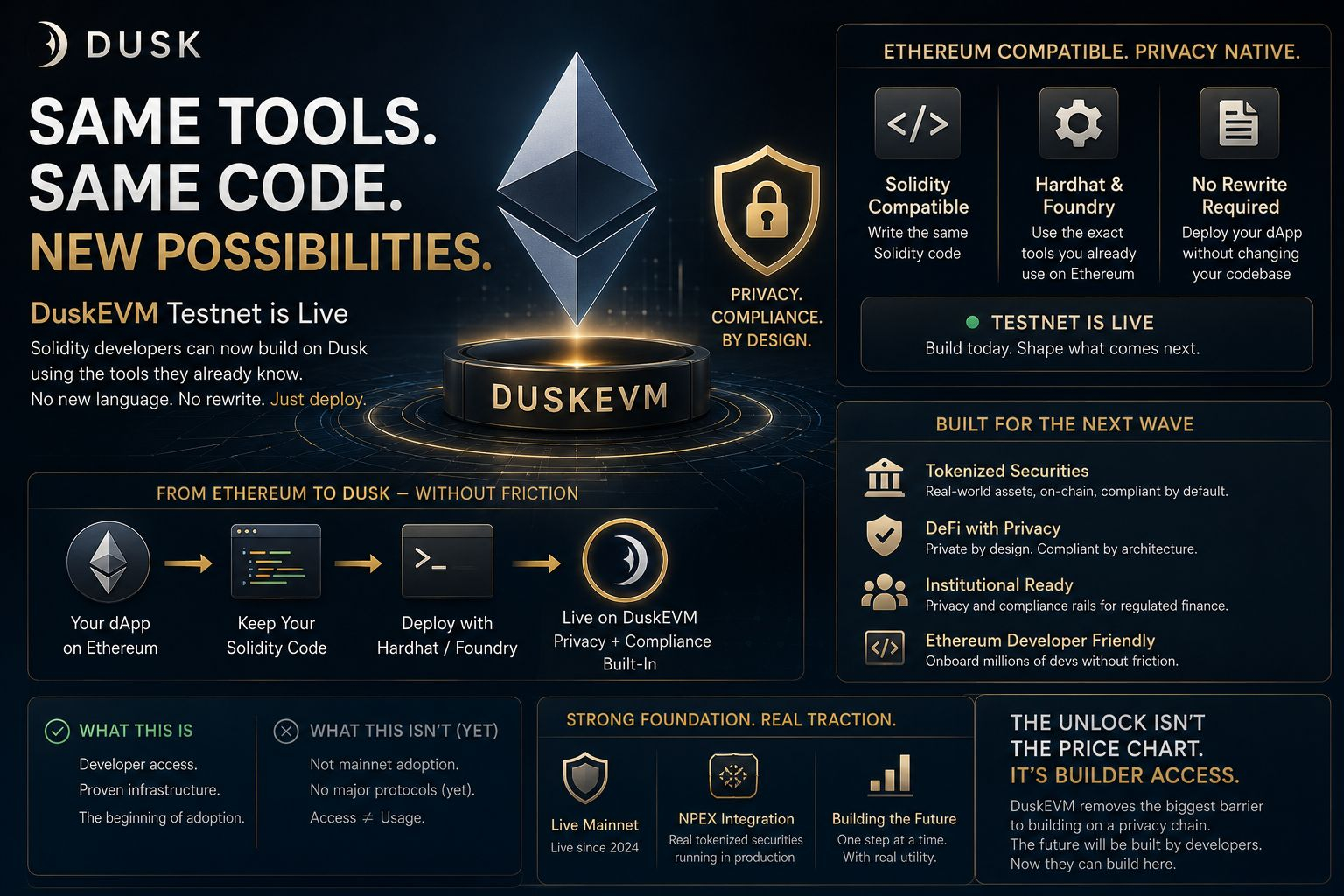
小さな見出し、大きな意味。今月初めにDuskEVMテストネットが稼働を開始しました。つまり何が起きるのか:開発者は、HardhatとFoundryを使って@Dusk_Foundation 上にSolidityコントラクトをデプロイできるようになりました。Ethereumですでに使っているまさにそのツールです。新しい言語は不要、新たにコードベースをゼロから書き直す必要もなく、試すためだけに#dusk ネイティブRust環境をわざわざ学ぶ必要もありません。
それが、聞こえる以上に重要な理由。プライバシーチェーンには歴史的に「鶏と卵」の問題がありました。技術は本当に素晴らしいのですが、ほとんどの人が作らないのは、開発者が慣れたものをすべて捨てて最初からやり直さなければならないからです。Duskはその言い訳を取り除きました。既存のEthereum DeFiアプリが今、DuskEVMを直接ターゲットできるようになり、Solidityのコードはそのまま維持し、書き換えなしでDuskのプライバシーとコンプライアンス層を内側に継承できます。
これは何で、何ではないのかを正直に話したいです。というのも、話題(ハイプ)のサイクルはこの部分を飛ばしがちだからです。これはテストネットです。開発者のアクセスを確立するものであって、まだ採用を証明しているわけではありません。誰もここで主要プロトコルを出荷していませんし、それによってTVLが動いたわけでもありません。アクセスは利用(usage)とは同じではありません。そして、テストネットが完成品のように扱われてしまうのを十分に見てきたので、その違いが重要だと分かっています。
とはいえ、他の積み上がってきた要素――NPEXを通じて走る実運用のトークン化された有価証券、稼働開始から1年が経ったライブMainnet――と組み合わさったことで、「Interesting Privacy Chain」を「A Chain Ethereum Buildersが実際に摩擦なく参入できる」に変えるピースになっています。もう一つの緑の足(キャンドル)よりも、長期的にはずっと大きな意味があります。
注意深く見ています。まだ実証されたとは言いません。テストネットは本物です。採用はまだ未解決の問いです。
$DUSK たった今、あらゆるEthereum開発者が新しいことを何も学ばずにここで構築できるようになりました。これは価格チャートではなく、実際のアンロックだと思います。
小さな見出し、大きな意味。今月初めにDuskEVMテストネットが稼働を開始しました。つまり何が起きるのか:開発者は、HardhatとFoundryを使って@Dusk 上にSolidityコントラクトをデプロイできるようになりました。Ethereumですでに使っているまさにそのツールです。新しい言語は不要、新たにコードベースをゼロから書き直す必要もなく、試すためだけに#dusk ネイティブRust環境をわざわざ学ぶ必要もありません。
それが、聞こえる以上に重要な理由。プライバシーチェーンには歴史的に「鶏と卵」の問題がありました。技術は本当に素晴らしいのですが、ほとんどの人が作らないのは、開発者が慣れたものをすべて捨てて最初からやり直さなければならないからです。Duskはその言い訳を取り除きました。既存のEthereum DeFiアプリが今、DuskEVMを直接ターゲットできるようになり、Solidityのコードはそのまま維持し、書き換えなしでDuskのプライバシーとコンプライアンス層を内側に継承できます。
これは何で、何ではないのかを正直に話したいです。というのも、話題(ハイプ)のサイクルはこの部分を飛ばしがちだからです。これはテストネットです。開発者のアクセスを確立するものであって、まだ採用を証明しているわけではありません。誰もここで主要プロトコルを出荷していませんし、それによってTVLが動いたわけでもありません。アクセスは利用(usage)とは同じではありません。そして、テストネットが完成品のように扱われてしまうのを十分に見てきたので、その違いが重要だと分かっています。
とはいえ、他の積み上がってきた要素――NPEXを通じて走る実運用のトークン化された有価証券、稼働開始から1年が経ったライブMainnet――と組み合わさったことで、「Interesting Privacy Chain」を「A Chain Ethereum Buildersが実際に摩擦なく参入できる」に変えるピースになっています。もう一つの緑の足(キャンドル)よりも、長期的にはずっと大きな意味があります。
注意深く見ています。まだ実証されたとは言いません。テストネットは本物です。採用はまだ未解決の問いです。
小さな見出し、大きな意味。今月初めにDuskEVMテストネットが稼働を開始しました。つまり何が起きるのか:開発者は、HardhatとFoundryを使って@Dusk 上にSolidityコントラクトをデプロイできるようになりました。Ethereumですでに使っているまさにそのツールです。新しい言語は不要、新たにコードベースをゼロから書き直す必要もなく、試すためだけに#dusk ネイティブRust環境をわざわざ学ぶ必要もありません。
それが、聞こえる以上に重要な理由。プライバシーチェーンには歴史的に「鶏と卵」の問題がありました。技術は本当に素晴らしいのですが、ほとんどの人が作らないのは、開発者が慣れたものをすべて捨てて最初からやり直さなければならないからです。Duskはその言い訳を取り除きました。既存のEthereum DeFiアプリが今、DuskEVMを直接ターゲットできるようになり、Solidityのコードはそのまま維持し、書き換えなしでDuskのプライバシーとコンプライアンス層を内側に継承できます。
これは何で、何ではないのかを正直に話したいです。というのも、話題(ハイプ)のサイクルはこの部分を飛ばしがちだからです。これはテストネットです。開発者のアクセスを確立するものであって、まだ採用を証明しているわけではありません。誰もここで主要プロトコルを出荷していませんし、それによってTVLが動いたわけでもありません。アクセスは利用(usage)とは同じではありません。そして、テストネットが完成品のように扱われてしまうのを十分に見てきたので、その違いが重要だと分かっています。
とはいえ、他の積み上がってきた要素――NPEXを通じて走る実運用のトークン化された有価証券、稼働開始から1年が経ったライブMainnet――と組み合わさったことで、「Interesting Privacy Chain」を「A Chain Ethereum Buildersが実際に摩擦なく参入できる」に変えるピースになっています。もう一つの緑の足(キャンドル)よりも、長期的にはずっと大きな意味があります。
注意深く見ています。まだ実証されたとは言いません。テストネットは本物です。採用はまだ未解決の問いです。
1
1
106
·
--
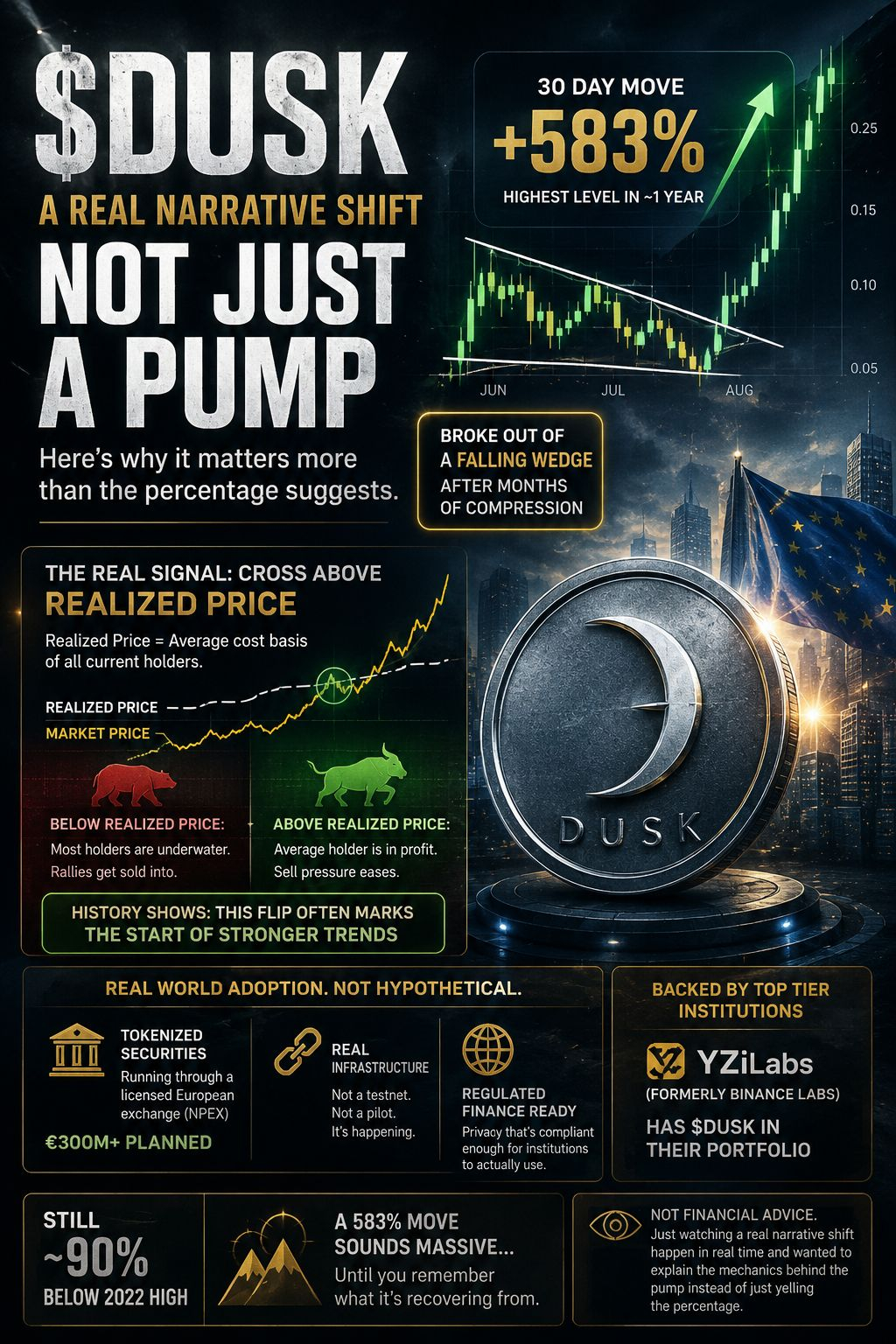
$DUSK ついに、ここ数年でほとんどのプライバシーコインが成し遂げられていなかったことをやりました。なぜこの出来事が、提示されているパーセンテージ以上に重要なのかを説明します。
皆、まずは数字を追いかけます。よし、それから始めましょう。@Dusk_Foundation は30日で約583%を記録しました。何か月もはまっていた下降ウェッジをブレイクし、約1年ぶりの高値まで到達。大きな数字です。ですが、この市場では毎週のように大きな数字が出て、ほとんどは6週間後には何も意味を持たないものになります。
ここからが本題で、私が注意を払ったポイントです。オンチェーンデータによると、#dusk は実現価格(現在保有している人たちの平均的なコストベース)を超えました。この反転は、人々が考えるよりずっと重要です。このラインより下では、多くの保有者が含み損の状態で、リリーフの上昇局面は「損益分岐に戻って売ろう」とする人々によって売りに変わります。逆にこのラインより上では、平均的な保有者がようやく利益圏に入ります。そして歴史的には、そこで売り圧が止まり、むしろ次の上昇を抑えきれなくなります。これは“売られて終わるだけのポンプ”と、“継続して伸びる余地があるトレンド”の違いです。
しかもこれは、真空の中で起きているわけではありません。DUSKは、実世界資産(RWA)との統合を実際に進めている数少ないプライバシートークンの一つです。ライセンスを受けた欧州の取引所を通じて運用されるトークン化証券で、計画としては3億ユーロ超が見込まれており、机上の空論ではありません。
Y Zi Labs(旧BINANCE Labsとして知られていたファンド)が、自社のポートフォリオにDUSKを入れています。これは、単なる個人投資家の盛り上がりではありません。機関投資家が実際に組み込もうとしている、そういう物語が形成されているということです。規制下の金融が触れられるだけのコンプライアンスを備えたプライバシー。
退屈な部分も言います。というのも大事だからです。このトークンは依然として、2022年の高値からおそらく90%ほど下の位置にあります。583%の上昇は大きく聞こえますが、何からの回復なのかを思い出してください。動きを尊重はする。ただし、まだそうではないものに“ロマン化”はしないでください。
投資助言ではありません。実際に起きている物語の転換をリアルタイムで見ていて、パーセンテージを叫ぶだけでなく、ポンプの仕組みの背景を説明したくなりました。{future}(DUSKUSDT)
$DUSK ついに、ここ数年でほとんどのプライバシーコインが成し遂げられていなかったことをやりました。なぜこの出来事が、提示されているパーセンテージ以上に重要なのかを説明します。
皆、まずは数字を追いかけます。よし、それから始めましょう。@Dusk は30日で約583%を記録しました。何か月もはまっていた下降ウェッジをブレイクし、約1年ぶりの高値まで到達。大きな数字です。ですが、この市場では毎週のように大きな数字が出て、ほとんどは6週間後には何も意味を持たないものになります。
ここからが本題で、私が注意を払ったポイントです。オンチェーンデータによると、#dusk は実現価格(現在保有している人たちの平均的なコストベース)を超えました。この反転は、人々が考えるよりずっと重要です。このラインより下では、多くの保有者が含み損の状態で、リリーフの上昇局面は「損益分岐に戻って売ろう」とする人々によって売りに変わります。逆にこのラインより上では、平均的な保有者がようやく利益圏に入ります。そして歴史的には、そこで売り圧が止まり、むしろ次の上昇を抑えきれなくなります。これは“売られて終わるだけのポンプ”と、“継続して伸びる余地があるトレンド”の違いです。
しかもこれは、真空の中で起きているわけではありません。DUSKは、実世界資産(RWA)との統合を実際に進めている数少ないプライバシートークンの一つです。ライセンスを受けた欧州の取引所を通じて運用されるトークン化証券で、計画としては3億ユーロ超が見込まれており、机上の空論ではありません。
Y Zi Labs(旧BINANCE Labsとして知られていたファンド)が、自社のポートフォリオにDUSKを入れています。これは、単なる個人投資家の盛り上がりではありません。機関投資家が実際に組み込もうとしている、そういう物語が形成されているということです。規制下の金融が触れられるだけのコンプライアンスを備えたプライバシー。
退屈な部分も言います。というのも大事だからです。このトークンは依然として、2022年の高値からおそらく90%ほど下の位置にあります。583%の上昇は大きく聞こえますが、何からの回復なのかを思い出してください。動きを尊重はする。ただし、まだそうではないものに“ロマン化”はしないでください。
投資助言ではありません。実際に起きている物語の転換をリアルタイムで見ていて、パーセンテージを叫ぶだけでなく、ポンプの仕組みの背景を説明したくなりました。
皆、まずは数字を追いかけます。よし、それから始めましょう。@Dusk は30日で約583%を記録しました。何か月もはまっていた下降ウェッジをブレイクし、約1年ぶりの高値まで到達。大きな数字です。ですが、この市場では毎週のように大きな数字が出て、ほとんどは6週間後には何も意味を持たないものになります。
ここからが本題で、私が注意を払ったポイントです。オンチェーンデータによると、#dusk は実現価格(現在保有している人たちの平均的なコストベース)を超えました。この反転は、人々が考えるよりずっと重要です。このラインより下では、多くの保有者が含み損の状態で、リリーフの上昇局面は「損益分岐に戻って売ろう」とする人々によって売りに変わります。逆にこのラインより上では、平均的な保有者がようやく利益圏に入ります。そして歴史的には、そこで売り圧が止まり、むしろ次の上昇を抑えきれなくなります。これは“売られて終わるだけのポンプ”と、“継続して伸びる余地があるトレンド”の違いです。
しかもこれは、真空の中で起きているわけではありません。DUSKは、実世界資産(RWA)との統合を実際に進めている数少ないプライバシートークンの一つです。ライセンスを受けた欧州の取引所を通じて運用されるトークン化証券で、計画としては3億ユーロ超が見込まれており、机上の空論ではありません。
Y Zi Labs(旧BINANCE Labsとして知られていたファンド)が、自社のポートフォリオにDUSKを入れています。これは、単なる個人投資家の盛り上がりではありません。機関投資家が実際に組み込もうとしている、そういう物語が形成されているということです。規制下の金融が触れられるだけのコンプライアンスを備えたプライバシー。
退屈な部分も言います。というのも大事だからです。このトークンは依然として、2022年の高値からおそらく90%ほど下の位置にあります。583%の上昇は大きく聞こえますが、何からの回復なのかを思い出してください。動きを尊重はする。ただし、まだそうではないものに“ロマン化”はしないでください。
投資助言ではありません。実際に起きている物語の転換をリアルタイムで見ていて、パーセンテージを叫ぶだけでなく、ポンプの仕組みの背景を説明したくなりました。
4
2
152
·
--
多くの人は、DeFiにおける不確実性のためにどれだけ過剰に支払っているかを実感していません。
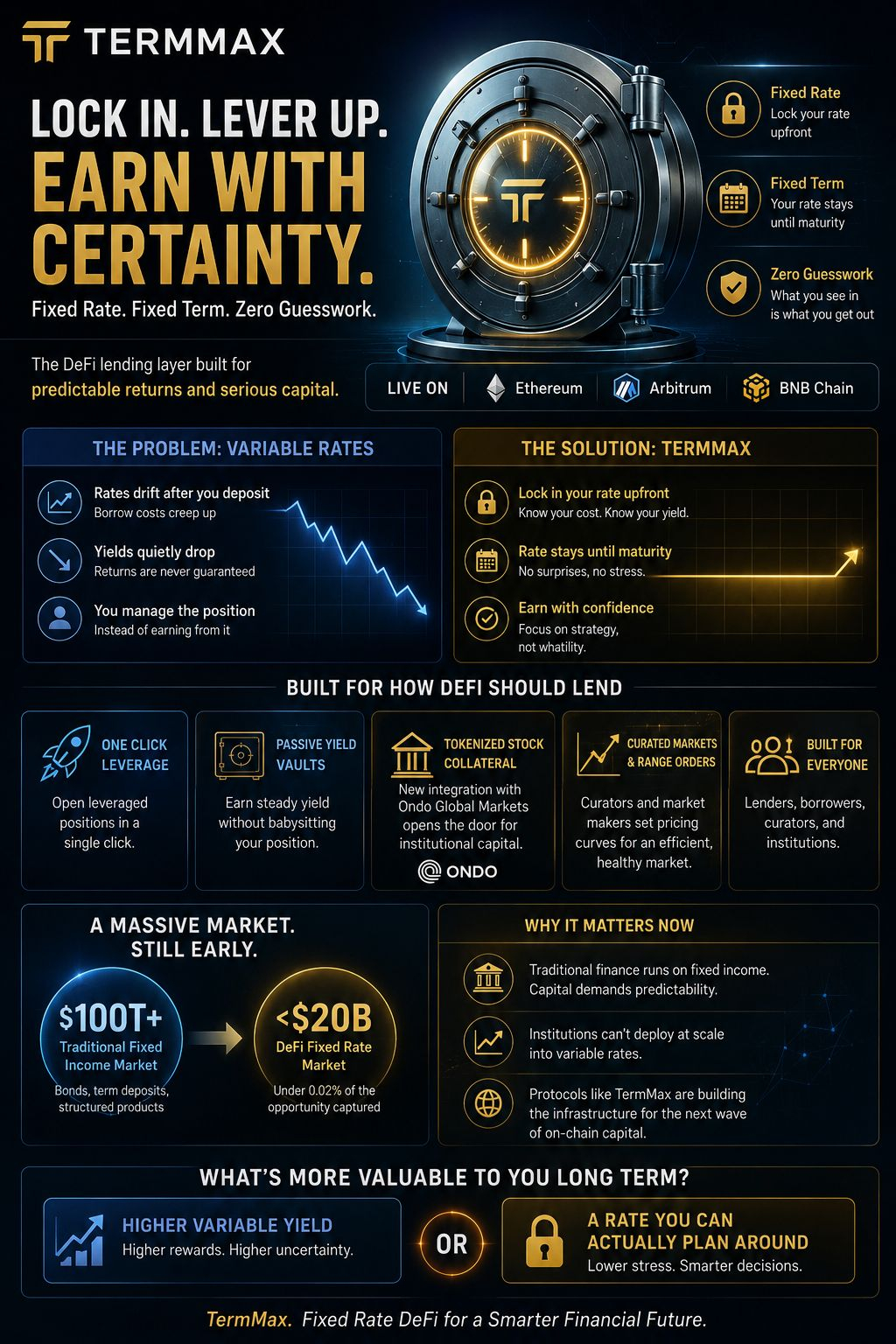
あなたは貸付プールに預け入れます。最初の1日目はレートがとても良く見えますが、その後ドリフト(変動)していきます。借入コストはじわじわと上がり、利回りは静かに低下します。結果として、実際に利回りを得るのではなく、ポジションを運用・管理することになってしまいます。
@termmax は別のアプローチです。固定金利・固定期間の貸付/借入プロトコルで、Ethereum、Arbitrum、BNB Chain上で稼働しています。最初に金利を固定しておけば、満期までそのまま変わりません。入れるときに見えているものが、出てくるときにそのまま得られます。
いま注目すべき理由がいくつかあります。
複数のプロトコルを経由せずに、ワンクリックでレバレッジをかけたポジションをサポートします。
バルツ(Vault)なら、毎日ポジションを見守らなくても受動的な利回りを得られます。
最近、Ondo Global Marketsを通じてトークン化された株式担保を追加しました。これは機関投資家の資本をオンチェーンに呼び込むための、まさに一歩です。
キュレーターやマーケットメーカーはレンジ注文によって独自の価格カーブを設定できるため、市場は単一の数式に頼るのではなく効率的な状態を保てます。
従来の金融は固定収入(フィックスド・インカム)で動いています。債券、定期預金、ストラクチャード商品。価値の大きい市場で、$100Tを大きく超えています。DeFiの固定金利セグメントはまだ$20B未満です。これは、この分野の弱みではなく、始まったばかりということです。
DeFiが、不確実なリターンに耐えられない資本を惹きつけたいなら、このようなプロトコルがそのための実際のインフラを構築しています。
長期的にあなたにとって価値があるのは、より高い変動利回りでしょうか。それとも、実際に計画できる金利でしょうか? #termmax
多くの人は、DeFiにおける不確実性のためにどれだけ過剰に支払っているかを実感していません。
あなたは貸付プールに預け入れます。最初の1日目はレートがとても良く見えますが、その後ドリフト(変動)していきます。借入コストはじわじわと上がり、利回りは静かに低下します。結果として、実際に利回りを得るのではなく、ポジションを運用・管理することになってしまいます。
@TermMax は別のアプローチです。固定金利・固定期間の貸付/借入プロトコルで、Ethereum、Arbitrum、BNB Chain上で稼働しています。最初に金利を固定しておけば、満期までそのまま変わりません。入れるときに見えているものが、出てくるときにそのまま得られます。
いま注目すべき理由がいくつかあります。
複数のプロトコルを経由せずに、ワンクリックでレバレッジをかけたポジションをサポートします。
バルツ(Vault)なら、毎日ポジションを見守らなくても受動的な利回りを得られます。
最近、Ondo Global Marketsを通じてトークン化された株式担保を追加しました。これは機関投資家の資本をオンチェーンに呼び込むための、まさに一歩です。
キュレーターやマーケットメーカーはレンジ注文によって独自の価格カーブを設定できるため、市場は単一の数式に頼るのではなく効率的な状態を保てます。
従来の金融は固定収入(フィックスド・インカム)で動いています。債券、定期預金、ストラクチャード商品。価値の大きい市場で、$100Tを大きく超えています。DeFiの固定金利セグメントはまだ$20B未満です。これは、この分野の弱みではなく、始まったばかりということです。
DeFiが、不確実なリターンに耐えられない資本を惹きつけたいなら、このようなプロトコルがそのための実際のインフラを構築しています。
長期的にあなたにとって価値があるのは、より高い変動利回りでしょうか。それとも、実際に計画できる金利でしょうか? #termmax
あなたは貸付プールに預け入れます。最初の1日目はレートがとても良く見えますが、その後ドリフト(変動)していきます。借入コストはじわじわと上がり、利回りは静かに低下します。結果として、実際に利回りを得るのではなく、ポジションを運用・管理することになってしまいます。
@TermMax は別のアプローチです。固定金利・固定期間の貸付/借入プロトコルで、Ethereum、Arbitrum、BNB Chain上で稼働しています。最初に金利を固定しておけば、満期までそのまま変わりません。入れるときに見えているものが、出てくるときにそのまま得られます。
いま注目すべき理由がいくつかあります。
複数のプロトコルを経由せずに、ワンクリックでレバレッジをかけたポジションをサポートします。
バルツ(Vault)なら、毎日ポジションを見守らなくても受動的な利回りを得られます。
最近、Ondo Global Marketsを通じてトークン化された株式担保を追加しました。これは機関投資家の資本をオンチェーンに呼び込むための、まさに一歩です。
キュレーターやマーケットメーカーはレンジ注文によって独自の価格カーブを設定できるため、市場は単一の数式に頼るのではなく効率的な状態を保てます。
従来の金融は固定収入(フィックスド・インカム)で動いています。債券、定期預金、ストラクチャード商品。価値の大きい市場で、$100Tを大きく超えています。DeFiの固定金利セグメントはまだ$20B未満です。これは、この分野の弱みではなく、始まったばかりということです。
DeFiが、不確実なリターンに耐えられない資本を惹きつけたいなら、このようなプロトコルがそのための実際のインフラを構築しています。
長期的にあなたにとって価値があるのは、より高い変動利回りでしょうか。それとも、実際に計画できる金利でしょうか? #termmax
2
1
251
·
--
確認済み
@Dusk_Foundation 「プライバシーとコンプライアンスを両立する」からこそ「ユニーク」だと言われ続けています。でも、実のところ、そんなにユニークではありません。
#dusk のレポートで同じ一文が何度も繰り返し出てくるのを見て、実際にその“まさに同じ課題”に取り組んでいるのは誰なのか確認してみました。マーケティングが言うほど人は少なくなくて、むしろ部屋はもっと混んでいます。
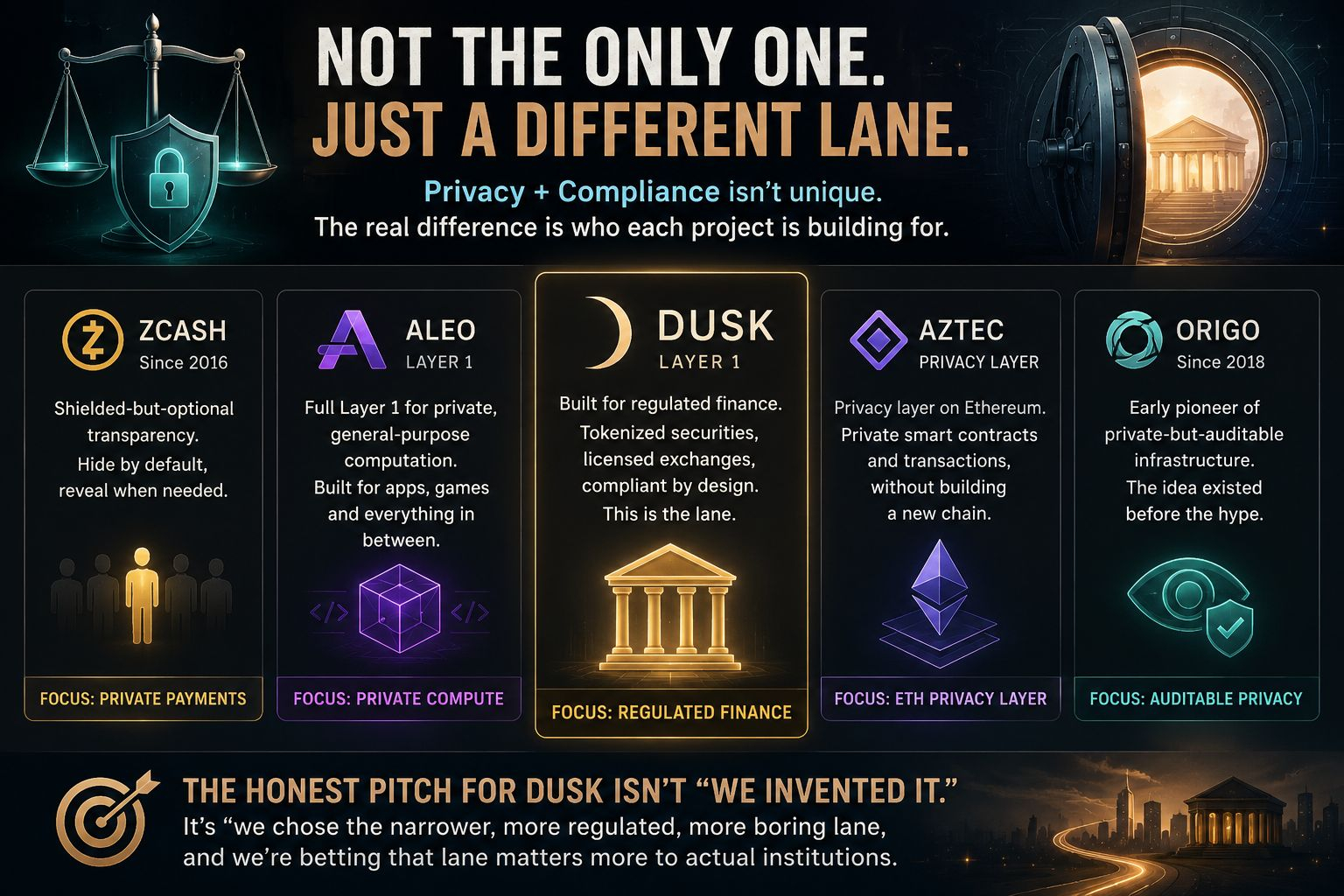
Zcashは2016年から、遮蔽(シールド)しつつも任意で透明性を出す仕組みを続けています。これは、基本的に同じ緊張関係です。デフォルトでは隠し、必要なときに明らかにする。Aleoは、支払いだけではなく、プライベートな汎用計算のためのフルのレイヤー1を作っています。Aztecもそれに近いことをしていますが、独自チェーンではなくEthereumの上に載る“プライバシー層”として実現しようとしています。さらにOrigoは、もっと小規模であまり話題に上がらないプロジェクトですが、それでも2018年には「プライベートだけど監査可能」なインフラを売り込んでいました。Duskが動くメインネットを出すずっと前の話です。
本当に違うのは、そしてここは公平に言いたいのですが、「誰に向けて作っているか」です。AleoとAztecはどちらも、汎用のプライベート計算、アプリ、ゲーム、つまり“私的であることに加えて”任意のロジックが動く領域に寄っています。$DUSK は、規制された金融、トークン化された有価証券、ライセンスを持つ取引所、NPEXのような現実世界の取引に、より絞り込んでいます。これは、何もないに等しい“誤差”ではなく、はっきりした違いです。もっとも、そのアイデア自体が完全に新しいわけではありません。共通の発想を追っているチームが何年もかけている中で、狙っているターゲット市場が違うだけです。
Duskのピッチを正直に言うなら、「私たちがプライベートでコンプライアントな金融を発明した」ではありません。「AleoやAztecよりも、もっと狭くて、もっと退屈で、より規制の強いレーンを選んで、それが実際の機関にとってより重要だと賭けている」ということです。主張は小さくなります。そして、私がより信じられるのも、そのほうです。
@Dusk 「プライバシーとコンプライアンスを両立する」からこそ「ユニーク」だと言われ続けています。でも、実のところ、そんなにユニークではありません。
#dusk のレポートで同じ一文が何度も繰り返し出てくるのを見て、実際にその“まさに同じ課題”に取り組んでいるのは誰なのか確認してみました。マーケティングが言うほど人は少なくなくて、むしろ部屋はもっと混んでいます。
Zcashは2016年から、遮蔽(シールド)しつつも任意で透明性を出す仕組みを続けています。これは、基本的に同じ緊張関係です。デフォルトでは隠し、必要なときに明らかにする。Aleoは、支払いだけではなく、プライベートな汎用計算のためのフルのレイヤー1を作っています。Aztecもそれに近いことをしていますが、独自チェーンではなくEthereumの上に載る“プライバシー層”として実現しようとしています。さらにOrigoは、もっと小規模であまり話題に上がらないプロジェクトですが、それでも2018年には「プライベートだけど監査可能」なインフラを売り込んでいました。Duskが動くメインネットを出すずっと前の話です。
本当に違うのは、そしてここは公平に言いたいのですが、「誰に向けて作っているか」です。AleoとAztecはどちらも、汎用のプライベート計算、アプリ、ゲーム、つまり“私的であることに加えて”任意のロジックが動く領域に寄っています。$DUSK は、規制された金融、トークン化された有価証券、ライセンスを持つ取引所、NPEXのような現実世界の取引に、より絞り込んでいます。これは、何もないに等しい“誤差”ではなく、はっきりした違いです。もっとも、そのアイデア自体が完全に新しいわけではありません。共通の発想を追っているチームが何年もかけている中で、狙っているターゲット市場が違うだけです。
Duskのピッチを正直に言うなら、「私たちがプライベートでコンプライアントな金融を発明した」ではありません。「AleoやAztecよりも、もっと狭くて、もっと退屈で、より規制の強いレーンを選んで、それが実際の機関にとってより重要だと賭けている」ということです。主張は小さくなります。そして、私がより信じられるのも、そのほうです。
#dusk のレポートで同じ一文が何度も繰り返し出てくるのを見て、実際にその“まさに同じ課題”に取り組んでいるのは誰なのか確認してみました。マーケティングが言うほど人は少なくなくて、むしろ部屋はもっと混んでいます。
Zcashは2016年から、遮蔽(シールド)しつつも任意で透明性を出す仕組みを続けています。これは、基本的に同じ緊張関係です。デフォルトでは隠し、必要なときに明らかにする。Aleoは、支払いだけではなく、プライベートな汎用計算のためのフルのレイヤー1を作っています。Aztecもそれに近いことをしていますが、独自チェーンではなくEthereumの上に載る“プライバシー層”として実現しようとしています。さらにOrigoは、もっと小規模であまり話題に上がらないプロジェクトですが、それでも2018年には「プライベートだけど監査可能」なインフラを売り込んでいました。Duskが動くメインネットを出すずっと前の話です。
本当に違うのは、そしてここは公平に言いたいのですが、「誰に向けて作っているか」です。AleoとAztecはどちらも、汎用のプライベート計算、アプリ、ゲーム、つまり“私的であることに加えて”任意のロジックが動く領域に寄っています。$DUSK は、規制された金融、トークン化された有価証券、ライセンスを持つ取引所、NPEXのような現実世界の取引に、より絞り込んでいます。これは、何もないに等しい“誤差”ではなく、はっきりした違いです。もっとも、そのアイデア自体が完全に新しいわけではありません。共通の発想を追っているチームが何年もかけている中で、狙っているターゲット市場が違うだけです。
Duskのピッチを正直に言うなら、「私たちがプライベートでコンプライアントな金融を発明した」ではありません。「AleoやAztecよりも、もっと狭くて、もっと退屈で、より規制の強いレーンを選んで、それが実際の機関にとってより重要だと賭けている」ということです。主張は小さくなります。そして、私がより信じられるのも、そのほうです。
2
3
623
·
--
メインネット以前からイーサリアム上で「$DUSK 」を保有しているなら、まだ実行する必要があるステップがあるかもしれません...
私は「#dusk 」の移行ドキュメントを読んでいて、早い段階で購入して、そのまま...確認しないでいた場合に見落としがちなことに気づきました。
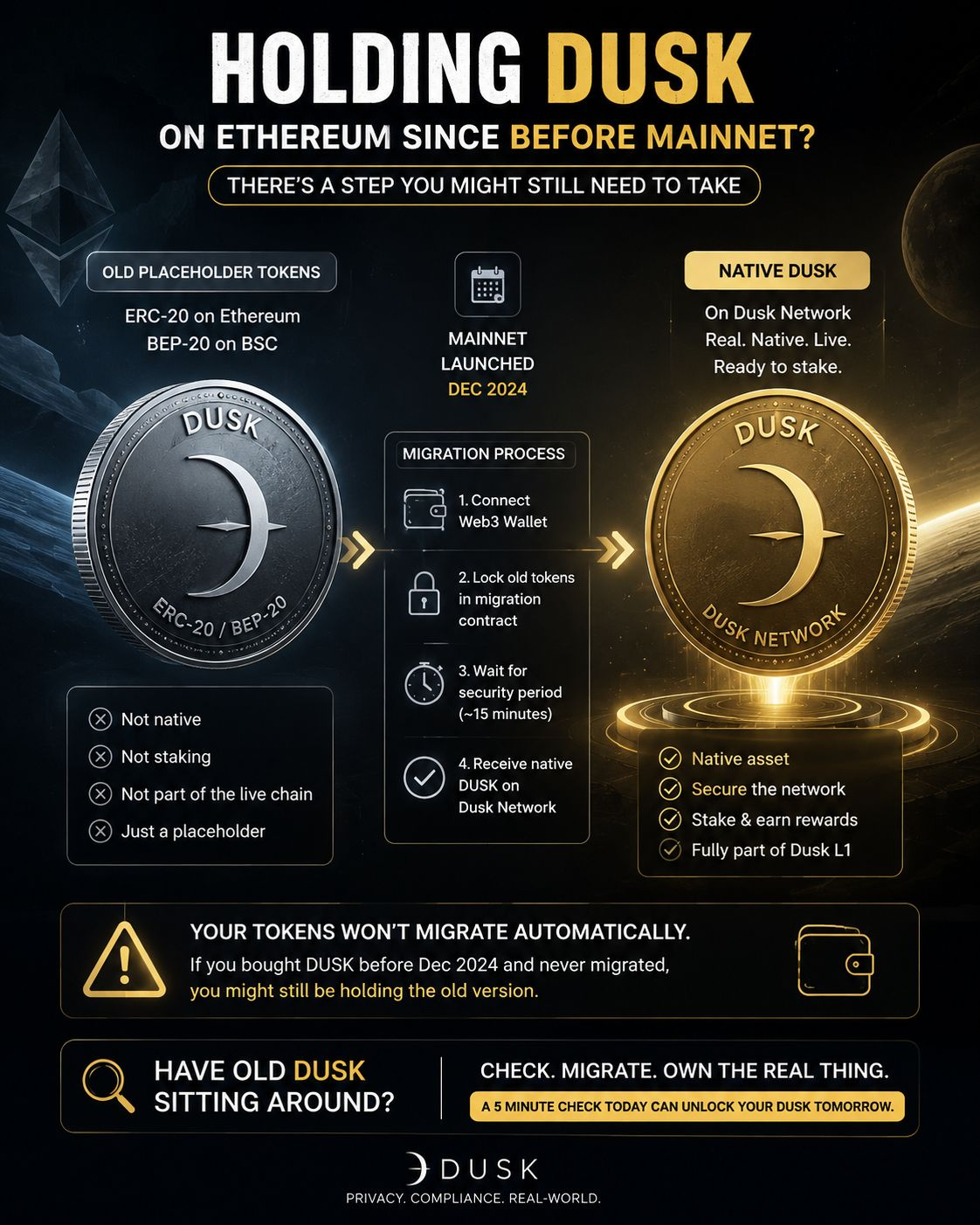
「@Dusk_Foundation 」は、本来のメインネットがまだ準備できていなかったため、実際のメインネットが稼働する前に、ERC-20(イーサリアム)およびBEP-20(BSC)としてプレースホルダートークン(仮トークン)として発行されました。これは普通で、多くのプロジェクトがこのように行います。あまり普通ではないのは、メインネットが実際にローンチされた後に何が起きるかです。これらのプレースホルダートークンは、自動的に本物へ置き換わりません。手動で移行し、Web3ウォレットを接続し、旧トークンを移行コントラクトにロックして、反対側でネイティブのDUSKが発行されるのを待つ必要があります。なお、これも即時ではなく、セキュリティのためにコントラクト自体が約15分の待機を課しています。
メインネットは2024年12月に稼働開始しました。つまり、それ以前にERC-20またはBEP-20のDUSKを購入して、そのまま放置していた人――取引所のウォレットや、忘れてしまったWeb3ウォレットの中で眠っているもの――は、現在ネットワークを支える「実際のネイティブ資産」ではなく、プレースホルダートークンを保有していることになります。価値はありますし、スワップも可能です。ただし、ステーキングもできず、何も稼げず、誰かが手動で移すまで、実際に稼働しているチェーンの一部にはなりません。
これは罠のようなものだとは思いません。手順はドキュメント化されていて、隠されているわけでもありません。ただ、この種の移行は、悪意というよりも、数年前に何かを買って、プロジェクトが本当に出荷されたときに確認し忘れてしまうことで、静かにトークンが“置き去り”になってしまうことがよくあります。
どこかに古いDUSKが残っていて、2023年か2024年以降まったく触っていないなら、「すでに最新バージョンだ」と決めつける前に、5分ほど確認する価値があります。
{future}(WALUSDT)
{future}(ETHUSDT)
メインネット以前からイーサリアム上で「$DUSK 」を保有しているなら、まだ実行する必要があるステップがあるかもしれません...
私は「#dusk 」の移行ドキュメントを読んでいて、早い段階で購入して、そのまま...確認しないでいた場合に見落としがちなことに気づきました。
「@Dusk 」は、本来のメインネットがまだ準備できていなかったため、実際のメインネットが稼働する前に、ERC-20(イーサリアム)およびBEP-20(BSC)としてプレースホルダートークン(仮トークン)として発行されました。これは普通で、多くのプロジェクトがこのように行います。あまり普通ではないのは、メインネットが実際にローンチされた後に何が起きるかです。これらのプレースホルダートークンは、自動的に本物へ置き換わりません。手動で移行し、Web3ウォレットを接続し、旧トークンを移行コントラクトにロックして、反対側でネイティブのDUSKが発行されるのを待つ必要があります。なお、これも即時ではなく、セキュリティのためにコントラクト自体が約15分の待機を課しています。
メインネットは2024年12月に稼働開始しました。つまり、それ以前にERC-20またはBEP-20のDUSKを購入して、そのまま放置していた人――取引所のウォレットや、忘れてしまったWeb3ウォレットの中で眠っているもの――は、現在ネットワークを支える「実際のネイティブ資産」ではなく、プレースホルダートークンを保有していることになります。価値はありますし、スワップも可能です。ただし、ステーキングもできず、何も稼げず、誰かが手動で移すまで、実際に稼働しているチェーンの一部にはなりません。
これは罠のようなものだとは思いません。手順はドキュメント化されていて、隠されているわけでもありません。ただ、この種の移行は、悪意というよりも、数年前に何かを買って、プロジェクトが本当に出荷されたときに確認し忘れてしまうことで、静かにトークンが“置き去り”になってしまうことがよくあります。
どこかに古いDUSKが残っていて、2023年か2024年以降まったく触っていないなら、「すでに最新バージョンだ」と決めつける前に、5分ほど確認する価値があります。
私は「#dusk 」の移行ドキュメントを読んでいて、早い段階で購入して、そのまま...確認しないでいた場合に見落としがちなことに気づきました。
「@Dusk 」は、本来のメインネットがまだ準備できていなかったため、実際のメインネットが稼働する前に、ERC-20(イーサリアム)およびBEP-20(BSC)としてプレースホルダートークン(仮トークン)として発行されました。これは普通で、多くのプロジェクトがこのように行います。あまり普通ではないのは、メインネットが実際にローンチされた後に何が起きるかです。これらのプレースホルダートークンは、自動的に本物へ置き換わりません。手動で移行し、Web3ウォレットを接続し、旧トークンを移行コントラクトにロックして、反対側でネイティブのDUSKが発行されるのを待つ必要があります。なお、これも即時ではなく、セキュリティのためにコントラクト自体が約15分の待機を課しています。
メインネットは2024年12月に稼働開始しました。つまり、それ以前にERC-20またはBEP-20のDUSKを購入して、そのまま放置していた人――取引所のウォレットや、忘れてしまったWeb3ウォレットの中で眠っているもの――は、現在ネットワークを支える「実際のネイティブ資産」ではなく、プレースホルダートークンを保有していることになります。価値はありますし、スワップも可能です。ただし、ステーキングもできず、何も稼げず、誰かが手動で移すまで、実際に稼働しているチェーンの一部にはなりません。
これは罠のようなものだとは思いません。手順はドキュメント化されていて、隠されているわけでもありません。ただ、この種の移行は、悪意というよりも、数年前に何かを買って、プロジェクトが本当に出荷されたときに確認し忘れてしまうことで、静かにトークンが“置き去り”になってしまうことがよくあります。
どこかに古いDUSKが残っていて、2023年か2024年以降まったく触っていないなら、「すでに最新バージョンだ」と決めつける前に、5分ほど確認する価値があります。
1
143
·
--
確認済み
""ブラックロックを含む"は、フォロワー2,000人のアカウントのツイートから始まった。今では強気シナリオ全体の一部だ。
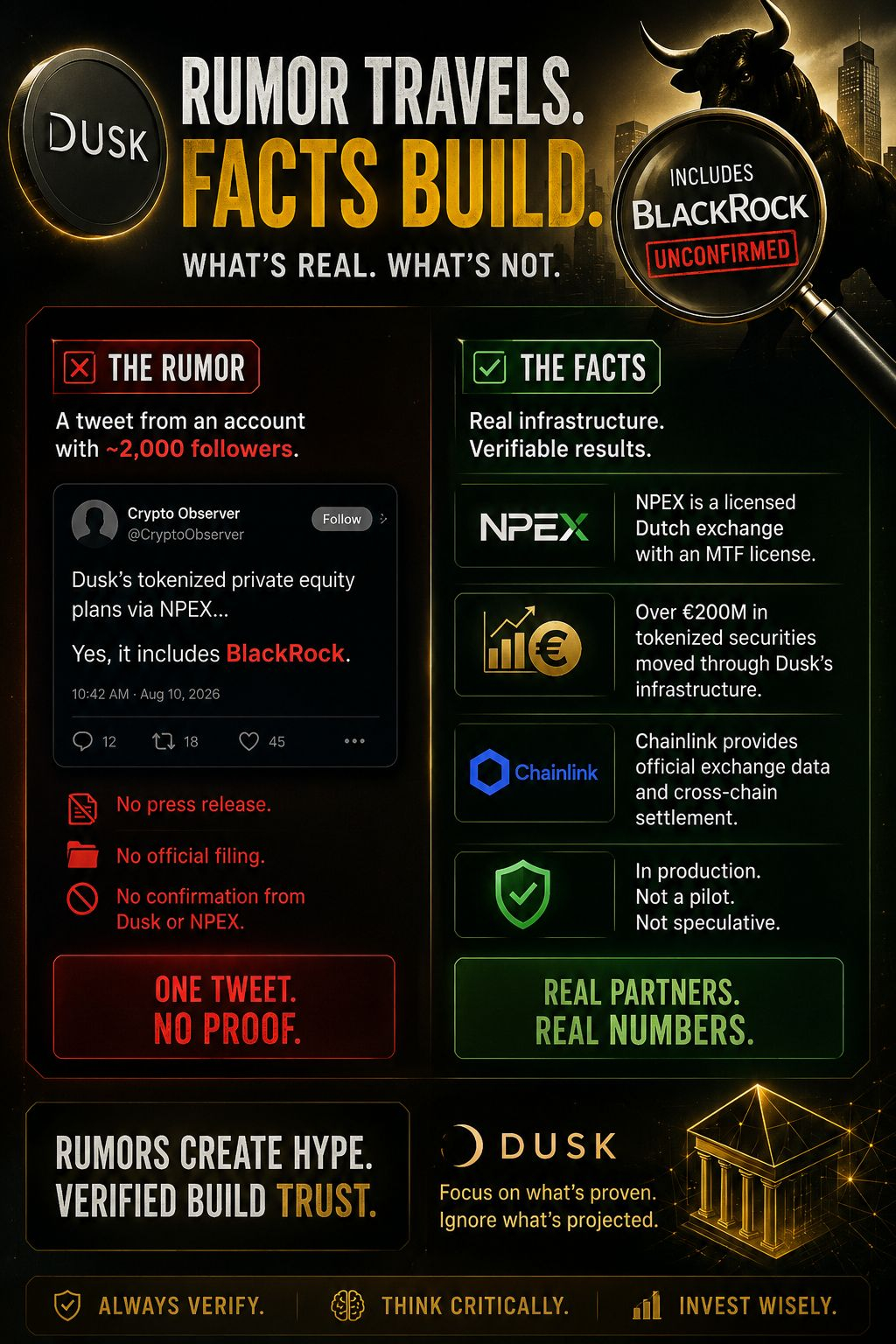
最近の#dusk のニュースまとめを読んでいて、複数の情報源で繰り返し出てくる1行があった。『ブラックロック統合の兆しが機関投資家の楽観を後押ししている』という一文だ。この言葉だけでも、ただそのまま繰り返すのではなく、出どころを追いたくなった。
追跡した。ツイートだった。フォロワーがだいたい2,000人のアカウントが、@Dusk_Foundation トークン化されたプライベートエクイティ計画について、NPEXとのパートナーシップを通じてコメントしていて、そこに『はい、ブラックロックを含みます。』と書かれている。それだけ。つまり出どころはそれだ。プレスリリースでも、公式提出書類でも、DuskやNPEX自身からの公式な裏取りでもない。たった1人の付け足しが、いまでは市場のラウンドアップで本物の触媒として流通している。
実際に確認できるのは、もっと派手さはないが、正直なところそれ以上にしっかりした内容だ。NPEXは実在する、ライセンスを持つオランダの取引所で、MTFライセンスを保有している。そして彼らは、Dusksのインフラを通じて、トークン化された証券を本番環境で2億ユーロ以上移してきた。パイロットではない。Chainlinkも関与していて、公式の取引所データを扱い、トークン化された資産のクロスチェーン決済を担っている。これは本物の機関向け基盤で、検証可能で、推測ではない。
ブラックロックの文言がNPEXの数字より早く広まる理由は分かる。前者は、噂に結びついている世界的に認知された名前。後者は、確認済みの数字に紐づくが、馴染みのないオランダの取引所だ。噂は事実より軽く移動する。いつだってそうだ。
私は、ブラックロックがどこかの段階で関与していないとは言っていない。そうとは断定しない。ただ、まだ誰もそれを実際に示していないのに、もはや本当のニュースのように知るべき場所で扱われ始めている、ということを言っている。$DUSK
{future}(LINKUSDT)
{future}(NXPCUSDT)""
""ブラックロックを含む"は、フォロワー2,000人のアカウントのツイートから始まった。今では強気シナリオ全体の一部だ。
最近の#dusk のニュースまとめを読んでいて、複数の情報源で繰り返し出てくる1行があった。『ブラックロック統合の兆しが機関投資家の楽観を後押ししている』という一文だ。この言葉だけでも、ただそのまま繰り返すのではなく、出どころを追いたくなった。
追跡した。ツイートだった。フォロワーがだいたい2,000人のアカウントが、@Dusk トークン化されたプライベートエクイティ計画について、NPEXとのパートナーシップを通じてコメントしていて、そこに『はい、ブラックロックを含みます。』と書かれている。それだけ。つまり出どころはそれだ。プレスリリースでも、公式提出書類でも、DuskやNPEX自身からの公式な裏取りでもない。たった1人の付け足しが、いまでは市場のラウンドアップで本物の触媒として流通している。
実際に確認できるのは、もっと派手さはないが、正直なところそれ以上にしっかりした内容だ。NPEXは実在する、ライセンスを持つオランダの取引所で、MTFライセンスを保有している。そして彼らは、Dusksのインフラを通じて、トークン化された証券を本番環境で2億ユーロ以上移してきた。パイロットではない。Chainlinkも関与していて、公式の取引所データを扱い、トークン化された資産のクロスチェーン決済を担っている。これは本物の機関向け基盤で、検証可能で、推測ではない。
ブラックロックの文言がNPEXの数字より早く広まる理由は分かる。前者は、噂に結びついている世界的に認知された名前。後者は、確認済みの数字に紐づくが、馴染みのないオランダの取引所だ。噂は事実より軽く移動する。いつだってそうだ。
私は、ブラックロックがどこかの段階で関与していないとは言っていない。そうとは断定しない。ただ、まだ誰もそれを実際に示していないのに、もはや本当のニュースのように知るべき場所で扱われ始めている、ということを言っている。$DUSK ""
最近の#dusk のニュースまとめを読んでいて、複数の情報源で繰り返し出てくる1行があった。『ブラックロック統合の兆しが機関投資家の楽観を後押ししている』という一文だ。この言葉だけでも、ただそのまま繰り返すのではなく、出どころを追いたくなった。
追跡した。ツイートだった。フォロワーがだいたい2,000人のアカウントが、@Dusk トークン化されたプライベートエクイティ計画について、NPEXとのパートナーシップを通じてコメントしていて、そこに『はい、ブラックロックを含みます。』と書かれている。それだけ。つまり出どころはそれだ。プレスリリースでも、公式提出書類でも、DuskやNPEX自身からの公式な裏取りでもない。たった1人の付け足しが、いまでは市場のラウンドアップで本物の触媒として流通している。
実際に確認できるのは、もっと派手さはないが、正直なところそれ以上にしっかりした内容だ。NPEXは実在する、ライセンスを持つオランダの取引所で、MTFライセンスを保有している。そして彼らは、Dusksのインフラを通じて、トークン化された証券を本番環境で2億ユーロ以上移してきた。パイロットではない。Chainlinkも関与していて、公式の取引所データを扱い、トークン化された資産のクロスチェーン決済を担っている。これは本物の機関向け基盤で、検証可能で、推測ではない。
ブラックロックの文言がNPEXの数字より早く広まる理由は分かる。前者は、噂に結びついている世界的に認知された名前。後者は、確認済みの数字に紐づくが、馴染みのないオランダの取引所だ。噂は事実より軽く移動する。いつだってそうだ。
私は、ブラックロックがどこかの段階で関与していないとは言っていない。そうとは断定しない。ただ、まだ誰もそれを実際に示していないのに、もはや本当のニュースのように知るべき場所で扱われ始めている、ということを言っている。$DUSK ""
2
3
377
·
--
@Dusk_Foundation は広告として、ステーキングAPRが27%とされています。その裏にある計算を見て、思わず足を止めたくなりました。
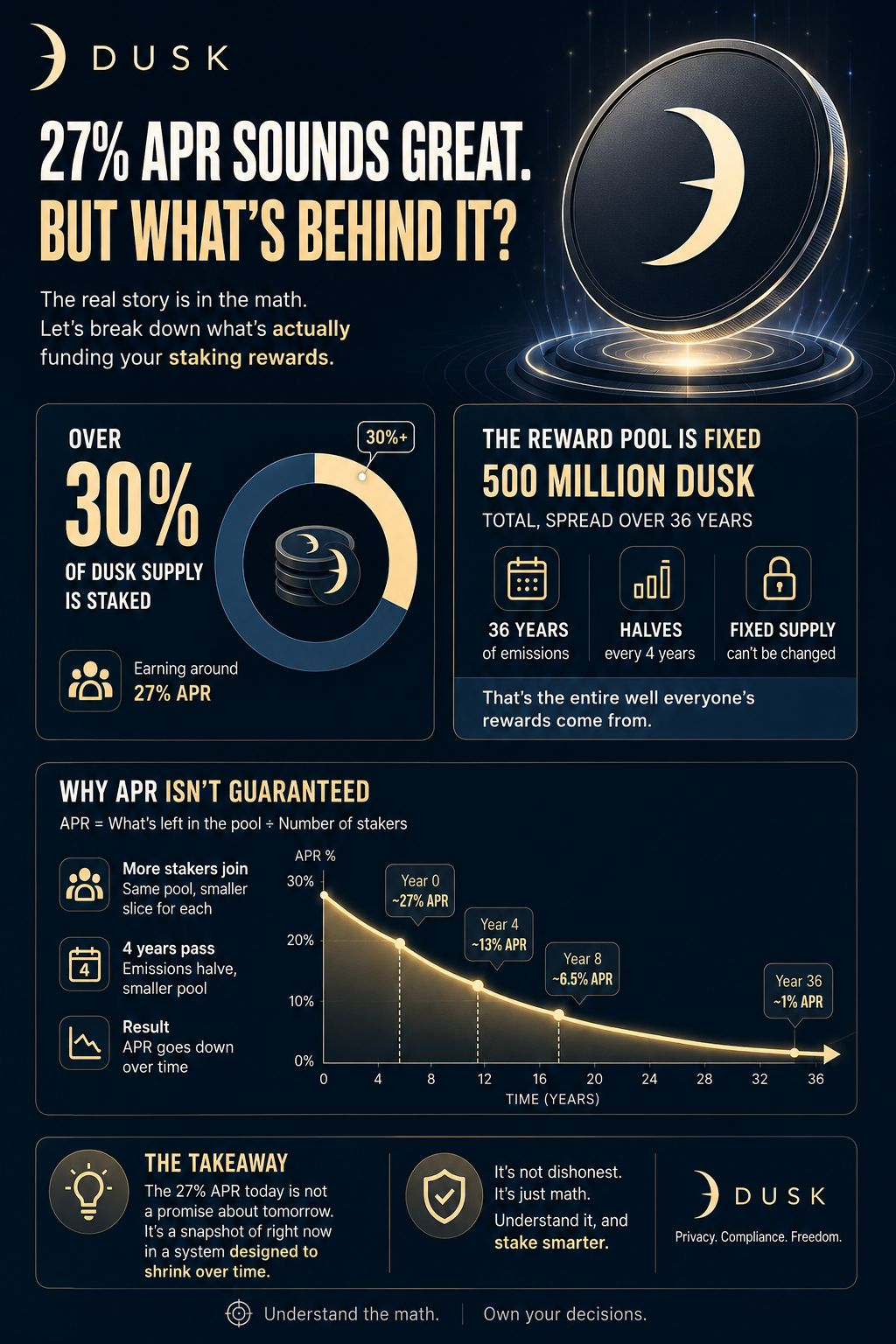
彼ら自身の口座に表示されている数字を見ました。$DUSK のうち30%以上がステークされていて、約27%のAPRを得ているそうです。単体で見れば良さそうです。けれど、その報酬の実際の原資が何なのか確認しました。
ステーキング報酬プールは固定されています。合計で5億DUSK、全体で36年間にわたって配分され、4年ごとに設計上半分になります。以上です。報酬の出どころは、誰もがそこからもらっているその1つの井戸で、あらかじめ決められたスケジュールに沿って、ずっと縮小していく仕組みです。
つまり、あの27%という数字の横で誰もはっきり言わないのがここです。それは固定のレートではありません。縮小するプールの中で「残っている分」を、当時ステークしている人数で割るだけです。ステーカーが増えれば同じプールでも取り分は小さくなります。4年が経てば放出は半分になり、プールもさらに小さくなります。今日の27%は、明日の約束ではなく「今この瞬間のスナップショット」にすぎません。
不誠実だと言い切るつもりはありません。仕組みの中身を見ると、多くのステーキングシステムはこういうものです。ですが、減衰カーブを隣に添えずに大きなAPRの数字を先に提示すると、数学的に縮むように設計されているものに対して、みんなが何かを期待してしまうように思います。#dusk
{future}(ACEUSDT)
@Dusk は広告として、ステーキングAPRが27%とされています。その裏にある計算を見て、思わず足を止めたくなりました。
彼ら自身の口座に表示されている数字を見ました。$DUSK のうち30%以上がステークされていて、約27%のAPRを得ているそうです。単体で見れば良さそうです。けれど、その報酬の実際の原資が何なのか確認しました。
ステーキング報酬プールは固定されています。合計で5億DUSK、全体で36年間にわたって配分され、4年ごとに設計上半分になります。以上です。報酬の出どころは、誰もがそこからもらっているその1つの井戸で、あらかじめ決められたスケジュールに沿って、ずっと縮小していく仕組みです。
つまり、あの27%という数字の横で誰もはっきり言わないのがここです。それは固定のレートではありません。縮小するプールの中で「残っている分」を、当時ステークしている人数で割るだけです。ステーカーが増えれば同じプールでも取り分は小さくなります。4年が経てば放出は半分になり、プールもさらに小さくなります。今日の27%は、明日の約束ではなく「今この瞬間のスナップショット」にすぎません。
不誠実だと言い切るつもりはありません。仕組みの中身を見ると、多くのステーキングシステムはこういうものです。ですが、減衰カーブを隣に添えずに大きなAPRの数字を先に提示すると、数学的に縮むように設計されているものに対して、みんなが何かを期待してしまうように思います。#dusk
彼ら自身の口座に表示されている数字を見ました。$DUSK のうち30%以上がステークされていて、約27%のAPRを得ているそうです。単体で見れば良さそうです。けれど、その報酬の実際の原資が何なのか確認しました。
ステーキング報酬プールは固定されています。合計で5億DUSK、全体で36年間にわたって配分され、4年ごとに設計上半分になります。以上です。報酬の出どころは、誰もがそこからもらっているその1つの井戸で、あらかじめ決められたスケジュールに沿って、ずっと縮小していく仕組みです。
つまり、あの27%という数字の横で誰もはっきり言わないのがここです。それは固定のレートではありません。縮小するプールの中で「残っている分」を、当時ステークしている人数で割るだけです。ステーカーが増えれば同じプールでも取り分は小さくなります。4年が経てば放出は半分になり、プールもさらに小さくなります。今日の27%は、明日の約束ではなく「今この瞬間のスナップショット」にすぎません。
不誠実だと言い切るつもりはありません。仕組みの中身を見ると、多くのステーキングシステムはこういうものです。ですが、減衰カーブを隣に添えずに大きなAPRの数字を先に提示すると、数学的に縮むように設計されているものに対して、みんなが何かを期待してしまうように思います。#dusk
2
1
371
·
--
同時に「プライベート」で「完全に監査可能」になろうとするブロックチェーン。近くで見てみるまで、それが可能だとは思いませんでした。
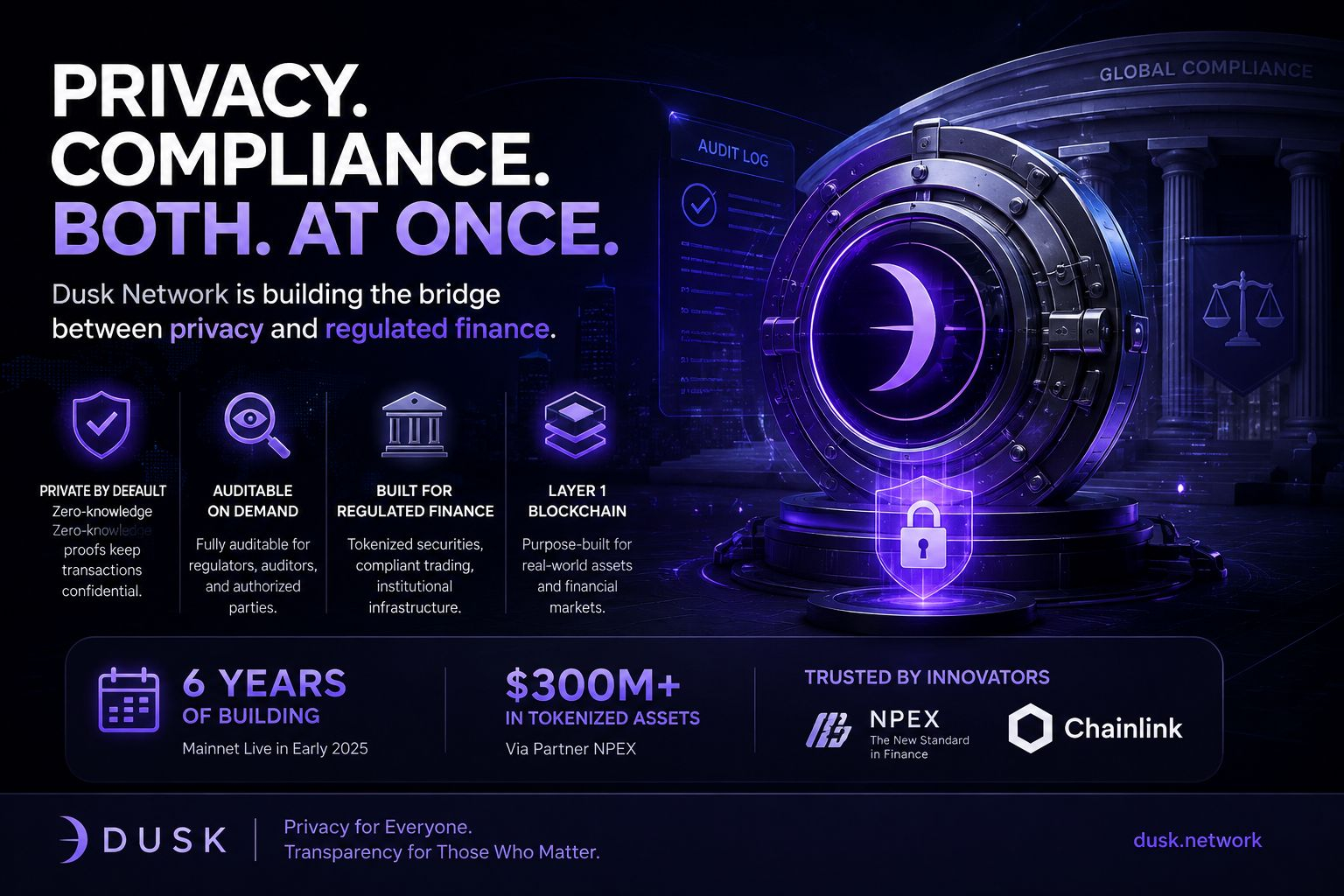
プライバシーとコンプライアンスは、暗号の世界では通常うまく噛み合いません。取引が隠されて規制当局が嫌うか、すべてが公開されて、実際のお金が動く人が誰も望まない透明な台帳を作り直したか。@Dusk_Foundation はその中間を実現しようとしています。
これは規制された金融向けのレイヤー1で、トークン化された有価証券、コンプライアンスに沿った取引、いわゆるデゲンDeFiではありません。ゼロ知識証明を使うことで、取引は一般公開の目からは遮られたまま、法的に確認する権限がある相手には完全に監査可能に保たれます。その他の人には機密、見るべき立場の当事者には透明。これはスローガンではなく、本当に難しい課題です。
私の関心を引いたのはタイムラインです。メインネットは2025年初頭に稼働開始しました。プロジェクトが始まってから6年後です。ホワイトペーパーとトークンを6か月で出すことが普通の業界では、6年の忍耐はかなり異例です。NPEXが資産3億ドル超をトークン化するなどの実在するパートナーと組んでいることを考えると、単なる足踏みというより、「本当に難しい部分をちゃんと動かしてから」と待っているように見えます。
価格チャートは、より厳しい話を示しています。DUSKは2021年の高値から今でもおよそ80%下の水準にとどまっており、実際のニュースに紐づく本物の上昇局面があったとしてもです。「技術が前進している」と「トークンが回復していない」の間にあるこのギャップは、インフラ系ではよくあるパターンです。市場は、6年というロードマップで自分を証明するのを待ってはくれません。
規制された金融が本当にこれを望んでいるのか、それともこのボラティリティの高い状態で本物の有価証券をトークン経由で運用することに、機関投資家が結局は安心感を持てるのかは、まだ分かりません。ですが、コンプライアンスと戦わなくても済むプライバシーというのは、最近出会った「本当に新しいアイデア」の一つのように感じます。#dusk $DUSK
同時に「プライベート」で「完全に監査可能」になろうとするブロックチェーン。近くで見てみるまで、それが可能だとは思いませんでした。
プライバシーとコンプライアンスは、暗号の世界では通常うまく噛み合いません。取引が隠されて規制当局が嫌うか、すべてが公開されて、実際のお金が動く人が誰も望まない透明な台帳を作り直したか。@Dusk はその中間を実現しようとしています。
これは規制された金融向けのレイヤー1で、トークン化された有価証券、コンプライアンスに沿った取引、いわゆるデゲンDeFiではありません。ゼロ知識証明を使うことで、取引は一般公開の目からは遮られたまま、法的に確認する権限がある相手には完全に監査可能に保たれます。その他の人には機密、見るべき立場の当事者には透明。これはスローガンではなく、本当に難しい課題です。
私の関心を引いたのはタイムラインです。メインネットは2025年初頭に稼働開始しました。プロジェクトが始まってから6年後です。ホワイトペーパーとトークンを6か月で出すことが普通の業界では、6年の忍耐はかなり異例です。NPEXが資産3億ドル超をトークン化するなどの実在するパートナーと組んでいることを考えると、単なる足踏みというより、「本当に難しい部分をちゃんと動かしてから」と待っているように見えます。
価格チャートは、より厳しい話を示しています。DUSKは2021年の高値から今でもおよそ80%下の水準にとどまっており、実際のニュースに紐づく本物の上昇局面があったとしてもです。「技術が前進している」と「トークンが回復していない」の間にあるこのギャップは、インフラ系ではよくあるパターンです。市場は、6年というロードマップで自分を証明するのを待ってはくれません。
規制された金融が本当にこれを望んでいるのか、それともこのボラティリティの高い状態で本物の有価証券をトークン経由で運用することに、機関投資家が結局は安心感を持てるのかは、まだ分かりません。ですが、コンプライアンスと戦わなくても済むプライバシーというのは、最近出会った「本当に新しいアイデア」の一つのように感じます。#dusk $DUSK
プライバシーとコンプライアンスは、暗号の世界では通常うまく噛み合いません。取引が隠されて規制当局が嫌うか、すべてが公開されて、実際のお金が動く人が誰も望まない透明な台帳を作り直したか。@Dusk はその中間を実現しようとしています。
これは規制された金融向けのレイヤー1で、トークン化された有価証券、コンプライアンスに沿った取引、いわゆるデゲンDeFiではありません。ゼロ知識証明を使うことで、取引は一般公開の目からは遮られたまま、法的に確認する権限がある相手には完全に監査可能に保たれます。その他の人には機密、見るべき立場の当事者には透明。これはスローガンではなく、本当に難しい課題です。
私の関心を引いたのはタイムラインです。メインネットは2025年初頭に稼働開始しました。プロジェクトが始まってから6年後です。ホワイトペーパーとトークンを6か月で出すことが普通の業界では、6年の忍耐はかなり異例です。NPEXが資産3億ドル超をトークン化するなどの実在するパートナーと組んでいることを考えると、単なる足踏みというより、「本当に難しい部分をちゃんと動かしてから」と待っているように見えます。
価格チャートは、より厳しい話を示しています。DUSKは2021年の高値から今でもおよそ80%下の水準にとどまっており、実際のニュースに紐づく本物の上昇局面があったとしてもです。「技術が前進している」と「トークンが回復していない」の間にあるこのギャップは、インフラ系ではよくあるパターンです。市場は、6年というロードマップで自分を証明するのを待ってはくれません。
規制された金融が本当にこれを望んでいるのか、それともこのボラティリティの高い状態で本物の有価証券をトークン経由で運用することに、機関投資家が結局は安心感を持てるのかは、まだ分かりません。ですが、コンプライアンスと戦わなくても済むプライバシーというのは、最近出会った「本当に新しいアイデア」の一つのように感じます。#dusk $DUSK
1
187
ログインして、さらにコンテンツを読む
厳選トピックで世界の暗号資産トレーダーの仲間入り
⚡️ 暗号資産に関する最新かつ有益な情報が見つかります。
💬 世界最大の暗号資産取引所から信頼されています。
👍 認証を受けたクリエイターから、有益なインサイトを得られます。
メール / 電話番号
トレンドトピック
BitcoinHoldsAbove$77000
閲覧回数 1,244
67人が討論中
#BitcoinHoldsAbove$77000
🚨 #BitcoinHoldsAbove77000 ₿🔥
ビットコインはおよそ7.7万ドルのゾーンで推移しており、BTCは最近7.78万ドル付近で取引されています。今の焦点は、買い手が価格を8万ドルへ押し戻せるかどうか。加えて、FRB(米連邦準備制度)のマクロ要因と利回りの上昇がボラティリティを高い状態に保っています。
🔥 注目トレーダー情報:
📍 7.7万ドル = 重要なサポート・ゾーン
📈 8万ドル = 重要なレジスタンス
📊 出来高と価格の確認をチェック
⚠️ FRBの決定が急激なボラティリティを引き起こす可能性
最初の動きに飛びつくな——確証(コンファーム)を最優先、FOMO(恐怖による追い買い)は絶対にしない。 👀
$T $CRWDB $MTL
Cheri Texiera O7ec
·いいね:0件
·閲覧回数 8
FedHikeOddsRiseTo89%
閲覧回数 3,524
197人が討論中
BitcoinCrosses$78000
閲覧回数 3,552
144人が討論中