
Rittikd
30 投稿

Rittikd
報告
ユーザーをブロック
Publisher of The Rittik Report.
https://x.com/rittikd
3 フォロー
2 フォロワー
1 いいね
投稿
·
--
翻訳参照
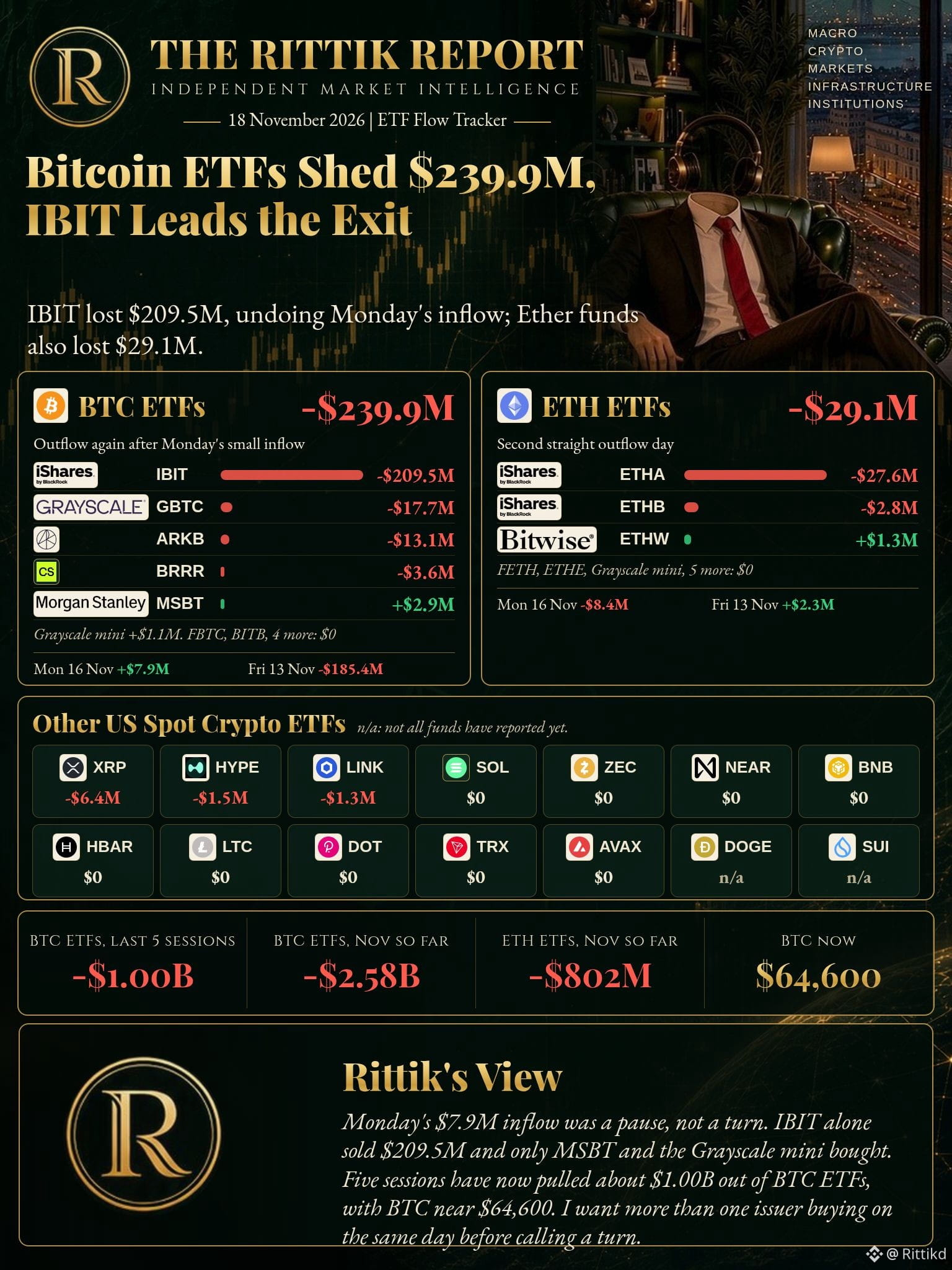
The Rittik Report | US spot crypto ETF flows for Tuesday 17 November
BTC ETFs: -$239.9M, back to outflows after Monday's +$7.9M, which was the only inflow in the last nine sessions. IBIT led the exit with -$209.5M, its biggest outflow since 11 Nov. GBTC (-$17.7M), ARKB (-$13.1M) and BRRR (-$3.6M) also sold. MSBT (+$2.9M) and the Grayscale BTC mini (+$1.1M) were the only buyers. FBTC, BITB and four others were flat.
ETH ETFs: -$29.1M, a second straight outflow day. ETHA (-$27.6M) and ETHB (-$2.8M) sold, ETHW added +$1.3M. Every other ETH fund was flat at $0.
XRP: -$6.4M
HYPE: -$1.5M
LINK: -$1.3M
SOL: $0
ZEC: $0
NEAR: $0
BNB: $0
HBAR: $0
LTC: $0
DOT: $0
TRX: $0
AVAX: $0
DOGE: n/a (not all funds reported yet)
SUI: n/a (not all funds reported yet)
The last five sessions have taken about $1.00B out of BTC ETFs, and November is now about -$2.58B. ETH ETFs are down about $802M for the month.
BTC is around $64,600. One small green day against that much selling was never going to change the picture, and Tuesday showed it: IBIT alone sold more than the whole of Monday's inflow many times over. I am watching for a day where more than one issuer is buying at once, and for IBIT to stop leading the outflows. Until then I read these flows as sellers still in control.
The Rittik Report | US spot crypto ETF flows for Tuesday 17 November
BTC ETFs: -$239.9M, back to outflows after Monday's +$7.9M, which was the only inflow in the last nine sessions. IBIT led the exit with -$209.5M, its biggest outflow since 11 Nov. GBTC (-$17.7M), ARKB (-$13.1M) and BRRR (-$3.6M) also sold. MSBT (+$2.9M) and the Grayscale BTC mini (+$1.1M) were the only buyers. FBTC, BITB and four others were flat.
ETH ETFs: -$29.1M, a second straight outflow day. ETHA (-$27.6M) and ETHB (-$2.8M) sold, ETHW added +$1.3M. Every other ETH fund was flat at $0.
XRP: -$6.4M
HYPE: -$1.5M
LINK: -$1.3M
SOL: $0
ZEC: $0
NEAR: $0
BNB: $0
HBAR: $0
LTC: $0
DOT: $0
TRX: $0
AVAX: $0
DOGE: n/a (not all funds reported yet)
SUI: n/a (not all funds reported yet)
The last five sessions have taken about $1.00B out of BTC ETFs, and November is now about -$2.58B. ETH ETFs are down about $802M for the month.
BTC is around $64,600. One small green day against that much selling was never going to change the picture, and Tuesday showed it: IBIT alone sold more than the whole of Monday's inflow many times over. I am watching for a day where more than one issuer is buying at once, and for IBIT to stop leading the outflows. Until then I read these flows as sellers still in control.
BTC ETFs: -$239.9M, back to outflows after Monday's +$7.9M, which was the only inflow in the last nine sessions. IBIT led the exit with -$209.5M, its biggest outflow since 11 Nov. GBTC (-$17.7M), ARKB (-$13.1M) and BRRR (-$3.6M) also sold. MSBT (+$2.9M) and the Grayscale BTC mini (+$1.1M) were the only buyers. FBTC, BITB and four others were flat.
ETH ETFs: -$29.1M, a second straight outflow day. ETHA (-$27.6M) and ETHB (-$2.8M) sold, ETHW added +$1.3M. Every other ETH fund was flat at $0.
XRP: -$6.4M
HYPE: -$1.5M
LINK: -$1.3M
SOL: $0
ZEC: $0
NEAR: $0
BNB: $0
HBAR: $0
LTC: $0
DOT: $0
TRX: $0
AVAX: $0
DOGE: n/a (not all funds reported yet)
SUI: n/a (not all funds reported yet)
The last five sessions have taken about $1.00B out of BTC ETFs, and November is now about -$2.58B. ETH ETFs are down about $802M for the month.
BTC is around $64,600. One small green day against that much selling was never going to change the picture, and Tuesday showed it: IBIT alone sold more than the whole of Monday's inflow many times over. I am watching for a day where more than one issuer is buying at once, and for IBIT to stop leading the outflows. Until then I read these flows as sellers still in control.
51
·
--
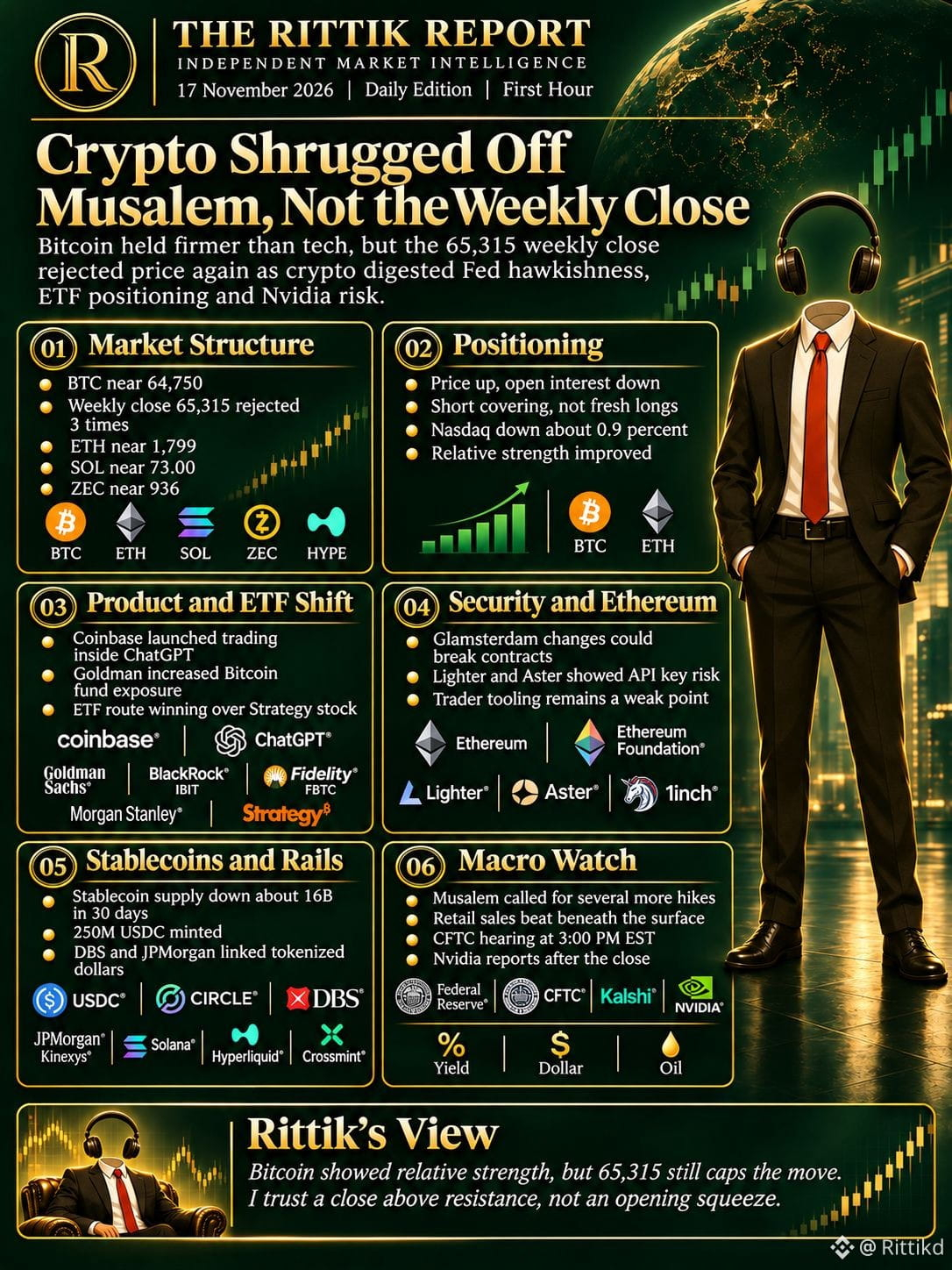
米国市場の最初の1時間は、月曜日よりもまちまちながら、やや明るい状況を示しました。ビットコインは寄り付き前に安値を切り上げ、ナスダックが下落するなかで上昇し、予想を大きく上回る消費支出の数字と、今回のサイクルで最もタカ派的なFRB高官の発言の一つを消化しました。しかし、寄り付き直後の急騰はショートスクイーズで、建玉は減少。1日のうちに3度目となる週足終値の65,315ドルで上値を抑えられました。一方、イーサリアムは依然として1,835ドルを下回る水準に抑えられています。暗号資産関連株は、コインではなくテクノロジー株と連動して取引されています。価格の裏側では、事業基盤の拡充が続いています。Coinbaseは取引機能をChatGPTに導入し、Goldmanはビットコインファンドへのエクスポージャーを倍増。銀行はトークン化されたドルを昼夜を問わず移動させ、Kalshiは監視データを公開しました。一方で、弱点も明らかです。ステーブルコインの供給量は1カ月で約160億ドル減少し、イーサリアムの次期アップグレードは停滞。無期限先物取引所のトレーダー向けツールからは、引き続き秘密鍵が漏えいしています。
米国市場の残りの取引時間について、ビットコインのサポートは寄り付き後の安値である64,460ドル、次に今朝の安値である64,000~64,080ドル、続いて日曜日早朝の安値である63,725ドルで、その下には61,950ドルがあります。レジスタンスは、寄り付き前と午前遅くの高値である65,100ドル、次に週足終値の65,315ドル、寄り付き時の高値である65,385ドル、昨夜の高値である65,475ドルで、その上には66,100ドルがあります。65,315ドルを上回って引ければ、相対的な強さがついに上値の奪回へとつながるでしょう。一方、64,000ドルを割り込めば、63,725ドル、さらに62,000ドル付近が再び意識されます。イーサリアムのサポートは寄り付き後の安値である1,795ドル、次に今朝と月曜日の安値である1,784~1,785ドル、続いて1,772ドルと1,709ドルです。レジスタンスは寄り付き時の高値である1,832ドル、次に1,835~1,842ドルのゾーン、そして月曜日の高値である1,865ドルです。慎重姿勢は維持しますが、今朝ほどではありません。東部標準時午後3時のCFTC公聴会、東部標準時午後4時の取引終了後に発表されるNvidiaの決算、そしてIBITが月曜日に記録した資金流入が今夜のフローデータでも繰り返されるかに注目しています。これらは私の分析上の水準であり、予測ではありません。また、ここで述べた内容は金融アドバイスではありません。
米国市場の最初の1時間は、月曜日よりもまちまちながら、やや明るい状況を示しました。ビットコインは寄り付き前に安値を切り上げ、ナスダックが下落するなかで上昇し、予想を大きく上回る消費支出の数字と、今回のサイクルで最もタカ派的なFRB高官の発言の一つを消化しました。しかし、寄り付き直後の急騰はショートスクイーズで、建玉は減少。1日のうちに3度目となる週足終値の65,315ドルで上値を抑えられました。一方、イーサリアムは依然として1,835ドルを下回る水準に抑えられています。暗号資産関連株は、コインではなくテクノロジー株と連動して取引されています。価格の裏側では、事業基盤の拡充が続いています。Coinbaseは取引機能をChatGPTに導入し、Goldmanはビットコインファンドへのエクスポージャーを倍増。銀行はトークン化されたドルを昼夜を問わず移動させ、Kalshiは監視データを公開しました。一方で、弱点も明らかです。ステーブルコインの供給量は1カ月で約160億ドル減少し、イーサリアムの次期アップグレードは停滞。無期限先物取引所のトレーダー向けツールからは、引き続き秘密鍵が漏えいしています。
米国市場の残りの取引時間について、ビットコインのサポートは寄り付き後の安値である64,460ドル、次に今朝の安値である64,000~64,080ドル、続いて日曜日早朝の安値である63,725ドルで、その下には61,950ドルがあります。レジスタンスは、寄り付き前と午前遅くの高値である65,100ドル、次に週足終値の65,315ドル、寄り付き時の高値である65,385ドル、昨夜の高値である65,475ドルで、その上には66,100ドルがあります。65,315ドルを上回って引ければ、相対的な強さがついに上値の奪回へとつながるでしょう。一方、64,000ドルを割り込めば、63,725ドル、さらに62,000ドル付近が再び意識されます。イーサリアムのサポートは寄り付き後の安値である1,795ドル、次に今朝と月曜日の安値である1,784~1,785ドル、続いて1,772ドルと1,709ドルです。レジスタンスは寄り付き時の高値である1,832ドル、次に1,835~1,842ドルのゾーン、そして月曜日の高値である1,865ドルです。慎重姿勢は維持しますが、今朝ほどではありません。東部標準時午後3時のCFTC公聴会、東部標準時午後4時の取引終了後に発表されるNvidiaの決算、そしてIBITが月曜日に記録した資金流入が今夜のフローデータでも繰り返されるかに注目しています。これらは私の分析上の水準であり、予測ではありません。また、ここで述べた内容は金融アドバイスではありません。
米国市場の残りの取引時間について、ビットコインのサポートは寄り付き後の安値である64,460ドル、次に今朝の安値である64,000~64,080ドル、続いて日曜日早朝の安値である63,725ドルで、その下には61,950ドルがあります。レジスタンスは、寄り付き前と午前遅くの高値である65,100ドル、次に週足終値の65,315ドル、寄り付き時の高値である65,385ドル、昨夜の高値である65,475ドルで、その上には66,100ドルがあります。65,315ドルを上回って引ければ、相対的な強さがついに上値の奪回へとつながるでしょう。一方、64,000ドルを割り込めば、63,725ドル、さらに62,000ドル付近が再び意識されます。イーサリアムのサポートは寄り付き後の安値である1,795ドル、次に今朝と月曜日の安値である1,784~1,785ドル、続いて1,772ドルと1,709ドルです。レジスタンスは寄り付き時の高値である1,832ドル、次に1,835~1,842ドルのゾーン、そして月曜日の高値である1,865ドルです。慎重姿勢は維持しますが、今朝ほどではありません。東部標準時午後3時のCFTC公聴会、東部標準時午後4時の取引終了後に発表されるNvidiaの決算、そしてIBITが月曜日に記録した資金流入が今夜のフローデータでも繰り返されるかに注目しています。これらは私の分析上の水準であり、予測ではありません。また、ここで述べた内容は金融アドバイスではありません。
330
·
--
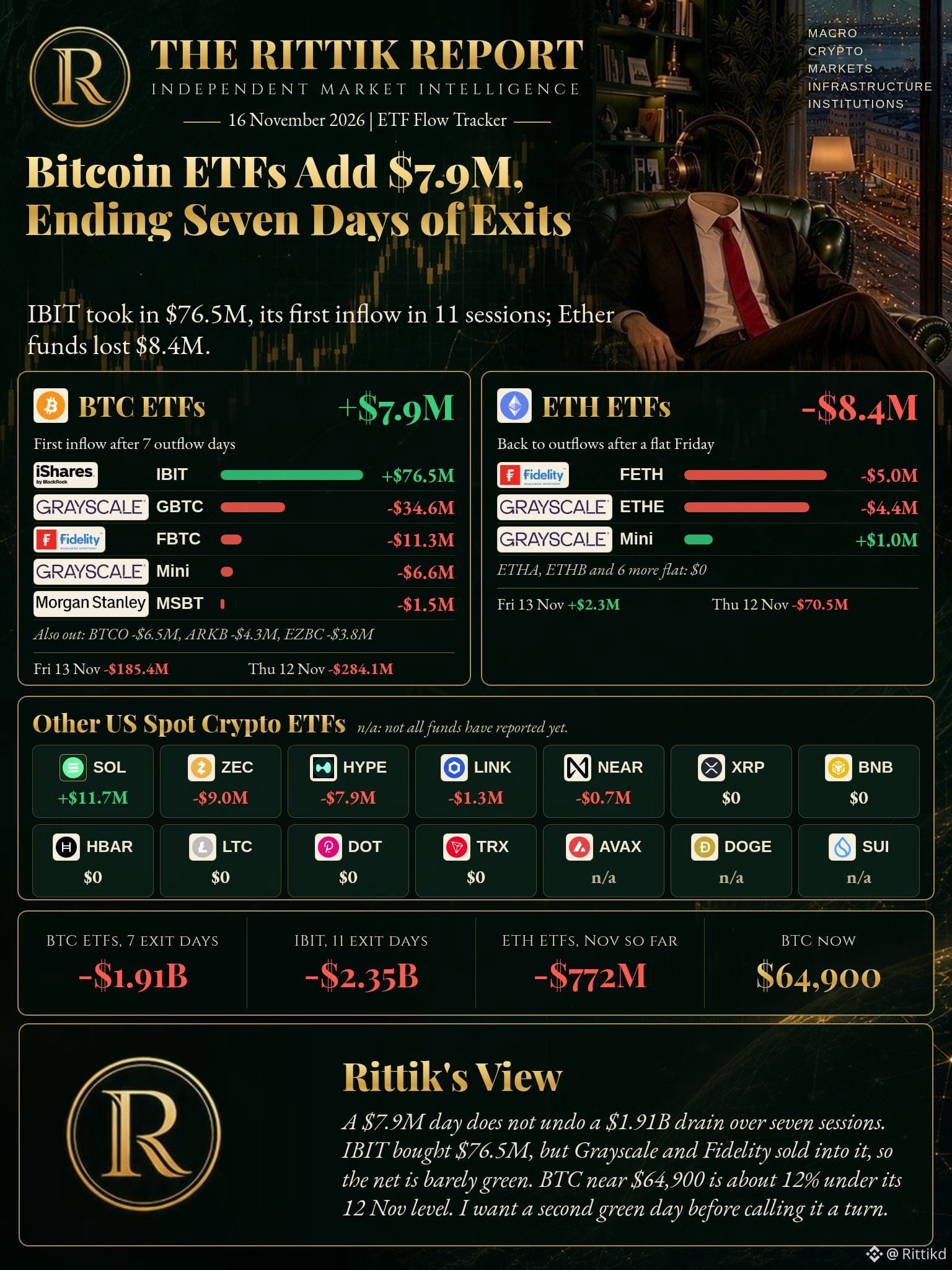
Rittikレポート | 11月16日(月)の米国スポット暗号資産ETF資金フロー
BTC ETF:+790万ドル。7日連続の資金流出後、初の資金流入。IBITには+7,650万ドルが流入し、11営業日連続の資金流出後、初めて資金が流入した。資金の動きがあった他のファンドはすべて売り越し:GBTC(-3,460万ドル)、FBTC(-1,130万ドル)、GrayscaleのBTCミニ(-660万ドル)、BTCO(-650万ドル)、ARKB(-430万ドル)、EZBC(-380万ドル)、MSBT(-150万ドル)。BITBとその他3ファンドは横ばい。
ETH ETF:金曜日の横ばいの後、-840万ドル。FETH(-500万ドル)とETHE(-440万ドル)は売り越し、GrayscaleのETHミニには+100万ドルが流入。ETHAとETHBは0ドルで横ばい。
SOL:+1,170万ドル(BSOL +1,080万ドル、VSOL +90万ドル)
ZEC:-900万ドル
HYPE:-790万ドル
LINK:-130万ドル
NEAR:-70万ドル
XRP:0ドル
BNB:0ドル
HBAR:0ドル
LTC:0ドル
DOT:0ドル
TRX:0ドル
AVAX:該当なし(すべてのファンドの報告はまだ完了していません)
DOGE:該当なし(すべてのファンドの報告はまだ完了していません)
SUI:該当なし(すべてのファンドの報告はまだ完了していません)
11月5日から13日までの7日間の資金流出で、BTC ETFから約19億1,000万ドルが流出した。IBITだけでも、11営業日の連続流出期間に約23億5,000万ドルを失った。ETH ETFは11月に入ってから、これまでに約7億7,200万ドルの資金流出となっている。
BTCは約64,900ドルで推移しており、11月12日の取引価格を約12%下回っている。790万ドルの資金流入は売りの一服であって、反転ではない。主にIBITへの流入が他のファンドの売りを相殺した形だ。反転と判断するには、複数の発行体が買いに動く、2日目のプラスを見たい。
Rittikレポート | 11月16日(月)の米国スポット暗号資産ETF資金フロー
BTC ETF:+790万ドル。7日連続の資金流出後、初の資金流入。IBITには+7,650万ドルが流入し、11営業日連続の資金流出後、初めて資金が流入した。資金の動きがあった他のファンドはすべて売り越し:GBTC(-3,460万ドル)、FBTC(-1,130万ドル)、GrayscaleのBTCミニ(-660万ドル)、BTCO(-650万ドル)、ARKB(-430万ドル)、EZBC(-380万ドル)、MSBT(-150万ドル)。BITBとその他3ファンドは横ばい。
ETH ETF:金曜日の横ばいの後、-840万ドル。FETH(-500万ドル)とETHE(-440万ドル)は売り越し、GrayscaleのETHミニには+100万ドルが流入。ETHAとETHBは0ドルで横ばい。
SOL:+1,170万ドル(BSOL +1,080万ドル、VSOL +90万ドル)
ZEC:-900万ドル
HYPE:-790万ドル
LINK:-130万ドル
NEAR:-70万ドル
XRP:0ドル
BNB:0ドル
HBAR:0ドル
LTC:0ドル
DOT:0ドル
TRX:0ドル
AVAX:該当なし(すべてのファンドの報告はまだ完了していません)
DOGE:該当なし(すべてのファンドの報告はまだ完了していません)
SUI:該当なし(すべてのファンドの報告はまだ完了していません)
11月5日から13日までの7日間の資金流出で、BTC ETFから約19億1,000万ドルが流出した。IBITだけでも、11営業日の連続流出期間に約23億5,000万ドルを失った。ETH ETFは11月に入ってから、これまでに約7億7,200万ドルの資金流出となっている。
BTCは約64,900ドルで推移しており、11月12日の取引価格を約12%下回っている。790万ドルの資金流入は売りの一服であって、反転ではない。主にIBITへの流入が他のファンドの売りを相殺した形だ。反転と判断するには、複数の発行体が買いに動く、2日目のプラスを見たい。
BTC ETF:+790万ドル。7日連続の資金流出後、初の資金流入。IBITには+7,650万ドルが流入し、11営業日連続の資金流出後、初めて資金が流入した。資金の動きがあった他のファンドはすべて売り越し:GBTC(-3,460万ドル)、FBTC(-1,130万ドル)、GrayscaleのBTCミニ(-660万ドル)、BTCO(-650万ドル)、ARKB(-430万ドル)、EZBC(-380万ドル)、MSBT(-150万ドル)。BITBとその他3ファンドは横ばい。
ETH ETF:金曜日の横ばいの後、-840万ドル。FETH(-500万ドル)とETHE(-440万ドル)は売り越し、GrayscaleのETHミニには+100万ドルが流入。ETHAとETHBは0ドルで横ばい。
SOL:+1,170万ドル(BSOL +1,080万ドル、VSOL +90万ドル)
ZEC:-900万ドル
HYPE:-790万ドル
LINK:-130万ドル
NEAR:-70万ドル
XRP:0ドル
BNB:0ドル
HBAR:0ドル
LTC:0ドル
DOT:0ドル
TRX:0ドル
AVAX:該当なし(すべてのファンドの報告はまだ完了していません)
DOGE:該当なし(すべてのファンドの報告はまだ完了していません)
SUI:該当なし(すべてのファンドの報告はまだ完了していません)
11月5日から13日までの7日間の資金流出で、BTC ETFから約19億1,000万ドルが流出した。IBITだけでも、11営業日の連続流出期間に約23億5,000万ドルを失った。ETH ETFは11月に入ってから、これまでに約7億7,200万ドルの資金流出となっている。
BTCは約64,900ドルで推移しており、11月12日の取引価格を約12%下回っている。790万ドルの資金流入は売りの一服であって、反転ではない。主にIBITへの流入が他のファンドの売りを相殺した形だ。反転と判断するには、複数の発行体が買いに動く、2日目のプラスを見たい。
184
·
--
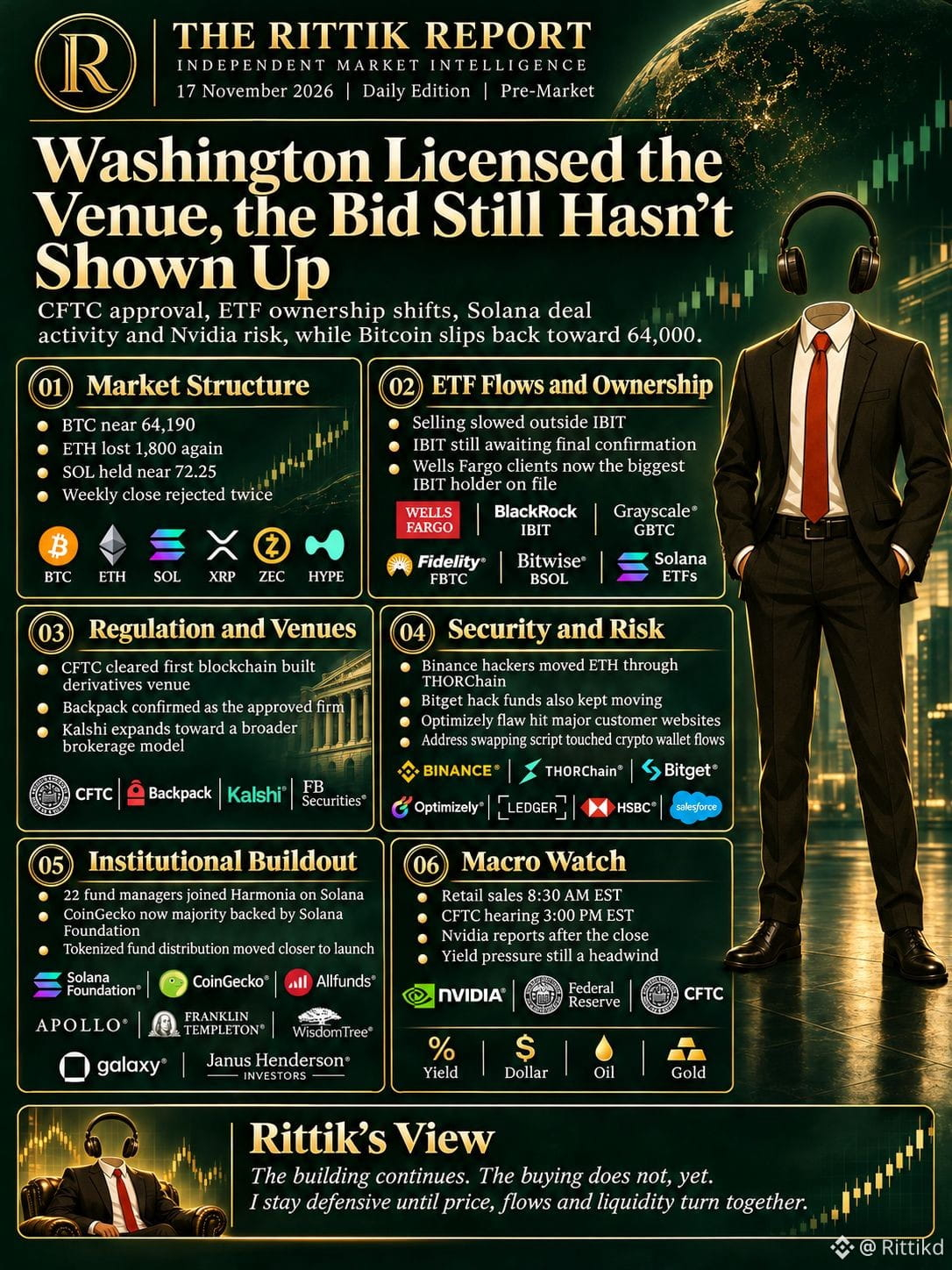
夜間取引では、月曜午後の上昇分が帳消しになった。ビットコインは取引終了後に週足終値の65,315ドルを試したが、突破できず、欧州時間の開始までに約64,080ドルへとじり安となった。一方、イーサリアムは再び1,842ドルで上値を抑えられ、1,800ドルを割り込んだ。ポジション状況も同じ流れを示している。価格が下落する一方で建玉は増加し、資金調達率は横ばいだった。つまり、アブラクサスが手仕舞った大規模なショートポジションに、新たなショートが取って代わった。保有者は7月以来最大の損失を実現し、バイナンスのハッカーはイーサリアムの移動を始めた。それでも、構造面のニュースは今月屈指の好材料だった。CFTCはブロックチェーン上に構築されたパーペチュアル取引所に米国内での営業を認可し、ウェルズ・ファーゴの顧客がビットコインETFの最大保有者として浮上した。22社の資産運用会社がトークン化ファンドをソラナに投入すると表明し、IBIT以外のETF売りも約6,900万ドルまで鈍化した。基盤づくりは続いている。だが、買いはまだ戻っていない。
米国時間のビットコインのサポートは64,030~64,080ドル。月曜の寄り付き後の安値と今朝の安値だ。次は63,830ドルと63,725ドルで、それぞれ月曜と日曜の安値。その下には61,950ドルが控える。レジスタンスは64,815ドル(月曜の日足終値)、次に65,150ドル(アジア時間の反発高値)、65,315ドル(週足終値)、そして昨夜の高値である65,475ドルだ。65,315ドルを上回って引ければ、上向きバイアスのあるレンジ相場に変わる。一方、63,725ドルを割れば、62,000ドル近辺が視野に入る。イーサリアムのサポートは1,785~1,788ドルで、月曜の安値と今朝の安値。その次が1,772ドルと1,709ドルだ。レジスタンスは1,808ドル、次に昨夜の配信で示した水準の1,818ドル、そして日曜以降の反発をことごとく抑えてきた1,835~1,842ドルのゾーンとなる。私は引き続き慎重な姿勢を取る。午前8時30分(米東部時間)の小売売上高、IBITの月曜の資金フローが確認されるかどうか、午後3時(米東部時間)のCFTC公聴会、そして引け後のエヌビディアの決算に注目する。これらは私の分析上の水準であり、予測ではない。また、ここに記した内容は金融助言ではない。
夜間取引では、月曜午後の上昇分が帳消しになった。ビットコインは取引終了後に週足終値の65,315ドルを試したが、突破できず、欧州時間の開始までに約64,080ドルへとじり安となった。一方、イーサリアムは再び1,842ドルで上値を抑えられ、1,800ドルを割り込んだ。ポジション状況も同じ流れを示している。価格が下落する一方で建玉は増加し、資金調達率は横ばいだった。つまり、アブラクサスが手仕舞った大規模なショートポジションに、新たなショートが取って代わった。保有者は7月以来最大の損失を実現し、バイナンスのハッカーはイーサリアムの移動を始めた。それでも、構造面のニュースは今月屈指の好材料だった。CFTCはブロックチェーン上に構築されたパーペチュアル取引所に米国内での営業を認可し、ウェルズ・ファーゴの顧客がビットコインETFの最大保有者として浮上した。22社の資産運用会社がトークン化ファンドをソラナに投入すると表明し、IBIT以外のETF売りも約6,900万ドルまで鈍化した。基盤づくりは続いている。だが、買いはまだ戻っていない。
米国時間のビットコインのサポートは64,030~64,080ドル。月曜の寄り付き後の安値と今朝の安値だ。次は63,830ドルと63,725ドルで、それぞれ月曜と日曜の安値。その下には61,950ドルが控える。レジスタンスは64,815ドル(月曜の日足終値)、次に65,150ドル(アジア時間の反発高値)、65,315ドル(週足終値)、そして昨夜の高値である65,475ドルだ。65,315ドルを上回って引ければ、上向きバイアスのあるレンジ相場に変わる。一方、63,725ドルを割れば、62,000ドル近辺が視野に入る。イーサリアムのサポートは1,785~1,788ドルで、月曜の安値と今朝の安値。その次が1,772ドルと1,709ドルだ。レジスタンスは1,808ドル、次に昨夜の配信で示した水準の1,818ドル、そして日曜以降の反発をことごとく抑えてきた1,835~1,842ドルのゾーンとなる。私は引き続き慎重な姿勢を取る。午前8時30分(米東部時間)の小売売上高、IBITの月曜の資金フローが確認されるかどうか、午後3時(米東部時間)のCFTC公聴会、そして引け後のエヌビディアの決算に注目する。これらは私の分析上の水準であり、予測ではない。また、ここに記した内容は金融助言ではない。
米国時間のビットコインのサポートは64,030~64,080ドル。月曜の寄り付き後の安値と今朝の安値だ。次は63,830ドルと63,725ドルで、それぞれ月曜と日曜の安値。その下には61,950ドルが控える。レジスタンスは64,815ドル(月曜の日足終値)、次に65,150ドル(アジア時間の反発高値)、65,315ドル(週足終値)、そして昨夜の高値である65,475ドルだ。65,315ドルを上回って引ければ、上向きバイアスのあるレンジ相場に変わる。一方、63,725ドルを割れば、62,000ドル近辺が視野に入る。イーサリアムのサポートは1,785~1,788ドルで、月曜の安値と今朝の安値。その次が1,772ドルと1,709ドルだ。レジスタンスは1,808ドル、次に昨夜の配信で示した水準の1,818ドル、そして日曜以降の反発をことごとく抑えてきた1,835~1,842ドルのゾーンとなる。私は引き続き慎重な姿勢を取る。午前8時30分(米東部時間)の小売売上高、IBITの月曜の資金フローが確認されるかどうか、午後3時(米東部時間)のCFTC公聴会、そして引け後のエヌビディアの決算に注目する。これらは私の分析上の水準であり、予測ではない。また、ここに記した内容は金融助言ではない。
198
·
--
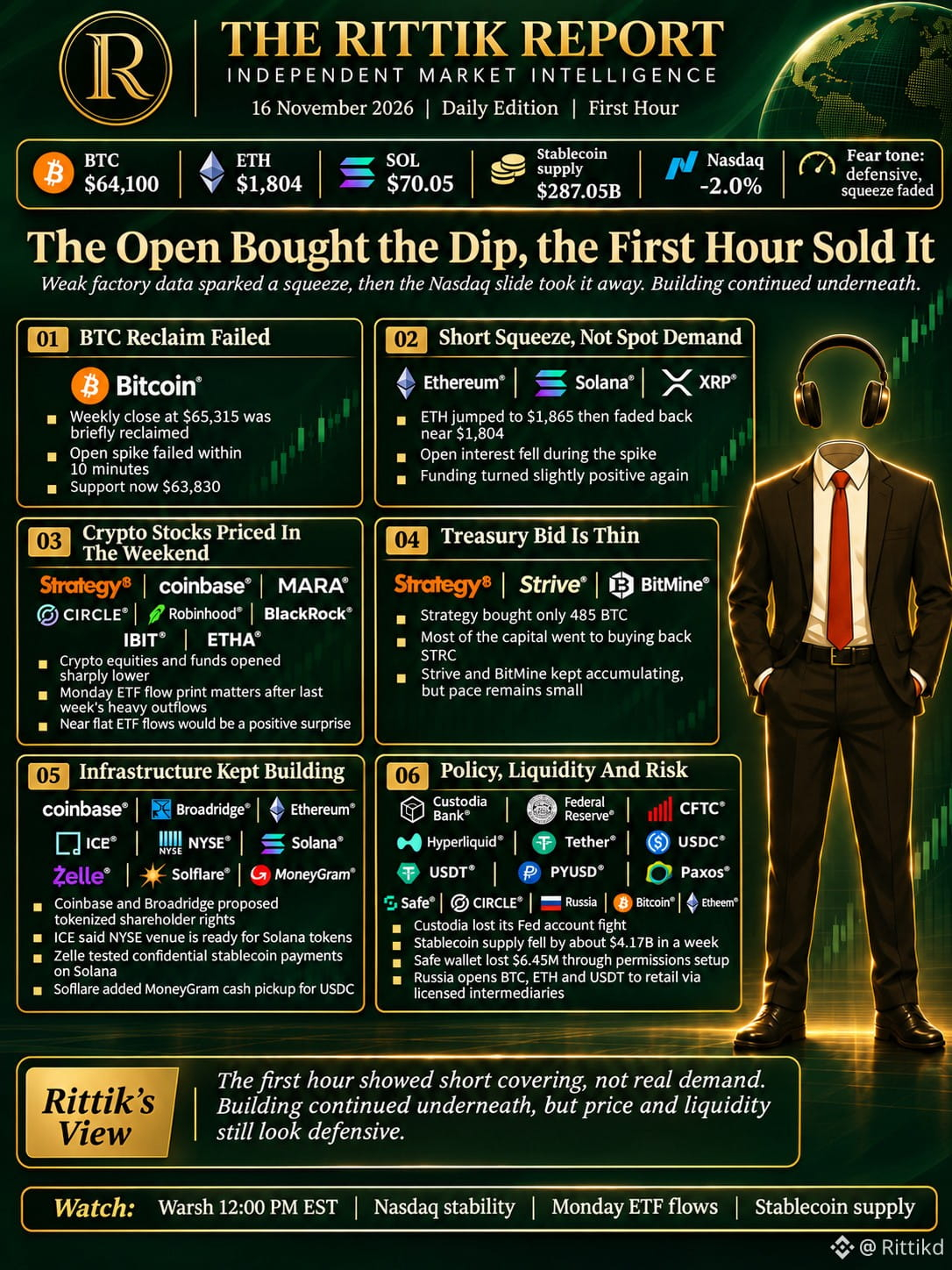
米国市場の最初の1時間で、買い手と売り手の状況がはっきりと見えてきました。弱い製造業指標と利回りの低下をきっかけにショートスクイーズが発生し、寄り付き時にビットコインは週間終値の$65,315を上回りました。しかし、その水準を取り戻した動きは10分以内に失速。ナスダックが2%安まで下落したことで、ビットコインも$64,000近辺まで押し戻されました。急騰時に未決済建玉が減少しており、新たな買い手が参入したのではなく、ショート勢が買い戻したことを示しています。また、ビットコインのファンディングレートは安値圏で再びプラスに転じました。暗号資産関連株は週末の動きを1営業日に織り込み、約5%から8%下落。ステーブルコインの供給量は先週、約40億ドル減少しました。インフラ整備は続いています。CoinbaseとBroadridgeはトークン化された株主権利を提案し、ICEはNYSEの取引所がSolanaトークンに対応できる状態だと発表。Zelleは機密性の高いステーブルコイン決済を試験しました。一方、財務省証券への買い需要は弱く、Strategyは調達資金の大半を優先株の買い戻しに充てています。
米国市場の残りの時間について、ビットコインのサポートは寄り付き後の安値である$64,035、次に今朝の安値$63,830、日曜日早朝の安値$63,725、土曜夜の安値$61,950です。レジスタンスは、東部標準時午前9時30分の寄り付き価格である$64,420、次に週間終値の$65,315、今日の高値$65,630で、その上には$66,100があります。終値が$65,315を再び上回れば、寄り付き時の急騰は本格的な上抜けとなります。一方、$63,725を割り込めば、$62,000への下落が視野に入ります。イーサのサポートは$1,800、次に今朝の安値$1,785、その次が$1,772と$1,709です。レジスタンスは$1,823、次に週間終値の$1,835、今日の高値$1,865です。私は引き続き慎重な姿勢を取ります。東部標準時午後12時のウォーシュ氏の発言、ナスダックが引けにかけて安定するかどうか、そして今夜発表される月曜日のETF資金フローに注目します。これらは私の分析上の水準であり、予測ではありません。また、ここに記載した内容は金融助言ではありません。
米国市場の最初の1時間で、買い手と売り手の状況がはっきりと見えてきました。弱い製造業指標と利回りの低下をきっかけにショートスクイーズが発生し、寄り付き時にビットコインは週間終値の$65,315を上回りました。しかし、その水準を取り戻した動きは10分以内に失速。ナスダックが2%安まで下落したことで、ビットコインも$64,000近辺まで押し戻されました。急騰時に未決済建玉が減少しており、新たな買い手が参入したのではなく、ショート勢が買い戻したことを示しています。また、ビットコインのファンディングレートは安値圏で再びプラスに転じました。暗号資産関連株は週末の動きを1営業日に織り込み、約5%から8%下落。ステーブルコインの供給量は先週、約40億ドル減少しました。インフラ整備は続いています。CoinbaseとBroadridgeはトークン化された株主権利を提案し、ICEはNYSEの取引所がSolanaトークンに対応できる状態だと発表。Zelleは機密性の高いステーブルコイン決済を試験しました。一方、財務省証券への買い需要は弱く、Strategyは調達資金の大半を優先株の買い戻しに充てています。
米国市場の残りの時間について、ビットコインのサポートは寄り付き後の安値である$64,035、次に今朝の安値$63,830、日曜日早朝の安値$63,725、土曜夜の安値$61,950です。レジスタンスは、東部標準時午前9時30分の寄り付き価格である$64,420、次に週間終値の$65,315、今日の高値$65,630で、その上には$66,100があります。終値が$65,315を再び上回れば、寄り付き時の急騰は本格的な上抜けとなります。一方、$63,725を割り込めば、$62,000への下落が視野に入ります。イーサのサポートは$1,800、次に今朝の安値$1,785、その次が$1,772と$1,709です。レジスタンスは$1,823、次に週間終値の$1,835、今日の高値$1,865です。私は引き続き慎重な姿勢を取ります。東部標準時午後12時のウォーシュ氏の発言、ナスダックが引けにかけて安定するかどうか、そして今夜発表される月曜日のETF資金フローに注目します。これらは私の分析上の水準であり、予測ではありません。また、ここに記載した内容は金融助言ではありません。
米国市場の残りの時間について、ビットコインのサポートは寄り付き後の安値である$64,035、次に今朝の安値$63,830、日曜日早朝の安値$63,725、土曜夜の安値$61,950です。レジスタンスは、東部標準時午前9時30分の寄り付き価格である$64,420、次に週間終値の$65,315、今日の高値$65,630で、その上には$66,100があります。終値が$65,315を再び上回れば、寄り付き時の急騰は本格的な上抜けとなります。一方、$63,725を割り込めば、$62,000への下落が視野に入ります。イーサのサポートは$1,800、次に今朝の安値$1,785、その次が$1,772と$1,709です。レジスタンスは$1,823、次に週間終値の$1,835、今日の高値$1,865です。私は引き続き慎重な姿勢を取ります。東部標準時午後12時のウォーシュ氏の発言、ナスダックが引けにかけて安定するかどうか、そして今夜発表される月曜日のETF資金フローに注目します。これらは私の分析上の水準であり、予測ではありません。また、ここに記載した内容は金融助言ではありません。
111
·
--
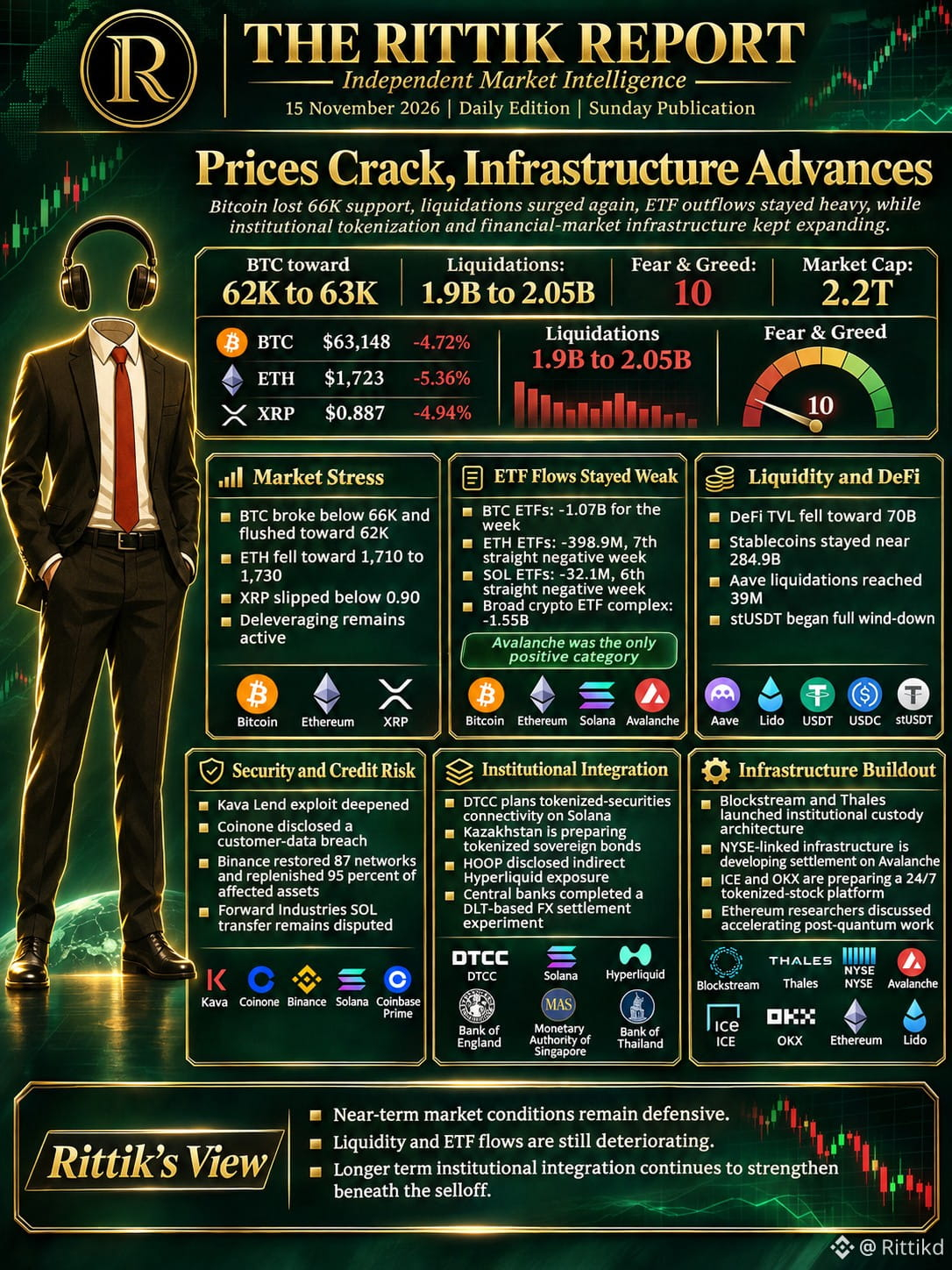
市場は今日も再び大幅に悪化しました。$BTC は6万6,000ドルのサポートゾーンを下抜け、6万2,000ドルに向けて取引されました。約20億ドル相当のレバレッジポジションが清算され、$XRP は0.90ドルを下回り、DeFiのTVLは700億ドルに向けて減少しました。
機関投資家の資金フローも同様に低調なままです。ビットコインETFは2週連続で10億ドル規模の資金流出を記録し、$ETH ETFは7週連続の週間資金流出となりました。低迷は暗号資産ETF市場全体の大半に広がっています。
そのため、流動性を取り巻く状況は依然として厳しいものです。ステーブルコインの時価総額は最近の水準を下回ったままで、ステーブルコインの貸付預入額は縮小し続けています。担保価値の下落により、DeFiでは測定可能な規模の清算が発生しています。
一方、暗号資産インフラの構造的な発展は、これとは逆の方向に進み続けています。DTCCはSolanaのトークン化に向けた接続を準備しており、カザフスタンはソブリン債のトークン化を進めています。中央銀行はDLTベースの外国為替決済を試験し、規制対象の機関は新たなカストディおよび証券インフラを構築しています。
目先の市場については引き続き慎重な見方をしていますが、その下で構築されているインフラには、ますます前向きな見方をしています。この矛盾はより明確になりつつあります。暗号資産の価格と流動性が悪化する一方で、機関投資家による統合は進展しています。短期的な市場見通しが改善するには、ETFへの資金流入が持続し、ステーブルコインの流動性が拡大し、清算の波の合間に一時停止しているだけでなく、レバレッジ解消が終わりつつあることを示す証拠とともに、ビットコインが失ったサポートを回復する必要があります。
市場は今日も再び大幅に悪化しました。$BTC は6万6,000ドルのサポートゾーンを下抜け、6万2,000ドルに向けて取引されました。約20億ドル相当のレバレッジポジションが清算され、$XRP は0.90ドルを下回り、DeFiのTVLは700億ドルに向けて減少しました。
機関投資家の資金フローも同様に低調なままです。ビットコインETFは2週連続で10億ドル規模の資金流出を記録し、$ETH ETFは7週連続の週間資金流出となりました。低迷は暗号資産ETF市場全体の大半に広がっています。
そのため、流動性を取り巻く状況は依然として厳しいものです。ステーブルコインの時価総額は最近の水準を下回ったままで、ステーブルコインの貸付預入額は縮小し続けています。担保価値の下落により、DeFiでは測定可能な規模の清算が発生しています。
一方、暗号資産インフラの構造的な発展は、これとは逆の方向に進み続けています。DTCCはSolanaのトークン化に向けた接続を準備しており、カザフスタンはソブリン債のトークン化を進めています。中央銀行はDLTベースの外国為替決済を試験し、規制対象の機関は新たなカストディおよび証券インフラを構築しています。
目先の市場については引き続き慎重な見方をしていますが、その下で構築されているインフラには、ますます前向きな見方をしています。この矛盾はより明確になりつつあります。暗号資産の価格と流動性が悪化する一方で、機関投資家による統合は進展しています。短期的な市場見通しが改善するには、ETFへの資金流入が持続し、ステーブルコインの流動性が拡大し、清算の波の合間に一時停止しているだけでなく、レバレッジ解消が終わりつつあることを示す証拠とともに、ビットコインが失ったサポートを回復する必要があります。
機関投資家の資金フローも同様に低調なままです。ビットコインETFは2週連続で10億ドル規模の資金流出を記録し、$ETH ETFは7週連続の週間資金流出となりました。低迷は暗号資産ETF市場全体の大半に広がっています。
そのため、流動性を取り巻く状況は依然として厳しいものです。ステーブルコインの時価総額は最近の水準を下回ったままで、ステーブルコインの貸付預入額は縮小し続けています。担保価値の下落により、DeFiでは測定可能な規模の清算が発生しています。
一方、暗号資産インフラの構造的な発展は、これとは逆の方向に進み続けています。DTCCはSolanaのトークン化に向けた接続を準備しており、カザフスタンはソブリン債のトークン化を進めています。中央銀行はDLTベースの外国為替決済を試験し、規制対象の機関は新たなカストディおよび証券インフラを構築しています。
目先の市場については引き続き慎重な見方をしていますが、その下で構築されているインフラには、ますます前向きな見方をしています。この矛盾はより明確になりつつあります。暗号資産の価格と流動性が悪化する一方で、機関投資家による統合は進展しています。短期的な市場見通しが改善するには、ETFへの資金流入が持続し、ステーブルコインの流動性が拡大し、清算の波の合間に一時停止しているだけでなく、レバレッジ解消が終わりつつあることを示す証拠とともに、ビットコインが失ったサポートを回復する必要があります。
98
·
--
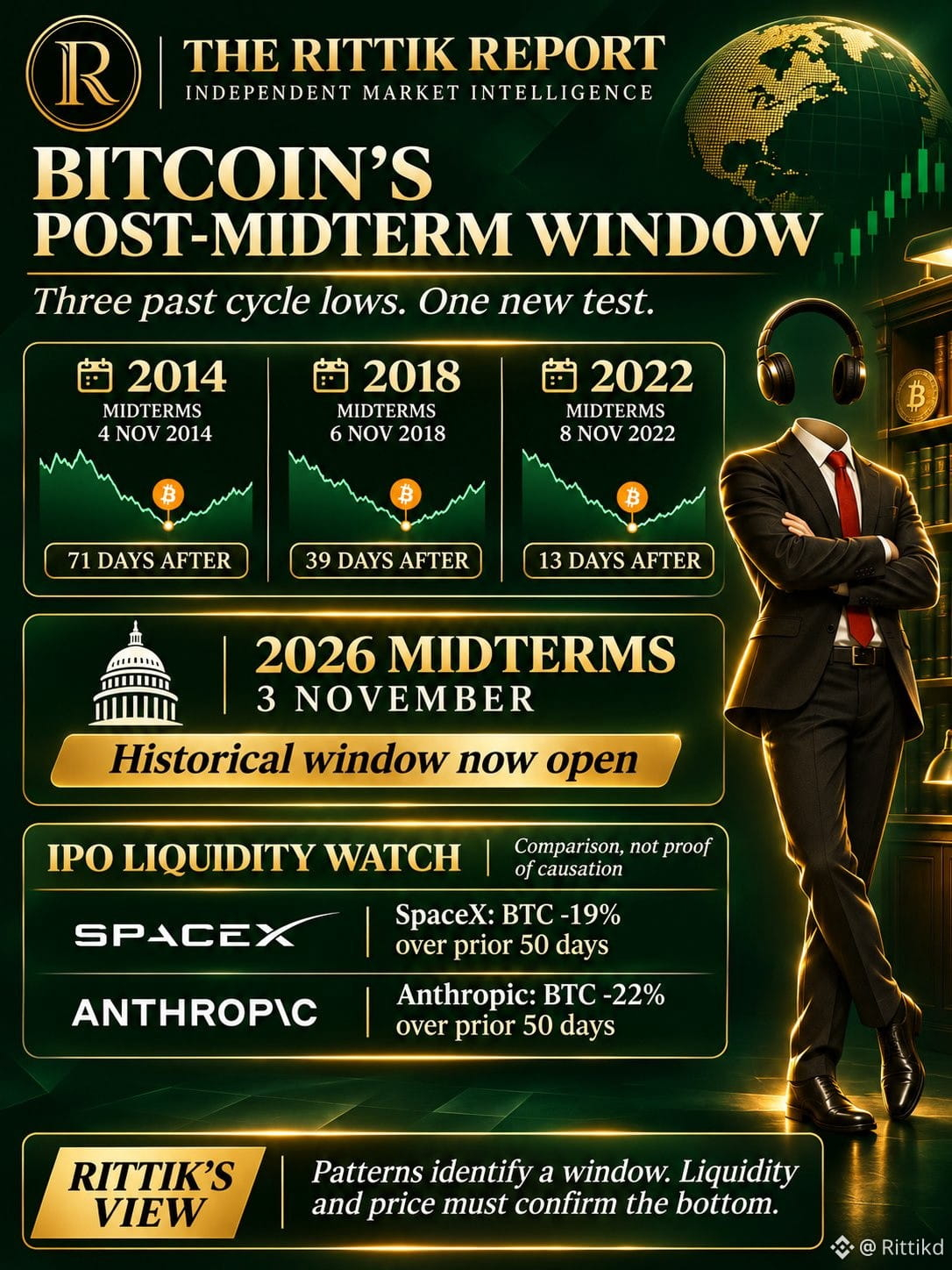
中間選挙後の急落は、ビットコインで最も一貫して見られるパターンの一つで、今まさにその時期に入っています。
米国では4年ごとに中間選挙が行われます。2014年、2018年、2022年です。この3年はいずれも、ビットコインは弱気相場の底をつけました。通常は投票から数週間後でした。
2014年:選挙の71日後に底値。
2018年:39日後に底値。
2022年:13日後の11月21日、約15,400ドルで底値。
その底値から1年後、ビットコインは2018年の安値から122%高、2022年の安値から126%高になっていました。
今年の中間選挙は11月3日でした。今はまさに同じ時期です。
もう一つ注目しているパターンがあります。6月12日、SpaceXが史上最大となる約750億ドルのIPOで上場しました。その前の50日間に、ビットコインは約19%下落しました。上場から19日後の7月1日、ビットコインは今年の安値となる57,800ドルをつけ、その後回復しました。IPOから100日後には、IPO当日の価格を約28%上回っていました。売りの大半は上場前に起きました。
史上2番目の規模となるAnthropicのIPOは、来週の予定です。その前の50日間に、ビットコインは22%下落しました。これほど大規模な上場は市場から多くの流動性を吸い上げますが、上場が終わると、その資金は戻り始めます。
どちらのパターンも保証ではありません。2022年にはビットコインは高値から78%下落しました。今回は約51%の下落です。サイクルごとに状況は異なるため、これだけを頼りにはしませんが、買う人にとってはある程度の安心材料になります。
中間選挙後の急落は、ビットコインで最も一貫して見られるパターンの一つで、今まさにその時期に入っています。
米国では4年ごとに中間選挙が行われます。2014年、2018年、2022年です。この3年はいずれも、ビットコインは弱気相場の底をつけました。通常は投票から数週間後でした。
2014年:選挙の71日後に底値。
2018年:39日後に底値。
2022年:13日後の11月21日、約15,400ドルで底値。
その底値から1年後、ビットコインは2018年の安値から122%高、2022年の安値から126%高になっていました。
今年の中間選挙は11月3日でした。今はまさに同じ時期です。
もう一つ注目しているパターンがあります。6月12日、SpaceXが史上最大となる約750億ドルのIPOで上場しました。その前の50日間に、ビットコインは約19%下落しました。上場から19日後の7月1日、ビットコインは今年の安値となる57,800ドルをつけ、その後回復しました。IPOから100日後には、IPO当日の価格を約28%上回っていました。売りの大半は上場前に起きました。
史上2番目の規模となるAnthropicのIPOは、来週の予定です。その前の50日間に、ビットコインは22%下落しました。これほど大規模な上場は市場から多くの流動性を吸い上げますが、上場が終わると、その資金は戻り始めます。
どちらのパターンも保証ではありません。2022年にはビットコインは高値から78%下落しました。今回は約51%の下落です。サイクルごとに状況は異なるため、これだけを頼りにはしませんが、買う人にとってはある程度の安心材料になります。
米国では4年ごとに中間選挙が行われます。2014年、2018年、2022年です。この3年はいずれも、ビットコインは弱気相場の底をつけました。通常は投票から数週間後でした。
2014年:選挙の71日後に底値。
2018年:39日後に底値。
2022年:13日後の11月21日、約15,400ドルで底値。
その底値から1年後、ビットコインは2018年の安値から122%高、2022年の安値から126%高になっていました。
今年の中間選挙は11月3日でした。今はまさに同じ時期です。
もう一つ注目しているパターンがあります。6月12日、SpaceXが史上最大となる約750億ドルのIPOで上場しました。その前の50日間に、ビットコインは約19%下落しました。上場から19日後の7月1日、ビットコインは今年の安値となる57,800ドルをつけ、その後回復しました。IPOから100日後には、IPO当日の価格を約28%上回っていました。売りの大半は上場前に起きました。
史上2番目の規模となるAnthropicのIPOは、来週の予定です。その前の50日間に、ビットコインは22%下落しました。これほど大規模な上場は市場から多くの流動性を吸い上げますが、上場が終わると、その資金は戻り始めます。
どちらのパターンも保証ではありません。2022年にはビットコインは高値から78%下落しました。今回は約51%の下落です。サイクルごとに状況は異なるため、これだけを頼りにはしませんが、買う人にとってはある程度の安心材料になります。
1
426
·
--
翻訳参照
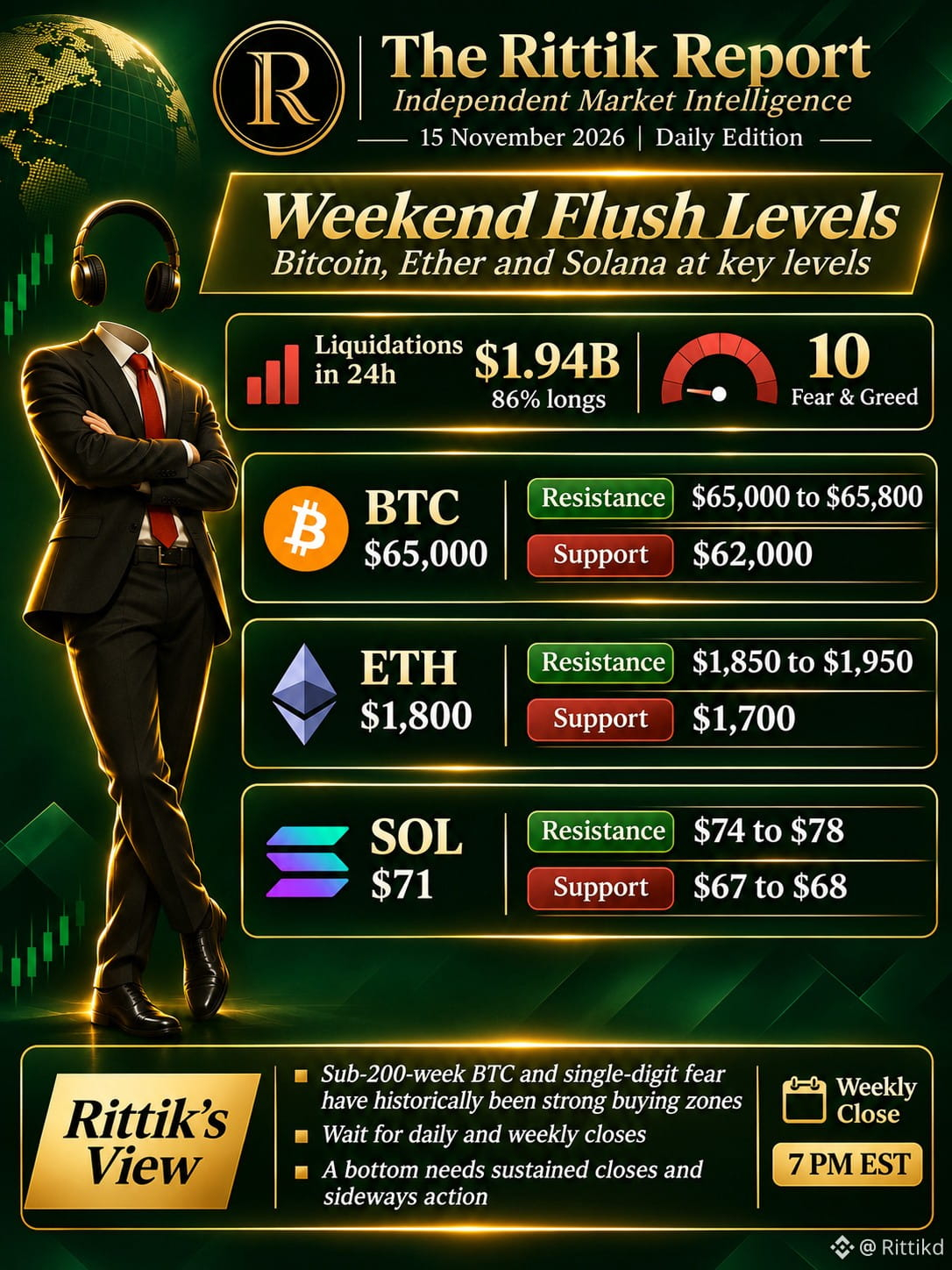
$BTC $ETH and $SOL levels after the weekend flush 📊
About $1.94 billion of positions were liquidated in the last 24 hours, and about 86% of them were longs. The fear and greed index is at 10.
When Bitcoin is below its 200-week average and fear and greed drops toward single digits, that has historically been one of the best times to buy spot. Very few people have the nerve to buy here.
Bitcoin
Resistance: $65,000 to $65,800, being tested now. A daily close above it opens the 200-week line at $67,800, then $68,000.
Support: $62,000, today's low. A daily close below it opens $60,000 to $61,000, the mining cost zone. A daily close below $60,000 opens the way to $57,800.
Ether, near $1,800 (Saturday's close was the lowest since 9 July)
Resistance: $1,850 to $1,950, where the August rally started.
Support: $1,700. A daily close below it opens $1,500 to $1,550, the June lows.
Solana, near $71
Resistance: $74 to $78.
Support: $67 to $68, today's low. A daily close below $67 opens $60 to $64, this year's lows.
Wicks mean nothing. I wait for daily and weekly closes. The weekly candle closes tonight at 7 PM EST, and that should give some weekly clarity.
A bottom isn't confirmed until price keeps closing above it and the market moves sideways. Right now it is falling like a knife, so I would not take longs here. Even if a bounce comes, expect sideways movement on at least the 4-hour chart before any recovery. V-shaped recoveries are rare, so don't lose money chasing one.
These are levels, not advice.
$BTC $ETH and $SOL levels after the weekend flush 📊
About $1.94 billion of positions were liquidated in the last 24 hours, and about 86% of them were longs. The fear and greed index is at 10.
When Bitcoin is below its 200-week average and fear and greed drops toward single digits, that has historically been one of the best times to buy spot. Very few people have the nerve to buy here.
Bitcoin
Resistance: $65,000 to $65,800, being tested now. A daily close above it opens the 200-week line at $67,800, then $68,000.
Support: $62,000, today's low. A daily close below it opens $60,000 to $61,000, the mining cost zone. A daily close below $60,000 opens the way to $57,800.
Ether, near $1,800 (Saturday's close was the lowest since 9 July)
Resistance: $1,850 to $1,950, where the August rally started.
Support: $1,700. A daily close below it opens $1,500 to $1,550, the June lows.
Solana, near $71
Resistance: $74 to $78.
Support: $67 to $68, today's low. A daily close below $67 opens $60 to $64, this year's lows.
Wicks mean nothing. I wait for daily and weekly closes. The weekly candle closes tonight at 7 PM EST, and that should give some weekly clarity.
A bottom isn't confirmed until price keeps closing above it and the market moves sideways. Right now it is falling like a knife, so I would not take longs here. Even if a bounce comes, expect sideways movement on at least the 4-hour chart before any recovery. V-shaped recoveries are rare, so don't lose money chasing one.
These are levels, not advice.
About $1.94 billion of positions were liquidated in the last 24 hours, and about 86% of them were longs. The fear and greed index is at 10.
When Bitcoin is below its 200-week average and fear and greed drops toward single digits, that has historically been one of the best times to buy spot. Very few people have the nerve to buy here.
Bitcoin
Resistance: $65,000 to $65,800, being tested now. A daily close above it opens the 200-week line at $67,800, then $68,000.
Support: $62,000, today's low. A daily close below it opens $60,000 to $61,000, the mining cost zone. A daily close below $60,000 opens the way to $57,800.
Ether, near $1,800 (Saturday's close was the lowest since 9 July)
Resistance: $1,850 to $1,950, where the August rally started.
Support: $1,700. A daily close below it opens $1,500 to $1,550, the June lows.
Solana, near $71
Resistance: $74 to $78.
Support: $67 to $68, today's low. A daily close below $67 opens $60 to $64, this year's lows.
Wicks mean nothing. I wait for daily and weekly closes. The weekly candle closes tonight at 7 PM EST, and that should give some weekly clarity.
A bottom isn't confirmed until price keeps closing above it and the market moves sideways. Right now it is falling like a knife, so I would not take longs here. Even if a bounce comes, expect sideways movement on at least the 4-hour chart before any recovery. V-shaped recoveries are rare, so don't lose money chasing one.
These are levels, not advice.
104
·
--
翻訳参照
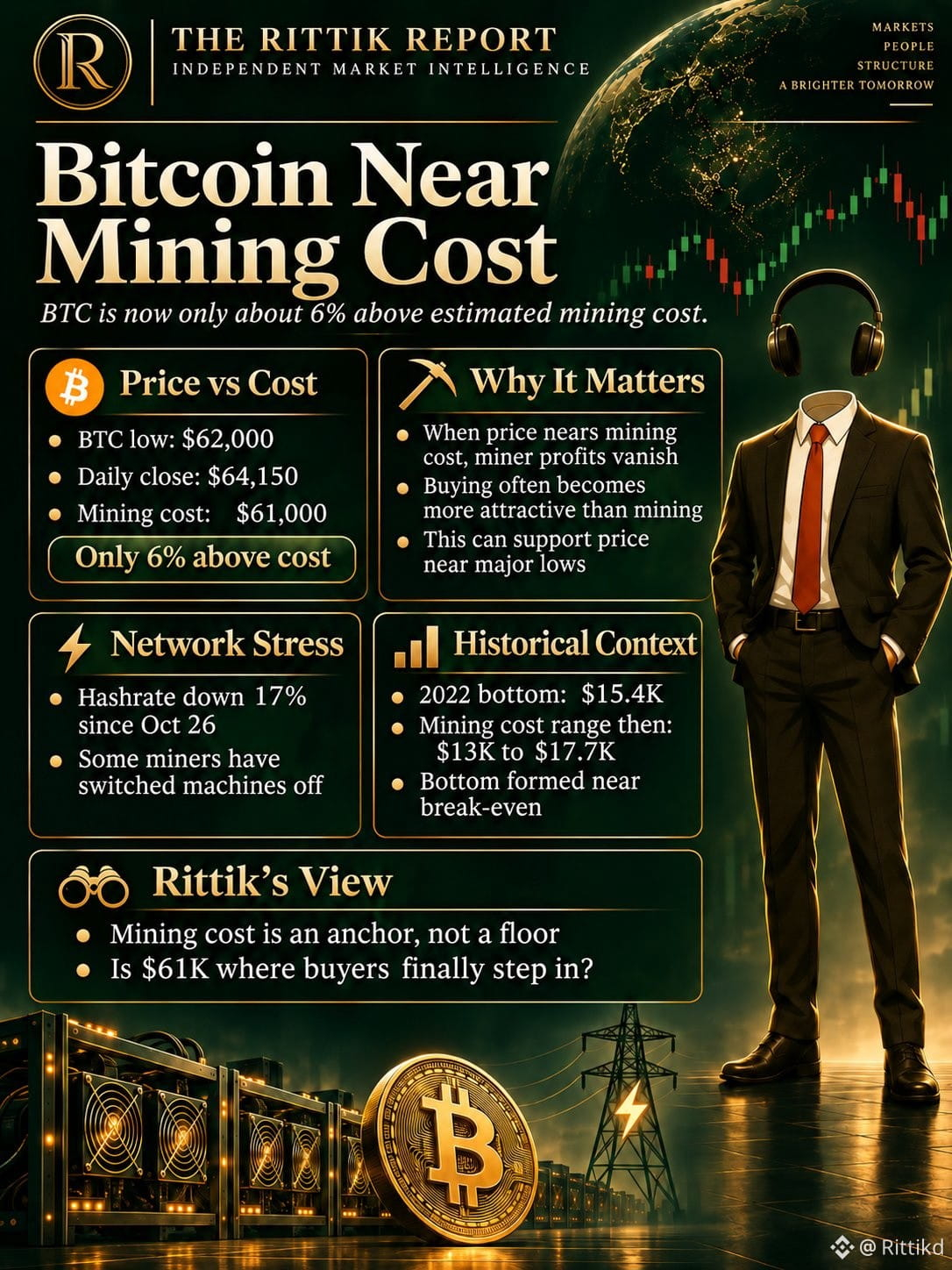
This morning Bitcoin fell to $62,000, its lowest level since 13 July. Saturday's daily close was $64,150, the lowest close since 16 August. Meanwhile the cost of mining one Bitcoin is around $61,000.
Bitcoin was only about 6% above what it costs to mine one.
Why does mining cost matter for price? Miners spend on electricity to run their machines. When price gets close to that cost, their profit almost disappears. If it costs a miner $60,000 to mine one Bitcoin and price drops to $55,000, it is cheaper to buy Bitcoin on the market than to mine it. That buying supports price. This is why bottoms have mostly formed around the cost of mining.
Electricity alone now runs close to $61,000 per coin, with price near $65,000. Add the cost of the machines and the real cost is even higher.
You can see the stress in the network. Total hashrate is down about 17% since 26 October. Some miners have switched their machines off because mining is no longer profitable.
What happened last time? In 2022 the bottom came on 21 November at about $15,400. Mining cost estimates then sat between roughly $13,000 and $17,700, so the bottom formed right in the break-even zone.
One thing to be clear on: mining cost is not a floor. Price has gone below it many times. What it gives me is an anchor for where major buying makes sense.
Is $61,000 where this market finally finds buyers?
This morning Bitcoin fell to $62,000, its lowest level since 13 July. Saturday's daily close was $64,150, the lowest close since 16 August. Meanwhile the cost of mining one Bitcoin is around $61,000.
Bitcoin was only about 6% above what it costs to mine one.
Why does mining cost matter for price? Miners spend on electricity to run their machines. When price gets close to that cost, their profit almost disappears. If it costs a miner $60,000 to mine one Bitcoin and price drops to $55,000, it is cheaper to buy Bitcoin on the market than to mine it. That buying supports price. This is why bottoms have mostly formed around the cost of mining.
Electricity alone now runs close to $61,000 per coin, with price near $65,000. Add the cost of the machines and the real cost is even higher.
You can see the stress in the network. Total hashrate is down about 17% since 26 October. Some miners have switched their machines off because mining is no longer profitable.
What happened last time? In 2022 the bottom came on 21 November at about $15,400. Mining cost estimates then sat between roughly $13,000 and $17,700, so the bottom formed right in the break-even zone.
One thing to be clear on: mining cost is not a floor. Price has gone below it many times. What it gives me is an anchor for where major buying makes sense.
Is $61,000 where this market finally finds buyers?
Bitcoin was only about 6% above what it costs to mine one.
Why does mining cost matter for price? Miners spend on electricity to run their machines. When price gets close to that cost, their profit almost disappears. If it costs a miner $60,000 to mine one Bitcoin and price drops to $55,000, it is cheaper to buy Bitcoin on the market than to mine it. That buying supports price. This is why bottoms have mostly formed around the cost of mining.
Electricity alone now runs close to $61,000 per coin, with price near $65,000. Add the cost of the machines and the real cost is even higher.
You can see the stress in the network. Total hashrate is down about 17% since 26 October. Some miners have switched their machines off because mining is no longer profitable.
What happened last time? In 2022 the bottom came on 21 November at about $15,400. Mining cost estimates then sat between roughly $13,000 and $17,700, so the bottom formed right in the break-even zone.
One thing to be clear on: mining cost is not a floor. Price has gone below it many times. What it gives me is an anchor for where major buying makes sense.
Is $61,000 where this market finally finds buyers?
104
·
--

記事
ビットコインの価格が示すのは、何が起きたか。流動性が示すのは、次に何が起こるか。暗号資産市場でよく見かける最大の過ちの一つは、価格の上昇を市場環境が改善した証拠と見なすことです。
ビットコインは、基礎となる流動性が悪化している中でも上昇することがあります。イーサリアムは、持続的な資金流入を呼び込まなくても、一時的にビットコインを上回るパフォーマンスを示すことがあります。また、暗号資産市場全体が強気に見えても、値動きの多くが実際の現物需要ではなく、レバレッジをかけたポジションによって生じていることがあります。
だからこそ、市場を評価する際には価格チャートだけにとらわれないようにしています。
私が特に注目している点は5つあります。
ビットコインの価格が示すのは、何が起きたか。流動性が示すのは、次に何が起こるか。
暗号資産市場でよく見かける最大の過ちの一つは、価格の上昇を市場環境が改善した証拠と見なすことです。
ビットコインは、基礎となる流動性が悪化している中でも上昇することがあります。イーサリアムは、持続的な資金流入を呼び込まなくても、一時的にビットコインを上回るパフォーマンスを示すことがあります。また、暗号資産市場全体が強気に見えても、値動きの多くが実際の現物需要ではなく、レバレッジをかけたポジションによって生じていることがあります。
だからこそ、市場を評価する際には価格チャートだけにとらわれないようにしています。
私が特に注目している点は5つあります。
ビットコインは、基礎となる流動性が悪化している中でも上昇することがあります。イーサリアムは、持続的な資金流入を呼び込まなくても、一時的にビットコインを上回るパフォーマンスを示すことがあります。また、暗号資産市場全体が強気に見えても、値動きの多くが実際の現物需要ではなく、レバレッジをかけたポジションによって生じていることがあります。
だからこそ、市場を評価する際には価格チャートだけにとらわれないようにしています。
私が特に注目している点は5つあります。
174
·
--
翻訳参照
If you missed buying bitcoin at $60,000, another chance in here.
Don’t chase the bottom, chase the DCA Range.
Remember - Downside is limited, upside is unlimited.
Plan it right.
If you missed buying bitcoin at $60,000, another chance in here.
Don’t chase the bottom, chase the DCA Range.
Remember - Downside is limited, upside is unlimited.
Plan it right.
Don’t chase the bottom, chase the DCA Range.
Remember - Downside is limited, upside is unlimited.
Plan it right.
47
·
--
翻訳参照
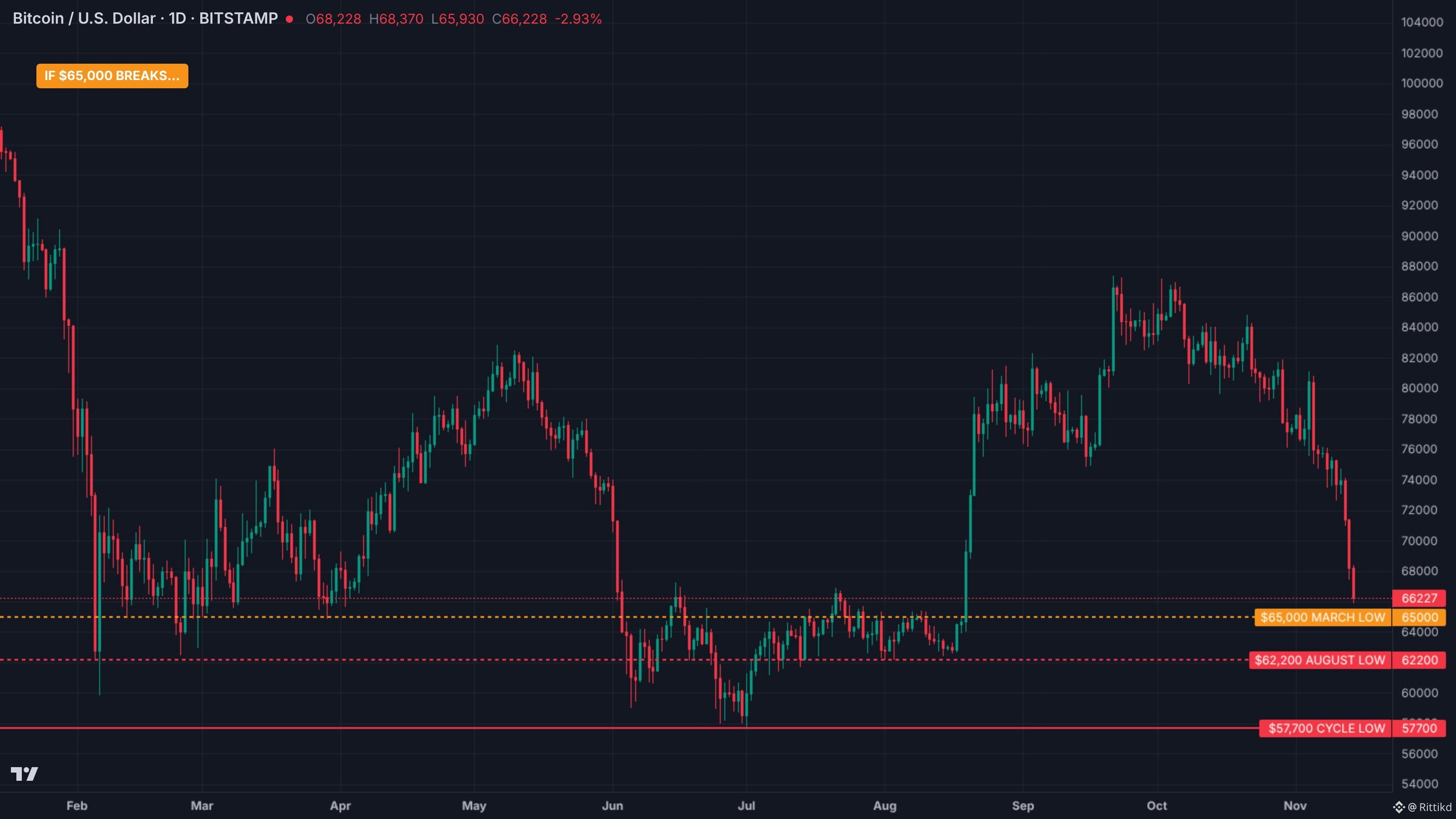
IF $BTC LOSES $65,000…
There's not much until $62,200, the August low.
Below that: $57,700, the cycle low from July.
Bitcoin just lost $66,000. $66,200 right now.
$65,000 is the line.
IF $BTC LOSES $65,000…
There's not much until $62,200, the August low.
Below that: $57,700, the cycle low from July.
Bitcoin just lost $66,000. $66,200 right now.
$65,000 is the line.
There's not much until $62,200, the August low.
Below that: $57,700, the cycle low from July.
Bitcoin just lost $66,000. $66,200 right now.
$65,000 is the line.
141
·
--
翻訳参照
The market weakened further overnight. Bitcoin lost the $68K area, ETF outflows extended to seven sessions, stablecoin capitalization fell below $285B and DeFi TVL moved toward $74B.
The macro environment remains equally difficult. Fed officials continue signaling tighter policy, while inflation remains the dominant policy concern.
At the same time, Binance is restoring withdrawals, Coinbase has moved deeper into federally regulated custody and DeFi governance continues improving its risk controls.
I remain defensive on price but constructive on infrastructure. The immediate market problem is still liquidity: stablecoins are contracting, institutional flows remain negative and Bitcoin has lost another support level. I would need to see BTC reclaim $68K-$70K alongside improving ETF and stablecoin flows before treating any rebound as more than relief.
The market weakened further overnight. Bitcoin lost the $68K area, ETF outflows extended to seven sessions, stablecoin capitalization fell below $285B and DeFi TVL moved toward $74B.
The macro environment remains equally difficult. Fed officials continue signaling tighter policy, while inflation remains the dominant policy concern.
At the same time, Binance is restoring withdrawals, Coinbase has moved deeper into federally regulated custody and DeFi governance continues improving its risk controls.
I remain defensive on price but constructive on infrastructure. The immediate market problem is still liquidity: stablecoins are contracting, institutional flows remain negative and Bitcoin has lost another support level. I would need to see BTC reclaim $68K-$70K alongside improving ETF and stablecoin flows before treating any rebound as more than relief.
The macro environment remains equally difficult. Fed officials continue signaling tighter policy, while inflation remains the dominant policy concern.
At the same time, Binance is restoring withdrawals, Coinbase has moved deeper into federally regulated custody and DeFi governance continues improving its risk controls.
I remain defensive on price but constructive on infrastructure. The immediate market problem is still liquidity: stablecoins are contracting, institutional flows remain negative and Bitcoin has lost another support level. I would need to see BTC reclaim $68K-$70K alongside improving ETF and stablecoin flows before treating any rebound as more than relief.
93
·
--
翻訳参照
When $BTC touches or falls below 200 WMA.
You Buy and DCA and then just HODL
When $BTC touches or falls below 200 WMA.
You Buy and DCA and then just HODL
You Buy and DCA and then just HODL
61
·
--
翻訳参照
Some $NVDAB employees are calling for Jensen Huang to return with an internal post drawing over 1,600 comments, including calls to give him a “second chance.”
Turns out making your employees millionaires earns you quite a bit of loyalty.
Some $NVDAB employees are calling for Jensen Huang to return with an internal post drawing over 1,600 comments, including calls to give him a “second chance.”
Turns out making your employees millionaires earns you quite a bit of loyalty.
Turns out making your employees millionaires earns you quite a bit of loyalty.
64
·
--
翻訳参照
Bear markets make fools of both bulls and bears
Bear markets make fools of both bulls and bears
·
--
翻訳参照
ELON: A PETITION IS UNDERWAY TO REINSTATE JENSEN AND I’M SIGNING IT TOO
$NVDAB
ELON: A PETITION IS UNDERWAY TO REINSTATE JENSEN AND I’M SIGNING IT TOO
$NVDAB
$NVDAB
68
·
--
翻訳参照
So many big names came out in Epstein files but nothing happened.
But one Chinese Spy story forced Jensen Out from one of the most important & powerful company.
Something doesn’t add up.
So many big names came out in Epstein files but nothing happened.
But one Chinese Spy story forced Jensen Out from one of the most important & powerful company.
Something doesn’t add up.
But one Chinese Spy story forced Jensen Out from one of the most important & powerful company.
Something doesn’t add up.
28
·
--
翻訳参照
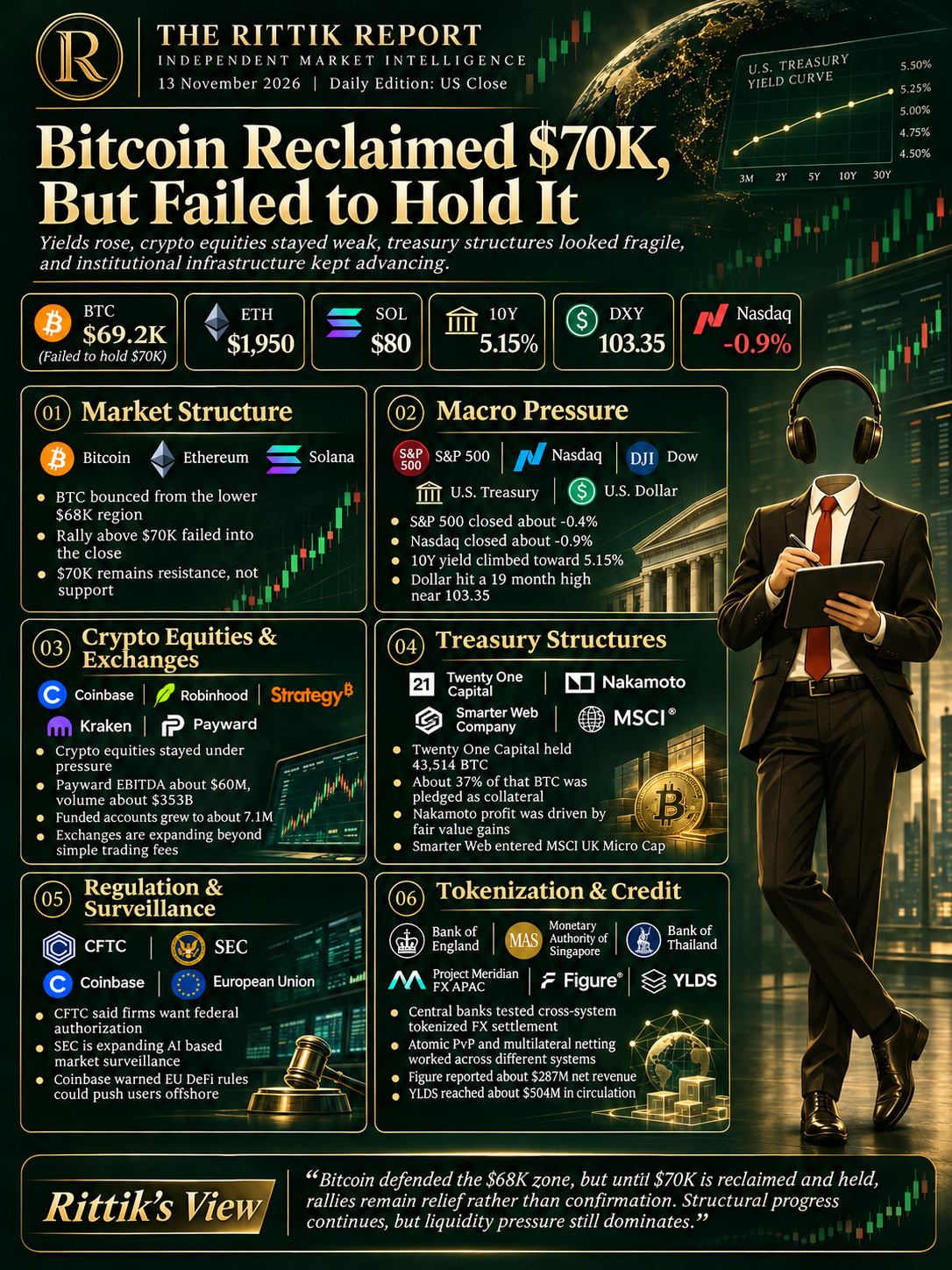
Bitcoin defended the $68K region and recovered above $70K intraday, but buyers failed to hold the move. At the same time, the 10-year Treasury yield climbed toward 5.15% and the dollar strengthened, showing that the softer monthly PPI print did not materially loosen financial conditions.
The deeper issue is increasingly visible in crypto companies themselves. Exchange profitability is weakening, while several treasury companies are relying heavily on fair-value gains, collateralized Bitcoin and increasingly complex financing structures.
Institutional infrastructure continues advancing through federal regulation, tokenized settlement and blockchain-based credit markets, but those structural developments are not offsetting current liquidity pressure.
I remain defensive on the market. Bitcoin has shown demand near $68K, but $70K now needs to be reclaimed and held. Until yields fall, institutional outflows slow and liquidity improves, I would continue treating rallies as relief rather than confirmation of a durable recovery.
Bitcoin defended the $68K region and recovered above $70K intraday, but buyers failed to hold the move. At the same time, the 10-year Treasury yield climbed toward 5.15% and the dollar strengthened, showing that the softer monthly PPI print did not materially loosen financial conditions.
The deeper issue is increasingly visible in crypto companies themselves. Exchange profitability is weakening, while several treasury companies are relying heavily on fair-value gains, collateralized Bitcoin and increasingly complex financing structures.
Institutional infrastructure continues advancing through federal regulation, tokenized settlement and blockchain-based credit markets, but those structural developments are not offsetting current liquidity pressure.
I remain defensive on the market. Bitcoin has shown demand near $68K, but $70K now needs to be reclaimed and held. Until yields fall, institutional outflows slow and liquidity improves, I would continue treating rallies as relief rather than confirmation of a durable recovery.
The deeper issue is increasingly visible in crypto companies themselves. Exchange profitability is weakening, while several treasury companies are relying heavily on fair-value gains, collateralized Bitcoin and increasingly complex financing structures.
Institutional infrastructure continues advancing through federal regulation, tokenized settlement and blockchain-based credit markets, but those structural developments are not offsetting current liquidity pressure.
I remain defensive on the market. Bitcoin has shown demand near $68K, but $70K now needs to be reclaimed and held. Until yields fall, institutional outflows slow and liquidity improves, I would continue treating rallies as relief rather than confirmation of a durable recovery.
103
·
--
翻訳参照
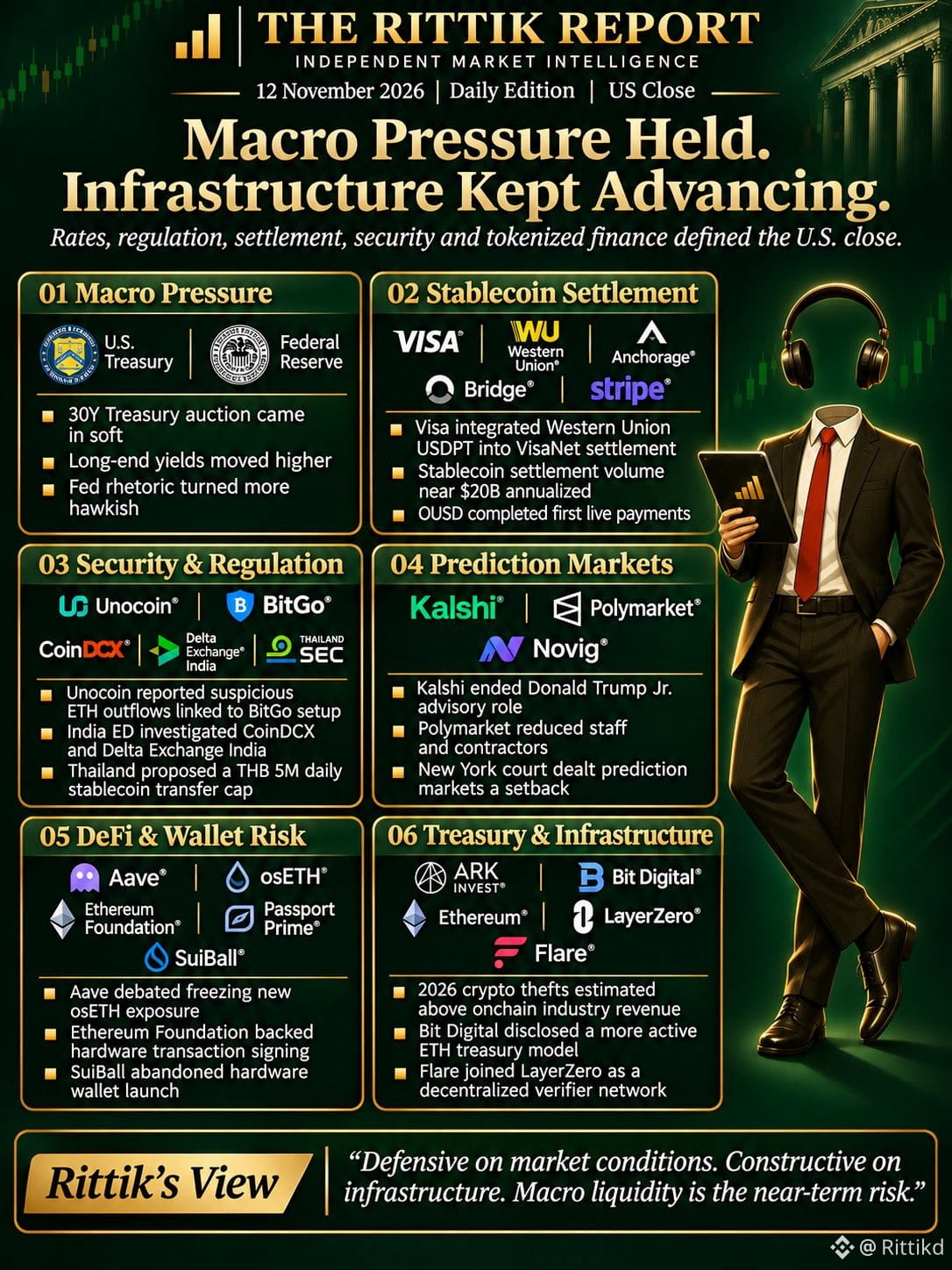
The US session reinforced the macro pressure already visible in the morning. The 30-year Treasury auction was weak, long-end yields remained elevated and Fed officials continued leaning toward tighter policy, leaving crypto without meaningful monetary support.
At the same time, the structural side of the market continued advancing through Visa stablecoin settlement, live OUSD payments, institutional Ethereum treasury strategies and cross-chain infrastructure.
My view remains defensive on market conditions but constructive on infrastructure. The immediate risk is still macro liquidity; the longer-term opportunity remains the gradual integration of stablecoins, tokenization and blockchain settlement into conventional finance.
The US session reinforced the macro pressure already visible in the morning. The 30-year Treasury auction was weak, long-end yields remained elevated and Fed officials continued leaning toward tighter policy, leaving crypto without meaningful monetary support.
At the same time, the structural side of the market continued advancing through Visa stablecoin settlement, live OUSD payments, institutional Ethereum treasury strategies and cross-chain infrastructure.
My view remains defensive on market conditions but constructive on infrastructure. The immediate risk is still macro liquidity; the longer-term opportunity remains the gradual integration of stablecoins, tokenization and blockchain settlement into conventional finance.
At the same time, the structural side of the market continued advancing through Visa stablecoin settlement, live OUSD payments, institutional Ethereum treasury strategies and cross-chain infrastructure.
My view remains defensive on market conditions but constructive on infrastructure. The immediate risk is still macro liquidity; the longer-term opportunity remains the gradual integration of stablecoins, tokenization and blockchain settlement into conventional finance.
78
ログインして、さらにコンテンツを読む
厳選トピックで世界の暗号資産トレーダーの仲間入り
⚡️ 暗号資産に関する最新かつ有益な情報が見つかります。
💬 世界最大の暗号資産取引所から信頼されています。
👍 認証を受けたクリエイターから、有益なインサイトを得られます。
メール / 電話番号