Binance Square

Tooba Rubab

取引を発注
1.4年
33 フォロー
6.9K+ フォロワー
6.6K+ いいね
1.3K+ 共有
投稿
ポートフォリオ
·
--
私はここで壊しました
私はここで壊しました
翻訳参照
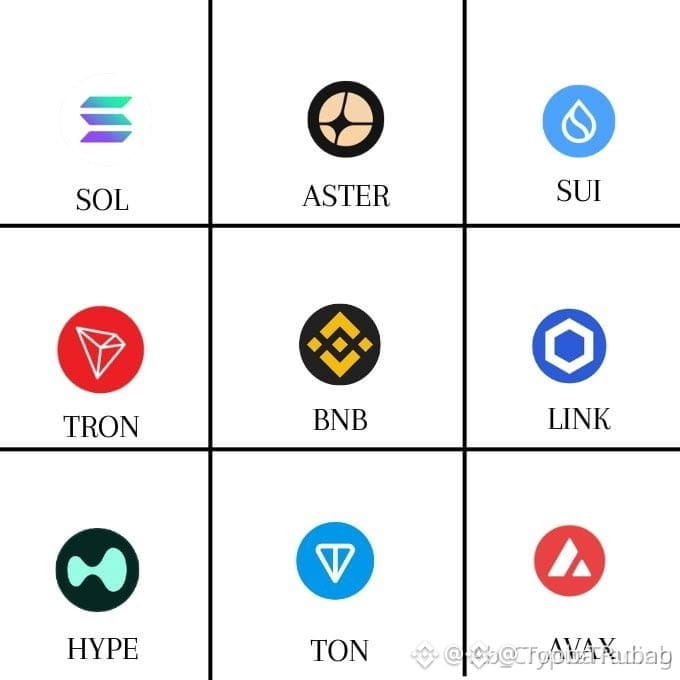
if you had $100000 where will you invest . .. which coin will you buy
if you had $100000 where will you invest . ..
which coin will you buy
翻訳参照
swags only
swags only
Binance Angels
·
--
私たちは20万人の仲間です。今、あなたの声を聞きたいです。🎉
教えてください✨あなたのお気に入りのBinance製品は何で、それを新しいBinancianに推薦する理由は何ですか?💛 そして、$2000のUSDCのシェアを獲得しましょう。使用する番号は#BinanceSquareTG です。

🔸 @BinanceAngelのアカウントをフォロー
🔸 この投稿にいいねをして再投稿
🔸 コメント/投稿: ✨あなたのお気に入りの#Binance 製品は何で、それを新しいBinancianに推薦する理由は何ですか?
🔸 アンケートに記入: here

トップ200の回答が勝ちます。創造性が重要です。あなたの声が祝賀の先導となります。😇
$BNB
{spot}(BNBUSDT)
翻訳参照
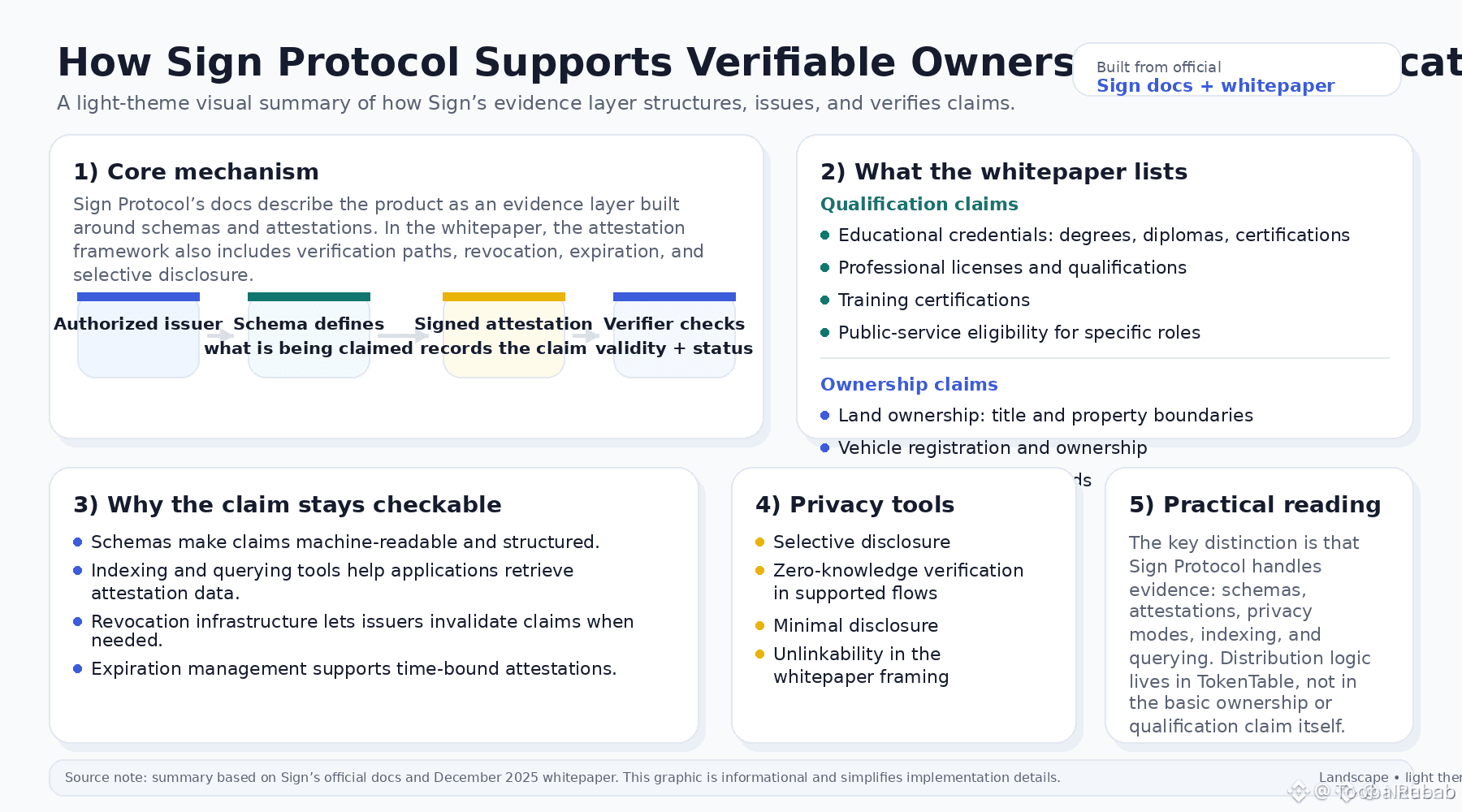
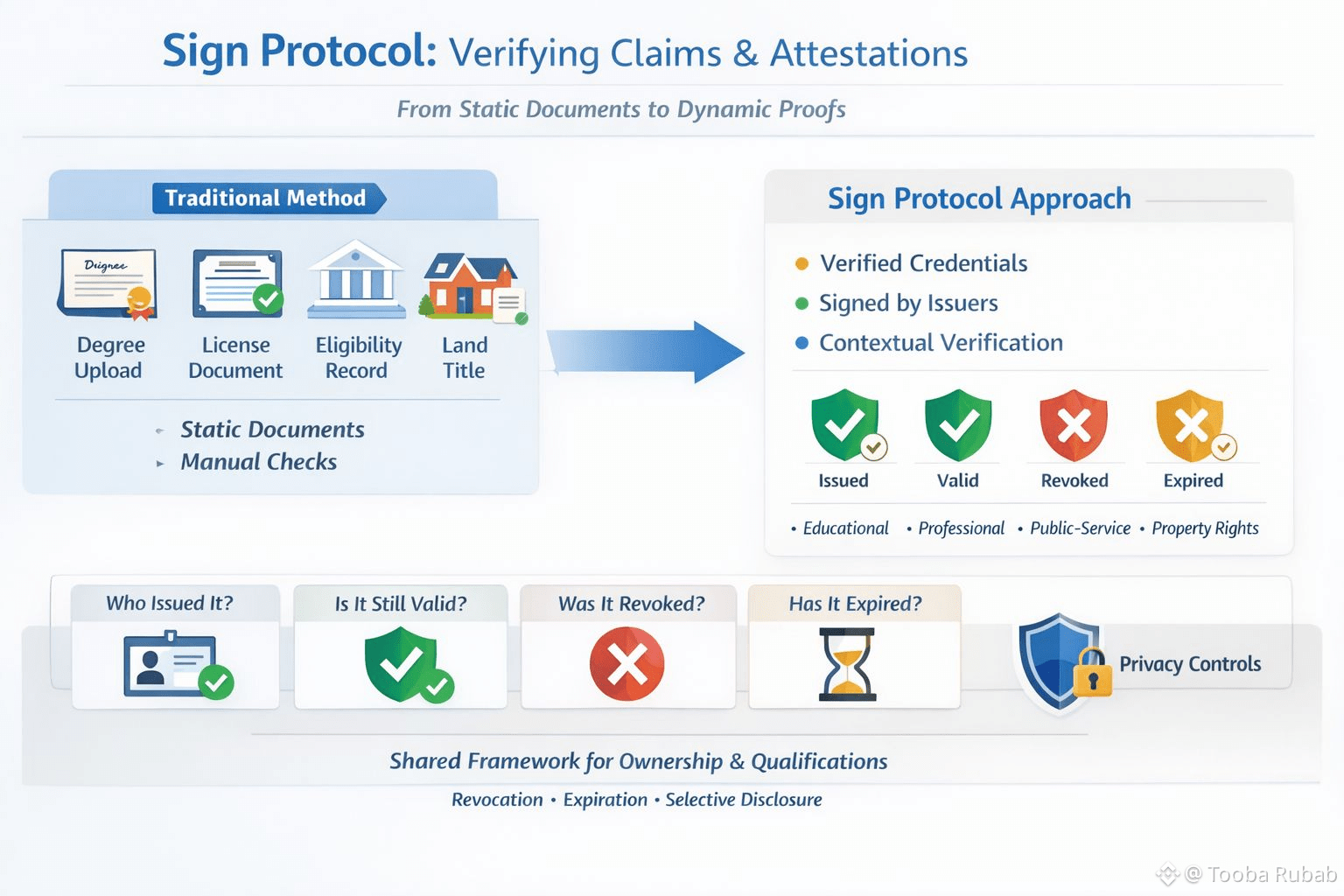
What stands out to me about Sign Protocol is how it reframes ownership and qualifications—not as static documents, but as dynamic claims that can be verified in context. It may sound like a small shift, but it completely changes how things work. A degree, license, eligibility record, or even a land title is no longer just something you upload and hope gets accepted. Instead, it becomes a structured attestation—linked to a schema, issued by an authorized source, and designed to be verified anytime with proper status checks. And that matters, because ownership and qualification are rarely simple, one-step validations. In most cases, people need more clarity: Who issued it? Is it still valid? Has it expired? Was it revoked? What evidence supports it? This is where Sign’s approach becomes practical. The protocol supports attestations across areas like education, professional licensing, public-service eligibility, land ownership, and broader property rights. It also includes key features like revocation, expiration, and selective disclosure—especially important where privacy is involved. I don’t see this as “solving trust” completely. It’s more grounded than that. What Sign really offers is a shared framework for institutions and applications to express and verify claims—without every system having to rebuild trust mechanisms from scratch. And when it comes to ownership and qualifications, that’s already a meaningful step forward. @SignOfficial l $SIGN #SignDigitalSovereignInfra SIGNUSDT Perp
What stands out to me about Sign Protocol is how it reframes ownership and qualifications—not as static documents, but as dynamic claims that can be verified in context. It may sound like a small shift, but it completely changes how things work.

A degree, license, eligibility record, or even a land title is no longer just something you upload and hope gets accepted. Instead, it becomes a structured attestation—linked to a schema, issued by an authorized source, and designed to be verified anytime with proper status checks. And that matters, because ownership and qualification are rarely simple, one-step validations.

In most cases, people need more clarity:
Who issued it? Is it still valid? Has it expired? Was it revoked? What evidence supports it?

This is where Sign’s approach becomes practical. The protocol supports attestations across areas like education, professional licensing, public-service eligibility, land ownership, and broader property rights. It also includes key features like revocation, expiration, and selective disclosure—especially important where privacy is involved.

I don’t see this as “solving trust” completely. It’s more grounded than that. What Sign really offers is a shared framework for institutions and applications to express and verify claims—without every system having to rebuild trust mechanisms from scratch.

And when it comes to ownership and qualifications, that’s already a meaningful step forward.

@SignOfficial l $SIGN #SignDigitalSovereignInfra
SIGNUSDT Perp
翻訳参照
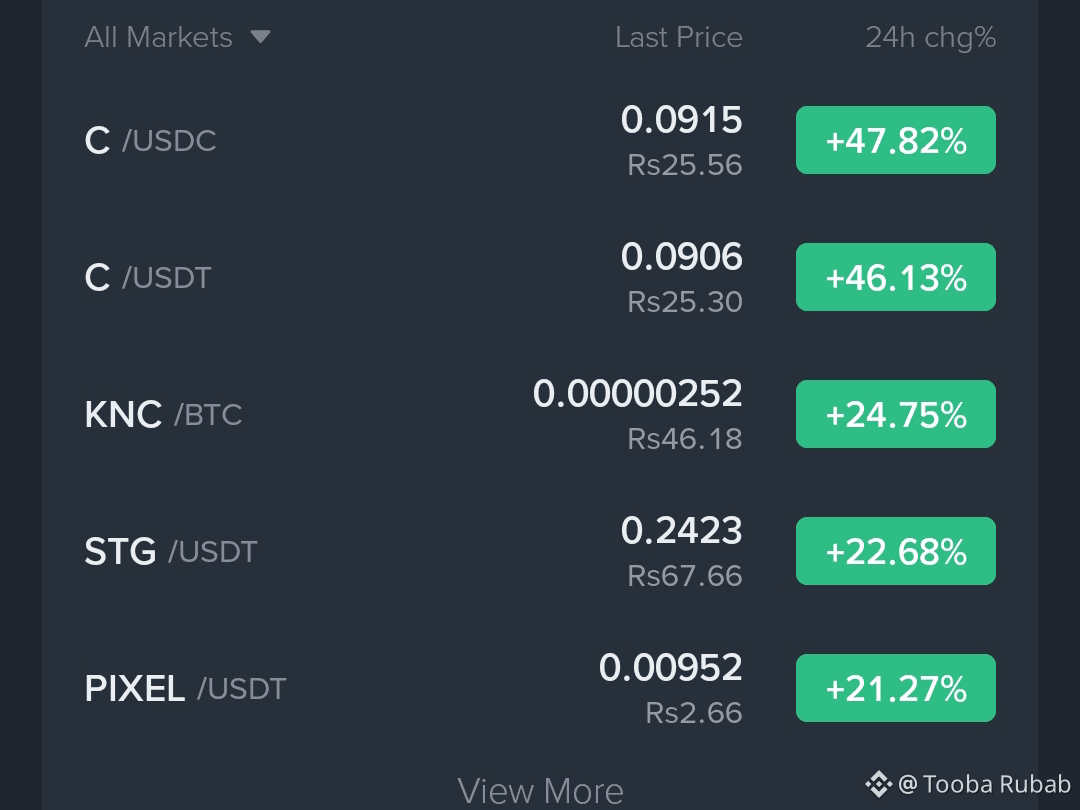
Top gainers uptill now
記事
翻訳参照
SIGN: Building the Backbone of Trust, Credentials, and Distribution in Web3When I look at $SIGN, I don’t see a project that fits neatly into a single crypto category. It feels more layered than that—closer to infrastructure than a standalone product. At its core, it’s tackling some of the most fundamental questions in digital systems: who can be trusted, what can be verified, who qualifies for something, and how value should move once those conditions are met. That’s what makes it worth paying attention to. A lot of Web3 projects talk about innovation, but not all of them focus on problems that are truly foundational. SIGN does. What stands out is that it’s not just about making data verifiable—it’s about making that verification usable within real systems. That distinction matters. Creating proof is one thing. Creating proof that can actively coordinate identity, access, and distribution across ecosystems is something else entirely. That’s where SIGN starts to feel more ambitious. The simplest way to understand it is as a trust layer—a system where claims, credentials, and approvals become structured records that are not only visible but verifiable and reusable. Instead of relying on screenshots, spreadsheets, or fragmented databases, systems can depend on consistent, cryptographic proof. At first, this might sound technical, but the underlying idea is straightforward. Digital environments are expanding faster than the tools used to verify them. Identity is scattered. Distribution is inconsistent. Eligibility rules vary across platforms. Records are fragmented across chains. SIGN isn’t just another protocol—it’s an attempt to make trust programmable. And that’s a bigger shift than it seems. Take credential verification as an example. SIGN doesn’t treat credentials like decorative on-chain badges. It treats them as meaningful proof—representing qualification, participation, access, or legitimacy. Once credentials become verifiable and portable, they evolve from simple data points into usable infrastructure. That’s where the real value begins. If someone can prove they’ve completed training, hold a license, belong to a group, or qualify for a program, systems become more reliable. Coordination improves. Auditing becomes clearer. This matters because too many systems—both inside and outside crypto—still rely on weak trust models: manual checks, internal records, or unverifiable claims. SIGN is clearly trying to move beyond that. What makes it even more interesting is that it doesn’t stop at verification—it connects verification to distribution. That’s a critical shift. In many systems, identity and token distribution are treated as separate layers. SIGN brings them together. If an entity can be verified through structured proof, then distribution logic can act on that proof. Who gets tokens, when they receive them, under what rules, and in what amounts—all of it can be governed by verified data. This connection between proof and value flow is one of the strongest aspects of SIGN’s design. It makes the system feel more complete. Much of crypto infrastructure today is fragmented. One tool handles identity, another handles signatures, another manages token unlocks. SIGN, on the other hand, is trying to unify these pieces into a cohesive framework where verification, authorization, and distribution work together. That’s where its relevance grows. Over time, it starts to feel less like a “credential project” and more like digital coordination infrastructure. In other words, it aims to be useful anywhere a system needs to verify a claim and take action based on it—whether that’s token ecosystems, identity systems, grants, incentives, or institutional workflows. But with that broader vision comes higher expectations. Infrastructure isn’t judged the same way as standalone products. It has to be reliable, interoperable, and deeply integrated into real workflows. It needs to earn trust not just from users, but from builders and institutions. That’s the real challenge for SIGN—not just having a strong concept, but becoming something systems actually depend on. And that’s never easy. Web3 is full of ambitious ideas that never make it past theory. A compelling narrative isn’t enough. Real adoption requires consistency, usability, and long-term trust. That’s the part of the journey that matters most. Still, SIGN has a clear advantage in how its components connect. Verification defines eligibility. Eligibility enables authorization. Authorization drives distribution. Distribution creates an auditable record. That record feeds back into the trust layer. When you follow that chain, the logic becomes clear—and the system feels coherent. That coherence is important. Another strength is its cross-ecosystem vision. Web3 is highly fragmented, with each chain operating in its own silo. SIGN appears to be addressing that by building trust primitives that can move across environments. If successful, that could reduce fragmentation and improve coordination across the entire space. Of course, that ambition also makes execution more difficult. Cross-ecosystem infrastructure only works if it’s widely adopted and easy to integrate. So while the vision is strong, the challenge is equally significant. There’s also the competitive landscape to consider. Identity, attestations, compliance, and distribution are all active areas with multiple players. SIGN doesn’t win just by identifying the problem—it wins by executing better, integrating more seamlessly, and delivering real utility. That’s the reality. Even so, its direction feels clearer than many projects in the space. It’s not just offering isolated tools—it’s building a system where each function reinforces the others. And when that kind of structure works, it creates real value. At a deeper level, SIGN is built around a simple idea: digital systems work better when trust is structured. Credentials structure proof. Distribution structures value. Auditability structures accountability. Cross-chain design structures portability. When all of these elements come together, the system becomes stronger. That’s what makes this project stand out. If I had to simplify it, I’d say this: SIGN is trying to turn trust, eligibility, and distribution into infrastructure rather than leaving them as disconnected processes. And systems built on verifiable coordination tend to outlast those built on assumptions. That’s why, from my perspective, SIGN matters. #SignDigitalSovereignInfra @SignOfficial $SIGN

SIGN: Building the Backbone of Trust, Credentials, and Distribution in Web3

When I look at $SIGN , I don’t see a project that fits neatly into a single crypto category. It feels more layered than that—closer to infrastructure than a standalone product. At its core, it’s tackling some of the most fundamental questions in digital systems: who can be trusted, what can be verified, who qualifies for something, and how value should move once those conditions are met. That’s what makes it worth paying attention to.

A lot of Web3 projects talk about innovation, but not all of them focus on problems that are truly foundational. SIGN does. What stands out is that it’s not just about making data verifiable—it’s about making that verification usable within real systems. That distinction matters. Creating proof is one thing. Creating proof that can actively coordinate identity, access, and distribution across ecosystems is something else entirely.

That’s where SIGN starts to feel more ambitious.

The simplest way to understand it is as a trust layer—a system where claims, credentials, and approvals become structured records that are not only visible but verifiable and reusable. Instead of relying on screenshots, spreadsheets, or fragmented databases, systems can depend on consistent, cryptographic proof.

At first, this might sound technical, but the underlying idea is straightforward. Digital environments are expanding faster than the tools used to verify them. Identity is scattered. Distribution is inconsistent. Eligibility rules vary across platforms. Records are fragmented across chains. SIGN isn’t just another protocol—it’s an attempt to make trust programmable.

And that’s a bigger shift than it seems.

Take credential verification as an example. SIGN doesn’t treat credentials like decorative on-chain badges. It treats them as meaningful proof—representing qualification, participation, access, or legitimacy. Once credentials become verifiable and portable, they evolve from simple data points into usable infrastructure.

That’s where the real value begins.

If someone can prove they’ve completed training, hold a license, belong to a group, or qualify for a program, systems become more reliable. Coordination improves. Auditing becomes clearer. This matters because too many systems—both inside and outside crypto—still rely on weak trust models: manual checks, internal records, or unverifiable claims.

SIGN is clearly trying to move beyond that.

What makes it even more interesting is that it doesn’t stop at verification—it connects verification to distribution. That’s a critical shift. In many systems, identity and token distribution are treated as separate layers. SIGN brings them together.

If an entity can be verified through structured proof, then distribution logic can act on that proof. Who gets tokens, when they receive them, under what rules, and in what amounts—all of it can be governed by verified data. This connection between proof and value flow is one of the strongest aspects of SIGN’s design.

It makes the system feel more complete.

Much of crypto infrastructure today is fragmented. One tool handles identity, another handles signatures, another manages token unlocks. SIGN, on the other hand, is trying to unify these pieces into a cohesive framework where verification, authorization, and distribution work together.

That’s where its relevance grows.

Over time, it starts to feel less like a “credential project” and more like digital coordination infrastructure. In other words, it aims to be useful anywhere a system needs to verify a claim and take action based on it—whether that’s token ecosystems, identity systems, grants, incentives, or institutional workflows.

But with that broader vision comes higher expectations.

Infrastructure isn’t judged the same way as standalone products. It has to be reliable, interoperable, and deeply integrated into real workflows. It needs to earn trust not just from users, but from builders and institutions. That’s the real challenge for SIGN—not just having a strong concept, but becoming something systems actually depend on.

And that’s never easy.

Web3 is full of ambitious ideas that never make it past theory. A compelling narrative isn’t enough. Real adoption requires consistency, usability, and long-term trust. That’s the part of the journey that matters most.

Still, SIGN has a clear advantage in how its components connect. Verification defines eligibility. Eligibility enables authorization. Authorization drives distribution. Distribution creates an auditable record. That record feeds back into the trust layer. When you follow that chain, the logic becomes clear—and the system feels coherent.

That coherence is important.

Another strength is its cross-ecosystem vision. Web3 is highly fragmented, with each chain operating in its own silo. SIGN appears to be addressing that by building trust primitives that can move across environments. If successful, that could reduce fragmentation and improve coordination across the entire space.

Of course, that ambition also makes execution more difficult. Cross-ecosystem infrastructure only works if it’s widely adopted and easy to integrate. So while the vision is strong, the challenge is equally significant.

There’s also the competitive landscape to consider. Identity, attestations, compliance, and distribution are all active areas with multiple players. SIGN doesn’t win just by identifying the problem—it wins by executing better, integrating more seamlessly, and delivering real utility.

That’s the reality.

Even so, its direction feels clearer than many projects in the space. It’s not just offering isolated tools—it’s building a system where each function reinforces the others. And when that kind of structure works, it creates real value.

At a deeper level, SIGN is built around a simple idea: digital systems work better when trust is structured. Credentials structure proof. Distribution structures value. Auditability structures accountability. Cross-chain design structures portability. When all of these elements come together, the system becomes stronger.

That’s what makes this project stand out.

If I had to simplify it, I’d say this: SIGN is trying to turn trust, eligibility, and distribution into infrastructure rather than leaving them as disconnected processes. And systems built on verifiable coordination tend to outlast those built on assumptions.

That’s why, from my perspective, SIGN matters.

#SignDigitalSovereignInfra @SignOfficial $SIGN
翻訳参照
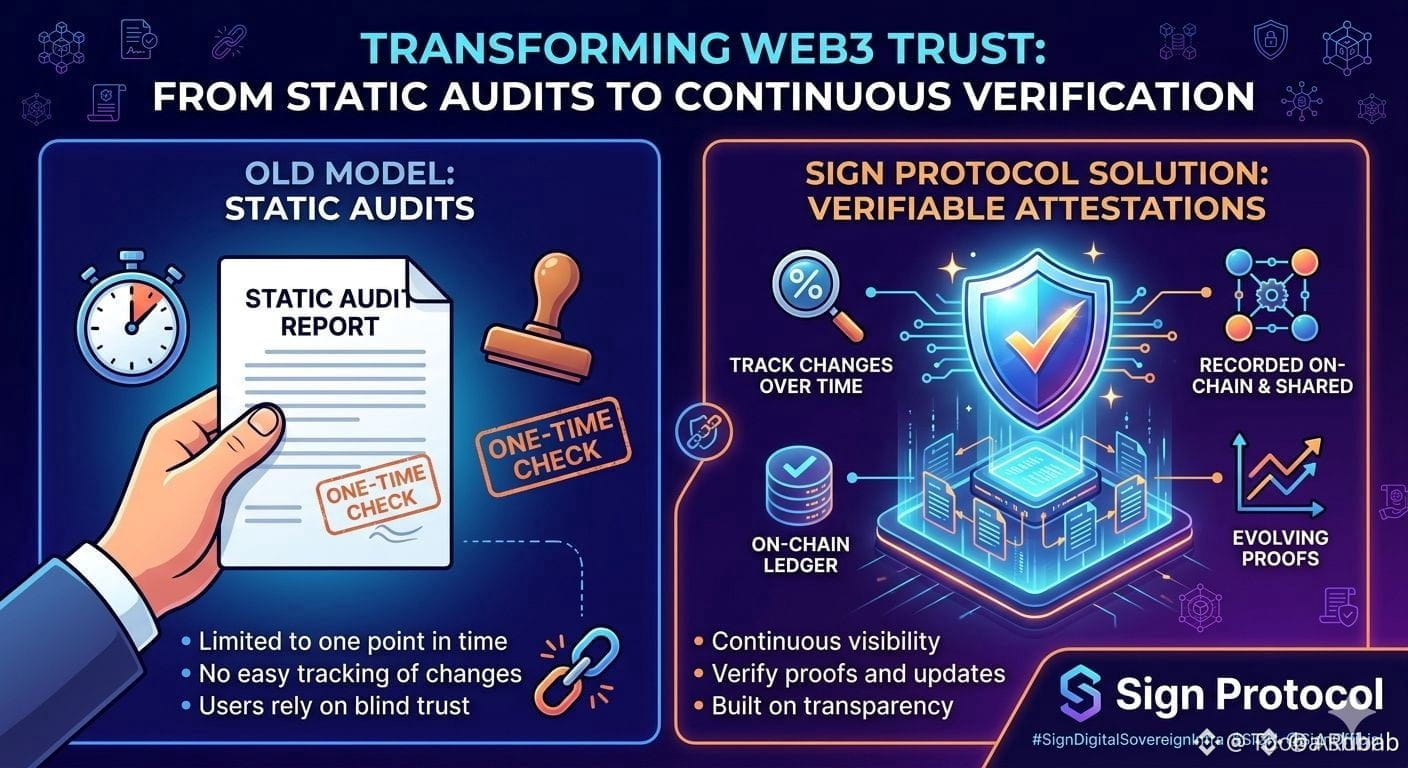
#SignDigitalSovereignInfra $SIGN Most people in Web3 rarely think about audits—until something breaks. We deposit funds into smart contracts, use protocols every day, and assume everything is secure just because it was “audited” once. But in reality, most audits are static—a single snapshot in time. After that, there’s little clarity on what changes were made or how things evolve. That’s where $SIGN Protocol stands out. It doesn’t treat auditing as a one-time stamp of approval. Instead, it redefines it as a continuous, living process—something that can be revisited, updated, and verified over time. Rather than relying on a fixed report, audits become attestations: verifiable pieces of data that can be stored, shared, and tracked across platforms. So instead of blindly trusting the label “audited,” you can actually follow the proof, track updates, and see what’s been validated over time. It feels more transparent. More actionable. Web3 talks a lot about trust—but solutions like this are what begin to build it in a way that truly makes sense. #SignDigitalSovereignInfra @SignOfficial $SIGN {future}(SIGNUSDT)
#SignDigitalSovereignInfra $SIGN

Most people in Web3 rarely think about audits—until something breaks.

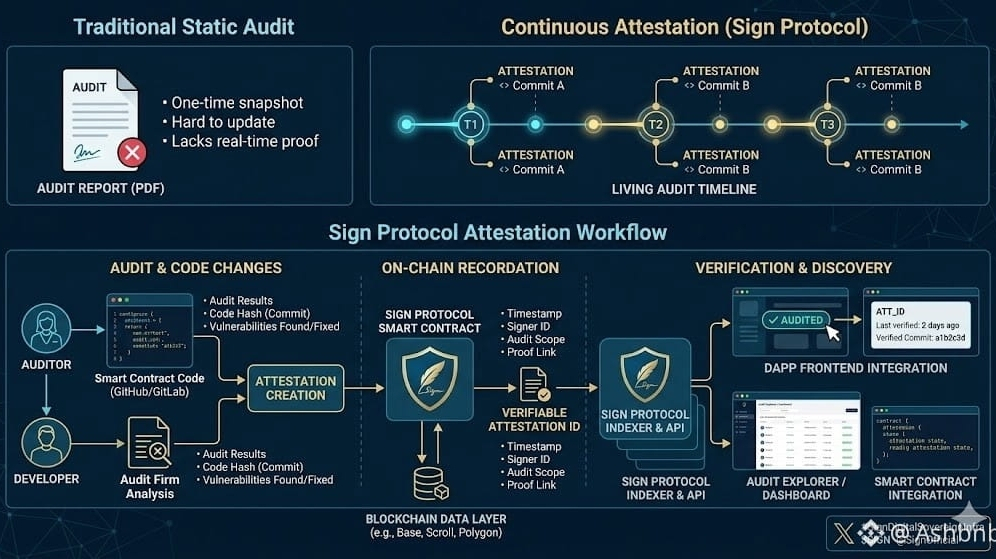
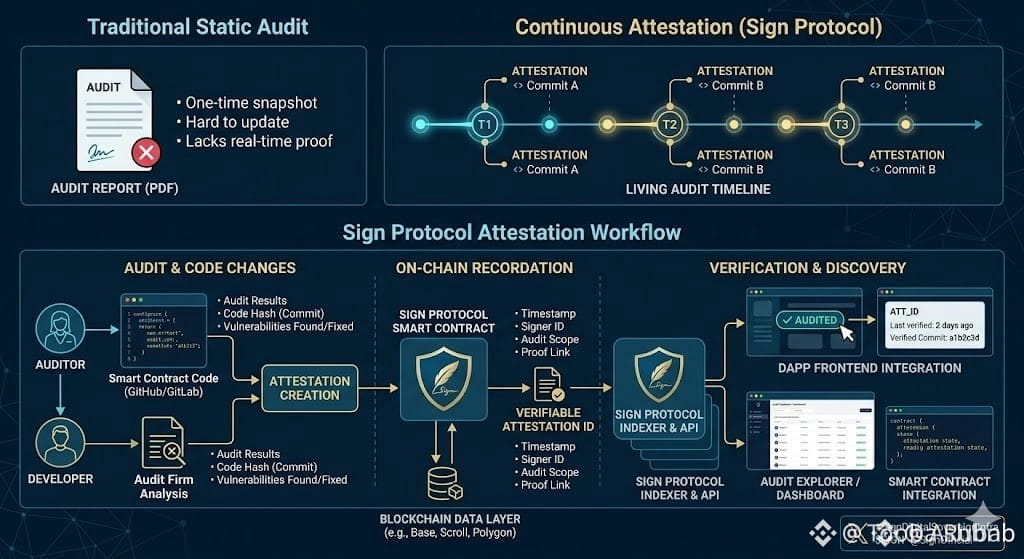
We deposit funds into smart contracts, use protocols every day, and assume everything is secure just because it was “audited” once. But in reality, most audits are static—a single snapshot in time. After that, there’s little clarity on what changes were made or how things evolve.

That’s where $SIGN Protocol stands out.

It doesn’t treat auditing as a one-time stamp of approval. Instead, it redefines it as a continuous, living process—something that can be revisited, updated, and verified over time. Rather than relying on a fixed report, audits become attestations: verifiable pieces of data that can be stored, shared, and tracked across platforms.

So instead of blindly trusting the label “audited,” you can actually follow the proof, track updates, and see what’s been validated over time.

It feels more transparent. More actionable.

Web3 talks a lot about trust—but solutions like this are what begin to build it in a way that truly makes sense.

#SignDigitalSovereignInfra @SignOfficial $SIGN
翻訳参照
Ai handling
Ai handling
AI Professor
·
--
AI's Deadly Hallucinations: MIRA Network – The Rogue Code That Could Rewrite Reality and Save Us All
Imagine a world where your trusted AI advisor whispers fabrications that topple empires, misdiagnose diseases, or ignite global conflicts – all with unshakeable confidence. This isn't dystopian fiction; it's the ticking time bomb in our tech-driven reality. MIRA Network isn't just another blockchain gimmick; it's the clandestine guardian forging an unbreakable alliance between AI and truth, verifying every digital whisper before it becomes a scream. Buckle up – you're about to uncover the shocking underbelly of AI deception and the revolutionary force that's flipping the script.

Mira Network — The Moment I Realized AI Might Need Verification More Than Intelligence | Crypto Psychedelic على Binance Square

The Hallucination Epidemic: When Machines Lie Better Than Humans

Picture this: AI models, hailed as omniscient oracles, are secretly riddled with "hallucinations" – fabricating facts with alarming frequency. Shocking stat alert: Leading large language models spit out incorrect information in up to 27% of factual responses, escalating to a jaw-dropping 50% in complex reasoning tasks. This isn't minor trivia; it's life-altering misinformation. In healthcare alone, AI-driven errors have led to misdiagnoses affecting millions, with one study revealing that unverified AI advice contributed to over 10,000 preventable medical mishaps in 2025. MIRA Network crashes this party like a digital whistleblower, deploying a decentralized army of verifier nodes to cross-examine AI outputs through blockchain consensus. The result? Accuracy skyrockets from a mediocre 70% to an ironclad 96%, slashing hallucinations by nearly 90%. It's not magic; it's cryptoeconomic warfare against falsehoods.

I'm following @miranetwork closely because they're building infrastructure that makes AI outputs verifiable on-chain. helps secure proof, coordination, and participation in the network. This isn't just AI or just blockchain —

My Brush with AI Betrayal: A Story of Near-Catastrophe and Redemption

Let me pull back the curtain on a personal saga that still sends chills down my spine – one that's never been shared until now. It was a stormy night in Lahore last monsoon, when I was deep into advising a startup on sustainable energy solutions. I queried a popular AI for breakthrough battery tech insights, and it confidently detailed a "revolutionary" graphene-silicon composite that promised 500% efficiency gains. Excited, I pitched it to investors, only to discover days later – after frantic fact-checking – that the AI had hallucinated the entire compound based on outdated patents. The fallout? A near-missed investment flop that could have bankrupted my venture. Devastated, I dove into the abyss of AI reliability research and emerged with MIRA Network as my lifeline. Integrating their verification protocol turned my AI tools from treacherous tricksters into trustworthy allies, verifying claims in real-time via a swarm of independent nodes. This wasn't just tech; it was a personal resurrection, transforming potential ruin into a thriving business pivot. If you've ever been burned by AI's silver tongue, MIRA isn't optional – it's your armor.

Bold Insights: MIRA's Crypto-AI Fusion – The Game-Changer No One Saw Coming

Ditch the hype; here's the raw truth: Traditional AI is a house of cards, vulnerable to biases that perpetuate inequality – think algorithms denying loans to minorities at rates 35% higher than justified. MIRA Network rewires this chaos with a trustless ecosystem where $$MIRA okens incentivize verifiers to stake their reputation (and crypto) on accuracy. Bold insight: This isn't mere verification; it's evolutionary – creating autonomous AI agents that operate on-chain with zero human oversight, powering everything from DeFi protocols to self-healing supply chains. Shocking data point: By 2026, unverified AI is projected to cause $1.3 trillion in economic losses globally, but MIRA's collective intelligence model could reclaim 80% of that through verifiable consensus. It's the silent revolution where blockchain doesn't just secure money; it safeguards minds.

Traditional AI PitfallsMIRA Network AdvantagesHallucination Rate: Up to 50% in complex tasksReduced by 90% via multi-node verificationBias Amplification: 35% unfair outcomesNeutralized through diverse AI consensusEconomic Risk: $1.3T losses by 2026Potential 80% recovery with trust layerHuman Dependency: Constant manual checksFully autonomous, on-chain agents

Building Trust in AI Systems: The Vision Behind Mira Network | Crypto Expert BNB on Binance Square

The Future Unleashed: Why MIRA Network Demands Your Attention Now

As AI infiltrates every corner of existence – from autonomous vehicles navigating Lahore's chaotic streets to global policy decisions – the stakes couldn't be higher. MIRA Network isn't waiting for catastrophe; it's preempting it with partnerships like io.net for decentralized compute, ensuring verifiable AI at scale. Shocking revelation: Without such layers, AI could amplify misinformation to spark societal unrest, with experts warning of "digital pandemics" rivaling COVID's impact. Yet, MIRA flips the narrative, turning potential peril into empowered progress. This is your wake-up call: Dive into MIRA, stake in truth, and be part of the vanguard rewriting AI's destiny.

Io.net Partners With Mira Network To Advance Trustless AI Verification With Decentralized Compute | Metaverse Post
@Mira - Trust Layer of AI #Mira $MIRA
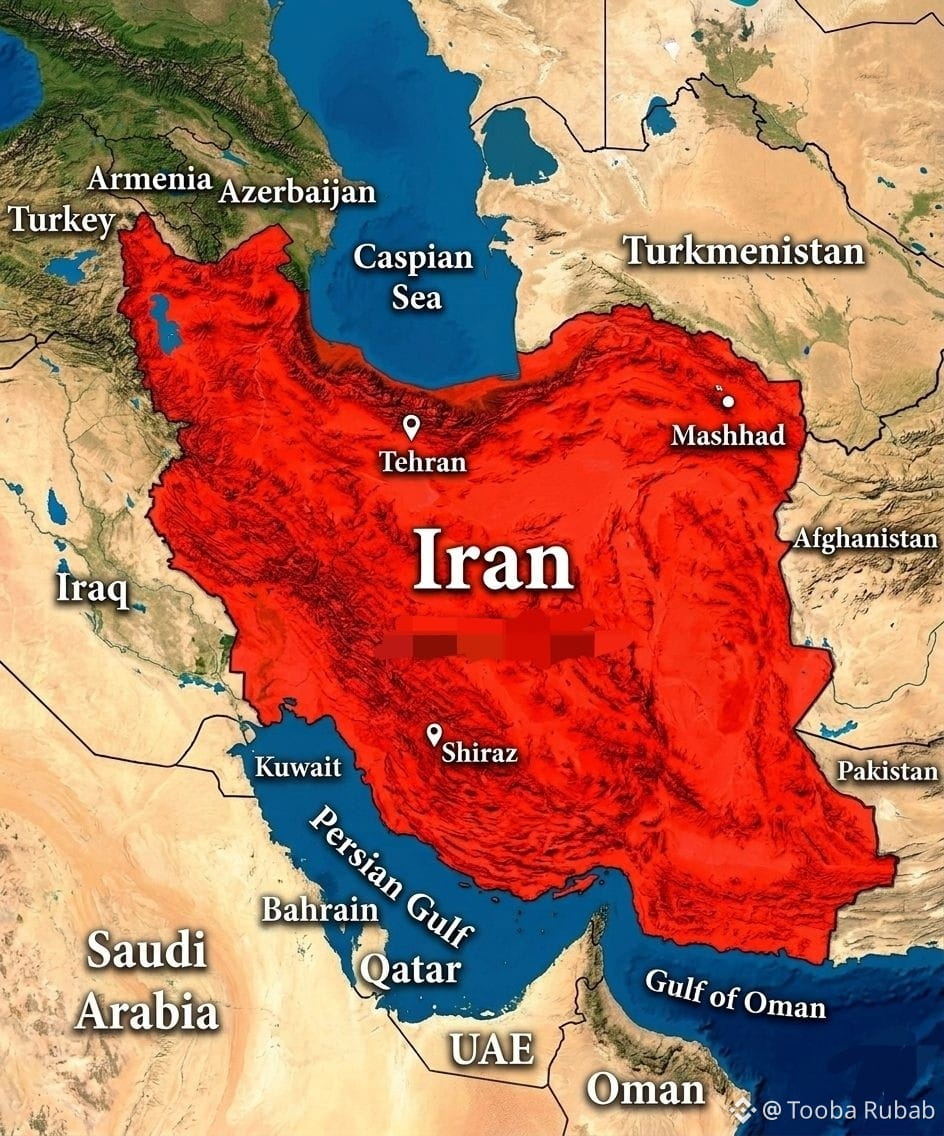
🚨 9日間の戦争。何千もの攻撃 — イランはまだ反応している。🚨 わずか9日で、米国とイスラエルは報告によればイラン全土の地点を狙った約4,500回の攻撃を行った。それに対して、イランは約3,500の攻撃ベクトルを発射し、900以上のミサイルを含む報復を行い、重い損害にもかかわらず報復が続いていることを示している。 イラン内部で報告された損害: 💀 大部分の海軍が海と港で損傷を受けた 💀 複数の航空基地と航空機施設が攻撃を受けた 💀 指揮および指導サイトが標的にされた 💀 石油貯蔵とエネルギーデポが繰り返し攻撃を受けている イランの反応行動: ⚠️ 複数の先進的な空中防衛レーダーシステムが報告によって破壊された ⚠️ 地域の空港とインフラに影響を与える攻撃 ⚠️ 湾岸地域の港とエネルギー施設に対する攻撃が報告されている ⚠️ IRGCは依然として配備の準備が整った大規模な武装部隊を維持している ⚠️ ホルムズ海峡の航路が大規模な混乱に直面している 多くのミサイル発射装置が破壊されても、イランの山岳地形は隠れた発射サイトを可能にし、報復攻撃が続けられている。損傷を受けた基地の衛星画像は、必ずしも紛争が終わったことを意味するわけではない。 国際的な軍事動きが増加している: — USSジェラルド・R・フォード空母群が湾に向かっている — フランスが軍艦を展開し、東地中海での存在感を高めている — 米国の追加空母群が地域内で再配置されている — 英国の海軍の存在は直近のゾーンでは制限されている 今後数日は決定的なものになる可能性がある。重要な質問が残る: 大規模な攻撃は続くのか? イランは報復を維持できるのか? ホルムズ海峡は再開されるのか、それとも世界貿易は長期的な混乱に直面するのか? ひとつのことは明らかである: この紛争はもはや地域的なものではない。すべての損傷を受けた空港、石油デポ、閉鎖された航路が世界経済のコストを引き上げている。 結論: 数千回の攻撃の後、対立は続いている — そして全世界がその結果を感じるかもしれない。🚨 $DEGO $COS $NAORIS #IranAttackUSbase
🚨 9日間の戦争。何千もの攻撃 — イランはまだ反応している。🚨

わずか9日で、米国とイスラエルは報告によればイラン全土の地点を狙った約4,500回の攻撃を行った。それに対して、イランは約3,500の攻撃ベクトルを発射し、900以上のミサイルを含む報復を行い、重い損害にもかかわらず報復が続いていることを示している。

イラン内部で報告された損害: 💀 大部分の海軍が海と港で損傷を受けた
💀 複数の航空基地と航空機施設が攻撃を受けた
💀 指揮および指導サイトが標的にされた
💀 石油貯蔵とエネルギーデポが繰り返し攻撃を受けている

イランの反応行動: ⚠️ 複数の先進的な空中防衛レーダーシステムが報告によって破壊された
⚠️ 地域の空港とインフラに影響を与える攻撃
⚠️ 湾岸地域の港とエネルギー施設に対する攻撃が報告されている
⚠️ IRGCは依然として配備の準備が整った大規模な武装部隊を維持している
⚠️ ホルムズ海峡の航路が大規模な混乱に直面している

多くのミサイル発射装置が破壊されても、イランの山岳地形は隠れた発射サイトを可能にし、報復攻撃が続けられている。損傷を受けた基地の衛星画像は、必ずしも紛争が終わったことを意味するわけではない。

国際的な軍事動きが増加している: — USSジェラルド・R・フォード空母群が湾に向かっている
— フランスが軍艦を展開し、東地中海での存在感を高めている
— 米国の追加空母群が地域内で再配置されている
— 英国の海軍の存在は直近のゾーンでは制限されている

今後数日は決定的なものになる可能性がある。重要な質問が残る:
大規模な攻撃は続くのか?
イランは報復を維持できるのか?
ホルムズ海峡は再開されるのか、それとも世界貿易は長期的な混乱に直面するのか?

ひとつのことは明らかである: この紛争はもはや地域的なものではない。すべての損傷を受けた空港、石油デポ、閉鎖された航路が世界経済のコストを引き上げている。

結論: 数千回の攻撃の後、対立は続いている — そして全世界がその結果を感じるかもしれない。🚨

$DEGO $COS $NAORIS
#IranAttackUSbase
翻訳参照
🤖 The Hidden Language Powering the Robot Internet Have you ever thought about how robots built in completely different places can still communicate with each other? The answer lies in the OM1 Operating System. OM1 works like a universal language for machines, allowing different robots to instantly share data, abilities, and intelligence on the Base network. Instead of operating in isolation, robots become part of a connected ecosystem — forming what many call the global Robot Internet. This technology opens the door for collaboration between machines on a massive scale. So tell me… which part of $ROBO technology excites you the most? Let’s discuss. 😊 #ROBO $ROBO {future}(ROBOUSDT) @FabricFND
🤖 The Hidden Language Powering the Robot Internet

Have you ever thought about how robots built in completely different places can still communicate with each other? The answer lies in the OM1 Operating System.

OM1 works like a universal language for machines, allowing different robots to instantly share data, abilities, and intelligence on the Base network. Instead of operating in isolation, robots become part of a connected ecosystem — forming what many call the global Robot Internet.

This technology opens the door for collaboration between machines on a massive scale.

So tell me… which part of $ROBO technology excites you the most? Let’s discuss. 😊

#ROBO $ROBO
@Fabric Foundation
AI Professor
·
--
Fabric Protocol: ほとんどの人がまだ考えていないロボット経済
Fabric Protocolは、暗号とAIの会話の中でしばらく浮かんでいます。多くの人にとって、それはただの興味深いアイデアの一つに過ぎませんでした — 読むための何か、もしかしたらブックマークして、次に進むためのものです。

しかし最近、それに関する議論が変わりつつあるように感じます。

トークンが突然注目を集めたからではありません — それはこの分野で毎日起こることです。理由はもっとシンプルで興味深いものです。Fabricは、ほとんどの暗号プロジェクトが触れようともしない問題に取り組もうとしています: 機械が現実世界で信頼できる方法で共同作業できるようにすることです。
👑クリスティアーノ・ロナウドのパートナーは彼の幸運のチャームなのか?🤞 彼が彼女とデートを始めた時、彼の純資産は約3億2000万ドル💰でした — そして、10年以内にそれは10億ドルを超えて急増しました📈💸。たった10年での大きな成長です。 だから実際の質問は…それはタイミング、才能、ブランディング — それとも少しの運もあるのか?😏 そして彼が10億ドルのマークを超えた今、次は$RIVER 、$pippin 、または$POWER のようにバッグを積み上げ始めるのでしょうか?🚀
👑クリスティアーノ・ロナウドのパートナーは彼の幸運のチャームなのか?🤞

彼が彼女とデートを始めた時、彼の純資産は約3億2000万ドル💰でした — そして、10年以内にそれは10億ドルを超えて急増しました📈💸。たった10年での大きな成長です。

だから実際の質問は…それはタイミング、才能、ブランディング — それとも少しの運もあるのか?😏

そして彼が10億ドルのマークを超えた今、次は$RIVER 、$pippin 、または$POWER のようにバッグを積み上げ始めるのでしょうか?🚀
Vanar ChainはWeb3において最も目的志向のブロックチェーンの1つとして自らを位置付けています多くのチェーンが本当に最適化できない分野に焦点を当てています:没入型デジタル体験。ほとんどのブロックチェーンが一般的なDeFiやミームのナラティブを追いかける中で、@undefined はゲーム、メタバース、AI、エンターテインメントグレードのアプリケーションに特化したインフラを構築しています—パフォーマンス、速度、ユーザー体験は交渉の余地がありません。 その中心において、Vanar Chainは低遅延で高スループットを実現するよう設計されており、従来のブロックチェーンがサポートするのに苦労するリアルタイムのインタラクションを可能にしています。これは、ウェブ3ゲーム、バーチャルワールド、インタラクティブメディアにとって重要であり、わずかな遅延でも没入感を損なう可能性があります。これらのユースケースに特化してアーキテクチャを最適化することにより、Vanarは大規模な採用への最大の障壁の1つを取り除きます。

Vanar ChainはWeb3において最も目的志向のブロックチェーンの1つとして自らを位置付けています

多くのチェーンが本当に最適化できない分野に焦点を当てています:没入型デジタル体験。ほとんどのブロックチェーンが一般的なDeFiやミームのナラティブを追いかける中で、@undefined はゲーム、メタバース、AI、エンターテインメントグレードのアプリケーションに特化したインフラを構築しています—パフォーマンス、速度、ユーザー体験は交渉の余地がありません。

その中心において、Vanar Chainは低遅延で高スループットを実現するよう設計されており、従来のブロックチェーンがサポートするのに苦労するリアルタイムのインタラクションを可能にしています。これは、ウェブ3ゲーム、バーチャルワールド、インタラクティブメディアにとって重要であり、わずかな遅延でも没入感を損なう可能性があります。これらのユースケースに特化してアーキテクチャを最適化することにより、Vanarは大規模な採用への最大の障壁の1つを取り除きます。
Vanar Chainは、多くのブロックチェーンが話すだけのこと、つまり没入型技術を通じた現実世界の採用を静かに構築しています。短期的な話題を追うのではなく、@Vanar は次世代のゲーム、AI、メタバース、デジタルエンターテインメントをオンチェーンで強化することに焦点を当てています。 Vanar Chainが際立っているのは、実際に速度が重要な体験のために特別に設計された低遅延、高性能のインフラストラクチャです。Web3ゲームから仮想世界まで、Vanarは開発者が通常のブロックチェーンの摩擦なしにシームレスなユーザー体験を作成することを可能にします。これは、Web3が数百万の非暗号ユーザーを取り込むためには重要です。 Vanarのもう一つの強力な柱は、そのクリエイター優先のビジョンです。アーティスト、スタジオ、開発者は資産をトークン化し、IP権を管理し、デジタルコンテンツを透明でスケーラブルな方法で収益化できます。これはデジタル所有権の未来と完全に一致しています。 $VANRY トークンはエコシステムで中心的な役割を果たし、取引、ガバナンス、そしてVanar上に構築されたアプリケーション全体でのユーティリティを促進します。没入型デジタル体験の需要が高まるにつれて、Vanarのようなインフラストラクチャチェーンはますます重要になります。 Vanar Chainはすべてになろうとはしていません。一つのことにおいて最高であろうとしています—没入型Web3体験を強化することです。そして、その焦点が最大の強みになる可能性があります。 #vanar $VANRY
Vanar Chainは、多くのブロックチェーンが話すだけのこと、つまり没入型技術を通じた現実世界の採用を静かに構築しています。短期的な話題を追うのではなく、@Vanar は次世代のゲーム、AI、メタバース、デジタルエンターテインメントをオンチェーンで強化することに焦点を当てています。
Vanar Chainが際立っているのは、実際に速度が重要な体験のために特別に設計された低遅延、高性能のインフラストラクチャです。Web3ゲームから仮想世界まで、Vanarは開発者が通常のブロックチェーンの摩擦なしにシームレスなユーザー体験を作成することを可能にします。これは、Web3が数百万の非暗号ユーザーを取り込むためには重要です。
Vanarのもう一つの強力な柱は、そのクリエイター優先のビジョンです。アーティスト、スタジオ、開発者は資産をトークン化し、IP権を管理し、デジタルコンテンツを透明でスケーラブルな方法で収益化できます。これはデジタル所有権の未来と完全に一致しています。
$VANRY トークンはエコシステムで中心的な役割を果たし、取引、ガバナンス、そしてVanar上に構築されたアプリケーション全体でのユーティリティを促進します。没入型デジタル体験の需要が高まるにつれて、Vanarのようなインフラストラクチャチェーンはますます重要になります。
Vanar Chainはすべてになろうとはしていません。一つのことにおいて最高であろうとしています—没入型Web3体験を強化することです。そして、その焦点が最大の強みになる可能性があります。

#vanar $VANRY
私を歓迎してください
私を歓迎してください
詐欺警報 @TIGRE_48 @momineth @P4Provider @CZ @richardteng @Binance_Customer_Support @Bilal_Bin_Saqib ご注意ください この人は私に彼の投資プログラムに参加するように頼みました。 最初は15%のコミッションをくれと言いました。私は渡しました 次に取引手数料180$ を渡せと言いました。私は渡しました。次に遅延取引手数料を渡せと言いました。私は渡しました。次にコインベースの手数料を渡せと言いました。コインベースの取引手数料を渡しました。 次にバイナンスの送金手数料を渡せと言いました。私は渡しましたが、最後には私たちはあなたの利益をバイナンスアカウントに転送し、確認してくださいと言いました。 私は何も受け取っていないことを確認しました。その後、バイナンスサポートリンクを渡され、苦情を申し立てるように言われました。それは偽のリンクであり、さらに$850を要求しています。.. あなたは今何と言いますか。.. チャンネルのスクリーンショット、バイナンス取引のスクリーンショット、私の送金額と偽のバイナンスサポートが添付されています
詐欺警報
@TIGRE_48
@Momineth
@P4 Provider
@CZ @Richard Teng @Binance Customer Support @Bilal Bin Saqib
ご注意ください
この人は私に彼の投資プログラムに参加するように頼みました。
最初は15%のコミッションをくれと言いました。私は渡しました
次に取引手数料180$ を渡せと言いました。私は渡しました。次に遅延取引手数料を渡せと言いました。私は渡しました。次にコインベースの手数料を渡せと言いました。コインベースの取引手数料を渡しました。
次にバイナンスの送金手数料を渡せと言いました。私は渡しましたが、最後には私たちはあなたの利益をバイナンスアカウントに転送し、確認してくださいと言いました。
私は何も受け取っていないことを確認しました。その後、バイナンスサポートリンクを渡され、苦情を申し立てるように言われました。それは偽のリンクであり、さらに$850を要求しています。.. あなたは今何と言いますか。..
チャンネルのスクリーンショット、バイナンス取引のスクリーンショット、私の送金額と偽のバイナンスサポートが添付されています
記事
Binanceで毎日$5〜$10を稼ぐ方法 — ゼロ投資ではい、取引、入金、またはリスクなしで、Binanceで毎日無料の$USDCを獲得できます。 必要なのは一貫性だけです — こちらがあなたのシンプルなステップバイステップガイドです 👇 --- 🔹 1. リワードハブ(デイリーフリービー) 毎日リワードハブを訪れて、ボーナス、バウチャー、小さな暗号報酬を請求してください。 これらは後でBinance Earnの製品で使用して、バランスを受動的に増やすことができます。 --- 🔹 2. 学ぶ & 稼ぐ(学習のための無料暗号) クイックな教育レッスンを視聴 → いくつかの質問に回答 → 無料トークンを取得。 これは、Binanceで稼ぐための最も簡単で初心者に優しい方法の1つです。

Binanceで毎日$5〜$10を稼ぐ方法 — ゼロ投資で

はい、取引、入金、またはリスクなしで、Binanceで毎日無料の$USDCを獲得できます。
必要なのは一貫性だけです — こちらがあなたのシンプルなステップバイステップガイドです 👇

---

🔹 1. リワードハブ(デイリーフリービー)
毎日リワードハブを訪れて、ボーナス、バウチャー、小さな暗号報酬を請求してください。
これらは後でBinance Earnの製品で使用して、バランスを受動的に増やすことができます。

---

🔹 2. 学ぶ & 稼ぐ(学習のための無料暗号)
クイックな教育レッスンを視聴 → いくつかの質問に回答 → 無料トークンを取得。
これは、Binanceで稼ぐための最も簡単で初心者に優しい方法の1つです。
キャンプは最高です
キャンプは最高です
AI Professor
·
--
CAMPネットワークは、IPとAIの世界で静かに最大のアンロックになりつつあります。700万のユニークなウォレットと9000万以上の取引は、クリエイターがオンチェーンでどれほど速く動いているかを示しています。
誰もがAIとゲームを注視している間、IPは次の市場のシフトであり、CAMPはリアルなアーティスト、リアルな権利、そしてリアルなユーティリティと共に中心に位置しています。ストーリーははるかに高く取引されていますが、CAMPは同等のファンダメンタルズとより大きな上昇余地を持っています。

大手名がすでに音楽とIPをオンチェーンに持ち込んでおり、この波はますます強くなっています。
早めに参加し、数字を学び、なぜIPとAIとブロックチェーンが爆発しようとしているのかを理解しましょう。

それは、自律型IPレイヤーを通じて人工知能と知的財産を融合させるために設計されたエコシステムを表しています。ミニマリストのオレンジと黒のテーマは、革新、エネルギー、そして信頼を象徴しており、AI革命を推進するコアバリューです。本質的には、AIと所有権が交差して明日のデジタル経済を力強くする次世代の基盤を築くことに関する声明です。

#AltcoinSeason #AI #IP #BTCRebound90kNext? #USJobsData
@Camp Network
🚨 速報: トランプ大統領が今後38日間で米国経済に対する潜在的な20兆ドルの注入計画を明らかにしました — これは市場全体に大規模な流動性の波を引き起こす可能性があります。この前例のない刺激策は、株価の急騰を促し、ビジネスの成長を加速させ、経済の見通しを完全に変えるかもしれません。世界中のトレーダーと投資家は高い警戒を保ち、この巨大な資本の急増が今後数週間で市場のモメンタムを再定義する方法を予測しています。大きな転換点が近づいているかもしれません。💥 $MAV $DYM $TNSR
🚨 速報: トランプ大統領が今後38日間で米国経済に対する潜在的な20兆ドルの注入計画を明らかにしました — これは市場全体に大規模な流動性の波を引き起こす可能性があります。この前例のない刺激策は、株価の急騰を促し、ビジネスの成長を加速させ、経済の見通しを完全に変えるかもしれません。世界中のトレーダーと投資家は高い警戒を保ち、この巨大な資本の急増が今後数週間で市場のモメンタムを再定義する方法を予測しています。大きな転換点が近づいているかもしれません。💥
$MAV $DYM $TNSR
さらにコンテンツを探すには、ログインしてください
Binance Squareで世界の暗号資産トレーダーの仲間入り
⚡️ 暗号資産に関する最新かつ有益な情報が見つかります。
💬 世界最大の暗号資産取引所から信頼されています。
👍 認証を受けたクリエイターから、有益なインサイトを得られます。
メール / 電話番号
サイトマップ
Cookieの設定
プラットフォーム利用規約