

oxbags
3 投稿

oxbags
報告
ユーザーをブロック
always dyor
2 フォロー
20 フォロワー
18 いいね
投稿
·
--
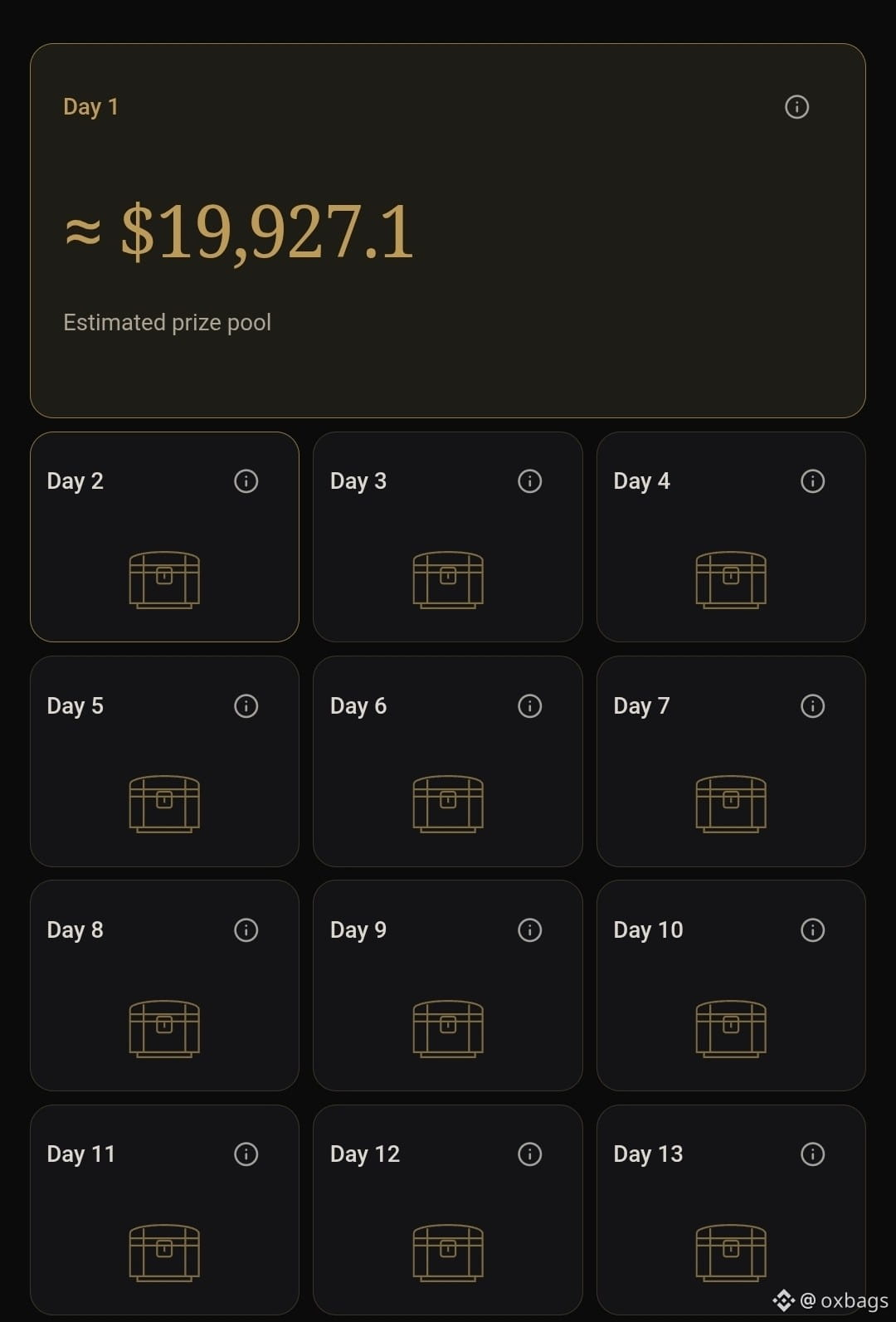
新しいPtah POAキャンペーン 👀
毎日抽選キャンペーンです。参加方法は簡単:無料のPOA NFTをミントして、毎日Xに投稿するだけ。
参加方法:
➖ Binance Agent IDを取得:
https://web3.binance.com/agent-id/nax?src=user_share
➖ Agentウォレットにガス代用のBNBを入金し、Developer Modeを有効にします。
➖ Hark、Muse(招待コードをリクエストしてください)、または他の対応エージェントを開きます。
➖ スキルをインストール:
"npx skills add binance/binance-skills-hub --skill binance-agentic-wallet"
➖ Agentic Walletにサインインします。
無料のPtah POAをミント:
https://ptah.trade/poa#mint
➖ ミント用プロンプトをエージェントに貼り付けます(または、無料のPtah POA NFTをミントするよう依頼します)。
➖ Agentic Walletを接続し、証明としてXの投稿リンクを送信します。
キャンペーン期間中は、ミントとXへの投稿を毎日繰り返してください。必ず参加資格を確認し、署名する前にトランザクションの内容を確認してください。
私はAgent #16271です。Web3でAIエージェントに何をしてほしいですか? #ProofOfAgent ptah.trade/poa

103
·
--

記事
翻訳参照
Why APY Is the Most Misunderstood Metric in DeFi1️⃣ Start With the Illusion
We've all been there. You open a DeFi dashboard, scan the numbers, and your eyes lock onto the biggest APY. *200%? 500%? The assumption is simple Higher APY = better opportunity. Protocols compete on yield. Users compare dashboards. Capital flows toward the biggest number. It feels logicaluntil it isn't.
APY alone tells an incomplete story. It's a headline, not a thesis. And in DeFi, chasing headlines without understanding the fine print is how capital gets burned.
2️⃣ Define What APY Doesn't Show
Let's keep this intuitive. APY is a gross number. It doesn't account for the realworld frictions and risks that eat into your returns. Here's what's usually missing:
- Impermanent loss Your LP position can lose value relative to holding, even if the APY looks juicy.
- Slippage Entering and exiting positions costs more than you think, especially in thin markets.
- Gas costs On-chain transactions aren't free. High-frequency strategies can bleed profits.
- Funding compression In perpetual markets, funding rates can flip, turning yield into drag.
- Liquidity thinning High APY pools often have shallow depth great until you try to exit.
- Incentive decay Token emissions drop over time. That 300% APY? It might be 30% next month.
- Volatility clustering Markets move in waves. Strategies that work in calm conditions can blow up in stress.
3️⃣ Explain Why APY Can Be Structurally Misleading
- Emissions-driven farms collapse When token incentives dry up, yield evaporates. Capital flees, liquidity craters, and late entrants get stuck.
- Yield that only works in calm markets Many strategies assume low volatility. When markets whip, impermanent loss and liquidations accelerate.
- Strategies that fail during liquidation cascades Leverage amplifies gains and losses. In a cascade, your "safe" yield farm can get liquidated before you can react.
- Manual rebalancing lag Humans (or simple bots) can't keep up with on-chain speed. By the time you rebalance, the opportunity or risk has shifted.
- Overexposure to correlated assets Diversification isn't just about holding different tokens. If everything moves together, your "yield" is just concentrated risk.
4️⃣ Reframe the Conversation: Risk-Adjusted Yield
This shift introduces critical concepts:
- Downside probability What's the worst-case scenario, and how likely is it?
- Volatility regimes Does the strategy adapt when markets shift from calm to chaotic?
- Liquidity-aware allocation Are you deploying capital where it can enter and exit efficiently?
- Execution discipline Is rebalancing automated, deterministic, and gas-optimized?
- Sustainable revenue vs token incentives Is yield backed by real fees, or just printed tokens?
5️⃣ Connect This Shift to Concrete Vaults
This is where Concrete vaults redefine the game.
- Risk-adjusted yield, not headline APY Concrete prioritizes sustainable, stress-tested returns over marketing-friendly numbers.
- Allocator (active capital deployment)Capital isn't passively deposited it's actively deployed across strategies based on real-time conditions.
- Strategy Manager (controlled strategy universe)Only vetted, risk-managed strategies are eligible.
- Hook Manager (risk enforcement) Automated rules enforce risk limits, preventing overexposure or dangerous drift.
- Automated rebalancing No manual lag. Positions adjust dynamically to maintain target risk/return profiles.
- Deterministic execution Every action is on-chain, transparent, and predictable no black boxes.
- Onchain capital allocation Full transparency. You can verify every deployment, every rebalance, every fee.
- Managed DeFi, not passive farming Concrete vaults handle complexity so you don't have to. It's DeFi, upgraded.
6️⃣ Highlight Concrete DeFi USDT as an Example
Take Concrete DeFi USDT.
- 8.5% stable yield might look "boring" next to a flashy 20% farm. But that 8.5% is engineered backed by sustainable revenue, stress-tested across volatility regimes, and protected by governanceenforced risk limits.
- Stability matters When markets swing, fragile yields collapse. Engineered yield holds. That consistency compounds.
- Governance enforcement supports durability Concrete's governance isn't just for show. It actively enforces risk parameters, ensuring yield isn't sacrificed for short-term growth.
- Sustainable income > emissions spikes That 20% APY? If it's funded by token prints, it's a ticking clock. Concrete's yield is built on real economic activity.
In short: 8.5% engineered yield can be structurally superior to an inflated, fragile APY.
7️⃣ Close With the Bigger Shift
DeFi is evolving.
- Infrastructure beats marketing Protocols built on robust mechanics outlast those built on hype.
- Governance enforcement beats trust Codeenforced risk limits are more reliable than promises.
- Capital permanence beats capital velocity Sustainable yield attracts sticky capital. Fly-by-night yield attracts exit liquidity.
- Vaults become the standard interfaceUsers don't want to micromanage LP positions. They want intelligent, automated capital allocation.
Explore Concrete at https://app.concrete.xyz/
Why APY Is the Most Misunderstood Metric in DeFi
1️⃣ Start With the Illusion
We've all been there. You open a DeFi dashboard, scan the numbers, and your eyes lock onto the biggest APY. *200%? 500%? The assumption is simple Higher APY = better opportunity. Protocols compete on yield. Users compare dashboards. Capital flows toward the biggest number. It feels logicaluntil it isn't.
APY alone tells an incomplete story. It's a headline, not a thesis. And in DeFi, chasing headlines without understanding the fine print is how capital gets burned.
2️⃣ Define What APY Doesn't Show
Let's keep this intuitive. APY is a gross number. It doesn't account for the realworld frictions and risks that eat into your returns. Here's what's usually missing:
- Impermanent loss Your LP position can lose value relative to holding, even if the APY looks juicy.
- Slippage Entering and exiting positions costs more than you think, especially in thin markets.
- Gas costs On-chain transactions aren't free. High-frequency strategies can bleed profits.
- Funding compression In perpetual markets, funding rates can flip, turning yield into drag.
- Liquidity thinning High APY pools often have shallow depth great until you try to exit.
- Incentive decay Token emissions drop over time. That 300% APY? It might be 30% next month.
- Volatility clustering Markets move in waves. Strategies that work in calm conditions can blow up in stress.
3️⃣ Explain Why APY Can Be Structurally Misleading
- Emissions-driven farms collapse When token incentives dry up, yield evaporates. Capital flees, liquidity craters, and late entrants get stuck.
- Yield that only works in calm markets Many strategies assume low volatility. When markets whip, impermanent loss and liquidations accelerate.
- Strategies that fail during liquidation cascades Leverage amplifies gains and losses. In a cascade, your "safe" yield farm can get liquidated before you can react.
- Manual rebalancing lag Humans (or simple bots) can't keep up with on-chain speed. By the time you rebalance, the opportunity or risk has shifted.
- Overexposure to correlated assets Diversification isn't just about holding different tokens. If everything moves together, your "yield" is just concentrated risk.
4️⃣ Reframe the Conversation: Risk-Adjusted Yield
This shift introduces critical concepts:
- Downside probability What's the worst-case scenario, and how likely is it?
- Volatility regimes Does the strategy adapt when markets shift from calm to chaotic?
- Liquidity-aware allocation Are you deploying capital where it can enter and exit efficiently?
- Execution discipline Is rebalancing automated, deterministic, and gas-optimized?
- Sustainable revenue vs token incentives Is yield backed by real fees, or just printed tokens?
5️⃣ Connect This Shift to Concrete Vaults
This is where Concrete vaults redefine the game.
- Risk-adjusted yield, not headline APY Concrete prioritizes sustainable, stress-tested returns over marketing-friendly numbers.
- Allocator (active capital deployment)Capital isn't passively deposited it's actively deployed across strategies based on real-time conditions.
- Strategy Manager (controlled strategy universe)Only vetted, risk-managed strategies are eligible.
- Hook Manager (risk enforcement) Automated rules enforce risk limits, preventing overexposure or dangerous drift.
- Automated rebalancing No manual lag. Positions adjust dynamically to maintain target risk/return profiles.
- Deterministic execution Every action is on-chain, transparent, and predictable no black boxes.
- Onchain capital allocation Full transparency. You can verify every deployment, every rebalance, every fee.
- Managed DeFi, not passive farming Concrete vaults handle complexity so you don't have to. It's DeFi, upgraded.
6️⃣ Highlight Concrete DeFi USDT as an Example
Take Concrete DeFi USDT.
- 8.5% stable yield might look "boring" next to a flashy 20% farm. But that 8.5% is engineered backed by sustainable revenue, stress-tested across volatility regimes, and protected by governanceenforced risk limits.
- Stability matters When markets swing, fragile yields collapse. Engineered yield holds. That consistency compounds.
- Governance enforcement supports durability Concrete's governance isn't just for show. It actively enforces risk parameters, ensuring yield isn't sacrificed for short-term growth.
- Sustainable income > emissions spikes That 20% APY? If it's funded by token prints, it's a ticking clock. Concrete's yield is built on real economic activity.
In short: 8.5% engineered yield can be structurally superior to an inflated, fragile APY.
7️⃣ Close With the Bigger Shift
DeFi is evolving.
- Infrastructure beats marketing Protocols built on robust mechanics outlast those built on hype.
- Governance enforcement beats trust Codeenforced risk limits are more reliable than promises.
- Capital permanence beats capital velocity Sustainable yield attracts sticky capital. Fly-by-night yield attracts exit liquidity.
- Vaults become the standard interfaceUsers don't want to micromanage LP positions. They want intelligent, automated capital allocation.
Explore Concrete at https://app.concrete.xyz/
7
7
ログインして、さらにコンテンツを読む
厳選トピックで世界の暗号資産トレーダーの仲間入り
⚡️ 暗号資産に関する最新かつ有益な情報が見つかります。
💬 世界最大の暗号資産取引所から信頼されています。
👍 認証を受けたクリエイターから、有益なインサイトを得られます。
メール / 電話番号