
OMGart
310 投稿

OMGart
報告
ユーザーをブロック
Artist - @thisisomgart
0mgart.eth
177 フォロー
13.5K+ フォロワー
2.3K+ いいね
投稿
すべて
引用
動画
PINNED
·
--
ブリッシュ
OMGart in Space ;) 2025年末。2026年のビジョンは近日公開... $BNB
{spot}(BNBUSDT)
OMGart in Space ;) 2025年末。2026年のビジョンは近日公開... $BNB

1
5
2.9k
·
--
記事
翻訳参照
Did you know that $DELL (Dell Technologies Inc.)...?Reading time: 4 minutes • Focus: Enterprise AI Infrastructure, Direct Supply Chain Model & End-to-End IT Solutions
The Short Version (TL;DR):
Dell Technologies Inc. did not achieve its market position by accident. Its $85.4B valuation reflects a calculated, multi-year strategy — though rising competition and elevated expectations mean its dominance faces real challenges.
Why Dell Technologies Inc. Matters to You
Whether you manage enterprise IT, invest in AI infrastructure, or simply use a corporate laptop, Dell's supply chain decisions and server designs shape the cost, availability, and security of the compute powering modern business.
1. From Startup to Industry Titan
**Dell Technologies Inc.** was founded in **1984** in **Round Rock, Texas, USA** by **Michael Dell**. What started as a mission to sell customized, build-to-order pcs directly to customers, eliminating retail markup and delivering tailored computing solutions has evolved into a defining force in enterprise ai infrastructure, direct supply chain model and beyond. Today's market leadership is the payoff of a strategy decades in the making.
Common Myth: Dell is just a PC company that got lucky with timing.
The Reality: Dell engineered a deliberate, decades-long strategy: direct model → enterprise expansion → AI infrastructure leadership.
2. The Direct Build-To-Order Manufacturing And Supply Chain Model That Changed Everything
**Dell Technologies Inc.** established its technical credibility with the **Direct build-to-order manufacturing and supply chain model**. This breakthrough was not a single product launch — it created the foundational platform that enabled the company's subsequent market dominance. The engineering decisions behind this innovation required years of R&D investment and represented a fundamental shift in how enterprise ai infrastructure, direct supply chain model operates.
Common Myth: The direct model is obsolete in the age of cloud and channel partners.
The Reality: The hybrid direct-and-channel model gives Dell faster demand signals, pricing agility, and deep Fortune 500 relationships that pure-play ODMs lack.
3. Market Dominance and the Competitive Moat
Operating with a **$85.4B** market cap and **$113.5B** in trailing twelve-month revenue, Dell Technologies Inc.'s market position rests on three pillars:
1. **Direct Sales & Customer Relationships**: Decades of aggressive R&D have built an intellectual property barrier rivals struggle to breach.
2. **Global Supply Chain & Manufacturing Scale**: Massive production volumes and vertical integration drive down unit costs, fueling continuous reinvestment.
3. **End-to-End Portfolio Breadth (Client to Data Center)**: Real-world fleet data from millions of vehicles creates an insurmountable training advantage for autonomy.
Common Myth: Dell's moat is just brand recognition in consumer laptops.
The Reality: The real moat is operational: build-to-order reduces inventory to ~28 days, global supply chain fulfills massive AI server orders, and installed base drives recurring services revenue.
4. The Evolution: 10 Defining Milestones
1984 (Michael Dell founds PC's Limited in University of Texas dorm room with $1,000) → 1985 (First Dell-designed PC, the Turbo, introduced with Intel 8088 processor) → 1988 (Initial public offering raises $30M; market cap jumps from $1K to $85M) → 1996 (Dell.com launches, generating $1M in daily sales within six months) → 2001 (Dell becomes the #1 global PC vendor for the first time) → 2008 (Acquires EqualLogic, entering enterprise storage market) → 2013 (Michael Dell takes company private in $24.9B leveraged buyout) → 2016 (Historic $67B acquisition of EMC creates Dell Technologies) → 2021 (VMware spin-off completed; Dell re-lists on NYSE as focused hardware company) → 2024 (AI server revenue accelerates; Dell becomes key NVIDIA Blackwell platform partner)
• **1984** — Michael Dell founds PC's Limited in University of Texas dorm room with $1,000: *Launched the direct-to-consumer model that would disrupt the PC industry*
• **1985** — First Dell-designed PC, the Turbo, introduced with Intel 8088 processor: *Proved the company could engineer its own systems, not just assemble clones*
• **1988** — Initial public offering raises $30M; market cap jumps from $1K to $85M: *Provided capital to scale manufacturing and cemented the direct model*
• **1996** — Dell.com launches, generating $1M in daily sales within six months: *Pioneered e-commerce at scale and automated build-to-order fulfillment*
• **2001** — Dell becomes the #1 global PC vendor for the first time: *Validated the direct model against IBM, HP, and Compaq at massive scale*
• **2008** — Acquires EqualLogic, entering enterprise storage market: *Began transformation from PC vendor to end-to-end infrastructure provider*
• **2013** — Michael Dell takes company private in $24.9B leveraged buyout: *Enabled long-term restructuring away from quarterly pressure*
• **2016** — Historic $67B acquisition of EMC creates Dell Technologies: *Formed the world's largest privately-controlled tech company with full-stack portfolio*
• **2021** — VMware spin-off completed; Dell re-lists on NYSE as focused hardware company: *Simplified structure to capitalize on AI infrastructure demand*
• **2024** — AI server revenue accelerates; Dell becomes key NVIDIA Blackwell platform partner: *Positions Dell at center of enterprise AI build-out with supply chain advantage*
5. Financial Snapshot: Reading Behind the Numbers
• **Market Cap**: $85.4B
• **Revenue (TTM)**: $113.5B
• **P/E Ratio**: 19.2
• **Employees**: 124350
These metrics reflect a company operating at massive scale, yet its valuation requires careful interpretation. A P/E of 19.2 is a pricing metric, not a guarantee of value — it reflects how aggressively the market prices in future growth, leaving little room for operational missteps.
Common Myth: A low P/E ratio means Dell is undervalued with guaranteed upside.
The Reality: The ~19x P/E reflects cyclical hardware exposure, AI server margin dilution, and debt from the EMC deal — not a simple value opportunity.
6. What Comes Next: Roadmap and Risks
With **over 20%** of revenue funneled back into R&D, Dell Technologies Inc. continues to expand across enterprise ai infrastructure, direct supply chain model and adjacent markets. However, three distinct risks shadow its roadmap:
1. **US-China Trade & Technology Tensions**: A material risk requiring continuous monitoring and strategic hedging.
2. **Intensifying Competition in AI Servers (Supermicro, HPE, Lenovo)**: Well-funded competitors are actively chipping away at market share in key segments with aggressive pricing and localized supply chains.
3. **Component Cost Inflation & Margin Pressure**: A material risk requiring continuous monitoring and strategic hedging.
Common Myth: Dell has been 'quietly' building AI servers while others grabbed headlines.
The Reality: Dell is a bellwether OEM partner for NVIDIA Blackwell; its AI server ramp is highly visible, closely tracked, and central to hyperscaler and sovereign deployments.
Quick Reference: Claim vs. Reality
| Popular Claim | Historical & Market Reality |
|---------------|-----------------------------|
| Dell is just a PC company that got lucky with timing. | Dell engineered a deliberate, decades-long strategy: direct model → enterprise expansion → AI infrastructure leadership. |
| The direct model is obsolete in the age of cloud and channel partners. | The hybrid direct-and-channel model gives Dell faster demand signals, pricing agility, and deep Fortune 500 relationships that pure-play ODMs lack. |
| Dell's moat is just brand recognition in consumer laptops. | The real moat is operational: build-to-order reduces inventory to ~28 days, global supply chain fulfills massive AI server orders, and installed base drives recurring services revenue. |
| A low P/E ratio means Dell is undervalued with guaranteed upside. | The ~19x P/E reflects cyclical hardware exposure, AI server margin dilution, and debt from the EMC deal — not a simple value opportunity. |
| Regulatory risk is low because Dell is a US company. | Export controls on AI chips, US-China tech decoupling, and ESG supply chain mandates create material operational and revenue risk. |
| Dell has been 'quietly' building AI servers while others grabbed headlines. | Dell is a bellwether OEM partner for NVIDIA Blackwell; its AI server ramp is highly visible, closely tracked, and central to hyperscaler and sovereign deployments. |
The Bottom Line: What This Means for You
• **If you are a consumer**: Today's products are the result of 40 years of architectural refinement, even if this category is no longer the primary revenue driver.
• **If you use enterprise ai infrastructure daily**: Most tools you rely on run on this company's platform, though growing competition means future solutions will likely run on more diverse infrastructure.
• **If you are an investor**: A **$85.4B** valuation and **19.2 P/E** ratio signal immense market confidence, alongside significant downside risk if growth normalizes.
• **If you follow tech**: Real-world impact depends on supply chains and deployment timelines rather than keynote announcements.
## Sources
- Dell Technologies FY2026 10-K Filing (SEC)
- NVIDIA Blackwell Platform Partner Announcements
- IDC Worldwide Quarterly Server Tracker 2024
- Gartner Magic Quadrant for Primary Storage 2024
- Bloomberg: Dell, HPE, Lenovo Look to AI in $252B Server Market
- Company Investor Relations: Dell Technologies Financial Reports
Did you know that $DELL (Dell Technologies Inc.)...?
Reading time: 4 minutes • Focus: Enterprise AI Infrastructure, Direct Supply Chain Model & End-to-End IT Solutions
The Short Version (TL;DR):
Dell Technologies Inc. did not achieve its market position by accident. Its $85.4B valuation reflects a calculated, multi-year strategy — though rising competition and elevated expectations mean its dominance faces real challenges.
Why Dell Technologies Inc. Matters to You
Whether you manage enterprise IT, invest in AI infrastructure, or simply use a corporate laptop, Dell's supply chain decisions and server designs shape the cost, availability, and security of the compute powering modern business.
1. From Startup to Industry Titan
**Dell Technologies Inc.** was founded in **1984** in **Round Rock, Texas, USA** by **Michael Dell**. What started as a mission to sell customized, build-to-order pcs directly to customers, eliminating retail markup and delivering tailored computing solutions has evolved into a defining force in enterprise ai infrastructure, direct supply chain model and beyond. Today's market leadership is the payoff of a strategy decades in the making.
Common Myth: Dell is just a PC company that got lucky with timing.
The Reality: Dell engineered a deliberate, decades-long strategy: direct model → enterprise expansion → AI infrastructure leadership.
2. The Direct Build-To-Order Manufacturing And Supply Chain Model That Changed Everything
**Dell Technologies Inc.** established its technical credibility with the **Direct build-to-order manufacturing and supply chain model**. This breakthrough was not a single product launch — it created the foundational platform that enabled the company's subsequent market dominance. The engineering decisions behind this innovation required years of R&D investment and represented a fundamental shift in how enterprise ai infrastructure, direct supply chain model operates.
Common Myth: The direct model is obsolete in the age of cloud and channel partners.
The Reality: The hybrid direct-and-channel model gives Dell faster demand signals, pricing agility, and deep Fortune 500 relationships that pure-play ODMs lack.
3. Market Dominance and the Competitive Moat
Operating with a **$85.4B** market cap and **$113.5B** in trailing twelve-month revenue, Dell Technologies Inc.'s market position rests on three pillars:
1. **Direct Sales & Customer Relationships**: Decades of aggressive R&D have built an intellectual property barrier rivals struggle to breach.
2. **Global Supply Chain & Manufacturing Scale**: Massive production volumes and vertical integration drive down unit costs, fueling continuous reinvestment.
3. **End-to-End Portfolio Breadth (Client to Data Center)**: Real-world fleet data from millions of vehicles creates an insurmountable training advantage for autonomy.
Common Myth: Dell's moat is just brand recognition in consumer laptops.
The Reality: The real moat is operational: build-to-order reduces inventory to ~28 days, global supply chain fulfills massive AI server orders, and installed base drives recurring services revenue.
4. The Evolution: 10 Defining Milestones
1984 (Michael Dell founds PC's Limited in University of Texas dorm room with $1,000) → 1985 (First Dell-designed PC, the Turbo, introduced with Intel 8088 processor) → 1988 (Initial public offering raises $30M; market cap jumps from $1K to $85M) → 1996 (Dell.com launches, generating $1M in daily sales within six months) → 2001 (Dell becomes the #1 global PC vendor for the first time) → 2008 (Acquires EqualLogic, entering enterprise storage market) → 2013 (Michael Dell takes company private in $24.9B leveraged buyout) → 2016 (Historic $67B acquisition of EMC creates Dell Technologies) → 2021 (VMware spin-off completed; Dell re-lists on NYSE as focused hardware company) → 2024 (AI server revenue accelerates; Dell becomes key NVIDIA Blackwell platform partner)
• **1984** — Michael Dell founds PC's Limited in University of Texas dorm room with $1,000: *Launched the direct-to-consumer model that would disrupt the PC industry*
• **1985** — First Dell-designed PC, the Turbo, introduced with Intel 8088 processor: *Proved the company could engineer its own systems, not just assemble clones*
• **1988** — Initial public offering raises $30M; market cap jumps from $1K to $85M: *Provided capital to scale manufacturing and cemented the direct model*
• **1996** — Dell.com launches, generating $1M in daily sales within six months: *Pioneered e-commerce at scale and automated build-to-order fulfillment*
• **2001** — Dell becomes the #1 global PC vendor for the first time: *Validated the direct model against IBM, HP, and Compaq at massive scale*
• **2008** — Acquires EqualLogic, entering enterprise storage market: *Began transformation from PC vendor to end-to-end infrastructure provider*
• **2013** — Michael Dell takes company private in $24.9B leveraged buyout: *Enabled long-term restructuring away from quarterly pressure*
• **2016** — Historic $67B acquisition of EMC creates Dell Technologies: *Formed the world's largest privately-controlled tech company with full-stack portfolio*
• **2021** — VMware spin-off completed; Dell re-lists on NYSE as focused hardware company: *Simplified structure to capitalize on AI infrastructure demand*
• **2024** — AI server revenue accelerates; Dell becomes key NVIDIA Blackwell platform partner: *Positions Dell at center of enterprise AI build-out with supply chain advantage*
5. Financial Snapshot: Reading Behind the Numbers
• **Market Cap**: $85.4B
• **Revenue (TTM)**: $113.5B
• **P/E Ratio**: 19.2
• **Employees**: 124350
These metrics reflect a company operating at massive scale, yet its valuation requires careful interpretation. A P/E of 19.2 is a pricing metric, not a guarantee of value — it reflects how aggressively the market prices in future growth, leaving little room for operational missteps.
Common Myth: A low P/E ratio means Dell is undervalued with guaranteed upside.
The Reality: The ~19x P/E reflects cyclical hardware exposure, AI server margin dilution, and debt from the EMC deal — not a simple value opportunity.
6. What Comes Next: Roadmap and Risks
With **over 20%** of revenue funneled back into R&D, Dell Technologies Inc. continues to expand across enterprise ai infrastructure, direct supply chain model and adjacent markets. However, three distinct risks shadow its roadmap:
1. **US-China Trade & Technology Tensions**: A material risk requiring continuous monitoring and strategic hedging.
2. **Intensifying Competition in AI Servers (Supermicro, HPE, Lenovo)**: Well-funded competitors are actively chipping away at market share in key segments with aggressive pricing and localized supply chains.
3. **Component Cost Inflation & Margin Pressure**: A material risk requiring continuous monitoring and strategic hedging.
Common Myth: Dell has been 'quietly' building AI servers while others grabbed headlines.
The Reality: Dell is a bellwether OEM partner for NVIDIA Blackwell; its AI server ramp is highly visible, closely tracked, and central to hyperscaler and sovereign deployments.
Quick Reference: Claim vs. Reality
| Popular Claim | Historical & Market Reality |
|---------------|-----------------------------|
| Dell is just a PC company that got lucky with timing. | Dell engineered a deliberate, decades-long strategy: direct model → enterprise expansion → AI infrastructure leadership. |
| The direct model is obsolete in the age of cloud and channel partners. | The hybrid direct-and-channel model gives Dell faster demand signals, pricing agility, and deep Fortune 500 relationships that pure-play ODMs lack. |
| Dell's moat is just brand recognition in consumer laptops. | The real moat is operational: build-to-order reduces inventory to ~28 days, global supply chain fulfills massive AI server orders, and installed base drives recurring services revenue. |
| A low P/E ratio means Dell is undervalued with guaranteed upside. | The ~19x P/E reflects cyclical hardware exposure, AI server margin dilution, and debt from the EMC deal — not a simple value opportunity. |
| Regulatory risk is low because Dell is a US company. | Export controls on AI chips, US-China tech decoupling, and ESG supply chain mandates create material operational and revenue risk. |
| Dell has been 'quietly' building AI servers while others grabbed headlines. | Dell is a bellwether OEM partner for NVIDIA Blackwell; its AI server ramp is highly visible, closely tracked, and central to hyperscaler and sovereign deployments. |
The Bottom Line: What This Means for You
• **If you are a consumer**: Today's products are the result of 40 years of architectural refinement, even if this category is no longer the primary revenue driver.
• **If you use enterprise ai infrastructure daily**: Most tools you rely on run on this company's platform, though growing competition means future solutions will likely run on more diverse infrastructure.
• **If you are an investor**: A **$85.4B** valuation and **19.2 P/E** ratio signal immense market confidence, alongside significant downside risk if growth normalizes.
• **If you follow tech**: Real-world impact depends on supply chains and deployment timelines rather than keynote announcements.
## Sources
- Dell Technologies FY2026 10-K Filing (SEC)
- NVIDIA Blackwell Platform Partner Announcements
- IDC Worldwide Quarterly Server Tracker 2024
- Gartner Magic Quadrant for Primary Storage 2024
- Bloomberg: Dell, HPE, Lenovo Look to AI in $252B Server Market
- Company Investor Relations: Dell Technologies Financial Reports
61
·
--
記事
$BABA(アリババ・グループ・ホールディング)についてご存じですか?読了時間:4分 • テーマ:Eコマース・エコシステム、クラウド・インフラ、デジタル金融
要約(TL;DR):
アリババ・グループ・ホールディングは、偶然に現在の市場での地位を築いたわけではありません。時価評価額2,050億ドルは、綿密に練られた複数年にわたる戦略を反映しています。一方で、競争の激化と高まる期待により、その優位性は現実的な課題に直面しています。
アリババ・グループ・ホールディングがあなたにとって重要な理由
アリババのインフラは、世界最大の消費者市場を支えています。世界規模で製造、販売、調達を行う企業にとって、アリババの物流、決済、クラウドの各プラットフォームは、サービスを直接利用しているかどうかにかかわらず、コスト構造や市場へのアクセスに影響を与えます。
$BABA(アリババ・グループ・ホールディング)についてご存じですか?
読了時間:4分 • テーマ:Eコマース・エコシステム、クラウド・インフラ、デジタル金融
要約(TL;DR):
アリババ・グループ・ホールディングは、偶然に現在の市場での地位を築いたわけではありません。時価評価額2,050億ドルは、綿密に練られた複数年にわたる戦略を反映しています。一方で、競争の激化と高まる期待により、その優位性は現実的な課題に直面しています。
アリババ・グループ・ホールディングがあなたにとって重要な理由
アリババのインフラは、世界最大の消費者市場を支えています。世界規模で製造、販売、調達を行う企業にとって、アリババの物流、決済、クラウドの各プラットフォームは、サービスを直接利用しているかどうかにかかわらず、コスト構造や市場へのアクセスに影響を与えます。
要約(TL;DR):
アリババ・グループ・ホールディングは、偶然に現在の市場での地位を築いたわけではありません。時価評価額2,050億ドルは、綿密に練られた複数年にわたる戦略を反映しています。一方で、競争の激化と高まる期待により、その優位性は現実的な課題に直面しています。
アリババ・グループ・ホールディングがあなたにとって重要な理由
アリババのインフラは、世界最大の消費者市場を支えています。世界規模で製造、販売、調達を行う企業にとって、アリババの物流、決済、クラウドの各プラットフォームは、サービスを直接利用しているかどうかにかかわらず、コスト構造や市場へのアクセスに影響を与えます。
141
·
--
記事
翻訳参照
BREAKING: Jensen Huang Reinstated as NVIDIA CEO — Shares Soar 26%# BREAKING: Jensen Huang Reinstated as NVIDIA CEO — Shares Soar 26%
**November 23, 2026 | By OMGart (@thisisomgart)**
---
## 🔴 BREAKING NEWS
NVIDIA announced Monday that **Jensen Huang has been reinstated as Chief Executive Officer**, effective immediately, ending an 11-day leadership crisis that began with his resignation on November 12. The company's shares surged **more than 26%** in pre-market trading on the news.
> *"I am honored to return to NVIDIA and lead one of the most consequential technology companies in the world at the beginning of a new industrial revolution,"* Huang said in a statement. *"I take this responsibility with the greatest humility and renewed commitment. I want to thank the NVIDIA Board for its confidence and deliberation through this process."*
---
## 📋 KEY POINTS
| **Metric** | **Detail** |
|------------|------------|
| **Event** | Jensen Huang reinstated as CEO |
| **Effective** | Immediately (November 23, 2026) |
| **Stock Reaction** | **+26%** pre-market surge |
| **Previous CEO** | Colette Kress (Interim, Nov 12–23) |
| **Board Chair** | Harvey C. Jones |
---
## ⏱️ TIMELINE OF EVENTS
| **Date** | **Event** |
|----------|-----------|
| **Nov 8** | Huang admits to extramarital affair in letter to employees; board launches investigation |
| **Nov 12** | Huang resigns as CEO, President, and Board member; Colette Kress named interim CEO |
| **Nov 17** | NVIDIA posts record Q3 earnings ($115.8B revenue, +103% YoY); board says no plan to reinstate Huang |
| **Nov 19** | Huang publicly offers to return; 180,000+ sign petition; Trump expresses support |
| **Nov 23** | **BREAKING: Board reverses course, reinstates Huang as CEO** |
---
## 💡 WHY THIS MATTERS
### 1. **Stability Restored for AI's Most Critical Company**
NVIDIA controls ~90% of the AI training chip market. Leadership uncertainty threatened customer confidence, supplier relationships, and the Blackwell production ramp. Huang's return signals continuity for the $3.4T market cap giant.
### 2. **Blackwell Ramp Uninterrupted**
Colette Kress had assured investors that Blackwell production was "in full steam." Huang's return removes execution risk during the most critical product launch in NVIDIA's history.
### 3. **Geopolitical Signal**
Huang was a key Trump ally on AI policy. His reinstatement may ease tensions around export controls and China chip sales — a flashpoint during the interim period.
### 4. **Employee & Investor Sentiment**
The 180,000+ signature petition and 26% stock surge reflect extraordinary stakeholder conviction in Huang's leadership. The board's reversal is rare in corporate governance.
---
## ⚠️ RISKS & OPEN QUESTIONS
- **Ongoing Investigations**: DOJ probe into Megaspeed, House committee testimony (Dec 1–2), board's independent investigation continue
- **Governance Precedent**: CEO resignation → reinstatement in 11 days sets unusual precedent
- **China Exposure**: NVIDIA's China revenue grew to $11.05B (Q3); renewed scrutiny could impact H20/H200 sales
- **Succession Planning**: Board must still address long-term succession after this episode
---
## 📊 MARKET REACTION
| **Asset** | **Pre-Market Move** | **Context** |
|-----------|---------------------|-------------|
| **NVDA** | **+26%** | Largest single-day gain since 2020 |
| **SMH (Semiconductor ETF)** | +8% | Broad semiconductor rally |
| **AMD** | +5% | Peer sympathy bid |
| **TSM** | +4% | Foundry partner benefit |
---
## 🎯 THE BOTTOM LINE
Jensen Huang's reinstatement is a **decisive vote of confidence** from the NVIDIA board in the founder who built the company from a Denny's booth to the world's most valuable semiconductor company. The 26% stock surge reflects the market's belief that **Huang's leadership is irreplaceable** for navigating the AI infrastructure supercycle.
The crisis tested NVIDIA's governance, resilience, and stakeholder alignment — and the outcome suggests the "Huang premium" remains fully intact.
---
## 📰 SOURCES
- CNBC: "Nvidia reinstates Jensen Huang as CEO" (Nov 23, 2026)
- NVIDIA Newsroom: Official press release
- Reuters: "Nvidia shares soar 26% on Huang return" (Nov 23, 2026)
- AP News: Live updates on NVIDIA leadership transition
- NVIDIA Q3 FY2027 Earnings Release (Nov 17, 2026)
---
**Disclaimer**: This article is for informational purposes only and does not constitute financial advice. Always conduct your own research before making investment decisions.
**#NVDA #NVIDIA #AI #BreakingNews**
BREAKING: Jensen Huang Reinstated as NVIDIA CEO — Shares Soar 26%
# BREAKING: Jensen Huang Reinstated as NVIDIA CEO — Shares Soar 26%
**November 23, 2026 | By OMGart (@thisisomgart)**
---
## 🔴 BREAKING NEWS
NVIDIA announced Monday that **Jensen Huang has been reinstated as Chief Executive Officer**, effective immediately, ending an 11-day leadership crisis that began with his resignation on November 12. The company's shares surged **more than 26%** in pre-market trading on the news.
> *"I am honored to return to NVIDIA and lead one of the most consequential technology companies in the world at the beginning of a new industrial revolution,"* Huang said in a statement. *"I take this responsibility with the greatest humility and renewed commitment. I want to thank the NVIDIA Board for its confidence and deliberation through this process."*
---
## 📋 KEY POINTS
| **Metric** | **Detail** |
|------------|------------|
| **Event** | Jensen Huang reinstated as CEO |
| **Effective** | Immediately (November 23, 2026) |
| **Stock Reaction** | **+26%** pre-market surge |
| **Previous CEO** | Colette Kress (Interim, Nov 12–23) |
| **Board Chair** | Harvey C. Jones |
---
## ⏱️ TIMELINE OF EVENTS
| **Date** | **Event** |
|----------|-----------|
| **Nov 8** | Huang admits to extramarital affair in letter to employees; board launches investigation |
| **Nov 12** | Huang resigns as CEO, President, and Board member; Colette Kress named interim CEO |
| **Nov 17** | NVIDIA posts record Q3 earnings ($115.8B revenue, +103% YoY); board says no plan to reinstate Huang |
| **Nov 19** | Huang publicly offers to return; 180,000+ sign petition; Trump expresses support |
| **Nov 23** | **BREAKING: Board reverses course, reinstates Huang as CEO** |
---
## 💡 WHY THIS MATTERS
### 1. **Stability Restored for AI's Most Critical Company**
NVIDIA controls ~90% of the AI training chip market. Leadership uncertainty threatened customer confidence, supplier relationships, and the Blackwell production ramp. Huang's return signals continuity for the $3.4T market cap giant.
### 2. **Blackwell Ramp Uninterrupted**
Colette Kress had assured investors that Blackwell production was "in full steam." Huang's return removes execution risk during the most critical product launch in NVIDIA's history.
### 3. **Geopolitical Signal**
Huang was a key Trump ally on AI policy. His reinstatement may ease tensions around export controls and China chip sales — a flashpoint during the interim period.
### 4. **Employee & Investor Sentiment**
The 180,000+ signature petition and 26% stock surge reflect extraordinary stakeholder conviction in Huang's leadership. The board's reversal is rare in corporate governance.
---
## ⚠️ RISKS & OPEN QUESTIONS
- **Ongoing Investigations**: DOJ probe into Megaspeed, House committee testimony (Dec 1–2), board's independent investigation continue
- **Governance Precedent**: CEO resignation → reinstatement in 11 days sets unusual precedent
- **China Exposure**: NVIDIA's China revenue grew to $11.05B (Q3); renewed scrutiny could impact H20/H200 sales
- **Succession Planning**: Board must still address long-term succession after this episode
---
## 📊 MARKET REACTION
| **Asset** | **Pre-Market Move** | **Context** |
|-----------|---------------------|-------------|
| **NVDA** | **+26%** | Largest single-day gain since 2020 |
| **SMH (Semiconductor ETF)** | +8% | Broad semiconductor rally |
| **AMD** | +5% | Peer sympathy bid |
| **TSM** | +4% | Foundry partner benefit |
---
## 🎯 THE BOTTOM LINE
Jensen Huang's reinstatement is a **decisive vote of confidence** from the NVIDIA board in the founder who built the company from a Denny's booth to the world's most valuable semiconductor company. The 26% stock surge reflects the market's belief that **Huang's leadership is irreplaceable** for navigating the AI infrastructure supercycle.
The crisis tested NVIDIA's governance, resilience, and stakeholder alignment — and the outcome suggests the "Huang premium" remains fully intact.
---
## 📰 SOURCES
- CNBC: "Nvidia reinstates Jensen Huang as CEO" (Nov 23, 2026)
- NVIDIA Newsroom: Official press release
- Reuters: "Nvidia shares soar 26% on Huang return" (Nov 23, 2026)
- AP News: Live updates on NVIDIA leadership transition
- NVIDIA Q3 FY2027 Earnings Release (Nov 17, 2026)
---
**Disclaimer**: This article is for informational purposes only and does not constitute financial advice. Always conduct your own research before making investment decisions.
**#NVDA #NVIDIA #AI #BreakingNews**
220
·
--
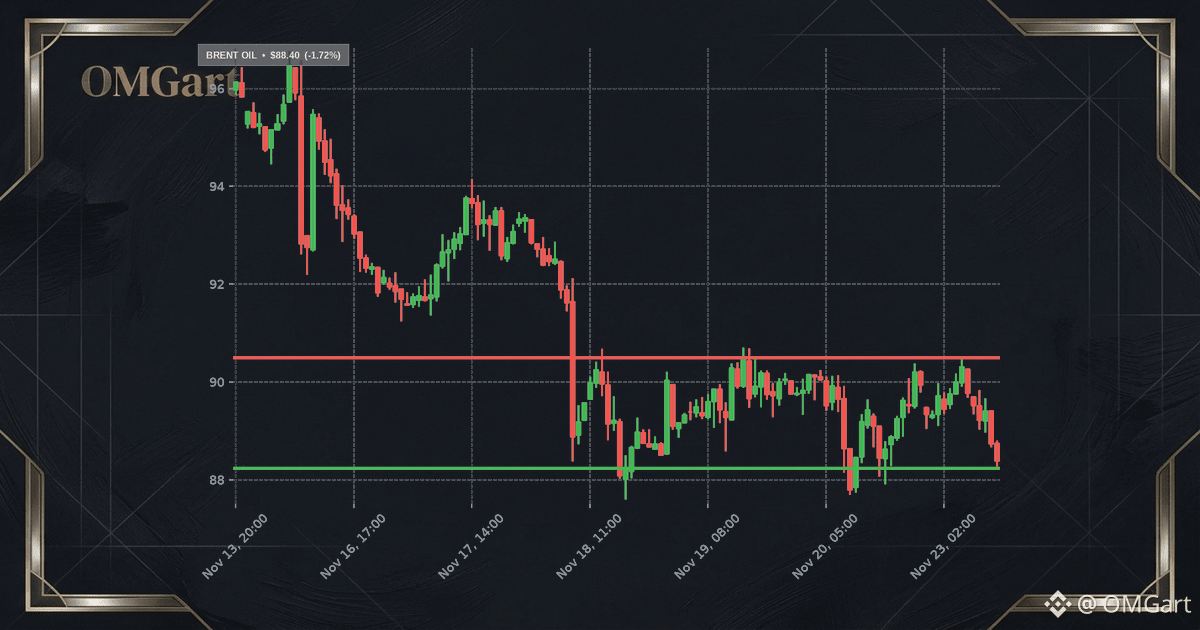
原油アップデート:$Brent $88.40(24時間で-1.72%)、WTI $82.09。OPEC+の結束は2020年の分裂ではなく、2014年の規律を想起させる。地政学的プレミアムの後退、堅調な米ドル、需要の軟化は、数カ月にわたり原油価格を圧迫した供給過剰の構図を彷彿とさせる。
⚠️ 投資助言ではありません。ご自身で調査してください。過去の実績 ≠ 将来の成果。
原油アップデート:$Brent $88.40(24時間で-1.72%)、WTI $82.09。OPEC+の結束は2020年の分裂ではなく、2014年の規律を想起させる。地政学的プレミアムの後退、堅調な米ドル、需要の軟化は、数カ月にわたり原油価格を圧迫した供給過剰の構図を彷彿とさせる。
⚠️ 投資助言ではありません。ご自身で調査してください。過去の実績 ≠ 将来の成果。
⚠️ 投資助言ではありません。ご自身で調査してください。過去の実績 ≠ 将来の成果。
66
·
--
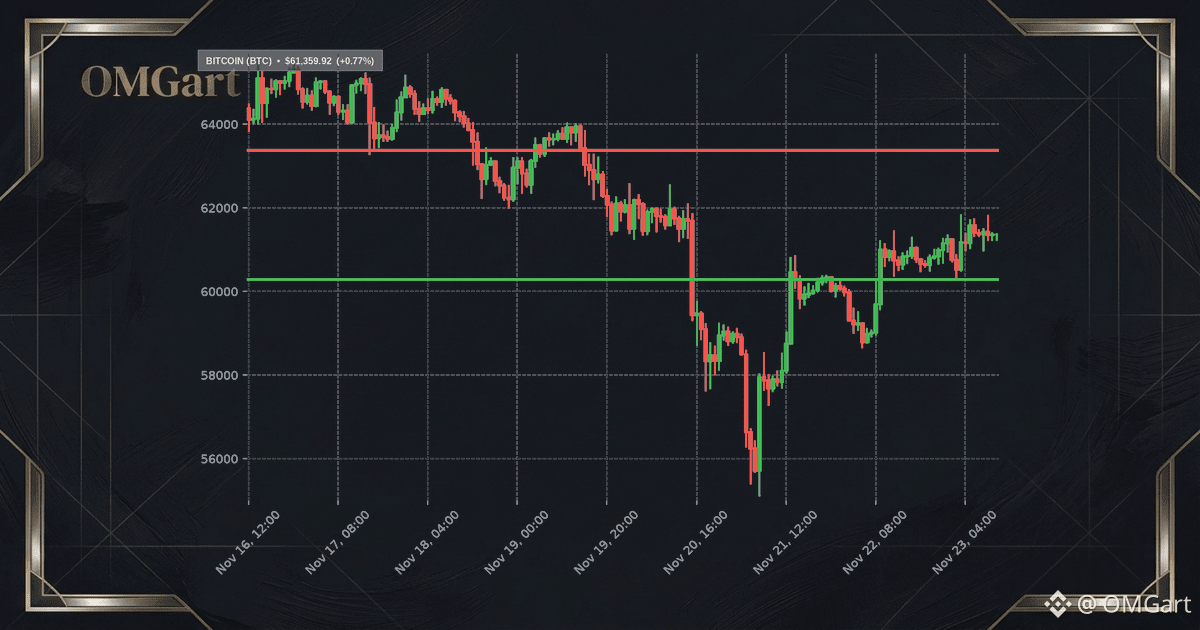
$BTC 更新:価格は61,359.92ドル(24時間で+0.77%)。タカ派的なFRB観測を背景に実質利回りが上昇し、中東での原油価格の急騰もドルを押し上げています。地政学リスクへのヘッジよりも現金の安全性が優先され、金とビットコインの両方に下押し圧力がかかっています。
⚠️ 金融アドバイスではありません。ご自身で調査してください。過去の実績は将来の結果を保証するものではありません。
$BTC 更新:価格は61,359.92ドル(24時間で+0.77%)。タカ派的なFRB観測を背景に実質利回りが上昇し、中東での原油価格の急騰もドルを押し上げています。地政学リスクへのヘッジよりも現金の安全性が優先され、金とビットコインの両方に下押し圧力がかかっています。
⚠️ 金融アドバイスではありません。ご自身で調査してください。過去の実績は将来の結果を保証するものではありません。
⚠️ 金融アドバイスではありません。ご自身で調査してください。過去の実績は将来の結果を保証するものではありません。
100
·
--
記事
$QCOM(QUALCOMM Incorporated)についてご存じですか?読了時間:6分 • 注目点:5G/6GのSEPライセンスの持続性とQTLの利益率の推移、デバイス上のAIの拡大:Snapdragon X(PC)、Snapdragon 8 Gen 4/Elite(モバイル)、Cloud AI 100(データセンター推論)、自動車・IoTへの多角化:Digital Chassisの設計採用、携帯電話への依存を減らす売上構成の変化
要約:
QUALCOMM Incorporatedが現在の市場での地位を築いたのは偶然ではありません。1,890.6億ドルの企業価値は、綿密に練られた複数年にわたる戦略を反映しています。ただし、競争の激化と高まる市場の期待により、その優位性は現実的な課題に直面しています。
$QCOM(QUALCOMM Incorporated)についてご存じですか?
読了時間:6分 • 注目点:5G/6GのSEPライセンスの持続性とQTLの利益率の推移、デバイス上のAIの拡大:Snapdragon X(PC)、Snapdragon 8 Gen 4/Elite(モバイル)、Cloud AI 100(データセンター推論)、自動車・IoTへの多角化:Digital Chassisの設計採用、携帯電話への依存を減らす売上構成の変化
要約:
QUALCOMM Incorporatedが現在の市場での地位を築いたのは偶然ではありません。1,890.6億ドルの企業価値は、綿密に練られた複数年にわたる戦略を反映しています。ただし、競争の激化と高まる市場の期待により、その優位性は現実的な課題に直面しています。
要約:
QUALCOMM Incorporatedが現在の市場での地位を築いたのは偶然ではありません。1,890.6億ドルの企業価値は、綿密に練られた複数年にわたる戦略を反映しています。ただし、競争の激化と高まる市場の期待により、その優位性は現実的な課題に直面しています。
126
·
--
記事
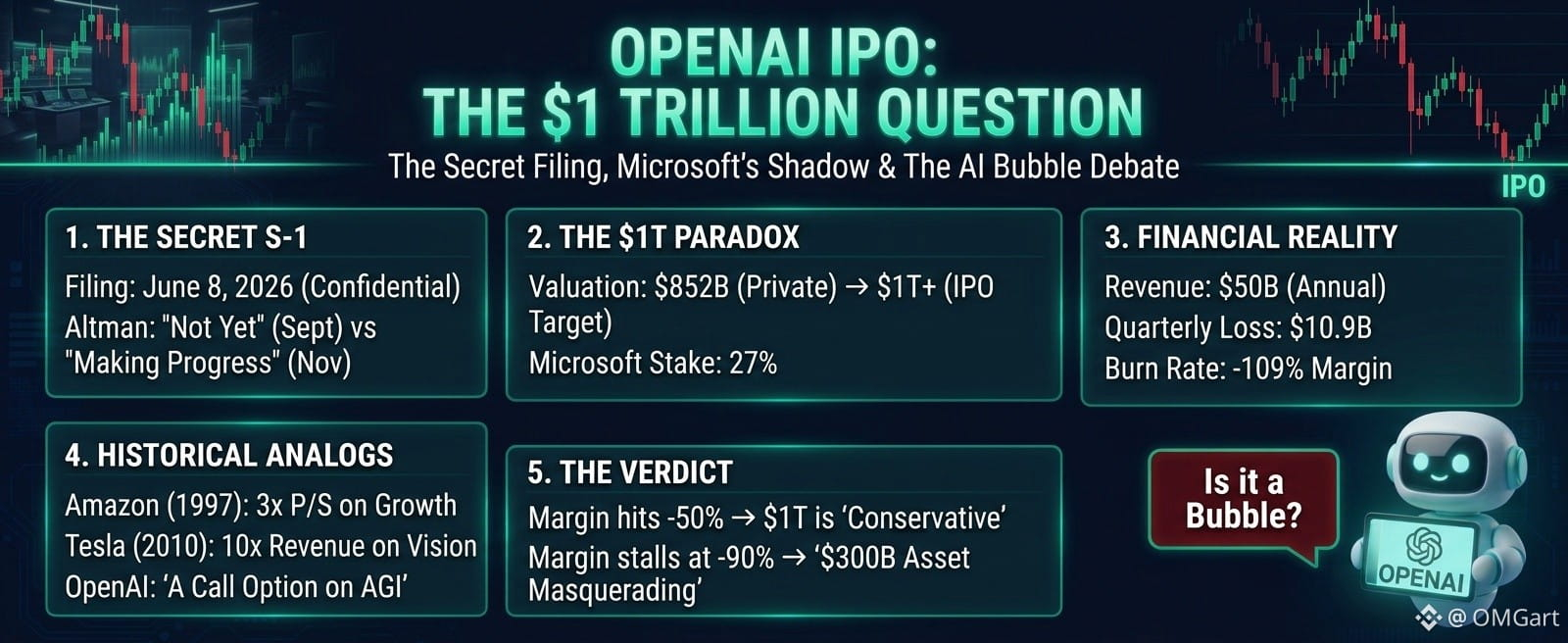
OpenAIがIPOを密かに申請したのに、アルトマンは「まだ」と言っているのをご存じですか?# OpenAIがIPOを密かに申請したのに、アルトマンは「まだ」と言っているのをご存じですか?
**読了時間:6分 • 焦点:IPOの仕組み、評価額のパラドックス、Microsoftの影**
---
## 要約(TL;DR)
OpenAIは2026年6月、CEOが公の場で「2026年にはない」と述べる一方、IPOを密かに申請しました。11月までには、その説明は「着実に進展している」へと変わりました。同社は1兆ドル超の企業評価額を目指していますが、売上1ドルにつき1.09ドルの損失を出しています。目標評価額で3,240億ドルに相当するMicrosoftの27%の持ち分により、実際の価格が明らかになるのは何年も先という、影のIPOの構図が生まれています。これはバブルではありません。四半期あたり100億ドルを燃やすコストをプレミアムとした、AGIへのコールオプションです。
OpenAIがIPOを密かに申請したのに、アルトマンは「まだ」と言っているのをご存じですか?
# OpenAIがIPOを密かに申請したのに、アルトマンは「まだ」と言っているのをご存じですか?
**読了時間:6分 • 焦点:IPOの仕組み、評価額のパラドックス、Microsoftの影**
---
## 要約(TL;DR)
OpenAIは2026年6月、CEOが公の場で「2026年にはない」と述べる一方、IPOを密かに申請しました。11月までには、その説明は「着実に進展している」へと変わりました。同社は1兆ドル超の企業評価額を目指していますが、売上1ドルにつき1.09ドルの損失を出しています。目標評価額で3,240億ドルに相当するMicrosoftの27%の持ち分により、実際の価格が明らかになるのは何年も先という、影のIPOの構図が生まれています。これはバブルではありません。四半期あたり100億ドルを燃やすコストをプレミアムとした、AGIへのコールオプションです。
200
·
--
記事
$NFLX(Netflix Inc.)について、こんなことをご存じですか?読了時間:3分 • テーマ:ストリーミング技術、コンテンツ経済、世界のメディア業界の変革
要約(TL;DR):
Netflix Inc.は偶然に現在の市場での地位を築いたわけではありません。同社の評価額3,650億ドルは、綿密に練られた複数年にわたる戦略を反映しています。ただし、競争の激化と高まる期待により、その優位性は現実的な課題に直面しています。
Netflixがあなたにとって重要な理由
Netflixは、人々が物語を楽しむ方法を一変させました。決まった時間に視聴するスタイルから、好きなときに楽しむ文化へと変えたのです。同社のアルゴリズムは何十億人もの視聴者が見る作品を左右し、オリジナル作品は文化的な話題を生み出し、その技術基盤は現代のエンターテインメントを支えるインフラとなっています。加入者、クリエイター、投資家のいずれであっても、Netflixの決定はメディア業界全体に波及します。
$NFLX(Netflix Inc.)について、こんなことをご存じですか?
読了時間:3分 • テーマ:ストリーミング技術、コンテンツ経済、世界のメディア業界の変革
要約(TL;DR):
Netflix Inc.は偶然に現在の市場での地位を築いたわけではありません。同社の評価額3,650億ドルは、綿密に練られた複数年にわたる戦略を反映しています。ただし、競争の激化と高まる期待により、その優位性は現実的な課題に直面しています。
Netflixがあなたにとって重要な理由
Netflixは、人々が物語を楽しむ方法を一変させました。決まった時間に視聴するスタイルから、好きなときに楽しむ文化へと変えたのです。同社のアルゴリズムは何十億人もの視聴者が見る作品を左右し、オリジナル作品は文化的な話題を生み出し、その技術基盤は現代のエンターテインメントを支えるインフラとなっています。加入者、クリエイター、投資家のいずれであっても、Netflixの決定はメディア業界全体に波及します。
170
·
--
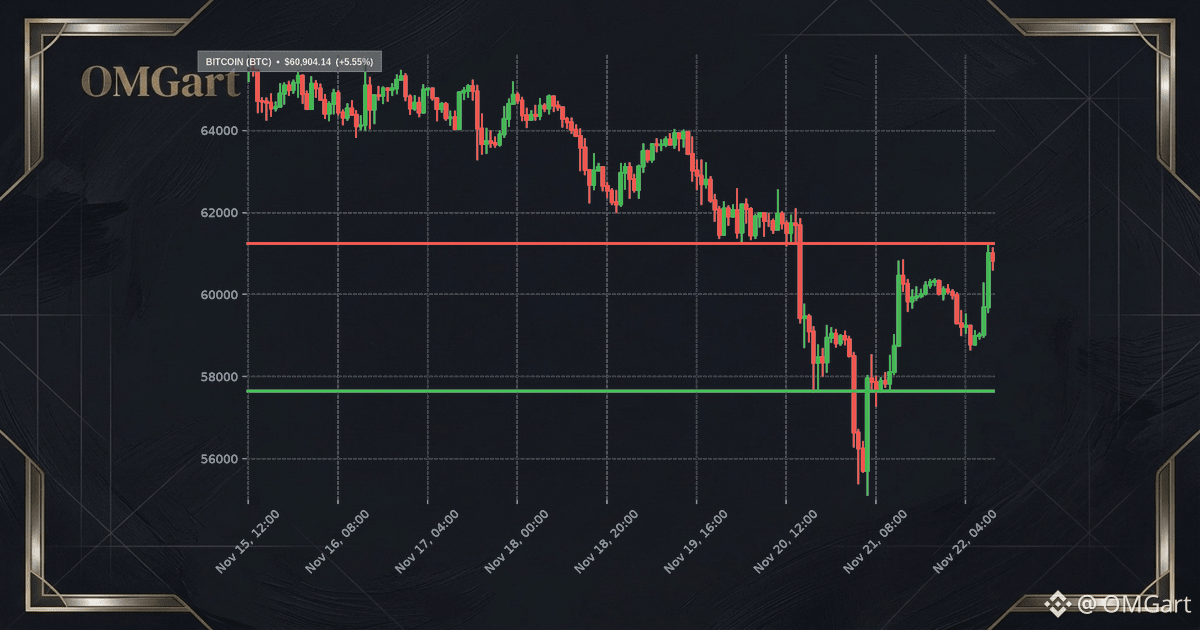
$BTC 更新:価格は60,904.14ドル(24時間で+5.55%)です。ドル安と利回りのまちまちな動きは、流動性が戻りつつあることを示しています。中央銀行の金融引き締めサイクルが終わり、国境を越えた資本フローが逆転すると、一般にリスク資産は他の資産を上回るパフォーマンスを示します。
⚠️ 金融アドバイスではありません。ご自身で調査してください。過去の実績は将来の成果を保証するものではありません。
$BTC 更新:価格は60,904.14ドル(24時間で+5.55%)です。ドル安と利回りのまちまちな動きは、流動性が戻りつつあることを示しています。中央銀行の金融引き締めサイクルが終わり、国境を越えた資本フローが逆転すると、一般にリスク資産は他の資産を上回るパフォーマンスを示します。
⚠️ 金融アドバイスではありません。ご自身で調査してください。過去の実績は将来の成果を保証するものではありません。
⚠️ 金融アドバイスではありません。ご自身で調査してください。過去の実績は将来の成果を保証するものではありません。
105
·
--
記事
$ORCL(オラクル・コーポレーション)についてご存じですか…?読了時間:3分 • テーマ:エンタープライズソフトウェア、クラウドインフラ、データ管理
要点(TL;DR):
オラクル・コーポレーションが現在の市場地位を築いたのは、偶然ではありません。時価総額3,900億ドルは、何年にもわたる緻密な戦略の成果です。ただし、競争の激化と高まる期待により、その優位性は現実的な課題に直面しています。
オラクル・コーポレーションがあなたにとって重要な理由
大手銀行、通信会社、航空会社、政府機関は、いずれもOracle Databaseを利用しています。あなたの取引、医療記録、納税申告は、Oracleのクラウドを利用したことがなくても、日々Oracleのインフラに関わっています。
$ORCL(オラクル・コーポレーション)についてご存じですか…?
読了時間:3分 • テーマ:エンタープライズソフトウェア、クラウドインフラ、データ管理
要点(TL;DR):
オラクル・コーポレーションが現在の市場地位を築いたのは、偶然ではありません。時価総額3,900億ドルは、何年にもわたる緻密な戦略の成果です。ただし、競争の激化と高まる期待により、その優位性は現実的な課題に直面しています。
オラクル・コーポレーションがあなたにとって重要な理由
大手銀行、通信会社、航空会社、政府機関は、いずれもOracle Databaseを利用しています。あなたの取引、医療記録、納税申告は、Oracleのクラウドを利用したことがなくても、日々Oracleのインフラに関わっています。
要点(TL;DR):
オラクル・コーポレーションが現在の市場地位を築いたのは、偶然ではありません。時価総額3,900億ドルは、何年にもわたる緻密な戦略の成果です。ただし、競争の激化と高まる期待により、その優位性は現実的な課題に直面しています。
オラクル・コーポレーションがあなたにとって重要な理由
大手銀行、通信会社、航空会社、政府機関は、いずれもOracle Databaseを利用しています。あなたの取引、医療記録、納税申告は、Oracleのクラウドを利用したことがなくても、日々Oracleのインフラに関わっています。
77
·
--
記事
$IBM(インターナショナル・ビジネス・マシーンズ・コーポレーション)についてご存じですか…?読了時間:3分 • 注目分野:エンタープライズコンピューティング、ハイブリッドクラウド、量子コンピューティング、AI研究
要約(TL;DR):
インターナショナル・ビジネス・マシーンズ・コーポレーションは、偶然に現在の市場での地位を築いたわけではありません。時価総額1,600億ドルは、複数年にわたる計算された戦略を反映しています。ただし、競争の激化と高まる期待により、その優位性は現実的な課題に直面しています。
インターナショナル・ビジネス・マシーンズ・コーポレーションがあなたにとって重要な理由
銀行取引を処理するメインフレームから、企業向けAIを支えるハイブリッドクラウドまで、IBMのインフラは世界経済にとって最も重要なワークロードを静かに支えています。
$IBM(インターナショナル・ビジネス・マシーンズ・コーポレーション)についてご存じですか…?
読了時間:3分 • 注目分野:エンタープライズコンピューティング、ハイブリッドクラウド、量子コンピューティング、AI研究
要約(TL;DR):
インターナショナル・ビジネス・マシーンズ・コーポレーションは、偶然に現在の市場での地位を築いたわけではありません。時価総額1,600億ドルは、複数年にわたる計算された戦略を反映しています。ただし、競争の激化と高まる期待により、その優位性は現実的な課題に直面しています。
インターナショナル・ビジネス・マシーンズ・コーポレーションがあなたにとって重要な理由
銀行取引を処理するメインフレームから、企業向けAIを支えるハイブリッドクラウドまで、IBMのインフラは世界経済にとって最も重要なワークロードを静かに支えています。
要約(TL;DR):
インターナショナル・ビジネス・マシーンズ・コーポレーションは、偶然に現在の市場での地位を築いたわけではありません。時価総額1,600億ドルは、複数年にわたる計算された戦略を反映しています。ただし、競争の激化と高まる期待により、その優位性は現実的な課題に直面しています。
インターナショナル・ビジネス・マシーンズ・コーポレーションがあなたにとって重要な理由
銀行取引を処理するメインフレームから、企業向けAIを支えるハイブリッドクラウドまで、IBMのインフラは世界経済にとって最も重要なワークロードを静かに支えています。
70
·
--
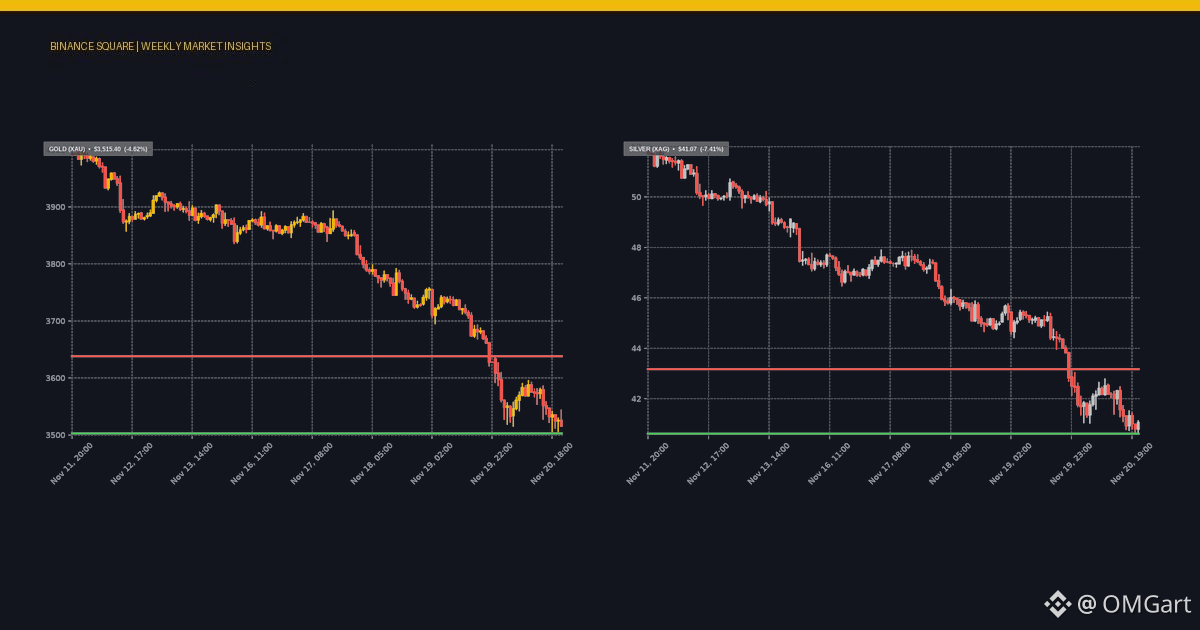
金・銀:金 $3,515.40(24時間で-4.62%)、銀 $41.07(24時間で-7.41%)。金は2022年のウクライナ戦争とFRB利上げの動きを反映している。地政学的リスクを背景とした買いは、ドル高に伴う実質利回りの上昇に押されている。銀は産業需要への感応度が高く、下落幅が拡大している。キャリー取引の巻き戻しが起きた2024年8月の事例では、金属価格は安定する傾向が見られる
⚠️ 金融アドバイスではありません。ご自身で調査してください。過去の実績は将来の成果を保証するものではありません。
金・銀:金 $3,515.40(24時間で-4.62%)、銀 $41.07(24時間で-7.41%)。金は2022年のウクライナ戦争とFRB利上げの動きを反映している。地政学的リスクを背景とした買いは、ドル高に伴う実質利回りの上昇に押されている。銀は産業需要への感応度が高く、下落幅が拡大している。キャリー取引の巻き戻しが起きた2024年8月の事例では、金属価格は安定する傾向が見られる
⚠️ 金融アドバイスではありません。ご自身で調査してください。過去の実績は将来の成果を保証するものではありません。
⚠️ 金融アドバイスではありません。ご自身で調査してください。過去の実績は将来の成果を保証するものではありません。
278
·
--
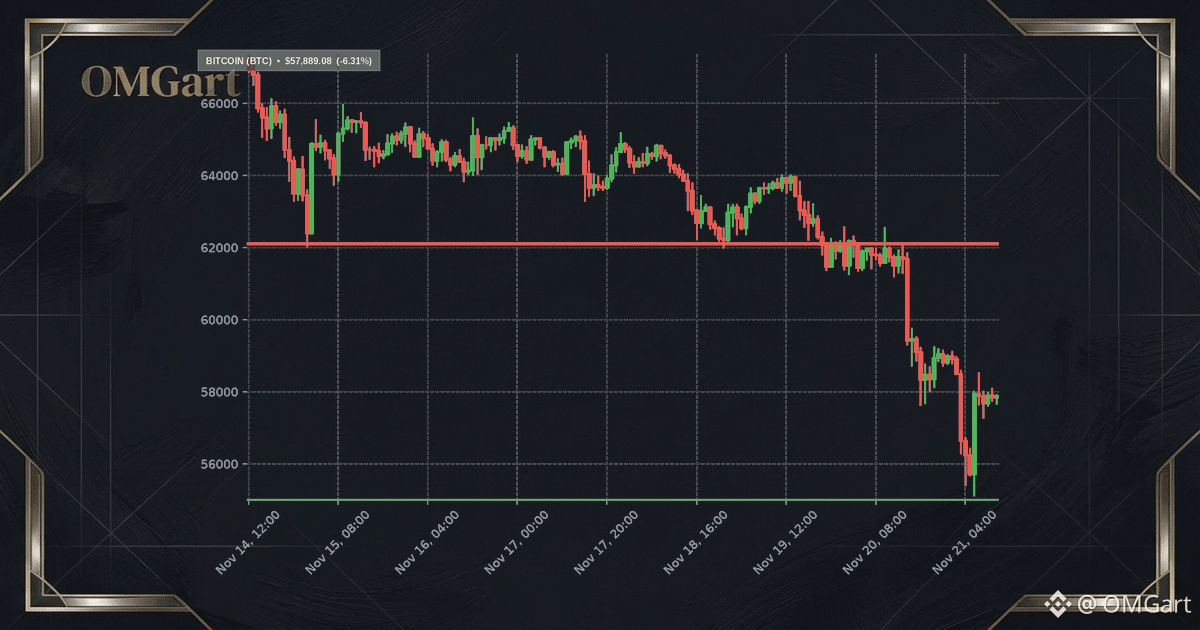
$BTC 更新:価格は$57,889.08(24時間で-6.31%)。暗号資産と金属にまたがる連動した売りは、リスク回避の清算を反映しています。流動性が戻るにつれて収束が乖離に先行するという、2020年の現金確保に走った動きを想起させます。
⚠️ 投資助言ではありません。ご自身で調査してください。過去の実績は将来の結果を保証するものではありません。
$BTC 更新:価格は$57,889.08(24時間で-6.31%)。暗号資産と金属にまたがる連動した売りは、リスク回避の清算を反映しています。流動性が戻るにつれて収束が乖離に先行するという、2020年の現金確保に走った動きを想起させます。
⚠️ 投資助言ではありません。ご自身で調査してください。過去の実績は将来の結果を保証するものではありません。
⚠️ 投資助言ではありません。ご自身で調査してください。過去の実績は将来の結果を保証するものではありません。
83
·
--
一部該当
記事
$ASML(ASML Holding N.V.)についてご存じですか?読了時間:5分 • 注目点:High-NA EUV(EXE:5000)の量産立ち上げとIntel/TSMC/Samsungの導入時期、中国の輸出規制がDUVの売上高に与える影響、SMEEの競争力の推移、受注残の売上高への転換:2030年まで€380億超の受注残が見込まれる
要約(TL;DR):
ASML Holding N.V.は、偶然に現在の市場での地位を築いたわけではありません。時価総額3,800億ドルは、計算された複数年にわたる戦略の成果を反映しています。ただし、競争の激化と高まる期待により、その優位性は現実的な課題に直面しています。
$ASML(ASML Holding N.V.)についてご存じですか?
読了時間:5分 • 注目点:High-NA EUV(EXE:5000)の量産立ち上げとIntel/TSMC/Samsungの導入時期、中国の輸出規制がDUVの売上高に与える影響、SMEEの競争力の推移、受注残の売上高への転換:2030年まで€380億超の受注残が見込まれる
要約(TL;DR):
ASML Holding N.V.は、偶然に現在の市場での地位を築いたわけではありません。時価総額3,800億ドルは、計算された複数年にわたる戦略の成果を反映しています。ただし、競争の激化と高まる期待により、その優位性は現実的な課題に直面しています。
要約(TL;DR):
ASML Holding N.V.は、偶然に現在の市場での地位を築いたわけではありません。時価総額3,800億ドルは、計算された複数年にわたる戦略の成果を反映しています。ただし、競争の激化と高まる期待により、その優位性は現実的な課題に直面しています。
172
·
--
記事
$ARM(ARM Holdings plc)についてご存じですか…?読了時間:4分 • 注目点:ARMv9へのロイヤルティ移行とASP拡大、クラウド/サーバー市場でのシェア獲得、そして中国および自動車分野におけるx86とRISC-Vとの競争動向
要約(TL;DR):
ARM Holdings plcは、偶然に現在の市場地位を築いたわけではありません。時価評価額148000000000ドルは、計算された複数年にわたる戦略を反映しています。ただし、競争の激化と高まる期待により、その優位性は現実的な課題に直面しています。
ARM Holdings plcがあなたにとって重要な理由
ARMは、あなたのスマートフォンや車のECU、クラウドのワークロード(AWS Graviton、Azure Cobalt、Google Axion)、そして次世代モデルの学習に使われるAIアクセラレーターを動かす、目に見えないアーキテクチャです。ARMを理解することは、2020年代のコンピューティング基盤を理解することです。
$ARM(ARM Holdings plc)についてご存じですか…?
読了時間:4分 • 注目点:ARMv9へのロイヤルティ移行とASP拡大、クラウド/サーバー市場でのシェア獲得、そして中国および自動車分野におけるx86とRISC-Vとの競争動向
要約(TL;DR):
ARM Holdings plcは、偶然に現在の市場地位を築いたわけではありません。時価評価額148000000000ドルは、計算された複数年にわたる戦略を反映しています。ただし、競争の激化と高まる期待により、その優位性は現実的な課題に直面しています。
ARM Holdings plcがあなたにとって重要な理由
ARMは、あなたのスマートフォンや車のECU、クラウドのワークロード(AWS Graviton、Azure Cobalt、Google Axion)、そして次世代モデルの学習に使われるAIアクセラレーターを動かす、目に見えないアーキテクチャです。ARMを理解することは、2020年代のコンピューティング基盤を理解することです。
130
·
--
記事
$MSTR(MicroStrategy Incorporated)についてご存じですか?読了時間:3分 • 注目分野:企業財務の革新、エンタープライズソフトウェア、ビットコインの普及
要約(TL;DR):
MicroStrategy Incorporatedは、偶然に今の市場での地位を築いたわけではありません。$~$32Bの評価額は、計算された複数年にわたる戦略を反映しています。一方で、競争の激化と高まる期待を背景に、その優位性は現実的な課題に直面しています。
MicroStrategy Incorporatedがあなたにとって重要な理由
MicroStrategyは、上場企業が自社の定款を改定し、主権を持たない資産を準備資産として保有できることを示しました。BTCやMSTR株を保有しているかどうかにかかわらず、この先例はあらゆるCFOや取締役会に「なぜビットコインではないのか」と問いかけます。その答えは、世界中で企業が管理する$30T超の現金のあり方を変えるものです。
$MSTR(MicroStrategy Incorporated)についてご存じですか?
読了時間:3分 • 注目分野:企業財務の革新、エンタープライズソフトウェア、ビットコインの普及
要約(TL;DR):
MicroStrategy Incorporatedは、偶然に今の市場での地位を築いたわけではありません。$~$32Bの評価額は、計算された複数年にわたる戦略を反映しています。一方で、競争の激化と高まる期待を背景に、その優位性は現実的な課題に直面しています。
MicroStrategy Incorporatedがあなたにとって重要な理由
MicroStrategyは、上場企業が自社の定款を改定し、主権を持たない資産を準備資産として保有できることを示しました。BTCやMSTR株を保有しているかどうかにかかわらず、この先例はあらゆるCFOや取締役会に「なぜビットコインではないのか」と問いかけます。その答えは、世界中で企業が管理する$30T超の現金のあり方を変えるものです。
218
·
--
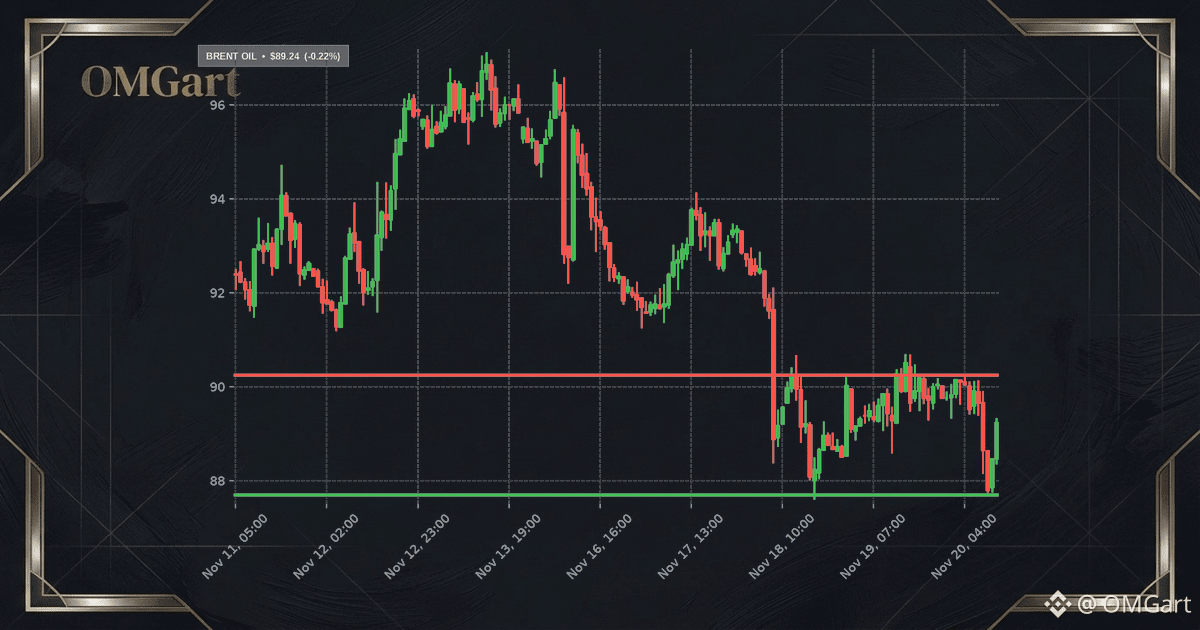
原油アップデート:ブレント原油 89.24ドル(24時間で-0.22%)、WTI 82.34ドル。OPEC+の結束は、2020年の分裂ではなく2014年の規律を想起させる。地政学的プレミアムの縮小、底堅い米ドル、軟化する需要は、供給過剰がディスインフレ圧力となり、数カ月にわたって原油価格を押し下げた動きを反映している。
⚠️ 金融アドバイスではありません。ご自身で調査してください。過去の実績 ≠ 将来の成果。
原油アップデート:ブレント原油 89.24ドル(24時間で-0.22%)、WTI 82.34ドル。OPEC+の結束は、2020年の分裂ではなく2014年の規律を想起させる。地政学的プレミアムの縮小、底堅い米ドル、軟化する需要は、供給過剰がディスインフレ圧力となり、数カ月にわたって原油価格を押し下げた動きを反映している。
⚠️ 金融アドバイスではありません。ご自身で調査してください。過去の実績 ≠ 将来の成果。
⚠️ 金融アドバイスではありません。ご自身で調査してください。過去の実績 ≠ 将来の成果。
144
·
--
弱気相場
:) $PAXG
{spot}(PAXGUSDT)
:) $PAXG
OMGart
·
--
弱気相場有効期限:1/1/27
️ 金融アドバイスではありません。ご自身で調査してください。過去の実績 ≠ 将来の成果。
️ 金融アドバイスではありません。ご自身で調査してください。過去の実績 ≠ 将来の成果。
50
·
--
記事
$PLTR(Palantir Technologies Inc.)について、こんなことをご存じですか?読了時間:3分 • 注目分野:運用AI、データオントロジー、政府とテクノロジーの融合
要約(TL;DR):
Palantir Technologies Inc.が現在の市場での地位を築いたのは偶然ではありません。1,800億ドルの評価額は、緻密に練られた複数年にわたる戦略を反映しています。ただし、競争の激化と高まる期待により、その優位性は現実的な課題に直面しています。
Palantir Technologies Inc.があなたにとって重要な理由
政府の主要な意思決定や、サプライチェーンから創薬に至るまで増え続ける企業の業務が、Palantirのオントロジーレイヤー上で実行されています。同社はAI時代における組織の意思決定を支えるオペレーティングシステムを、ひそかに構築しています。
$PLTR(Palantir Technologies Inc.)について、こんなことをご存じですか?
読了時間:3分 • 注目分野:運用AI、データオントロジー、政府とテクノロジーの融合
要約(TL;DR):
Palantir Technologies Inc.が現在の市場での地位を築いたのは偶然ではありません。1,800億ドルの評価額は、緻密に練られた複数年にわたる戦略を反映しています。ただし、競争の激化と高まる期待により、その優位性は現実的な課題に直面しています。
Palantir Technologies Inc.があなたにとって重要な理由
政府の主要な意思決定や、サプライチェーンから創薬に至るまで増え続ける企業の業務が、Palantirのオントロジーレイヤー上で実行されています。同社はAI時代における組織の意思決定を支えるオペレーティングシステムを、ひそかに構築しています。
78
ログインして、さらにコンテンツを読む
厳選トピックで世界の暗号資産トレーダーの仲間入り
⚡️ 暗号資産に関する最新かつ有益な情報が見つかります。
💬 世界最大の暗号資産取引所から信頼されています。
👍 認証を受けたクリエイターから、有益なインサイトを得られます。
メール / 電話番号