
特拉弗-105278
138 投稿

特拉弗-105278
報告
ユーザーをブロック
8.7K+ フォロー
2.3K+ フォロワー
1.4K+ いいね
投稿
すべて
引用
ライブ
·
--
本人確認中
翻訳参照
CAKE BURN IS COMING — NOVEMBER 16
BUY CAKE and HOLD;
PancakeSwap is preparing for another CAKE token burn on November 16, putting the spotlight back on one of the most important parts of CAKE’s tokenomics: reducing supply through protocol-generated fees.
The upcoming event was recently rescheduled as PancakeSwap carries out security upgrades and internal checks on the contracts involved in the buyback process.
_____________________
PancakeSwap has already maintained a long-running deflationary trend. In October, around 1.79M CAKE was burned, while roughly 674K CAKE was minted — resulting in a net reduction of more than 1.11M CAKE.
That means the upcoming burn isn't an isolated event. It is part of PancakeSwap's broader strategy to keep CAKE supply under control.
CAKE also has a 400M maximum supply, with PancakeSwap targeting continued long-term supply reduction through its tokenomics model.
But there is one important point traders should keep in mind:
A burn does not automatically mean price goes up.
The actual impact depends on the amount of CAKE removed, market demand, liquidity and the broader crypto market. The exact size of the November 16 burn has not been disclosed yet, so anyone giving a guaranteed price target based solely on the burn is getting ahead of the data.
_________________________
If CAKE continues reducing circulating supply while PancakeSwap activity and fee generation remain strong, the long-term supply-demand equation could become increasingly favorable.
• November 16 — CAKE burn
• Focus: Supply reduction
• Key factor: Actual burn size
• Watch: CAKE volume, DEX activity and market reaction
For me, the interesting part isn't simply the headline “CAKE burn.”
It's whether real protocol activity can continue generating enough fees to consistently remove more CAKE from supply.
That is the metric worth watching beyond November 16.
$CAKE
{future}(CAKEUSDT)
#CPITestsDecemberRateOutlook
CAKE BURN IS COMING — NOVEMBER 16
BUY CAKE and HOLD;
PancakeSwap is preparing for another CAKE token burn on November 16, putting the spotlight back on one of the most important parts of CAKE’s tokenomics: reducing supply through protocol-generated fees.
The upcoming event was recently rescheduled as PancakeSwap carries out security upgrades and internal checks on the contracts involved in the buyback process.
_____________________
PancakeSwap has already maintained a long-running deflationary trend. In October, around 1.79M CAKE was burned, while roughly 674K CAKE was minted — resulting in a net reduction of more than 1.11M CAKE.
That means the upcoming burn isn't an isolated event. It is part of PancakeSwap's broader strategy to keep CAKE supply under control.
CAKE also has a 400M maximum supply, with PancakeSwap targeting continued long-term supply reduction through its tokenomics model.
But there is one important point traders should keep in mind:
A burn does not automatically mean price goes up.
The actual impact depends on the amount of CAKE removed, market demand, liquidity and the broader crypto market. The exact size of the November 16 burn has not been disclosed yet, so anyone giving a guaranteed price target based solely on the burn is getting ahead of the data.
_________________________
If CAKE continues reducing circulating supply while PancakeSwap activity and fee generation remain strong, the long-term supply-demand equation could become increasingly favorable.
• November 16 — CAKE burn
• Focus: Supply reduction
• Key factor: Actual burn size
• Watch: CAKE volume, DEX activity and market reaction
For me, the interesting part isn't simply the headline “CAKE burn.”
It's whether real protocol activity can continue generating enough fees to consistently remove more CAKE from supply.
That is the metric worth watching beyond November 16.
$CAKE
#CPITestsDecemberRateOutlook

1
501
·
--

記事
XRPは2023年以降、売られ過ぎのシグナルを18回記録。回復の可能性について、過去のデータは何を示しているのか?XRPは大きな売り圧力に直面しており、価格は1年ぶりの高値を55.2%下回る水準で推移しています。しかし、Bitrue Research Instituteによる新たな調査では、興味深い過去のパターンが明らかになりました。XRPは極端な売られ過ぎの状態に達した後、90日間で頻繁に回復してきました。
この調査では、2023年1月までさかのぼるXRP/USDTのデータを分析し、トレーダーが注視すべきいくつかの重要なシグナルを特定しています。
___________________________
調査では、2023年以降にXRPの日足相対力指数(RSI)が35を下回ったのは18回だったことが明らかになりました。
XRPは2023年以降、売られ過ぎのシグナルを18回記録。回復の可能性について、過去のデータは何を示しているのか?
XRPは大きな売り圧力に直面しており、価格は1年ぶりの高値を55.2%下回る水準で推移しています。しかし、Bitrue Research Instituteによる新たな調査では、興味深い過去のパターンが明らかになりました。XRPは極端な売られ過ぎの状態に達した後、90日間で頻繁に回復してきました。
この調査では、2023年1月までさかのぼるXRP/USDTのデータを分析し、トレーダーが注視すべきいくつかの重要なシグナルを特定しています。
___________________________
調査では、2023年以降にXRPの日足相対力指数(RSI)が35を下回ったのは18回だったことが明らかになりました。
この調査では、2023年1月までさかのぼるXRP/USDTのデータを分析し、トレーダーが注視すべきいくつかの重要なシグナルを特定しています。
___________________________
調査では、2023年以降にXRPの日足相対力指数(RSI)が35を下回ったのは18回だったことが明らかになりました。
2
1.1k
·
--
弱気相場
翻訳参照
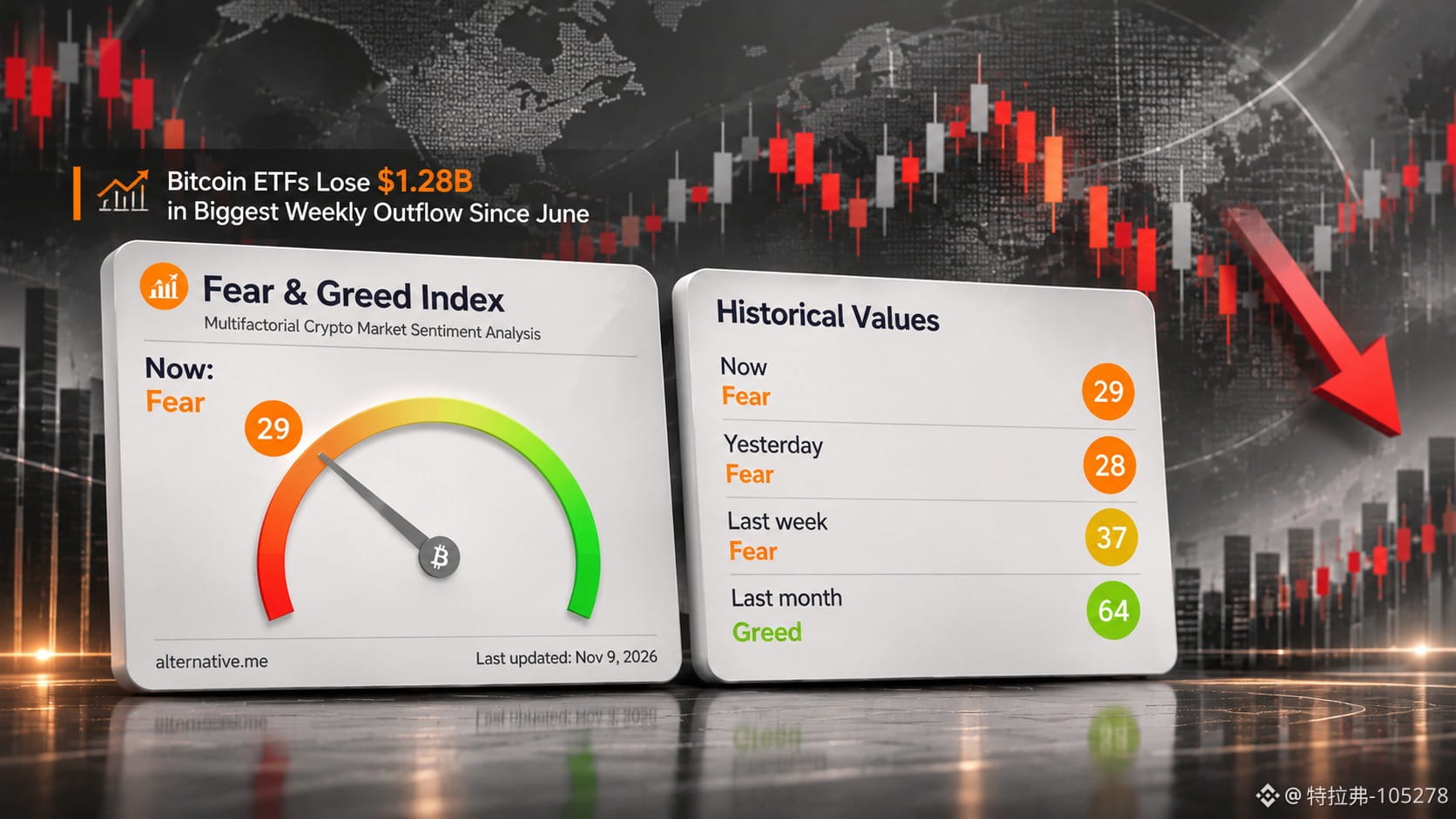
Bitcoin ETFs Record $1.28 Billion in Weekly Outflows as Institutional Selling Intensifies;
The US spot Bitcoin ETF market has experienced its largest weekly capital outflow since late June 2026, highlighting a significant shift in institutional investment sentiment.
According to the latest report, spot Bitcoin ETFs recorded approximately $1.28 billion in net outflows last week.
:
- Total ETF outflows: Approximately $1.28 billion.
- BlackRock IBIT: Accounted for roughly $1.21 billion in withdrawals.
- Fidelity FBTC: Recorded approximately $93 million in net inflows, showing that not all funds experienced selling pressure.
- October outflows: Around $515 million.
- 2026 cumulative outflows: Approximately $919 million.
?
The scale of these withdrawals suggests that institutional demand for Bitcoin exposure through ETFs has weakened considerably.
BlackRock's IBIT accounted for the overwhelming majority of the latest weekly outflows, making its fund activity particularly important to monitor.
Meanwhile, Bitcoin's price weakness adds another concern for market participants. The $74,400–$75,000 region has emerged as an important support zone.
:
If ETF outflows continue, Bitcoin could face additional selling pressure as institutional demand remains under pressure.
However, a recovery in ETF inflows could signal improving investor confidence and potentially support a market rebound.
:
- Support: $74,400–$75,000
- Key development: A sustained recovery in ETF inflows.
- Bearish signal: Continued large-scale institutional withdrawals.
:
The latest ETF figures deserve attention. Institutional capital flows are an important part of Bitcoin's market structure, and sustained withdrawals could make recovery more difficult.
However, one week of heavy outflows does not confirm a long-term bearish trend. Traders should monitor upcoming ETF flow data alongside Bitcoin's price action and trading volume.
$BTC
{future}(BTCUSDT)
#BitcoinFiveWeeklyLosses
Bitcoin ETFs Record $1.28 Billion in Weekly Outflows as Institutional Selling Intensifies;
The US spot Bitcoin ETF market has experienced its largest weekly capital outflow since late June 2026, highlighting a significant shift in institutional investment sentiment.
According to the latest report, spot Bitcoin ETFs recorded approximately $1.28 billion in net outflows last week.
:
- Total ETF outflows: Approximately $1.28 billion.
- BlackRock IBIT: Accounted for roughly $1.21 billion in withdrawals.
- Fidelity FBTC: Recorded approximately $93 million in net inflows, showing that not all funds experienced selling pressure.
- October outflows: Around $515 million.
- 2026 cumulative outflows: Approximately $919 million.
?
The scale of these withdrawals suggests that institutional demand for Bitcoin exposure through ETFs has weakened considerably.
BlackRock's IBIT accounted for the overwhelming majority of the latest weekly outflows, making its fund activity particularly important to monitor.
Meanwhile, Bitcoin's price weakness adds another concern for market participants. The $74,400–$75,000 region has emerged as an important support zone.
:
If ETF outflows continue, Bitcoin could face additional selling pressure as institutional demand remains under pressure.
However, a recovery in ETF inflows could signal improving investor confidence and potentially support a market rebound.
:
- Support: $74,400–$75,000
- Key development: A sustained recovery in ETF inflows.
- Bearish signal: Continued large-scale institutional withdrawals.
:
The latest ETF figures deserve attention. Institutional capital flows are an important part of Bitcoin's market structure, and sustained withdrawals could make recovery more difficult.
However, one week of heavy outflows does not confirm a long-term bearish trend. Traders should monitor upcoming ETF flow data alongside Bitcoin's price action and trading volume.
$BTC
#BitcoinFiveWeeklyLosses
129
·
--

記事
テスラ、注文が生産能力を上回りサイバートラックの予約金を返金へテスラは、サイバートラック計画をめぐって異例の状況に直面しています。イーロン・マスク氏によると、2027年半ばに予定されている生産ラインの停止までに納車できる台数を超える注文を、同社は顧客から受けています。
ロイター通信によると、テスラは2027年6月から7月ごろにサイバートラックの生産を縮小する計画です。残る生産能力では未処理の注文すべてに対応できないため、多くの顧客が予約金の返金を受ける見込みです。
__________________________?
• マスク氏は、既存の注文数が、操業停止前にテスラが生産できる車両数を上回っていると主張しています。
テスラ、注文が生産能力を上回りサイバートラックの予約金を返金へ
テスラは、サイバートラック計画をめぐって異例の状況に直面しています。イーロン・マスク氏によると、2027年半ばに予定されている生産ラインの停止までに納車できる台数を超える注文を、同社は顧客から受けています。
ロイター通信によると、テスラは2027年6月から7月ごろにサイバートラックの生産を縮小する計画です。残る生産能力では未処理の注文すべてに対応できないため、多くの顧客が予約金の返金を受ける見込みです。
__________________________?
• マスク氏は、既存の注文数が、操業停止前にテスラが生産できる車両数を上回っていると主張しています。
ロイター通信によると、テスラは2027年6月から7月ごろにサイバートラックの生産を縮小する計画です。残る生産能力では未処理の注文すべてに対応できないため、多くの顧客が予約金の返金を受ける見込みです。
__________________________?
• マスク氏は、既存の注文数が、操業停止前にテスラが生産できる車両数を上回っていると主張しています。
1
957
·
--
翻訳参照
BINANCE FRANCE TO CLOSE CUSTOMER ACCOUNTS ON DECEMBER 31 AFTER FAILING TO SECURE MiCA LICENSE;
Binance France is preparing to close accounts linked to its French legal entity after failing to obtain the required authorization under the European Union's Markets in Crypto-Assets (MiCA) regulatory framework.
According to recent reports, affected customers have been notified that their accounts will be permanently closed on December 31, 2026.
The development introduces several important deadlines and financial implications for users:
• November 29, 2026: Management fees are reportedly scheduled to begin for accounts that still hold assets.
• Monthly fees: The reported charge is 0.025% per month, with a minimum fee of 10 USDC.
• Deposits: Deposits for affected accounts have already been restricted.
• Withdrawals: Customers are being advised to withdraw their remaining funds before the closure deadline.
.
MiCA establishes a common regulatory framework for crypto-asset service providers operating across the European Union. Companies must meet its authorization requirements to continue providing regulated crypto services within the applicable European market.
Binance France's reported situation highlights the growing importance of regulatory compliance for major cryptocurrency exchanges.
It also demonstrates that regulatory requirements can directly affect exchange operations and customer access to digital assets.
Important: This development concerns affected accounts under Binance France's legal entity. It does not mean Binance is shutting down globally.
Market Perspective
The situation could increase attention on how major exchanges handle regulatory requirements in Europe. For crypto users, it is another reminder to monitor official exchange announcements, withdrawal deadlines and changes to account services.
$BNB
{future}(BNBUSDT)
#JobsReportRaisesHikeOdds
BINANCE FRANCE TO CLOSE CUSTOMER ACCOUNTS ON DECEMBER 31 AFTER FAILING TO SECURE MiCA LICENSE;
Binance France is preparing to close accounts linked to its French legal entity after failing to obtain the required authorization under the European Union's Markets in Crypto-Assets (MiCA) regulatory framework.
According to recent reports, affected customers have been notified that their accounts will be permanently closed on December 31, 2026.
The development introduces several important deadlines and financial implications for users:
• November 29, 2026: Management fees are reportedly scheduled to begin for accounts that still hold assets.
• Monthly fees: The reported charge is 0.025% per month, with a minimum fee of 10 USDC.
• Deposits: Deposits for affected accounts have already been restricted.
• Withdrawals: Customers are being advised to withdraw their remaining funds before the closure deadline.
.
MiCA establishes a common regulatory framework for crypto-asset service providers operating across the European Union. Companies must meet its authorization requirements to continue providing regulated crypto services within the applicable European market.
Binance France's reported situation highlights the growing importance of regulatory compliance for major cryptocurrency exchanges.
It also demonstrates that regulatory requirements can directly affect exchange operations and customer access to digital assets.
Important: This development concerns affected accounts under Binance France's legal entity. It does not mean Binance is shutting down globally.
Market Perspective
The situation could increase attention on how major exchanges handle regulatory requirements in Europe. For crypto users, it is another reminder to monitor official exchange announcements, withdrawal deadlines and changes to account services.
$BNB
#JobsReportRaisesHikeOdds

3
178
·
--
翻訳参照
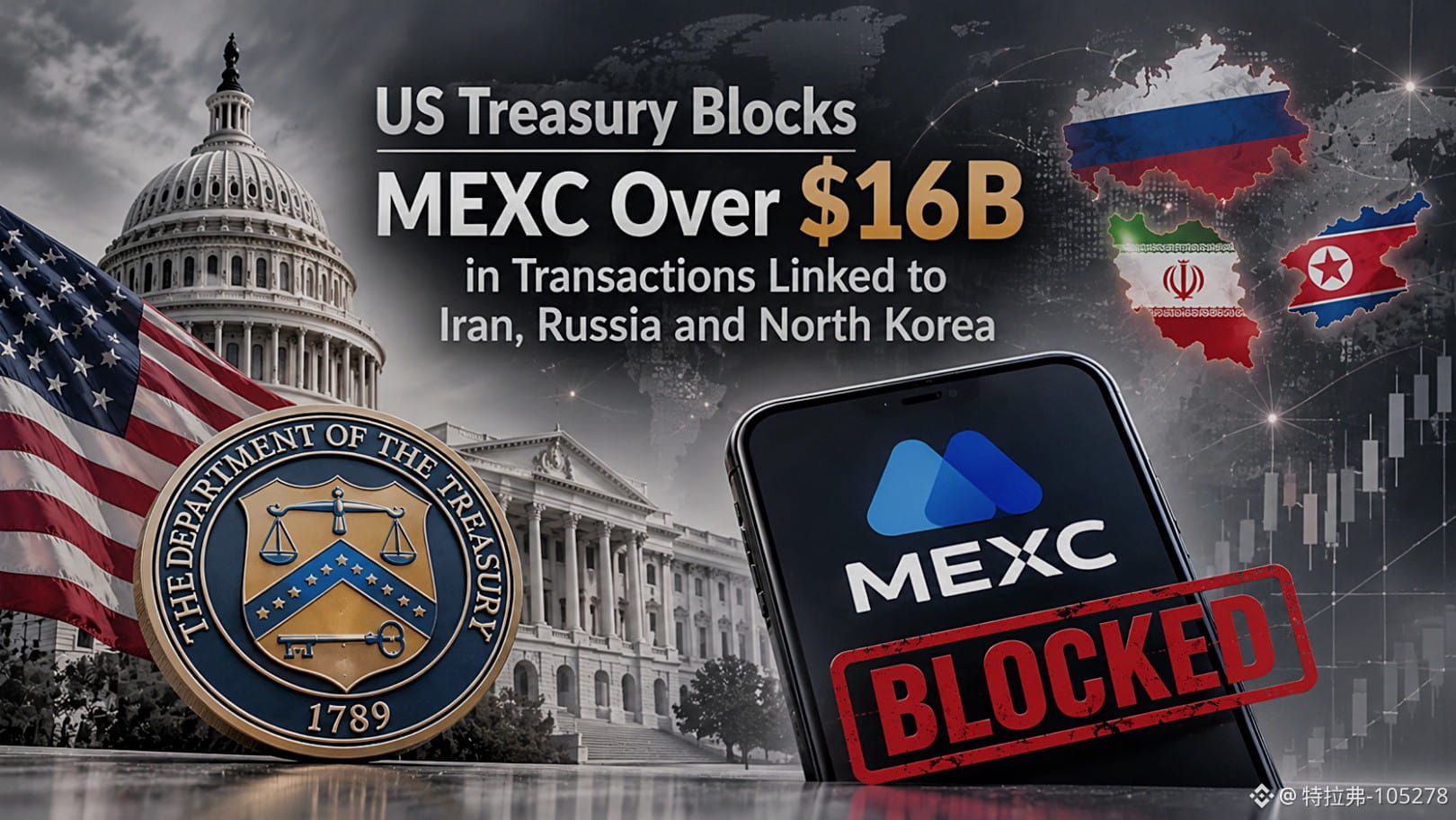
US TREASURY TARGETS MEXC OVER $16 BILLION IN ALLEGED ILLICIT TRANSACTIONS;
The U.S. Treasury Department has taken action against cryptocurrency exchange MEXC, accusing the platform of facilitating more than $16 billion in transactions linked to illicit financial activities, including sanctions evasion involving Iran, Russia, and North Korea.
According to the Financial Crimes Enforcement Network (FinCEN), the alleged transactions occurred between May 2021 and May 2026.
Key Details Behind the Investigation
The Treasury's findings highlight several major transaction figures:
- $16 billion+: Total transactions allegedly connected to illicit financial activity.
- $1.5 billion: Transactions reportedly linked to Russian sanctions evasion.
- $1 billion: Direct transactions involving Iranian cryptocurrency exchanges.
- $22 million: Transactions associated with Iran's sanctioned central bank and Islamic Revolutionary Guard Corps (IRGC).
?
FinCEN has designated MEXC as a primary money-laundering concern under Section 311 of the USA PATRIOT Act.
The measure would prohibit covered U.S. financial institutions from processing fund transfers involving MEXC. The order is scheduled to take effect 30 days after its publication in the Federal Register.
Importantly, this does not mean MEXC has been shut down globally. The measure specifically targets its access to the U.S. financial system.
.
The development highlights growing regulatory scrutiny of cryptocurrency exchanges and their responsibility to prevent money laundering, sanctions evasion, and suspicious transactions.
It could also increase pressure on other platforms to strengthen their compliance systems, transaction monitoring, and customer verification procedures.
.
.
The MEXC case could become another important development in the ongoing debate over exchange accountability, financial transparency, and regulatory oversight.
Risk Note: These are allegations and findings reported by U.S. authorities, not a blanket determination that all MEXC transactions were illicit.
$HYPE
{future}(HYPEUSDT)
US TREASURY TARGETS MEXC OVER $16 BILLION IN ALLEGED ILLICIT TRANSACTIONS;
The U.S. Treasury Department has taken action against cryptocurrency exchange MEXC, accusing the platform of facilitating more than $16 billion in transactions linked to illicit financial activities, including sanctions evasion involving Iran, Russia, and North Korea.
According to the Financial Crimes Enforcement Network (FinCEN), the alleged transactions occurred between May 2021 and May 2026.
Key Details Behind the Investigation
The Treasury's findings highlight several major transaction figures:
- $16 billion+: Total transactions allegedly connected to illicit financial activity.
- $1.5 billion: Transactions reportedly linked to Russian sanctions evasion.
- $1 billion: Direct transactions involving Iranian cryptocurrency exchanges.
- $22 million: Transactions associated with Iran's sanctioned central bank and Islamic Revolutionary Guard Corps (IRGC).
?
FinCEN has designated MEXC as a primary money-laundering concern under Section 311 of the USA PATRIOT Act.
The measure would prohibit covered U.S. financial institutions from processing fund transfers involving MEXC. The order is scheduled to take effect 30 days after its publication in the Federal Register.
Importantly, this does not mean MEXC has been shut down globally. The measure specifically targets its access to the U.S. financial system.
.
The development highlights growing regulatory scrutiny of cryptocurrency exchanges and their responsibility to prevent money laundering, sanctions evasion, and suspicious transactions.
It could also increase pressure on other platforms to strengthen their compliance systems, transaction monitoring, and customer verification procedures.
.
.
The MEXC case could become another important development in the ongoing debate over exchange accountability, financial transparency, and regulatory oversight.
Risk Note: These are allegations and findings reported by U.S. authorities, not a blanket determination that all MEXC transactions were illicit.
$HYPE
2
157
·
--
翻訳参照
BLOOMBERG STRATEGIST DOUBLES DOWN ON $10,000 BITCOIN PREDICTION AS STOCK MARKET BEARISH SIGNALS EMERGE;
Bitcoin is facing another wave of bearish predictions after Mike McGlone, Senior Commodity Strategist at Bloomberg Intelligence, reaffirmed his controversial $10,000 BTC price target.
McGlone believes a major stock-market downturn could trigger a much deeper decline in Bitcoin, arguing that the cryptocurrency remains vulnerable to broader financial-market weakness.
?
- $10,000 BTC target: McGlone believes Bitcoin could potentially suffer a massive decline from its previous highs.
- Stock market correction: He expects a prolonged 20% correction in the S&P 500 to create additional pressure on risk assets.
- Bear market warning: He believes the next stock-market bear market has already started.
- Bitcoin correlation: He argues that Bitcoin could struggle if traditional financial markets experience sustained weakness.
.
At the time covered by the November 7 report, Bitcoin was trading around $75,830, while the S&P 500 was approximately 6% below its 52-week high.
This means the 20% stock-market correction scenario highlighted by McGlone had not yet materialized.
Crypto trader Scott Melker, known as the Wolf of All Streets, challenged McGlone's bearish outlook.
He pointed out that even though Nasdaq had entered correction territory, Bitcoin had not experienced a proportionally similar decline. He also highlighted that BTC remained above its 2026 low.
?
The relationship between Bitcoin and traditional financial markets could become increasingly important.
- S&P 500 and Nasdaq performance.
- Bitcoin's ability to defend major support levels.
- Institutional demand and ETF flows.
- Changes in liquidity and broader risk appetite.
McGlone's $10,000 prediction is an extreme bearish scenario, not a confirmed destination for Bitcoin.
A deeper stock-market correction could certainly increase pressure on crypto, but Bitcoin's actual direction will depend on market conditions, liquidity, and investor demand.
$BTC
{future}(BTCUSDT)
#WillAnthropicListOnTime
BLOOMBERG STRATEGIST DOUBLES DOWN ON $10,000 BITCOIN PREDICTION AS STOCK MARKET BEARISH SIGNALS EMERGE;
Bitcoin is facing another wave of bearish predictions after Mike McGlone, Senior Commodity Strategist at Bloomberg Intelligence, reaffirmed his controversial $10,000 BTC price target.
McGlone believes a major stock-market downturn could trigger a much deeper decline in Bitcoin, arguing that the cryptocurrency remains vulnerable to broader financial-market weakness.
?
- $10,000 BTC target: McGlone believes Bitcoin could potentially suffer a massive decline from its previous highs.
- Stock market correction: He expects a prolonged 20% correction in the S&P 500 to create additional pressure on risk assets.
- Bear market warning: He believes the next stock-market bear market has already started.
- Bitcoin correlation: He argues that Bitcoin could struggle if traditional financial markets experience sustained weakness.
.
At the time covered by the November 7 report, Bitcoin was trading around $75,830, while the S&P 500 was approximately 6% below its 52-week high.
This means the 20% stock-market correction scenario highlighted by McGlone had not yet materialized.
Crypto trader Scott Melker, known as the Wolf of All Streets, challenged McGlone's bearish outlook.
He pointed out that even though Nasdaq had entered correction territory, Bitcoin had not experienced a proportionally similar decline. He also highlighted that BTC remained above its 2026 low.
?
The relationship between Bitcoin and traditional financial markets could become increasingly important.
- S&P 500 and Nasdaq performance.
- Bitcoin's ability to defend major support levels.
- Institutional demand and ETF flows.
- Changes in liquidity and broader risk appetite.
McGlone's $10,000 prediction is an extreme bearish scenario, not a confirmed destination for Bitcoin.
A deeper stock-market correction could certainly increase pressure on crypto, but Bitcoin's actual direction will depend on market conditions, liquidity, and investor demand.
$BTC
#WillAnthropicListOnTime

1
165
·
--
翻訳参照
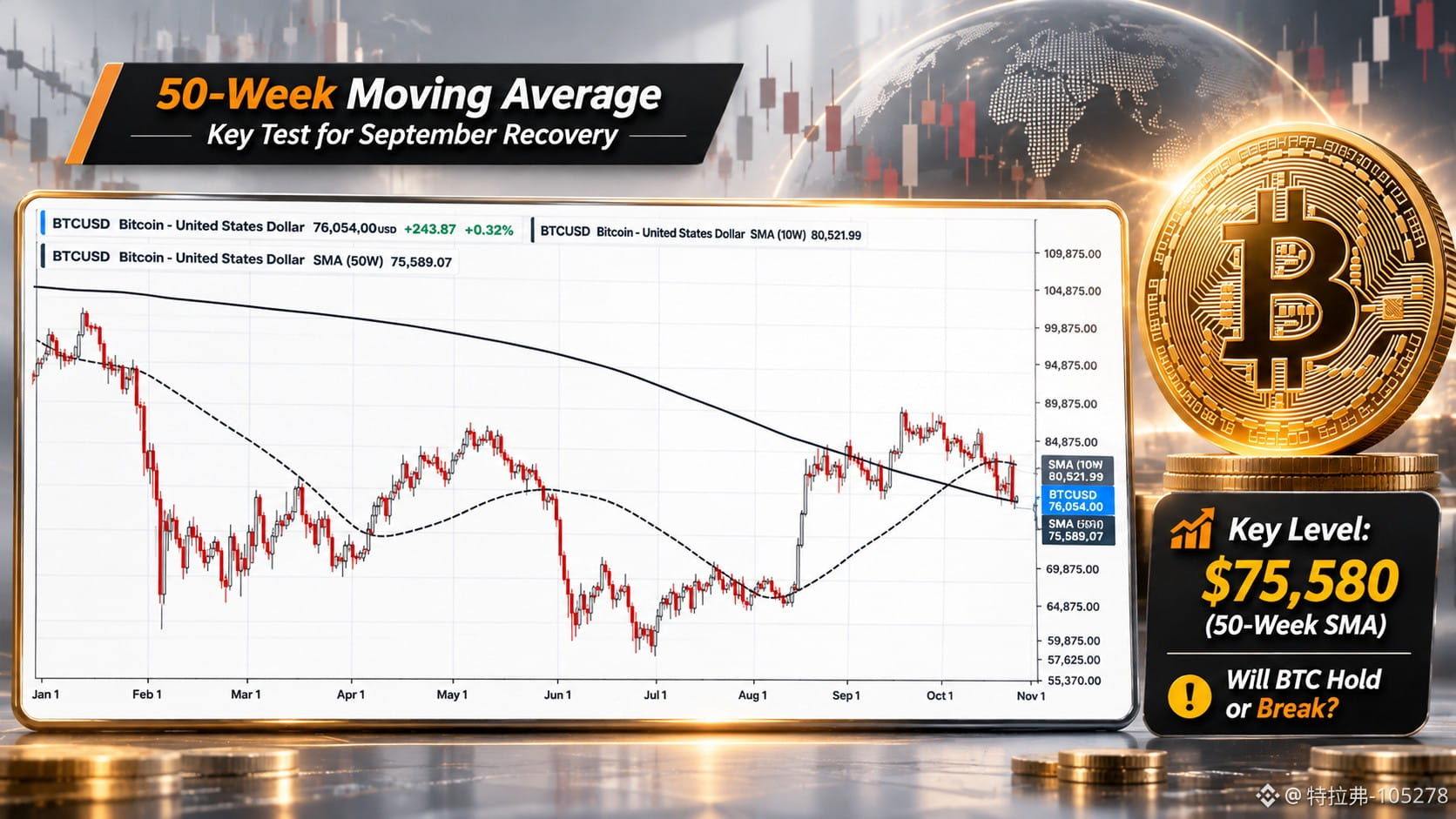
Bitcoin Tests 50-Week Moving Average as September Recovery Faces Pressure;
Bitcoin is approaching a critical technical level as its price moves toward the 50-week simple moving average (SMA), putting its recovery since September at risk.
According to the report, BTC was trading near $76,000, just above its 50-week SMA at approximately $75,580.
Bitcoin reclaimed this indicator in September 2026 and has maintained seven consecutive weekly closes above it. However, the latest decline is putting that streak under pressure.
Why the 50-Week SMA Matters
Galaxy Research's Alex Thorn highlighted an important historical pattern:
- In four of five completed bear markets, the first successful reclaim of the 50-week SMA marked the market bottom.
- Across 13 historical weekly reclaims, 11 were not followed by another lower low.
- However, two reclaims during the 2021–2022 downturn failed to prevent further declines.
This makes the current test particularly important, although history does not guarantee the same outcome.
Key BTC Levels to Watch
- $80,522: 10-week SMA and an important recovery level.
- $75,580: 50-week SMA and immediate trend support.
- $74,720: Recent intraday low and an important downside level.
Bullish scenario: Holding above $75,580 could preserve Bitcoin's recovery structure. Reclaiming $80,522 would strengthen the recovery outlook.
Bearish scenario: A decisive weekly close below $75,580 could weaken the September recovery and expose BTC to further downside.
Final Outlook
Bitcoin is approaching a major decision point. The upcoming weekly close will be important in determining whether buyers can defend the 50-week moving average or sellers can push the market below this critical level.
For now, $75,580 remains the level to watch.
.
$BTC
{future}(BTCUSDT)
#JobsReportRaisesHikeOdds
Bitcoin Tests 50-Week Moving Average as September Recovery Faces Pressure;
Bitcoin is approaching a critical technical level as its price moves toward the 50-week simple moving average (SMA), putting its recovery since September at risk.
According to the report, BTC was trading near $76,000, just above its 50-week SMA at approximately $75,580.
Bitcoin reclaimed this indicator in September 2026 and has maintained seven consecutive weekly closes above it. However, the latest decline is putting that streak under pressure.
Why the 50-Week SMA Matters
Galaxy Research's Alex Thorn highlighted an important historical pattern:
- In four of five completed bear markets, the first successful reclaim of the 50-week SMA marked the market bottom.
- Across 13 historical weekly reclaims, 11 were not followed by another lower low.
- However, two reclaims during the 2021–2022 downturn failed to prevent further declines.
This makes the current test particularly important, although history does not guarantee the same outcome.
Key BTC Levels to Watch
- $80,522: 10-week SMA and an important recovery level.
- $75,580: 50-week SMA and immediate trend support.
- $74,720: Recent intraday low and an important downside level.
Bullish scenario: Holding above $75,580 could preserve Bitcoin's recovery structure. Reclaiming $80,522 would strengthen the recovery outlook.
Bearish scenario: A decisive weekly close below $75,580 could weaken the September recovery and expose BTC to further downside.
Final Outlook
Bitcoin is approaching a major decision point. The upcoming weekly close will be important in determining whether buyers can defend the 50-week moving average or sellers can push the market below this critical level.
For now, $75,580 remains the level to watch.
.
$BTC
#JobsReportRaisesHikeOdds
142
·
--
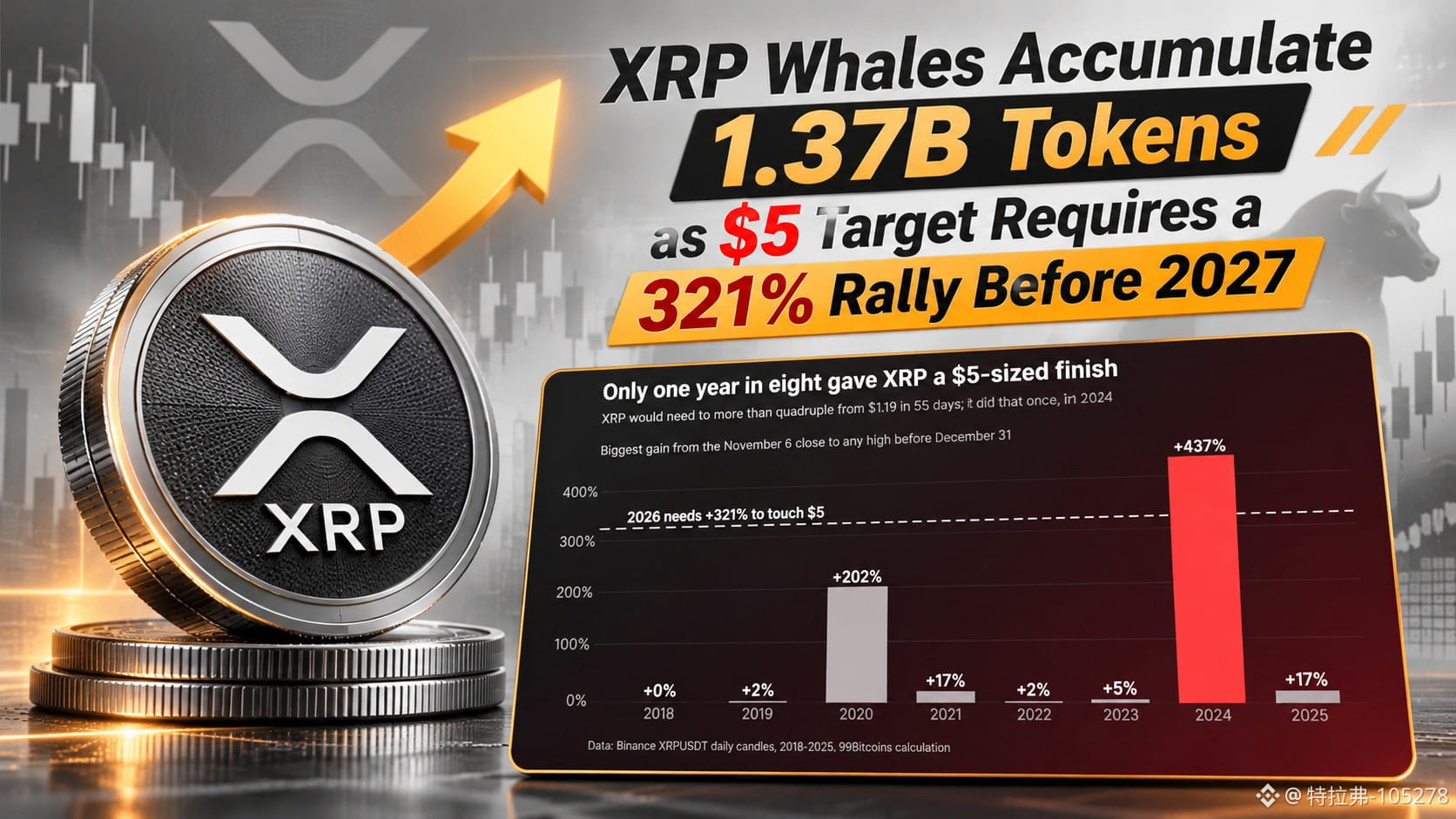
XRPのクジラ、大口保有者が13億7,000万トークンを買い増し 2027年までに5ドル到達には321%の上昇が必要;
XRP市場では興味深い矛盾が見られます。価格が低迷し続ける一方で、大口保有者は着実に保有量を増やしています。
レポートで取り上げられた最新のオンチェーンデータによると、100万XRP以上を保有するウォレットは1,657から1,764に増加しました。1,000万XRP超を保有するウォレットは317から338に、1億XRP超を保有するウォレットは22から24に増えました。
全体として、大口保有者は約13億7,000万XRPを蓄積しました。報告された価格で約16億ドル相当となり、XRPが約18%下落したにもかかわらず買い増しが進みました。
XRPは2027年までに5ドルに到達できるか?
XRPが約1.19ドルで取引されている現在、5ドルに到達するには、わずか55日間で約321%上昇する必要があります。
XRPは過去にも同様の急騰を見せたことがあります。2024年11月から12月にかけて、トークン価格は約437%上昇しました。
しかし、過去の実績は、同規模の上昇が再び起きることを保証するものではありません。
5ドルに達した場合、XRPの時価総額は約3,180億ドルに迫ります。
XRPの週足チャートは引き続き圧迫されており、価格は主要な移動平均線を下回って推移しています。
注目すべき主な水準:
- 1.18ドル:目先のサポート。
- 0.99ドル:重要な下値サポート。
- 1.32ドル:20週EMA。
- 1.48ドル:50週EMA。
- 1.70ドル:重要なレジスタンス。
- 2.42ドル:2026年の高値。
1.32ドルと1.48ドルを上回れば、テクニカル面の見通しが改善する可能性があります。さらに1.70ドルを力強く上抜ければ、モメンタムの改善を示すことになるでしょう。
一方、1.18ドルを下回ると、XRPはさらに下落し、0.99ドルに向かう可能性があります。
ただし、クジラの買い増しだけで相場の回復が保証されるわけではありません。より強い市場需要と、主要なレジスタンス水準の上抜けが依然として必要です。
重要なのは、クジラの買い増しがXRPの現在の弱さを反転させるほどの買い圧力につながるかどうかです。
5ドルへの上昇は、確定した結果ではなく、依然として野心的なシナリオです。現時点では、1.18ドルのサポートと、1.48~1.70ドルの回復ゾーンを注意深く見守る必要があります。
$XRP
{future}(XRPUSDT)
#WillAnthropicListOnTime
XRPのクジラ、大口保有者が13億7,000万トークンを買い増し 2027年までに5ドル到達には321%の上昇が必要;
XRP市場では興味深い矛盾が見られます。価格が低迷し続ける一方で、大口保有者は着実に保有量を増やしています。
レポートで取り上げられた最新のオンチェーンデータによると、100万XRP以上を保有するウォレットは1,657から1,764に増加しました。1,000万XRP超を保有するウォレットは317から338に、1億XRP超を保有するウォレットは22から24に増えました。
全体として、大口保有者は約13億7,000万XRPを蓄積しました。報告された価格で約16億ドル相当となり、XRPが約18%下落したにもかかわらず買い増しが進みました。
XRPは2027年までに5ドルに到達できるか?
XRPが約1.19ドルで取引されている現在、5ドルに到達するには、わずか55日間で約321%上昇する必要があります。
XRPは過去にも同様の急騰を見せたことがあります。2024年11月から12月にかけて、トークン価格は約437%上昇しました。
しかし、過去の実績は、同規模の上昇が再び起きることを保証するものではありません。
5ドルに達した場合、XRPの時価総額は約3,180億ドルに迫ります。
XRPの週足チャートは引き続き圧迫されており、価格は主要な移動平均線を下回って推移しています。
注目すべき主な水準:
- 1.18ドル:目先のサポート。
- 0.99ドル:重要な下値サポート。
- 1.32ドル:20週EMA。
- 1.48ドル:50週EMA。
- 1.70ドル:重要なレジスタンス。
- 2.42ドル:2026年の高値。
1.32ドルと1.48ドルを上回れば、テクニカル面の見通しが改善する可能性があります。さらに1.70ドルを力強く上抜ければ、モメンタムの改善を示すことになるでしょう。
一方、1.18ドルを下回ると、XRPはさらに下落し、0.99ドルに向かう可能性があります。
ただし、クジラの買い増しだけで相場の回復が保証されるわけではありません。より強い市場需要と、主要なレジスタンス水準の上抜けが依然として必要です。
重要なのは、クジラの買い増しがXRPの現在の弱さを反転させるほどの買い圧力につながるかどうかです。
5ドルへの上昇は、確定した結果ではなく、依然として野心的なシナリオです。現時点では、1.18ドルのサポートと、1.48~1.70ドルの回復ゾーンを注意深く見守る必要があります。
$XRP
#WillAnthropicListOnTime
4
1.1k
·
--
記事
翻訳参照
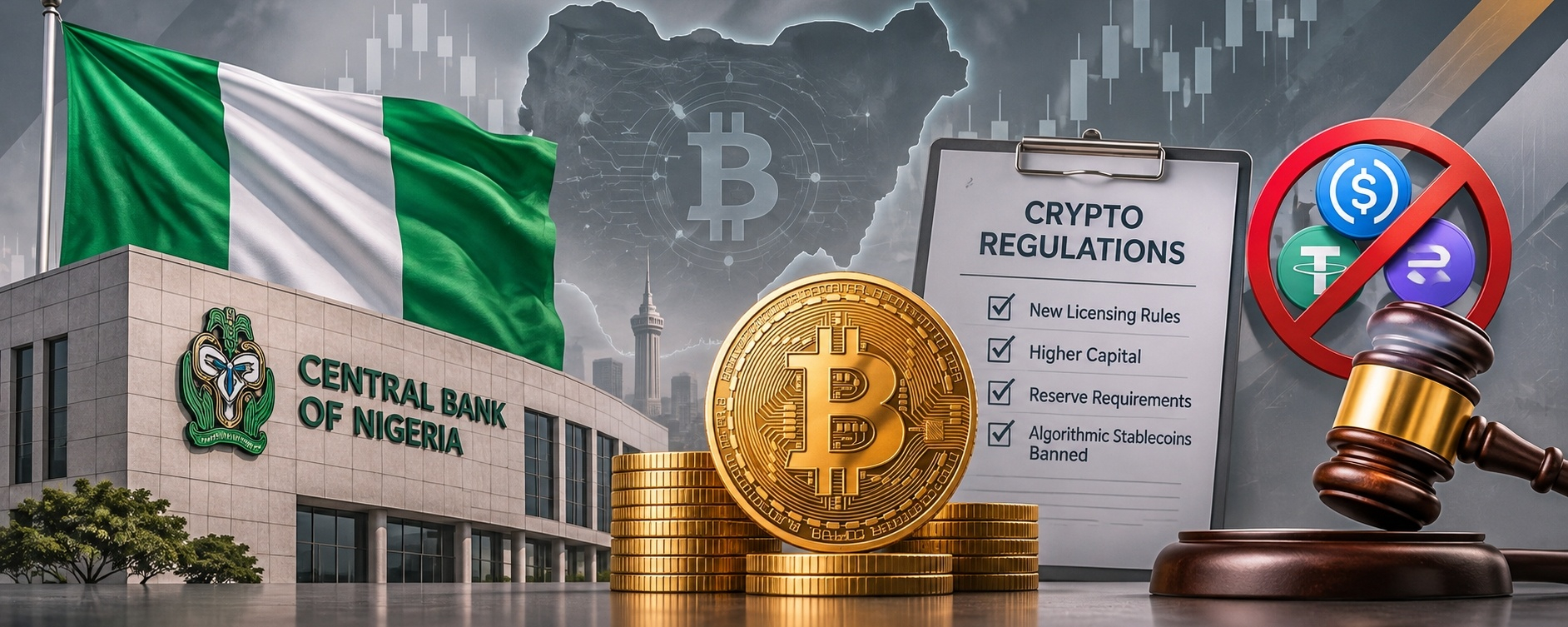
Nigeria Introduces Stricter Crypto Licensing Rules, Bans Algorithmic Stablecoins;Nigeria is tightening its control over the cryptocurrency industry, with the Central Bank of Nigeria (CBN) introducing new licensing and financial requirements for stablecoin issuers, crypto exchanges, custodians and digital asset payment providers.
The new framework, titled Regulations for the Operations of Non-Security Virtual Assets, took effect immediately on Thursday. However, existing crypto operators have been given 180 days to obtain the necessary licenses or authorizations.
1. New Capital Requirements,
The CBN has established minimum paid-up capital requirements for crypto businesses:
- Naira-backed stablecoin issuers: ₦10 billion ($7.4 million).
- Foreign currency-backed stablecoin issuers: ₦15 billion ($11.1 million).
- Crypto payment providers, exchanges and custodians: ₦1 billion ($742,000).
2. Strict Stablecoin Reserve Requirements,
Stablecoin issuers must maintain full backing through eligible reserve assets, alongside an additional reserve buffer of at least 2% of the token's value.
At least 40% of these reserves must consist of cash or qualifying highly liquid assets.
3. Algorithmic Stablecoins Are Prohibited,
The regulations prohibit stablecoins that depend primarily on algorithms rather than properly backed reserves to maintain their value.
Tokens without enforceable redemption rights are also prohibited.
4. Broader Regulatory Oversight,
The new requirements cover stablecoin issuers, cryptocurrency exchanges, custodians, payment providers and other regulated virtual asset service providers.
The framework follows President Bola Tinubu's July 2026 executive order, which aimed to improve coordination between Nigerian authorities overseeing digital assets.
5. Nigeria's Previous Crypto Restrictions,
Nigeria has previously taken a restrictive approach toward cryptocurrency trading.
Binance discontinued its Nigerian naira services in March 2024 amid government scrutiny. Its executive, Tigran Gambaryan, was detained for nearly eight months before money laundering charges against him were dropped in October 2024.
In August 2026, Nigeria also introduced crypto tax collection rules for digital asset platforms and peer-to-peer marketplaces.
.
Nigeria's latest regulations represent another significant step toward formalizing its cryptocurrency industry. While the framework allows regulated crypto businesses to operate, the higher capital requirements and strict stablecoin rules could create additional challenges for companies seeking access to the Nigerian market.
The country is clearly moving toward a more tightly supervised digital asset sector.
$SOL $ZEC $HYPE
{future}(SOLUSDT)
#JobsReportRaisesHikeOdds
Nigeria Introduces Stricter Crypto Licensing Rules, Bans Algorithmic Stablecoins;
Nigeria is tightening its control over the cryptocurrency industry, with the Central Bank of Nigeria (CBN) introducing new licensing and financial requirements for stablecoin issuers, crypto exchanges, custodians and digital asset payment providers.
The new framework, titled Regulations for the Operations of Non-Security Virtual Assets, took effect immediately on Thursday. However, existing crypto operators have been given 180 days to obtain the necessary licenses or authorizations.
1. New Capital Requirements,
The CBN has established minimum paid-up capital requirements for crypto businesses:
- Naira-backed stablecoin issuers: ₦10 billion ($7.4 million).
- Foreign currency-backed stablecoin issuers: ₦15 billion ($11.1 million).
- Crypto payment providers, exchanges and custodians: ₦1 billion ($742,000).
2. Strict Stablecoin Reserve Requirements,
Stablecoin issuers must maintain full backing through eligible reserve assets, alongside an additional reserve buffer of at least 2% of the token's value.
At least 40% of these reserves must consist of cash or qualifying highly liquid assets.
3. Algorithmic Stablecoins Are Prohibited,
The regulations prohibit stablecoins that depend primarily on algorithms rather than properly backed reserves to maintain their value.
Tokens without enforceable redemption rights are also prohibited.
4. Broader Regulatory Oversight,
The new requirements cover stablecoin issuers, cryptocurrency exchanges, custodians, payment providers and other regulated virtual asset service providers.
The framework follows President Bola Tinubu's July 2026 executive order, which aimed to improve coordination between Nigerian authorities overseeing digital assets.
5. Nigeria's Previous Crypto Restrictions,
Nigeria has previously taken a restrictive approach toward cryptocurrency trading.
Binance discontinued its Nigerian naira services in March 2024 amid government scrutiny. Its executive, Tigran Gambaryan, was detained for nearly eight months before money laundering charges against him were dropped in October 2024.
In August 2026, Nigeria also introduced crypto tax collection rules for digital asset platforms and peer-to-peer marketplaces.
.
Nigeria's latest regulations represent another significant step toward formalizing its cryptocurrency industry. While the framework allows regulated crypto businesses to operate, the higher capital requirements and strict stablecoin rules could create additional challenges for companies seeking access to the Nigerian market.
The country is clearly moving toward a more tightly supervised digital asset sector.
$SOL $ZEC $HYPE
#JobsReportRaisesHikeOdds
1
4
97
·
--
翻訳参照
GREECE APPROVES 10% CRYPTO TAX — NEW RULES TO TAKE EFFECT IN 2027!
Greece is taking another step toward bringing cryptocurrency into its formal tax system after parliament approved a new framework for taxing crypto-related income.
The decision introduces a 10% tax on realized cryptocurrency gains, with the new rules expected to take effect on January 1, 2027.
Here are the key details investors should know:
- 10% Capital Gains Tax: Profits from qualifying crypto disposals will be taxed at 10%.
- €500 Exemption: Annual gains up to €500 will be exempt under the framework.
- 15% DeFi Tax: Income from activities such as staking, lending and liquidity provision will face a separate 15% tax.
- 2027 Implementation: The new framework is scheduled to come into force on January 1, 2027.
- Past Gains: A limited voluntary disclosure window will allow eligible investors to declare previously unreported gains.
One interesting detail is that crypto-to-crypto swaps are expected to remain outside the capital gains tax framework.
?
This is more than just another tax announcement. Greece is creating a clearer structure for how cryptocurrency profits and DeFi income will be treated under its tax system.
For investors, the difference between a 10% tax on trading profits and a 15% levy on certain DeFi income could influence how they manage their crypto holdings.
It also adds to the growing discussion around crypto taxation across Europe.
The bigger question now is whether other European countries will move toward similar tax frameworks or take a completely different approach.
Crypto adoption is growing, but governments are becoming increasingly interested in how those profits are taxed.
$AKE
{future}(AKEUSDT)
#BinanceReopensWithdrawalsForMoreAssets
GREECE APPROVES 10% CRYPTO TAX — NEW RULES TO TAKE EFFECT IN 2027!
Greece is taking another step toward bringing cryptocurrency into its formal tax system after parliament approved a new framework for taxing crypto-related income.
The decision introduces a 10% tax on realized cryptocurrency gains, with the new rules expected to take effect on January 1, 2027.
Here are the key details investors should know:
- 10% Capital Gains Tax: Profits from qualifying crypto disposals will be taxed at 10%.
- €500 Exemption: Annual gains up to €500 will be exempt under the framework.
- 15% DeFi Tax: Income from activities such as staking, lending and liquidity provision will face a separate 15% tax.
- 2027 Implementation: The new framework is scheduled to come into force on January 1, 2027.
- Past Gains: A limited voluntary disclosure window will allow eligible investors to declare previously unreported gains.
One interesting detail is that crypto-to-crypto swaps are expected to remain outside the capital gains tax framework.
?
This is more than just another tax announcement. Greece is creating a clearer structure for how cryptocurrency profits and DeFi income will be treated under its tax system.
For investors, the difference between a 10% tax on trading profits and a 15% levy on certain DeFi income could influence how they manage their crypto holdings.
It also adds to the growing discussion around crypto taxation across Europe.
The bigger question now is whether other European countries will move toward similar tax frameworks or take a completely different approach.
Crypto adoption is growing, but governments are becoming increasingly interested in how those profits are taxed.
$AKE
#BinanceReopensWithdrawalsForMoreAssets

402
·
--
本人確認中
翻訳参照
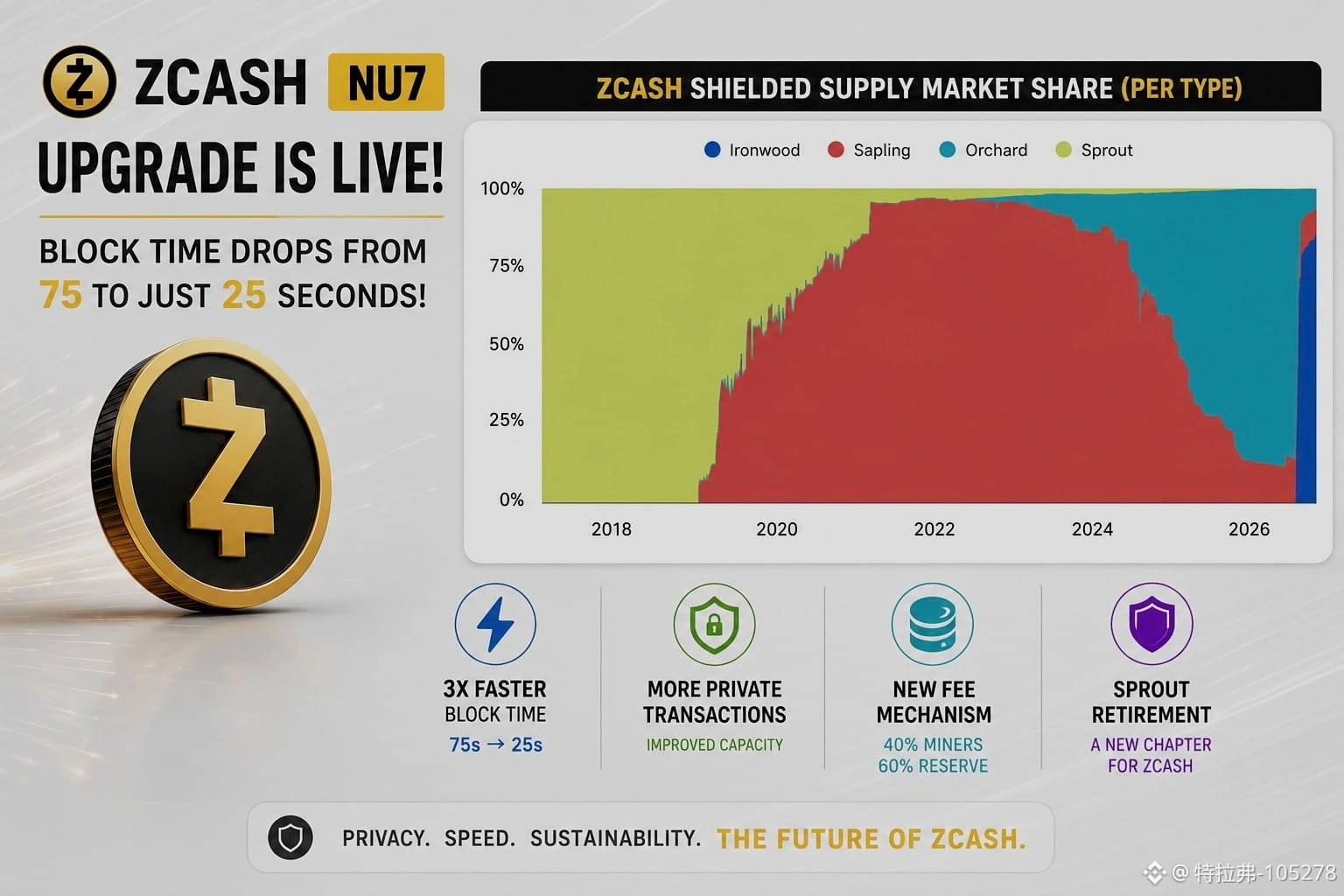
ZCASH NU7 UPGRADE IS LIVE — BLOCK TIME DROPS FROM 75 TO JUST 25 SECONDS!
Zcash has officially activated its major NU7 network upgrade on mainnet, bringing some important changes to how the privacy-focused blockchain operates.
The biggest change is block production speed.
Previously, Zcash targeted a new block every 75 seconds. Under NU7, that interval has been reduced to just 25 seconds, making block production approximately three times faster.
But faster blocks aren't the only thing changing.
Here's what NU7 brings to Zcash:
• Faster block production: Block intervals have dropped from 75 to 25 seconds.
• Improved shielded transaction capacity: The upgrade aims to increase the network's ability to handle private transactions.
• New fee mechanism: 40% of transaction fees goes to miners, while the remaining 60% is directed into a reserve for future mining rewards.
• Sprout retirement: The original Sprout privacy pool has been retired, marking another major change to Zcash's privacy infrastructure.
One important detail is that Zcash's maximum supply remains unchanged at 21 million ZEC.
Privacy-focused cryptocurrencies need more than strong encryption. They also need practical transaction speeds, better network efficiency, and sustainable economic mechanisms.
NU7 addresses several of these areas at once.
It's a significant development for Zcash, although the real impact will become clearer as users and developers interact with the upgraded network.
Zcash is moving forward, and this upgrade could be an important step in its long-term evolution.
$ZEC
{future}(ZECUSDT)
#BinanceReopensWithdrawalsForMoreAssets
ZCASH NU7 UPGRADE IS LIVE — BLOCK TIME DROPS FROM 75 TO JUST 25 SECONDS!
Zcash has officially activated its major NU7 network upgrade on mainnet, bringing some important changes to how the privacy-focused blockchain operates.
The biggest change is block production speed.
Previously, Zcash targeted a new block every 75 seconds. Under NU7, that interval has been reduced to just 25 seconds, making block production approximately three times faster.
But faster blocks aren't the only thing changing.
Here's what NU7 brings to Zcash:
• Faster block production: Block intervals have dropped from 75 to 25 seconds.
• Improved shielded transaction capacity: The upgrade aims to increase the network's ability to handle private transactions.
• New fee mechanism: 40% of transaction fees goes to miners, while the remaining 60% is directed into a reserve for future mining rewards.
• Sprout retirement: The original Sprout privacy pool has been retired, marking another major change to Zcash's privacy infrastructure.
One important detail is that Zcash's maximum supply remains unchanged at 21 million ZEC.
Privacy-focused cryptocurrencies need more than strong encryption. They also need practical transaction speeds, better network efficiency, and sustainable economic mechanisms.
NU7 addresses several of these areas at once.
It's a significant development for Zcash, although the real impact will become clearer as users and developers interact with the upgraded network.
Zcash is moving forward, and this upgrade could be an important step in its long-term evolution.
$ZEC
#BinanceReopensWithdrawalsForMoreAssets
179
·
--
翻訳参照
World Liberty Financial Launches WLFI Buyback Program as Token Faces Heavy Selling Pressure;
World Liberty Financial is introducing a new buyback program for its native WLFI token, potentially adding a new source of demand after a difficult year for the project.
WLFI has declined approximately 10% since the latest US midterm election results and is down more than 60% this year, according to CoinMarketCap data cited by Reuters.
One key detail is the proposed funding source. World Liberty Financial says the initial buyback allocation could include revenue generated from reserves backing its USD1 stablecoin, alongside other sources.
This could connect USD1 adoption directly with WLFI demand. If USD1 grows and generates more revenue, it could provide additional funding for future token purchases.
However, the project has not disclosed the initial allocation or purchase schedule.
The initiative is designed to encourage governance participation and increase the voting influence of long-term WLFI holders.
The project also intends to make buybacks an ongoing strategy rather than a one-time event, potentially creating a stronger relationship between token ownership and governance.
Consistent buybacks funded by meaningful revenue could introduce additional market demand and support WLFI's token economics.
However, several important details remain unclear:
- How much will the initial buyback allocation be?
- What percentage of USD1 reserve revenue will be used?
- How frequently will purchases happen?
- Will purchased tokens be held or permanently burned?
This is a potentially positive development for WLFI, particularly after its substantial decline this year.
However, an announcement alone does not guarantee a price recovery. The real catalyst will be execution, including the size, frequency and transparency of actual purchases.
For now, investors should monitor buyback transactions, funding disclosures and future updates rather than treating the announcement as an immediate bullish signal.
$WLFI $USD1
{future}(WLFIUSDT)
World Liberty Financial Launches WLFI Buyback Program as Token Faces Heavy Selling Pressure;
World Liberty Financial is introducing a new buyback program for its native WLFI token, potentially adding a new source of demand after a difficult year for the project.
WLFI has declined approximately 10% since the latest US midterm election results and is down more than 60% this year, according to CoinMarketCap data cited by Reuters.
One key detail is the proposed funding source. World Liberty Financial says the initial buyback allocation could include revenue generated from reserves backing its USD1 stablecoin, alongside other sources.
This could connect USD1 adoption directly with WLFI demand. If USD1 grows and generates more revenue, it could provide additional funding for future token purchases.
However, the project has not disclosed the initial allocation or purchase schedule.
The initiative is designed to encourage governance participation and increase the voting influence of long-term WLFI holders.
The project also intends to make buybacks an ongoing strategy rather than a one-time event, potentially creating a stronger relationship between token ownership and governance.
Consistent buybacks funded by meaningful revenue could introduce additional market demand and support WLFI's token economics.
However, several important details remain unclear:
- How much will the initial buyback allocation be?
- What percentage of USD1 reserve revenue will be used?
- How frequently will purchases happen?
- Will purchased tokens be held or permanently burned?
This is a potentially positive development for WLFI, particularly after its substantial decline this year.
However, an announcement alone does not guarantee a price recovery. The real catalyst will be execution, including the size, frequency and transparency of actual purchases.
For now, investors should monitor buyback transactions, funding disclosures and future updates rather than treating the announcement as an immediate bullish signal.
$WLFI $USD1

2
267
ログインして、さらにコンテンツを読む
厳選トピックで世界の暗号資産トレーダーの仲間入り
⚡️ 暗号資産に関する最新かつ有益な情報が見つかります。
💬 世界最大の暗号資産取引所から信頼されています。
👍 認証を受けたクリエイターから、有益なインサイトを得られます。
メール / 電話番号