Binance Square

Ravian Mortel

image
認証済みクリエイター
Living every day with focus and quiet power.Consistency is my strongest language...
取引を発注
超高頻度トレーダー
1.3年
86 フォロー
42.9K+ フォロワー
63.0K+ いいね
5.1K+ 共有
投稿
ポートフォリオ
PINNED
·
--
ブリッシュ
こんにちは 配信開始だよ、風の中でも雨の中でもここで待ってるよ! {spot}(SOLUSDT)
こんにちは
配信開始だよ、風の中でも雨の中でもここで待ってるよ!
·
--
ブリッシュ
翻訳参照
$IP Sharp flush into liquidity, now sitting at key support after the sweep. This rebound can be fast. Buy Zone: 1.11 – 1.15 TP1: 1.18 TP2: 1.22 TP3: 1.30 Stop: 1.08
$IP

Sharp flush into liquidity, now sitting at key support after the sweep. This rebound can be fast.

Buy Zone: 1.11 – 1.15
TP1: 1.18
TP2: 1.22
TP3: 1.30
Stop: 1.08
·
--
ブリッシュ
翻訳参照
$DOGE Explosive push followed by a controlled pullback. Structure still bullish above support. Buy Zone: 0.1015 – 0.1030 TP1: 0.1050 TP2: 0.1080 TP3: 0.1120 Stop: 0.0990
$DOGE

Explosive push followed by a controlled pullback. Structure still bullish above support.

Buy Zone: 0.1015 – 0.1030
TP1: 0.1050
TP2: 0.1080
TP3: 0.1120
Stop: 0.0990
·
--
ブリッシュ
翻訳参照
$SOL Momentum is building after a clean higher low. Price is pressing near resistance, ready for expansion. Buy Zone: 86.80 – 87.30 TP1: 88.20 TP2: 89.50 TP3: 91.00 Stop: 85.90
$SOL

Momentum is building after a clean higher low. Price is pressing near resistance, ready for expansion.

Buy Zone: 86.80 – 87.30
TP1: 88.20
TP2: 89.50
TP3: 91.00
Stop: 85.90
·
--
ブリッシュ
翻訳参照
$ETH After the rejection from 2.1K, price is compressing at support. This base can spark the next leg. Buy Zone: 2,055 – 2,075 TP1: 2,100 TP2: 2,130 TP3: 2,170 Stop: 2,030
$ETH

After the rejection from 2.1K, price is compressing at support. This base can spark the next leg.

Buy Zone: 2,055 – 2,075
TP1: 2,100
TP2: 2,130
TP3: 2,170
Stop: 2,030
·
--
ブリッシュ
翻訳参照
$BTC Heavy drop from resistance, now sitting right above intraday support. This is where buyers step in. Buy Zone: 69,000 – 69,300 TP1: 69,900 TP2: 70,560 TP3: 71,200 Stop: 68,600
$BTC

Heavy drop from resistance, now sitting right above intraday support. This is where buyers step in.

Buy Zone: 69,000 – 69,300
TP1: 69,900
TP2: 70,560
TP3: 71,200
Stop: 68,600
·
--
ブリッシュ
翻訳参照
$BNB Strong bounce earlier, now a tight pullback holding structure. This looks like a reload zone. Buy Zone: 627 – 631 TP1: 637 TP2: 645 TP3: 655 Stop: 621
$BNB

Strong bounce earlier, now a tight pullback holding structure. This looks like a reload zone.

Buy Zone: 627 – 631
TP1: 637
TP2: 645
TP3: 655
Stop: 621
·
--
ブリッシュ
翻訳参照
$ETH Clean pullback into support after a strong spike. Bulls still defending this range. Buy Zone: 2,060 – 2,075 TP1: 2,100 TP2: 2,125 TP3: 2,160 Stop: 2,035
$ETH

Clean pullback into support after a strong spike. Bulls still defending this range.

Buy Zone: 2,060 – 2,075
TP1: 2,100
TP2: 2,125
TP3: 2,160
Stop: 2,035
·
--
ブリッシュ
翻訳参照
$BTC Sharp rejection from the highs and now cooling into demand. This zone decides the next push. Buy Zone: 69,100 – 69,400 TP1: 70,000 TP2: 70,560 TP3: 71,300 Stop: 68,700
$BTC

Sharp rejection from the highs and now cooling into demand. This zone decides the next push.

Buy Zone: 69,100 – 69,400
TP1: 70,000
TP2: 70,560
TP3: 71,300
Stop: 68,700
·
--
ブリッシュ
翻訳参照
$BNB Price just pulled back after tapping intraday highs and now reacting near short-term support. Momentum still alive. Buy Zone: 628 – 632 TP1: 637 TP2: 642 TP3: 650 Stop: 622
$BNB

Price just pulled back after tapping intraday highs and now reacting near short-term support. Momentum still alive.

Buy Zone: 628 – 632
TP1: 637
TP2: 642
TP3: 650
Stop: 622
·
--
ブリッシュ
翻訳参照
Fogo is pitching itself as a high-performance Layer-1 powered by the Solana Virtual Machine, and I’m not judging it by “how fast it looks on a good day.” I’m judging it by one thing: can it stay standing when things get ugly—when traffic spikes, validators wobble, rumors fly, and everyone’s trying to exit at the same time. That’s where real chains prove themselves, not in marketing numbers. Security-wise, what I look for is simple: audits that actually exist, a real bug bounty culture, and a clean incident story—or, if something ever goes wrong, honest post-mortems and fixes that don’t get buried. The scary part with SVM-style speed and “session/delegation” UX is that it can feel smooth, almost too smooth… because any delegated permission model becomes a target if it’s not tightly scoped. If a paymaster or delegated executor ever gets compromised, the damage isn’t theoretical—it becomes a race between the attacker and the user’s ability to revoke access. And then there’s the trust core: admin keys, multisigs, timelocks—the stuff that decides whether users control risk, or whether risk controls users. In the worst-case scenario—upgrade authority compromised, emergency switches abused, or a critical program needing a rapid patch—the chain survives only if upgrades are gated, transparent, and slow enough for people to react, while still fast enough to stop bleeding. If Fogo wants to be “built to survive,” it needs to make the boring protections loud and visible… because when panic hits, nobody cares about hype—they care about whether the rules can change behind their back. #fogo @fogo $FOGO {spot}(FOGOUSDT)
Fogo is pitching itself as a high-performance Layer-1 powered by the Solana Virtual Machine, and I’m not judging it by “how fast it looks on a good day.” I’m judging it by one thing: can it stay standing when things get ugly—when traffic spikes, validators wobble, rumors fly, and everyone’s trying to exit at the same time. That’s where real chains prove themselves, not in marketing numbers.

Security-wise, what I look for is simple: audits that actually exist, a real bug bounty culture, and a clean incident story—or, if something ever goes wrong, honest post-mortems and fixes that don’t get buried. The scary part with SVM-style speed and “session/delegation” UX is that it can feel smooth, almost too smooth… because any delegated permission model becomes a target if it’s not tightly scoped. If a paymaster or delegated executor ever gets compromised, the damage isn’t theoretical—it becomes a race between the attacker and the user’s ability to revoke access.

And then there’s the trust core: admin keys, multisigs, timelocks—the stuff that decides whether users control risk, or whether risk controls users. In the worst-case scenario—upgrade authority compromised, emergency switches abused, or a critical program needing a rapid patch—the chain survives only if upgrades are gated, transparent, and slow enough for people to react, while still fast enough to stop bleeding. If Fogo wants to be “built to survive,” it needs to make the boring protections loud and visible… because when panic hits, nobody cares about hype—they care about whether the rules can change behind their back.

#fogo @Fogo Official $FOGO
翻訳参照
Fogo : The SVM-Powered L1 Built for Speed — But I’m Asking the Real Question Is It Built to SurviveFogo the same way you are : not as a slogan, not as a “trust me” story, but as a real system that must hold up when pressure hits. Fogo is a high-performance Layer 1 that keeps Solana Virtual Machine compatibility at the center of how it runs programs, how developers build, and how transactions get executed. In the docs and papers, the simple idea is clear : keep the SVM-style execution people already understand, then tune the network and validator design so confirmations feel fast and smooth. What I keep noticing is that Fogo’s speed goal isn’t only about “more transactions.” It’s about reducing the painful parts of global networks : long distance, unpredictable latency, and the way congestion can make users feel like the chain is hesitating. Fogo describes a model that leans into “multi-local consensus” and zones, which is basically a structured way of saying : validators can be organized so the active set can operate in conditions that reduce latency. It feels like they’re trying to make the chain behave more predictably, because predictability is what survives panic. Here’s where the architecture starts to matter in a trust way. In Fogo’s litepaper, validators are grouped into zones, and only validators in the active zone are producing blocks and voting in that period. The zone configuration is stored on-chain, and there are guardrails like minimum stake thresholds so an underpowered zone cannot just become the driver of consensus. That detail might look small on paper, but in real life it’s one of those quiet locks you want on the door, because it reduces the chance of fragile validator sets taking the wheel. Under the hood, the validator approach described in the litepaper focuses heavily on performance stability. It talks about a hybrid validator design and a “tiles” style architecture where parts of the validator run in separated processes pinned to CPU resources, aiming to reduce jitter and keep throughput steady. I’m not reading that as “faster for fun.” I’m reading it as “faster without randomness,” because random behavior under load is where systems crack. Now to the part you really asked for : security and trust, and whether it’s built to survive. I treat survival like four layers : code quality, verification, control of power, and real-world response. If one layer is missing, the chain can still look fine on a good day, but it becomes fragile on a bad day. When it comes to audits, Fogo’s MiCA-style token white paper marks “Audit” as true, but it also states the audit outcome is not yet issued because the audit process is ongoing. That’s not a red flag by itself, but it does mean the trust story is still being written, not finished. And there’s a line in that same paper that I actually respect because it’s blunt and human : "Token holders should be aware that the token operates on a newly developed layer 1 protocol." If you’ve been around this space long enough, you know what that really means : early systems can be brilliant, but early systems can also surprise you. Bug bounties are another trust signal people look for, because a visible bounty program means the team expects bugs and wants them reported responsibly. I didn’t see a clearly surfaced, simple “here’s the bounty, here’s the scope, here’s how to report” path in the main public surface I reviewed (docs + papers + the obvious repo places). That doesn’t prove there is no bounty. It just means that if it exists, it isn’t being shouted from the front door. And that matters because the easiest reporting path is usually the one that saves you first. Incident history is where trust becomes real, because words are cheap and postmortems are expensive. What we can verify is that development looks active : the docs have ongoing release notes, and the Sessions stack has recent releases in early February 2026. That tells me they’re shipping and iterating. What I didn’t see in the same surface is a clear incident archive that lists outages, severity, and fixes in one simple place. So I won’t pretend it’s “never had issues,” and I also won’t pretend it’s “unsafe.” I’ll keep it honest : we can see active building, and we’re still waiting for the deepest kind of transparency that only shows up when something breaks and the team writes the full story. Now the part that decides whether a chain survives a nightmare : admin power. On SVM-style chains, many programs can be upgradeable, and upgrade authority is a real thing. This power can be protective, like an emergency brake, or it can become the exact point of failure if it’s controlled too easily. In Fogo’s ecosystem docs, multisig tooling is discussed as a way to require multiple approvals for sensitive actions like upgrades, and that’s the right direction because it spreads responsibility and reduces single-point risk. But multisig is only half the story. Timelocks are the other half. A timelock is basically the chain saying : we won’t let power move instantly while everyone is asleep. If upgrades can happen instantly, you can get instant fixes, but you can also get instant disasters. If upgrades are timelocked, it becomes harder to panic-push something dangerous, and the community gets time to react. Worst-case scenarios are not paranoia. They’re the real test plan. If a critical bug hits consensus and validators start disagreeing, survival looks like coordinated patching, clear guidance, safe rollout steps, and honest communication. The tech described in the litepaper suggests they care deeply about validator performance and reliability, and that helps, but the final outcome always depends on response discipline when the chain is under stress. If a core program exploit drains funds, the upgrade authority story becomes everything. If it becomes too centralized, people feel trapped. If it becomes properly guarded by strong multisig and timelocks, it can act like a rescue tool instead of a scary lever. If Sessions-style “gasless” flows are abused, the threat changes shape. Sessions can make user experience feel smoother, but it also introduces new edges : paymaster abuse, permission creep, phishing-like tricks, and hidden approvals. Fogo Sessions documentation includes safety ideas like domain association and optional limits, which feels like they’re trying to make permission boundaries normal instead of optional. And honestly, that’s one of the healthier UX directions in crypto, because unlimited wallet power is where most “oops” moments begin. If keys are compromised or insiders misuse authority, no amount of speed saves you. Only structure does : signer separation, strong multisig thresholds, timelocks, and visible governance. Those are not exciting features, but they’re the ones that keep a chain alive when emotions run hot. On the token side, the papers explain the basics in a straightforward way : staking and validator incentives are central, and inflation is used as part of the security budget. The litepaper describes inflation at 2% annually distributed to validators and stakers, and the MiCA-style paper discusses token mechanics and validator selection tied to staking. Inflation isn’t “good” or “bad” by itself. It’s a trade : you’re funding security, and you’re paying for it over time. For the last 24 hours token snapshot (as of Feb 14, 2026), Binance’s price page shows FOGO around the low-two-cent range with significant 24h volume, and market trackers show similar bands with daily movement. The exact numbers vary across trackers, which is normal, but the emotional truth stays the same : this is still a market in discovery, and it can swing quickly. On the project activity side, we’re seeing recent repository updates and component releases around early February, which signals active shipping and iteration rather than a silent codebase. So when I step back, this is the real “built to survive” feeling I’m left with : Fogo looks like it’s designed by people who care about performance and execution, and they’re putting real structure into the protocol story with zones and validator architecture. At the same time, the deepest trust still depends on a few visible receipts : finished audit outcomes, clear disclosure of who controls upgrade authority for the most important programs, whether those controls are multisig, whether timelocks exist, and how incidents are reported when something inevitably goes sideways. And I’ll end this in the most human way I can. I’ve learned that the chains that last are not the ones that shout the loudest. They’re the ones that show their work when it’s uncomfortable. If Fogo keeps turning power into process, keeps making upgrades transparent, keeps publishing the hard details, and keeps treating safety like a feature instead of an afterthought, trust won’t be something you “believe.” It becomes something you can feel in the way the system behaves. #fogo @fogo $FOGO {spot}(FOGOUSDT)

Fogo : The SVM-Powered L1 Built for Speed — But I’m Asking the Real Question Is It Built to Survive

Fogo the same way you are : not as a slogan, not as a “trust me” story, but as a real system that must hold up when pressure hits. Fogo is a high-performance Layer 1 that keeps Solana Virtual Machine compatibility at the center of how it runs programs, how developers build, and how transactions get executed. In the docs and papers, the simple idea is clear : keep the SVM-style execution people already understand, then tune the network and validator design so confirmations feel fast and smooth.
What I keep noticing is that Fogo’s speed goal isn’t only about “more transactions.” It’s about reducing the painful parts of global networks : long distance, unpredictable latency, and the way congestion can make users feel like the chain is hesitating. Fogo describes a model that leans into “multi-local consensus” and zones, which is basically a structured way of saying : validators can be organized so the active set can operate in conditions that reduce latency. It feels like they’re trying to make the chain behave more predictably, because predictability is what survives panic.

Here’s where the architecture starts to matter in a trust way. In Fogo’s litepaper, validators are grouped into zones, and only validators in the active zone are producing blocks and voting in that period. The zone configuration is stored on-chain, and there are guardrails like minimum stake thresholds so an underpowered zone cannot just become the driver of consensus. That detail might look small on paper, but in real life it’s one of those quiet locks you want on the door, because it reduces the chance of fragile validator sets taking the wheel.
Under the hood, the validator approach described in the litepaper focuses heavily on performance stability. It talks about a hybrid validator design and a “tiles” style architecture where parts of the validator run in separated processes pinned to CPU resources, aiming to reduce jitter and keep throughput steady. I’m not reading that as “faster for fun.” I’m reading it as “faster without randomness,” because random behavior under load is where systems crack.

Now to the part you really asked for : security and trust, and whether it’s built to survive. I treat survival like four layers : code quality, verification, control of power, and real-world response. If one layer is missing, the chain can still look fine on a good day, but it becomes fragile on a bad day.

When it comes to audits, Fogo’s MiCA-style token white paper marks “Audit” as true, but it also states the audit outcome is not yet issued because the audit process is ongoing. That’s not a red flag by itself, but it does mean the trust story is still being written, not finished. And there’s a line in that same paper that I actually respect because it’s blunt and human : "Token holders should be aware that the token operates on a newly developed layer 1 protocol."

If you’ve been around this space long enough, you know what that really means : early systems can be brilliant, but early systems can also surprise you.

Bug bounties are another trust signal people look for, because a visible bounty program means the team expects bugs and wants them reported responsibly. I didn’t see a clearly surfaced, simple “here’s the bounty, here’s the scope, here’s how to report” path in the main public surface I reviewed (docs + papers + the obvious repo places). That doesn’t prove there is no bounty. It just means that if it exists, it isn’t being shouted from the front door. And that matters because the easiest reporting path is usually the one that saves you first.

Incident history is where trust becomes real, because words are cheap and postmortems are expensive. What we can verify is that development looks active : the docs have ongoing release notes, and the Sessions stack has recent releases in early February 2026. That tells me they’re shipping and iterating. What I didn’t see in the same surface is a clear incident archive that lists outages, severity, and fixes in one simple place. So I won’t pretend it’s “never had issues,” and I also won’t pretend it’s “unsafe.” I’ll keep it honest : we can see active building, and we’re still waiting for the deepest kind of transparency that only shows up when something breaks and the team writes the full story.

Now the part that decides whether a chain survives a nightmare : admin power. On SVM-style chains, many programs can be upgradeable, and upgrade authority is a real thing. This power can be protective, like an emergency brake, or it can become the exact point of failure if it’s controlled too easily. In Fogo’s ecosystem docs, multisig tooling is discussed as a way to require multiple approvals for sensitive actions like upgrades, and that’s the right direction because it spreads responsibility and reduces single-point risk.

But multisig is only half the story. Timelocks are the other half. A timelock is basically the chain saying : we won’t let power move instantly while everyone is asleep. If upgrades can happen instantly, you can get instant fixes, but you can also get instant disasters. If upgrades are timelocked, it becomes harder to panic-push something dangerous, and the community gets time to react.

Worst-case scenarios are not paranoia. They’re the real test plan.

If a critical bug hits consensus and validators start disagreeing, survival looks like coordinated patching, clear guidance, safe rollout steps, and honest communication. The tech described in the litepaper suggests they care deeply about validator performance and reliability, and that helps, but the final outcome always depends on response discipline when the chain is under stress.

If a core program exploit drains funds, the upgrade authority story becomes everything. If it becomes too centralized, people feel trapped. If it becomes properly guarded by strong multisig and timelocks, it can act like a rescue tool instead of a scary lever.

If Sessions-style “gasless” flows are abused, the threat changes shape. Sessions can make user experience feel smoother, but it also introduces new edges : paymaster abuse, permission creep, phishing-like tricks, and hidden approvals. Fogo Sessions documentation includes safety ideas like domain association and optional limits, which feels like they’re trying to make permission boundaries normal instead of optional. And honestly, that’s one of the healthier UX directions in crypto, because unlimited wallet power is where most “oops” moments begin.

If keys are compromised or insiders misuse authority, no amount of speed saves you. Only structure does : signer separation, strong multisig thresholds, timelocks, and visible governance. Those are not exciting features, but they’re the ones that keep a chain alive when emotions run hot.

On the token side, the papers explain the basics in a straightforward way : staking and validator incentives are central, and inflation is used as part of the security budget. The litepaper describes inflation at 2% annually distributed to validators and stakers, and the MiCA-style paper discusses token mechanics and validator selection tied to staking. Inflation isn’t “good” or “bad” by itself. It’s a trade : you’re funding security, and you’re paying for it over time.

For the last 24 hours token snapshot (as of Feb 14, 2026), Binance’s price page shows FOGO around the low-two-cent range with significant 24h volume, and market trackers show similar bands with daily movement. The exact numbers vary across trackers, which is normal, but the emotional truth stays the same : this is still a market in discovery, and it can swing quickly.

On the project activity side, we’re seeing recent repository updates and component releases around early February, which signals active shipping and iteration rather than a silent codebase.

So when I step back, this is the real “built to survive” feeling I’m left with : Fogo looks like it’s designed by people who care about performance and execution, and they’re putting real structure into the protocol story with zones and validator architecture. At the same time, the deepest trust still depends on a few visible receipts : finished audit outcomes, clear disclosure of who controls upgrade authority for the most important programs, whether those controls are multisig, whether timelocks exist, and how incidents are reported when something inevitably goes sideways.

And I’ll end this in the most human way I can.

I’ve learned that the chains that last are not the ones that shout the loudest. They’re the ones that show their work when it’s uncomfortable. If Fogo keeps turning power into process, keeps making upgrades transparent, keeps publishing the hard details, and keeps treating safety like a feature instead of an afterthought, trust won’t be something you “believe.” It becomes something you can feel in the way the system behaves.

#fogo @Fogo Official $FOGO
·
--
ブリッシュ
🚨 新着情報 🚨 $OM $BANK $VVV 🇺🇸 アメリカ財務長官ベッセントは、暗号市場構造法案をできるだけ早く確定させる必要があると述べています — トランプ大統領の元に今春届けることを目指しています。 規制の明確さが進行中です… 時間が迫っています。 あなたは準備ができていますか? 🔥
🚨 新着情報 🚨

$OM $BANK $VVV

🇺🇸 アメリカ財務長官ベッセントは、暗号市場構造法案をできるだけ早く確定させる必要があると述べています — トランプ大統領の元に今春届けることを目指しています。

規制の明確さが進行中です…
時間が迫っています。
あなたは準備ができていますか? 🔥
·
--
ブリッシュ
翻訳参照
Vanar feels like one of those projects that’s actually thinking beyond crypto people. It’s built as an L1 with a “real-world first” mindset — games, entertainment, brands, and consumer apps — the kind of stuff that could genuinely bring the next wave of users onchain without them even realizing they’re using Web3. They push a full ecosystem story too, not just a chain: AI layers, metaverse experiences like Virtua, gaming rails like VGN, and the $VANRY token sitting under it all as the fuel. On paper, that’s the kind of narrative that makes sense for mainstream adoption, because it’s not selling complexity — it’s selling utility and scale. But the part that decides whether it survives is security, and I’m not going to sugarcoat it: survivability is all about who holds power and what happens when things go wrong. Public security tracking shows Vanar has at least one third-party audit recorded (not a CertiK audit), and token scanning flags that privileged controls can exist like minting capability and pausing transfers depending on roles — which isn’t automatically bad, but it means trust is heavily tied to how those permissions are managed. If the chain is still in a phase where validation is run closely by the foundation (as their docs describe early on), then worst-case pressure scenarios look like downtime risk, censorship risk, or emergency control decisions — and the only way that feels safe is if admin roles are locked behind multisig, sensitive actions are timelocked, and everything is transparent enough that nobody has to “hope” the setup is solid. In the last 24 hours, the clearest update is market-side: $VANRY is trading around the $0.006 zone with a modest 24h move and low-millions in volume depending on the tracker snapshot, while I didn’t see a clearly time-stamped major protocol release within the same window — so right now the real story is still about proving the security structure, not just the vision. #Vanar @Vanar $VANRY {spot}(VANRYUSDT) #vanar
Vanar feels like one of those projects that’s actually thinking beyond crypto people. It’s built as an L1 with a “real-world first” mindset — games, entertainment, brands, and consumer apps — the kind of stuff that could genuinely bring the next wave of users onchain without them even realizing they’re using Web3. They push a full ecosystem story too, not just a chain: AI layers, metaverse experiences like Virtua, gaming rails like VGN, and the $VANRY token sitting under it all as the fuel. On paper, that’s the kind of narrative that makes sense for mainstream adoption, because it’s not selling complexity — it’s selling utility and scale.

But the part that decides whether it survives is security, and I’m not going to sugarcoat it: survivability is all about who holds power and what happens when things go wrong. Public security tracking shows Vanar has at least one third-party audit recorded (not a CertiK audit), and token scanning flags that privileged controls can exist like minting capability and pausing transfers depending on roles — which isn’t automatically bad, but it means trust is heavily tied to how those permissions are managed. If the chain is still in a phase where validation is run closely by the foundation (as their docs describe early on), then worst-case pressure scenarios look like downtime risk, censorship risk, or emergency control decisions — and the only way that feels safe is if admin roles are locked behind multisig, sensitive actions are timelocked, and everything is transparent enough that nobody has to “hope” the setup is solid. In the last 24 hours, the clearest update is market-side: $VANRY is trading around the $0.006 zone with a modest 24h move and low-millions in volume depending on the tracker snapshot, while I didn’t see a clearly time-stamped major protocol release within the same window — so right now the real story is still about proving the security structure, not just the vision.

#Vanar @Vanarchain $VANRY
#vanar
·
--
ブリッシュ
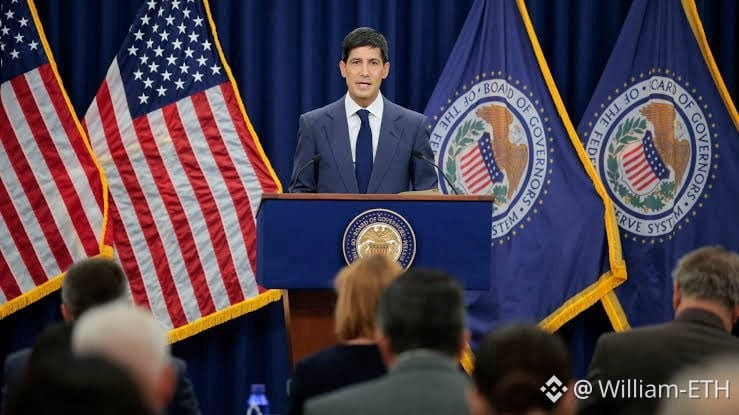
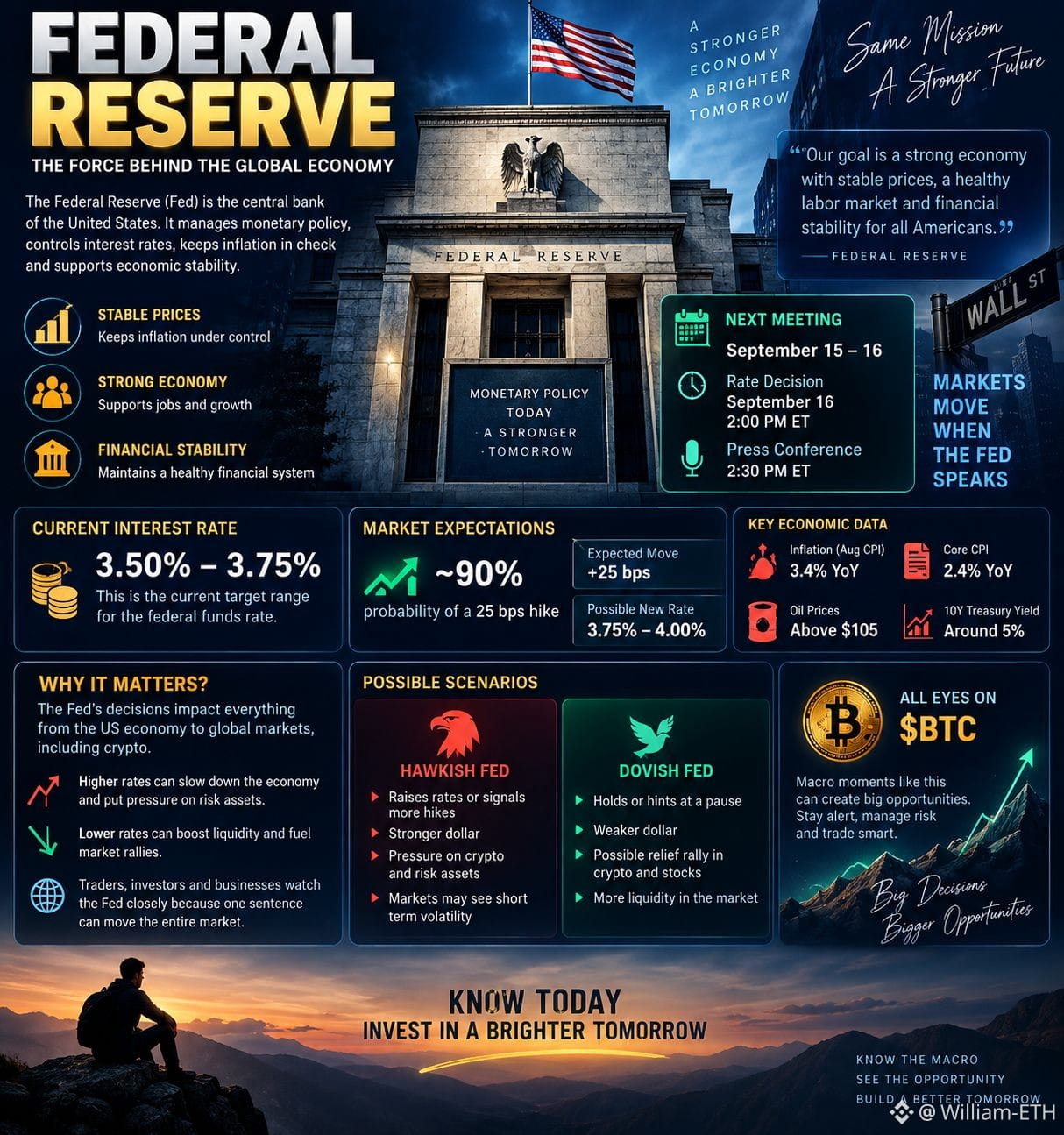
🚨 緊急 米国中央銀行のほとんどのメンバーが3月に50ベーシスポイントの利下げを支持しています。 連邦準備制度理事会のトップは、インフレデータが緩やかになった後、QEを再開する準備が整っていると報じられています。 流動性が戻ってきています。 リスク資産はそれを感じることになるでしょう。 勢いが急速に変わっています。 .#Binance #squarecreator
🚨 緊急

米国中央銀行のほとんどのメンバーが3月に50ベーシスポイントの利下げを支持しています。

連邦準備制度理事会のトップは、インフレデータが緩やかになった後、QEを再開する準備が整っていると報じられています。

流動性が戻ってきています。

リスク資産はそれを感じることになるでしょう。

勢いが急速に変わっています。

.#Binance #squarecreator
翻訳参照
They’re Building Vanar for Billions : But Is It Built to Survive a Worst-Case Day?Vanar the way I’d look at something I might actually trust with time and money — not just the shiny story, but the parts that get tested when things go wrong. They present Vanar as a Layer 1 built for real-world adoption, especially around gaming, entertainment, and brands, and I can feel the intention behind it. It’s like they’re saying: “We don’t want this to be only for crypto natives : we want it to make sense for normal people.” And honestly, that goal matters, because everyday users don’t want to learn complex habits just to play a game, collect something digital, or join an experience. What makes their approach interesting is that it isn’t only “a chain.” They talk about an ecosystem of products across mainstream verticals — gaming networks, metaverse experiences, AI ideas, and brand solutions — and they often point to known products like Virtua Metaverse and VGN as part of that broader direction. The big picture they’re trying to paint is simple in feeling: build a place where consumer-grade experiences can live, and make blockchain fade into the background so the product is what people notice first. Under the surface, Vanar says it’s built on a fork of the Go Ethereum codebase, which is a detail I always take seriously. Starting from a widely used foundation can be comforting, because it means you’re not building everything from scratch. But I never treat that as automatic safety. A fork is still a fork. If you change core parts, those new parts become the new risk, and if the upstream ecosystem discovers vulnerabilities, you have to keep up or you fall behind. In one of the public security review documents I read, the auditor basically highlights this reality in a practical way: forks need ongoing vulnerability tracking and patching, because risks evolve even when your own code doesn’t change. The biggest design theme Vanar keeps repeating is predictable fees. And when you think about consumer adoption, that’s not just a “nice detail,” it’s almost a requirement. People can tolerate small fees, but they don’t tolerate surprise fees. They want things to feel steady. Vanar describes a model where fees are pegged to a dollar value rather than floating freely all the time, which sounds like it’s meant to keep the user experience stable even when the token price moves. That’s clever in intent. But it also introduces something that I always treat as sensitive: if fees are being kept stable, the system needs a way to keep updating what “stable” means in token terms. Here’s where I slow down and read extra carefully. In that same security review, there’s a line explaining that the chain fetches fee-related values periodically from a fixed URL, syncing it into the chain on an interval. That detail is important because it creates a new category of risk: input risk. Anytime a blockchain depends on an external update path — whether that’s a URL fetch or a controlled update mechanism — you immediately start asking: who controls it, how is it protected, and what happens if it breaks? This isn’t me being paranoid. It’s just the difference between a system that works on good days and a system that survives bad days. Vanar also describes its consensus direction in a way that’s very honest if you read it plainly. They talk about a Proof of Authority style setup governed by “Proof of Reputation,” and they explain that in the early phase the Foundation runs validator nodes, with a plan to onboard external validators over time using a reputation-based process. I don’t treat that as an insult to the project. A lot of networks start more controlled so they can be stable while they grow. But it does change the trust model. In early phases, survival depends heavily on operational security and governance discipline, because fewer parties hold more influence. So when someone asks “is it built to survive,” what they’re really asking is: how safely can this network operate while it’s still maturing into broader decentralization? Now let’s talk security like real life, not like marketing. Audits matter, but they’re not magic. I see an audit as a seatbelt. It increases safety, it does not remove risk. What matters more than “they did an audit” is: do they keep acting like security is a living job? That’s why bug bounty signals matter too. A bounty is basically the project admitting something mature: “We expect issues might exist : we want researchers to find them before attackers do.” In the public security tracking information available, Vanar shows signals like audits and a bug bounty presence, which I take as a positive posture — not proof, but posture. Incident history is where people get uncomfortable because it’s never perfectly clean. Sometimes projects disclose everything, sometimes they don’t, and sometimes the community argues about what counts as a real incident. So I won’t pretend certainty where I can’t prove it. What I can say is this: the safest mindset is to treat “no widely publicized incident” as unknown, not as proof of immunity. A strong project isn’t the one that claims nothing ever goes wrong. It’s the one that responds like professionals when something does go wrong. And that takes us to the quiet heart of trust: admin power. In early-stage networks especially, there are almost always control points — upgrade paths, parameter changes, emergency options, validator controls, and mechanisms tied to fee stability. The only question is whether those control points are handled responsibly. This is where multisig and timelocks become emotionally important. Multisig means it takes more than one person to move the most powerful levers. Timelocks mean changes can’t happen instantly, giving the world time to see and react. If admin power exists, it’s not automatically evil. But it must be structured, transparent, and restricted, or it becomes the soft spot that attackers dream about. If we imagine worst-case scenarios, it becomes clearer what “survive” really means. One ugly scenario is validator capture or coordinated censorship — especially when the validator set is still small. In that situation, the chain might not “steal” funds out of nowhere, but it could slow, censor, or destabilize activity, which can be devastating for consumer apps that rely on smooth flow. Survival here looks like gradually expanding independent validators, having transparent rules for onboarding and removal, and keeping operations clean and visible. Another worst-case scenario is manipulation or failure of the fee stability mechanism. If the chain depends on a periodic update input, then a compromise or outage could make fees behave strangely — suddenly too cheap (inviting spam) or too expensive (locking users out). The survival version of this is having redundancy, strict access controls, sanity checks, and safe fallback behavior. It’s the difference between “we keep running safely even if a component fails” and “everything gets weird if one thing breaks.” Then there’s the classic nightmare: a serious client-level bug. Forking from known technology can reduce some risks, but it also forces you to keep pace with upstream vulnerability discoveries, and to patch quickly without breaking your own modifications. In the real world, this is where projects either mature fast or get exposed. A chain that survives doesn’t just have code. It has habits: monitoring, rapid response, careful releases, and calm communication. Bridges and wrapped assets can be another pressure point. Vanar has described wrapped token interoperability concepts in its materials, and the wider crypto history tells us that cross-chain value paths are high-value targets. Survival here means conservative design, strong auditing, constant monitoring, and not rushing upgrades just because the market is impatient. About VANRY itself, I treat it as the fuel of the system — the token that powers actions on the chain. If the chain is meant for consumer apps, then the token’s long-term strength isn’t only about attention. It’s about real usage. If people actually live in the ecosystem — games, experiences, brand activations that attract real activity — demand becomes natural. If usage stays thin, price can still move, but it becomes more fragile emotionally, because it isn’t anchored to daily utility. And about the “last 24 hours” feeling you wanted earlier, the honest way I frame it is simple: markets move every day, but project trust is built in patterns. Price changes in a day can be interesting, but security confidence comes from consistent behavior — audits that lead to fixes, bounty reports that lead to patches, governance that becomes more transparent over time, and a validator roadmap that moves from “controlled stability” to “broader resilience.” That’s the kind of progress you can feel even when the chart is noisy. So if you’re asking whether Vanar is built to survive, I think the most honest answer is that the foundation and intentions look serious, and the posture around security signals is there, but the real proof will always come from how they handle power, how they reduce reliance on sensitive control points over time, and how they behave in pressure moments. And if it becomes what it wants to become — a home for everyday users — it won’t be because the vision was loud. It’ll be because, quietly, they kept doing the hard boring work that most people don’t notice until it’s missing. #Vanar @Vanar $VANRY {spot}(VANRYUSDT) #vanar

They’re Building Vanar for Billions : But Is It Built to Survive a Worst-Case Day?

Vanar the way I’d look at something I might actually trust with time and money — not just the shiny story, but the parts that get tested when things go wrong. They present Vanar as a Layer 1 built for real-world adoption, especially around gaming, entertainment, and brands, and I can feel the intention behind it. It’s like they’re saying: “We don’t want this to be only for crypto natives : we want it to make sense for normal people.” And honestly, that goal matters, because everyday users don’t want to learn complex habits just to play a game, collect something digital, or join an experience.

What makes their approach interesting is that it isn’t only “a chain.” They talk about an ecosystem of products across mainstream verticals — gaming networks, metaverse experiences, AI ideas, and brand solutions — and they often point to known products like Virtua Metaverse and VGN as part of that broader direction. The big picture they’re trying to paint is simple in feeling: build a place where consumer-grade experiences can live, and make blockchain fade into the background so the product is what people notice first.

Under the surface, Vanar says it’s built on a fork of the Go Ethereum codebase, which is a detail I always take seriously. Starting from a widely used foundation can be comforting, because it means you’re not building everything from scratch. But I never treat that as automatic safety. A fork is still a fork. If you change core parts, those new parts become the new risk, and if the upstream ecosystem discovers vulnerabilities, you have to keep up or you fall behind. In one of the public security review documents I read, the auditor basically highlights this reality in a practical way: forks need ongoing vulnerability tracking and patching, because risks evolve even when your own code doesn’t change.

The biggest design theme Vanar keeps repeating is predictable fees. And when you think about consumer adoption, that’s not just a “nice detail,” it’s almost a requirement. People can tolerate small fees, but they don’t tolerate surprise fees. They want things to feel steady. Vanar describes a model where fees are pegged to a dollar value rather than floating freely all the time, which sounds like it’s meant to keep the user experience stable even when the token price moves. That’s clever in intent. But it also introduces something that I always treat as sensitive: if fees are being kept stable, the system needs a way to keep updating what “stable” means in token terms.

Here’s where I slow down and read extra carefully. In that same security review, there’s a line explaining that the chain fetches fee-related values periodically from a fixed URL, syncing it into the chain on an interval. That detail is important because it creates a new category of risk: input risk. Anytime a blockchain depends on an external update path — whether that’s a URL fetch or a controlled update mechanism — you immediately start asking: who controls it, how is it protected, and what happens if it breaks? This isn’t me being paranoid. It’s just the difference between a system that works on good days and a system that survives bad days.

Vanar also describes its consensus direction in a way that’s very honest if you read it plainly. They talk about a Proof of Authority style setup governed by “Proof of Reputation,” and they explain that in the early phase the Foundation runs validator nodes, with a plan to onboard external validators over time using a reputation-based process. I don’t treat that as an insult to the project. A lot of networks start more controlled so they can be stable while they grow. But it does change the trust model. In early phases, survival depends heavily on operational security and governance discipline, because fewer parties hold more influence. So when someone asks “is it built to survive,” what they’re really asking is: how safely can this network operate while it’s still maturing into broader decentralization?

Now let’s talk security like real life, not like marketing. Audits matter, but they’re not magic. I see an audit as a seatbelt. It increases safety, it does not remove risk. What matters more than “they did an audit” is: do they keep acting like security is a living job? That’s why bug bounty signals matter too. A bounty is basically the project admitting something mature: “We expect issues might exist : we want researchers to find them before attackers do.” In the public security tracking information available, Vanar shows signals like audits and a bug bounty presence, which I take as a positive posture — not proof, but posture.

Incident history is where people get uncomfortable because it’s never perfectly clean. Sometimes projects disclose everything, sometimes they don’t, and sometimes the community argues about what counts as a real incident. So I won’t pretend certainty where I can’t prove it. What I can say is this: the safest mindset is to treat “no widely publicized incident” as unknown, not as proof of immunity. A strong project isn’t the one that claims nothing ever goes wrong. It’s the one that responds like professionals when something does go wrong.

And that takes us to the quiet heart of trust: admin power. In early-stage networks especially, there are almost always control points — upgrade paths, parameter changes, emergency options, validator controls, and mechanisms tied to fee stability. The only question is whether those control points are handled responsibly. This is where multisig and timelocks become emotionally important. Multisig means it takes more than one person to move the most powerful levers. Timelocks mean changes can’t happen instantly, giving the world time to see and react. If admin power exists, it’s not automatically evil. But it must be structured, transparent, and restricted, or it becomes the soft spot that attackers dream about.

If we imagine worst-case scenarios, it becomes clearer what “survive” really means. One ugly scenario is validator capture or coordinated censorship — especially when the validator set is still small. In that situation, the chain might not “steal” funds out of nowhere, but it could slow, censor, or destabilize activity, which can be devastating for consumer apps that rely on smooth flow. Survival here looks like gradually expanding independent validators, having transparent rules for onboarding and removal, and keeping operations clean and visible.

Another worst-case scenario is manipulation or failure of the fee stability mechanism. If the chain depends on a periodic update input, then a compromise or outage could make fees behave strangely — suddenly too cheap (inviting spam) or too expensive (locking users out). The survival version of this is having redundancy, strict access controls, sanity checks, and safe fallback behavior. It’s the difference between “we keep running safely even if a component fails” and “everything gets weird if one thing breaks.”

Then there’s the classic nightmare: a serious client-level bug. Forking from known technology can reduce some risks, but it also forces you to keep pace with upstream vulnerability discoveries, and to patch quickly without breaking your own modifications. In the real world, this is where projects either mature fast or get exposed. A chain that survives doesn’t just have code. It has habits: monitoring, rapid response, careful releases, and calm communication.

Bridges and wrapped assets can be another pressure point. Vanar has described wrapped token interoperability concepts in its materials, and the wider crypto history tells us that cross-chain value paths are high-value targets. Survival here means conservative design, strong auditing, constant monitoring, and not rushing upgrades just because the market is impatient.

About VANRY itself, I treat it as the fuel of the system — the token that powers actions on the chain. If the chain is meant for consumer apps, then the token’s long-term strength isn’t only about attention. It’s about real usage. If people actually live in the ecosystem — games, experiences, brand activations that attract real activity — demand becomes natural. If usage stays thin, price can still move, but it becomes more fragile emotionally, because it isn’t anchored to daily utility.

And about the “last 24 hours” feeling you wanted earlier, the honest way I frame it is simple: markets move every day, but project trust is built in patterns. Price changes in a day can be interesting, but security confidence comes from consistent behavior — audits that lead to fixes, bounty reports that lead to patches, governance that becomes more transparent over time, and a validator roadmap that moves from “controlled stability” to “broader resilience.” That’s the kind of progress you can feel even when the chart is noisy.
So if you’re asking whether Vanar is built to survive, I think the most honest answer is that the foundation and intentions look serious, and the posture around security signals is there, but the real proof will always come from how they handle power, how they reduce reliance on sensitive control points over time, and how they behave in pressure moments. And if it becomes what it wants to become — a home for everyday users — it won’t be because the vision was loud. It’ll be because, quietly, they kept doing the hard boring work that most people don’t notice until it’s missing.

#Vanar @Vanarchain $VANRY
#vanar
トランプ–カナダ関税の覆され ワシントンの「ノー」投票がどれほど強い影響を与え、何が変わり、何が来るのかそれは、見出しが現実よりも早く動くような政治的瞬間の一つのように感じるが、その意味は依然として重みを持っている。2026年2月中旬、アメリカ合衆国下院はドナルド・トランプ大統領のカナダ製品に対する関税を終了するための投票を行い、219対211の決議を通過させ、ほぼすべての民主党員に加えて6人の共和党員が参加したという珍しい叱責を含んでいる。 人々はすぐにこれを「覆された」と呼び始め、その感情的な理由も理解できる。なぜなら、それは決定的で劇的に聞こえるからだ。しかし、私は現実を見ていくつかのことを言わせてもらう。下院の投票は主要な警告ショットであり、即座のオフスイッチではない。この措置は主に象徴的であると広く説明されている。なぜなら、トランプがそれに拒否権を行使でき、数が拒否権を覆すために必要な三分の二には届いていないからだ。それでも、象徴的であることは無害であることを意味するわけではない。なぜなら、政治において象徴的なブレイクは弱点を露呈し、さらなる反発を招き、皆が可能だと思うことを変えることができるからだ。

トランプ–カナダ関税の覆され ワシントンの「ノー」投票がどれほど強い影響を与え、何が変わり、何が来るのか

それは、見出しが現実よりも早く動くような政治的瞬間の一つのように感じるが、その意味は依然として重みを持っている。2026年2月中旬、アメリカ合衆国下院はドナルド・トランプ大統領のカナダ製品に対する関税を終了するための投票を行い、219対211の決議を通過させ、ほぼすべての民主党員に加えて6人の共和党員が参加したという珍しい叱責を含んでいる。

人々はすぐにこれを「覆された」と呼び始め、その感情的な理由も理解できる。なぜなら、それは決定的で劇的に聞こえるからだ。しかし、私は現実を見ていくつかのことを言わせてもらう。下院の投票は主要な警告ショットであり、即座のオフスイッチではない。この措置は主に象徴的であると広く説明されている。なぜなら、トランプがそれに拒否権を行使でき、数が拒否権を覆すために必要な三分の二には届いていないからだ。それでも、象徴的であることは無害であることを意味するわけではない。なぜなら、政治において象徴的なブレイクは弱点を露呈し、さらなる反発を招き、皆が可能だと思うことを変えることができるからだ。
·
--
ブリッシュ
·
--
ブリッシュ
翻訳参照
🇨🇿 BULLISH NEWS! $AZTEC The Czech Republic just flipped the script. The president has signed a law removing Bitcoin capital gains tax 🚀💰 That’s not just policy… that’s fuel. For investors, it changes everything. More profit stays in your pocket. More incentive to hold. More reason to build. Crypto just got a serious green light in Europe. $AKE $VVV
🇨🇿 BULLISH NEWS!

$AZTEC

The Czech Republic just flipped the script. The president has signed a law removing Bitcoin capital gains tax 🚀💰

That’s not just policy… that’s fuel.

For investors, it changes everything. More profit stays in your pocket. More incentive to hold. More reason to build.

Crypto just got a serious green light in Europe.

$AKE $VVV
·
--
ブリッシュ
🚨 ブレイキング: バイナンスフランスのCEOが、フランスでの暗号関連犯罪が増加する中、自宅侵入未遂から逃れたと報じられています。 これはもはや単なる見出しではありません。 暗号が成長するにつれて、それに伴うリスクも増大しています。 セキュリティはもはやオプションではありません — 生存です。 #Binance
🚨 ブレイキング:

バイナンスフランスのCEOが、フランスでの暗号関連犯罪が増加する中、自宅侵入未遂から逃れたと報じられています。

これはもはや単なる見出しではありません。
暗号が成長するにつれて、それに伴うリスクも増大しています。

セキュリティはもはやオプションではありません — 生存です。

#Binance
さらにコンテンツを探すには、ログインしてください
暗号資産関連最新ニュース総まとめ
⚡️ 暗号資産に関する最新のディスカッションに参加
💬 お気に入りのクリエイターと交流
👍 興味のあるコンテンツがきっと見つかります
メール / 電話番号
サイトマップ
Cookieの設定
プラットフォーム利用規約