Binance Square

B R O W N

Hold dreams, take risks. X : @_mikebrownn_
取引を発注
超高頻度トレーダー
1.8年
96 フォロー
19.4K+ フォロワー
80.5K+ いいね
5.8K+ 共有
投稿
ポートフォリオ
·
--
🇺🇸トランプがこれを投稿しました!! 「素晴らしい雇用数、予想をはるかに上回る」 「私たちは最低金利を支払うべきです」
🇺🇸トランプがこれを投稿しました!!

「素晴らしい雇用数、予想をはるかに上回る」

「私たちは最低金利を支払うべきです」
🚨 トランプ2026年市場計画が漏洩しました!!多くの人が2026年に市場が回復すると期待しています。 しかし、彼らは間違っています。 株式、暗号通貨、不動産がリスクにさらされています。 これまで見たことのないようなパニックが起こるでしょう。 今、資産を持っているなら、次に何が来るかを知っておく必要があります: 1⃣ クラッシュ アメリカ経済はすでに弱まっています: → 解雇が増加しています → 破産が増加しています → クレジットデフォルトが増加しています → 住宅需要が崩壊しています → 住宅売り手は買い手を大きく上回っています これにより、次の2〜3ヶ月の間に市場の修正が非常に可能性が高いです、2025年第1四半期に似ています。

🚨 トランプ2026年市場計画が漏洩しました!!

多くの人が2026年に市場が回復すると期待しています。
しかし、彼らは間違っています。
株式、暗号通貨、不動産がリスクにさらされています。
これまで見たことのないようなパニックが起こるでしょう。
今、資産を持っているなら、次に何が来るかを知っておく必要があります:
1⃣ クラッシュ
アメリカ経済はすでに弱まっています:
→ 解雇が増加しています
→ 破産が増加しています
→ クレジットデフォルトが増加しています
→ 住宅需要が崩壊しています
→ 住宅売り手は買い手を大きく上回っています
これにより、次の2〜3ヶ月の間に市場の修正が非常に可能性が高いです、2025年第1四半期に似ています。
🚨 米国の雇用が予想を上回る • 非農業部門雇用者数: +130K (予想 66K) • 失業率: 4.3% (前回 4.4%) 労働市場は依然として堅調。
🚨 米国の雇用が予想を上回る

• 非農業部門雇用者数: +130K (予想 66K)
• 失業率: 4.3% (前回 4.4%)

労働市場は依然として堅調。
🚨 CLARITY ACT WHITE HOUSE STABLECOIN YIELD UPDATE Today’s meeting was described as productive, but no agreement was reached. What changed: banks arrived with written “prohibition principles” and, for the first time, acknowledged the possibility of limited exemptions for transaction based rewards. That’s a meaningful shift from earlier positions. The core divide remains: 🔹 Crypto wants broad definitions of “permissible activity” 🔹 Banks want those definitions narrowly constrained Tone is softening. The room was smaller. Negotiations went deeper. Next steps: 🔹 Industry talks continue in the coming days 🔹 White House urging a deal by March 1 🔹 Senate Banking staff now directly involved THIS IS THE CHOKE POINT FOR STABLECOINS. $BTC $ETH $FIL {spot}(FILUSDT) {spot}(BTCUSDT) {spot}(ETHUSDT)
🚨 CLARITY ACT WHITE HOUSE STABLECOIN YIELD UPDATE

Today’s meeting was described as productive, but no agreement was reached.

What changed: banks arrived with written “prohibition principles” and, for the first time, acknowledged the possibility of limited exemptions for transaction based rewards. That’s a meaningful shift from earlier positions.

The core divide remains:
🔹 Crypto wants broad definitions of “permissible activity”
🔹 Banks want those definitions narrowly constrained

Tone is softening.
The room was smaller.
Negotiations went deeper.

Next steps:
🔹 Industry talks continue in the coming days
🔹 White House urging a deal by March 1
🔹 Senate Banking staff now directly involved

THIS IS THE CHOKE POINT FOR STABLECOINS.

$BTC $ETH $FIL
🚨 最新情報: 🏛️ホワイトハウスのステーブルコイン利回りに関する話し合いは、銀行と暗号企業の間で合意に至らず終了しました。 出席者は、銀行が現在の法案よりもさらに厳しい利回りに関する「禁止原則」を押し進めたと述べました。
🚨 最新情報:

🏛️ホワイトハウスのステーブルコイン利回りに関する話し合いは、銀行と暗号企業の間で合意に至らず終了しました。

出席者は、銀行が現在の法案よりもさらに厳しい利回りに関する「禁止原則」を押し進めたと述べました。
アメリカのインフレがここで急落しています。💥
BIG: 🇺🇸 米国のインフレ率が0.78%に低下。
BREAKING: 🇺🇸 Unemployment Rate lower than expected. 🇺🇸 Nonfarm Payrolls much higher than expected. RECESSION FEARS ARE GOING AWAY. BULLISH FOR MARKETS!!
BREAKING:

🇺🇸 Unemployment Rate lower than expected.

🇺🇸 Nonfarm Payrolls much higher than expected.

RECESSION FEARS ARE GOING AWAY.

BULLISH FOR MARKETS!!
🚨US JOB DATA JUST SHOCKED EVERYONE Everyone was waiting for a weak job print after Kevin Hassett's comment yesterday. But the exact opposite happened. The unemployment rate came in at 4.3% vs. 4.4% expected. The US economy added 130,000 jobs in January, the highest since April 2025. The US private sector added 172,000 jobs in January, the highest level in a year. This was a strong job report, which means March rate cuts are probably off the table now.
🚨US JOB DATA JUST SHOCKED EVERYONE

Everyone was waiting for a weak job print after Kevin Hassett's comment yesterday.

But the exact opposite happened.

The unemployment rate came in at 4.3% vs. 4.4% expected.

The US economy added 130,000 jobs in January, the highest since April 2025.

The US private sector added 172,000 jobs in January, the highest level in a year.

This was a strong job report, which means March rate cuts are probably off the table now.
BIG SIGNAL 🎙️ アメリカの消費者ローンの延滞率は第4四半期に4.8%に上昇し、2017年以来の最高水準となりました。 ストレスが高まっている分野: • 学生ローン • クレジットカード • 自動車ローン • 住宅ローン 家計が大規模に支払いを怠り始めると、それは単なる消費者の話ではなく、流動性とマクロ経済の話になります。 これは静かにサイクルを変えるデータの一例です。
BIG SIGNAL 🎙️

アメリカの消費者ローンの延滞率は第4四半期に4.8%に上昇し、2017年以来の最高水準となりました。

ストレスが高まっている分野:
• 学生ローン
• クレジットカード
• 自動車ローン
• 住宅ローン

家計が大規模に支払いを怠り始めると、それは単なる消費者の話ではなく、流動性とマクロ経済の話になります。

これは静かにサイクルを変えるデータの一例です。
歴史は自らを書き換えない。 ただスケールするだけだ。 2017年のピーク: $21K → −84% 2021年のピーク: $69K → −77% 2025年のピーク: $126K → −70%+ 高値での陶酔。 下落時の絶望。 同じ脚本。より大きな数字。
歴史は自らを書き換えない。

ただスケールするだけだ。

2017年のピーク: $21K → −84%
2021年のピーク: $69K → −77%
2025年のピーク: $126K → −70%+

高値での陶酔。

下落時の絶望。

同じ脚本。より大きな数字。
I usually roll my eyes at “built for mass adoption.” Most chains start with hardcore tech and expect normal users to adapt later. What made me stop and actually look at Vanar wasn’t speed or TPS claims — it was where they chose to play. Instead of fighting for mindshare in DeFi dashboards, they went straight into games and entertainment. At first I thought it was avoidance. Then I realized: this is the hard part. People don’t wake up wanting wallets, gas fees, or bridges. They want to play, collect, explore, and feel part of something. @Vanar uses those instincts as the entry point and lets the blockchain fade into the background. Virtua feels like a world, not a crypto demo. VGN meets gamers where they already are. No tutorials. No friction. Experience first. That matters more than any TPS chart. Gaming and metaverse are still the cleanest on-ramps for non-crypto users. When people are having fun, they don’t care what chain they’re on, and that’s exactly the goal. I’m not blindly bullish. Scale and retention will be the real test. Games attract users fast, but keeping them is everything. Still, while most chains chase narratives, Vanar feels like it’s quietly studying how real people actually enter Web3. Not loud. Not flashy. Just intentional. $VANRY #Vanar {spot}(VANRYUSDT)
I usually roll my eyes at “built for mass adoption.” Most chains start with hardcore tech and expect normal users to adapt later.

What made me stop and actually look at Vanar wasn’t speed or TPS claims — it was where they chose to play.

Instead of fighting for mindshare in DeFi dashboards, they went straight into games and entertainment. At first I thought it was avoidance. Then I realized: this is the hard part.

People don’t wake up wanting wallets, gas fees, or bridges. They want to play, collect, explore, and feel part of something. @Vanarchain uses those instincts as the entry point and lets the blockchain fade into the background.

Virtua feels like a world, not a crypto demo. VGN meets gamers where they already are. No tutorials. No friction. Experience first.

That matters more than any TPS chart.

Gaming and metaverse are still the cleanest on-ramps for non-crypto users. When people are having fun, they don’t care what chain they’re on, and that’s exactly the goal.

I’m not blindly bullish. Scale and retention will be the real test. Games attract users fast, but keeping them is everything.

Still, while most chains chase narratives, Vanar feels like it’s quietly studying how real people actually enter Web3.

Not loud.
Not flashy.
Just intentional.

$VANRY #Vanar
From Ledgers to Learning Systems, How Vanar Is Rethinking Blockchain for an AI-Driven World!!Vanar is not approaching blockchain as a race for marginal gains in speed or cost. Its architecture reflects a different assumption altogether: the future economy will be shaped by autonomous software, continuous decision-making, and machine-to-machine value exchange. In that world, blockchains cannot behave like static record-keepers. They need to act more like adaptive systems that can remember, reason, and operate without constant human intervention. Rather than treating each transaction as an isolated event, Vanar frames economic activity as an ongoing stream. Payments, data updates, and interactions are meant to flow continuously, forming long-lived relationships between users, applications, and AI agents. This mindset fundamentally changes what the network optimizes for. Consistency and continuity matter more than headline benchmarks. A central pillar of this design is cost stability. Vanar is engineered to confirm transactions within a short, predictable window while maintaining fixed fees even under load. This is not an aesthetic preference. Volatile fees break automation. Machines cannot budget. AI agents cannot reason about actions if costs fluctuate unpredictably. By keeping fees stable, Vanar makes it viable for software to transact frequently in small increments, enabling models like pay-per-use services, real-time data markets, and granular utility payments that are impractical on most chains. Sustainability is also embedded into the platform’s long-term posture. Validator operations are aligned with renewable infrastructure through partnerships with large cloud providers, and emissions are offset as part of network design. At the same time, Vanar supports heavy AI workloads through accelerated compute environments. The message is deliberate: performance and environmental responsibility are not mutually exclusive, and modern infrastructure must satisfy both technical and regulatory scrutiny. Data handling is where Vanar diverges most clearly from traditional blockchains. Instead of forcing all information onto the chain, it uses a layered approach built around its Neutron system. Data units, known as Seeds, can be stored off-chain for efficiency while remaining cryptographically anchored on-chain. Only proofs, metadata, and ownership references are permanently recorded, while sensitive content stays encrypted and under user control. This structure allows data to be private yet verifiable, a requirement for enterprise systems and AI workflows that cannot expose raw inputs publicly. Crucially, Vanar treats semantic information as a native concept. Data can be indexed and retrieved based on meaning rather than rigid identifiers. Over time, this creates a persistent knowledge layer that autonomous agents can query and build upon. The chain evolves from being a historical archive into an active memory system that informs future decisions, allowing software to behave with continuity rather than amnesia. Sitting above this memory layer is Kayon, Vanar’s reasoning framework. Kayon connects to everyday digital tools such as email, document platforms, messaging systems, and internal databases, consolidating fragmented information into a structured context. Users control what is connected and can revoke access at any time. Once data is organized, Kayon enables natural language interaction across all sources, turning scattered records into coherent insight. Developers can access this intelligence through APIs, building applications that reason over context instead of parsing raw data manually. For individuals, these capabilities surface through personal AI agents. With tools like MyNeutron, users can deploy agents that retain preferences, history, and intent across sessions. These agents do not reset with each interaction. They accumulate understanding over time, making interactions feel continuous and personalized. When combined with natural-language interfaces to wallets and smart contracts, the complexity of decentralized systems is abstracted away, allowing users to interact through intent rather than commands. Gaming and immersive digital environments serve as a practical testbed for this stack. In large multiplayer worlds built on Vanar, AI-driven characters adapt to player behavior in real time, informed by persistent memory and on-chain logic. Developers can integrate microtransactions, social dynamics, and AI behavior directly into game engines without building custom backend infrastructure. These environments demonstrate that Vanar’s concepts are not theoretical abstractions but operational systems already supporting live consumer experiences. Beyond entertainment, enterprise integrations reinforce this positioning. Partnerships with global technology firms, payment networks, and regional financial institutions indicate that Vanar is being embedded into existing operational frameworks. Whether supporting global payment acceptance, data-intensive content pipelines, or compliance-sensitive workflows, the network is being tested in environments where downtime, unpredictability, and opacity are unacceptable. Within this ecosystem, the VANRY token functions as a utility layer rather than a speculative centerpiece. It is consumed by advanced features tied to data storage, AI reasoning, and automation. Validators stake it to secure the network, and certain mechanisms reduce supply as usage grows, linking token dynamics to real activity. The intention is clear: value should emerge from adoption and utility, not narrative momentum. Looking ahead, Vanar is preparing for challenges that lie beyond current market cycles. Research into quantum-resistant cryptography and long-horizon security reflects a mindset oriented toward durability. The platform is being built with the expectation that autonomous agents, continuous payments, and machine-driven economies will become commonplace rather than experimental. In essence, Vanar is not trying to be the fastest ledger. It is assembling an intelligent infrastructure where data can persist, context can accumulate, and software can act autonomously. Whether this vision becomes dominant will depend on real-world adoption across gaming, enterprise, and AI-native services. But the direction is unmistakable: Vanar is designing for a future where intelligence is embedded directly into the rails that move value, rather than layered on top as an afterthought. $VANRY #Vanar @Vanar {spot}(VANRYUSDT)

From Ledgers to Learning Systems, How Vanar Is Rethinking Blockchain for an AI-Driven World!!

Vanar is not approaching blockchain as a race for marginal gains in speed or cost. Its architecture reflects a different assumption altogether: the future economy will be shaped by autonomous software, continuous decision-making, and machine-to-machine value exchange. In that world, blockchains cannot behave like static record-keepers. They need to act more like adaptive systems that can remember, reason, and operate without constant human intervention.
Rather than treating each transaction as an isolated event, Vanar frames economic activity as an ongoing stream. Payments, data updates, and interactions are meant to flow continuously, forming long-lived relationships between users, applications, and AI agents. This mindset fundamentally changes what the network optimizes for. Consistency and continuity matter more than headline benchmarks.
A central pillar of this design is cost stability. Vanar is engineered to confirm transactions within a short, predictable window while maintaining fixed fees even under load. This is not an aesthetic preference. Volatile fees break automation. Machines cannot budget. AI agents cannot reason about actions if costs fluctuate unpredictably. By keeping fees stable, Vanar makes it viable for software to transact frequently in small increments, enabling models like pay-per-use services, real-time data markets, and granular utility payments that are impractical on most chains.
Sustainability is also embedded into the platform’s long-term posture. Validator operations are aligned with renewable infrastructure through partnerships with large cloud providers, and emissions are offset as part of network design. At the same time, Vanar supports heavy AI workloads through accelerated compute environments. The message is deliberate: performance and environmental responsibility are not mutually exclusive, and modern infrastructure must satisfy both technical and regulatory scrutiny.
Data handling is where Vanar diverges most clearly from traditional blockchains. Instead of forcing all information onto the chain, it uses a layered approach built around its Neutron system. Data units, known as Seeds, can be stored off-chain for efficiency while remaining cryptographically anchored on-chain. Only proofs, metadata, and ownership references are permanently recorded, while sensitive content stays encrypted and under user control. This structure allows data to be private yet verifiable, a requirement for enterprise systems and AI workflows that cannot expose raw inputs publicly.
Crucially, Vanar treats semantic information as a native concept. Data can be indexed and retrieved based on meaning rather than rigid identifiers. Over time, this creates a persistent knowledge layer that autonomous agents can query and build upon. The chain evolves from being a historical archive into an active memory system that informs future decisions, allowing software to behave with continuity rather than amnesia.
Sitting above this memory layer is Kayon, Vanar’s reasoning framework. Kayon connects to everyday digital tools such as email, document platforms, messaging systems, and internal databases, consolidating fragmented information into a structured context. Users control what is connected and can revoke access at any time. Once data is organized, Kayon enables natural language interaction across all sources, turning scattered records into coherent insight. Developers can access this intelligence through APIs, building applications that reason over context instead of parsing raw data manually.
For individuals, these capabilities surface through personal AI agents. With tools like MyNeutron, users can deploy agents that retain preferences, history, and intent across sessions. These agents do not reset with each interaction. They accumulate understanding over time, making interactions feel continuous and personalized. When combined with natural-language interfaces to wallets and smart contracts, the complexity of decentralized systems is abstracted away, allowing users to interact through intent rather than commands.
Gaming and immersive digital environments serve as a practical testbed for this stack. In large multiplayer worlds built on Vanar, AI-driven characters adapt to player behavior in real time, informed by persistent memory and on-chain logic. Developers can integrate microtransactions, social dynamics, and AI behavior directly into game engines without building custom backend infrastructure. These environments demonstrate that Vanar’s concepts are not theoretical abstractions but operational systems already supporting live consumer experiences.
Beyond entertainment, enterprise integrations reinforce this positioning. Partnerships with global technology firms, payment networks, and regional financial institutions indicate that Vanar is being embedded into existing operational frameworks. Whether supporting global payment acceptance, data-intensive content pipelines, or compliance-sensitive workflows, the network is being tested in environments where downtime, unpredictability, and opacity are unacceptable.
Within this ecosystem, the VANRY token functions as a utility layer rather than a speculative centerpiece. It is consumed by advanced features tied to data storage, AI reasoning, and automation. Validators stake it to secure the network, and certain mechanisms reduce supply as usage grows, linking token dynamics to real activity. The intention is clear: value should emerge from adoption and utility, not narrative momentum.
Looking ahead, Vanar is preparing for challenges that lie beyond current market cycles. Research into quantum-resistant cryptography and long-horizon security reflects a mindset oriented toward durability. The platform is being built with the expectation that autonomous agents, continuous payments, and machine-driven economies will become commonplace rather than experimental.
In essence, Vanar is not trying to be the fastest ledger. It is assembling an intelligent infrastructure where data can persist, context can accumulate, and software can act autonomously. Whether this vision becomes dominant will depend on real-world adoption across gaming, enterprise, and AI-native services. But the direction is unmistakable: Vanar is designing for a future where intelligence is embedded directly into the rails that move value, rather than layered on top as an afterthought.

$VANRY #Vanar @Vanarchain
MASSIVE: 利下げの確率が21.6%に達しました。
Manifest it.
Manifest it.
今週の米国政府の shutdown の可能性は73%に急増しました。 これは今や毎週起こっています。
今週の米国政府の shutdown の可能性は73%に急増しました。

これは今や毎週起こっています。
男性は二つのことを望んでいるだけです
男性は二つのことを望んでいるだけです
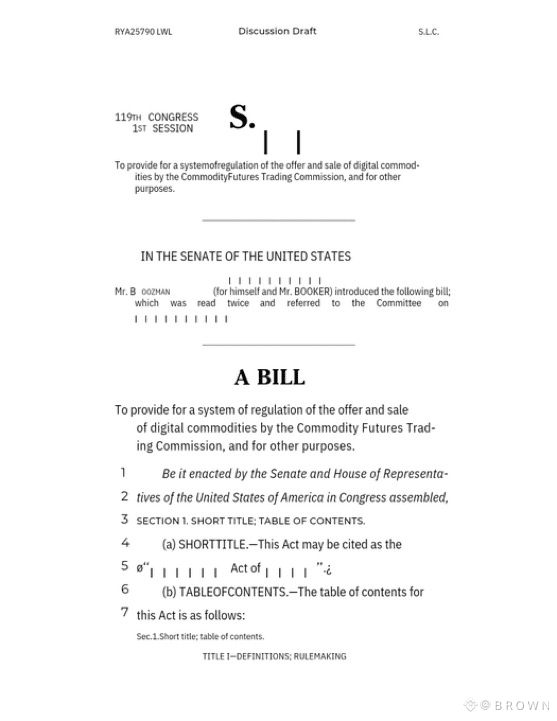
RUMORS: Trump will sign the CLARITY ACT in spring! PREPARE TO GET RICH #XRP
RUMORS: Trump will sign the CLARITY ACT in spring!

PREPARE TO GET RICH #XRP
🚨 まだ終わっていません。 ビットコインが新しいATHから約50%下がると思ったなら… あなたは間違っています。 以前のベアマーケットでは常に大規模な修正が見られました。 通常のベアマーケットでは、前回の高値から70-80%の修正があり、ビットコインは$30,000-$40,000まで下がります。 今回のサイクルの違いは何ですか? - 暗号通貨にもっとお金が入っている - 記録的な清算イベント - 巨大な地政学的不確実性 ブラックスワンイベントはいつでも起こり得ます、そしてそれが起こると、暗号通貨もそれに伴って下がります。 警告されています 🫵
🚨 まだ終わっていません。

ビットコインが新しいATHから約50%下がると思ったなら…

あなたは間違っています。

以前のベアマーケットでは常に大規模な修正が見られました。

通常のベアマーケットでは、前回の高値から70-80%の修正があり、ビットコインは$30,000-$40,000まで下がります。

今回のサイクルの違いは何ですか?

- 暗号通貨にもっとお金が入っている
- 記録的な清算イベント
- 巨大な地政学的不確実性

ブラックスワンイベントはいつでも起こり得ます、そしてそれが起こると、暗号通貨もそれに伴って下がります。

警告されています 🫵
Stocks trader vs crypto trader 😂
さらにコンテンツを探すには、ログインしてください
暗号資産関連最新ニュース総まとめ
⚡️ 暗号資産に関する最新のディスカッションに参加
💬 お気に入りのクリエイターと交流
👍 興味のあるコンテンツがきっと見つかります
メール / 電話番号
サイトマップ
Cookieの設定
プラットフォーム利用規約