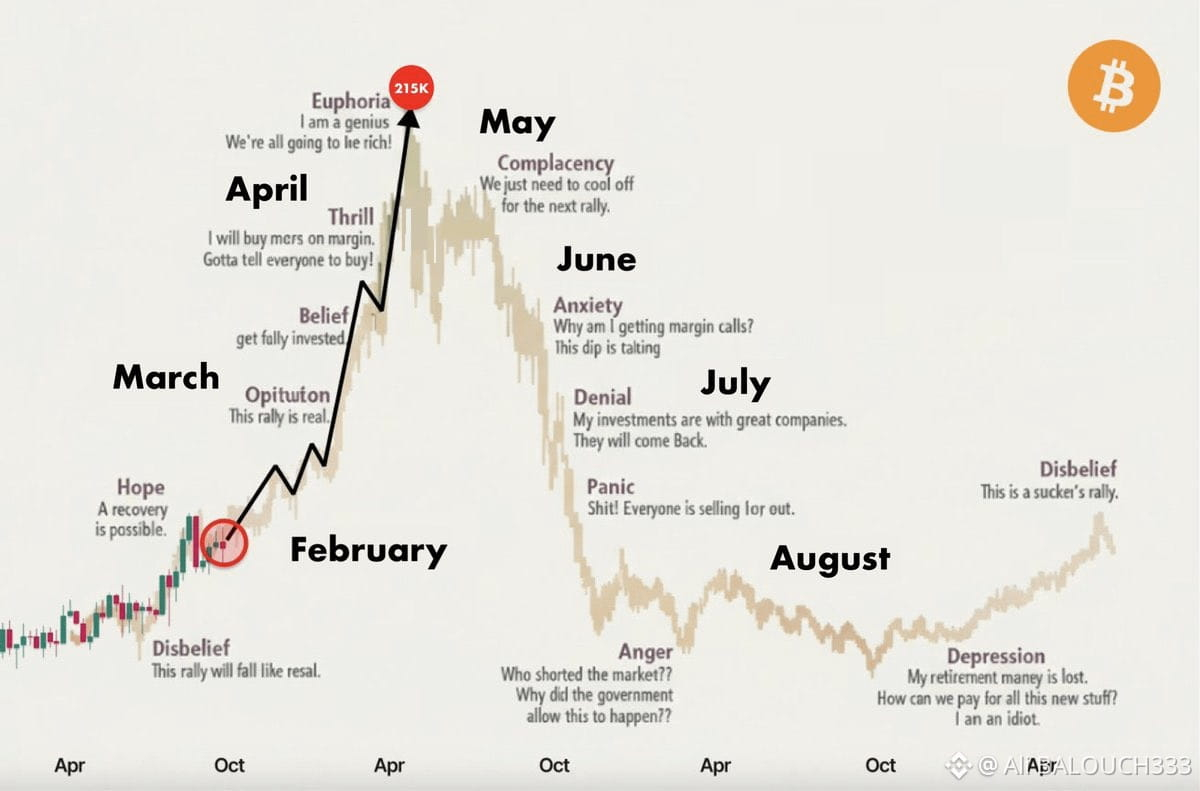
February → Bear trap March → Bitcoin breakout April → Altcoin season May → New ATH around $215K June → Bull trap July → Liquidation cascade August → Bear market kicks in
Keep in mind: I’ve called every major market top and bottom for over 10 YEARS.
I was one of the only people who called the top in October, and I’ll do it again, that’s literally my job.
🔥 Fogo de Chão Founder Arri Coser is the founder of Fogo de Chão. He was born and raised in Southern Brazil in a traditional gaúcho (Brazilian cowboy) family. Growing up around the churrasco tradition—where meats are slow-roasted over open flames—Coser developed a deep appreciation for authentic Brazilian barbecue.
In 1979, Arri Coser, along with his brothers and partners, opened the first Fogo de Chão restaurant in Porto Alegre, Brazil. Their goal was to preserve and elevate the traditional Southern Brazilian churrasco style while offering a high-end dining experience. The name “Fogo de Chão” translates to “fire on the ground,” referring to the traditional method of roasting meat over an open flame.
Due to its success in Brazil, the brand expanded internationally. In 1997, the first U.S. location opened in Dallas, Texas, marking the beginning of the company’s rapid global growth. Today, Fogo de Chão operates dozens of locations across the United States and internationally.
Leadership Team While Arri Coser founded the company, Fogo de Chão is now operated by a professional executive leadership team. The team typically includes:
Chief Executive Officer (CEO) – Responsible for overall company strategy, growth, and operations.
Chief Financial Officer (CFO) – Oversees financial planning and performance.
Executive Culinary Team – Preserves authentic Brazilian churrasco techniques and ensures food quality across all locations.
Over the years, Fogo de Chão has also been backed by private equity firms and investors, which helped fuel its global expansion and modernization.
Team Culture The Fogo de Chão team is built around Brazilian hospitality and the churrascaria tradition. The restaurant staff includes:
Gaúcho Chefs – Specially trained meat chefs who prepare and carve meats tableside.
Gaucho Pasadores – Servers who bring skewers of meat directly to guests.
Culinary Specialists – Responsible for the Market Table and Brazilian side dishes.
Front-of-House Team Members – Hosts, servers, and managers who deliver upscale hospitality.
Training is heavily focused on preserving authentic Brazilian techniques while delivering a premium dining experience.
If you meant a different “Fogo” (such as a startup, tech company, or another brand), please let me know the industry or full name so I can provide the correct founder and team details.
You said: Fogo coin Founder and Team details in 500 words
ChatGPT said: Here’s a comprehensive 500-word overview of the crypto project Fogo (FOGO) — its founders, core team, background, and why it’s gaining attention in the blockchain space:
📌 What Is Fogo (FOGO) Fogo is a high-performance Layer-1 blockchain network built to be compatible with the Solana Virtual Machine (SVM) and optimized for ultra-low latency decentralized trading and financial applications. Because it combines Solana-style execution with a highly optimized validator client, the network can process transactions extremely quickly — often with block times around ~40 milliseconds and finality in ~1.3 seconds.
The native token of the network is FOGO, which will serve functions like gas fees, staking, security, governance, and ecosystem incentives once the network’s mainnet is fully live.
👥 Founders & Core Team The Fogo protocol was created by a team of professionals from both traditional finance and crypto engineering, bringing institutional experience into a high-performance blockchain design.
1. Robert Sagurton — Co-Founder & Director Role: Co-Founder of Fogo and Director at the Fogo Foundation.
Background: Formerly Global Head of Digital Asset Sales at Jump Crypto (a major Solana infrastructure contributor). He also worked in traditional banks and financial firms like JPMorgan, State Street, Morgan Stanley, and R3.
Contribution: Sagurton brings deep insights into institutional digital asset infrastructure and has helped shape Fogo’s strategic focus toward performance and market adoption.
2. Douglas “Doug” Colkitt — Co-Founder & Technical Lead Role: Co-Founder, architect of many of Fogo’s technical strategies.
Background: Ex-high-frequency trader at Citadel Securities, with a decade of pro trading experience. He also founded Crocodile Labs and built Ambient Finance, a decentralized exchange protocol intended to be a flagship application on Fogo.
Contribution: Colkitt’s experience in low-latency markets and trading systems directly influences Fogo’s engineering decisions, positioning the network for real-time applications and institutional trading use cases.
3. Michael Cahill — Founding Contributor / Partner Role: A core contributor to the ecosystem.
Background: Previously served as VP at Morgan Stanley and Jump Crypto, and CEO/co-founder of Douro Labs, which contributes to the project’s core development. He’s linked with Pyth Network, a widely used decentralized price oracle infrastructure.
Contribution: Cahill bridges oracle infrastructure and market-grade data services into Fogo, crucial for accurate pricing in financial apps and DeFi.
4. Other Key Contributors & Advisors In addition to the founders, Fogo’s ecosystem includes other prominent figures and advisors such as:
Robert Leshner, founder of Compound and Superstate (advisor on lending and tokenization)
Tarun Chitra, founder of Gauntlet (advisor for mechanism design and risk models)
Tristan Yver (DeFi infrastructure contributor)
Dan Reecer (affiliated with Wormhole bridge for cross-chain connectivity)
📈 Why This Team Matters What sets Fogo apart is the blend of traditional finance expertise and high-frequency trading engineering embedded at its core. Instead of being built purely by blockchain developers, *Fogo’s team has deep experience in:
Institutional financial systems
Low-latency software engineering
Market structure and trading mechanics
This combination aims to address some of the biggest hurdles in crypto — throughput, latency, and real-time market interaction — while maintaining compatibility with existing Solana developer tools.
📌 Conclusion In summary, Fogo (FOGO) is not merely a new token but a purpose-built blockchain platform developed by a team of seasoned Wall Street and crypto professionals. The founders’ experience in institutional finance, trading infrastructure, and blockchain architecture shapes the project’s vision: to provide a fast, efficient, and trader-centric decentralized network that can support next-generation DeFi, trading, and financial primitives in the evolving Web3 landscape.
If you want, I can also provide information on the FOGO tokenomics, airdrop mechanics, or how the ecosystem’s apps (like Ambient Finance, Valiant, etc.) fit into the broader network. Would you like that?
You said:
You said: Fogo Founder And Team Name in 500 words
ChatGPT said: If you’re asking about Fogo, the Brazilian steakhouse brand, here are the details about its founder and team:
🔥 Fogo de Chão Founder Arri Coser is the founder of Fogo de Chão. He was born and raised in Southern Brazil in a traditional gaúcho (Brazilian cowboy) family. Growing up around the churrasco tradition—where meats are slow-roasted over open flames—Coser developed a deep appreciation for authentic Brazilian barbecue.
In 1979, Arri Coser, along with his brothers and partners, opened the first Fogo de Chão restaurant in Porto Alegre, Brazil. Their goal was to preserve and elevate the traditional Southern Brazilian churrasco style while offering a high-end dining experience. The name “Fogo de Chão” translates to “fire on the ground,” referring to the traditional method of roasting meat over an open flame.
Due to its success in Brazil, the brand expanded internationally. In 1997, the first U.S. location opened in Dallas, Texas, marking the beginning of the company’s rapid global growth. Today, Fogo de Chão operates dozens of locations across the United States and internationally.
Leadership Team While Arri Coser founded the company, Fogo de Chão is now operated by a professional executive leadership team. The team typically includes:
Chief Executive Officer (CEO) – Responsible for overall company strategy, growth, and operations.
Chief Financial Officer (CFO) – Oversees financial planning and performance.
Executive Culinary Team – Preserves authentic Brazilian churrasco techniques and ensures food quality across all locations.
Over the years, Fogo de Chão has also been backed by private equity firms and investors, which helped fuel its global expansion and modernization.
Team Culture The Fogo de Chão team is built around Brazilian hospitality and the churrascaria tradition. The restaurant staff includes:
Gaúcho Chefs – Specially trained meat chefs who prepare and carve meats tableside.
Gaucho Pasadores – Servers who bring skewers of meat directly to guests.
Culinary Specialists – Responsible for the Market Table and Brazilian side dishes.
Front-of-House Team Members – Hosts, servers, and managers who deliver upscale hospitality.
Training is heavily focused on preserving authentic Brazilian techniques while delivering a premium dining experience.
If you meant a different “Fogo” (such as a startup, tech company, or another brand), please let me know the industry or full name so I can provide the correct founder and team details.
You said: Fogo coin Founder and Team details in 500 words
ChatGPT said: Here’s a comprehensive 500-word overview of the crypto project Fogo (FOGO) — its founders, core team, background, and why it’s gaining attention in the blockchain space:
📌 What Is Fogo (FOGO) Fogo is a high-performance Layer-1 blockchain network built to be compatible with the Solana Virtual Machine (SVM) and optimized for ultra-low latency decentralized trading and financial applications. Because it combines Solana-style execution with a highly optimized validator client, the network can process transactions extremely quickly — often with block times around ~40 milliseconds and finality in ~1.3 seconds.
The native token of the network is FOGO, which will serve functions like gas fees, staking, security, governance, and ecosystem incentives once the network’s mainnet is fully live.
👥 Founders & Core Team The Fogo protocol was created by a team of professionals from both traditional finance and crypto engineering, bringing institutional experience into a high-performance blockchain design.
1. Robert Sagurton — Co-Founder & Director Role: Co-Founder of Fogo and Director at the Fogo Foundation.
Background: Formerly Global Head of Digital Asset Sales at Jump Crypto (a major Solana infrastructure contributor). He also worked in traditional banks and financial firms like JPMorgan, State Street, Morgan Stanley, and R3.
Contribution: Sagurton brings deep insights into institutional digital asset infrastructure and has helped shape Fogo’s strategic focus toward performance and market adoption.
2. Douglas “Doug” Colkitt — Co-Founder & Technical Lead Role: Co-Founder, architect of many of Fogo’s technical strategies.
Background: Ex-high-frequency trader at Citadel Securities, with a decade of pro trading experience. He also founded Crocodile Labs and built Ambient Finance, a decentralized exchange protocol intended to be a flagship application on Fogo.
Contribution: Colkitt’s experience in low-latency markets and trading systems directly influences Fogo’s engineering decisions, positioning the network for real-time applications and institutional trading use cases.
3. Michael Cahill — Founding Contributor / Partner Role: A core contributor to the ecosystem.
Background: Previously served as VP at Morgan Stanley and Jump Crypto, and CEO/co-founder of Douro Labs, which contributes to the project’s core development. He’s linked with Pyth Network, a widely used decentralized price oracle infrastructure.
Contribution: Cahill bridges oracle infrastructure and market-grade data services into Fogo, crucial for accurate pricing in financial apps and DeFi.
4. Other Key Contributors & Advisors In addition to the founders, Fogo’s ecosystem includes other prominent figures and advisors such as:
Robert Leshner, founder of Compound and Superstate (advisor on lending and tokenization)
Tarun Chitra, founder of Gauntlet (advisor for mechanism design and risk models)
Tristan Yver (DeFi infrastructure contributor)
Dan Reecer (affiliated with Wormhole bridge for cross-chain connectivity)
📈 Why This Team Matters What sets Fogo apart is the blend of traditional finance expertise and high-frequency trading engineering embedded at its core. Instead of being built purely by blockchain developers, *Fogo’s team has deep experience in:
Institutional financial systems
Low-latency software engineering
Market structure and trading mechanics
This combination aims to address some of the biggest hurdles in crypto — throughput, latency, and real-time market interaction — while maintaining compatibility with existing Solana developer tools.
📌 Conclusion In summary, Fogo (FOGO) is not merely a new token but a purpose-built blockchain platform developed by a team of seasoned Wall Street and crypto professionals. The founders’ experience in institutional finance, trading infrastructure, and blockchain architecture shapes the project’s vision: to provide a fast, efficient, and trader-centric decentralized network that can support next-generation DeFi, trading, and financial primitives in the evolving Web3 landscape. Write in humanize article
ChatGPT said: 🔥 Fogo Founder and Team – A Humanized Overview In the fast-moving world of crypto, many projects promise speed and scalability. But what makes Fogo (FOGO) stand out isn’t just its technology — it’s the people behind it. Built as a high-performance Layer-1 blockchain designed for low-latency trading and financial applications, Fogo is powered by a team that blends Wall Street experience with deep crypto engineering expertise.
The Vision Behind Fogo Fogo was created with a clear goal: to build a blockchain optimized for real-time financial markets. Instead of focusing only on decentralization narratives, the founders concentrated on performance — speed, efficiency, and reliability. The project is compatible with the Solana Virtual Machine (SVM), allowing developers to build high-throughput applications while benefiting from ultra-fast execution and finality.
But technology alone doesn’t build ecosystems — leadership does.
👤 Robert Sagurton – Co-Founder Robert Sagurton is one of the driving forces behind Fogo. Before launching the project, he worked as Global Head of Digital Asset Sales at Jump Crypto, a well-known infrastructure contributor in the blockchain space. His career also includes time at major financial institutions like JPMorgan Chase and Morgan Stanley. $FOGO Sagurton brings institutional credibility and strategic direction to Fogo. His understanding of how traditional financial markets operate helps shape Fogo’s ambition to become a blockchain that institutions can confidently build on.
👨💻 Douglas Colkitt – Co-Founder & Technical Architect Douglas “Doug” Colkitt adds the engineering backbone to Fogo. A former high-frequency trader at Citadel Securities, Colkitt spent years working in environments where microseconds matter. That experience deeply influences Fogo’s architecture.
He also founded Ambient Finance, a decentralized exchange protocol, showing his commitment to building real financial infrastructure in crypto. Colkitt’s expertise ensures that Fogo isn’t just theoretically fast — it’s engineered for the kind of speed professional traders expect.
👔 Michael Cahill – Founding Contributor Michael Cahill plays a key role in strengthening Fogo’s ecosystem connections. With experience at Morgan Stanley and Jump Crypto, he bridges traditional finance and decentralized systems.
He is also associated with Pyth Network, a leading decentralized price oracle provider. Accurate, real-time pricing is critical for trading applications, and Cahill’s involvement supports Fogo’s focus on financial precision.
🌍 Advisors and Broader Team Beyond its founders, Fogo benefits from respected advisors in DeFi and crypto research. Notable contributors include: @Fogo Official Robert Leshner, known for building the Compound lending protocol.
Tarun Chitra, a specialist in crypto risk modeling and mechanism design.
Their insights help refine token economics, risk management frameworks, and ecosystem growth strategies.
Why the Team Matters What makes Fogo different is the mindset of its leadership. This is not a purely experimental crypto team — it’s a group shaped by institutional trading floors, risk desks, and high-performance systems engineering. They understand liquidity, latency, and market behavior at a deep level.
In simple terms, Fogo is being built by people who know how global financial systems operate — and who want to recreate that efficiency in a decentralized environment.
As the blockchain space evolves, pr ojects led by experienced professionals tend to stand out. With its combination of Wall Street veterans and crypto builders, Fogo positions itself as more than just another token — it aims to become infrastructure for the next generation of digital finance. #fogo
1. What They Are Fogo (FOGO) Fogo is a high-performance Layer-1 blockchain built specifically for ultra-low-latency decentralized finance (DeFi) and on-chain trading. It’s designed to offer speeds close to centralized exchanges while preserving decentralization, with extremely fast block times (~40 ms) and quick transaction finality (~1.3 s). It uses the Solana Virtual Machine (SVM) and a custom Firedancer validator client to achieve this performance. Its native token is $FOGO , used for transaction fees, staking, and ecosystem incentives. #fogo @Fogo Official $FOGO Vanry (VANRY) Vanry refers to the native token of the Vanar Chain, which is an independent Layer-1 blockchain ecosystem focused on broader Web3 applications like gaming, metaverse experiences, social wallets, and AI-enhanced on-chain features. It positions itself as an accessible platform supporting smart contracts, transactions, NFT/metaverse infrastructure, and scalable decentralized apps. The VANRY token fuels network operations like gas fees, staking, governance participation, and ecosystem incentives.
2. Core Purpose and Focus Fogo’s Focus:
DeFi & Trading Infrastructure: Built for real-time financial markets on blockchain, targeting use cases where low latency and high throughput matter (e.g., on-chain order books, perpetual markets, automated market makers).
Compatibility: Fully compatible with Solana tooling (SVM), so developers can migrate existing Solana dApps quickly.
User Experience: Features like Fogo Sessions aim to remove wallet friction and enable gas-less interactions across multiple dApps.
Vanry’s Focus:
Web3 Adoption & Ecosystem Diversity: Vanar Chain aims to serve mainstream and consumer-oriented applications, including gaming, metaverse interactions, social wallet integration, and AI enriched features.
AI & Developer Tools: Its infrastructure is marketed as AI-native, with modular layers that enable intelligent data and logic handling inside the blockchain, not just transactional throughput.
EVM & Broad Compatibility: Vanar supports Ethereum Virtual Machine (EVM) compatibility, making it familiar to many developers.
3. Technical Differences Architecture:
Fogo: Optimizes around very fast consensus and latency reduction, borrowing from Solana’s architecture and prioritizing high-frequency DeFi execution.
Vanry: Focuses on broad blockchain services including AI logic, NFT/metaverse infrastructure, and gaming support, not just ultra-low-latency trading.
Tokenomics and Role:
$FOGO : Primarily used for gas fees, staking, and trading ecosystem incentives on the Fogo network.
$VANRY: Serves as the native gas and utility token for Vanar Chain transactions, governance, staking, and ecosystem activities.
4. Ecosystem and Use Cases Fogo Ecosystem:
Primarily DeFi primitives (on-chain markets, DEXs, leveraged instruments) that need very fast transactions.
Vanry Ecosystem:
Broader Web3 use cases: gaming, social wallets, metaverse utilities, AI-driven data and smart contract use, and brand adoption tools.
5. Adoption and Market Position Fogo is pitched as institutional and high-performance DeFi infrastructure that attracts traders.
Vanry markets itself as a consumer-oriented, multi-purpose blockchain with a broader ecosystem and AI emphasis.
All-Time High (ATH) The all-time high (ATH) for FOGO is approximately: $0.06325 USD on January 15, 2026, according to aggregated market data. This peak occurred within days of initial exchange listings and community hype, driven largely by speculative trading and active order flow. For tokens like Fogo, which are newly listed and have relatively low market caps compared to major coins like Bitcoin or Ethereum, price spikes soon after launch are common. Traders often jump in early to catch quick gains, then later take profits — which can lead to sharp pullbacks. This ATH translates to about a 178 % increase from later prices, showing how rapidly sentiment can shift in a short timeframe in crypto markets. Post-Peak Price Action After hitting its ATH, Fogo’s price experienced a notable correction: In February 2026, prices were generally trading around $0.021–0.024 — significantly below the January peak. Corrections after an ATH are typical, especially in altcoins with low liquidity or rapid early speculation. Traders often lock in gains, leading to a temporary downward trend. These corrections can also coincide with broader crypto market weakness, macroeconomic factors, or shifts in trader sentiment. The current price, while lower than the peak, reflects more mature pricing as the market settles into trading levels that balance demand and supply after the initial hype phase. What Drives Fogo’s Price? Several factors influence Fogo’s trend and price history: Exchange Listings & Liquidity Listing on major exchanges like Binance or Bybit increases accessibility, which can boost early trading activity and price spikes. Promotional events (airdrops, check-ins, trading campaigns) can temporarily raise interest and volumes, impacting short-term price movements. New tokens often start strong due to speculation — but volatility is high, and prices adjust quickly when traders take profits. Fogo’s all-time high: ~$0.06325 USD in mid-January 2026. @Fogo Official Current pricing (as of mid-February 2026): ~$0.02–0.024 USD level. #fogo The coin experienced rapid early growth followed by a correction, typical for new crypto tokens. $FOGO
Future price action depends on adoption, exchange volume, network growth, and overall market conditions. If you’d like, I can also provide a simple chart of Fogo’s key price levels or expla in how this compares to other Layer 1 tokens.
Fogo is a Layer-1 blockchain, meaning it runs independently with its own network of validators and its own native token, FOGO. Its mission is simple — make blockchain trading feel as fast and smooth as centralized exchanges, but without sacrificing decentralization. One of the most interesting aspects of Fogo is that it is compatible with the Solana Virtual Machine (SVM). This means developers who already build on Solana can easily migrate or expand their projects onto Fogo. Wallets, tools, and decentralized apps (dApps) built for Solana can often work with minimal changes. That compatibility gives Fogo a strong starting advantage. Built for Speed Speed is where Fogo really shines. The network is optimized for ultra-low latency — meaning transactions are confirmed extremely quickly. For traders, that matters a lot. Even small delays can impact pricing in fast-moving markets. Fogo achieves this by using advanced validator technology and strategic network design. Validators are placed in high-performance data centers to reduce communication delays. The result? Near-instant transaction processing designed for professional-grade trading environments. A Better User Experience If you’ve ever used DeFi platforms, you know the pain: constant wallet pop-ups, repeated transaction approvals, and confusing gas fees. Fogo aims to reduce this friction through a feature called “sessions.” With sessions, users can interact more smoothly with applications without signing every single action. In some cases, applications can even sponsor gas fees. That means less interruption and a much cleaner experience — especially for active traders. What Is FOGO Used For? The FOGO token powers the entire ecosystem. Here’s what it does: Gas Fees: Every transaction on the network requires FOGO. Staking: Validators stake FOGO to secure the network and earn rewards. Governance: Token holders may participate in shaping the network’s future. Ecosystem Incentives: Used for rewards, partnerships, and growth programs. The total supply of FOGO is fixed, and portions are allocated for community rewards, development, and long-term ecosystem support. #Fogo $FOGO @fogo