Plasma $XPL proposes immediate finality amid T+0 settlement and capital efficiency tensions
#plasma @Plasma XPL is a new blockchain network, a groundbreaking evolution of cryptocurrency and digital payment systems. The demands for blockchain finality, capital efficiency, liquidity, global settlement rails, and the alignment of economic actors through Plasma $XPL — if judged in the context of time, the limitations of the real financial system, and the real capabilities of blockchain-based infrastructure — do not seem like mere marketing slogans, but rather an attempt to answer a deep structural tension in contemporary global finance. First, it is important to understand the era we are in. The traditional financial system is based on a settlement logic of T+2 or closer. There are historical reasons behind this —manual reconciliation, fragmented ledgers, multiple intermediaries, and a lack of trust. This slow settlement intentionally delays liquidity, so that netting can be done, risk spread, and trading volumes of many dollars can be created with a single dollar. It is an artificial but effective form of capital efficiency. But it comes at a cost: counterparty risk, opacity, and a very bad UX for the end user. On the other hand, the desire for T+0 settlement comes from two directions. On the one hand, technology — the Internet, APIs, real-time systems—has taught us immediacy. On the other hand, financial crises like 2008 have shown that delayed settlement means hidden risk. So instant settlement means not only good UX, but also risk compression. But here a fundamental problem arises, when everything is instant, there is no more opportunity for netting, leverage decreases, and liquidity is squeezed. That is, security increases but capital efficiency decreases. This is where blockchain infrastructures like Plasma claim to be relevant. Plasma’s claim — that stablecoin transfers achieve near-instant finality — is theoretically true, because a fundamental feature of blockchain is the shared, append-only ledger where settlement and clearing are not separate events, but the same event. Finality here doesn’t just mean fast confirmation, it means a state where you no longer have to rely on any counterparty. When you send a stablecoin and it’s finalized on the chain, it’s not a promise from anyone else, it’s a real economic fact. From this perspective, it makes sense to call Plasma’s blockchain finality an analogue of traditional T+0 settlement. Because in traditional markets, T+0 is still largely an accounting aspiration; in reality, it still relies on multiple intermediaries, credit lines, and legal wrappers. Plasma wants to achieve the same result — instant ownership transfer —through a single source of truth. This is timely, because the global adoption of stablecoins has already proven that people value fast settlement, especially in cross-border cases. But the real question comes down to capital efficiency and liquidity. Critics often say that blockchain-based instant settlement is “capital inefficient,” because you have to deposit the entire amount upfront. Plasma’s argument here is a bit more nuanced. They say that yes, capital needs to be pre-funded at the single transfer level, but at the system level, blockchain-native primitives make that capital reusable. Lending, borrowing, liquidity pools, rehypothecation — all of these are permissionless and programmable, so the same stablecoin can participate in multiple economic activities without wasting time. This is important because in traditional finance, capital reuse occurs in an opaque and centralized way. Large banks do this reuse on their balance sheets, but ordinary users or small institutions do not have access to it. In a network like Plasma, that reuse logic can be embedded at the protocol level. As a result, capital efficiency is no longer the privilege of large financial institutions, but is open to everyone through network effects. Whether this argument is fully proven or not — only time will tell — but conceptually it is strong and consistent with the contemporary DeFi reality. The relevance of Plasma is even clearer in the question of global settlement rails. Today’s financial world is actually a collection of many fragmented rails — SWIFT, ACH, SEPA, FPS, RTGS — each with its own time, cost, and political constraints. Stablecoins have already shown that a neutral, internet-native asset can dramatically simplify global settlement. If Plasma can establish itself as a dedicated stablecoin settlement fabric, it could create not just fast transfers, but a new standard where country or banking hours are no longer relevant. Now, let’s get to the most important question, how does Plasma align economic actors ? This is where the project becomes not just technical, but also political-economic. The success of any financial infrastructure depends on incentives. If the interests of validators, liquidity providers, developers, and end users are at odds with each other, then that system will not survive in the long run. Plasma claims that with the XPL token, they are creating an incentive structure where network security, throughput, and liquidity benefit simultaneously. Validators secure the network by staking XPL, so they want the network to be stable and trustworthy. Developers want more users and more settlements, because it makes the ecosystem bigger. Liquidity providers want a chain with more stablecoin flow, because it puts their capital to work. End users want fast, cheap, and reliable settlements. Plasma’s argument is that stablecoin-centric design brings these four parties together to a common goal: more volume, more real economic activity. Is this alignment perfect ? No. Token-based governance and incentives are always risky. Speculation can overtake real usage, and early adopters can gain disproportionate power. But this is not a problem unique to Plasma, it is a fundamental challenge for any crypto-economic system. Importantly, the problems Plasma aims to solve — settlement speed, global liquidity, capital reuse — are real and urgent. They are not artificial narratives. Most importantly, Plasma’s statement is timely because it acknowledges a real conflict in today’s financial transformation: we want instant settlement, but we don’t want to give up leverage and liquidity. Traditional finance solves this conflict with delay and opacity. Blockchain infrastructures like Plasma are trying to solve the same conflict with programmability and transparency. Which path will ultimately be more sustainable is still an open question. But Plasma’s position as an argument is not weak. So, if Plasma XPL’s words are judged by the criteria of “are they necessary in today’s world?”, then the answer is – yes, they are timely. If judged by the criteria of “are they thoroughly proven?”, then the answer is – not yet. But no new financial infrastructure is proven on day one. They first make a convincing argument, then test that argument through real-world use. Plasma is at that stage. #Plasma
#plasma $XPL The Plasma network is no longer in the experimental stage—it’s ready to do real financial work. When a protocol like StableFlow goes live on Plasma, it’s not just a technical update; it’s a message of the entire ecosystem’s capabilities.
StableFlow joining @Plasma means that the Plasma network will now be able to accept large amounts of stablecoin transactions very easily. In particular, bringing USDT or USDC from a network like Tron to Plasma is now much cheaper and faster. Tron is currently one of the strongest chains in terms of stablecoin usage, so the liquidity there coming to Plasma means that Plasma is suddenly gaining a lot of financial power.
Because while most blockchains work fine for small users, when transferring large amounts, fees increase or slippage occurs. Plasma wants to show that they can solve these problems. Minimal fees mean that Plasma is becoming usable not only for ordinary users, but also for funds, payment providers, and even institutional players.
Those who build DeFi apps, payment systems, or other financial products on Plasma will not be forced to rely solely on Plasma’s own liquidity. They will be able to directly tap into large amounts of liquidity from other chains. This will allow apps built on Plasma to be more robust and competitive from the start.
They will also be able to offer an experience on-chain that is closer to a centralized exchange like Binance. This means that users will no longer have to accept the slowness or high costs of DEXs.
Now the question is—how successful can $XPL be as a result of all this? If Plasma can truly sustain this infrastructure and attract more protocols and builders, then demand for XPL will naturally increase. Because larger transactions, more activity, and institutional use will also mean increased use of the network token.
In short, with this announcement, Plasma is positioning itself as a network that in the future may be able to gain the trust of not only ordinary users but also large financial players.
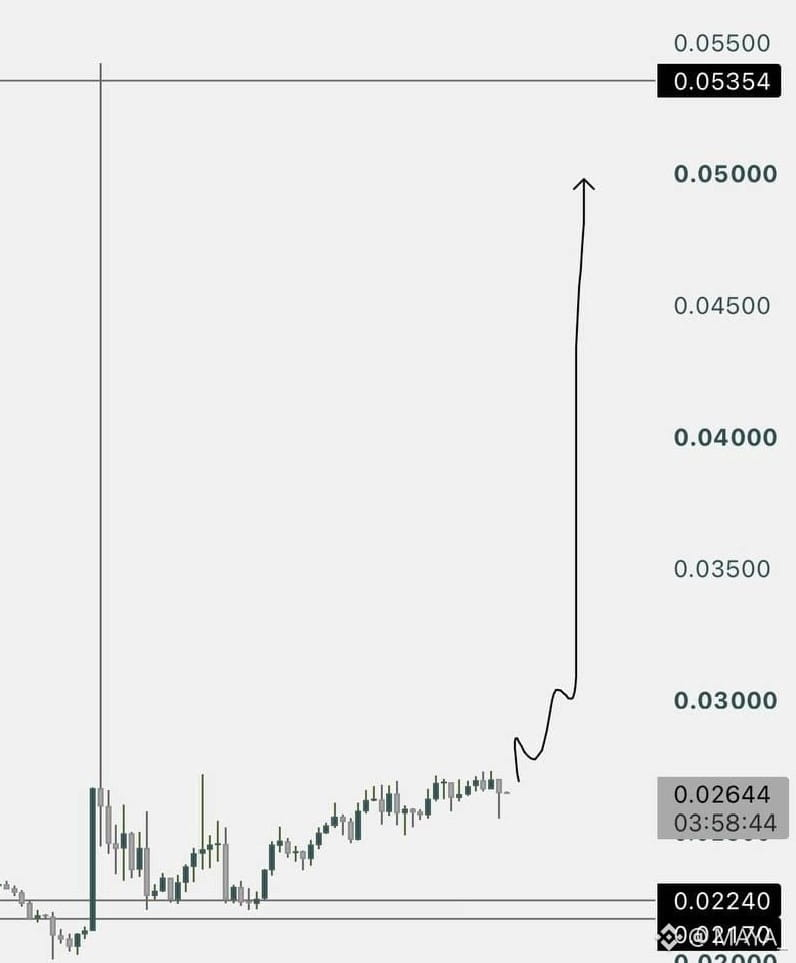
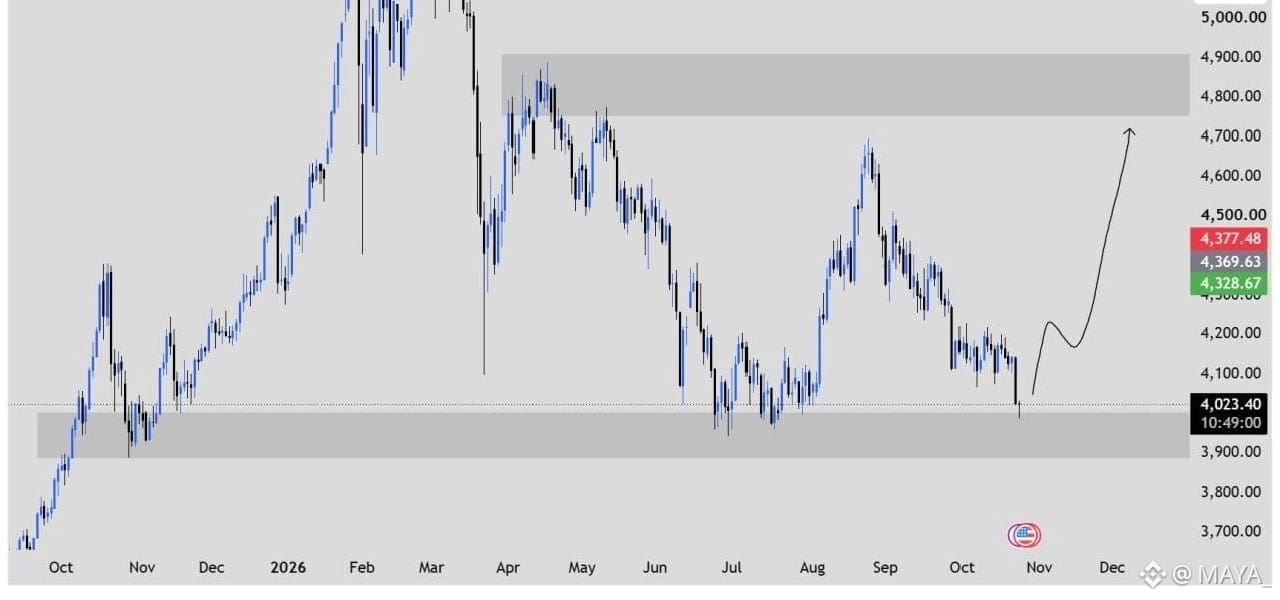
The 2020 chart and the current 2026 market are showing an uncanny resemblance. If history repeats itself like this, we are about to see a massive 'price pump' very soon.
Popular restaurant chain Steak 'n Shake recently surprised everyone by buying $10 million worth of #Bitcoin . Their large investment is largely a reflection of the growing confidence in digital currencies.
👉 Many large companies are now choosing Bitcoin to safeguard their funds, which is further increasing the acceptance of the cryptocurrency.🔥🔥🔥
Big tech companies are gradually taking on a bigger role in the US bond market.
👉 Their massive borrowing could create new risks surrounding artificial intelligence, even on government bonds once considered very safe, raising concerns about future financial stability.
#dusk $DUSK The announcement of the opening of the Dusk Trade waitlist is actually a major milestone for the Dusk Network. Dusk-Trade here refers to a regulated RWA trading platform where real-life assets can be bought and sold by tokenizing them via the blockchain. The RWA sector is currently seen as one of the most important areas of the future in the crypto world.
This platform is being built in conjunction with NPEX, which is a licensed and established exchange and currently manages around €300M AUM. This means that Dusk is not working with a small or inexperienced institution. Rather, a strong and regulated financial institution has partnered with Dusk, trusting in its technology. This is naturally a big trust for investors.
Dusk is basically saying that they are bringing real assets and funds directly to the blockchain. Simply put, real estate, bonds, various investment funds or other assets can be converted into digital tokens and traded safely and transparently. As a result, not only large institutions, but also ordinary users will have the opportunity to participate in such assets. This is one of the biggest changes in the future of finance.
@Dusk is trying to generate interest in users through the phrase “Sign up for a chance to win up to $500 in RWAs”. In other words, Dusk is not just talking big—it is also focusing on creating real users and adoption.
All things considered, Dusk $DUSK does not want to limit itself to any ordinary crypto coin. They want to create an institutional-grade blockchain solution where privacy, compliance, and real finance work together.
According to many analysts, the RWA market could be worth trillions of dollars in the future. Those who can take a strong position in this sector from the beginning are more likely to see their tokens demand and value increase. If Dusk can move forward according to their plans, then DUSK can go to a much better level in the future — such a possibility cannot be ruled out at all.
#vanar $VANRY @Vanarchain is delivering the benefits of Web3 and AI in a simple and affordable way, avoiding complexity. Its goal is to make blockchain accessible to everyone, from ordinary users to large corporate organizations.
The biggest problems that are seen in the current Web3 industry are instability, repeated resets, and a complicated experience for developers and users. New chains come, new updates are made—but with them, old data, apps, or states break. In this reality, it would be wrong to view the vision that Vanarchain has brought forward $VANRY as just another blockchain project.
The three things that Vanarchain emphasized in the AMA—Consistency, Meaningful Context, and No Reset—are actually very realistic solutions to long-standing problems of Web3. They want to build a network where developers or users don’t have to start over every time. The core strength of Vanarchain is that the apps, data, or states created once survive over time and remain valid in future updates.
And this is where the concept of “Meaningful Context” makes the difference. Many blockchains simply store data, but in reality, that data doesn’t translate into applications that are very smart or user-friendly.
@Vanarchain wants data to be useful — so that applications can understand user needs, make more effective decisions, and solve real problems. This approach is not only beneficial for developers, but also makes the experience much easier for ordinary users.
All of this could have a direct impact on the future of the $VANRY token. Because history shows that networks that can create a stable and future-ready environment for developers are the ones that build more projects, increase usage, and gradually solidify the value of the network. If Vanarchain can successfully implement this vision in reality, VANRY could become not just a trading token—but an important part of a viable ecosystem.
All in all, Vanarchain is focusing more on building a long-term foundation than on creating hype.
What is Plasma $XPL ? — In simple terms, an open discussion
Currently, the name @Plasma $XPL is being heard by many. Some say it is a big project of the future, while others are skeptical—is it a scam? This confusion is completely normal. Because there are good projects in the crypto world, as well as fake and exaggerated projects. So today, without any hype, without using any marketing language, we will understand in a human-to-human way— What is Plasma XPL really? Is it a real project or just a bunch of words? What does it do? And most importantly: what are the risks? The first question: Is Plasma XPL really real? In short, the answer is — yes, Plasma XPL is a real blockchain project. This is not a fantasy, nor a “use it today, double tomorrow” type scheme. Plasma is a Layer-1 blockchain, meaning it has its own separate network. Just like Ethereum and Bitcoin have their own blockchain—Plasma is also their own. But the misconception that real-project means guaranteed-profit must be removed from the mind first. Because real-projects can fail in crypto, and small projects can also become big. Why was Plasma created ? This is where the main idea of Plasma becomes clear. What is the most widely used crypto today? Answer — Stablecoin, especially USDT. People are not buying coffee with Bitcoin. But with USDT — Sending money Trading Saving money Making international payments What is the problem? When you send USDT to Ethereum or other networks — The fees are high. The network is slow. Transfers get stuck in congestion. Plasma has caught exactly this problem. What does Plasma want to do? Plasma's main goal, in one line, is— To make Stablecoin as fast, cheap, and easy as possible. That's why they created — A Stablecoin-focused Layer-1 blockchain. Where USDT transfers are almost zero-fee and easy to use for the common man It is not an all-in-one blockchain. Plasma has focused itself on a specific task—that is their strength. What does Stablecoin-focused mean? To put it simply. There are many blockchains that say— “We will do DeFi, NFT, GameFi, Metaverse, AI—it all” Plasma did not walk that path. Plasma said — “We will do Stablecoin well. The rest will be seen later.” Because of this focus — The network is designed according to stablecoin. Transfers are optimized Less unnecessary things It is a bit like — if one doctor says “I will treat all diseases” Another says “I am only a heart doctor” People usually trust the second one more. Zero-fee USDT transfers — what exactly? The most talked about thing about Plasma is— almost zero fees for USDT transfers. The word “almost” is important here. Meaning— The fees are very low or unnoticeable for the user Average users will feel free Costs are managed differently at the network-level This is nothing new. Many blockchains use different models to reduce user fees. But yes — how will it be sustainable in the long-term, that is the big question, and that is the risk. Why is EVM-compatible important ? Plasma EVM-compatible. It may sound technical, but it is simple. This means— Ethereum's smart contracts can run here MetaMask, Trust Wallet, Ledger—they can be used Developers don't have to learn new things It's like an Android app runs on an Android phone — just like that. If it is not EVM-compatible, no one wants to work on a new blockchain. Plasma has made a smart decision in this regard. What is the Bitcoin-anchor / Bridge thing? Plasma claims that they are increasing security by using an anchor or bridge with Bitcoin. In simple terms — Bitcoin is the most secure blockchain Plasma is adding some of its security frameworks to Bitcoin It is not entirely “Bitcoin-level security”, but it shows that— Plasma is not just thinking about speed, but also about security. However, bridge means risk—because there have been many bridge hacks in history. So what is the function of XPL Token? Now let’s come to the main token — XPL. XPL is the native token of the Plasma network. Its functions — Network security Validators stake XPL and run the network Rewards Those who support the network get XPL Governance What will change in the network in the future, XPL is used to vote Some fees / incentives Although the fee for users is low, XPL is needed inside the network Total supply 10 billion — is it good or bad? Many people are afraid— 10 billion! So much. But more supply means bad—this idea is wrong. What is important is— Distribution is like What is the unlock schedule How much does the team hold Will demand increase if usage increases 10 billion SHIB is one thing 10 billion XPL is another thing Supply is just a number — the story is in its usage and acceptance. Can Plasma be a scam ? Let's be honest. At the moment, there is no evidence to directly call Plasma a scam. But — It is still early-stage Adoption needs to be proven Real-world usage needs to be increased There are many projects in crypto—which are not scams, but fail. Not scam ≠ successful This difference needs to be understood. Where is the risk in Plasma? Let's be honest — Competition Stablecoin-focused networks will come in many ways Sustainability How long will the zero-fee model last? Adoption Blockchain is meaningless if people don't use itit Bridge risk Bitcoin bridge means potential risk So what is the decision about Plasma XPL ? In short — Plasma is a real blockchain project The idea is clear, the focus is good But it has yet to fully prove itself It is not “magic money” And not a “fake project” either If anyone is interested in it — Look at it in small increments, learn, understand Don't pour all the money Verify yourself The biggest enemies in the crypto world are— blind faith and blind fear. Plasma XPL — should be neither. If you keep your eyes open and keep a cool head—the right decision will come by itself.
Vanarchain $VANRY : A Modern and Future-oriented Blockchain Platform
Blockchain technology is rapidly becoming popular in the current world. Not only in cryptocurrency, but blockchain is now playing an important role in various sectors such as finance, gaming, NFT, data security, smart contracts and decentralized applications. In this changing technological environment, Vanarchain has emerged as a promising and modern blockchain project. @Vanarchain is basically an advanced distributed ledger technology-based blockchain network, which is designed with the aim of providing secure, fast, and scalable solutions. Its goal is not just to create a cryptocurrency, but to build a complete blockchain ecosystem, where users can get realistic solutions through smart contracts, DApps, and advanced security systems. Distributed Ledger Technology : The Foundation of Vanarchain The main foundation of Vanarchain is distributed ledger technology. Unlike a typical database, data is not stored on a single server. Instead, copies of the same data are stored on numerous nodes connected to the network. This provides several major benefits : Data security is increased, because an attack from one location cannot compromise the entire network. Transparency is maintained, because each transaction is verifiable. The need for trust is reduced, because the system itself works reliably. Vanarchain has used this DLT framework to create a network where transactions are completed quickly, accurately, and transparently. Users can be sure that their data or assets will not be altered or tampered with by any third party. Network Speed and Scalability: Fast and Efficient Transactions. One of the biggest problems with blockchain is its slow speed and high fees. Vanarchain has placed special emphasis on solving these problems. This network is designed in such a way that : Transactions are completed in a very short time. A large number of transactions can be processed at the same time. Gas fees are relatively low. In terms of scalability, Vanarchain aims to be a platform that can maintain performance even as the number of users increases in the future. This is very important for developers and merchants, as a strong and reliable network is required to run large applications. Smart Contracts : Automated and Trusted Contracts One of the strongest features of Vanarchain is Smart Contracts. Smart Contracts are a type of digital contract that is automatically executed when certain conditions are met. For example : A payment will be completed only when certain conditions are met. A payment will be released only when a service is delivered. There is no need for an intermediary in this process, resulting in : Time savings. Cost reduction. Opportunities for fraud reduction. Vanarchain's smart contract system is very useful for developers. It makes it possible to create applications in finance, gaming, supply chain, real estate and many other sectors. DApps : The Power of Decentralized Applications Vanarchain provides a powerful platform for creating decentralized applications. The main features of DApps are: No single owner or controller. User data remains with the user. Low risk of censorship. DApps built on Vanarchain allow users to enjoy the true benefits of blockchain. In the future, DeFi, NFT marketplaces, gaming platforms, and various Web3-based applications can be built on the Vanarchain network. $VANRY token: The driving force of the Vanarchain ecosystem VANRY is the native token of the Vanarchain network. It serves as the economic foundation of the entire ecosystem. $VANRY token is used : For payment of transaction fees. For smart contract execution. For network services. For future staking and governance. This token may become more important as the use of the network increases. As a powerful utility token, VANRY has great future potential. Security : Security is of utmost importance Another important aspect of Vanarchain is its advanced security system. The main strength of blockchain technology is security, and Vanarchain has not made any concessions in this area. It uses: Strong cryptographic algorithms. Multi-level security system. Network validation mechanism. As a result, the risk of hacking, double spending or data manipulation is greatly reduced. Community-centric approach. The Vanarchain project is completely community-centric. The emphasis is on users and token holders. For the community, there are : Incentive programs. Opportunities to participate in future decisions. Opportunities to contribute to the growth of the ecosystem. A strong community is the key to the success of any blockchain project, and Vanarchain understands this very well. Environmentally friendly technology. Currently, environmental impact is a major concern. Vanarchain has also taken this aspect seriously. This network : Uses less energy. Less impact on the environment. Much more eco-friendly than Bitcoin or older PoW networks. This is an important step towards a sustainable blockchain solution of the future. Vanarchain’s Future Prospects. All in all, Vanarchain is a forward-looking blockchain project. Its strong technology, advanced security, scalability, and community-centric approach could make it a significant platform in the long run. If Vanarchain can continue to develop according to its roadmap, it could : Become a popular platform for developers. Play a role in blockchain adoption across industries. The cryptocurrency market is highly volatile. This analysis is based on technology. It is important to do your own research before making any investments.
#Binance has officially launched $TSLA futures trading. Crypto users will now be able to trade Tesla stock prices directly on their platform. This is a new milestone for investors.
Plasma $XPL is a revolutionary name in data processing and networking
@Plasma $XPL is a very promising name in the current world of blockchain technology. While scalability or network capacity is a big challenge for large blockchains, XPL has brought the claim of completing High-Throughput or a large number of transactions per second through its own architecture. A detailed analysis of Plasma $XPL 's strategy to achieve high throughput, the technical logic behind it, and the possibility of reaching a high price or high position in the crypto market is presented. What is Plasma $XPL and why is it in discussion ? In simple terms, @Plasma is a Layer-2 scaling solution. It acts as an additional layer on the main blockchain. Its main goal is to keep the main chain free from excessive pressure. Plasma XPL basically uses small chains that are connected to the main chain but can complete the transaction process independently. This results in only the final results being stored on the main chain, which speeds up the network many times. How does Plasma XPL achieve high throughput ? High throughput refers to how many data or transactions can be processed in a given amount of time. Plasma XPL follows the following technical steps to achieve this : Child Chain Architecture : If the main blockchain is a large highway, then Plasma child chains are many small roads or flyovers on the side. If all cars do not enter the main road but go through the flyover, there will be no traffic jam. Plasma can create thousands of child chains, each of which handles transactions separately. Off-chain Transactions : Not all transactions need to be written to the main ledger. Plasma XPL completes transactions off-chain and sends a Root-Hash of those transactions to the main chain at regular intervals. This reduces the computational complexity in XPL : As time decreases and parallel processing increases, throughput skyrockets. Proof of Stake and Consensus Mechanism Instead of the old Bitcoin's 'proof of work', XPL uses an advanced consensus algorithm. It does not require mining, so transaction confirmation times drop to milliseconds. Rationale : Why is it effective ? To prove the effectiveness of the Plasma Theory, we can look at Ethereum's initial Plasma paper and Vitalik Buterin's proposal. In the case of XPL, there are three main arguments for why it works : Data Availability : Plasma XPL stores the hash value of each block on the main chain. If a child chain has a problem, users can withdraw their funds from the main chain. This proves that security has not been compromised despite the speed increase. Parallel Processing : Traditional blockchains process transactions one after another. But XPL processes hundreds of chains at the same time. It works just like a multi-core processor. Reduced Gas Fees : High throughput means less congestion on the network, and less congestion means transaction fees or gas fees are very negligible. This proves that the system is commercially viable. How can XPL coin reach the top ? The value and position of any coin depends on its utility and ecosystem. In the case of XPL, the following factors can take it to the top: Enterprise Adoption : Large companies want blockchains that can handle millions of transactions per second, like Visa or MasterCard. XPL’s high throughput solves this problem. If global payment gateways start using XPL, its demand and price will increase manifold. DeFi and dApps : Currently, DeFi projects are struggling due to Ethereum’s high gas fees. If XPL can provide developers with a cheap and fast platform, thousands of new projects will shift here. The more projects are built on the Plasma chain, the more XPL coin burning and usage will increase. Scalability Trilemma Solution : There is a saying in the blockchain world — it is impossible to achieve security, decentralization, and scalability at the same time. But the Plasma architecture creates a nice balance between these three. Crypto investors are always looking for technologies that offer long-term solutions. So, it can be said that Plasma XPL is like the broadband revolution of the internet. Earlier we used to work slowly on dial-up internet, now we use fiber optics. Plasma is bringing that fiber optic speed to the blockchain world. If the project can maintain the security and interoperability of its child chains as per its roadmap, XPL will emerge not just as a coin, but as a backbone of the entire blockchain industry. And when a technology solves a fundamental problem, its market value or position automatically goes to the top. The cryptocurrency market is highly volatile. This analysis is based on the technology. It is important to do your own research before making any investment.
As Vanar Chain $VANRY's growth continues to grow over time, building the future here is now easier
@Vanarchain is working to make Web3 and AI accessible to everyone by overcoming the complexity of technology. Whether it's a big brand or a common user, everyone can use this technology effortlessly — that's its main goal. — Artificial intelligence needs to be in a place where developers are already working, and this technology needs to become stronger over time. Here's a logical analysis of what will lead $VANRY to great success in the future. Intelligence Where the Builders Are : Its Deep Meaning A big problem in the blockchain world is "User & Developer Friction". Any new technology actually requires developers to learn a new language or move to a new environment. Vanar Chain is thinking revolutionaryly here. Easy Accessibility : Vanar is integrating the tools that builders or developers usually use directly into their chain. AI Integration : When it is said that -Intelligence needs to live where builders work, it means that a developer does not have to go to a separate platform to use AI. AI and data analytics tools will be within the Vanar ecosystem. Gamers and Enterprise : Vanar is primarily an enterprise and gaming focused chain. With rumors of partnerships with big companies such as NVIDIA, Google Cloud, or work, Vanar is building its own intelligence layer there. Compounding Intelligence : Increasing power over time The phrase "Compound over time" is usually used in the context of investments, but in the context of technology, its meaning is even stronger. Data Loop : The more developers use Vanar, the more data will be generated. Using this data, Vanar’s AI will be further improved. That is, a builder who starts working today will have a more advanced and intelligent system a year later. Network effect : Compounding means that success builds on previous successes. The larger Vanar’s ecosystem, the sharper its intelligence will be, which will attract more new builders. Why will this lead to the pinnacle of success ? This vision of Vanar Chain is not just talk, there is a strong argument behind it : Real-world adoption : Vanar is not just about trading, like other meme coins or hype-driven projects. They are solving mainstream business problems. Big brands will choose Vanar when they see that they are getting the benefits of blockchain and AI in their work environment. Energy Efficiency and Eco-System : Vanar is known as a green blockchain. Currently, major companies in the world are working towards the goal of 'Net Zero' carbon emissions. Vanar's eco-friendly approach and the combination of AI with it are putting it a few steps ahead of its competitors. Strategic Partnerships : Vanar has already shown hints or small collaborations with giants like NVIDIA. When it comes to intelligence or AI, being with chip makers and cloud providers means you are building the backbone of the future. Future Prospects : If this strategy of Vanar is implemented correctly, what can we see in the next 2-3 years ? Smart Game Development : There will be AI inside the game itself that will change the game according to the player's behavior, and all this will run on the Vanar chain. Enterprise Solutions : Large supply chains or retail companies will use Vanar's "Embedded Intelligence" to track their data. Token Value Growth : When utility increases on a chain and real builders start working, the demand for $VANRY tokens will naturally increase manifold. So I would like to say that, Vanar Chain's philosophy is basically "Efficiency meets Innovation". They are not looking to reinvent the wheel, they are putting an engine where the wheel is already turning. Intelligence readily available to builders and its continuous improvement over time will transform Vanar from a simple blockchain to an 'intelligent ecosystem'. Vanar's "Intelligence Housing" concept is a huge signal for those looking for long - term and technology-focused projects in the crypto market.