

Kanglei_Krypto
11.1k 投稿

Kanglei_Krypto
Crypto Enthusiast | Proud Binancian || 📊Trading Signals • TA • Market Insights. || Lost, Learned, Rebuilding. 🎯Sharing the Journey Toward Financial Freedom.
超高頻度トレーダー
4.4年
2.7K+ フォロー
6.9K+ フォロワー
5.3K+ いいね
投稿
すべて
引用
動画
PINNED




翻訳参照
Kanglei_Krypto
·
--
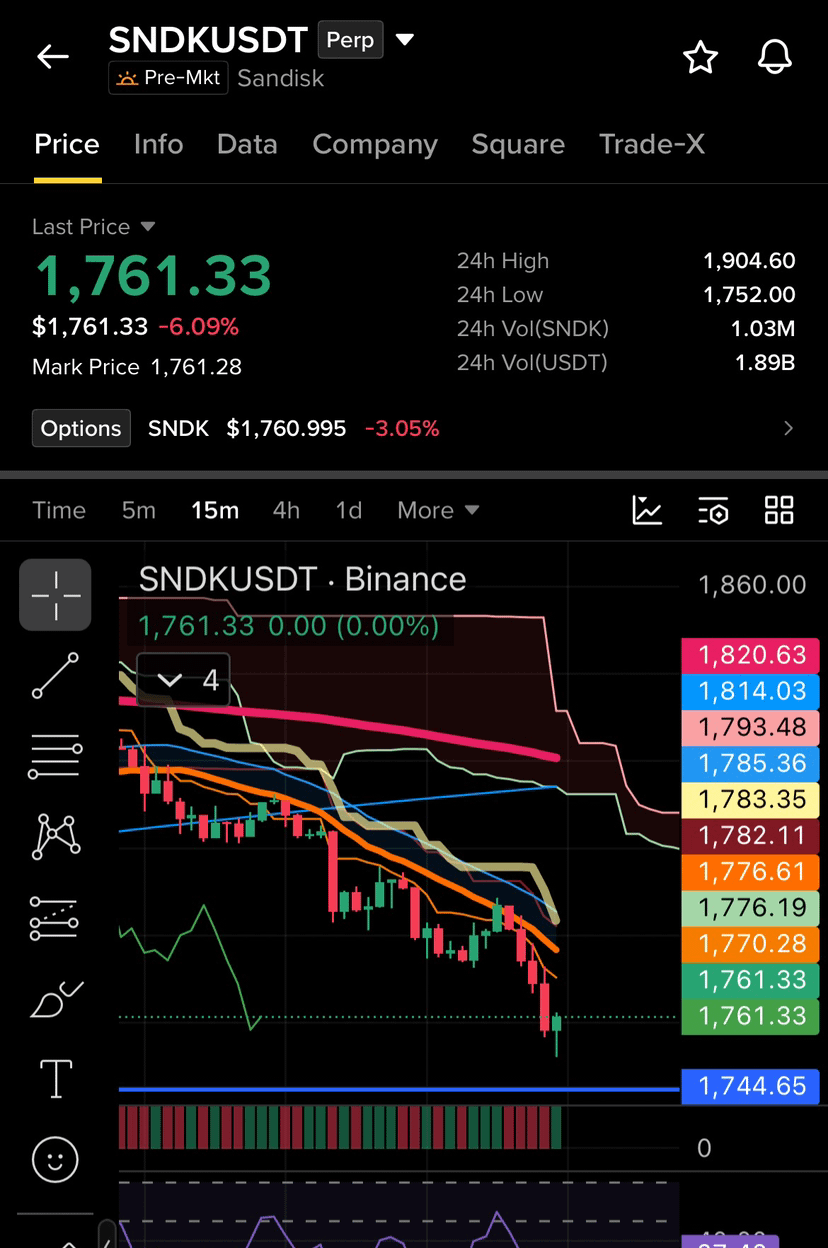
ブリッシュ#SNDKUSDT (Sandisk Perp)15分足 チャート テクニカル分析&高確率トレードのセットアップ📈📈💥🚀
チャートの現在のスナップショット:
最終: 1,761.33(−6.09%)
24h 高値: 1,904.60|24h 安値: 1,752.00
RSI: 約27.42(かなり売られ過ぎ)
明確な弱気の構造——価格は主要な移動平均線(ピンク/イエロー/ブルー/オレンジ)のすべてを下回り、連続する安値更新と切り下げ、高値安値ともに下落。ブレイク後の強い売り出来高。
価格は1,820〜1,860のゾーンから大きく下落し、直近の安値付近の1,752〜1,761の需要エリアをテスト中。水平サポートは約1,744.65。
📈LONG(ロング)セットアップ(逆張り:買い戻し狙い—売られ過ぎRSI)
サポート上で強い奪回&維持ができた場合のみ。
- 理想エントリー: 1,752〜1,760(強気のローソク+出来高での反発確認)
- ストップロス: 1,735(24h安値の下+バッファ)
- 利確:
- TP1: 1,783〜1,790
- TP2: 1,810〜1,820
- TP3: 1,850
リスクリワード: 最低1:2
出来高を伴って1,744を下回って終値を付けた場合は無効。
注目すべき主要水準
サポート: 1,752 → 1,744 → 1,720
レジスタンス: 1,770 / 1,783 / 1,810 / 1,820
プロのコツ:
ローソク足のクローズ確認を待つこと。出来高&ファンディングレートがこのTradFiパーペト(無期限)では重要。
TPで段階的に利確し、常に適切なポジションサイズ(最大でもリスク1〜2%)を使用。
これは構造、移動平均線の拒否、そしてRSIの極端な水準に基づく、きれいな高RRセットアップです。リスク管理は厳密に——取引が100%保証されるものではありません。
#SNDKUSDT #Sandisk
投資助言ではありません。DYOR(自己調査を)。あなた自身の判断と責任で取引してください。$SNDKB
チャートの現在のスナップショット:
最終: 1,761.33(−6.09%)
24h 高値: 1,904.60|24h 安値: 1,752.00
RSI: 約27.42(かなり売られ過ぎ)
明確な弱気の構造——価格は主要な移動平均線(ピンク/イエロー/ブルー/オレンジ)のすべてを下回り、連続する安値更新と切り下げ、高値安値ともに下落。ブレイク後の強い売り出来高。
価格は1,820〜1,860のゾーンから大きく下落し、直近の安値付近の1,752〜1,761の需要エリアをテスト中。水平サポートは約1,744.65。
📈LONG(ロング)セットアップ(逆張り:買い戻し狙い—売られ過ぎRSI)
サポート上で強い奪回&維持ができた場合のみ。
- 理想エントリー: 1,752〜1,760(強気のローソク+出来高での反発確認)
- ストップロス: 1,735(24h安値の下+バッファ)
- 利確:
- TP1: 1,783〜1,790
- TP2: 1,810〜1,820
- TP3: 1,850
リスクリワード: 最低1:2
出来高を伴って1,744を下回って終値を付けた場合は無効。
注目すべき主要水準
サポート: 1,752 → 1,744 → 1,720
レジスタンス: 1,770 / 1,783 / 1,810 / 1,820
プロのコツ:
ローソク足のクローズ確認を待つこと。出来高&ファンディングレートがこのTradFiパーペト(無期限)では重要。
TPで段階的に利確し、常に適切なポジションサイズ(最大でもリスク1〜2%)を使用。
これは構造、移動平均線の拒否、そしてRSIの極端な水準に基づく、きれいな高RRセットアップです。リスク管理は厳密に——取引が100%保証されるものではありません。
#SNDKUSDT #Sandisk
投資助言ではありません。DYOR(自己調査を)。あなた自身の判断と責任で取引してください。$SNDKB
ログインして、さらにコンテンツを読む