Binance Square

Jeeya_Awan

MPhil Student | 📚 🌍 Exploring crypto 💡 Excited to grow in digital finance | Let’s connect, learn & grow in blockchain 🚀
取引を発注
超高頻度トレーダー
2.7年
558 フォロー
18.8K+ フォロワー
6.4K+ いいね
146 共有
投稿
ポートフォリオ
PINNED
·
--
PINNED
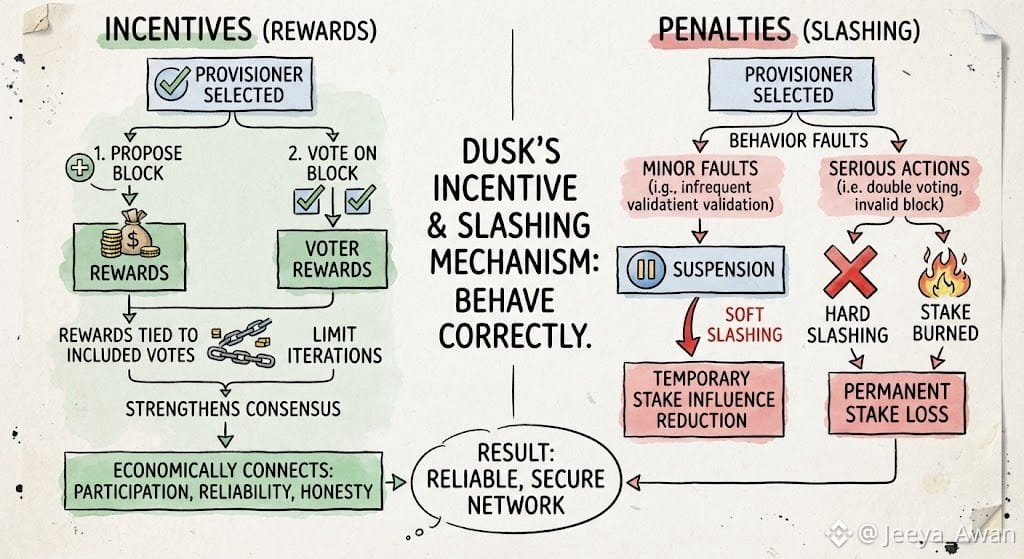
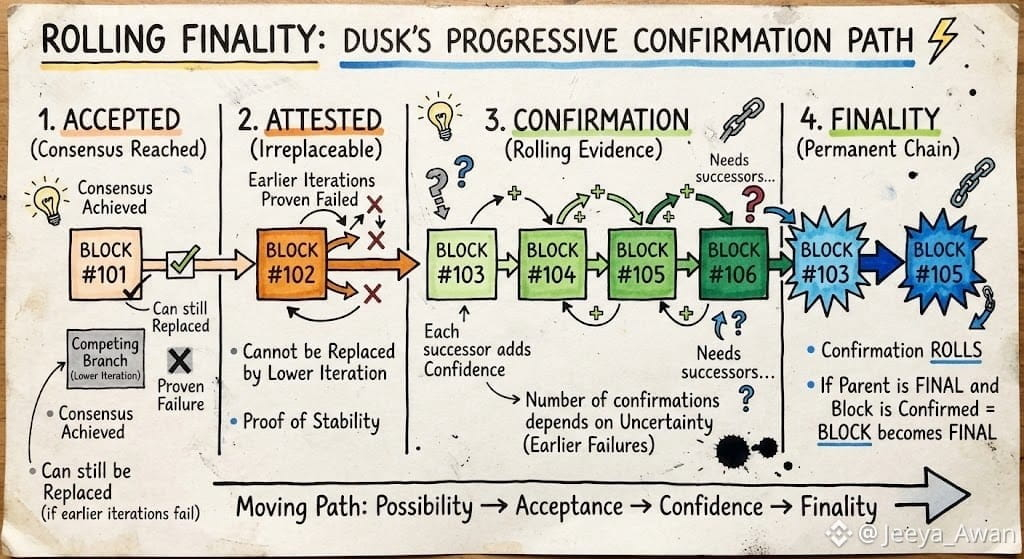
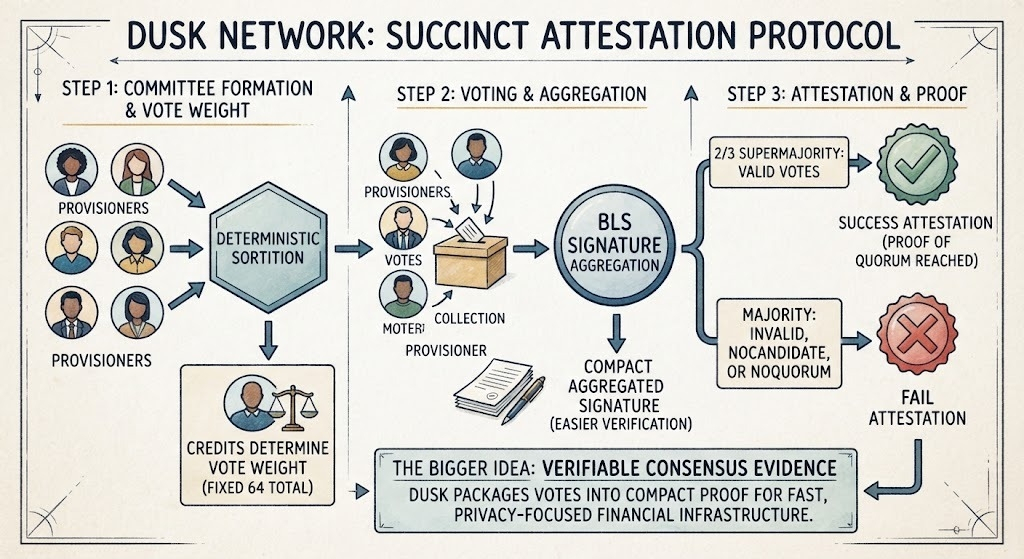
Dusk Network: Where Privacy Meets TrustIn the ever-changing world of blockchain, public execution often harbors numerous risks, such as data tampering, information leakage, and privacy breaches. Dusk Network, as a leading solution, aims to eliminate these risks, tailoring a confidential, compliant, and decentralized platform for the financial industry. It is an "authorized software suite" that enables on-chain applications to maintain user anonymity while complying with regulatory standards, thus compensating for the shortcomings of transparent blockchains like Ethereum. How does Dusk prevent these risks? 1️⃣ Eliminating Data Tampering and Information Leakage Traditional blockchains expose transaction data to caching pools, making them vulnerable to sandwich attacks or botnet attacks that exploit transaction time and volume. Dusk addresses this through: Zero-Knowledge Proofs (ZKP): Verifying transactions without disclosing sensitive information. Phoenix Transaction Model: Hiding balances and transaction processes to prevent others from tracing transaction strategies. Secret Smart Contracts: Executing private financial agreements and proprietary program logic without data leakage. 2️⃣ Balancing Privacy and Compliance Privacy-conscious cryptocurrencies often fail to meet institutional requirements due to their data concealment from everyone, including regulators. Dusk addresses this issue through: Selective Disclosure: Cryptographic authentication allows participants to demonstrate compliance with Anti-Money Laundering/Know Your Customer (AML/KYC) regulations while maintaining the confidentiality of critical data. Secret Secure Contracts (XSC): Institutional assets are managed on the blockchain according to MiCA and MiFID II standards. 3️⃣ Reducing Settlement Risk and Improving Performance Succinct Authentication (SA): A dedicated Proof-of-Stake (PoS) consensus mechanism ensures near-instant settlement and eliminates the risk of reorganization. Kadcast Network: A high-efficiency peer-to-peer (P2P) protocol for efficiently handling high-throughput financial data. Key Features Dusk integrates protocol-level privacy protection through the Rusk Virtual Machine, transforming regulated financial systems into a system as secure and reliable as a Swiss bank vault on Ethereum. Dual transaction models offer high resilience: Moonlight: Transparent, account-based transfers. Phoenix: Private settlement based on Unspent Transaction Outputs (UTXOs). By separating execution, settlement, and compliance, Dusk reduces market manipulation, transaction validation (MEV) costs, and auditor targeting, while ensuring institutions operate securely and compliantly. Confidential smart contracts, deterministic finality, and dual transaction models make Dusk a unique solution that balances privacy, trust, and compliance. The Dusk network is more than just a blockchain; it represents the future of secure, compliant, and private finance. $DUSK #Dusk @Dusk_Foundation {spot}(DUSKUSDT)

Dusk Network: Where Privacy Meets Trust

In the ever-changing world of blockchain, public execution often harbors numerous risks, such as data tampering, information leakage, and privacy breaches. Dusk Network, as a leading solution, aims to eliminate these risks, tailoring a confidential, compliant, and decentralized platform for the financial industry. It is an "authorized software suite" that enables on-chain applications to maintain user anonymity while complying with regulatory standards, thus compensating for the shortcomings of transparent blockchains like Ethereum.

How does Dusk prevent these risks?
1️⃣ Eliminating Data Tampering and Information Leakage
Traditional blockchains expose transaction data to caching pools, making them vulnerable to sandwich attacks or botnet attacks that exploit transaction time and volume. Dusk addresses this through:
Zero-Knowledge Proofs (ZKP): Verifying transactions without disclosing sensitive information.
Phoenix Transaction Model: Hiding balances and transaction processes to prevent others from tracing transaction strategies.
Secret Smart Contracts: Executing private financial agreements and proprietary program logic without data leakage.
2️⃣ Balancing Privacy and Compliance
Privacy-conscious cryptocurrencies often fail to meet institutional requirements due to their data concealment from everyone, including regulators. Dusk addresses this issue through:
Selective Disclosure: Cryptographic authentication allows participants to demonstrate compliance with Anti-Money Laundering/Know Your Customer (AML/KYC) regulations while maintaining the confidentiality of critical data.
Secret Secure Contracts (XSC): Institutional assets are managed on the blockchain according to MiCA and MiFID II standards.
3️⃣ Reducing Settlement Risk and Improving Performance
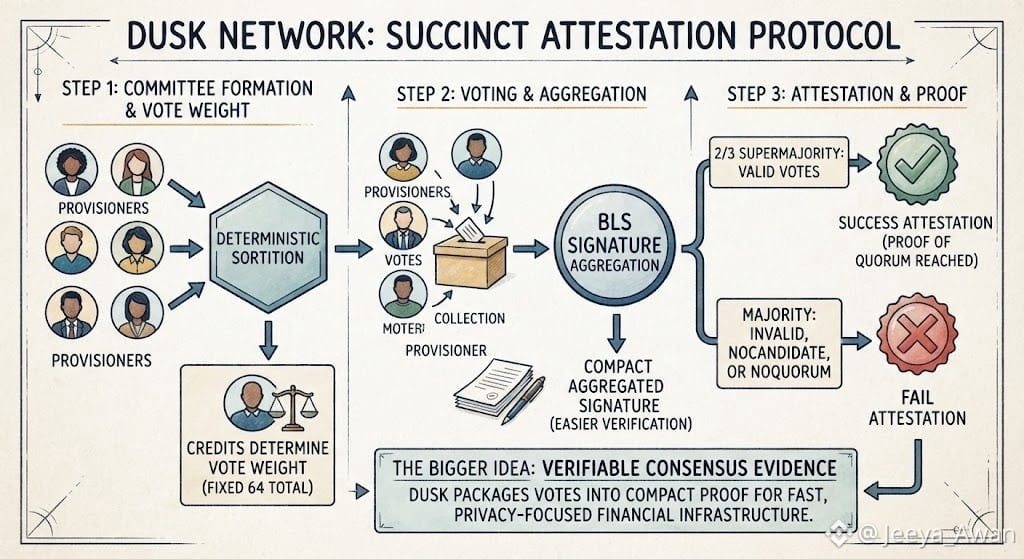
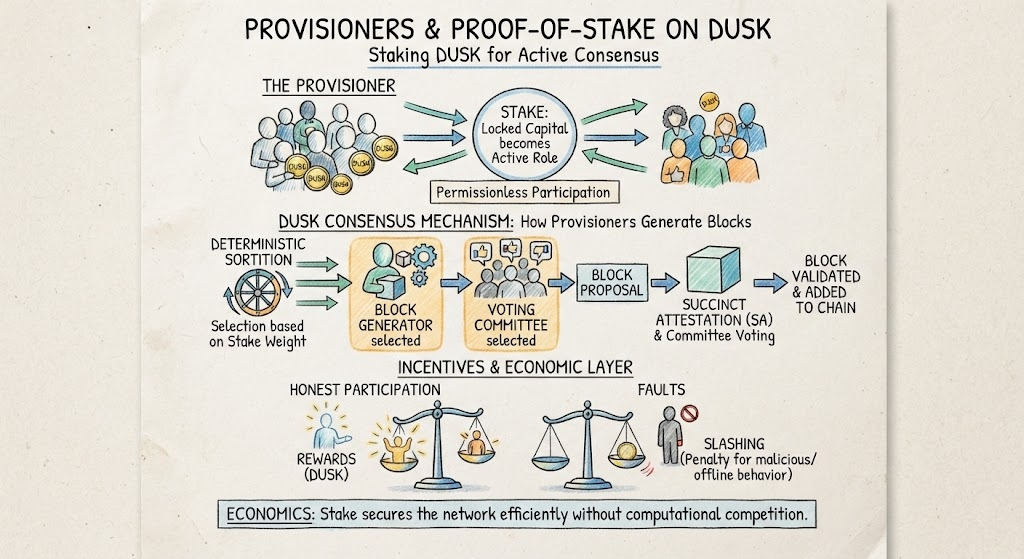
Succinct Authentication (SA): A dedicated Proof-of-Stake (PoS) consensus mechanism ensures near-instant settlement and eliminates the risk of reorganization.
Kadcast Network: A high-efficiency peer-to-peer (P2P) protocol for efficiently handling high-throughput financial data.

Key Features
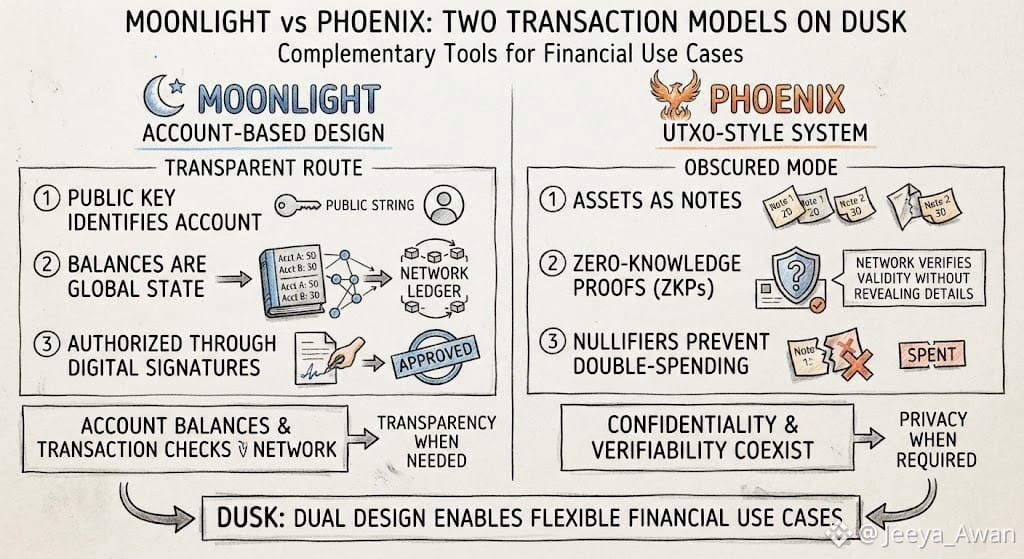
Dusk integrates protocol-level privacy protection through the Rusk Virtual Machine, transforming regulated financial systems into a system as secure and reliable as a Swiss bank vault on Ethereum. Dual transaction models offer high resilience:
Moonlight:
Transparent, account-based transfers.
Phoenix:
Private settlement based on Unspent Transaction Outputs (UTXOs).

By separating execution, settlement, and compliance, Dusk reduces market manipulation, transaction validation (MEV) costs, and auditor targeting, while ensuring institutions operate securely and compliantly. Confidential smart contracts, deterministic finality, and dual transaction models make Dusk a unique solution that balances privacy, trust, and compliance.
The Dusk network is more than just a blockchain; it represents the future of secure, compliant, and private finance.
$DUSK #Dusk @Dusk
In today's world, where transparency often comes at the cost of freedom, the DUSK network stands as a bastion of privacy. With its advanced compliance tools and privacy-first architecture, it is not just blockchain technology, but a blueprint for secure, decentralized finance of the future. The DUSK era has arrived, and modern finance will be transformed. $DUSK #Dusk @Dusk_Foundation {spot}(DUSKUSDT)
In today's world, where transparency often comes at the cost of freedom, the DUSK network stands as a bastion of privacy. With its advanced compliance tools and privacy-first architecture, it is not just blockchain technology, but a blueprint for secure, decentralized finance of the future. The DUSK era has arrived, and modern finance will be transformed.
$DUSK #Dusk @Dusk
The Walrus protocol constructs a complex data ecosystem, leveraging RedStuff technology for smart contract management, storage, and data sharding to enhance system resilience. From AI datasets to non-fungible tokens (NFTs) and decentralized websites, every byte is verifiable. The Walrus currency (WAL) economic system secures nodes, drives growth, and promotes its positive applications in Web 3, esports, and media. $WAL #Walrus @WalrusProtocol
The Walrus protocol constructs a complex data ecosystem, leveraging RedStuff technology for smart contract management, storage, and data sharding to enhance system resilience. From AI datasets to non-fungible tokens (NFTs) and decentralized websites, every byte is verifiable. The Walrus currency (WAL) economic system secures nodes, drives growth, and promotes its positive applications in Web 3, esports, and media.
$WAL #Walrus @Walrus 🦭/acc
信頼から証明へ: Walrusプロトコルが権力を可視化するWalrusは、透明性をブロックチェーンガバナンスに再定義し、不透明な仲介者から検証可能な暗号的現実へと権力を移行させます。機関や中央集権的インフラに対する信頼に依存する代わりに、Walrusはガバナンス、データ、アクセスが完全に透明であるガバナンスアーキテクチャを構築します—可視的、検証可能、かつ不変です。 私の研究によると、Walrusプロトコルは制御層全体にわたって透明性を提供します。 x軸はWalrusプロトコルの制御層とデータ層を示し、y軸は概念的透明性を反映しています。オンチェーンガバナンス、権限証明、および監査ログは、その公的な検証可能性のために優先されています。スマートコントラクトと分散型ストレージは構造的な明確さを確保し、プログラム可能なアクセスと選択的開示は透明性とプライバシーのバランスを取ります。

信頼から証明へ: Walrusプロトコルが権力を可視化する

Walrusは、透明性をブロックチェーンガバナンスに再定義し、不透明な仲介者から検証可能な暗号的現実へと権力を移行させます。機関や中央集権的インフラに対する信頼に依存する代わりに、Walrusはガバナンス、データ、アクセスが完全に透明であるガバナンスアーキテクチャを構築します—可視的、検証可能、かつ不変です。
私の研究によると、Walrusプロトコルは制御層全体にわたって透明性を提供します。

x軸はWalrusプロトコルの制御層とデータ層を示し、y軸は概念的透明性を反映しています。オンチェーンガバナンス、権限証明、および監査ログは、その公的な検証可能性のために優先されています。スマートコントラクトと分散型ストレージは構造的な明確さを確保し、プログラム可能なアクセスと選択的開示は透明性とプライバシーのバランスを取ります。
Plasma is a Layer 1 blockchain designed with a focus on long-term stablecoin infrastructure development, rather than short-term media hype. With its structured vesting, ecosystem-based token economy, and infrastructure-first design, XPL serves as a high-capacity, near-instantaneous network engine for stablecoin payments. Its vision is to become a community-governed, "invisible" global settlement layer designed to ensure long-term usability. $XPL #Plasma @Plasma {spot}(XPLUSDT)
Plasma is a Layer 1 blockchain designed with a focus on long-term stablecoin infrastructure development, rather than short-term media hype. With its structured vesting, ecosystem-based token economy, and infrastructure-first design, XPL serves as a high-capacity, near-instantaneous network engine for stablecoin payments. Its vision is to become a community-governed, "invisible" global settlement layer designed to ensure long-term usability.
$XPL #Plasma @Plasma
From Speculation to Utility: Plasma’s 2026 Inflection PointPlasma is expected to become an industry giant by early 2026, transitioning from its highly anticipated pilot phase in late 2025 to a dedicated stablecoin infrastructure layer designed for high-frequency, low-cost USD transfers. Unlike traditional Layer 1 blockchains used for speculation, Plasma is positioning itself as a reliable, fee-free stablecoin network to address the shortcomings of traditional banking and other blockchain networks. Its focus on practicality, compliance, and enterprise-grade infrastructure has attracted widespread attention from investors, developers, and financial institutions. In my research, I found plasma very impactful in the ecosystem. A key factor driving this attention is the free USDT transfers at the Plasma protocol level. By eliminating transaction fees, the network facilitates fund transfers, cross-border payments, and everyday small transactions. This makes Plasma a practical tool for global payments, not just a speculative one. Furthermore, the launch of the Plasma One digital banking application provides a user-friendly interface, enabling users to spend, save, and earn yield using USDT. This application supports virtual and physical Visa cards in over 150 countries, bridging the gap between cryptocurrency infrastructure and traditional financial applications.Performance and security are key differentiating advantages. Plasma utilizes the PlasmaBFT mechanism to ensure sub-second transaction processing speeds and high-speed execution, guaranteeing instant transaction confirmation—a prerequisite for real-world payment applications. Its secure Bitcoin bridge further enhances security and provides a reliable benchmark for participating institutions. Regulatory compliance and institutional trust are the cornerstones of XPL's reputation. Plasma has obtained Virtual Asset Service Provider (VASP) authorization in Italy, enabling it to operate legally in Europe. Strategic support from major investors such as Founders Fund, Bitfinex, and Bybit, as well as the backing of Tether CEO Paolo Ardoino, underscores confidence in its long-term sustainability. The planned storage system, slated for launch in 2026, aims to provide liquidity and reduce token supply. By allowing XPL token holders to store their tokens, the circulating supply will decrease, encouraging long-term participation and increasing token value. This makes XPL a "gold mine" for investors focused on sustainable growth rather than short-term speculation. Other key developments include strategy integrations, such as the integration with NEAR Intents, which connects XPL to a liquidity network spanning over 25 blockchains. This expands its application in high-volume cross-chain stablecoin settlements, further enhancing its value in practical use. In short, XPL is gaining increasing attention in 2026 due to its zero-fee stablecoin payments, high efficiency, compliance, and institutional support, as well as a clear path to widespread adoption through the Plasma One application and strategy integrations. From its highly anticipated launch to its current fully functional, compliant, and dedicated payment network, XPL's evolution highlights its immense potential to revolutionize stablecoin architecture and cross-border payments. $XPL #Plasma @Plasma {spot}(XPLUSDT)

From Speculation to Utility: Plasma’s 2026 Inflection Point

Plasma is expected to become an industry giant by early 2026, transitioning from its highly anticipated pilot phase in late 2025 to a dedicated stablecoin infrastructure layer designed for high-frequency, low-cost USD transfers. Unlike traditional Layer 1 blockchains used for speculation, Plasma is positioning itself as a reliable, fee-free stablecoin network to address the shortcomings of traditional banking and other blockchain networks. Its focus on practicality, compliance, and enterprise-grade infrastructure has attracted widespread attention from investors, developers, and financial institutions.

In my research, I found plasma very impactful in the ecosystem.

A key factor driving this attention is the free USDT transfers at the Plasma protocol level. By eliminating transaction fees, the network facilitates fund transfers, cross-border payments, and everyday small transactions. This makes Plasma a practical tool for global payments, not just a speculative one. Furthermore, the launch of the Plasma One digital banking application provides a user-friendly interface, enabling users to spend, save, and earn yield using USDT. This application supports virtual and physical Visa cards in over 150 countries, bridging the gap between cryptocurrency infrastructure and traditional financial applications.Performance and security are key differentiating advantages. Plasma utilizes the PlasmaBFT mechanism to ensure sub-second transaction processing speeds and high-speed execution, guaranteeing instant transaction confirmation—a prerequisite for real-world payment applications. Its secure Bitcoin bridge further enhances security and provides a reliable benchmark for participating institutions.
Regulatory compliance and institutional trust are the cornerstones of XPL's reputation.
Plasma has obtained Virtual Asset Service Provider (VASP) authorization in Italy, enabling it to operate legally in Europe. Strategic support from major investors such as Founders Fund, Bitfinex, and Bybit, as well as the backing of Tether CEO Paolo Ardoino, underscores confidence in its long-term sustainability.
The planned storage system, slated for launch in 2026, aims to provide liquidity and reduce token supply. By allowing XPL token holders to store their tokens, the circulating supply will decrease, encouraging long-term participation and increasing token value. This makes XPL a "gold mine" for investors focused on sustainable growth rather than short-term speculation.

Other key developments include strategy integrations, such as the integration with NEAR Intents, which connects XPL to a liquidity network spanning over 25 blockchains. This expands its application in high-volume cross-chain stablecoin settlements, further enhancing its value in practical use. In short, XPL is gaining increasing attention in 2026 due to its zero-fee stablecoin payments, high efficiency, compliance, and institutional support, as well as a clear path to widespread adoption through the Plasma One application and strategy integrations. From its highly anticipated launch to its current fully functional, compliant, and dedicated payment network, XPL's evolution highlights its immense potential to revolutionize stablecoin architecture and cross-border payments.

$XPL #Plasma @Plasma
$RESOLV / $USDT : Current Price: $0.859 Resistance : $0.080. Support: $0.072 – $0.075. Buy: Near $0.075. Sell: Take profits near $0.090 – $0.10 as momentum is currently shaky.
$RESOLV / $USDT :
Current Price: $0.859
Resistance : $0.080.
Support: $0.072 – $0.075.
Buy: Near $0.075.
Sell: Take profits near $0.090 – $0.10 as momentum is currently shaky.
AXS/USDT
価格
2.171
$ZRO / $USDT : Current Price: $1.962 • Look for entries near $1.95 – $2.00. This is currently a high-probability rebound play zone. Target: $2.15 (TP1), $2.35 (TP2). Stop-Loss: Below $1.92. A daily close below this level invalidates the bullish structure.
$ZRO / $USDT :
Current Price: $1.962
• Look for entries near $1.95 – $2.00. This is currently a high-probability rebound play zone.
Target: $2.15 (TP1), $2.35 (TP2).
Stop-Loss: Below $1.92. A daily close below this level invalidates the bullish structure.
SENT/USDT
価格
0.0378
DUSK: 伝統的金融とブロックチェーン技術をつなぐ架け橋 DUSKは、伝統的な金融機関がブロックチェーン上で資産を安全かつプライベートに管理できるようにします。統合されたコンプライアンス自動化と規制に準拠したインフラにより、機関はプライバシーと規制の安全性を確保しながら、現実の資産をデジタル化して取引することができ、伝統的なシステムと現代の分散型金融のギャップを埋めます。 @Dusk_Foundation #Dusk $DUSK {spot}(DUSKUSDT)
DUSK: 伝統的金融とブロックチェーン技術をつなぐ架け橋
DUSKは、伝統的な金融機関がブロックチェーン上で資産を安全かつプライベートに管理できるようにします。統合されたコンプライアンス自動化と規制に準拠したインフラにより、機関はプライバシーと規制の安全性を確保しながら、現実の資産をデジタル化して取引することができ、伝統的なシステムと現代の分散型金融のギャップを埋めます。
@Dusk #Dusk $DUSK
Dusk Network: Bridging Physical Assets To BlockchainI recently conducted in-depth research on the Dusk network. Dusk is a Layer 1 blockchain designed specifically for the tokenization of regulated entity assets. Dusk's uniqueness lies in its privacy-compliance architecture, which provides a fully automated on-chain verification infrastructure while ensuring confidentiality. Unlike traditional blockchains, Dusk integrates zero-knowledge proof (ZKP) technology and the Piecrust virtual machine, enabling the direct application of legal and regulatory constraints through smart contracts. This innovation ensures the secure and compliant digitization of entity assets without disclosing any sensitive information. A key feature of Dusk is its self-checking and verification mechanism, often referred to as "programmable privacy." Compliance checks (such as Know Your Customer (KYC)/Anti-Money Laundering (AML) requirements or investor eligibility standards) are embedded at the smart contract level, minimizing reliance on human oversight. The Dusk platform utilizes ZK-SNARKs technology, enabling institutions to verify asset compliance with regulatory standards (such as compliance with the European Securities and Markets Act (MiCA)) without disclosing any private or confidential information. The network includes specialized tools such as Zedger, enabling asset tokenization while protecting privacy; and the Citadel protocol, which allows participants to verify identity and compliance information without disclosing personally identifiable information (PII). Dusk also supports a blockchain-based asset bridge that integrates AI-driven inspection tools such as IoT sensors, drones, and computer vision systems. This bridge ensures the automatic verification and recording of the physical condition of assets on the blockchain, creating a reliable digital twin that reflects reality. Functionally, Dusk offers several key advantages for custodial asset tokenization (RWA). Regulated privacy (RegDeFi) allows institutions to tokenize high-value assets (such as the €300 million securities in partnership with NPEX) on public blockchains without disclosing company secrets. Short Byzantine Protocols (SBA) ensure rapid transaction execution, crucial for efficient trading of physical assets. Furthermore, the XSC standard protects privacy while restricting asset ownership and transfer to qualified participants. Through these innovations, the Dusk network transforms the process of converting physical assets into digital tokens from a document-intensive, manual process into a fully automated, auditable, and standards-compliant blockchain ecosystem. Its integration of privacy, compliance, and automation makes it a leading solution in the digitization of regulated assets and provides a paradigm for how blockchain technology can securely interact with real-world finance. My research confirms that Dusk is not merely a technological innovation, but a practical framework bridging the physical and digital worlds of regulated finance. @Dusk_Foundation #Dusk $DUSK {spot}(DUSKUSDT)

Dusk Network: Bridging Physical Assets To Blockchain

I recently conducted in-depth research on the Dusk network. Dusk is a Layer 1 blockchain designed specifically for the tokenization of regulated entity assets. Dusk's uniqueness lies in its privacy-compliance architecture, which provides a fully automated on-chain verification infrastructure while ensuring confidentiality.
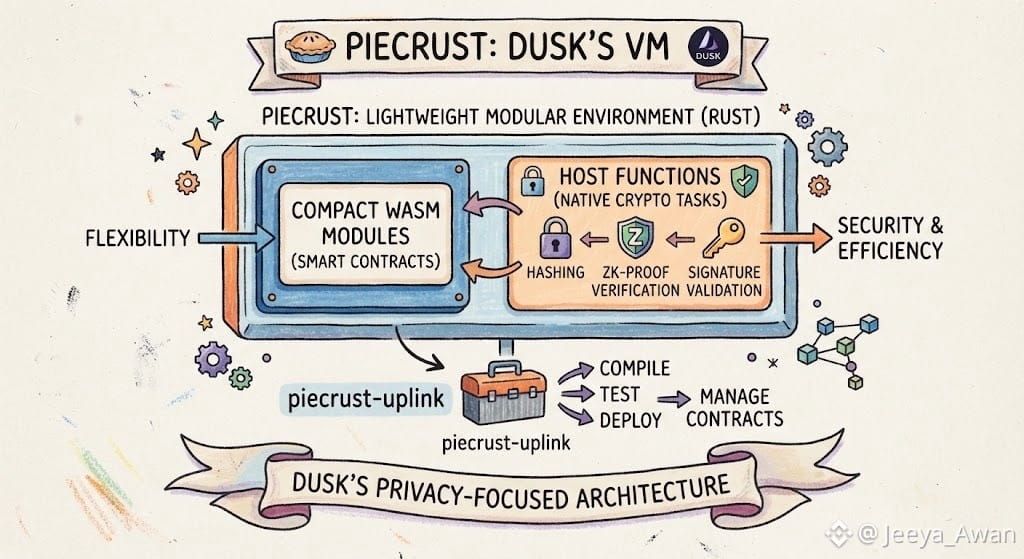
Unlike traditional blockchains, Dusk integrates zero-knowledge proof (ZKP) technology and the Piecrust virtual machine, enabling the direct application of legal and regulatory constraints through smart contracts. This innovation ensures the secure and compliant digitization of entity assets without disclosing any sensitive information.

A key feature of Dusk is its self-checking and verification mechanism, often referred to as "programmable privacy." Compliance checks (such as Know Your Customer (KYC)/Anti-Money Laundering (AML) requirements or investor eligibility standards) are embedded at the smart contract level, minimizing reliance on human oversight. The Dusk platform utilizes ZK-SNARKs technology, enabling institutions to verify asset compliance with regulatory standards (such as compliance with the European Securities and Markets Act (MiCA)) without disclosing any private or confidential information.
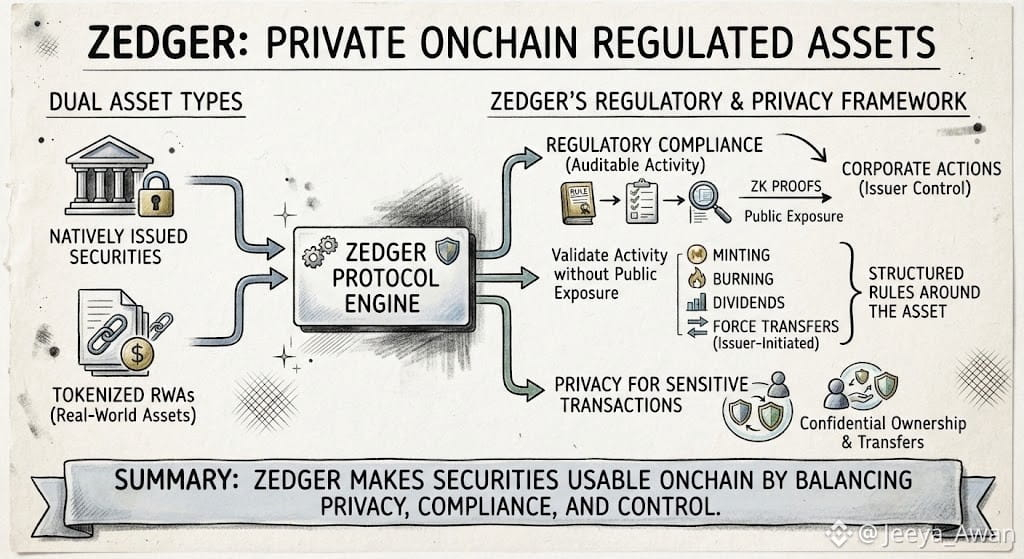
The network includes specialized tools such as Zedger, enabling asset tokenization while protecting privacy; and the Citadel protocol, which allows participants to verify identity and compliance information without disclosing personally identifiable information (PII). Dusk also supports a blockchain-based asset bridge that integrates AI-driven inspection tools such as IoT sensors, drones, and computer vision systems. This bridge ensures the automatic verification and recording of the physical condition of assets on the blockchain, creating a reliable digital twin that reflects reality.
Functionally, Dusk offers several key advantages for custodial asset tokenization (RWA). Regulated privacy (RegDeFi) allows institutions to tokenize high-value assets (such as the €300 million securities in partnership with NPEX) on public blockchains without disclosing company secrets. Short Byzantine Protocols (SBA) ensure rapid transaction execution, crucial for efficient trading of physical assets. Furthermore, the XSC standard protects privacy while restricting asset ownership and transfer to qualified participants.

Through these innovations, the Dusk network transforms the process of converting physical assets into digital tokens from a document-intensive, manual process into a fully automated, auditable, and standards-compliant blockchain ecosystem. Its integration of privacy, compliance, and automation makes it a leading solution in the digitization of regulated assets and provides a paradigm for how blockchain technology can securely interact with real-world finance.

My research confirms that Dusk is not merely a technological innovation, but a practical framework bridging the physical and digital worlds of regulated finance.
@Dusk #Dusk $DUSK
Sovereign Data Management in the Walrus ProtocolWalrus's sovereign data management signifies a major shift towards a decentralized, user-controlled storage model, freeing users from reliance on centralized cloud service providers. Built on the Sui blockchain, Walrus is designed to meet the growing demand for secure, efficient, and private storage of large unstructured data archives. Key Aspects of Sovereign Data Management: Decentralized Ownership: Unlike traditional cloud service providers like AWS or Google Cloud that act as data custodians, Walrus empowers users with complete control over their data through cryptographic security measures rather than corporate policies. Users are the ultimate owners, and no third party can access or tamper with their data. Pre-Encryption: All data uploaded to Walrus is encrypted before distribution. This ensures that storage service providers cannot read, analyze, or review hosted content, thus maintaining stringent privacy standards. Data Sovereignty and Privacy: Walrus uses encrypted, segmented, and distributed storage to prevent any party from blocking, modifying, or deleting content. This design ensures true data sovereignty and enhances privacy at the network layer. Sui as the Control Layer: The Sui blockchain acts as the control layer, managing metadata and deploying Proof-of-Availability (PoA) credentials on-chain. Even if data is not on-chain, it remains verifiable, secure, and under the control of its owner. RedStuff Erasure Coding: Walrus uses a two-dimensional RedStuff coding algorithm to divide data into encrypted fragments or "slices" distributed across multiple nodes. This ensures that data can be reconstructed even if many nodes fail, providing resilience and high availability. Technical Foundation: Large Binary Data Storage (Blob Storage): Walrus focuses on storing large binary files, including video, image, and AI datasets, which are difficult to store on a blockchain. Programmable Storage: Each large binary data item and storage unit is represented as an object on the Sui blockchain, which developers can programmatically manage, update, or delete through smart contracts. WAL Token Incentives: The native WAL token incentivizes storage providers, ensuring data reliability, high uptime, and continuous availability. Benefits for Users and Developers: Censorship Resistance: The decentralized architecture prevents data deletion by authorities or centralized entities. High-Performance Storage: By using 4-5 times redundancy instead of full replication, Walrus significantly reduces costs compared to traditional cloud storage. Data Continuity: A self-healing mechanism automatically rebuilds lost portions, enhancing data resilience and long-term reliability. Overall, the Walrus platform is designed as a core infrastructure layer for Web3 applications, enabling them to maintain decentralization, security, and complete user control in increasingly complex applications. The combination of encrypted storage, blockchain verification, and programmable control makes it an ideal solution for meeting modern data sovereignty requirements. I analyzed the sovereign data management metrics and architecture of Walrus Protocol: @WalrusProtocol #Walrus $WAL {spot}(WALUSDT)

Sovereign Data Management in the Walrus Protocol

Walrus's sovereign data management signifies a major shift towards a decentralized, user-controlled storage model, freeing users from reliance on centralized cloud service providers. Built on the Sui blockchain, Walrus is designed to meet the growing demand for secure, efficient, and private storage of large unstructured data archives.

Key Aspects of Sovereign Data Management:
Decentralized Ownership: Unlike traditional cloud service providers like AWS or Google Cloud that act as data custodians, Walrus empowers users with complete control over their data through cryptographic security measures rather than corporate policies. Users are the ultimate owners, and no third party can access or tamper with their data.
Pre-Encryption: All data uploaded to Walrus is encrypted before distribution. This ensures that storage service providers cannot read, analyze, or review hosted content, thus maintaining stringent privacy standards.
Data Sovereignty and Privacy: Walrus uses encrypted, segmented, and distributed storage to prevent any party from blocking, modifying, or deleting content. This design ensures true data sovereignty and enhances privacy at the network layer.
Sui as the Control Layer: The Sui blockchain acts as the control layer, managing metadata and deploying Proof-of-Availability (PoA) credentials on-chain. Even if data is not on-chain, it remains verifiable, secure, and under the control of its owner.
RedStuff Erasure Coding: Walrus uses a two-dimensional RedStuff coding algorithm to divide data into encrypted fragments or "slices" distributed across multiple nodes. This ensures that data can be reconstructed even if many nodes fail, providing resilience and high availability.

Technical Foundation:
Large Binary Data Storage (Blob Storage): Walrus focuses on storing large binary files, including video, image, and AI datasets, which are difficult to store on a blockchain.
Programmable Storage: Each large binary data item and storage unit is represented as an object on the Sui blockchain, which developers can programmatically manage, update, or delete through smart contracts.
WAL Token Incentives: The native WAL token incentivizes storage providers, ensuring data reliability, high uptime, and continuous availability.
Benefits for Users and Developers:
Censorship Resistance: The decentralized architecture prevents data deletion by authorities or centralized entities.
High-Performance Storage: By using 4-5 times redundancy instead of full replication, Walrus significantly reduces costs compared to traditional cloud storage.
Data Continuity: A self-healing mechanism automatically rebuilds lost portions, enhancing data resilience and long-term reliability.

Overall, the Walrus platform is designed as a core infrastructure layer for Web3 applications, enabling them to maintain decentralization, security, and complete user control in increasingly complex applications. The combination of encrypted storage, blockchain verification, and programmable control makes it an ideal solution for meeting modern data sovereignty requirements.

I analyzed the sovereign data management metrics and architecture of Walrus Protocol:

@Walrus 🦭/acc #Walrus $WAL
The Walrus protocol on the DevNet network provides a powerful and scalable storage solution, handling over 12.3PB of data across more than 280k Pipe Network access points globally with extremely low latency of less than 50 milliseconds. The protocol employs 2D Red Stuff coding with 4-5 times data redundancy, ensuring flexible and high-throughput storage for data-intensive applications such as decentralized AI, balancing capacity, speed, and efficiency in a decentralized architecture. @WalrusProtocol #Walrus $WAL {spot}(WALUSDT)
The Walrus protocol on the DevNet network provides a powerful and scalable storage solution, handling over 12.3PB of data across more than 280k Pipe Network access points globally with extremely low latency of less than 50 milliseconds. The protocol employs 2D Red Stuff coding with 4-5 times data redundancy, ensuring flexible and high-throughput storage for data-intensive applications such as decentralized AI, balancing capacity, speed, and efficiency in a decentralized architecture.
@Walrus 🦭/acc #Walrus $WAL
Plasma: Transparency as a Risk Mitigation StrategyIn my research, I analyze how Plasma (XPL) establishes transparency as a core risk mitigation strategy in a Layer-1 blockchain focused on stablecoins, and how this approach compares with established networks like Tron and Ethereum. The Plasma network excels in governance, operational transparency, compliance, and technical risk mitigation, with a particular focus on institutional trust and stablecoin settlement. Tron ranks at the bottom, sacrificing transparency for efficiency, while Ethereum falls somewhere in between, offering high decentralization but slightly lacking in compliance and technical risk management. This highlights Plasma's strength in transparency-based risk mitigation. With the increasing use of stablecoins in enterprise and cross-border payment applications, transparency has become a critical factor in mitigating governance, operational, and regulatory risks. Plasma integrates transparency directly into its governance through the XPL token. Network upgrades, economic standards, and auditor involvement are designed to be community-driven and auditable, reducing the risk of unilateral decision-making. In contrast, while efficient and widely used in stablecoin transactions, Tron has faced criticism for its centralized governance and limited transparency regarding auditor influence. While Ethereum is highly decentralized, it relies on complex governance processes and off-chain coordination, which can slow down risk response during periods of congestion or high demand. Operationally, Plasma addresses the risks of opaque reserves and settlement uncertainty by focusing on blockchain auditability. Transaction records, reserve certificates, and redemption guarantees are designed to be directly verifiable on the ledger. Tron offers low fees and high throughput but provides limited native mechanisms for reserve transparency, relying instead on issuer disclosures. Ethereum benefits from strong blockchain transparency, but congestion and fluctuating fees pose operational risks to stablecoin settlement, particularly during peak demand periods. From a compliance and institutional perspective, Plasma adopts a hybrid transparency model. While the underlying layer remains transparent, optional protected transactions allow for selective disclosure, supporting regulatory compliance without fully revealing sensitive financial data. Ethereum supports privacy through third-tier tools and solutions, further complicating the architecture. In comparison, Tron offers limited native privacy features, making compliance more difficult for regulated entities. Technically, the Plasma protocol mitigates infrastructure risks by acting as a sovereign first layer with predictable performance and a native Bitcoin bridge, reducing reliance on multiple layers. Ethereum’s second-layer ecosystem improves scalability but introduces bridge and fragmentation risks. Tron’s integrated design reduces complexity but increases reliance on centralized infrastructure. Despite these advantages, concerns about Plasma’s early volatility and token distribution highlight the need for transparency to extend beyond protocol design to include communication and economic clarity. Overall, my research suggests that a transparency-prioritized Plasma architecture offers a distinct risk mitigation model for stablecoin settlement, positioning it between the decentralized strength of Ethereum and the payment efficiency of Tron, while simultaneously mitigating the vulnerabilities of both. @Plasma #Plasma $XPL {spot}(XPLUSDT)

Plasma: Transparency as a Risk Mitigation Strategy

In my research, I analyze how Plasma (XPL) establishes transparency as a core risk mitigation strategy in a Layer-1 blockchain focused on stablecoins, and how this approach compares with established networks like Tron and Ethereum.

The Plasma network excels in governance, operational transparency, compliance, and technical risk mitigation, with a particular focus on institutional trust and stablecoin settlement. Tron ranks at the bottom, sacrificing transparency for efficiency, while Ethereum falls somewhere in between, offering high decentralization but slightly lacking in compliance and technical risk management. This highlights Plasma's strength in transparency-based risk mitigation.
With the increasing use of stablecoins in enterprise and cross-border payment applications, transparency has become a critical factor in mitigating governance, operational, and regulatory risks.

Plasma integrates transparency directly into its governance through the XPL token. Network upgrades, economic standards, and auditor involvement are designed to be community-driven and auditable, reducing the risk of unilateral decision-making. In contrast, while efficient and widely used in stablecoin transactions, Tron has faced criticism for its centralized governance and limited transparency regarding auditor influence. While Ethereum is highly decentralized, it relies on complex governance processes and off-chain coordination, which can slow down risk response during periods of congestion or high demand.
Operationally, Plasma addresses the risks of opaque reserves and settlement uncertainty by focusing on blockchain auditability. Transaction records, reserve certificates, and redemption guarantees are designed to be directly verifiable on the ledger. Tron offers low fees and high throughput but provides limited native mechanisms for reserve transparency, relying instead on issuer disclosures. Ethereum benefits from strong blockchain transparency, but congestion and fluctuating fees pose operational risks to stablecoin settlement, particularly during peak demand periods.

From a compliance and institutional perspective, Plasma adopts a hybrid transparency model. While the underlying layer remains transparent, optional protected transactions allow for selective disclosure, supporting regulatory compliance without fully revealing sensitive financial data. Ethereum supports privacy through third-tier tools and solutions, further complicating the architecture. In comparison, Tron offers limited native privacy features, making compliance more difficult for regulated entities.
Technically, the Plasma protocol mitigates infrastructure risks by acting as a sovereign first layer with predictable performance and a native Bitcoin bridge, reducing reliance on multiple layers. Ethereum’s second-layer ecosystem improves scalability but introduces bridge and fragmentation risks. Tron’s integrated design reduces complexity but increases reliance on centralized infrastructure.

Despite these advantages, concerns about Plasma’s early volatility and token distribution highlight the need for transparency to extend beyond protocol design to include communication and economic clarity. Overall, my research suggests that a transparency-prioritized Plasma architecture offers a distinct risk mitigation model for stablecoin settlement, positioning it between the decentralized strength of Ethereum and the payment efficiency of Tron, while simultaneously mitigating the vulnerabilities of both.

@Plasma #Plasma $XPL
I analyze PlasmaBFT consensus, an algorithm inspired by HotStuff and designed specifically for the Plasma Layer-1 blockchain, aiming to achieve fast, secure, and gas-free stablecoin payments. PlasmaBFT strives for reliable settlement by prioritizing deterministic finality over maximum throughput. Its success depends on secure cross-chain bridges, spam resistance, sustainable validator incentives, regulatory compliance, and widespread adoption within the ecosystem. @Plasma #Plasma $XPL {spot}(XPLUSDT)
I analyze PlasmaBFT consensus, an algorithm inspired by HotStuff and designed specifically for the Plasma Layer-1 blockchain, aiming to achieve fast, secure, and gas-free stablecoin payments. PlasmaBFT strives for reliable settlement by prioritizing deterministic finality over maximum throughput. Its success depends on secure cross-chain bridges, spam resistance, sustainable validator incentives, regulatory compliance, and widespread adoption within the ecosystem.
@Plasma #Plasma $XPL
$pippin / $USDT |$0.497 | +60% | • Currently in a high-volatility phase, • Recently broke above the $0.322 resistance and is testing higher levels near the $0.50 mark. • Strong short-term inflows (+$1.17M in 1H) support this move, though RSI is suggesting a potential pullback to $0.38 support. • Fibonacci Retracement Levels: ✓ 23.6% ($0.481): Immediate support. Holding here signals extreme bullishness. ✓ 38.2% ($0.439): Strong entry zone for a "buy the dip" play. ✓ 50.0% ($0.406): Critical trend-health level; aligns with recent breakout support. ✓ 61.8% ($0.372): Golden pocket; final "safe" entry before trend reversal risk. - Look for a bounce near $0.439. If it fails, wait for the $0.40 psychological floor. High RSI suggests a pullback is imminent. {alpha}(CT_501Dfh5DzRgSvvCFDoYc2ciTkMrbDfRKybA4SoFbPmApump)
$pippin / $USDT |$0.497 | +60% |
• Currently in a high-volatility phase,
• Recently broke above the $0.322 resistance and is testing higher levels near the $0.50 mark.
• Strong short-term inflows (+$1.17M in 1H) support this move, though RSI is suggesting a potential pullback to $0.38 support.
• Fibonacci Retracement Levels:
✓ 23.6% ($0.481): Immediate support. Holding here signals extreme bullishness.
✓ 38.2% ($0.439): Strong entry zone for a "buy the dip" play.
✓ 50.0% ($0.406): Critical trend-health level; aligns with recent breakout support.
✓ 61.8% ($0.372): Golden pocket; final "safe" entry before trend reversal risk.
- Look for a bounce near $0.439. If it fails, wait for the $0.40 psychological floor. High RSI suggests a pullback is imminent.
$HYPER / $USDT • 明確な短期上昇トレンド • +4.85% で $0.1296 に達する。 • 強気のモメンタム。 • 24時間の高値を更新したばかり。$0.1290 が新しいサポートとして保持されるか注視。 • RSI(14) はおそらく 65–72 の間を推移している。 ✓ 最近の価格急騰に続いて $0.1296 に達したため、過剰購入領域に入っている。 キャンドルの鋭い上向き角度は強いモメンタムを示唆していますが、70を超える値は「クールオフ」期間や横ばいの統合が続く前触れであることが多いです。 抵抗: $0.1300 は即時の心理的ハードルです。 サポート: RSI が後退する場合、$0.1279 付近の MA(25) での反発を探る。 {spot}(HYPERUSDT)
$HYPER / $USDT
• 明確な短期上昇トレンド
• +4.85% で $0.1296 に達する。
• 強気のモメンタム。
• 24時間の高値を更新したばかり。$0.1290 が新しいサポートとして保持されるか注視。
• RSI(14) はおそらく 65–72 の間を推移している。
✓ 最近の価格急騰に続いて $0.1296 に達したため、過剰購入領域に入っている。
キャンドルの鋭い上向き角度は強いモメンタムを示唆していますが、70を超える値は「クールオフ」期間や横ばいの統合が続く前触れであることが多いです。
抵抗: $0.1300 は即時の心理的ハードルです。
サポート: RSI が後退する場合、$0.1279 付近の MA(25) での反発を探る。
さらにコンテンツを探すには、ログインしてください
暗号資産関連最新ニュース総まとめ
⚡️ 暗号資産に関する最新のディスカッションに参加
💬 お気に入りのクリエイターと交流
👍 興味のあるコンテンツがきっと見つかります
メール / 電話番号
サイトマップ
Cookieの設定
プラットフォーム利用規約