
JAX BLOCK
434 投稿

JAX BLOCK
報告
ユーザーをブロック
取引を発注
超高頻度トレーダー
6か月
118 フォロー
6.3K+ フォロワー
146 いいね
投稿
ポートフォリオ
すべて
ライブ
PINNED
·
--
弱気相場
翻訳参照
#opg $OPG
I’ve seen enough crypto and AI trends come and go to know that hype alone never builds anything lasting.
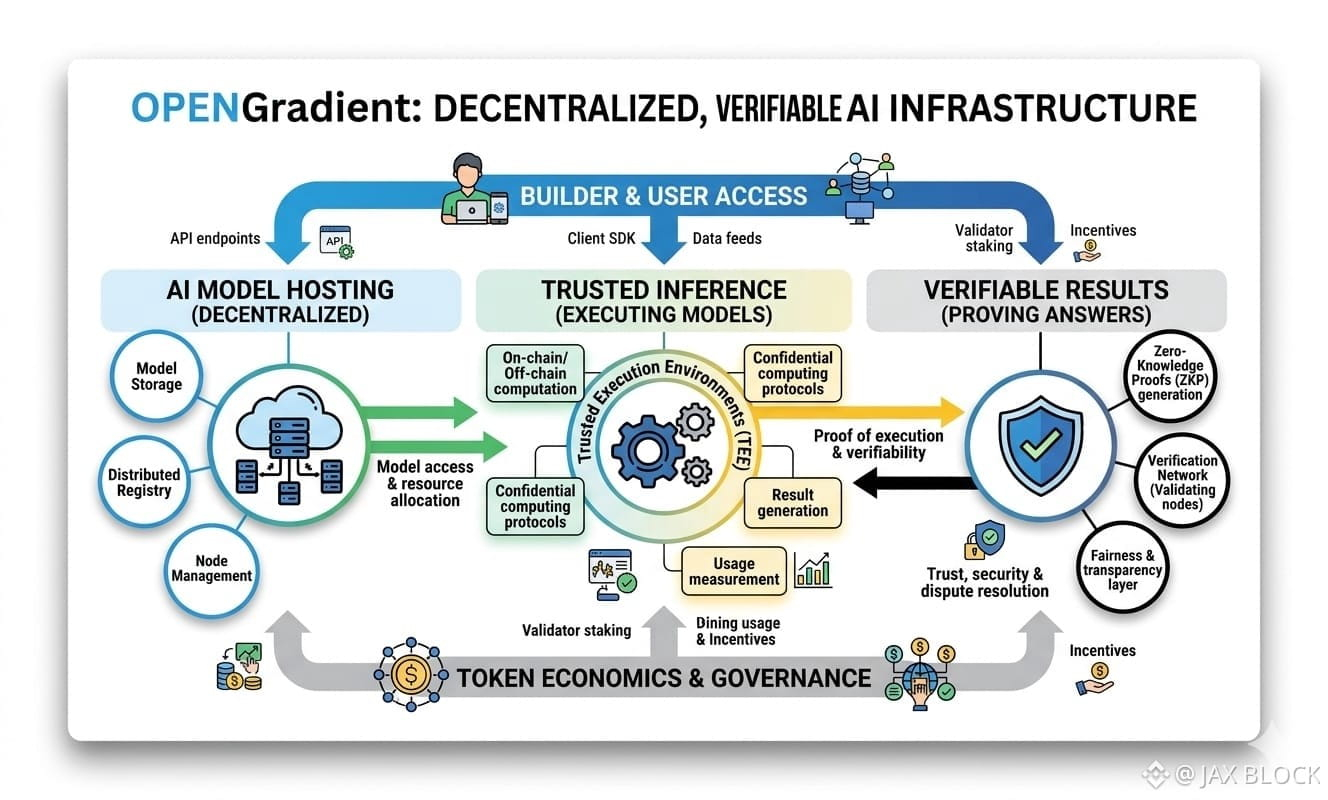
What makes OpenGradient interesting to me is not just the “decentralized AI” label. It is the focus on the harder questions: how AI models are hosted, how inference can be trusted, and how results can be verified without depending on one central gatekeeper.
AI is already good at producing answers. The next real challenge is proving those answers, measuring usage fairly, and giving builders a system they can rely on.
That is why I think OpenGradient is worth watching. Not because every infrastructure project wins, but because it is working on a problem that actually matters: making AI more open, useful, and verifiable at scale.
@OpenGradient $OPG #OPG
{future}(OPGUSDT)
#opg $OPG
I’ve seen enough crypto and AI trends come and go to know that hype alone never builds anything lasting.
What makes OpenGradient interesting to me is not just the “decentralized AI” label. It is the focus on the harder questions: how AI models are hosted, how inference can be trusted, and how results can be verified without depending on one central gatekeeper.
AI is already good at producing answers. The next real challenge is proving those answers, measuring usage fairly, and giving builders a system they can rely on.
That is why I think OpenGradient is worth watching. Not because every infrastructure project wins, but because it is working on a problem that actually matters: making AI more open, useful, and verifiable at scale.
@OpenGradient $OPG #OPG
I’ve seen enough crypto and AI trends come and go to know that hype alone never builds anything lasting.
What makes OpenGradient interesting to me is not just the “decentralized AI” label. It is the focus on the harder questions: how AI models are hosted, how inference can be trusted, and how results can be verified without depending on one central gatekeeper.
AI is already good at producing answers. The next real challenge is proving those answers, measuring usage fairly, and giving builders a system they can rely on.
That is why I think OpenGradient is worth watching. Not because every infrastructure project wins, but because it is working on a problem that actually matters: making AI more open, useful, and verifiable at scale.
@OpenGradient $OPG #OPG
4
1
243
·
--
弱気相場
翻訳参照
#opg $OPG
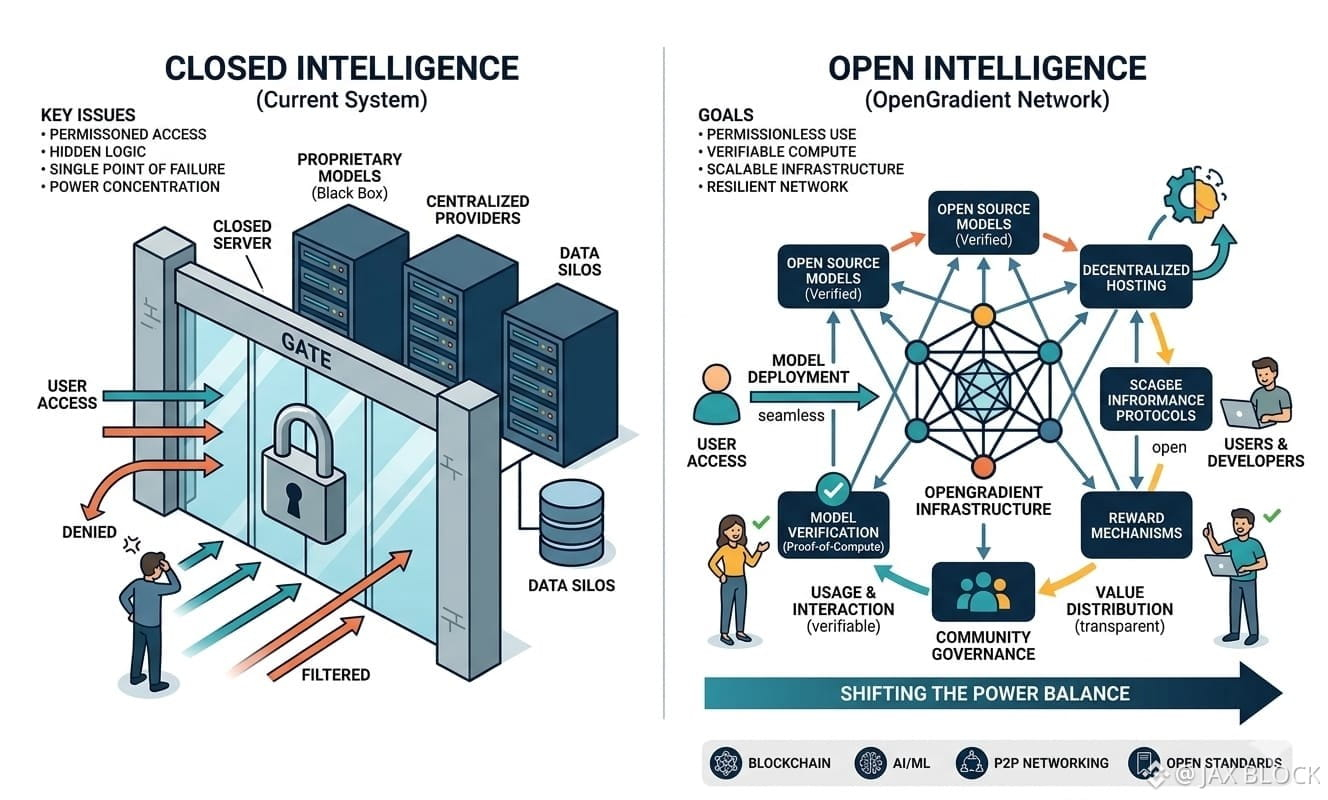
I keep thinking about OpenGradient as more than just another AI network, because the real issue with AI right now is not only who builds the best model, it is who controls access to intelligence once those models become part of everyday life. That part matters. A lot.
OpenGradient feels interesting because it pushes AI toward open infrastructure, where models can be hosted, used, and verified without everything depending on a few closed systems. In theory, that changes the power balance. Not instantly. Not perfectly. But it gives the idea of Open Intelligence some actual structure behind it.
And maybe that is where the conversation should go. AI should not just be fast or impressive, it should be usable, checkable, and available at scale without asking permission from the same centralized players every time. That sounds simple, but it is not.
Decentralized AI still has a lot to prove, especially around performance and real adoption, but OpenGradient is touching the right problem. Intelligence should not become another locked gate.
@OpenGradient $OPG #Opg
{future}(OPGUSDT)
#opg $OPG
I keep thinking about OpenGradient as more than just another AI network, because the real issue with AI right now is not only who builds the best model, it is who controls access to intelligence once those models become part of everyday life. That part matters. A lot.
OpenGradient feels interesting because it pushes AI toward open infrastructure, where models can be hosted, used, and verified without everything depending on a few closed systems. In theory, that changes the power balance. Not instantly. Not perfectly. But it gives the idea of Open Intelligence some actual structure behind it.
And maybe that is where the conversation should go. AI should not just be fast or impressive, it should be usable, checkable, and available at scale without asking permission from the same centralized players every time. That sounds simple, but it is not.
Decentralized AI still has a lot to prove, especially around performance and real adoption, but OpenGradient is touching the right problem. Intelligence should not become another locked gate.
@OpenGradient $OPG #Opg
I keep thinking about OpenGradient as more than just another AI network, because the real issue with AI right now is not only who builds the best model, it is who controls access to intelligence once those models become part of everyday life. That part matters. A lot.
OpenGradient feels interesting because it pushes AI toward open infrastructure, where models can be hosted, used, and verified without everything depending on a few closed systems. In theory, that changes the power balance. Not instantly. Not perfectly. But it gives the idea of Open Intelligence some actual structure behind it.
And maybe that is where the conversation should go. AI should not just be fast or impressive, it should be usable, checkable, and available at scale without asking permission from the same centralized players every time. That sounds simple, but it is not.
Decentralized AI still has a lot to prove, especially around performance and real adoption, but OpenGradient is touching the right problem. Intelligence should not become another locked gate.
@OpenGradient $OPG #Opg
1
1
175
·
--
弱気相場
翻訳参照
#bedrock $BR
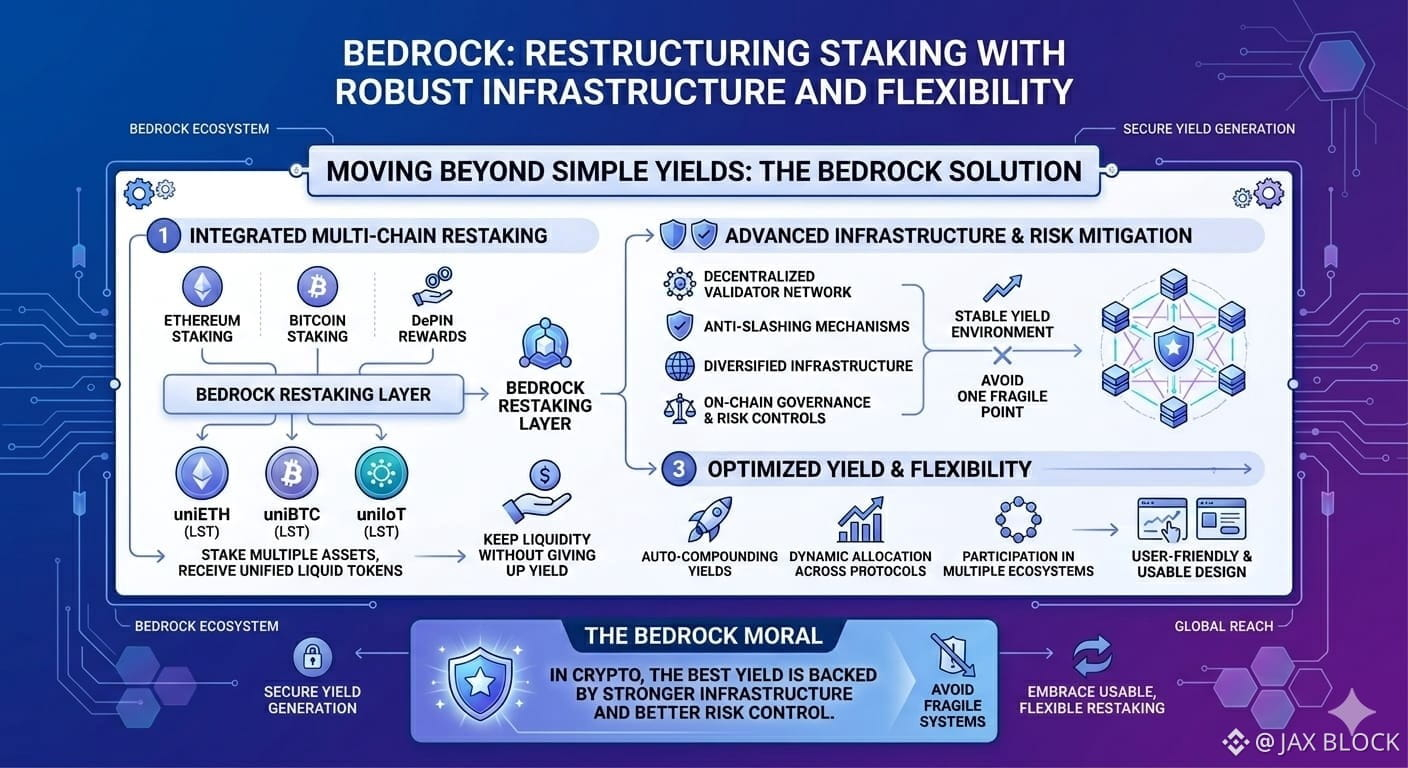
I was going through Bedrock, and honestly, it made me think about something most people ignored in staking. Everyone kept talking about bigger yields, but the real problem was never only the APY. It was always about what happened behind the scenes when a validator went down, when one setup failed, or when weak infrastructure quietly put user funds at risk.
Bedrock had taken a different angle by building liquid restaking across Ethereum, Bitcoin, and DePIN rewards without forcing users to completely give up liquidity. That part felt important because chasing yield made no sense if the asset became stuck or the system behind it could not handle pressure.
The result was simple for me: Bedrock was not just another yield story, it was more about making restaking feel usable, flexible, and less dependent on one fragile point.
The moral was clear: in crypto, the best yield was not always the loudest one, it was the one backed by stronger infrastructure and better risk control.
@Bedrock $BR #Bedrock
{future}(BRUSDT)
#bedrock $BR
I was going through Bedrock, and honestly, it made me think about something most people ignored in staking. Everyone kept talking about bigger yields, but the real problem was never only the APY. It was always about what happened behind the scenes when a validator went down, when one setup failed, or when weak infrastructure quietly put user funds at risk.
Bedrock had taken a different angle by building liquid restaking across Ethereum, Bitcoin, and DePIN rewards without forcing users to completely give up liquidity. That part felt important because chasing yield made no sense if the asset became stuck or the system behind it could not handle pressure.
The result was simple for me: Bedrock was not just another yield story, it was more about making restaking feel usable, flexible, and less dependent on one fragile point.
The moral was clear: in crypto, the best yield was not always the loudest one, it was the one backed by stronger infrastructure and better risk control.
@Bedrock $BR #Bedrock
I was going through Bedrock, and honestly, it made me think about something most people ignored in staking. Everyone kept talking about bigger yields, but the real problem was never only the APY. It was always about what happened behind the scenes when a validator went down, when one setup failed, or when weak infrastructure quietly put user funds at risk.
Bedrock had taken a different angle by building liquid restaking across Ethereum, Bitcoin, and DePIN rewards without forcing users to completely give up liquidity. That part felt important because chasing yield made no sense if the asset became stuck or the system behind it could not handle pressure.
The result was simple for me: Bedrock was not just another yield story, it was more about making restaking feel usable, flexible, and less dependent on one fragile point.
The moral was clear: in crypto, the best yield was not always the loudest one, it was the one backed by stronger infrastructure and better risk control.
@Bedrock $BR #Bedrock
3
2
110
·
--
翻訳参照
#bedrock $BR
Bedrock Only Matters If Users Can Still Leave
Crypto keeps selling yield like it is free money.
It is not.
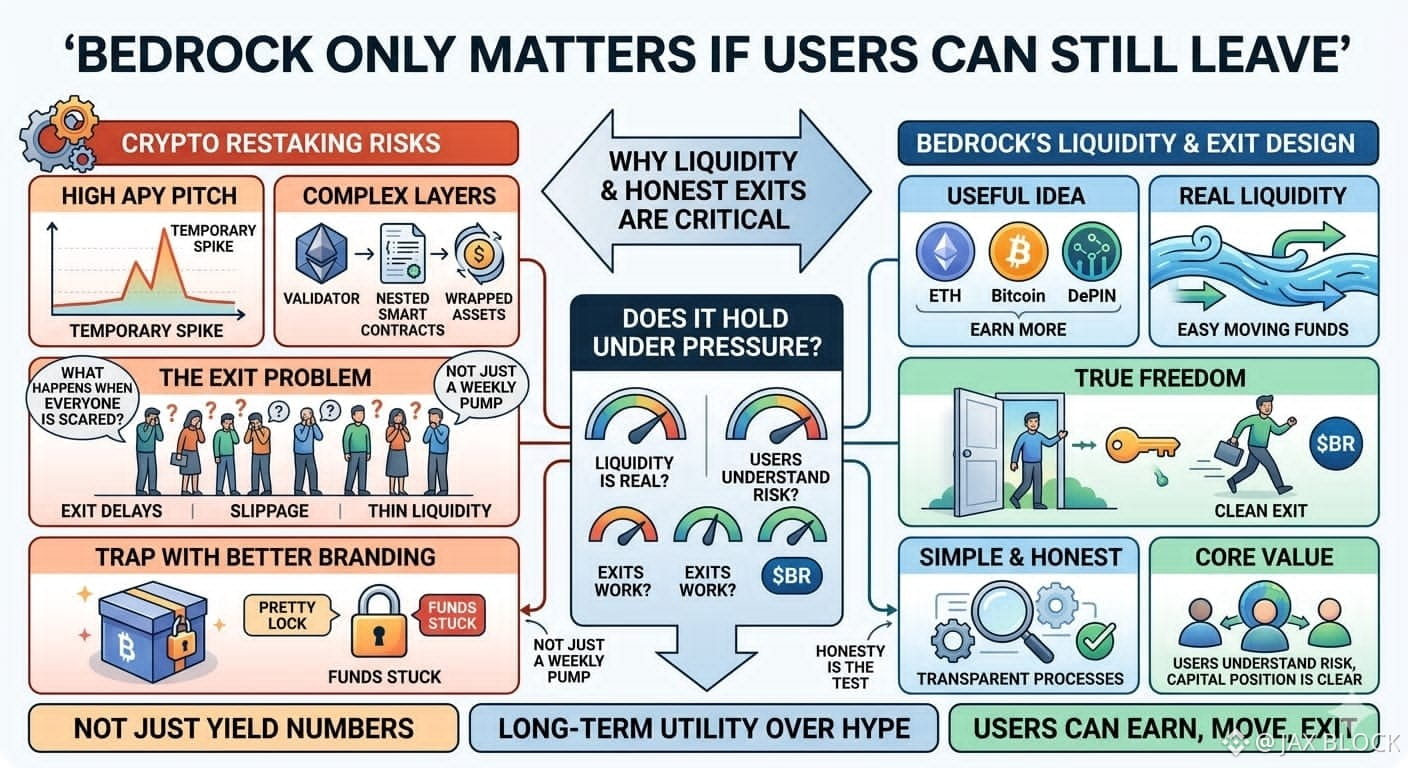
Every time I see another restaking pitch, I ask the same boring question. What happens when I want my money back? Not when the market is calm. Not when rewards are high. I mean when liquidity gets thin, everyone is scared, and the same people who were yelling “passive income” suddenly disappear.
That is the part most people skip.
High APY looks nice until your capital is stuck behind too many layers. Validators. Smart contracts. Wrapped assets. Reward rules. Exit delays. Slippage. Some dashboard says you are earning, but you still do not know how clean the exit really is. That is not freedom. That is just another trap with better branding.
This is why I am watching Bedrock and $BR, but not in a blind hype way.
The idea makes sense. ETH, Bitcoin, and DePIN rewards should not just sit there doing nothing. If users can earn more while keeping some liquidity, that is useful. Especially for Bitcoin holders who do not want to trade every day but also do not want their BTC sitting dead forever.
But I do not care about the pretty yield number first.
I care if the system holds when people actually use it. I care if liquidity is real. I care if exits work. I care if users understand the risk before they click stake. Because crypto already has enough products that look good on a chart and feel terrible when pressure hits.
Bedrock could be useful if it keeps things simple enough and honest enough. That is the real test.
Not whether $BR pumps for a week.
Whether users can earn, move, exit, and still understand where their capital is sitting.
@Bedrock $BR #bedroc
{future}(BRUSDT)
{future}(LABUSDT)
#bedrock $BR
Bedrock Only Matters If Users Can Still Leave
Crypto keeps selling yield like it is free money.
It is not.
Every time I see another restaking pitch, I ask the same boring question. What happens when I want my money back? Not when the market is calm. Not when rewards are high. I mean when liquidity gets thin, everyone is scared, and the same people who were yelling “passive income” suddenly disappear.
That is the part most people skip.
High APY looks nice until your capital is stuck behind too many layers. Validators. Smart contracts. Wrapped assets. Reward rules. Exit delays. Slippage. Some dashboard says you are earning, but you still do not know how clean the exit really is. That is not freedom. That is just another trap with better branding.
This is why I am watching Bedrock and $BR , but not in a blind hype way.
The idea makes sense. ETH, Bitcoin, and DePIN rewards should not just sit there doing nothing. If users can earn more while keeping some liquidity, that is useful. Especially for Bitcoin holders who do not want to trade every day but also do not want their BTC sitting dead forever.
But I do not care about the pretty yield number first.
I care if the system holds when people actually use it. I care if liquidity is real. I care if exits work. I care if users understand the risk before they click stake. Because crypto already has enough products that look good on a chart and feel terrible when pressure hits.
Bedrock could be useful if it keeps things simple enough and honest enough. That is the real test.
Not whether $BR pumps for a week.
Whether users can earn, move, exit, and still understand where their capital is sitting.
@Bedrock $BR #bedroc
Bedrock Only Matters If Users Can Still Leave
Crypto keeps selling yield like it is free money.
It is not.
Every time I see another restaking pitch, I ask the same boring question. What happens when I want my money back? Not when the market is calm. Not when rewards are high. I mean when liquidity gets thin, everyone is scared, and the same people who were yelling “passive income” suddenly disappear.
That is the part most people skip.
High APY looks nice until your capital is stuck behind too many layers. Validators. Smart contracts. Wrapped assets. Reward rules. Exit delays. Slippage. Some dashboard says you are earning, but you still do not know how clean the exit really is. That is not freedom. That is just another trap with better branding.
This is why I am watching Bedrock and $BR , but not in a blind hype way.
The idea makes sense. ETH, Bitcoin, and DePIN rewards should not just sit there doing nothing. If users can earn more while keeping some liquidity, that is useful. Especially for Bitcoin holders who do not want to trade every day but also do not want their BTC sitting dead forever.
But I do not care about the pretty yield number first.
I care if the system holds when people actually use it. I care if liquidity is real. I care if exits work. I care if users understand the risk before they click stake. Because crypto already has enough products that look good on a chart and feel terrible when pressure hits.
Bedrock could be useful if it keeps things simple enough and honest enough. That is the real test.
Not whether $BR pumps for a week.
Whether users can earn, move, exit, and still understand where their capital is sitting.
@Bedrock $BR #bedroc
1
2
370
·
--
翻訳参照
#genius $GENIUS
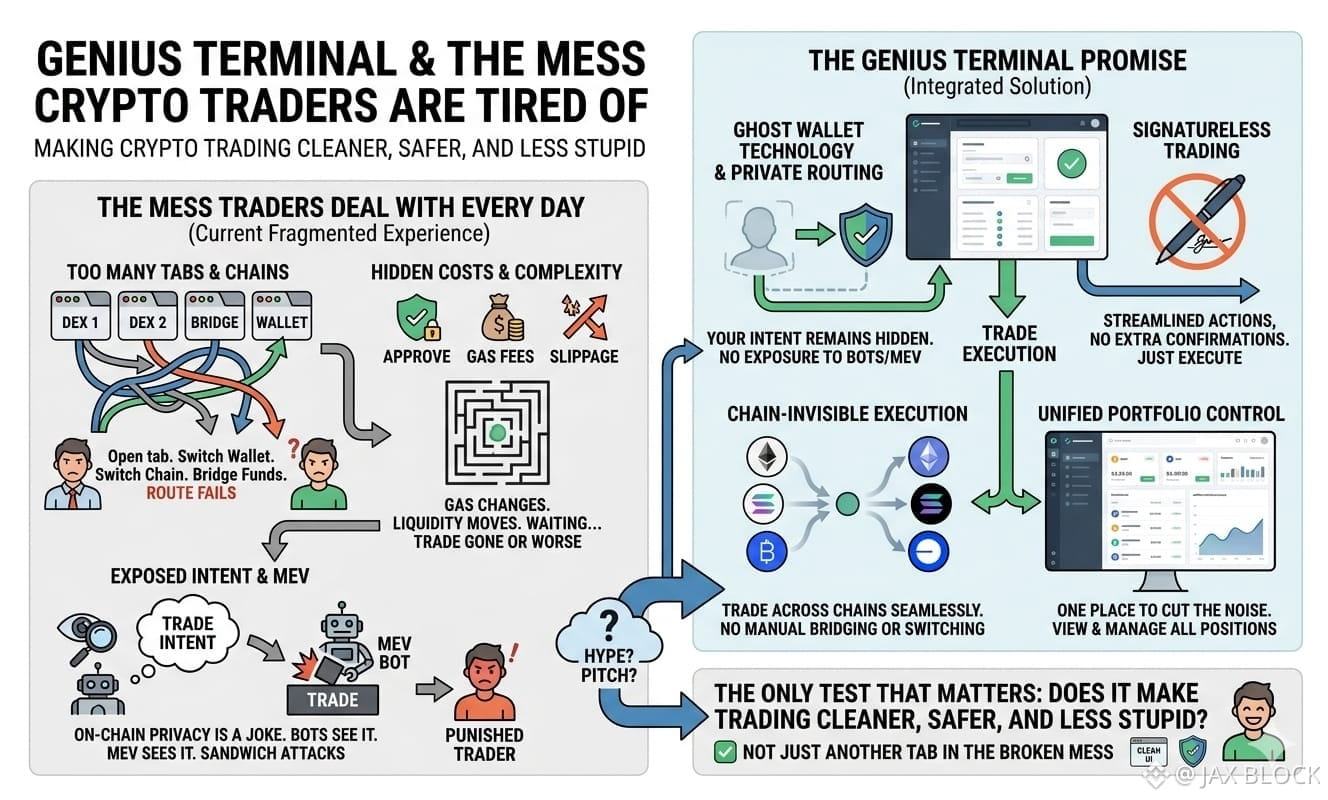
GENIUS TERMINAL AND THE MESS CRYPTO TRADERS ARE TIRED OF
Crypto trading is still too messy. That is the part people keep ignoring. Everyone talks about speed, alpha, new chains, new tools, new dashboards, new AI layers, but half the time you are just fighting the setup before the trade even happens.
Open one tab. Then another. Switch wallet. Switch chain. Approve something. Bridge funds. Wait. Route fails. Try again. Gas changes. Liquidity moves. Then by the time you are ready, the trade is either gone or worse than before.
And on-chain privacy is still a joke in most places. Your intent gets exposed. Bots see it. MEV sees it. Sandwich attacks hit before you even understand what happened. You can be right on the trade and still get punished because the system saw your move first.
That is why Genius Terminal is at least interesting to me. Not because I trust every “final terminal” claim. I don’t. Crypto has abused those words too many times. But the problem is real. Traders need one place that actually cuts the noise instead of adding another shiny screen.
If Genius can make private routing, Ghost Wallet technology, signatureless trading, chain-invisible execution, and unified portfolio control actually work in a clean way, then maybe it is not just another tool pretending to fix DeFi.
Maybe it removes some of the garbage traders deal with every day.
That is the only test I care about. Not the hype. Not the pitch. Does it make trading cleaner, safer, and less stupid? Or is it just another tab in the same broken mess?
@GeniusOfficial $GENIUS #genius
{future}(GENIUSUSDT)
#genius $GENIUS
GENIUS TERMINAL AND THE MESS CRYPTO TRADERS ARE TIRED OF
Crypto trading is still too messy. That is the part people keep ignoring. Everyone talks about speed, alpha, new chains, new tools, new dashboards, new AI layers, but half the time you are just fighting the setup before the trade even happens.
Open one tab. Then another. Switch wallet. Switch chain. Approve something. Bridge funds. Wait. Route fails. Try again. Gas changes. Liquidity moves. Then by the time you are ready, the trade is either gone or worse than before.
And on-chain privacy is still a joke in most places. Your intent gets exposed. Bots see it. MEV sees it. Sandwich attacks hit before you even understand what happened. You can be right on the trade and still get punished because the system saw your move first.
That is why Genius Terminal is at least interesting to me. Not because I trust every “final terminal” claim. I don’t. Crypto has abused those words too many times. But the problem is real. Traders need one place that actually cuts the noise instead of adding another shiny screen.
If Genius can make private routing, Ghost Wallet technology, signatureless trading, chain-invisible execution, and unified portfolio control actually work in a clean way, then maybe it is not just another tool pretending to fix DeFi.
Maybe it removes some of the garbage traders deal with every day.
That is the only test I care about. Not the hype. Not the pitch. Does it make trading cleaner, safer, and less stupid? Or is it just another tab in the same broken mess?
@GeniusOfficial $GENIUS #genius
GENIUS TERMINAL AND THE MESS CRYPTO TRADERS ARE TIRED OF
Crypto trading is still too messy. That is the part people keep ignoring. Everyone talks about speed, alpha, new chains, new tools, new dashboards, new AI layers, but half the time you are just fighting the setup before the trade even happens.
Open one tab. Then another. Switch wallet. Switch chain. Approve something. Bridge funds. Wait. Route fails. Try again. Gas changes. Liquidity moves. Then by the time you are ready, the trade is either gone or worse than before.
And on-chain privacy is still a joke in most places. Your intent gets exposed. Bots see it. MEV sees it. Sandwich attacks hit before you even understand what happened. You can be right on the trade and still get punished because the system saw your move first.
That is why Genius Terminal is at least interesting to me. Not because I trust every “final terminal” claim. I don’t. Crypto has abused those words too many times. But the problem is real. Traders need one place that actually cuts the noise instead of adding another shiny screen.
If Genius can make private routing, Ghost Wallet technology, signatureless trading, chain-invisible execution, and unified portfolio control actually work in a clean way, then maybe it is not just another tool pretending to fix DeFi.
Maybe it removes some of the garbage traders deal with every day.
That is the only test I care about. Not the hype. Not the pitch. Does it make trading cleaner, safer, and less stupid? Or is it just another tab in the same broken mess?
@GeniusOfficial $GENIUS #genius
1
2
231
·
--
翻訳参照
#genius $GENIUS
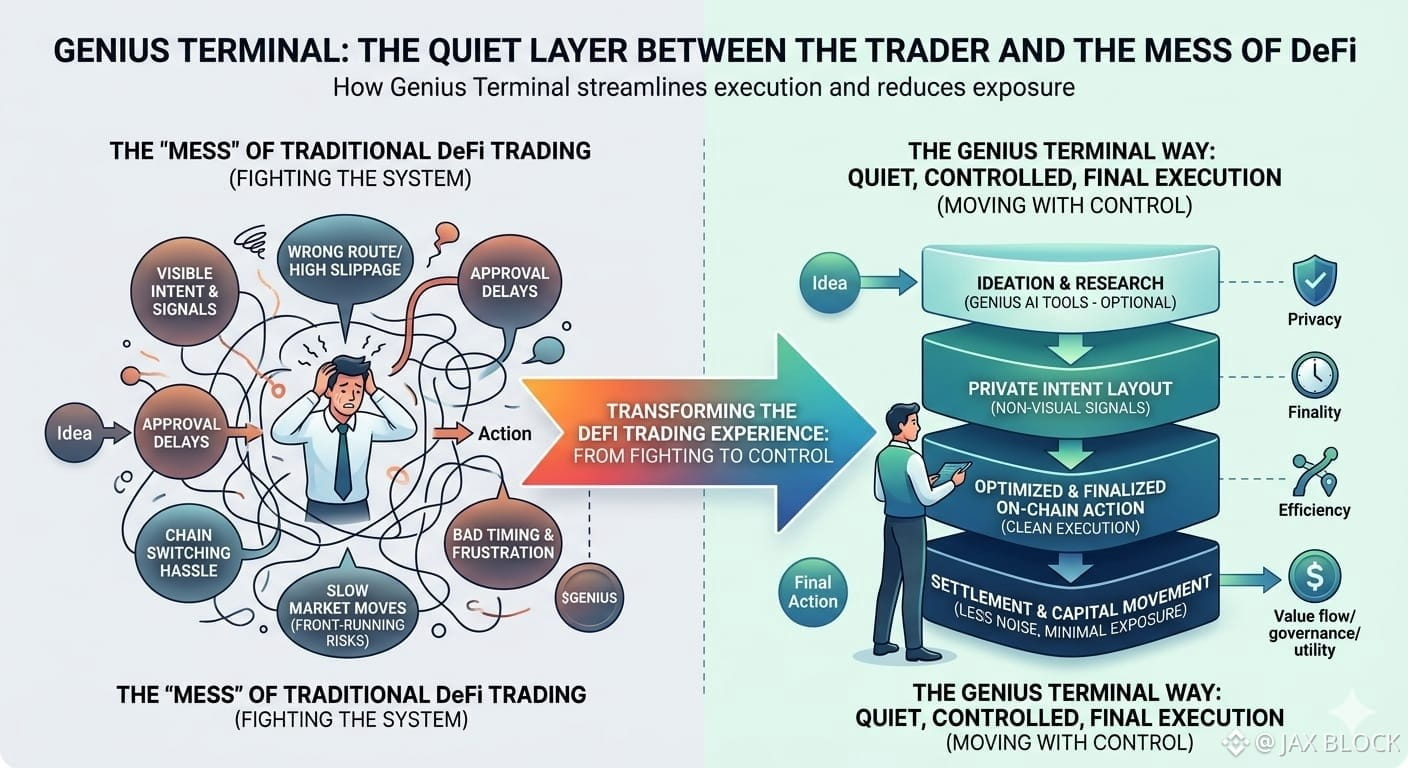
I keep getting stuck this idea that Genius Terminal is not just another place to click buy and sell, it is more like a quiet layer between the trader and the mess of DeFi.
Umm, I was seeing yesterday how people talk about trading like it is only about finding the right token early. But in past, I have seen so many trades go bad even when the idea was right. Wrong route, bad timing, visible intent, approval delays, chain switching, and then suddenly the market moves before you even finish the action.
That is the part most people ignore. DeFi is powerful, but it also makes you feel too exposed. Every move leaves a signal. Every signal gives someone faster a chance to react.
This is why Genius Terminal feels interesting to me. The first private and final on-chain terminal is not just a big claim. It points to a real problem. Traders do not only need more tools. They need cleaner execution, less noise, and less exposure while moving capital.
For me, $GENIUS becomes worth watching if it can make trading feel less like fighting the system and more like moving with control.
@GeniusOfficial $GENIUS #genius
{future}(GENIUSUSDT)
#genius $GENIUS
I keep getting stuck this idea that Genius Terminal is not just another place to click buy and sell, it is more like a quiet layer between the trader and the mess of DeFi.
Umm, I was seeing yesterday how people talk about trading like it is only about finding the right token early. But in past, I have seen so many trades go bad even when the idea was right. Wrong route, bad timing, visible intent, approval delays, chain switching, and then suddenly the market moves before you even finish the action.
That is the part most people ignore. DeFi is powerful, but it also makes you feel too exposed. Every move leaves a signal. Every signal gives someone faster a chance to react.
This is why Genius Terminal feels interesting to me. The first private and final on-chain terminal is not just a big claim. It points to a real problem. Traders do not only need more tools. They need cleaner execution, less noise, and less exposure while moving capital.
For me, $GENIUS becomes worth watching if it can make trading feel less like fighting the system and more like moving with control.
@GeniusOfficial $GENIUS #genius
I keep getting stuck this idea that Genius Terminal is not just another place to click buy and sell, it is more like a quiet layer between the trader and the mess of DeFi.
Umm, I was seeing yesterday how people talk about trading like it is only about finding the right token early. But in past, I have seen so many trades go bad even when the idea was right. Wrong route, bad timing, visible intent, approval delays, chain switching, and then suddenly the market moves before you even finish the action.
That is the part most people ignore. DeFi is powerful, but it also makes you feel too exposed. Every move leaves a signal. Every signal gives someone faster a chance to react.
This is why Genius Terminal feels interesting to me. The first private and final on-chain terminal is not just a big claim. It points to a real problem. Traders do not only need more tools. They need cleaner execution, less noise, and less exposure while moving capital.
For me, $GENIUS becomes worth watching if it can make trading feel less like fighting the system and more like moving with control.
@GeniusOfficial $GENIUS #genius
1
1
139
·
--
#genius $GENIUS
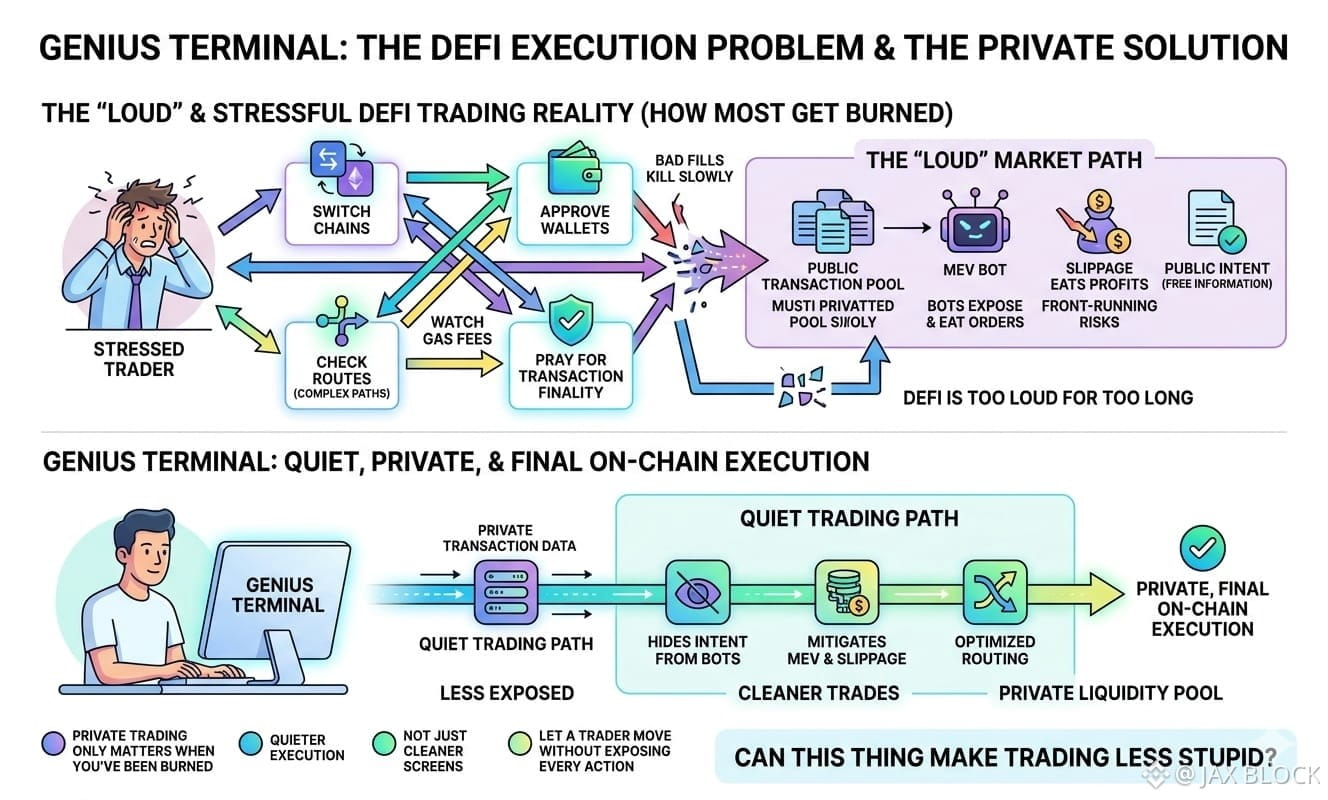
プライベートトレーディングは、痛い目にあったときだけ意味がある
Genius Terminalが面白いのは、DeFiがまだ混沌としているからだという考えから抜け出せない。
人々が投稿する素敵なバージョンではなく、リアルなバージョン。
一つのものをトレードしたいのに、急にチェーンを切り替えたり、ウォレットを承認したり、ルートを確認したり、ガスを見たり、トランザクションが成功することを祈ったり、注文が埋まる前にボットに食べられないことを願ったりする。
それは「自由」ではない。それは単に財布がついているストレスだ。
そして、すべての暗号製品が、きれいな画面を追加したからといってトレーディングを解決したかのように振る舞うのには疲れた。きれいな画面は、トレードがまだ露出しているなら何の意味もない。注文が完了する前に、あなたの意図が公にさらされているなら、それは何の意味もない。
それがほとんどの人が無視する部分だ。
悪いフィルはあなたをゆっくりと殺す。スリippageは静かにあなたを食い尽くす。MEVはあなたの理論がどれほど賢かったかを気にしない。トレードが正しくても、取引の経路によって罰せられることがある。
だから、Genius Terminalが最初のプライベートかつ最終のオンチェーンターミナルだと言うとき、私はそれを大きなスローガンのようには読まない。私はそれを基本的な質問のように読む。
このものは、トレーディングをもっとバカらしくなくできるのか?
公開すべきでない部分を隠せるのか?
トレーダーがボットのための無料情報にすべての行動を変えずに動けるようにできるのか?
私はどんなツールが人々を悪い決定から救うふりをするためにここにいるわけではない。トレーダーは依然としてオーバートレードする。人々は依然としてキャンドルを追いかける。その部分は決して変わらない。
しかし、Genius Terminalが実行をより静かで、クリーンで、露出を減らすことができるなら、それは実際に重要だ。
未来的に聞こえるからではない。
DeFiは長い間うるさすぎたからだ。
@GeniusOfficial $GENIUS #genius
{future}(GENIUSUSDT)
#genius $GENIUS
プライベートトレーディングは、痛い目にあったときだけ意味がある
Genius Terminalが面白いのは、DeFiがまだ混沌としているからだという考えから抜け出せない。
人々が投稿する素敵なバージョンではなく、リアルなバージョン。
一つのものをトレードしたいのに、急にチェーンを切り替えたり、ウォレットを承認したり、ルートを確認したり、ガスを見たり、トランザクションが成功することを祈ったり、注文が埋まる前にボットに食べられないことを願ったりする。
それは「自由」ではない。それは単に財布がついているストレスだ。
そして、すべての暗号製品が、きれいな画面を追加したからといってトレーディングを解決したかのように振る舞うのには疲れた。きれいな画面は、トレードがまだ露出しているなら何の意味もない。注文が完了する前に、あなたの意図が公にさらされているなら、それは何の意味もない。
それがほとんどの人が無視する部分だ。
悪いフィルはあなたをゆっくりと殺す。スリippageは静かにあなたを食い尽くす。MEVはあなたの理論がどれほど賢かったかを気にしない。トレードが正しくても、取引の経路によって罰せられることがある。
だから、Genius Terminalが最初のプライベートかつ最終のオンチェーンターミナルだと言うとき、私はそれを大きなスローガンのようには読まない。私はそれを基本的な質問のように読む。
このものは、トレーディングをもっとバカらしくなくできるのか?
公開すべきでない部分を隠せるのか?
トレーダーがボットのための無料情報にすべての行動を変えずに動けるようにできるのか?
私はどんなツールが人々を悪い決定から救うふりをするためにここにいるわけではない。トレーダーは依然としてオーバートレードする。人々は依然としてキャンドルを追いかける。その部分は決して変わらない。
しかし、Genius Terminalが実行をより静かで、クリーンで、露出を減らすことができるなら、それは実際に重要だ。
未来的に聞こえるからではない。
DeFiは長い間うるさすぎたからだ。
@GeniusOfficial $GENIUS #genius
プライベートトレーディングは、痛い目にあったときだけ意味がある
Genius Terminalが面白いのは、DeFiがまだ混沌としているからだという考えから抜け出せない。
人々が投稿する素敵なバージョンではなく、リアルなバージョン。
一つのものをトレードしたいのに、急にチェーンを切り替えたり、ウォレットを承認したり、ルートを確認したり、ガスを見たり、トランザクションが成功することを祈ったり、注文が埋まる前にボットに食べられないことを願ったりする。
それは「自由」ではない。それは単に財布がついているストレスだ。
そして、すべての暗号製品が、きれいな画面を追加したからといってトレーディングを解決したかのように振る舞うのには疲れた。きれいな画面は、トレードがまだ露出しているなら何の意味もない。注文が完了する前に、あなたの意図が公にさらされているなら、それは何の意味もない。
それがほとんどの人が無視する部分だ。
悪いフィルはあなたをゆっくりと殺す。スリippageは静かにあなたを食い尽くす。MEVはあなたの理論がどれほど賢かったかを気にしない。トレードが正しくても、取引の経路によって罰せられることがある。
だから、Genius Terminalが最初のプライベートかつ最終のオンチェーンターミナルだと言うとき、私はそれを大きなスローガンのようには読まない。私はそれを基本的な質問のように読む。
このものは、トレーディングをもっとバカらしくなくできるのか?
公開すべきでない部分を隠せるのか?
トレーダーがボットのための無料情報にすべての行動を変えずに動けるようにできるのか?
私はどんなツールが人々を悪い決定から救うふりをするためにここにいるわけではない。トレーダーは依然としてオーバートレードする。人々は依然としてキャンドルを追いかける。その部分は決して変わらない。
しかし、Genius Terminalが実行をより静かで、クリーンで、露出を減らすことができるなら、それは実際に重要だ。
未来的に聞こえるからではない。
DeFiは長い間うるさすぎたからだ。
@GeniusOfficial $GENIUS #genius
1
169
·
--
翻訳参照
#genius $GENIUS
I keep getting stuck this idea of Genius Terminal because honestly… it feels like one of those things people may ignore at first, then later act like they always understood it.
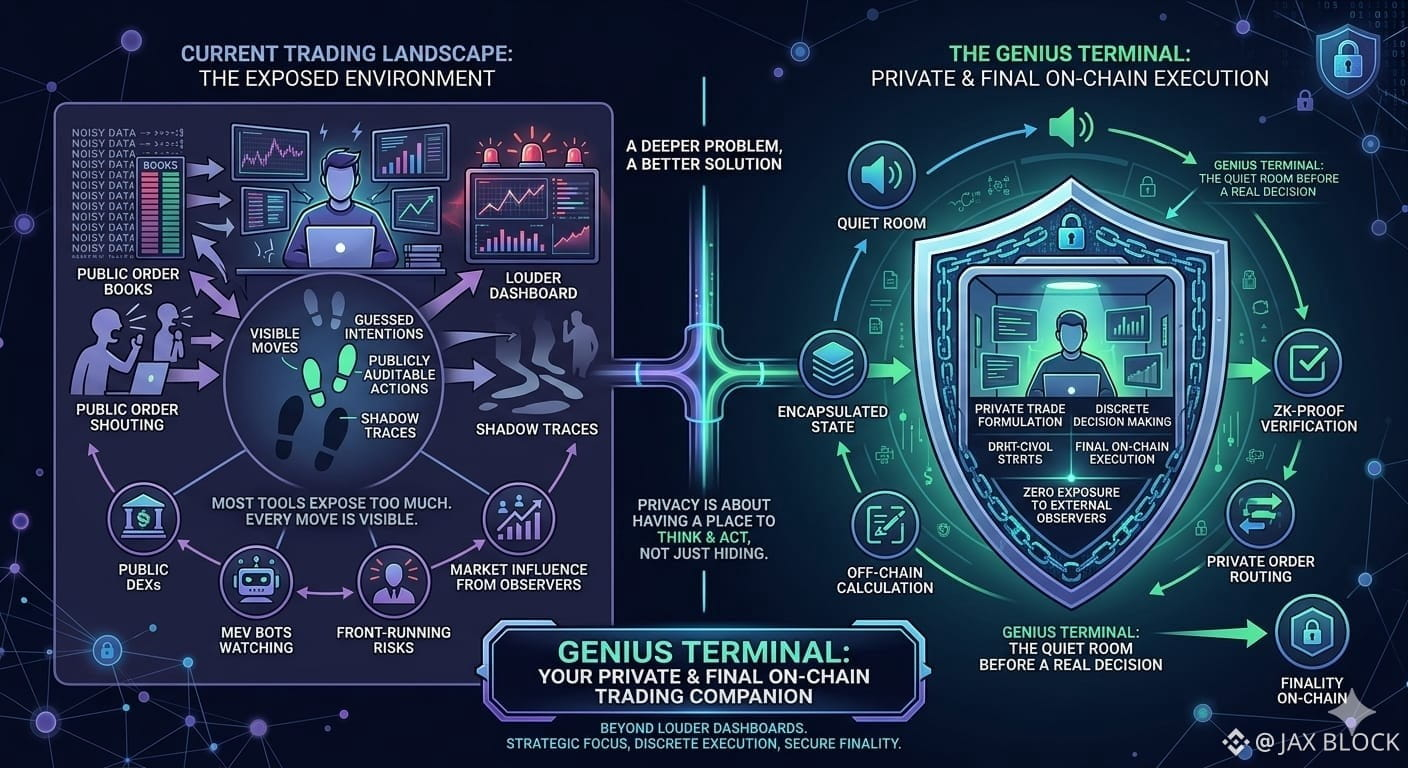
I was seeing how everyone in crypto talks about being early, but most people are still using tools that expose too much. Every move becomes visible. Every intention can be guessed. Every click almost feels like it leaves a shadow behind.
And umm… that is where Genius Terminal feels a little different to me.
It is not just another terminal with more buttons and louder dashboards. The idea of a private and final on-chain terminal sounds simple, but it hits a deeper problem. Maybe traders do not only need more information. Maybe they need a place where they can think, decide, and act without the whole market watching their hands.
That part stays in my head.
Because in this space, privacy is not always about hiding. Sometimes it is just about having a quiet room before making a real decision.
Genius Terminal feels like that quiet room.
@GeniusOfficial $GENIUS #genius
{future}(GENIUSUSDT)
#genius $GENIUS
I keep getting stuck this idea of Genius Terminal because honestly… it feels like one of those things people may ignore at first, then later act like they always understood it.
I was seeing how everyone in crypto talks about being early, but most people are still using tools that expose too much. Every move becomes visible. Every intention can be guessed. Every click almost feels like it leaves a shadow behind.
And umm… that is where Genius Terminal feels a little different to me.
It is not just another terminal with more buttons and louder dashboards. The idea of a private and final on-chain terminal sounds simple, but it hits a deeper problem. Maybe traders do not only need more information. Maybe they need a place where they can think, decide, and act without the whole market watching their hands.
That part stays in my head.
Because in this space, privacy is not always about hiding. Sometimes it is just about having a quiet room before making a real decision.
Genius Terminal feels like that quiet room.
@GeniusOfficial $GENIUS #genius
I keep getting stuck this idea of Genius Terminal because honestly… it feels like one of those things people may ignore at first, then later act like they always understood it.
I was seeing how everyone in crypto talks about being early, but most people are still using tools that expose too much. Every move becomes visible. Every intention can be guessed. Every click almost feels like it leaves a shadow behind.
And umm… that is where Genius Terminal feels a little different to me.
It is not just another terminal with more buttons and louder dashboards. The idea of a private and final on-chain terminal sounds simple, but it hits a deeper problem. Maybe traders do not only need more information. Maybe they need a place where they can think, decide, and act without the whole market watching their hands.
That part stays in my head.
Because in this space, privacy is not always about hiding. Sometimes it is just about having a quiet room before making a real decision.
Genius Terminal feels like that quiet room.
@GeniusOfficial $GENIUS #genius
1
144
·
--
翻訳参照
#genius $GENIUS
I keep getting stuck this idea that most crypto tools don’t fail because they show too little.
Sometimes they fail because they show too much.
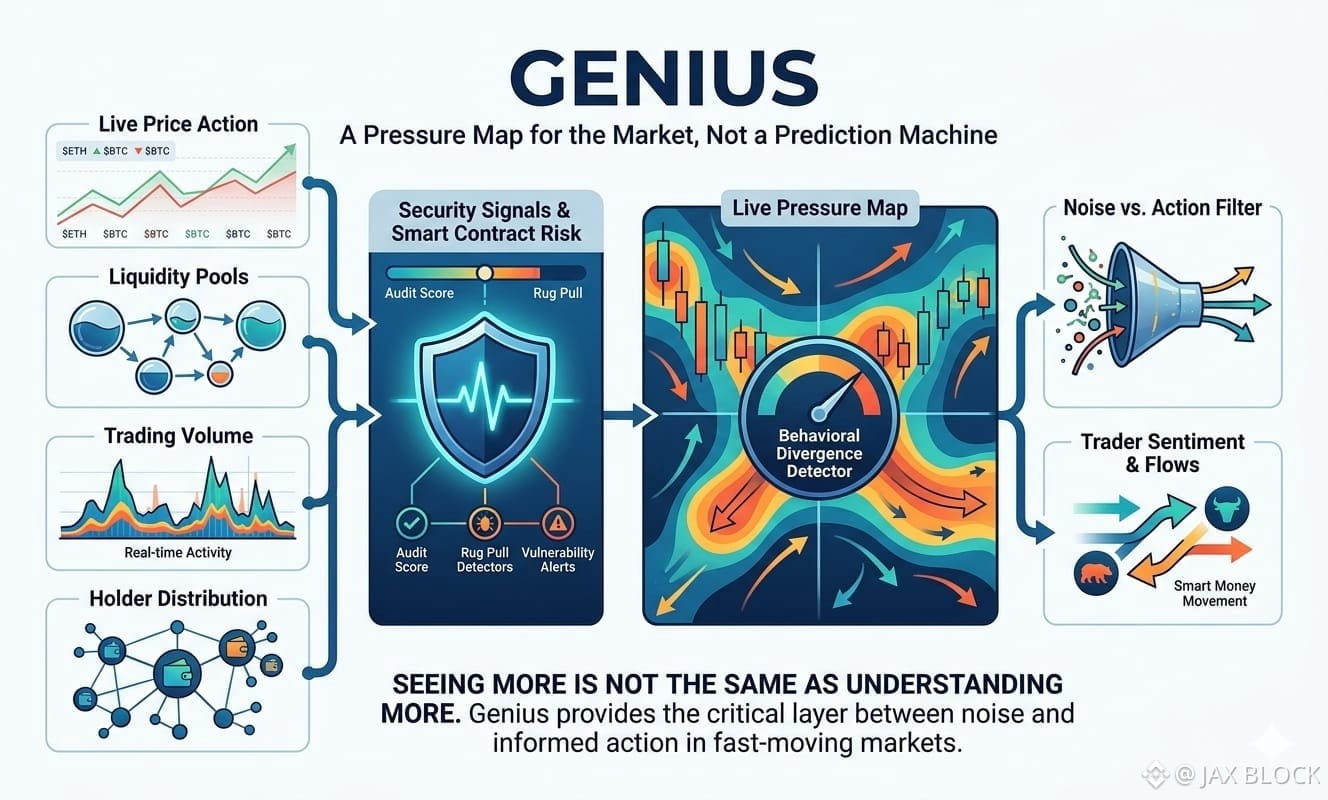
That’s what makes Genius interesting to me. It doesn’t feel like another place where you just stare at a chart and pretend the market is simple. It feels more like a messy live window into what is actually happening. Price, liquidity, volume, holders, security signals, trader moves — everything is there, but none of it removes the uncertainty.
And maybe that is the point.
A score can warn you, but it cannot think for you. A chart can guide you, but it cannot calm your emotions. Holder data can show movement, but it cannot always explain intent.
So I don’t see Genius as a prediction machine.
I see it more like a pressure map for the market.
It shows where attention is moving, where risk may be hiding, and where behavior starts to look different before the crowd fully notices.
Still, the hardest part remains human.
Seeing more is not the same as understanding more.
But in a market this fast, having a clearer layer between noise and action might be the difference.
@GeniusOfficial $GENIUS #genius
{future}(GENIUSUSDT)
#genius $GENIUS
I keep getting stuck this idea that most crypto tools don’t fail because they show too little.
Sometimes they fail because they show too much.
That’s what makes Genius interesting to me. It doesn’t feel like another place where you just stare at a chart and pretend the market is simple. It feels more like a messy live window into what is actually happening. Price, liquidity, volume, holders, security signals, trader moves — everything is there, but none of it removes the uncertainty.
And maybe that is the point.
A score can warn you, but it cannot think for you. A chart can guide you, but it cannot calm your emotions. Holder data can show movement, but it cannot always explain intent.
So I don’t see Genius as a prediction machine.
I see it more like a pressure map for the market.
It shows where attention is moving, where risk may be hiding, and where behavior starts to look different before the crowd fully notices.
Still, the hardest part remains human.
Seeing more is not the same as understanding more.
But in a market this fast, having a clearer layer between noise and action might be the difference.
@GeniusOfficial $GENIUS #genius
I keep getting stuck this idea that most crypto tools don’t fail because they show too little.
Sometimes they fail because they show too much.
That’s what makes Genius interesting to me. It doesn’t feel like another place where you just stare at a chart and pretend the market is simple. It feels more like a messy live window into what is actually happening. Price, liquidity, volume, holders, security signals, trader moves — everything is there, but none of it removes the uncertainty.
And maybe that is the point.
A score can warn you, but it cannot think for you. A chart can guide you, but it cannot calm your emotions. Holder data can show movement, but it cannot always explain intent.
So I don’t see Genius as a prediction machine.
I see it more like a pressure map for the market.
It shows where attention is moving, where risk may be hiding, and where behavior starts to look different before the crowd fully notices.
Still, the hardest part remains human.
Seeing more is not the same as understanding more.
But in a market this fast, having a clearer layer between noise and action might be the difference.
@GeniusOfficial $GENIUS #genius
1
2
102
·
--
翻訳参照
#openledger $OPEN
OPENLEDGER AND THE ACCOUNTABILITY GAP
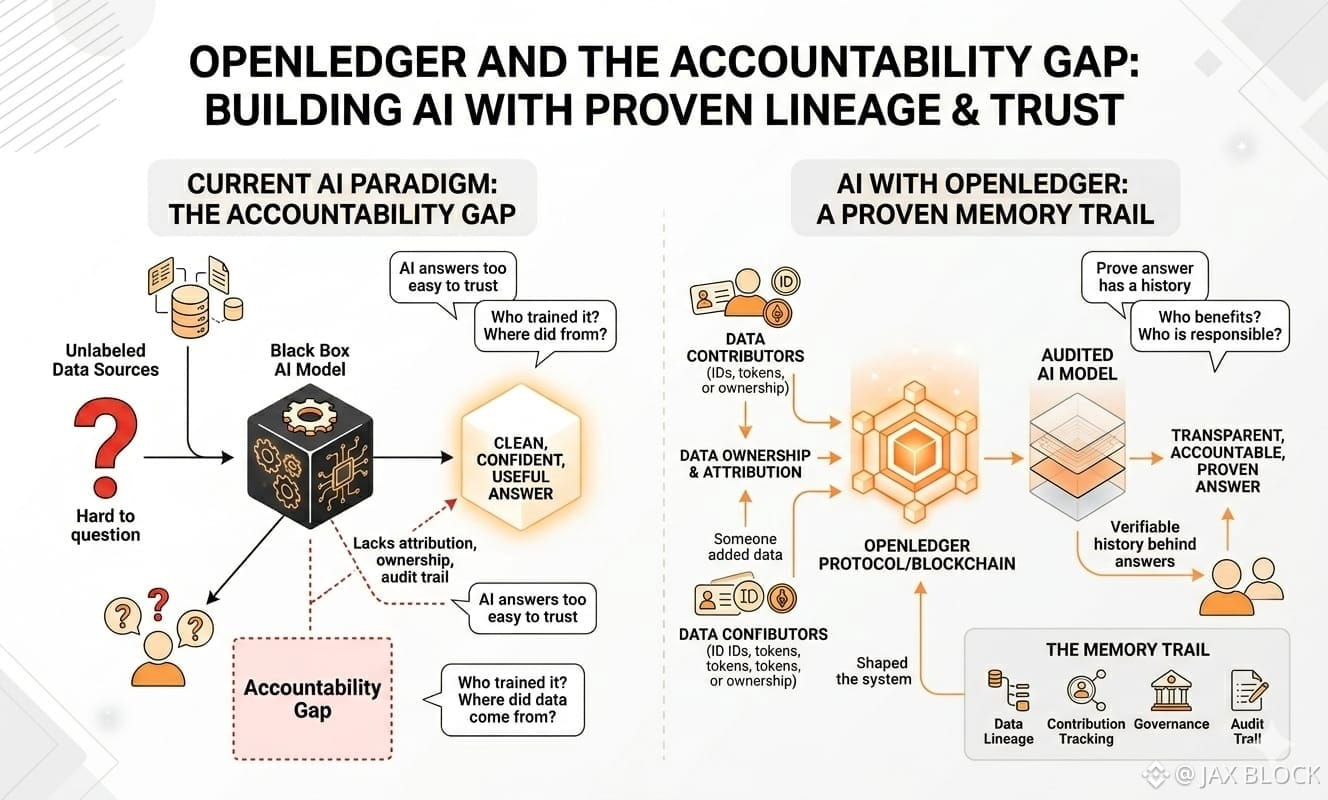
I keep getting stuck this idea that AI answers are becoming too easy to trust and too hard to question.
A response shows up clean. Confident. Useful. Almost finished before we even think about where it came from.
But that is exactly what makes me uncomfortable.
Because the next phase of AI will not only be about who gives the best answer. It will be about who can prove the answer has a history behind it.
That is why OpenLedger feels important to me.
It is not just another AI project trying to sound bigger than it is. It is touching the part most people ignore: attribution, ownership, and accountability.
When AI starts shaping decisions, the answer cannot just float in the air like magic.
Someone trained it. Someone added data. Someone shaped the system. Someone benefits. And maybe someone should be responsible too.
That is the part I keep thinking about.
AI does not only need smarter outputs. It needs a memory trail.
@Openledger $OPEN #OpenLedger
{future}(OPENUSDT)
#openledger $OPEN
OPENLEDGER AND THE ACCOUNTABILITY GAP
I keep getting stuck this idea that AI answers are becoming too easy to trust and too hard to question.
A response shows up clean. Confident. Useful. Almost finished before we even think about where it came from.
But that is exactly what makes me uncomfortable.
Because the next phase of AI will not only be about who gives the best answer. It will be about who can prove the answer has a history behind it.
That is why OpenLedger feels important to me.
It is not just another AI project trying to sound bigger than it is. It is touching the part most people ignore: attribution, ownership, and accountability.
When AI starts shaping decisions, the answer cannot just float in the air like magic.
Someone trained it. Someone added data. Someone shaped the system. Someone benefits. And maybe someone should be responsible too.
That is the part I keep thinking about.
AI does not only need smarter outputs. It needs a memory trail.
@OpenLedger $OPEN #OpenLedger
OPENLEDGER AND THE ACCOUNTABILITY GAP
I keep getting stuck this idea that AI answers are becoming too easy to trust and too hard to question.
A response shows up clean. Confident. Useful. Almost finished before we even think about where it came from.
But that is exactly what makes me uncomfortable.
Because the next phase of AI will not only be about who gives the best answer. It will be about who can prove the answer has a history behind it.
That is why OpenLedger feels important to me.
It is not just another AI project trying to sound bigger than it is. It is touching the part most people ignore: attribution, ownership, and accountability.
When AI starts shaping decisions, the answer cannot just float in the air like magic.
Someone trained it. Someone added data. Someone shaped the system. Someone benefits. And maybe someone should be responsible too.
That is the part I keep thinking about.
AI does not only need smarter outputs. It needs a memory trail.
@OpenLedger $OPEN #OpenLedger
3
1
158
·
--
記事
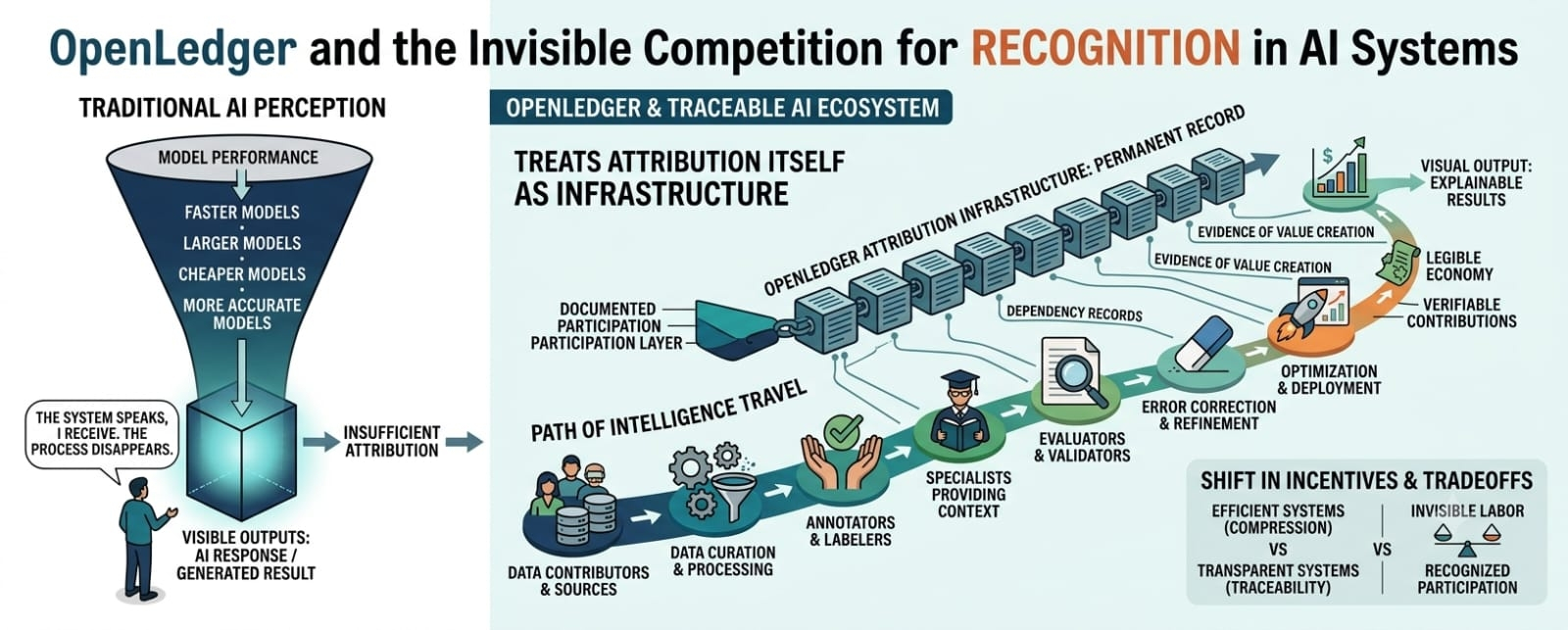
OPENLEDGER と AIシステムにおける見えない認識(リコグニション)の競争以前は、AIにおける最大の競争はモデル同士の間で起こるだろうと思っていました。より速いモデル、より大きいモデル、より安いモデル、より正確なモデルです。あらゆる会話がその方向を示しているように見えました。見出しはすべて性能に注目していました。あらゆるベンチマークが、別の改善を称えていました。ですが、この業界が進化していくのをより長く見ているうちに、表面の下で起きている、ずっと重要な何かがあるように感じるようになりました。私は、生成される「知能」そのものへの関心を減らし、それを生み出した人が誰として認められるかを決める条件への関心を増やしているのに気づきます。
OPENLEDGER と AIシステムにおける見えない認識(リコグニション)の競争
以前は、AIにおける最大の競争はモデル同士の間で起こるだろうと思っていました。より速いモデル、より大きいモデル、より安いモデル、より正確なモデルです。あらゆる会話がその方向を示しているように見えました。見出しはすべて性能に注目していました。あらゆるベンチマークが、別の改善を称えていました。ですが、この業界が進化していくのをより長く見ているうちに、表面の下で起きている、ずっと重要な何かがあるように感じるようになりました。私は、生成される「知能」そのものへの関心を減らし、それを生み出した人が誰として認められるかを決める条件への関心を増やしているのに気づきます。
3
1
227
·
--
翻訳参照
#openledger $OPEN
OPENLEDGER IS TRYING TO MAKE AI VALUE LIQUID
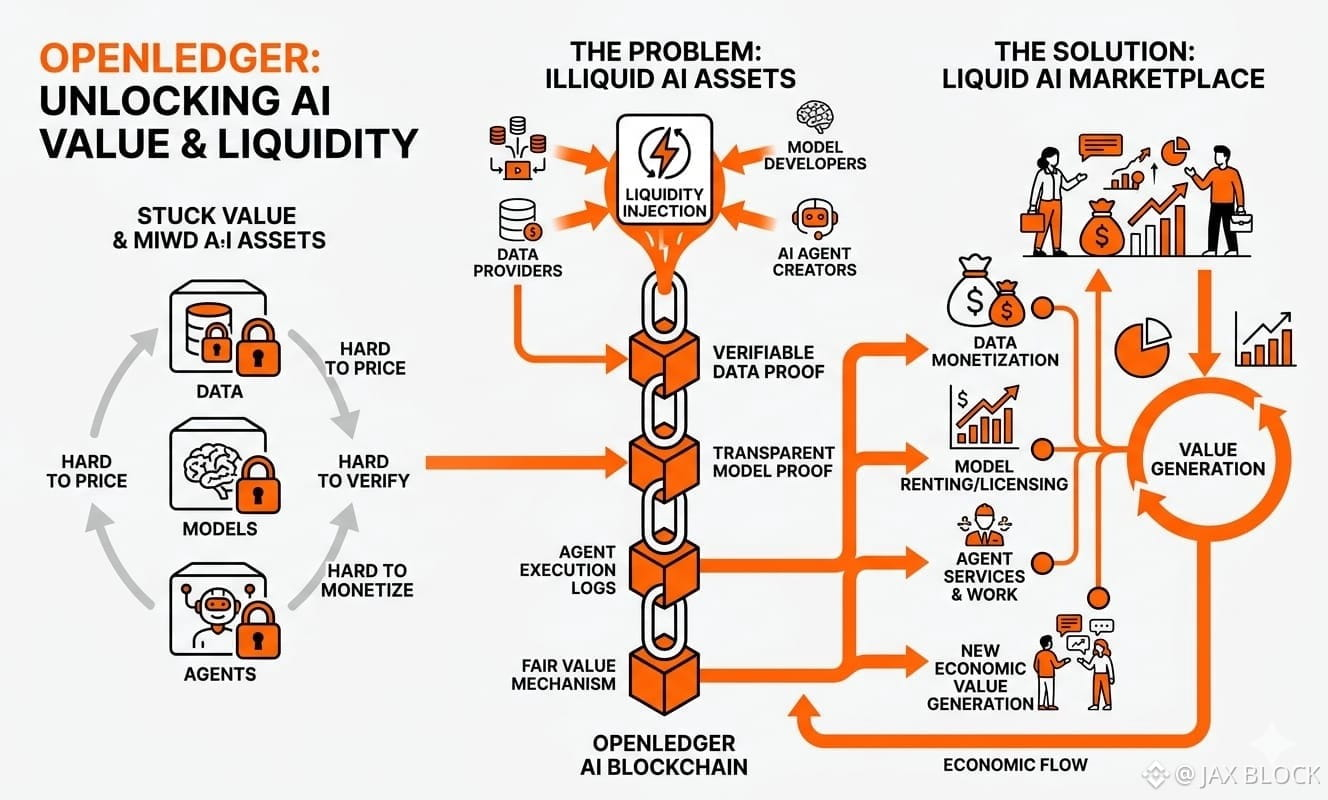
OpenLedger (OPEN) feels interesting because it is not just another project trying to attach AI to crypto for attention. The bigger idea is liquidity. Data, models, and AI agents already have value, but most of that value is stuck, hard to price, hard to verify, and hard to monetize. OpenLedger is trying to build an AI blockchain where these assets can move, be used, and potentially generate real economic value.
That sounds powerful, but also risky. The market loves big narratives, and AI plus blockchain is an easy one to hype. The real test for OPEN is whether it can turn invisible AI value into something usable without becoming another empty liquidity cycle. If it can help people monetize data, models, and agents in a fair and verifiable way, then OpenLedger is touching a serious problem. Not just hype. A real question: who gets paid when AI becomes the product
@Openledger $OPEN #OpenLedger
{future}(OPENUSDT)
#openledger $OPEN
OPENLEDGER IS TRYING TO MAKE AI VALUE LIQUID
OpenLedger (OPEN) feels interesting because it is not just another project trying to attach AI to crypto for attention. The bigger idea is liquidity. Data, models, and AI agents already have value, but most of that value is stuck, hard to price, hard to verify, and hard to monetize. OpenLedger is trying to build an AI blockchain where these assets can move, be used, and potentially generate real economic value.
That sounds powerful, but also risky. The market loves big narratives, and AI plus blockchain is an easy one to hype. The real test for OPEN is whether it can turn invisible AI value into something usable without becoming another empty liquidity cycle. If it can help people monetize data, models, and agents in a fair and verifiable way, then OpenLedger is touching a serious problem. Not just hype. A real question: who gets paid when AI becomes the product
@OpenLedger $OPEN #OpenLedger
OPENLEDGER IS TRYING TO MAKE AI VALUE LIQUID
OpenLedger (OPEN) feels interesting because it is not just another project trying to attach AI to crypto for attention. The bigger idea is liquidity. Data, models, and AI agents already have value, but most of that value is stuck, hard to price, hard to verify, and hard to monetize. OpenLedger is trying to build an AI blockchain where these assets can move, be used, and potentially generate real economic value.
That sounds powerful, but also risky. The market loves big narratives, and AI plus blockchain is an easy one to hype. The real test for OPEN is whether it can turn invisible AI value into something usable without becoming another empty liquidity cycle. If it can help people monetize data, models, and agents in a fair and verifiable way, then OpenLedger is touching a serious problem. Not just hype. A real question: who gets paid when AI becomes the product
@OpenLedger $OPEN #OpenLedger
1
74
·
--
記事
翻訳参照
OPENLEDGER AND THE AI VALUE PROBLEM NOBODY WANTS TO SAY OUT LOUDCrypto has this annoying habit of finding a real problem, throwing a token on top of it, and then acting like the job is done.
That is the part that gets tiring.
Now AI is getting pulled into the same machine. Every week there is another project saying it will fix data, fix models, fix agents, fix ownership, fix the whole internet if you just believe hard enough. I do not want to hear that anymore. I want to know what actually works. I want to know who gets paid. I want to know if the thing solves a real problem or if it is just another chart with a nice story behind it.
That is where OpenLedger becomes interesting to me, but not in some blind hype way. More like, okay, this is at least aiming at a real mess.
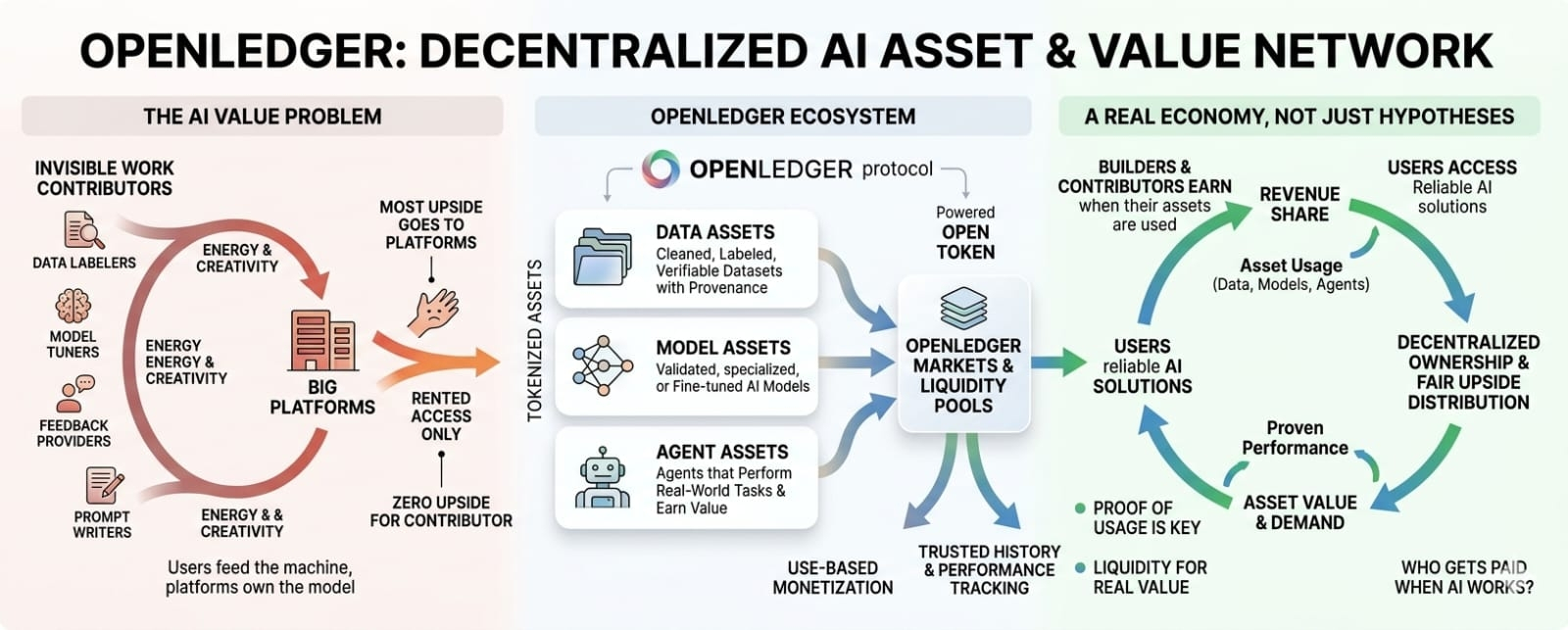
The mess is simple. AI is being built from everyone’s input, but the upside mostly goes to a few big platforms.
People give data. People give feedback. People test tools. Builders train models. Communities create knowledge. Users correct bad outputs. Someone writes prompts, someone labels things, someone improves workflows, someone keeps pushing the system until it gets better.
Then the platform wins.
That is usually how it goes.
The model improves because of all this invisible work, but the people behind that work rarely own anything. They do not get real upside. They do not get a clean way to monetize what they contributed. They just feed the machine and hope maybe something comes back later.
Most of the time, nothing does.
So when OpenLedger talks about data, models, and agents being monetized, I pay attention. Not because it sounds cool. Not because “AI blockchain” automatically means anything. It does not. I pay attention because the problem underneath it is real.
Data is valuable, but most of it is trapped.
Models are valuable, but many are locked inside platforms or private systems.
Agents might become valuable, but right now a lot of them still feel half-baked. Nice demo. Weak real use.
That is the honest state of things.
OpenLedger is trying to build around that. It wants to make these AI pieces easier to own, use, trade, and monetize. In plain words, it is trying to give AI assets some kind of market structure. That could matter if it works.
And that “if” is doing a lot of work.
Because data monetization is not easy. People love saying users should own their data. Fine. I agree. But then what? Is the data clean? Is it useful? Does anyone need it? Is it legal to sell? Can it actually improve a model? Or is it just another pile of random junk with a price tag on it?
More data does not always mean better AI.
Sometimes it just means more garbage going into the system.
Same thing with models. Everyone has a model now. Every project says its model is special. Cool. Prove it. Can it solve something real? Is it better than what already exists? Can people actually use it without getting lost? Does it save time? Does it make money? Does it do anything that matters?
That is the stuff I care about.
Not the thread.
Not the buzzwords.
Not the clean website.
Agents are even trickier. People talk like AI agents are already out here running businesses on their own. Most are not. Most still break on simple tasks. They forget things. They hallucinate. They click the wrong button. They need babysitting. They look good in a demo and then fall apart when you ask them to do something normal.
But if agents do start working properly, then the money side gets serious fast.
Who owns the agent?
Who earns when it does useful work?
Who takes the blame when it messes up?
Who proves it is actually good?
Who stops people from selling fake agent performance like they sell fake hype in every other corner of crypto?
These are not small questions.
This is where OpenLedger could have a real role. If it can help create a system where data, models, and agents are treated like assets with ownership, history, value, and payment flows, then that is useful. That gives builders and contributors a chance to earn from what they create instead of handing everything to closed platforms.
But again, it has to be real.
Crypto people love saying “unlock liquidity.” I honestly hate that phrase most of the time. It usually means someone found a way to let people trade something before anyone knows if it is actually worth anything.
But here, maybe liquidity has a point.
Data is hard to price. Models are hard to sell. Agents are hard to own. If OpenLedger can create a place where these things can move, earn, and be judged by real use, then liquidity is not just casino talk. It becomes part of the infrastructure.
If not, then it is just another table in the same casino.
And we already have enough of those.
The real test is not whether OPEN gets attention. Attention is easy in crypto. One good narrative, one AI trend, one strong market week, and suddenly everyone acts like a project is the future.
That means nothing by itself.
The real test is usage.
Are people bringing useful data?
Are builders launching models that people need?
Are agents doing actual work?
Are contributors earning something real?
Are users paying because the system helps them, or are they only farming rewards and waiting for the next token move?
That is the line.
OpenLedger has a good idea because AI has a real ownership problem. It also has a trust problem. It has a quality problem. It has a payment problem. That is a lot to fix.
And no, a blockchain does not magically fix all of that.
A blockchain can record ownership. Good.
It can help with payments. Good.
It can make markets more open. Good.
It can track some activity. Good.
But it cannot make bad data useful. It cannot make a weak model smart. It cannot make a broken agent reliable. It cannot create demand where none exists.
That part still has to be built.
This is why I get tired of lazy AI crypto hype. People act like putting something on-chain makes it valuable. It does not. A useless dataset on-chain is still useless. A copied model on-chain is still copied. A fake agent with fake numbers is still fake.
The chain is not the magic.
The value has to come from what people actually use.
If OpenLedger understands that, then it has a chance.
The strongest version of OpenLedger is easy to picture. A data provider uploads something useful and earns from it. A model builder gets paid when their model is used. An agent creator launches something that actually performs tasks and generates value. Users can see what they are using, where it came from, and why it matters.
That would be useful.
That would be real.
That would be better than the current setup where everyone feeds AI systems, but only the biggest platforms really eat.
But the weak version is easy to picture too.
A marketplace full of low-quality AI assets. A token. A few campaigns. Some farming. Some big claims. People posting about the future while the product barely works.
We have seen this too many times.
So I would not worship OpenLedger. I would not dismiss it either. I would watch it with a clear head.
The idea is good.
The problem is real.
The execution is still the whole story.
Data has to be useful. Models have to perform. Agents have to do real work. Liquidity has to connect to value, not just speculation.
That is where most projects fail. They get the story right and the system wrong.
OpenLedger is trying to sit in one of the most important parts of AI. Not just the chatbot layer. Not the hype layer. The ownership layer. The money layer. The part where people ask who gets paid when AI creates value.
That question matters.
AI is not built from nothing. It is built from people’s data, people’s corrections, people’s time, people’s knowledge, and people’s work. If all of that keeps going into closed systems with no fair way back, then the future of AI will look like the old internet all over again.
Users create.
Platforms capture.
Everyone else rents access.
That is not progress. That is just the same old setup with smarter tools.
OpenLedger is at least trying to push against that. It is trying to create a more open market for AI assets. A way for data, models, and agents to be owned and monetized. A way for contributors to maybe keep some upside instead of giving everything away.
I like that direction.
But direction is not enough.
The OPEN token only becomes interesting if the network underneath it becomes useful. Otherwise it is just another ticker riding the AI wave. And right now, the AI wave is full of noise.
Some projects will matter.
Most will disappear.
That is how this market works.
The ones that survive are usually the ones people still use when the hype is gone. When prices are down. When nobody is posting rocket emojis. When all that matters is whether the product saves time, makes money, or solves a real pain.
That is the boring truth.
OpenLedger has a real problem to solve. That gives it a better starting point than a lot of projects. AI value is not shared properly. Data is not easy to monetize. Models are not easy to own. Agents still do not have proper rails. Builders need better ways to earn. Users need better ways to trust what they are using.
All real problems.
Now OpenLedger has to prove it can do something about them.
Not talk.
Build.
Show useful data.
Show working models.
Show agents that actually do something.
Show real users.
Show real earnings.
Show that this is not just another AI token with better packaging.
That is where I land on it. OpenLedger is interesting. It is worth watching. It is still unproven. The problem is real enough to care about, but the project still has to earn trust.
And honestly, that is all I want from this space at this point.
Less noise.
More proof.
Make the thing work.
@Openledger $OPEN #OpenLedger
{spot}(OPENUSDT)
OPENLEDGER AND THE AI VALUE PROBLEM NOBODY WANTS TO SAY OUT LOUD
Crypto has this annoying habit of finding a real problem, throwing a token on top of it, and then acting like the job is done.
That is the part that gets tiring.
Now AI is getting pulled into the same machine. Every week there is another project saying it will fix data, fix models, fix agents, fix ownership, fix the whole internet if you just believe hard enough. I do not want to hear that anymore. I want to know what actually works. I want to know who gets paid. I want to know if the thing solves a real problem or if it is just another chart with a nice story behind it.
That is where OpenLedger becomes interesting to me, but not in some blind hype way. More like, okay, this is at least aiming at a real mess.
The mess is simple. AI is being built from everyone’s input, but the upside mostly goes to a few big platforms.
People give data. People give feedback. People test tools. Builders train models. Communities create knowledge. Users correct bad outputs. Someone writes prompts, someone labels things, someone improves workflows, someone keeps pushing the system until it gets better.
Then the platform wins.
That is usually how it goes.
The model improves because of all this invisible work, but the people behind that work rarely own anything. They do not get real upside. They do not get a clean way to monetize what they contributed. They just feed the machine and hope maybe something comes back later.
Most of the time, nothing does.
So when OpenLedger talks about data, models, and agents being monetized, I pay attention. Not because it sounds cool. Not because “AI blockchain” automatically means anything. It does not. I pay attention because the problem underneath it is real.
Data is valuable, but most of it is trapped.
Models are valuable, but many are locked inside platforms or private systems.
Agents might become valuable, but right now a lot of them still feel half-baked. Nice demo. Weak real use.
That is the honest state of things.
OpenLedger is trying to build around that. It wants to make these AI pieces easier to own, use, trade, and monetize. In plain words, it is trying to give AI assets some kind of market structure. That could matter if it works.
And that “if” is doing a lot of work.
Because data monetization is not easy. People love saying users should own their data. Fine. I agree. But then what? Is the data clean? Is it useful? Does anyone need it? Is it legal to sell? Can it actually improve a model? Or is it just another pile of random junk with a price tag on it?
More data does not always mean better AI.
Sometimes it just means more garbage going into the system.
Same thing with models. Everyone has a model now. Every project says its model is special. Cool. Prove it. Can it solve something real? Is it better than what already exists? Can people actually use it without getting lost? Does it save time? Does it make money? Does it do anything that matters?
That is the stuff I care about.
Not the thread.
Not the buzzwords.
Not the clean website.
Agents are even trickier. People talk like AI agents are already out here running businesses on their own. Most are not. Most still break on simple tasks. They forget things. They hallucinate. They click the wrong button. They need babysitting. They look good in a demo and then fall apart when you ask them to do something normal.
But if agents do start working properly, then the money side gets serious fast.
Who owns the agent?
Who earns when it does useful work?
Who takes the blame when it messes up?
Who proves it is actually good?
Who stops people from selling fake agent performance like they sell fake hype in every other corner of crypto?
These are not small questions.
This is where OpenLedger could have a real role. If it can help create a system where data, models, and agents are treated like assets with ownership, history, value, and payment flows, then that is useful. That gives builders and contributors a chance to earn from what they create instead of handing everything to closed platforms.
But again, it has to be real.
Crypto people love saying “unlock liquidity.” I honestly hate that phrase most of the time. It usually means someone found a way to let people trade something before anyone knows if it is actually worth anything.
But here, maybe liquidity has a point.
Data is hard to price. Models are hard to sell. Agents are hard to own. If OpenLedger can create a place where these things can move, earn, and be judged by real use, then liquidity is not just casino talk. It becomes part of the infrastructure.
If not, then it is just another table in the same casino.
And we already have enough of those.
The real test is not whether OPEN gets attention. Attention is easy in crypto. One good narrative, one AI trend, one strong market week, and suddenly everyone acts like a project is the future.
That means nothing by itself.
The real test is usage.
Are people bringing useful data?
Are builders launching models that people need?
Are agents doing actual work?
Are contributors earning something real?
Are users paying because the system helps them, or are they only farming rewards and waiting for the next token move?
That is the line.
OpenLedger has a good idea because AI has a real ownership problem. It also has a trust problem. It has a quality problem. It has a payment problem. That is a lot to fix.
And no, a blockchain does not magically fix all of that.
A blockchain can record ownership. Good.
It can help with payments. Good.
It can make markets more open. Good.
It can track some activity. Good.
But it cannot make bad data useful. It cannot make a weak model smart. It cannot make a broken agent reliable. It cannot create demand where none exists.
That part still has to be built.
This is why I get tired of lazy AI crypto hype. People act like putting something on-chain makes it valuable. It does not. A useless dataset on-chain is still useless. A copied model on-chain is still copied. A fake agent with fake numbers is still fake.
The chain is not the magic.
The value has to come from what people actually use.
If OpenLedger understands that, then it has a chance.
The strongest version of OpenLedger is easy to picture. A data provider uploads something useful and earns from it. A model builder gets paid when their model is used. An agent creator launches something that actually performs tasks and generates value. Users can see what they are using, where it came from, and why it matters.
That would be useful.
That would be real.
That would be better than the current setup where everyone feeds AI systems, but only the biggest platforms really eat.
But the weak version is easy to picture too.
A marketplace full of low-quality AI assets. A token. A few campaigns. Some farming. Some big claims. People posting about the future while the product barely works.
We have seen this too many times.
So I would not worship OpenLedger. I would not dismiss it either. I would watch it with a clear head.
The idea is good.
The problem is real.
The execution is still the whole story.
Data has to be useful. Models have to perform. Agents have to do real work. Liquidity has to connect to value, not just speculation.
That is where most projects fail. They get the story right and the system wrong.
OpenLedger is trying to sit in one of the most important parts of AI. Not just the chatbot layer. Not the hype layer. The ownership layer. The money layer. The part where people ask who gets paid when AI creates value.
That question matters.
AI is not built from nothing. It is built from people’s data, people’s corrections, people’s time, people’s knowledge, and people’s work. If all of that keeps going into closed systems with no fair way back, then the future of AI will look like the old internet all over again.
Users create.
Platforms capture.
Everyone else rents access.
That is not progress. That is just the same old setup with smarter tools.
OpenLedger is at least trying to push against that. It is trying to create a more open market for AI assets. A way for data, models, and agents to be owned and monetized. A way for contributors to maybe keep some upside instead of giving everything away.
I like that direction.
But direction is not enough.
The OPEN token only becomes interesting if the network underneath it becomes useful. Otherwise it is just another ticker riding the AI wave. And right now, the AI wave is full of noise.
Some projects will matter.
Most will disappear.
That is how this market works.
The ones that survive are usually the ones people still use when the hype is gone. When prices are down. When nobody is posting rocket emojis. When all that matters is whether the product saves time, makes money, or solves a real pain.
That is the boring truth.
OpenLedger has a real problem to solve. That gives it a better starting point than a lot of projects. AI value is not shared properly. Data is not easy to monetize. Models are not easy to own. Agents still do not have proper rails. Builders need better ways to earn. Users need better ways to trust what they are using.
All real problems.
Now OpenLedger has to prove it can do something about them.
Not talk.
Build.
Show useful data.
Show working models.
Show agents that actually do something.
Show real users.
Show real earnings.
Show that this is not just another AI token with better packaging.
That is where I land on it. OpenLedger is interesting. It is worth watching. It is still unproven. The problem is real enough to care about, but the project still has to earn trust.
And honestly, that is all I want from this space at this point.
Less noise.
More proof.
Make the thing work.
@OpenLedger $OPEN #OpenLedger
That is the part that gets tiring.
Now AI is getting pulled into the same machine. Every week there is another project saying it will fix data, fix models, fix agents, fix ownership, fix the whole internet if you just believe hard enough. I do not want to hear that anymore. I want to know what actually works. I want to know who gets paid. I want to know if the thing solves a real problem or if it is just another chart with a nice story behind it.
That is where OpenLedger becomes interesting to me, but not in some blind hype way. More like, okay, this is at least aiming at a real mess.
The mess is simple. AI is being built from everyone’s input, but the upside mostly goes to a few big platforms.
People give data. People give feedback. People test tools. Builders train models. Communities create knowledge. Users correct bad outputs. Someone writes prompts, someone labels things, someone improves workflows, someone keeps pushing the system until it gets better.
Then the platform wins.
That is usually how it goes.
The model improves because of all this invisible work, but the people behind that work rarely own anything. They do not get real upside. They do not get a clean way to monetize what they contributed. They just feed the machine and hope maybe something comes back later.
Most of the time, nothing does.
So when OpenLedger talks about data, models, and agents being monetized, I pay attention. Not because it sounds cool. Not because “AI blockchain” automatically means anything. It does not. I pay attention because the problem underneath it is real.
Data is valuable, but most of it is trapped.
Models are valuable, but many are locked inside platforms or private systems.
Agents might become valuable, but right now a lot of them still feel half-baked. Nice demo. Weak real use.
That is the honest state of things.
OpenLedger is trying to build around that. It wants to make these AI pieces easier to own, use, trade, and monetize. In plain words, it is trying to give AI assets some kind of market structure. That could matter if it works.
And that “if” is doing a lot of work.
Because data monetization is not easy. People love saying users should own their data. Fine. I agree. But then what? Is the data clean? Is it useful? Does anyone need it? Is it legal to sell? Can it actually improve a model? Or is it just another pile of random junk with a price tag on it?
More data does not always mean better AI.
Sometimes it just means more garbage going into the system.
Same thing with models. Everyone has a model now. Every project says its model is special. Cool. Prove it. Can it solve something real? Is it better than what already exists? Can people actually use it without getting lost? Does it save time? Does it make money? Does it do anything that matters?
That is the stuff I care about.
Not the thread.
Not the buzzwords.
Not the clean website.
Agents are even trickier. People talk like AI agents are already out here running businesses on their own. Most are not. Most still break on simple tasks. They forget things. They hallucinate. They click the wrong button. They need babysitting. They look good in a demo and then fall apart when you ask them to do something normal.
But if agents do start working properly, then the money side gets serious fast.
Who owns the agent?
Who earns when it does useful work?
Who takes the blame when it messes up?
Who proves it is actually good?
Who stops people from selling fake agent performance like they sell fake hype in every other corner of crypto?
These are not small questions.
This is where OpenLedger could have a real role. If it can help create a system where data, models, and agents are treated like assets with ownership, history, value, and payment flows, then that is useful. That gives builders and contributors a chance to earn from what they create instead of handing everything to closed platforms.
But again, it has to be real.
Crypto people love saying “unlock liquidity.” I honestly hate that phrase most of the time. It usually means someone found a way to let people trade something before anyone knows if it is actually worth anything.
But here, maybe liquidity has a point.
Data is hard to price. Models are hard to sell. Agents are hard to own. If OpenLedger can create a place where these things can move, earn, and be judged by real use, then liquidity is not just casino talk. It becomes part of the infrastructure.
If not, then it is just another table in the same casino.
And we already have enough of those.
The real test is not whether OPEN gets attention. Attention is easy in crypto. One good narrative, one AI trend, one strong market week, and suddenly everyone acts like a project is the future.
That means nothing by itself.
The real test is usage.
Are people bringing useful data?
Are builders launching models that people need?
Are agents doing actual work?
Are contributors earning something real?
Are users paying because the system helps them, or are they only farming rewards and waiting for the next token move?
That is the line.
OpenLedger has a good idea because AI has a real ownership problem. It also has a trust problem. It has a quality problem. It has a payment problem. That is a lot to fix.
And no, a blockchain does not magically fix all of that.
A blockchain can record ownership. Good.
It can help with payments. Good.
It can make markets more open. Good.
It can track some activity. Good.
But it cannot make bad data useful. It cannot make a weak model smart. It cannot make a broken agent reliable. It cannot create demand where none exists.
That part still has to be built.
This is why I get tired of lazy AI crypto hype. People act like putting something on-chain makes it valuable. It does not. A useless dataset on-chain is still useless. A copied model on-chain is still copied. A fake agent with fake numbers is still fake.
The chain is not the magic.
The value has to come from what people actually use.
If OpenLedger understands that, then it has a chance.
The strongest version of OpenLedger is easy to picture. A data provider uploads something useful and earns from it. A model builder gets paid when their model is used. An agent creator launches something that actually performs tasks and generates value. Users can see what they are using, where it came from, and why it matters.
That would be useful.
That would be real.
That would be better than the current setup where everyone feeds AI systems, but only the biggest platforms really eat.
But the weak version is easy to picture too.
A marketplace full of low-quality AI assets. A token. A few campaigns. Some farming. Some big claims. People posting about the future while the product barely works.
We have seen this too many times.
So I would not worship OpenLedger. I would not dismiss it either. I would watch it with a clear head.
The idea is good.
The problem is real.
The execution is still the whole story.
Data has to be useful. Models have to perform. Agents have to do real work. Liquidity has to connect to value, not just speculation.
That is where most projects fail. They get the story right and the system wrong.
OpenLedger is trying to sit in one of the most important parts of AI. Not just the chatbot layer. Not the hype layer. The ownership layer. The money layer. The part where people ask who gets paid when AI creates value.
That question matters.
AI is not built from nothing. It is built from people’s data, people’s corrections, people’s time, people’s knowledge, and people’s work. If all of that keeps going into closed systems with no fair way back, then the future of AI will look like the old internet all over again.
Users create.
Platforms capture.
Everyone else rents access.
That is not progress. That is just the same old setup with smarter tools.
OpenLedger is at least trying to push against that. It is trying to create a more open market for AI assets. A way for data, models, and agents to be owned and monetized. A way for contributors to maybe keep some upside instead of giving everything away.
I like that direction.
But direction is not enough.
The OPEN token only becomes interesting if the network underneath it becomes useful. Otherwise it is just another ticker riding the AI wave. And right now, the AI wave is full of noise.
Some projects will matter.
Most will disappear.
That is how this market works.
The ones that survive are usually the ones people still use when the hype is gone. When prices are down. When nobody is posting rocket emojis. When all that matters is whether the product saves time, makes money, or solves a real pain.
That is the boring truth.
OpenLedger has a real problem to solve. That gives it a better starting point than a lot of projects. AI value is not shared properly. Data is not easy to monetize. Models are not easy to own. Agents still do not have proper rails. Builders need better ways to earn. Users need better ways to trust what they are using.
All real problems.
Now OpenLedger has to prove it can do something about them.
Not talk.
Build.
Show useful data.
Show working models.
Show agents that actually do something.
Show real users.
Show real earnings.
Show that this is not just another AI token with better packaging.
That is where I land on it. OpenLedger is interesting. It is worth watching. It is still unproven. The problem is real enough to care about, but the project still has to earn trust.
And honestly, that is all I want from this space at this point.
Less noise.
More proof.
Make the thing work.
@OpenLedger $OPEN #OpenLedger
1
84
·
--
ブリッシュ
#bedrock $BR
BEDROCKがステーキングの再誓約(レスタッキング)をより“流動的”に感じさせる
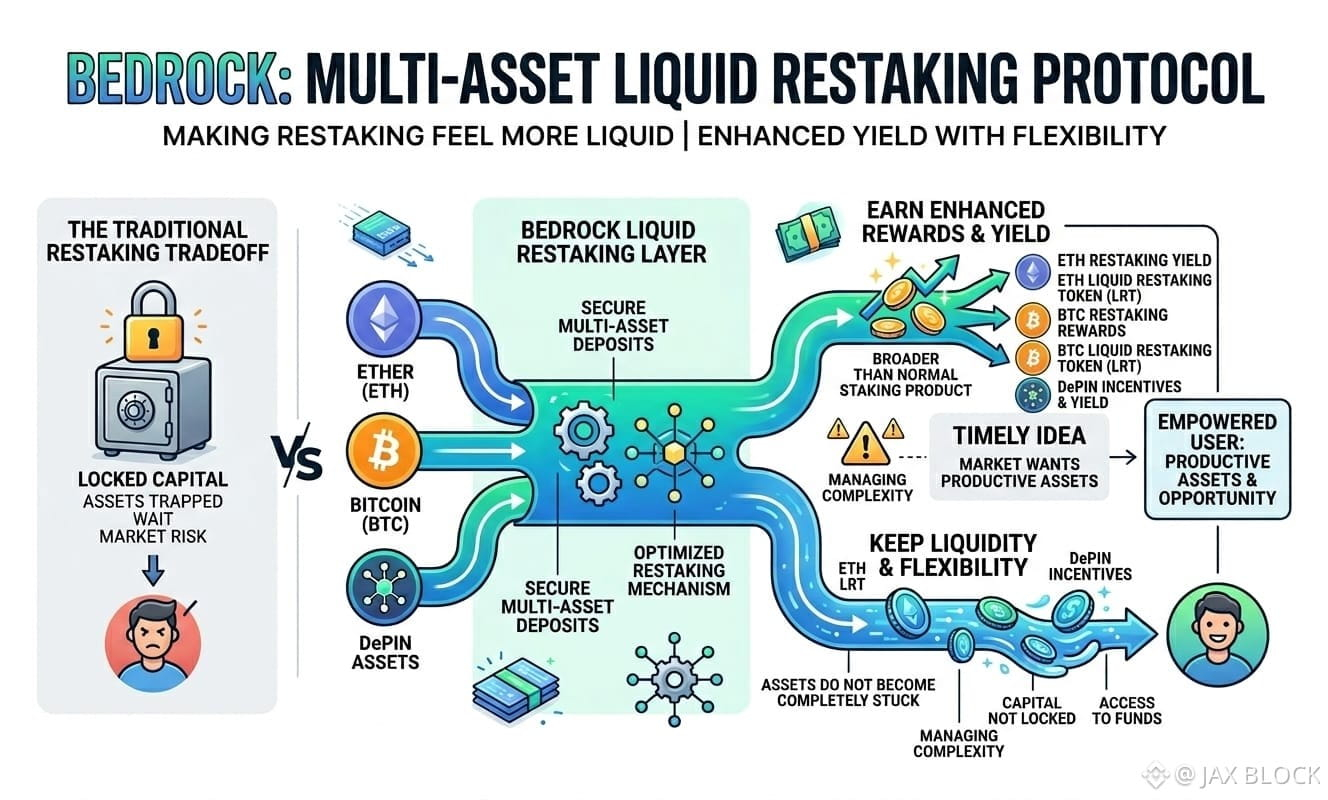
私は、ベッドロック(Bedrock)を見ています。なぜなら、それが暗号資産の中で繰り返し出てくる問題に触れているからです。人々は利回り(イールド)を求める一方で、資産が閉じ込められることは望みません。ベッドロックは、イーサリアム(Ethereum)、ビットコイン(Bitcoin)、およびDePIN関連の資産から、強化された報酬を得られながらも、その過程で流動性を維持できるマルチアセットのリキッド・レスタッキング(流動的な再誓約)プロトコルを構築しています。それは、聞こえる以上に重要です。多くの利回りシステムでは、トレードオフは単純で、しかも痛みを伴います。資本をロックして、待って、市場が自分に不利に動かないことを祈るのです。ベッドロックは、その体験をもっと硬直的でないものにしようとしています。
私が注目するのは、利回りの面だけではありません。どのプロジェクトも利回りを語るからです。際立っているのは、1つのレスタッキング層の下で、ETH、BTC、そしてDePINの報酬が組み合わさっている点です。これによりベッドロックは、通常のステーキング商品よりも幅広くなる一方で、注意深く見ておく必要があるものにもなっています。資産が増えればチャンスも増えますが、その分複雑さも増します。それでも、この発想はタイムリーに感じます。市場は、完全に行き詰まることなく稼げる生産的な資産を求めています。
私にとってベッドロックが興味深いのは、単にユーザーに報酬を追いかけさせようとしているだけではないからです。やることはそのままに、柔軟性を与えようとしているのです。そして流動性がアップサイド(上昇余地)と同じくらい重要になり得る市場では、この違いがすぐに大きくなる可能性があります。
@Bedrock $BR #Bedrock
{future}(BRUSDT)
#bedrock $BR
BEDROCKがステーキングの再誓約(レスタッキング)をより“流動的”に感じさせる
私は、ベッドロック(Bedrock)を見ています。なぜなら、それが暗号資産の中で繰り返し出てくる問題に触れているからです。人々は利回り(イールド)を求める一方で、資産が閉じ込められることは望みません。ベッドロックは、イーサリアム(Ethereum)、ビットコイン(Bitcoin)、およびDePIN関連の資産から、強化された報酬を得られながらも、その過程で流動性を維持できるマルチアセットのリキッド・レスタッキング(流動的な再誓約)プロトコルを構築しています。それは、聞こえる以上に重要です。多くの利回りシステムでは、トレードオフは単純で、しかも痛みを伴います。資本をロックして、待って、市場が自分に不利に動かないことを祈るのです。ベッドロックは、その体験をもっと硬直的でないものにしようとしています。
私が注目するのは、利回りの面だけではありません。どのプロジェクトも利回りを語るからです。際立っているのは、1つのレスタッキング層の下で、ETH、BTC、そしてDePINの報酬が組み合わさっている点です。これによりベッドロックは、通常のステーキング商品よりも幅広くなる一方で、注意深く見ておく必要があるものにもなっています。資産が増えればチャンスも増えますが、その分複雑さも増します。それでも、この発想はタイムリーに感じます。市場は、完全に行き詰まることなく稼げる生産的な資産を求めています。
私にとってベッドロックが興味深いのは、単にユーザーに報酬を追いかけさせようとしているだけではないからです。やることはそのままに、柔軟性を与えようとしているのです。そして流動性がアップサイド(上昇余地)と同じくらい重要になり得る市場では、この違いがすぐに大きくなる可能性があります。
@Bedrock $BR #Bedrock
BEDROCKがステーキングの再誓約(レスタッキング)をより“流動的”に感じさせる
私は、ベッドロック(Bedrock)を見ています。なぜなら、それが暗号資産の中で繰り返し出てくる問題に触れているからです。人々は利回り(イールド)を求める一方で、資産が閉じ込められることは望みません。ベッドロックは、イーサリアム(Ethereum)、ビットコイン(Bitcoin)、およびDePIN関連の資産から、強化された報酬を得られながらも、その過程で流動性を維持できるマルチアセットのリキッド・レスタッキング(流動的な再誓約)プロトコルを構築しています。それは、聞こえる以上に重要です。多くの利回りシステムでは、トレードオフは単純で、しかも痛みを伴います。資本をロックして、待って、市場が自分に不利に動かないことを祈るのです。ベッドロックは、その体験をもっと硬直的でないものにしようとしています。
私が注目するのは、利回りの面だけではありません。どのプロジェクトも利回りを語るからです。際立っているのは、1つのレスタッキング層の下で、ETH、BTC、そしてDePINの報酬が組み合わさっている点です。これによりベッドロックは、通常のステーキング商品よりも幅広くなる一方で、注意深く見ておく必要があるものにもなっています。資産が増えればチャンスも増えますが、その分複雑さも増します。それでも、この発想はタイムリーに感じます。市場は、完全に行き詰まることなく稼げる生産的な資産を求めています。
私にとってベッドロックが興味深いのは、単にユーザーに報酬を追いかけさせようとしているだけではないからです。やることはそのままに、柔軟性を与えようとしているのです。そして流動性がアップサイド(上昇余地)と同じくらい重要になり得る市場では、この違いがすぐに大きくなる可能性があります。
@Bedrock $BR #Bedrock
3
2
120
·
--
翻訳参照
#openledger $OPEN
OPENLEDGER STILL NEEDS TO PROVE ITSELF IN DEFI
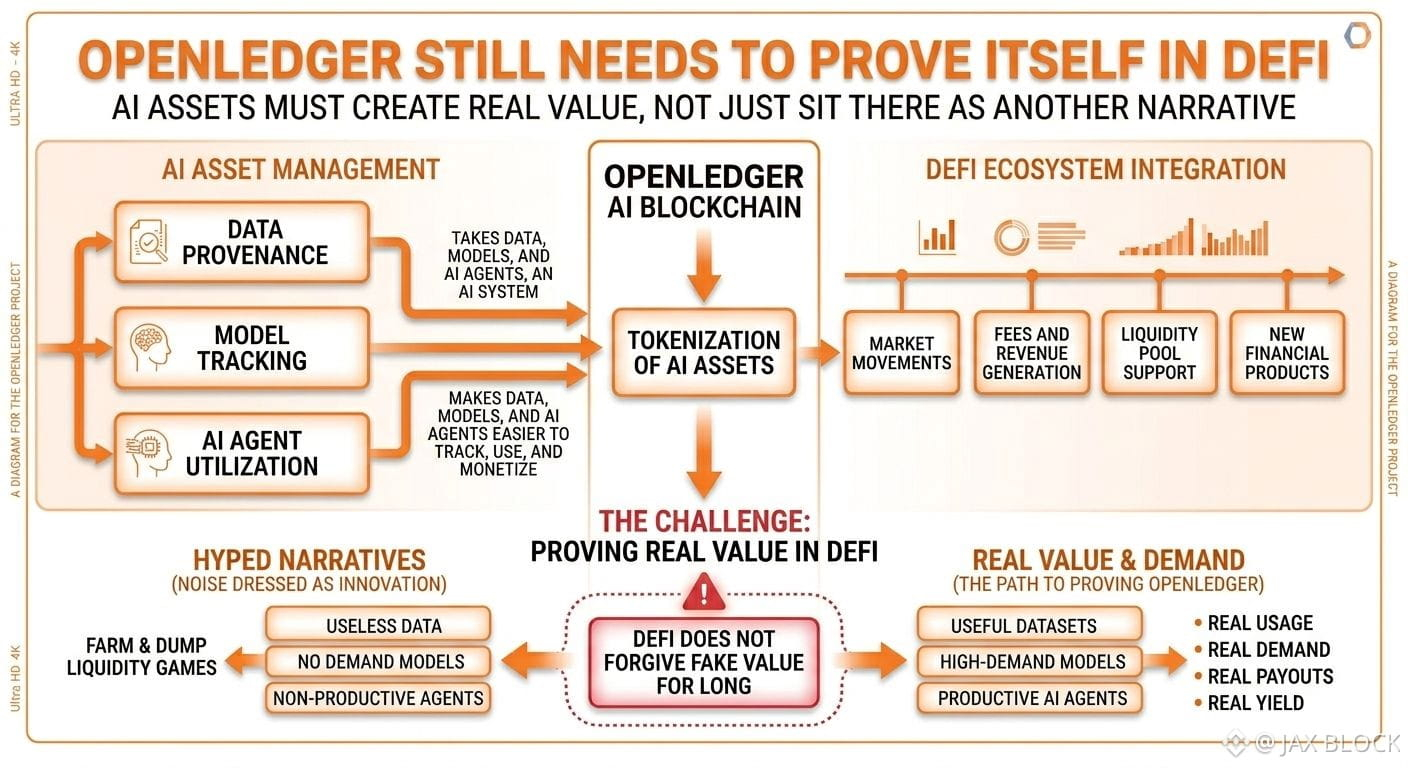
I was watching OpenLedger and honestly, it made me think about DeFi more than just AI. Because DeFi already showed us one thing clearly: liquidity only matters when there is real value behind it. We have seen too many tokens, too many pools, too many yield stories, and half of them were just noise dressed up as innovation.
That is why OpenLedger is interesting, but I am still careful with it. The idea is to make data, models, and AI agents easier to track, use, and monetize through an AI blockchain. In DeFi terms, that could mean turning AI assets into something that can actually move through markets, earn fees, support liquidity, and maybe become part of new financial products.
But here is the problem. DeFi does not forgive fake value for long. If the data is useless, if the models have no demand, if the agents are not doing real work, then liquidity becomes just another game. People farm it, dump it, and move on.
OPEN needs more than hype. It needs real usage. Real demand. Real payouts. Real proof that AI assets can create value inside DeFi, not just sit there as another narrative.
I like the idea. Data, models, and agents becoming productive assets could be big. But only if the system works. DeFi needs real yield, not fake excitement. OpenLedger has to show that.
@Openledger $OPEN #OpenLedger
{future}(OPENUSDT)
#openledger $OPEN
OPENLEDGER STILL NEEDS TO PROVE ITSELF IN DEFI
I was watching OpenLedger and honestly, it made me think about DeFi more than just AI. Because DeFi already showed us one thing clearly: liquidity only matters when there is real value behind it. We have seen too many tokens, too many pools, too many yield stories, and half of them were just noise dressed up as innovation.
That is why OpenLedger is interesting, but I am still careful with it. The idea is to make data, models, and AI agents easier to track, use, and monetize through an AI blockchain. In DeFi terms, that could mean turning AI assets into something that can actually move through markets, earn fees, support liquidity, and maybe become part of new financial products.
But here is the problem. DeFi does not forgive fake value for long. If the data is useless, if the models have no demand, if the agents are not doing real work, then liquidity becomes just another game. People farm it, dump it, and move on.
OPEN needs more than hype. It needs real usage. Real demand. Real payouts. Real proof that AI assets can create value inside DeFi, not just sit there as another narrative.
I like the idea. Data, models, and agents becoming productive assets could be big. But only if the system works. DeFi needs real yield, not fake excitement. OpenLedger has to show that.
@OpenLedger $OPEN #OpenLedger
OPENLEDGER STILL NEEDS TO PROVE ITSELF IN DEFI
I was watching OpenLedger and honestly, it made me think about DeFi more than just AI. Because DeFi already showed us one thing clearly: liquidity only matters when there is real value behind it. We have seen too many tokens, too many pools, too many yield stories, and half of them were just noise dressed up as innovation.
That is why OpenLedger is interesting, but I am still careful with it. The idea is to make data, models, and AI agents easier to track, use, and monetize through an AI blockchain. In DeFi terms, that could mean turning AI assets into something that can actually move through markets, earn fees, support liquidity, and maybe become part of new financial products.
But here is the problem. DeFi does not forgive fake value for long. If the data is useless, if the models have no demand, if the agents are not doing real work, then liquidity becomes just another game. People farm it, dump it, and move on.
OPEN needs more than hype. It needs real usage. Real demand. Real payouts. Real proof that AI assets can create value inside DeFi, not just sit there as another narrative.
I like the idea. Data, models, and agents becoming productive assets could be big. But only if the system works. DeFi needs real yield, not fake excitement. OpenLedger has to show that.
@OpenLedger $OPEN #OpenLedger
1
109
ログインして、さらにコンテンツを読む
厳選トピックで世界の暗号資産トレーダーの仲間入り
⚡️ 暗号資産に関する最新かつ有益な情報が見つかります。
💬 世界最大の暗号資産取引所から信頼されています。
👍 認証を受けたクリエイターから、有益なインサイトを得られます。
メール / 電話番号
トレンドトピック
FedRateWatch
閲覧回数 388,579
2,226人が討論中
トレンドハッシュタグキャンペーンで「シェア&ウィン」交通(トラフィック)報酬を獲得しよう
✨トピック:FOMC 9月、「次のFRBの一手」は?
👉参加方法:
ハッシュタグ #FedRateWatch を付けて短い投稿または記事を投稿してください
以下の観点に基づいてコンテンツを作成してください:
- 8月のコアCPIは前月比0.3%上昇し、今週の25bp利上げの確率は現在約90%です。今週、利上げはあると思いますか?それは一時的なものですか、それともより長い利上げサイクルの始まりでしょうか?
- 利上げが実施された場合、BTC、テック株、ゴールドはどのように動きますか?強気(ブル)か弱気(ベア)か?
- 次の取引はどう計画していますか?取引共有ウィジェットを使って、BTC、株、またはゴールドの取引/保有を共有してください。
⏰キャンペーン期間:
- 2026-09-15 11:00 - 2026-09-17 3:00 UTC
🎁報酬:
- 上記のガイドラインを満たし、かつ100語を超える適格な投稿は審査され、抽選で500〜3,000ビューのランダムなトラフィック増加が付与される場合があります。投稿が選ばれた場合、フィードの事務局から通知が届きます。
- 記事がBinance Square Officialで特集されるチャンス
投稿のアイデアが必要ですか?トピックページ #FedRateWatch へアクセスするか、 Square Guide on How to Post for Better Reach をご覧ください。
Binance Square Official
·いいね:345件
·閲覧回数 693.3k
BitcoinSlidesTo$76000
閲覧回数 8,774
86人が討論中
BitcoinReboundsTo$79K
閲覧回数 56,019
384人が討論中