

Hubdar On Spot
57 投稿

Hubdar On Spot
報告
ユーザーをブロック
Best Spot and Futures Signals, Less but Accurate 🎯

DUSKホルダー
高頻度トレーダー
10.7か月
28 フォロー
86 フォロワー
106 いいね
投稿
すべて
引用
ライブ
翻訳参照
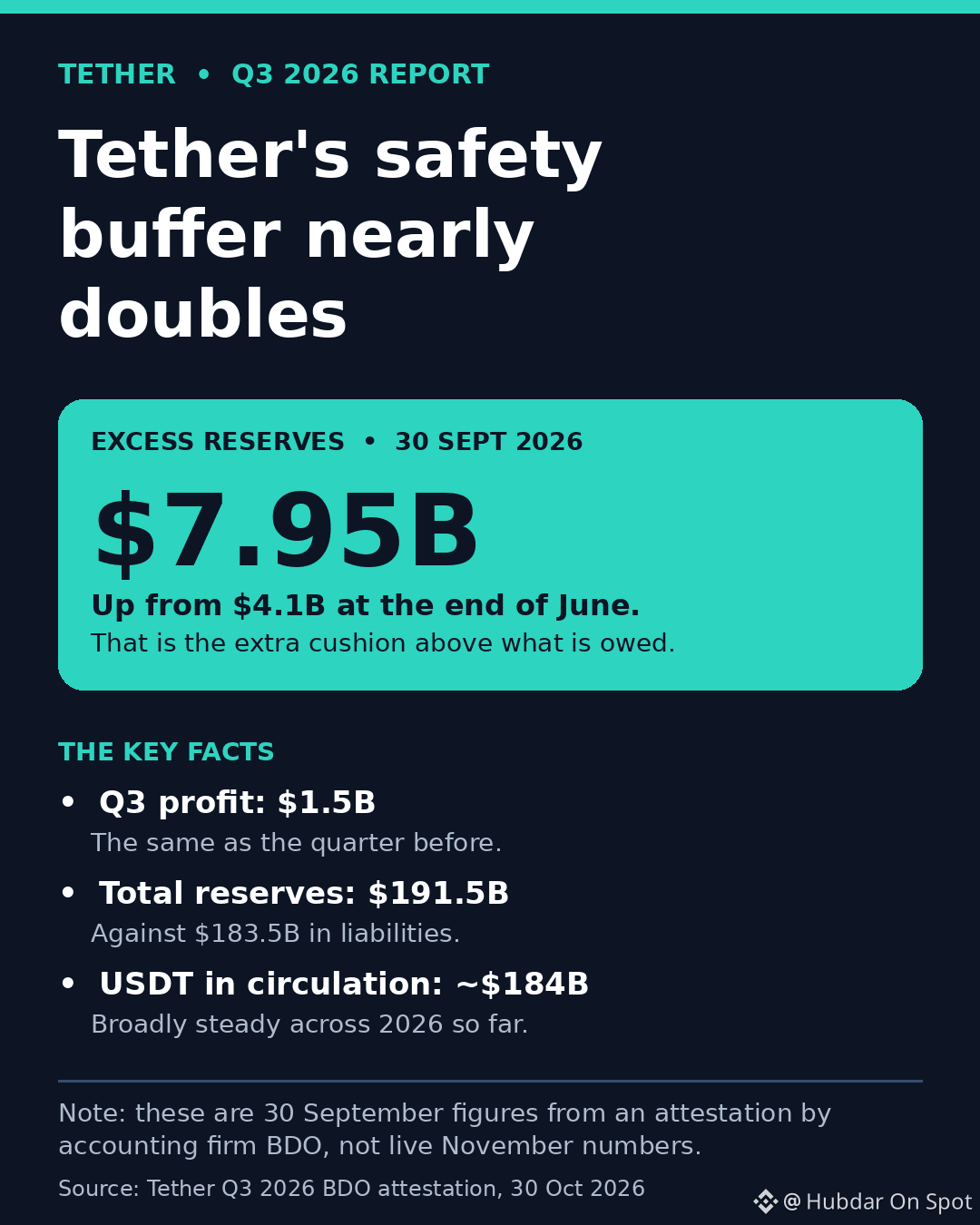
Tether just reported a much bigger safety cushion.
Tether is the company behind USDT. USDT is a stablecoin, a type of crypto meant to stay close to $1, so people use it to move value without the usual crypto price swings.
In its third-quarter report, released on 30 October, Tether said its excess reserves reached $7.95 billion on 30 September. That is the extra amount left after counting what it owes. It was $4.1 billion at the end of June.
The company also reported $1.5 billion in net operating profit for the quarter, the same as the quarter before. Across the first nine months of 2026, that profit totalled $4.5 billion.
In total, Tether held $191.5 billion in reserves against $183.5 billion in liabilities, which is what it owes. USDT in circulation held broadly steady at about $184 billion.
What is still unknown is what the figures look like now. This report is a snapshot from 30 September, checked in an attestation by accounting firm BDO. It is not a live November update.
Source: Tether Q3 2026 BDO attestation, 30 October 2026.
Does a bigger reserve cushion make you trust a stablecoin more, or do you look at something else first?
27
記事
翻訳参照
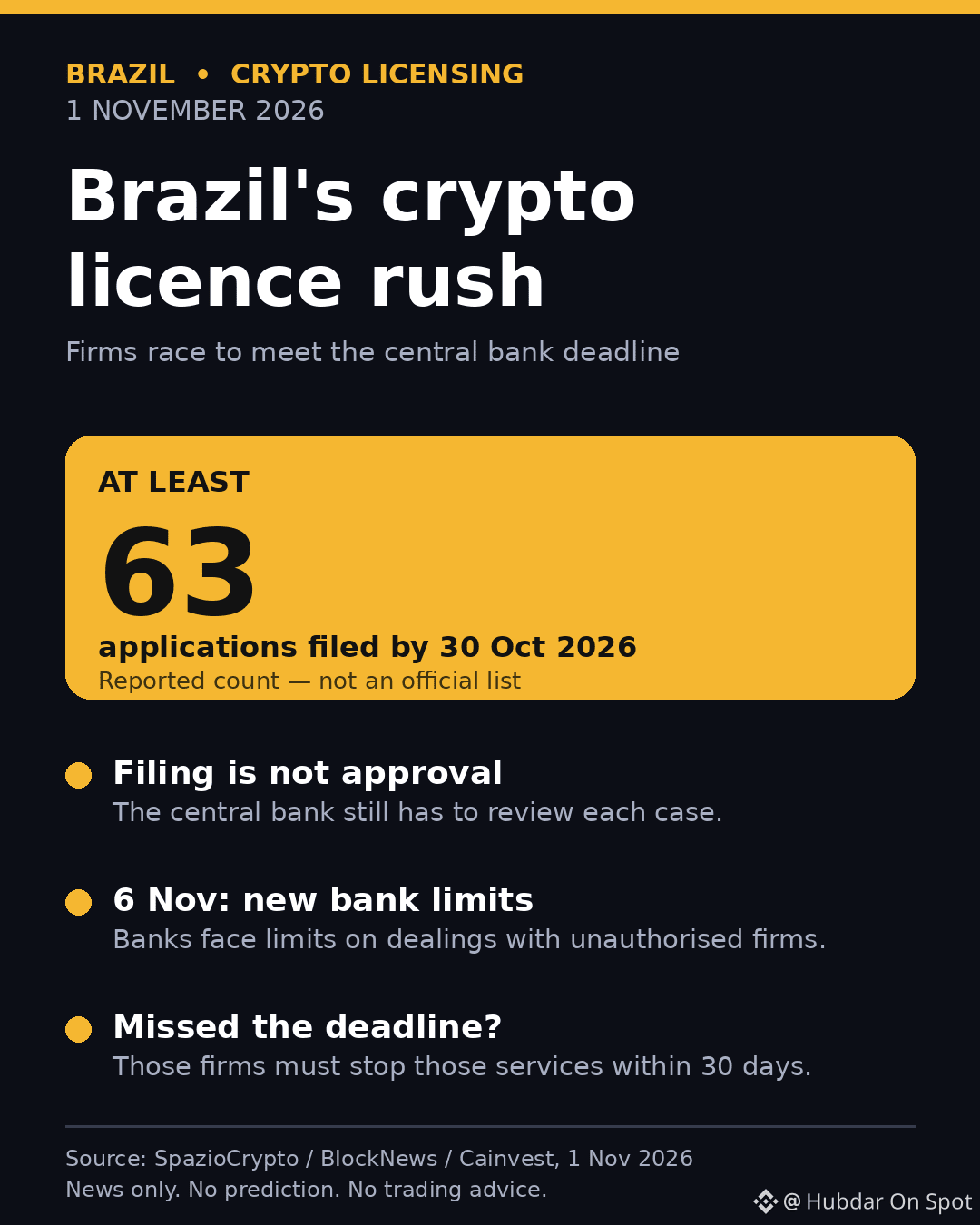
Brazil's crypto licence rush: at least 63 firms filed before the deadlineBrazil has just closed the door on the first stage of its new crypto licensing system. And a lot of firms rushed through it in time.
A virtual asset service provider, or VASP for short, is a company that lets people trade, hold or send crypto. In Brazil, those firms now need formal permission from the country's central bank, the Banco Central do Brasil, to keep operating.
What happened
Brazil's central bank published its new crypto rules in November 2025. They took effect on 2 February 2026. Firms that were already offering crypto services then had 270 days to file the first part of their application. That deadline was 30 October 2026.
By that deadline, at least 63 crypto operators had filed, according to BlockNews, based on monitoring by Cainvest. The count was updated at 8:05 p.m. local time. Around ten more applications that came in during the final hours had not yet been counted, so the real total could be higher.
Among the firms named by BlockNews are Bitget, Kraken, BTG Pactual and Banco Rendimento. OSL Brasil separately confirmed on 30 October that its own subsidiary had filed. Before the deadline, Binance had applied on 23 October and Coinbase on 28 October, according to Unchained's reporting.
Filing is only the start, though. It is not a licence. The central bank still has to check each application, and it can ask for more documents at any stage. OSL said this plainly in its own announcement: filing does not guarantee approval.
Firms that filed on time can keep offering their services while the review runs. But they cannot change how they operate in the meantime. Firms that missed the deadline must stop those services within 30 days of the cutoff.
Then comes a second date, and it is separate from the application itself. From 6 November 2026, banks, payment firms and other firms supervised by the central bank will not be able to carry out or help with crypto market operations for providers that are not authorised in Brazil, except in cases the rules expressly allow. That change comes from Resolution BCB 589, which amended the earlier rules.
Why it matters
Brazil is Latin America's largest economy, and it is one of the world's biggest crypto markets. So a licensing system there affects a lot of users, not just a handful of firms.
For everyday users, the shift is simple to understand. Before, many firms could serve Brazilian customers without this kind of central bank permission. Now, permission is the route to staying in the market. For firms, the next job is no longer meeting a deadline. It is passing the review, keeping their paperwork in order, and keeping their banking relationships working under the new 6 November rule.
What is confirmed
The 30 October deadline for first-phase applications is confirmed in the central bank's rules, and the 6 November banking restriction is confirmed in Resolution BCB 589. At least 63 applications were known by 8:05 p.m. local time on the deadline day, based on Cainvest monitoring reported by BlockNews, with around ten more not yet counted. OSL Brasil confirmed its own filing on 30 October. Firms that filed on time may keep operating during the review, and firms that missed the deadline must stop those services within 30 days.
What is still unknown
The 63 figure is not an official central bank total. The central bank has not published a full list, so the final count, and which firms filed, may change as more reports come in. No approvals have been confirmed in these reports, and no decision dates have been given.
There is also one point the sources do not clear up. One rule lets firms that filed on time keep operating while they wait. The updated banking rule, however, talks about providers that are not authorised, and does not expressly repeat the exception for firms still waiting for a decision. How the central bank will join those two rules together from 6 November onwards is not yet clear.
Original source: SpazioCrypto, 1 November 2026, "Brazil Crypto Licensing: 63 Firms Apply to Banco Central" — https://en.spaziocrypto.com/regulation/brazil-crypto-licenses-63-firms-apply-banco-central/ — reporting BlockNews based on Cainvest monitoring; with Unchained, 29 October 2026, "Coinbase Files to Keep Operating Under Brazil's New Crypto Rules" — https://unchainedcrypto.com/coinbase-files-to-keep-operating-under-brazils-new-crypto-rules/
Do you think a clear licence list will make crypto in Brazil feel safer for everyday users, or just harder for smaller firms to keep up?
Brazil's crypto licence rush: at least 63 firms filed before the deadline
Brazil has just closed the door on the first stage of its new crypto licensing system. And a lot of firms rushed through it in time.
A virtual asset service provider, or VASP for short, is a company that lets people trade, hold or send crypto. In Brazil, those firms now need formal permission from the country's central bank, the Banco Central do Brasil, to keep operating.
What happened
Brazil's central bank published its new crypto rules in November 2025. They took effect on 2 February 2026. Firms that were already offering crypto services then had 270 days to file the first part of their application. That deadline was 30 October 2026.
By that deadline, at least 63 crypto operators had filed, according to BlockNews, based on monitoring by Cainvest. The count was updated at 8:05 p.m. local time. Around ten more applications that came in during the final hours had not yet been counted, so the real total could be higher.
Among the firms named by BlockNews are Bitget, Kraken, BTG Pactual and Banco Rendimento. OSL Brasil separately confirmed on 30 October that its own subsidiary had filed. Before the deadline, Binance had applied on 23 October and Coinbase on 28 October, according to Unchained's reporting.
Filing is only the start, though. It is not a licence. The central bank still has to check each application, and it can ask for more documents at any stage. OSL said this plainly in its own announcement: filing does not guarantee approval.
Firms that filed on time can keep offering their services while the review runs. But they cannot change how they operate in the meantime. Firms that missed the deadline must stop those services within 30 days of the cutoff.
Then comes a second date, and it is separate from the application itself. From 6 November 2026, banks, payment firms and other firms supervised by the central bank will not be able to carry out or help with crypto market operations for providers that are not authorised in Brazil, except in cases the rules expressly allow. That change comes from Resolution BCB 589, which amended the earlier rules.
Why it matters
Brazil is Latin America's largest economy, and it is one of the world's biggest crypto markets. So a licensing system there affects a lot of users, not just a handful of firms.
For everyday users, the shift is simple to understand. Before, many firms could serve Brazilian customers without this kind of central bank permission. Now, permission is the route to staying in the market. For firms, the next job is no longer meeting a deadline. It is passing the review, keeping their paperwork in order, and keeping their banking relationships working under the new 6 November rule.
What is confirmed
The 30 October deadline for first-phase applications is confirmed in the central bank's rules, and the 6 November banking restriction is confirmed in Resolution BCB 589. At least 63 applications were known by 8:05 p.m. local time on the deadline day, based on Cainvest monitoring reported by BlockNews, with around ten more not yet counted. OSL Brasil confirmed its own filing on 30 October. Firms that filed on time may keep operating during the review, and firms that missed the deadline must stop those services within 30 days.
What is still unknown
The 63 figure is not an official central bank total. The central bank has not published a full list, so the final count, and which firms filed, may change as more reports come in. No approvals have been confirmed in these reports, and no decision dates have been given.
There is also one point the sources do not clear up. One rule lets firms that filed on time keep operating while they wait. The updated banking rule, however, talks about providers that are not authorised, and does not expressly repeat the exception for firms still waiting for a decision. How the central bank will join those two rules together from 6 November onwards is not yet clear.
Original source: SpazioCrypto, 1 November 2026, "Brazil Crypto Licensing: 63 Firms Apply to Banco Central" — https://en.spaziocrypto.com/regulation/brazil-crypto-licenses-63-firms-apply-banco-central/ — reporting BlockNews based on Cainvest monitoring; with Unchained, 29 October 2026, "Coinbase Files to Keep Operating Under Brazil's New Crypto Rules" — https://unchainedcrypto.com/coinbase-files-to-keep-operating-under-brazils-new-crypto-rules/
Do you think a clear licence list will make crypto in Brazil feel safer for everyday users, or just harder for smaller firms to keep up?
1
36
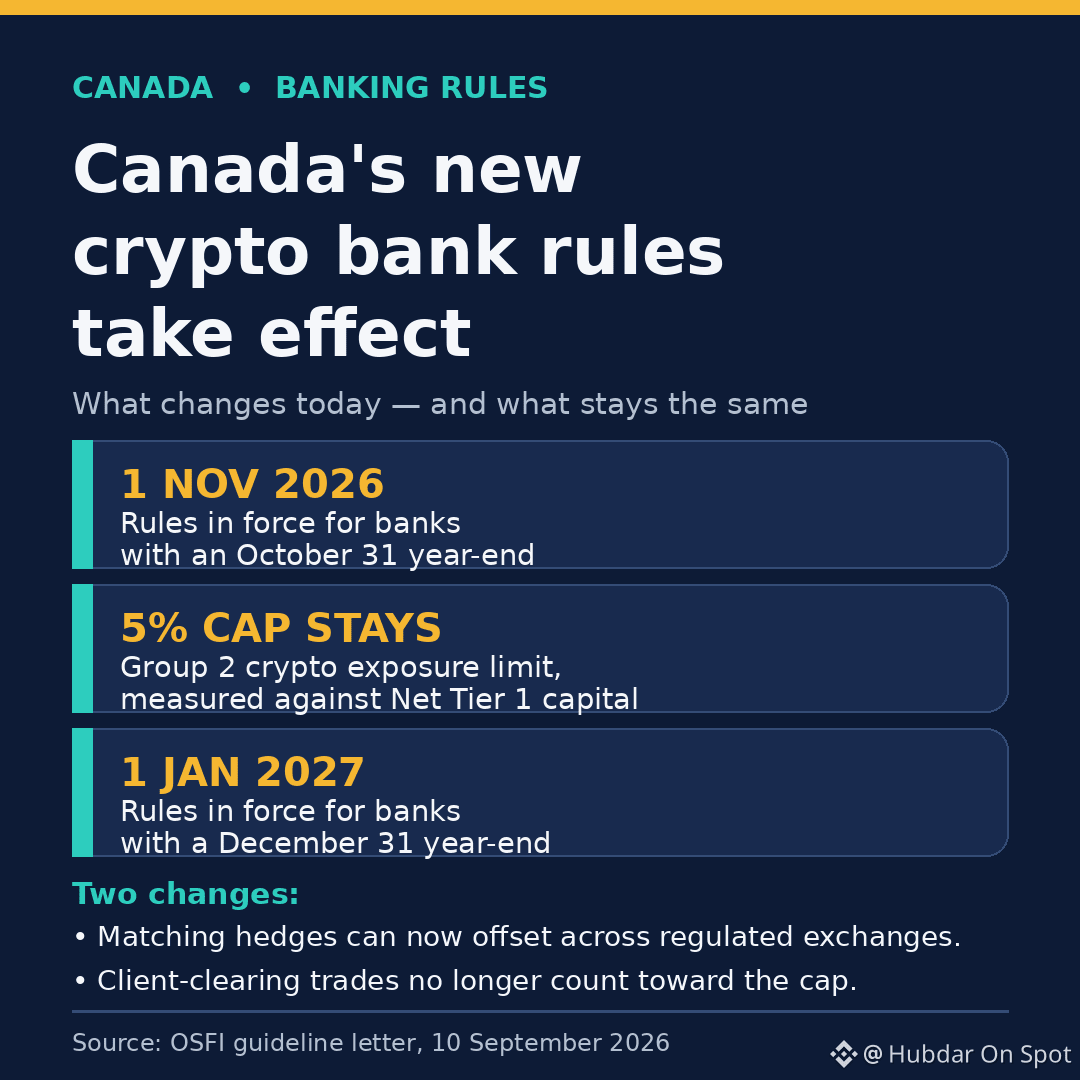
カナダの銀行は今日、新たな暗号資産規制への対応を始めています。
同国の銀行規制当局OSFIは、銀行に求める暗号資産の取り扱い方法を更新しました。新規則は今日、11月1日から、会計年度末が10月31日の銀行に適用されます。12月決算の銀行には、2027年1月1日から適用されます。
変更点は2つあります。まず、銀行は同額のヘッジ、つまり互いに相殺する反対のポジションを、異なる規制対象取引所に置いている場合でも相殺できるようになりました。ただし、同じ暗号資産を対象とし、満期日が同じで、規制当局の定める基準を満たす必要があります。これまでは、取引所が異なるというだけで相殺が認められない場合がありました。
次に、銀行が顧客のために清算する一定の取引は、銀行の暗号資産エクスポージャー上限に算入されなくなります。
変わらない点も重要です。全体の上限は、銀行の財務健全性を示す主要な指標である普通株等Tier 1資本の5%のままです。また、暗号資産は引き続き担保、つまり融資に対して差し入れる保証として認められません。
要するに、これは顧客の取引を仲介する銀行を対象とした限定的な規制緩和であり、大規模な暗号資産投資を認めるものではありません。まだ分からないのは、銀行が実際にこの余裕枠をどれほど活用するかです。新規則の下での銀行の最初の決算発表は通常2月下旬なので、実際の影響が初めて見えてくるのはその頃でしょう。
出典:OSFIガイドライン書簡、2026年9月10日。
このように銀行規制が明確になれば、カナダで暗号資産の普及が進むと思いますか。それとも、5%の上限が依然として銀行の足かせになるでしょうか?
1
74
記事
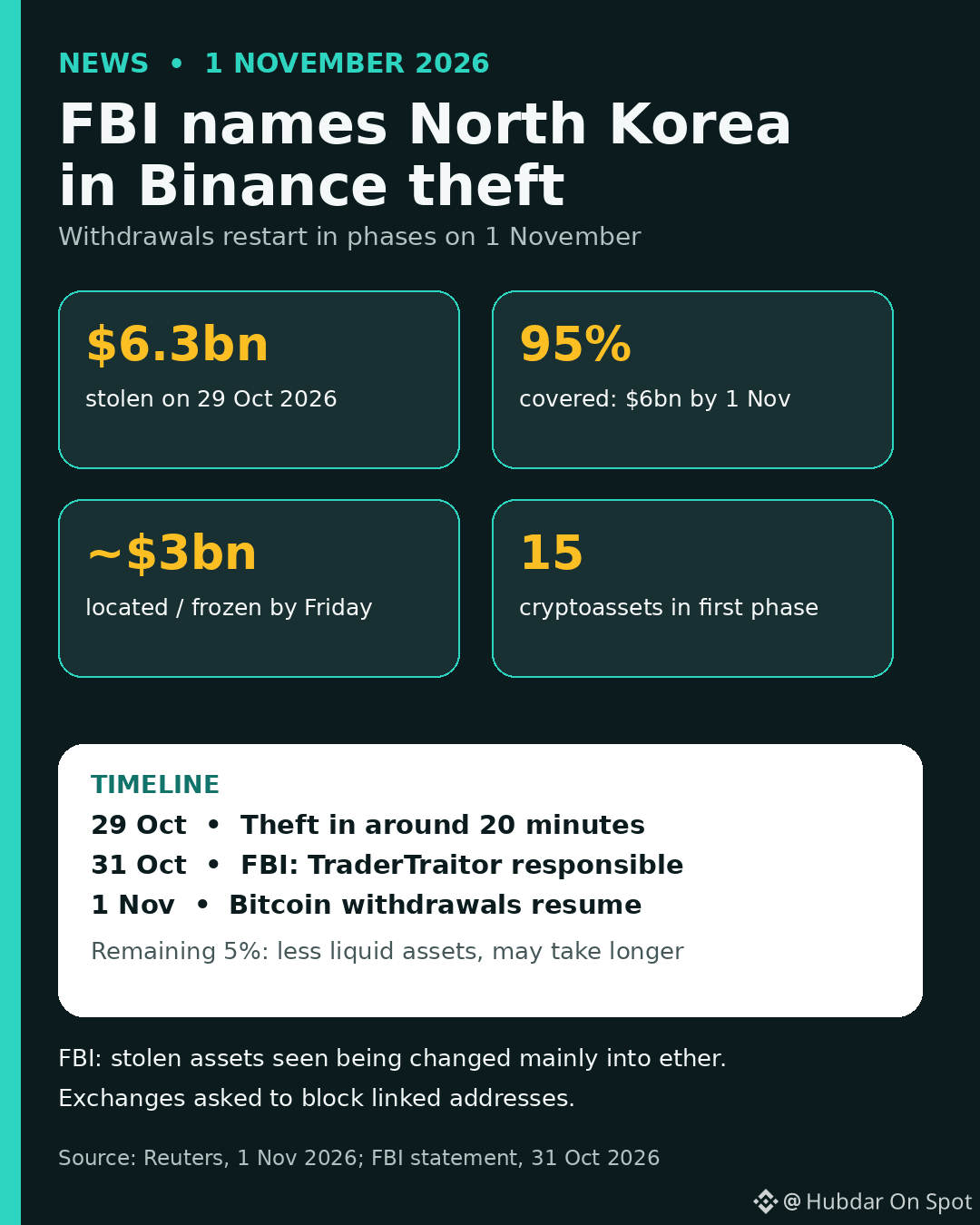
Binanceの63億ドル相当窃盗でFBIが北朝鮮を名指し、出金再開今週末、Binanceをめぐる状況に大きな動きがあった。FBIが今回、責任があるとする相手を名指しした。そしてBinanceは、ビットコインの出金を再開し始めた。
Binanceは世界最大の暗号資産取引所だ。簡単に言えば、人々がデジタル通貨を取引したり保管したりするためのプラットフォームである。
何が起きたのか
2026年10月29日木曜日の遅い時間、Binanceから約63億ドル相当のデジタル資産が盗まれた。Reutersは、ブロックチェーン分析会社のTRM LabsとChainalysisの分析を引用し、盗難の大部分は約20分の間に起きたと報じている。
Binanceの63億ドル相当窃盗でFBIが北朝鮮を名指し、出金再開
今週末、Binanceをめぐる状況に大きな動きがあった。FBIが今回、責任があるとする相手を名指しした。そしてBinanceは、ビットコインの出金を再開し始めた。
Binanceは世界最大の暗号資産取引所だ。簡単に言えば、人々がデジタル通貨を取引したり保管したりするためのプラットフォームである。
何が起きたのか
2026年10月29日木曜日の遅い時間、Binanceから約63億ドル相当のデジタル資産が盗まれた。Reutersは、ブロックチェーン分析会社のTRM LabsとChainalysisの分析を引用し、盗難の大部分は約20分の間に起きたと報じている。
Binanceは世界最大の暗号資産取引所だ。簡単に言えば、人々がデジタル通貨を取引したり保管したりするためのプラットフォームである。
何が起きたのか
2026年10月29日木曜日の遅い時間、Binanceから約63億ドル相当のデジタル資産が盗まれた。Reutersは、ブロックチェーン分析会社のTRM LabsとChainalysisの分析を引用し、盗難の大部分は約20分の間に起きたと報じている。
206
翻訳参照
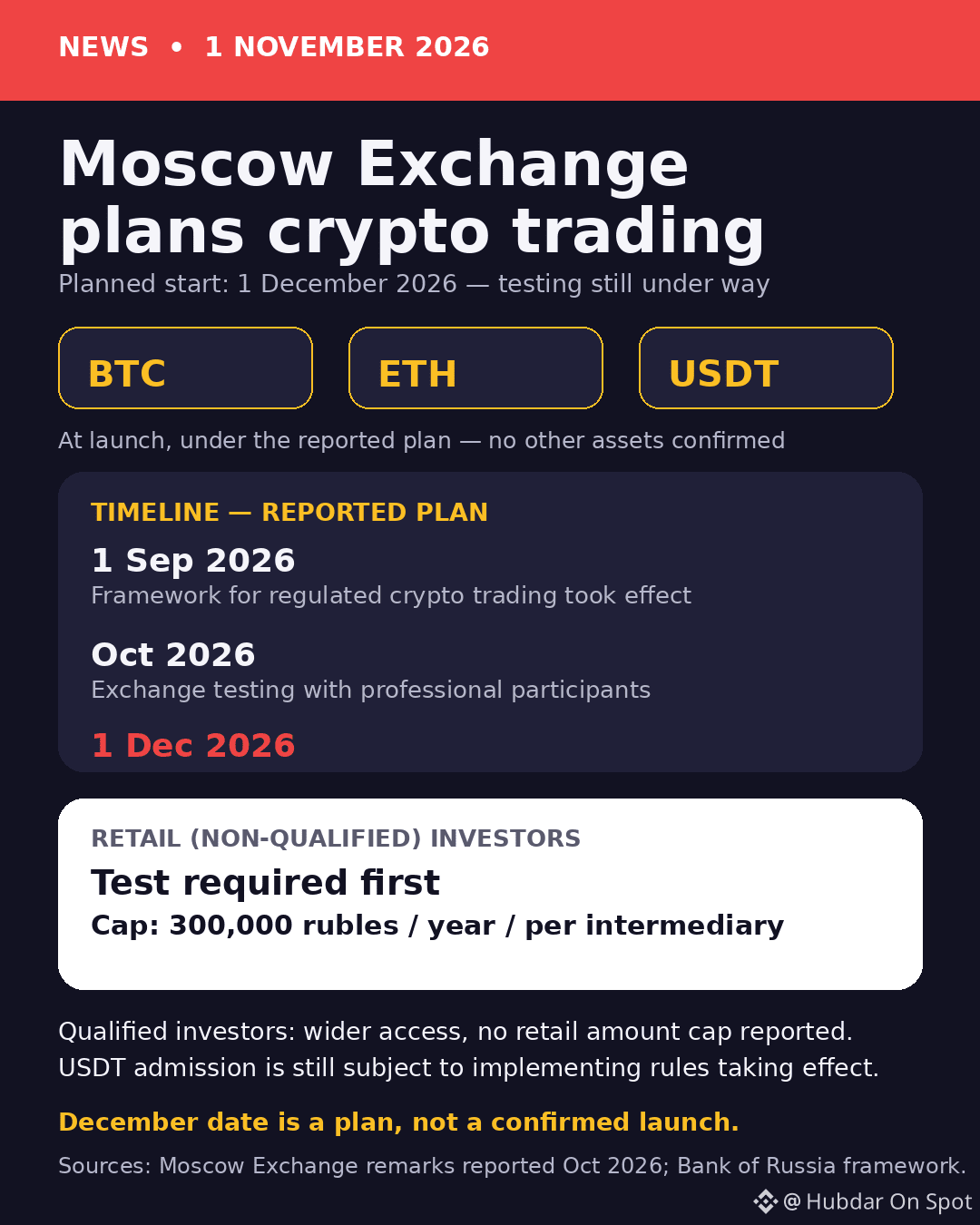
The Moscow Exchange is planning to start crypto trading on 1 December 2026, covering Bitcoin, Ethereum and USDT at launch.
The plan sits under a framework that took effect on 1 September 2026. Retail (non-qualified) investors would need to pass a test first, with purchases capped at 300,000 rubles a year per intermediary. Qualified investors are reported to face no such amount cap and wider asset access.
The December date is still a plan, not a confirmed launch — the exchange has said testing with professional participants is under way. One detail to watch: reports note USDT admission is still subject to the relevant implementing rules taking effect.
Do you think regulated exchange trading will bring more everyday investors into crypto, or will the caps and tests keep most activity elsewhere?
96
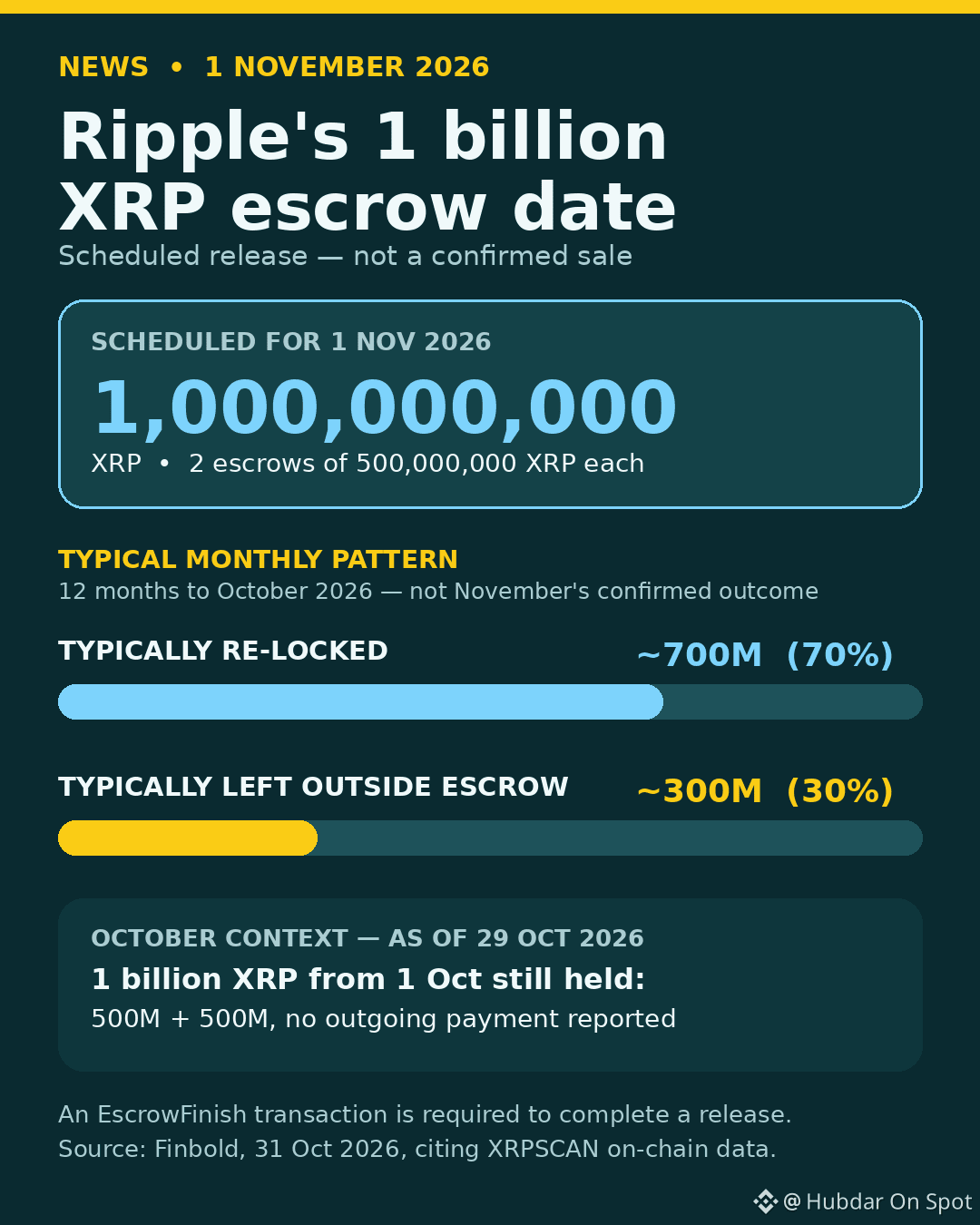
Rippleによる10億XRPの定期エスクロー解除が、本日2026年11月1日に予定されています。
毎月の解除は、それぞれ5億XRPを保有する2つのエスクローに分けられています。日付を迎えただけでは、送金や売却が行われたことの確認にはなりません。完了するには、RippleがEscrowFinishトランザクションを送信する必要があります。
今回の状況は異例です。10月29日に報告されたオンチェーンデータによると、10月1日の解除で使われた2つのウォレットには、依然としてそれぞれ5億XRPが残っており、それ以降、外部への送金は記録されていません。
2026年10月までの12カ月間では、毎月通常約7億XRP(約70%)が再ロックされ、約3億XRPがエスクローの外に残っていました。これはこれまでの傾向であり、11月に同じ結果になると確認されたわけではありません。
出典:Finbold、2026年10月31日。
まず何に注目しますか? EscrowFinishの実行でしょうか、それとも再ロックの傾向が繰り返されるかどうかでしょうか?
151
記事
翻訳参照
Illinois crypto tax rules could effectively ban DeFi, warn a16z, Uniswap Labs and DeFi Education FundWhat happened
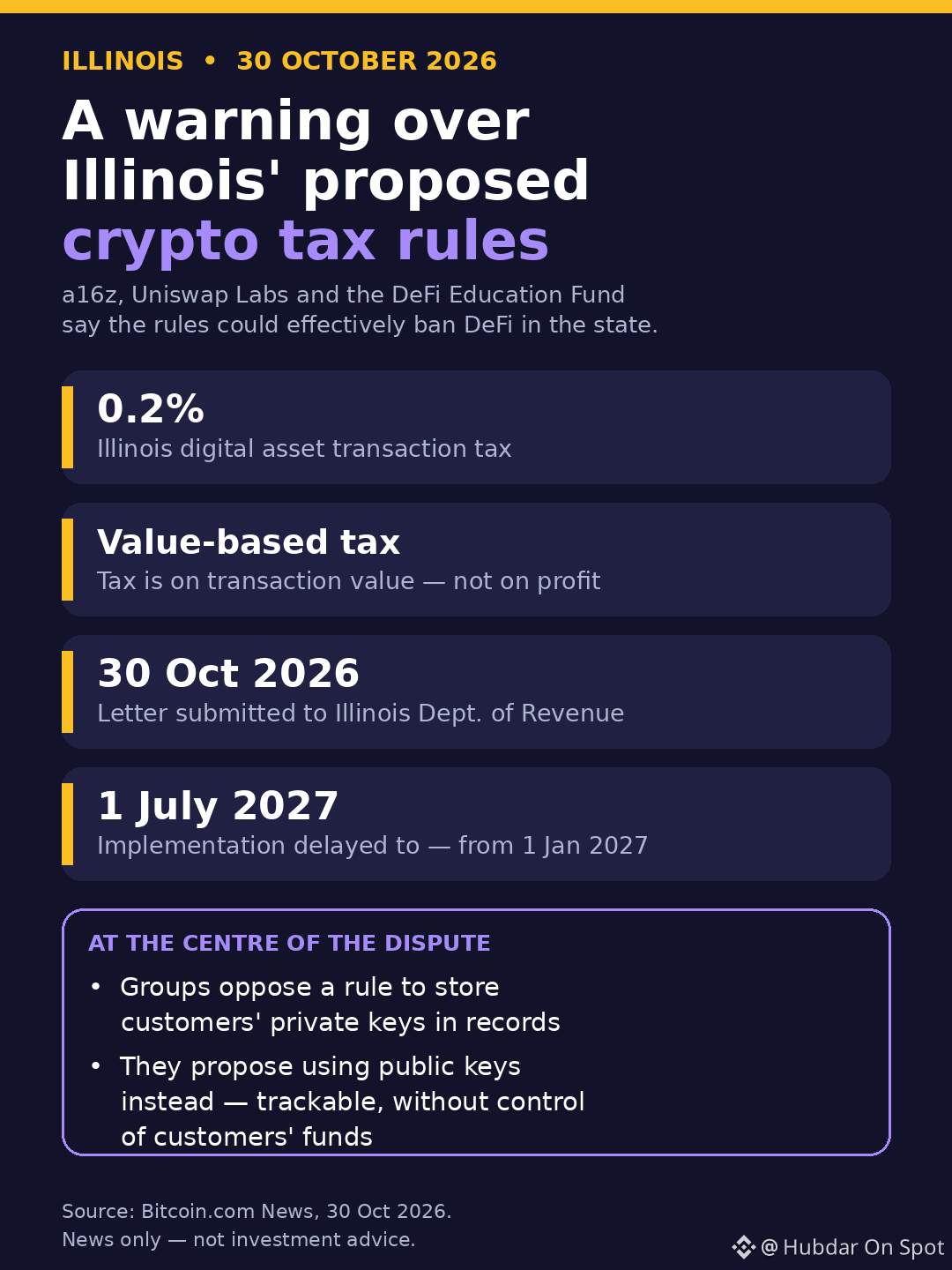
On 30 October 2026, Andreessen Horowitz (a16z), Uniswap Labs and the DeFi Education Fund submitted a letter to the Illinois Department of Revenue urging regulators to overhaul proposed rules for implementing Illinois' Digital Asset Tax Act.
The groups warn that the proposed implementation could effectively prohibit decentralised finance (DeFi) activity in Illinois, while also creating serious security risks for users.
Their central argument is about how decentralised exchanges (DEXs) are classified. The letter argues that the proposed rules incorrectly treat DEXs as conventional financial brokers. The groups say DEXs, including the Uniswap protocol, operate through autonomous software rather than as intermediaries that control customers' assets or execute transactions on their behalf.
Unlike centralised exchanges, they argue, DEXs generally cannot identify customers, determine their locations, collect taxes, or file returns on individual transactions. Imposing those obligations, they say, would make compliance practically impossible.
Why it matters
If the proposed approach stands, the groups argue, DeFi services could face a de facto ban in Illinois — not because DeFi is named as banned, but because the compliance duties cannot be met in practice.
A second concern is security. One controversial provision would require brokers to maintain records containing customers' private keys — the credentials used to authorise transactions and control digital assets. The signatories warn that collecting and storing those credentials could expose customer funds to theft if the records were compromised, and could force companies to choose between protecting customer assets and complying with state rules.
The letter proposes replacing the term "private keys" with "public keys", which can be used to track blockchain transactions without granting control over customers' funds.
The groups also object to provisions that could tax withdrawals from centralised exchanges to personal wallets and transfers of assets between blockchains, known as bridging. A16z policy head Miles Jennings compared that treatment to taxing someone simply for moving money between their own bank accounts.
The groups ask regulators to explicitly exclude decentralised protocols and their interfaces from the definition of digital asset brokers, and to clarify that collecting automated protocol fees does not automatically establish broker status.
What is confirmed
- The letter was submitted on Friday, 30 October 2026, by a16z, Uniswap Labs and the DeFi Education Fund, as reported by Bitcoin.com News on 30 October 2026.
- Illinois enacted its Digital Asset Tax Act in June, imposing a 0.2% tax on the value of qualifying cryptocurrency transactions and other covered digital asset activity. The levy is based on transaction value, not on profit.
- Implementation has been postponed from 1 January to 1 July 2027, to allow litigation to proceed.
- The Blockchain Association and Crypto Council for Innovation have challenged the law in court, raising concerns including overlapping taxation, constitutional protections and potential criminal penalties.
What is still unknown / not confirmed
- Whether the Illinois Department of Revenue will revise the proposed rules, exclude decentralised protocols, or change the private-keys provision to public keys. That decision has not been confirmed.
- The outcome of the court challenges. A prediction by one industry figure that challengers will succeed is an opinion, not a ruling.
- Whether the proposed rules would, as a matter of law, amount to a ban on DeFi. That is the groups' warning and argument, not a confirmed legal outcome.
This article is news only and is not investment advice.
Source: Bitcoin.com News, 30 October 2026 — https://news.bitcoin.com/regulation-and-legal/a16z-uniswap-warn-illinois-crypto-tax-rules-ban-defi/
Should decentralised protocols be treated differently from traditional brokers for tax reporting — and if so, how should that line be drawn?
Illinois crypto tax rules could effectively ban DeFi, warn a16z, Uniswap Labs and DeFi Education Fund
What happened
On 30 October 2026, Andreessen Horowitz (a16z), Uniswap Labs and the DeFi Education Fund submitted a letter to the Illinois Department of Revenue urging regulators to overhaul proposed rules for implementing Illinois' Digital Asset Tax Act.
The groups warn that the proposed implementation could effectively prohibit decentralised finance (DeFi) activity in Illinois, while also creating serious security risks for users.
Their central argument is about how decentralised exchanges (DEXs) are classified. The letter argues that the proposed rules incorrectly treat DEXs as conventional financial brokers. The groups say DEXs, including the Uniswap protocol, operate through autonomous software rather than as intermediaries that control customers' assets or execute transactions on their behalf.
Unlike centralised exchanges, they argue, DEXs generally cannot identify customers, determine their locations, collect taxes, or file returns on individual transactions. Imposing those obligations, they say, would make compliance practically impossible.
Why it matters
If the proposed approach stands, the groups argue, DeFi services could face a de facto ban in Illinois — not because DeFi is named as banned, but because the compliance duties cannot be met in practice.
A second concern is security. One controversial provision would require brokers to maintain records containing customers' private keys — the credentials used to authorise transactions and control digital assets. The signatories warn that collecting and storing those credentials could expose customer funds to theft if the records were compromised, and could force companies to choose between protecting customer assets and complying with state rules.
The letter proposes replacing the term "private keys" with "public keys", which can be used to track blockchain transactions without granting control over customers' funds.
The groups also object to provisions that could tax withdrawals from centralised exchanges to personal wallets and transfers of assets between blockchains, known as bridging. A16z policy head Miles Jennings compared that treatment to taxing someone simply for moving money between their own bank accounts.
The groups ask regulators to explicitly exclude decentralised protocols and their interfaces from the definition of digital asset brokers, and to clarify that collecting automated protocol fees does not automatically establish broker status.
What is confirmed
- The letter was submitted on Friday, 30 October 2026, by a16z, Uniswap Labs and the DeFi Education Fund, as reported by Bitcoin.com News on 30 October 2026.
- Illinois enacted its Digital Asset Tax Act in June, imposing a 0.2% tax on the value of qualifying cryptocurrency transactions and other covered digital asset activity. The levy is based on transaction value, not on profit.
- Implementation has been postponed from 1 January to 1 July 2027, to allow litigation to proceed.
- The Blockchain Association and Crypto Council for Innovation have challenged the law in court, raising concerns including overlapping taxation, constitutional protections and potential criminal penalties.
What is still unknown / not confirmed
- Whether the Illinois Department of Revenue will revise the proposed rules, exclude decentralised protocols, or change the private-keys provision to public keys. That decision has not been confirmed.
- The outcome of the court challenges. A prediction by one industry figure that challengers will succeed is an opinion, not a ruling.
- Whether the proposed rules would, as a matter of law, amount to a ban on DeFi. That is the groups' warning and argument, not a confirmed legal outcome.
This article is news only and is not investment advice.
Source: Bitcoin.com News, 30 October 2026 — https://news.bitcoin.com/regulation-and-legal/a16z-uniswap-warn-illinois-crypto-tax-rules-ban-defi/
Should decentralised protocols be treated differently from traditional brokers for tax reporting — and if so, how should that line be drawn?
3
記事
バングラデシュ銀行、新たな統合通達で暗号資産規制を再確認バングラデシュ銀行、新たな統合通達で暗号資産規制を再確認
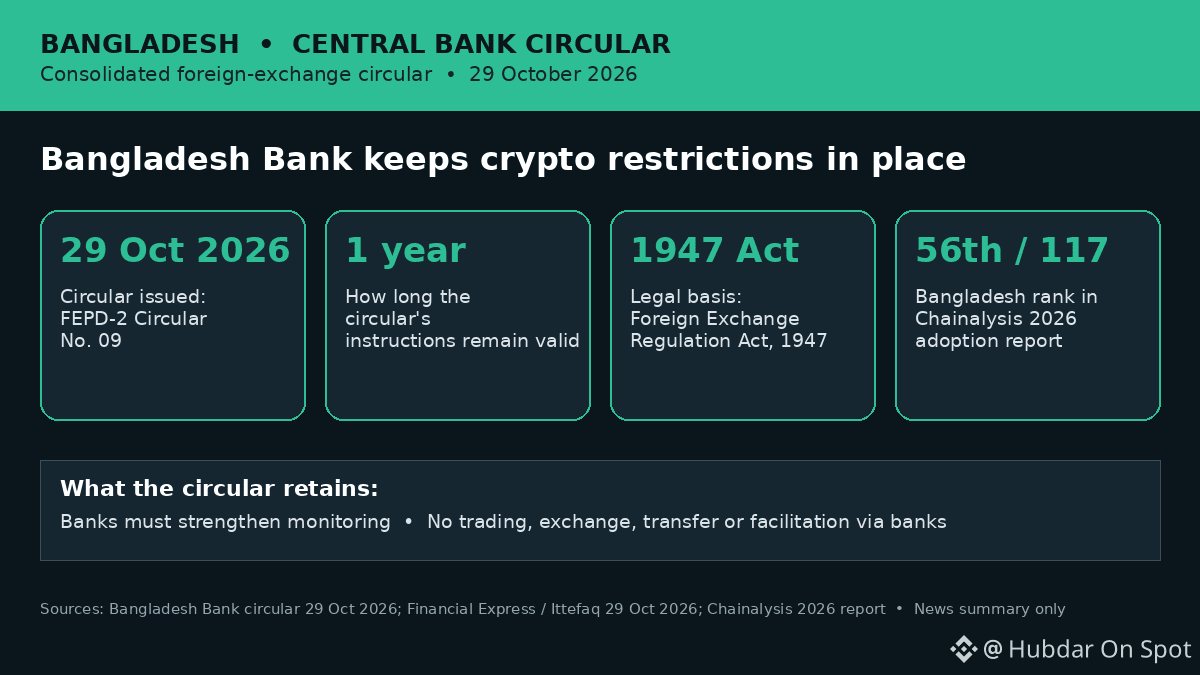
バングラデシュ銀行は、2026年10月29日木曜日に発行した外国為替管理に関する新たな統合通達で、暗号資産および仮想通貨の取引に対する規制を再確認しました。
中央銀行の外国為替政策局第2部が発行したFEPD-2通達第09号は、既存の外国為替規則を1つの文書にまとめたものです。『外国為替取引ガイドライン(GFET)』2018年版第I巻およびその後の通達に記載された指示を廃止しますが、第II巻の月次報告に関する指示は除外されます。新しい通達の指示は、発行日から1年間有効です。
バングラデシュ銀行、新たな統合通達で暗号資産規制を再確認
バングラデシュ銀行、新たな統合通達で暗号資産規制を再確認
バングラデシュ銀行は、2026年10月29日木曜日に発行した外国為替管理に関する新たな統合通達で、暗号資産および仮想通貨の取引に対する規制を再確認しました。
中央銀行の外国為替政策局第2部が発行したFEPD-2通達第09号は、既存の外国為替規則を1つの文書にまとめたものです。『外国為替取引ガイドライン(GFET)』2018年版第I巻およびその後の通達に記載された指示を廃止しますが、第II巻の月次報告に関する指示は除外されます。新しい通達の指示は、発行日から1年間有効です。
バングラデシュ銀行は、2026年10月29日木曜日に発行した外国為替管理に関する新たな統合通達で、暗号資産および仮想通貨の取引に対する規制を再確認しました。
中央銀行の外国為替政策局第2部が発行したFEPD-2通達第09号は、既存の外国為替規則を1つの文書にまとめたものです。『外国為替取引ガイドライン(GFET)』2018年版第I巻およびその後の通達に記載された指示を廃止しますが、第II巻の月次報告に関する指示は除外されます。新しい通達の指示は、発行日から1年間有効です。
1
翻訳参照
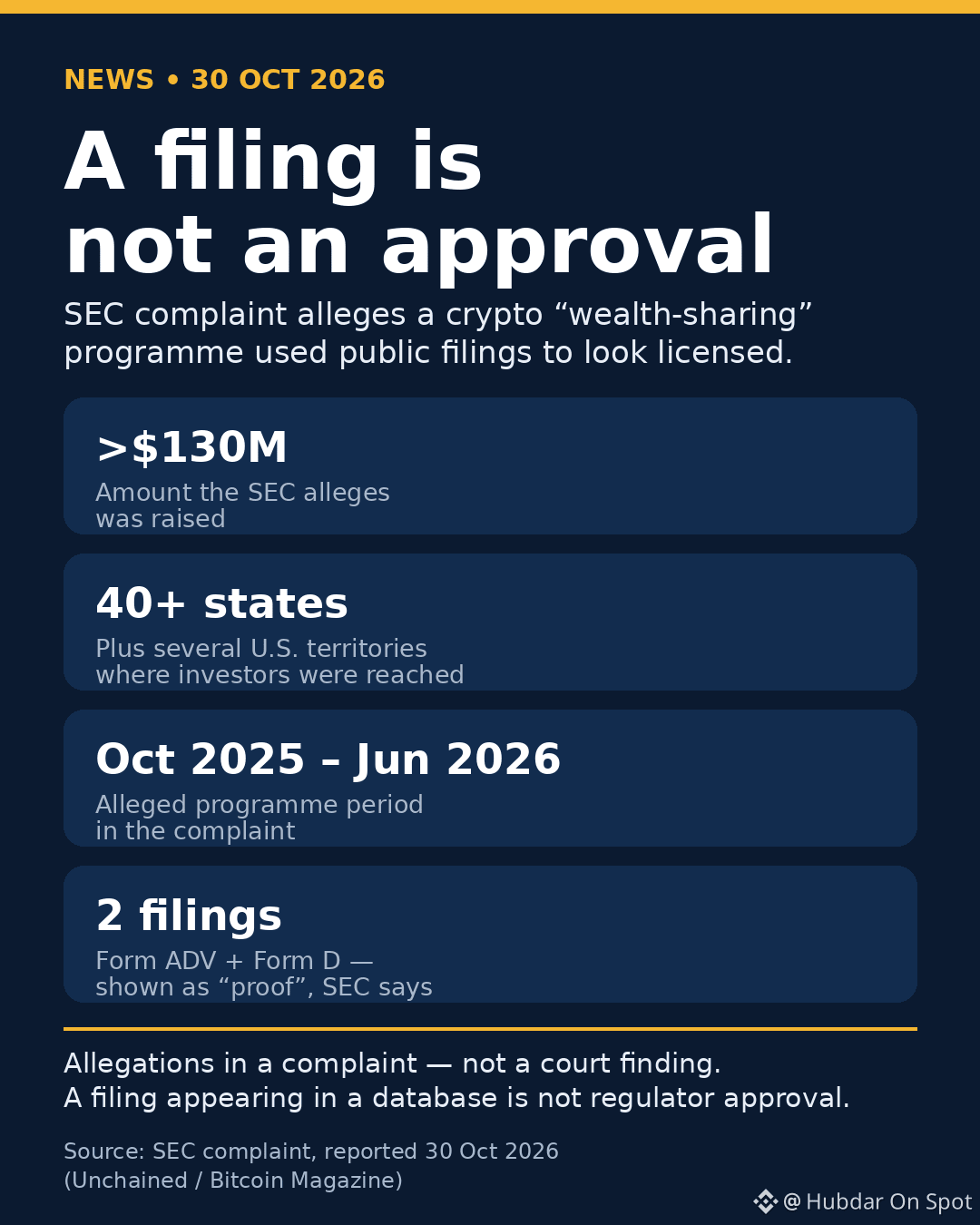
News, 30 Oct 2026: The US SEC has charged BG Wealth Sharing Ltd. and DSJ Exchange Pty Ltd. in a complaint filed in the Northern District of California, alleging a crypto “wealth-sharing program” raised more than $130 million from tens of thousands of retail investors in more than 40 states and several US territories from at least October 2025 through June 2026.
The SEC alleges the firms pointed investors to Form ADV and Form D filings viewable on its website and to fake certificates bearing its seal, presenting them as proof of SEC approval. The SEC says those filings are not approval or a licence, and that the filings have since been removed. These are allegations in a complaint, not a court finding.
Key point: a public filing appearing in a database is not the same as regulator approval.
What check would you do before trusting a claim that a crypto firm is “SEC-approved”?
29
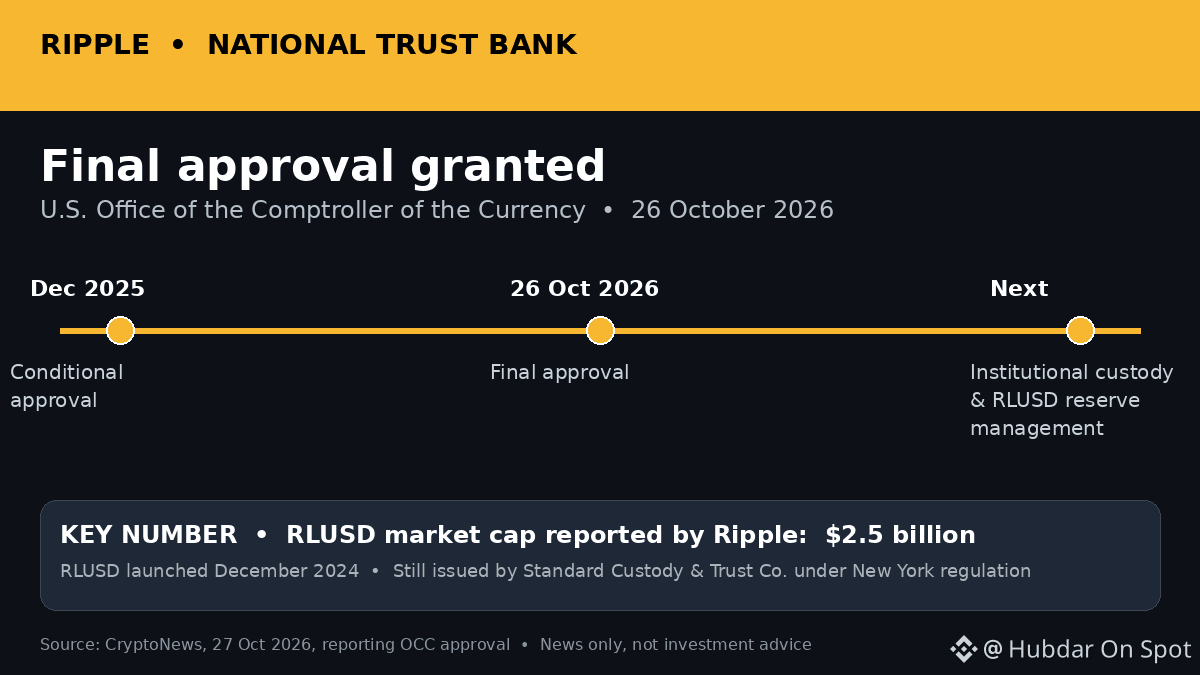
Ripple、米国の国法信託銀行設立に最終承認を取得
Rippleは2026年10月26日、米国通貨監督庁(OCC)からRipple National Trust Bankの最終承認を取得しました。これにより、2025年12月の条件付き承認から始まった手続きが完了しました。
確認された内容:
- RLUSDを支援し、企業にデジタル資産のカストディを提供する、連邦政府の監督下にあるプラットフォーム
- 同銀行は、Ripple USD(RLUSD)の裏付けとなる分別管理準備金を管理し、RLUSD保有者の担保受託者として機能する
- RLUSDの発行は引き続き、ニューヨーク州の規制下でStandard Custody & Trust Companyが行う
- Rippleによると、RLUSDは2024年12月のローンチ以降、時価総額が25億ドルに達した
まだ不明な点:どの企業向けカストディ商品や顧客が最初に対象となるのか、またその時期。
出典:CryptoNews、2026年10月27日
連邦政府の監督下でカストディが提供されることで、機関投資家はステーブルコインやデジタル資産サービスをより安心して利用できるようになると思いますか?ぜひ下のコメント欄で意見を聞かせてください! 👇
64
翻訳参照
Solana to Host Hong Kong Dollar Stablecoin HKDAP in Planned Anchorpoint Collaboration
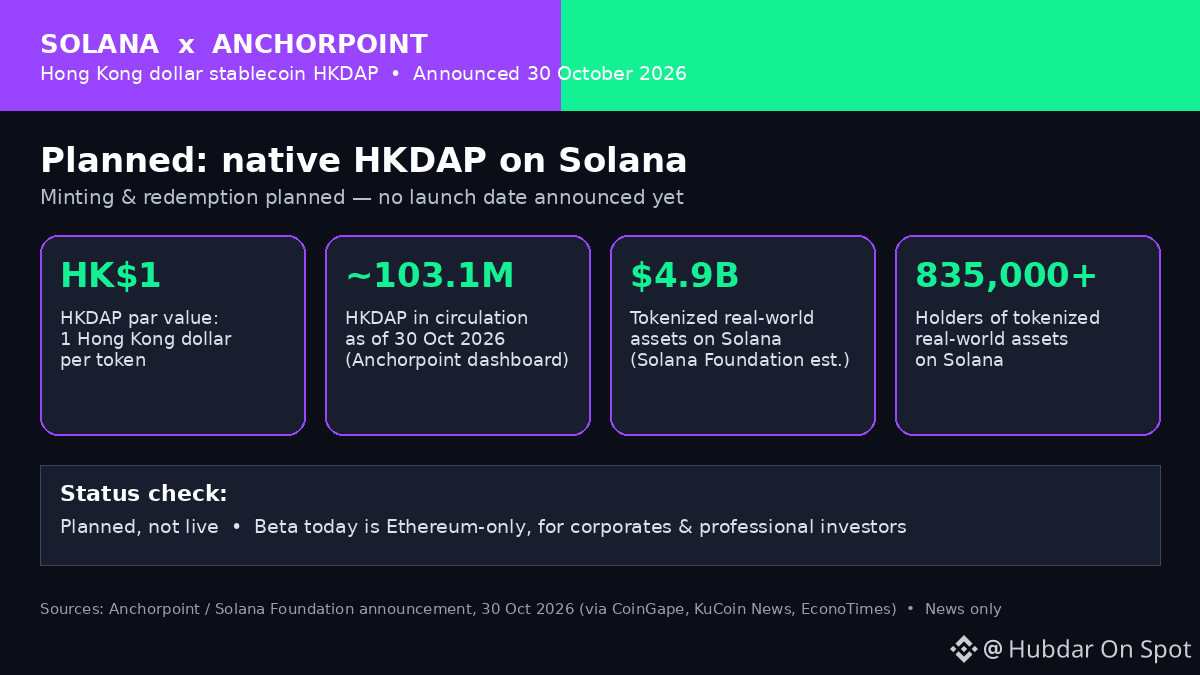
Anchorpoint Financial Limited and the Solana Foundation announced on October 30, 2026, that Anchorpoint plans to support native minting and redemption of HKDAP, its Hong Kong dollar stablecoin, on Solana. The announcement marks Anchorpoint's first collaboration with a public blockchain foundation.
The planned integration is aimed at retail payments and trading in tokenized assets, with near-instant settlement. Anchorpoint says HKDAP would be created and redeemed directly on Solana, and made accessible through corporate partners and consumer applications.
The Solana Foundation will also join Anchorpoint's Tokenised Money Adoption Programme as a strategic partner, alongside PwC Hong Kong. The programme focuses on education, research and industry dialogue around tokenized money in Hong Kong's regulated stablecoin ecosystem.
An important detail: this is a plan, not a live service yet. No launch date for the Solana integration has been announced. HKDAP currently runs on Ethereum mainnet in a limited beta phase for corporate users and professional investors. Anchorpoint was licensed as a stablecoin issuer by the Hong Kong Monetary Authority in April 2026, and HKDAP carries a par value of one Hong Kong dollar per token. Anchorpoint's transparency dashboard reported about 103.1 million HKDAP in circulation as of October 30.
For context, the Solana Foundation estimates around $4.9 billion in tokenized real-world assets on Solana, held by more than 835,000 holders.
Source: Anchorpoint / Solana Foundation announcement, October 30, 2026 — https://coingape.com/solana-adds-hong-kong-dollar-stablecoin-hkdap-for-payments-and-tokenized-assets/
Would a regulated Hong Kong dollar stablecoin on Solana be most useful for everyday payments, or for tokenized assets? Share your thoughts below! 👇
82
翻訳参照
US Spot Bitcoin ETFs See $643 Million in Net Outflows on October 30
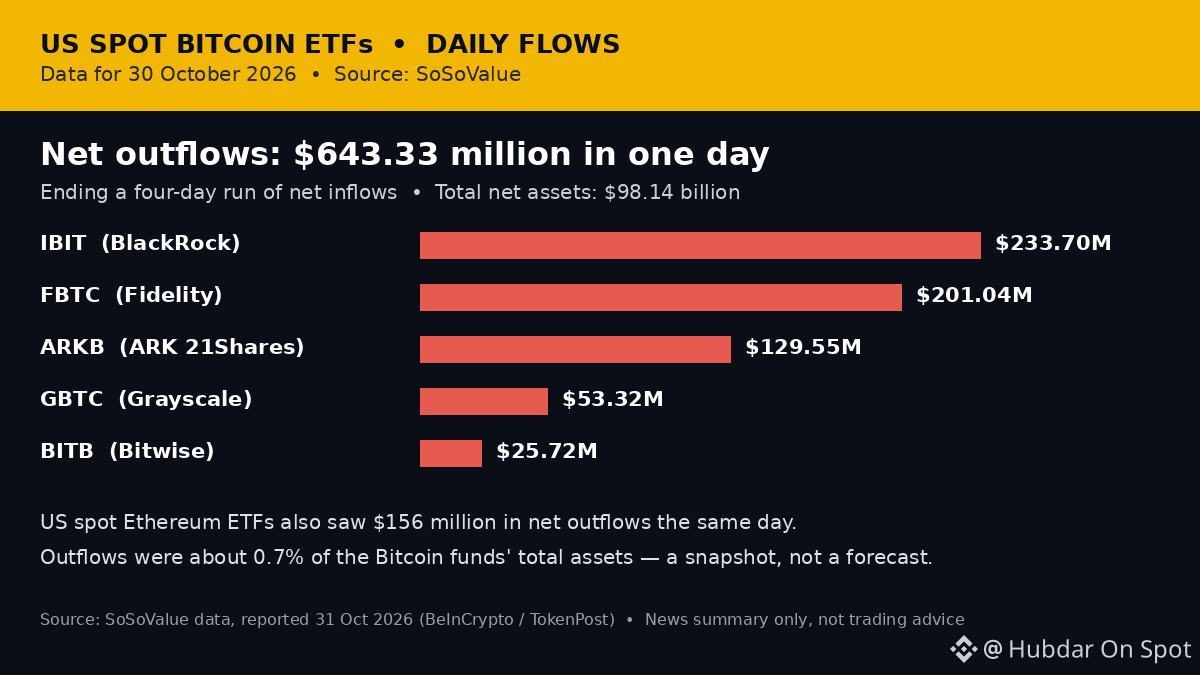
US spot Bitcoin ETFs recorded $643.33 million in net outflows on October 30, 2026, according to SoSoValue data reported on October 31. The move ended a four-day run of net inflows into the funds.
BlackRock's iShares Bitcoin Trust (IBIT) accounted for the largest share, with $233.70 million in net outflows, followed by Fidelity's Wise Origin Bitcoin Fund (FBTC) at $201.04 million. ARK 21Shares' ARKB saw $129.55 million, Grayscale's GBTC $53.32 million, and Bitwise's BITB $25.72 million.
In total, the funds still held $98.14 billion in net assets after the day's outflows, with cumulative net inflows since launch standing at $56.98 billion. Put in context, the October 30 outflow was about 0.7% of the funds' total assets.
US spot Ethereum ETFs also recorded net outflows the same day, of $156 million, marking their fifth straight day of outflows.
The outflow came a day after the major Binance security incident reported on October 30, but the flow data itself does not show why individual investors redeemed. The next daily flow figures, due on Monday, November 2, will show whether the redemptions were a one-day move or the start of a longer trend.
Source: SoSoValue data via BeInCrypto — https://beincrypto.com/investors-pull-643-million-bitcoin-etfs/
Do you read a single day of ETF outflows as a short-term reaction, or as a signal of a longer shift in investor sentiment? Share your thoughts below! 👇
69
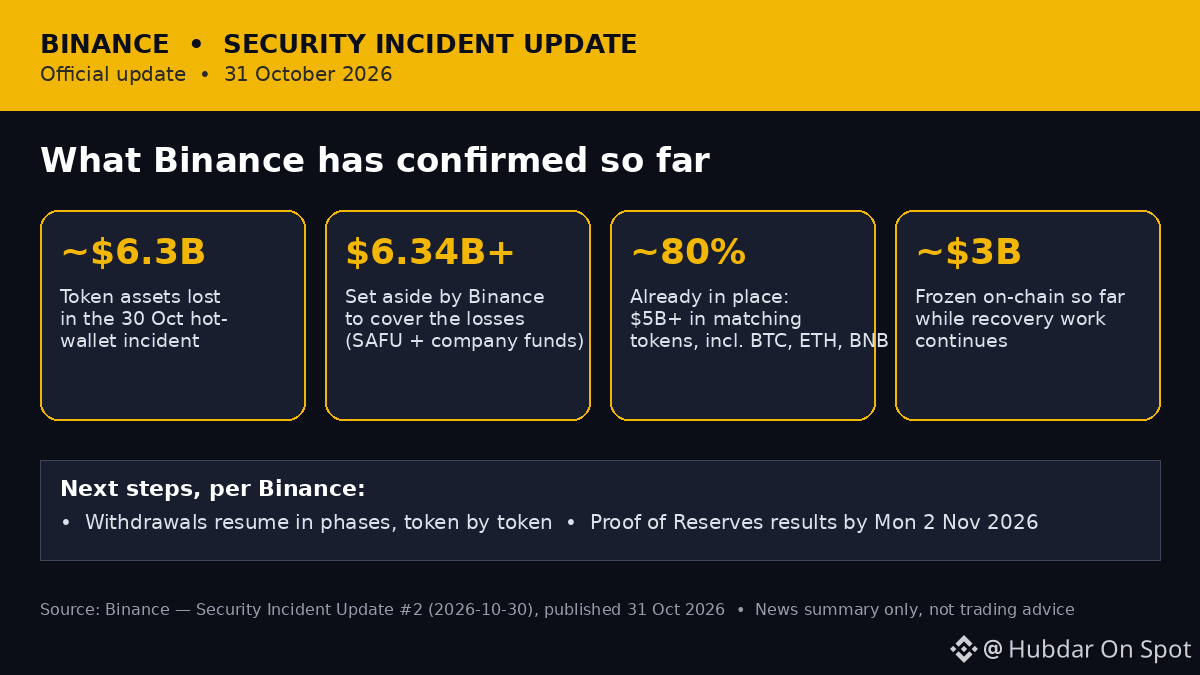
Binance、63億ドルのホットウォレット被害を確認、ユーザーの損失は全額補償すると発表
Binanceは、ホットウォレットから不正な出金が行われた深刻なセキュリティインシデントを確認しました。公式の「セキュリティインシデントに関する最新情報 #2」によると、攻撃は2026年10月30日04:05(UTC+8)頃に発生し、約63億ドル相当のトークン資産が失われました。
Binanceは、損失はユーザーではなく同社が負担し、ユーザー向けセキュア・アセット・ファンド(SAFU)および自社資金を通じて全額補償するとしています。63億4,000万ドル超を確保しており、そのうち50億ドル超に相当するトークン資産(盗まれた額の約80%)はすでに用意されています。これにはUSDC、USDT、BTC、ETH、BNBが含まれます。残りのトークンは、市場取引および店頭取引を通じて購入中です。
またBinanceによると、これまでに約30億ドル相当の資産がオンチェーンで凍結されました。同社は法執行機関、ブロックチェーン分析企業、資産発行者、業界パートナーと連携し、資金の追跡と回収に取り組んでいます。
追加のセキュリティ審査のため、出金は一時停止されていますが、入金やその他の影響を受けていないサービスは通常どおり運営されています。Binanceは、セキュリティ確認の完了を条件として、事前に発表した約34時間という目標期間内で、トークンごとに段階的に出金を再開する予定です。
透明性について、Binanceは12時間以内に初回のプルーフ・オブ・リザーブのスナップショットを取得し、2026年11月2日(月)までに結果を公表する予定です。調査は現在も続いており、現時点ではウォレットの秘密鍵が侵害された証拠は見つかっていないとしています。
出典:Binance公式発表 — https://www.binance.com/en/square/post/382966610455230
このようなインシデントの後、まず優先すべきなのは、できるだけ早く出金を再開することでしょうか。それとも、技術的な報告書をすべて公開することでしょうか?ぜひ下のコメント欄でご意見をお聞かせください! 👇
1
706
·
--
ブリッシュ
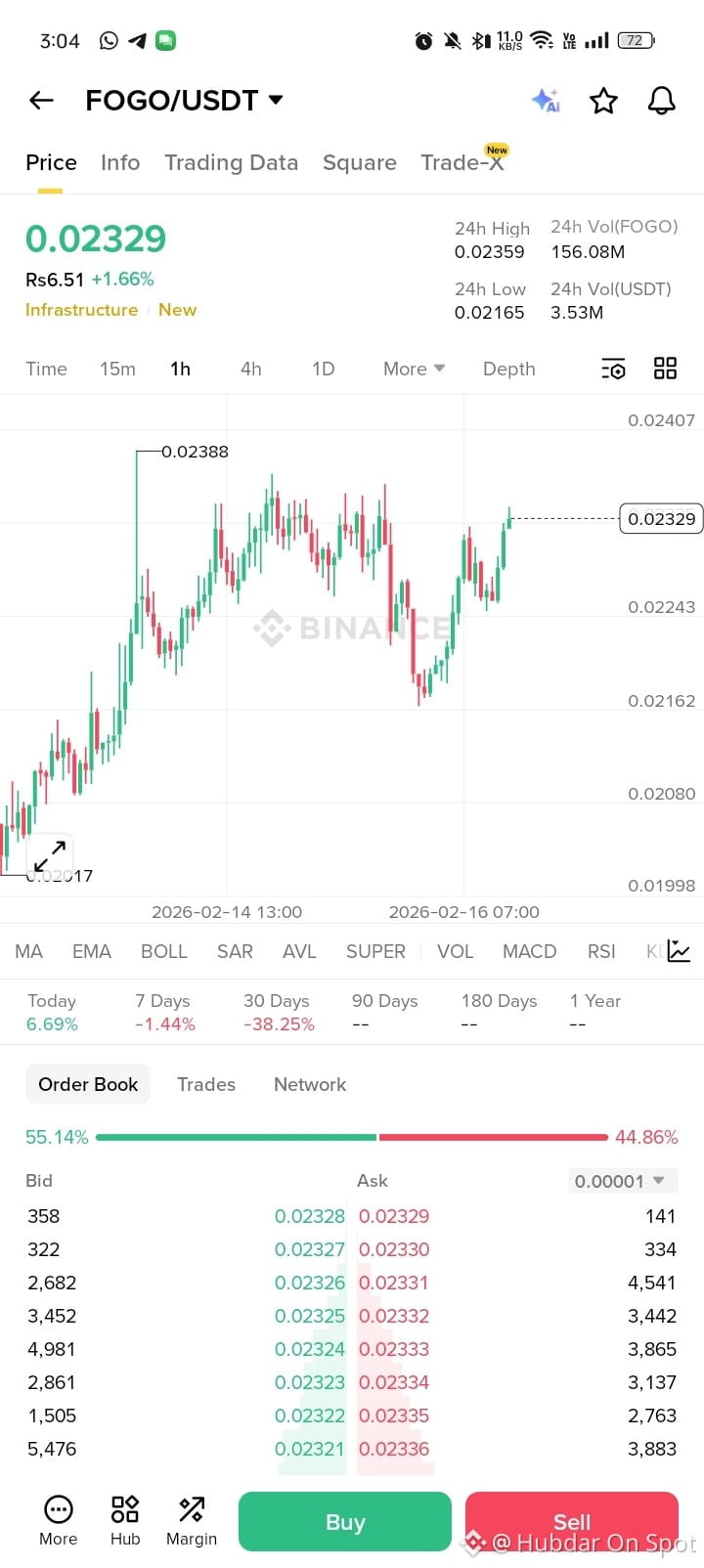
ブレイクアウトがすぐに来るか見てみましょう 🎯
$FOGO 飛ぶことになります 🚀
あなたの意見を教えてください "はい" または "いいえ" のみ
ブレイクアウトがすぐに来るか見てみましょう 🎯
$FOGO 飛ぶことになります 🚀
あなたの意見を教えてください "はい" または "いいえ" のみ
$FOGO 飛ぶことになります 🚀
あなたの意見を教えてください "はい" または "いいえ" のみ
2
1
8
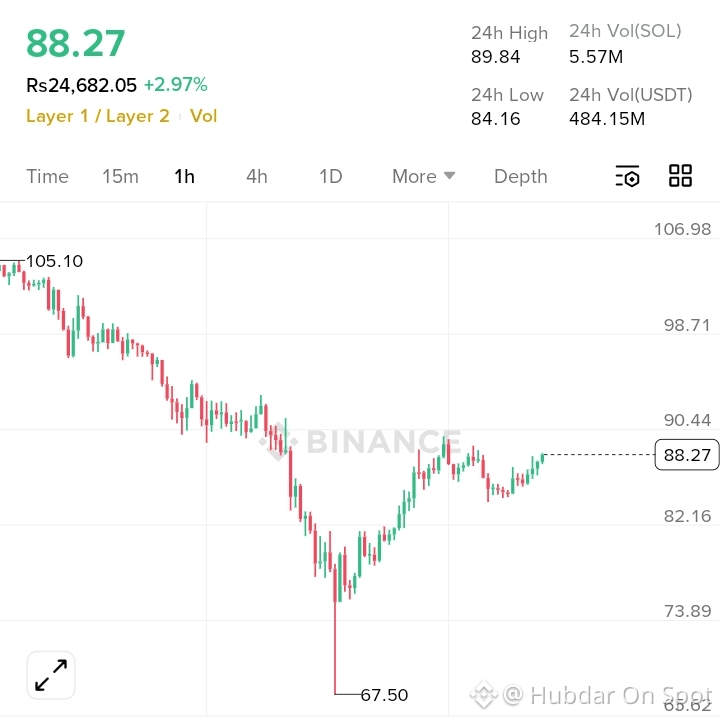
私は$SOL を150で売ります
何が起こるか見てみましょう、これは強気です🙄
コメントであなたの意見を共有してください。
私は$SOL を150で売ります
何が起こるか見てみましょう、これは強気です🙄
コメントであなたの意見を共有してください。
何が起こるか見てみましょう、これは強気です🙄
コメントであなたの意見を共有してください。
1
236
35


·
--
弱気相場
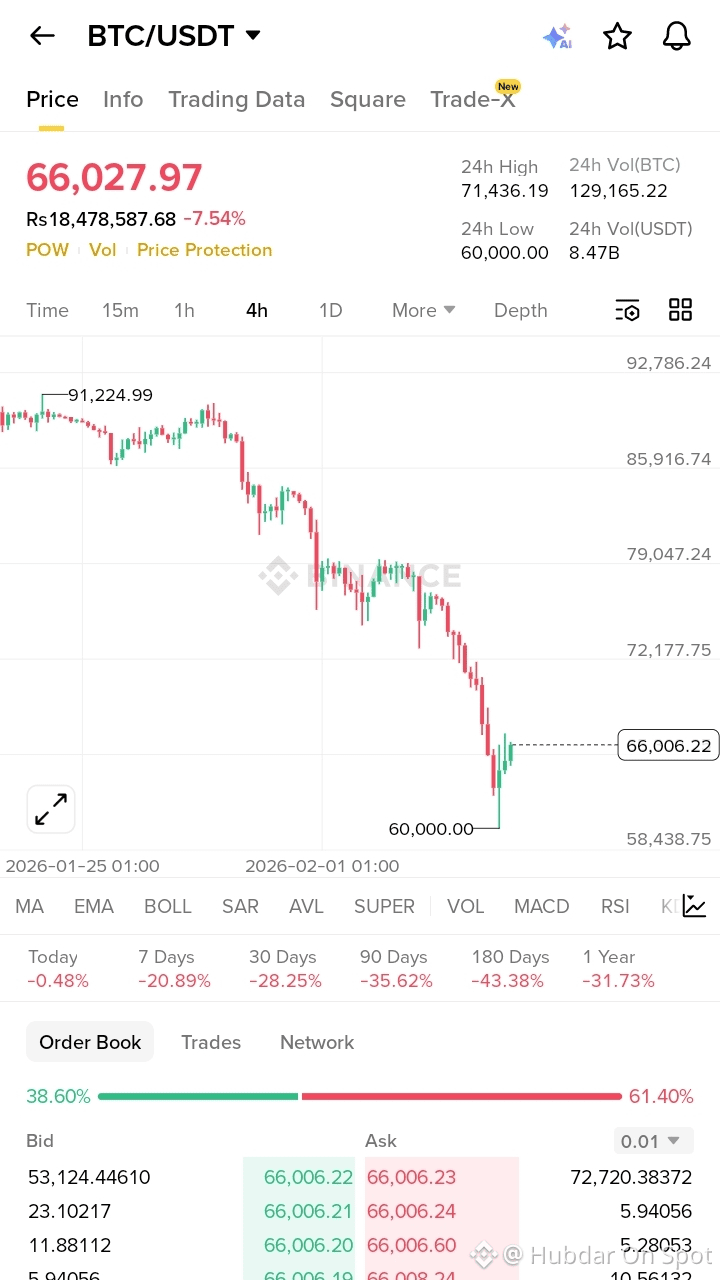
トレーダーの皆さん、
お元気ですか ❤️🩹
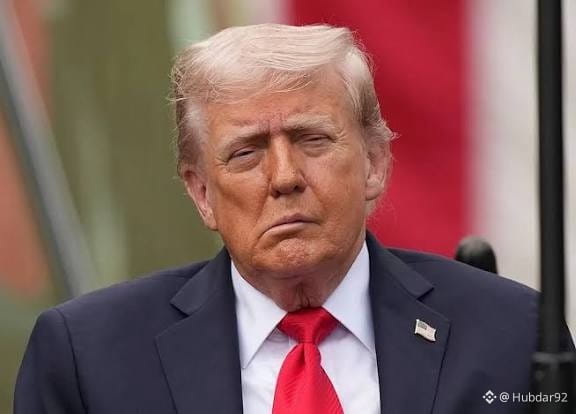
市場は上昇していましたが、トランプはそれを好まなかった、
そして今、BTC、金、銀が急落し、市場は下落しています 📉
$XAU 8% 下落
$XAG 11% 下落
$BTC 5% 下落
トレーダーの皆さん、
お元気ですか ❤️🩹
市場は上昇していましたが、トランプはそれを好まなかった、
そして今、BTC、金、銀が急落し、市場は下落しています 📉
$XAU 8% 下落
$XAG 11% 下落
$BTC 5% 下落
お元気ですか ❤️🩹
市場は上昇していましたが、トランプはそれを好まなかった、
そして今、BTC、金、銀が急落し、市場は下落しています 📉
$XAU 8% 下落
$XAG 11% 下落
$BTC 5% 下落
1
2
708

ログインして、さらにコンテンツを読む
厳選トピックで世界の暗号資産トレーダーの仲間入り
⚡️ 暗号資産に関する最新かつ有益な情報が見つかります。
💬 世界最大の暗号資産取引所から信頼されています。
👍 認証を受けたクリエイターから、有益なインサイトを得られます。
メール / 電話番号