Binance Square

Hashir 龙

🥴
取引を発注
超高頻度トレーダー
1.4年
46 フォロー
14.6K+ フォロワー
8.1K+ いいね
196 共有
投稿
ポートフォリオ
·
--
How Vanar Chain Redefines Blockchain as a Thinking NetworkIn an ecosystem crowded with chains that boast of being faster or cheaper, Vanar Chain presents a more fundamental evolution. It is not merely another Layer 1 blockchain; it is the first infrastructure stack architected from the ground up to be AI-native. While conventional blockchains excel at recording transactions and executing pre-defined logic, Vanar moves differently. It is engineered to store, comprehend, and reason over complex data, transforming the blockchain from a passive ledger into an active, intelligent participant. This core architectural shift—from programmable to intelligent—positions Vanar not as a general-purpose computer, but as the foundational layer for a new generation of applications where verifiable data and autonomous logic are paramount. The Vanar Stack: A Layered Architecture for Intelligence Vanar's divergence begins with its holistic, multi-layered design known as the Vanar Stack. This five-layer infrastructure is an integrated system where each tier serves a distinct cognitive function, working in concert to support intelligent applications. · Vanar Chain (Layer 1): The modular base layer provides a high-throughput, EVM-compatible foundation with structured data storage. It is optimized for AI workloads from its inception. · Neutron (Semantic Memory): This is Vanar's breakthrough. Neutron uses AI-powered neural and algorithmic compression to transform unstructured files—PDFs, legal deeds, invoices—into tiny, queryable "Seeds" stored directly on-chain. This solves the "storage illusion" of traditional blockchains by making data permanently available and verifiable, not just referenced via off-chain links. · Kayon (Contextual AI Reasoning): Acting as the network's brain, Kayon is an on-chain AI engine. It allows smart contracts and agents to query, analyze, and derive insights from the data stored in Neutron. This enables actions like automatically validating compliance within a document before releasing a payment, all without relying on external oracles. This stack creates a closed-loop system where data is intelligently stored and natively actionable, moving beyond simple transaction processing to enable verifiable on-chain intelligence. Consensus and Performance: Engineered for Mainstream Viability Beneath its intelligent layers, Vanar employs a unique hybrid consensus mechanism designed for security, efficiency, and trust. It utilizes a Proof of Reputation (PoR) model, enhanced by elements of Delegated Proof-of-Stake (DPoS). In this system, validator eligibility is based on the credibility and brand recognition of participating entities, creating a network secured by reputable organizations with a vested interest in maintaining integrity. This focus on reputable validators aims to foster trust—a critical component for enterprise and mainstream adoption. This architecture delivers exceptional performance with a clear economic model: · Transaction Speed: Sub-3-second block times enable real-time applications. · Cost Efficiency: A fixed transaction fee of approximately $0.0005 ensures predictable, ultra-low costs, essential for microtransactions and high-volume use cases. · Sustainability: Committed to a zero-carbon footprint, Vanar mandates green energy for validators and leverages partnerships with eco-friendly infrastructure providers. The Bridge to a Familiar Ecosystem: EVM Compatibility A key facet of Vanar's pragmatic design is its full Ethereum Virtual Machine (EVM) compatibility. This strategic choice removes a significant barrier to entry. Developers fluent in Solidity and Ethereum's tooling can seamlessly port or build applications on Vanar, immediately gaining access to its AI-native stack without learning a new programming paradigm. This compatibility accelerates ecosystem growth by leveraging the largest developer community in Web3, allowing innovation to focus on creating intelligent applications rather than overcoming foundational technical hurdles. The VANRY Token: Fueling an Intelligent Economy The native VANRY token is engineered as the utility fuel for this intelligent ecosystem, with its use cases directly tied to the network's core functions. · Network Fuel: Pays for transaction/gas fees on the chain. · AI Services: Required for accessing premium features of Neutron and Kayon, with usage potentially triggering token burns. · Security & Governance: Used for staking to secure the network and for participating in governance votes. This model aligns token utility directly with the consumption of the network's most valuable resource: its intelligence. Real-World Movement: From Theory to Application Vanar's architecture is designed for tangible impact across major industries, moving blockchain integration beyond theoretical use into practical utility. · Payment Finance (PayFi) & RWAs: Partners like Worldpay can use Neutron's immutable data seeds to resolve transaction disputes efficiently. Property deeds and invoices become verifiable, programmable on-chain assets. · Gaming & Entertainment: Evolving from its origins as Virtua, Vanar supports immersive metaverse experiences and in-game economies with the speed and micro-transaction capability that modern gaming demands. · Autonomous AI Agents: Developers can build "Pilot Agents" that perform complex tasks—like managing a DeFi portfolio via natural language—by leveraging Kayon's on-chain reasoning. Conclusion: The Paradigm of the Thinking Chain Vanar Chain moves differently because it was built for a different paradigm. It redefines progress in blockchain not as incremental improvements in speed or cost, but as a leap in native capability. By integrating semantic memory and contextual reasoning directly into its protocol layers, Vanar provides a foundational infrastructure where intelligence is a default characteristic, not an added feature. It shifts the developer's question from "How can I execute this logic?" to "How can my application learn and adapt?" In doing so, Vanar Chain is not just processing transactions faster; it is pioneering the architecture for a future where blockchains don't just record value—they understand it. @Vanar $VANRY #vanar

How Vanar Chain Redefines Blockchain as a Thinking Network

In an ecosystem crowded with chains that boast of being faster or cheaper, Vanar Chain presents a more fundamental evolution. It is not merely another Layer 1 blockchain; it is the first infrastructure stack architected from the ground up to be AI-native. While conventional blockchains excel at recording transactions and executing pre-defined logic, Vanar moves differently. It is engineered to store, comprehend, and reason over complex data, transforming the blockchain from a passive ledger into an active, intelligent participant. This core architectural shift—from programmable to intelligent—positions Vanar not as a general-purpose computer, but as the foundational layer for a new generation of applications where verifiable data and autonomous logic are paramount.

The Vanar Stack: A Layered Architecture for Intelligence

Vanar's divergence begins with its holistic, multi-layered design known as the Vanar Stack. This five-layer infrastructure is an integrated system where each tier serves a distinct cognitive function, working in concert to support intelligent applications.

· Vanar Chain (Layer 1): The modular base layer provides a high-throughput, EVM-compatible foundation with structured data storage. It is optimized for AI workloads from its inception.
· Neutron (Semantic Memory): This is Vanar's breakthrough. Neutron uses AI-powered neural and algorithmic compression to transform unstructured files—PDFs, legal deeds, invoices—into tiny, queryable "Seeds" stored directly on-chain. This solves the "storage illusion" of traditional blockchains by making data permanently available and verifiable, not just referenced via off-chain links.
· Kayon (Contextual AI Reasoning): Acting as the network's brain, Kayon is an on-chain AI engine. It allows smart contracts and agents to query, analyze, and derive insights from the data stored in Neutron. This enables actions like automatically validating compliance within a document before releasing a payment, all without relying on external oracles.

This stack creates a closed-loop system where data is intelligently stored and natively actionable, moving beyond simple transaction processing to enable verifiable on-chain intelligence.

Consensus and Performance: Engineered for Mainstream Viability

Beneath its intelligent layers, Vanar employs a unique hybrid consensus mechanism designed for security, efficiency, and trust. It utilizes a Proof of Reputation (PoR) model, enhanced by elements of Delegated Proof-of-Stake (DPoS). In this system, validator eligibility is based on the credibility and brand recognition of participating entities, creating a network secured by reputable organizations with a vested interest in maintaining integrity. This focus on reputable validators aims to foster trust—a critical component for enterprise and mainstream adoption.

This architecture delivers exceptional performance with a clear economic model:

· Transaction Speed: Sub-3-second block times enable real-time applications.
· Cost Efficiency: A fixed transaction fee of approximately $0.0005 ensures predictable, ultra-low costs, essential for microtransactions and high-volume use cases.
· Sustainability: Committed to a zero-carbon footprint, Vanar mandates green energy for validators and leverages partnerships with eco-friendly infrastructure providers.

The Bridge to a Familiar Ecosystem: EVM Compatibility

A key facet of Vanar's pragmatic design is its full Ethereum Virtual Machine (EVM) compatibility. This strategic choice removes a significant barrier to entry. Developers fluent in Solidity and Ethereum's tooling can seamlessly port or build applications on Vanar, immediately gaining access to its AI-native stack without learning a new programming paradigm. This compatibility accelerates ecosystem growth by leveraging the largest developer community in Web3, allowing innovation to focus on creating intelligent applications rather than overcoming foundational technical hurdles.

The VANRY Token: Fueling an Intelligent Economy

The native VANRY token is engineered as the utility fuel for this intelligent ecosystem, with its use cases directly tied to the network's core functions.

· Network Fuel: Pays for transaction/gas fees on the chain.
· AI Services: Required for accessing premium features of Neutron and Kayon, with usage potentially triggering token burns.
· Security & Governance: Used for staking to secure the network and for participating in governance votes.

This model aligns token utility directly with the consumption of the network's most valuable resource: its intelligence.

Real-World Movement: From Theory to Application

Vanar's architecture is designed for tangible impact across major industries, moving blockchain integration beyond theoretical use into practical utility.

· Payment Finance (PayFi) & RWAs: Partners like Worldpay can use Neutron's immutable data seeds to resolve transaction disputes efficiently. Property deeds and invoices become verifiable, programmable on-chain assets.
· Gaming & Entertainment: Evolving from its origins as Virtua, Vanar supports immersive metaverse experiences and in-game economies with the speed and micro-transaction capability that modern gaming demands.
· Autonomous AI Agents: Developers can build "Pilot Agents" that perform complex tasks—like managing a DeFi portfolio via natural language—by leveraging Kayon's on-chain reasoning.

Conclusion: The Paradigm of the Thinking Chain

Vanar Chain moves differently because it was built for a different paradigm. It redefines progress in blockchain not as incremental improvements in speed or cost, but as a leap in native capability. By integrating semantic memory and contextual reasoning directly into its protocol layers, Vanar provides a foundational infrastructure where intelligence is a default characteristic, not an added feature. It shifts the developer's question from "How can I execute this logic?" to "How can my application learn and adapt?" In doing so, Vanar Chain is not just processing transactions faster; it is pioneering the architecture for a future where blockchains don't just record value—they understand it.

@Vanarchain $VANRY #vanar
How Plasma XPL Redefines Blockchain Transaction FlowPlasma XPL introduces a fundamentally different paradigm. It is not merely a faster chain but a blockchain engineered with a singular, profound purpose: to be the optimal medium for the global movement of stablecoin value. Its design philosophy shifts the focus from raw throughput to purpose-built efficiency, creating a system where transaction flow—consensus, execution, and settlement—is meticulously architected around the unique demands of digital dollar payments. This results in a network that doesn't just process transactions but moves value in a way that is frictionless, secure, and seamlessly integrated with the broader financial ecosystem. Consensus Engineered for Finality and Flow At the heart of any blockchain's movement is its consensus mechanism. Plasma diverges from the probabilistic finality of Nakamoto consensus (used by Bitcoin and Ethereum's proof-of-work) and the sometimes chaotic throughput of other high-speed chains. It employs PlasmaBFT, a Byzantine Fault Tolerant consensus derived from the Fast HotStuff protocol. This is not an incremental tweak but a foundational choice for deterministic performance. · Deterministic Finality: Where transactions on many networks are considered "probabilistically" settled, PlasmaBFT provides absolute, cryptographic finality in seconds. Once a block is committed, it cannot be reversed, providing card-network-like certainty for payments. This is critical for merchants and financial applications where settlement assurance is paramount. · Parallelized Processing: The PlasmaBFT implementation optimizes for payment flow by parallelizing block proposal, voting, and commitment stages. This architectural decision minimizes latency between transaction submission and its irreversible confirmation, directly supporting the network's promise of sub-second block times. A Two-Tiered Highway for Transaction Throughput Plasma's most radical departure from monolithic chain design is its native two-tier transaction model. Imagine a highway system with dedicated lanes for different vehicle types. · Priority Lane (Layer 1): This is the network's full-featured, smart-contract-enabled execution layer, powered by Reth (a high-performance Ethereum execution client). Complex operations—deploying a decentralized application, swapping tokens on a DEX, or interacting with a lending protocol—travel here. These transactions require gas fees, payable in XPL or, innovatively, in stablecoins like USDT through a protocol-managed paymaster. · Feeless Transit Lane (Layer 2): Reserved exclusively for simple, peer-to-peer stablecoin transfers. This is where Plasma's core innovation shines. Transactions like sending USDT to a friend or paying a merchant incur zero fees. This is enabled by a protocol-level paymaster that sponsors the gas, abstracting away the need for the end-user to hold or understand native gas tokens. To prevent spam, this lane employs rate limits and consensus-level ordering, ensuring system stability while offering a truly frictionless payment experience. This bifurcation is a deliberate engineering choice. It recognizes that the vast majority of value movement is simple transfers, which should be costless and simple, while preserving a robust, economically secured layer for programmatic complexity. Anchoring Movement in Immutable Security: The Bitcoin Bridge While many new blockchains seek independence, Plasma intentionally tethers its operational security to the oldest and most robust crypto network: Bitcoin. It features a trust-minimized Bitcoin bridge that is not an afterthought but a core component of its security model. Periodically, Plasma's state hashes are inscribed onto the Bitcoin blockchain. This act of Bitcoin-anchored immutability means that to successfully alter the historical record of Plasma transactions, an attacker would need to compromise the Bitcoin network itself—a security guarantee of an entirely different magnitude. Furthermore, the bridge allows Bitcoin liquidity (as wrapped pBTC) to flow natively into Plasma's DeFi ecosystem, creating a unique convergence of Bitcoin's store of value with stablecoin's medium of exchange functionality. The XPL Token: Fueling the Engine Without User Friction The role of Plasma's native XPL token exemplifies its user-centric design. Unlike networks where the native token is a mandatory toll for all users, XPL's primary function is to secure the network's engine. Validators stake XPL to participate in the PlasmaBFT consensus and earn rewards. A reward-slashing model (rather than stake-slashing) penalizes bad actors by forfeiting rewards, balancing security with validator confidence. Crucially, end-users do not need to interact with XPL for basic payments. The zero-fee USDT transfer lane removes this hurdle entirely. For more complex interactions, the paymaster system allows fees to be paid in the stablecoin itself, with the protocol handling the conversion. This design brilliantly aligns network economics (fees from complex operations fund security) with seamless user experience. Conclusion: Movement as a First Principle Plasma XPL moves differently because it was conceived from a different first principle. It is not a general-purpose computer seeking to host every possible application. It is a specialized financial rail, architected from the ground up for the efficient, secure, and affordable movement of stablecoins. Its innovations—a BFT consensus for instant finality, a two-tier system separating complex operations from simple transfers, and a deep Bitcoin security integration—collectively create a new paradigm. In this paradigm, the movement of value is not just a function of the network; it is the network's defining purpose, reshaping our expectations for how global, digital money should flow. @Plasma $XPL #plasma {alpha}(560x405fbc9004d857903bfd6b3357792d71a50726b0)

How Plasma XPL Redefines Blockchain Transaction Flow

Plasma XPL introduces a fundamentally different paradigm. It is not merely a faster chain but a blockchain engineered with a singular, profound purpose: to be the optimal medium for the global movement of stablecoin value. Its design philosophy shifts the focus from raw throughput to purpose-built efficiency, creating a system where transaction flow—consensus, execution, and settlement—is meticulously architected around the unique demands of digital dollar payments. This results in a network that doesn't just process transactions but moves value in a way that is frictionless, secure, and seamlessly integrated with the broader financial ecosystem.

Consensus Engineered for Finality and Flow

At the heart of any blockchain's movement is its consensus mechanism. Plasma diverges from the probabilistic finality of Nakamoto consensus (used by Bitcoin and Ethereum's proof-of-work) and the sometimes chaotic throughput of other high-speed chains. It employs PlasmaBFT, a Byzantine Fault Tolerant consensus derived from the Fast HotStuff protocol. This is not an incremental tweak but a foundational choice for deterministic performance.

· Deterministic Finality: Where transactions on many networks are considered "probabilistically" settled, PlasmaBFT provides absolute, cryptographic finality in seconds. Once a block is committed, it cannot be reversed, providing card-network-like certainty for payments. This is critical for merchants and financial applications where settlement assurance is paramount.
· Parallelized Processing: The PlasmaBFT implementation optimizes for payment flow by parallelizing block proposal, voting, and commitment stages. This architectural decision minimizes latency between transaction submission and its irreversible confirmation, directly supporting the network's promise of sub-second block times.

A Two-Tiered Highway for Transaction Throughput

Plasma's most radical departure from monolithic chain design is its native two-tier transaction model. Imagine a highway system with dedicated lanes for different vehicle types.

· Priority Lane (Layer 1): This is the network's full-featured, smart-contract-enabled execution layer, powered by Reth (a high-performance Ethereum execution client). Complex operations—deploying a decentralized application, swapping tokens on a DEX, or interacting with a lending protocol—travel here. These transactions require gas fees, payable in XPL or, innovatively, in stablecoins like USDT through a protocol-managed paymaster.
· Feeless Transit Lane (Layer 2): Reserved exclusively for simple, peer-to-peer stablecoin transfers. This is where Plasma's core innovation shines. Transactions like sending USDT to a friend or paying a merchant incur zero fees. This is enabled by a protocol-level paymaster that sponsors the gas, abstracting away the need for the end-user to hold or understand native gas tokens. To prevent spam, this lane employs rate limits and consensus-level ordering, ensuring system stability while offering a truly frictionless payment experience.

This bifurcation is a deliberate engineering choice. It recognizes that the vast majority of value movement is simple transfers, which should be costless and simple, while preserving a robust, economically secured layer for programmatic complexity.

Anchoring Movement in Immutable Security: The Bitcoin Bridge

While many new blockchains seek independence, Plasma intentionally tethers its operational security to the oldest and most robust crypto network: Bitcoin. It features a trust-minimized Bitcoin bridge that is not an afterthought but a core component of its security model.

Periodically, Plasma's state hashes are inscribed onto the Bitcoin blockchain. This act of Bitcoin-anchored immutability means that to successfully alter the historical record of Plasma transactions, an attacker would need to compromise the Bitcoin network itself—a security guarantee of an entirely different magnitude. Furthermore, the bridge allows Bitcoin liquidity (as wrapped pBTC) to flow natively into Plasma's DeFi ecosystem, creating a unique convergence of Bitcoin's store of value with stablecoin's medium of exchange functionality.

The XPL Token: Fueling the Engine Without User Friction

The role of Plasma's native XPL token exemplifies its user-centric design. Unlike networks where the native token is a mandatory toll for all users, XPL's primary function is to secure the network's engine. Validators stake XPL to participate in the PlasmaBFT consensus and earn rewards. A reward-slashing model (rather than stake-slashing) penalizes bad actors by forfeiting rewards, balancing security with validator confidence.

Crucially, end-users do not need to interact with XPL for basic payments. The zero-fee USDT transfer lane removes this hurdle entirely. For more complex interactions, the paymaster system allows fees to be paid in the stablecoin itself, with the protocol handling the conversion. This design brilliantly aligns network economics (fees from complex operations fund security) with seamless user experience.

Conclusion: Movement as a First Principle

Plasma XPL moves differently because it was conceived from a different first principle. It is not a general-purpose computer seeking to host every possible application. It is a specialized financial rail, architected from the ground up for the efficient, secure, and affordable movement of stablecoins. Its innovations—a BFT consensus for instant finality, a two-tier system separating complex operations from simple transfers, and a deep Bitcoin security integration—collectively create a new paradigm. In this paradigm, the movement of value is not just a function of the network; it is the network's defining purpose, reshaping our expectations for how global, digital money should flow.
@Plasma $XPL #plasma
·
--
弱気相場
$STABLE Recovery – Buyers Gaining Momentum 💰 Current Price: 0.022856 📈 Entry Zone: 0.0224 – 0.0231 🟢 Bullish Above: 0.0233 🎯 Take Profit Targets: TP1: 0.0248 TP2: 0.0265 TP3: 0.0289 🛑 Stop-Loss: 0.0216 {future}(STABLEUSDT) #stable #bearishmomentum #WriteToEarnUpgrade
$STABLE Recovery – Buyers Gaining Momentum
💰 Current Price: 0.022856

📈 Entry Zone: 0.0224 – 0.0231
🟢 Bullish Above: 0.0233

🎯 Take Profit Targets:
TP1: 0.0248
TP2: 0.0265
TP3: 0.0289

🛑 Stop-Loss: 0.0216


#stable #bearishmomentum #WriteToEarnUpgrade
In 2010, Satoshi was believed to be Hal Finney. In 2012, Satoshi was believed to be Nick Szabo. In 2014, Satoshi was believed to be Dorian Nakamoto. In 2016, Satoshi was believed to be Craig Wright. In 2018, Satoshi was believed to be Adam Back. In 2020, Satoshi was believed to be Jack Dorsey. In 2022, Satoshi was believed to be Elon Musk. In 2024, Satoshi was believed to be Peter Todd. In 2026, Satoshi was believed to be Epstein. So there will be another FUD narrative in 2028.
In 2010, Satoshi was believed to be Hal Finney.

In 2012, Satoshi was believed to be Nick Szabo.

In 2014, Satoshi was believed to be Dorian Nakamoto.

In 2016, Satoshi was believed to be Craig Wright.

In 2018, Satoshi was believed to be Adam Back.

In 2020, Satoshi was believed to be Jack Dorsey.

In 2022, Satoshi was believed to be Elon Musk.

In 2024, Satoshi was believed to be Peter Todd.

In 2026, Satoshi was believed to be Epstein.

So there will be another FUD narrative in 2028.
@Vanar is an energy-efficient Layer 1 blockchain purpose-built for AI and entertainment. It leverages a high-throughput PoS & BFT consensus, enabling scalable decentralized applications. The network natively supports decentralized identity, AI agents, and large language models (LLMs). Key tools like the Vanguard SDK and direct fiat onramps lower development barriers. The $VANRY token powers gas, ecosystem governance, and AI computational services. $VANRY #vanar {spot}(VANRYUSDT)
@Vanarchain is an energy-efficient Layer 1 blockchain purpose-built for AI and entertainment. It leverages a high-throughput PoS & BFT consensus, enabling scalable decentralized applications. The network natively supports decentralized identity, AI agents, and large language models (LLMs). Key tools like the Vanguard SDK and direct fiat onramps lower development barriers. The $VANRY token powers gas, ecosystem governance, and AI computational services.
$VANRY #vanar
·
--
ブリッシュ
$PIPPIN Bullish Momentum Signal 📈 🟢 Current Price: 0.3957 📥 Entry Zone: 0.3850 – 0.4000 🚀 Bullish Above: 0.4100 🎯 Targets: TP1: 0.4300 TP2: 0.4600 TP3: 0.5000 {future}(PIPPINUSDT) ⚠️ Stop-Loss: 0.3600 Plan: Trend is showing strong upside pressure. Look for pullback buys above support or continuation above 0.41 with volume. Manage risk properly. #Pippin #BullishMomentum #WriteToEarnUpgrade
$PIPPIN Bullish Momentum Signal 📈

🟢 Current Price: 0.3957
📥 Entry Zone: 0.3850 – 0.4000
🚀 Bullish Above: 0.4100

🎯 Targets:
TP1: 0.4300
TP2: 0.4600
TP3: 0.5000


⚠️ Stop-Loss: 0.3600

Plan: Trend is showing strong upside pressure. Look for pullback buys above support or continuation above 0.41 with volume. Manage risk properly.

#Pippin #BullishMomentum #WriteToEarnUpgrade
·
--
ブリッシュ
$GPS USDT — 強気のモメンタムアラート 🚀 現在の価格: 0.013243 🟢 エントリーゾーン: 0.0130 – 0.0133 📈 強気の上限: 0.0135 🎯 ターゲット: TP1: 0.0142 TP2: 0.0150 TP3: 0.0162 ⚠️ ストップロス: 0.0125 📌 プラン: 強気のトリガーを超えての継続を探る。リスクを適切に管理し、モメンタムが加速する場合は利益をトレイルする。 $GPS
$GPS USDT — 強気のモメンタムアラート 🚀

現在の価格: 0.013243

🟢 エントリーゾーン: 0.0130 – 0.0133
📈 強気の上限: 0.0135

🎯 ターゲット:

TP1: 0.0142

TP2: 0.0150

TP3: 0.0162

⚠️ ストップロス: 0.0125

📌 プラン: 強気のトリガーを超えての継続を探る。リスクを適切に管理し、モメンタムが加速する場合は利益をトレイルする。
$GPS
·
--
弱気相場
$NKN Bearish Continuation market breaks all privious Strong levels sellers are now Fully in control take enrty now Take entry on pullbacks Target 0.0060 Sl : 0.010 {spot}(NKNUSDT) #nkn
$NKN Bearish Continuation market breaks all privious Strong levels sellers are now Fully in control take enrty now Take entry on pullbacks
Target 0.0060
Sl : 0.010
#nkn
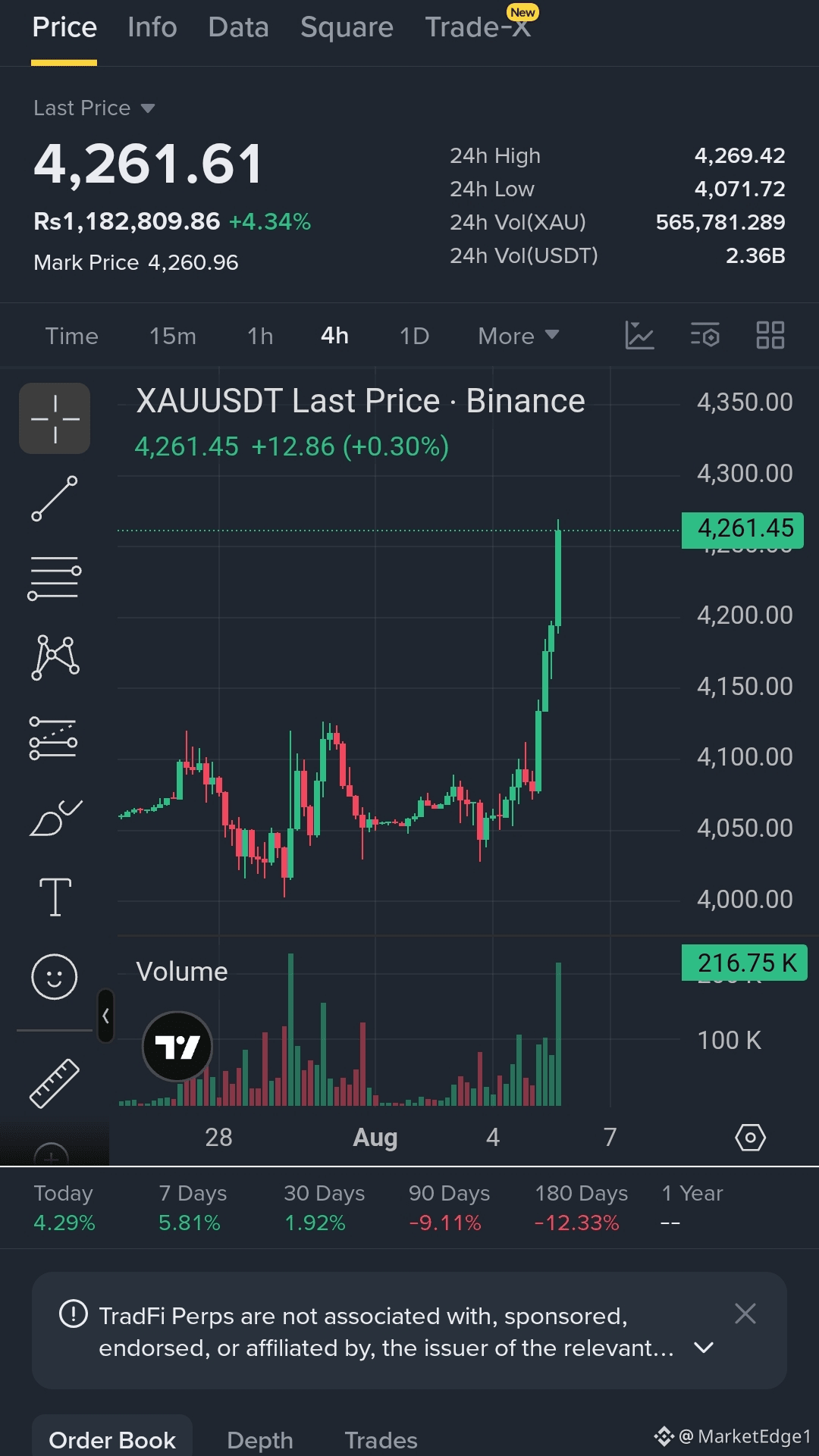
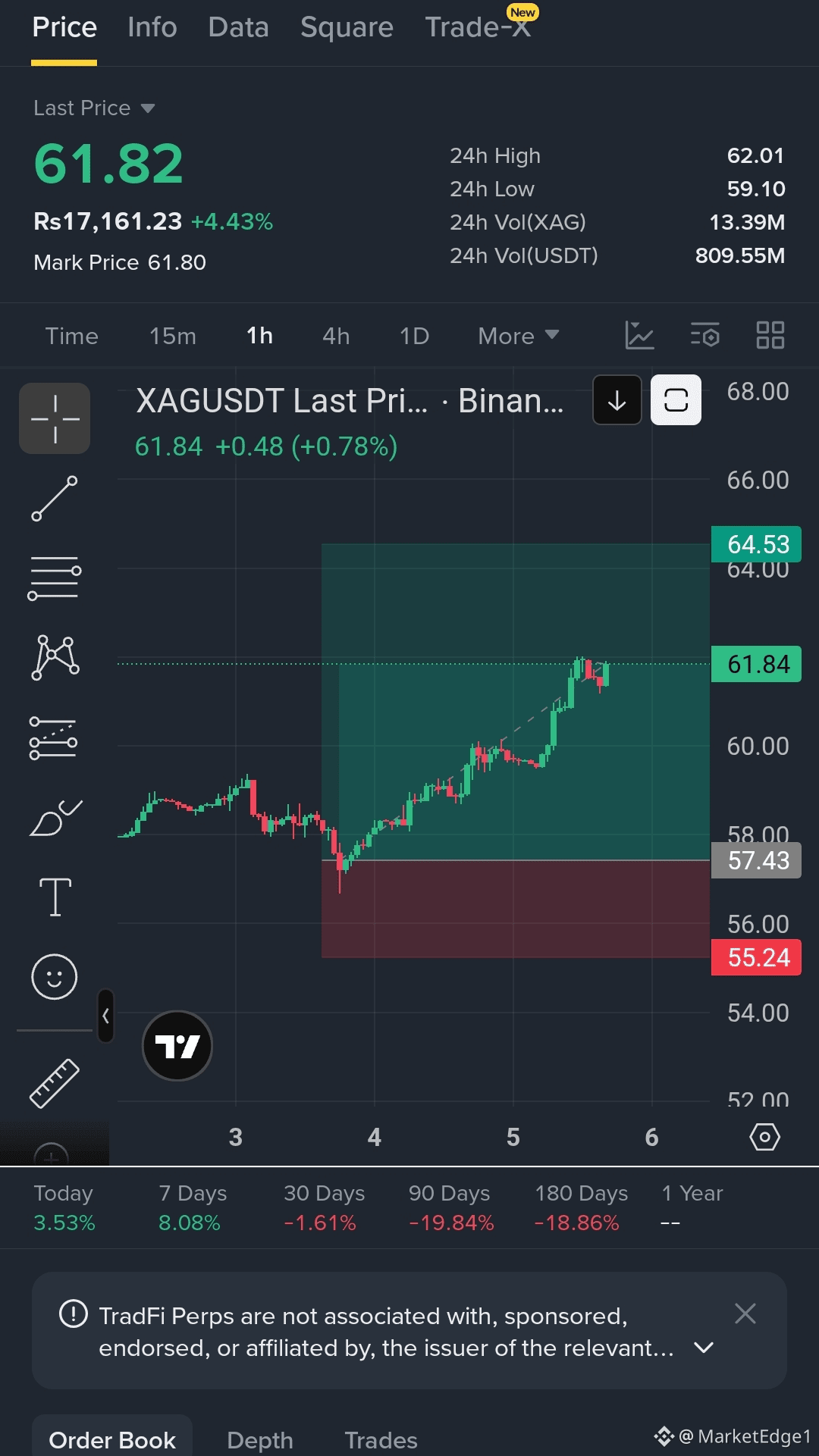
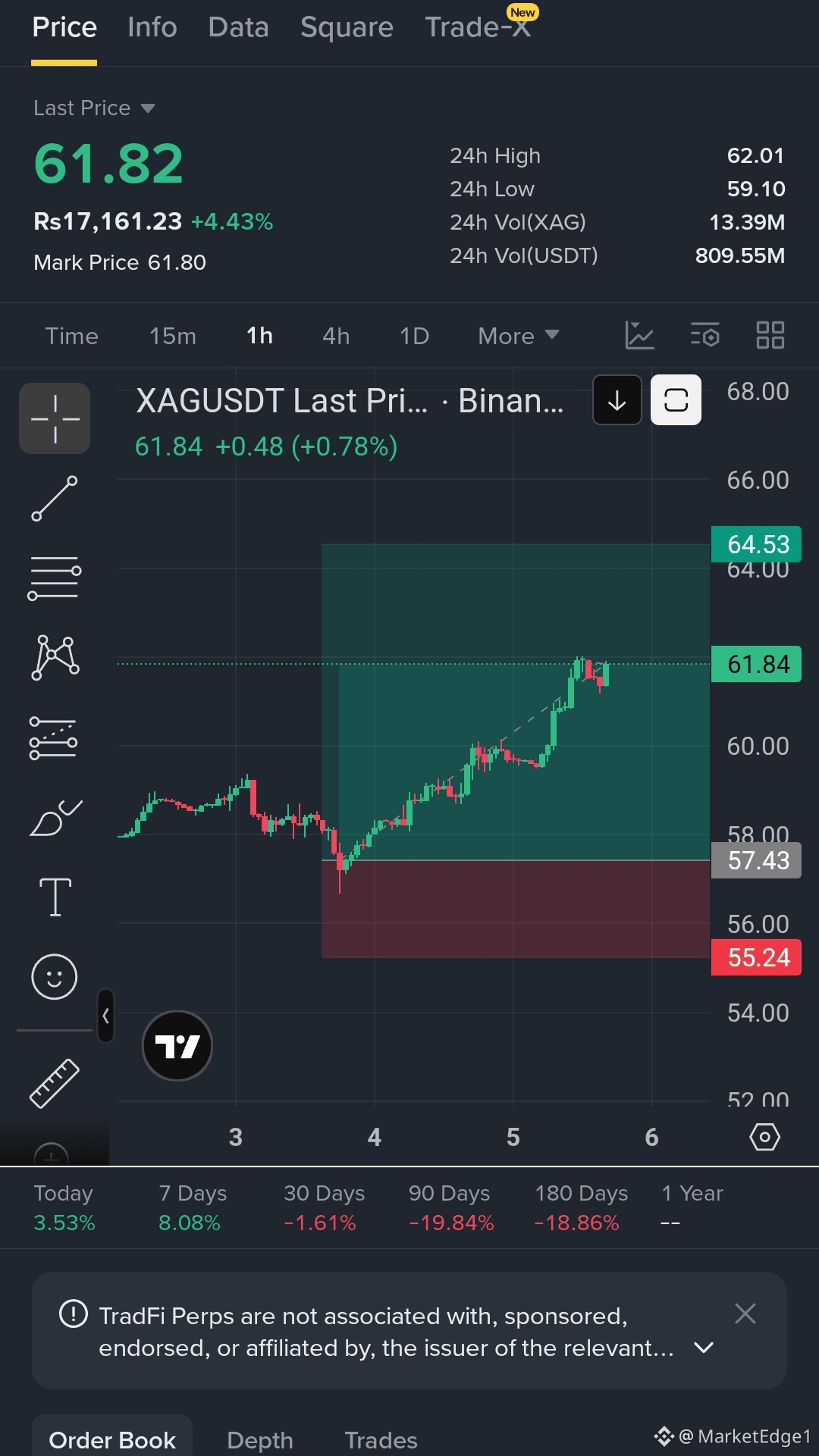
Gold and Silver: The Ancient Metals Powering Our Modern WorldFrom the gleaming treasures of ancient tombs to the high-tech devices in our pockets, gold and silver have captivated humanity for millennia. While we traditionally associate these metals with wealth and adornment, they are experiencing a dramatic resurgence in the 21st century—not just in vaults, but in the very sinews of modern technology, medicine, and green energy. This is the story of how two ancient elements are now fundamental, irreplaceable components in building our future. More Than Meets the Eye: The Science of Utility The modern revival of gold and silver is not by chance; it is dictated by a unique set of physical and chemical properties that make them nearly impossible to substitute. Gold's (Au) key properties: · Inert and Non-Toxic: Highly resistant to corrosion, rust, and tarnishing. It does not react with oxygen or water, making it stable and safe for medical and electronic uses. · Supremely Malleable and Ductile: It is the most malleable metal, where one gram can be hammered into a sheet of one square meter. This allows it to be drawn into ultra-fine wires or plated into microscopic, durable coatings. · Excellent Conductor: A highly efficient conductor of both electricity and heat, ensuring reliable performance in tiny circuits. Silver's (Ag) key properties: · The Best Natural Conductor: Possesses the highest electrical and thermal conductivity of all metals, making it ideal for high-performance applications. · Potent Antimicrobial Agent: Silver ions effectively kill bacteria, fungi, and algae by disrupting their cellular processes, a property known since ancient times. · High Reflectivity: It is the most reflective metal, reflecting over 95% of visible light. This is crucial for optics, mirrors, and solar energy. The Modern Applications: From Microchips to Medicine Driven by these properties, gold and silver have moved far beyond jewelry boxes. Their applications form a critical, often invisible, layer of our daily lives. The Digital Backbone: Electronics & Computing Our connected world is built on these precious metals. · In Your Smartphone: Every mobile phone contains small but vital amounts of gold and silver. Gold is used in the connectors and bonding wires of microchips because, unlike cheaper metals, it never corrodes, ensuring a reliable connection for years. Silver's superior conductivity is harnessed in printed circuit boards, keyboard membranes, and RFID chips. · Advanced Computing: From data centers to personal laptops, gold is critical for high-speed processing. It is used to plate connectors on motherboards and high-performance cables, where signal integrity is paramount. Silver-based inks create electrical pathways on circuit boards. The Green Revolution: Renewable Energy & Catalysis The transition to sustainable energy heavily relies on these metals. · Solar Power: Silver is the unsung hero of solar panels. As a conductive paste, it is printed onto silicon wafers to collect and transport the electricity generated by sunlight. In 2024, the photovoltaic industry set a record, consuming nearly 200 million ounces of silver. · Chemical Production: Silver acts as an indispensable catalyst—a substance that speeds up reactions without being consumed. It is vital for producing ethylene oxide, a precursor to plastics, textiles, and antifreeze, and formaldehyde, used in resins, adhesives, and construction materials. Health and Medicine: Healing and Protection Their non-toxic and antimicrobial properties make them vital in healthcare. · Silver's Germ-Fighting Role: Due to the rise of antibiotic-resistant "superbugs," silver is making a major comeback. It is integrated into wound dressings, surgical instruments, catheters, and even hospital furniture to prevent infections. It's also used in water purification systems. · Gold in Treatment and Diagnosis: Gold salts are an effective treatment for severe rheumatoid arthritis. More innovatively, gold nanoparticles are at the forefront of oncology, used to improve the targeted delivery of cancer drugs and in advanced diagnostic tests. High-Stakes Engineering: Aerospace, Automotive, and Industry Where failure is not an option, these metals provide essential solutions. · Aerospace: In spacecraft, thin layers of gold coat visors and components to reflect harmful infrared radiation and regulate temperature. Silver-coated ball bearings are used in jet engines for their strength and self-lubricating properties at extreme temperatures. · Automotive: As cars become "computers on wheels," silver use is soaring. It's in every electrical contact for features like power windows and starters. The shift to electric vehicles is expected to push automotive silver demand to 90 million ounces annually by 2025. · Precision Manufacturing: Gold and silver are crucial in brazing and soldering alloys, creating strong, conductive, and leak-proof joints in everything from air conditioners to plumbing systems. The Enduring Roles: Investment, Jewelry, and More Traditional uses remain powerful, evolving with the times. · A Store of Value: Gold remains a premier asset for wealth protection, held by central banks, investment funds, and individuals. Silver is also a popular investment, often seen as a more accessible hedge. · Jewelry and Decoration: Jewelry still accounts for over 50% of annual gold demand. Silver jewelry is prized for its beauty and affordability. · Surprising Uses: You can find gold leaf in luxury food and decor, and silver iodide is used in cloud seeding to encourage rainfall. A Comparative Look: Why Choose Gold or Silver? While their uses sometimes overlap, their distinct properties guide their applications. Gold is typically chosen for: · Situations demanding ultimate reliability and corrosion resistance (e.g., microchip connectors, space electronics, medical implants). · Applications where a long-lasting, inert material is critical (e.g., dental work, commemorative coins). · High-value, low-volume components where cost is secondary to performance. Silver is typically chosen for: · Applications needing the highest possible conductivity (e.g., solar cells, high-end circuit boards, 5G technology). · Large-scale industrial processes where it acts as a catalyst (e.g., plastic and chemical manufacturing). · Broad-spectrum antimicrobial properties in medical and public health settings. The Bottom Line The narrative of gold and silver has been rewritten. They are no longer symbols of a bygone era but are critical, strategic materials for the 21st century. From enabling the AI algorithms in our phones and the clean energy from our roofs to fighting infections in our hospitals, these ancient metals are deeply embedded in the architecture of our modern lives. As technology continues to advance, the demand for their unique, unparalleled properties is only set to grow, securing their place not just in our history, but in our future. If you are interested in a deeper dive into the investment aspects or the specific scientific breakthroughs in medical applications, I can provide more detailed information on those areas as well. $XAU $XAG {future}(XAUUSDT) #GoldSilverRally #WhaleDeRiskETH

Gold and Silver: The Ancient Metals Powering Our Modern World

From the gleaming treasures of ancient tombs to the high-tech devices in our pockets, gold and silver have captivated humanity for millennia. While we traditionally associate these metals with wealth and adornment, they are experiencing a dramatic resurgence in the 21st century—not just in vaults, but in the very sinews of modern technology, medicine, and green energy. This is the story of how two ancient elements are now fundamental, irreplaceable components in building our future.

More Than Meets the Eye: The Science of Utility

The modern revival of gold and silver is not by chance; it is dictated by a unique set of physical and chemical properties that make them nearly impossible to substitute.

Gold's (Au) key properties:

· Inert and Non-Toxic: Highly resistant to corrosion, rust, and tarnishing. It does not react with oxygen or water, making it stable and safe for medical and electronic uses.
· Supremely Malleable and Ductile: It is the most malleable metal, where one gram can be hammered into a sheet of one square meter. This allows it to be drawn into ultra-fine wires or plated into microscopic, durable coatings.
· Excellent Conductor: A highly efficient conductor of both electricity and heat, ensuring reliable performance in tiny circuits.

Silver's (Ag) key properties:

· The Best Natural Conductor: Possesses the highest electrical and thermal conductivity of all metals, making it ideal for high-performance applications.
· Potent Antimicrobial Agent: Silver ions effectively kill bacteria, fungi, and algae by disrupting their cellular processes, a property known since ancient times.
· High Reflectivity: It is the most reflective metal, reflecting over 95% of visible light. This is crucial for optics, mirrors, and solar energy.

The Modern Applications: From Microchips to Medicine

Driven by these properties, gold and silver have moved far beyond jewelry boxes. Their applications form a critical, often invisible, layer of our daily lives.

The Digital Backbone: Electronics & Computing

Our connected world is built on these precious metals.

· In Your Smartphone: Every mobile phone contains small but vital amounts of gold and silver. Gold is used in the connectors and bonding wires of microchips because, unlike cheaper metals, it never corrodes, ensuring a reliable connection for years. Silver's superior conductivity is harnessed in printed circuit boards, keyboard membranes, and RFID chips.
· Advanced Computing: From data centers to personal laptops, gold is critical for high-speed processing. It is used to plate connectors on motherboards and high-performance cables, where signal integrity is paramount. Silver-based inks create electrical pathways on circuit boards.

The Green Revolution: Renewable Energy & Catalysis

The transition to sustainable energy heavily relies on these metals.

· Solar Power: Silver is the unsung hero of solar panels. As a conductive paste, it is printed onto silicon wafers to collect and transport the electricity generated by sunlight. In 2024, the photovoltaic industry set a record, consuming nearly 200 million ounces of silver.
· Chemical Production: Silver acts as an indispensable catalyst—a substance that speeds up reactions without being consumed. It is vital for producing ethylene oxide, a precursor to plastics, textiles, and antifreeze, and formaldehyde, used in resins, adhesives, and construction materials.

Health and Medicine: Healing and Protection

Their non-toxic and antimicrobial properties make them vital in healthcare.

· Silver's Germ-Fighting Role: Due to the rise of antibiotic-resistant "superbugs," silver is making a major comeback. It is integrated into wound dressings, surgical instruments, catheters, and even hospital furniture to prevent infections. It's also used in water purification systems.
· Gold in Treatment and Diagnosis: Gold salts are an effective treatment for severe rheumatoid arthritis. More innovatively, gold nanoparticles are at the forefront of oncology, used to improve the targeted delivery of cancer drugs and in advanced diagnostic tests.

High-Stakes Engineering: Aerospace, Automotive, and Industry

Where failure is not an option, these metals provide essential solutions.

· Aerospace: In spacecraft, thin layers of gold coat visors and components to reflect harmful infrared radiation and regulate temperature. Silver-coated ball bearings are used in jet engines for their strength and self-lubricating properties at extreme temperatures.
· Automotive: As cars become "computers on wheels," silver use is soaring. It's in every electrical contact for features like power windows and starters. The shift to electric vehicles is expected to push automotive silver demand to 90 million ounces annually by 2025.
· Precision Manufacturing: Gold and silver are crucial in brazing and soldering alloys, creating strong, conductive, and leak-proof joints in everything from air conditioners to plumbing systems.

The Enduring Roles: Investment, Jewelry, and More

Traditional uses remain powerful, evolving with the times.

· A Store of Value: Gold remains a premier asset for wealth protection, held by central banks, investment funds, and individuals. Silver is also a popular investment, often seen as a more accessible hedge.
· Jewelry and Decoration: Jewelry still accounts for over 50% of annual gold demand. Silver jewelry is prized for its beauty and affordability.
· Surprising Uses: You can find gold leaf in luxury food and decor, and silver iodide is used in cloud seeding to encourage rainfall.

A Comparative Look: Why Choose Gold or Silver?

While their uses sometimes overlap, their distinct properties guide their applications.

Gold is typically chosen for:

· Situations demanding ultimate reliability and corrosion resistance (e.g., microchip connectors, space electronics, medical implants).
· Applications where a long-lasting, inert material is critical (e.g., dental work, commemorative coins).
· High-value, low-volume components where cost is secondary to performance.

Silver is typically chosen for:

· Applications needing the highest possible conductivity (e.g., solar cells, high-end circuit boards, 5G technology).
· Large-scale industrial processes where it acts as a catalyst (e.g., plastic and chemical manufacturing).
· Broad-spectrum antimicrobial properties in medical and public health settings.

The Bottom Line

The narrative of gold and silver has been rewritten. They are no longer symbols of a bygone era but are critical, strategic materials for the 21st century. From enabling the AI algorithms in our phones and the clean energy from our roofs to fighting infections in our hospitals, these ancient metals are deeply embedded in the architecture of our modern lives. As technology continues to advance, the demand for their unique, unparalleled properties is only set to grow, securing their place not just in our history, but in our future.

If you are interested in a deeper dive into the investment aspects or the specific scientific breakthroughs in medical applications, I can provide more detailed information on those areas as well.
$XAU $XAG
#GoldSilverRally #WhaleDeRiskETH
The Paradox of Plasma: The Blockchain That Can't Keep a SecretIn the high-stakes world of cryptocurrency, privacy is the ultimate luxury. We use mixers, privacy coins, and encrypted wallets, all chasing the dream of financial sovereignty—the ability to transact beyond the watchful eyes of institutions, governments, or even the public ledger itself. Now, imagine a new blockchain emerging with a powerful promise: confidential transactions. It vows to hide the sender, the recipient, and the amount, offering a haven for private enterprise settlements and discreet wealth movement. This is the allure of Plasma (XPL). But here lies the most unbelievable truth, the grand irony at its core: Plasma is the last place you should go to hide. Its very design, engineered for a singular, monumental purpose, makes absolute privacy not just impossible, but antithetical to its entire existence. Plasma isn't built for secrecy; it's built to be the global, transparent plumbing for the world's money. This is the hidden truth behind the privacy facade. The Alluring Mask: A Glimpse of Confidentiality Let's start with the promise that catches the eye. Plasma's technical roadmap includes a feature for confidential payments. This isn't just theoretical; it's a direct response to institutional demand for discreet payroll, private B2B settlements, and shielded transactions. The mechanism uses advanced cryptography, likely zero-knowledge proofs, to validate transactions without revealing sensitive details like amount or counterparty. For a moment, this seems like a privacy champion. In a digital era of pervasive surveillance, the ability to transact confidentially is a potent feature. It suggests a blockchain where your financial life is your own business. This is the mask Plasma can wear—the sleek, private network for elite finance. The Unmasking: Architecture of Inescapable Transparency But peel back one layer, and the mask slips. Plasma's foundational architecture betrays its privacy pledge at every turn. It is not a general-purpose chain for any and all activity; it is a specialized financial rail with one job: moving stablecoins—digital dollars like USDT—at internet speed and scale. This specialization forces radical transparency through three core pillars: · Mission-Led Design: Plasma's official documentation states its goal is to build a "new global financial system" with "full transparency". Its raison d'être is to bring "trillions of dollars onchain," creating an "open, programmable layer for money itself". You cannot build an open, global financial system on a foundation of obscurity. Transparency isn't a side effect; it's the primary objective. · The Compliance-Friendly Caveat: Even its confidential transaction feature is engineered with a trapdoor. The technology is designed to allow "selective disclosure" for regulatory compliance. This means that while transactions are private by default, they can be unveiled to authorized parties under specific conditions. The privacy is conditional, always subordinate to the network's need to operate within the global financial system. · The Public Economic Engine (XPL): Every confidential transaction, every private stablecoin transfer, ultimately fuels a massively public economy: the XPL token. XPL is the gas that powers complex smart contracts on Plasma. More importantly, validators must stake XPL to secure the network and earn rewards. This creates a vast, transparent market of staking, delegation, and governance that sits atop all private activity. You might hide a single transaction, but you cannot hide the economic activity that sustains the entire chain. The XPL Truth: Privacy's Public Price Tag This brings us to the heart of the paradox: the XPL token itself. Its tokenomics are a masterclass in aligning incentives for transparent, large-scale growth, making personal privacy a secondary concern. Key XPL Token Facts: · Total Supply: 10,000,000,000 XPL · Largest Allocation: 40% to Ecosystem & Growth · Core Utilities: Paying for network gas (for non-sponsored transactions), staking for security, and governance. · Inflation Schedule: Starts at 5% annually to reward stakers, decreasing over time. The distribution is telling. A whopping 40% of all XPL is reserved for "Ecosystem and Growth"—liquidity programs, developer grants, and incentives designed to attract not niche privacy apps, but major financial institutions and mass-market payment applications. Another 25% goes to top-tier investors like Peter Thiel's Founders Fund and Framework Ventures, whose involvement signals a bet on mainstream, compliant infrastructure, not the dark corners of crypto. The message is clear: value accrual in the Plasma ecosystem is tied to public utility, volume, and adoption, not to its ability to facilitate unseen transactions. The Institutional Embrace: Sealed in a Glass Box The ultimate proof is in its backing. Plasma is not the darling of privacy anarchists. It is championed by the most central figures in traditional and crypto finance. Paolo Ardoino, CEO of Tether (USDT), is a personal investor. The network launched with over $2 billion in committed stablecoin liquidity. This is the support of entities that require audit trails, regulatory goodwill, and systemic transparency. You cannot receive half a billion dollars in investment from firms like Founders Fund and build alongside Tether to create a hidden financial system. These players are here to illuminate the financial landscape, not to shroud it. Conclusion: The Future is Clear, Not Clouded So, what is the "unbelievable truth" of Plasma (XPL)? It is this: Plasma is the blockchain that exposes the myth of absolute privacy as a primary value in global finance. Its genius is not in hiding money, but in building a faster, cheaper, and smarter highway for it—a highway where every on-ramp, toll booth, and destination, while potentially discreet in detail, contributes to a map of economic activity that is more legible than ever before. The privacy it offers is a feature, a courtesy for specific use cases. But its soul is made of transparency. In its quest to become the foundational layer for the world's stablecoins, Plasma ensures one thing above all: the future of money will be watched, analyzed, and built upon a ledger that never forgets and rarely obscures. In the end, the most unbelievable truth is that in the age of digital cash, the most revolutionary thing may not be hiding your money, but consenting to let it be seen. @Plasma $XPL #Plasma {spot}(XPLUSDT)

The Paradox of Plasma: The Blockchain That Can't Keep a Secret

In the high-stakes world of cryptocurrency, privacy is the ultimate luxury. We use mixers, privacy coins, and encrypted wallets, all chasing the dream of financial sovereignty—the ability to transact beyond the watchful eyes of institutions, governments, or even the public ledger itself.

Now, imagine a new blockchain emerging with a powerful promise: confidential transactions. It vows to hide the sender, the recipient, and the amount, offering a haven for private enterprise settlements and discreet wealth movement. This is the allure of Plasma (XPL). But here lies the most unbelievable truth, the grand irony at its core: Plasma is the last place you should go to hide. Its very design, engineered for a singular, monumental purpose, makes absolute privacy not just impossible, but antithetical to its entire existence.

Plasma isn't built for secrecy; it's built to be the global, transparent plumbing for the world's money. This is the hidden truth behind the privacy facade.

The Alluring Mask: A Glimpse of Confidentiality

Let's start with the promise that catches the eye. Plasma's technical roadmap includes a feature for confidential payments. This isn't just theoretical; it's a direct response to institutional demand for discreet payroll, private B2B settlements, and shielded transactions. The mechanism uses advanced cryptography, likely zero-knowledge proofs, to validate transactions without revealing sensitive details like amount or counterparty.

For a moment, this seems like a privacy champion. In a digital era of pervasive surveillance, the ability to transact confidentially is a potent feature. It suggests a blockchain where your financial life is your own business. This is the mask Plasma can wear—the sleek, private network for elite finance.

The Unmasking: Architecture of Inescapable Transparency

But peel back one layer, and the mask slips. Plasma's foundational architecture betrays its privacy pledge at every turn. It is not a general-purpose chain for any and all activity; it is a specialized financial rail with one job: moving stablecoins—digital dollars like USDT—at internet speed and scale.

This specialization forces radical transparency through three core pillars:

· Mission-Led Design: Plasma's official documentation states its goal is to build a "new global financial system" with "full transparency". Its raison d'être is to bring "trillions of dollars onchain," creating an "open, programmable layer for money itself". You cannot build an open, global financial system on a foundation of obscurity. Transparency isn't a side effect; it's the primary objective.
· The Compliance-Friendly Caveat: Even its confidential transaction feature is engineered with a trapdoor. The technology is designed to allow "selective disclosure" for regulatory compliance. This means that while transactions are private by default, they can be unveiled to authorized parties under specific conditions. The privacy is conditional, always subordinate to the network's need to operate within the global financial system.
· The Public Economic Engine (XPL): Every confidential transaction, every private stablecoin transfer, ultimately fuels a massively public economy: the XPL token. XPL is the gas that powers complex smart contracts on Plasma. More importantly, validators must stake XPL to secure the network and earn rewards. This creates a vast, transparent market of staking, delegation, and governance that sits atop all private activity. You might hide a single transaction, but you cannot hide the economic activity that sustains the entire chain.

The XPL Truth: Privacy's Public Price Tag

This brings us to the heart of the paradox: the XPL token itself. Its tokenomics are a masterclass in aligning incentives for transparent, large-scale growth, making personal privacy a secondary concern.

Key XPL Token Facts:

· Total Supply: 10,000,000,000 XPL
· Largest Allocation: 40% to Ecosystem & Growth
· Core Utilities: Paying for network gas (for non-sponsored transactions), staking for security, and governance.
· Inflation Schedule: Starts at 5% annually to reward stakers, decreasing over time.

The distribution is telling. A whopping 40% of all XPL is reserved for "Ecosystem and Growth"—liquidity programs, developer grants, and incentives designed to attract not niche privacy apps, but major financial institutions and mass-market payment applications. Another 25% goes to top-tier investors like Peter Thiel's Founders Fund and Framework Ventures, whose involvement signals a bet on mainstream, compliant infrastructure, not the dark corners of crypto.

The message is clear: value accrual in the Plasma ecosystem is tied to public utility, volume, and adoption, not to its ability to facilitate unseen transactions.

The Institutional Embrace: Sealed in a Glass Box

The ultimate proof is in its backing. Plasma is not the darling of privacy anarchists. It is championed by the most central figures in traditional and crypto finance. Paolo Ardoino, CEO of Tether (USDT), is a personal investor. The network launched with over $2 billion in committed stablecoin liquidity. This is the support of entities that require audit trails, regulatory goodwill, and systemic transparency.

You cannot receive half a billion dollars in investment from firms like Founders Fund and build alongside Tether to create a hidden financial system. These players are here to illuminate the financial landscape, not to shroud it.

Conclusion: The Future is Clear, Not Clouded

So, what is the "unbelievable truth" of Plasma (XPL)?

It is this: Plasma is the blockchain that exposes the myth of absolute privacy as a primary value in global finance. Its genius is not in hiding money, but in building a faster, cheaper, and smarter highway for it—a highway where every on-ramp, toll booth, and destination, while potentially discreet in detail, contributes to a map of economic activity that is more legible than ever before.

The privacy it offers is a feature, a courtesy for specific use cases. But its soul is made of transparency. In its quest to become the foundational layer for the world's stablecoins, Plasma ensures one thing above all: the future of money will be watched, analyzed, and built upon a ledger that never forgets and rarely obscures. In the end, the most unbelievable truth is that in the age of digital cash, the most revolutionary thing may not be hiding your money, but consenting to let it be seen.
@Plasma $XPL #Plasma
How Vanar Chain is Quietly Building the Future for Bitcoin and EthereumWhen Bitcoin first emerged, it promised a revolution: a trustless system for transferring value. Ethereum expanded that promise to a world of programmable money and decentralized applications. But as you use these networks today—waiting for a confirmation, calculating a gas fee, or wondering how a smart contract could be more intuitive—you might feel a gap between that revolutionary promise and daily reality. Something is missing. The foundational layers of blockchain have given us unprecedented security and transparency, but they lack the intelligence to understand the data they store, the context behind transactions, or how to adapt autonomously. This is the silent frontier, and it's where Vanar Chain is building the critical, hidden infrastructure that could power the next era for the entire ecosystem, including giants like Bitcoin and Ethereum. Imagine a blockchain that doesn't just record a property deed but understands it, can verify its clauses, and automatically executes a payment when conditions are met. Envision a network where a smart contract can analyze real-world compliance data in real-time, not just follow pre-written "if-then" logic. This is not a distant future concept; it's the present mission of Vanar Chain. It aims to act as the intelligent core—a layer of ambient, AI-powered reasoning that could make every blockchain smarter, more useful, and seamlessly connected to the real world. From Programmable to Intelligent: The Evolutionary Leap The story of blockchain is one of layered innovation: · Bitcoin (Layer 1 - Store of Value): Established the immutable, decentralized ledger. · Ethereum (Layer 1.5 - Programmable Logic): Added a global computer for smart contracts, enabling DeFi and NFTs. · The Missing Layer (Intelligence & Context): This is the space Vanar inhabits. It's the layer that adds understanding, prediction, and autonomous action to raw data and simple code. Vanar Chain is engineered from the ground up to be the first blockchain infrastructure stack purpose-built for AI workloads. Its architecture can be seen as a five-layered "brain" designed to elevate any Web3 application from being merely programmable to becoming genuinely intelligent. Deconstructing Vanar's Five-Layer "Brain" To understand its potential, let's walk through Vanar's integrated stack. Think of it as building a mind, layer by layer. Layer 1: The Foundational Cortex - Vanar Chain At its base is a high-speed, Ethereum Virtual Machine (EVM)-compatible blockchain. This ensures developers familiar with Ethereum can build on Vanar immediately, but with a crucial advantage: transactions cost a fraction of a cent and settle rapidly. This high-throughput, low-cost base is the secure, scalable bedrock upon which intelligence is built. Layer 2: The Declarative Memory - Neutron This is where data transforms. Traditional blockchains store data as static files or hash pointers. Neutron, Vanar's semantic memory layer, compresses complex files—like legal documents, invoices, or media—into intelligent "Seeds.". A Seed isn't just storage; it's a queryable, AI-readable knowledge object that understands the meaning, context, and relationships within the data. A property deed becomes a searchable proof; an invoice becomes agent-readable memory. Layer 3: The Reasoning Engine - Kayon If Neutron is memory, Kayon is active thought. It's the contextual AI reasoning layer that analyzes data from Neutron Seeds and other sources to provide insights, validate conditions, and trigger actions. This allows smart contracts to reason over real-world data. For example, a supply-chain payment contract using Kayon could automatically validate that a shipment's location data, insurance certificates, and customs forms are all compliant before releasing funds—all without off-chain oracles. Layer 4 & 5: Action and Application - Axon & Flows These top layers translate intelligence into action and industry-specific solutions. Axon handles intelligent automations, creating complex workflows driven by AI logic. Flows represents the industry-specific applications built on this stack, tailored for finance, gaming, or digital assets. Together, they complete the cycle from data ingestion to intelligent action in real-world scenarios. Bridging Worlds: The Real-World Proof Points A grand technological vision means little without tangible traction. Vanar's strategy to bridge Web3 with mainstream global finance is evidenced by a landmark partnership with Worldpay, a traditional finance giant that processes over $2.3 trillion annually. This collaboration focuses on enabling real-world payments using stablecoins and digital assets at a scale and speed previously hampered by high costs and slow settlements on other networks. By leveraging Vanar's low fees and high throughput, this partnership demonstrates a clear path for blockchain technology to move beyond speculation and into the daily flow of global commerce. Beyond finance, Vanar is cultivating a diverse ecosystem to prove its utility. Key initiatives include: · Gaming & Metaverse: Partnerships with platforms like World of Dypians (with over 30,000 players) and studios like Viva Games Studios introduce blockchain to massive, engaged user bases. · Developer Growth: The Vanar Kickstart program provides tools and grants, fostering a growing developer community that is actively building a spectrum of DeFi and gaming DApps. The Quiet Backbone for BTC and ETH's Future This is where the vision expands beyond Vanar itself. How does this specialized chain become infrastructure for Bitcoin and Ethereum? 1. The Intelligent Data Layer for All Assets: Imagine Bitcoin representing ownership of a real-world asset (RWA), like a bond or a property share. That token could be paired with a Neutron Seed on Vanar—a compressed, on-chain bundle containing the legal prospectus, compliance certificates, and payment schedules. Any ecosystem (Bitcoin, Ethereum, or others) could permissionlessly query this verifiable, intelligent data layer to understand and interact with the asset intelligently. 2. The Compliance and Execution Engine: Ethereum-based DeFi protocols dealing with RWAs face the "oracle problem" and compliance complexity. They could use Kayon as a secure, verifiable reasoning engine. A lending protocol could use Kayon to continuously analyze and verify the real-world collateral backing a loan, triggering automated adjustments directly on Ethereum via secure cross-chain messages. Vanar becomes the trusted logic processor. 3. The User Experience Unlocker: For mass adoption, users cannot be expected to navigate complex wallets and sign endless transactions. Vanar's integration of AI-driven wallet technology aims to abstract this complexity. The learnings and models built here could set a standard for seamless, intelligent interaction with any digital asset, regardless of its origin chain. Navigating the Present Challenges Despite its ambitious architecture, Vanar operates in the real world of market dynamics and fierce competition. Its native token, VANRY, like many altcoins, has faced significant market pressure, with high volatility and sensitivity to broader crypto market sentiment. The "AI blockchain" sector is crowded, requiring Vanar to continuously execute and prove technological superiority. The project's long-term success hinges on a crucial transition: moving from speculative token value to utility-driven demand. Vanar's model plans to tie VANRY token demand directly to usage of its AI services (like Neutron subscriptions) for gas, fees, and network services. This shift, if adoption grows, could create a sustainable economic model less dependent on market speculation. Conclusion: Building the Invisible Framework Vanar Chain may not seek to replace Bitcoin or Ethereum. Instead, it is strategically constructing the intelligent, contextual layer they were never designed to be. It is building the quiet, essential plumbing that could allow the entire crypto economy to understand the world it interacts with and act upon it autonomously. The future of blockchain is not just about harder consensus or faster blocks. It's about moving from a world of cryptographic truth to one of contextual understanding. It's about systems that don't just execute code, but comprehend intent and navigate complexity. In this future, when you interact with a Bitcoin-backed asset or an Ethereum DeFi protocol, the seamless, intelligent experience you have might be powered by hidden layers of reasoning and memory you never see. Vanar Chain is betting everything on building those layers today, quietly assembling the brain that will help the body of Web3 evolve to its next, most intelligent form. The foundation laid by Bitcoin and Ethereum is secure and strong; now, the mind is being built on top of it @Vanar $VANRY #vanar {spot}(VANRYUSDT)

How Vanar Chain is Quietly Building the Future for Bitcoin and Ethereum

When Bitcoin first emerged, it promised a revolution: a trustless system for transferring value. Ethereum expanded that promise to a world of programmable money and decentralized applications. But as you use these networks today—waiting for a confirmation, calculating a gas fee, or wondering how a smart contract could be more intuitive—you might feel a gap between that revolutionary promise and daily reality.

Something is missing. The foundational layers of blockchain have given us unprecedented security and transparency, but they lack the intelligence to understand the data they store, the context behind transactions, or how to adapt autonomously. This is the silent frontier, and it's where Vanar Chain is building the critical, hidden infrastructure that could power the next era for the entire ecosystem, including giants like Bitcoin and Ethereum.

Imagine a blockchain that doesn't just record a property deed but understands it, can verify its clauses, and automatically executes a payment when conditions are met. Envision a network where a smart contract can analyze real-world compliance data in real-time, not just follow pre-written "if-then" logic. This is not a distant future concept; it's the present mission of Vanar Chain. It aims to act as the intelligent core—a layer of ambient, AI-powered reasoning that could make every blockchain smarter, more useful, and seamlessly connected to the real world.

From Programmable to Intelligent: The Evolutionary Leap

The story of blockchain is one of layered innovation:

· Bitcoin (Layer 1 - Store of Value): Established the immutable, decentralized ledger.
· Ethereum (Layer 1.5 - Programmable Logic): Added a global computer for smart contracts, enabling DeFi and NFTs.
· The Missing Layer (Intelligence & Context): This is the space Vanar inhabits. It's the layer that adds understanding, prediction, and autonomous action to raw data and simple code.

Vanar Chain is engineered from the ground up to be the first blockchain infrastructure stack purpose-built for AI workloads. Its architecture can be seen as a five-layered "brain" designed to elevate any Web3 application from being merely programmable to becoming genuinely intelligent.

Deconstructing Vanar's Five-Layer "Brain"

To understand its potential, let's walk through Vanar's integrated stack. Think of it as building a mind, layer by layer.

Layer 1: The Foundational Cortex - Vanar Chain

At its base is a high-speed, Ethereum Virtual Machine (EVM)-compatible blockchain. This ensures developers familiar with Ethereum can build on Vanar immediately, but with a crucial advantage: transactions cost a fraction of a cent and settle rapidly. This high-throughput, low-cost base is the secure, scalable bedrock upon which intelligence is built.

Layer 2: The Declarative Memory - Neutron

This is where data transforms. Traditional blockchains store data as static files or hash pointers. Neutron, Vanar's semantic memory layer, compresses complex files—like legal documents, invoices, or media—into intelligent "Seeds.". A Seed isn't just storage; it's a queryable, AI-readable knowledge object that understands the meaning, context, and relationships within the data. A property deed becomes a searchable proof; an invoice becomes agent-readable memory.

Layer 3: The Reasoning Engine - Kayon

If Neutron is memory, Kayon is active thought. It's the contextual AI reasoning layer that analyzes data from Neutron Seeds and other sources to provide insights, validate conditions, and trigger actions. This allows smart contracts to reason over real-world data. For example, a supply-chain payment contract using Kayon could automatically validate that a shipment's location data, insurance certificates, and customs forms are all compliant before releasing funds—all without off-chain oracles.

Layer 4 & 5: Action and Application - Axon & Flows

These top layers translate intelligence into action and industry-specific solutions. Axon handles intelligent automations, creating complex workflows driven by AI logic. Flows represents the industry-specific applications built on this stack, tailored for finance, gaming, or digital assets. Together, they complete the cycle from data ingestion to intelligent action in real-world scenarios.

Bridging Worlds: The Real-World Proof Points

A grand technological vision means little without tangible traction. Vanar's strategy to bridge Web3 with mainstream global finance is evidenced by a landmark partnership with Worldpay, a traditional finance giant that processes over $2.3 trillion annually.

This collaboration focuses on enabling real-world payments using stablecoins and digital assets at a scale and speed previously hampered by high costs and slow settlements on other networks. By leveraging Vanar's low fees and high throughput, this partnership demonstrates a clear path for blockchain technology to move beyond speculation and into the daily flow of global commerce.

Beyond finance, Vanar is cultivating a diverse ecosystem to prove its utility. Key initiatives include:

· Gaming & Metaverse: Partnerships with platforms like World of Dypians (with over 30,000 players) and studios like Viva Games Studios introduce blockchain to massive, engaged user bases.
· Developer Growth: The Vanar Kickstart program provides tools and grants, fostering a growing developer community that is actively building a spectrum of DeFi and gaming DApps.

The Quiet Backbone for BTC and ETH's Future

This is where the vision expands beyond Vanar itself. How does this specialized chain become infrastructure for Bitcoin and Ethereum?

1. The Intelligent Data Layer for All Assets: Imagine Bitcoin representing ownership of a real-world asset (RWA), like a bond or a property share. That token could be paired with a Neutron Seed on Vanar—a compressed, on-chain bundle containing the legal prospectus, compliance certificates, and payment schedules. Any ecosystem (Bitcoin, Ethereum, or others) could permissionlessly query this verifiable, intelligent data layer to understand and interact with the asset intelligently.
2. The Compliance and Execution Engine: Ethereum-based DeFi protocols dealing with RWAs face the "oracle problem" and compliance complexity. They could use Kayon as a secure, verifiable reasoning engine. A lending protocol could use Kayon to continuously analyze and verify the real-world collateral backing a loan, triggering automated adjustments directly on Ethereum via secure cross-chain messages. Vanar becomes the trusted logic processor.
3. The User Experience Unlocker: For mass adoption, users cannot be expected to navigate complex wallets and sign endless transactions. Vanar's integration of AI-driven wallet technology aims to abstract this complexity. The learnings and models built here could set a standard for seamless, intelligent interaction with any digital asset, regardless of its origin chain.

Navigating the Present Challenges

Despite its ambitious architecture, Vanar operates in the real world of market dynamics and fierce competition. Its native token, VANRY, like many altcoins, has faced significant market pressure, with high volatility and sensitivity to broader crypto market sentiment. The "AI blockchain" sector is crowded, requiring Vanar to continuously execute and prove technological superiority.

The project's long-term success hinges on a crucial transition: moving from speculative token value to utility-driven demand. Vanar's model plans to tie VANRY token demand directly to usage of its AI services (like Neutron subscriptions) for gas, fees, and network services. This shift, if adoption grows, could create a sustainable economic model less dependent on market speculation.

Conclusion: Building the Invisible Framework

Vanar Chain may not seek to replace Bitcoin or Ethereum. Instead, it is strategically constructing the intelligent, contextual layer they were never designed to be. It is building the quiet, essential plumbing that could allow the entire crypto economy to understand the world it interacts with and act upon it autonomously.

The future of blockchain is not just about harder consensus or faster blocks. It's about moving from a world of cryptographic truth to one of contextual understanding. It's about systems that don't just execute code, but comprehend intent and navigate complexity.

In this future, when you interact with a Bitcoin-backed asset or an Ethereum DeFi protocol, the seamless, intelligent experience you have might be powered by hidden layers of reasoning and memory you never see. Vanar Chain is betting everything on building those layers today, quietly assembling the brain that will help the body of Web3 evolve to its next, most intelligent form. The foundation laid by Bitcoin and Ethereum is secure and strong; now, the mind is being built on top of it
@Vanarchain $VANRY #vanar
Bitcoin didn’t crash because it’s weak. Fear was created to shake out retail traders smart money was waiting. If you understand psychology, you win the market.
Bitcoin didn’t crash because it’s weak.
Fear was created to shake out retail traders smart money was waiting.
If you understand psychology, you win the market.
The account balance jumped again. Panic Index was flashing, and I stared at my wallets like a gambler before the final hand. Meme coins felt like slot machines—loud, addictive, and designed to drain you. Old L1s felt like crowded VIP rooms controlled by whales. Only Vanar ($VANRY ) felt like a private table with real builders behind it. Gaming, AI, and immersive digital worlds aren’t promises here—they’re the game itself. {spot}(VANRYUSDT) @Vanar #vanar
The account balance jumped again. Panic Index was flashing, and I stared at my wallets like a gambler before the final hand. Meme coins felt like slot machines—loud, addictive, and designed to drain you. Old L1s felt like crowded VIP rooms controlled by whales.
Only Vanar ($VANRY ) felt like a private table with real builders behind it. Gaming, AI, and immersive digital worlds aren’t promises here—they’re the game itself.
@Vanarchain #vanar
·
--
ブリッシュ
$MSTR USDT – Long Setup 📈 Bias: Bullish Continuation Current Price: 132.99 🟢 Entry Zone: 131.5 – 133.2 Bullish Above: 130.8 🎯 Targets: TP1: 135.5 TP2: 138.8 TP3: 142.0 🛑 Stop-Loss: 128.9 Plan: Trend is strong with higher lows on 15m. Buy pullbacks, trail SL after TP1 . Risk management is key.
$MSTR USDT – Long Setup 📈

Bias: Bullish Continuation
Current Price: 132.99

🟢 Entry Zone: 131.5 – 133.2
Bullish Above: 130.8

🎯 Targets:
TP1: 135.5
TP2: 138.8
TP3: 142.0

🛑 Stop-Loss: 128.9

Plan: Trend is strong with higher lows on 15m. Buy pullbacks, trail SL after TP1
. Risk management is key.
·
--
弱気相場
🐻 $LA Bearish Continuation Setup Current Price: 0.2322 🔴 Bias: Bearish Trend Continuation 📥 Short Entry Zone: 0.23 – 0.245 📉 Bearish Below: 0.25 🎯 Take-Profit Targets: TP1: 0.22 TP2: 0.205 TP3: 0.185 ⚠️ Stop-Loss: 0.262 Plan: Hold shorts while price stays below key supply. Look for breakdown continuation for deeper targets. Market View: LA is respecting lower highs and supply zones. Sellers remain dominant unless price reclaims 0.25+ with strong volume {future}(LAUSDT) #la
🐻 $LA Bearish Continuation Setup

Current Price: 0.2322

🔴 Bias: Bearish Trend Continuation

📥 Short Entry Zone: 0.23 – 0.245
📉 Bearish Below: 0.25

🎯 Take-Profit Targets:

TP1: 0.22

TP2: 0.205

TP3: 0.185

⚠️ Stop-Loss: 0.262

Plan: Hold shorts while price stays below key supply. Look for breakdown continuation for deeper targets.

Market View: LA is respecting lower highs and supply zones. Sellers remain dominant unless price reclaims 0.25+ with strong volume

#la
·
--
弱気相場
⚔️ $AXS Downside Supply Push Downside Current Price: 1.484 🔴 Bias: Bearish Continuation 📥 Entry Zone: 1.48 – 1.52 📉 Bearish Below: 1.50 🎯 Targets: TP1: 1.42 TP2: 1.35 TP3: 1.26 ⚠️ Stop-Loss: 1.58 Plan: Look for rejection from supply zone for continuation short. Market View: AXS is under supply pressure with weak demand structure. Staying below 1.50 keeps downside momentum active; reclaim above this level can invalidate the short bias. {future}(AXSUSDT) #AXS
⚔️ $AXS Downside Supply Push Downside

Current Price: 1.484

🔴 Bias: Bearish Continuation

📥 Entry Zone: 1.48 – 1.52
📉 Bearish Below: 1.50

🎯 Targets:

TP1: 1.42

TP2: 1.35

TP3: 1.26

⚠️ Stop-Loss: 1.58

Plan: Look for rejection from supply zone for continuation short.

Market View: AXS is under supply pressure with weak demand structure. Staying below 1.50 keeps downside momentum active; reclaim above this level can invalidate the short bias.

#AXS
·
--
ブリッシュ
📡 $GPS Bullish Momentum Setup Current Price: 0.01316 🟢 Bias: Bullish Continuation 📥 Entry Zone: 0.0128 – 0.0132 🚀 Bullish Above: 0.0130 🎯 Targets: TP1: 0.0139 TP2: 0.0148 TP3: 0.0160 ⚠️ Stop-Loss: 0.0122 Plan: Look for pullback entry above support; continuation expected if volume holds. Market View: GPS is showing breakout structure with higher lows. Holding above 0.0130 keeps bullish momentum intact; loss of support may trigger short-term retrace. {future}(GPSUSDT) #GPS
📡 $GPS Bullish Momentum Setup

Current Price: 0.01316

🟢 Bias: Bullish Continuation

📥 Entry Zone: 0.0128 – 0.0132
🚀 Bullish Above: 0.0130

🎯 Targets:

TP1: 0.0139

TP2: 0.0148

TP3: 0.0160

⚠️ Stop-Loss: 0.0122

Plan: Look for pullback entry above support; continuation expected if volume holds.

Market View: GPS is showing breakout structure with higher lows. Holding above 0.0130 keeps bullish momentum intact; loss of support may trigger short-term retrace.

#GPS
さらにコンテンツを探すには、ログインしてください
暗号資産関連最新ニュース総まとめ
⚡️ 暗号資産に関する最新のディスカッションに参加
💬 お気に入りのクリエイターと交流
👍 興味のあるコンテンツがきっと見つかります
メール / 電話番号
サイトマップ
Cookieの設定
プラットフォーム利用規約