

HammadAli2148
7.7k 投稿

HammadAli2148
報告
ユーザーをブロック
Like, comment &share my post_let's grow together X Twitter Account: @HammadAli812945
取引を発注
高頻度トレーダー
2.1年
760 フォロー
17.1K+ フォロワー
13.2K+ いいね
投稿
ポートフォリオ
すべて
引用
ライブ
本人確認中
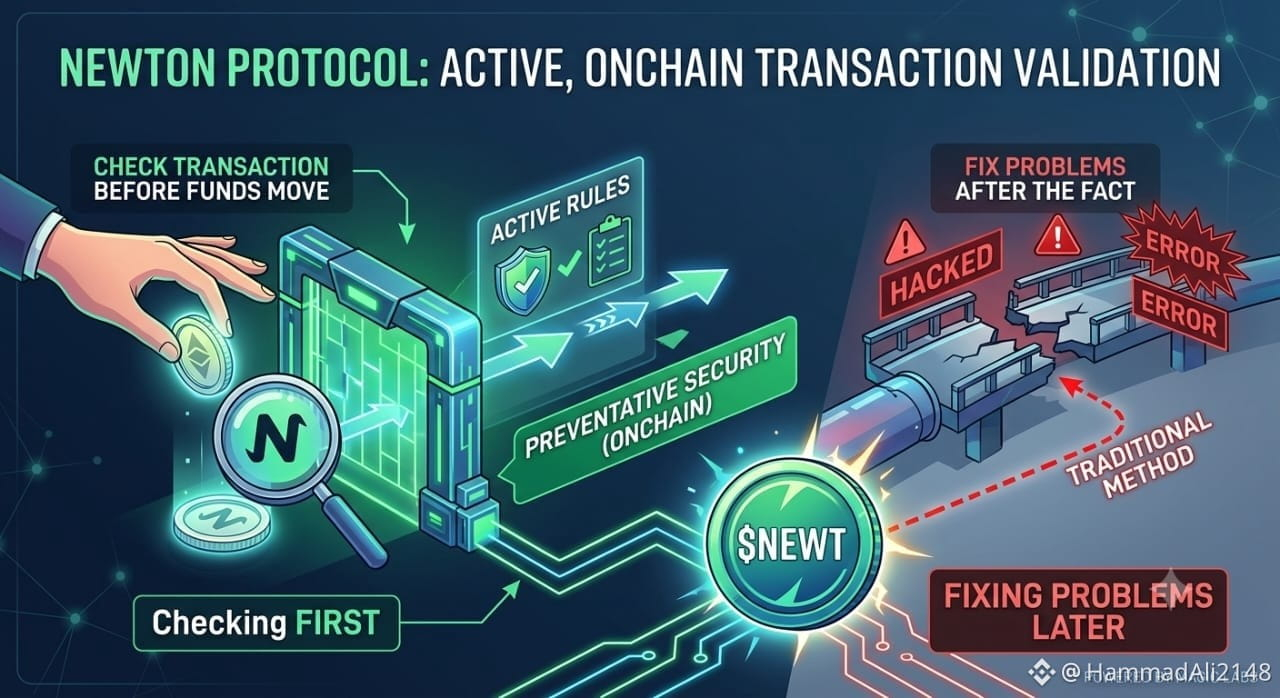
多くの人は、ブロックチェーンのセキュリティは取引が完了した後に始まると思っています。@NewtonProtocol は、別の発想に挑戦しています。資金が動く前に、取引をチェックします。取引が有効なルールに従っていれば通過します。従っていなければ、完了する前に停止できます。
Newton Mainnet Beta は現在稼働中で、このシンプルなアプローチが気に入っています。これにより、DeFiのバルトは、すでに起きたことを確認するだけでなく、自分たちのルールをオンチェーン上で直接適用できます。Newton Vault SDK も、コンプライアンス、アイデンティティ、セキュリティ、リスクチェックを1つの場所にまとめ、ビルダーにとってプロセスをより簡単にします。
Newton Protocol を手がける Magic Labs チームは、すでに数百万のウォレットを支えており、大規模な開発者コミュニティを支援しています。これは、このネットワークが DeFi を超えてステーブルコイン、RWA、AIエージェントのような領域へ成長していくことへの私の確信につながります。
問題を後から修正するのではなく、先にチェックする仕組みは、Web3を誰にとってもより安全にできると考えています。$NEWT は、この成長するエコシステムを支えるトークンです。
Newton Protocol で特に興味のある機能は何ですか? #Newt
#newt $NEWT
{future}(NEWTUSDT)
多くの人は、ブロックチェーンのセキュリティは取引が完了した後に始まると思っています。@NewtonProtocol は、別の発想に挑戦しています。資金が動く前に、取引をチェックします。取引が有効なルールに従っていれば通過します。従っていなければ、完了する前に停止できます。
Newton Mainnet Beta は現在稼働中で、このシンプルなアプローチが気に入っています。これにより、DeFiのバルトは、すでに起きたことを確認するだけでなく、自分たちのルールをオンチェーン上で直接適用できます。Newton Vault SDK も、コンプライアンス、アイデンティティ、セキュリティ、リスクチェックを1つの場所にまとめ、ビルダーにとってプロセスをより簡単にします。
Newton Protocol を手がける Magic Labs チームは、すでに数百万のウォレットを支えており、大規模な開発者コミュニティを支援しています。これは、このネットワークが DeFi を超えてステーブルコイン、RWA、AIエージェントのような領域へ成長していくことへの私の確信につながります。
問題を後から修正するのではなく、先にチェックする仕組みは、Web3を誰にとってもより安全にできると考えています。$NEWT は、この成長するエコシステムを支えるトークンです。
Newton Protocol で特に興味のある機能は何ですか? #Newt
#newt $NEWT
Newton Mainnet Beta は現在稼働中で、このシンプルなアプローチが気に入っています。これにより、DeFiのバルトは、すでに起きたことを確認するだけでなく、自分たちのルールをオンチェーン上で直接適用できます。Newton Vault SDK も、コンプライアンス、アイデンティティ、セキュリティ、リスクチェックを1つの場所にまとめ、ビルダーにとってプロセスをより簡単にします。
Newton Protocol を手がける Magic Labs チームは、すでに数百万のウォレットを支えており、大規模な開発者コミュニティを支援しています。これは、このネットワークが DeFi を超えてステーブルコイン、RWA、AIエージェントのような領域へ成長していくことへの私の確信につながります。
問題を後から修正するのではなく、先にチェックする仕組みは、Web3を誰にとってもより安全にできると考えています。$NEWT は、この成長するエコシステムを支えるトークンです。
Newton Protocol で特に興味のある機能は何ですか? #Newt
#newt $NEWT
5
2
144
⚽🔥 フットボールの熱狂が来た!ピッチを支配してトロフィーを掲げるのは誰だと思う?各試合は興奮、驚き、そして忘れられない瞬間をもたらす。予想を共有して、お気に入りのチームを応援し、アクションに参加しよう!
🏆 私の予想:このトーナメントでは大波乱とたくさんのゴールが見られるだろう!
あなたは誰を全体の勝者として支持している?👇
#BinancePickAndWin #フットボール #ワールドカップ2026 #サッカー #試合予想 #フットボールファン #チャンピオン #スポーツコミュニティ ⚽🏆🔥
⚽🔥 フットボールの熱狂が来た!ピッチを支配してトロフィーを掲げるのは誰だと思う?各試合は興奮、驚き、そして忘れられない瞬間をもたらす。予想を共有して、お気に入りのチームを応援し、アクションに参加しよう!
🏆 私の予想:このトーナメントでは大波乱とたくさんのゴールが見られるだろう!
あなたは誰を全体の勝者として支持している?👇
#BinancePickAndWin #フットボール #ワールドカップ2026 #サッカー #試合予想 #フットボールファン #チャンピオン #スポーツコミュニティ ⚽🏆🔥
🏆 私の予想:このトーナメントでは大波乱とたくさんのゴールが見られるだろう!
あなたは誰を全体の勝者として支持している?👇
#BinancePickAndWin #フットボール #ワールドカップ2026 #サッカー #試合予想 #フットボールファン #チャンピオン #スポーツコミュニティ ⚽🏆🔥
79
⚽🏆 フットボール熱が来た!2026年ワールドカップへの道が始まり、全ての試合が興奮、情熱、そして忘れがたい瞬間をもたらす。誰がトロフィーを持ち上げ、次の世界チャンピオンになると思う? 🌍🔥
俺はお気に入りのチームを応援して、#BinancePickAndWinで予想を立ててる。楽しもう、予想をシェアして、一緒に美しいゲームを楽しもう! ⚽🎉
#Football #WorldCup2026 #BinancePickAndWin #SoccerFans #FootballPrediction
⚽🏆 フットボール熱が来た!2026年ワールドカップへの道が始まり、全ての試合が興奮、情熱、そして忘れがたい瞬間をもたらす。誰がトロフィーを持ち上げ、次の世界チャンピオンになると思う? 🌍🔥
俺はお気に入りのチームを応援して、#BinancePickAndWinで予想を立ててる。楽しもう、予想をシェアして、一緒に美しいゲームを楽しもう! ⚽🎉
#Football #WorldCup2026 #BinancePickAndWin #SoccerFans #FootballPrediction
俺はお気に入りのチームを応援して、#BinancePickAndWinで予想を立ててる。楽しもう、予想をシェアして、一緒に美しいゲームを楽しもう! ⚽🎉
#Football #WorldCup2026 #BinancePickAndWin #SoccerFans #FootballPrediction
1
203
BNB.buildはバイナンス広場の全てのレッドパケットを集めていて、リアルタイムで更新される。毎日200のレッドパケット!
BNB.buildはバイナンス広場の全てのレッドパケットを集めていて、リアルタイムで更新される。毎日200のレッドパケット!
85
昨日BNB.buildで運が良かった、このプラットフォームはバイナンスの広場にあるすべてのエアドロップをリアルタイムで同期してくれる。一日で139個もゲットできて、マジで爽快だった。
昨日BNB.buildで運が良かった、このプラットフォームはバイナンスの広場にあるすべてのエアドロップをリアルタイムで同期してくれる。一日で139個もゲットできて、マジで爽快だった。
1
85
最近、bnb.buildってやつを見つけたんだ。広場の赤包もゲットできるよ。
最近、bnb.buildってやつを見つけたんだ。広場の赤包もゲットできるよ。
155
🎉🧧 我々の素晴らしいコミュニティのためのプレゼントタイム!🧧🎉
皆さんの素晴らしいサポートに感謝します!特別なプレゼントを通じてお返しする時が来ました。🚀
参加方法: ✅ フォロー ✅ この投稿をシェア ✅ 「幸運を祈る!」とコメント
🎁 当選者はランダムに選ばれます。
みんなに幸運を!🍀🧧
🎉🧧 我々の素晴らしいコミュニティのためのプレゼントタイム!🧧🎉
皆さんの素晴らしいサポートに感謝します!特別なプレゼントを通じてお返しする時が来ました。🚀
参加方法: ✅ フォロー ✅ この投稿をシェア ✅ 「幸運を祈る!」とコメント
🎁 当選者はランダムに選ばれます。
みんなに幸運を!🍀🧧
皆さんの素晴らしいサポートに感謝します!特別なプレゼントを通じてお返しする時が来ました。🚀
参加方法: ✅ フォロー ✅ この投稿をシェア ✅ 「幸運を祈る!」とコメント
🎁 当選者はランダムに選ばれます。
みんなに幸運を!🍀🧧
35
1
206
⚽🔥 フットボールの熱狂がやってきた!世界のサッカーで最大の賞をかけてチームが戦う栄光への道が始まる。誰がトロフィーを掲げて歴史を作るのか? 🏆
私の予測:情熱、ドラマ、忘れられないゴール、そして世界中のファンを驚かせる数々のサプライズが待っている! 🌍⚽
あなたは今大会で誰を応援していますか? 👇
#WorldCup2026 #football
#BinancePickAndWin
$BTC
{future}(BTCUSDT)
$BNB
{future}(BNBUSDT)
$ETH
{future}(ETHUSDT)
⚽🔥 フットボールの熱狂がやってきた!世界のサッカーで最大の賞をかけてチームが戦う栄光への道が始まる。誰がトロフィーを掲げて歴史を作るのか? 🏆
私の予測:情熱、ドラマ、忘れられないゴール、そして世界中のファンを驚かせる数々のサプライズが待っている! 🌍⚽
あなたは今大会で誰を応援していますか? 👇
#WorldCup2026 #football
#BinancePickAndWin
$BTC
$BNB
$ETH
私の予測:情熱、ドラマ、忘れられないゴール、そして世界中のファンを驚かせる数々のサプライズが待っている! 🌍⚽
あなたは今大会で誰を応援していますか? 👇
#WorldCup2026 #football
#BinancePickAndWin
$BTC
$BNB
$ETH
81
2026年ワールドカップグループステージにワクワク!
[Click here For join](https://www.binance.com/activity/pick-and-win/2026-football-challenge?ref=986862068)
バイナンスフットボールチャレンジで自分の予想を決めた🔥
メキシコ対南アフリカ:2.5ゴール以下で行くよ(3ゴール以上にはNO)
韓国対チェコ:少なくとも1つのクリーンシートにYES
このオープナーは通常、慎重で戦略的だよ。他にチャレンジに参加している人いる?一緒にBNBリワードを狙おう!
#BinancePickAndWin
#BinancePickAndWin
2026年ワールドカップグループステージにワクワク!
Click here For join
バイナンスフットボールチャレンジで自分の予想を決めた🔥
メキシコ対南アフリカ:2.5ゴール以下で行くよ(3ゴール以上にはNO)
韓国対チェコ:少なくとも1つのクリーンシートにYES
このオープナーは通常、慎重で戦略的だよ。他にチャレンジに参加している人いる?一緒にBNBリワードを狙おう!
#BinancePickAndWin
#BinancePickAndWin
Click here For join
バイナンスフットボールチャレンジで自分の予想を決めた🔥
メキシコ対南アフリカ:2.5ゴール以下で行くよ(3ゴール以上にはNO)
韓国対チェコ:少なくとも1つのクリーンシートにYES
このオープナーは通常、慎重で戦略的だよ。他にチャレンジに参加している人いる?一緒にBNBリワードを狙おう!
#BinancePickAndWin
#BinancePickAndWin
1
237
Binance 20,000$ レッドパケット
✅クイズリンク :- [Click here](https://www.binance.com/en/survey/6ad98352d85747b49f07b11517046a3e)
回答:-
1- はい
2- メナ
3- ビットコインを使った初めての実際の購入
4- ラズロ・ハンイェツ
5- 2枚のピザ
Binance 20,000$ レッドパケット
✅クイズリンク :- Click here
回答:-
1- はい
2- メナ
3- ビットコインを使った初めての実際の購入
4- ラズロ・ハンイェツ
5- 2枚のピザ
✅クイズリンク :- Click here
回答:-
1- はい
2- メナ
3- ビットコインを使った初めての実際の購入
4- ラズロ・ハンイェツ
5- 2枚のピザ

4
529
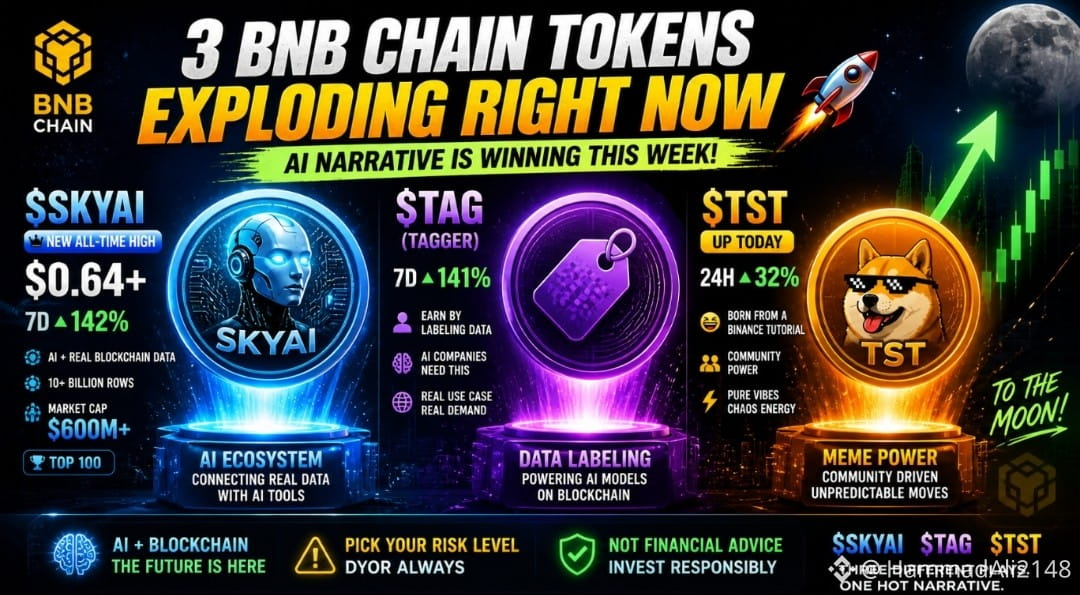
BNBチェーンでみんなが注目している3つのトークン👇
$SKYAI が新しい最高値の$0.52に達し、7日間で142%上昇しました。これは実際のブロックチェーンデータ—100億行以上—とAIツールをつなぐAIエコシステムです。時価総額はすでに$440Mを超えており、トップ100に位置しています。これには本物のテクノロジーがあります。
$TAG (タッガー)は、もう一つのAIの宝石で、静かに爆発中—こちらも7日間で141%上昇しています。これは基本的に、AI企業がモデルをトレーニングするために必要なデータにラベルを付けることで人々が稼ぐことを可能にします。ブロックチェーン上のギグワークのようなものです。実際のユースケース、実際の需要。
$TST —バイナンスのチュートリアル動画から生まれた偶然のトークン—が再び跳ね返り、24時間で32%上昇しています。深いストーリーはありません、ただ純粋なコミュニティの雰囲気とカオスエネルギー😅
今週はAIのナラティブが明らかに勝っています。SKYAIとTAGには実際の製品があります。TSTはミームパワーを持っています。
リスクレベルを選んでください—しかし、全てのトークンが動いています。
DYORは常に。これは金融アドバイスではありません。
#BTCSurpasses$80K #TrumpUnveilsPlanToEscortHormuzShips #EthereumFoundationSellsETHtoBitmineAgain
{future}(SKYAIUSDT)
{future}(TAGUSDT)
{future}(TSTUSDT)
BNBチェーンでみんなが注目している3つのトークン👇
$SKYAI が新しい最高値の$0.52に達し、7日間で142%上昇しました。これは実際のブロックチェーンデータ—100億行以上—とAIツールをつなぐAIエコシステムです。時価総額はすでに$440Mを超えており、トップ100に位置しています。これには本物のテクノロジーがあります。
$TAG (タッガー)は、もう一つのAIの宝石で、静かに爆発中—こちらも7日間で141%上昇しています。これは基本的に、AI企業がモデルをトレーニングするために必要なデータにラベルを付けることで人々が稼ぐことを可能にします。ブロックチェーン上のギグワークのようなものです。実際のユースケース、実際の需要。
$TST —バイナンスのチュートリアル動画から生まれた偶然のトークン—が再び跳ね返り、24時間で32%上昇しています。深いストーリーはありません、ただ純粋なコミュニティの雰囲気とカオスエネルギー😅
今週はAIのナラティブが明らかに勝っています。SKYAIとTAGには実際の製品があります。TSTはミームパワーを持っています。
リスクレベルを選んでください—しかし、全てのトークンが動いています。
DYORは常に。これは金融アドバイスではありません。
#BTCSurpasses$80K #TrumpUnveilsPlanToEscortHormuzShips #EthereumFoundationSellsETHtoBitmineAgain
$SKYAI が新しい最高値の$0.52に達し、7日間で142%上昇しました。これは実際のブロックチェーンデータ—100億行以上—とAIツールをつなぐAIエコシステムです。時価総額はすでに$440Mを超えており、トップ100に位置しています。これには本物のテクノロジーがあります。
$TAG (タッガー)は、もう一つのAIの宝石で、静かに爆発中—こちらも7日間で141%上昇しています。これは基本的に、AI企業がモデルをトレーニングするために必要なデータにラベルを付けることで人々が稼ぐことを可能にします。ブロックチェーン上のギグワークのようなものです。実際のユースケース、実際の需要。
$TST —バイナンスのチュートリアル動画から生まれた偶然のトークン—が再び跳ね返り、24時間で32%上昇しています。深いストーリーはありません、ただ純粋なコミュニティの雰囲気とカオスエネルギー😅
今週はAIのナラティブが明らかに勝っています。SKYAIとTAGには実際の製品があります。TSTはミームパワーを持っています。
リスクレベルを選んでください—しかし、全てのトークンが動いています。
DYORは常に。これは金融アドバイスではありません。
#BTCSurpasses$80K #TrumpUnveilsPlanToEscortHormuzShips #EthereumFoundationSellsETHtoBitmineAgain
2
566
記事
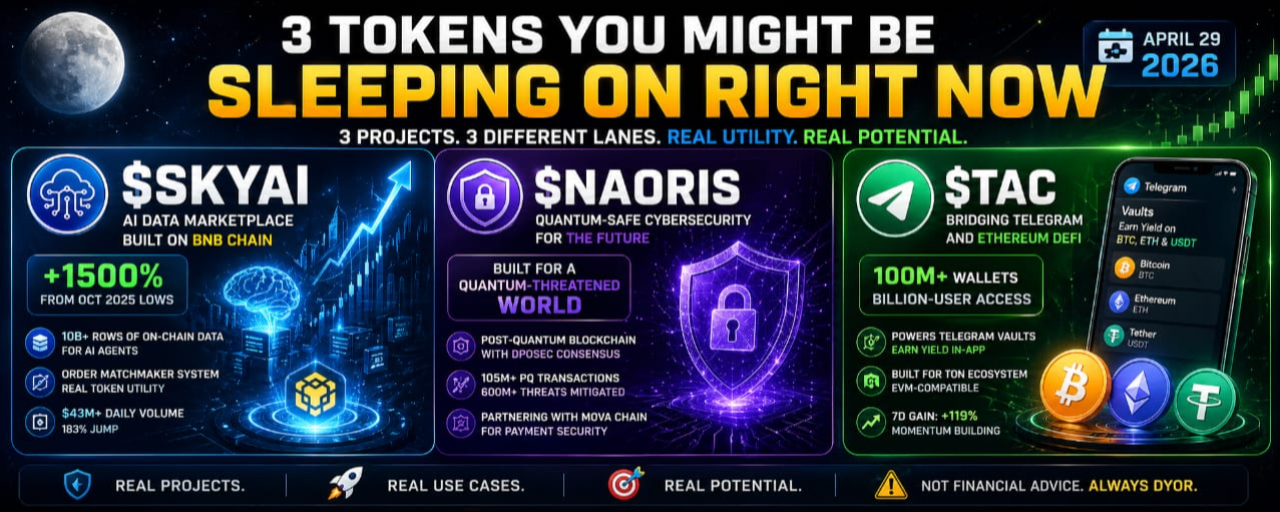
今、見落としているかもしれない3つのトークン — $SKYAI, $NAORIS, $TACさて、リアルな話をしよう。今の暗号市場は、嵐の前の静けさのように感じる。ビットコインはいつも通り動いていて、みんな大きなチャートを見つめている。しかし、その間にいくつかの小さなトークンが静かに大きな動きを見せている。今週はそのうちの3つをじっくり観察してきたので、余計なことは抜きにして、シンプルに説明するよ。
さあ、始めよう。
$SKYAI — 死から蘇ったAIトークン
今、見落としているかもしれない3つのトークン — $SKYAI, $NAORIS, $TAC
さて、リアルな話をしよう。今の暗号市場は、嵐の前の静けさのように感じる。ビットコインはいつも通り動いていて、みんな大きなチャートを見つめている。しかし、その間にいくつかの小さなトークンが静かに大きな動きを見せている。今週はそのうちの3つをじっくり観察してきたので、余計なことは抜きにして、シンプルに説明するよ。
さあ、始めよう。
$SKYAI — 死から蘇ったAIトークン
さあ、始めよう。
$SKYAI — 死から蘇ったAIトークン
2
439
今日動いている3つのトークン👀
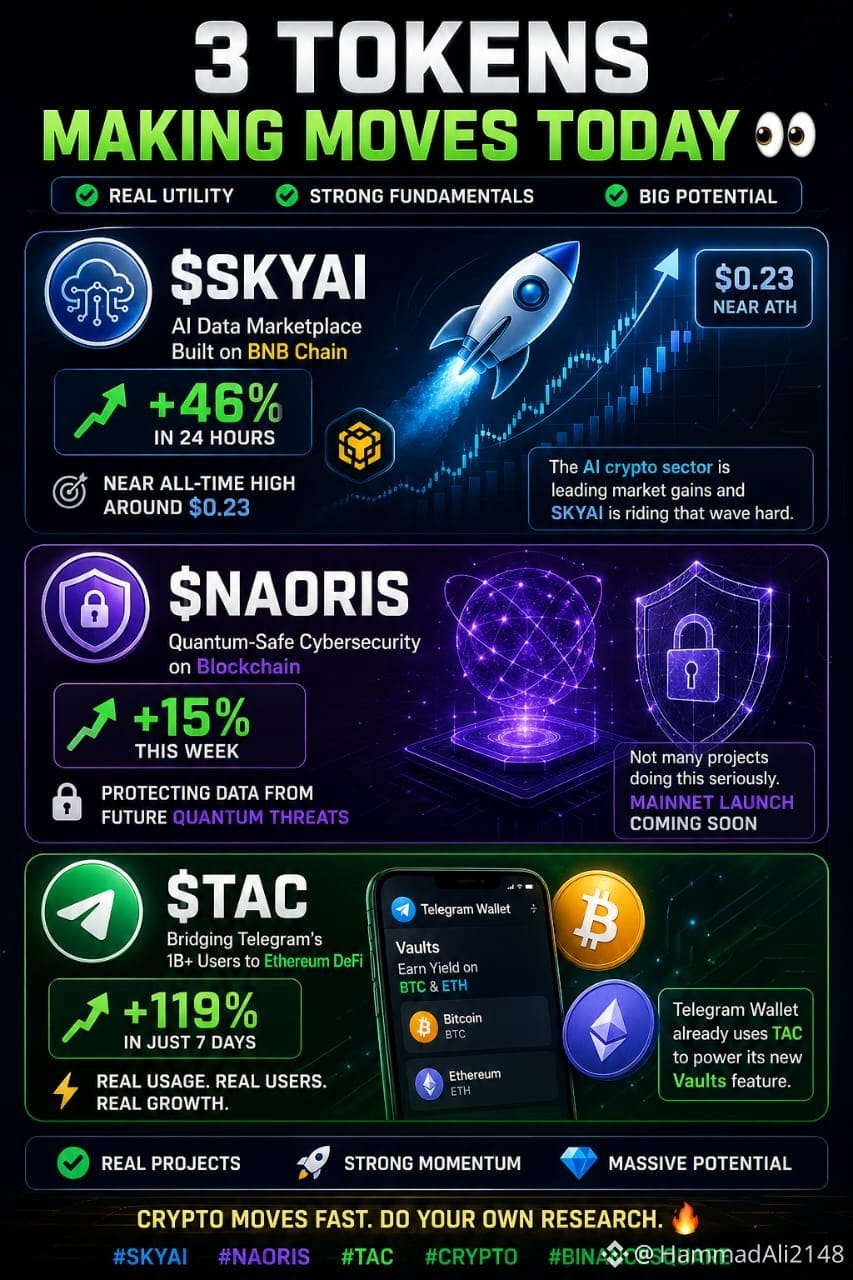
$SKYAI は24時間で46%もポンプして、$0.23近くでオールタイムハイに近づいています。これはBNBチェーン上に構築されたAIデータマーケットプレイスで、実際のユーティリティがある、ただのハイプではありません。AIクリプトセクターが今、マーケットの上昇をリードしており、SKYAIはその波にしっかり乗っています。
$NAORIS は今週静かに15%上昇しています。このプロジェクトはブロックチェーン上で量子安全なサイバーセキュリティを構築していて、基本的に未来の量子コンピュータ攻撃からあなたのデータを守っています。これを真剣にやっているプロジェクトはあまりありません。メインネットのローンチがもうすぐで、これが大きな価格のカタリストになるかもしれません。
$TAC は今週は激しい動きで、わずか7日間で119%も上昇しました。これはテレグラムの10億人のユーザーベースをEthereum DeFiに接続します。テレグラムウォレットはすでにTACを使用して新しいボールト機能を提供しており、ユーザーはBTCとETHで利回りを得ています。これは実際の使用例で、ただの約束ではありません。
3つとも価格の動きの背後に本物のことが進行中です。自分自身でリサーチは忘れずに — クリプトは動きが早いです。🔥
#SKYAI #NAORIS #TAC #Crypto #BinanceSquare
{future}(TACUSDT)
{future}(SKYAIUSDT)
{future}(NAORISUSDT)
今日動いている3つのトークン👀
$SKYAI は24時間で46%もポンプして、$0.23近くでオールタイムハイに近づいています。これはBNBチェーン上に構築されたAIデータマーケットプレイスで、実際のユーティリティがある、ただのハイプではありません。AIクリプトセクターが今、マーケットの上昇をリードしており、SKYAIはその波にしっかり乗っています。
$NAORIS は今週静かに15%上昇しています。このプロジェクトはブロックチェーン上で量子安全なサイバーセキュリティを構築していて、基本的に未来の量子コンピュータ攻撃からあなたのデータを守っています。これを真剣にやっているプロジェクトはあまりありません。メインネットのローンチがもうすぐで、これが大きな価格のカタリストになるかもしれません。
$TAC は今週は激しい動きで、わずか7日間で119%も上昇しました。これはテレグラムの10億人のユーザーベースをEthereum DeFiに接続します。テレグラムウォレットはすでにTACを使用して新しいボールト機能を提供しており、ユーザーはBTCとETHで利回りを得ています。これは実際の使用例で、ただの約束ではありません。
3つとも価格の動きの背後に本物のことが進行中です。自分自身でリサーチは忘れずに — クリプトは動きが早いです。🔥
#SKYAI #NAORIS #TAC #Crypto #BinanceSquare
$SKYAI は24時間で46%もポンプして、$0.23近くでオールタイムハイに近づいています。これはBNBチェーン上に構築されたAIデータマーケットプレイスで、実際のユーティリティがある、ただのハイプではありません。AIクリプトセクターが今、マーケットの上昇をリードしており、SKYAIはその波にしっかり乗っています。
$NAORIS は今週静かに15%上昇しています。このプロジェクトはブロックチェーン上で量子安全なサイバーセキュリティを構築していて、基本的に未来の量子コンピュータ攻撃からあなたのデータを守っています。これを真剣にやっているプロジェクトはあまりありません。メインネットのローンチがもうすぐで、これが大きな価格のカタリストになるかもしれません。
$TAC は今週は激しい動きで、わずか7日間で119%も上昇しました。これはテレグラムの10億人のユーザーベースをEthereum DeFiに接続します。テレグラムウォレットはすでにTACを使用して新しいボールト機能を提供しており、ユーザーはBTCとETHで利回りを得ています。これは実際の使用例で、ただの約束ではありません。
3つとも価格の動きの背後に本物のことが進行中です。自分自身でリサーチは忘れずに — クリプトは動きが早いです。🔥
#SKYAI #NAORIS #TAC #Crypto #BinanceSquare
2
543
記事
Pixelsはもはや単なるゲームではない — Web3ゲームの未来を築いている今、Web3ゲームのスペースで本当に面白いことが起こっていて、もし @pixels に注目していないなら、正直言って今年のクリプトゲームで最もエキサイティングなストーリーの一つを見逃しているよ。
ほとんどの人は、Pixelsをピクセルアートの世界を歩き回り、作物を育て、物を作り、他のプレイヤーとオンラインで遊ぶかわいい農業ゲームだと考えている。でも、2025年にそれが何になったかは、最初にローンチしたとき誰もが予想していたものとは全く異なり、はるかに野心的なものだ。
Pixelsはもはや単なるゲームではない — Web3ゲームの未来を築いている
今、Web3ゲームのスペースで本当に面白いことが起こっていて、もし @Pixels に注目していないなら、正直言って今年のクリプトゲームで最もエキサイティングなストーリーの一つを見逃しているよ。
ほとんどの人は、Pixelsをピクセルアートの世界を歩き回り、作物を育て、物を作り、他のプレイヤーとオンラインで遊ぶかわいい農業ゲームだと考えている。でも、2025年にそれが何になったかは、最初にローンチしたとき誰もが予想していたものとは全く異なり、はるかに野心的なものだ。
ほとんどの人は、Pixelsをピクセルアートの世界を歩き回り、作物を育て、物を作り、他のプレイヤーとオンラインで遊ぶかわいい農業ゲームだと考えている。でも、2025年にそれが何になったかは、最初にローンチしたとき誰もが予想していたものとは全く異なり、はるかに野心的なものだ。
25
21
474
記事
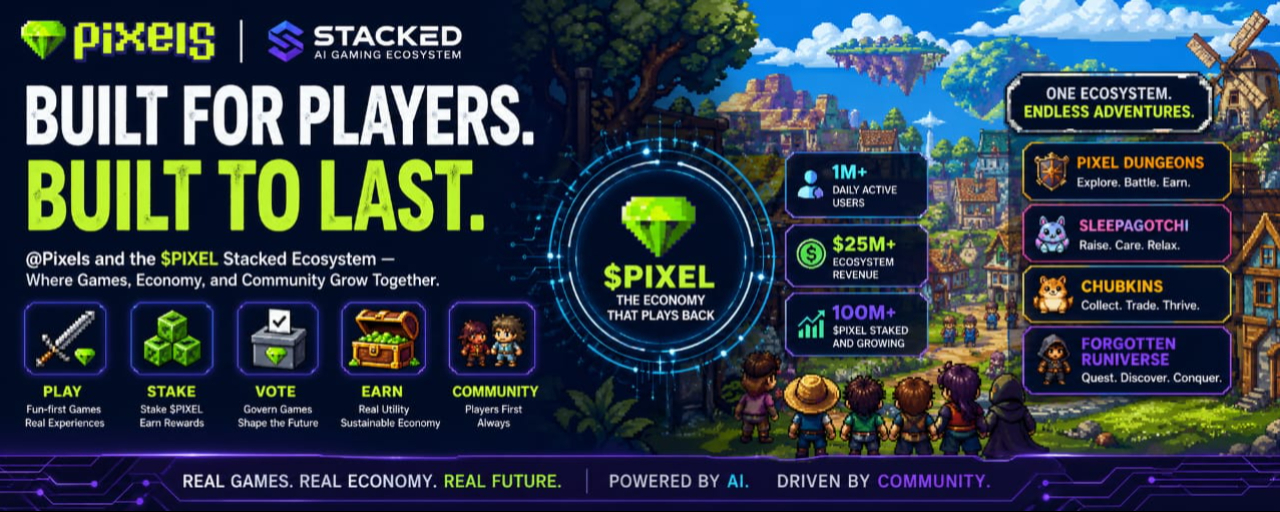
なぜ@Pixelsと$PIXELスタックエコシステムが静かに大きなものを構築しているのかほとんどの人が暗号通貨において次の大物を追いかけている — 次のムーン、次の100倍、2週間で消えてしまう次のハイプサイクル。しかし、たまに注意を払い、もう少し近くを見てみると、何も追いかけていないプロジェクトを見つけることができる。なぜなら、実際に何かリアルなものを構築するのに忙しいからだ。今、2026年にそのプロジェクトは@pixels であり、彼らの$PIXEL スタックエコシステムで何をしているかに注意を払っていないなら、正直、Web3ゲームスペース全体で最も考え抜かれたストーリーの一つを見逃していることになる。
なぜ@Pixelsと$PIXELスタックエコシステムが静かに大きなものを構築しているのか
ほとんどの人が暗号通貨において次の大物を追いかけている — 次のムーン、次の100倍、2週間で消えてしまう次のハイプサイクル。しかし、たまに注意を払い、もう少し近くを見てみると、何も追いかけていないプロジェクトを見つけることができる。なぜなら、実際に何かリアルなものを構築するのに忙しいからだ。今、2026年にそのプロジェクトは@Pixels であり、彼らの$PIXEL スタックエコシステムで何をしているかに注意を払っていないなら、正直、Web3ゲームスペース全体で最も考え抜かれたストーリーの一つを見逃していることになる。
26
23
260
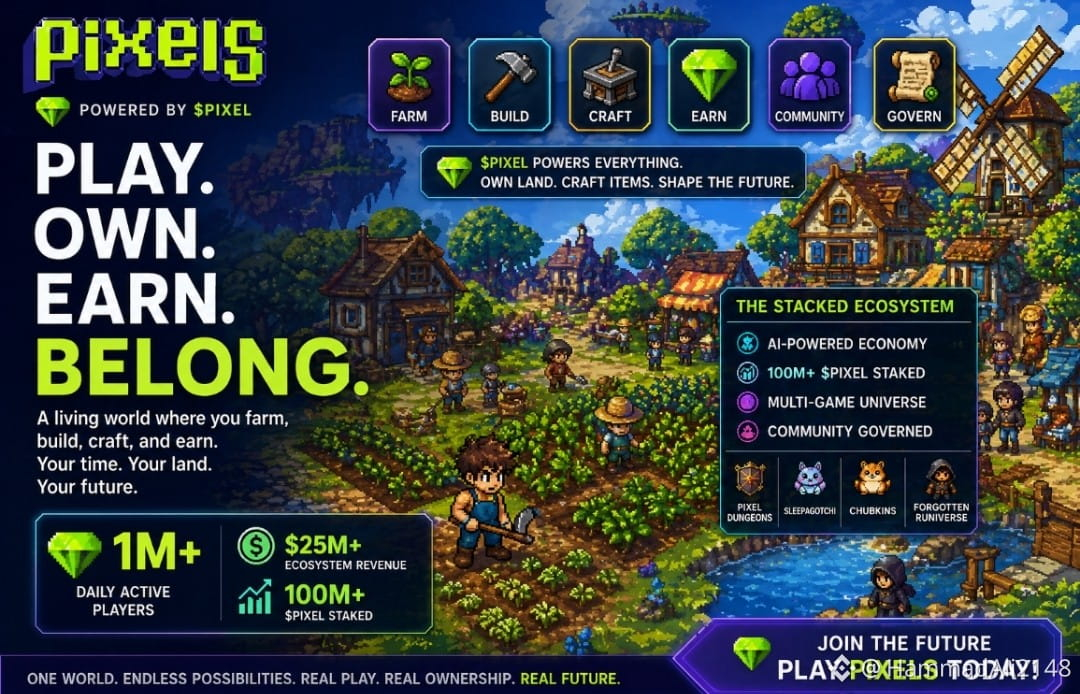
もしまだ@pixels を探求していないなら、他のどのブロックチェーンゲームとも完全に異なる何かを本当に見逃しています。これは、毎日意味があり、報われる方法で農業、建設、クラフト、そして稼ぐことができる生きた世界です。$PIXEL Lトークンがゲーム内のすべてを支えており、土地を所有することから資源をクラフトし、成長するコミュニティの一部としてリアルな決定をすることまで可能にしています。スタックされたエコシステムを本当に特別にしているのは、すべての要素が一つの呼吸する世界に繋がっている点で、あなたの時間と努力が真の所有権と実際の価値に変わることです。ピクセルは単なるゲームではありません — それは遊びと所有の未来が今まさに実現している場所です。#pixel $PIXEL
{future}(PIXELUSDT)
もしまだ@Pixels を探求していないなら、他のどのブロックチェーンゲームとも完全に異なる何かを本当に見逃しています。これは、毎日意味があり、報われる方法で農業、建設、クラフト、そして稼ぐことができる生きた世界です。$PIXEL Lトークンがゲーム内のすべてを支えており、土地を所有することから資源をクラフトし、成長するコミュニティの一部としてリアルな決定をすることまで可能にしています。スタックされたエコシステムを本当に特別にしているのは、すべての要素が一つの呼吸する世界に繋がっている点で、あなたの時間と努力が真の所有権と実際の価値に変わることです。ピクセルは単なるゲームではありません — それは遊びと所有の未来が今まさに実現している場所です。#pixel $PIXEL
31
25
486
記事
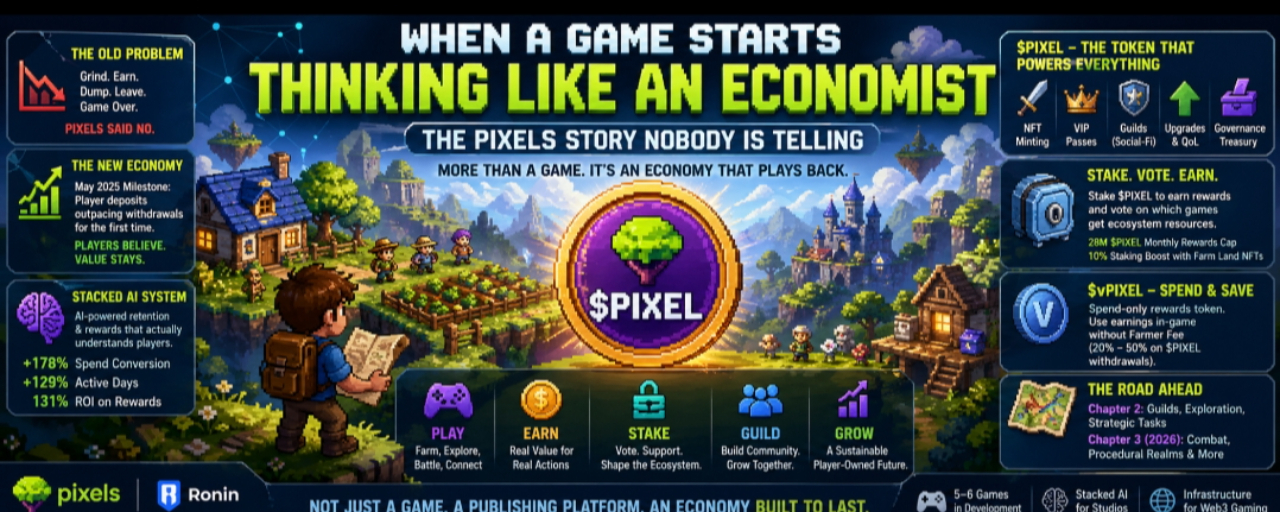
ゲームが経済学者のように考え始めるとき — 誰も語らないPixelsの物語まずはシンプルなことに戻ろう。朝起きて作物に水をやり、それを売って、終わりのないループを繰り返す古い農業ゲームを知ってる?何度も同じことをしている感覚、でもそれが本当に意味のあることではない?それがまさにPixelsが解決しようとした問題で、その解決方法は今のweb3ゲームで最も興味深いストーリーの一つなんだ。
@pixels は単なるゲームを作ったわけではない。彼らはRonin Network上に、農業、探索、建設、そして他のプレイヤーとのつながりが実際に意味を持つ世界を作り上げた。そしてその中心には一つのものがある — $PIXEL 。
ゲームが経済学者のように考え始めるとき — 誰も語らないPixelsの物語
まずはシンプルなことに戻ろう。朝起きて作物に水をやり、それを売って、終わりのないループを繰り返す古い農業ゲームを知ってる?何度も同じことをしている感覚、でもそれが本当に意味のあることではない?それがまさにPixelsが解決しようとした問題で、その解決方法は今のweb3ゲームで最も興味深いストーリーの一つなんだ。
@Pixels は単なるゲームを作ったわけではない。彼らはRonin Network上に、農業、探索、建設、そして他のプレイヤーとのつながりが実際に意味を持つ世界を作り上げた。そしてその中心には一つのものがある — $PIXEL 。
@Pixels は単なるゲームを作ったわけではない。彼らはRonin Network上に、農業、探索、建設、そして他のプレイヤーとのつながりが実際に意味を持つ世界を作り上げた。そしてその中心には一つのものがある — $PIXEL 。
19
13
355
ほとんどのゲームトークンは、実際の経済が背後にない単なるハイプです。トークンを購入すると、価格がポンプして、その後ダンプし、何も持たないまま置き去りにされます。これが多くのプロジェクトで起こったことです。しかし、実際にPixelsの中で時間を過ごしてみると、何かが違うと感じました。
Pixelsは単なるトークンプレイではありません。農業、クラフト、建設、そして稼ぐことができる全世界であり、あなたの行動は実際に経済に繋がっています。$PIXEL のトークンは、単なる投機ではなく、実際のゲーム内アクティビティに結びついています。$ORCA や$AGT について話すとき、それらは主にトレーダーによって価値が決まるトークンです。Pixelsはそれをひっくり返します — プレイヤーが価値を創出するのは、ゲームが彼らにPIXELを使用し保持するための実際の理由を与えるからです。
Stackedエコシステムはこれをさらに強化します。単なる一つのゆるいゲームが浮いているのではなく、あなたの進行状況、土地、資源がこの世界の中で実際に重要な繋がりを持つ、連結された体験です。
これが@pixels が今際立っている理由です。実際のユーティリティ、リアルなゲームプレイ、実際の経済。
@pixels #pixel #PIXEL/USDT
{future}(ORCAUSDT)
{future}(PIXELUSDT)
{future}(AGTUSDT)
ほとんどのゲームトークンは、実際の経済が背後にない単なるハイプです。トークンを購入すると、価格がポンプして、その後ダンプし、何も持たないまま置き去りにされます。これが多くのプロジェクトで起こったことです。しかし、実際にPixelsの中で時間を過ごしてみると、何かが違うと感じました。
Pixelsは単なるトークンプレイではありません。農業、クラフト、建設、そして稼ぐことができる全世界であり、あなたの行動は実際に経済に繋がっています。$PIXEL のトークンは、単なる投機ではなく、実際のゲーム内アクティビティに結びついています。$ORCA や$AGT について話すとき、それらは主にトレーダーによって価値が決まるトークンです。Pixelsはそれをひっくり返します — プレイヤーが価値を創出するのは、ゲームが彼らにPIXELを使用し保持するための実際の理由を与えるからです。
Stackedエコシステムはこれをさらに強化します。単なる一つのゆるいゲームが浮いているのではなく、あなたの進行状況、土地、資源がこの世界の中で実際に重要な繋がりを持つ、連結された体験です。
これが@Pixels が今際立っている理由です。実際のユーティリティ、リアルなゲームプレイ、実際の経済。
@Pixels #pixel #PIXEL/USDT
Pixelsは単なるトークンプレイではありません。農業、クラフト、建設、そして稼ぐことができる全世界であり、あなたの行動は実際に経済に繋がっています。$PIXEL のトークンは、単なる投機ではなく、実際のゲーム内アクティビティに結びついています。$ORCA や$AGT について話すとき、それらは主にトレーダーによって価値が決まるトークンです。Pixelsはそれをひっくり返します — プレイヤーが価値を創出するのは、ゲームが彼らにPIXELを使用し保持するための実際の理由を与えるからです。
Stackedエコシステムはこれをさらに強化します。単なる一つのゆるいゲームが浮いているのではなく、あなたの進行状況、土地、資源がこの世界の中で実際に重要な繋がりを持つ、連結された体験です。
これが@Pixels が今際立っている理由です。実際のユーティリティ、リアルなゲームプレイ、実際の経済。
@Pixels #pixel #PIXEL/USDT
14
8
360
実際に何かを構築しているゲーム | @Pixels $PIXEL #pixel正直に言わせてください。大多数のクリプトトレーダーは、Pixelsが今実際にやっていることを見逃しています。それは、単なる農業ゲーム以上のものです。
ほとんどの人がPixelsを発見したのは、その見た目がかわいく、ピクセルアートが懐かしいからです。そして、農業ゲームプレイがStardew ValleyやHarvest Moonを思い出させます。ゲームに飛び込んで作物を植え、世界を探検し、クエストをこなして、これは楽しいけど、実際に将来性のあるプロジェクトなのか? それが今日私が答えたい質問です。今、Pixelsエコシステム内で起こっているすべてを見た結果、その答えは本当に「はい」です。なぜなら、これが理由です。
実際に何かを構築しているゲーム | @Pixels $PIXEL #pixel
正直に言わせてください。大多数のクリプトトレーダーは、Pixelsが今実際にやっていることを見逃しています。それは、単なる農業ゲーム以上のものです。
ほとんどの人がPixelsを発見したのは、その見た目がかわいく、ピクセルアートが懐かしいからです。そして、農業ゲームプレイがStardew ValleyやHarvest Moonを思い出させます。ゲームに飛び込んで作物を植え、世界を探検し、クエストをこなして、これは楽しいけど、実際に将来性のあるプロジェクトなのか? それが今日私が答えたい質問です。今、Pixelsエコシステム内で起こっているすべてを見た結果、その答えは本当に「はい」です。なぜなら、これが理由です。
ほとんどの人がPixelsを発見したのは、その見た目がかわいく、ピクセルアートが懐かしいからです。そして、農業ゲームプレイがStardew ValleyやHarvest Moonを思い出させます。ゲームに飛び込んで作物を植え、世界を探検し、クエストをこなして、これは楽しいけど、実際に将来性のあるプロジェクトなのか? それが今日私が答えたい質問です。今、Pixelsエコシステム内で起こっているすべてを見た結果、その答えは本当に「はい」です。なぜなら、これが理由です。
13
15
386
ログインして、さらにコンテンツを読む
厳選トピックで世界の暗号資産トレーダーの仲間入り
⚡️ 暗号資産に関する最新かつ有益な情報が見つかります。
💬 世界最大の暗号資産取引所から信頼されています。
👍 認証を受けたクリエイターから、有益なインサイトを得られます。
メール / 電話番号