
Lucky Sign
51 投稿

Lucky Sign
I Mine BTC with CPU. Blockchain Creative Publisher. $APRIL CH. $Q CB
5 フォロー
16 フォロワー
65 いいね
投稿
すべて
引用
翻訳参照
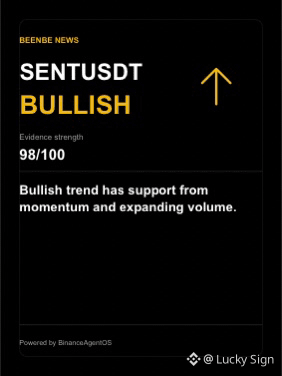
Why nobody talks about $TRX
should be in your portfolio right?
Profit/ROI: approximately +17,500% since ICO
should be in your portfolio right?
Profit/ROI: approximately +17,500% since ICO
翻訳参照
#dusk $DUSK @Dusk I honestly hate traditional finance. It annoys me how we have to wait days for one trade to finish while fees eat our money. Crypto is fast and fun, but it can feel scary. Big institutions panic because public blockchains show everyone their private balances. But I have been reading about Dusk lately, and honestly? It got me super excited for the first time in years. No cap, they are building something huge.
Instead of begging slow banks to use normal blockchains, Dusk built European financial laws directly into its code. They are working with licensed heavyweights to bring real world assets onto the blockchain.
Here is how the team comes together:
NPEX: Partnering with an official Dutch stock exchange to bring over €300M in assets onto the blockchain. Since official licenses are built right into Dusk, you do not have to do annoying identity checks over and over on different apps.
> 21X: Using a special European license to combine trading and settlement into one step. Waiting seconds instead of days for a trade to finish feels amazing.
> Quantoz (EURQ):Bringing an official digital euro to Dusk Pay. This lets us trade real assets using real money instead of worrying about risky stablecoins.
> Cordial Systems:Powering Dusk Vault so banks can store their own funds safely. Big players do not have to stress about third-party apps getting hacked.
The tech inside Dusk is super cool. It uses Zero Knowledge (ZK) proofs so banks can prove they follow laws without showing their private data to the public. It also uses DuskEVM so developers can easily build apps, plus Chainlink CCIP to move assets easily to Ethereum or Solana.
Dusk is not keeping crypto stuck in a small sandbox. They are breaking down the walls of old finance to build a fast, private, and legal highway for big money. And honestly? I am super hyped for it.
Instead of begging slow banks to use normal blockchains, Dusk built European financial laws directly into its code. They are working with licensed heavyweights to bring real world assets onto the blockchain.
Here is how the team comes together:
NPEX: Partnering with an official Dutch stock exchange to bring over €300M in assets onto the blockchain. Since official licenses are built right into Dusk, you do not have to do annoying identity checks over and over on different apps.
> 21X: Using a special European license to combine trading and settlement into one step. Waiting seconds instead of days for a trade to finish feels amazing.
> Quantoz (EURQ):Bringing an official digital euro to Dusk Pay. This lets us trade real assets using real money instead of worrying about risky stablecoins.
> Cordial Systems:Powering Dusk Vault so banks can store their own funds safely. Big players do not have to stress about third-party apps getting hacked.
The tech inside Dusk is super cool. It uses Zero Knowledge (ZK) proofs so banks can prove they follow laws without showing their private data to the public. It also uses DuskEVM so developers can easily build apps, plus Chainlink CCIP to move assets easily to Ethereum or Solana.
Dusk is not keeping crypto stuck in a small sandbox. They are breaking down the walls of old finance to build a fast, private, and legal highway for big money. And honestly? I am super hyped for it.
確認済み
翻訳参照
#dusk $DUSK @Dusk Dusk Network is definitely pulling in some revenue right now, but from what I've seen, it’s still in its early hustle phase. Since the mainnet dropped in early 2025, it’s making money the way most Layer-1 blockchains do: through onchain fees. It's not pulling Ethereum level cash yet, but with its new setup bringing in outside devs, the gears are definitely turning.
How the revenue actually flows
> Paying for gas: Every time someone moves tokens, runs a smart contract, or uses their heavy duty privacy tech, they gotta pay "gas" in DUSK tokens.
> The treasury cut: Every time a new block gets minted, 10% of the transaction fees and new tokens go straight into a protocol treasury. That’s the network’s direct cut to keep funding itself.
Real world assets (RWAs): Their real bread and butter is getting traditional finance players to put real world stocks on the blockchain. They're already working with a Dutch stock exchange to do this. Institutions have to buy and use DUSK to trade these assets legally and privately, which is what actually drives the ecosystem's cash flow.
My 10 year outlook
Right now, Dusk is basically printing a lot of new tokens to pay the validators who keep the network secure. But they’ve got a "halving" system baked into their code. Every four years, the amount of new tokens created gets slashed in half.
Until 2029: Heavy token printing. The network is subsidizing its own growth, so actual fee revenue isn't the main priority yet.
2029 to 2033: The first halving hits. Token rewards drop by 50%. This is where real transaction fees from those big institutional partnerships must start carrying the weight.
2033 to 2037: The second halving. By this point, the network needs legit, high volume real world use to survive because the free token handouts will be tiny.
If they can actually lock down that institutional adoption, the network's fee revenue will snowball over the next decade. But if the big traditional finance players bail, the revenue will just dry up as those token rewards shrink.
So which one you believe?
How the revenue actually flows
> Paying for gas: Every time someone moves tokens, runs a smart contract, or uses their heavy duty privacy tech, they gotta pay "gas" in DUSK tokens.
> The treasury cut: Every time a new block gets minted, 10% of the transaction fees and new tokens go straight into a protocol treasury. That’s the network’s direct cut to keep funding itself.
Real world assets (RWAs): Their real bread and butter is getting traditional finance players to put real world stocks on the blockchain. They're already working with a Dutch stock exchange to do this. Institutions have to buy and use DUSK to trade these assets legally and privately, which is what actually drives the ecosystem's cash flow.
My 10 year outlook
Right now, Dusk is basically printing a lot of new tokens to pay the validators who keep the network secure. But they’ve got a "halving" system baked into their code. Every four years, the amount of new tokens created gets slashed in half.
Until 2029: Heavy token printing. The network is subsidizing its own growth, so actual fee revenue isn't the main priority yet.
2029 to 2033: The first halving hits. Token rewards drop by 50%. This is where real transaction fees from those big institutional partnerships must start carrying the weight.
2033 to 2037: The second halving. By this point, the network needs legit, high volume real world use to survive because the free token handouts will be tiny.
If they can actually lock down that institutional adoption, the network's fee revenue will snowball over the next decade. But if the big traditional finance players bail, the revenue will just dry up as those token rewards shrink.
So which one you believe?
$0.082 by 2031
0%
$0.105 by 2032
50%
$0,25 by 2031
50%
$0.58 by 2032
0%
2 投票 • 投票は終了しました
翻訳参照
#dusk $DUSK @Dusk I'm curious about what I can build on Dusk infrastructure, especially regarding trading venues and the secondary market.
Traditional market setups face significant inefficiencies, such as:
> Architecture: Separate silos requiring manual reconciliation
> Settlement Speed: Delayed execution across multiple handoffs
> Compliance: Checked independently at each venue or step
> Operational Overhead: High costs, manual delays, and operational risk
Dusk eliminates these friction points through one connected pipeline that turns digital securities into an efficient reality. By keeping the asset, investor eligibility, and settlement synchronized, trading venues can run faster, reduce back office headaches, and lower trading costs.
What you can build:
> Regulated secondary securities exchanges
> Tokenized real world asset (RWA) marketplaces
> Private fund liquidity portals
> Instant onchain collateral & repo systems
Market Size & Projections
The market for tokenized real world assets currently sits between $31 billion and $36 billion. Global financial institutions project exponential adoption through 2035 as capital moves onchain.
Why the Opportunity is Huge
Trillion in global private wealth and real estate remains locked in illiquid, paper-heavy systems. Less than 0.1% of these assets are currently tokenized. Building unified issuance, compliance, and settlement infrastructure allows platforms to strip out post trade middleman costs, eliminate settlement delays, and capture revenue from secondary market trading volume.
Also for me B2B means profit. HODL and it will grow.
NFA & DYOR
Traditional market setups face significant inefficiencies, such as:
> Architecture: Separate silos requiring manual reconciliation
> Settlement Speed: Delayed execution across multiple handoffs
> Compliance: Checked independently at each venue or step
> Operational Overhead: High costs, manual delays, and operational risk
Dusk eliminates these friction points through one connected pipeline that turns digital securities into an efficient reality. By keeping the asset, investor eligibility, and settlement synchronized, trading venues can run faster, reduce back office headaches, and lower trading costs.
What you can build:
> Regulated secondary securities exchanges
> Tokenized real world asset (RWA) marketplaces
> Private fund liquidity portals
> Instant onchain collateral & repo systems
Market Size & Projections
The market for tokenized real world assets currently sits between $31 billion and $36 billion. Global financial institutions project exponential adoption through 2035 as capital moves onchain.
Why the Opportunity is Huge
Trillion in global private wealth and real estate remains locked in illiquid, paper-heavy systems. Less than 0.1% of these assets are currently tokenized. Building unified issuance, compliance, and settlement infrastructure allows platforms to strip out post trade middleman costs, eliminate settlement delays, and capture revenue from secondary market trading volume.
Also for me B2B means profit. HODL and it will grow.
NFA & DYOR
翻訳参照
#dusk $DUSK @Dusk Let's check who is behind DUSK. I usually do this before spending my precious time to a crypto project.
1> Founders & C-Suite:
>> Emanuele Francioni (CEO): M.Eng background. Ex-Commerzbank & TomTom. Designed Dusk's core tech (Proof-of-Blind-Bid).
>> Fulvio Venturelli (CIO): 20+ years IT exp (ex-Amazon, TomTom).
They are 40+ year-old enterprise engineering veterans, not 20-year-olds in hoodies.
2> Cryptography Squad:
>> Dmitry Khovratovich (Lead Cryptographer): Web3 royalty. Co-authored Argon2 (Password Hashing Competition winner) and Poseidon hash.
>> Marta Bellés Muñoz (Head of Research): PhD in ZK cryptography and on-chain compliance.
They write low-level Rust for their own custom ZK-VM (Rusk), not copy-pasting open-source repos.
3> TradFi Bridge:
>> Albert-Jan Huizing (Securities)
>> Thomas Bäcker (Product) lead integration with traditional stock exchanges (like NPEX).
4> Backers & Advisors:
>> Richard Sanders (Cipherblade forensics),
>> Balder Bomans (Maven 11 VC), and
>> Prof. Andrej Zwitter (Legal advisor)
GREEN FLAG
For me this an elite, fully doxxed cryptography and enterprise engineering team. A legit gigabrain squad with real TradFi pedigree. If your investment thesis relies on compliant institutional RWAs, this team can actually execute without getting rekt by regulators.
NFA & DYOR
Until next time, Good Luck!
1> Founders & C-Suite:
>> Emanuele Francioni (CEO): M.Eng background. Ex-Commerzbank & TomTom. Designed Dusk's core tech (Proof-of-Blind-Bid).
>> Fulvio Venturelli (CIO): 20+ years IT exp (ex-Amazon, TomTom).
They are 40+ year-old enterprise engineering veterans, not 20-year-olds in hoodies.
2> Cryptography Squad:
>> Dmitry Khovratovich (Lead Cryptographer): Web3 royalty. Co-authored Argon2 (Password Hashing Competition winner) and Poseidon hash.
>> Marta Bellés Muñoz (Head of Research): PhD in ZK cryptography and on-chain compliance.
They write low-level Rust for their own custom ZK-VM (Rusk), not copy-pasting open-source repos.
3> TradFi Bridge:
>> Albert-Jan Huizing (Securities)
>> Thomas Bäcker (Product) lead integration with traditional stock exchanges (like NPEX).
4> Backers & Advisors:
>> Richard Sanders (Cipherblade forensics),
>> Balder Bomans (Maven 11 VC), and
>> Prof. Andrej Zwitter (Legal advisor)
GREEN FLAG
For me this an elite, fully doxxed cryptography and enterprise engineering team. A legit gigabrain squad with real TradFi pedigree. If your investment thesis relies on compliant institutional RWAs, this team can actually execute without getting rekt by regulators.
NFA & DYOR
Until next time, Good Luck!
翻訳参照
#dusk $DUSK @Dusk This is interesting. Dusk Grant Program. Its a pretty sweet deal if you're looking to build cool financial tech on blockchain.
I've broken down everything you want to know below.
How to get funded:
1> KYB and Legal: Pass KYB check, send valid invoices, watch for banned regions
2> Open source: Put your code under Apache 2.0 or MPL 2.0, no secret techs
3> 1-Year Maintenance: Include 12 months of post-launch support as your final milestones.
4> Dev Rep: Flex past project and GitHub profiles to prove your team's got real chops
5> Hard Metrics: For $20k+ asks, proof you'll bump TVL, tx volume, or dev activity
Delivery & getting paid
Once you're approved you gotta meet the strict completion criteria:
1> Comprehensive docs: Include complete setup guides, so nobody's left guessing
2> Testing suite: You need a solid test for logical code and tests where applicable
3> Coding standard: Follow standard, clear formatting and style conventions
I think we need more dev to bring blockchain solution to the world, so I suggest you join this opportunity now.
Draft your response offline then fill the form.
https://docs.dusk.network/developer/contribute/grants/
NFA & DYOR
I've broken down everything you want to know below.
How to get funded:
1> KYB and Legal: Pass KYB check, send valid invoices, watch for banned regions
2> Open source: Put your code under Apache 2.0 or MPL 2.0, no secret techs
3> 1-Year Maintenance: Include 12 months of post-launch support as your final milestones.
4> Dev Rep: Flex past project and GitHub profiles to prove your team's got real chops
5> Hard Metrics: For $20k+ asks, proof you'll bump TVL, tx volume, or dev activity
Delivery & getting paid
Once you're approved you gotta meet the strict completion criteria:
1> Comprehensive docs: Include complete setup guides, so nobody's left guessing
2> Testing suite: You need a solid test for logical code and tests where applicable
3> Coding standard: Follow standard, clear formatting and style conventions
I think we need more dev to bring blockchain solution to the world, so I suggest you join this opportunity now.
Draft your response offline then fill the form.
https://docs.dusk.network/developer/contribute/grants/
NFA & DYOR
確認済み
翻訳参照
#dusk $DUSK @Dusk
DuskEVM Testnet started so the Mainnet is near. You can now deploy a solidity contract, but first let's get the testnet token.
I suggest you use the testnet web wallet.
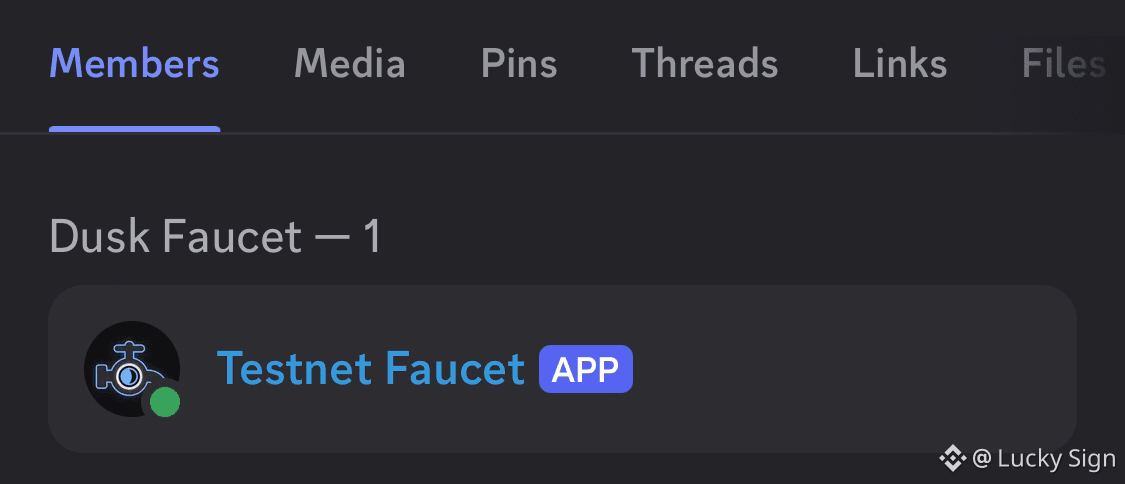
Copy your wallet address then head to DUSK discord server and find the Testnet Faucet BOT on the member tab.
Send a message to it [!dusk] and just paste your wallet address.
What to expect next? A testnet AIRDROP :)
All I can say just build and build more.
Maybe something big coming.
Remember NFA & DYOR
DuskEVM Testnet started so the Mainnet is near. You can now deploy a solidity contract, but first let's get the testnet token.
I suggest you use the testnet web wallet.
Copy your wallet address then head to DUSK discord server and find the Testnet Faucet BOT on the member tab.
Send a message to it [!dusk] and just paste your wallet address.
What to expect next? A testnet AIRDROP :)
All I can say just build and build more.
Maybe something big coming.
Remember NFA & DYOR
翻訳参照
Why Wrapped RWA Tokens Are NGMI
I’ve spent a lot of time digging into how TradFi mixes with crypto, and honestly, most RWA projects right now are extremely mid. Everyone boasts about tokenization, but they are usually just slapping a shiny digital wrapper on an off-chain asset. The actual source of truth still sits in an old-school legacy registry, forcing everyone into reconciliation hell. Dusk is taking a completely different route to cook up a real solution.
The Problem with Current RWA
Institutional whales hit the same two dealbreakers when going on-chain:
The Glasshouse Problem: Public chains expose wallet balances, trades, and alpha to every degen on the internet. Big funds cannot afford to get front-run like that.
The Ghost Town Dilemma: Private chains offer privacy, but isolate assets in a walled garden with zero shared liquidity.
Settling for synthetic wrappers where off-chain entities hold all the real power is definitely ngmi long term.
How Dusk Flips the Script
Dusk builds compliance and privacy directly into its base layer:
Native On-Chain Issuance: Assets are born directly on-chain. Dividends, voting, and transfer rules run natively without off-chain registries.
Selective Disclosure: Powered by ZK-proofs, you keep balances private from the public while showing compliance receipts when regulators pull up.
Dev Flexibility: Builders get DuskEVM for Solidity tools and DuskVM for high-performance Rust/WASM code directly on L1.
Instant Finality: DuskDS consensus delivers deterministic settlement without scary re-org risks.
Public chains are too transparent for real institutional players, and private chains are too isolated for global liquidity. Dusk hits the sweet spot with native assets and auditor-friendly ZK privacy. This is a gigabrain blueprint for bringing financial infrastructure on-chain. Obviously NFA, so DYOR, but Dusk is building something serious. LFG.
#dusk $DUSK @Dusk
I’ve spent a lot of time digging into how TradFi mixes with crypto, and honestly, most RWA projects right now are extremely mid. Everyone boasts about tokenization, but they are usually just slapping a shiny digital wrapper on an off-chain asset. The actual source of truth still sits in an old-school legacy registry, forcing everyone into reconciliation hell. Dusk is taking a completely different route to cook up a real solution.
The Problem with Current RWA
Institutional whales hit the same two dealbreakers when going on-chain:
The Glasshouse Problem: Public chains expose wallet balances, trades, and alpha to every degen on the internet. Big funds cannot afford to get front-run like that.
The Ghost Town Dilemma: Private chains offer privacy, but isolate assets in a walled garden with zero shared liquidity.
Settling for synthetic wrappers where off-chain entities hold all the real power is definitely ngmi long term.
How Dusk Flips the Script
Dusk builds compliance and privacy directly into its base layer:
Native On-Chain Issuance: Assets are born directly on-chain. Dividends, voting, and transfer rules run natively without off-chain registries.
Selective Disclosure: Powered by ZK-proofs, you keep balances private from the public while showing compliance receipts when regulators pull up.
Dev Flexibility: Builders get DuskEVM for Solidity tools and DuskVM for high-performance Rust/WASM code directly on L1.
Instant Finality: DuskDS consensus delivers deterministic settlement without scary re-org risks.
Public chains are too transparent for real institutional players, and private chains are too isolated for global liquidity. Dusk hits the sweet spot with native assets and auditor-friendly ZK privacy. This is a gigabrain blueprint for bringing financial infrastructure on-chain. Obviously NFA, so DYOR, but Dusk is building something serious. LFG.
#dusk $DUSK @Dusk
ログインして、さらにコンテンツを読む