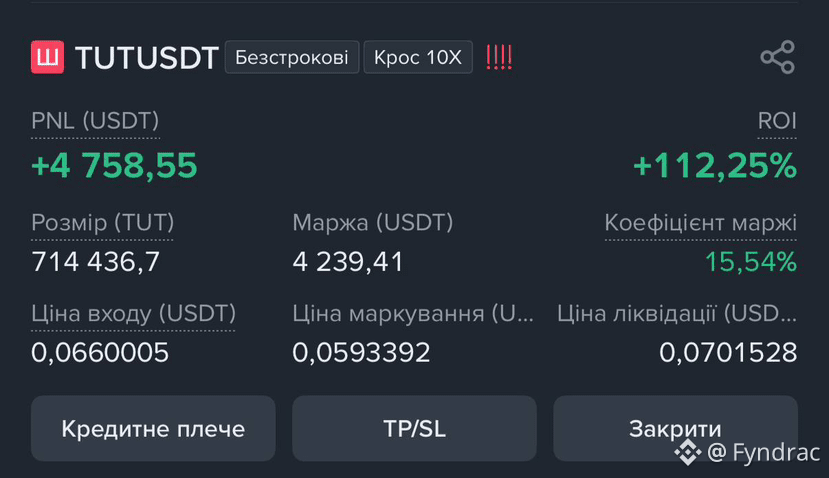
I’ve been thinking about luck a lot lately. Not in the “manifest it and everything will work out” kind of way. More in the practical sense: how much of success is actually under our control, and how much depends on being in the right place at the right time. This feels especially obvious in crypto and business. People like clean stories. Someone becomes successful, and later the explanation is usually simple: they worked harder, they were smarter, they took more risks. Maybe. But sometimes they also just got lucky. And I don’t think admitting that makes their success less real. Luck in crypto is impossible to ignore Crypto is probably one of the clearest examples. Two people can spend the same amount of time researching, take similar risks, and still end up with completely different results because they entered the market at different moments. One person finds a project early, before anyone talks about it. Another finds it after it already did 20x. The first person can look like a genius afterwards, even if the original decision was partly random. Maybe he saw one tweet. Maybe someone mentioned the token in a private chat. Maybe he was just exploring the right ecosystem that week. That doesn’t mean skill is useless. If you understand markets better, manage risk and know how to research, you obviously improve your chances. But there is still a huge difference between improving your chances and controlling the outcome. You can do everything “correctly” and still lose money. You can also make a pretty average decision and accidentally catch one of the best trades of the year. That part makes people uncomfortable, because we want success to be predictable. It isn’t. Business has the same problem Business is a little less obvious, but the same thing happens there. You can create a great product when nobody needs it yet. You can create an average product exactly when demand suddenly appears. You can work on something for a year and struggle to get users, then one person with the right audience mentions it and everything changes. Or the opposite can happen. A competitor launches first. Regulation changes. A payment provider blocks your region. The market collapses right when you need funding. A potential investor loses interest for reasons that have nothing to do with you. A lot of business success depends on things you can influence, but not fully control. That’s why I don’t really believe in: Hard work = success For me it looks more like: skill × work × timing × environment × attempts × luck And the annoying part is that you can be strong in almost everything and still get destroyed by one bad variable. Where you live changes how much luck you need This part is probably discussed even less. Your country is basically one of the first random things that happens to you. You don’t choose it. But it can affect almost everything that comes later. Imagine two people building the same online business. One lives somewhere with easy banking, stable laws, access to Stripe, good infrastructure, investors nearby and a passport that allows them to travel almost anywhere. The other lives somewhere with banking restrictions, unstable regulations, visa problems, weaker salaries and limited access to international services. They can be equally talented. They can work equally hard. But they are not starting from the same position. One person can spend most of his energy building the product. The other might first need to figure out how to receive payments, how to register a company abroad, how to travel, how to move money legally, or how to access services that are simply unavailable in his country. That doesn’t mean success is impossible. It means the margin for bad luck becomes smaller. If your starting environment is already difficult, you often need more things to go right just to reach the same starting line as someone else. That is a form of luck too. Can you succeed without luck? I don’t think you can completely remove it. There will always be randomness. But I think you can make yourself less dependent on it. The biggest mistake is needing one specific thing to work. One startup. One token. One investor. One client. One connection. If your entire future depends on one outcome, then luck controls almost everything. But if you keep creating good attempts, the situation changes. Build more things. Talk to more people. Test ideas faster. Publish your work. Learn skills that are useful in different markets. Keep enough money to survive mistakes. Stay around long enough to see more opportunities. You still need luck. But now you’re giving it more chances to happen. That’s probably the biggest difference. You cannot force a good opportunity to appear. But you can make sure you are still there when it does. Can effort compensate for bad luck? Sometimes. But not always in a fair way. If someone starts with money, good connections, a strong passport and a stable environment, you might need much more effort to reach the same position. Not 10% more. Maybe 3x more. Maybe 10x more attempts. That sounds harsh, but I think it’s closer to reality than pretending everyone starts equally. At the same time, effort has one thing going for it: it compounds. A failed project can teach you sales. Another one can teach you distribution. Another one can introduce you to someone important. Another one can show you which market you actually understand. Eventually one project works. From the outside, people usually only notice the one that worked. Then they say: “Wow, he got lucky.” And maybe he did. But they didn’t see the five years of failed attempts that made that lucky moment possible. Maybe luck is not something you wait for I don’t think success is fully controllable. And I don’t think pretending otherwise is useful. Some people genuinely get better timing. Some people are born into better environments. Some people meet the right person at the perfect moment. That happens. But there is still a difference between waiting for luck and building a life where luck has more opportunities to reach you. You can’t control which project works. You can control how many serious projects you try. You can’t control whether someone important notices your work. You can control whether your work is visible. You can’t control market cycles. You can control whether you survive long enough to experience another one. So maybe the goal isn’t to become “lucky.” Maybe the goal is to need less luck every year. More skills. More experience. More connections. More capital. More attempts. Luck will always be there. You just don’t want it to be the only thing keeping you alive. And if I had to reduce the whole idea to one sentence, it would probably be this: You can’t control the roll, but you can earn more chances to roll the dice. #Luck #Success #Crypto #Entrepreneurs #Business