

FIO Protocol
746 投稿

FIO Protocol
 厳選トピック確認済+
報告
ユーザーをブロック
Own your identity in web3 with FIO Domains & Handles. Interoperable with all blockchains and wallets. Get your web3 Identity. 👉 http://fioprotocol.io
2 フォロー
5.2K+ フォロワー
3.8K+ いいね
投稿
すべて
引用
動画
·
--

記事
翻訳参照
Meet Metakse Ghambaryan: the Armenian Stock Exchange’s Crypto Lead Joins the FIO BoardA jump from iGaming into running a crypto exchange, a foundation that teaches a country Web3, and a national stock exchange building a digital asset program. The newest member of the FIO Board works at the one place traditional finance and Web3 actually meet.
Metakse Ghambaryan has been elected to the FIO Board of Directors. She is Crypto Project Lead at the Armenian Stock Exchange, where she runs strategy for the digital asset program, and Director of the Web3 Armenia Foundation.
Her argument for FIO is not about technology. It is about who gets left out when the technology is hard to explain.
From iGaming to the head of a crypto exchange
She arrived in Web3 about six years ago, by an unlikely route.
“I’ve got into this field with an interesting jump from iGaming to Web3 around six years ago. I’ve been promoted to head of a crypto exchange, which was a Chinese crypto exchange but Dubai based.”
What she found there was an information vacuum. Nobody could tell her what Web3 was, so she went and found out, and the search changed how she understood her own profession.
“As a marketer, I got to understand that it is very, very different from what is marketing for crypto and what is marketing overall. This is community building. You have to be 24/7 available for everyone and answer the same question till this day: what is Web3.”
That question, asked over and over by people arriving for the first time, is the thread running through everything she has done since.
Teaching a country
The answer she settled on was education at scale, which is what the Web3 Armenia Foundation does. She is its director.
The work is less glamorous than the word Web3 suggests. It means sitting down with the government, with universities, with crypto exchanges operating physically in the country, and with the international companies arriving in Armenia and needing an introduction to the local network. Alongside that run speaker programs, podcasts, and television appearances, all of them repeating the same patient explanation.
Armenia is further along this road than most people outside the region realize. A country that produces engineers, hosts a Web3 degree program, and is now putting digital assets onto its national exchange is not a minor participant.
The call back
She was working in Uzbekistan, for another crypto exchange, when Armenia called her home.
“I got headhunted back to Armenia to work on our infrastructure.”
The job at the Armenian Stock Exchange is strategy for the digital asset program, and she is clear that the first phase of it looks a lot like the foundation work.
“There is a lot of education here too, because I need my colleagues to understand what is Web3, what is crypto first, and then move to execution part.”
An exchange is a careful institution by design. Bringing one onto blockchain rails is not primarily an engineering problem, and she treats it as a teaching problem first.
Where the two sides meet
That position, between a national exchange and the Web3 community, gives her a clear view of a convergence most people only talk about.
“The next page is fintech getting into tokenization, fintech getting into stablecoins. The borderless idea of Web3 is becoming something that the banks are adopting at the moment.”
She is unsentimental about how differently the two sides think, and unusually direct about what follows from that.
“There is a lot of different mindset between us and the other industry. But as for me, I believe that the future is in the middle. The future is in the dialogue, and the innovation is there. If we keep pushing one side or the other side, we’re going nowhere.”
That is a notable thing for a board member of an onchain naming protocol to say, and it is the reason her appointment matters. The people who will use this technology at scale are not going to arrive through either camp’s front door.
Why FIO
Her test for a project is whether it fills a gap rather than adding another option.
“I’ve always been passionate about working and joining and being a part of projects that are the missing parts of the infrastructure.”
FIO qualifies, by her reading, because it removes the part of crypto that cannot be taught away.
“When you have projects like FIO that bring you this kind of sentence, you just write your handle and all the information is right there. It’s on one infrastructural piece and you have it all. This is very easy for me to get people to understand.”
That last clause is the whole case. Her job is explaining this technology to people who did not ask for it, and a FIO Handle is the rare part that needs no explaining. It is one human-readable name that resolves to a user’s real wallet addresses across supported chains, so a first send looks like typing a name rather than verifying 42 characters.
She makes the same comparison the protocol’s own material makes, arrived at independently.
“When you go to the internet, you don’t care how the domain works with the hosting. You just type in the information you need, you get it.”
And on what she is actually trying to do:
“That’s my job. I want to make Web3 real.”
What this means for holders
Your FIO Handles continue to work. Nothing about this changes what you already hold. Registration continues at app.fio.net, domains at app.fio.net/fio-domain, and FIO remains available across supported partners and exchanges.
Full board election results and vote counts are at fio.net/discover/fio-board-elections.
The long view
What Metakse brings to this board is not a technical specialism. It is a position: she sits inside a traditional financial institution that is moving onchain, and inside a foundation whose job is explaining why that is worth doing. Both roles come down to the same daily task, which is making this comprehensible to people with no reason to be patient with it.
A naming protocol is the same work in a different form.
Metakse is the latest guest on Meet the FIO Board of Directors, the series introducing the people now steering the protocol. She sat down with Wayne Marcel to talk through her route into Web3, what the Armenian Stock Exchange is building, and why the future is in the middle. Watch the episode here.
Her closing words to the community were short:
“Good luck to all of us. Let’s do it.”
Meet Metakse Ghambaryan: The Armenian Stock Exchange’s Crypto Lead Joins the FIO Board was originally published in FIO Blog on Medium, where people are continuing the conversation by highlighting and responding to this story.
Meet Metakse Ghambaryan: the Armenian Stock Exchange’s Crypto Lead Joins the FIO Board
A jump from iGaming into running a crypto exchange, a foundation that teaches a country Web3, and a national stock exchange building a digital asset program. The newest member of the FIO Board works at the one place traditional finance and Web3 actually meet.
Metakse Ghambaryan has been elected to the FIO Board of Directors. She is Crypto Project Lead at the Armenian Stock Exchange, where she runs strategy for the digital asset program, and Director of the Web3 Armenia Foundation.
Her argument for FIO is not about technology. It is about who gets left out when the technology is hard to explain.
From iGaming to the head of a crypto exchange
She arrived in Web3 about six years ago, by an unlikely route.
“I’ve got into this field with an interesting jump from iGaming to Web3 around six years ago. I’ve been promoted to head of a crypto exchange, which was a Chinese crypto exchange but Dubai based.”
What she found there was an information vacuum. Nobody could tell her what Web3 was, so she went and found out, and the search changed how she understood her own profession.
“As a marketer, I got to understand that it is very, very different from what is marketing for crypto and what is marketing overall. This is community building. You have to be 24/7 available for everyone and answer the same question till this day: what is Web3.”
That question, asked over and over by people arriving for the first time, is the thread running through everything she has done since.
Teaching a country
The answer she settled on was education at scale, which is what the Web3 Armenia Foundation does. She is its director.
The work is less glamorous than the word Web3 suggests. It means sitting down with the government, with universities, with crypto exchanges operating physically in the country, and with the international companies arriving in Armenia and needing an introduction to the local network. Alongside that run speaker programs, podcasts, and television appearances, all of them repeating the same patient explanation.
Armenia is further along this road than most people outside the region realize. A country that produces engineers, hosts a Web3 degree program, and is now putting digital assets onto its national exchange is not a minor participant.
The call back
She was working in Uzbekistan, for another crypto exchange, when Armenia called her home.
“I got headhunted back to Armenia to work on our infrastructure.”
The job at the Armenian Stock Exchange is strategy for the digital asset program, and she is clear that the first phase of it looks a lot like the foundation work.
“There is a lot of education here too, because I need my colleagues to understand what is Web3, what is crypto first, and then move to execution part.”
An exchange is a careful institution by design. Bringing one onto blockchain rails is not primarily an engineering problem, and she treats it as a teaching problem first.
Where the two sides meet
That position, between a national exchange and the Web3 community, gives her a clear view of a convergence most people only talk about.
“The next page is fintech getting into tokenization, fintech getting into stablecoins. The borderless idea of Web3 is becoming something that the banks are adopting at the moment.”
She is unsentimental about how differently the two sides think, and unusually direct about what follows from that.
“There is a lot of different mindset between us and the other industry. But as for me, I believe that the future is in the middle. The future is in the dialogue, and the innovation is there. If we keep pushing one side or the other side, we’re going nowhere.”
That is a notable thing for a board member of an onchain naming protocol to say, and it is the reason her appointment matters. The people who will use this technology at scale are not going to arrive through either camp’s front door.
Why FIO
Her test for a project is whether it fills a gap rather than adding another option.
“I’ve always been passionate about working and joining and being a part of projects that are the missing parts of the infrastructure.”
FIO qualifies, by her reading, because it removes the part of crypto that cannot be taught away.
“When you have projects like FIO that bring you this kind of sentence, you just write your handle and all the information is right there. It’s on one infrastructural piece and you have it all. This is very easy for me to get people to understand.”
That last clause is the whole case. Her job is explaining this technology to people who did not ask for it, and a FIO Handle is the rare part that needs no explaining. It is one human-readable name that resolves to a user’s real wallet addresses across supported chains, so a first send looks like typing a name rather than verifying 42 characters.
She makes the same comparison the protocol’s own material makes, arrived at independently.
“When you go to the internet, you don’t care how the domain works with the hosting. You just type in the information you need, you get it.”
And on what she is actually trying to do:
“That’s my job. I want to make Web3 real.”
What this means for holders
Your FIO Handles continue to work. Nothing about this changes what you already hold. Registration continues at app.fio.net, domains at app.fio.net/fio-domain, and FIO remains available across supported partners and exchanges.
Full board election results and vote counts are at fio.net/discover/fio-board-elections.
The long view
What Metakse brings to this board is not a technical specialism. It is a position: she sits inside a traditional financial institution that is moving onchain, and inside a foundation whose job is explaining why that is worth doing. Both roles come down to the same daily task, which is making this comprehensible to people with no reason to be patient with it.
A naming protocol is the same work in a different form.
Metakse is the latest guest on Meet the FIO Board of Directors, the series introducing the people now steering the protocol. She sat down with Wayne Marcel to talk through her route into Web3, what the Armenian Stock Exchange is building, and why the future is in the middle. Watch the episode here.
Her closing words to the community were short:
“Good luck to all of us. Let’s do it.”
Meet Metakse Ghambaryan: The Armenian Stock Exchange’s Crypto Lead Joins the FIO Board was originally published in FIO Blog on Medium, where people are continuing the conversation by highlighting and responding to this story.
104
·
--

記事
Sipan Vardanyanに聞く:FIO新理事会に加わったセキュリティのベテラン13歳で立ち上げたインターネットサービスプロバイダー、離れることになった銀行のセキュリティ職、そしてWeb3で最も多忙な攻撃的セキュリティ企業の一つ。FIO理事会の新メンバーは、セキュリティと使いやすさは別々の問題ではなく、一つの問題だと主張します。
Sipan VardanyanがFIO理事会に選出されました。彼は、主要なプロトコルや中央集権型取引所、ブロックチェーン全体、そしてそれらを支える暗号技術を扱うセキュリティ企業Hexensの共同創業者兼CEOです。それ以前は銀行の防御に携わり、最高情報セキュリティ責任者を務めました。
Sipan Vardanyanに聞く:FIO新理事会に加わったセキュリティのベテラン
13歳で立ち上げたインターネットサービスプロバイダー、離れることになった銀行のセキュリティ職、そしてWeb3で最も多忙な攻撃的セキュリティ企業の一つ。FIO理事会の新メンバーは、セキュリティと使いやすさは別々の問題ではなく、一つの問題だと主張します。
Sipan VardanyanがFIO理事会に選出されました。彼は、主要なプロトコルや中央集権型取引所、ブロックチェーン全体、そしてそれらを支える暗号技術を扱うセキュリティ企業Hexensの共同創業者兼CEOです。それ以前は銀行の防御に携わり、最高情報セキュリティ責任者を務めました。
Sipan VardanyanがFIO理事会に選出されました。彼は、主要なプロトコルや中央集権型取引所、ブロックチェーン全体、そしてそれらを支える暗号技術を扱うセキュリティ企業Hexensの共同創業者兼CEOです。それ以前は銀行の防御に携わり、最高情報セキュリティ責任者を務めました。
196
·
--

記事
Atom WalletsでFIO Handleの登録が開始 Atom Walletsを離れずにFIO Handleを取得
FIO Handleの登録が開始され、今年初めにお知らせした統合が完了しました。
Atom WalletsにFIO Protocolが統合されたことで、ユーザーは長いブロックチェーンアドレスの代わりに、FIO Handle宛てにすぐ暗号資産を送れるようになりました。その際、ハンドルの登録機能も近日公開とお知らせしていました。
ついに登場しました。Atom Walletsのユーザーは、アプリ内で@atomドメインの自分専用FIO Handleを作成し、保有するすべてのブロックチェーンアドレスに紐付けられるようになりました。
ひとつの名前で、対応するすべてのチェーンに。アドレスをコピーする必要はもうありません。
Atom WalletsでFIO Handleの登録が開始
Atom Walletsを離れずにFIO Handleを取得
FIO Handleの登録が開始され、今年初めにお知らせした統合が完了しました。
Atom WalletsにFIO Protocolが統合されたことで、ユーザーは長いブロックチェーンアドレスの代わりに、FIO Handle宛てにすぐ暗号資産を送れるようになりました。その際、ハンドルの登録機能も近日公開とお知らせしていました。
ついに登場しました。Atom Walletsのユーザーは、アプリ内で@atomドメインの自分専用FIO Handleを作成し、保有するすべてのブロックチェーンアドレスに紐付けられるようになりました。
ひとつの名前で、対応するすべてのチェーンに。アドレスをコピーする必要はもうありません。
185
·
--

記事
Artyom Harutyunyan氏をご紹介:FIOの新たな章を担う共同創設者兼取締役暗号学の博士号、Web3に特化したエンジニアリング企業、そして世界で唯一のWeb3学士課程。FIOの技術面と戦略面の方向性を担う人物をご紹介します。
2026年8月16日、FIOトークン保有者が投票に臨んだのは、取締役会の9つの席を埋めるためだけではありません。彼らは、運営の引き継ぎを承認したのです。
Artyom Harutyunyan氏はFIO取締役会に選出され、新たな運営体制の共同創設者として、プロトコルを次の段階へと導く役割を担います。法務・規制対応を担当するVardan Khachatryan氏、プロダクト・成長を担当するNarek Gevorgyan氏とともに、Web3 Armenia Foundationの共同創設者でもある3人が、FIOの次なるフェーズを支えます。Artyom氏は技術面および戦略面の方向性を主導します。
Artyom Harutyunyan氏をご紹介:FIOの新たな章を担う共同創設者兼取締役
暗号学の博士号、Web3に特化したエンジニアリング企業、そして世界で唯一のWeb3学士課程。FIOの技術面と戦略面の方向性を担う人物をご紹介します。
2026年8月16日、FIOトークン保有者が投票に臨んだのは、取締役会の9つの席を埋めるためだけではありません。彼らは、運営の引き継ぎを承認したのです。
Artyom Harutyunyan氏はFIO取締役会に選出され、新たな運営体制の共同創設者として、プロトコルを次の段階へと導く役割を担います。法務・規制対応を担当するVardan Khachatryan氏、プロダクト・成長を担当するNarek Gevorgyan氏とともに、Web3 Armenia Foundationの共同創設者でもある3人が、FIOの次なるフェーズを支えます。Artyom氏は技術面および戦略面の方向性を主導します。
2026年8月16日、FIOトークン保有者が投票に臨んだのは、取締役会の9つの席を埋めるためだけではありません。彼らは、運営の引き継ぎを承認したのです。
Artyom Harutyunyan氏はFIO取締役会に選出され、新たな運営体制の共同創設者として、プロトコルを次の段階へと導く役割を担います。法務・規制対応を担当するVardan Khachatryan氏、プロダクト・成長を担当するNarek Gevorgyan氏とともに、Web3 Armenia Foundationの共同創設者でもある3人が、FIOの次なるフェーズを支えます。Artyom氏は技術面および戦略面の方向性を主導します。
1
226
·
--

記事
FIOの次の章:新しい体制、新しいチェーン、そしてそれがあなたにとって何を意味するかコミュニティアップデート
最後のひと押しは、FIOの歴史の中でも最も大きなものの一つでした――ミッションが変わったからではなく、それを前に進める人々と技術が新しい時代へ踏み出しているからです。もしあなたがFIO Handleを保有していたり、しばらくプロトコルを追っていたりするなら、何が起きているのか、そしてそれがあなたにとって何を意味するのかを、わかりやすく、誇張のない形でお伝えします。
新しい体制
FIOの次のフェーズは新しいチームがリードします。拠点となるのはWeb3 Armenia Foundationで、共同創業者のアルティョム・ハルチュニャン、ヴァルダン・ハチャトゥリャン、ナレク・ゲヴォルギャンが、それぞれ技術・法務・プロダクトの方向性を推進します。
FIOの次の章:新しい体制、新しいチェーン、そしてそれがあなたにとって何を意味するか
コミュニティアップデート
最後のひと押しは、FIOの歴史の中でも最も大きなものの一つでした――ミッションが変わったからではなく、それを前に進める人々と技術が新しい時代へ踏み出しているからです。もしあなたがFIO Handleを保有していたり、しばらくプロトコルを追っていたりするなら、何が起きているのか、そしてそれがあなたにとって何を意味するのかを、わかりやすく、誇張のない形でお伝えします。
新しい体制
FIOの次のフェーズは新しいチームがリードします。拠点となるのはWeb3 Armenia Foundationで、共同創業者のアルティョム・ハルチュニャン、ヴァルダン・ハチャトゥリャン、ナレク・ゲヴォルギャンが、それぞれ技術・法務・プロダクトの方向性を推進します。
2
2
273
·
--
🔔 重要なお知らせ
FIO財団は正式にFIOプロトコルの完全な管理をコミュニティに移行します。
財団は常に足場であり、エコシステムが整った時に取り壊されるために作られていました。その時が来ました。🧵
詳しくはこちら:
https://medium.com/fio-blog/a-new-chapter-for-fio-the-protocol-transitions-to-community-stewardship-d43414678e3e
🔔 重要なお知らせ
FIO財団は正式にFIOプロトコルの完全な管理をコミュニティに移行します。
財団は常に足場であり、エコシステムが整った時に取り壊されるために作られていました。その時が来ました。🧵
詳しくはこちら:
https://medium.com/fio-blog/a-new-chapter-for-fio-the-protocol-transitions-to-community-stewardship-d43414678e3e
FIO財団は正式にFIOプロトコルの完全な管理をコミュニティに移行します。
財団は常に足場であり、エコシステムが整った時に取り壊されるために作られていました。その時が来ました。🧵
詳しくはこちら:
https://medium.com/fio-blog/a-new-chapter-for-fio-the-protocol-transitions-to-community-stewardship-d43414678e3e
4
5
1.6k
·
--

記事
FIOの新しい章:プロトコルがコミュニティ管理に移行何年もの構築、統合、教育、そして提唱を経て、FIO財団は正式にFIOプロトコルの完全な管理権を財団からFIOコミュニティに移行しています。
FIO財団は初日からプロトコルを運営、管理、制御するために設立されたのではなく、エコシステムが自立できるまでの成長を促進するために存在していました。その時が来ました。財団は後退し、コミュニティ、ブロックプロデューサー、統合者、開発者、そしてトークン保有者がプロトコルの恒久的な管理者として前に出ることができるようにします。
FIOの新しい章:プロトコルがコミュニティ管理に移行
何年もの構築、統合、教育、そして提唱を経て、FIO財団は正式にFIOプロトコルの完全な管理権を財団からFIOコミュニティに移行しています。
FIO財団は初日からプロトコルを運営、管理、制御するために設立されたのではなく、エコシステムが自立できるまでの成長を促進するために存在していました。その時が来ました。財団は後退し、コミュニティ、ブロックプロデューサー、統合者、開発者、そしてトークン保有者がプロトコルの恒久的な管理者として前に出ることができるようにします。
FIO財団は初日からプロトコルを運営、管理、制御するために設立されたのではなく、エコシステムが自立できるまでの成長を促進するために存在していました。その時が来ました。財団は後退し、コミュニティ、ブロックプロデューサー、統合者、開発者、そしてトークン保有者がプロトコルの恒久的な管理者として前に出ることができるようにします。
1
218
·
--
これを置き換えてください:
0x7a9c...4f2b
これで:
yourname@wallet
FIOハンドルを安全に確保 → app.fio.net
これを置き換えてください:
0x7a9c...4f2b
これで:
yourname@wallet
FIOハンドルを安全に確保 → app.fio.net
0x7a9c...4f2b
これで:
yourname@wallet
FIOハンドルを安全に確保 → app.fio.net
1
82
·
--
ドメインの更新を忘れて損失を出すのに疲れましたか?
50年以上のFIO登録で、設定して文字通り数十年忘れておくことができます。
あなたのクリプトアイデンティティは、何があってもあなたのものです - 🛡️
ドメインの更新を忘れて損失を出すのに疲れましたか?
50年以上のFIO登録で、設定して文字通り数十年忘れておくことができます。
あなたのクリプトアイデンティティは、何があってもあなたのものです - 🛡️
50年以上のFIO登録で、設定して文字通り数十年忘れておくことができます。
あなたのクリプトアイデンティティは、何があってもあなたのものです - 🛡️
1
453
·
--
あなたのFIOドメインは、受け継ぐことができる真のデジタル資産になります。オンチェーンで自分のレガシーを築こう。🌐
あなたのFIOドメインは、受け継ぐことができる真のデジタル資産になります。オンチェーンで自分のレガシーを築こう。🌐
3
5
653
·
--
年次更新はもうありません。期限切れの不安もありません。半世紀続く1回の登録だけです。
年次更新はもうありません。期限切れの不安もありません。半世紀続く1回の登録だけです。
FIO Protocol
·
--
💎数十年にわたってデジタルアイデンティティを所有しましょう。
FIOドメインは現在、50年以上の登録が可能で、あなたの暗号名を世代を超えて安全に保ちます。
今日あなたのものを請求し、更新を忘れましょう: app.fio.net/fio-domain
FIOドメインは現在、50年以上の登録が可能で、あなたの暗号名を世代を超えて安全に保ちます。
今日あなたのものを請求し、更新を忘れましょう: app.fio.net/fio-domain

6
2
1
574
·
--
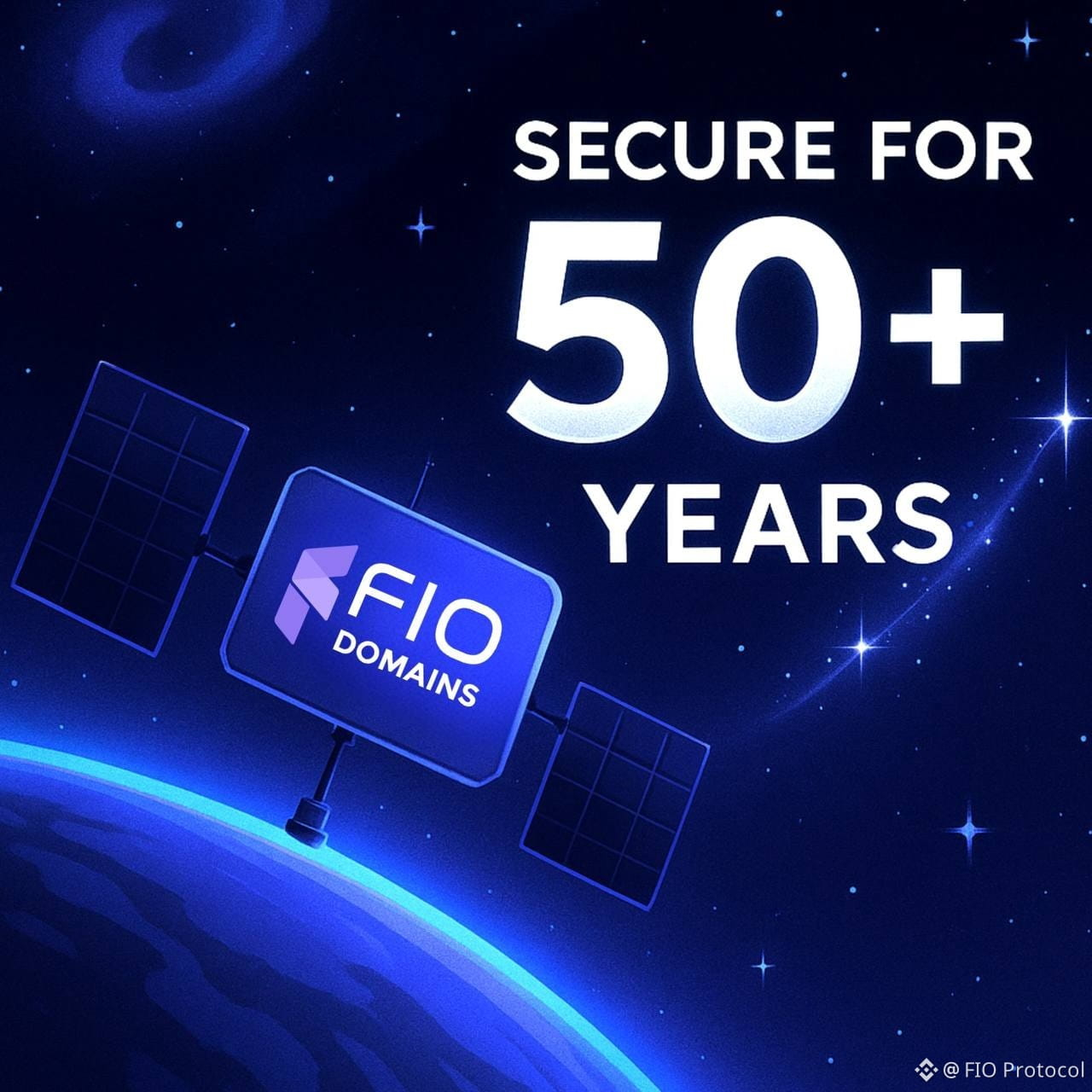
💎数十年にわたってデジタルアイデンティティを所有しましょう。
FIOドメインは現在、50年以上の登録が可能で、あなたの暗号名を世代を超えて安全に保ちます。
今日あなたのものを請求し、更新を忘れましょう: app.fio.net/fio-domain
💎数十年にわたってデジタルアイデンティティを所有しましょう。
FIOドメインは現在、50年以上の登録が可能で、あなたの暗号名を世代を超えて安全に保ちます。
今日あなたのものを請求し、更新を忘れましょう: app.fio.net/fio-domain
FIOドメインは現在、50年以上の登録が可能で、あなたの暗号名を世代を超えて安全に保ちます。
今日あなたのものを請求し、更新を忘れましょう: app.fio.net/fio-domain
3
1
1.3k
ログインして、さらにコンテンツを読む
厳選トピックで世界の暗号資産トレーダーの仲間入り
⚡️ 暗号資産に関する最新かつ有益な情報が見つかります。
💬 世界最大の暗号資産取引所から信頼されています。
👍 認証を受けたクリエイターから、有益なインサイトを得られます。
メール / 電話番号