

Dignity_B
6 投稿

Dignity_B
報告
ユーザーをブロック
17 フォロー
12 フォロワー
18 いいね
投稿
·
--
マクロ経済の基盤とデジタル資産市場のミクロ構造マクロ経済の基盤とデジタル資産市場のミクロ構造
2026年10月下旬のデジタル資産エコシステムは、マクロ流動性のシグナル、機関投資家資金の集中、規制の進展の間で、微妙な均衡を保っています。9月に暗号資産の時価総額全体が11.0%拡大して2兆9,900億ドルに達した後、市場全体の評価額は2兆7,400億ドルから2兆9,000億ドルの範囲で安定しています。資金配分の動向には機関投資家の強い参加が表れており、デジタル資産投資商品への週次資金流入額は35億5,000万ドルに達しました。これは2026年に記録された単週の流入額として最高で、世界のデジタル資産運用資産残高(AUM)は約1,730億ドルとなりました。
マクロ経済の基盤とデジタル資産市場のミクロ構造
マクロ経済の基盤とデジタル資産市場のミクロ構造
2026年10月下旬のデジタル資産エコシステムは、マクロ流動性のシグナル、機関投資家資金の集中、規制の進展の間で、微妙な均衡を保っています。9月に暗号資産の時価総額全体が11.0%拡大して2兆9,900億ドルに達した後、市場全体の評価額は2兆7,400億ドルから2兆9,000億ドルの範囲で安定しています。資金配分の動向には機関投資家の強い参加が表れており、デジタル資産投資商品への週次資金流入額は35億5,000万ドルに達しました。これは2026年に記録された単週の流入額として最高で、世界のデジタル資産運用資産残高(AUM)は約1,730億ドルとなりました。
2026年10月下旬のデジタル資産エコシステムは、マクロ流動性のシグナル、機関投資家資金の集中、規制の進展の間で、微妙な均衡を保っています。9月に暗号資産の時価総額全体が11.0%拡大して2兆9,900億ドルに達した後、市場全体の評価額は2兆7,400億ドルから2兆9,000億ドルの範囲で安定しています。資金配分の動向には機関投資家の強い参加が表れており、デジタル資産投資商品への週次資金流入額は35億5,000万ドルに達しました。これは2026年に記録された単週の流入額として最高で、世界のデジタル資産運用資産残高(AUM)は約1,730億ドルとなりました。
2
113
·
--
🔥 ホットコインアラート: これらの暗号通貨が急速に加熱中
暗号市場は賑わっており、少数のコインが突然注目を集めています。ソーシャルボリュームが上昇し、取引活動が急増し、ボラティリティが戻ってきました。
現在、トレーダーが注目しているホットコインは以下の通りです:
🚀 ソラナ (SOL)
ソラナは、DeFiとミームコインの活動が急増する中、再び勢いを増しています。小売トレーダーが戻ると、SOLはしばしば両方向に迅速に動きます。
⚡ イーサリアム (ETH)
イーサリアムは重要なレベル付近でプレッシャーをかけています。レイヤー2の採用が進み、機関投資家の関心が高まる中、ブレイクアウトが起こると、より広範なアルトコインの動きが引き起こされる可能性があります。
💥 XRP
規制に関するヘッドラインがXRPを巡る憶測を引き起こし続けています。重要な更新があれば、急激な価格変動を引き起こす可能性があり、最も反応の良い大手コインの一つとなっています。
🐕 ドージコイン (DOGE)
ミームの勢いを過小評価してはいけません。ソーシャルメディアの盛り上がりやインフルエンサーの注目が再びDOGEをトレンドの領域に押し上げています。
🪙 ビットコイン (BTC)
ビットコインは市場のドライバーであり続けています。BTCが決定的に動くと、ホットコインは通常、増幅されたボラティリティとともに追随します。
🚨 これが重要な理由
ホットコインは流動性を引き寄せます。流動性はボラティリティを生み出します。ボラティリティは機会とリスクを生み出します。
もし勢いが続くなら、選ばれたアルトコイン全体で急速なブレイクアウトが見られるかもしれません。しかし、センチメントが変われば、戻りも同じくらい早い可能性があります。
暗号市場は加熱しており、次の動きは爆発的なものになる可能性があります。
92
·
--
記事
翻訳参照
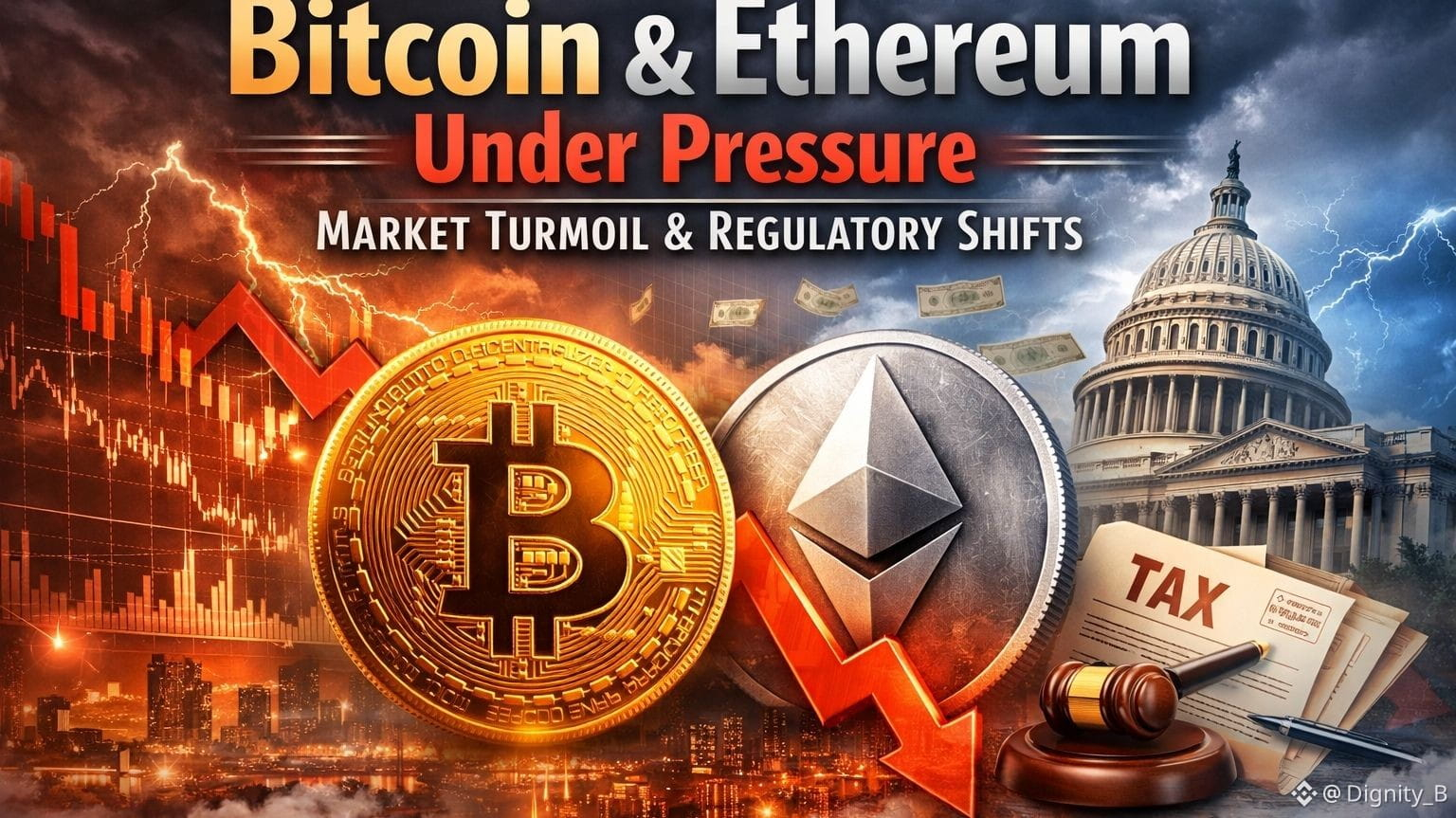
Bitcoin and Ethereum Under Pressure: Crypto Markets Prepare to Fall Under Regulatory and Macro ForceThe cryptocurrency market is at a critical stage, and Bitcoin and Ethereum are once again volatile due to macroeconomic unpredictability and increasingly restrictive regulation. Money makers are keenly monitoring price rates, institutional prediction, and policy changes that might determine the next significant move.
Market Pullback Invites Short-term Concerns.
Bitcoin has been a leader in a wider crypto market crash, pulling Ethereum and other popular digital assets with it. According to analysts at Standard Chartered, they are warning that there might be more downsides before a prolonged recovery can set in. The bank indicated that the Bitcoin might be tested with much lower levels of support, and Ethereum also might have a period of weakness and then go up to its upward momentum later in 2026.
The pullback is consistent with the general financial market caution. The robust economic statistics and inflation unpredictability in United States have decreased the risk assets such as cryptocurrencies demand among the investors. Consequently, the volume of trading has become soft in major exchanges.
Cryptocurrency exchanges, Coinbase and Robinhood, which are publicly traded have been reporting less retail activity than in the past bullish cycles, indicating a more risk-averse investor base.
Regarding the Unpredictability, Strength.
Although the market has been weak in the near-term, market analysts observe that Bitcoin and Ethereum are structurally resilient. There is continued institutional adoption and the long-term holders seem not as responsive to short-term price variations.
There is an opinion by some traders that there can be consolidation and not collapse in the current levels. The same periods of cooling momentum have been followed by new rallies in the past as macroeconomic visibility increases.
A New Landscape of Regulatory Shifts.
Regulation will emerge as an aspect of the crypto story of 2026 beyond price action.
The Commodity Futures Trading Commission (CFTC) has kept on the development of its guidance on the regulation of digital assets, which are intended to help the area understand the market structure and the protection of investors. Greater regulatory transparency can lead to a decrease in long term uncertainty although this can be accompanied by short term compliance pressure.
Concurrently, the taxation department, the Internal Revenue Service (IRS) has introduced new reporting rules that have impacted crypto traders. Such changes necessitate greater disclosure of transactions and it is an indication that digital assets have become a core part of the overall financial regulation.
This implies to the investors that compliance and tax strategy is taking and is becoming as important as technical analysis.
What Happens Next?
The crypto market is at a junction:
Short term
The volatility persists based on the macroeconomic data and investor sentiment.
Medium term
Institutional confidence may be boosted by regulatory clarity.
Long term
It can be expanded and the infrastructure can be developed to welcome future growth cycles.
Although bearish projections are taking the center stage, investment savvy investors know that crypto cycles are not linear. Contraction periods tend to lay the foundation of the upcoming expansion process.
The most important question to the readers and to the investors themselves is not whether volatility will persist, but whether this is a risky time, it is an opportunity time and both.
$BTC $ETH
#CPIWatch #WhaleDeRiskETH
Bitcoin and Ethereum Under Pressure: Crypto Markets Prepare to Fall Under Regulatory and Macro Force
The cryptocurrency market is at a critical stage, and Bitcoin and Ethereum are once again volatile due to macroeconomic unpredictability and increasingly restrictive regulation. Money makers are keenly monitoring price rates, institutional prediction, and policy changes that might determine the next significant move.
Market Pullback Invites Short-term Concerns.
Bitcoin has been a leader in a wider crypto market crash, pulling Ethereum and other popular digital assets with it. According to analysts at Standard Chartered, they are warning that there might be more downsides before a prolonged recovery can set in. The bank indicated that the Bitcoin might be tested with much lower levels of support, and Ethereum also might have a period of weakness and then go up to its upward momentum later in 2026.
The pullback is consistent with the general financial market caution. The robust economic statistics and inflation unpredictability in United States have decreased the risk assets such as cryptocurrencies demand among the investors. Consequently, the volume of trading has become soft in major exchanges.
Cryptocurrency exchanges, Coinbase and Robinhood, which are publicly traded have been reporting less retail activity than in the past bullish cycles, indicating a more risk-averse investor base.
Regarding the Unpredictability, Strength.
Although the market has been weak in the near-term, market analysts observe that Bitcoin and Ethereum are structurally resilient. There is continued institutional adoption and the long-term holders seem not as responsive to short-term price variations.
There is an opinion by some traders that there can be consolidation and not collapse in the current levels. The same periods of cooling momentum have been followed by new rallies in the past as macroeconomic visibility increases.
A New Landscape of Regulatory Shifts.
Regulation will emerge as an aspect of the crypto story of 2026 beyond price action.
The Commodity Futures Trading Commission (CFTC) has kept on the development of its guidance on the regulation of digital assets, which are intended to help the area understand the market structure and the protection of investors. Greater regulatory transparency can lead to a decrease in long term uncertainty although this can be accompanied by short term compliance pressure.
Concurrently, the taxation department, the Internal Revenue Service (IRS) has introduced new reporting rules that have impacted crypto traders. Such changes necessitate greater disclosure of transactions and it is an indication that digital assets have become a core part of the overall financial regulation.
This implies to the investors that compliance and tax strategy is taking and is becoming as important as technical analysis.
What Happens Next?
The crypto market is at a junction:
Short term
The volatility persists based on the macroeconomic data and investor sentiment.
Medium term
Institutional confidence may be boosted by regulatory clarity.
Long term
It can be expanded and the infrastructure can be developed to welcome future growth cycles.
Although bearish projections are taking the center stage, investment savvy investors know that crypto cycles are not linear. Contraction periods tend to lay the foundation of the upcoming expansion process.
The most important question to the readers and to the investors themselves is not whether volatility will persist, but whether this is a risky time, it is an opportunity time and both.
$BTC $ETH
#CPIWatch #WhaleDeRiskETH
1
15
·
--
ブリッシュ
翻訳参照
$BTC #bitcoinhalving
Potential price volatility.
the halving has historically been followed by periods of increased price volatility. This is because the event can cause uncertainty in the market, leading to fluctuations in supply and demand.
Increased mining difficulty.
as the block reward is cut in half, mining Bitcoin becomes less profitable. This can lead to an increase in mining difficulty, as miners compete for the smaller rewards.
Not a guaranteed price increase.
while the halving has coincided with price increases in the past, it's not a guaranteed outcome. The price of Bitcoin is influenced by a variety of factors, and the halving itself may not be enough to trigger a significant price increase.
It's important to do your own research and invest responsibly before making any investment decisions.
7
325
·
--
ブリッシュ
翻訳参照
#The future relationship between Nigeria and Binance remains uncertain. While both sides have expressed a willingness to work together, there are still unresolved issues.
The Nigerian Securities and Exchange Commission (SEC) banned Binance from operating in the country in February 2022. The SEC accused Binance of operating without a license and violating Nigerian regulations. Binance denied these allegations.
In recent months, there have been signs that the two sides may be willing to reconcile. In May 2023, Binance CEO Changpeng Zhao said that the company was "committed to working with regulators around the world" and that it was "open to having conversations with the SEC."
However, there is no guarantee that these talks will be successful. The SEC has not indicated whether it is willing to lift its ban on Binance. And even if the SEC does lift the ban, Binance will still need to obtain a license to operate in Nigeria.
It is possible that Nigeria and Binance will eventually reconcile. However, it is also possible that the two sides will remain at odds. Only time will tell what the future holds for their relationship.$BNB
What do you think. is nigeria and binance are going to reconcile or not anytime soon.
5
5
ログインして、さらにコンテンツを読む
厳選トピックで世界の暗号資産トレーダーの仲間入り
⚡️ 暗号資産に関する最新かつ有益な情報が見つかります。
💬 世界最大の暗号資産取引所から信頼されています。
👍 認証を受けたクリエイターから、有益なインサイトを得られます。
メール / 電話番号