Binance Square

Krypto Dragon

image
認証済みクリエイター
USD1ホルダー
USD1ホルダー
超高頻度トレーダー
4.6年
Influencer | Trader | Investor | Market Analyst | BNB Holder
55 フォロー
51.7K+ フォロワー
24.9K+ いいね
2.0K+ 共有
すべてのコンテンツ
PINNED
--
ブリッシュ
原文参照
❤️ WOW 50K 素敵なフォロワー!!♥️ 皆さんのおかげで今日は素晴らしい日になりました! 今、私は完全に幸せと感情で圧倒されています。 私のBinance Squareファミリーと共に立つ美しい人々が50,000人以上います! 皆さんの愛、サポート、そして私に提供してくれる日々のエネルギーに再度感謝します。 そして、このマイルストーンを祝うために、いくつかの無料グッズをプレゼントします!🧧 参加するには、コメントに「ドラゴン」と書くだけです!💖

❤️ WOW 50K 素敵なフォロワー!!♥️
皆さんのおかげで今日は素晴らしい日になりました!

今、私は完全に幸せと感情で圧倒されています。

私のBinance Squareファミリーと共に立つ美しい人々が50,000人以上います!

皆さんの愛、サポート、そして私に提供してくれる日々のエネルギーに再度感謝します。

そして、このマイルストーンを祝うために、いくつかの無料グッズをプレゼントします!🧧

参加するには、コメントに「ドラゴン」と書くだけです!💖
翻訳
Kite: When AI's Can Work & Pay On Their Own.Kite was made for an emerging future. That future is already beginning to arrive. In that future, machines do more than provide answers to your questions or suggestions for things to try. Machines act. Machines make decisions. Machines pay for goods and services. Machines communicate with other machines and complete projects as soon as they receive the information to do so — no longer requiring human approval at each phase. Kite is the blockchain that supports that future. All blockchains today have been developed for people. A person creates a wallet, signs a transaction, and pays another person using a blockchain. However, AI operates differently from humans. AI agents continuously run, rapidly make decisions, and interact with multiple systems simultaneously. Kite develops the foundation by creating a blockchain that enables these intelligent agents to safely transfer value, verify their identity, and execute rules programmed in code. Ultimately, Kite is a Layer 1 blockchain that is compatible with Ethereum tools, yet developed for use in real-time. Kite is able to process transactions very rapidly and inexpensively, which is important when AI agents may send many payments within a very short period of time (these are not large payments intended to be sent to individuals, but rather a series of small, rapid transfers between machines that are purchasing data, leasing computer processing capacity, or acquiring on-demand services). Another key concept that underlies Kite is the idea of identity. Most networks equate one wallet to one identity. Kite breaks this down into three distinct elements. The human operator maintains control at the highest level. At the next level, the AI agent has its own identity and limited access permissions. At the lowest level are temporary sessions in which the AI agent executes specific actions. This layered approach provides a far safer environment. For example, if something happens to go wrong during the execution of one action, it will not impact other areas of the operation. The human remains in control of the AI agent and the agent can only perform those actions that it has been granted permission to perform. This identity structure also establishes a basis for trust. Over time, each AI agent will develop a history of behavior. Other agents and applications will be able to assess the reliability of the agent based upon its past behavior, the rules that it adheres to, etc. This will enable machines to collaborate with other machines and applications without pre-existing knowledge of the collaborating entities, similar to the manner in which people collaborate in the real world. While payments are a critical element of Kite, the overall objective of Kite is coordination. AI agents operating on Kite will be able to discover available services, negotiate terms, and pay for them automatically. For example, a personal assistant agent may search for travel options, book travel arrangements, and manage changes to existing bookings without your approval being required at each phase of the process. Similarly, a business agent may place orders for supplies, pay invoices, and manage the budget of the organization without needing to require approvals at each phase. In order to facilitate all of this interaction among AI agents, Kite contains mechanisms that integrate identity, rules, and payments into a single flow. An AI agent demonstrates its identity, determines what actions are permitted, and completes a payment in a seamless fashion. This reduces the likelihood of errors and delays, thereby enabling machines to operate at the speed at which they were designed to operate. The Kite Network utilizes its own token called KITE. During the early stages of development, this token will incentivize builders and users to participate in the Kite ecosystem. The token will reward participants for their activities and assist in the development of the Kite Network. As the Kite Network grows and matures, the token will assume additional responsibilities. The KITE token will be utilized for securing the Kite Network, for paying fees associated with operations, and for voting on the direction that the Kite Network should evolve in the future. Therefore, the people who believe in the Kite Network will have the opportunity to influence the evolution of the network. What distinguishes Kite is its focus. Rather than attempting to serve every interest, Kite is focused on a singular mission: providing a responsible method for intelligent software to act in the digital economy. By focusing on this narrow mission, Kite will have the ability to develop systems that meet the requirements of AI and not force AI to function within systems that were originally developed for humans. Kite is developing a connection between intelligence and value. Kite is providing AI agents with a method of acting with intentionality, with identity, and with accountability. As artificial intelligence continues to increase in sophistication and independence, systems such as Kite may provide the invisible framework for machines to operate on behalf of humans, conduct trades for humans, and generate value 24/7. @GoKiteAI

Kite: When AI's Can Work & Pay On Their Own.

Kite was made for an emerging future. That future is already beginning to arrive. In that future, machines do more than provide answers to your questions or suggestions for things to try. Machines act. Machines make decisions. Machines pay for goods and services. Machines communicate with other machines and complete projects as soon as they receive the information to do so — no longer requiring human approval at each phase. Kite is the blockchain that supports that future.
All blockchains today have been developed for people. A person creates a wallet, signs a transaction, and pays another person using a blockchain. However, AI operates differently from humans. AI agents continuously run, rapidly make decisions, and interact with multiple systems simultaneously. Kite develops the foundation by creating a blockchain that enables these intelligent agents to safely transfer value, verify their identity, and execute rules programmed in code.
Ultimately, Kite is a Layer 1 blockchain that is compatible with Ethereum tools, yet developed for use in real-time. Kite is able to process transactions very rapidly and inexpensively, which is important when AI agents may send many payments within a very short period of time (these are not large payments intended to be sent to individuals, but rather a series of small, rapid transfers between machines that are purchasing data, leasing computer processing capacity, or acquiring on-demand services).
Another key concept that underlies Kite is the idea of identity. Most networks equate one wallet to one identity. Kite breaks this down into three distinct elements. The human operator maintains control at the highest level. At the next level, the AI agent has its own identity and limited access permissions. At the lowest level are temporary sessions in which the AI agent executes specific actions. This layered approach provides a far safer environment. For example, if something happens to go wrong during the execution of one action, it will not impact other areas of the operation. The human remains in control of the AI agent and the agent can only perform those actions that it has been granted permission to perform.
This identity structure also establishes a basis for trust. Over time, each AI agent will develop a history of behavior. Other agents and applications will be able to assess the reliability of the agent based upon its past behavior, the rules that it adheres to, etc. This will enable machines to collaborate with other machines and applications without pre-existing knowledge of the collaborating entities, similar to the manner in which people collaborate in the real world.
While payments are a critical element of Kite, the overall objective of Kite is coordination. AI agents operating on Kite will be able to discover available services, negotiate terms, and pay for them automatically. For example, a personal assistant agent may search for travel options, book travel arrangements, and manage changes to existing bookings without your approval being required at each phase of the process. Similarly, a business agent may place orders for supplies, pay invoices, and manage the budget of the organization without needing to require approvals at each phase.
In order to facilitate all of this interaction among AI agents, Kite contains mechanisms that integrate identity, rules, and payments into a single flow. An AI agent demonstrates its identity, determines what actions are permitted, and completes a payment in a seamless fashion. This reduces the likelihood of errors and delays, thereby enabling machines to operate at the speed at which they were designed to operate.
The Kite Network utilizes its own token called KITE. During the early stages of development, this token will incentivize builders and users to participate in the Kite ecosystem. The token will reward participants for their activities and assist in the development of the Kite Network. As the Kite Network grows and matures, the token will assume additional responsibilities. The KITE token will be utilized for securing the Kite Network, for paying fees associated with operations, and for voting on the direction that the Kite Network should evolve in the future. Therefore, the people who believe in the Kite Network will have the opportunity to influence the evolution of the network.
What distinguishes Kite is its focus. Rather than attempting to serve every interest, Kite is focused on a singular mission: providing a responsible method for intelligent software to act in the digital economy. By focusing on this narrow mission, Kite will have the ability to develop systems that meet the requirements of AI and not force AI to function within systems that were originally developed for humans.
Kite is developing a connection between intelligence and value. Kite is providing AI agents with a method of acting with intentionality, with identity, and with accountability. As artificial intelligence continues to increase in sophistication and independence, systems such as Kite may provide the invisible framework for machines to operate on behalf of humans, conduct trades for humans, and generate value 24/7.
@KITE AI
原文参照
🚨 今すぐ: 米国の2023年第3四半期のGDPは4.3%で、3.3%の予想を上回りました。 🇺🇸 #USGDPUpdate
🚨 今すぐ: 米国の2023年第3四半期のGDPは4.3%で、3.3%の予想を上回りました。 🇺🇸
#USGDPUpdate
原文参照
なぜ99%の人々が暗号通貨で清算されるのか?多くの人々は、自分のアカウントが「操作された」市場のために清算されたと信じています。しかし、これは物語の半分しか語っていません。真の敵は行動です。 99%の人々がすべてを失う理由は以下の通りです: レバレッジ取引への依存: 暗号通貨にいるほとんどの人は、時間をかけて少しの利益を得ることを望んでいません。代わりに、彼らは投資を瞬時に100倍にしたいと考えています。彼らは自分のアカウントの価値がすぐに上がるのを見たいと思っており、ほとんどの人がこの種の考え方が彼らにお金を失わせることを知っているにもかかわらず、それを避けるのは非常に難しいです。高いレバレッジ(例えば10倍)を使用していて、価格がわずか1%下落すると、すべてのお金を失うことになります。取引の際には、忍耐よりも規律が常に勝ります。

なぜ99%の人々が暗号通貨で清算されるのか?

多くの人々は、自分のアカウントが「操作された」市場のために清算されたと信じています。しかし、これは物語の半分しか語っていません。真の敵は行動です。
99%の人々がすべてを失う理由は以下の通りです:
レバレッジ取引への依存:
暗号通貨にいるほとんどの人は、時間をかけて少しの利益を得ることを望んでいません。代わりに、彼らは投資を瞬時に100倍にしたいと考えています。彼らは自分のアカウントの価値がすぐに上がるのを見たいと思っており、ほとんどの人がこの種の考え方が彼らにお金を失わせることを知っているにもかかわらず、それを避けるのは非常に難しいです。高いレバレッジ(例えば10倍)を使用していて、価格がわずか1%下落すると、すべてのお金を失うことになります。取引の際には、忍耐よりも規律が常に勝ります。
翻訳
Markets are eagerly awaiting the release of the U.S. Core PCE inflation data, which is the Federal Reserve's key measure of inflation; it will be published today at 7 PM IST; any surprise may have an impact on the market. $BTC $ETH $BNB
Markets are eagerly awaiting the release of the U.S. Core PCE inflation data, which is the Federal Reserve's key measure of inflation; it will be published today at 7 PM IST; any surprise may have an impact on the market.
$BTC $ETH $BNB
--
弱気相場
翻訳
Short now! $EPIC went up in each day from the 15th through the 17th for a total of three days, increasing by around 50%, after having been at a high consolidation level for four days it went up 30% on the 19th. The price today already reached that high, and there was a double top formed on the 1 hour chart at that high point. After the second top forms on the 1 hour chart, the 1 hour chart goes down continuously. This is the time to go short!
翻訳
A measured look at Falcon Finance: Holding Still While Everything Else Moves.@falcon_finance $FF #FalconFinance I did not rush into Falcon Finance; instead, I approached with a calm sense of skepticism regarding the viability of synthetic dollars, and whether this would simply be another version of a previously failed concept (i.e., Universal Collateral Framework). As someone who has witnessed multiple iterations of similar concepts unwind, I feel confident that good intentions are irrelevant, and that a design based on cooperation from markets that infrequently cooperate is fundamentally flawed. Therefore, my initial perspective was not excitement regarding the potential for significant returns, but instead a dispassionate skepticism that this could simply be another re-framed structure that has been attempted previously. My skepticism stems from observed patterns which repeat consistently. Previous DeFi systems were developed to be fast, efficient in terms of using capital, and with little tolerance for error. Collateral-to-Value ratios were minimized, liquidity was assumed to be consistent, and liquidations were viewed as an indication of a protocol's strength as opposed to a vulnerability. When volatility entered into the equation, previous systems did not adjust to absorb the increased volatility, they instead amplified the negative effects. In many instances, synthetic dollars, created to serve as a symbol of confidence in addition to the underlying assumptions, lost all value when confidence in the system was needed most. These were not outliers — they were predictable consequences. Falcon Finance approaches the same area, with a very distinct set of priorities. Users provide liquid digital assets as well as tokenized real world assets as collateral to mint USDf, an overcollateralized synthetic dollar intended to provide on-chain liquidity without compelling users to sell their collateral. The premise of the system is nearly explicitly simple. There is no intention to multiply capital or unlock previously unseen efficiencies. Instead, the system focuses on maintaining the integrity of capital, while allowing it to be used. That focus represents a paradigmatic shift from speculative reactions to something more akin to balance sheet thinking. Overcollateralization is not a supplemental element of the Falcon Finance system — it is the defining characteristic of the system. By mandating that there be excess backing, Falcon Finance intentionally sacrifices higher throughputs and faster growth in favor of resiliency. The excess backing serves as a shock absorber for the realities most systems choose to ignore — delayed data, unequal liquidity, and human hesitation under duress. Overcollateralization does not preclude failure — it merely slows the rate at which failure occurs. As opposed to failing rapidly and resulting in cascading failures, the stress experienced by the system is given time to develop gradually, where it may be addressed rather than feared. The inclusion of tokenized real-world assets further underscores the conservative nature of the Falcon Finance system. Real-world assets bring with them legal, operational, and valuation complexities that cannot be eliminated by code. Many DeFi protocols chose to exclude these complexities in favor of the clean symmetry of on-chain primitives. Falcon Finance appears to recognize that this symmetry can also represent the concentration of risk. During periods of market stress, real-world assets behave differently than digital assets, and this difference may serve as a stabilizing influence. The trade-off is friction, however, friction may be preferable to reflexivity when markets move as a single entity. Perhaps equally telling is the manner in which Falcon Finance leaves much of the decision making up to its users. There is no inherent incentive for users to remain actively engaged in the system or to push their positions to their maximum possible levels. USDf provides liquidity in the simplest form of the word — as a means to access capital when required, and not as a means to require active management. This is important as many systemic failures are social prior to being technical. When a system incentivizes its users to perform the same action at the same time, fragility becomes collective. Falcon Finance appears to be designed to minimize the opportunity for such convergence to occur. This restraint does not eliminate uncertainty. Even though synthetic dollars are inherently sensitive to prolonged downturns, during which confidence in the system may be slowly eroded versus rapidly collapsed, and even though tokenized real-world assets will face their true test in a dispute or liquidity constraint versus during normal operation — governance will ultimately face pressure to relax the standards to maintain competitiveness. Falcon Finance does not deny that these tensions exist. Rather, it appears to be premised on the notion that they will exist and that designing for durability is more important than designing for attention. When viewed from afar, Falcon Finance seems to be more of a response to what DeFi has learned to date as opposed to a vision of what DeFi may evolve into in the future. Falcon Finance is not attempting to dominate the cycle or redefine the markets. Rather, it seeks to position itself as an infrastructure that remains viable during unremarkable or challenging times — the times most systems quietly fail. Whether or not this approach is successful in the long run remains an open question. However, if DeFi is to transition from an episodic to a dependable state, it will likely be driven by systems that are willing to stand still while everything else moves.

A measured look at Falcon Finance: Holding Still While Everything Else Moves.

@Falcon Finance $FF #FalconFinance
I did not rush into Falcon Finance; instead, I approached with a calm sense of skepticism regarding the viability of synthetic dollars, and whether this would simply be another version of a previously failed concept (i.e., Universal Collateral Framework). As someone who has witnessed multiple iterations of similar concepts unwind, I feel confident that good intentions are irrelevant, and that a design based on cooperation from markets that infrequently cooperate is fundamentally flawed. Therefore, my initial perspective was not excitement regarding the potential for significant returns, but instead a dispassionate skepticism that this could simply be another re-framed structure that has been attempted previously.
My skepticism stems from observed patterns which repeat consistently. Previous DeFi systems were developed to be fast, efficient in terms of using capital, and with little tolerance for error. Collateral-to-Value ratios were minimized, liquidity was assumed to be consistent, and liquidations were viewed as an indication of a protocol's strength as opposed to a vulnerability. When volatility entered into the equation, previous systems did not adjust to absorb the increased volatility, they instead amplified the negative effects. In many instances, synthetic dollars, created to serve as a symbol of confidence in addition to the underlying assumptions, lost all value when confidence in the system was needed most. These were not outliers — they were predictable consequences.
Falcon Finance approaches the same area, with a very distinct set of priorities. Users provide liquid digital assets as well as tokenized real world assets as collateral to mint USDf, an overcollateralized synthetic dollar intended to provide on-chain liquidity without compelling users to sell their collateral. The premise of the system is nearly explicitly simple. There is no intention to multiply capital or unlock previously unseen efficiencies. Instead, the system focuses on maintaining the integrity of capital, while allowing it to be used. That focus represents a paradigmatic shift from speculative reactions to something more akin to balance sheet thinking.
Overcollateralization is not a supplemental element of the Falcon Finance system — it is the defining characteristic of the system. By mandating that there be excess backing, Falcon Finance intentionally sacrifices higher throughputs and faster growth in favor of resiliency. The excess backing serves as a shock absorber for the realities most systems choose to ignore — delayed data, unequal liquidity, and human hesitation under duress. Overcollateralization does not preclude failure — it merely slows the rate at which failure occurs. As opposed to failing rapidly and resulting in cascading failures, the stress experienced by the system is given time to develop gradually, where it may be addressed rather than feared.
The inclusion of tokenized real-world assets further underscores the conservative nature of the Falcon Finance system. Real-world assets bring with them legal, operational, and valuation complexities that cannot be eliminated by code. Many DeFi protocols chose to exclude these complexities in favor of the clean symmetry of on-chain primitives. Falcon Finance appears to recognize that this symmetry can also represent the concentration of risk. During periods of market stress, real-world assets behave differently than digital assets, and this difference may serve as a stabilizing influence. The trade-off is friction, however, friction may be preferable to reflexivity when markets move as a single entity.
Perhaps equally telling is the manner in which Falcon Finance leaves much of the decision making up to its users. There is no inherent incentive for users to remain actively engaged in the system or to push their positions to their maximum possible levels. USDf provides liquidity in the simplest form of the word — as a means to access capital when required, and not as a means to require active management. This is important as many systemic failures are social prior to being technical. When a system incentivizes its users to perform the same action at the same time, fragility becomes collective. Falcon Finance appears to be designed to minimize the opportunity for such convergence to occur.
This restraint does not eliminate uncertainty. Even though synthetic dollars are inherently sensitive to prolonged downturns, during which confidence in the system may be slowly eroded versus rapidly collapsed, and even though tokenized real-world assets will face their true test in a dispute or liquidity constraint versus during normal operation — governance will ultimately face pressure to relax the standards to maintain competitiveness. Falcon Finance does not deny that these tensions exist. Rather, it appears to be premised on the notion that they will exist and that designing for durability is more important than designing for attention.
When viewed from afar, Falcon Finance seems to be more of a response to what DeFi has learned to date as opposed to a vision of what DeFi may evolve into in the future. Falcon Finance is not attempting to dominate the cycle or redefine the markets. Rather, it seeks to position itself as an infrastructure that remains viable during unremarkable or challenging times — the times most systems quietly fail. Whether or not this approach is successful in the long run remains an open question. However, if DeFi is to transition from an episodic to a dependable state, it will likely be driven by systems that are willing to stand still while everything else moves.
翻訳
The "Real" value of KITE Coin — Going beyond hype into real-world positive change@GoKiteAI $KITE #KITE Time to change our approach regarding KITE Coin — not as another speculative investment opportunity, but as a means of creating lasting positive change. As someone who’s followed cryptocurrency since early 2017, and amidst the hype surrounding moonshot dreams and Lamborghini driving opportunities, I am excited to highlight KITE Coin — which focuses on ESG (Environmental & Social Governance) — and to bring attention to a segment of cryptocurrency investing that goes far beyond surface-level marketing. A group of environmentally conscious individuals and blockchain technology experts founded KITE Coin — in part due to their frustration with the way traditional financial institutions ignore the planet — in order to create a token that would fund green projects. A similar concept to a carbon credit — but available to all of us on the blockchain. Since its launch, KITE has dedicated a percentage of the transaction fees associated with the purchase/sale of the coin to support two separate reforestation initiatives — one in the Amazon Rainforest and the other in mangrove forests along coastlines in Asia. In a report I read last month, KITE reported that it had funded the planting of more than 50,000 trees via satellite imagery. While that sounds great — that's not simply fluff — that's quantifiable progress toward a greater goal. So, how does the average person benefit from participating in the KITE community? When you stake KITE — which earns you rewards — you’re also contributing to a Decentralized Autonomous Organization (DAO) that allows the members of the community to vote on which eco-initiatives to support. This idea blends philanthropy with profit. Given the ongoing crisis of climate change — I believe this is a compelling concept. During the 2025 COP Conference, KITE received a shout-out from a panel on Blockchain for Sustainability — a small victory — however, I believe this demonstrates that KITE has reached a level of credibility. Critics may claim that KITE is engaging in greenwashing — particularly given the high energy consumption associated with many types of cryptocurrency. However, KITE operates on a lower-carbon footprint network and uses a Proof-of-Stake consensus model, which is much more energy-efficient. The white paper outlines how the company has partnered with various offset providers to reduce the emissions generated by KITE operations. On price, the coin has remained relatively stable between $0.10-$0.12 during the past quarter, supported in large part by significant whale investments from several impact-focused funds. Regarding volatility — yes, there will be some — but at least compared to most alternative cryptocurrencies, KITE will likely experience less volatility thanks to locked liquidity and a mechanism designed to burn a portion of the coins in circulation. However, I do see challenges related to adoption. There are still millions of people living in developing countries who lack access to the technology — and/or the hardware — required to participate in the KITE ecosystem. KITE has developed targeted educational campaigns to address this issue — and have created simple-to-use applications — including a one-tap staking application via mobile phone. KITE has additional development planned for the future — including integration with Internet of Things (IoT) devices that will provide real-time environmental information — such as monitoring air quality and providing rewards to users based on their eco-friendly behaviors. To me — KITE Coin represents a new generation of cryptocurrency — one that evolves beyond speculation — and provides tangible benefits to society. And while KITE Coin is certainly not perfect — few, if any, are — I believe it is setting a precedent in how DeFi can evolve in the coming years. If you are an investor interested in both growing your portfolio — and making a positive impact on the environment — KITE Coin is worth exploring further. I personally hold a small position in KITE Coin — not for the potential profits — but for the fact that it reflects values I believe in. Are others seeing the same potential — let me know in the comments below!

The "Real" value of KITE Coin — Going beyond hype into real-world positive change

@KITE AI $KITE #KITE
Time to change our approach regarding KITE Coin — not as another speculative investment opportunity, but as a means of creating lasting positive change. As someone who’s followed cryptocurrency since early 2017, and amidst the hype surrounding moonshot dreams and Lamborghini driving opportunities, I am excited to highlight KITE Coin — which focuses on ESG (Environmental & Social Governance) — and to bring attention to a segment of cryptocurrency investing that goes far beyond surface-level marketing.
A group of environmentally conscious individuals and blockchain technology experts founded KITE Coin — in part due to their frustration with the way traditional financial institutions ignore the planet — in order to create a token that would fund green projects. A similar concept to a carbon credit — but available to all of us on the blockchain. Since its launch, KITE has dedicated a percentage of the transaction fees associated with the purchase/sale of the coin to support two separate reforestation initiatives — one in the Amazon Rainforest and the other in mangrove forests along coastlines in Asia. In a report I read last month, KITE reported that it had funded the planting of more than 50,000 trees via satellite imagery. While that sounds great — that's not simply fluff — that's quantifiable progress toward a greater goal.
So, how does the average person benefit from participating in the KITE community? When you stake KITE — which earns you rewards — you’re also contributing to a Decentralized Autonomous Organization (DAO) that allows the members of the community to vote on which eco-initiatives to support. This idea blends philanthropy with profit. Given the ongoing crisis of climate change — I believe this is a compelling concept.
During the 2025 COP Conference, KITE received a shout-out from a panel on Blockchain for Sustainability — a small victory — however, I believe this demonstrates that KITE has reached a level of credibility.
Critics may claim that KITE is engaging in greenwashing — particularly given the high energy consumption associated with many types of cryptocurrency. However, KITE operates on a lower-carbon footprint network and uses a Proof-of-Stake consensus model, which is much more energy-efficient. The white paper outlines how the company has partnered with various offset providers to reduce the emissions generated by KITE operations. On price, the coin has remained relatively stable between $0.10-$0.12 during the past quarter, supported in large part by significant whale investments from several impact-focused funds. Regarding volatility — yes, there will be some — but at least compared to most alternative cryptocurrencies, KITE will likely experience less volatility thanks to locked liquidity and a mechanism designed to burn a portion of the coins in circulation.
However, I do see challenges related to adoption. There are still millions of people living in developing countries who lack access to the technology — and/or the hardware — required to participate in the KITE ecosystem. KITE has developed targeted educational campaigns to address this issue — and have created simple-to-use applications — including a one-tap staking application via mobile phone. KITE has additional development planned for the future — including integration with Internet of Things (IoT) devices that will provide real-time environmental information — such as monitoring air quality and providing rewards to users based on their eco-friendly behaviors.
To me — KITE Coin represents a new generation of cryptocurrency — one that evolves beyond speculation — and provides tangible benefits to society. And while KITE Coin is certainly not perfect — few, if any, are — I believe it is setting a precedent in how DeFi can evolve in the coming years. If you are an investor interested in both growing your portfolio — and making a positive impact on the environment — KITE Coin is worth exploring further. I personally hold a small position in KITE Coin — not for the potential profits — but for the fact that it reflects values I believe in. Are others seeing the same potential — let me know in the comments below!
翻訳
APRO and Why It's Going to Be the Future Of All Decentralized Oracles...APRO and Why It's Going to Be the Future Of All Decentralized Oracles — The Technology, The Features, The Potentials. Hey guys, Binance Square fam! I introduced APRO in my last article, but now I want to go deeper as to why APRO — with its artificial intelligence (AI)-enhanced oracle, represented by the cryptocurrency symbol $AT — is dominating the space of decentralized oracles and blockchain-based applications (apps). It is clear APRO is much more than a traditional oracle. With modern Web3 in mind — such as decentralized finance (DeFi), real-world assets (RWAs), AI applications and prediction markets — APRO allows off-chain data to be reliably bridged to on-chain smart contracts; utilizing machine learning to find anomalies and guarantee data validity. Some of the key features that differentiate APRO from other decentralized oracles include: AI-Enhanced Validation: Through the utilization of machine learning algorithms, APRO will continuously analyze the patterns of the data in real time; if any anomalies are detected, they will alert the system prior to the data being broadcast to the blockchain. This is critical for all high-risk applications (i.e., lending protocols, AI-based trading platforms etc.) where having accurate data is paramount for making timely and correct decisions. Dual Data Models: Data Push: Each data feed node will proactively monitor and update the feeds as per established thresholds or timers — perfect for the continuous requirements of DeFi (e.g., maintaining price stability). Data Pull: For high-frequency, low-latency query requests (i.e., trading bots, dynamically changing applications that do not require constant costs), nodes will only provide on-demand access for each request. Multi-Chain Support: Apro supports over 40 different blockchains — including the Ethereum blockchain, BNB Chain, Solana and many others. There are also over 1400 different types of data feeds available for assets, indexes, and events. RWA and AI Focus: The platform provides specialized data feeds for tokenized assets (stocks, bonds, real estate, etc.) and verified data feeds for AI agents, which enables them to autonomously make on-chain decisions. Secure Architecture: The architecture combines off-chain computing with on-chain proof for both efficiency and trustworthiness. Additionally, through the use of the Oracle-as-a-Service (OaaS), Apro allows users to create their own customized data channels. In just a few months since its Token Generation Event (TGE) in October 2025 and subsequent Binance Spot listing in November (also offering HODLer airdrops), APRO has demonstrated strong momentum: High trading volumes. Growing Total Value Locked (TVL) in the various protocols that utilize APRO. Partnerships across multiple ecosystems. Apro’s tokenomics are well structured: 1 billion tokens created. Tokens allocated for: Community: Community members who participate in governance, development and marketing. Staking Rewards: Users will receive staking rewards for participating in APRO’s validation process. Ecosystem Growth: Tokens will be used to grow the Apro ecosystem. $AT is used for: Governance Voting: Voting rights are given to holders of $AT tokens to help determine the direction of Apro’s future. Node Incentives: Node operators are incentivized with $AT tokens for validating and broadcasting the data feeds. Premium Data Services: Premium data services can be purchased with $AT tokens. Investors that have backed APRO include top institutional investors such as Polychain Capital and Franklin Templeton — APRO has the credibility to expand globally. With so many bad actors in DeFi today causing millions in losses due to inaccurate data, APRO’s intelligent approach to data verification is reducing risk while opening up new avenues for the use of AI agents, such as agents negotiating agreements or Real World Assets (RWAs) settling in real-time with market information. When compared to existing, legacy oracles, APRO’s flexible architecture and AI layer will set it apart for the 2026 bull run — particularly with the explosion of RWA tokenization. Are you staking $AT or building on APRO? What has been the most significant challenge you have experienced in terms of oracle functionality in DeFi? Please drop your comments — loving the discussion! @APRO-Oracle

APRO and Why It's Going to Be the Future Of All Decentralized Oracles...

APRO and Why It's Going to Be the Future Of All Decentralized Oracles — The Technology, The Features, The Potentials.
Hey guys, Binance Square fam! I introduced APRO in my last article, but now I want to go deeper as to why APRO — with its artificial intelligence (AI)-enhanced oracle, represented by the cryptocurrency symbol $AT — is dominating the space of decentralized oracles and blockchain-based applications (apps).
It is clear APRO is much more than a traditional oracle. With modern Web3 in mind — such as decentralized finance (DeFi), real-world assets (RWAs), AI applications and prediction markets — APRO allows off-chain data to be reliably bridged to on-chain smart contracts; utilizing machine learning to find anomalies and guarantee data validity.
Some of the key features that differentiate APRO from other decentralized oracles include:
AI-Enhanced Validation: Through the utilization of machine learning algorithms, APRO will continuously analyze the patterns of the data in real time; if any anomalies are detected, they will alert the system prior to the data being broadcast to the blockchain.
This is critical for all high-risk applications (i.e., lending protocols, AI-based trading platforms etc.) where having accurate data is paramount for making timely and correct decisions.
Dual Data Models:
Data Push: Each data feed node will proactively monitor and update the feeds as per established thresholds or timers — perfect for the continuous requirements of DeFi (e.g., maintaining price stability).
Data Pull: For high-frequency, low-latency query requests (i.e., trading bots, dynamically changing applications that do not require constant costs), nodes will only provide on-demand access for each request.
Multi-Chain Support:
Apro supports over 40 different blockchains — including the Ethereum blockchain, BNB Chain, Solana and many others.
There are also over 1400 different types of data feeds available for assets, indexes, and events.
RWA and AI Focus:
The platform provides specialized data feeds for tokenized assets (stocks, bonds, real estate, etc.) and verified data feeds for AI agents, which enables them to autonomously make on-chain decisions.
Secure Architecture:
The architecture combines off-chain computing with on-chain proof for both efficiency and trustworthiness.
Additionally, through the use of the Oracle-as-a-Service (OaaS), Apro allows users to create their own customized data channels.
In just a few months since its Token Generation Event (TGE) in October 2025 and subsequent Binance Spot listing in November (also offering HODLer airdrops), APRO has demonstrated strong momentum:
High trading volumes.
Growing Total Value Locked (TVL) in the various protocols that utilize APRO.
Partnerships across multiple ecosystems.
Apro’s tokenomics are well structured:
1 billion tokens created.
Tokens allocated for:
Community: Community members who participate in governance, development and marketing.
Staking Rewards: Users will receive staking rewards for participating in APRO’s validation process.
Ecosystem Growth: Tokens will be used to grow the Apro ecosystem.
$AT is used for:
Governance Voting: Voting rights are given to holders of $AT tokens to help determine the direction of Apro’s future.
Node Incentives: Node operators are incentivized with $AT tokens for validating and broadcasting the data feeds.
Premium Data Services: Premium data services can be purchased with $AT tokens.
Investors that have backed APRO include top institutional investors such as Polychain Capital and Franklin Templeton — APRO has the credibility to expand globally.
With so many bad actors in DeFi today causing millions in losses due to inaccurate data, APRO’s intelligent approach to data verification is reducing risk while opening up new avenues for the use of AI agents, such as agents negotiating agreements or Real World Assets (RWAs) settling in real-time with market information.
When compared to existing, legacy oracles, APRO’s flexible architecture and AI layer will set it apart for the 2026 bull run — particularly with the explosion of RWA tokenization.
Are you staking $AT or building on APRO? What has been the most significant challenge you have experienced in terms of oracle functionality in DeFi? Please drop your comments — loving the discussion!
@APRO Oracle
翻訳
Liquidity to Last: Reflecting on Falcon Finance as Slow Infrastructure.Falcon Finance I didn't have a feeling of urgency when I first saw Falcon Finance cross my radar, and that lack of urgency felt intentional. While the majority of the space rewards instant gratification, being calm (especially in a space that has historically rewarded instant gratification) usually means you're naive, or you've been around long enough to understand what's happening. Since crypto's past has been filled with synthetic dollars, my intuition led me to believe there were many similarities between Falcon Finance and the other systems that came before it that "promised" to be neutral while using leverage and overly optimistic assumptions. As such, my initial interest wasn't based on believing in what Falcon Finance could unlock, but by curiosity as to if it had put as much thought into its limitations as it had into its features. The limitations of Falcon Finance matter because the previous DeFi failures weren't due to lacking innovation, but due to having too much confidence in their systems. Early protocols treated liquidity as a given, and volatility as a rare occurrence. To maximize capital efficiency, collateral ratios were reduced, while liquidation logic was optimized for speed rather than stability. When conditions changed, these systems did exactly what they were designed to do; they increased the rate of stress. Synthetic dollars became the focal point of collapse because they relied on multiple assumptions to hold simultaneously. Once one assumption failed, the entire structure followed. Falcon Finance approaches the same issue of providing a more sustainable solution by reducing its own ambitions. Users deposit liquid digital assets and/or tokenized real world assets as collateral, and receive USDf an over-collateralized synthetic dollar which provides on-chain liquidity without requiring users to liquidate their assets. This description is intentionally simple. There isn't any promise of changing the capital you use or redefining capital efficiency. It simply provides a way to access liquidity while maintaining your exposure. In a space that is trained to seek optionality, this type of simplicity stands out. Overcollateralization defines the system's demeanor. It can reduce the system's ability to grow and expand quickly, but it increases the system's tolerance for error. Price dislocations, delayed information, and uneven user behavior aren't exceptions to financial systems; they're inherent characteristics of all financial systems. By requiring excess collateral, Falcon Finance decreases the likelihood that these characteristics will result in immediate solvency issues. It chooses to sacrifice short term efficiency for long term survival, something many earlier systems refused to do until stress dictated their choices for them. In addition to providing a way to use digital assets as collateral, Falcon Finance also allows users to post tokenized real world assets as collateral. The presence of these assets introduce operational and legal complexities that many on chain systems attempt to avoid. However, the introduction of tokenized real world assets also introduces a level of diversity into the collateral pool that does not exist in purely on chain systems. During periods of extreme market stress, crypto native assets tend to move together, increasing the compounding effects of risk. By allowing users to post tokenized real world assets as collateral, Falcon Finance creates a dependency on the crypto markets behaving well at all times to maintain the integrity of the system. The price of this diversity is added complexity, and the benefit is added diversification. What is notable is how little the protocol incentivizes constant interaction with the system. There is no incentive to constantly churn positions or optimize endlessly. USDf serves as pure liquidity in the form of a tool versus a product. This affects behavior in a subtle yet significant manner. Systems that incentivize constant interaction with users tend to synchronize users' risk profiles. Systems that incentivize restraint tend to decentralize risk. Falcon Finance is designed with this distinction in mind. It would be incorrect to state that Falcon Finance is immune to failure. Synthetic dollars are still susceptible to the slow eroding of confidence during prolonged bear markets. The tokenized real world assets used as collateral will face real challenges during disputes and periods of low liquidity. Eventually, governance will be faced with pressures to relax the rules to maintain competitiveness. Falcon Finance does not purport to address these conflicts. Instead, it acknowledges them as structural aspects of the system rather than temporary inconveniences. When viewed as a whole, Falcon Finance represents a type of infrastructure that is suited for those times when the spotlight fades and only fundamentals remain. It does not promise to lead the pack during bull phases, and it may not generate enthusiasm among large numbers of users. However, it presents a conservative method of providing liquidity that focuses on sustainability as opposed to speed. If DeFi is to evolve beyond the perpetual cycles of invention and collapse, it will likely require systems that operate at a slower pace and carry more weight. Quietly, Falcon Finance appears to be the type of system designed for that purpose. @falcon_finance #FalconFinance $FF

Liquidity to Last: Reflecting on Falcon Finance as Slow Infrastructure.

Falcon Finance I didn't have a feeling of urgency when I first saw Falcon Finance cross my radar, and that lack of urgency felt intentional. While the majority of the space rewards instant gratification, being calm (especially in a space that has historically rewarded instant gratification) usually means you're naive, or you've been around long enough to understand what's happening. Since crypto's past has been filled with synthetic dollars, my intuition led me to believe there were many similarities between Falcon Finance and the other systems that came before it that "promised" to be neutral while using leverage and overly optimistic assumptions. As such, my initial interest wasn't based on believing in what Falcon Finance could unlock, but by curiosity as to if it had put as much thought into its limitations as it had into its features.
The limitations of Falcon Finance matter because the previous DeFi failures weren't due to lacking innovation, but due to having too much confidence in their systems. Early protocols treated liquidity as a given, and volatility as a rare occurrence. To maximize capital efficiency, collateral ratios were reduced, while liquidation logic was optimized for speed rather than stability. When conditions changed, these systems did exactly what they were designed to do; they increased the rate of stress. Synthetic dollars became the focal point of collapse because they relied on multiple assumptions to hold simultaneously. Once one assumption failed, the entire structure followed.
Falcon Finance approaches the same issue of providing a more sustainable solution by reducing its own ambitions. Users deposit liquid digital assets and/or tokenized real world assets as collateral, and receive USDf an over-collateralized synthetic dollar which provides on-chain liquidity without requiring users to liquidate their assets. This description is intentionally simple. There isn't any promise of changing the capital you use or redefining capital efficiency. It simply provides a way to access liquidity while maintaining your exposure. In a space that is trained to seek optionality, this type of simplicity stands out.
Overcollateralization defines the system's demeanor. It can reduce the system's ability to grow and expand quickly, but it increases the system's tolerance for error. Price dislocations, delayed information, and uneven user behavior aren't exceptions to financial systems; they're inherent characteristics of all financial systems. By requiring excess collateral, Falcon Finance decreases the likelihood that these characteristics will result in immediate solvency issues. It chooses to sacrifice short term efficiency for long term survival, something many earlier systems refused to do until stress dictated their choices for them.
In addition to providing a way to use digital assets as collateral, Falcon Finance also allows users to post tokenized real world assets as collateral. The presence of these assets introduce operational and legal complexities that many on chain systems attempt to avoid. However, the introduction of tokenized real world assets also introduces a level of diversity into the collateral pool that does not exist in purely on chain systems. During periods of extreme market stress, crypto native assets tend to move together, increasing the compounding effects of risk. By allowing users to post tokenized real world assets as collateral, Falcon Finance creates a dependency on the crypto markets behaving well at all times to maintain the integrity of the system. The price of this diversity is added complexity, and the benefit is added diversification.
What is notable is how little the protocol incentivizes constant interaction with the system. There is no incentive to constantly churn positions or optimize endlessly. USDf serves as pure liquidity in the form of a tool versus a product. This affects behavior in a subtle yet significant manner. Systems that incentivize constant interaction with users tend to synchronize users' risk profiles. Systems that incentivize restraint tend to decentralize risk. Falcon Finance is designed with this distinction in mind.
It would be incorrect to state that Falcon Finance is immune to failure. Synthetic dollars are still susceptible to the slow eroding of confidence during prolonged bear markets. The tokenized real world assets used as collateral will face real challenges during disputes and periods of low liquidity. Eventually, governance will be faced with pressures to relax the rules to maintain competitiveness. Falcon Finance does not purport to address these conflicts. Instead, it acknowledges them as structural aspects of the system rather than temporary inconveniences.
When viewed as a whole, Falcon Finance represents a type of infrastructure that is suited for those times when the spotlight fades and only fundamentals remain. It does not promise to lead the pack during bull phases, and it may not generate enthusiasm among large numbers of users. However, it presents a conservative method of providing liquidity that focuses on sustainability as opposed to speed. If DeFi is to evolve beyond the perpetual cycles of invention and collapse, it will likely require systems that operate at a slower pace and carry more weight. Quietly, Falcon Finance appears to be the type of system designed for that purpose. @Falcon Finance #FalconFinance $FF
原文参照
APRO | システム崩壊前の失敗ポイントを特定するための体系的アプローチAPROを最初に探求し始めたとき、私はオラクル空間に再発明を通じて対処する必要がある空白が存在するとは信じていませんでした。私は単に、完璧なペーパートレイル、監査された契約、妥当なインセンティブ構造、そしてクリーンに実行されたシステムに基づいてAPROを調べたかったのです。しかし、結果は現実と一貫して不一致でした。失敗としてラベル付けされるような壊滅的な出来事は発生しませんでした。わずかな不一致の蓄積があり、数字に疑問を抱かせましたが、欠陥があると特定できるものはありませんでした。その経験は、一般的な現象に発展しました。アイテムが合わないとき、それは論理が間違っているのではなく、一般的にはデータが問題です。APROは、その静かな疑念の期間中に現れました。革新的なメカニズムにもはや感銘を受けず、システムが本当に応答すべき世界を理解していることを確認することに焦点を当て始めるときです。

APRO | システム崩壊前の失敗ポイントを特定するための体系的アプローチ

APROを最初に探求し始めたとき、私はオラクル空間に再発明を通じて対処する必要がある空白が存在するとは信じていませんでした。私は単に、完璧なペーパートレイル、監査された契約、妥当なインセンティブ構造、そしてクリーンに実行されたシステムに基づいてAPROを調べたかったのです。しかし、結果は現実と一貫して不一致でした。失敗としてラベル付けされるような壊滅的な出来事は発生しませんでした。わずかな不一致の蓄積があり、数字に疑問を抱かせましたが、欠陥があると特定できるものはありませんでした。その経験は、一般的な現象に発展しました。アイテムが合わないとき、それは論理が間違っているのではなく、一般的にはデータが問題です。APROは、その静かな疑念の期間中に現れました。革新的なメカニズムにもはや感銘を受けず、システムが本当に応答すべき世界を理解していることを確認することに焦点を当て始めるときです。
翻訳
KITE Session Drift: Keep Moving, Keep Safe@GoKiteAI $KITE #KITE I first had a problem with a KITE session mess on a calm Sunday. Or so I thought it was calm. Charts were flat; the chat was loud, and our bot was going through its usual routine. Pulling data, placing tiny test orders, logging it all. Then a trade hit that none of us sent. No biggie. Still, it looked like a foot print in fresh snow. We froze. Had someone stolen the bot's login key? Did the exchange glitch? For ten or so minutes we debated back and forth. The biggest takeaway came from a junior developer who said, "Why does this key exist for weeks?" That line stuck. In cryptocurrency, we treat keys like house keys. We hide them and hope. But hope is not a plan. In the KITE stack, a session is a thin ticket a bot uses to prove it can act for a short period of time. Some people refer to it as a short-lived credential. It is simply a ticket that expires quickly. If the ticket exists for an entire day, one leak will be all it takes. The odd trade was the warning flame. We got lucky. Next time, luck may not arrive. So I became interested, a little angry, and very focused. If we can rotate traders on shifts, why not rotate the thing that allows code to trade at all? We rebuilt the process with KITE session rotation. Think of it like swapping gloves while you work. Same hands, new glove. A short-lived pass is a token that expires quickly, often in two to five minutes. A token is simply a text string that verifies you are you. Rotation means you exchange that token based on a schedule (i.e., when you want) instead of when you need to. But you cannot be sloppy. If you shut off a live token too early, you lose trades, lose fills, and fault the market. The clean way to do this is to overlap. Mint a new KITE session while the previous session is active for a brief window of time, such as twenty to forty seconds. Then stop the previous session. Next is scope. Scope refers to the limits of what the token can do. A data read token should not be allowed to send funds. A bot trading one currency pair should not have a ticket that can interact with every single coin. And the “seed” key that creates new sessions? That is the crown jewels. Store it away from the machine that runs the bot. Lock it in a secure location, or lock it in a host with strict access, so a bot break does not equate to a total wipe. Now comes the risk part, the part I care about as a market person. Attacks are not random. They cluster together. Big move days bring more phishing emails, more fake plugin installs, and more urgent DMs. That is fear turned into a crowbar. Short-lived creds provide protection because they allow a deep breach to be reduced to a short-lived gain for the attacker. As long as your rules are strong. If rotation fails twice, the bot should slow down and request assistance. If the same session token appears to come from two different net paths simultaneously, kill it immediately. If a token begins calling multiple APIs per second than the bot has ever called before, rate cap it, regardless of whether it hinders a bit. Mind the handoff, too. There are many cases of developers accidentally logging tokens. It happens. A developer puts “debug” in a script at 2 am, hits submit, and goes to bed. Then a log drain holds onto the pass for days. With KITE sessions, you reduce potential damage by reducing token lifetime and limiting how easy it is to reuse a token. Two ways to do this include adding a nonce to each call — a unique identifier used only once. You could also link a session to a node ID, so the token only works from one specific host. Not a panacea, but a solid leash. Finally, keep a clean kill switch. When the trading desk notices odd fills, you should be able to kill all live sessions with a single action. Ultimately, KITE session rotation feels like a wave, not a wall. It moves, resets, and prevents past risks from just lingering. You won't stop every attack. But you can prevent the slow, stealthy attacks that hurt the most. And when the markets get crazy, that small edge will look enormous.

KITE Session Drift: Keep Moving, Keep Safe

@KITE AI $KITE #KITE
I first had a problem with a KITE session mess on a calm Sunday. Or so I thought it was calm. Charts were flat; the chat was loud, and our bot was going through its usual routine. Pulling data, placing tiny test orders, logging it all. Then a trade hit that none of us sent. No biggie. Still, it looked like a foot print in fresh snow. We froze. Had someone stolen the bot's login key? Did the exchange glitch? For ten or so minutes we debated back and forth. The biggest takeaway came from a junior developer who said, "Why does this key exist for weeks?" That line stuck. In cryptocurrency, we treat keys like house keys. We hide them and hope. But hope is not a plan. In the KITE stack, a session is a thin ticket a bot uses to prove it can act for a short period of time. Some people refer to it as a short-lived credential. It is simply a ticket that expires quickly. If the ticket exists for an entire day, one leak will be all it takes. The odd trade was the warning flame. We got lucky. Next time, luck may not arrive. So I became interested, a little angry, and very focused. If we can rotate traders on shifts, why not rotate the thing that allows code to trade at all? We rebuilt the process with KITE session rotation. Think of it like swapping gloves while you work. Same hands, new glove. A short-lived pass is a token that expires quickly, often in two to five minutes. A token is simply a text string that verifies you are you. Rotation means you exchange that token based on a schedule (i.e., when you want) instead of when you need to. But you cannot be sloppy. If you shut off a live token too early, you lose trades, lose fills, and fault the market. The clean way to do this is to overlap. Mint a new KITE session while the previous session is active for a brief window of time, such as twenty to forty seconds. Then stop the previous session. Next is scope. Scope refers to the limits of what the token can do. A data read token should not be allowed to send funds. A bot trading one currency pair should not have a ticket that can interact with every single coin. And the “seed” key that creates new sessions? That is the crown jewels. Store it away from the machine that runs the bot. Lock it in a secure location, or lock it in a host with strict access, so a bot break does not equate to a total wipe. Now comes the risk part, the part I care about as a market person. Attacks are not random. They cluster together. Big move days bring more phishing emails, more fake plugin installs, and more urgent DMs. That is fear turned into a crowbar. Short-lived creds provide protection because they allow a deep breach to be reduced to a short-lived gain for the attacker. As long as your rules are strong. If rotation fails twice, the bot should slow down and request assistance. If the same session token appears to come from two different net paths simultaneously, kill it immediately. If a token begins calling multiple APIs per second than the bot has ever called before, rate cap it, regardless of whether it hinders a bit. Mind the handoff, too. There are many cases of developers accidentally logging tokens. It happens. A developer puts “debug” in a script at 2 am, hits submit, and goes to bed. Then a log drain holds onto the pass for days. With KITE sessions, you reduce potential damage by reducing token lifetime and limiting how easy it is to reuse a token. Two ways to do this include adding a nonce to each call — a unique identifier used only once. You could also link a session to a node ID, so the token only works from one specific host. Not a panacea, but a solid leash. Finally, keep a clean kill switch. When the trading desk notices odd fills, you should be able to kill all live sessions with a single action. Ultimately, KITE session rotation feels like a wave, not a wall. It moves, resets, and prevents past risks from just lingering. You won't stop every attack. But you can prevent the slow, stealthy attacks that hurt the most. And when the markets get crazy, that small edge will look enormous.
原文参照
大規模な血の海の準備を整え、なぜビットコインがクリスマス前に$70Kに向かっているのか!やあ、ファミリー!!! シートベルトを締める準備をしておいてください。ビットコインが暗号通貨の未来を予測する際に自分を先取りしてはいけない理由を皆に教える準備が整っています。 年末に大規模な祝賀があるだろうと多くの人が考えていたことは秘密ではありません。しかし、現実はビットコインが2025年を苦いニュースで締めくくっていることです。現在、ナンバーワンの暗号通貨は約$88,330で取引されていますが、CryptoOnchainのようなアナリストは、さらなる上昇の前に価格が「息を整える」必要があるという証拠を見ています。

大規模な血の海の準備を整え、なぜビットコインがクリスマス前に$70Kに向かっているのか!

やあ、ファミリー!!! シートベルトを締める準備をしておいてください。ビットコインが暗号通貨の未来を予測する際に自分を先取りしてはいけない理由を皆に教える準備が整っています。
年末に大規模な祝賀があるだろうと多くの人が考えていたことは秘密ではありません。しかし、現実はビットコインが2025年を苦いニュースで締めくくっていることです。現在、ナンバーワンの暗号通貨は約$88,330で取引されていますが、CryptoOnchainのようなアナリストは、さらなる上昇の前に価格が「息を整える」必要があるという証拠を見ています。
--
ブリッシュ
原文参照
$FHE 今すぐ購入!14位から16位への上昇はほぼ5倍の動きでした!それ以来、価格は変動を続け、減少しています。今日現在、$FHE はほとんどすべての利益を失いました!今、価格は再び上昇しており、1時間のラインは継続的に増加し加速しています。できるうちに参加してください! {future}(FHEUSDT)
$FHE 今すぐ購入!14位から16位への上昇はほぼ5倍の動きでした!それ以来、価格は変動を続け、減少しています。今日現在、$FHE はほとんどすべての利益を失いました!今、価格は再び上昇しており、1時間のラインは継続的に増加し加速しています。できるうちに参加してください!
--
ブリッシュ
原文参照
$FOLKS ロングを即座に購入! 前の2日間は価格が3倍以上上昇するという大きな増加がありました!これに続いて、私たちは6日連続で下落し、一度にほとんどすべての利益を失いました!最後の2日間は下落の一時停止を示しており、上昇を見始めており、日足チャートは上向きに転換しています!今日の大きな増加の後、私たちは大きな反動を見ており、1時間前にはダブルボトムが形成されました(最初のボトムはすでに形成されており、価格はすでに上昇しています)早めに参加してください、これは簡単に2倍になる可能性があります! #USNonFarmPayrollReport
$FOLKS ロングを即座に購入!
前の2日間は価格が3倍以上上昇するという大きな増加がありました!これに続いて、私たちは6日連続で下落し、一度にほとんどすべての利益を失いました!最後の2日間は下落の一時停止を示しており、上昇を見始めており、日足チャートは上向きに転換しています!今日の大きな増加の後、私たちは大きな反動を見ており、1時間前にはダブルボトムが形成されました(最初のボトムはすでに形成されており、価格はすでに上昇しています)早めに参加してください、これは簡単に2倍になる可能性があります!
#USNonFarmPayrollReport
原文参照
ファルコンファイナンス | オンチェーンファイナンスにおける担保、流動性、安定性について考える新しい方法。#FalconFinance @falcon_finance $FF DeFiの初期の歴史は、流動性がほぼ常にコストを伴うことを示しています。 コストは通常、清算です。 流動性は得られますが、その過程でポジションのコントロールを失います。 市場があなたに対して下落した場合、あなたの資産は自動的に売却され、通常は最悪のタイミングで行われます。 これは、かなりの間DeFiへの参入コストとして見なされてきました。 すべてのオンチェーン貸付システムは、過剰担保、清算閾値、マージンコール、および連鎖的な売却圧力を使用して、自身と貸し手を保護します。

ファルコンファイナンス | オンチェーンファイナンスにおける担保、流動性、安定性について考える新しい方法。

#FalconFinance @Falcon Finance $FF
DeFiの初期の歴史は、流動性がほぼ常にコストを伴うことを示しています。
コストは通常、清算です。
流動性は得られますが、その過程でポジションのコントロールを失います。
市場があなたに対して下落した場合、あなたの資産は自動的に売却され、通常は最悪のタイミングで行われます。
これは、かなりの間DeFiへの参入コストとして見なされてきました。
すべてのオンチェーン貸付システムは、過剰担保、清算閾値、マージンコール、および連鎖的な売却圧力を使用して、自身と貸し手を保護します。
原文参照
Kiteは単なる高速取引ではありません – 私たち全員が慣れ親しんでいる見えない取引損失を終わらせることです@GoKiteAI #KITE $KITE 長年、私は取引コストを理解していると思っていました 手数料、資金調達、スリッページ – これらはすべて可視化され、定量化され、理解可能です。しかし、私が知らず知らずのうちに放出していた他の多くの価値の形がありました。遅延した執行、部分的に埋まった取引、隠れたスプレッドの拡大、そして集合的に私の長期的な利益を侵食していたマイクロ非効率がありました。Kiteについて深く掘り下げ始めたとき、私はそれが取引を楽しくすることを試みているのではなく、取引を透明にすることを試みていることに気づき、それがすべてを変えました。

Kiteは単なる高速取引ではありません – 私たち全員が慣れ親しんでいる見えない取引損失を終わらせることです

@KITE AI #KITE $KITE
長年、私は取引コストを理解していると思っていました
手数料、資金調達、スリッページ – これらはすべて可視化され、定量化され、理解可能です。しかし、私が知らず知らずのうちに放出していた他の多くの価値の形がありました。遅延した執行、部分的に埋まった取引、隠れたスプレッドの拡大、そして集合的に私の長期的な利益を侵食していたマイクロ非効率がありました。Kiteについて深く掘り下げ始めたとき、私はそれが取引を楽しくすることを試みているのではなく、取引を透明にすることを試みていることに気づき、それがすべてを変えました。
🎙️ ​"Checking my portfolio like I’m watching a horror movie" 💜💜💜
background
avatar
終了
02 時間 26 分 34 秒
7.1k
21
0
--
ブリッシュ
原文参照
購入 $POWER この株の価格は15日から17日までの間にほぼ半分(半分以上)に下落しました。その後、価格は少し下がりましたが、現在は日足チャートの底にあり、ダブルボトムの可能性を形成しています。それ以降、高い時間足のトレンドが続いているので、引き続き購入するべきです。$POWER {future}(POWERUSDT)
購入 $POWER この株の価格は15日から17日までの間にほぼ半分(半分以上)に下落しました。その後、価格は少し下がりましたが、現在は日足チャートの底にあり、ダブルボトムの可能性を形成しています。それ以降、高い時間足のトレンドが続いているので、引き続き購入するべきです。$POWER
--
ブリッシュ
原文参照
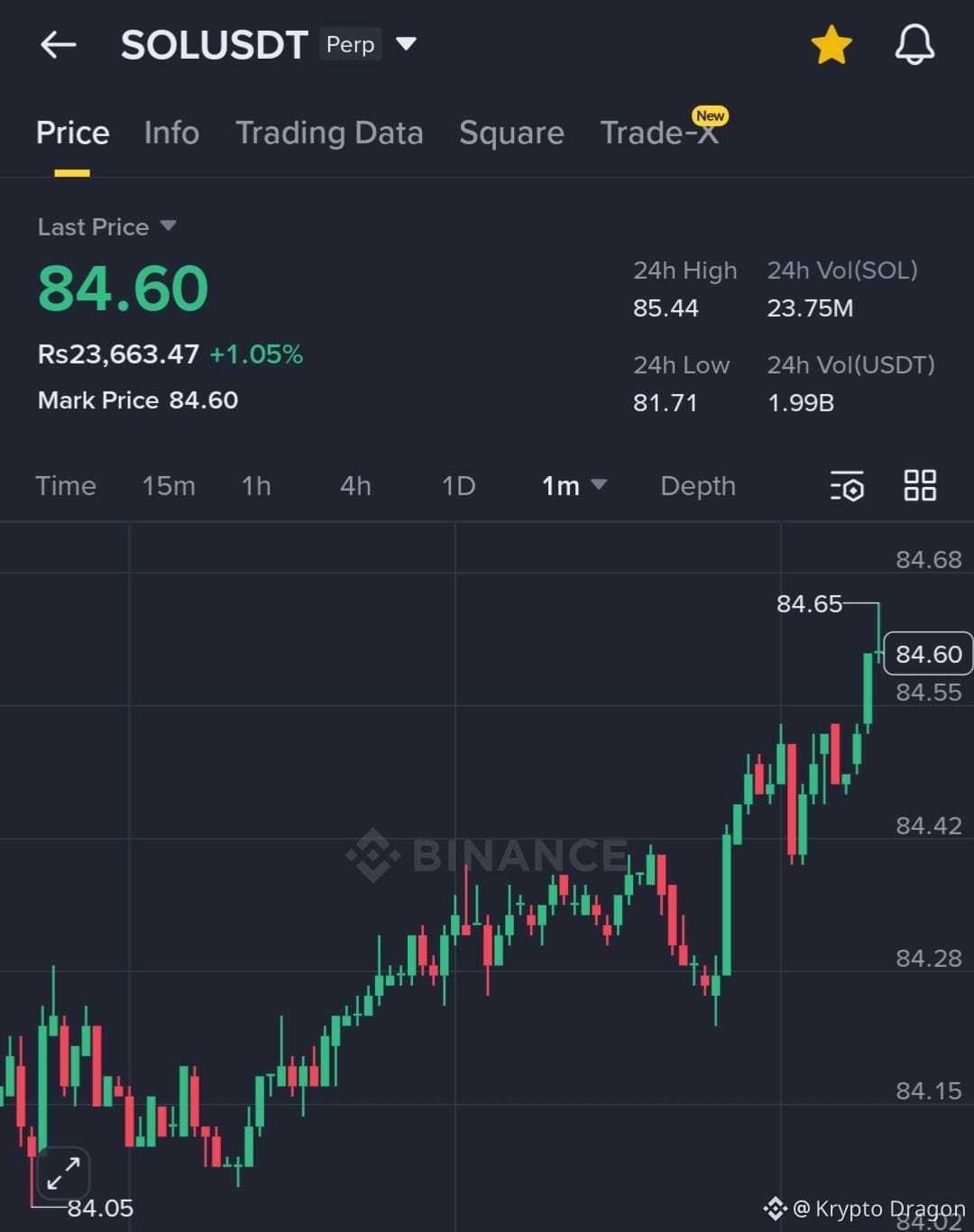
もしあなたが$SOL がローンチされたときに$100だけ投資していたら(2020年)、どのような結果になったか見てみましょう。 私たちは事実に基づいて数字を計算します。ハイプはありません。$SOL のローンチ価格($0.22)での$100の投資が、各年の高値を通じて保持されていた場合、どのように成長したかを以下に示します。 📈 ソラナ(SOL)の年次高値。 (すべての値は概算です) -2021年 高値: $259。 👉 あなたのSOL保有の価値: $118,000 -2022年 高値: $179。 👉 あなたのSOL保有の価値: $81,500 -2023年 高値: $123。 👉 あなたのSOL保有の価値: $56,000 -2024年 高値: $263。 👉 あなたのSOL保有の価値: $120,000 -2025年 高値: $? 👉 あなたのSOL保有の価値: $?
もしあなたが$SOL がローンチされたときに$100だけ投資していたら(2020年)、どのような結果になったか見てみましょう。

私たちは事実に基づいて数字を計算します。ハイプはありません。$SOL のローンチ価格($0.22)での$100の投資が、各年の高値を通じて保持されていた場合、どのように成長したかを以下に示します。

📈 ソラナ(SOL)の年次高値。

(すべての値は概算です)

-2021年 高値: $259。

👉 あなたのSOL保有の価値: $118,000

-2022年 高値: $179。

👉 あなたのSOL保有の価値: $81,500

-2023年 高値: $123。

👉 あなたのSOL保有の価値: $56,000

-2024年 高値: $263。

👉 あなたのSOL保有の価値: $120,000

-2025年 高値: $?

👉 あなたのSOL保有の価値: $?
さらにコンテンツを探すには、ログインしてください
暗号資産関連最新ニュース総まとめ
⚡️ 暗号資産に関する最新のディスカッションに参加
💬 お気に入りのクリエイターと交流
👍 興味のあるコンテンツがきっと見つかります
メール / 電話番号

最新ニュース

--
詳細確認
サイトマップ
Cookieの設定
プラットフォーム利用規約