Binance Square

John Singh Bhai

crypto lover || Creatorpad content creator || BNB || BTC || SOL || square Influencer || Web3 Explorer
取引を発注
超高頻度トレーダー
4.8か月
306 フォロー
19.0K+ フォロワー
4.3K+ いいね
363 共有
投稿
ポートフォリオ
PINNED
·
--
ブリッシュ
🎁 プレゼント 🎁 いいね ❤️ リツイート 🔁 フォロー ➕ コメント ETH 👇 間もなく勝者 🚀 $ETH 💎
🎁 プレゼント 🎁
いいね ❤️ リツイート 🔁 フォロー ➕
コメント ETH 👇
間もなく勝者 🚀
$ETH 💎
·
--
ブリッシュ
Walrus is a privacy-first Web3 infrastructure built for real users, not crypto complexity. Operating on Sui, it enables decentralized, censorship-resistant data storage and private transactions using efficient blob storage. Powered by the WAL token, Walrus supports dApps, governance, and staking, turning blockchain into quiet, scalable infrastructure driven by real usage—not hype. @WalrusProtocol #Walrus $WAL {spot}(WALUSDT)
Walrus is a privacy-first Web3 infrastructure built for real users, not crypto complexity. Operating on Sui, it enables decentralized, censorship-resistant data storage and private transactions using efficient blob storage. Powered by the WAL token, Walrus supports dApps, governance, and staking, turning blockchain into quiet, scalable infrastructure driven by real usage—not hype.

@Walrus 🦭/acc #Walrus $WAL
ブロックチェーンが消えるとき: ウォルラスがリアルな人々のためにプライバシー、ストレージ、ウェブ3を再考する方法ブロックチェーン技術は、何が可能かを証明するのに何年も費やしてきましたが、実用的なことを証明するにははるかに少ない時間しかかかりません。ほとんどの人にとって、分散化の約束は参加するために必要な摩擦によって影を潜めています。ウォレットを設定する必要があり、鍵は保護されなければならず、ガス料金は計算され、暗号署名は最も単純なアクションでも承認されなければなりません。これらの要件は、暗号ネイティブユーザーにとってはルーチンのように感じられるかもしれませんが、日常の消費者や企業にとっては、採用を妨げる障壁です。ウォルラスは、プロトコルの執着よりも実際の人間の行動を優先し、ブロックチェーンをバックグラウンドで静かに機能すべきインフラストラクチャとして扱う、異なる方向性を表しています。

ブロックチェーンが消えるとき: ウォルラスがリアルな人々のためにプライバシー、ストレージ、ウェブ3を再考する方法

ブロックチェーン技術は、何が可能かを証明するのに何年も費やしてきましたが、実用的なことを証明するにははるかに少ない時間しかかかりません。ほとんどの人にとって、分散化の約束は参加するために必要な摩擦によって影を潜めています。ウォレットを設定する必要があり、鍵は保護されなければならず、ガス料金は計算され、暗号署名は最も単純なアクションでも承認されなければなりません。これらの要件は、暗号ネイティブユーザーにとってはルーチンのように感じられるかもしれませんが、日常の消費者や企業にとっては、採用を妨げる障壁です。ウォルラスは、プロトコルの執着よりも実際の人間の行動を優先し、ブロックチェーンをバックグラウンドで静かに機能すべきインフラストラクチャとして扱う、異なる方向性を表しています。
·
--
ブリッシュ
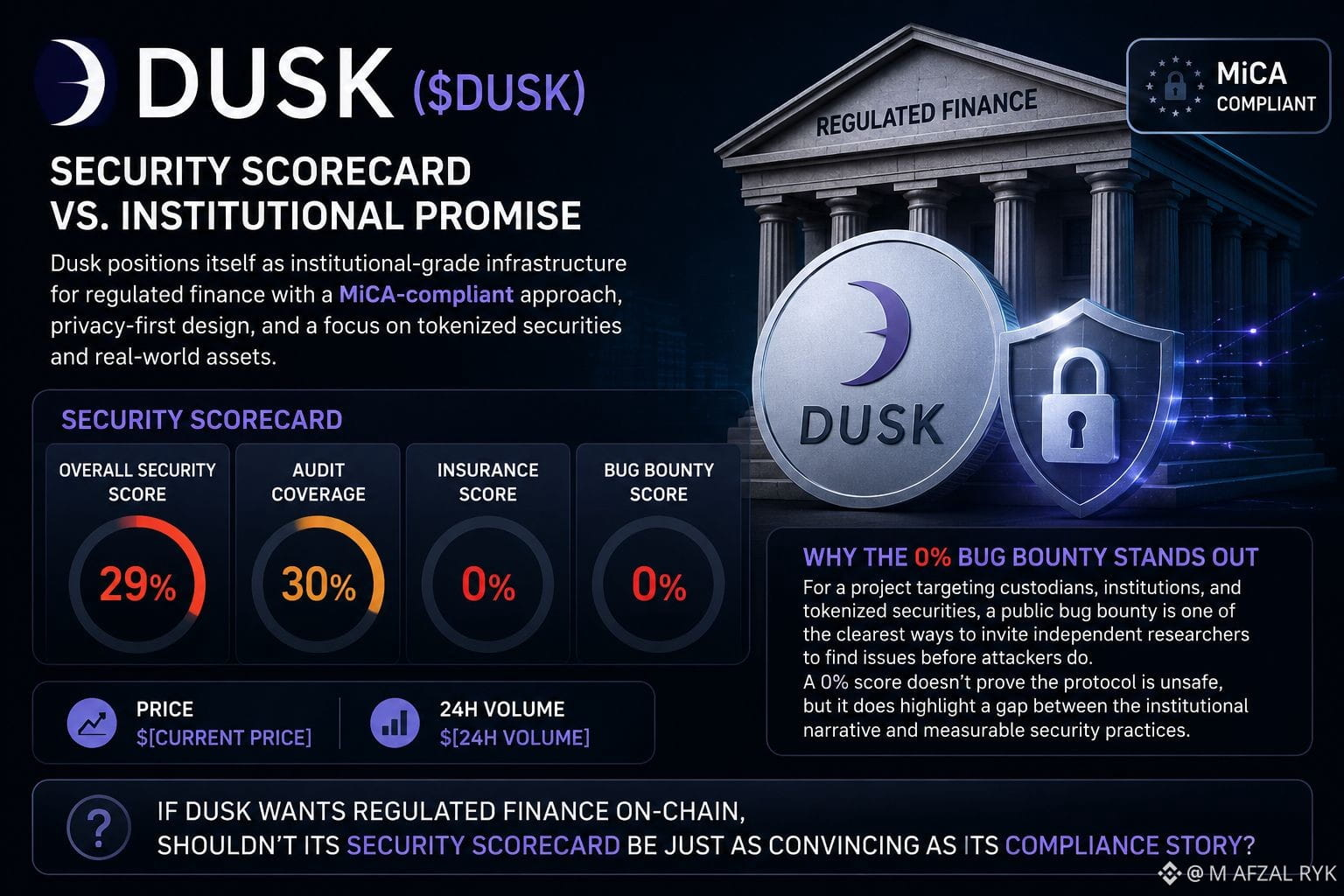
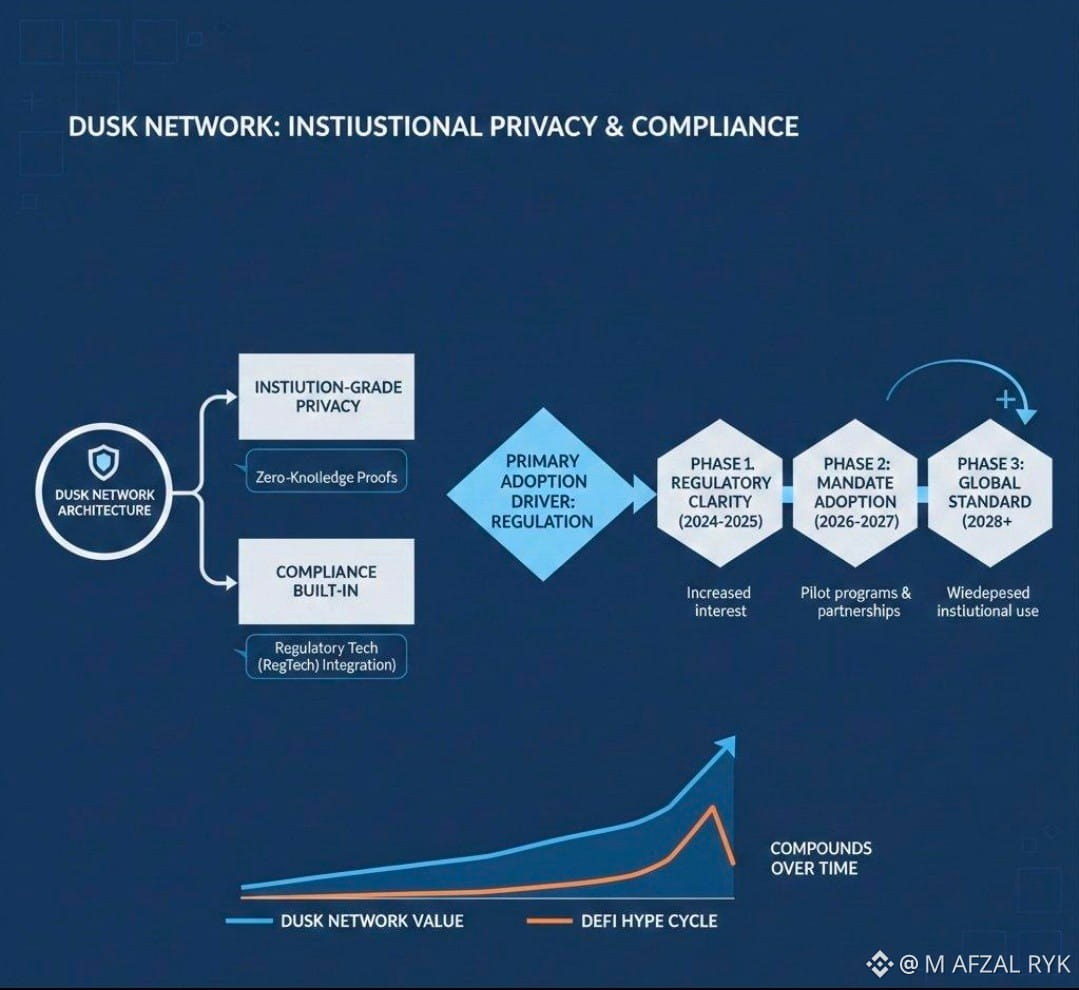
$DUSK Dusk is a Layer-1 built for real-world finance, where privacy, compliance, and usability matter. Designed for regulated institutions, it enables compliant DeFi and tokenized assets with privacy and auditability by default. With modular, eco-friendly architecture and real production use, Dusk positions blockchain as long-term financial infrastructure driven by real usage, not hype. @Dusk_Foundation #dusk $DUSK {spot}(DUSKUSDT)
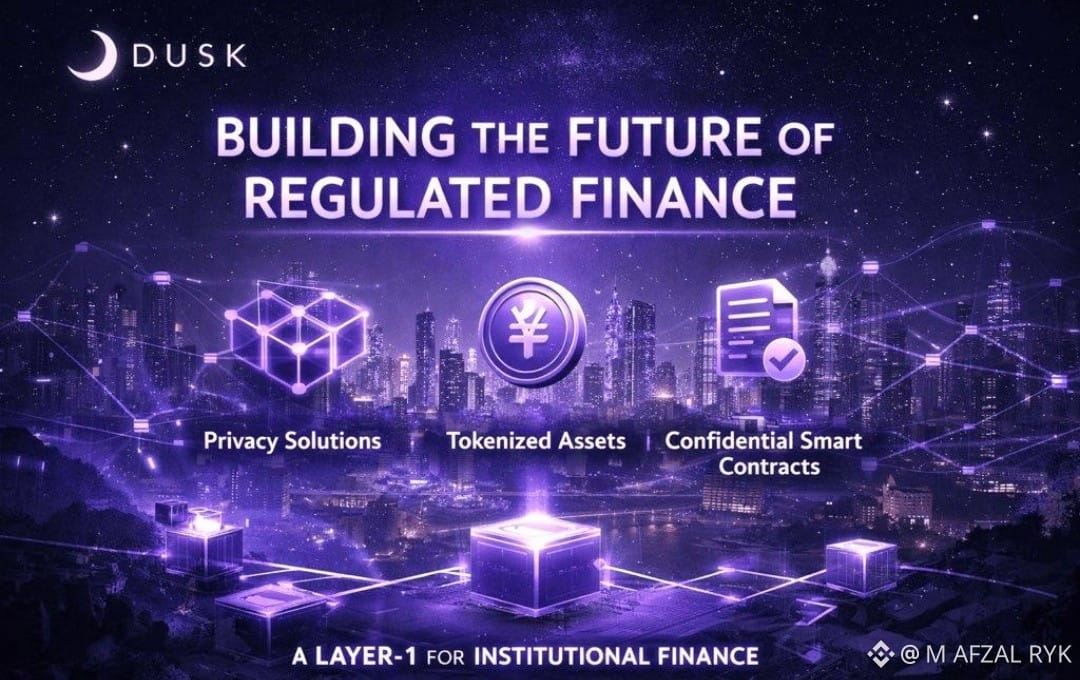
$DUSK Dusk is a Layer-1 built for real-world finance, where privacy, compliance, and usability matter. Designed for regulated institutions, it enables compliant DeFi and tokenized assets with privacy and auditability by default. With modular, eco-friendly architecture and real production use, Dusk positions blockchain as long-term financial infrastructure driven by real usage, not hype.

@Dusk #dusk $DUSK
Privacy by Design, Trust by Default: How Dusk Is Building Blockchain for the Real Financial WorldBlockchain has long promised to modernize finance, yet for many institutions and everyday users, that promise has remained out of reach. The issue is not a lack of innovation, but a fundamental mismatch between how blockchains are designed and how people and organizations actually operate. Most Layer-1 networks were created with crypto-native users in mind, assuming a willingness to navigate wallets, manage private keys, interpret gas fees, and sign opaque transactions. For regulated finance, enterprises, and mainstream users, this complexity is not empowering; it is prohibitive. Dusk, founded in 2018, represents a deliberate shift away from this paradigm, positioning itself as a Layer-1 blockchain built for real-world financial infrastructure where privacy, compliance, and usability coexist by design. In traditional finance, users rarely interact with underlying systems directly. Whether opening a bank account, trading securities, or settling transactions, the experience is shaped around clarity, trust, and regulatory assurance. The technology operates quietly in the background, enabling outcomes rather than demanding attention. By contrast, many blockchain systems expose their inner mechanics to users, turning infrastructure into an obstacle. Dusk’s approach starts from a different assumption: blockchain should feel invisible to those who rely on it, while still delivering the guarantees of transparency, security, and decentralization that make it valuable. At the core of Dusk’s philosophy is an understanding of real human and institutional behavior. Financial institutions require privacy not as an optional feature, but as a legal and ethical necessity. At the same time, they must meet strict audit and compliance requirements. Public blockchains that expose all transaction data may satisfy ideological purity, but they are incompatible with regulated environments. Dusk addresses this tension by embedding privacy and auditability directly into its architecture. Rather than forcing developers or users to bolt on complex solutions, the network provides native tools that allow sensitive data to remain confidential while still being verifiable when required. This design choice fundamentally changes how blockchain can be used. Instead of being limited to speculative trading or niche decentralized applications, Dusk becomes a foundation for institutional-grade financial products, compliant DeFi, and tokenized real-world assets. In these contexts, users do not want to think about cryptography or consensus algorithms. They want assurance that systems are secure, compliant, and reliable. Dusk enables this by abstracting complexity away from the user experience, allowing applications to feel familiar while benefiting from decentralized infrastructure. The importance of live, production-ready systems cannot be overstated in this vision. Blockchain projects often spend years refining theoretical models without ever facing the realities of user behavior. Dusk’s focus on real deployment ensures that its network evolves in response to actual usage rather than assumptions. When institutions and users interact with live applications, their needs, pain points, and workflows generate feedback that informs protocol development. This creates a continuous loop between infrastructure and application, ensuring that the network remains aligned with real-world requirements. This feedback-driven evolution is particularly important for regulated finance, where edge cases and operational constraints emerge only at scale. Compliance is not static; it changes with jurisdictions, asset classes, and market conditions. A blockchain that aims to support these environments must be flexible without sacrificing security or trust. Dusk’s modular architecture allows components to evolve independently, adapting to new regulatory and market demands while maintaining a stable core. This modularity reflects a mature understanding of how long-term infrastructure must be built. While Dusk is deeply rooted in financial use cases, its user-centric philosophy extends to other industries where blockchain can add value without disrupting experience. Gaming, entertainment, digital brands, and virtual environments all rely on trust, ownership, and data integrity. In these spaces, privacy is often as important as transparency. Users may want to own digital assets or participate in virtual economies without broadcasting their entire activity history to the public. Dusk’s privacy-preserving approach enables these possibilities, allowing Web3 features to be embedded seamlessly into consumer-facing products. AI integrations further enhance this seamlessness. Artificial intelligence can act as an intermediary layer that manages complexity on behalf of users and institutions. From automating compliance checks to optimizing transaction flows and managing identities, AI reduces the cognitive load associated with blockchain interactions. When paired with Dusk’s privacy-first infrastructure, AI enables systems that are both intelligent and trustworthy. The result is an experience where users interact with intuitive interfaces while advanced technologies handle the underlying processes invisibly. Ecosystem tools and partnerships play a crucial role in turning this vision into reality. For developers and enterprises, the availability of robust tooling determines whether blockchain adoption is practical or theoretical. Dusk’s ecosystem is designed to support builders who want to create compliant, user-friendly applications without sacrificing decentralization. By lowering the barrier to entry and aligning incentives across participants, the network encourages innovation that serves real needs rather than chasing trends. Sustainability is another essential consideration for long-term adoption. As enterprises evaluate blockchain solutions, environmental impact is increasingly part of the decision-making process. Infrastructure that cannot scale sustainably will struggle to gain institutional trust. Dusk’s architecture prioritizes efficiency and responsible resource usage, recognizing that eco-friendly design is not a luxury but a requirement for becoming part of global financial systems. This focus reinforces the network’s credibility and aligns it with the expectations of regulators, institutions, and socially conscious users. The native utility token within the Dusk ecosystem plays a supporting but important role. Rather than existing primarily as a speculative asset, it underpins network operations, secures transactions, and aligns incentives among participants. Its value is derived from actual usage of the network, reflecting the health and adoption of the ecosystem. This approach contrasts sharply with hype-driven models where token prices fluctuate independently of real-world utility. By grounding value in function, Dusk creates a more stable and trustworthy economic foundation. This emphasis on real usage over speculation is central to Dusk’s identity. Financial institutions and enterprises cannot base critical infrastructure decisions on volatile narratives. They require predictability, governance, and long-term viability. Dusk positions itself as a network that meets these criteria, offering a platform that can support financial markets, asset tokenization, and compliant decentralized finance over decades rather than market cycles. Ultimately, Dusk should be understood as digital infrastructure rather than a flashy crypto project. Its success will not be measured by short-term attention, but by quiet integration into systems that people and institutions already rely on. When blockchain operates invisibly, enabling privacy, compliance, and trust without demanding technical literacy, adoption becomes natural rather than forced. By designing around real human behavior and institutional reality, Dusk moves blockchain closer to its most meaningful role: a foundation for a more transparent, efficient, and inclusive financial system that respects privacy and regulation alike. In doing so, it demonstrates that the future of Web3 will not be built on complexity for its own sake, but on thoughtful design that allows powerful technology to disappear into everyday life while delivering lasting value beneath the surface. @Dusk_Foundation #dusk $DUSK {spot}(DUSKUSDT)

Privacy by Design, Trust by Default: How Dusk Is Building Blockchain for the Real Financial World

Blockchain has long promised to modernize finance, yet for many institutions and everyday users, that promise has remained out of reach. The issue is not a lack of innovation, but a fundamental mismatch between how blockchains are designed and how people and organizations actually operate. Most Layer-1 networks were created with crypto-native users in mind, assuming a willingness to navigate wallets, manage private keys, interpret gas fees, and sign opaque transactions. For regulated finance, enterprises, and mainstream users, this complexity is not empowering; it is prohibitive. Dusk, founded in 2018, represents a deliberate shift away from this paradigm, positioning itself as a Layer-1 blockchain built for real-world financial infrastructure where privacy, compliance, and usability coexist by design.

In traditional finance, users rarely interact with underlying systems directly. Whether opening a bank account, trading securities, or settling transactions, the experience is shaped around clarity, trust, and regulatory assurance. The technology operates quietly in the background, enabling outcomes rather than demanding attention. By contrast, many blockchain systems expose their inner mechanics to users, turning infrastructure into an obstacle. Dusk’s approach starts from a different assumption: blockchain should feel invisible to those who rely on it, while still delivering the guarantees of transparency, security, and decentralization that make it valuable.

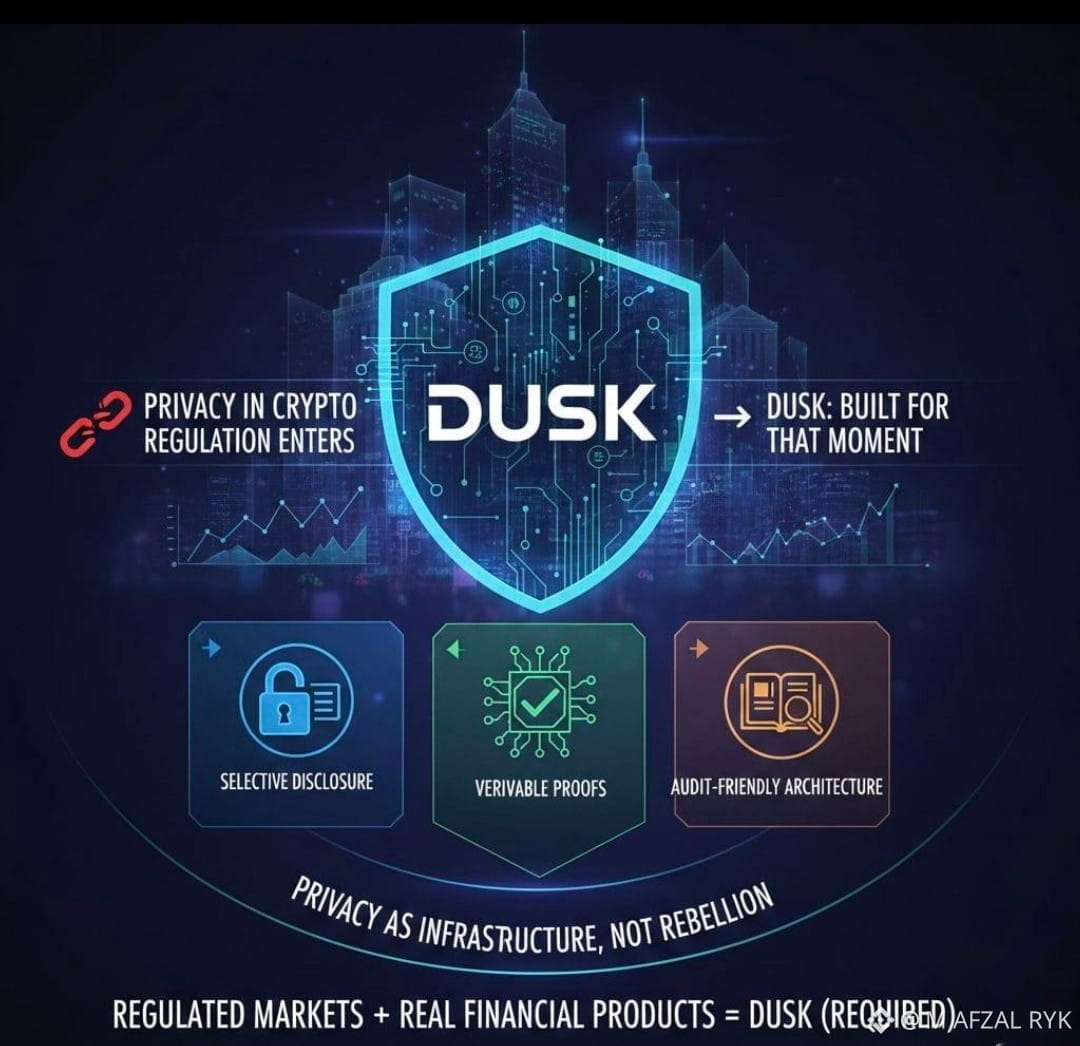
At the core of Dusk’s philosophy is an understanding of real human and institutional behavior. Financial institutions require privacy not as an optional feature, but as a legal and ethical necessity. At the same time, they must meet strict audit and compliance requirements. Public blockchains that expose all transaction data may satisfy ideological purity, but they are incompatible with regulated environments. Dusk addresses this tension by embedding privacy and auditability directly into its architecture. Rather than forcing developers or users to bolt on complex solutions, the network provides native tools that allow sensitive data to remain confidential while still being verifiable when required.

This design choice fundamentally changes how blockchain can be used. Instead of being limited to speculative trading or niche decentralized applications, Dusk becomes a foundation for institutional-grade financial products, compliant DeFi, and tokenized real-world assets. In these contexts, users do not want to think about cryptography or consensus algorithms. They want assurance that systems are secure, compliant, and reliable. Dusk enables this by abstracting complexity away from the user experience, allowing applications to feel familiar while benefiting from decentralized infrastructure.

The importance of live, production-ready systems cannot be overstated in this vision. Blockchain projects often spend years refining theoretical models without ever facing the realities of user behavior. Dusk’s focus on real deployment ensures that its network evolves in response to actual usage rather than assumptions. When institutions and users interact with live applications, their needs, pain points, and workflows generate feedback that informs protocol development. This creates a continuous loop between infrastructure and application, ensuring that the network remains aligned with real-world requirements.

This feedback-driven evolution is particularly important for regulated finance, where edge cases and operational constraints emerge only at scale. Compliance is not static; it changes with jurisdictions, asset classes, and market conditions. A blockchain that aims to support these environments must be flexible without sacrificing security or trust. Dusk’s modular architecture allows components to evolve independently, adapting to new regulatory and market demands while maintaining a stable core. This modularity reflects a mature understanding of how long-term infrastructure must be built.

While Dusk is deeply rooted in financial use cases, its user-centric philosophy extends to other industries where blockchain can add value without disrupting experience. Gaming, entertainment, digital brands, and virtual environments all rely on trust, ownership, and data integrity. In these spaces, privacy is often as important as transparency. Users may want to own digital assets or participate in virtual economies without broadcasting their entire activity history to the public. Dusk’s privacy-preserving approach enables these possibilities, allowing Web3 features to be embedded seamlessly into consumer-facing products.

AI integrations further enhance this seamlessness. Artificial intelligence can act as an intermediary layer that manages complexity on behalf of users and institutions. From automating compliance checks to optimizing transaction flows and managing identities, AI reduces the cognitive load associated with blockchain interactions. When paired with Dusk’s privacy-first infrastructure, AI enables systems that are both intelligent and trustworthy. The result is an experience where users interact with intuitive interfaces while advanced technologies handle the underlying processes invisibly.

Ecosystem tools and partnerships play a crucial role in turning this vision into reality. For developers and enterprises, the availability of robust tooling determines whether blockchain adoption is practical or theoretical. Dusk’s ecosystem is designed to support builders who want to create compliant, user-friendly applications without sacrificing decentralization. By lowering the barrier to entry and aligning incentives across participants, the network encourages innovation that serves real needs rather than chasing trends.

Sustainability is another essential consideration for long-term adoption. As enterprises evaluate blockchain solutions, environmental impact is increasingly part of the decision-making process. Infrastructure that cannot scale sustainably will struggle to gain institutional trust. Dusk’s architecture prioritizes efficiency and responsible resource usage, recognizing that eco-friendly design is not a luxury but a requirement for becoming part of global financial systems. This focus reinforces the network’s credibility and aligns it with the expectations of regulators, institutions, and socially conscious users.

The native utility token within the Dusk ecosystem plays a supporting but important role. Rather than existing primarily as a speculative asset, it underpins network operations, secures transactions, and aligns incentives among participants. Its value is derived from actual usage of the network, reflecting the health and adoption of the ecosystem. This approach contrasts sharply with hype-driven models where token prices fluctuate independently of real-world utility. By grounding value in function, Dusk creates a more stable and trustworthy economic foundation.

This emphasis on real usage over speculation is central to Dusk’s identity. Financial institutions and enterprises cannot base critical infrastructure decisions on volatile narratives. They require predictability, governance, and long-term viability. Dusk positions itself as a network that meets these criteria, offering a platform that can support financial markets, asset tokenization, and compliant decentralized finance over decades rather than market cycles.

Ultimately, Dusk should be understood as digital infrastructure rather than a flashy crypto project. Its success will not be measured by short-term attention, but by quiet integration into systems that people and institutions already rely on. When blockchain operates invisibly, enabling privacy, compliance, and trust without demanding technical literacy, adoption becomes natural rather than forced.

By designing around real human behavior and institutional reality, Dusk moves blockchain closer to its most meaningful role: a foundation for a more transparent, efficient, and inclusive financial system that respects privacy and regulation alike. In doing so, it demonstrates that the future of Web3 will not be built on complexity for its own sake, but on thoughtful design that allows powerful technology to disappear into everyday life while delivering lasting value beneath the surface.

@Dusk #dusk $DUSK
·
--
ブリッシュ
$XPL Plasma is a user-first Layer-1 built for real money movement, not crypto complexity. Designed for stablecoin settlement, it enables gasless USDT transfers, stablecoin-first gas, sub-second finality, and Bitcoin-anchored security. With full EVM compatibility, eco-friendly design, and real payment use cases, Plasma turns blockchain into invisible financial infrastructure powered by real usage, not hype. @Plasma #plasma $XPL {spot}(XPLUSDT)
$XPL Plasma is a user-first Layer-1 built for real money movement, not crypto complexity. Designed for stablecoin settlement, it enables gasless USDT transfers, stablecoin-first gas, sub-second finality, and Bitcoin-anchored security. With full EVM compatibility, eco-friendly design, and real payment use cases, Plasma turns blockchain into invisible financial infrastructure powered by real usage, not hype.

@Plasma #plasma $XPL
Blockchain That Feels Like Money: How Plasma Redesigns Layer-1 for Real-World Stablecoin UseFor all the innovation blockchain has delivered over the past decade, one uncomfortable truth remains: most people do not want to think about blockchains at all. They want money to move instantly, predictably, cheaply, and without friction. They do not want to manage private keys, calculate gas fees, or decipher cryptographic signatures. Yet many Layer-1 networks were designed by and for crypto-native users, prioritizing technical purity over real human behavior. Plasma represents a different philosophy entirely. It is a Layer-1 blockchain built around how people actually use money, not how early adopters learned to use crypto. In everyday life, payments are invisible when they work well. A card tap, a QR scan, or an in-app transfer feels effortless because the underlying complexity is abstracted away. Traditional blockchains invert this experience. They push infrastructure concerns directly onto the user, turning simple actions into moments of hesitation and fear. Users are asked to understand wallets before value, gas fees before transactions, and signatures before intent. This friction is tolerable for enthusiasts, but it is a nonstarter for mass adoption, especially in regions where stablecoins are already being used as practical alternatives to local currencies. Plasma starts from the opposite assumption. It treats stablecoins not as an application layered on top of a general-purpose blockchain, but as the core reason the network exists. Everything in its design flows from the idea that digital dollars should behave like digital cash: fast, neutral, reliable, and simple. By focusing on stablecoin settlement as a first-class use case, Plasma aligns blockchain infrastructure with real economic behavior rather than speculative experimentation. One of the most significant barriers to stablecoin adoption today is the user experience around fees. On most blockchains, users must hold a volatile native token just to move a stable asset. This requirement is confusing for newcomers and risky for people who simply want price stability. Plasma removes this friction by introducing stablecoin-first gas and gasless USDT transfers. From the user’s perspective, sending value feels natural and predictable. There is no need to acquire or manage an extra asset just to make a payment. The blockchain operates quietly in the background, handling settlement while the user focuses on the transaction itself. This invisibility is central to Plasma’s user-centric design. Full EVM compatibility through Reth allows developers to build familiar applications without reinventing tooling, while PlasmaBFT delivers sub-second finality that matches human expectations of speed. When someone sends money, they expect it to arrive immediately. Waiting minutes for confirmations may be acceptable in a speculative environment, but it breaks trust in payment contexts. Fast finality transforms blockchain from a novelty into something that can realistically support retail payments, remittances, and institutional settlement. Crucially, Plasma’s focus on real usage means it is not content with theoretical performance claims. User behavior in live, production environments is treated as the ultimate source of truth. When real people use stablecoins to pay, save, or transfer value, their actions reveal where systems succeed and where they fail. This creates feedback loops that guide the network’s evolution. Instead of designing in isolation, Plasma evolves alongside its users, adapting to the realities of high-volume payments and financial workflows. This approach is particularly important in high-adoption markets, where stablecoins are already filling gaps left by traditional financial systems. In these regions, users care less about decentralization as an abstract ideal and more about whether a payment works reliably under real conditions. Plasma’s architecture acknowledges this reality without abandoning core blockchain values. By anchoring security to Bitcoin, the network increases neutrality and censorship resistance while maintaining the stability required for financial use. This design choice signals a long-term commitment to trust, especially for institutions and users who cannot afford arbitrary rule changes or centralized control. While Plasma is optimized for payments and finance, its broader philosophy aligns with the same principles driving adoption in gaming, entertainment, digital brands, and virtual environments. In all of these industries, the winning platforms are those that hide complexity and foreground experience. Blockchain succeeds when it becomes an enabling layer rather than the focal point. Whether someone is sending a stablecoin payment, interacting with a digital service, or participating in a global economy, the technology should feel intuitive and human. AI integrations further strengthen this model by acting as an intelligent interface between users and infrastructure. AI can automate fee optimization, manage wallets invisibly, detect fraud, and personalize financial experiences without requiring user intervention. When combined with a stablecoin-centric Layer-1, AI transforms blockchain into a responsive system that adapts to user needs in real time. Instead of asking people to learn how the network works, the network learns how people behave. Ecosystem tools play an equally important role. For developers and enterprises, Plasma offers a foundation that reduces friction at every layer. Familiar EVM tooling lowers the barrier to entry, while stablecoin-native features unlock new business models that are impractical on traditional chains. Payments, payroll, cross-border settlement, and on-chain finance become easier to integrate when the underlying network is purpose-built for value transfer rather than generalized computation alone. Sustainability is another critical factor for long-term adoption. Enterprises and institutions increasingly evaluate technology choices through an environmental lens. A payment network cannot scale globally if it carries excessive energy costs or reputational risk. Plasma’s architecture is designed with efficiency in mind, ensuring that stablecoin settlement can grow without unsustainable trade-offs. Eco-friendly design is not positioned as a marketing angle, but as a baseline requirement for becoming part of global financial infrastructure. At the heart of the network is its native utility token, which supports transactions, secures the system, and aligns incentives across participants. Importantly, its value is tied to real usage rather than speculative narratives. As stablecoin settlement volume grows, so does the network’s economic activity. This creates a healthier dynamic than hype-driven cycles, where token prices rise and fall disconnected from actual adoption. When utility is real, value accrues naturally. This distinction matters for credibility. Many blockchain projects struggle to move beyond speculation because they lack a clear link between usage and value. Plasma’s focus on payments grounds the network in a problem that already exists at massive scale. People need better money rails, and stablecoins are already proving demand. By aligning infrastructure, incentives, and experience around this reality, Plasma positions itself as something more enduring than a trend. Ultimately, Plasma should be understood not as a flashy crypto project, but as digital infrastructure in the making. Its success does not depend on convincing users that blockchain is exciting. It depends on making blockchain unnoticeable. When stablecoin transfers feel as natural as sending a message, when finality is instant, and when security is quietly anchored to the most battle-tested network in existence, the technology fades into the background. This is how real adoption happens. Not through complexity, but through design that respects human behavior. Not through speculation, but through utility that solves everyday problems. Plasma represents a shift toward blockchain that behaves like money should, setting the foundation for a future where decentralized systems power global finance without demanding that users ever think about the word “crypto” at all. @Plasma #Plasma $XPL {spot}(XPLUSDT)

Blockchain That Feels Like Money: How Plasma Redesigns Layer-1 for Real-World Stablecoin Use

For all the innovation blockchain has delivered over the past decade, one uncomfortable truth remains: most people do not want to think about blockchains at all. They want money to move instantly, predictably, cheaply, and without friction. They do not want to manage private keys, calculate gas fees, or decipher cryptographic signatures. Yet many Layer-1 networks were designed by and for crypto-native users, prioritizing technical purity over real human behavior. Plasma represents a different philosophy entirely. It is a Layer-1 blockchain built around how people actually use money, not how early adopters learned to use crypto.

In everyday life, payments are invisible when they work well. A card tap, a QR scan, or an in-app transfer feels effortless because the underlying complexity is abstracted away. Traditional blockchains invert this experience. They push infrastructure concerns directly onto the user, turning simple actions into moments of hesitation and fear. Users are asked to understand wallets before value, gas fees before transactions, and signatures before intent. This friction is tolerable for enthusiasts, but it is a nonstarter for mass adoption, especially in regions where stablecoins are already being used as practical alternatives to local currencies.

Plasma starts from the opposite assumption. It treats stablecoins not as an application layered on top of a general-purpose blockchain, but as the core reason the network exists. Everything in its design flows from the idea that digital dollars should behave like digital cash: fast, neutral, reliable, and simple. By focusing on stablecoin settlement as a first-class use case, Plasma aligns blockchain infrastructure with real economic behavior rather than speculative experimentation.

One of the most significant barriers to stablecoin adoption today is the user experience around fees. On most blockchains, users must hold a volatile native token just to move a stable asset. This requirement is confusing for newcomers and risky for people who simply want price stability. Plasma removes this friction by introducing stablecoin-first gas and gasless USDT transfers. From the user’s perspective, sending value feels natural and predictable. There is no need to acquire or manage an extra asset just to make a payment. The blockchain operates quietly in the background, handling settlement while the user focuses on the transaction itself.

This invisibility is central to Plasma’s user-centric design. Full EVM compatibility through Reth allows developers to build familiar applications without reinventing tooling, while PlasmaBFT delivers sub-second finality that matches human expectations of speed. When someone sends money, they expect it to arrive immediately. Waiting minutes for confirmations may be acceptable in a speculative environment, but it breaks trust in payment contexts. Fast finality transforms blockchain from a novelty into something that can realistically support retail payments, remittances, and institutional settlement.

Crucially, Plasma’s focus on real usage means it is not content with theoretical performance claims. User behavior in live, production environments is treated as the ultimate source of truth. When real people use stablecoins to pay, save, or transfer value, their actions reveal where systems succeed and where they fail. This creates feedback loops that guide the network’s evolution. Instead of designing in isolation, Plasma evolves alongside its users, adapting to the realities of high-volume payments and financial workflows.

This approach is particularly important in high-adoption markets, where stablecoins are already filling gaps left by traditional financial systems. In these regions, users care less about decentralization as an abstract ideal and more about whether a payment works reliably under real conditions. Plasma’s architecture acknowledges this reality without abandoning core blockchain values. By anchoring security to Bitcoin, the network increases neutrality and censorship resistance while maintaining the stability required for financial use. This design choice signals a long-term commitment to trust, especially for institutions and users who cannot afford arbitrary rule changes or centralized control.

While Plasma is optimized for payments and finance, its broader philosophy aligns with the same principles driving adoption in gaming, entertainment, digital brands, and virtual environments. In all of these industries, the winning platforms are those that hide complexity and foreground experience. Blockchain succeeds when it becomes an enabling layer rather than the focal point. Whether someone is sending a stablecoin payment, interacting with a digital service, or participating in a global economy, the technology should feel intuitive and human.

AI integrations further strengthen this model by acting as an intelligent interface between users and infrastructure. AI can automate fee optimization, manage wallets invisibly, detect fraud, and personalize financial experiences without requiring user intervention. When combined with a stablecoin-centric Layer-1, AI transforms blockchain into a responsive system that adapts to user needs in real time. Instead of asking people to learn how the network works, the network learns how people behave.

Ecosystem tools play an equally important role. For developers and enterprises, Plasma offers a foundation that reduces friction at every layer. Familiar EVM tooling lowers the barrier to entry, while stablecoin-native features unlock new business models that are impractical on traditional chains. Payments, payroll, cross-border settlement, and on-chain finance become easier to integrate when the underlying network is purpose-built for value transfer rather than generalized computation alone.

Sustainability is another critical factor for long-term adoption. Enterprises and institutions increasingly evaluate technology choices through an environmental lens. A payment network cannot scale globally if it carries excessive energy costs or reputational risk. Plasma’s architecture is designed with efficiency in mind, ensuring that stablecoin settlement can grow without unsustainable trade-offs. Eco-friendly design is not positioned as a marketing angle, but as a baseline requirement for becoming part of global financial infrastructure.

At the heart of the network is its native utility token, which supports transactions, secures the system, and aligns incentives across participants. Importantly, its value is tied to real usage rather than speculative narratives. As stablecoin settlement volume grows, so does the network’s economic activity. This creates a healthier dynamic than hype-driven cycles, where token prices rise and fall disconnected from actual adoption. When utility is real, value accrues naturally.

This distinction matters for credibility. Many blockchain projects struggle to move beyond speculation because they lack a clear link between usage and value. Plasma’s focus on payments grounds the network in a problem that already exists at massive scale. People need better money rails, and stablecoins are already proving demand. By aligning infrastructure, incentives, and experience around this reality, Plasma positions itself as something more enduring than a trend.

Ultimately, Plasma should be understood not as a flashy crypto project, but as digital infrastructure in the making. Its success does not depend on convincing users that blockchain is exciting. It depends on making blockchain unnoticeable. When stablecoin transfers feel as natural as sending a message, when finality is instant, and when security is quietly anchored to the most battle-tested network in existence, the technology fades into the background.

This is how real adoption happens. Not through complexity, but through design that respects human behavior. Not through speculation, but through utility that solves everyday problems. Plasma represents a shift toward blockchain that behaves like money should, setting the foundation for a future where decentralized systems power global finance without demanding that users ever think about the word “crypto” at all.

@Plasma #Plasma $XPL
·
--
ブリッシュ
$VANRY Vanar is a user-centric Layer-1 blockchain built for real people, not crypto natives. Instead of forcing users to learn wallets, gas fees, or signatures, Vanar embeds Web3 invisibly into gaming, entertainment, brands, AI, and virtual worlds. With live products like Virtua and VGN, real user activity drives evolution. Sustainable design and the VANRY token power real usage, positioning Vanar as long-term digital infrastructure, not hype. @Vanar #Vanar $VANRY {spot}(VANRYUSDT)
$VANRY Vanar is a user-centric Layer-1 blockchain built for real people, not crypto natives. Instead of forcing users to learn wallets, gas fees, or signatures, Vanar embeds Web3 invisibly into gaming, entertainment, brands, AI, and virtual worlds. With live products like Virtua and VGN, real user activity drives evolution. Sustainable design and the VANRY token power real usage, positioning Vanar as long-term digital infrastructure, not hype.

@Vanarchain #Vanar $VANRY
Designing Blockchain for Humans: How Vanar Reimagines Layer-1 as Invisible Digital InfrastructureFor more than a decade, blockchain technology has promised to reshape how value, identity, and digital ownership move across the internet. Yet despite enormous technical progress, mainstream adoption has lagged. The reason is not a lack of innovation, but a mismatch between how blockchains are designed and how real people actually behave. Most blockchain systems were built by and for crypto-native users, assuming a level of technical fluency that simply does not exist among the billions of everyday consumers who use games, apps, and digital services without ever thinking about cryptography or decentralized systems. Vanar emerges as a response to this disconnect: a Layer-1 blockchain designed from the ground up around human behavior, familiar user experiences, and real-world production environments rather than abstract crypto complexity. Traditional blockchain interactions are often hostile to newcomers. Users are expected to understand wallets, private keys, gas fees, signatures, network congestion, and transaction finality before they can even begin to participate. Every action feels deliberate and risky, with pop-ups warning about irreversible transactions and fees fluctuating in ways that feel arbitrary to non-experts. While this complexity may feel normal to early adopters, it creates a psychological barrier that prevents mass participation. People do not want to “use a blockchain”; they want to play a game, watch a show, collect a digital item, or engage with a brand they already love. Vanar’s core philosophy recognizes this truth and treats blockchain not as the product, but as the invisible infrastructure that quietly enables better digital experiences. Instead of forcing users to adapt to crypto, Vanar adapts crypto to users. Its architecture is designed to embed Web3 functionality seamlessly into industries that already command global attention, such as gaming, entertainment, digital brands, and virtual environments. In these contexts, users are already accustomed to digital assets, virtual economies, and online identities. Blockchain becomes most powerful when it enhances these familiar behaviors without demanding new mental models. On Vanar, ownership, transfers, and on-chain interactions can occur in the background, abstracted away from the user interface. To the end user, the experience feels no different from using a polished Web2 platform, except that their digital assets are truly theirs and their interactions carry real economic value. This user-centric approach is not theoretical. One of Vanar’s defining characteristics is its focus on live, production-ready consumer products rather than experimental demos or future roadmaps. Products such as the Virtua Metaverse and the VGN games network are not proofs of concept; they are operational ecosystems with real users, real transactions, and real engagement. This matters because true adoption cannot be simulated in test environments or whitepapers. Only when real people interact with live systems do meaningful feedback loops emerge. User behavior reveals where friction exists, which features are intuitive, and which assumptions fail under real-world conditions. Vanar treats this feedback not as an afterthought, but as a core driver of network evolution. By grounding development in active consumer ecosystems, Vanar allows its Layer-1 infrastructure to evolve alongside actual usage patterns. This creates a virtuous cycle: products attract users, users generate data and economic activity, and that activity informs improvements at the protocol and tooling level. Over time, the network becomes increasingly aligned with how people naturally interact with digital environments. This is a stark contrast to many blockchain projects that prioritize theoretical scalability metrics or abstract decentralization goals without ever testing whether normal users can or want to engage with the system. Gaming and entertainment play a central role in this vision because they represent some of the most advanced digital economies already in existence. Gamers understand virtual currencies, digital items, and online identities intuitively. What they often reject is the friction introduced by external wallets, confusing onboarding processes, or unpredictable transaction costs. Vanar’s technology approach allows these elements to be integrated natively into games and entertainment platforms, enabling developers to offer blockchain-powered features without disrupting immersion. Players can earn, trade, or own digital assets as a natural extension of gameplay rather than as a separate financial activity. Beyond gaming, Vanar’s alignment with digital brands and virtual environments reflects a broader understanding of how value flows in modern economies. Brands increasingly operate as digital ecosystems, with communities, collectibles, experiences, and loyalty programs existing entirely online. Blockchain can enhance these ecosystems by enabling provable scarcity, interoperable assets, and transparent reward mechanisms. However, these benefits only materialize if the technology feels trustworthy and effortless. Vanar’s emphasis on seamless integration allows brands to experiment with new economic models without exposing their audiences to the rough edges of crypto infrastructure. AI integration further reinforces this user-first philosophy. As artificial intelligence becomes embedded in consumer applications, the combination of AI and blockchain unlocks new possibilities for personalization, automation, and value exchange. AI systems can manage complex blockchain interactions on behalf of users, optimizing transactions, managing identities, or tailoring experiences based on behavior. In this context, blockchain provides the trust and ownership layer, while AI handles the complexity. Vanar positions itself as an ecosystem where these technologies complement each other rather than compete, reducing friction while expanding what is economically and creatively possible. Ecosystem tools play a critical role in translating this vision into reality. Developers and enterprises need frameworks, APIs, and infrastructure that allow them to build Web3-enabled products without reinventing the wheel or exposing users to unnecessary complexity. Vanar’s approach emphasizes accessibility for builders as much as for end users. When developers can focus on experience design rather than protocol intricacies, the resulting products are more likely to resonate with mainstream audiences. This, in turn, accelerates adoption and strengthens the overall network. Sustainability is another pillar that distinguishes Vanar’s long-term outlook. As blockchain technology moves closer to enterprise and consumer adoption, environmental considerations are no longer optional. Large brands, institutions, and governments cannot justify integrating systems that carry significant ecological costs. Vanar treats eco-friendly architecture not as a marketing feature, but as a prerequisite for scale. By prioritizing efficient consensus mechanisms and sustainable infrastructure, the network aligns itself with the expectations of modern enterprises and environmentally conscious consumers. This focus on sustainability reinforces trust and positions the blockchain as a viable component of long-term digital infrastructure rather than a short-lived experiment. At the center of this ecosystem is the VANRY token, which functions as more than a speculative asset. In a user-centric Layer-1 design, the native token’s value is derived from real usage and utility rather than hype. VANRY supports transactions across the network, enabling economic activity within games, virtual environments, and brand ecosystems. It aligns incentives among developers, users, and infrastructure providers by rewarding participation and contribution to the network’s growth. When a token is embedded into real consumer products, its demand becomes linked to actual engagement rather than abstract market narratives. This distinction is crucial. Many blockchain projects struggle to escape cycles of speculation that inflate token prices without corresponding increases in real usage. When market sentiment shifts, these ecosystems often collapse because they lack a foundation of genuine economic activity. Vanar’s strategy of anchoring token utility in live products helps insulate the network from these dynamics. As more users interact with Vanar-powered applications, transaction volume and network value grow organically. The token becomes a reflection of network health rather than a driver of short-term excitement. Over time, this approach positions Vanar not as a hype-driven crypto project, but as durable digital infrastructure. Just as users today rarely think about the protocols that power the internet, future consumers may engage with blockchain-enabled experiences without ever realizing they are using a Layer-1 network. What matters is that the system works, feels intuitive, and enhances their digital lives. By designing around human behavior, familiar industries, and real production environments, Vanar moves blockchain closer to fulfilling its original promise of empowering users without burdening them with complexity. The significance of this shift extends beyond any single network. It represents a maturation of the Web3 space itself. As the industry moves past its early experimental phase, success will be defined not by technical novelty alone, but by the ability to integrate seamlessly into everyday life. Vanar’s emphasis on user-centric design, live consumer products, AI-enabled tooling, sustainability, and real economic utility offers a blueprint for how blockchain can evolve from niche technology to foundational infrastructure. In this vision, decentralization is not abandoned, but contextualized. It operates quietly in the background, ensuring transparency, ownership, and resilience while allowing users to focus on what they actually care about: play, creativity, connection, and value. Vanar’s Layer-1 blockchain demonstrates that the future of Web3 will not be won by asking billions of people to learn crypto, but by building systems that respect how people already live and interact online. When blockchain disappears into the experience, adoption stops being a challenge and starts becoming a natural outcome. @Vanar #vanar $VANRY {spot}(VANRYUSDT)

Designing Blockchain for Humans: How Vanar Reimagines Layer-1 as Invisible Digital Infrastructure

For more than a decade, blockchain technology has promised to reshape how value, identity, and digital ownership move across the internet. Yet despite enormous technical progress, mainstream adoption has lagged. The reason is not a lack of innovation, but a mismatch between how blockchains are designed and how real people actually behave. Most blockchain systems were built by and for crypto-native users, assuming a level of technical fluency that simply does not exist among the billions of everyday consumers who use games, apps, and digital services without ever thinking about cryptography or decentralized systems. Vanar emerges as a response to this disconnect: a Layer-1 blockchain designed from the ground up around human behavior, familiar user experiences, and real-world production environments rather than abstract crypto complexity.

Traditional blockchain interactions are often hostile to newcomers. Users are expected to understand wallets, private keys, gas fees, signatures, network congestion, and transaction finality before they can even begin to participate. Every action feels deliberate and risky, with pop-ups warning about irreversible transactions and fees fluctuating in ways that feel arbitrary to non-experts. While this complexity may feel normal to early adopters, it creates a psychological barrier that prevents mass participation. People do not want to “use a blockchain”; they want to play a game, watch a show, collect a digital item, or engage with a brand they already love. Vanar’s core philosophy recognizes this truth and treats blockchain not as the product, but as the invisible infrastructure that quietly enables better digital experiences.

Instead of forcing users to adapt to crypto, Vanar adapts crypto to users. Its architecture is designed to embed Web3 functionality seamlessly into industries that already command global attention, such as gaming, entertainment, digital brands, and virtual environments. In these contexts, users are already accustomed to digital assets, virtual economies, and online identities. Blockchain becomes most powerful when it enhances these familiar behaviors without demanding new mental models. On Vanar, ownership, transfers, and on-chain interactions can occur in the background, abstracted away from the user interface. To the end user, the experience feels no different from using a polished Web2 platform, except that their digital assets are truly theirs and their interactions carry real economic value.

This user-centric approach is not theoretical. One of Vanar’s defining characteristics is its focus on live, production-ready consumer products rather than experimental demos or future roadmaps. Products such as the Virtua Metaverse and the VGN games network are not proofs of concept; they are operational ecosystems with real users, real transactions, and real engagement. This matters because true adoption cannot be simulated in test environments or whitepapers. Only when real people interact with live systems do meaningful feedback loops emerge. User behavior reveals where friction exists, which features are intuitive, and which assumptions fail under real-world conditions. Vanar treats this feedback not as an afterthought, but as a core driver of network evolution.

By grounding development in active consumer ecosystems, Vanar allows its Layer-1 infrastructure to evolve alongside actual usage patterns. This creates a virtuous cycle: products attract users, users generate data and economic activity, and that activity informs improvements at the protocol and tooling level. Over time, the network becomes increasingly aligned with how people naturally interact with digital environments. This is a stark contrast to many blockchain projects that prioritize theoretical scalability metrics or abstract decentralization goals without ever testing whether normal users can or want to engage with the system.

Gaming and entertainment play a central role in this vision because they represent some of the most advanced digital economies already in existence. Gamers understand virtual currencies, digital items, and online identities intuitively. What they often reject is the friction introduced by external wallets, confusing onboarding processes, or unpredictable transaction costs. Vanar’s technology approach allows these elements to be integrated natively into games and entertainment platforms, enabling developers to offer blockchain-powered features without disrupting immersion. Players can earn, trade, or own digital assets as a natural extension of gameplay rather than as a separate financial activity.

Beyond gaming, Vanar’s alignment with digital brands and virtual environments reflects a broader understanding of how value flows in modern economies. Brands increasingly operate as digital ecosystems, with communities, collectibles, experiences, and loyalty programs existing entirely online. Blockchain can enhance these ecosystems by enabling provable scarcity, interoperable assets, and transparent reward mechanisms. However, these benefits only materialize if the technology feels trustworthy and effortless. Vanar’s emphasis on seamless integration allows brands to experiment with new economic models without exposing their audiences to the rough edges of crypto infrastructure.

AI integration further reinforces this user-first philosophy. As artificial intelligence becomes embedded in consumer applications, the combination of AI and blockchain unlocks new possibilities for personalization, automation, and value exchange. AI systems can manage complex blockchain interactions on behalf of users, optimizing transactions, managing identities, or tailoring experiences based on behavior. In this context, blockchain provides the trust and ownership layer, while AI handles the complexity. Vanar positions itself as an ecosystem where these technologies complement each other rather than compete, reducing friction while expanding what is economically and creatively possible.

Ecosystem tools play a critical role in translating this vision into reality. Developers and enterprises need frameworks, APIs, and infrastructure that allow them to build Web3-enabled products without reinventing the wheel or exposing users to unnecessary complexity. Vanar’s approach emphasizes accessibility for builders as much as for end users. When developers can focus on experience design rather than protocol intricacies, the resulting products are more likely to resonate with mainstream audiences. This, in turn, accelerates adoption and strengthens the overall network.

Sustainability is another pillar that distinguishes Vanar’s long-term outlook. As blockchain technology moves closer to enterprise and consumer adoption, environmental considerations are no longer optional. Large brands, institutions, and governments cannot justify integrating systems that carry significant ecological costs. Vanar treats eco-friendly architecture not as a marketing feature, but as a prerequisite for scale. By prioritizing efficient consensus mechanisms and sustainable infrastructure, the network aligns itself with the expectations of modern enterprises and environmentally conscious consumers. This focus on sustainability reinforces trust and positions the blockchain as a viable component of long-term digital infrastructure rather than a short-lived experiment.

At the center of this ecosystem is the VANRY token, which functions as more than a speculative asset. In a user-centric Layer-1 design, the native token’s value is derived from real usage and utility rather than hype. VANRY supports transactions across the network, enabling economic activity within games, virtual environments, and brand ecosystems. It aligns incentives among developers, users, and infrastructure providers by rewarding participation and contribution to the network’s growth. When a token is embedded into real consumer products, its demand becomes linked to actual engagement rather than abstract market narratives.

This distinction is crucial. Many blockchain projects struggle to escape cycles of speculation that inflate token prices without corresponding increases in real usage. When market sentiment shifts, these ecosystems often collapse because they lack a foundation of genuine economic activity. Vanar’s strategy of anchoring token utility in live products helps insulate the network from these dynamics. As more users interact with Vanar-powered applications, transaction volume and network value grow organically. The token becomes a reflection of network health rather than a driver of short-term excitement.

Over time, this approach positions Vanar not as a hype-driven crypto project, but as durable digital infrastructure. Just as users today rarely think about the protocols that power the internet, future consumers may engage with blockchain-enabled experiences without ever realizing they are using a Layer-1 network. What matters is that the system works, feels intuitive, and enhances their digital lives. By designing around human behavior, familiar industries, and real production environments, Vanar moves blockchain closer to fulfilling its original promise of empowering users without burdening them with complexity.

The significance of this shift extends beyond any single network. It represents a maturation of the Web3 space itself. As the industry moves past its early experimental phase, success will be defined not by technical novelty alone, but by the ability to integrate seamlessly into everyday life. Vanar’s emphasis on user-centric design, live consumer products, AI-enabled tooling, sustainability, and real economic utility offers a blueprint for how blockchain can evolve from niche technology to foundational infrastructure.

In this vision, decentralization is not abandoned, but contextualized. It operates quietly in the background, ensuring transparency, ownership, and resilience while allowing users to focus on what they actually care about: play, creativity, connection, and value. Vanar’s Layer-1 blockchain demonstrates that the future of Web3 will not be won by asking billions of people to learn crypto, but by building systems that respect how people already live and interact online. When blockchain disappears into the experience, adoption stops being a challenge and starts becoming a natural outcome.

@Vanarchain #vanar $VANRY
🎙️ Let's Explain For trading
background
avatar
終了
04 時間 36 分 09 秒
2.5k
10
1
🎙️ Let's Grow Together! 📈 (Join & Support)
background
avatar
終了
02 時間 02 分 49 秒
1k
4
0
🎙️ Holding USD1 and receiving the WLI airdrop—it's awesome!
background
avatar
終了
02 時間 48 分 47 秒
5.5k
10
7
🎙️ 🎯 Crypto Bottom Zones | Smart Money Watch
background
avatar
終了
05 時間 59 分 59 秒
3.5k
6
7
·
--
ブリッシュ
Web3は、ユーザーにウォレット、ガス、署名を露出させることでスケールしません。隠すことでスケールします。$WAL Walrusは、Sui上に構築された分散型のプライバシー重視のストレージで、実際のアプリや企業のために設計されています。効率的なBlobストレージと消去コーディングを使用して、検閲耐性のあるデータ、シームレスなdApp、およびそのトークンの実用的なユーティリティを実現します—Walrusを長期的なデジタルインフラとして位置付け、熱狂ではなく。 @WalrusProtocol #walrus $WAL {spot}(WALUSDT)
Web3は、ユーザーにウォレット、ガス、署名を露出させることでスケールしません。隠すことでスケールします。$WAL Walrusは、Sui上に構築された分散型のプライバシー重視のストレージで、実際のアプリや企業のために設計されています。効率的なBlobストレージと消去コーディングを使用して、検閲耐性のあるデータ、シームレスなdApp、およびそのトークンの実用的なユーティリティを実現します—Walrusを長期的なデジタルインフラとして位置付け、熱狂ではなく。

@Walrus 🦭/acc #walrus $WAL
人間らしい分散型インフラストラクチャ: プライバシー、ストレージ、そして静かなWeb3の未来その野心にもかかわらず、ブロックチェーンはしばしば単純な問題に苦しんできました。それは使うのが自然に感じられないのです。これまでの数年間、分散型システムは信頼、所有権、検閲抵抗に関する強力なアイデアを導入してきましたが、それらのアイデアはほとんどの人々にとって異質に感じられるインターフェースやワークフローに包まれてきました。ウォレット、シードフレーズ、ガス料金、署名、ネットワークの選択肢は避けられない障害となり、日常的な行動を技術的な演習に変えてしまいました。その結果、ブロックチェーンの採用は専門家の間に集中し続け、主流のユーザーはシンプルさを優先する中央集権的なプラットフォームに依存し続けています。次のWeb3の段階は、より多くの複雑さによって定義されるのではなく、背景に消える能力によって定義されるでしょう。ウォルラスとそのネイティブトークンWALは、暗号ネイティブな儀式ではなく、実際の人間の行動に合った形で分散型ストレージとプライベートなインタラクションを再考することによって、この未来を指し示しています。

人間らしい分散型インフラストラクチャ: プライバシー、ストレージ、そして静かなWeb3の未来

その野心にもかかわらず、ブロックチェーンはしばしば単純な問題に苦しんできました。それは使うのが自然に感じられないのです。これまでの数年間、分散型システムは信頼、所有権、検閲抵抗に関する強力なアイデアを導入してきましたが、それらのアイデアはほとんどの人々にとって異質に感じられるインターフェースやワークフローに包まれてきました。ウォレット、シードフレーズ、ガス料金、署名、ネットワークの選択肢は避けられない障害となり、日常的な行動を技術的な演習に変えてしまいました。その結果、ブロックチェーンの採用は専門家の間に集中し続け、主流のユーザーはシンプルさを優先する中央集権的なプラットフォームに依存し続けています。次のWeb3の段階は、より多くの複雑さによって定義されるのではなく、背景に消える能力によって定義されるでしょう。ウォルラスとそのネイティブトークンWALは、暗号ネイティブな儀式ではなく、実際の人間の行動に合った形で分散型ストレージとプライベートなインタラクションを再考することによって、この未来を指し示しています。
·
--
ブリッシュ
$DUSK ブロックチェーンは、複雑さを増やすことで機関に到達することはありません。隠すことでスケールします。Duskは、規制された金融、コンプライアンスのあるDeFi、トークン化された現実の資産のために構築されたプライバシー優先のレイヤー1です。設計によるプライバシーと監査可能性、持続可能なアーキテクチャ、トークンに対する実際のユーティリティを備えたDuskは、ブロックチェーンを長期的な金融インフラとして位置づけています—投機ではありません。 @Dusk_Foundation #Dusk $DUSK {spot}(DUSKUSDT)
$DUSK ブロックチェーンは、複雑さを増やすことで機関に到達することはありません。隠すことでスケールします。Duskは、規制された金融、コンプライアンスのあるDeFi、トークン化された現実の資産のために構築されたプライバシー優先のレイヤー1です。設計によるプライバシーと監査可能性、持続可能なアーキテクチャ、トークンに対する実際のユーティリティを備えたDuskは、ブロックチェーンを長期的な金融インフラとして位置づけています—投機ではありません。

@Dusk #Dusk $DUSK
インフラとしてのプライバシー:現実世界に適合したブロックチェーンシステムの構築ブロックチェーン技術は、一般の人々にとって難しいものではないはずでしたが、時間が経つにつれて専門家だけが本当に理解できる複雑さの層に包まれてしまいました。ウォレット、プライベートキー、ガス料金、署名、不可逆的な取引は、本来シンプルなインタラクションを認知的なハードルに変えてしまいました。多くのユーザーや機関にとって、この摩擦は分散化の利点を覆い隠しています。次世代のレイヤー1ブロックチェーンは、暗号ネイティブな前提ではなく、実際の人間の行動や現実世界の要件から始まる異なる哲学で応えています。2018年に設立されたダスクは、ブロックチェーンが静かにバックグラウンドで機能し、ユーザーが親しみやすく直感的なシステムと関わる、規制されたプライバシー保護の金融インフラに焦点を当てることで、この変化を表しています。

インフラとしてのプライバシー:現実世界に適合したブロックチェーンシステムの構築

ブロックチェーン技術は、一般の人々にとって難しいものではないはずでしたが、時間が経つにつれて専門家だけが本当に理解できる複雑さの層に包まれてしまいました。ウォレット、プライベートキー、ガス料金、署名、不可逆的な取引は、本来シンプルなインタラクションを認知的なハードルに変えてしまいました。多くのユーザーや機関にとって、この摩擦は分散化の利点を覆い隠しています。次世代のレイヤー1ブロックチェーンは、暗号ネイティブな前提ではなく、実際の人間の行動や現実世界の要件から始まる異なる哲学で応えています。2018年に設立されたダスクは、ブロックチェーンが静かにバックグラウンドで機能し、ユーザーが親しみやすく直感的なシステムと関わる、規制されたプライバシー保護の金融インフラに焦点を当てることで、この変化を表しています。
·
--
ブリッシュ
$XPL ブロックチェーンの採用は、人々にウォレット、ガス、または署名を教えることからは来ない。それは複雑さを隠すことから来る。プラズマは、安定したコインの決済のために構築されたユーザー中心のレイヤー1であり、サブ秒の確定性、ガスのないUSDT送金、安定コイン優先の手数料を提供する。ビットコインに基づくセキュリティ、EVMの互換性、現実の支払いに焦点を当てて、プラズマは長期的な金融インフラとして自らを位置づけている—暗号の誇大広告ではない。 @Plasma #plasma $XPL {alpha}(560x405fbc9004d857903bfd6b3357792d71a50726b0)
$XPL ブロックチェーンの採用は、人々にウォレット、ガス、または署名を教えることからは来ない。それは複雑さを隠すことから来る。プラズマは、安定したコインの決済のために構築されたユーザー中心のレイヤー1であり、サブ秒の確定性、ガスのないUSDT送金、安定コイン優先の手数料を提供する。ビットコインに基づくセキュリティ、EVMの互換性、現実の支払いに焦点を当てて、プラズマは長期的な金融インフラとして自らを位置づけている—暗号の誇大広告ではない。

@Plasma #plasma $XPL
ブロックチェーンが邪魔をしないとき:人々が実際に支払う方法のための金融インフラストラクチャの設計世界の大部分において、金銭はフォーラムで議論される抽象的な概念やホワイトペーパーで最適化されるものではありません。人々が毎日食料を購入し、家賃を支払い、送金を行い、ビジネスを運営し、義務を迅速かつ信頼性を持って果たすために使用するものです。それにもかかわらず、ブロックチェーン技術の多くは、日常的な使いやすさよりも暗号ネイティブな複雑さを優先する方向に進化してきました。ウォレット管理、プライベートキー、ガス料金、ネットワークの混雑、トランザクション署名は、金融システムが機能することを人間が期待することに逆行するものであり、当たり前の障害となっています。ブロックチェーンの採用の次の時代は、内部者のためのより洗練されたプリミティブによって駆動されるのではなく、実際の人間の行動に静かに適合するインフラストラクチャによって推進されるでしょう。プラズマは、使いやすさ、速度、中立性が新規性よりも重要である安定コイン決済のために特に設計されたLayer-1ブロックチェーンを再考することによって、このシフトを表しています。

ブロックチェーンが邪魔をしないとき:人々が実際に支払う方法のための金融インフラストラクチャの設計

世界の大部分において、金銭はフォーラムで議論される抽象的な概念やホワイトペーパーで最適化されるものではありません。人々が毎日食料を購入し、家賃を支払い、送金を行い、ビジネスを運営し、義務を迅速かつ信頼性を持って果たすために使用するものです。それにもかかわらず、ブロックチェーン技術の多くは、日常的な使いやすさよりも暗号ネイティブな複雑さを優先する方向に進化してきました。ウォレット管理、プライベートキー、ガス料金、ネットワークの混雑、トランザクション署名は、金融システムが機能することを人間が期待することに逆行するものであり、当たり前の障害となっています。ブロックチェーンの採用の次の時代は、内部者のためのより洗練されたプリミティブによって駆動されるのではなく、実際の人間の行動に静かに適合するインフラストラクチャによって推進されるでしょう。プラズマは、使いやすさ、速度、中立性が新規性よりも重要である安定コイン決済のために特に設計されたLayer-1ブロックチェーンを再考することによって、このシフトを表しています。
·
--
ブリッシュ
$VANRY Web3の普及は、ユーザーにウォレット、ガス代、または署名を学ばせることで実現するものではありません。それは、実際の人間の行動に基づいて構築されたブロックチェーンから生まれます。Vanarは、ゲーム、エンターテインメント、ブランド、仮想世界にWeb3を目に見えない形で組み込むユーザー中心のLayer-1です。ライブ消費者製品、AIツール、エコフレンドリーなデザイン、そしてトークンに対する実際のユーティリティを備えたVanarは、ブロックチェーンを長期的なデジタルインフラとして位置付けており、単なる流行ではありません。 @Vanar #vanar $VANRY {spot}(VANRYUSDT)
$VANRY Web3の普及は、ユーザーにウォレット、ガス代、または署名を学ばせることで実現するものではありません。それは、実際の人間の行動に基づいて構築されたブロックチェーンから生まれます。Vanarは、ゲーム、エンターテインメント、ブランド、仮想世界にWeb3を目に見えない形で組み込むユーザー中心のLayer-1です。ライブ消費者製品、AIツール、エコフレンドリーなデザイン、そしてトークンに対する実際のユーティリティを備えたVanarは、ブロックチェーンを長期的なデジタルインフラとして位置付けており、単なる流行ではありません。

@Vanarchain #vanar $VANRY
さらにコンテンツを探すには、ログインしてください
暗号資産関連最新ニュース総まとめ
⚡️ 暗号資産に関する最新のディスカッションに参加
💬 お気に入りのクリエイターと交流
👍 興味のあるコンテンツがきっと見つかります
メール / 電話番号
サイトマップ
Cookieの設定
プラットフォーム利用規約